|
Salt stings and it saves. It preserves, purifies, seasons, corrodes. Civilisations were built on it; revolutions marched for it. It is in our sweat, our tears, our seas. The most democratic of materials—cheap and vital—but also one that divides: between those who mine and those who season, those who clean and those who consume. To speak of salt is to speak of labour, endurance and taste: of what sustains and exhausts us.

This week, we look at India's public toilets as more than provision; as architectures of survival where salt hides in the crevices: in the sting of neglect, the sweat of sanitation workers, the residue of inequity scrubbed daily yet never erased. Thijs Biersteker, an ecological artist, measures the planet's changing salinity—the data of dying forests, oceans thickening with salt, air calcified by extraction. His installations translate the
|
|
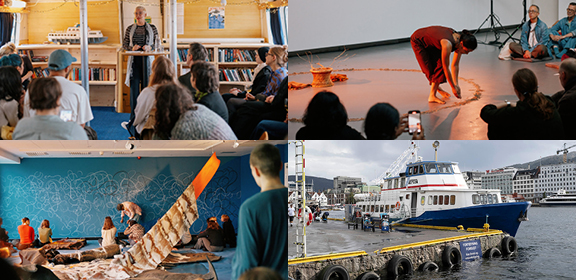
planet's chemistry into sensory equations that make climate visible, tangible. During Frieze London, salt glitters differently—as taste, currency, spectacle. The cultural ecosystem depends on saturation and sensation: too little, and it's bland; too much, and it burns. The Bergen Assembly, meanwhile, invites us to dwell on the mineral itself: to learn from difference as salt does, by dissolving into shared water without losing one's grain.
Elemental and political, salt is what remains when systems dry out, as a residue of care and protest. It is what keeps us from decay, flavouring resistance itself. As we gather around our hearths this season, may the sting and shimmer of the salt we share remind us of the glow, care and endurance that keep us together. Happy Diwali!

|