Architecture10 mins. read
ADFF:STIR Mumbai 2026 promises a radical vision connecting cinema, space and city
by Jincy IypeDec 15, 2025



by Manasvi PotePublished on : Oct 17, 2025
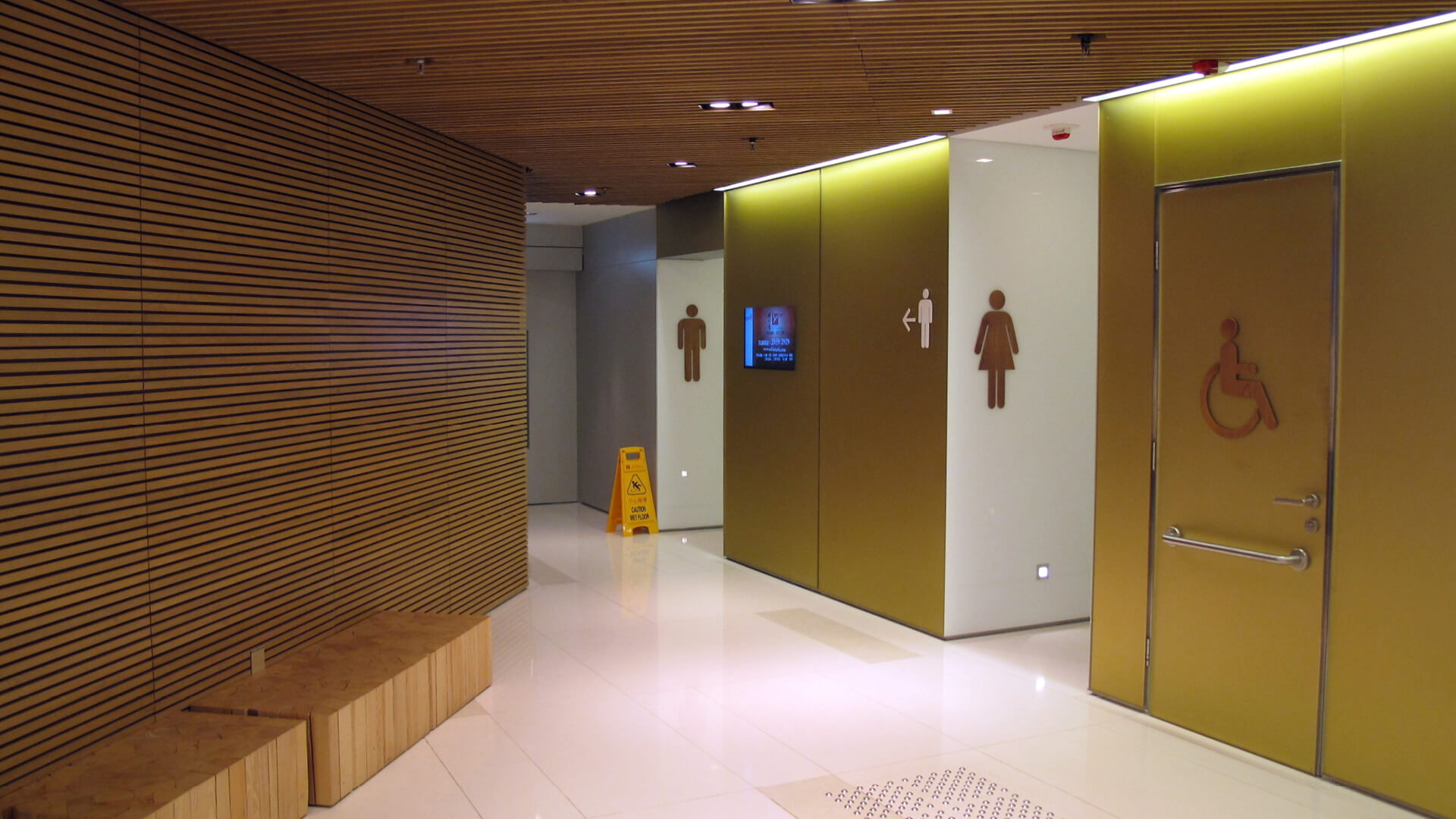
Walk into a shopping mall in Mumbai, and the restroom might smell faintly of citrus-scented cleaner. The tiles gleam, the stalls lock, the light above the mirror doesn’t flicker. Now, step outside the perimeter and walk half a kilometre into the nearest working-class neighbourhood. The closest toilet complex is likely communal, possibly paid and almost certainly built without women in mind, let alone the transgender community—if they are even acknowledged. But perhaps the most taxing of these experiences is borne by marginalised communities, historically associated with sanitation labour, dismissed from the imagination altogether. These communities have a systemic knowledge of what maintaining functional, clean toilets in this country takes before they can give.
Across cities, public bathrooms are a fundamental need. And they are not neutral enclosures. They silently encode hierarchies of caste, gender and class. Policy and legislative acts made tangibly visible who the facility includes and who it erases. Restrooms are extensions of a city’s attitude towards dignity and control, asking: who can afford to relieve themselves with ease, and who must plan their day around not having to? Who walks in without hesitation, and who walks away? The answers to these questions are not only socio-economic, but inherently architectural. A closer look at public toilets reveals how design, when done well, must look beyond infrastructure.
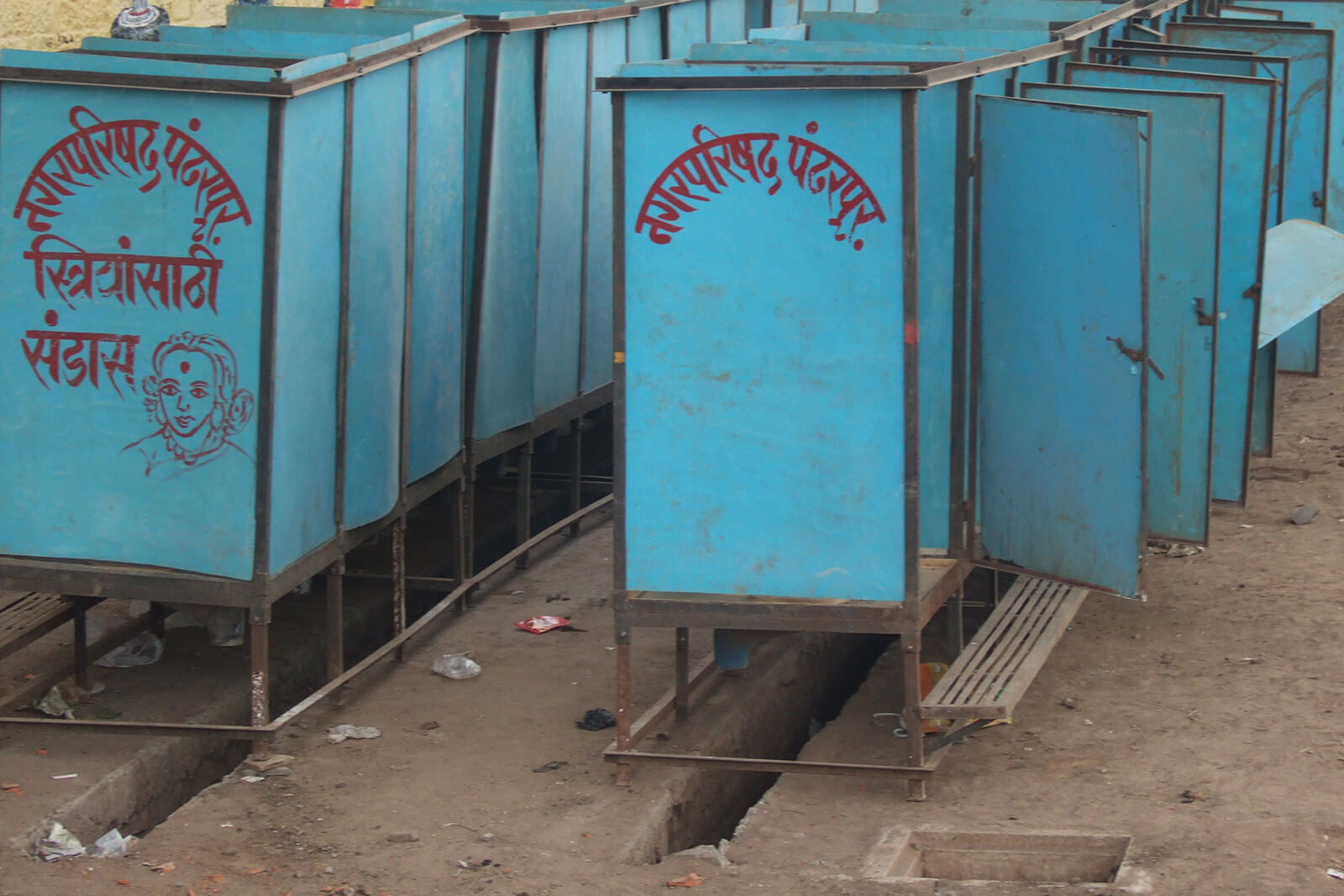
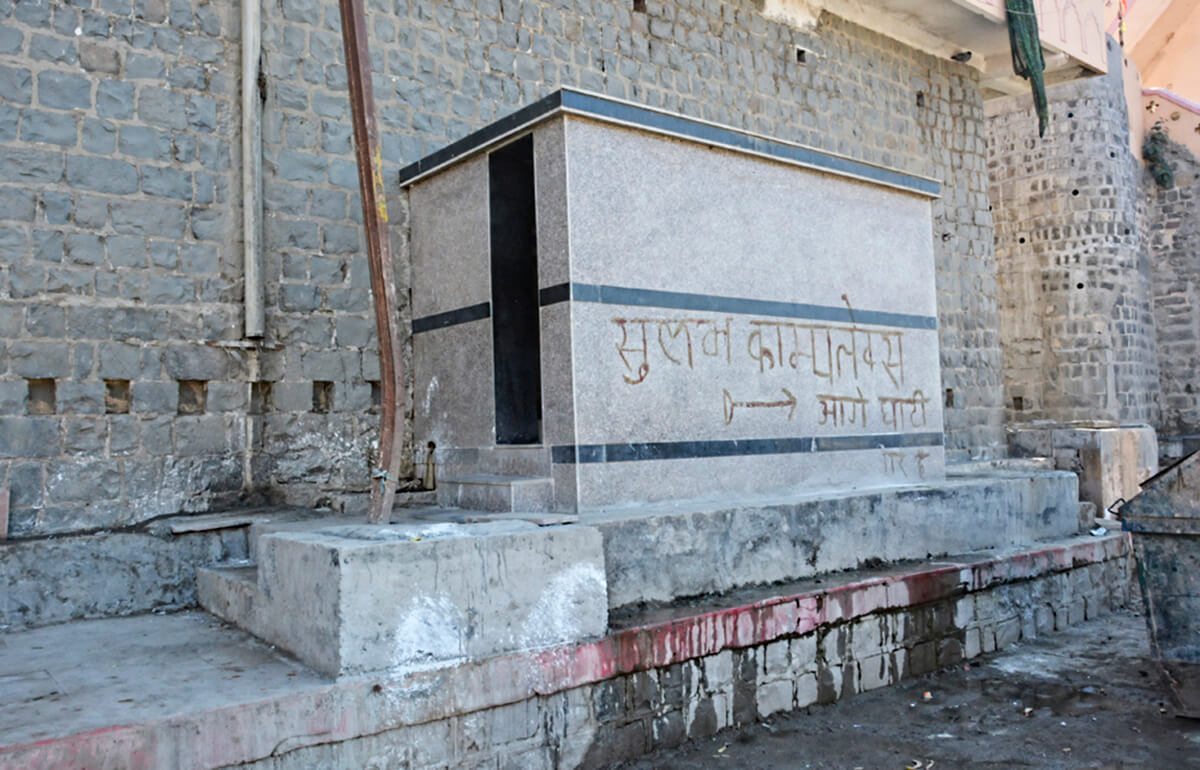
In the last decade, India has built more toilets than at any other period post-Independence. The Swachh Bharat Mission has delivered over 90 million household toilets across the country since 20141. Yet, a majority of the population still lacks access to safe and dignified public sanitation. In 2020, for example, a sizeable share continued to defecate in open spaces, according to WHO/UNICEF estimates. This gap is not merely about infrastructure, urban planning or their lack thereof2. It is also about how certain bodies have never been factored into the design of public life.
To be a woman in an Indian city is to carry in your head a map of safe toilets, backup toilets and the stamina to hold it in when neither is available. The difference in access can be stark: a survey in Mumbai found that there is roughly one public toilet seat for every 1,820 women, compared to one for every 752 men3. The disparity becomes even more apparent in slums, where many community toilet blocks lack basic water supply and electricity. In fact, of the 6,800 community toilet blocks in Mumbai, 69 per cent had no water connection and 60 per cent had no electricity, underscoring how poor infrastructure makes safety and hygiene even harder to secure.
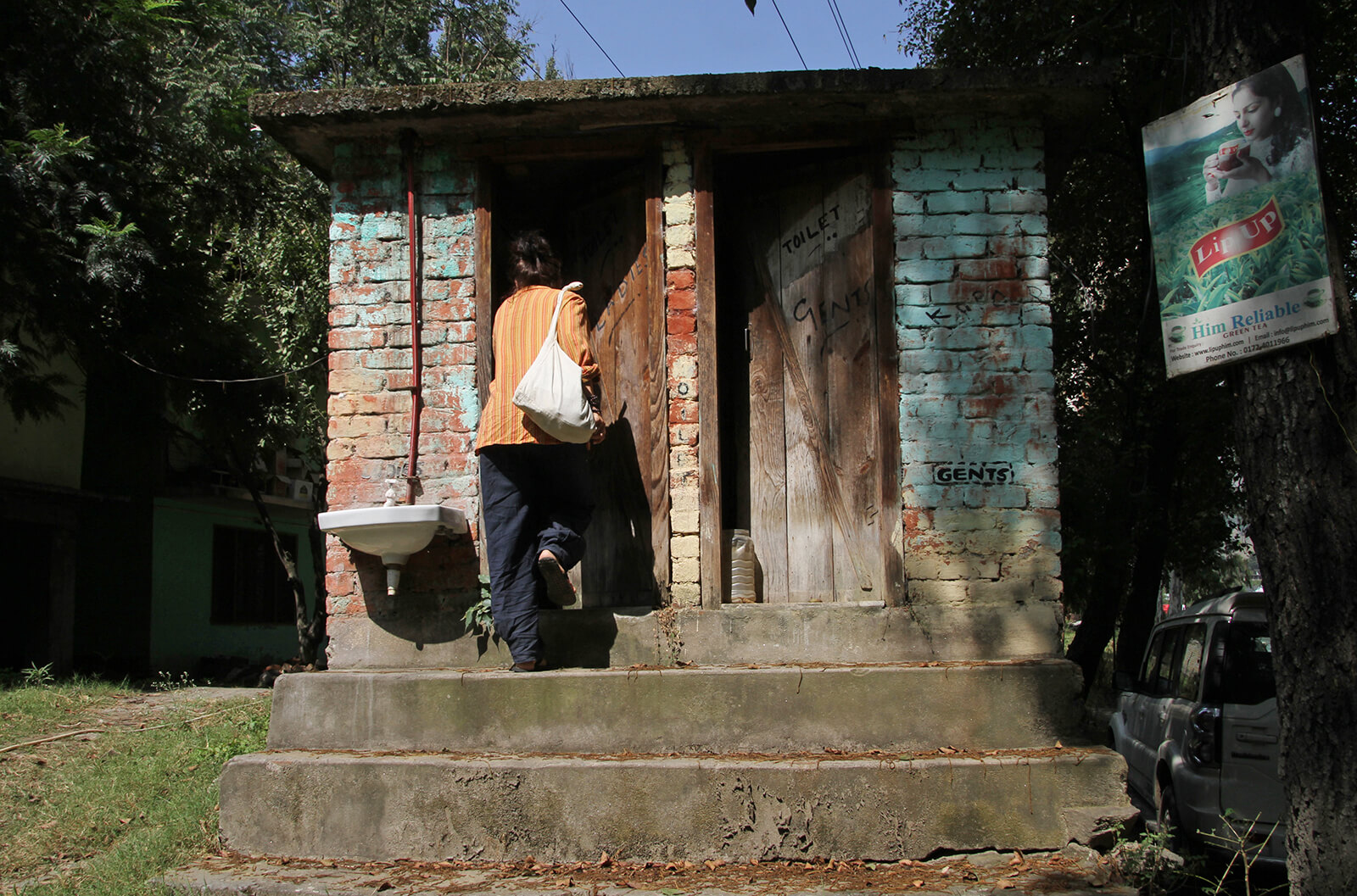
In urban spaces, the problem is often omission. In villages, it may be the conflict between new latrines and old beliefs. Toilets built under national schemes are frequently ignored or repurposed as store rooms, because their presence alone cannot override years of ritual taboo. In some parts of Odisha, toilets that faced east were left unused because they went against local directionality beliefs. In others, families considered indoor toilets impure during prayer days. To build a toilet is easier, but to build trust in its use, much harder.
The Right to Pee movement4, which began in Maharashtra, was among the first campaigns in the world to assert that free, safe urination is a feminist issue. Its demands were not utopian—they included things as basic as a lightbulb, a dustbin and a female caretaker. But their sharpest critique was architectural. Why are urinals for men considered civic infrastructure while women’s toilets are pay-per-use, difficult to locate or altogether absent?
Architecture is thus never neutral. It decides what is visible and what stays hidden, who walks through the main entrance and who slips in through the back. In restrooms, the absence of thoughtful design has meant that the space ends up reinforcing a heteronormative society’s regulation of bodies. For instance, public restrooms across the world at large continue to be built around a rigid gender binary. Outside this dichotomy, one’s body becomes a threat. Trans and non-binary people are routinely harassed, misgendered or denied access to ‘safe’ public spaces such as restrooms and commons altogether. To counter this, the 2019 Transgender Persons Act5, along with its 2020 Rules, dictated the provision of washrooms for transgender persons, including the option of unisex facilities.

The handful of ‘transgender toilets’ that do exist are often repurposed disabled-access stalls. They are poorly lit, tucked into corners and barely maintained. They are often sited in unsafe corners, built without adequate lighting or fitted with fixtures that assume a single kind of user. These oversights perpetuate a built environment where trans and disabled people, among others, are made to feel out of place. There is no dignity in being handed a locked cubicle no one else wants.
And yet, alternatives are emerging. Activists and designers are now imagining bathrooms not as binary spaces, but as inclusive commons. At Tezpur University in Assam6, the campus introduced gender-neutral washrooms in 2022 after student advocacy, signalling how institutions can advance change.
Of all the invisible forces shaping Indian sanitation, caste is the most entrenched and the least addressed. Caste not only regulates which bodies get to use a toilet, but also dictates who is expected to clean it. Manual scavenging persists in hundreds of towns and villages, despite being outlawed. The work is overwhelmingly relegated to Dalit women, often under threat, for no formal wage. In some cases, the ‘payment’ is leftover food or a sari at the end of the month. The latrines involved are usually primitive—dry pits that require daily scraping and dumping, designed without any drainage or dignity for the cleaners. The structures sustain the practice, and the enforced practice maintains the structures.

Even modern sanitation projects often overlook this. Toilets may be constructed under government schemes, but the cleaning is implicitly assumed to be the burden of marginalised communities like Dalits, without tools or protective gear. Design solutions like the twin-pit latrine, pioneered by Sulabh7, have attempted to reduce dependency on manual cleaners, but without social reform, the burden merely shifts. In community toilet blocks, caste tensions over maintenance duties often lead to abandonment. Nobody wants to clean the shared toilet, and nobody wants to share with those they consider impure. The result is collective failure.
In a Telangana village, a newly built toilet block remained unused because upper-caste residents refused to touch it, and lower-caste ones were too resentful of being expected to. In another case, a Dalit maid was fired for refusing to clean the family’s latrine, a job her employers insisted she do because “that is how it has always been”8. Toilets, in these instances, are not amenities. They are battlegrounds for purity and power.
The hopeful part of this story lies in the few initiatives, designs and proposals that get it right. Across India, designers and civic bodies are beginning to treat public bathrooms as civic spaces that deserve thought, funding and architectural integrity. In Pune, decommissioned buses were converted into fully equipped toilet lounges for women in 2016. Called Ti Toilets9, they included sanitary pad dispensers, clean water, solar power and safe seating, and were operated by women’s collectives in underprivileged areas. While the eleven-month contract for the initiative ended in 2019, the Pune Municipal Corporation has invited tenders, hoping to revive the project. Similarly, in Pimpri-Chinchwad, the Navi Disha initiative has developed a scheme for women-led community toilets10. More than 400 women now manage 40 toilet blocks with 862 seats, serving over 30,000 people daily. By combining sanitation with employment, the project reframes hygiene as both an infrastructural and social innovation.
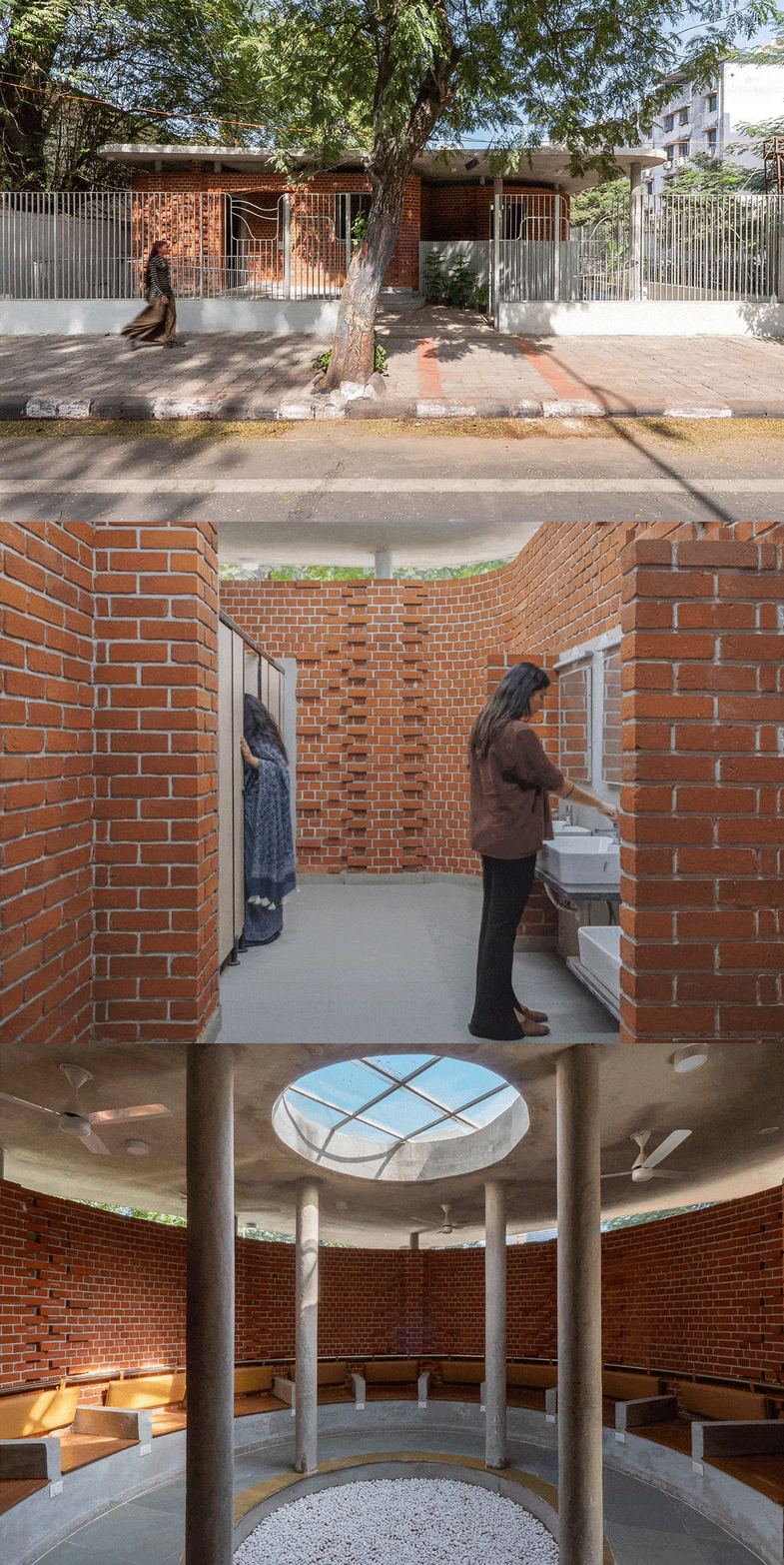
Extending the conversation on accessible design for women in Surat, Aangan Collaborative LLP’s design for SHE Block is conceived as a cluster of breastfeeding centres. Its curved brick walls and sunlit interiors refuse the “sanitation aesthetic” altogether. Senior Associate at the practice, Prakruti Desai, describes it as an urban insert that restores dignity “through humility, light and openness”. What distinguishes it is not only provision but recognition—that caregiving, so often hidden in stairwells or side alleys, deserves an architecture of its own. SHE Block does not resemble a public toilet or a health kiosk; it claims a typology oriented towards care.
When activists demand the right to pee, it can sound absurd. And yet, to urinate without fear, to access a clean stall, to not fall ill for lack of a loo still feels like a privilege in India, until one conforms to a hegemonic ideal.
Architecture, to a great degree in this context, has the ability to create gendered mazes or frictionless access. In the case of public toilets, it has too often done the former. But it doesn’t have to. Inclusive sanitation is not just a public health target. It is a measure of how democratic a city truly is.
The heart of the matter is right here: equity, empathy, water supply, urban policy, spatial imagination. What is needed is for architects, city planners, policymakers and citizens to treat the toilet not as an afterthought, but as the first site of design justice. A well-designed restroom signals to its user that this is a space of inclusion. A locked door, a filthy floor, a sign that doesn’t include your identity—all of these whisper the opposite. In the end, every city must be judged not by how tall its buildings rise, but by how it treats those who have no choice but to squat.
References
1.Official release titled Over 9.5 crore toilets built across India since the launch of Swachh Bharat Mission
from the Press Information Bureau, Government of India
2.https://www.telegraph.co.uk/global-health/climate-and-people/figures-cast-doubt-indian-pms-claims-toilet-building-mission
3.Praja.org report on The status of civic issues in Mumbai with a focus on Public Toilets, Community Toilets, Pollution, May 2024
4.https://coroindia.org/right-to-pee-rtp
5.PIB Delhi official release titled SEPARATE TOILETS FOR TRANSGENDERS IN PUBLIC PLACES for the Ministry of Social Justice & Empowerment
6.https://northeasttoday.in/northeast/assam/assam-tezpur-university-sets-up-gender-neutral-toilet-fostering-inclusive-environment-for-gender-diversity
7.https://www.sulabhinternational.org/sulabh-technologies
8.Human Rights Watch report titled Cleaning Human Waste: "Manual Scavenging," Caste, and Discrimination in India, published August 25, 2014
9.https://www.hindustantimes.com/cities/pune-news/pmc-to-revive-women-s-ti-toilets-initiative-with-new-maintenance-plan-101733246507823.html
10.https://thepalladiumgroup.com/news/Women-Led-Community-Toilets-in-India-Win-Urban-Innovation-Award

by Pranjal Maheshwari Oct 19, 2026
The Mumbai-based architects integrate courtyards, mesh screens and north light trusses to create a dining space that doubles up as a community hub at SR University, Warangal.
by Mrinmayee Bhoot Oct 17, 2026
The Rotterdam-based institute centres the Indian Ocean as a network for exploring material histories and transnational links shaping coastal cultures, positing them as future models.
by Pranjal Maheshwari Oct 16, 2026
At the 2026 Stirling Prize ceremony, Mary Duggan with RUFF Architects, MAKER Architecten and Nakshabid Architects were felicitated for proffering quality housing and social equity.
by Mrinmayee Bhoot Oct 12, 2026
The new Centre for Contemporary Arts, fostering public engagement with art in Uzbekistan, is housed in a tram depot refurbished by the French studio, emulating local craftsmanship.

make your fridays matter with a well-read weekend
Enter your details to sign in
Don’t have an account?
Sign upOr you can sign in with
a single account for all
STIR platforms
All your bookmarks will be available across all your devices.
Stay STIRred
Already have an account?
Sign inOr you can sign up with
Verification link sent to check your inbox or spam folder to complete sign up process
Tap on things that interests you.
Select the Conversation Category you would like to watch
Please enter your details and click submit.
Enter the 6-digit code sent at


The right to go: What a city’s toilets say about its architecture of belonging
by Manasvi Pote | Published on : Oct 17, 2025


 Sign in with Google
 Sign in with email
What do you think?