
Auditorium
Naya Qila
- Architect
- Studio archohm
- Where
- Purana Qila
- Open
- 4 Dec - 21 Mar
About the Auditorium
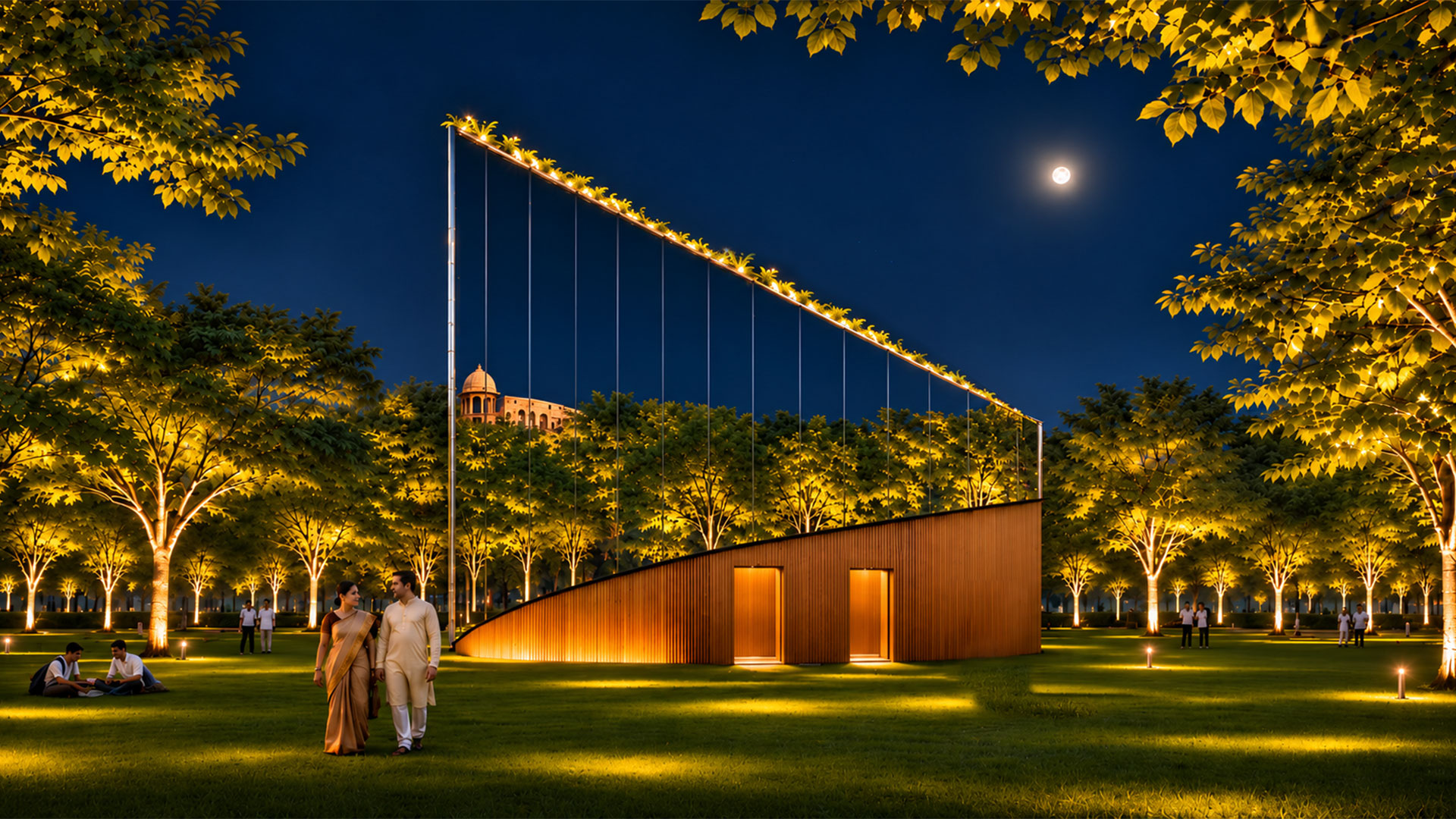
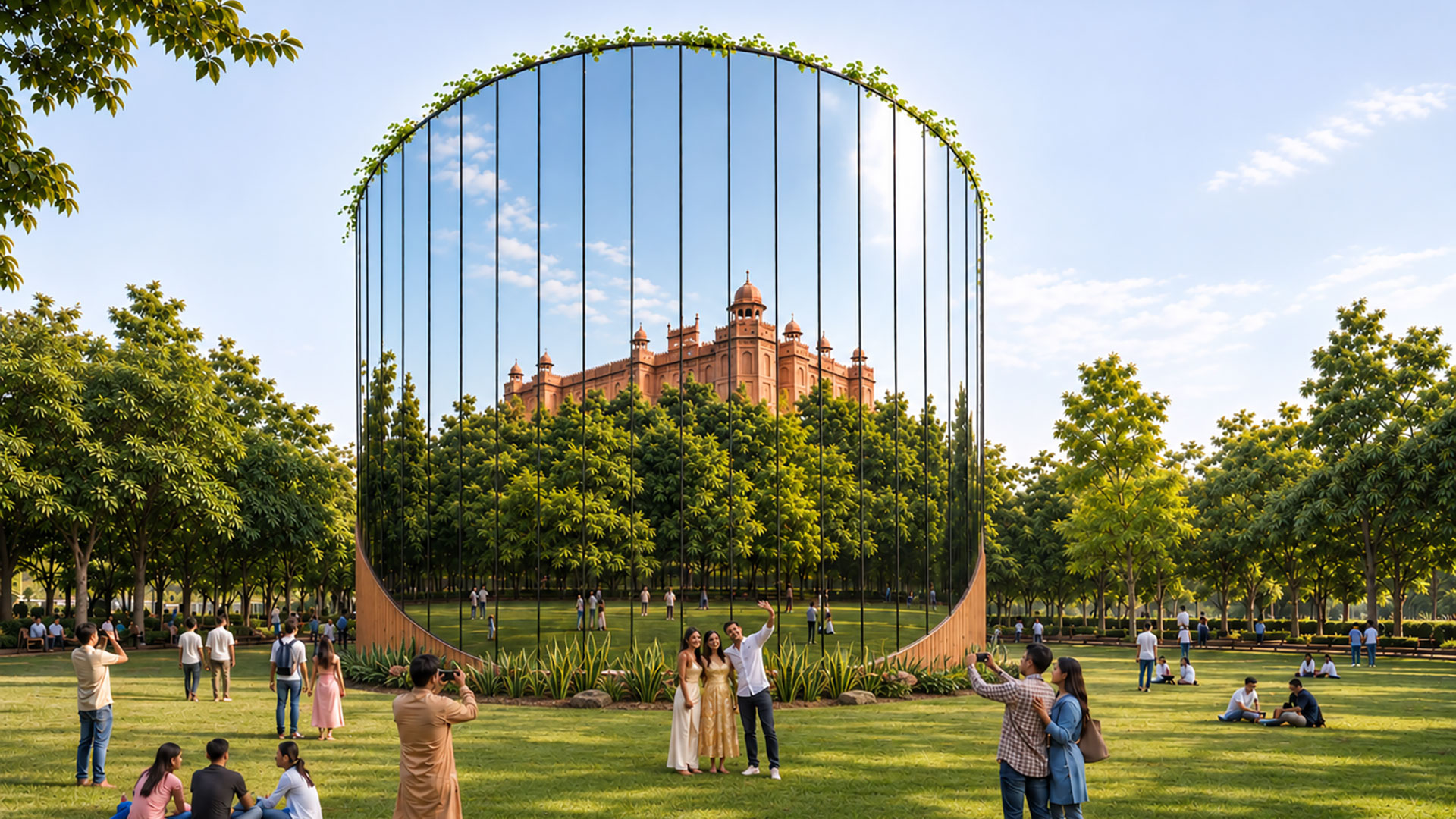
Every year adds a layer to a space, an edifice and with it come renewed meanings and a renewed patina. Naya Qila carries this idea on its surface. Its outer skin works like a mirror. It reflects the historic Old Fort beside it, as a reminder of the beauty of the past and an inspiration for the future. The project sets out to conserve, preserve and celebrate our culture in new ways and with new meanings.
How do we build beside history without imitating it?
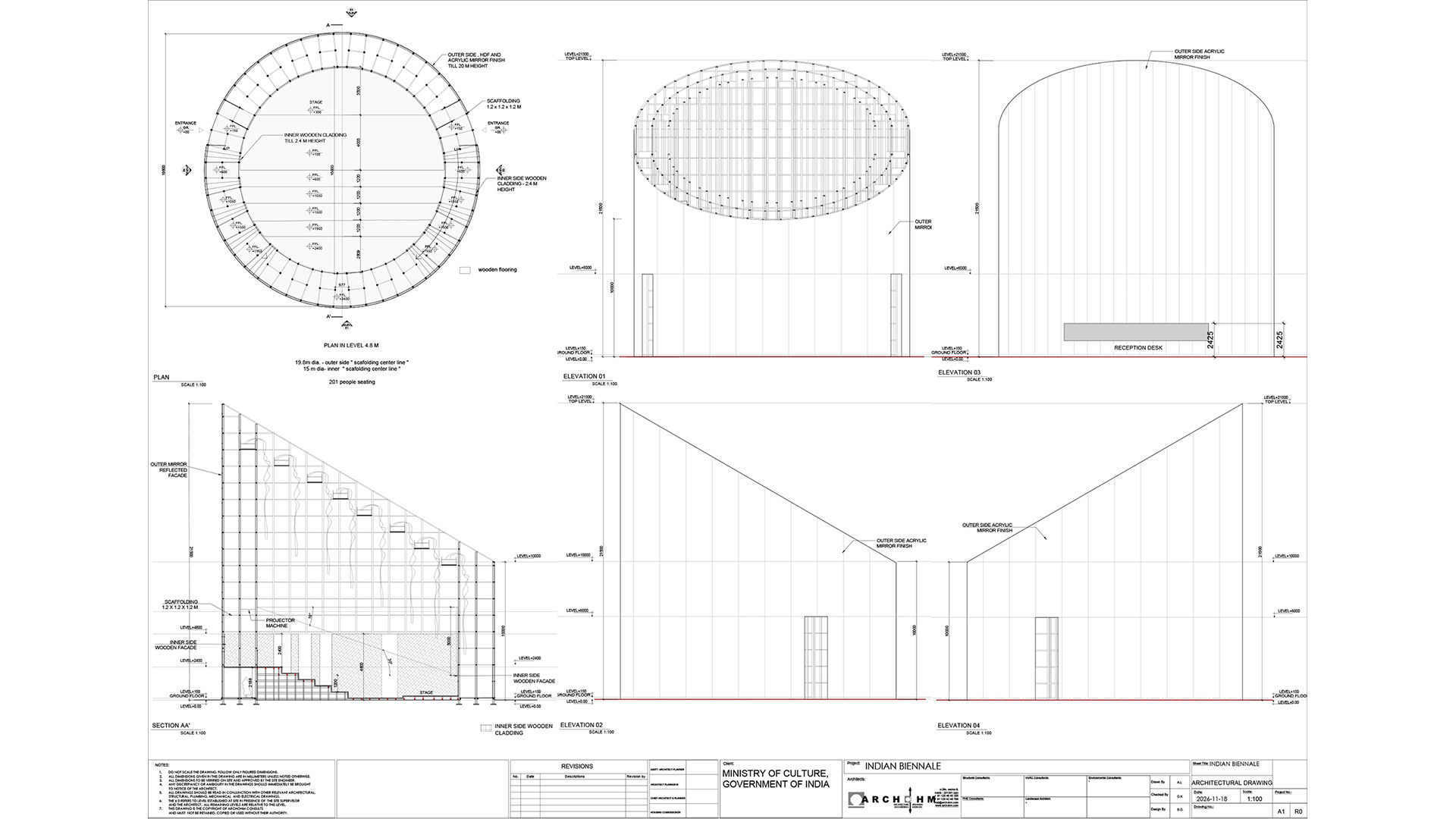
Forts were built for fortification. Their walls, bastions and gates were designed to defend, to protect those within and keep others out. Naya Qila is a contemporary take on the fort, placed beside a historic one. It keeps the fort's sense of enclosure and turns it towards gathering, creating a place where people come together. It draws on the vocabulary of the traditional fort, its bastions, ramparts, arches and jali, and reinterprets each through the materials and needs of today. A 20-metre circular amphitheatre sits within a 3-metre scaffolding ring, rising to a height of 30 metres. The circle was selected over the square and the triangle for its structural stability, as it braces itself in every direction. It encloses without a front or a back, and its height shapes the acoustics of the space within. The bastion is opened up, becoming a place for people to meet, perform and share.
In the historic fort, the wall separates the inside from the outside. In Naya Qila, the wall is inhabited. The ring works as structure, circulation and landscape together. The jali, once a screen against the sun, is reinterpreted as a reflective skin around the frame. Once it shaded the interior. Now it radiates and reflects light from its surface. In its mirrored state, the skin takes on the image of the historic fort so fully that the new building almost disappears. It is a quiet surrender to the grandeur of the past. The new fort steps back and lets the old one speak. The historic fort appears on the face of the new one, and the two buildings, centuries apart, are seen as one.
Naya Qila respects history without repeating it and gives the present a place beside it.
From the auditorium’s presentation