
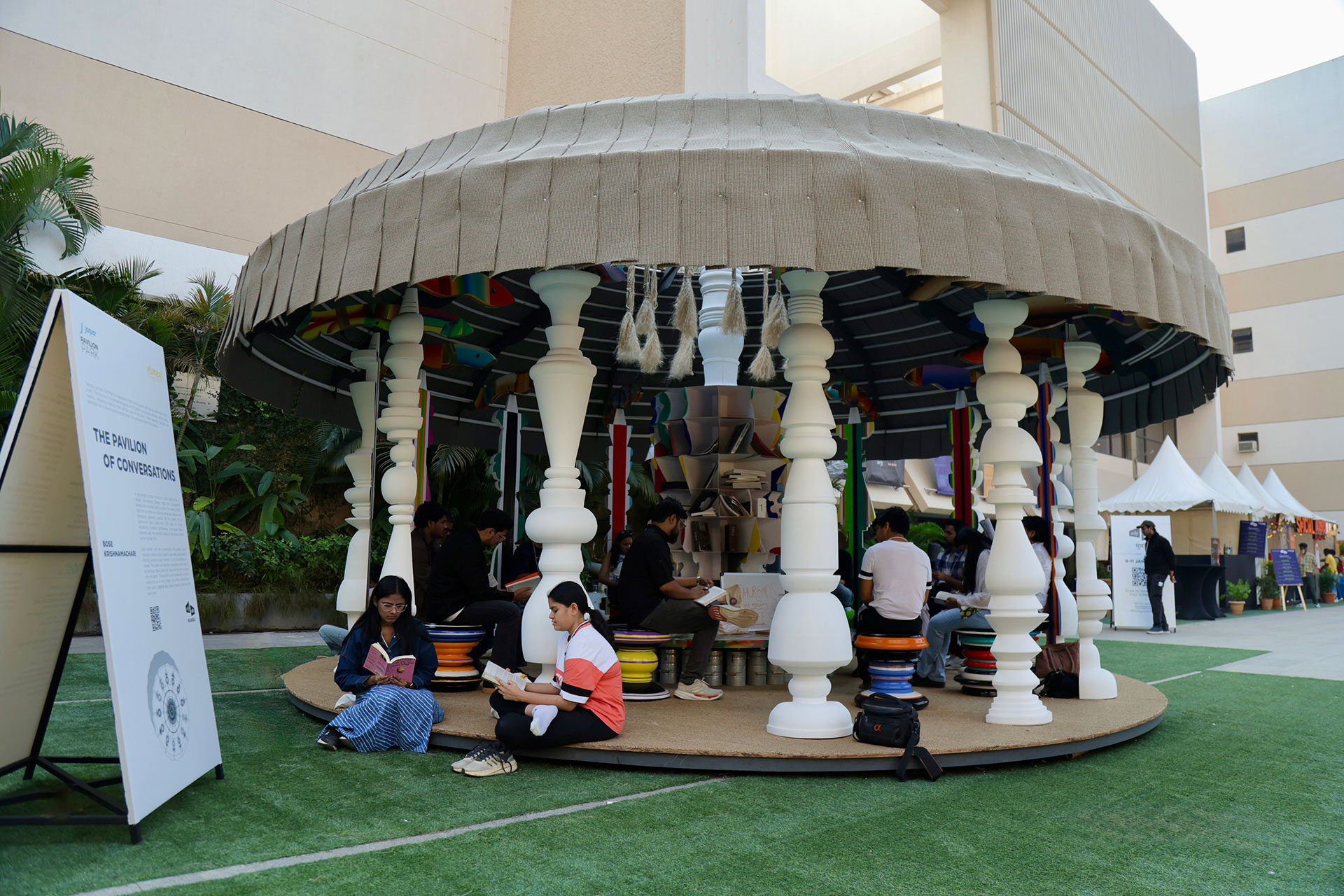
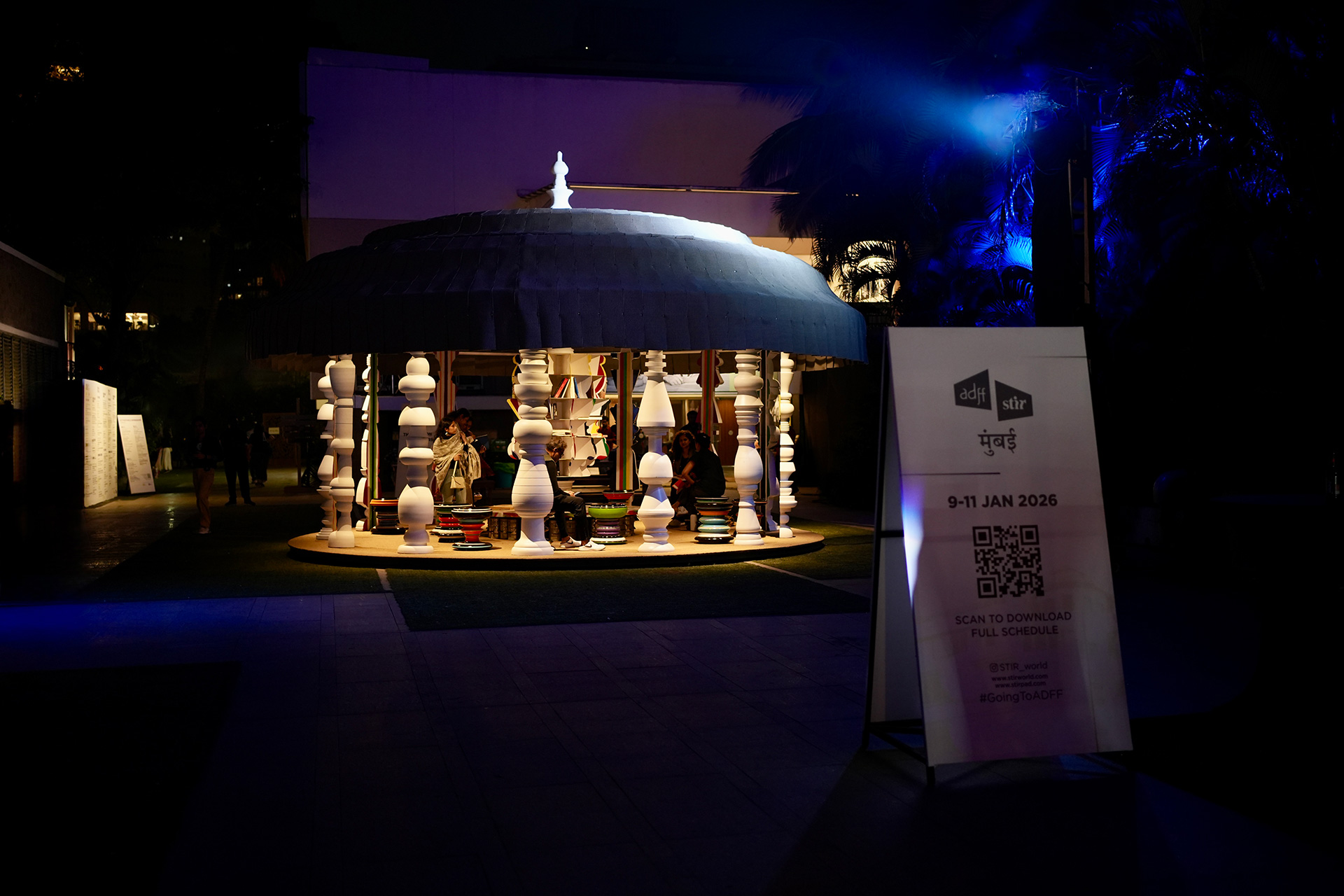
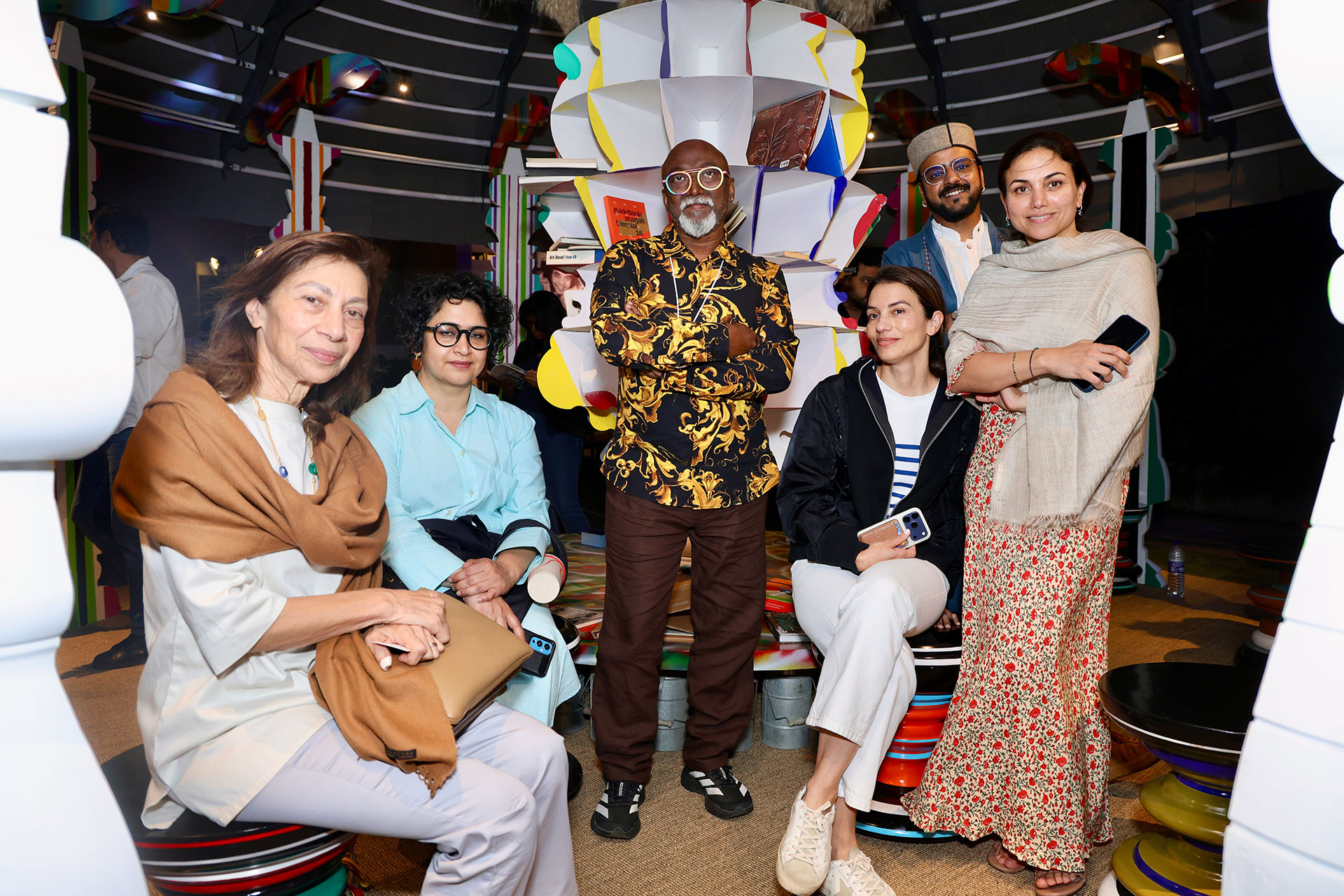
Taking a cue from Tom Marioni’s declaration that “drinking beer with friends is the highest form of art,” The Pavilion of Conversations grows out of ordinary social acts—drinking coffee, eating, reading, debating—treating them as the core of the work. These everyday gestures are extended into a shared spatial setting meant for exchange rather than display.
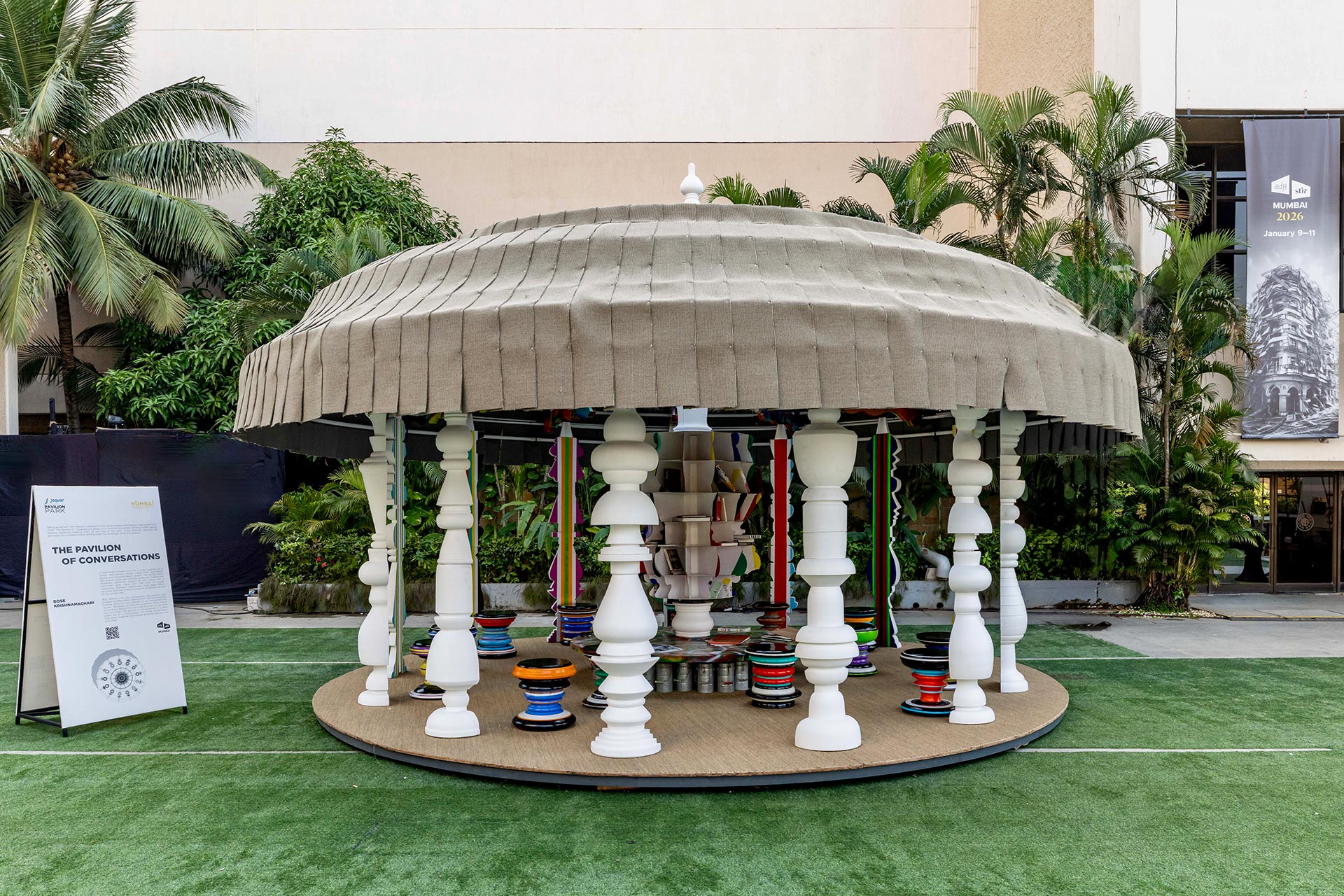
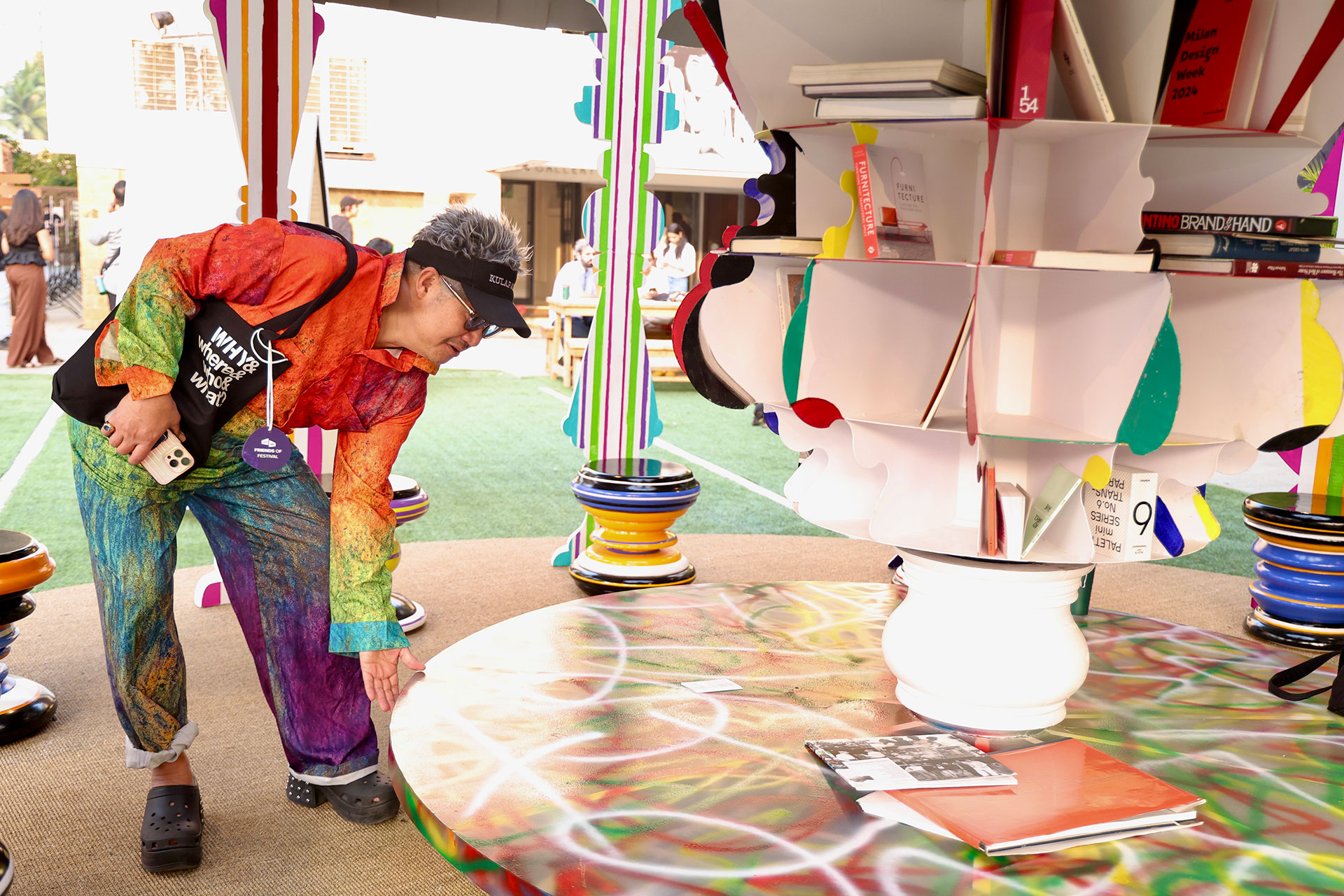
A lightweight circular structure is held together by a ribbed, semi-porous canopy made from repurposed textiles and recycled plastic carpets. The canopy filters light and air, while also echoing vernacular shelters and temporary gathering spaces. At the centre sits a communal table made from 108 steel tin boxes, referencing Mumbai’s dabbawalas, trust-based labour networks and the symbolic sense of wholeness carried by the number 108.
Built entirely with dry connections, the pavilion uses modular wooden pillars, bead-curtain walls and reusable flooring, allowing every element to be dismantled and reused. The pillars can become sculptures, stools return as furniture, fabrics find new lives and the tins go back into circulation. The pavilion is not conceived as a static object but as a living stage; one where conversation, time spent together and shared presence become the work itself.
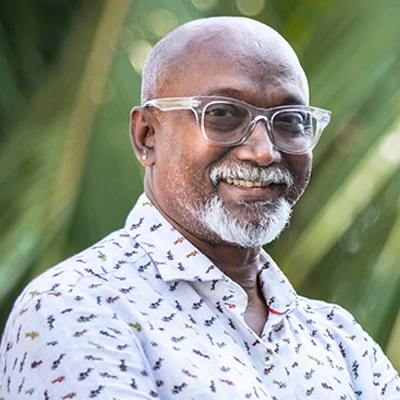
Bose Krishnamachari is an artist, independent curator, and scenographer based between Mumbai and Kochi. A prominent figure in India’s contemporary art scene, he currently serves as the President of the Kochi-Muziris Biennale. His formal art education began at Kerala Kalapeetom, Kochi (1984), followed by a Film Appreciation Course at the Film and Television Institute of India, Pune (1989).