


Details
Since 2001, the Korea Ceramic Foundation (KOCEF) has organised the Gyeonggi Ceramics Biennale, Asia’s premier international biennale dedicated to contemporary ceramics. Each edition attracts more than 230,000 visitors, and over the past two decades the Biennale has developed into a global platform connecting the ceramic heritage of Gyeonggi Province with contemporary artistic practices from around the world.
Through exhibitions, research programs, educational projects, and international collaborations, the Biennale explores the evolving role of ceramics in art, culture and material innovation, while expanding global discourse on clay and material-based practices.
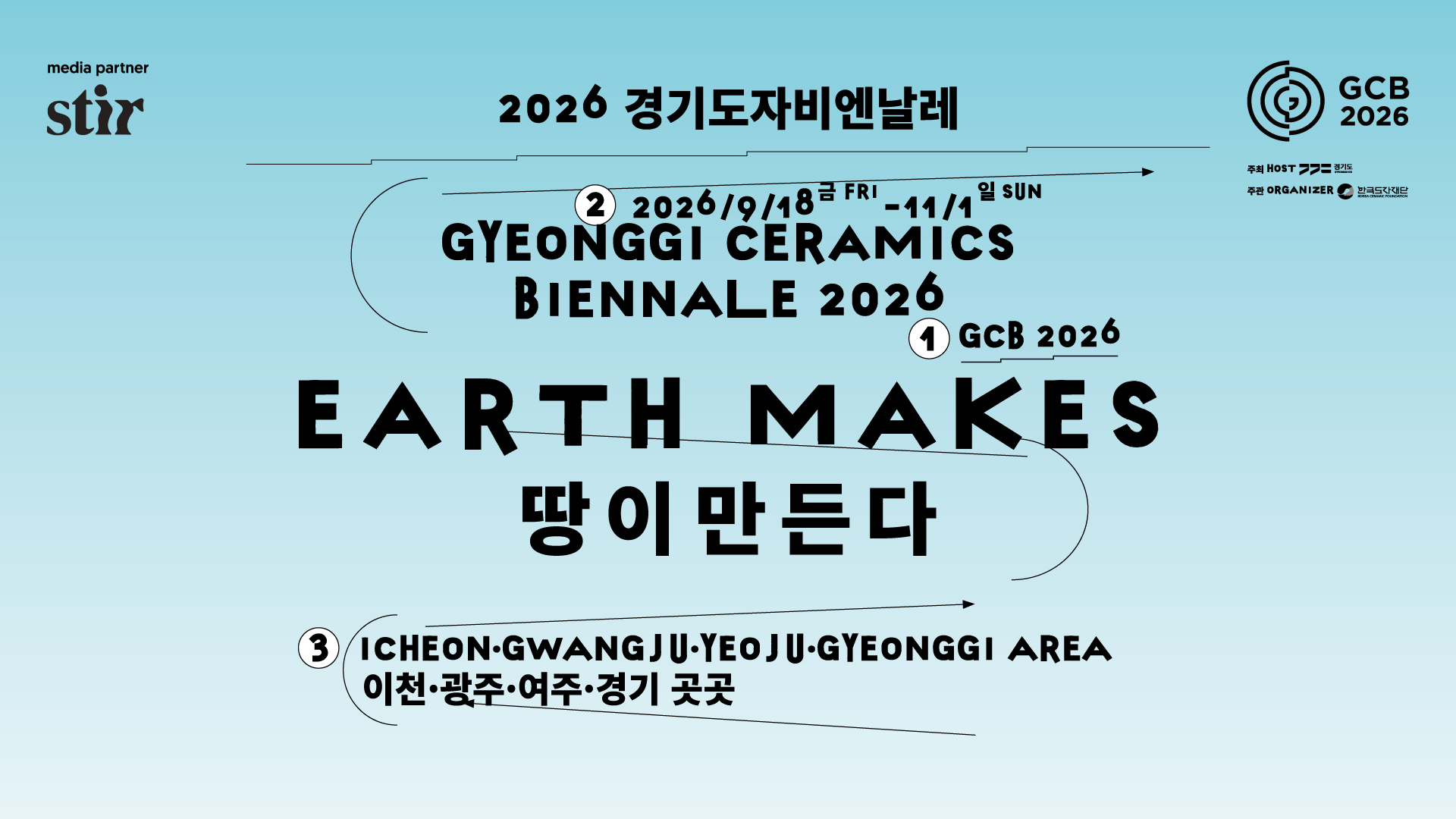
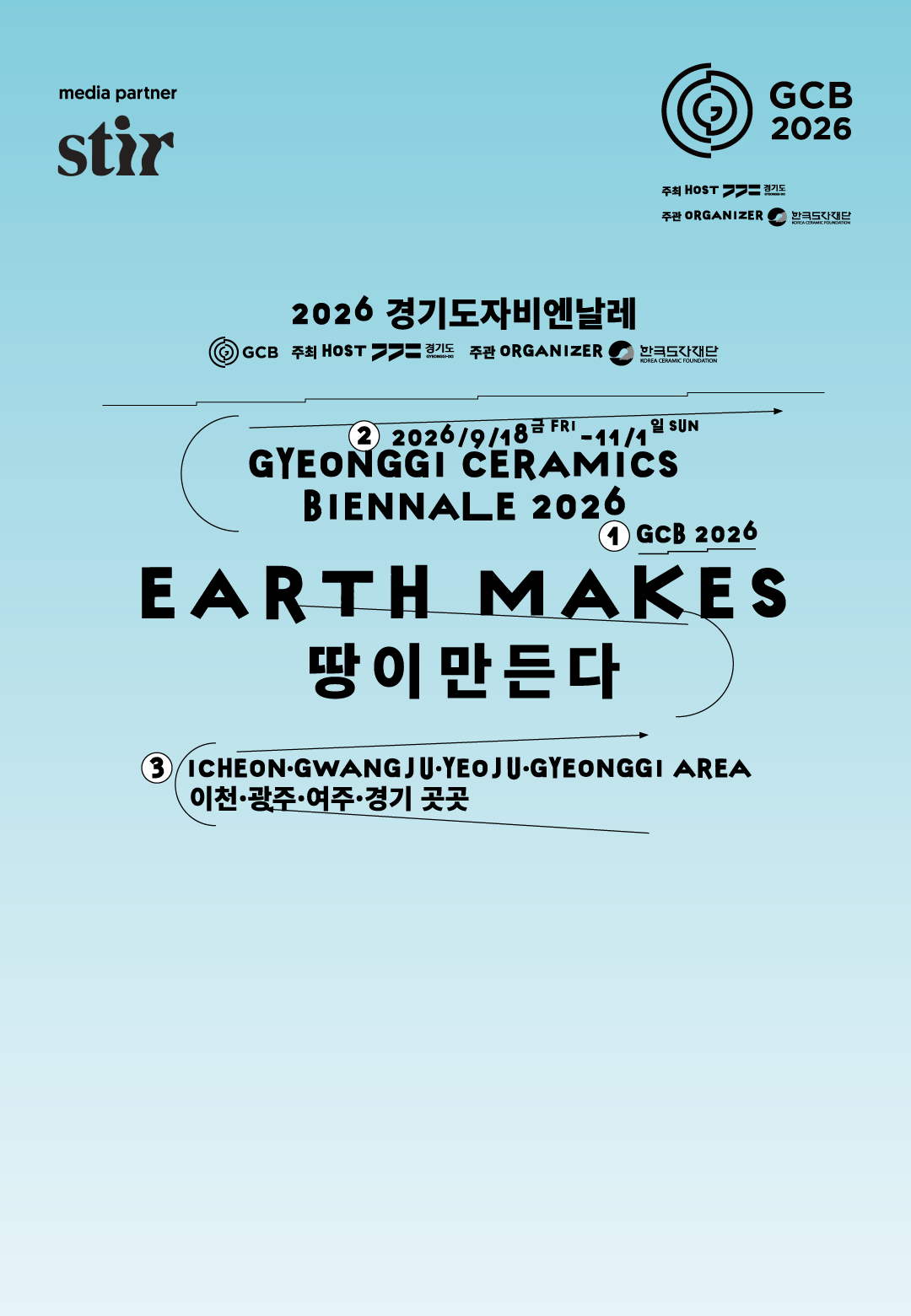
The 2026 edition marks the 13th Biennale and is held under the theme Earth Makes, which explores the philosophical, ecological and spiritual resilience of the earth as the origin of material culture.
This edition moves beyond the idea of ceramics as a medium defined only by form, technique or historical tradition, and instead considers clay as a material shaped by the Earth itself. Through the theme Earth Makes, the Biennale foregrounds the agency of land, minerals, water, fire, climate and time in the making of ceramics.
By bringing together artists from different countries, the Biennale examines how distinct cultural and geographical conditions produce unique material practices, presenting ceramics as a collaboration between human intention, natural processes and cultural environments.
Earth Makes
The theme begins with a fundamental question:
What if artworks are not made solely by human hands, but by the Earth itself?
This perspective shifts the subject of creation from the human to the planet, proposing a transformation in how authorship is understood.
Rather than emphasizing ownership, the exhibition explores art as an act of coexistence, observation and collaboration with the material world.
Core Idea — Co-authorship and Geological Memory
Clay is a primary material shaped by erosion, sedimentation and deep geological time — a record of the Earth’s own processes.
Through firing, the artist does not simply form an object, but reactivates this geological memory. Ceramics emerges at the intersection of intention and accident, design and transformation — a surface where the Earth and the human hand write together.
Exhibition Structure
Made from Earth (The Will of Matter)The first chapter focuses on the three most fundamental elements that constitute ceramics—earth, water and fire.
Ceramics are the result of the invisible order and contingencies generated by earth, water and fire. The viscosity of clay, the discoloration and shrinkage that occur during firing, and the flow and thixotropic behavior of glazes reveal a “will” of materials that emerges beyond human intention. In this chapter, the human is positioned not as the creator, but as a companion who observes and records the traces left by matter itself.
Made by Earth (Culture Shaped by Terrain)
The second chapter addresses the cultural diversity that emerges when earth encounters a place.
When clay meets a region’s climate, water, fuel sources, and ecology, it gives rise to distinct ceramic cultures. Different soils—such as those of Icheon, Gwangju, and Yeoju—shape variations in technique, aesthetics, and ways of life, making ceramics both a tool of daily living and a product of local terrain. Within a map-like spatial composition, visitors experience how earth functions as a language that connects geological conditions with cultural forms.
Made in Earth (Planetary Narratives)
The third chapter turns its gaze toward the future.
Ceramics become a question about what lies ahead. Glazes made from waste glass and industrial by-products, biodegradable clay, and low-temperature firing shift ceramics from a medium of resource consumption to a testing ground for sustainable systems. Through the lens of “future archaeology,” ceramics are presented as a planetary recording medium where humans and non-humans, technology, and ecology intersect. Ultimately, the focus moves from what we leave behind to what kind of ethics we leave behind.
Locations
Icheon:
Gyeonggi Museum of Contemporary Ceramic Art (GMoCCA)
263 Gyeongchungdae-ro 2697 beon-gil, Icheon, Gyeonggi-do, Republic of Korea
Gwangju:
Gyeonggi Ceramic Museum (GCM)
727 Gyeongchungdae-ro, Gonjiam-eup, Gwangju, Gyeonggi-do, Republic of Korea
Yeoju:
Gyeonggi Museum of Ceramic Design (GMCM)
7 Silleuksa-gil, Yeoju, Gyeonggi-do, Republic of Korea

 Sign in with Google
 Sign in with email