Architecture07 mins. read
Prokš Přikryl architekti orchestrates a duel between rationality and monumentality
by Alisha LadJul 30, 2024



by Anmol AhujaPublished on : Jan 09, 2024
There lies a certain disarmament in architectures dealing with a certain hydrological force, manmade or natural. It is indicative of—at least on the surface—a return to something elemental, beckoning simplicity and primordiality itself, irrespective of the visual appearance or qualities such an architecture may manifest. Much akin to biophilia, some architectures may come to mimic the liquid’s fluid state and a reverence for non-conformity of the orthogonal. Interestingly, a near-polar reversal, especially in formal language, seems to occur when it comes to an architecture that harbours or stores water and has to do with containing it as a force wherein necessary technical parameters seem to take precedence over formal or stylistic language. Dams, water tanks (both subterranean and overground), and even swimming pools tread the liminal interface between infrastructure and amenity and may be regarded more as feats of engineering than architecture, despite being essential visual—even urban—markers. Cultures around the world have attempted to aestheticise and appropriate this sect of architecture, both collectively and individually, with colour, myriad forms, and even kitsch. In the absence of it, a modernist, brutal outlook, aesthetic, and construction falls right in line with the latter kind of hydrological architecture.
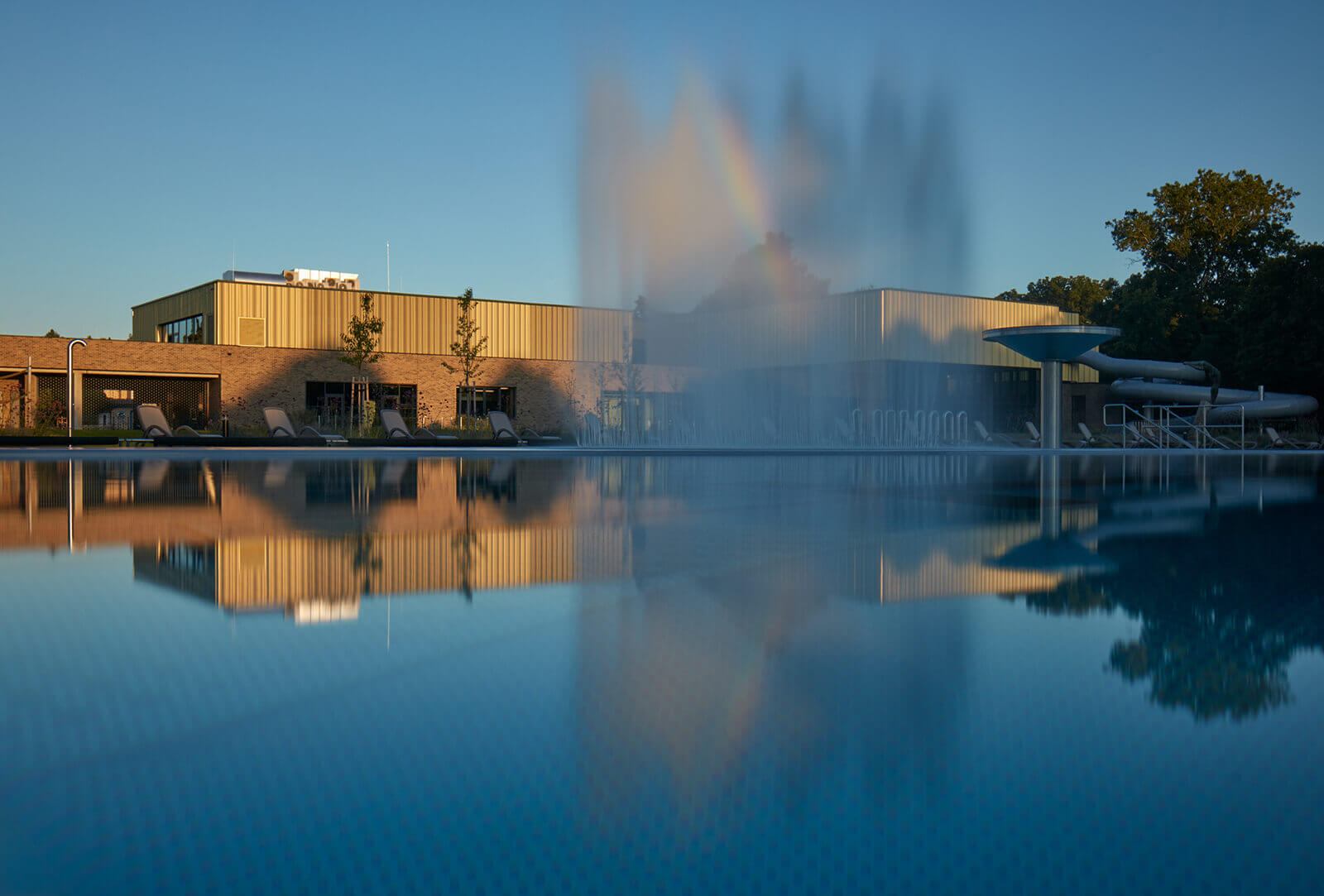
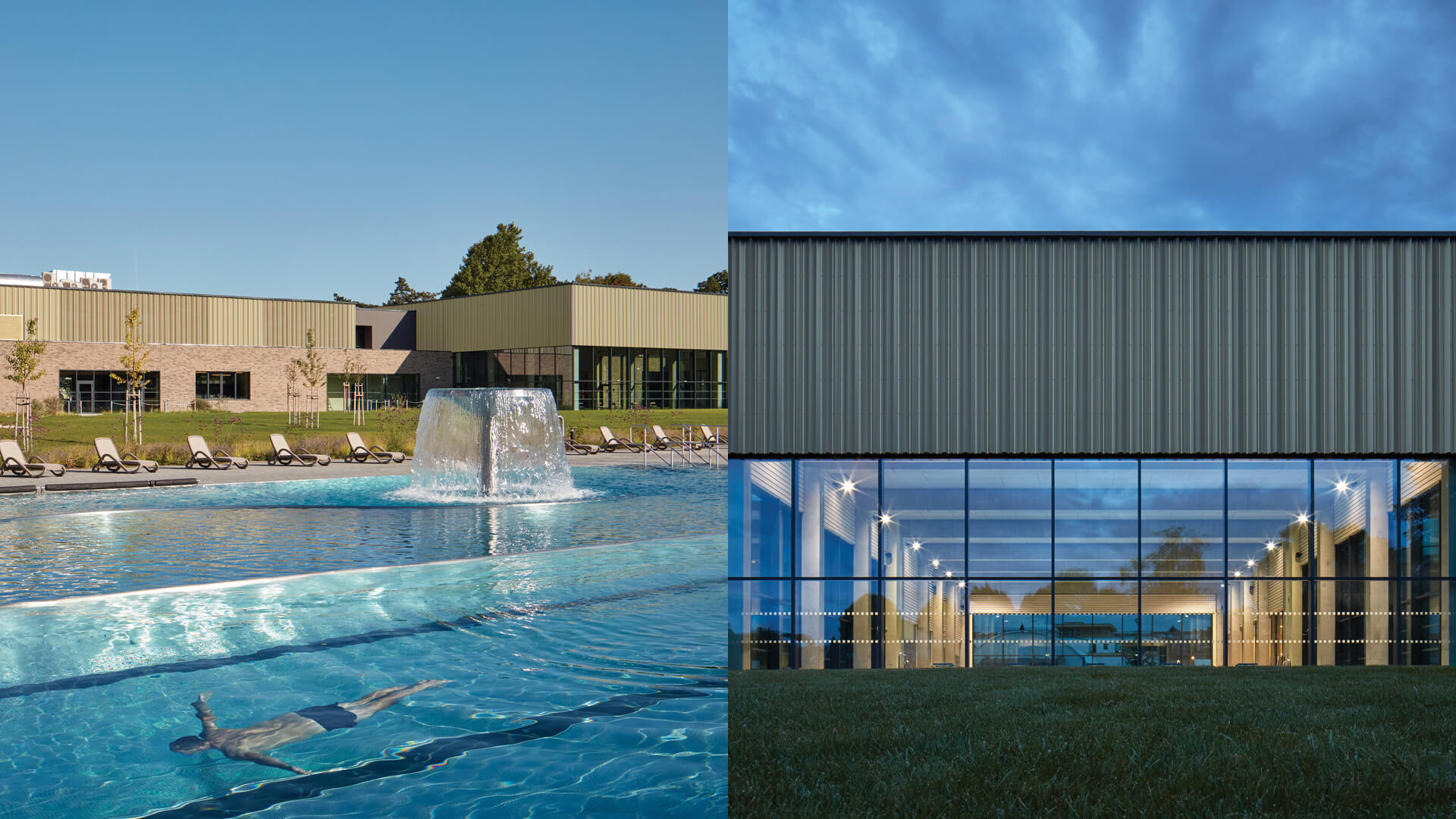
The interesting tension between modernisation as a process and modernism as a bona fide age and stylistic leaning in architecture is what, for me, guides the design of The Aquapark Sport and Relaxation Centre in Kyjov, Czech Republic. The design of the Aquapark by SENAA architekti is wonderfully retro, leaning towards functionalism but not without an unmistakable style of which several nods to modernist masters can be singled out. The strictly cuboidal volume of the enclosure harbouring the indoor pool, for instance, has obvious allusions to Mies Van Der Rohe’s sect of minimal modern, along with bare glimpses of hi-tech architecture from the 70s with its extensive use of metal in its facade and the many related augments—like the slide—springing off of an essentialist ‘shell’.
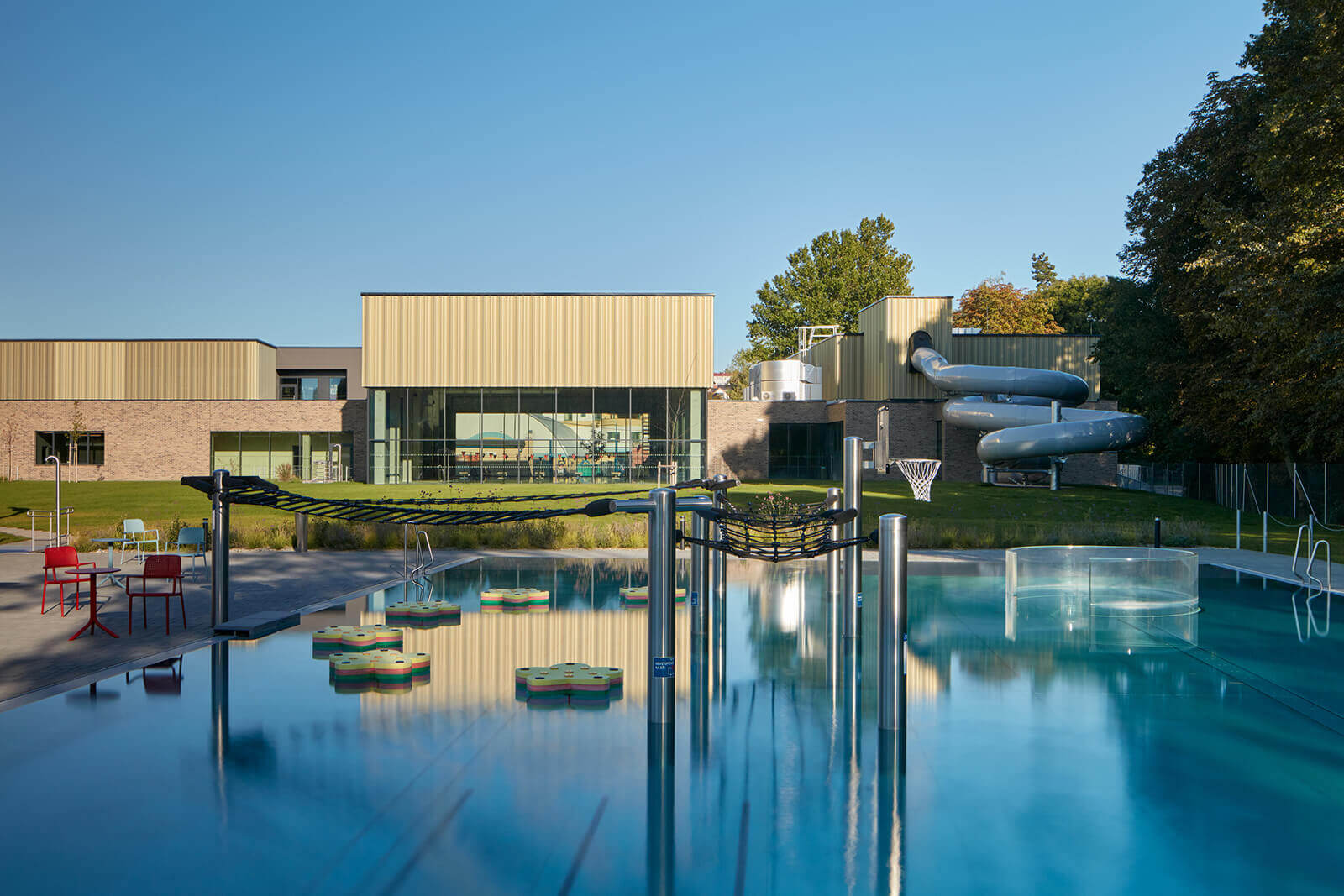
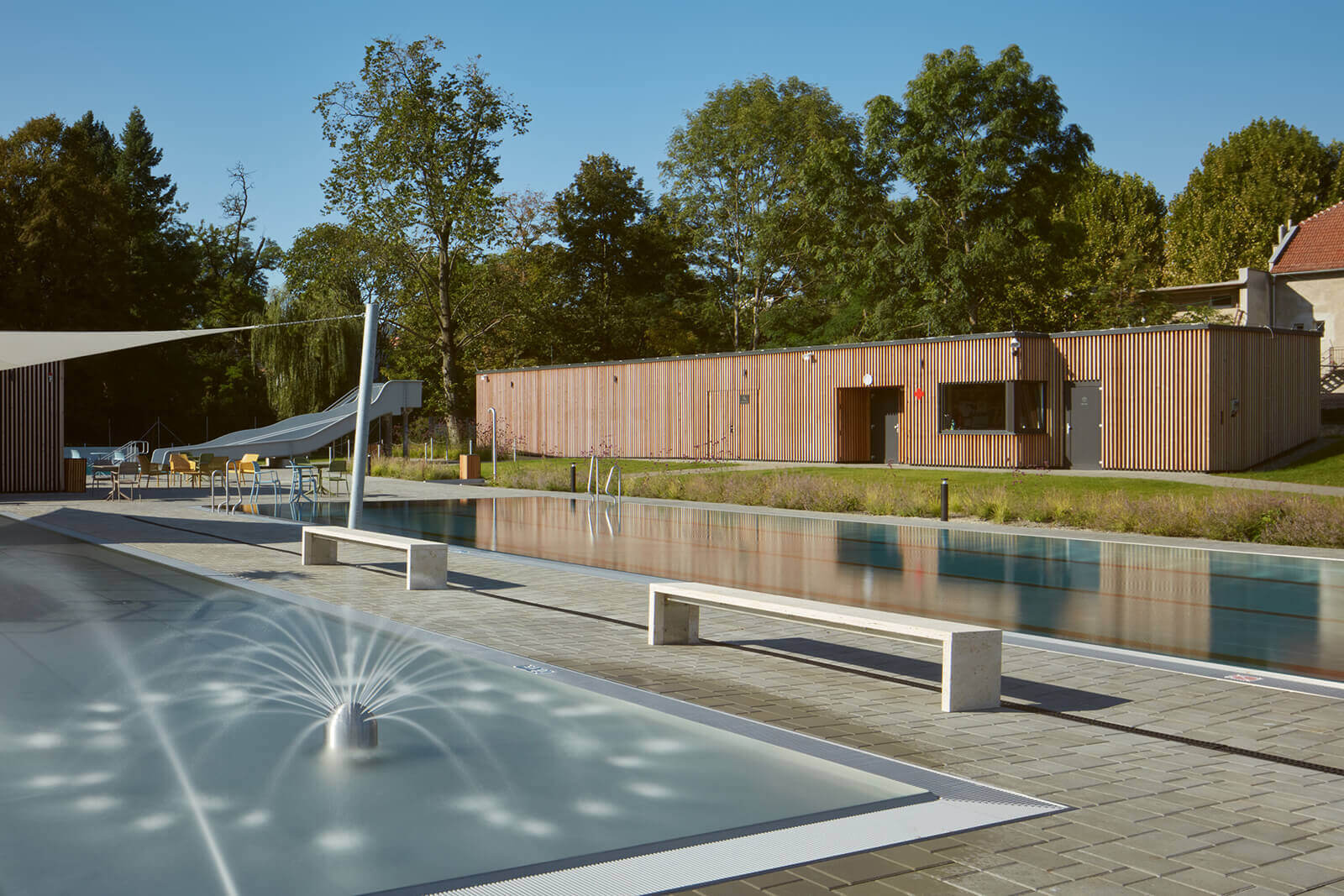
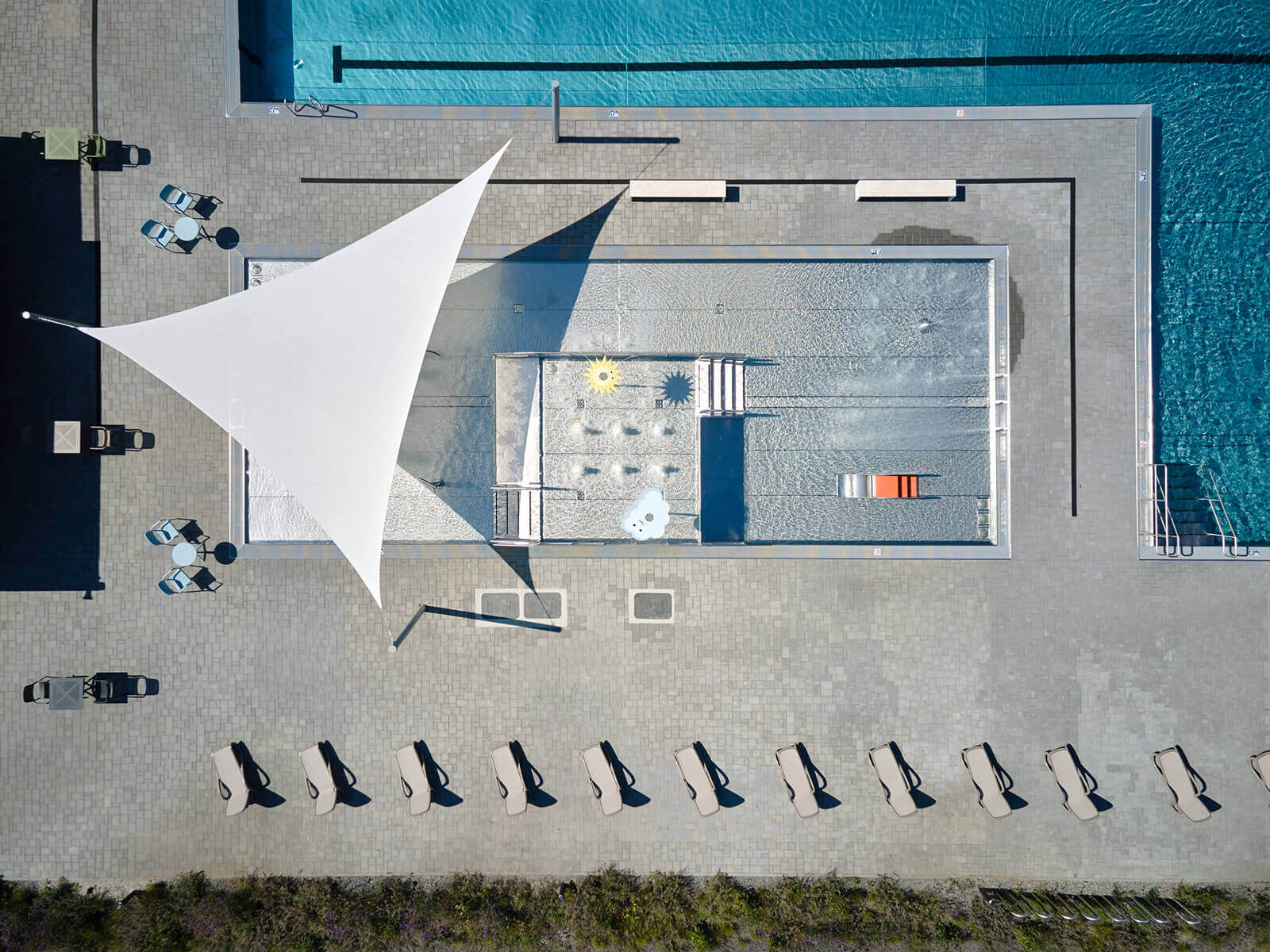
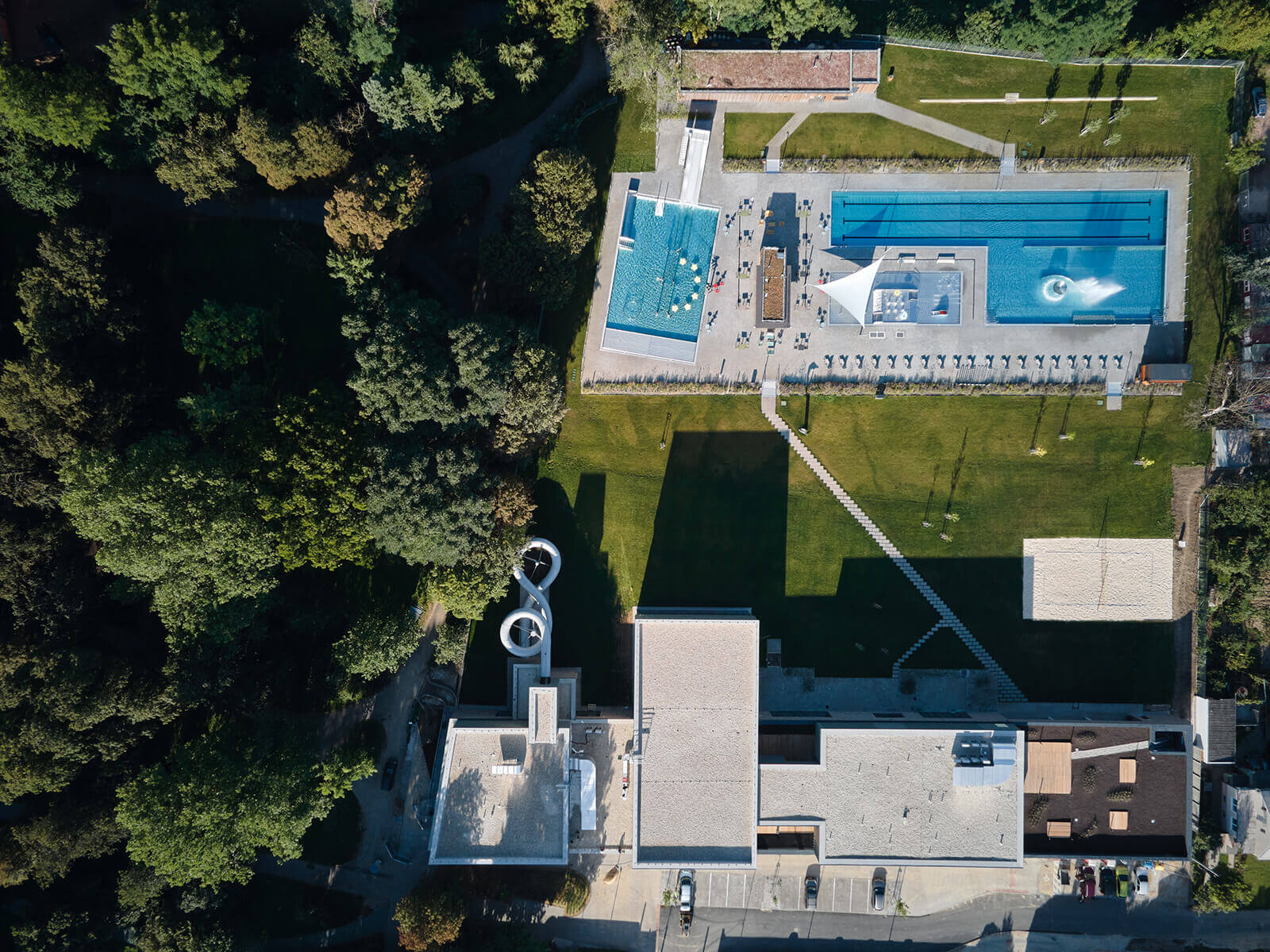
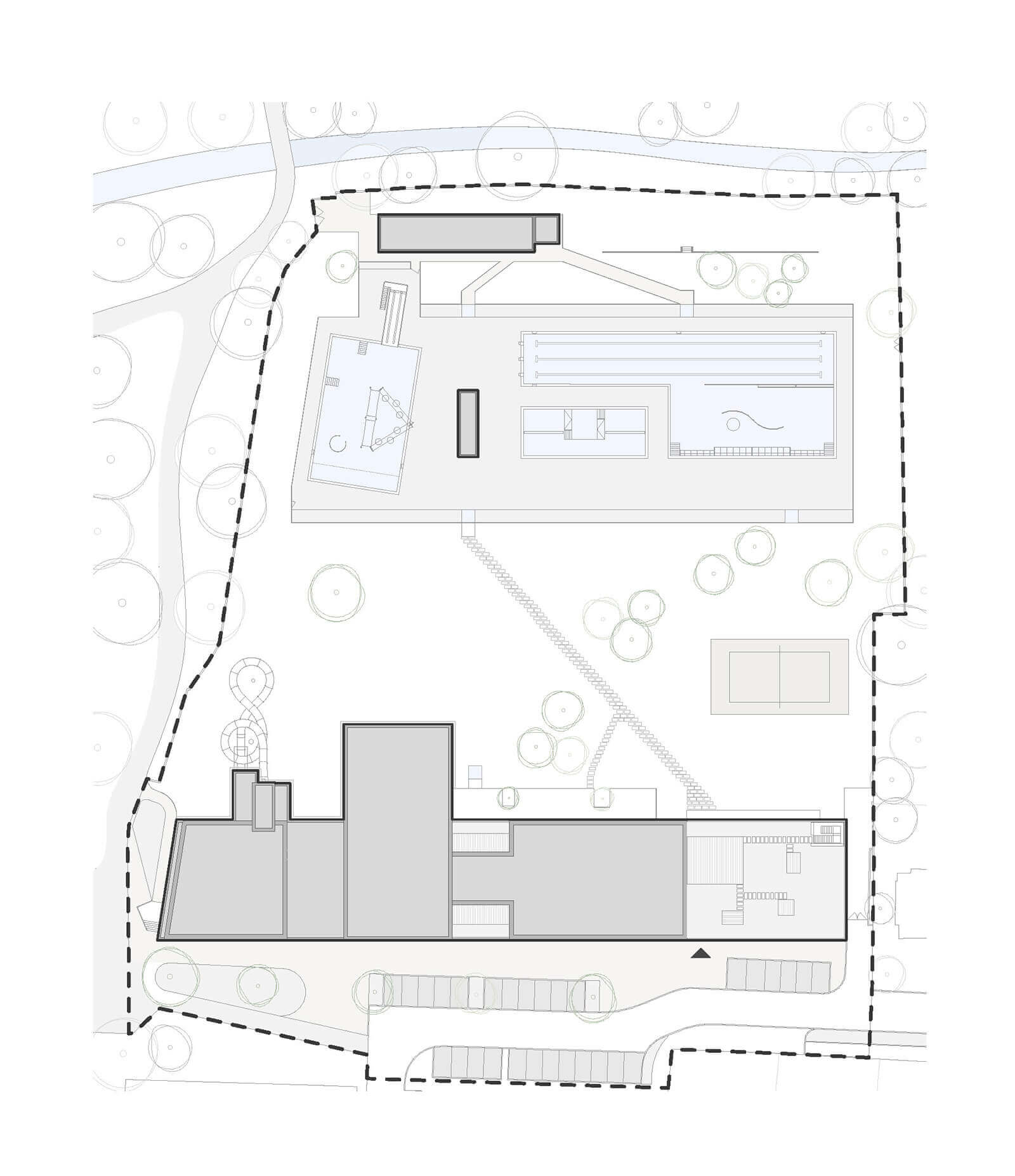
The architects describe the inception of the project as the modernisation of the outdoor public swimming pool design that dates back to the early 20th century with the establishment of the river swimming spa. The ‘modernisation’ eventually led to the construction of a new indoor pool to complement it, and other ancillary structures to constitute a complex, being greenlit. Historicity seems an essential backbone for the project, both in terms of influence and context, with the project’s location triangulated between the city centre, Central Kyjov Park, and the existing city fabric, serving as further impetus for a chance interactibility for pedestrians. While the site is affronted by 100-year-old trees on the side of the existing context, the new forecourt for the outdoor pool also extends and is tied seamlessly with the pedestrian and cycling route from the city centre. Revitalised greenery, improved paving, a cafe, and other urban amenities invite passers-by into the complex and onto the outdoor terraces accessible from the lobby.
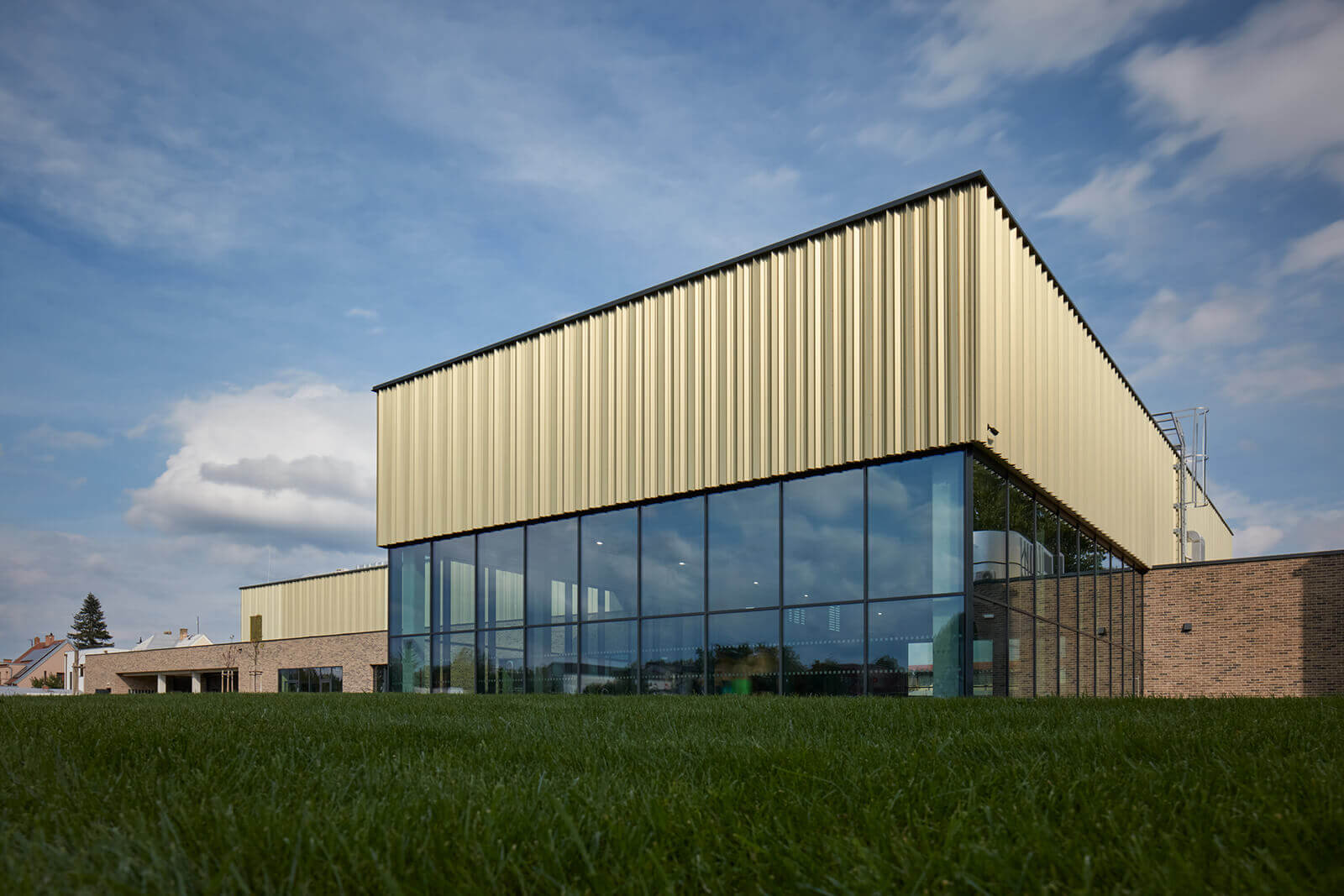
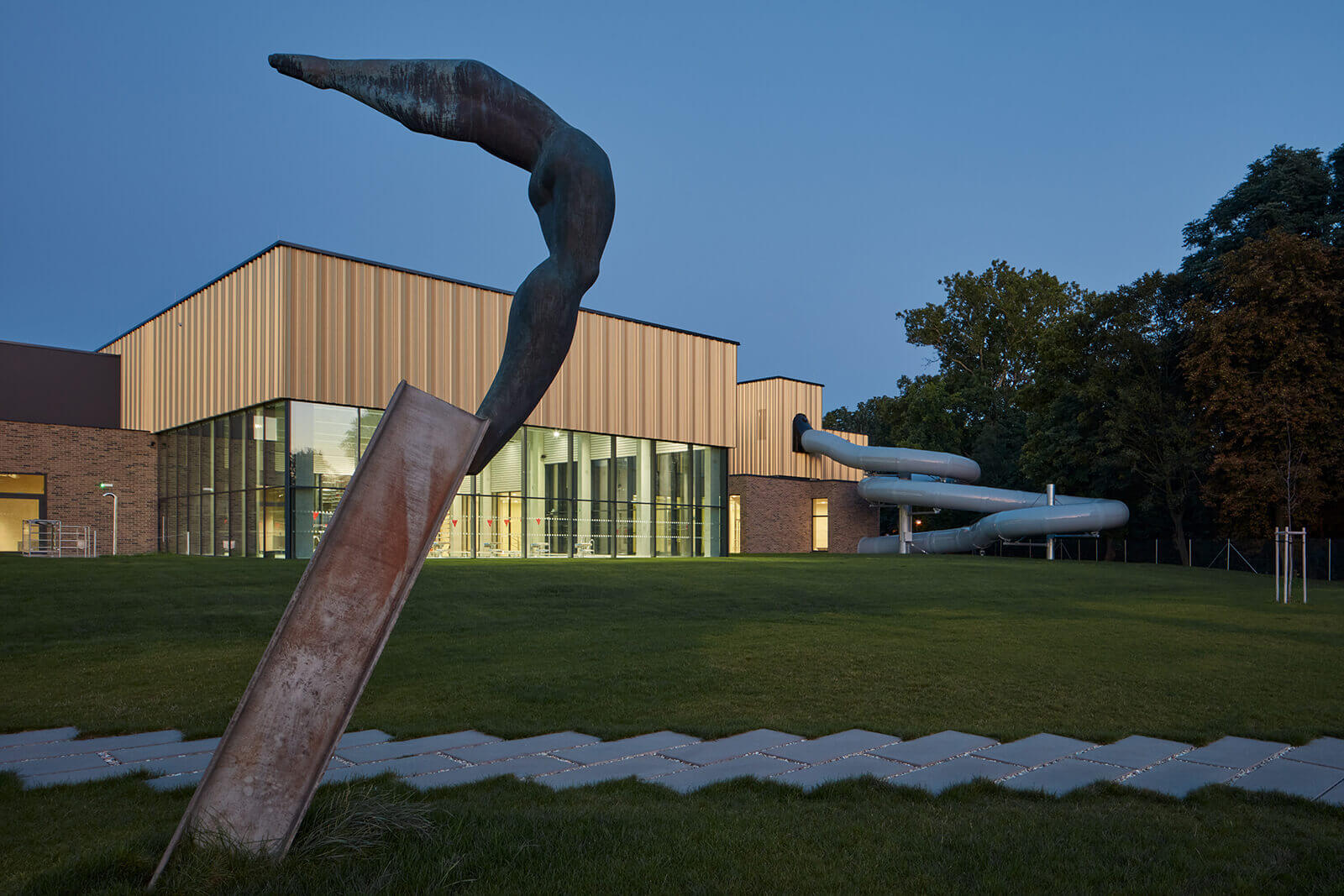
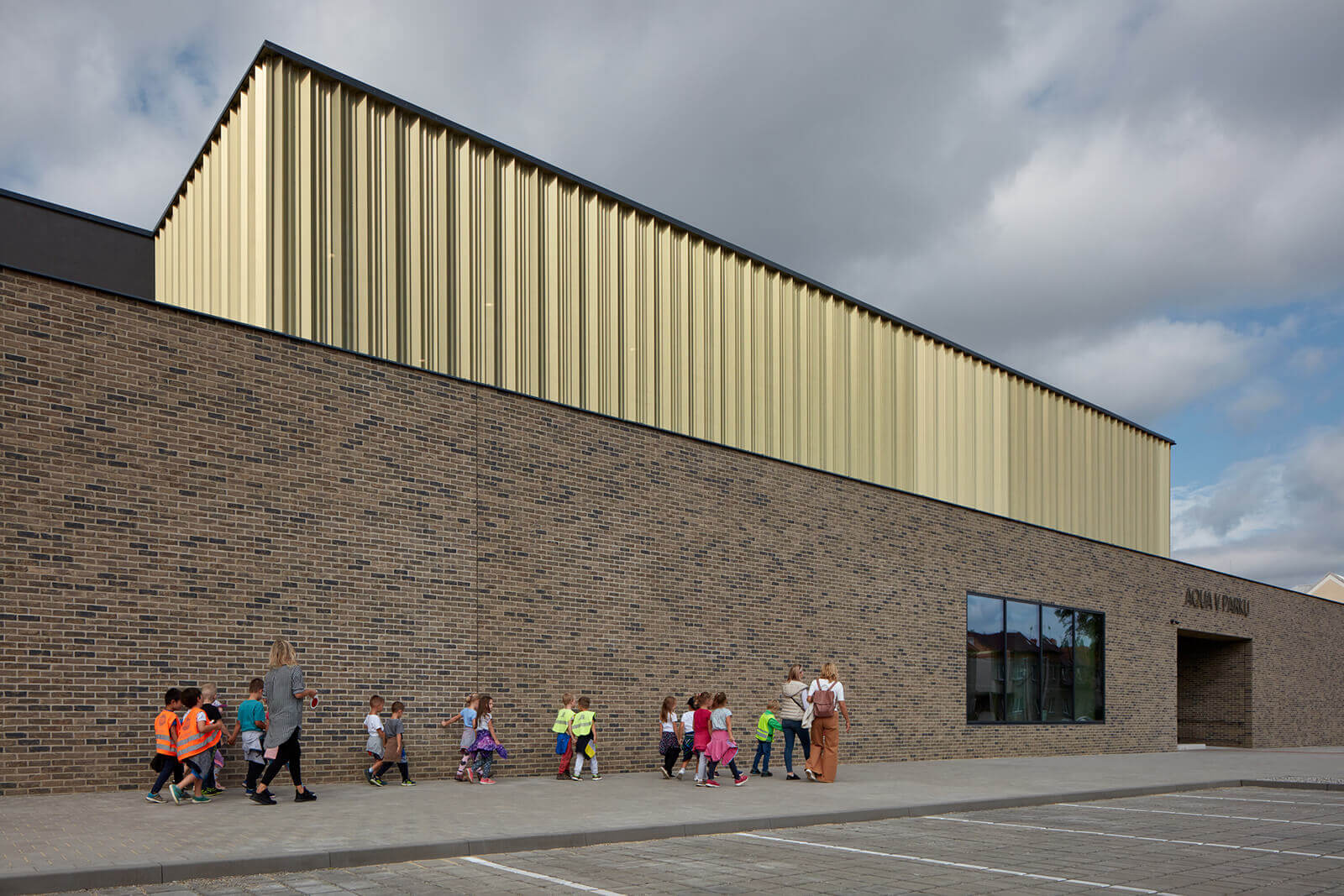
The built is parallely aligned with the outdoor swimming pool with carefully designed pedestrian walkways and landscape design separating the two, forming a prominent yet softly transitioning threshold between the ‘inside’ and ‘outside’—all the more pronounced in the case of a building operating in these dualities. While maintaining visual contact between the two major pools, the facade of the new building is clad in brick strips on the ground level, and gold-coloured perforated sheet metal on the upper level, forming distinct horizontal striations and spatial hierarchies. The indoor pool finds itself aligned at right angles with the outdoor pool to enhance the sense of connection, especially in direction of movement, even if not in proximity. With the pool chamber being fully surface-glazed with clear glass, users of the pool may experience the expanse of the landscape outside.
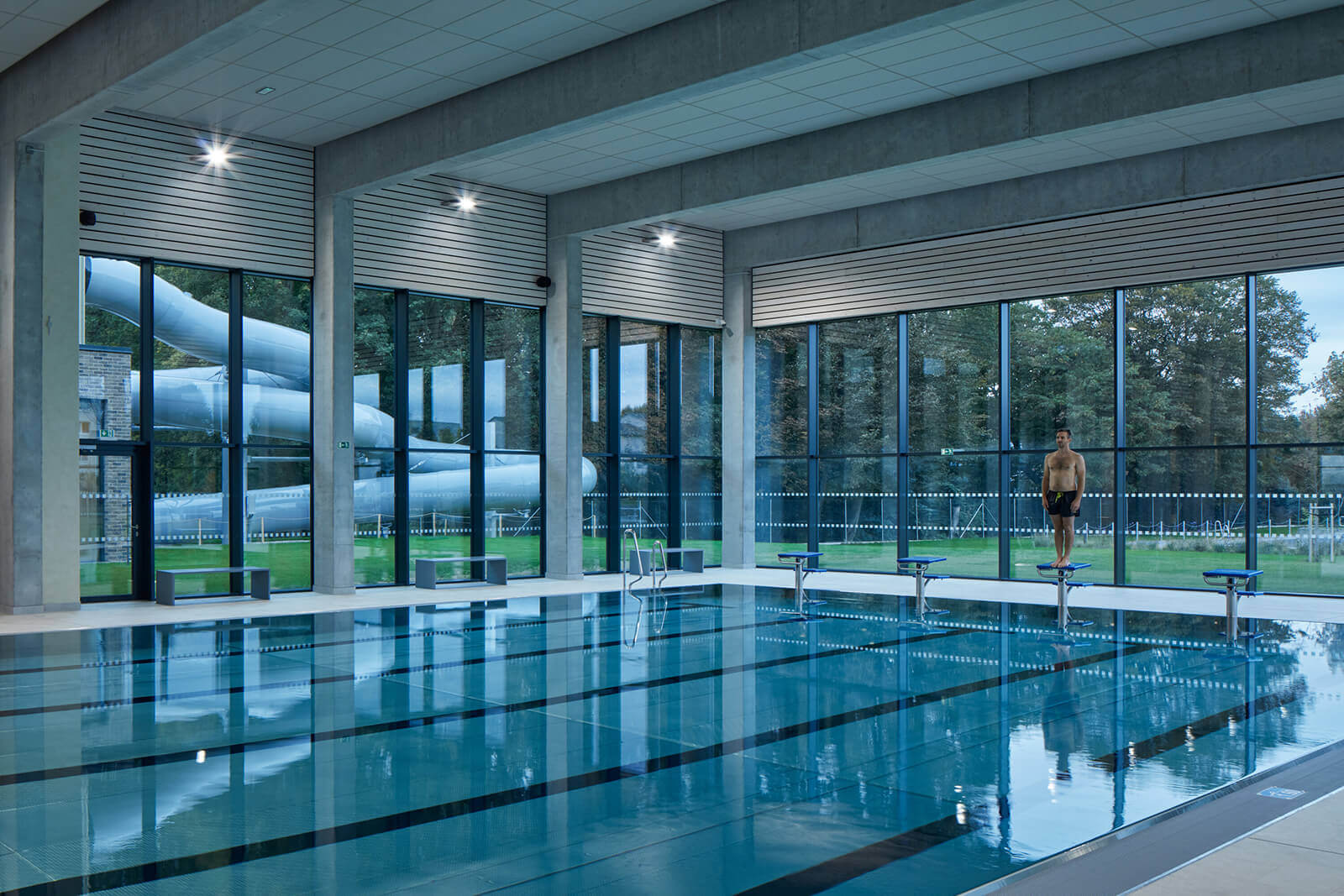
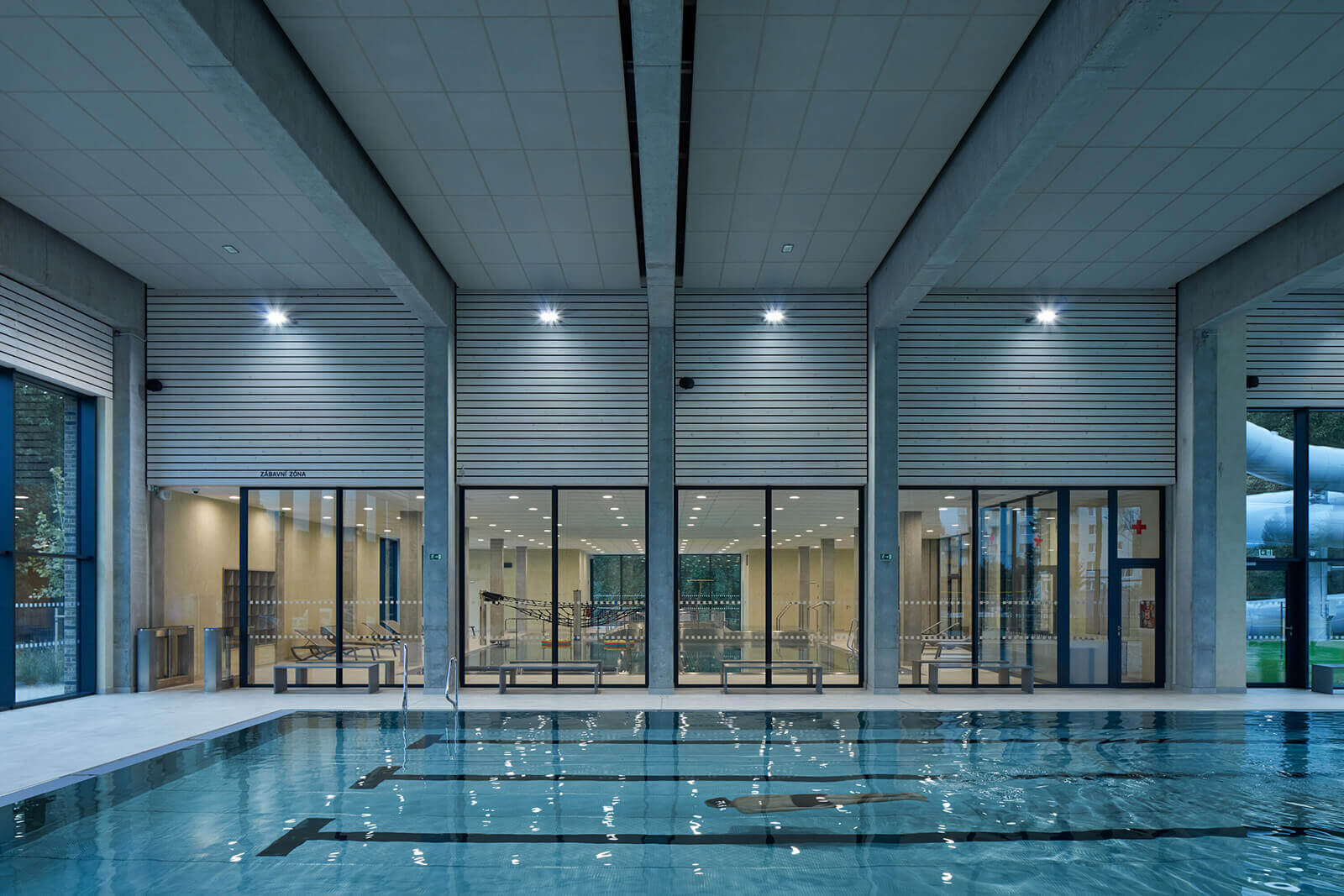
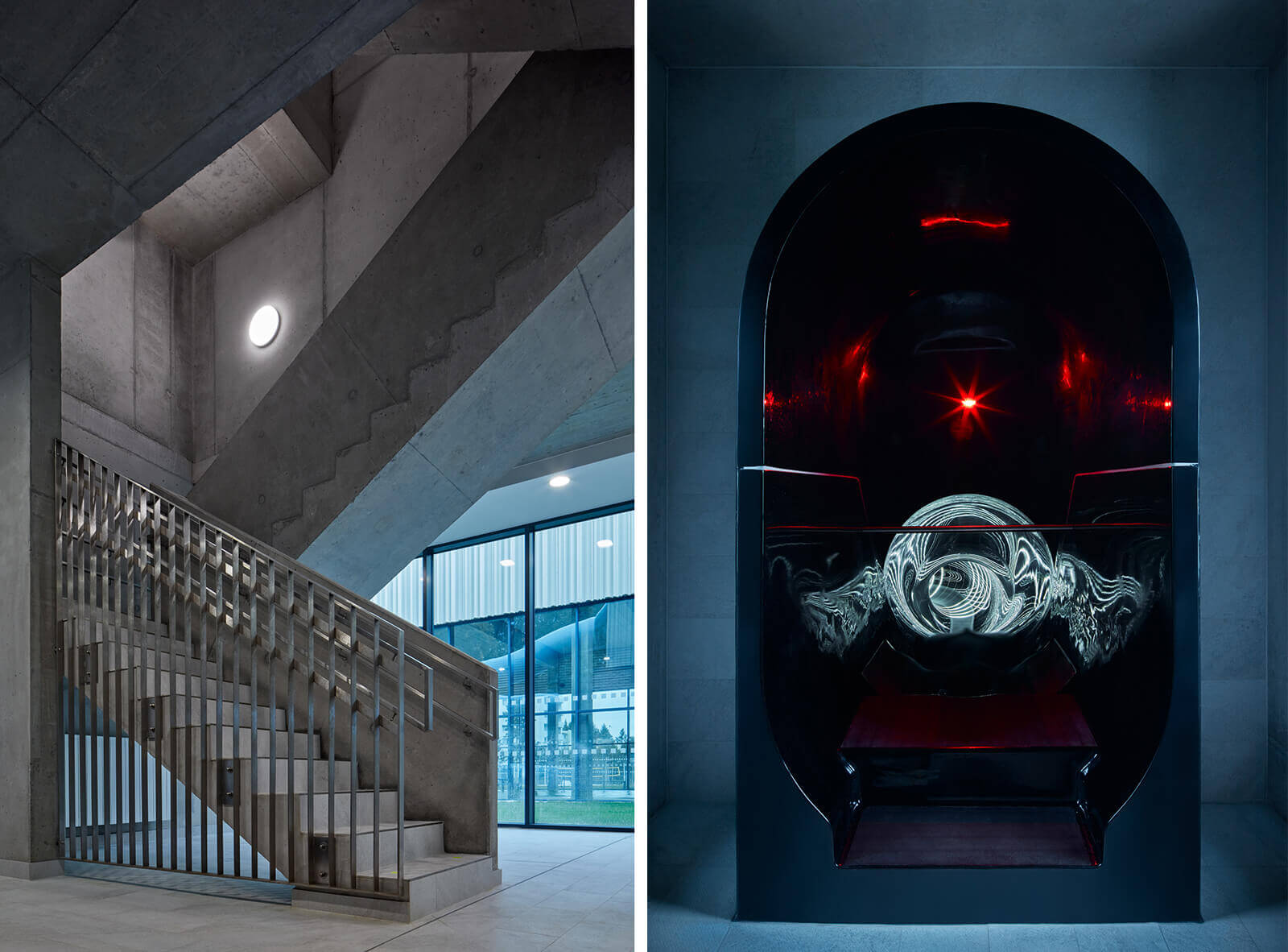
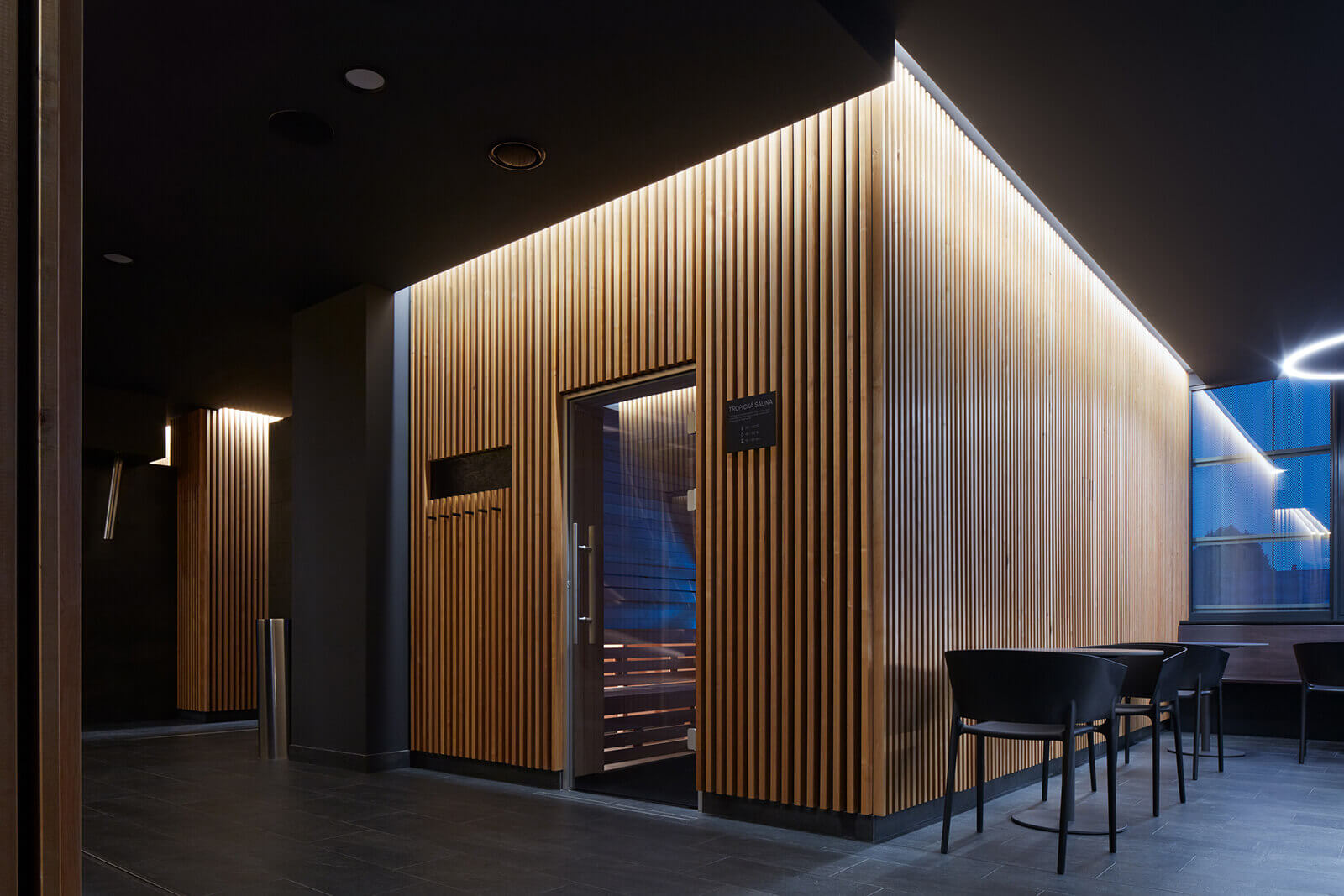
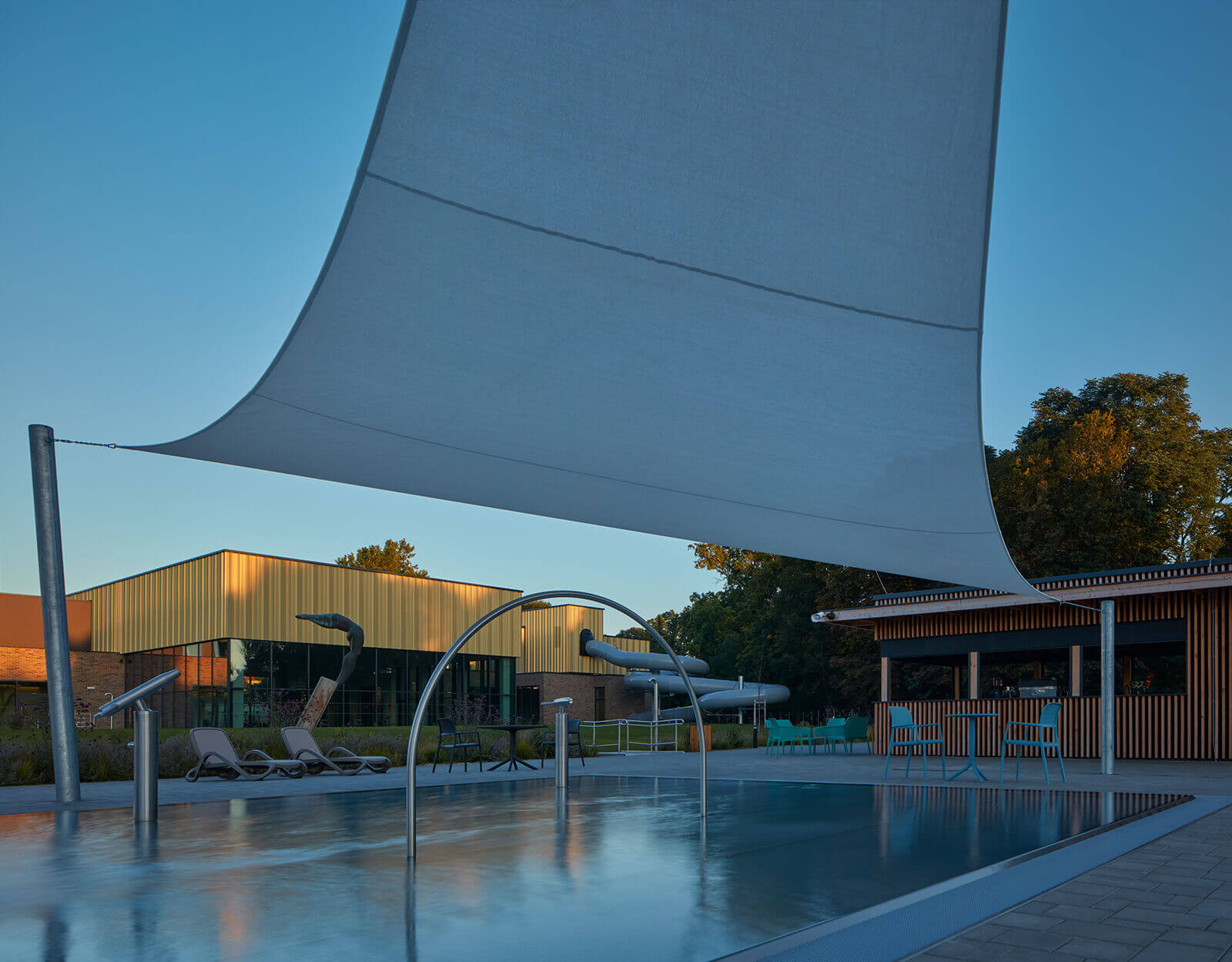
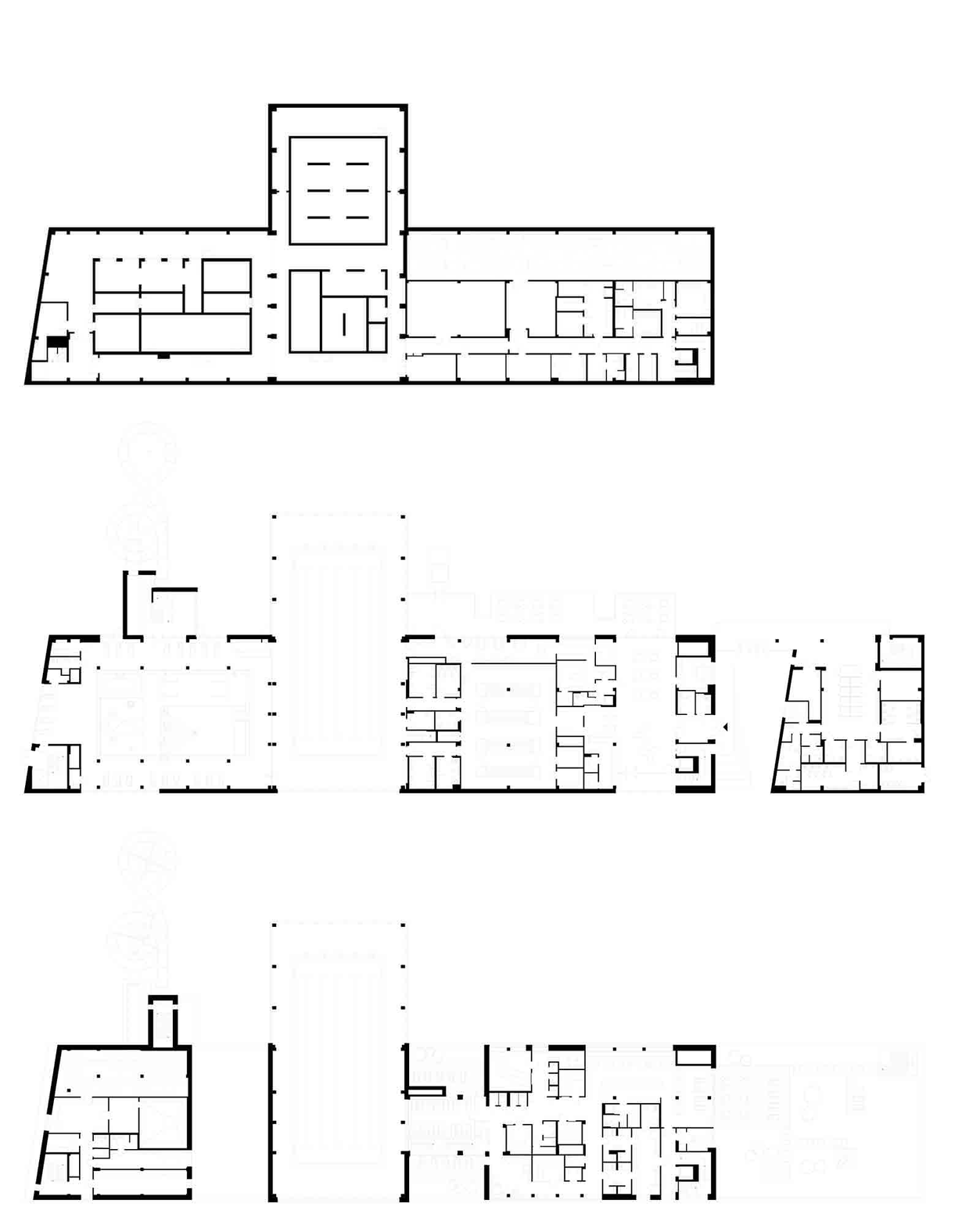
Both pool areas on the inside and outside of the structure have been fitted out to encapsulate multifarious experiences for swimmers of all age groups, including benches with massage jets, pool spouts, water slides, a whirlpool, and a wading pool for children, with the exception of a basketball hoop only in the outside deck. The indoor pool area is further subdivided into the swimming and adventure pools, along with the wellness area. The latter comprises five saunas with different sizes, temperatures, and experiences— tropical, salt, aroma, a Turkish steam bath, and a Finnish ceremonial sauna. The ground floor of the wellness area is rounded out by a cooling pool and a relaxation room with a Barrisol starry sky, along with the Aqua bar counter that serves both the indoor and outdoor pools. Minimal modifications were made to the outdoor pool area, with steel insertions structurally reinforcing the existing pools, backing the idea of an interventive extent—and the idea of architectural style and statement—in projects such as this.


by Pranjal Maheshwari Oct 19, 2026
The Mumbai-based architects integrate courtyards, mesh screens and north light trusses to create a dining space that doubles up as a community hub at SR University, Warangal.
by Mrinmayee Bhoot Oct 17, 2026
The Rotterdam-based institute centres the Indian Ocean as a network for exploring material histories and transnational links shaping coastal cultures, positing them as future models.
by Pranjal Maheshwari Oct 16, 2026
At the 2026 Stirling Prize ceremony, Mary Duggan with RUFF Architects, MAKER Architecten and Nakshabid Architects were felicitated for proffering quality housing and social equity.
by Mrinmayee Bhoot Oct 12, 2026
The new Centre for Contemporary Arts, fostering public engagement with art in Uzbekistan, is housed in a tram depot refurbished by the French studio, emulating local craftsmanship.

make your fridays matter with a well-read weekend
Enter your details to sign in
Don’t have an account?
Sign upOr you can sign in with
a single account for all
STIR platforms
All your bookmarks will be available across all your devices.
Stay STIRred
Already have an account?
Sign inOr you can sign up with
Verification link sent to check your inbox or spam folder to complete sign up process
Tap on things that interests you.
Select the Conversation Category you would like to watch
Please enter your details and click submit.
Enter the 6-digit code sent at


SENAA architekti’s Aquapark in Kyjov imparts strong linearity to 'fluid' architecture
by Anmol Ahuja | Published on : Jan 09, 2024


 Sign in with Google
 Sign in with email
What do you think?