Art10 mins. read
Art against authoritarianism: HKW’s Global Fascisms presents an urgent challenge
by Srishti OjhaNov 10, 2025



by Manu SharmaPublished on : Sep 15, 2024
The Zentrum für Kunst und Medien (ZKM) in Karlsruhe, Germany is currently showing (A)I Tell You, You Tell Me. Three Encounters for Humans/Machines, a tech-driven interactive art exhibition that enables audiences to engage with three AI (artificial intelligence) art installation works, in order to explore the relationship between human beings and machines. The installations on view include robotlab’s AEIOU (2024), Anne Duk Hee Jordan’s Electrify Me, Baby (2024) and ZKM Hertzlab’s Flatware, Hardware, Software, Wetware (2024). The exhibition runs from May 4 - November 24, 2024, hopefully seeing viewers who are familiar with techart and the ZKM’s work and those who are new to cutting-edge digital art and may have only heard of the ZKM as Germany’s famed ‘Center for Art and Media’. (A)I Tell You, You Tell Me has been curated by Philipp Ziegler, Head, Curatorial Department, ZKM and Clara Runge, Curator, ZKM. In light of the works on display, Runge and Ziegler join STIR in an interview to discuss machine intelligence.
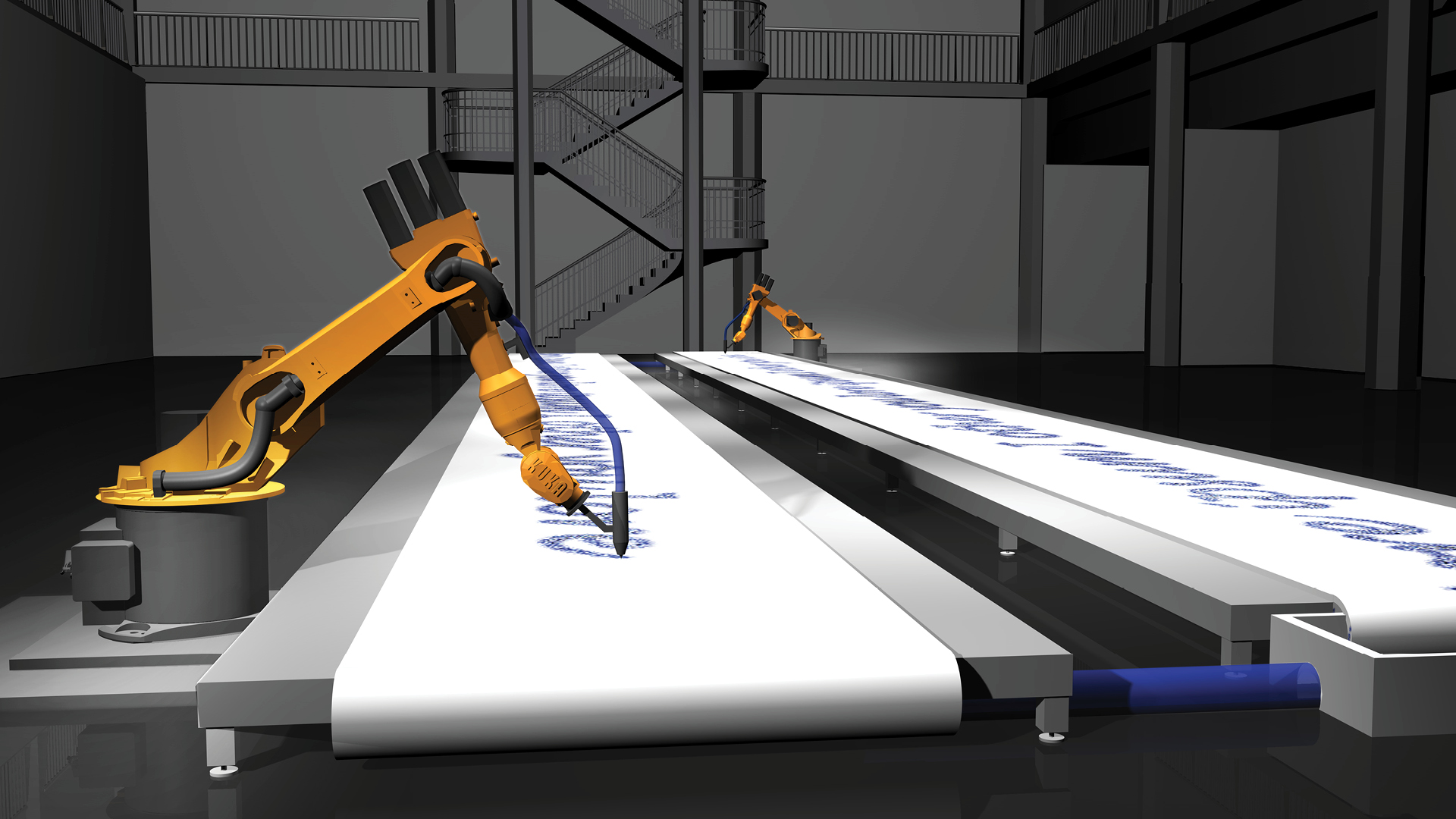
The first of these installations—AEIOU—is by the artist group robotlab, which was formed in 2000 in Karlsruhe by Matthias Gommel, Martina Haitz and Jan Zappe. The three of them are seasoned roboticists and their offering at the ZKM provokes audiences to identify intelligence, a capacity to learn and—depending on how we define it—a sense of consciousness as well within machines, through a collaborative engagement with robots programmed for self-reflexive writing.
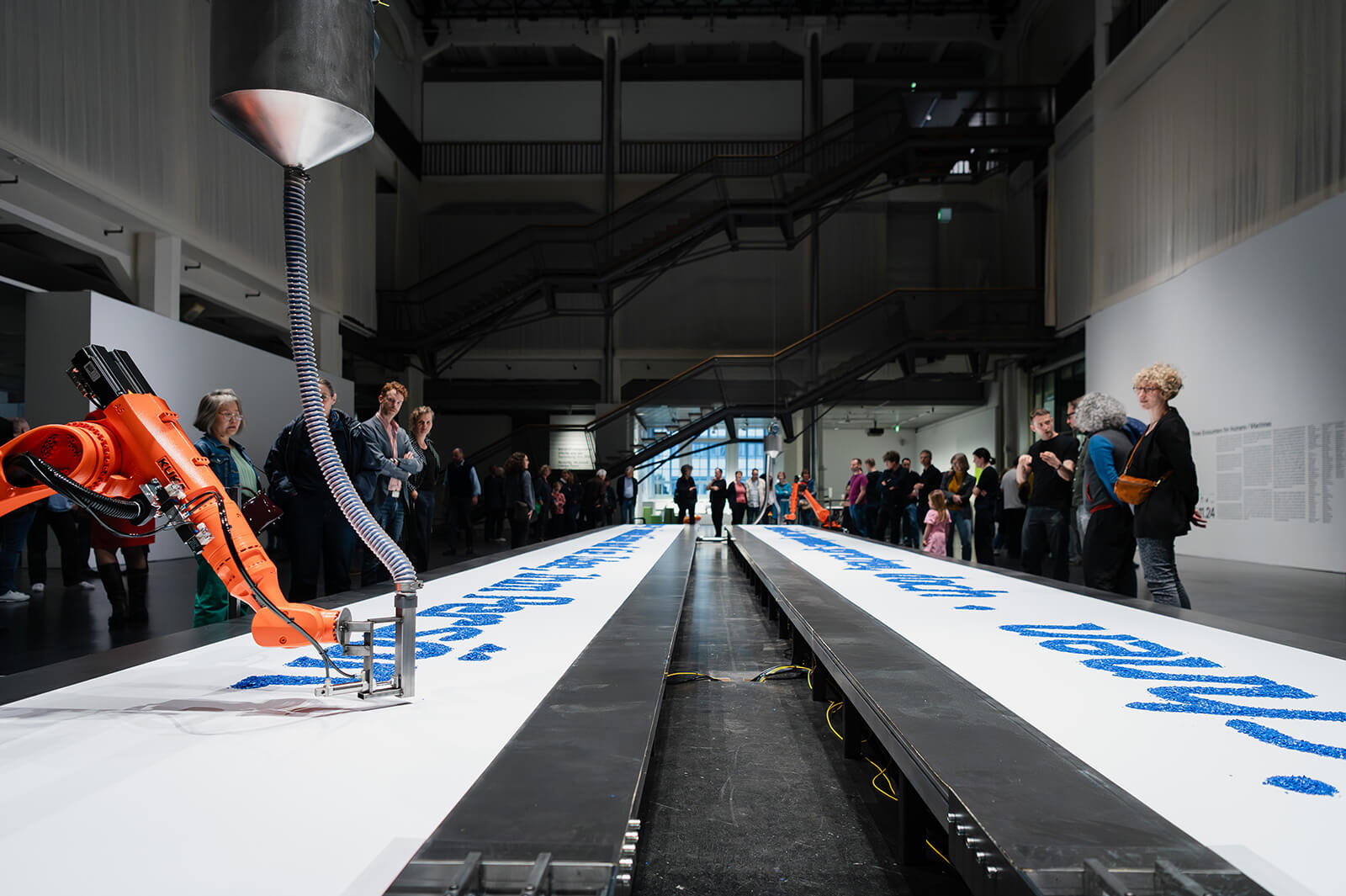
The new media art installation centres on two industrial robots writing texts on two conveyor belts. The sentences they produce are based on quotations from robotics theories from recent decades. The robots use the machine intelligence that they have been programmed with to reflect on these theories, producing new sentences as a result. The audience may also submit their interpretations of the sentences they produce, which the machines take as feedback, further modifying their output. Runge and Ziegler assert that “this is indeed a form of consciousness”.
The artist counters the efficiency of today's technologies with her concept of "artificial stupidity”... – Philipp Ziegler, Head, Curatorial Department, ZKM and Clara Runge, Curator, ZKM
Many commentators are hesitant to assign intelligence and consciousness – at least the way we understand it – to machines. For example, Swami Sarvapriyananda, Head Monk, Vedanta Society of New York (VSNY), West 71st Street, New York persuasively articulated the uniqueness of human consciousness at Synapse Conclave, India, held earlier this year. When challenged with the notion that machines cannot truly possess such qualities, the curators invite us to consider alternate forms of intelligence and consciousness. In their words, “...the way the machine thinks—and some might even question the term “thinking”—is based on statistics. Is this really comparable to the way we think? Probably not.” They tell STIR that it is hard to settle on one correct answer in conversations around machine intelligence and consciousness. But, the duo adds, “Within this, the beauty lies: AEIOU illustrates the mutual influences and close entanglements between humans and machines. And in doing so, the work probably raises more questions than it possibly answers.”
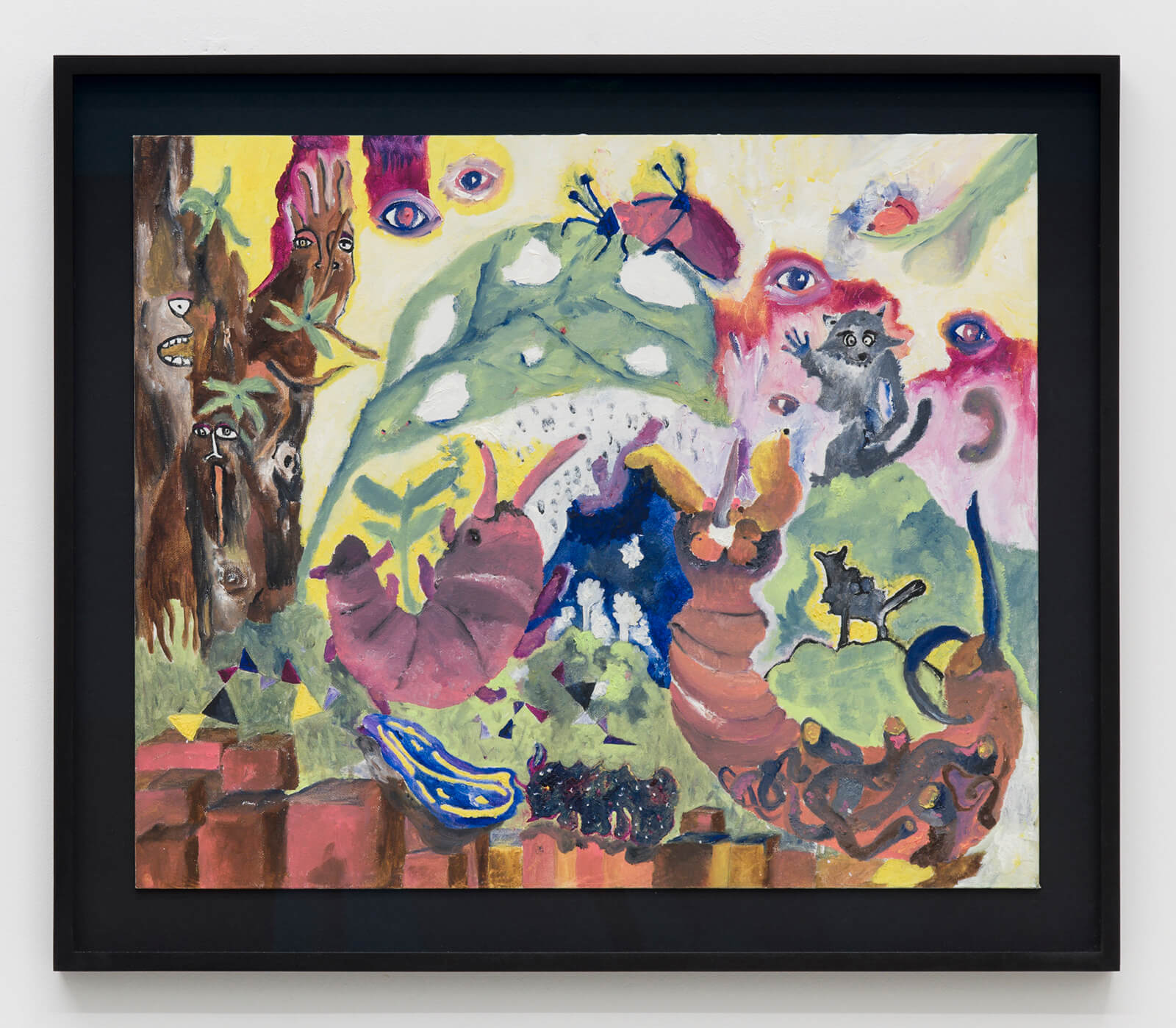
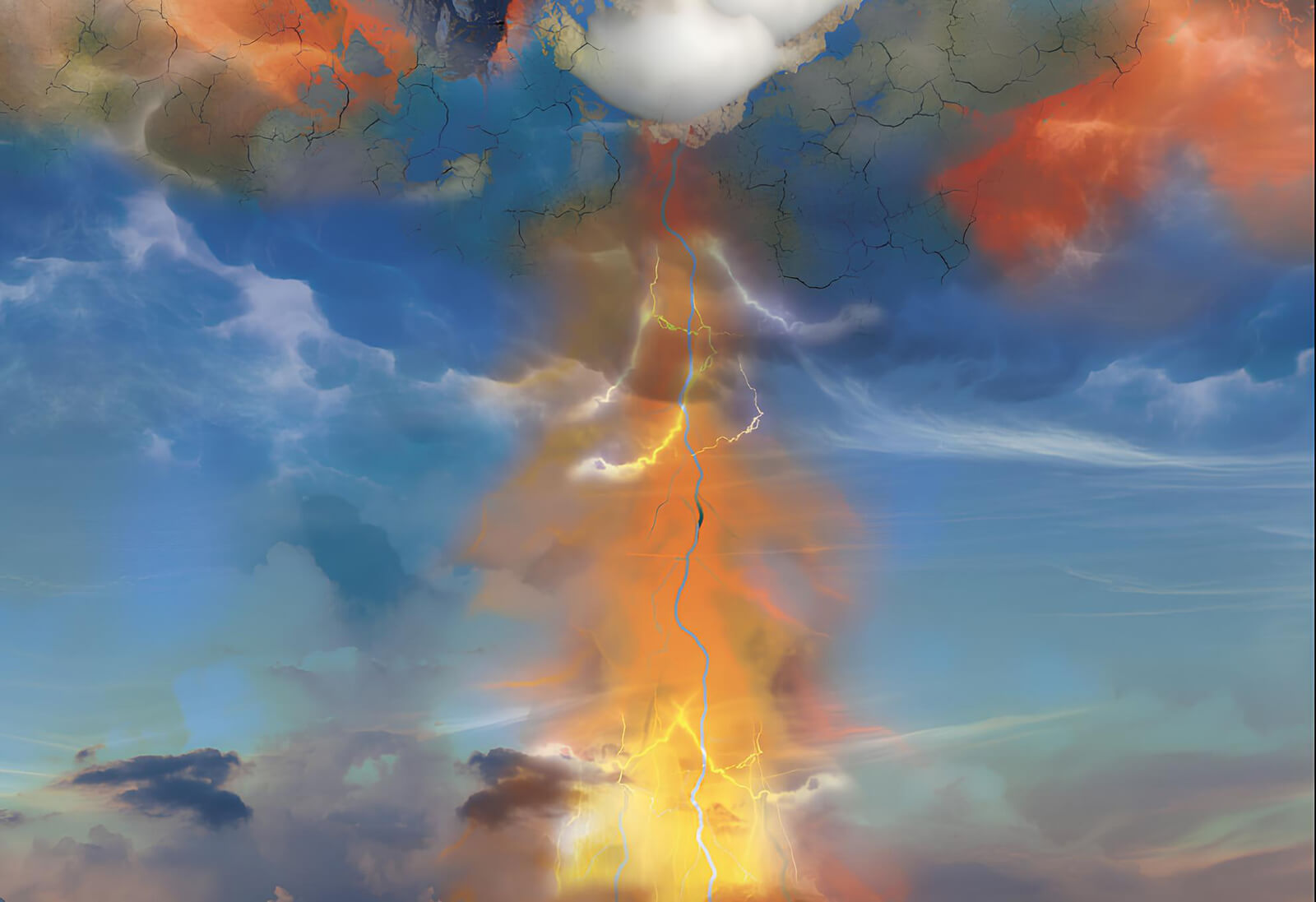
The second AI installation in the exhibition is Electrify Me, Baby, by Korean-German multimedia artist Anne Duk Hee Jordan. This work invites audiences into an immersive techno-natural space, complete with an interactive projection, a wind installation and small, low-tech robots that she calls “critters”. The robots move around aimlessly in the installation. Runge and Ziegler discuss this work, telling STIR, “The artist counters the efficiency of today's technologies with her concept of "artificial stupidity", which allows for mistakes and being unproductive in order to readjust our relationship to our planet. Probably, this is quite the opposite of what you would expect in an exhibition that deals with the topic of artificial intelligence. But those are exactly the kind of expectations we want to challenge and overcome (with this artwork).”
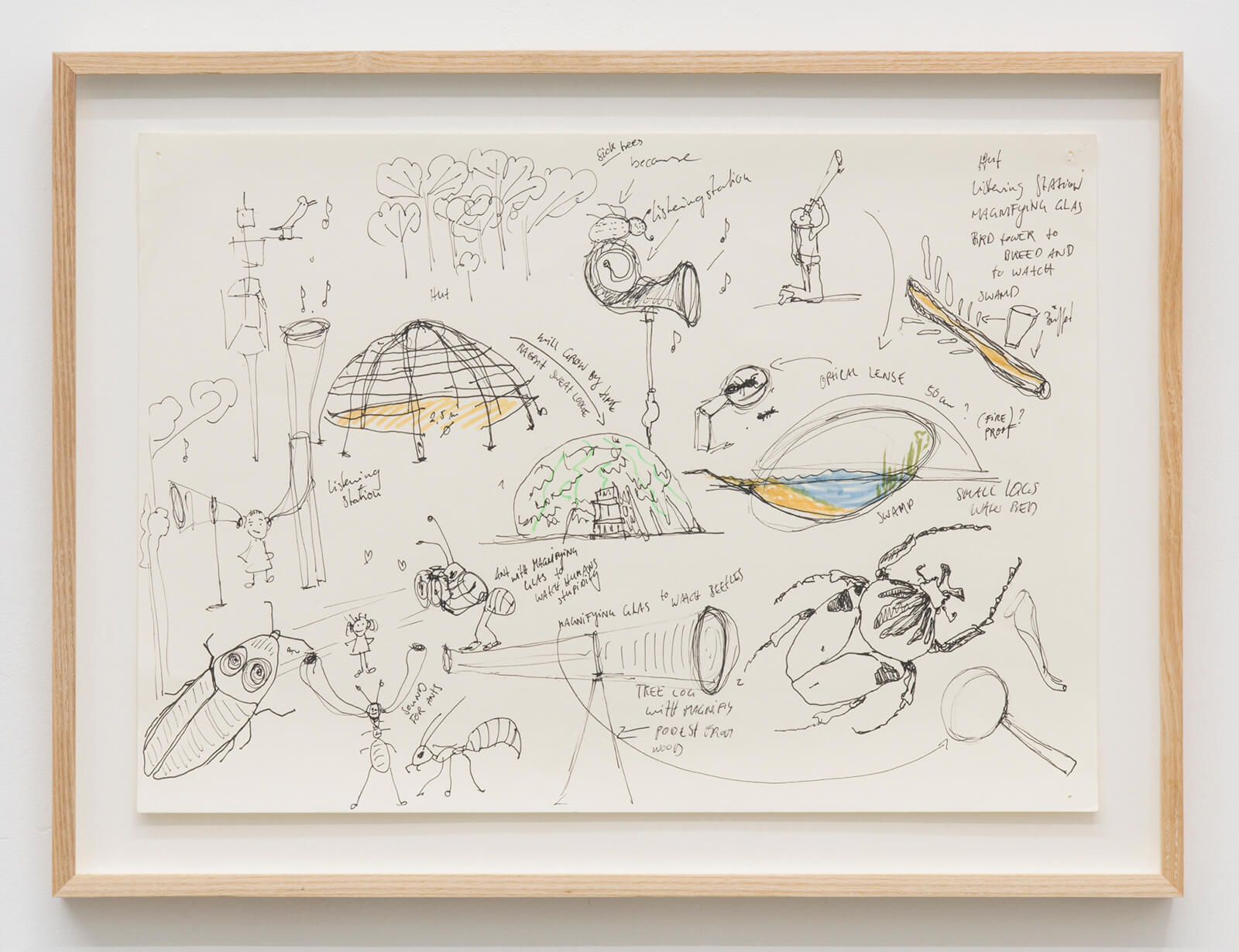
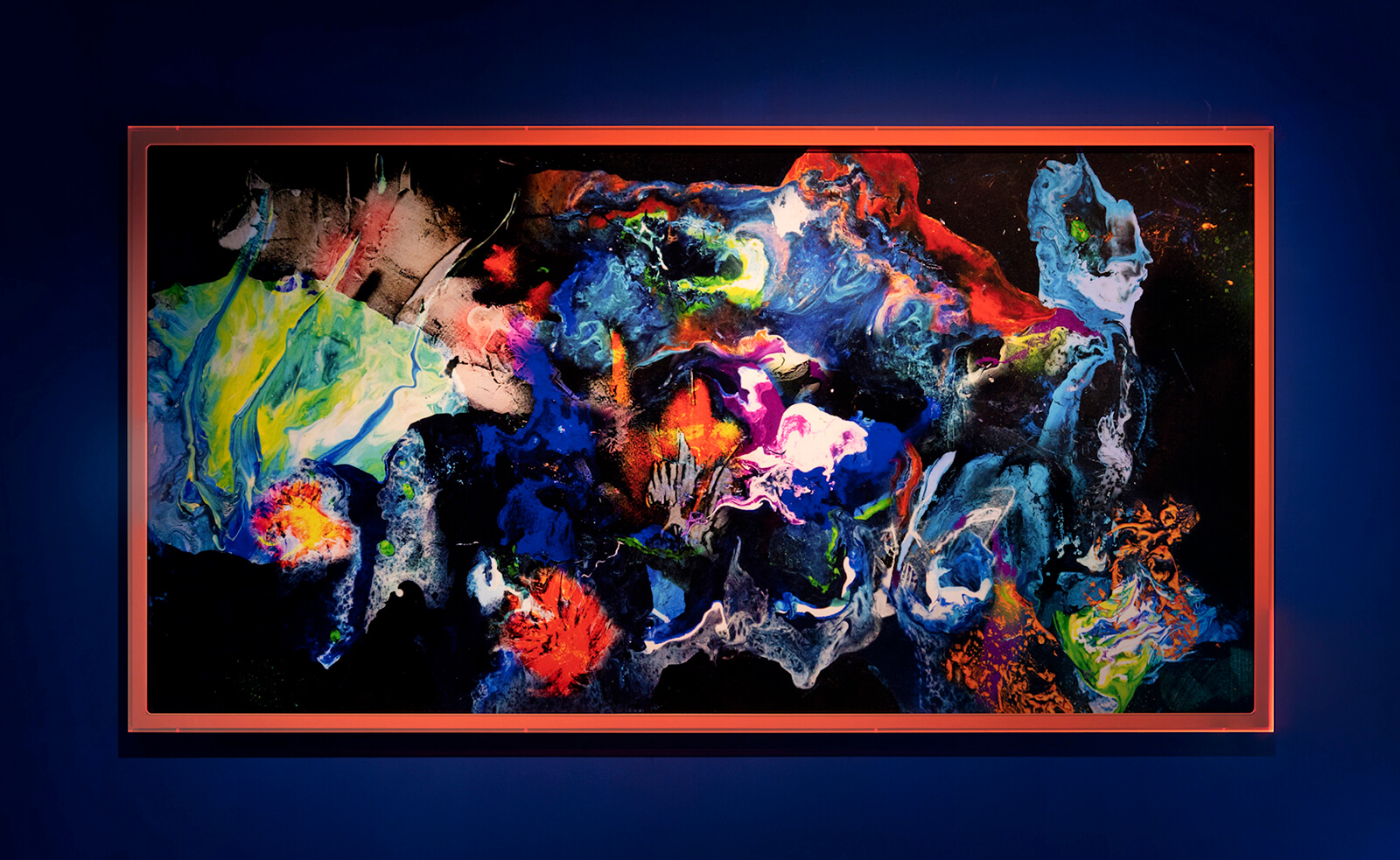
The final AI installation, Flatware, Hardware, Software, Wetware was created in-house at ZKM by Yasha Jain, Bernd Lintermann, Tina Lorenz and Dan Wilcox, who are members of the institution’s future-oriented artistic research and development platform Hertzlab. The installation activates AI-driven wall labels (hardware) to produce continually changing interpretations of a diverse body of artworks (flatware) from the ZKM collection, that currently hang on the walls of the atrium where the exhibition is being shown. This process of re-interpretation only occurs when audience members (wetware) trigger the technology, using chips in their possession. In this way, the installation prompts human visitors to work in collaboration with their AI counterparts to counter the institutional voice, enabling audiences to think more critically about the works they encounter.
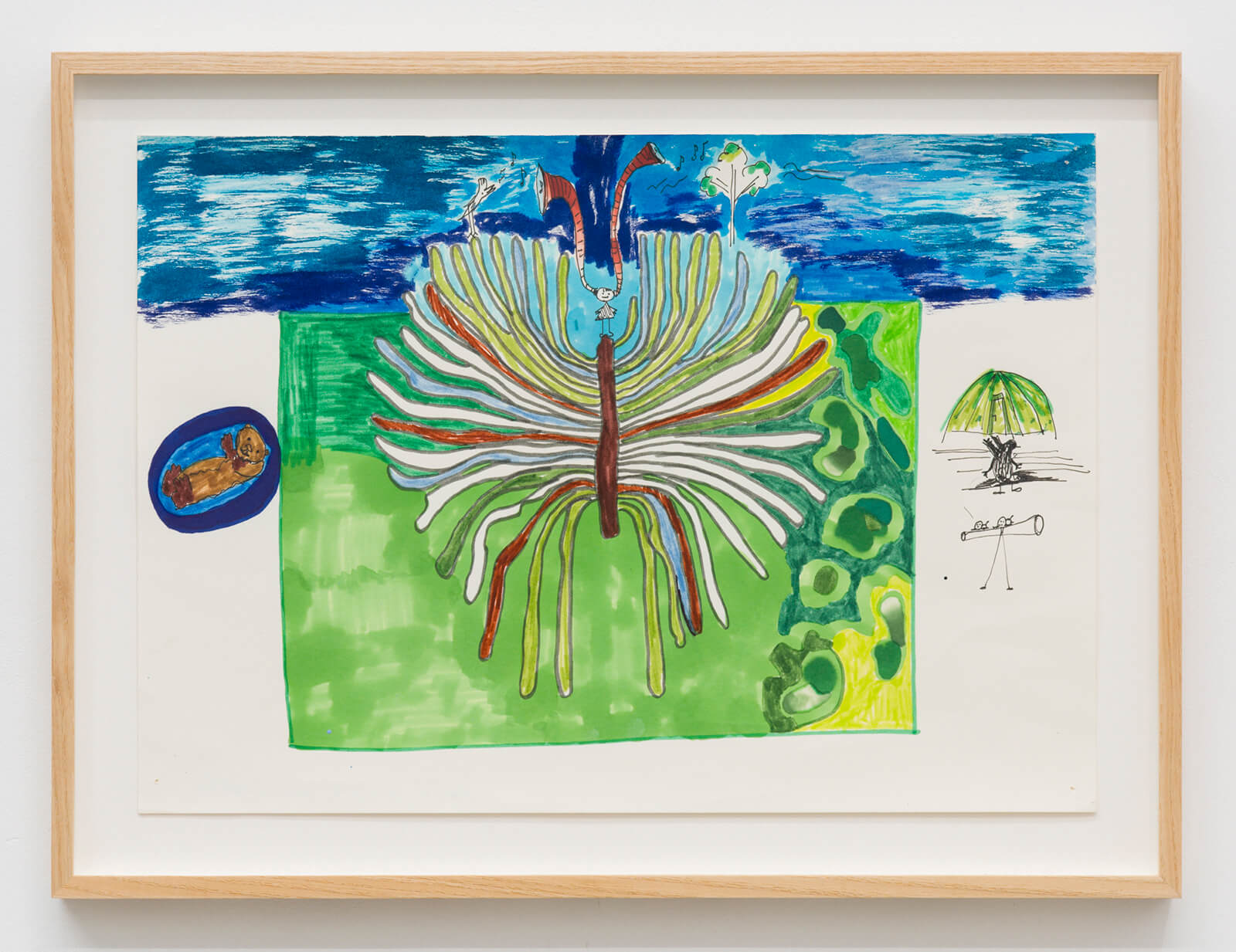
(A)I Tell You, You Tell Me is a heady offering of techart that goes far beyond fetishising the sheer spectacle of deep tech, a trap that many a new media artist seem to find themselves in. The works on display all prompt visitors to compare AI to themselves, through relationships with digital technology that are collaborative and humanising, ultimately subverting notions surrounding the coldness and perfectionism that pop culture has taught us to associate with AI.
‘(A)I Tell You, You Tell Me. Three Encounters for Humans/Machines’ runs from May 4 - November 24, 2024, at the ZKM, Germany.

by Srishti Ojha Oct 21, 2026
Increasingly, artists, filmmakers and activists are turning to VR to create more personal, tangible accounts of the climate emergency and its impact on vulnerable communities.
by Mirra Lynn Oct 20, 2026
The Indian artist paints the old wadas of central Pune, capturing the traces of everyday life that cling to these structures, battered by time but unbowed.
by Anmol Ahuja Oct 15, 2026
How do heaps of souvenirs and relics with racist Aboriginal motifs and features become art? MCA Sydney’s winter showcase—the artist’s largest to date—beckons a possibility.
by Vandana Kalra Oct 14, 2026
With his latest exhibition as a point of departure, the modernist discusses his decades-long practice, the spontaneity of drawing and the social responsibility of artists.

make your fridays matter with a well-read weekend
Enter your details to sign in
Don’t have an account?
Sign upOr you can sign in with
a single account for all
STIR platforms
All your bookmarks will be available across all your devices.
Stay STIRred
Already have an account?
Sign inOr you can sign up with
Verification link sent to check your inbox or spam folder to complete sign up process
Tap on things that interests you.
Select the Conversation Category you would like to watch
Please enter your details and click submit.
Enter the 6-digit code sent at


The ZKM’s ‘(A)I Tell You, You Tell Me’ presents three AI art installations
by Manu Sharma | Published on : Sep 15, 2024


 Sign in with Google
 Sign in with email
What do you think?