Enter your details to sign in
Don’t have an account?
Sign upOr you can sign in with
a single account for all
STIR platforms
All your bookmarks will be available across all your devices.
Stay STIRred
Already have an account?
Sign inOr you can sign up with
Verification link sent to check your inbox or spam folder to complete sign up process



We use cookies and similar technologies, to help provide you with a better, faster, and safer experience while delivering content
tailored to your interests.
By clicking on the AGREE button, closing this banner, clicking or navigating the website, you consent to the use of all cookies and similar technologies for the purposes we describe in our
Privacy Policy.
We use several cookies that are related to the functionality, security & user preferences,
analytics, and advertising. While some are essential, you may choose to dis-allow the use of others.
Please choose your preference, or opt for the best experience by closing this banner, clicking or navigating the website.
For more detailed information please read our Privacy Policy
 Connect


Two years ago, the members of the London-based design collective JAM began a residency at Cirva, the non-profit International Glass and Visual Arts Research Centre, in Marseille. Situated in the heart of the southern French city, Cirva’s ateliers and hot shops are a wonderland of research and development into what can be made in glass and its master blowers and experts in cold working have collaborated over the years with a number of important artists and designers.
JAM—comprising Joe Halligan, Dan Waterstone and Adam Willis—was captivated by the artistry and craftsmanship at play, the potential of working with this extraordinary material and subverting its traditions. “Stanislas Colodiet, who has been the director since 2019, was interested in our group dynamic. But also the improbability of the project: to make objects in glass at an unforeseen scale,” JAM says.
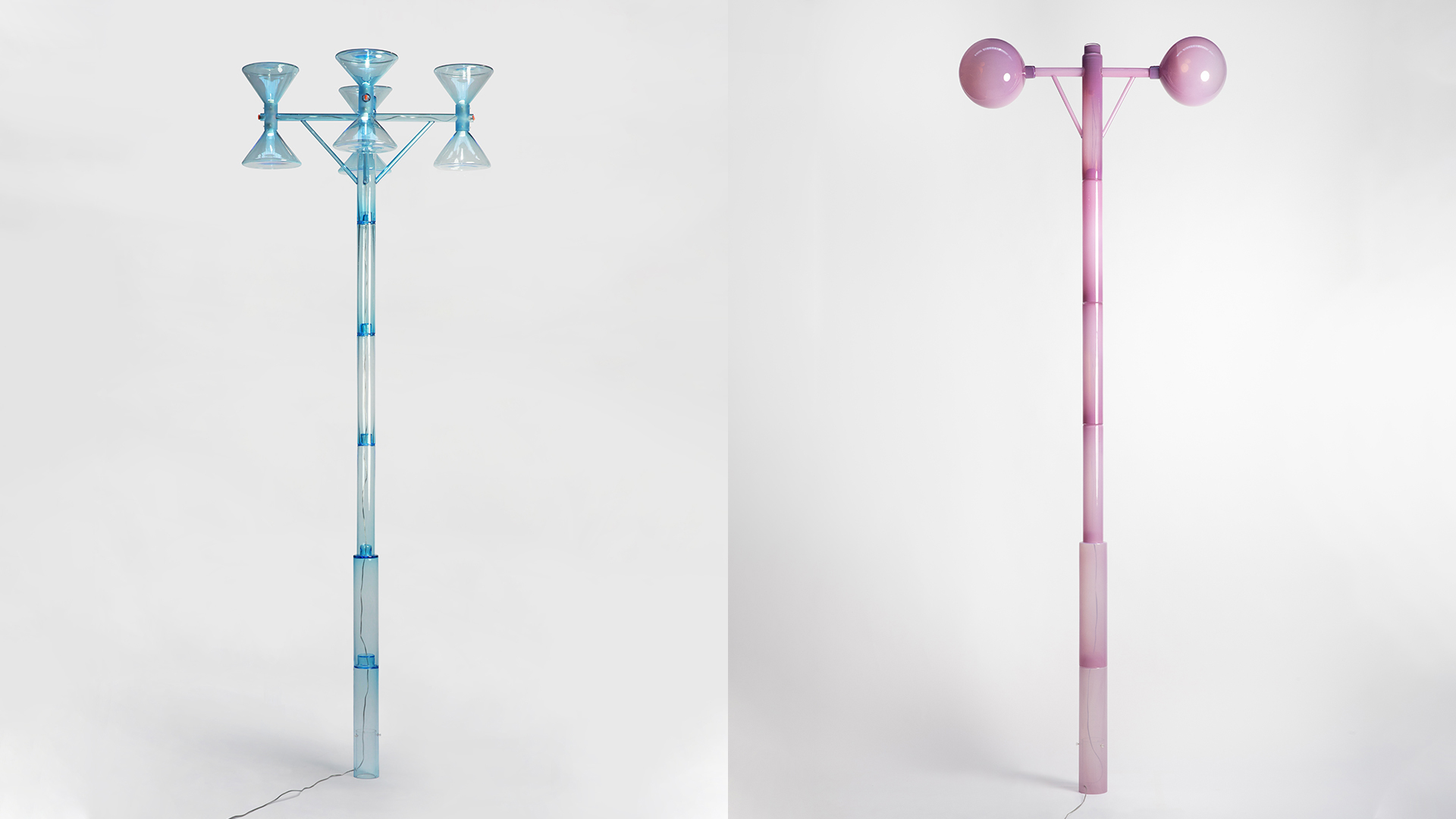
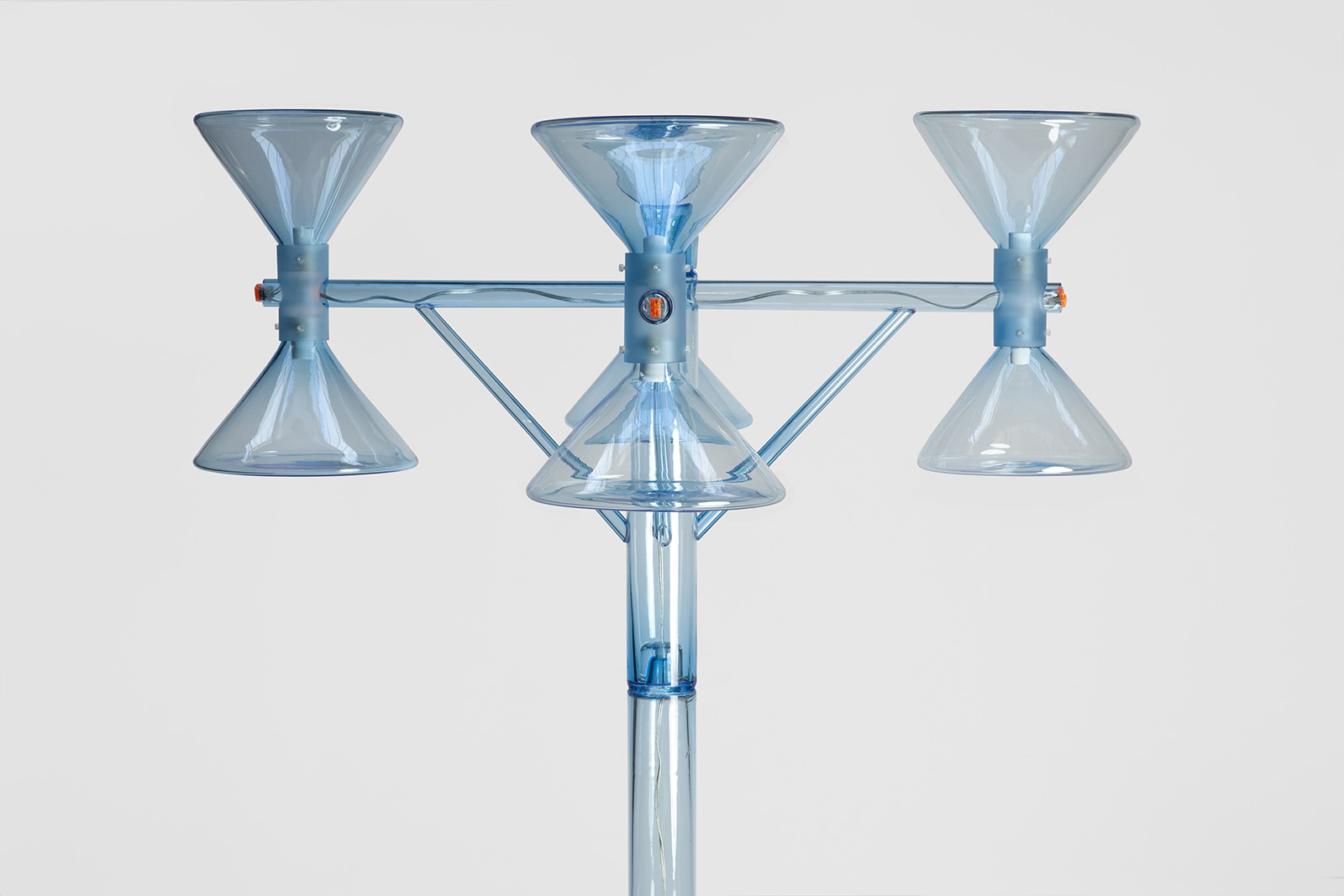
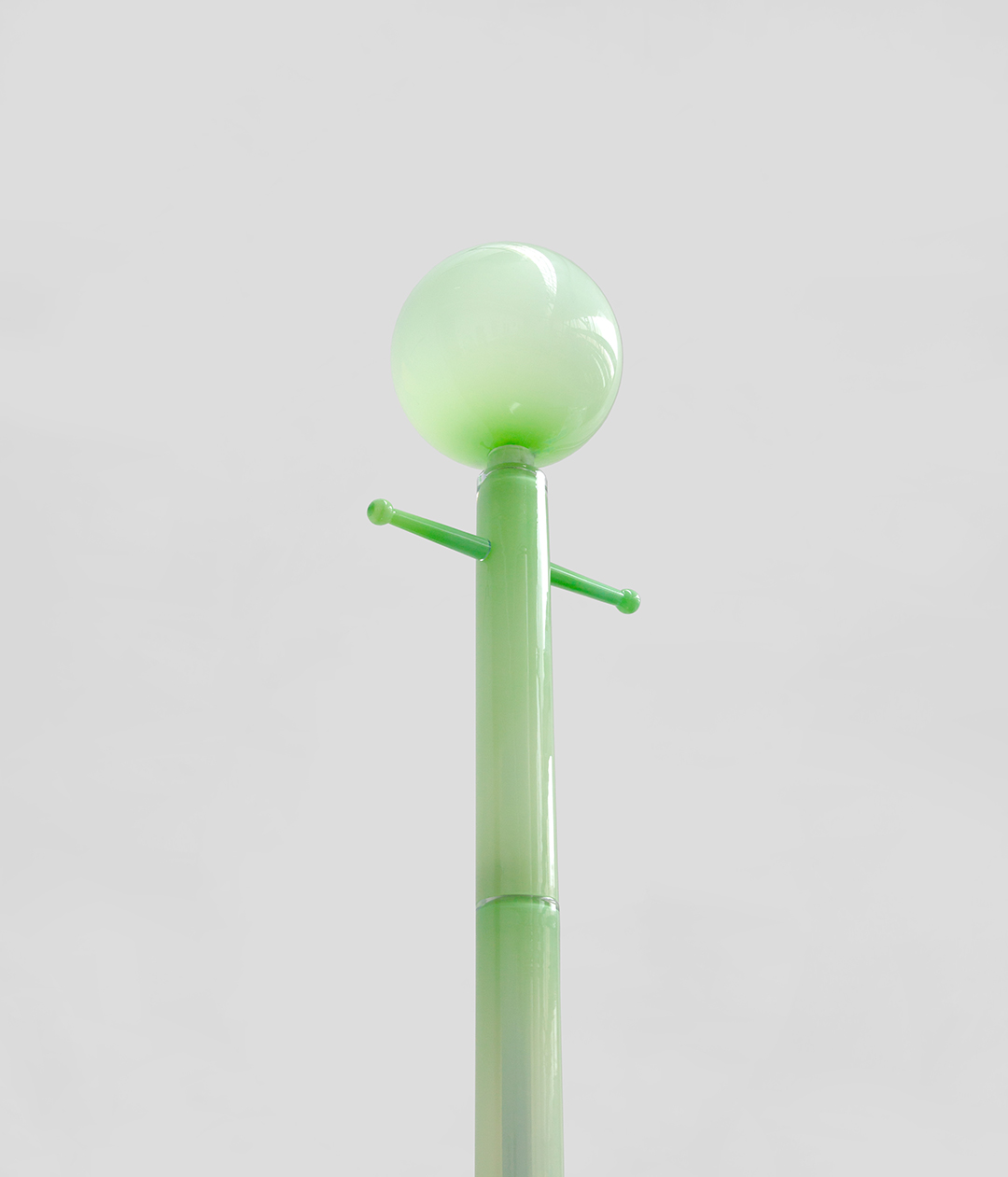
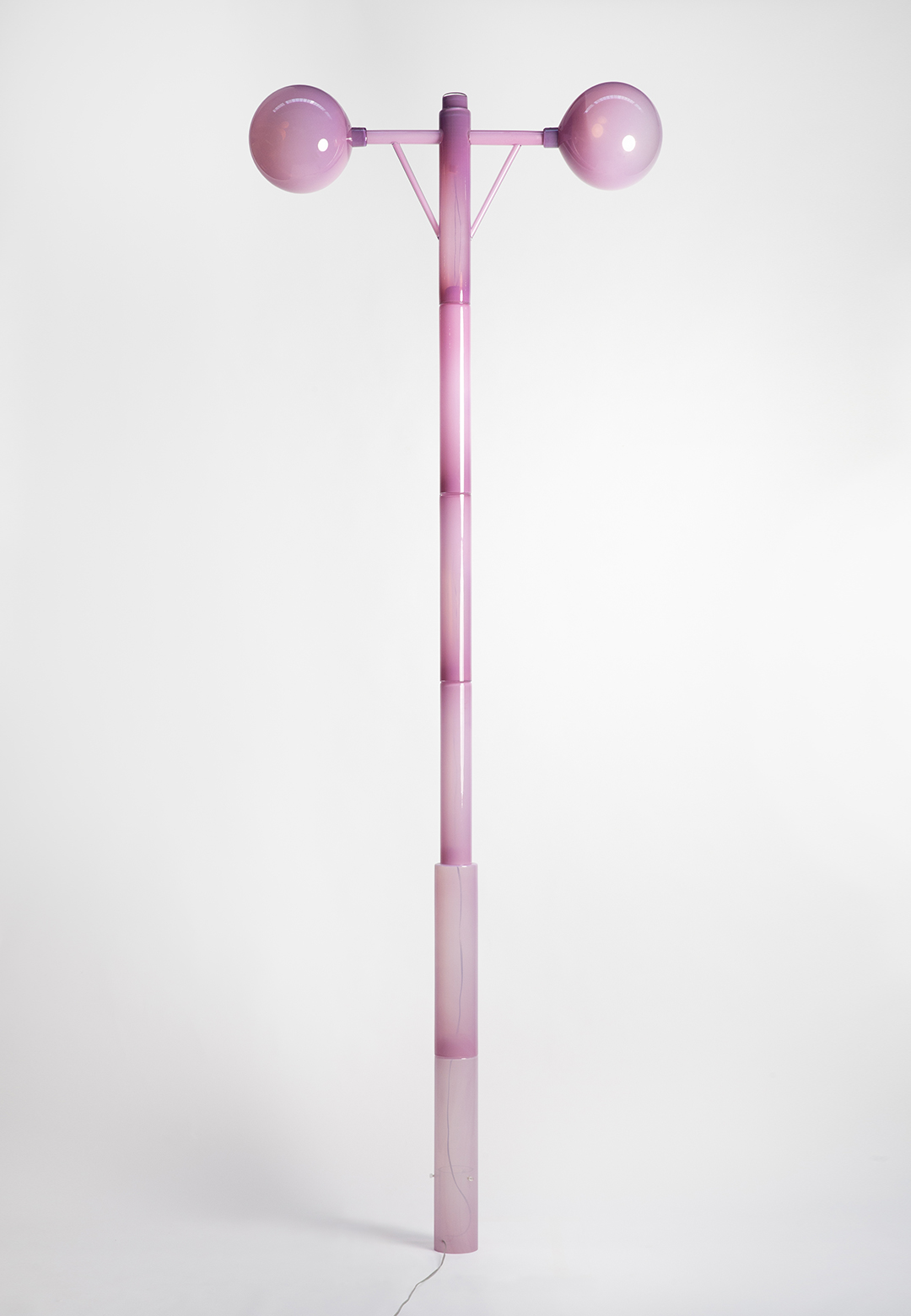
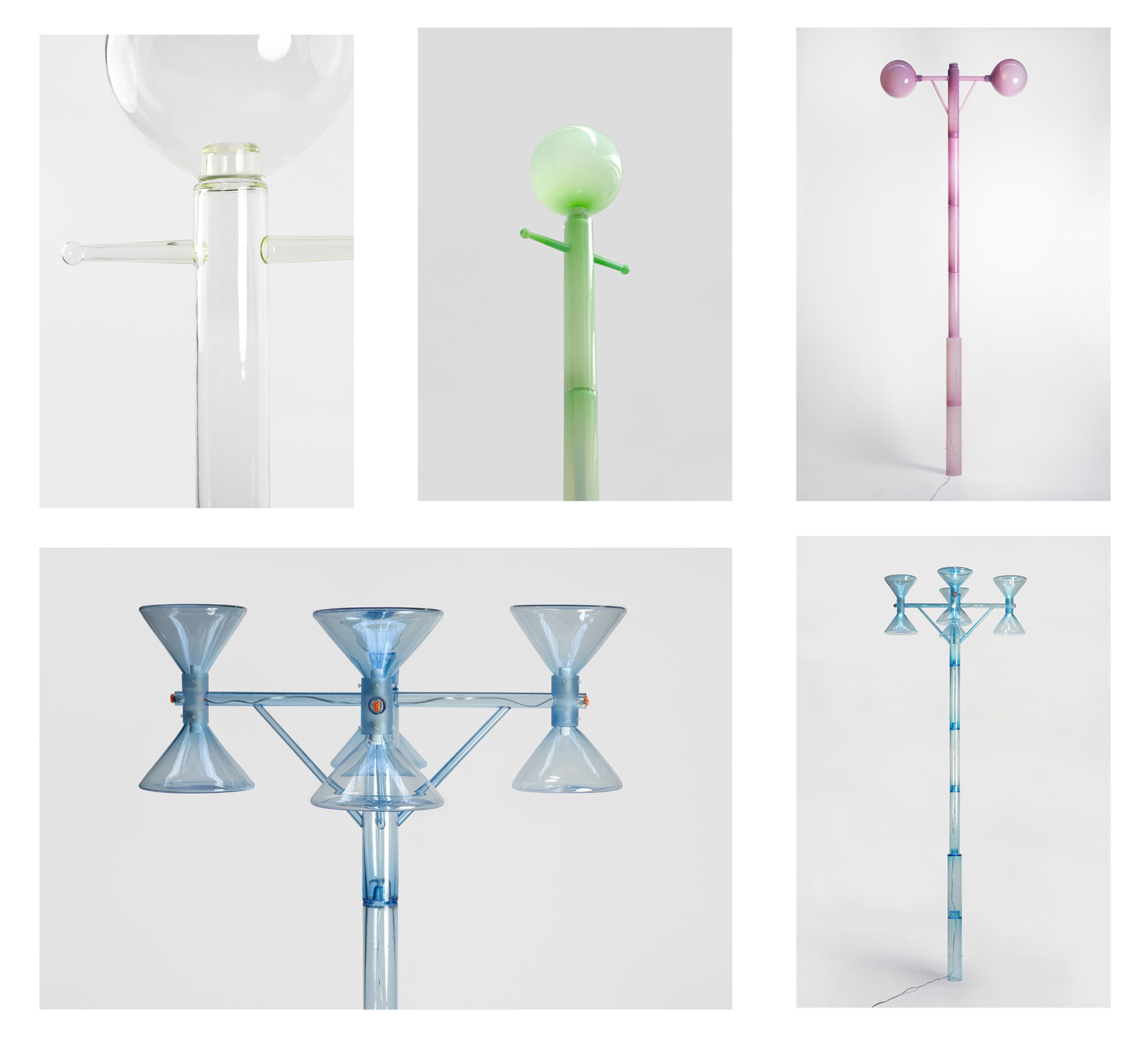
Now the result of two years’ research and production goes on show at Galerie kreo in Paris. It is the designers’ first exhibition with the gallery. Visitors to the left-bank space will find themselves in a landscape of towering glass lamps, the tallest reaching 3.5 metres, and the smaller ones still a statuesque 2.2 metres. Created in sections, in transparent glass, these totemic objects appear both familiar and strange; on the one hand like classic lampposts you expect to find in the street, on the other spectacularly fragile and seductive in their flushed colours—pink, green, lilac and blue. The construction can be read through the density of colour which deepens where sections overlap, strongest at joints and edges and from the shadows they cast in the space.
The three protagonists, who are in their late thirties, met in 2011 while studying architecture in London and finally came together as JAM in 2021. Now working from a light- and model-filled studio in East London, their projects move between architecture, furniture and objects, a variety that allows them to pursue common ideas across different scales. Material transformation is at the heart of the practice and an interest in how things are made. “We believe in bringing character and personality to the built environment and daily life. And imagining richer, stranger ways of inhabiting the world,” they say.
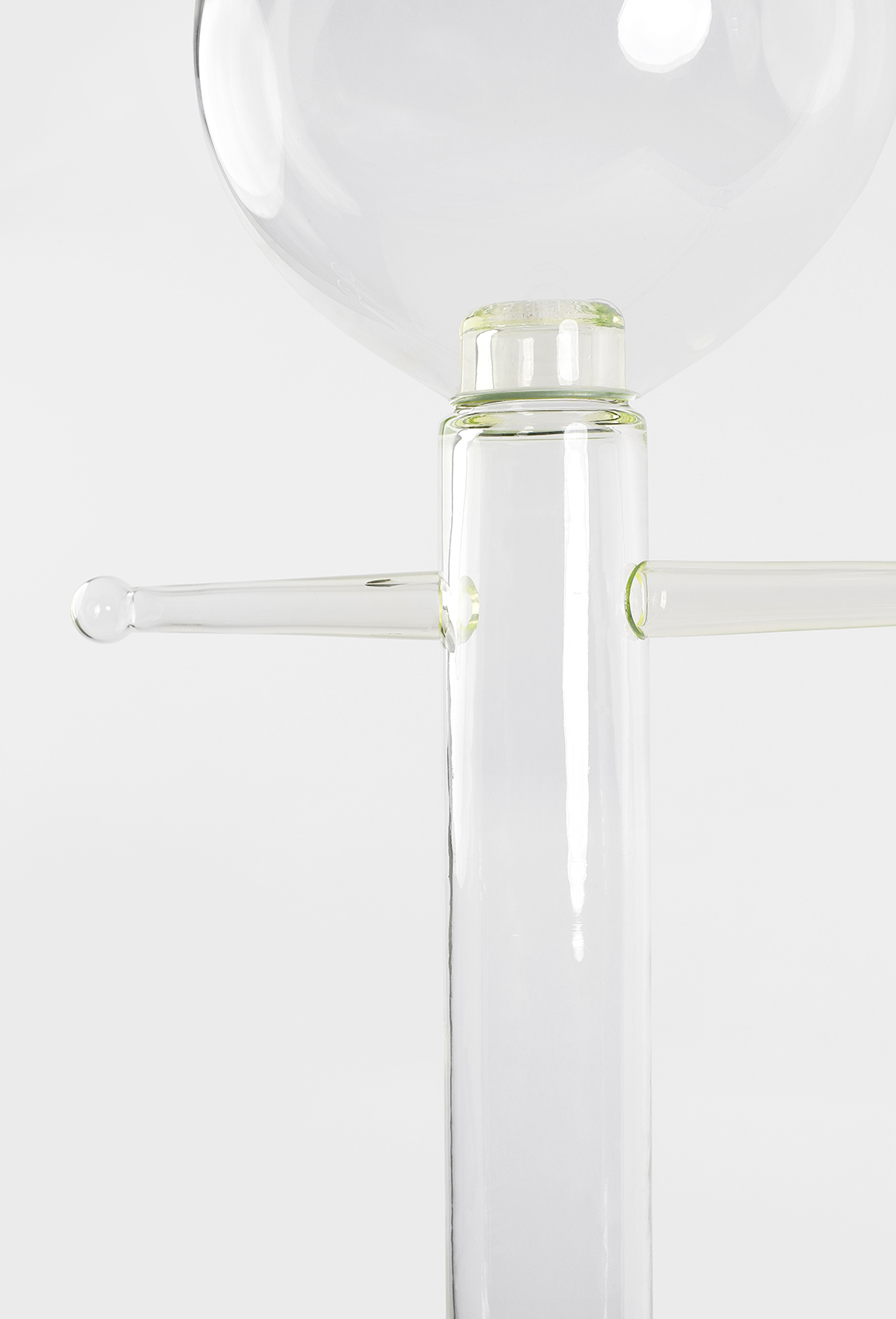
The totemic lamps JAM has created at Cirva for kreo have a surreal presence in the interior space. They are too tall, too fine, too unlikely, yet still readable as the civic archetypes from which they derive. Designs include a stem with a single globe, two globes or four. Another has conical light sources, or a bulb-shaped option. Their development pushed the glass experts to their limits; every element, including the finest of tubes has been handblown and connected together by the cold working department. As such, each lamp is unique, given its own personality through the hand-making process and the varying thicknesses achieved. Standing tall, they are more personnages than objects.
JAM’s current projects include the transformation of the former Amsterdam Court House—a monumental Brutalist building from 1975—into the Hartwig Museum, scheduled to open in 2028. A new-build music studio in Kyoto is in progress, where musicians can live, write and record all in one building; they are converting a 19th Century Warehouse in East London into community workshops. In 2025, JAM completed a collaborative project between Nike and London skate brand Palace that contains an indoor skate park with a caged football pitch beneath.
This new exhibition at kreo elaborates their thinking and practice. It continues an exploration into the unification of craft, industry and art; a drive for experimentation; a commitment to the handmade, adapted and improvised; and to subversion, in the right place. “We made the lampposts in glass,” they say, “because it’s the wrong material.”



 Sign in with Google
 Sign in with email