Enter your details to sign in
Don’t have an account?
Sign upOr you can sign in with
a single account for all
STIR platforms
All your bookmarks will be available across all your devices.
Stay STIRred
Already have an account?
Sign inOr you can sign up with
Verification link sent to check your inbox or spam folder to complete sign up process



We use cookies and similar technologies, to help provide you with a better, faster, and safer experience while delivering content
tailored to your interests.
By clicking on the AGREE button, closing this banner, clicking or navigating the website, you consent to the use of all cookies and similar technologies for the purposes we describe in our
Privacy Policy.
We use several cookies that are related to the functionality, security & user preferences,
analytics, and advertising. While some are essential, you may choose to dis-allow the use of others.
Please choose your preference, or opt for the best experience by closing this banner, clicking or navigating the website.
For more detailed information please read our Privacy Policy
 Connect
Connect
Connect





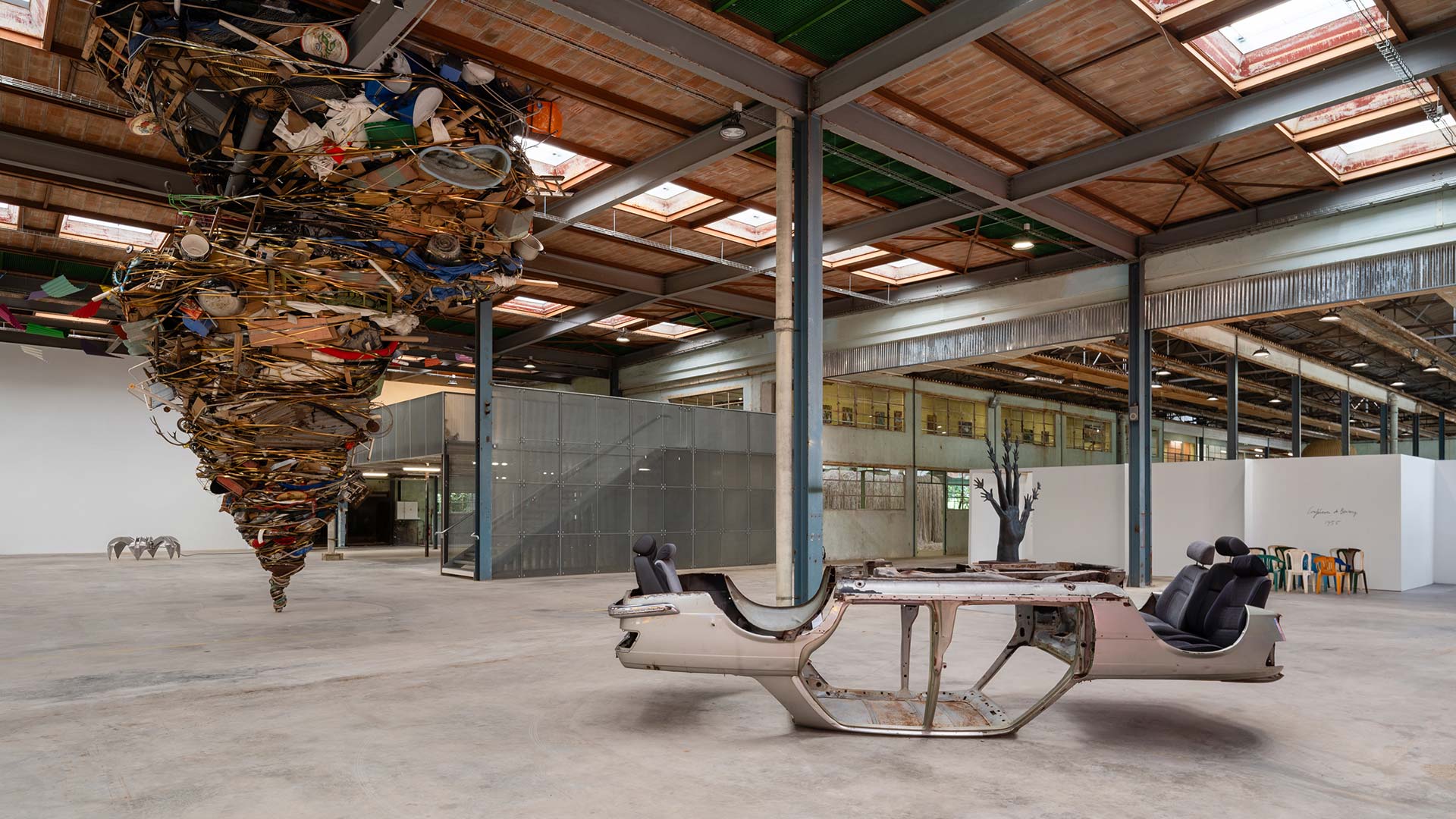
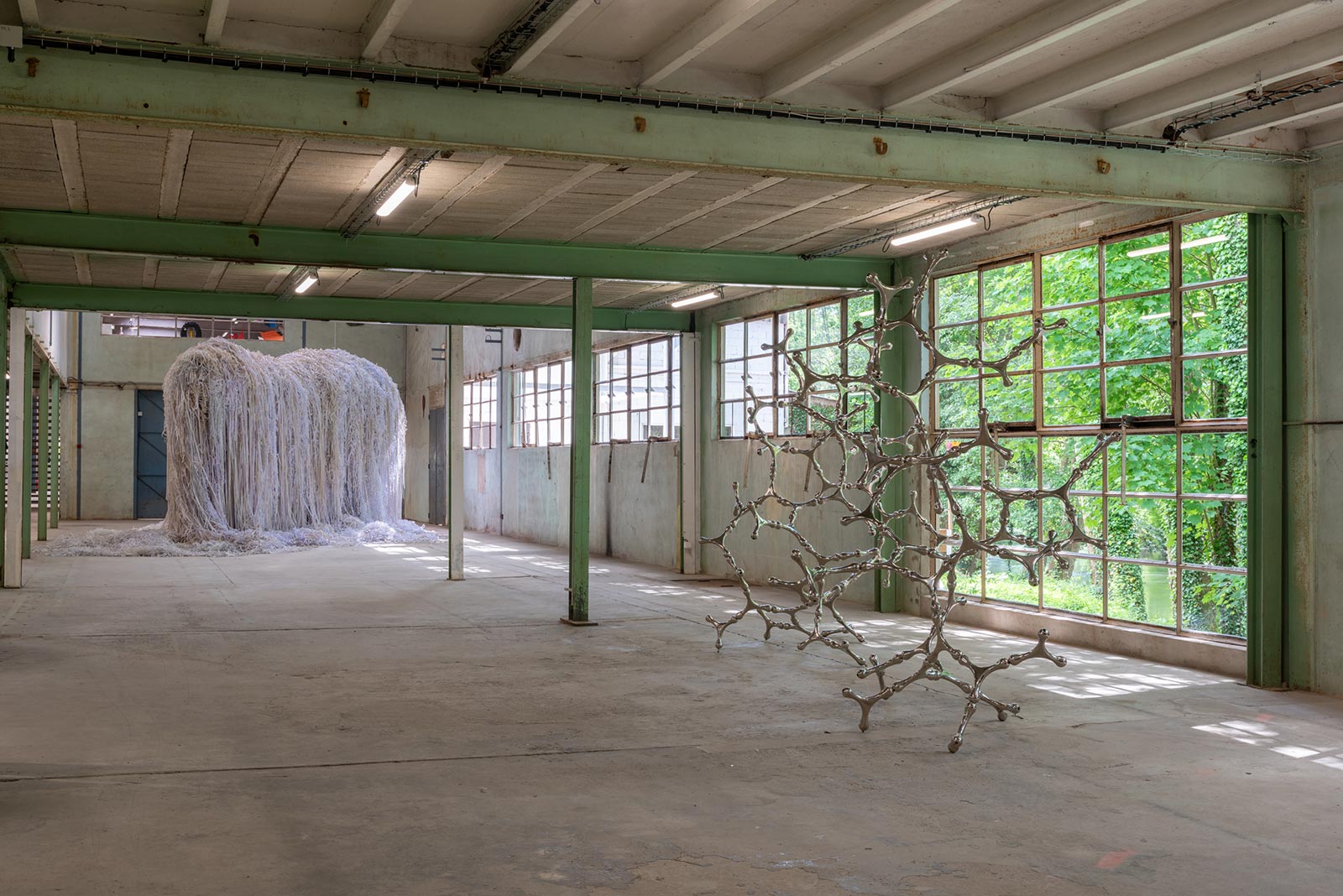
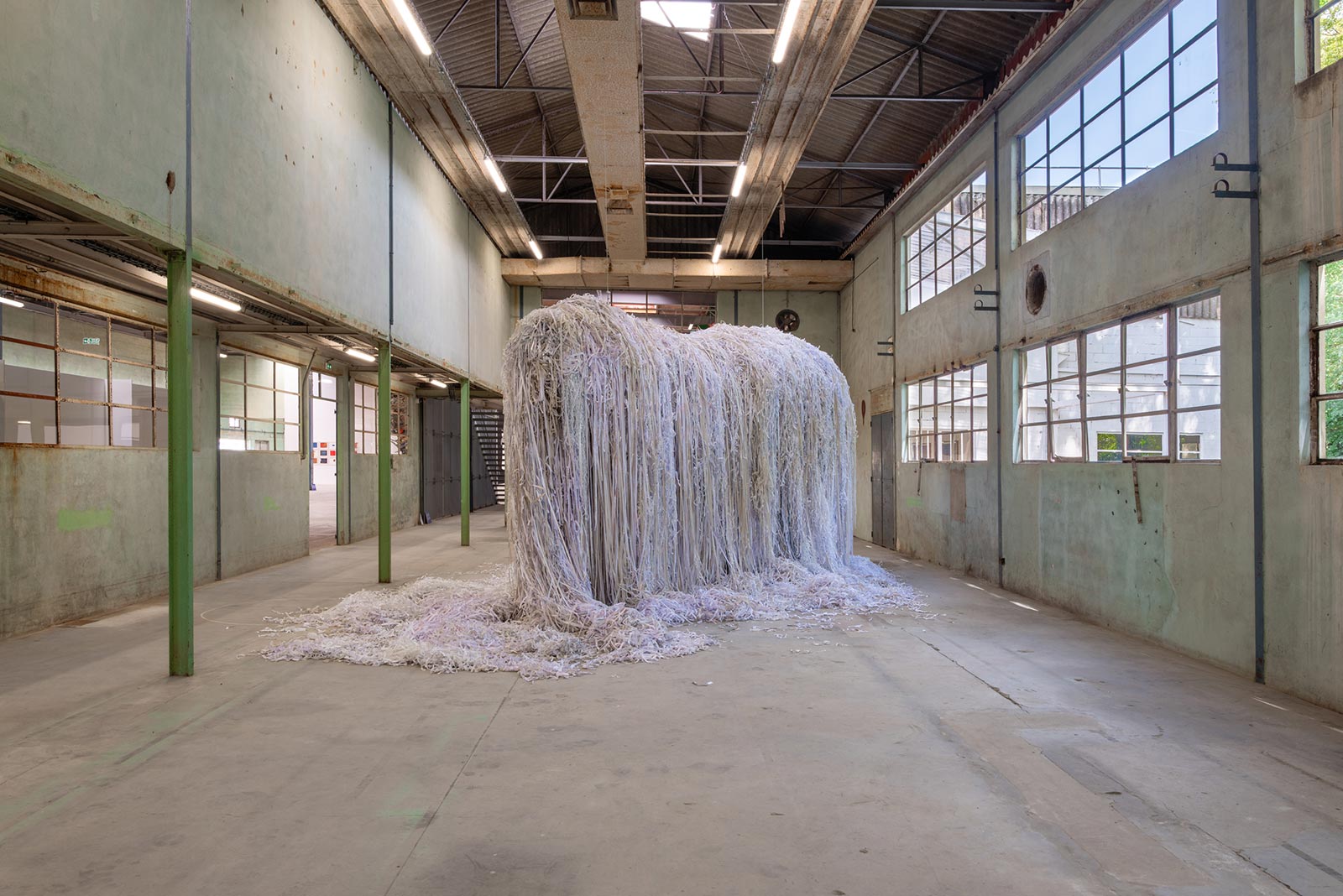
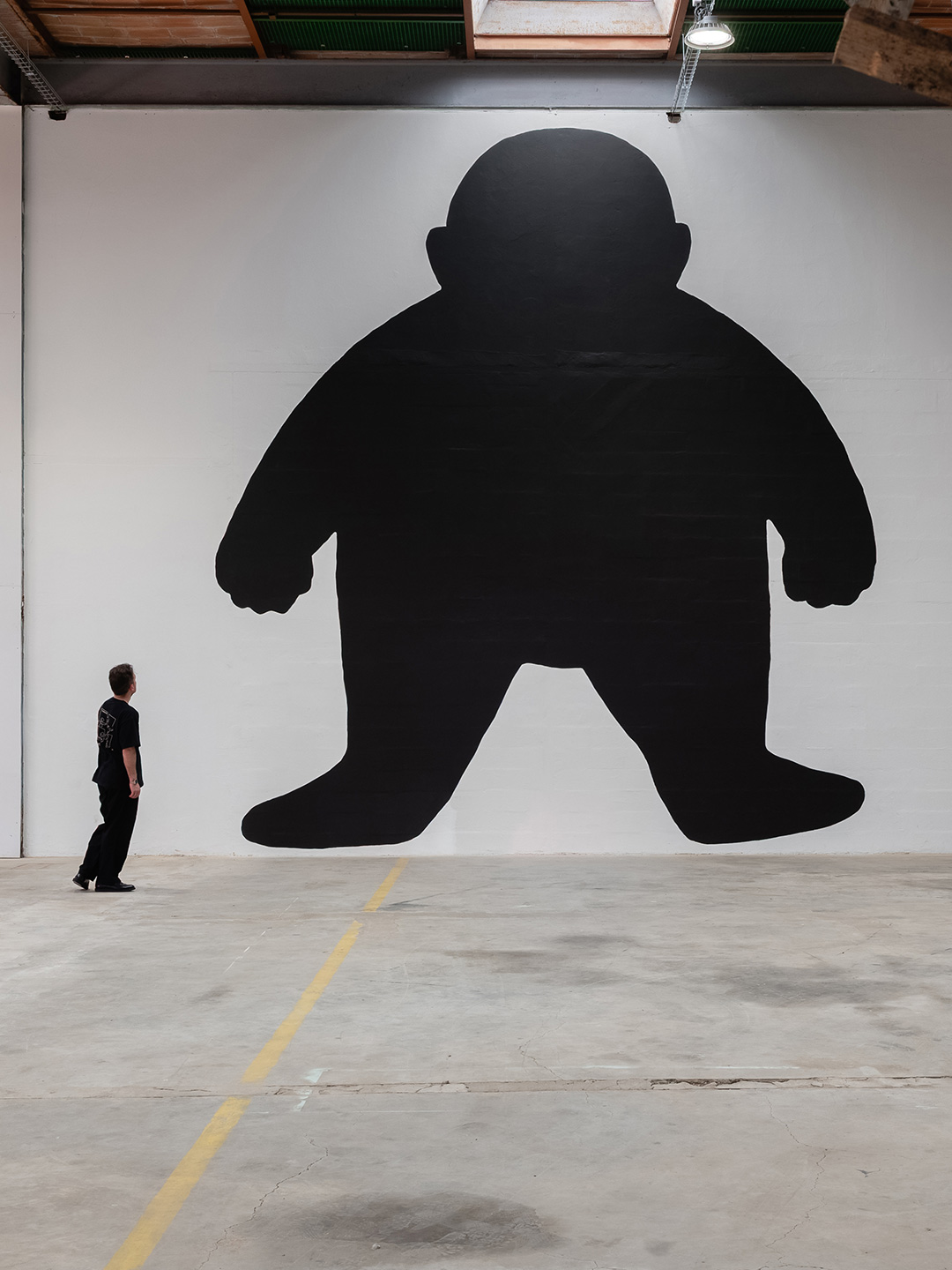
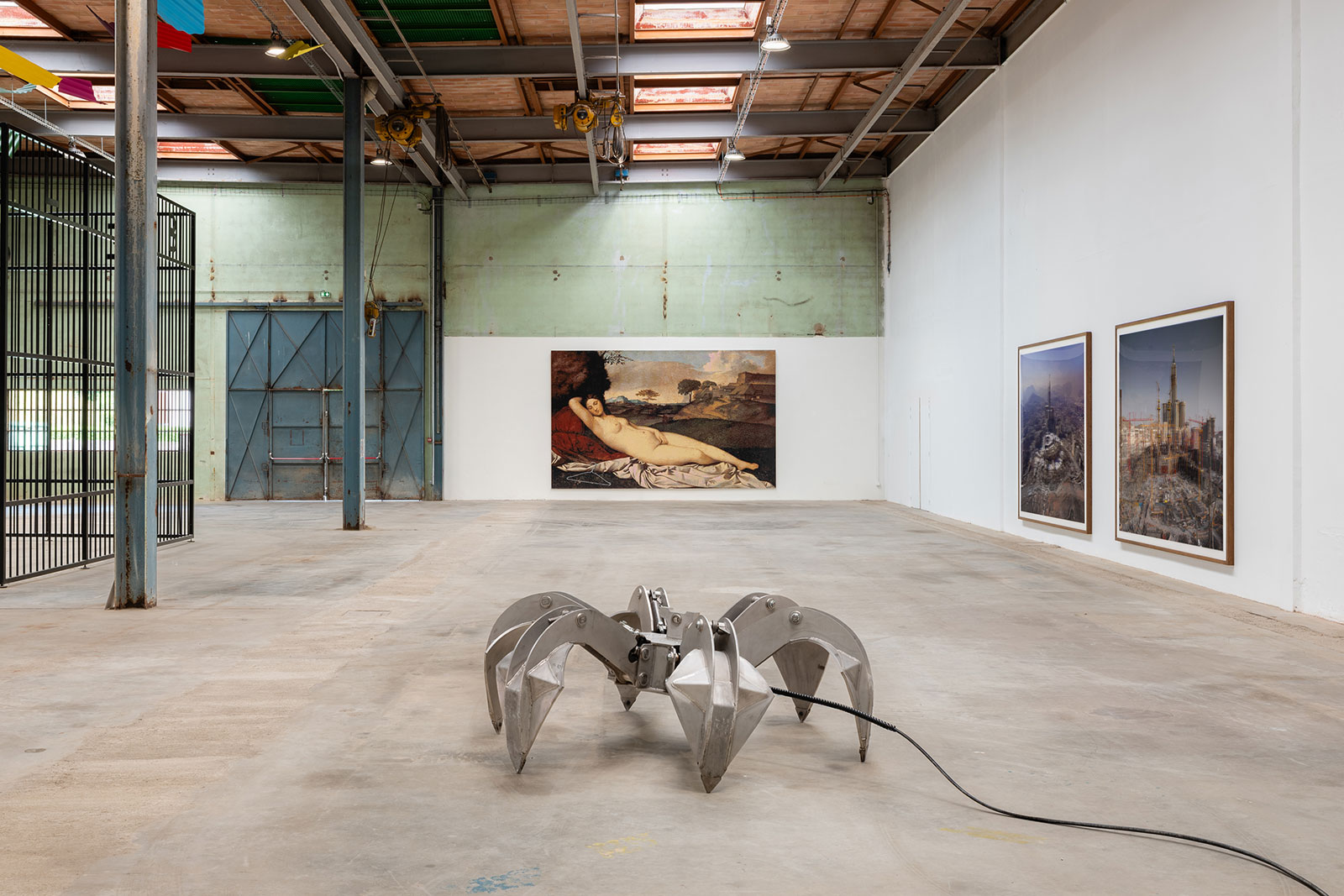
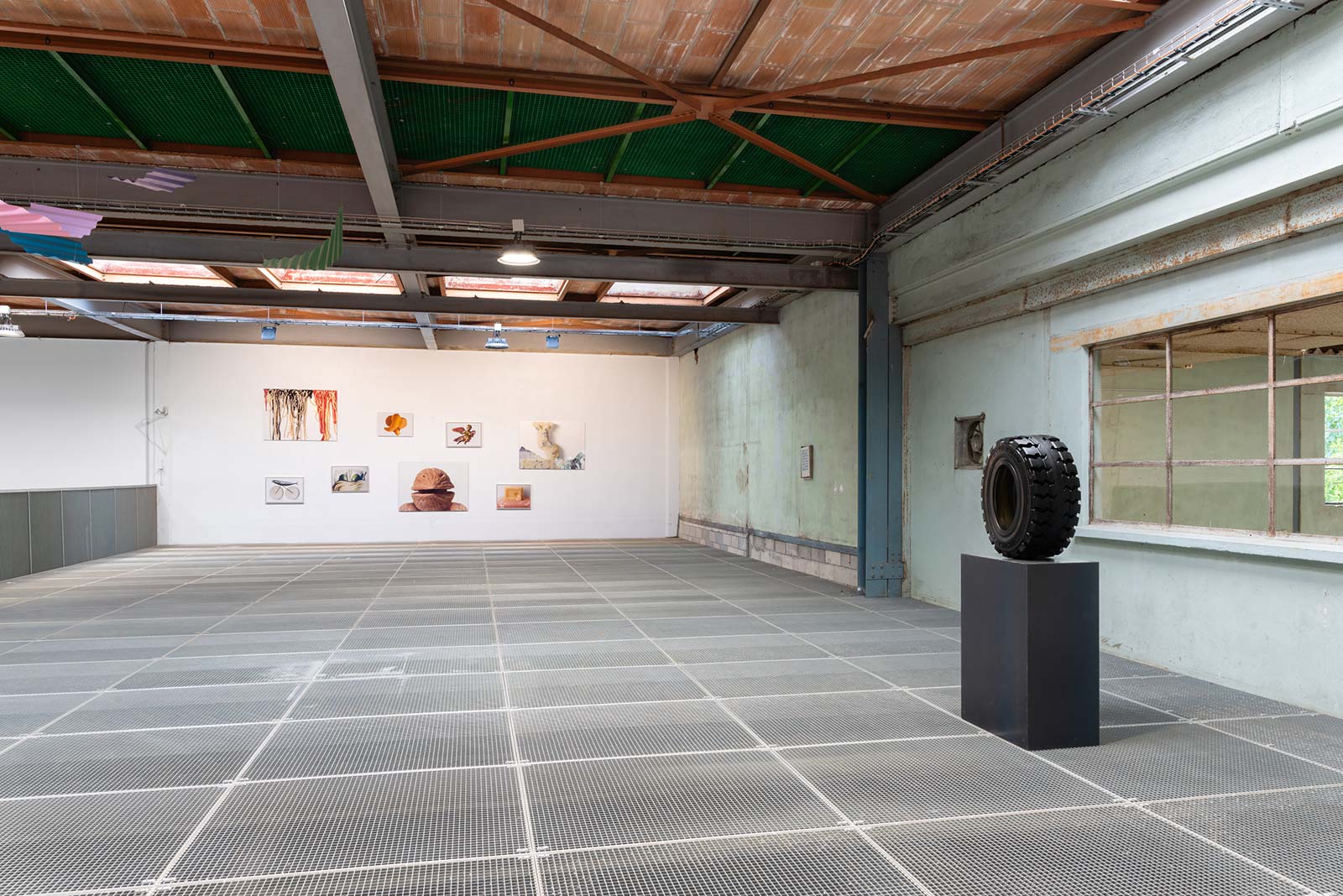
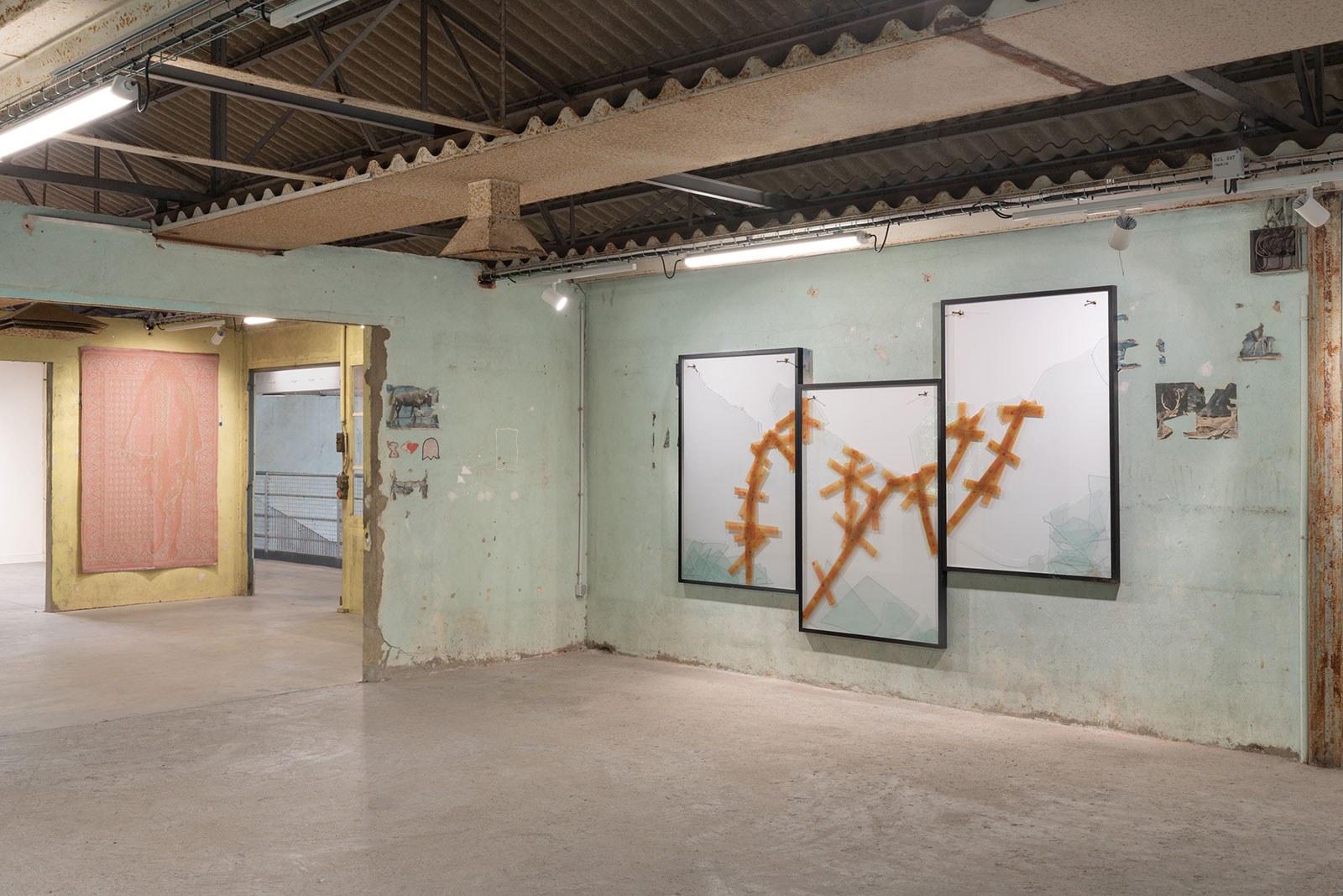
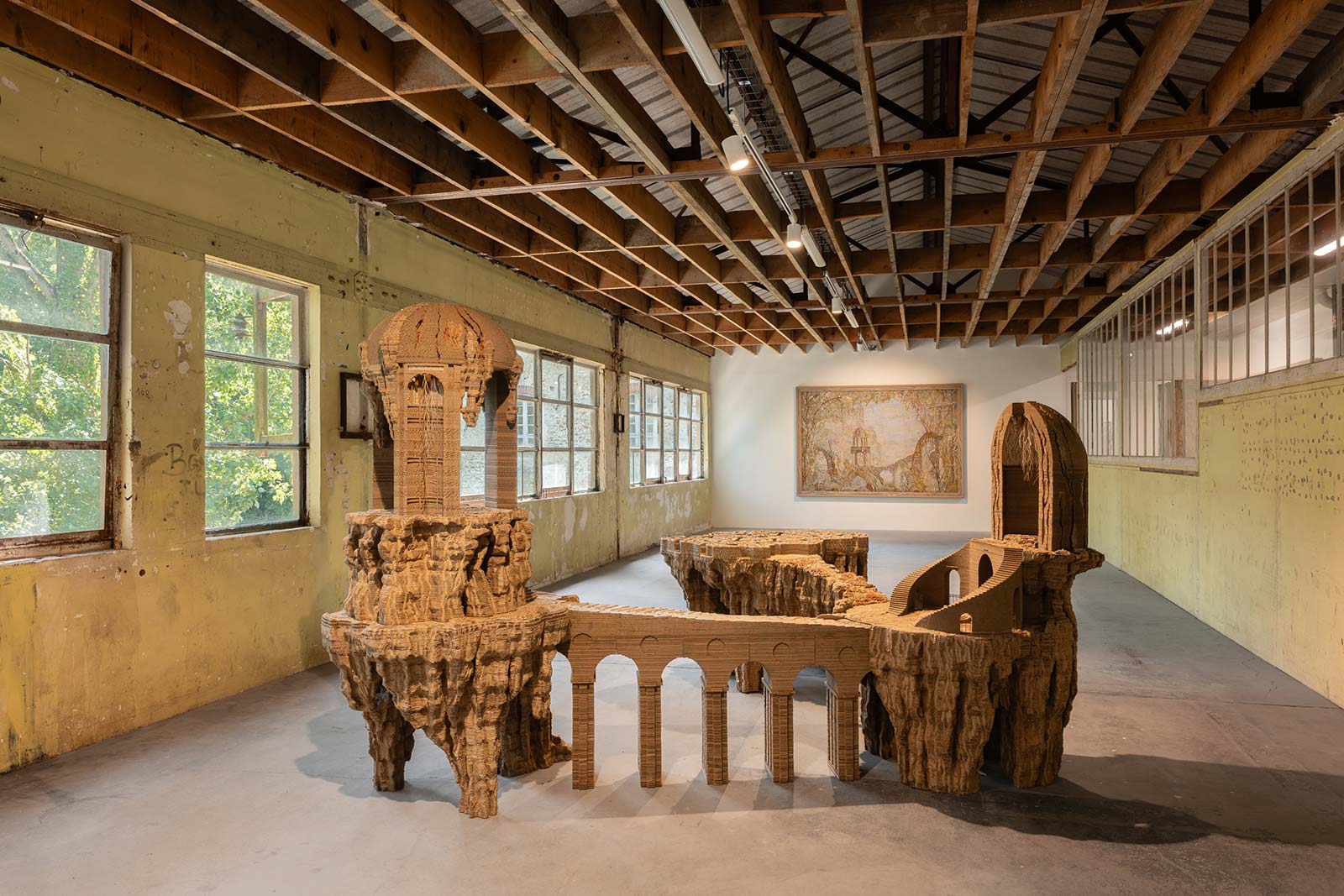
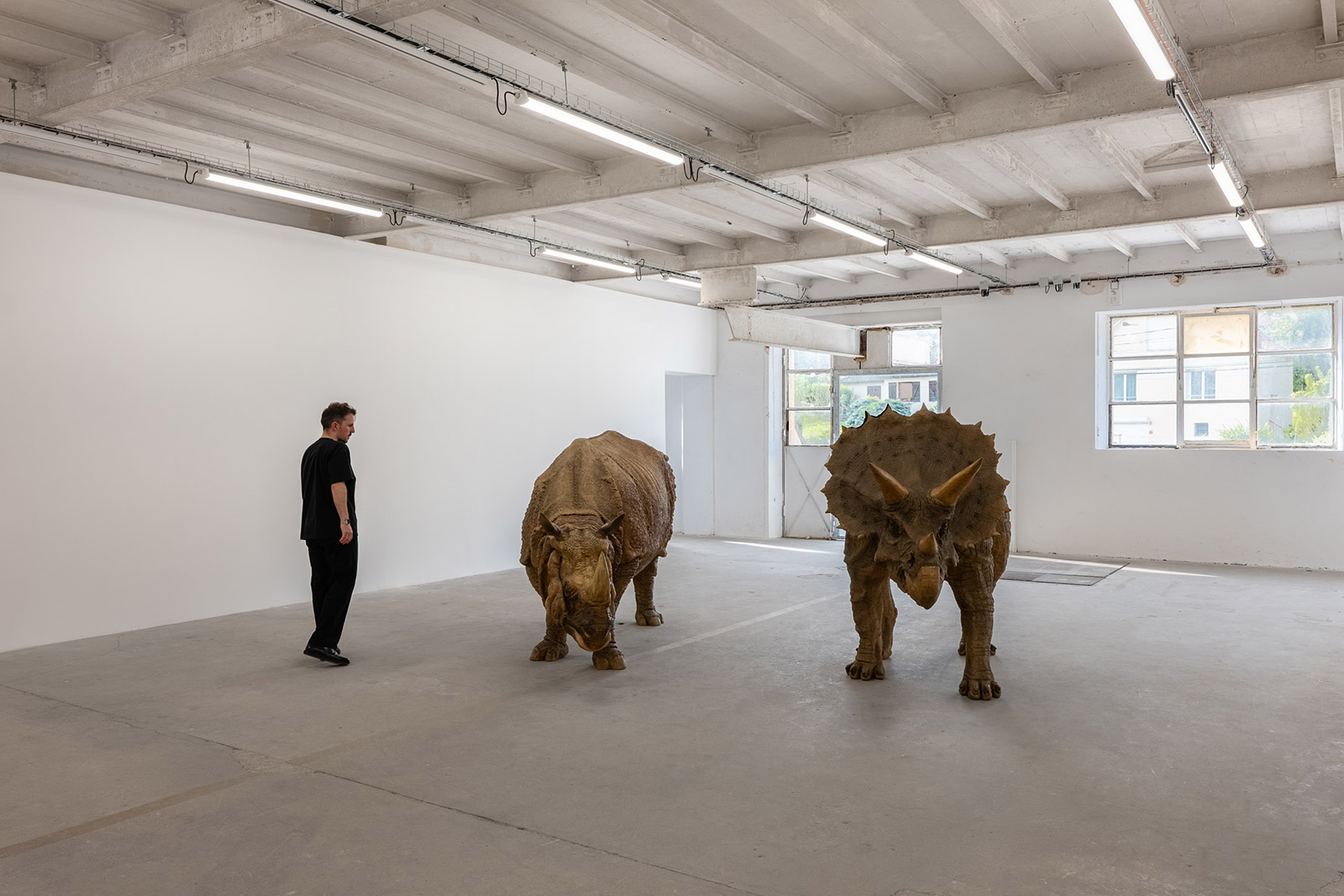
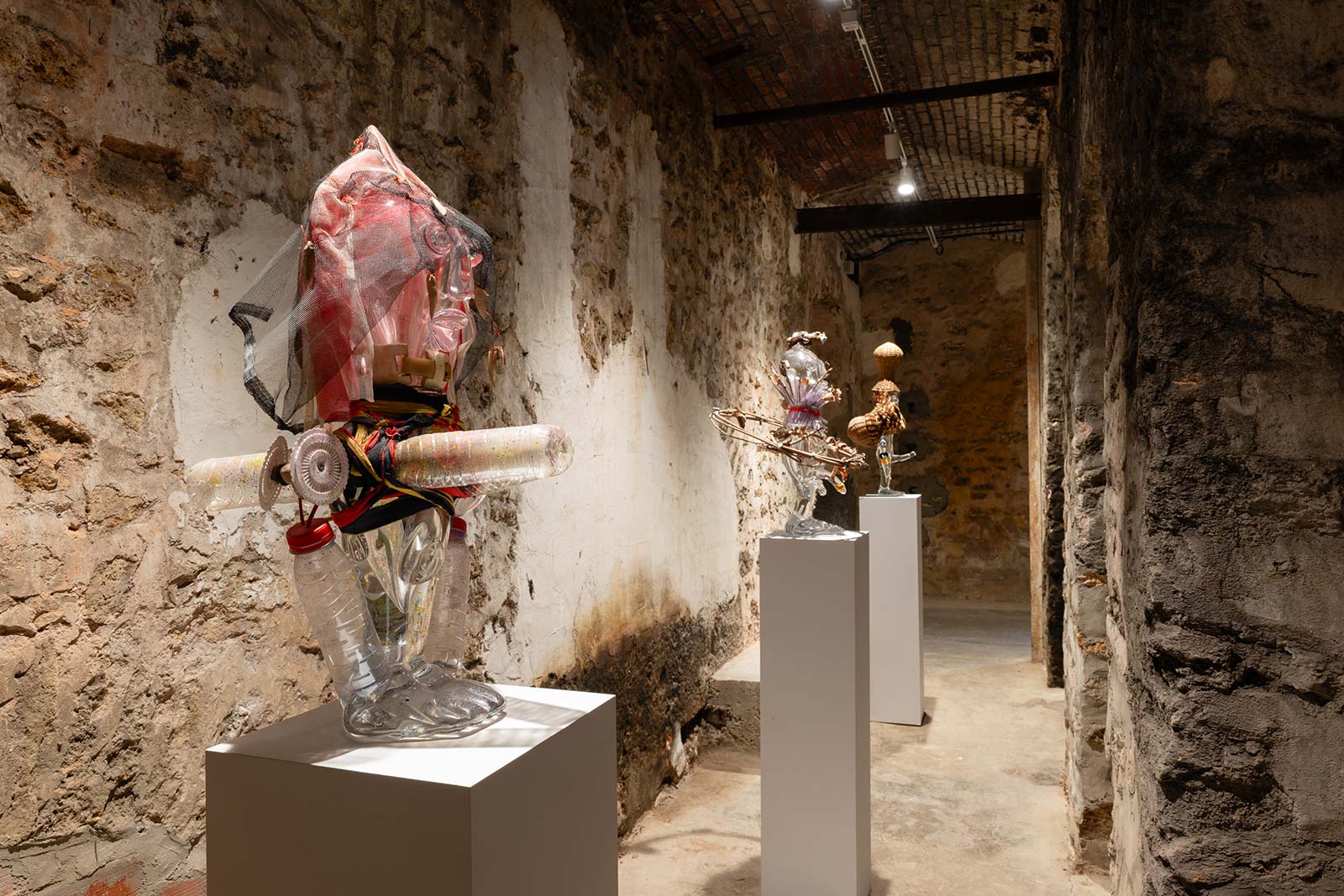
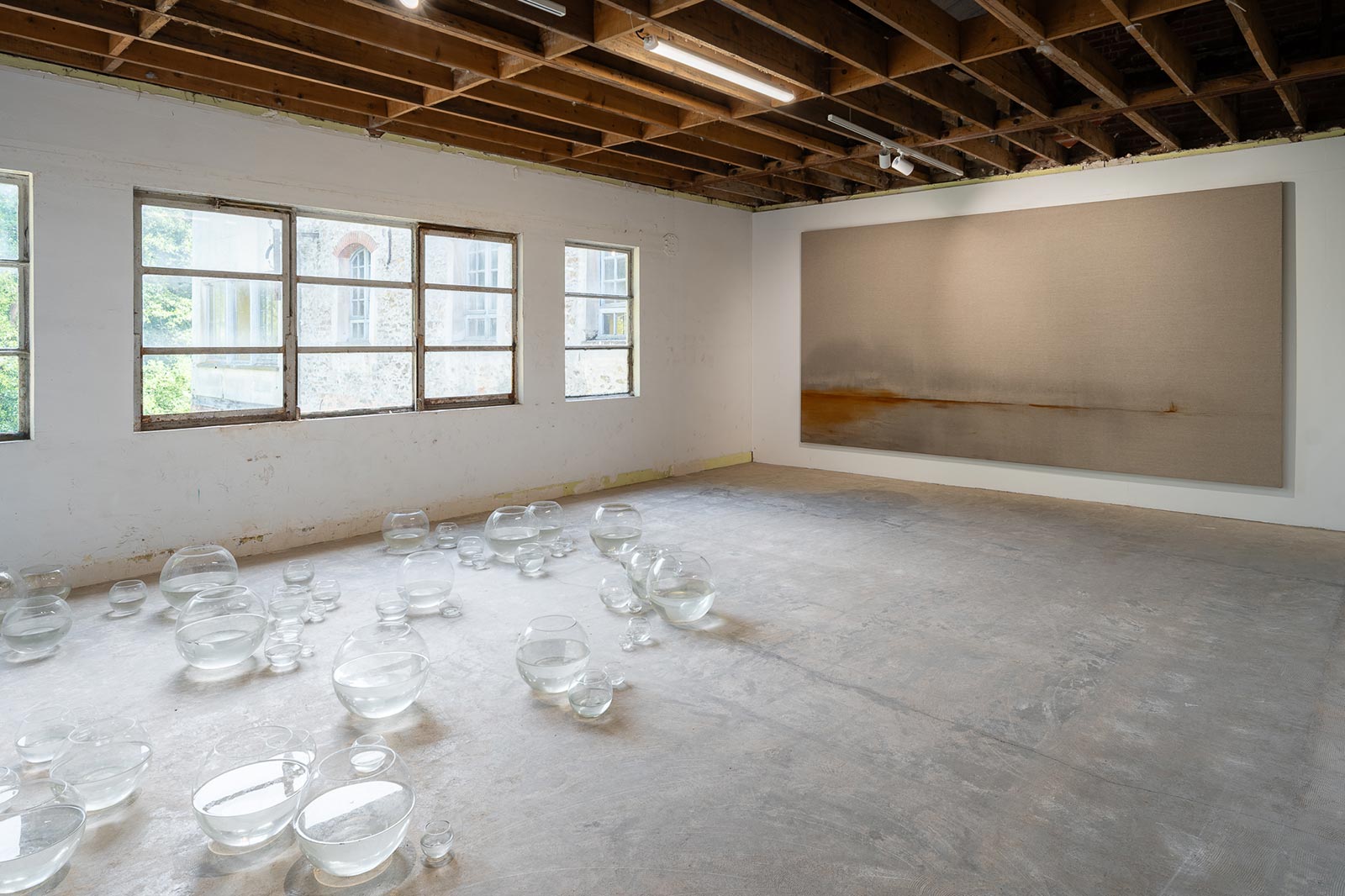
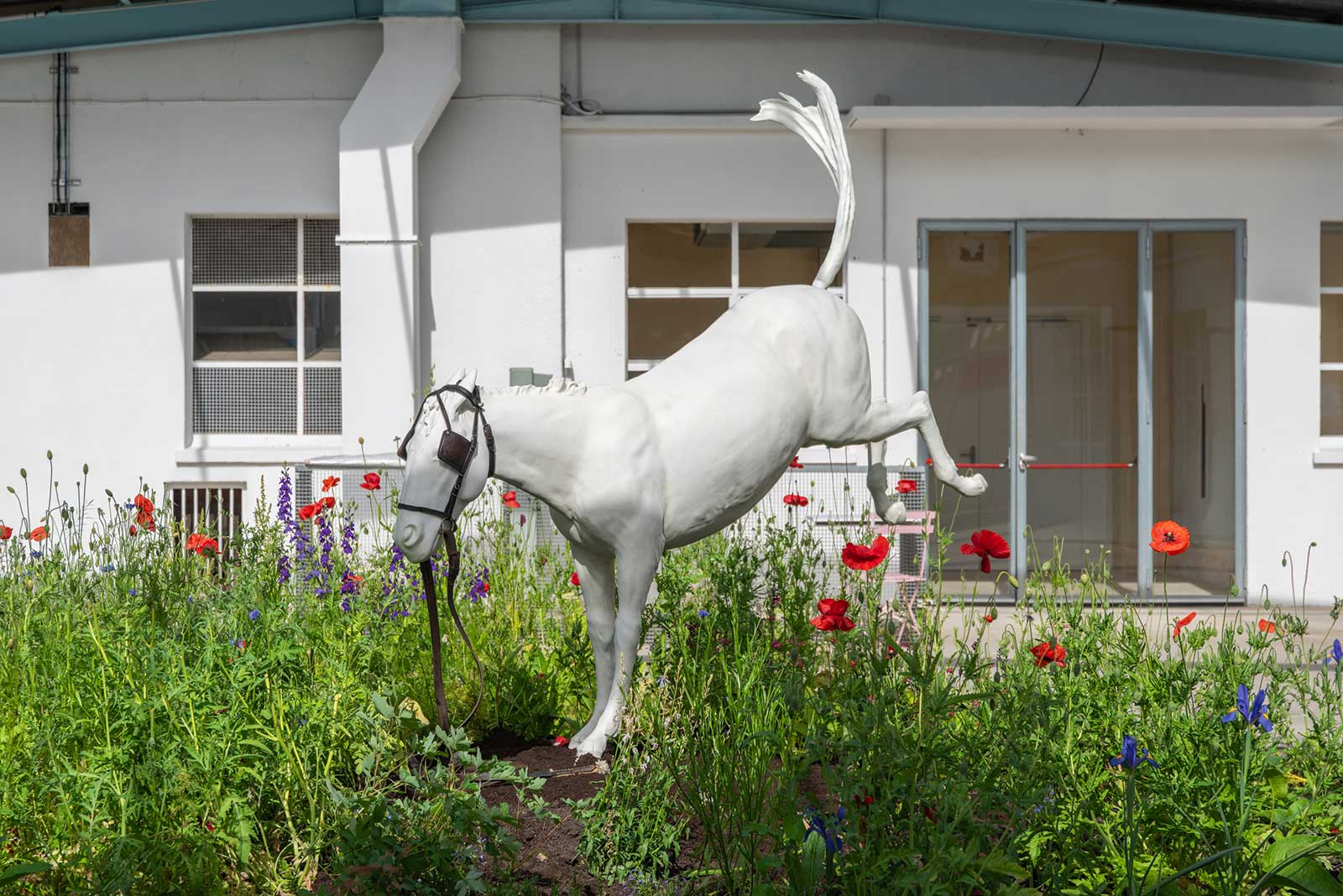
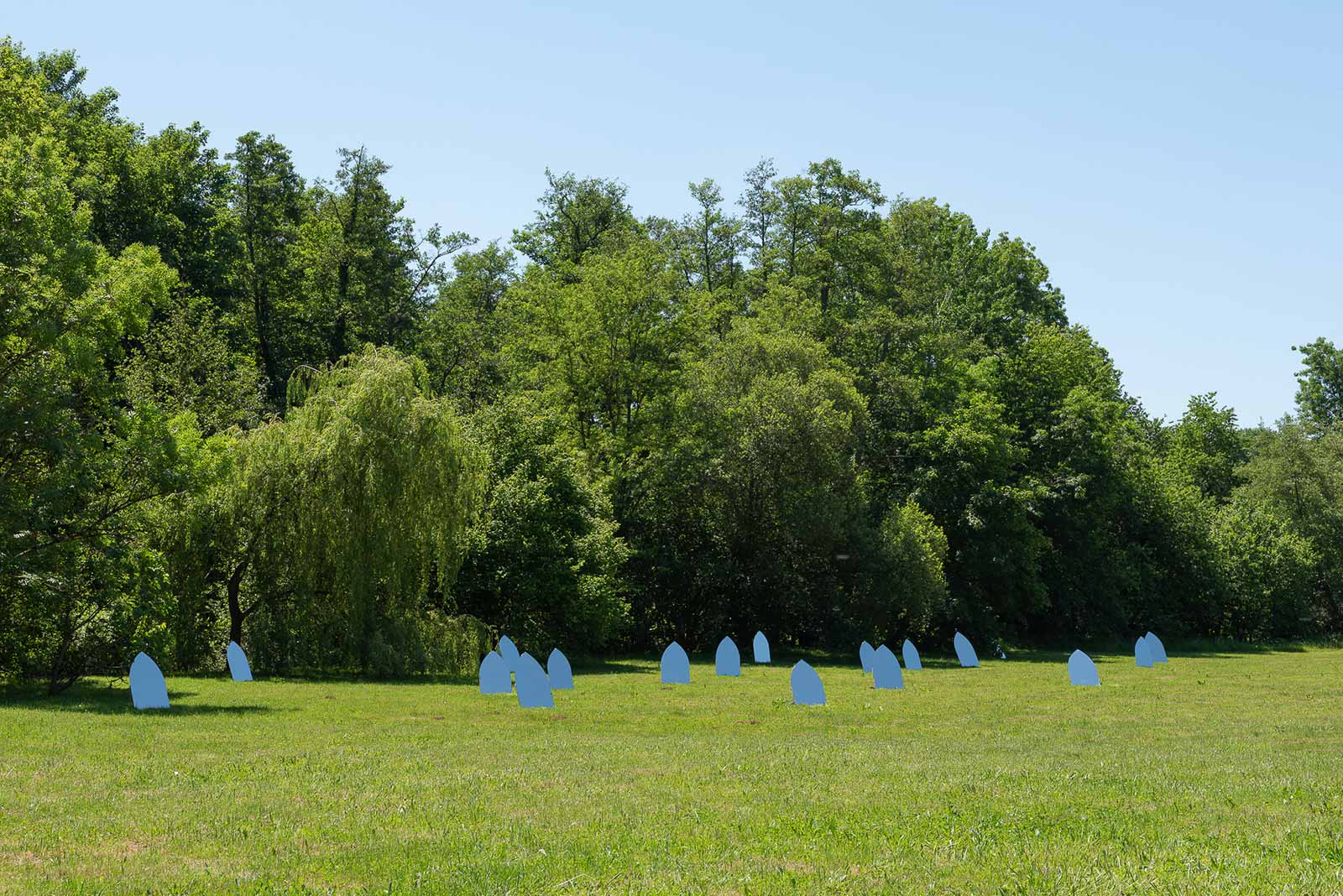
Twenty years ago, three friends, Mario Cristiani, Lorenzo Fiaschi and Maurizio Rigillo, founders of Galleria Continua in San Gimignano in 1990, made a deliberate and visionary choice. They transformed four warehouses of a former paper mill in Boissy-le-Châtel into exhibition spaces where contemporary art enters into dialogue with the site’s industrial past. For the main building, they entrusted a very young firm at the time, MBL Architectes, which would later become the enduring architectural partner of their French projects. Together, they rooted this ambitious undertaking, remarkable for its monumental scale, in a lasting commitment to place.
What Les Moulins has become can only truly be experienced from within. Distant geographies and the surrounding countryside, industry and nature, childhood and knowledge, collecting and creation all intersect here according to a singular logic that two decades have not exhausted. Spanning 40,000 square meters, the site now hosts monographic exhibitions, works created for the space, a skatepark, as well as the restaurant La Cachette, open throughout the summer.
From the outset, this extraordinary place was conceived with a pioneering educational outreach program in France, Continu’Actions. Each year, many children encounter art for the first time through this initiative, which invites sensory discovery well before formal learning. The Moulin de Sainte Marie, the estate’s second site, later emerged as a natural extension, generated by the very spirit of the place, an organic development of an ambition that refused to remain contained.
Finally, the Art & Futur space unfolds as a laboratory of ideas dedicated to exchanges between contemporary creation and innovation, bringing together artists, thinkers, researchers and changemakers to explore new ways of inhabiting the world and to imagine possible futures.
An anniversary exhibition in motion
To mark its twentieth anniversary, Galleria Continua at Les Moulins presents a major group exhibition bringing together more than fifty artists and giving voice to the many individuals who have shaped these two decades of activity. Each participant was invited to reflect on an artist as well as on a personal experience of the place. Artists, collectors, visitors from afar, writers, journalists, families and long-standing partners all contribute to this collective narrative. Through their commitment, their loyalty, and at times simply their presence, they have helped define the essence of Les Moulins, not merely as a gallery, but as a place in its own right, with its own geography and a singular way of engaging with existence.
The featured artists include: Delphine Aboulker, Chiara Agradi, Audrey Azoulay, Sarah Belmont, Lorenzo Benedetti, Claude Bonnin, Nicolas Bourriaud, David- Hervé Boutin, Gilbert Brownstone, Yvette van Caldenborgh, Giovanna Caruso Fendi, Giovanni Caruso Fendi, Valentino Catricalà, Joy Chaung, Chen Bo, Ella Cisneros, Laurent Corio, Carlitos Cruz-Diez, Isabelle Valembras Dahirel, Valérie Duponchelle, Madame et Monsieur Francès, Madame et Monsieur Fournis, Didier Fusillier, José-Manuel Gonçalvès, Laurent Issaurat, Julio Le Parc, Marilyne Legouge, Alain Lombard, Sara Lubtchansky, Mathilde Marchand, MBL Architectes, Hervé Mikaeloff, Lara Milosevic, Mildred Monfort, Simon Njami, Leo Orta, Souné Prolongeau-Wade, Isabelle Renard, Laura Salas Redondo, Jérôme Sans, Slava and Patric Tuytens.
From these fragments of memory emerges an emotional cartography, a polyphonic and open narrative that remains faithful to the founding idea of Les Moulins: that an art space is shaped as much by those who pass through it as by those who conceive it. Historic works and new productions engage in dialogue throughout an exhibition path that refuses to freeze what, by nature, remains in constant becoming.
The exhibition brings together works by artists who have profoundly shaped the memory of the place. Among the highlights are Labirinto e Grande Pozzo and Spazio Libero by Michelangelo Pistoletto, Silvio by Sislej Xhafa, Invisible Forms by Zhanna Kadyrova, VR Pool by Leandro Erlich as well as Comme un jeu d’enfant by Daniel Buren. Alongside these works, previously unseen productions created for the space remind us that to celebrate is not to stand still but to continue creating.
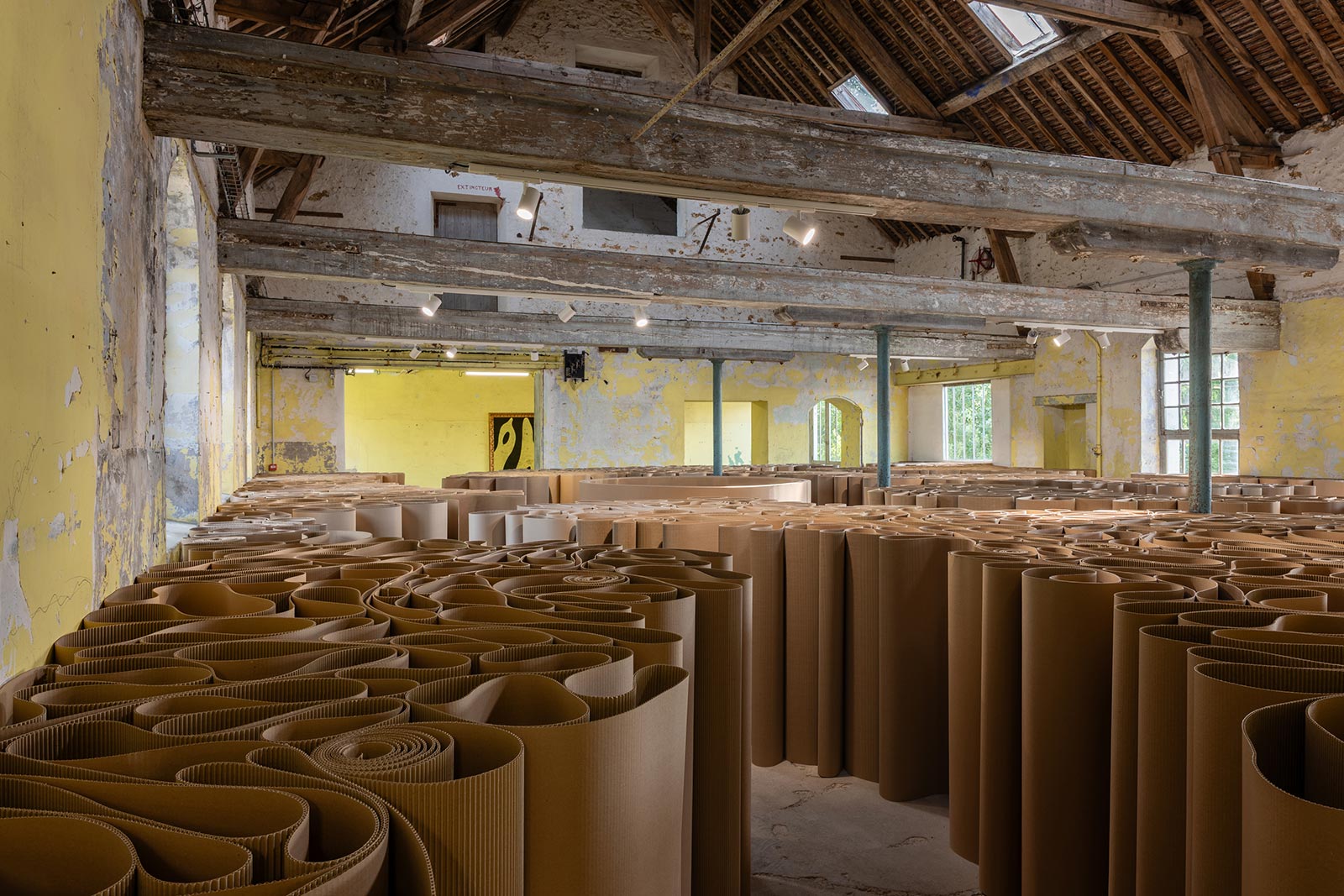
For Pistoletto, corrugated cardboard becomes a material of reflection. In Labirinto e Grande Pozzo (1969–2017), the boundary between fear and discovery dissolves. Each step becomes an attempt to find a direction. The space disorients, alters perception and holds the visitor in a state between uncertainty and awareness. At the centre of the experience lies the mirror, a surface of confrontation with oneself where fear and safety, loss and rediscovery coexist. The well is not an ending but the reflection of an inner landscape. Made from a simple and everyday material, the work unfolds as a symbolic journey, a passage through darkness toward knowledge.
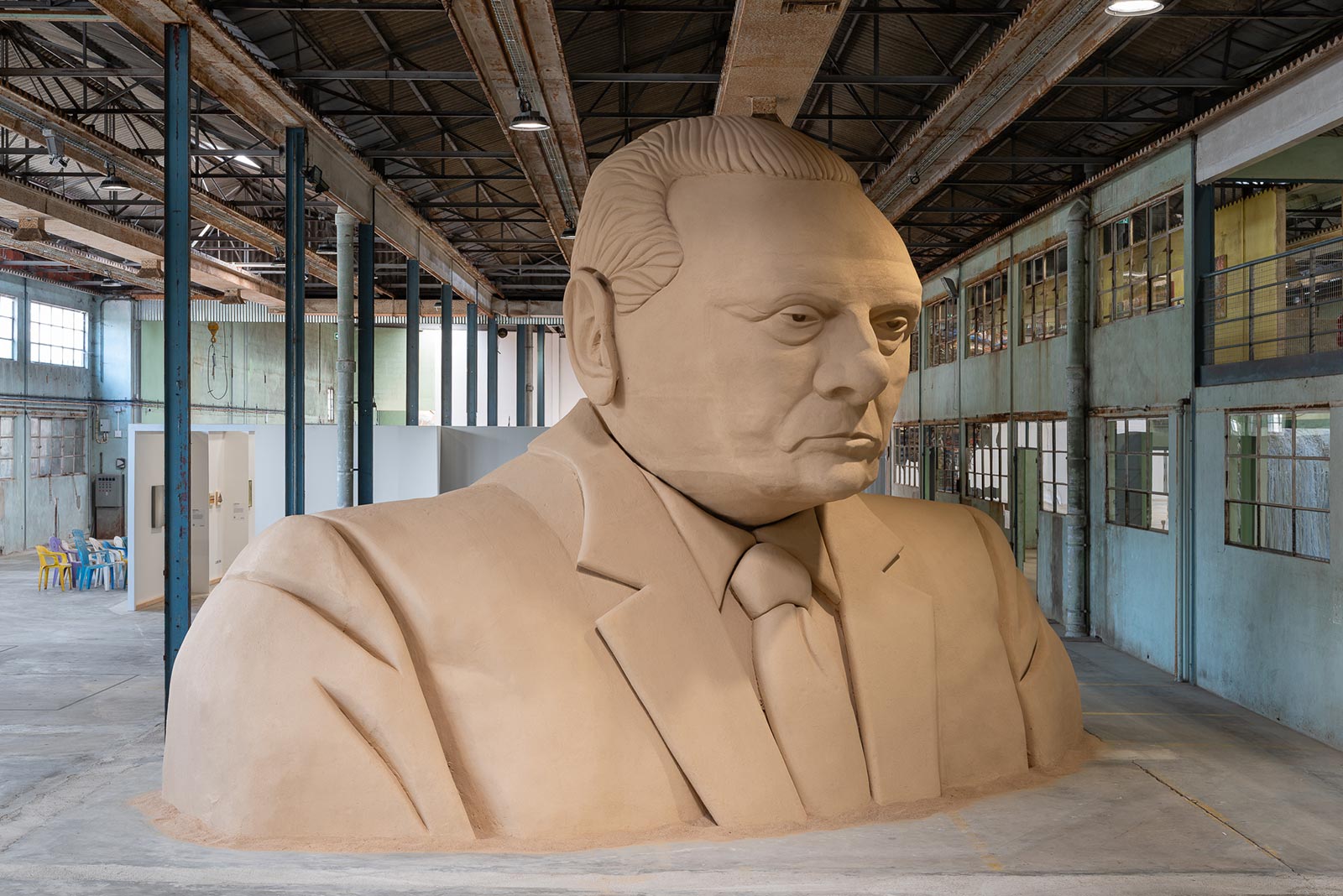
Xhafa, in a different register, questions the apparent solidity of power. Rising to a height of around five metres, Silvio (2010) draws inspiration from Silvio Berlusconi, a major figure in contemporary Italian political life. Through its monumental scale and classical formal language, the sculpture recalls official busts that celebrate authority. Yet its material, sand, introduces a decisive tension. The work is fragile, unstable and destined to erode. Oscillating between monumentality and irony, it reveals the illusory nature of power, the theatrical dimension of politics and the cult of personality, all of which conceal a deeply vulnerable reality. In a single gesture, Silvio expresses what political imagery seeks to conceal: that what appears solid and immutable is ultimately made of what can crumble.
With VR Pool, Erlich transforms illusion into a critical tool. The artist extends his exploration of perception by transposing the experience of a swimming pool into a virtual environment. Only a metal ladder is physically present; immersion in the aquatic space takes place through a virtual reality headset. The spectator enters a simulated pool in which familiar points of reference are disrupted. The experience unfolds from the bottom of the pool, offering a perspective that feels entirely unfamiliar, made possible by a double illusion, that of the artwork itself and that of virtual reality.
In Invisible Forms (2012), Kadyrova gives tangible presence to beams of light and shadow that traverse contemporary societies. She renders in cement the rays emitted by lamps, surveillance cameras, televisions, and here, car headlights, devices whose effects range from illumination to control and intrusion into private life. This invisibility, however, is deceptive, as these systems permeate everyday life often without full awareness. Dense and opaque, the cement beams also evoke spaces of confinement, closely connected to increasingly restrictive systems of surveillance across the world.
Daniel Buren, Comme Un Jeu D’enfant, work in situ, 2014/2026
An emblematic work by Daniel Buren, originally created at the Musée d’Art moderne et contemporain de Strasbourg in 2014 and later presented in Naples, Aguascalientes in Mexico, Sydney in Australia and Daegu in South Korea, Comme un jeu d’enfant unfolds at Les Moulins through the essential principles of Buren’s practice: work conceived in relation to a specific site, the dialogue between geometric forms and architecture, the presence of colour and a reflection on the visitor’s experience. Conceived as an autonomous journey within the collective exhibition, the installation fully inhabits the space while maintaining a sense of continuity.
The work takes the form of a vast landscape composed of geometric wooden modules: cubes, cylinders, arches, pyramids and parallelepipeds inspired by children’s construction games and enlarged to human scale. This shift in scale is crucial. These forms no longer belong to the world of the toy, yet they do not fully enter the realm of architecture. They occupy a singular intermediate space in which sculpture becomes an environment to be experienced.
Structured according to a principle of assembly, the modules create paths, passages, thresholds and viewpoints. A chromatic duality organises the whole. One section, entirely white, tends to suspend the reading of forms, while another, composed of vivid colours, recalls the visual language of educational games.
Visitors are invited to move freely through the installation. It is through movement that perspectives, alignments and visual relationships gradually emerge, revealing the work as a dynamic field of perception.
Les Moulins resonates with a sense of projection and a deep generosity, a space where art transcends time and where time itself seems to dissolve its boundaries. Twenty years after its founding, it remains, more than ever, an invitation to exist, to welcome surprise and to embrace the present within the contingency of being. This momentum is far from fading.



 Sign in with Google
 Sign in with email