Enter your details to sign in
Don’t have an account?
Sign upOr you can sign in with
a single account for all
STIR platforms
All your bookmarks will be available across all your devices.
Stay STIRred
Already have an account?
Sign inOr you can sign up with
Verification link sent to check your inbox or spam folder to complete sign up process



We use cookies and similar technologies, to help provide you with a better, faster, and safer experience while delivering content
tailored to your interests.
By clicking on the AGREE button, closing this banner, clicking or navigating the website, you consent to the use of all cookies and similar technologies for the purposes we describe in our
Privacy Policy.
We use several cookies that are related to the functionality, security & user preferences,
analytics, and advertising. While some are essential, you may choose to dis-allow the use of others.
Please choose your preference, or opt for the best experience by closing this banner, clicking or navigating the website.
For more detailed information please read our Privacy Policy
 Connect
Connect
Connect





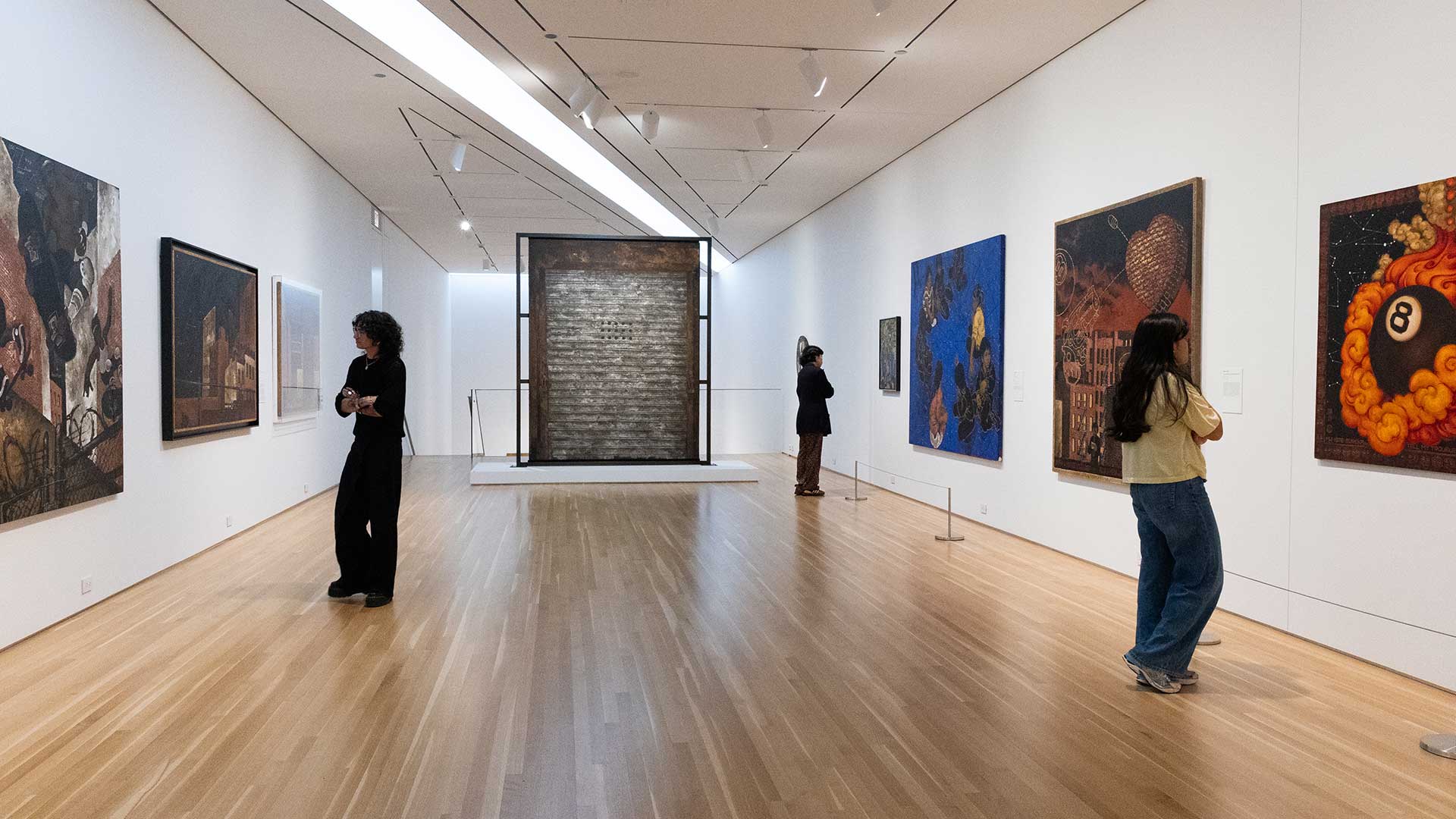
Wrightwood 659 opens Martin Wong: Chinatown USA, an exhibition focusing on an underexplored through-line in the practice of visionary Chinese-American artist Martin Wong (1946-1999): his fascination with Asia through Chinatowns as personal, mythical cityscapes. Wong explored these spaces—filled with Asian art and architecture as adopted in the United States amid the explosion of street culture in San Francisco and New York in the late 20th century—as amalgams of memory, identity and queer and pop-culture narratives.
The first U.S. museum show devoted to Wong since 2017, Martin Wong: Chinatown USA is curated by Yasufumi Nakamori, PhD, with Ashley Janke, Assistant Curator, Wrightwood 659. The exhibition is presented by Halsted A&A Foundation.
The exhibition and its accompanying, fully illustrated catalogue take their title from the artist’s 1993 exhibition at the downtown Manhattan gallery P·P·O·W, which still represents the artist’s estate today. Only six years later, Wong died of an AIDS-related illness at the age of 53. Since then, his reputation has continued to grow as a queer painter and poet who traversed identities and sampled a dizzying array of cultural references. Critical attention, however, has largely focused on his paintings of the Lower East Side and the artists, poets and immigrants in this neighbourhood. Far less recognised are the Chinatown- and Asia-inspired paintings, drawings and sculptures he created throughout his career. Martin Wong: Chinatown USA positions these works as central to his hybrid practice.
Wrightwood 659’s presentation documents Wong’s lifelong fascination with the streets, storefronts, nightlife, myths, Asian art and celebrations of Chinatowns—even amid his better-known collaborations and creative exchanges with Nuyorican poets and graffiti artists on the Lower East Side.
The show features more than 100 paintings, drawings, ceramic works and photo collages, complemented by videos and artefacts, including pre-modern Asian objects collected by Wong. Several works reflect his interest in calligraphy, graffiti and American Sign Language (ASL). A selection of works from his graffiti collection, on loan from the Museum of the City of New York, is also on view.
Mariah Keller, Executive Director of Wrightwood 659, says, “At Wrightwood 659, we are committed to presenting art that confronts urgent social questions and foregrounds LGBTQ+ and Asian voices. Martin Wong’s work does both with extraordinary imagination and humanity. His paintings speak across communities and across time, making this exhibition deeply resonant for our moment.”
“[Wong] occupied a complex position in regard to his identity, balancing intense personal attachment to his Chinese heritage with a grasp of the issues of Orientalism and the related marginalisation of queer, Asian, Latino and Black people,” says Dr. Nakamori. “It’s true he did not grow up speaking Chinese, nor did he ever visit China. He claimed his view of Chinatown was like that of an outsider. Our scholarship suggests complexities and nuances of his own identity and relationship with Asia through Chinatown.”



 Sign in with Google
 Sign in with email