

 Sign in with Google
 Sign in with email



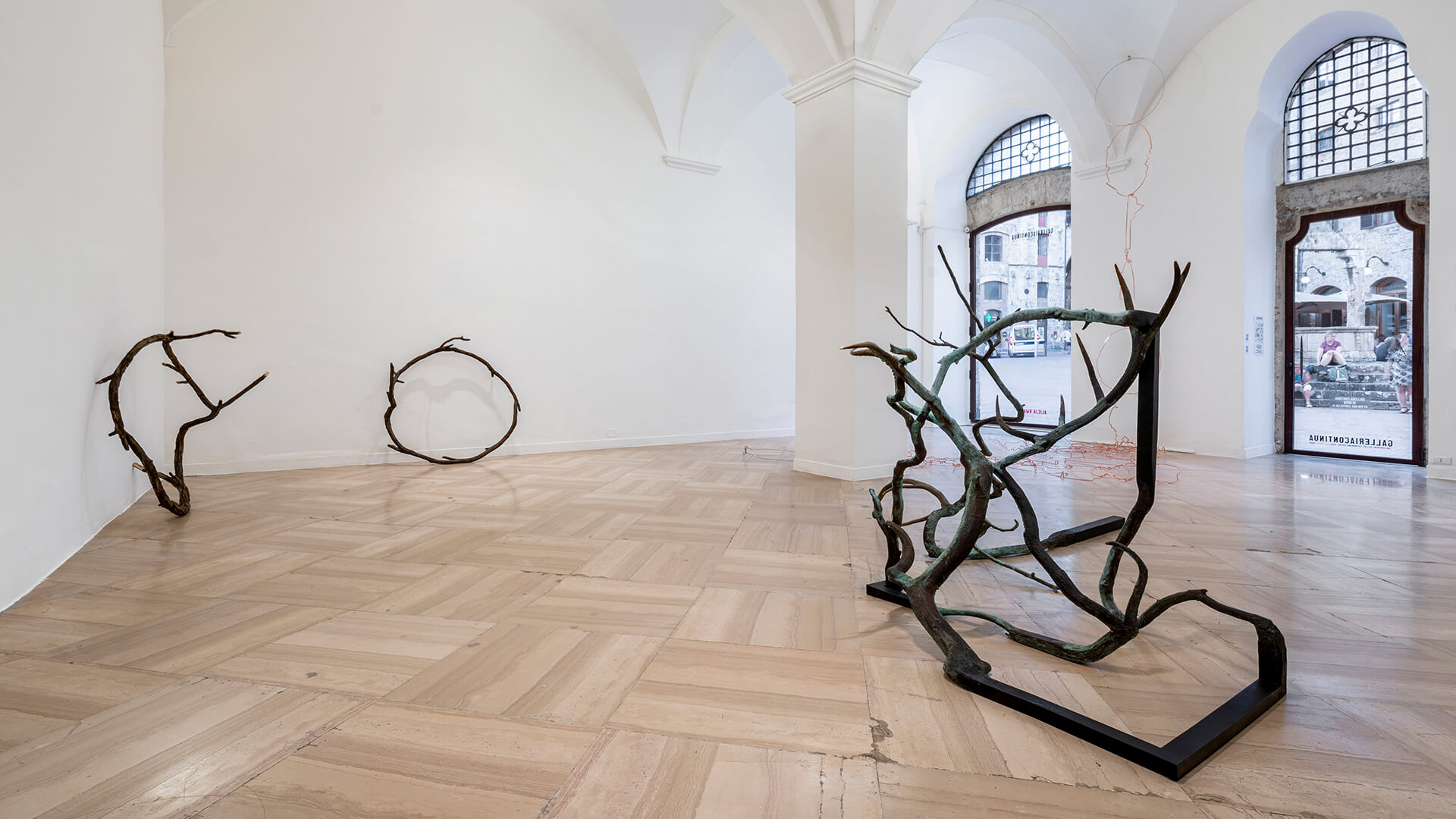





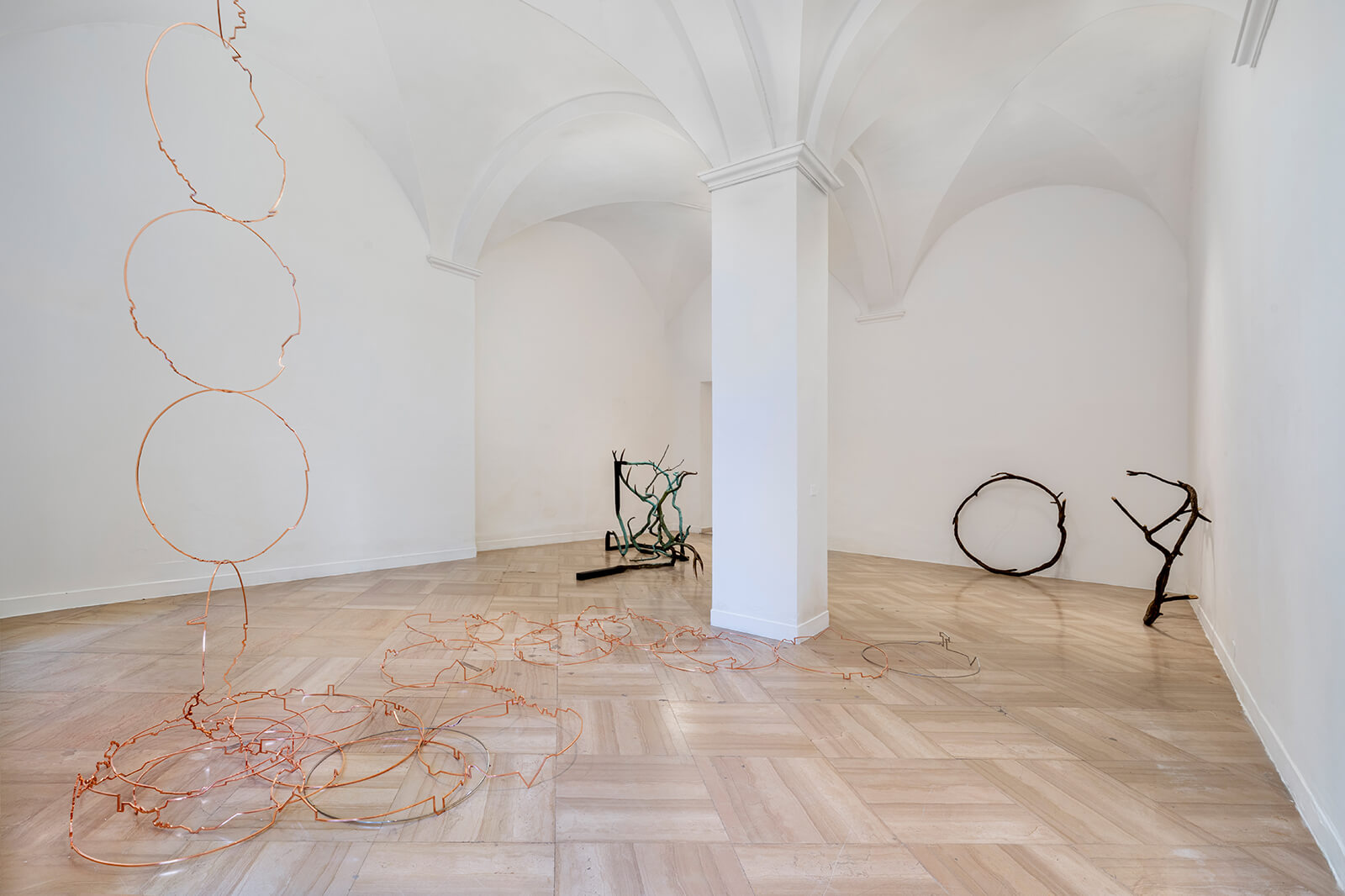
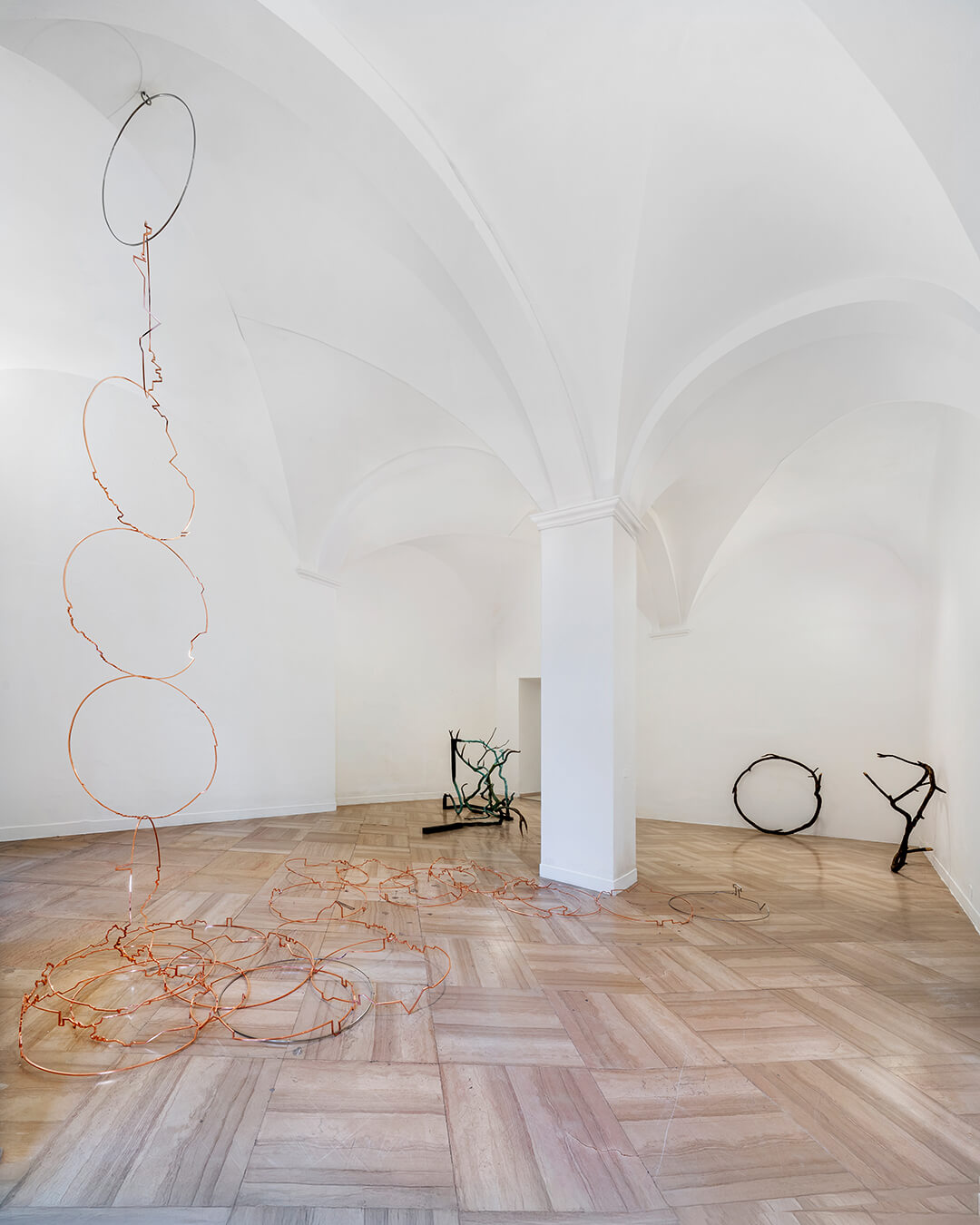
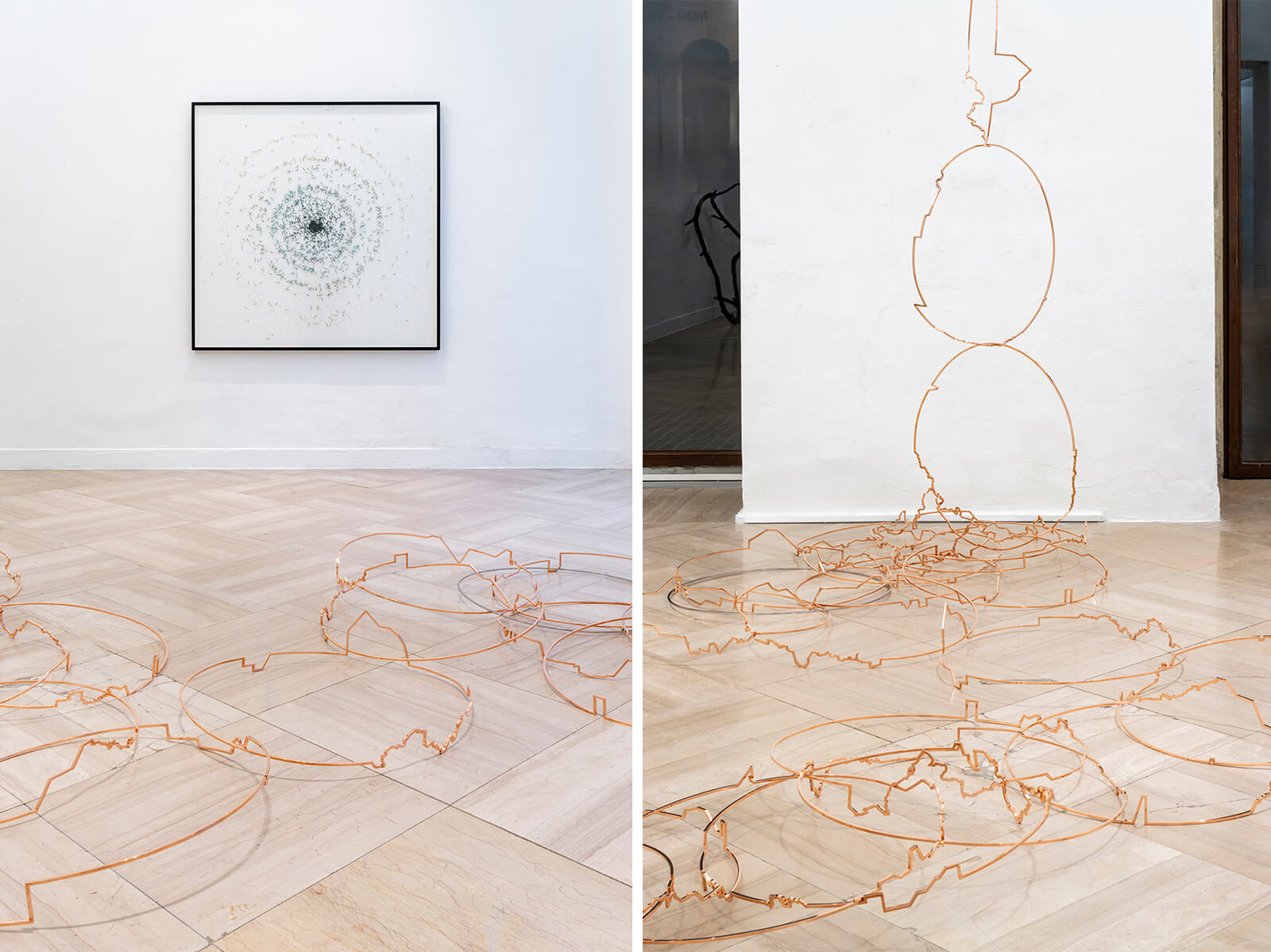
Galleria Continua presents Vestigia, a solo exhibition by Alicja Kwade, running from September 20, 2025 – January 7, 2026, in the gallery’s San Gimignano space in Italy. The exhibition marks Kwade’s return to the art gallery two years after her previous solo show, and brings together works from different periods of her career, including sculptures made of bronze, developed through her latest research. The contemporary artist continues her investigation into time, perception and the structures that shape reality. “These pieces reflect on the cyclical, linear and ultimately elusive nature of temporal experience, and its interdependence with natural and artificial systems,” notes Galleria Continua in an official release.
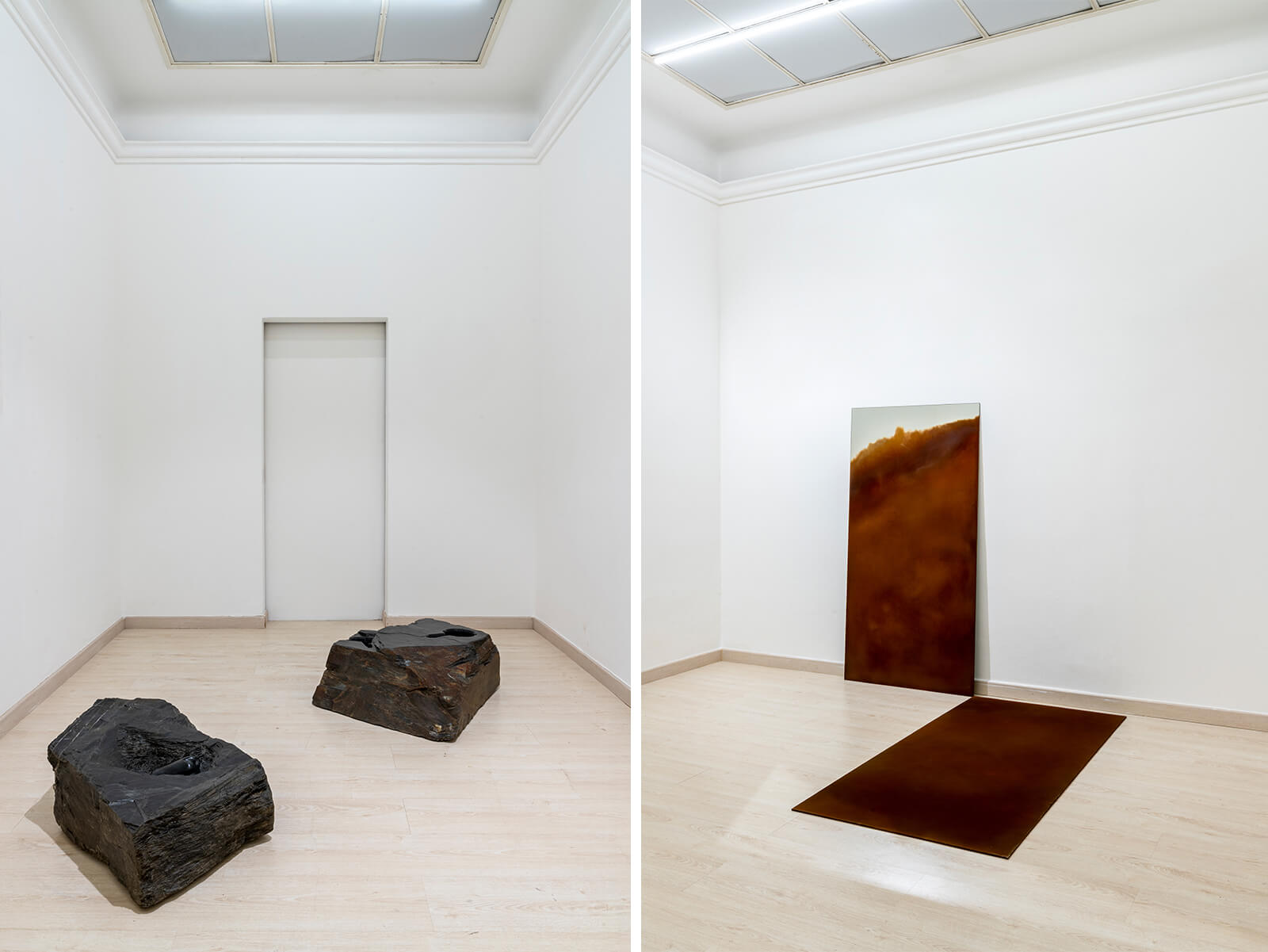
Several works on display at Vestigia appear as metaphorical traces—fragments of experiences that interweave past, present and future. In Inner Image (Finallyfound), Kwade encases everyday personal objects, such as an iPhone, keys and sunglasses, within a block of schist. These familiar items are imagined as archaeological relics from a lost civilisation. “When, at some distant point in time, these fossilised objects are uncovered, neither their original function nor their names will be remembered; they will appear as unknown artefacts—timeless and mysterious,” continues Continua.
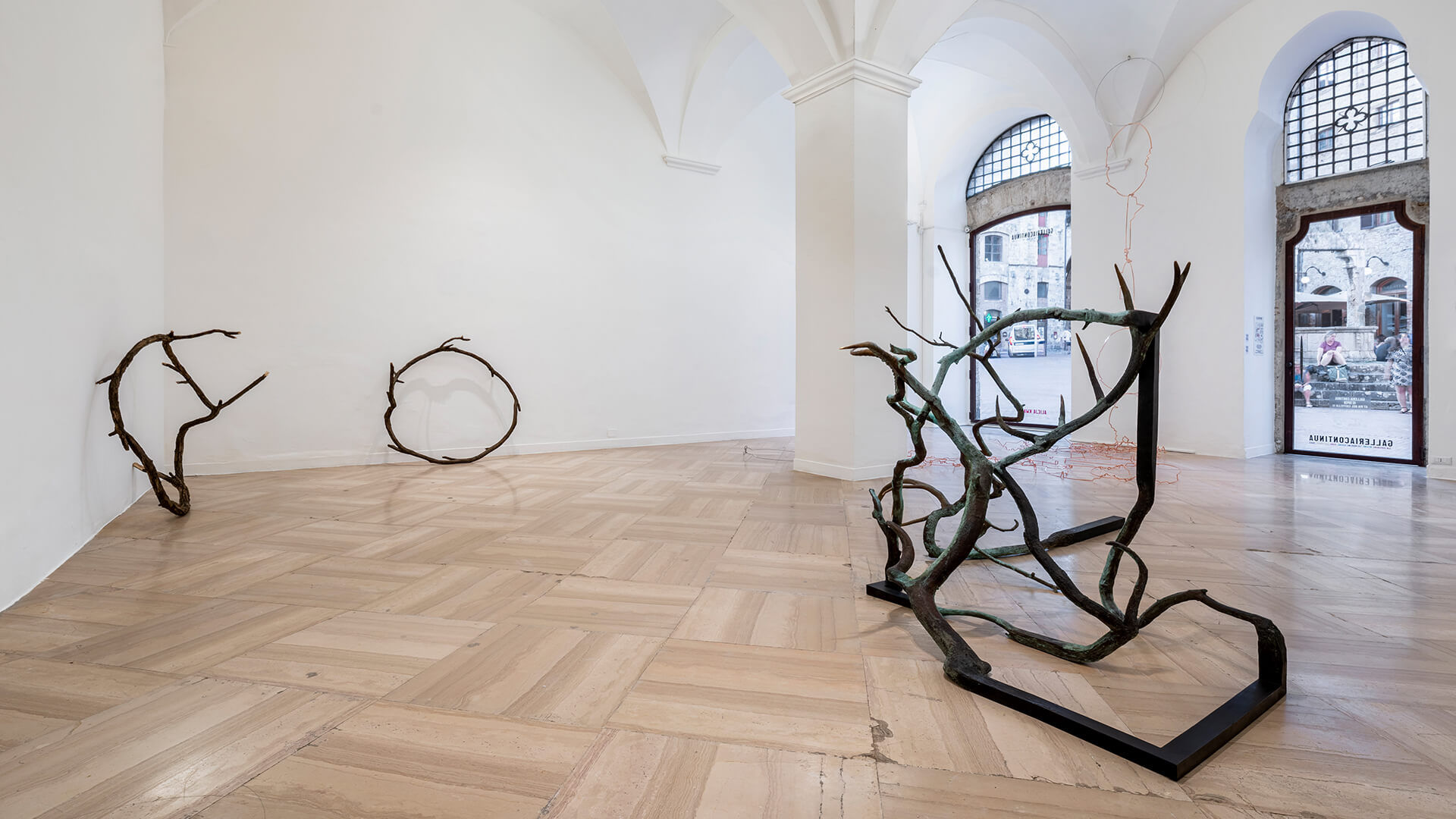
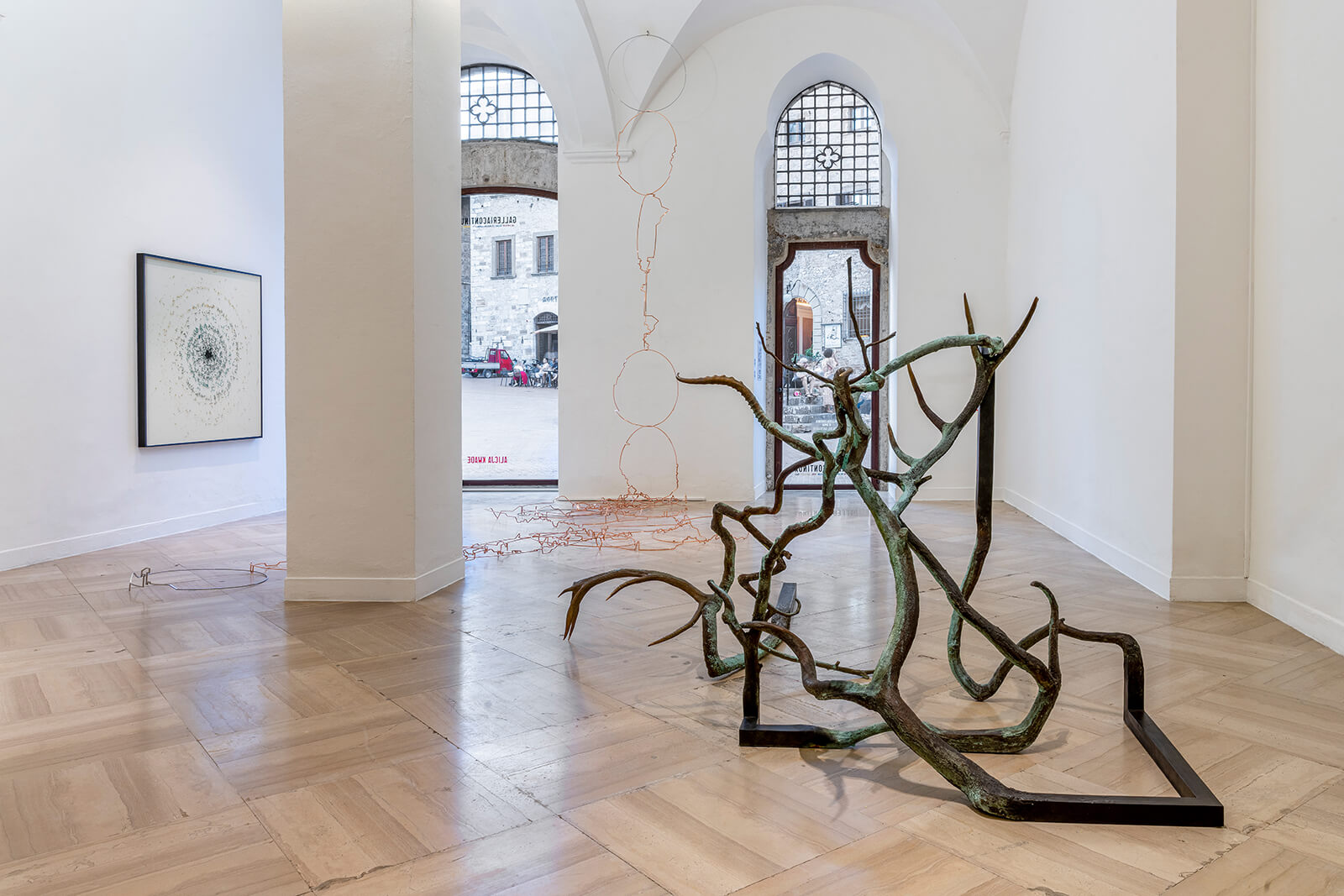
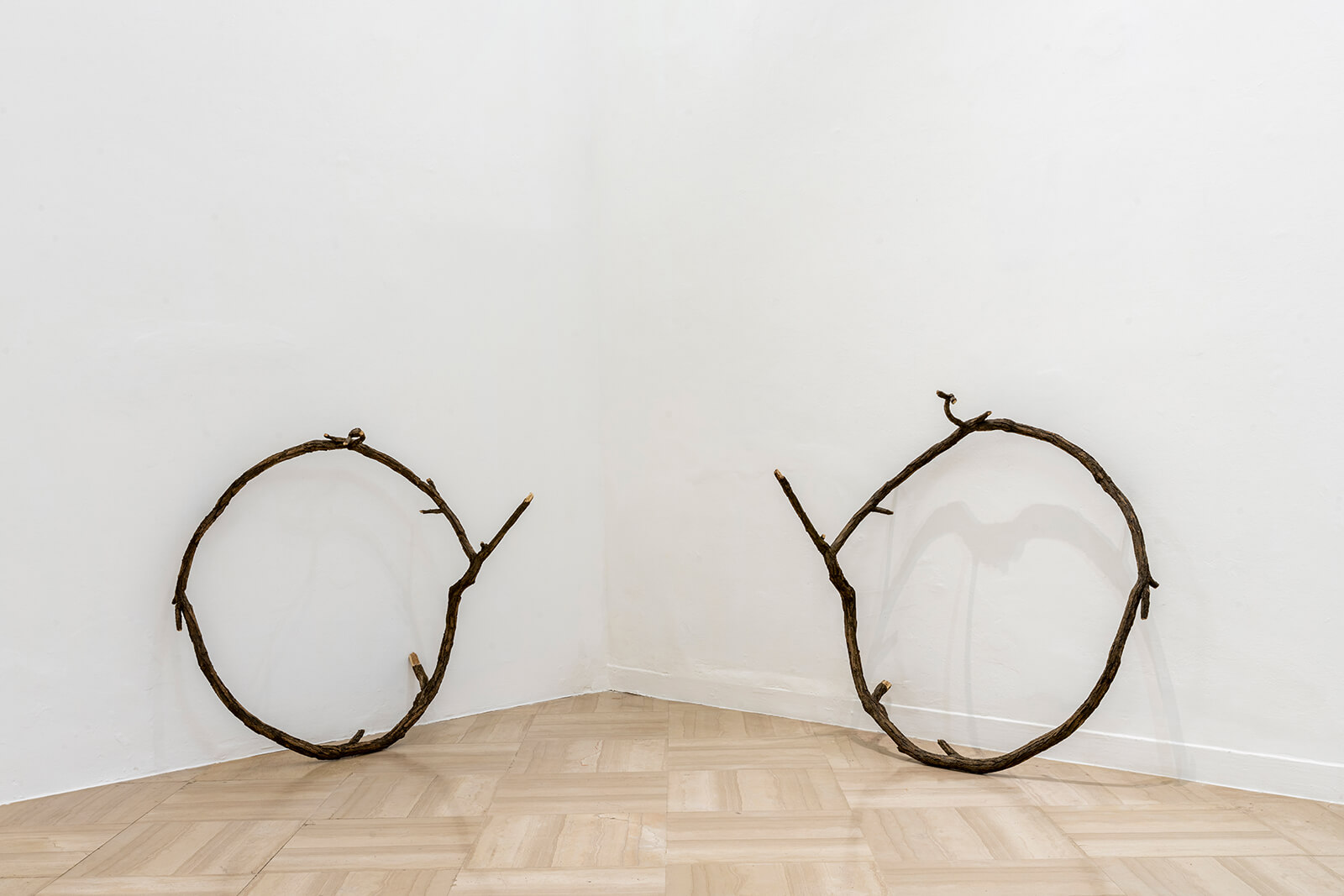
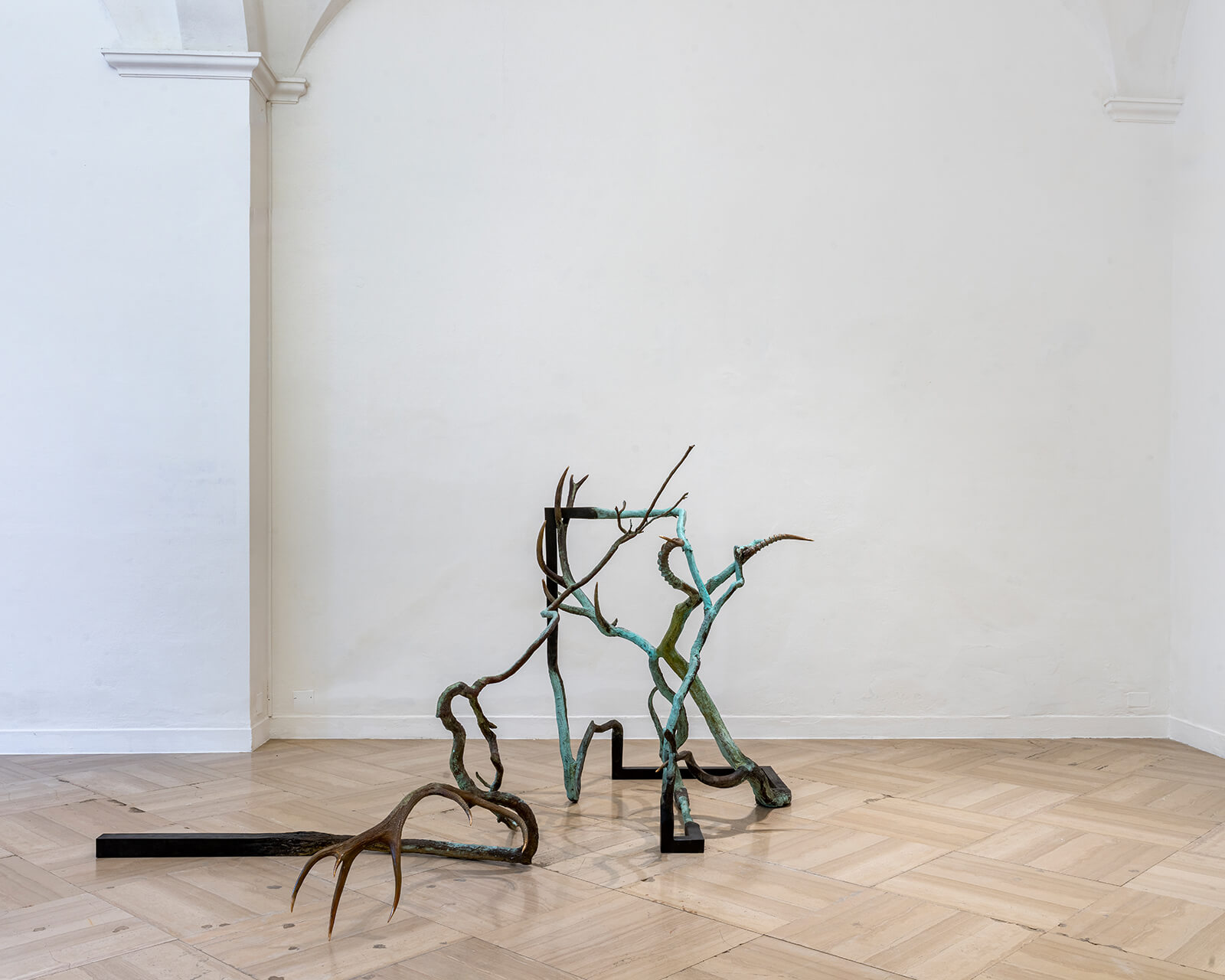
The art exhibition opens with two large-scale sculptures titled Archibiont (2025). Constructed from dark metal, their geometric and linear forms unexpectedly evolve into organic shapes, blurring the boundaries between architecture and biology. Elements such as copper-green bark textures and bronze antlers evoke recurring patterns found in nature, suggesting an underlying systemic order: a hidden blueprint of the world. “These are sculptures in a state of transformation, recalling Aristotle’s theory of hylomorphism: a philosophical concept exploring the relationship between matter, form and existence within a natural body. The tensions within the supernatural elements of Archibiont allude to higher forces, universal laws, beauty and chaos, which are in constant motion across earth and space,” elaborates the contemporary art gallery.
Time and material decay are central to Trait Transference (2024), in which a rusted mirror hangs on the wall opposite a corroded metal slab placed on the floor. Together, the elements create a quiet dialogue between reflection and erosion, prompting contemplation on the themes of transience and endurance. “With this work, the artist reminds us that art serves as a means to question and explore profound ideas about the fabric of reality, while simultaneously challenging and expanding our perception,” the gallery notes.
Another work, Kehrtwende (2021), presents a curved fragment of a wooden handrail mounted on the wall. Removed from its architectural context, the object becomes a symbol of reversal and transition—the title translates as ‘U-turn’. “As in much of her work, Kwade questions our perception of reality, transforming a familiar form into a silent but powerful reflection on movement, transition and the structure of experience,” concludes Continua.


What do you think?