


 Sign in with Google
 Sign in with email



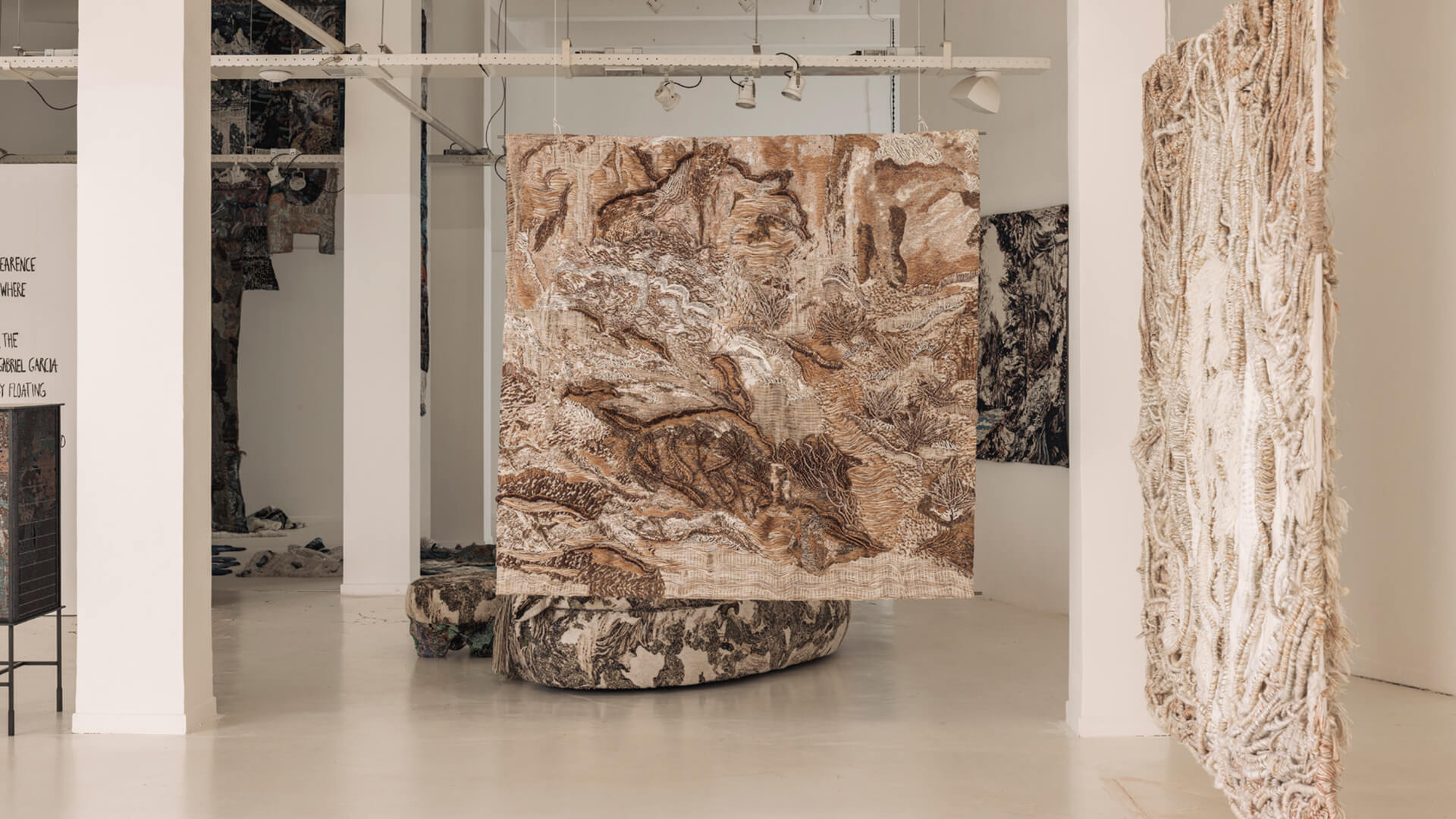





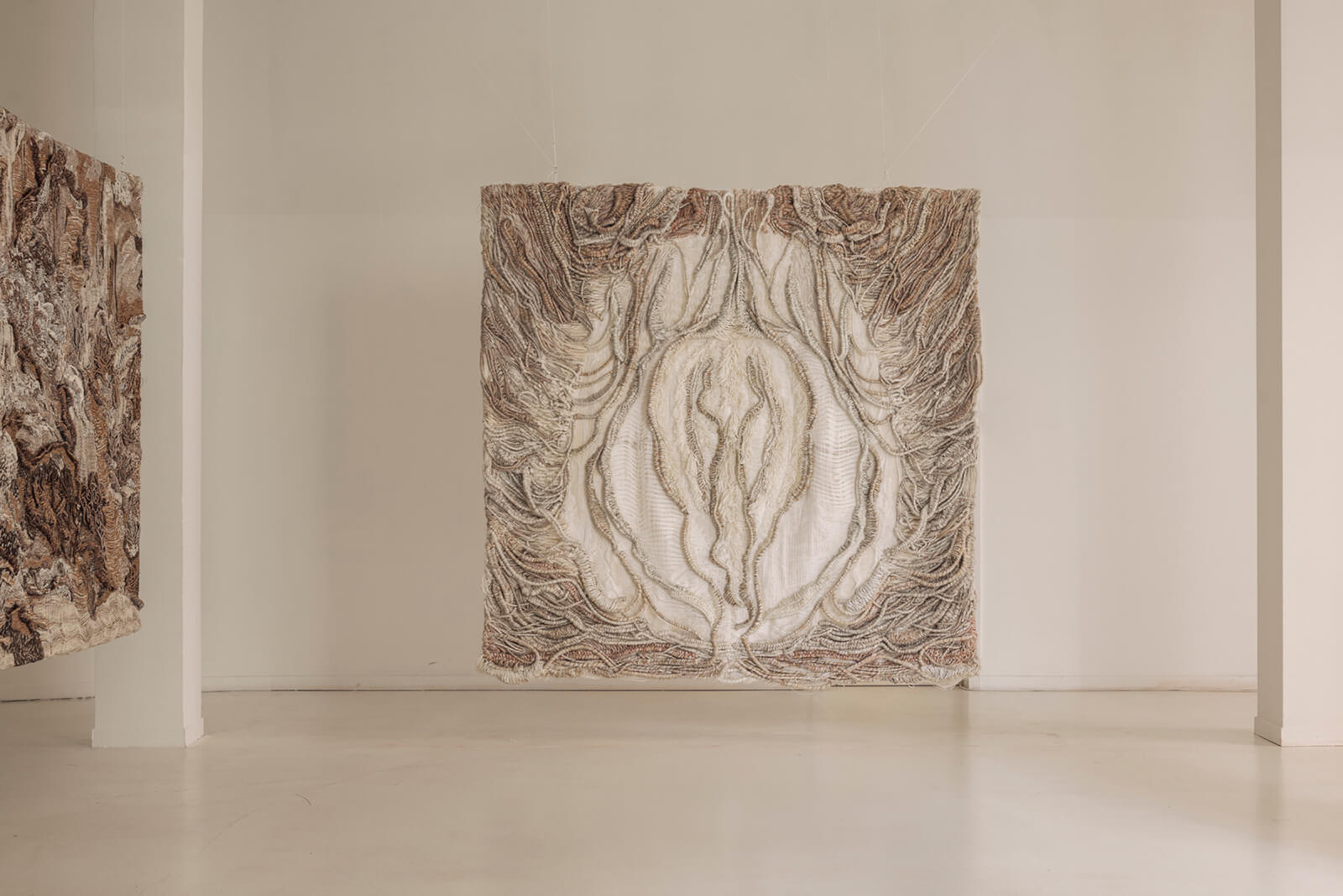
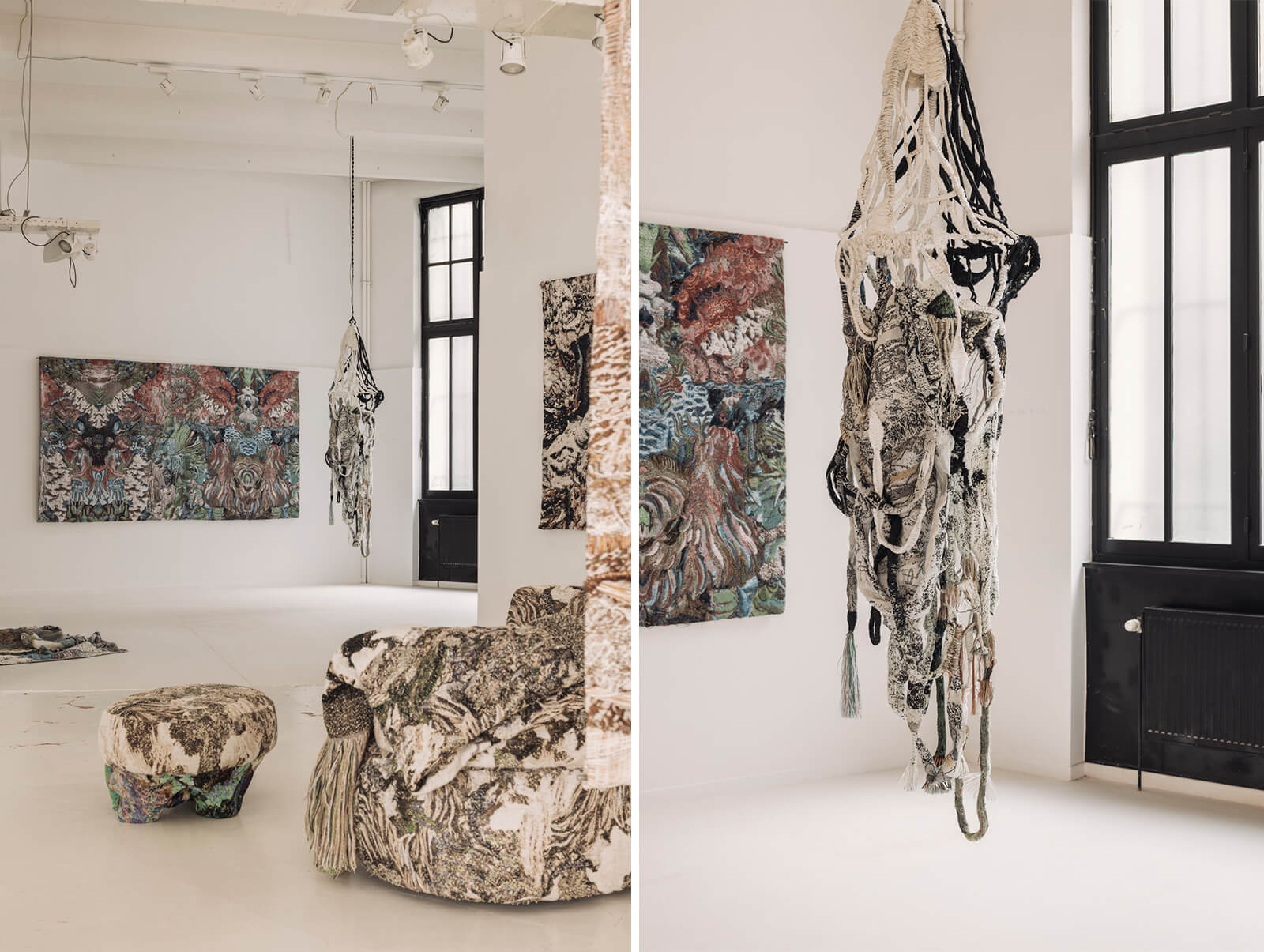
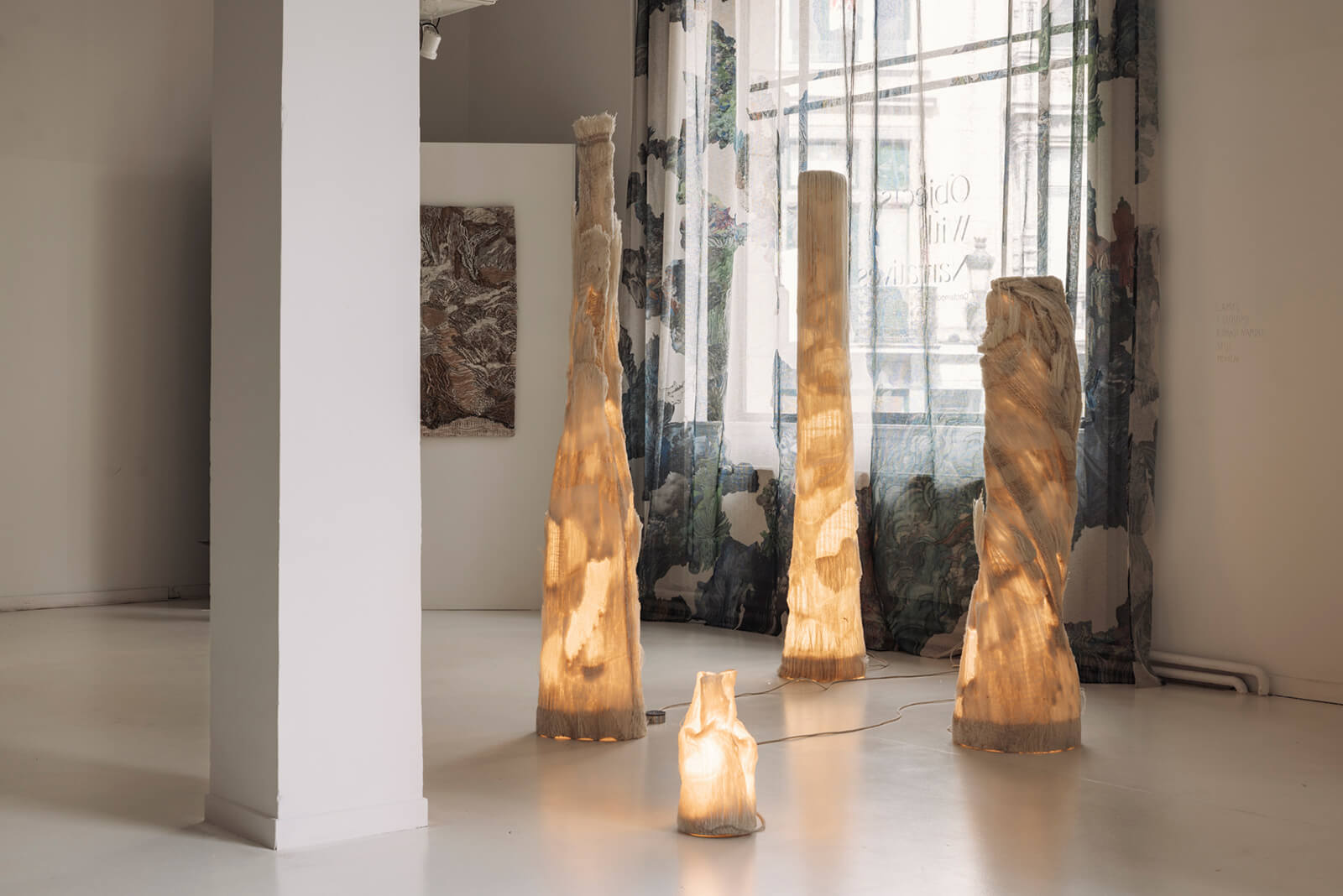
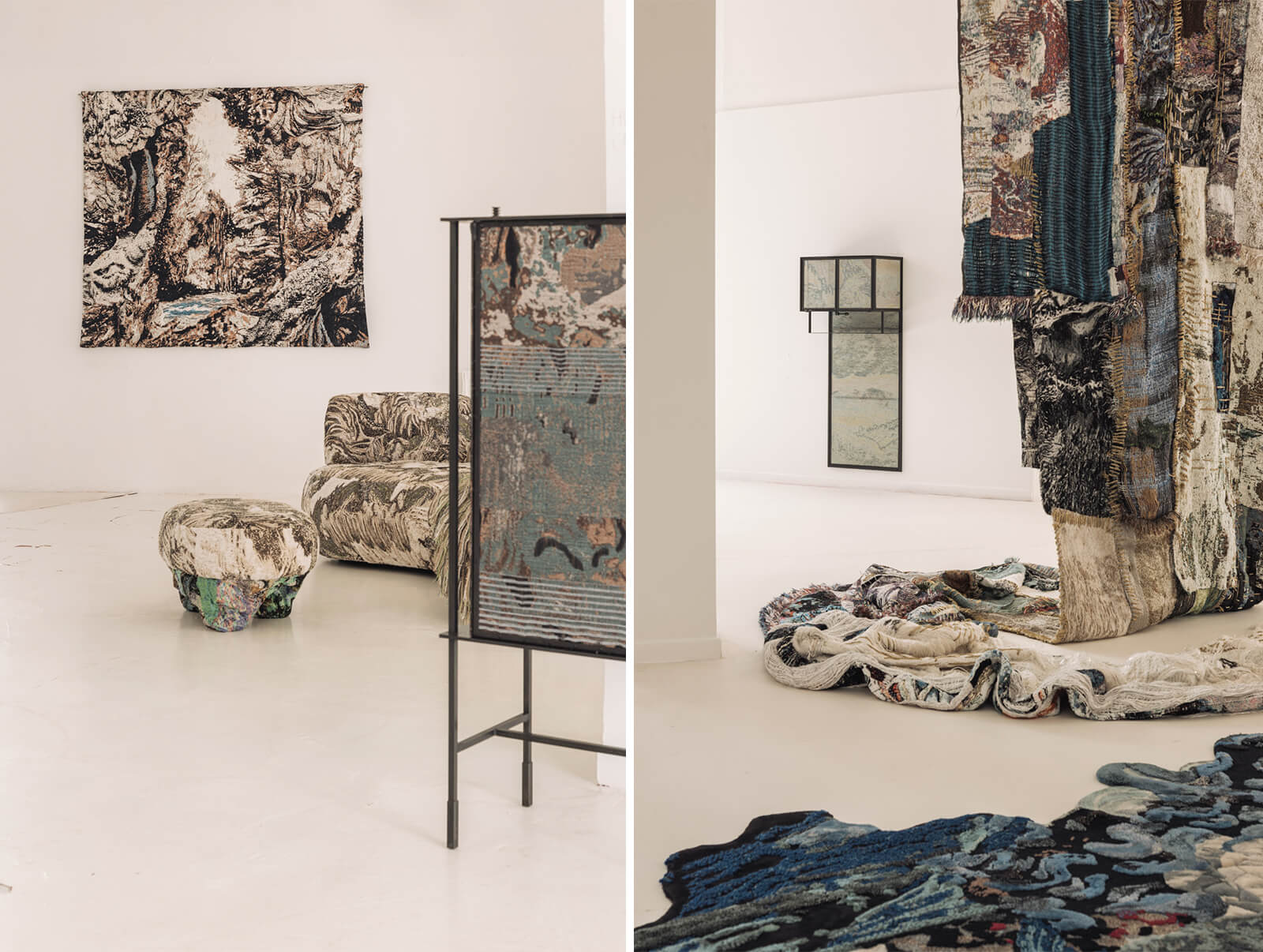
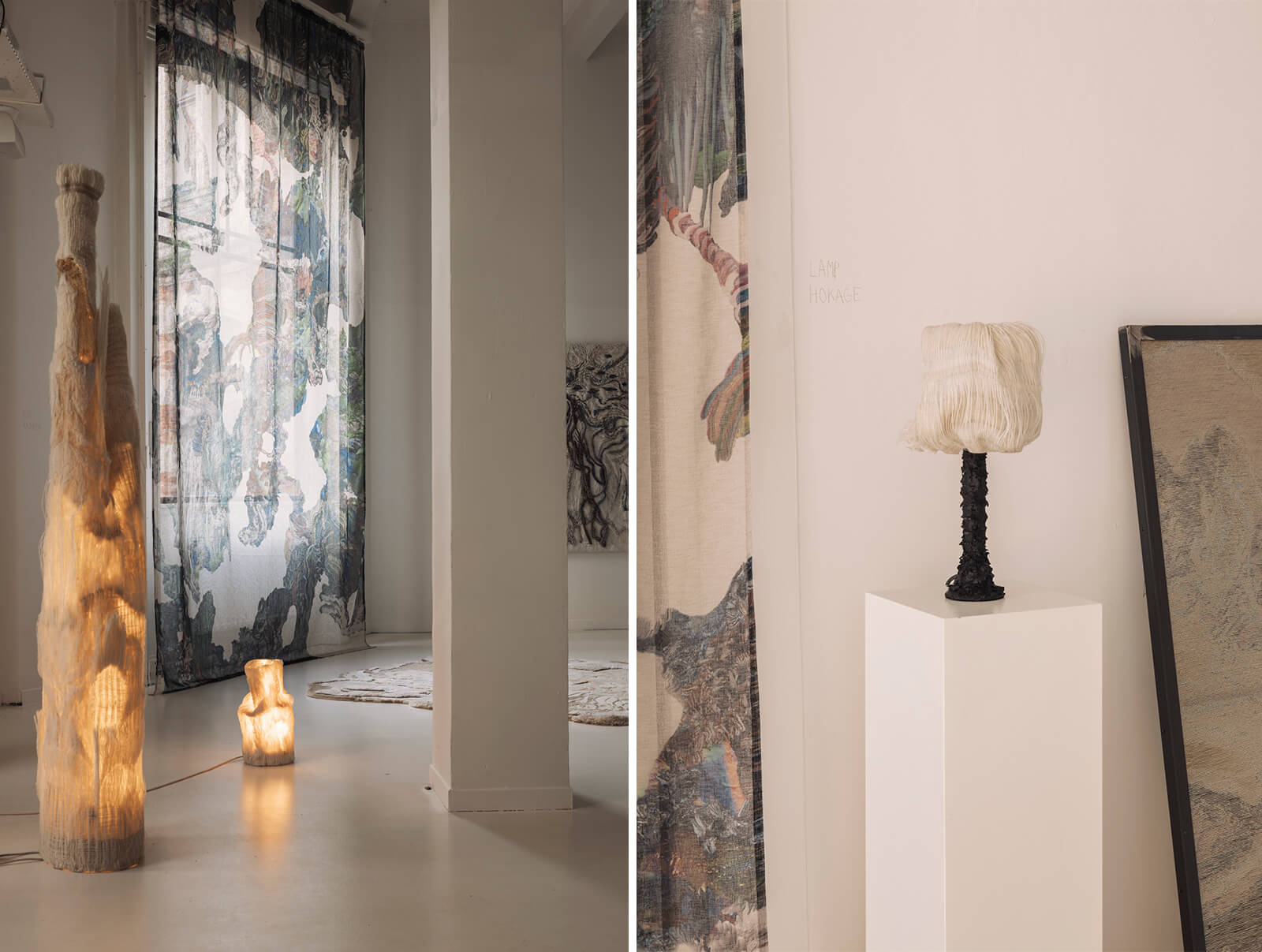
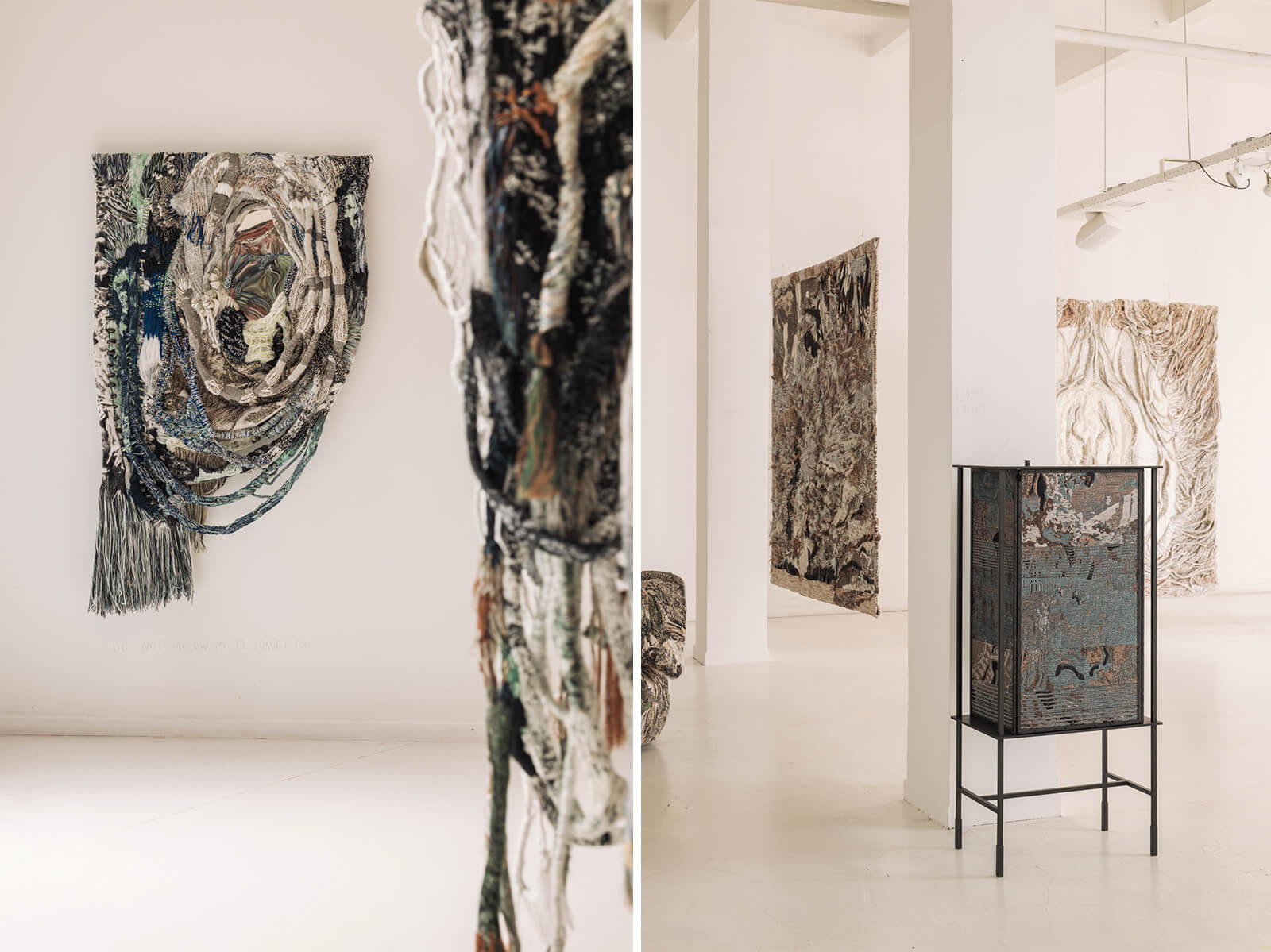
At Objects With Narratives in Brussels' Grand Sablon, the artist duo KRJST Studio unveils their latest solo exhibition, There Is Always Something Left to Love, with works that are impressive in their complexity. Through monumental tapestries, sculptural lighting pieces and dreamlike textile installations, the ongoing show weaves a richly poetic universe, one where fabric becomes landscape, memory becomes form and light becomes spirit.
Founded in 2012 by Justine de Moriamé and Erika Schillebeeckx, KRJST Studio first entered the creative scene through fashion before pivoting to art and interior design in 2015. This transition marked a deeper commitment to artistic freedom, and their work today moves fluidly between disciplines. From jacquard weaving and hand-embroidery to resin sculpting and textile-based lighting, their material language is diverse yet unmistakably theirs. As the duo describes it, "four hands, two souls, and four eyes are tuned together to invoke a collective memory".
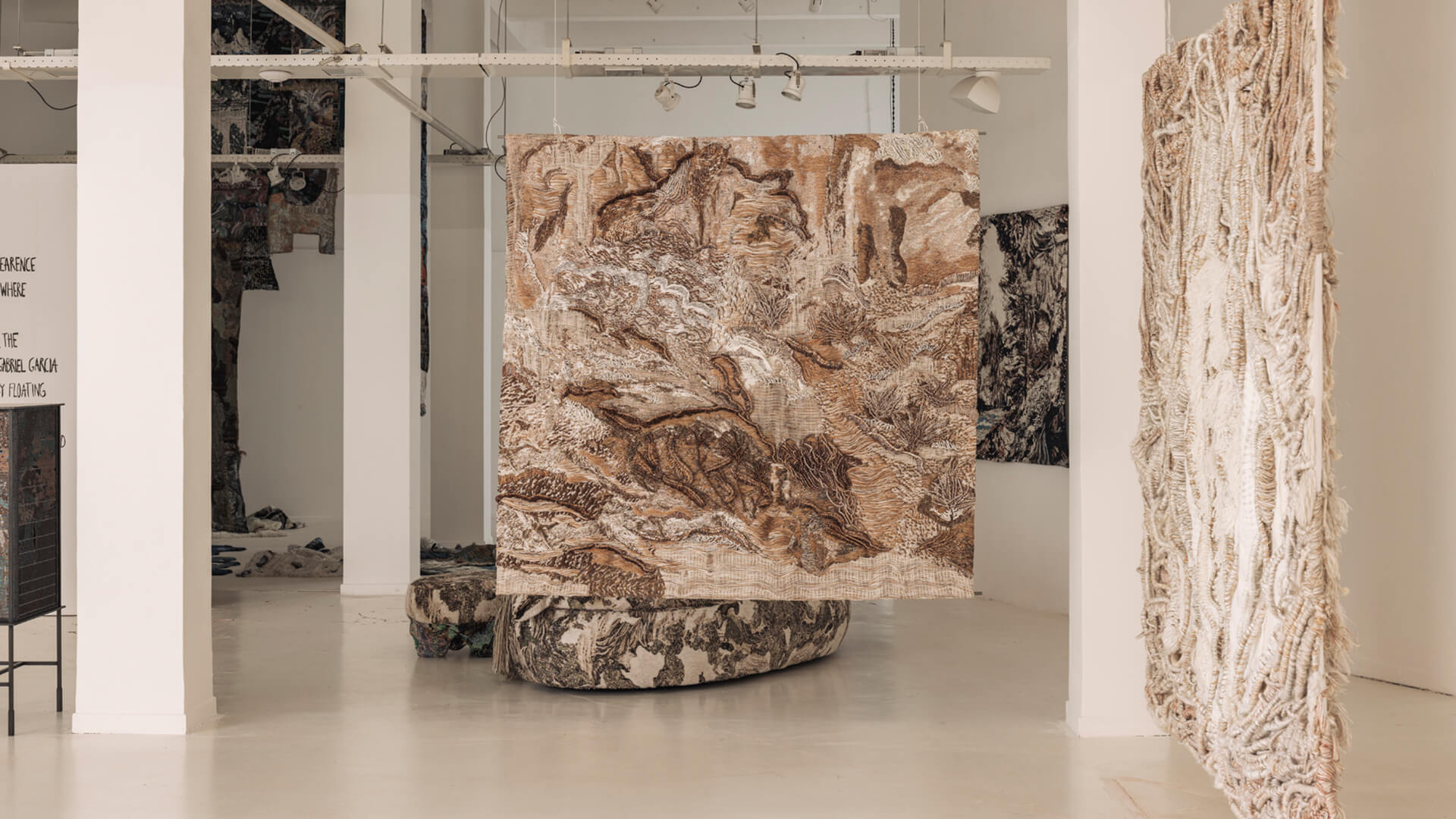
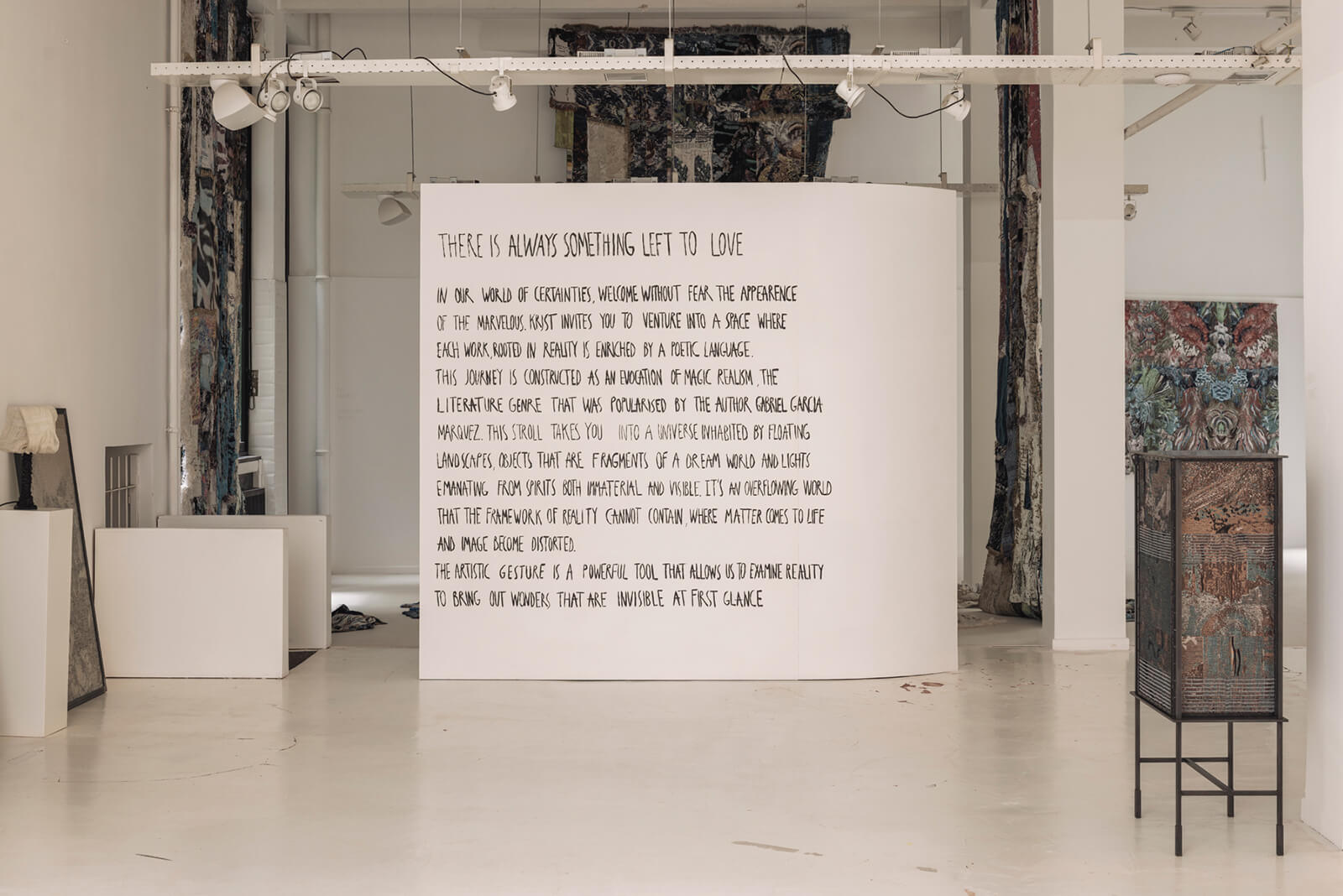
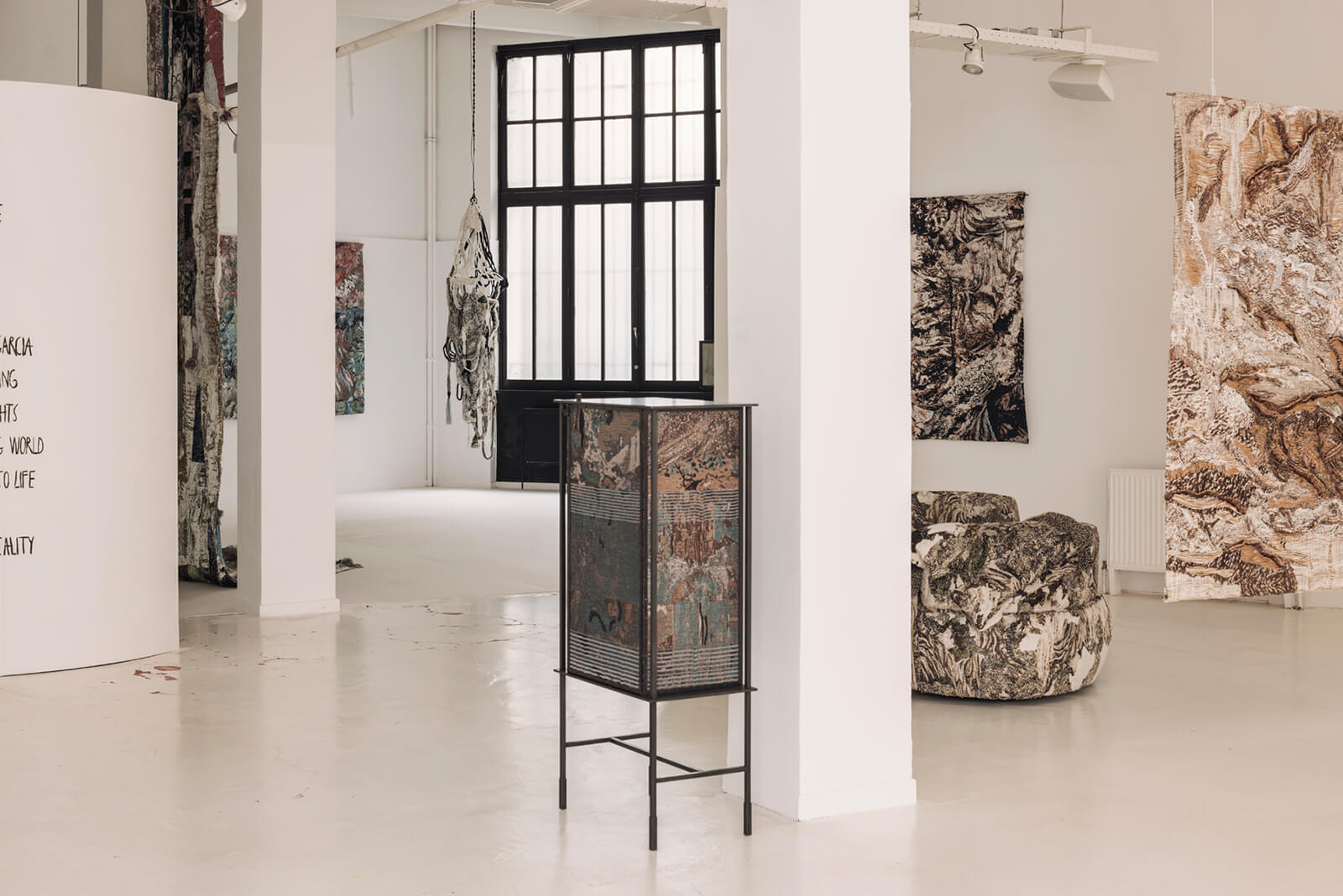
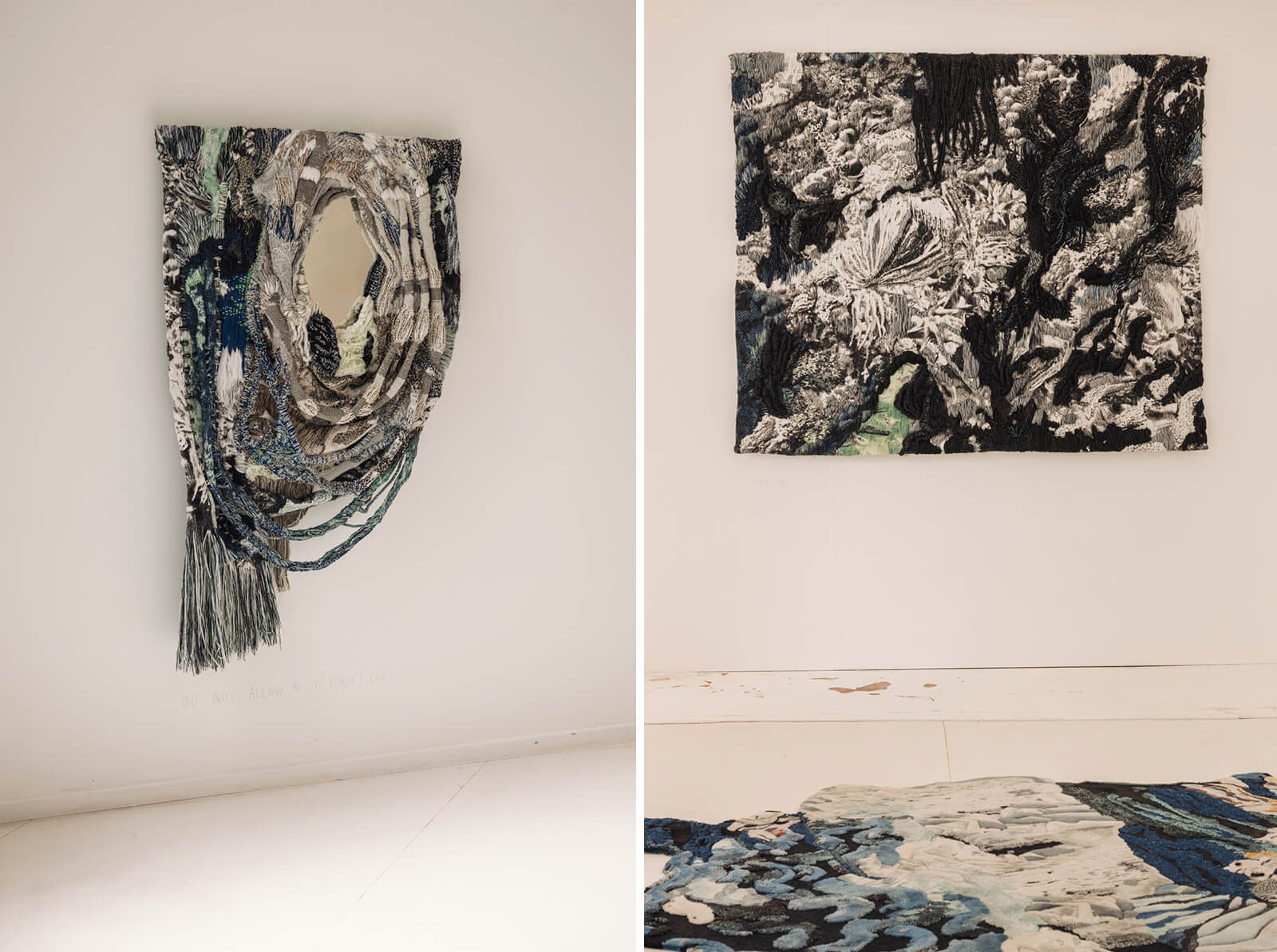
The art exhibition, on view from June 5, 2025, unfolds like a stroll through a dreamscape, echoing the visual surrealism of magic realism—the literary genre made famous by Colombian writer Gabriel García Márquez. As visitors step into the gallery in Belgium, they are immersed in large-scale textile works that distort the boundaries of painting, sculptural art and architecture. Tapestries such as Do Not Allow Me to Forget You and Yonaguni stretch across walls like emotional terrains, rich with colour gradients and floating forms.
KRJST Studio combines the precision of digital jacquard programming with the organic imperfection of hand-stitching. Layers of threads form not only images but also textures that shift depending on the viewer's angle and proximity. In Himoto, the studio blurs the boundary between textile and sculpture, reimagining a woven surface as a solid, contoured form. Made from recycled ECONYL nylon and encased in resin, the work takes on a fossil-like presence, simultaneously organic and futuristic.
Furthermore, functional objects such as the Tsubomi Table Light and Shinzen further extend the studio's reach into object design. Fabric, light and form are treated not as resources to be manipulated but as collaborators in a process of poetic discovery. Instead of imposing control, KRJST Studio engages in a dialogue with the material, allowing it to guide and shape the outcome.
With There Is Always Something Left to Love, KRJST Studio affirms the quiet power of textile art as a medium of storytelling and transcendence. Their work is not confined to categories; it expands into architecture, memory and emotion, offering a vision of contemporary art that is as tactile as it is conceptual. In doing so, they challenge our assumptions about material, space and the stories objects can tell.
In describing their work, the studio offers a vision that's as poetic as the textiles: "It's an overflowing world that the framework of reality cannot contain, where matter comes to life and images become distorted. In the world of KRJST studio, the hands intertwine narrative and fiction," they mention in the show's press release.


What do you think?