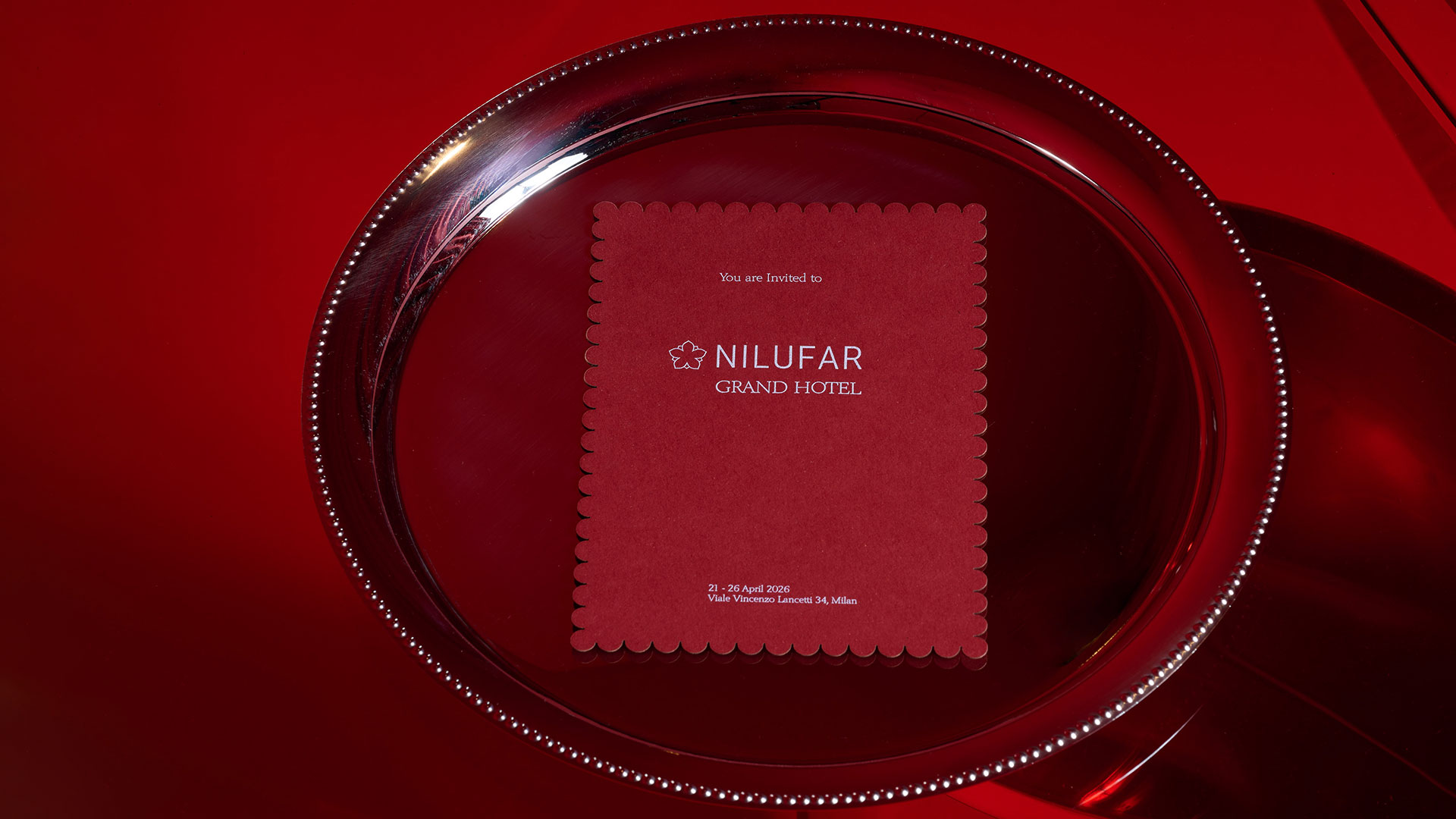
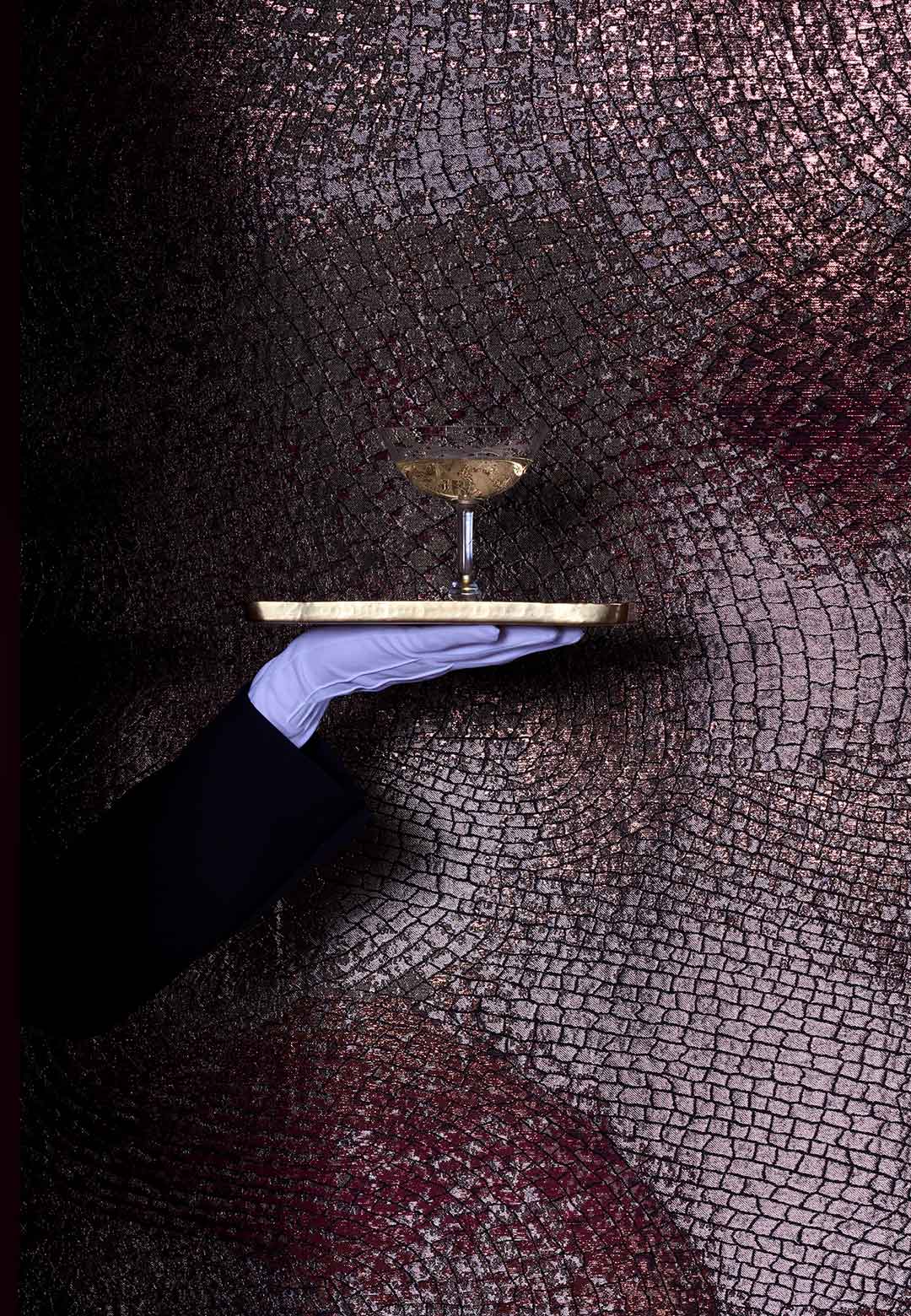
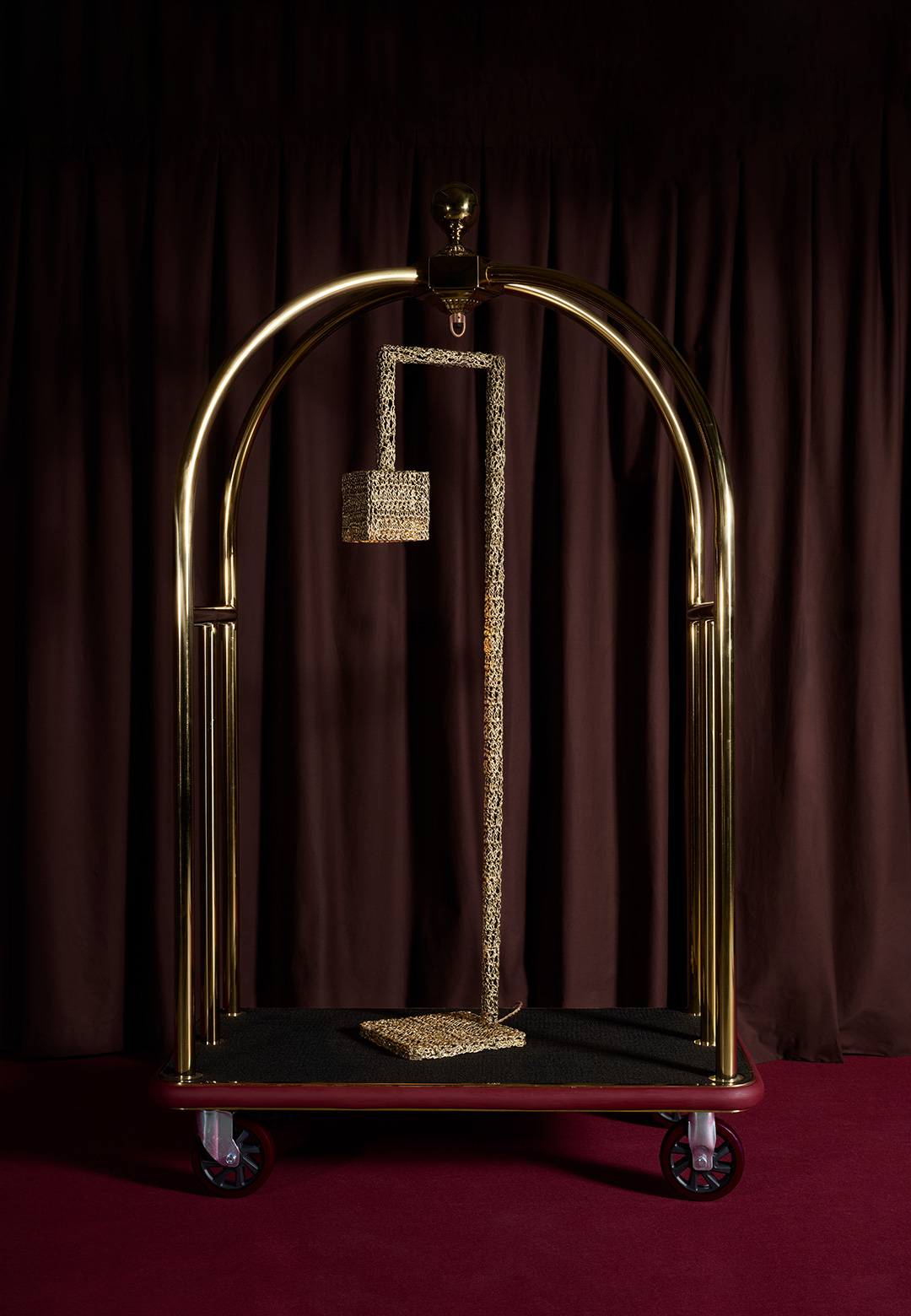
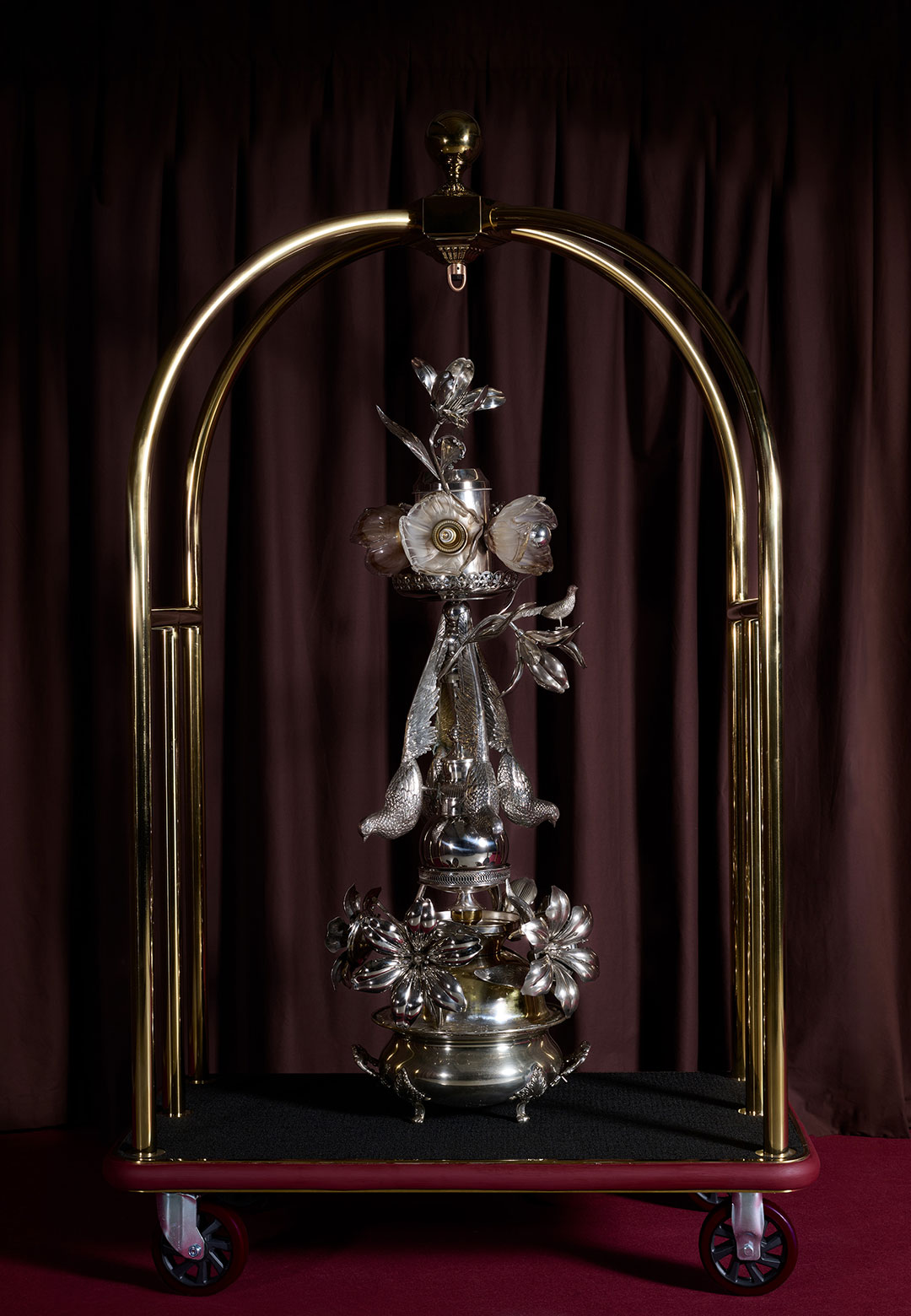
On the occasion of Milan Design Week 2026, Nilufar presents Nilufar Grand Hotel, an immersive curatorial platform where objects take centrestage, rethinking the idea of hospitality beyond established conventions. Set within the Nilufar Depot, the project articulates the creative vision of Nilufar’s founder, Nina Yashar, while elevating the diverse identities of authoritative voices in both contemporary and vintage design. A significant presence is also dedicated to new pieces from Nilufar Edition, a project unique within the world of design where, free from market constraints, design meets the refined craftsmanship of the Renaissance workshop tradition.
Within this curated dimension, objects become the true residents, inhabiting spaces shaped by a realistic fiction: a curated luxury hotel unbound by time or geography. Here, different styles and aesthetic languages converge, inviting visitors to engage with the ongoing dialogue between design pieces and their creators. Throughout its history, Nilufar’s identity has always been represented by the lotus flower, or ‘nilufar’ in Persian, which now returns as the project’s logo, symbolising harmony and purity, as well as serving as an emblem of Yashar’s curatorial signature.
”With Nilufar Grand Hotel, I wanted to imagine a place that doesn’t exist, yet feels profoundly real," explains Yashar. "My interest in hospitality stems from a personal curiosity, a desire to understand how collectible design can inhabit lived, everyday spaces and turn them into intimate, memorable experiences. Each environment is conceived as a story, composed of encounters, sensibilities and visions that interact with one another. For me, this project represents a natural step in Nilufar’s journey, a way to continue evolving, questioning ourselves and opening new possibilities without losing the experimental energy that has defined us from the start.”
The spatial journey at Nilufar Grand Hotel unfolds as a carefully choreographed narrative, where each area interprets a distinct facet of hospitality through the lens of collectible design. The entryway of Nilufar Depot is reimagined as the arrival and check-in space—a threshold that frames the encounter with the hotel as a moment of transition, combining welcome, pause and introduction. Here, the architecture and interior elements set the tone, signalling that what follows is both lived and observed.
In the main atrium, the hall opens up as a social environment rather than a mere passage. It is a place to engage with, where furniture, lighting and curated details facilitate dialogue, gathering and exchange, encouraging visitors to participate in the atmosphere.
The curatorial path continues into the private realm with a series of signature bedrooms by david/nicolas, Filippo Carandini and Allegra Hicks. Each room functions as an independent aesthetic microcosm, reflecting the singular ethos of its designer while contributing to the hotel’s broader metaphor. These capsule projects demonstrate how personal interpretation, material experimentation and refined craftsmanship transform the ordinary act of setting a room into a layered display of form and finishes.
The dining room exudes a refined sense of privacy and exclusivity with Gal Gaon’s new Raw Pebble dining table. A secluded fumoir, showcasing the Disposition collection seatings by emerging Turkish designer Derin Beren Yalcin, presented for the first time at the Depot, creates a space where conviviality and discretion coexist seamlessly, evoking elegance and sophistication.
On the upper floors, spaces dedicated to rest and meditation sit alongside refined, meta-exhibitory environments, 'exhibitions within the exhibition', offering moments of wellbeing through aesthetic contemplation.
On the first floor, a Meditation Room inspired by Japanese onsen lounges, with tatami-covered floors, presents a selection of rare vintage furniture by George Nakashima, focusing on the tradition of Japanese craftsmanship and the deep dialogue between material, gesture and nature. Paper screens, gold leaf and pigments suggest glimpses of landscape and references to Eastern painterly sensibilities. Intimate and contemplative, this environment encourages visitors to slow down and perceive the interaction between materials, light and space.
The journey continues on the second floor, where design objects interact according to a rigorous curatorial logic, recalling hotel lounges dedicated to art and temporary exhibitions. Among the featured works are the Carbon Cycles lamps, Maximilian Marchesani’s new project, and Deconstructed Bourgeoisie, a playful collection of table lamps by VON PELT Atelier, making their Nilufar debut.
The itinerary continues with Andrea Mancuso’s Sgraffito table, presented for the first time in black Marquinia marble, a dining table featuring subtle inlaid white paint details that invert the colour palette of previous pieces from the Pentimenti collection, accompanied by vintage furniture by Gabriella Crespi, Franco Albini and Gio Ponti.
The experience culminates in the Penthouse Suite: an authorial ensemble embodying Nilufar’s eclectic approach. The space is animated with unique pieces, including new interpretations of the Meisen line by Bethan Laura Wood and a custom mirror crafted in collaboration with the Venetian glass masters of Barbini, alongside the headboard and lamps of the Ornate collection.
Integral to the exhibition, the Nilufar Depot’s outdoor courtyard hosts Andrea Mancuso’s latest creations from the Punteggiato collection—a small, inviting dehor that evokes holiday imagery and offers a pause from the pace of the city.
More than a finely executed tableau, Nilufar Grand Hotel stands as a further chapter in Nilufar’s ongoing research into design as a cultural and expressive practice. The exhibition extends a long-standing curatorial inquiry, using hospitality as both a new testing ground and an expanded field of design exploration. By engaging with the codes of welcome and domesticity, the project opens a space for experimentation where design is called upon not only to function, but to evoke beauty, meaning and emotional resonance. In this sense, hospitality becomes a fertile terrain for imagining new possibilities—one that allows Nilufar to continue pursuing design as a living, evolving discipline and to establish itself in new contexts while remaining true to its core vision.
On the occasion of Milan Design Week 2026, Nilufar presents Nilufar Grand Hotel, an immersive curatorial platform where objects take centrestage, rethinking the idea of hospitality beyond established conventions. Set within the Nilufar Depot, the project articulates the creative vision of Nilufar’s founder, Nina Yashar, while elevating the diverse identities of authoritative voices in both contemporary and vintage design. A significant presence is also dedicated to new pieces from Nilufar Edition, a project unique within the world of design where, free from market constraints, design meets the refined craftsmanship of the Renaissance workshop tradition.
Within this curated dimension, objects become the true residents, inhabiting spaces shaped by a realistic fiction: a curated luxury hotel unbound by time or geography. Here, different styles and aesthetic languages converge, inviting visitors to engage with the ongoing dialogue between design pieces and their creators. Throughout its history, Nilufar’s identity has always been represented by the lotus flower, or ‘nilufar’ in Persian, which now returns as the project’s logo, symbolising harmony and purity, as well as serving as an emblem of Yashar’s curatorial signature.
”With Nilufar Grand Hotel, I wanted to imagine a place that doesn’t exist, yet feels profoundly real," explains Yashar. "My interest in hospitality stems from a personal curiosity, a desire to understand how collectible design can inhabit lived, everyday spaces and turn them into intimate, memorable experiences. Each environment is conceived as a story, composed of encounters, sensibilities and visions that interact with one another. For me, this project represents a natural step in Nilufar’s journey, a way to continue evolving, questioning ourselves and opening new possibilities without losing the experimental energy that has defined us from the start.”
The spatial journey at Nilufar Grand Hotel unfolds as a carefully choreographed narrative, where each area interprets a distinct facet of hospitality through the lens of collectible design. The entryway of Nilufar Depot is reimagined as the arrival and check-in space—a threshold that frames the encounter with the hotel as a moment of transition, combining welcome, pause and introduction. Here, the architecture and interior elements set the tone, signalling that what follows is both lived and observed.
In the main atrium, the hall opens up as a social environment rather than a mere passage. It is a place to engage with, where furniture, lighting and curated details facilitate dialogue, gathering and exchange, encouraging visitors to participate in the atmosphere.
The curatorial path continues into the private realm with a series of signature bedrooms by david/nicolas, Filippo Carandini and Allegra Hicks. Each room functions as an independent aesthetic microcosm, reflecting the singular ethos of its designer while contributing to the hotel’s broader metaphor. These capsule projects demonstrate how personal interpretation, material experimentation and refined craftsmanship transform the ordinary act of setting a room into a layered display of form and finishes.
The dining room exudes a refined sense of privacy and exclusivity with Gal Gaon’s new Raw Pebble dining table. A secluded fumoir, showcasing the Disposition collection seatings by emerging Turkish designer Derin Beren Yalcin, presented for the first time at the Depot, creates a space where conviviality and discretion coexist seamlessly, evoking elegance and sophistication.
On the upper floors, spaces dedicated to rest and meditation sit alongside refined, meta-exhibitory environments, 'exhibitions within the exhibition', offering moments of wellbeing through aesthetic contemplation.
On the first floor, a Meditation Room inspired by Japanese onsen lounges, with tatami-covered floors, presents a selection of rare vintage furniture by George Nakashima, focusing on the tradition of Japanese craftsmanship and the deep dialogue between material, gesture and nature. Paper screens, gold leaf and pigments suggest glimpses of landscape and references to Eastern painterly sensibilities. Intimate and contemplative, this environment encourages visitors to slow down and perceive the interaction between materials, light and space.
The journey continues on the second floor, where design objects interact according to a rigorous curatorial logic, recalling hotel lounges dedicated to art and temporary exhibitions. Among the featured works are the Carbon Cycles lamps, Maximilian Marchesani’s new project, and Deconstructed Bourgeoisie, a playful collection of table lamps by VON PELT Atelier, making their Nilufar debut.
The itinerary continues with Andrea Mancuso’s Sgraffito table, presented for the first time in black Marquinia marble, a dining table featuring subtle inlaid white paint details that invert the colour palette of previous pieces from the Pentimenti collection, accompanied by vintage furniture by Gabriella Crespi, Franco Albini and Gio Ponti.
The experience culminates in the Penthouse Suite: an authorial ensemble embodying Nilufar’s eclectic approach. The space is animated with unique pieces, including new interpretations of the Meisen line by Bethan Laura Wood and a custom mirror crafted in collaboration with the Venetian glass masters of Barbini, alongside the headboard and lamps of the Ornate collection.
Integral to the exhibition, the Nilufar Depot’s outdoor courtyard hosts Andrea Mancuso’s latest creations from the Punteggiato collection—a small, inviting dehor that evokes holiday imagery and offers a pause from the pace of the city.
More than a finely executed tableau, Nilufar Grand Hotel stands as a further chapter in Nilufar’s ongoing research into design as a cultural and expressive practice. The exhibition extends a long-standing curatorial inquiry, using hospitality as both a new testing ground and an expanded field of design exploration. By engaging with the codes of welcome and domesticity, the project opens a space for experimentation where design is called upon not only to function, but to evoke beauty, meaning and emotional resonance. In this sense, hospitality becomes a fertile terrain for imagining new possibilities—one that allows Nilufar to continue pursuing design as a living, evolving discipline and to establish itself in new contexts while remaining true to its core vision.
On the occasion of Milan Design Week 2026, Nilufar presents Nilufar Grand Hotel, an immersive curatorial platform where objects take centrestage, rethinking the idea of hospitality beyond established conventions. Set within the Nilufar Depot, the project articulates the creative vision of Nilufar’s founder, Nina Yashar, while elevating the diverse identities of authoritative voices in both contemporary and vintage design. A significant presence is also dedicated to new pieces from Nilufar Edition, a project unique within the world of design where, free from market constraints, design meets the refined craftsmanship of the Renaissance workshop tradition.
Within this curated dimension, objects become the true residents, inhabiting spaces shaped by a realistic fiction: a curated luxury hotel unbound by time or geography. Here, different styles and aesthetic languages converge, inviting visitors to engage with the ongoing dialogue between design pieces and their creators. Throughout its history, Nilufar’s identity has always been represented by the lotus flower, or ‘nilufar’ in Persian, which now returns as the project’s logo, symbolising harmony and purity, as well as serving as an emblem of Yashar’s curatorial signature.
”With Nilufar Grand Hotel, I wanted to imagine a place that doesn’t exist, yet feels profoundly real," explains Yashar. "My interest in hospitality stems from a personal curiosity, a desire to understand how collectible design can inhabit lived, everyday spaces and turn them into intimate, memorable experiences. Each environment is conceived as a story, composed of encounters, sensibilities and visions that interact with one another. For me, this project represents a natural step in Nilufar’s journey, a way to continue evolving, questioning ourselves and opening new possibilities without losing the experimental energy that has defined us from the start.”
The spatial journey at Nilufar Grand Hotel unfolds as a carefully choreographed narrative, where each area interprets a distinct facet of hospitality through the lens of collectible design. The entryway of Nilufar Depot is reimagined as the arrival and check-in space—a threshold that frames the encounter with the hotel as a moment of transition, combining welcome, pause and introduction. Here, the architecture and interior elements set the tone, signalling that what follows is both lived and observed.
In the main atrium, the hall opens up as a social environment rather than a mere passage. It is a place to engage with, where furniture, lighting and curated details facilitate dialogue, gathering and exchange, encouraging visitors to participate in the atmosphere.
The curatorial path continues into the private realm with a series of signature bedrooms by david/nicolas, Filippo Carandini and Allegra Hicks. Each room functions as an independent aesthetic microcosm, reflecting the singular ethos of its designer while contributing to the hotel’s broader metaphor. These capsule projects demonstrate how personal interpretation, material experimentation and refined craftsmanship transform the ordinary act of setting a room into a layered display of form and finishes.
The dining room exudes a refined sense of privacy and exclusivity with Gal Gaon’s new Raw Pebble dining table. A secluded fumoir, showcasing the Disposition collection seatings by emerging Turkish designer Derin Beren Yalcin, presented for the first time at the Depot, creates a space where conviviality and discretion coexist seamlessly, evoking elegance and sophistication.
On the upper floors, spaces dedicated to rest and meditation sit alongside refined, meta-exhibitory environments, 'exhibitions within the exhibition', offering moments of wellbeing through aesthetic contemplation.
On the first floor, a Meditation Room inspired by Japanese onsen lounges, with tatami-covered floors, presents a selection of rare vintage furniture by George Nakashima, focusing on the tradition of Japanese craftsmanship and the deep dialogue between material, gesture and nature. Paper screens, gold leaf and pigments suggest glimpses of landscape and references to Eastern painterly sensibilities. Intimate and contemplative, this environment encourages visitors to slow down and perceive the interaction between materials, light and space.
The journey continues on the second floor, where design objects interact according to a rigorous curatorial logic, recalling hotel lounges dedicated to art and temporary exhibitions. Among the featured works are the Carbon Cycles lamps, Maximilian Marchesani’s new project, and Deconstructed Bourgeoisie, a playful collection of table lamps by VON PELT Atelier, making their Nilufar debut.
The itinerary continues with Andrea Mancuso’s Sgraffito table, presented for the first time in black Marquinia marble, a dining table featuring subtle inlaid white paint details that invert the colour palette of previous pieces from the Pentimenti collection, accompanied by vintage furniture by Gabriella Crespi, Franco Albini and Gio Ponti.
The experience culminates in the Penthouse Suite: an authorial ensemble embodying Nilufar’s eclectic approach. The space is animated with unique pieces, including new interpretations of the Meisen line by Bethan Laura Wood and a custom mirror crafted in collaboration with the Venetian glass masters of Barbini, alongside the headboard and lamps of the Ornate collection.
Integral to the exhibition, the Nilufar Depot’s outdoor courtyard hosts Andrea Mancuso’s latest creations from the Punteggiato collection—a small, inviting dehor that evokes holiday imagery and offers a pause from the pace of the city.
More than a finely executed tableau, Nilufar Grand Hotel stands as a further chapter in Nilufar’s ongoing research into design as a cultural and expressive practice. The exhibition extends a long-standing curatorial inquiry, using hospitality as both a new testing ground and an expanded field of design exploration. By engaging with the codes of welcome and domesticity, the project opens a space for experimentation where design is called upon not only to function, but to evoke beauty, meaning and emotional resonance. In this sense, hospitality becomes a fertile terrain for imagining new possibilities—one that allows Nilufar to continue pursuing design as a living, evolving discipline and to establish itself in new contexts while remaining true to its core vision.



 Connect








 Sign in with Google
 Sign in with email