


 STIRpad.com


Design04 mins. read
Jordi López Aguiló’s industrial design objects reveal the mechanics of their making
by Bansari PaghdarMay 23, 2026

•make your fridays matter with a well-read weekend
by Bansari PaghdarPublished on : Jun 11, 2026
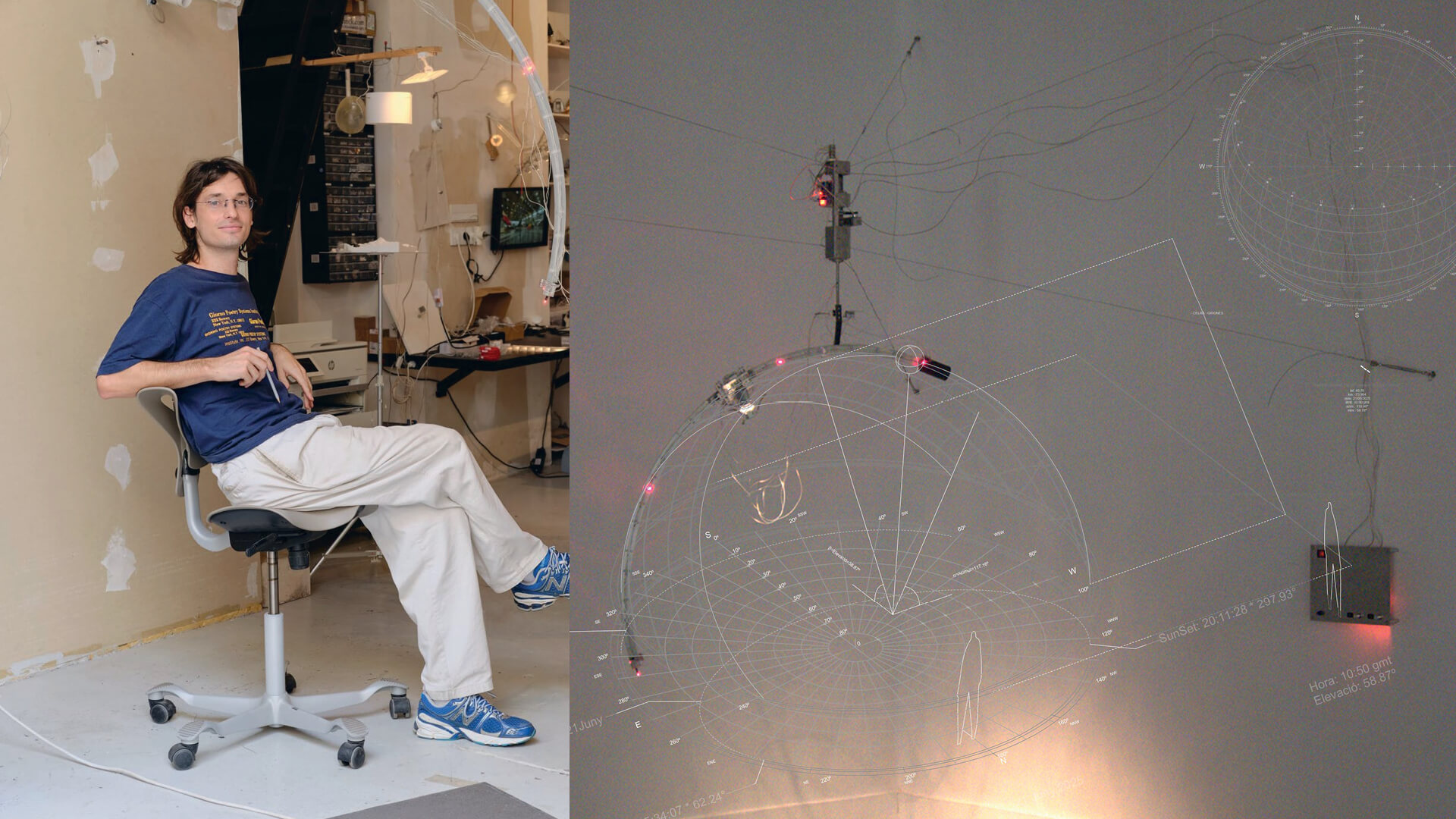
Spanish designer Max Milà Serra refuses to abstract nature in organic shapes and floral designs. For his design practice, he turns to the very forces that govern everything around us to create lightweight metal installations, instruments and objects. “In physics, forces are represented by vectors, with magnitude and direction, which is the same abstraction we use for representing light in the studio,” he tells STIR. Born and based in Barcelona, Spain, Serra often manipulates scale during his creative process and seeks to build from a minimum amount of matter.
His objects appear to be fragile with their slender, lightweight profiles highlighting intricate assemblies. The industrial designs carry so little matter that even when one attempts to view them, one ends up looking at the empty spaces in between the matter. This is precisely why his light installations almost always become an intrinsic part of the space they inhabit, attaching themselves to surfaces and circuits that define them.
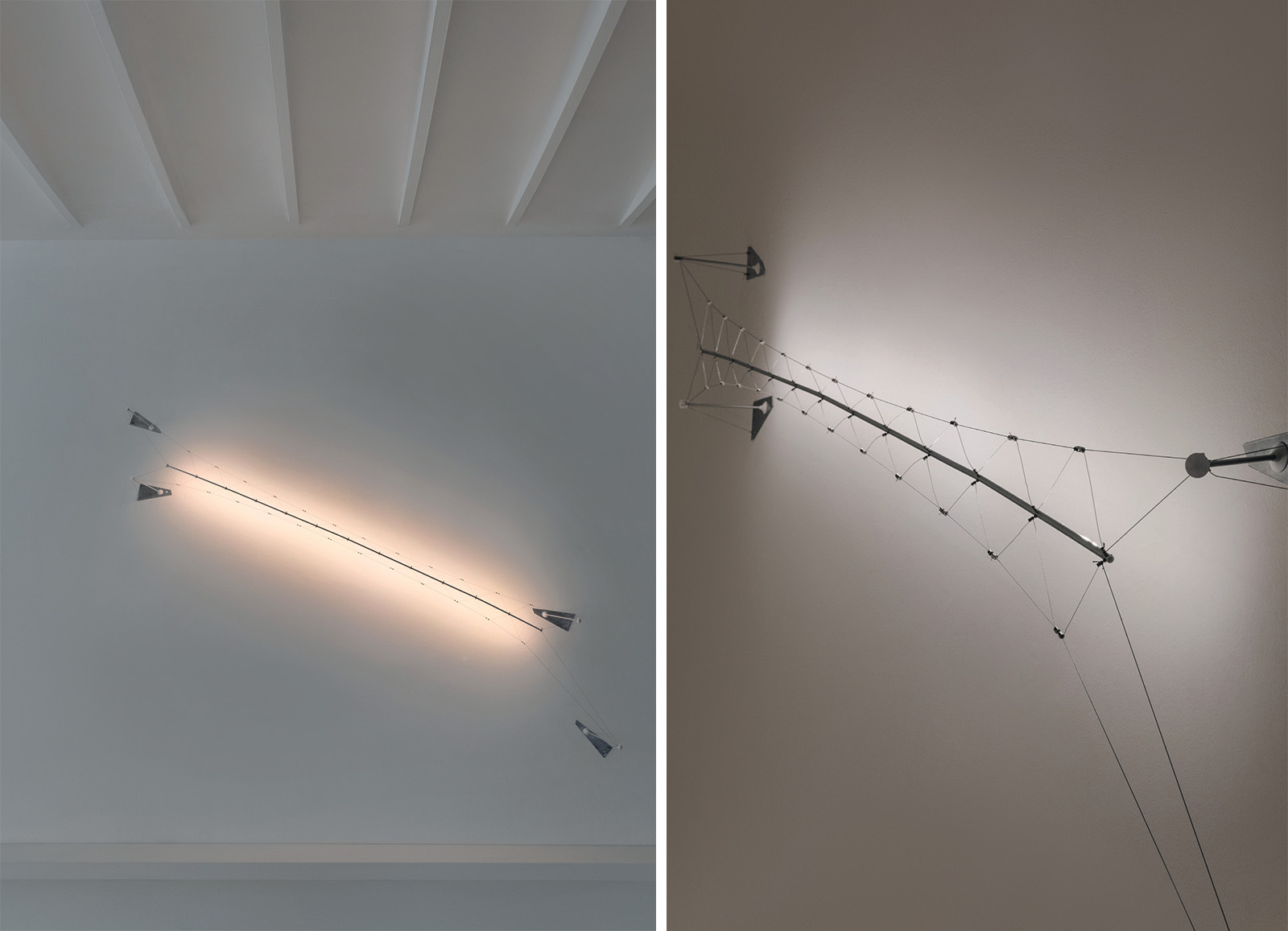
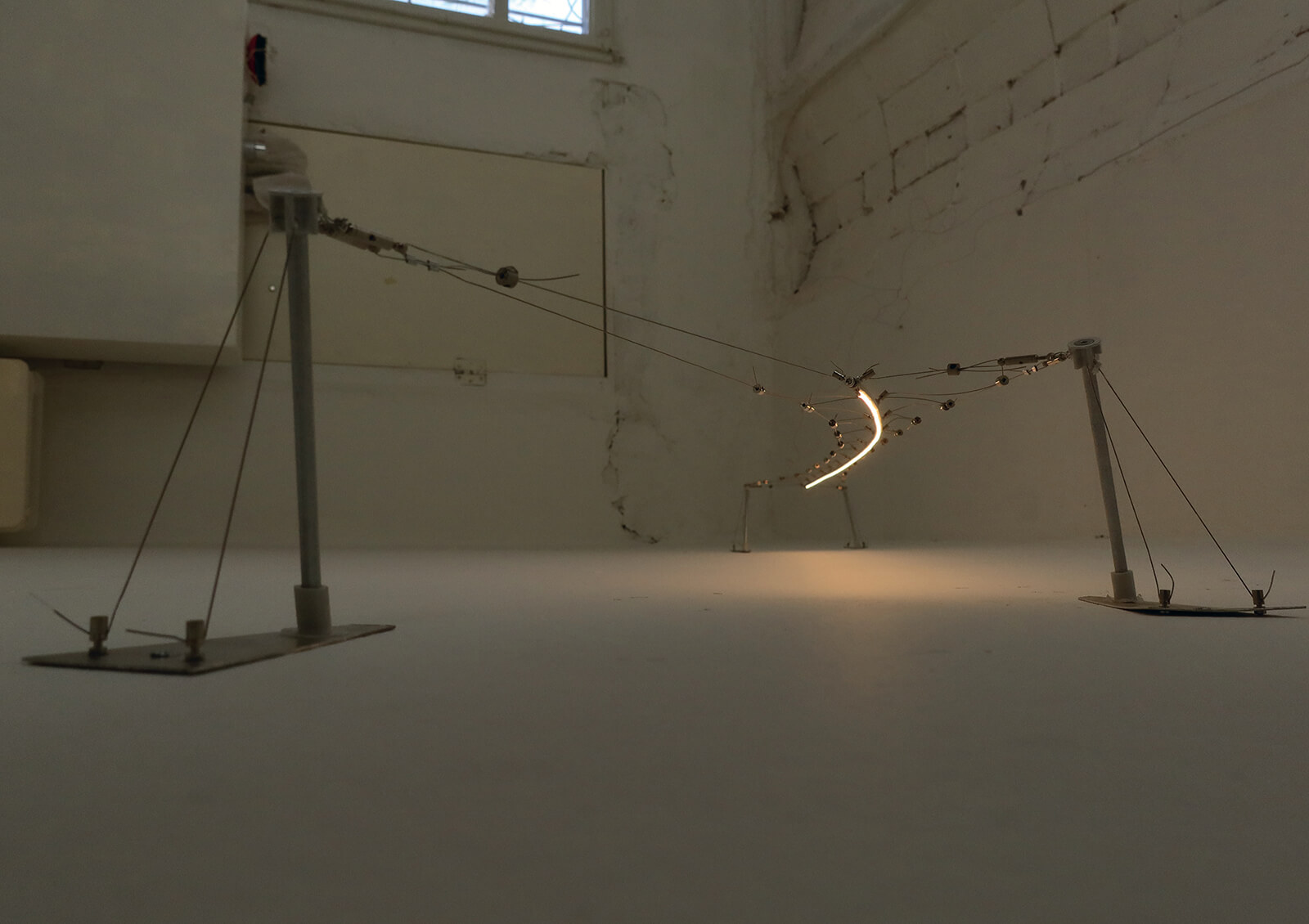
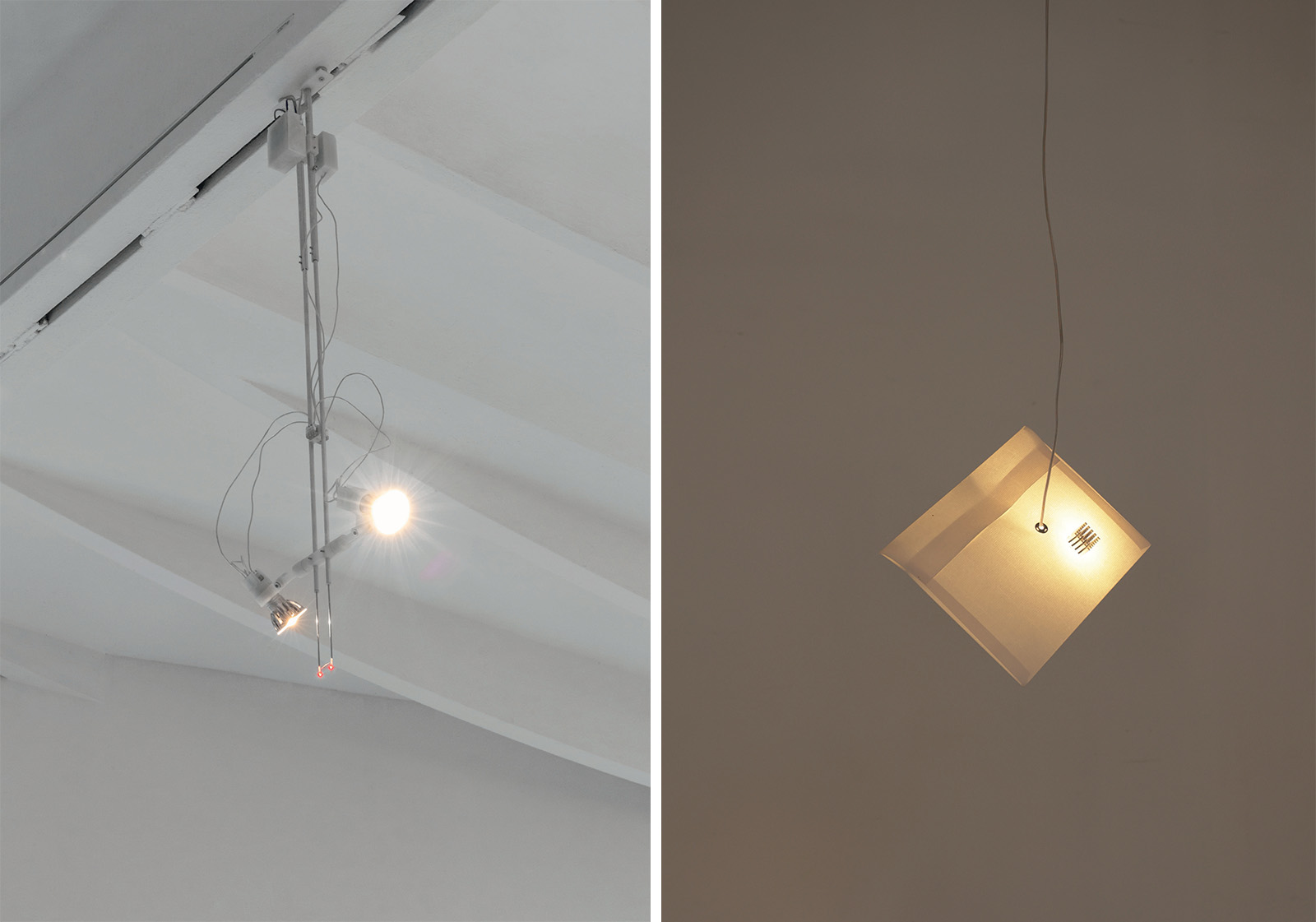
To Serra, scale gives objects dimensions by creating hierarchies and defining the world itself in which they exist. This belief especially surfaces in his lighting designs, C-58PK0 1:40 and C-58PK0 1:100 (2024), which follow the same form and structure on two different scales. Inspired by a fixture by the bridge over Avinguda Meridiana, the pieces are scaled interpretations of its form and engineering. Instead of replicating the original form, Serra analysed it to execute a new order of scale, giving birth to new constraints and opportunities. On the other hand, HELIODON (2025) simulates solar incidence on objects as two rotational movements mimic the sun’s ecliptic in space. The entire installation rotates, tensioned and suspended with a motorised axis, along with the light source mounted on a rail. Unlike the complex assembly of HELIODON, pendant light GAIA LED (2025) is relatively simple and features two aluminium rods braced by a system made from 3D printing, allowing the two lights to be oriented independently.
Represented by VASTO Gallery, a Poblenou-based contemporary gallery working across art and collectible design, Serra expands on the creative ethos, visual language and philosophy behind his practice in a conversation with STIR. Edited excerpts follow.
Bansari Paghdar: You describe your work as emerging from 'the natural,' but there’s also something distinctly engineered about the way you choreograph light, cables and movement to create your pieces. Do you recall an early moment where this approach first took hold?
Max Milà Serra: By emerging from ‘the natural’, I imply structural and functional factors: forces, catenary curves and, for instance, the relative movement of the sun. All of these are natural phenomena that can be reduced to numbers and fall under the category of engineering. Which is the way humans have either fought or, in the best cases, danced with nature; playing by its rules, or, as you say, choreographing its forces. In physics, forces are represented by vectors, with magnitude and direction, which is the same abstraction we use for representing light in the studio. We trace its rays through space, attempting to rationalise its behaviour. This approach has grown organically, partly because we refuse to limit ourselves to the world of the dried flowers and organic shapes, or to the one defined solely by rigid structures and sharp edges.
Bansari: A play on scale, often inspired by existing structures and objects, is quite common in your creations. What new constraints and opportunities emerge from these designs in the context of materiality, form and a certain 'new order of scale' that you often speak of?
Max: When working within the order of magnitude of an object—our main field of operation—one tends to produce the work from single pieces of material, without joints or gaps. A single-sheet table or lamp is easily produced, but a glass-clad façade or a radiotelescope is too vast; they must be built from smaller constructing units. By imposing the limitations of the larger scale onto my smaller-scale work, I retain the texture and complexity of vast structures. I compress information into a smaller space, enriching the object and maintaining the appeal of the original large-scale inspiration. Scaling up is a more difficult move; one can easily fall into the pop art tropes of Oldenburg. Things must remind the viewer of their smaller version, but never look exactly alike or oversize small details when scaling up is usually about following a principle, not a shape.
Complexity is very difficult to replicate or fabricate; when you try to ‘make up’ complexity, you end up with something merely complicated. My goal is always the pursuit of well-solved, complex approaches. – Max Milà Serra
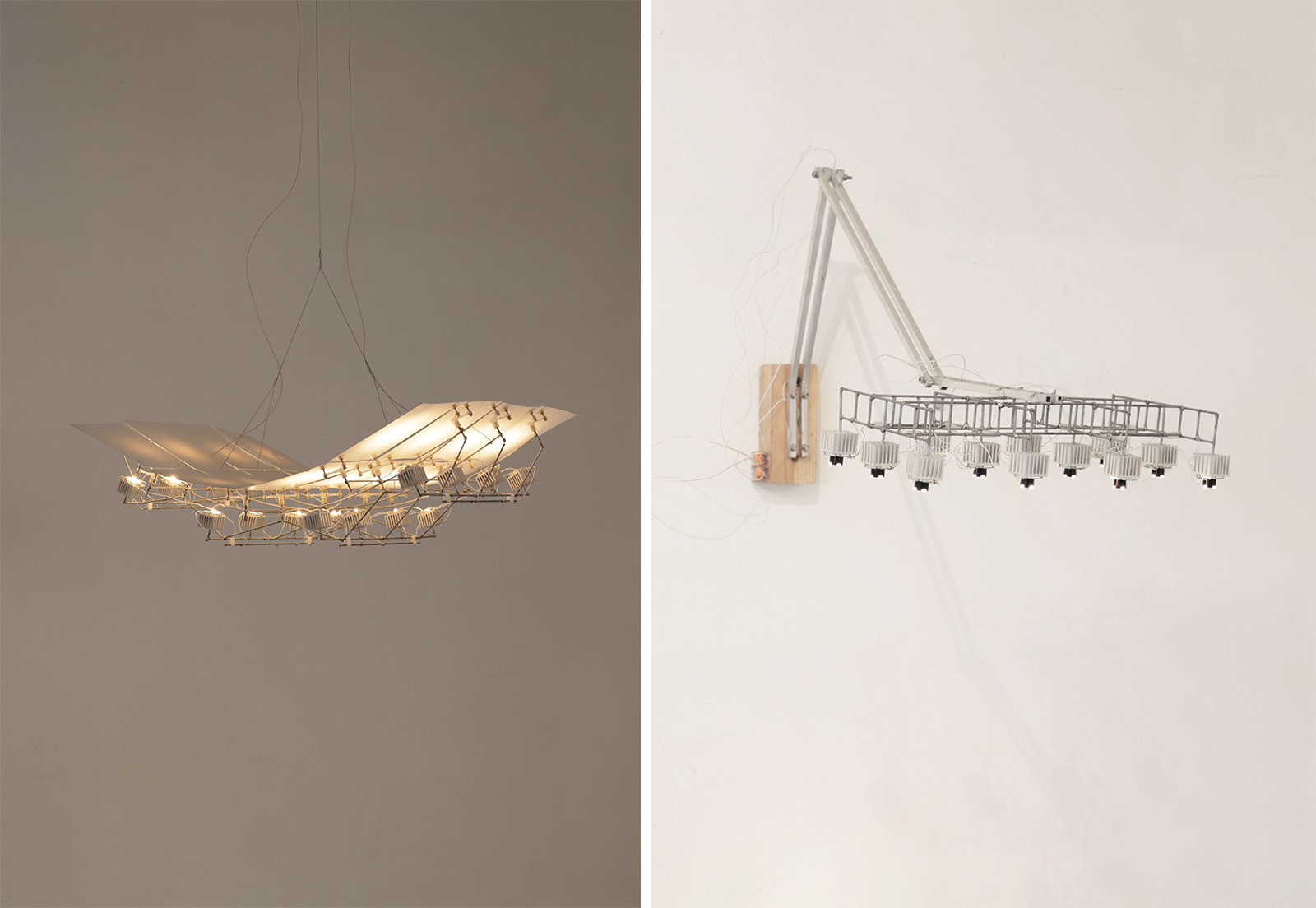
Bansari: There’s an increasingly recognisable visual language in your work: tense lines, minimal matter, luminous points, a kind of engineered fragility. Do you see this as a signature, or does it risk becoming a constraint you need to actively resist?
Max: I see these elements as guiding principles rather than a rigid set of rules or steps. It would be far more restricting to rely only on a specific set of materials or techniques. Currently, our main technical constraint is conducting electricity, but we incorporate this into the design by ensuring the wiring is present in all process drawings. We make the functional necessary—the wire or electronic drivers—a part of the visual language.
Bansari: Your pieces often read like spatial drawings, almost like grids suspended in the air. When composing a work, what governs your decisions more: structural logic, visual imagery or the behaviour of light as a material in itself?
Max: We utilise two distinct approaches. The first stems from structural logic, where form follows forces to an extreme degree. The second involves the logical drawing of light, where rays are traced through space so we can treat light as a physical material and allow the form to follow its logic. Visual imagery usually serves as a starting point—a background for the initial drawings, so they don’t have to compete with a blank page.
Bansari: Across works like HELIODON and C-58PK0 1:40, there’s a recurring logic of tension, suspension and controlled movement. Is there a non-negotiable step or constraint in your process that every project must pass through, something you refuse to abandon even if it complicates the outcome?
Max: I would say there is only one: things must be complex. Complexity is very difficult to replicate or fabricate; when you try to ‘make up’ complexity, you end up with something merely complicated. My goal is always the pursuit of well-solved, complex approaches.
My work often ‘disappears’ in photographs; there is simply too much emptiness in relation to the amount of matter within the frame. – Max Milà Serra
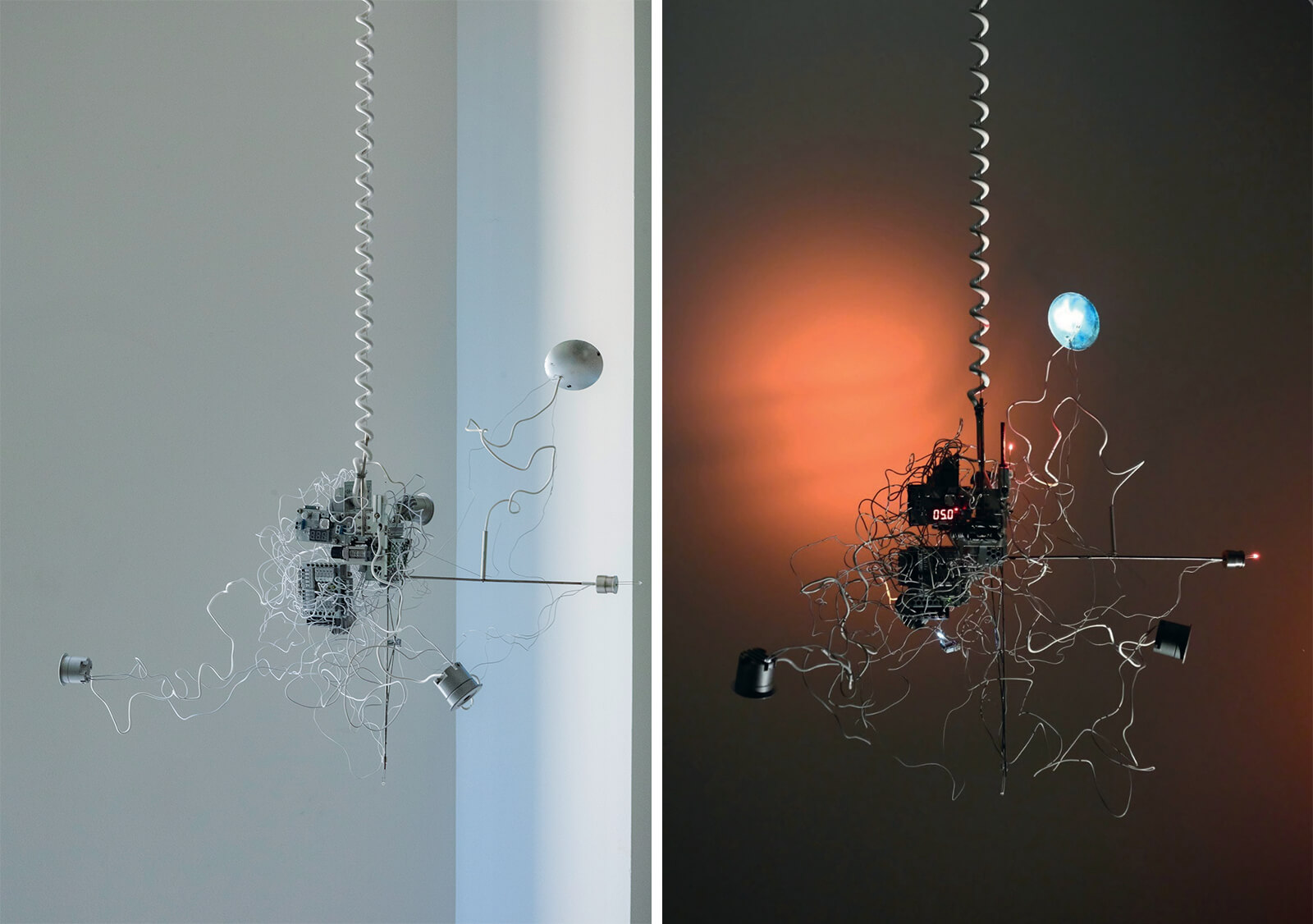
![(L-R) ‘[RR003],’ aluminium, Steel, LED bulbs, electrical cable, electronics, 2025; (R) ‘CORPO D’AIRA,’ balloon, resin, LED heat sink, wireframe structure, raw steel pedestal, wiring, 2021, Max Milà Serra | Max Milà Serra | STIRworld](images/inspire/7227_MaxSerra_5.jpg)
Bansari: Across your portfolio, visual and material lightness take the centre stage. Between the conceptual intent and material logic, which comes first?
Max: There is a guiding principle that is almost non-negotiable across my work, which I adopted from an interview with Robert le Ricolais: ‘Zero weight, infinite span’. This serves as the foundational starting point for every endeavour we undertake. Pieces must be inherently light in relation to the space they inhabit. This explains why my work often ‘disappears’ in photographs; there is simply too much emptiness in relation to the amount of matter within the frame. Even in works that require a larger degree of mass, I reinforce this principle by incorporating voids or gaps through which the viewer can see, ensuring the structure remains transparent to its environment.
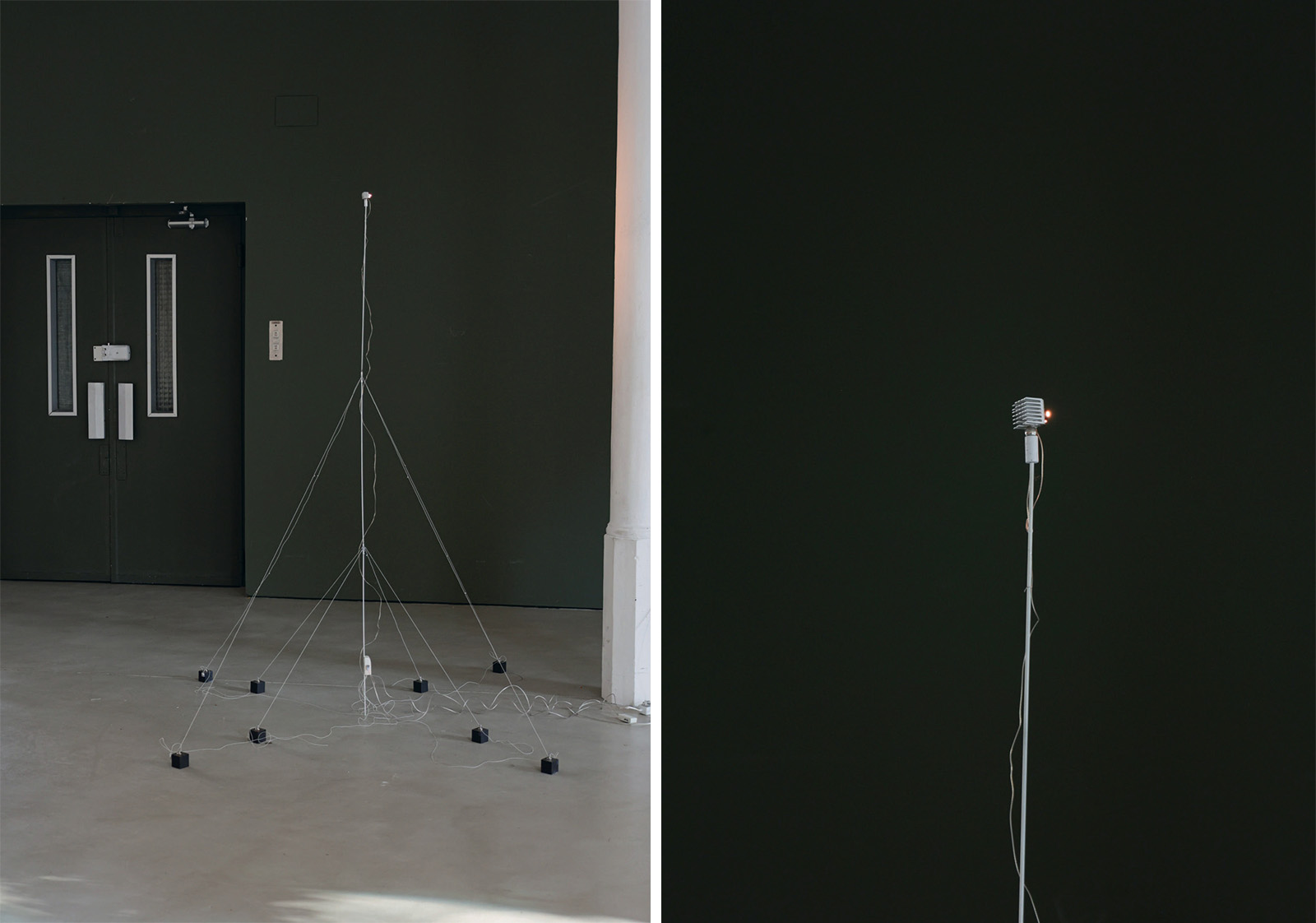
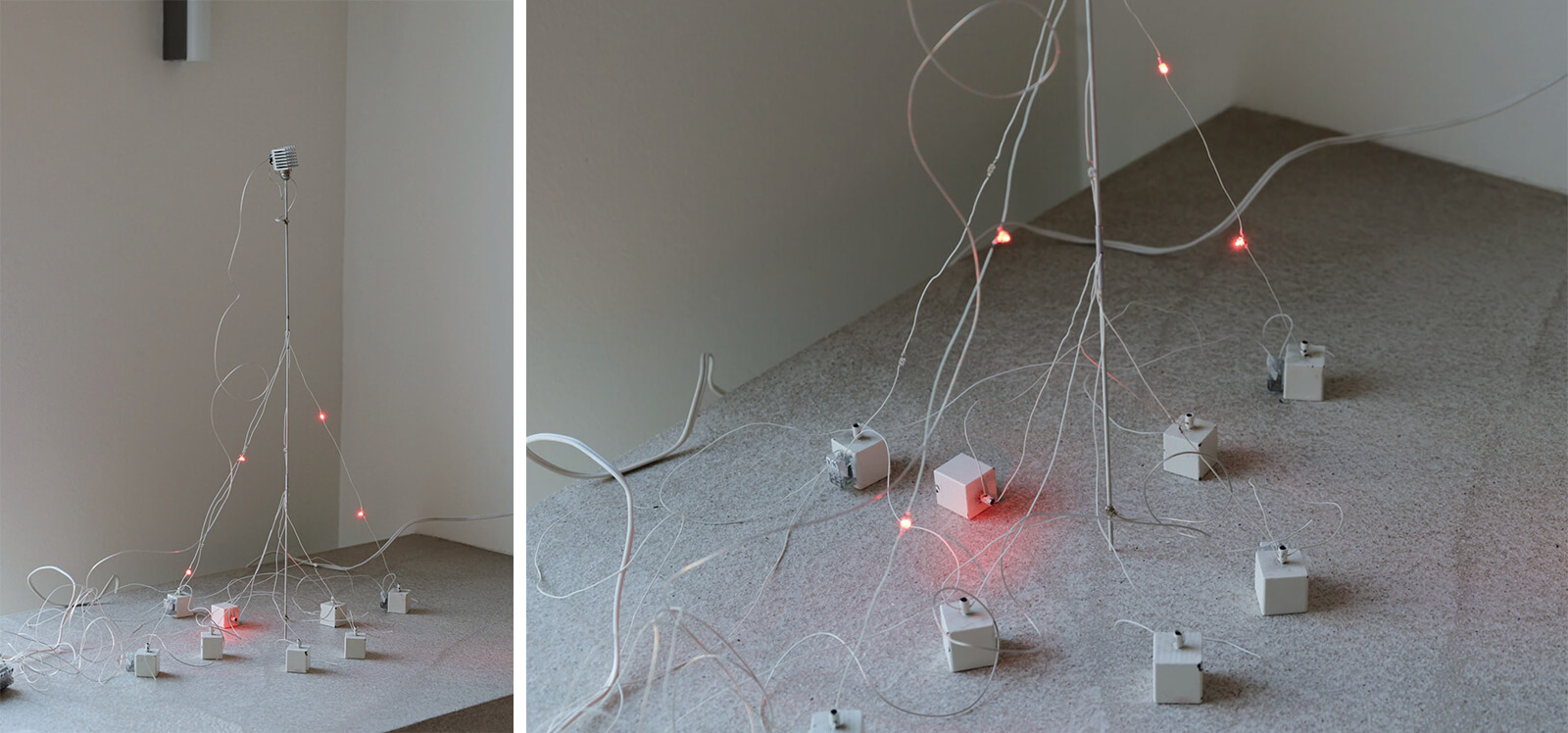
Bansari: In ESVELTA, there’s a persistent pursuit of 'impossible lightness' that becomes 'an intrinsic element of the space itself.' Is this a conceptual ambition you begin with, or does it emerge as a by-product of engineering efficiency and material restraint?
Max: ESVELTA is a singular case in my portfolio where making a scaled-down version of something was not the intention; this light was actually the one that convinced me that working with scale was a fertile path. My idea was to build a slender, baseless lamp (as its name in Spanish implies). During assembly, the fibreglass rod it was made of kept bending and falling. Naturally, I added weights, pulling from wires at 45 degrees to stabilise it. I then found myself tripping over these wires that expanded out of the main structure and were hard to spot, so I placed some blinking lights on them. Once finished, I realised that this lamp was a scaled-down version of a transmission antenna.
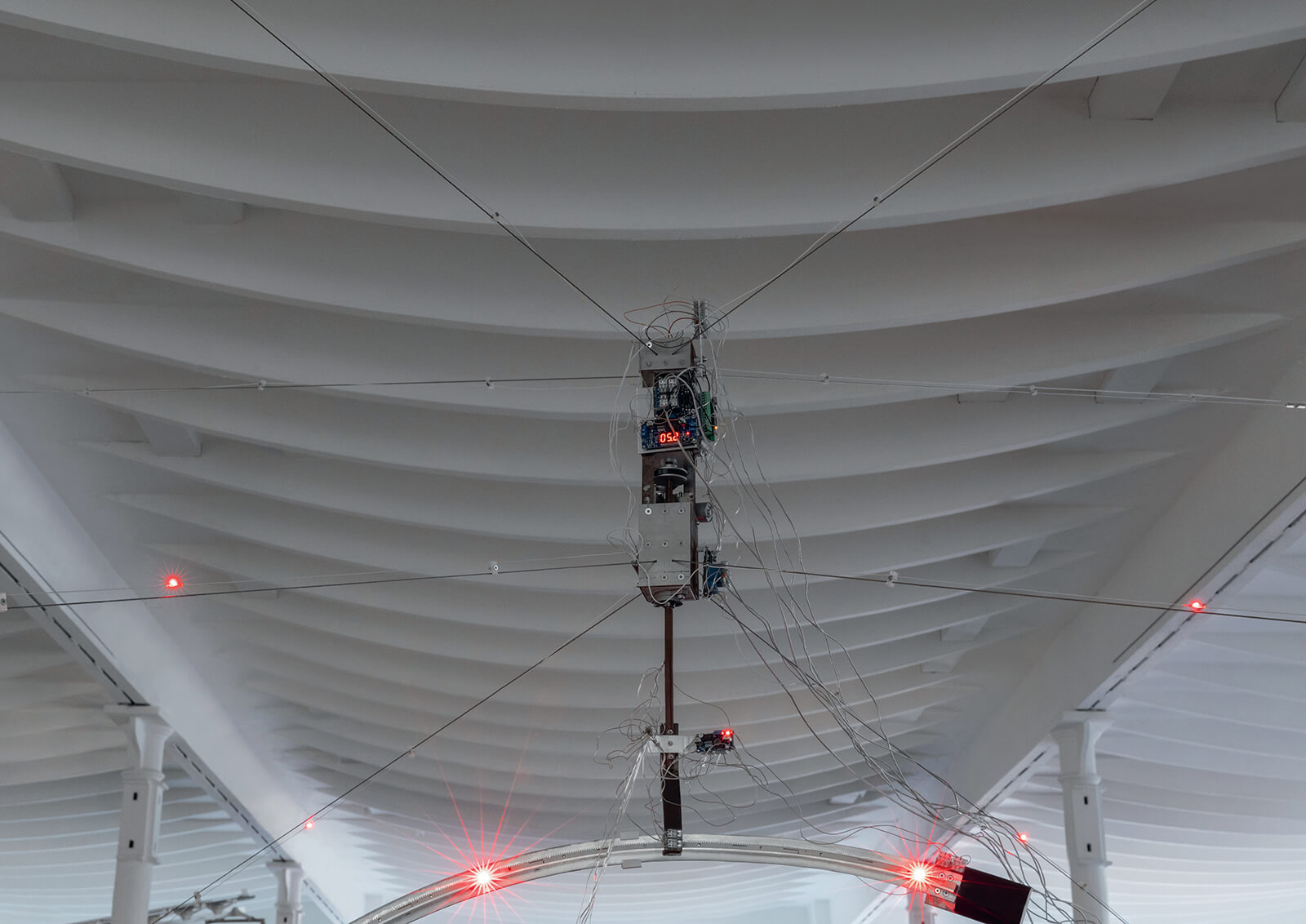
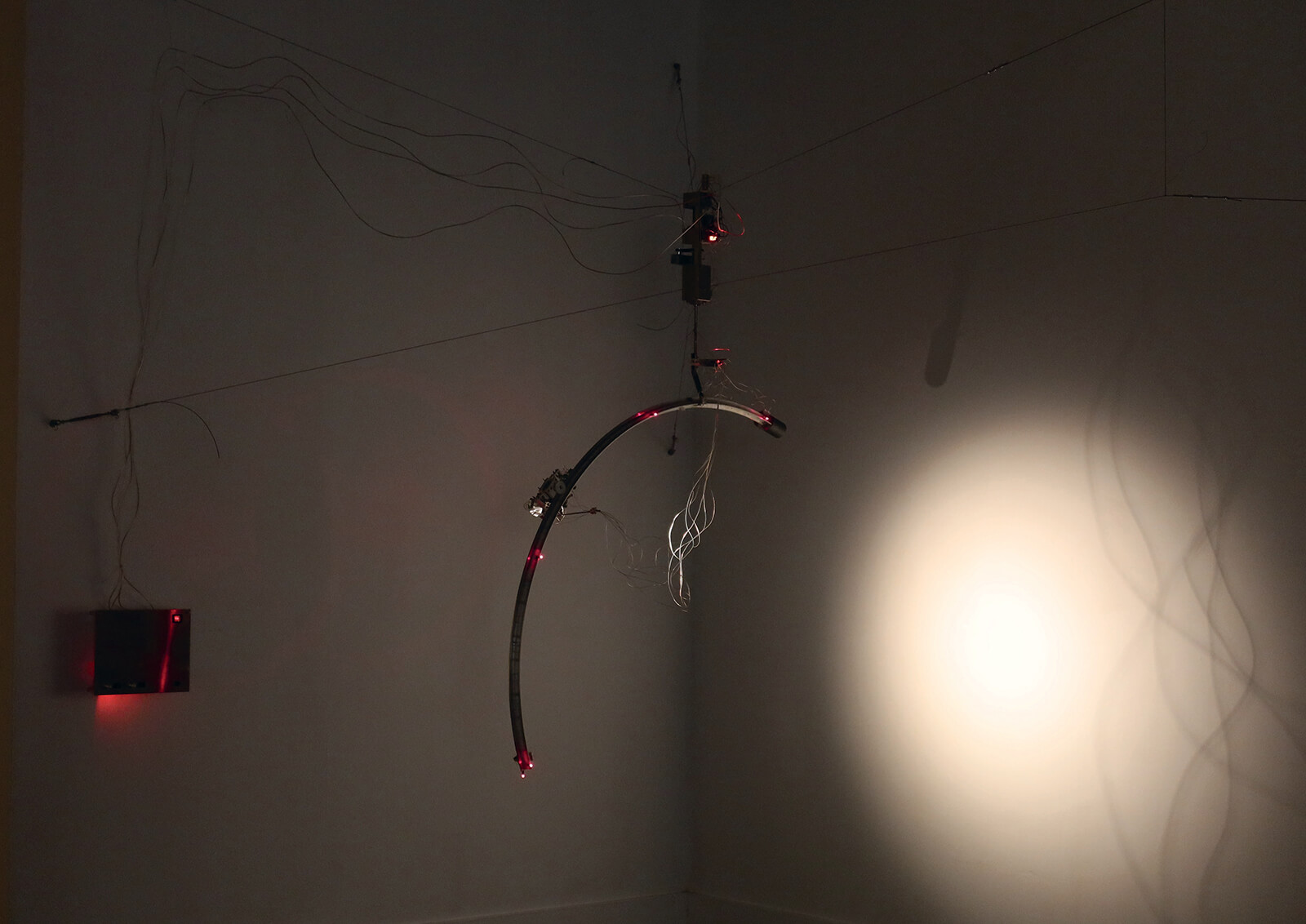
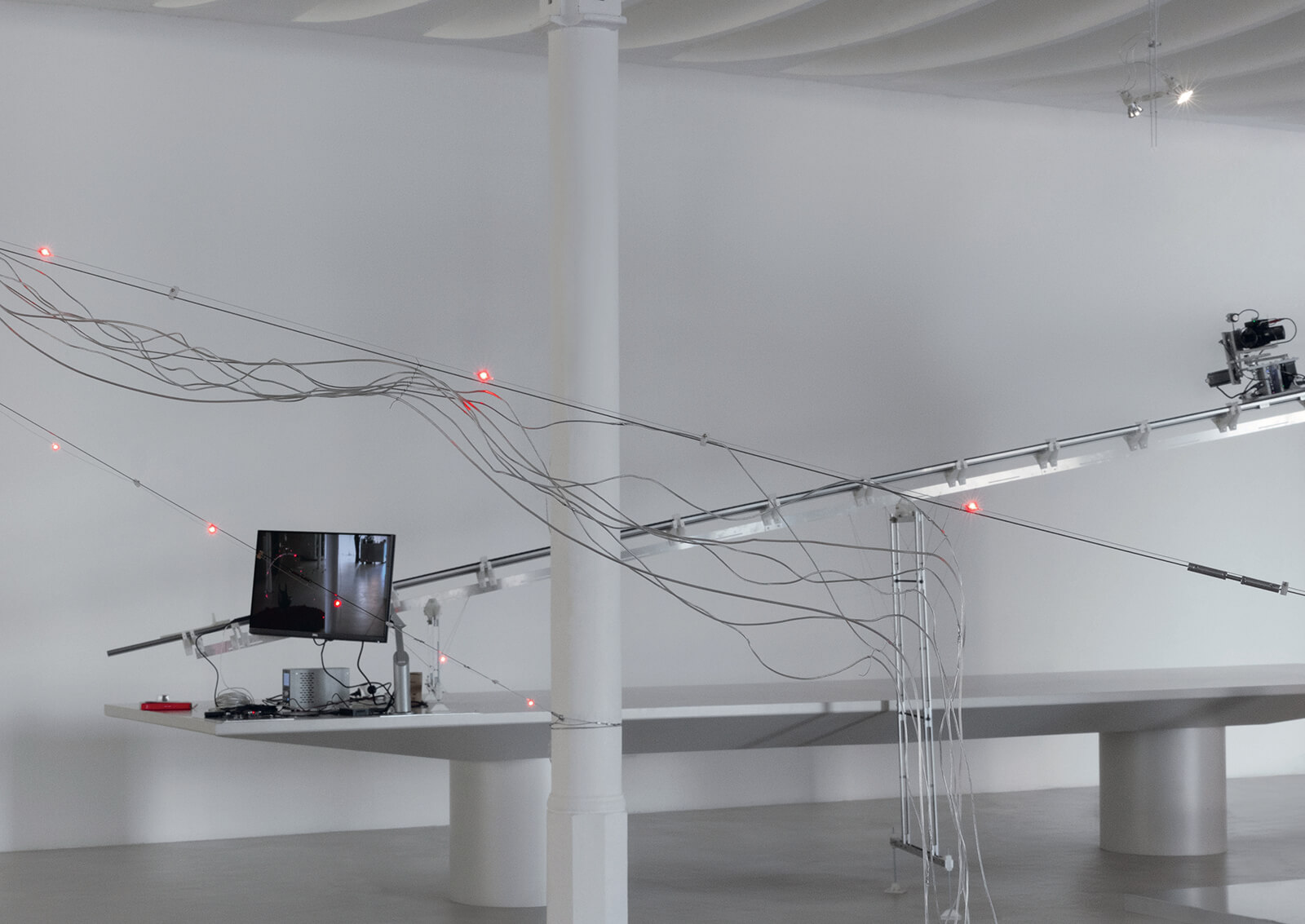
Bansari: The Linea LED touches on immersive quality and creative control over how an environment can be captured. In your opinion, how does such convergence of engineering, technology and design change the way we perceive the world around us?
Max: The intent behind Linea LED—beyond the forms dictated by the technical restrictions of building such a machine—is to extend perception beyond our biological senses or fixed physical position in the world. In this state, the concepts of ‘here’ and ‘now’ become blurry; the exhibition effectively begins to explore itself. A central theme in my work is that it consists of information existing across multiple planes. Consequently, the relative movement of light and the specific viewpoint of the spectator are paramount. When the parallax effect is fully embraced, it serves as a clear explanation for how our perception shifts based on the changing relative positions of things. Through Linea LED, I aim to emphasise this phenomenon by highlighting the perceptual mechanics that define the relationship between the object and the observer.
I resist two main tendencies. The first is the hunger for novelty of shape or the desire to leave the industrialised, material object behind. The second is what I call ‘untraceable design'. – Max Milà Serra
Bansari: Within your compositions, are there any specific details you find yourself more obsessed with? Something people might overlook, but that is integral to the resulting composition?
Max: My compositions usually start simultaneously from two opposite poles: the general outline (the principle or reference we want to achieve) and the specific hardware or technical details we want to utilise. We work from both ends toward a meeting point in the middle. To me, anything that isn't the general principle or the specific technical detail is almost irrelevant.
Bansari: What is the one dominant tendency in contemporary design that you find yourself strongly resisting or rejecting?
Max: I resist two main tendencies. The first is the hunger for novelty of shape or the desire to leave the industrialised, material object behind. The second is what I call ‘untraceable design'. It is vital to me that if a problem is revisited, the same logical result would arise. This stands in contrast to ‘freehand’ design or shapes dictated by random computer splines. To avoid them, in our studio, curves are almost always conic sections or catenaries.
Bansari: When inspiration runs dry, where do you seek it?
Max: I have been lucky that inspiration rarely runs dry. I go to great lengths to ensure there is always something simmering in the background. When a project reaches a dead end, I turn to our miscellaneous folder of references, curiosities and texts. Randomly scrolling through these archived thoughts has always unlocked whatever problem we were facing.
Bansari: What do you find the most liberating about your practice today?
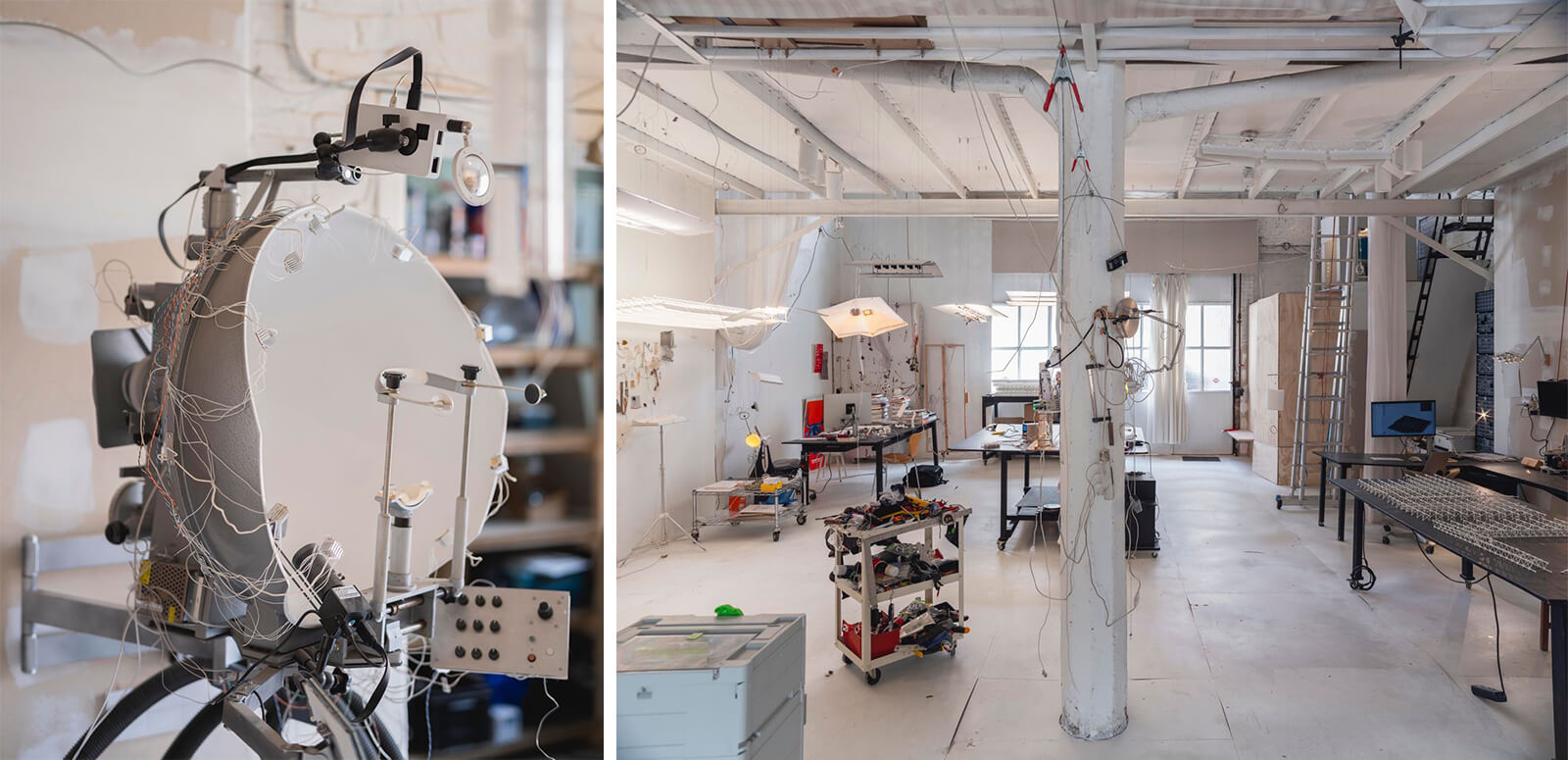
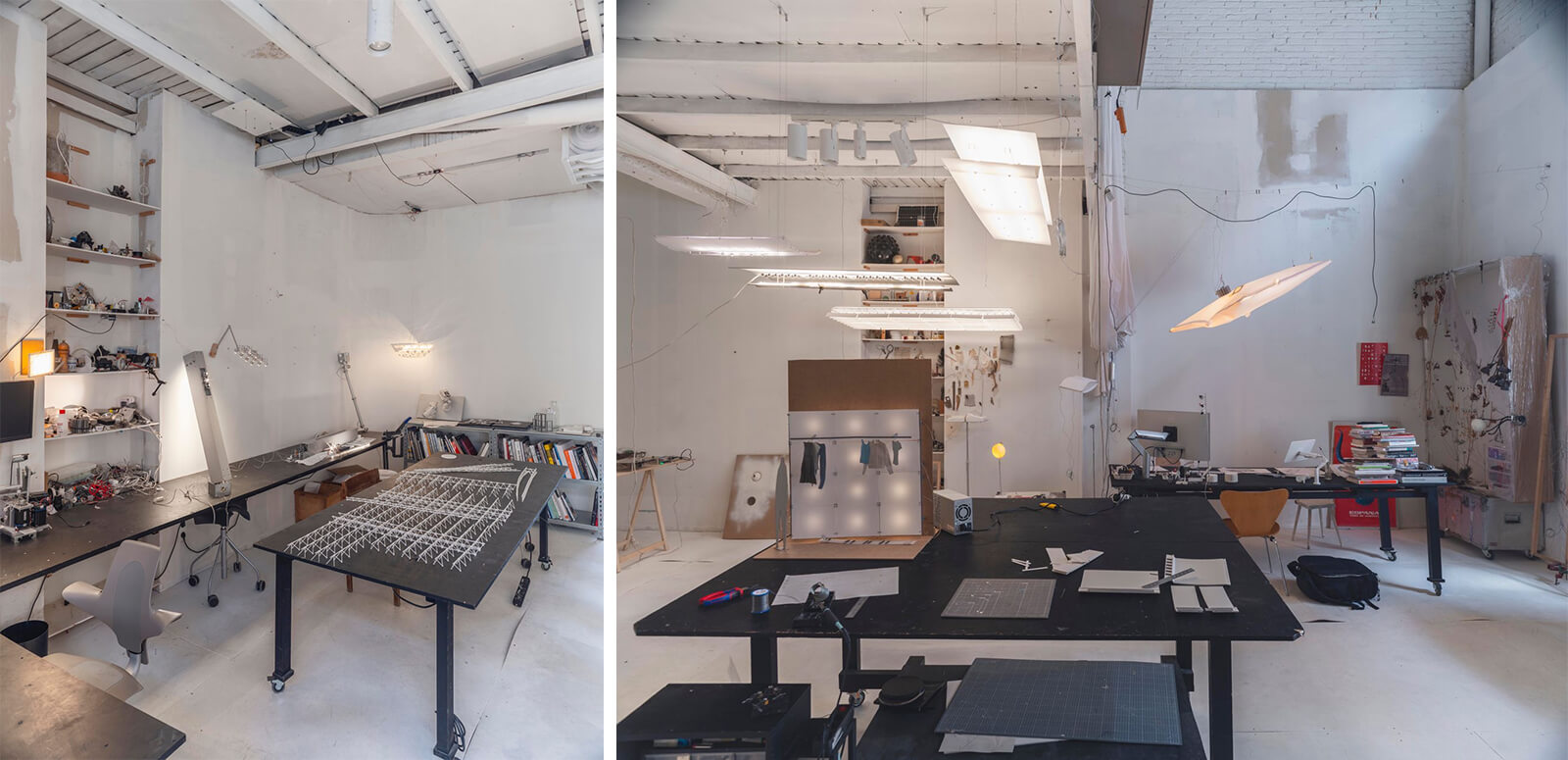
Max: Reaching a point where the body of work and the language developed are substantial enough to set the tone for future projects is incredibly liberating. When a new client visits the studio and sees shelves full of discarded prototypes and half-developed pieces, the tone is already set for them. We are then entrusted to deliver something that aligns with the logic of our past work.

by Chahna Tank Jun 22, 2026
Conceived by DUDD HAUS, the open-call exhibition in New York brings together over 130 designs exploring hidden possibilities within an overlooked domestic object.
by Pranjal Maheshwari Jun 20, 2026
Founder Doruk Kubilay’s latest collections, Resonance and Mother and Daughter, transform cultural heritage, craftsmanship and material experimentation into collectible designs.
by Jincy Iype Jun 19, 2026
These curated conversations from Milan Design Week 2026 gather the convictions and experiences of leading creative voices, including Maria Porro, Lina Ghotmeh and more.
by Pranjal Maheshwari Jun 13, 2026
STIR talks to the British designer about her lighting collection displayed at the Jacqueline Sullivan Gallery, marked by material fragility, exposed making and light’s shifting presence.
 surprise me!

make your fridays matter
SUBSCRIBE
make your fridays matter with a well-read weekend
Enter your details to sign in
Don’t have an account?
Sign upOr you can sign in with
a single account for all
STIR platforms
All your bookmarks will be available across all your devices.
Stay STIRred
Already have an account?
Sign inOr you can sign up with
Tap on things that interests you.
Select the Conversation Category you would like to watch
Please enter your details and click submit.
Enter the 6-digit code sent at
Verification link sent to check your inbox or spam folder to complete sign up process


Max Milà Serra’s kinetic objects are engineered as invisible tools of perception
by Bansari Paghdar | Published on : Jun 11, 2026


 Sign in with Google
 Sign in with email
What do you think?