Design04 mins. read
Mayfair Design District 2026 turns its focus to What Matters Now
by Pia BhatiaSep 09, 2026



by Asmita SinghPublished on : Oct 04, 2025
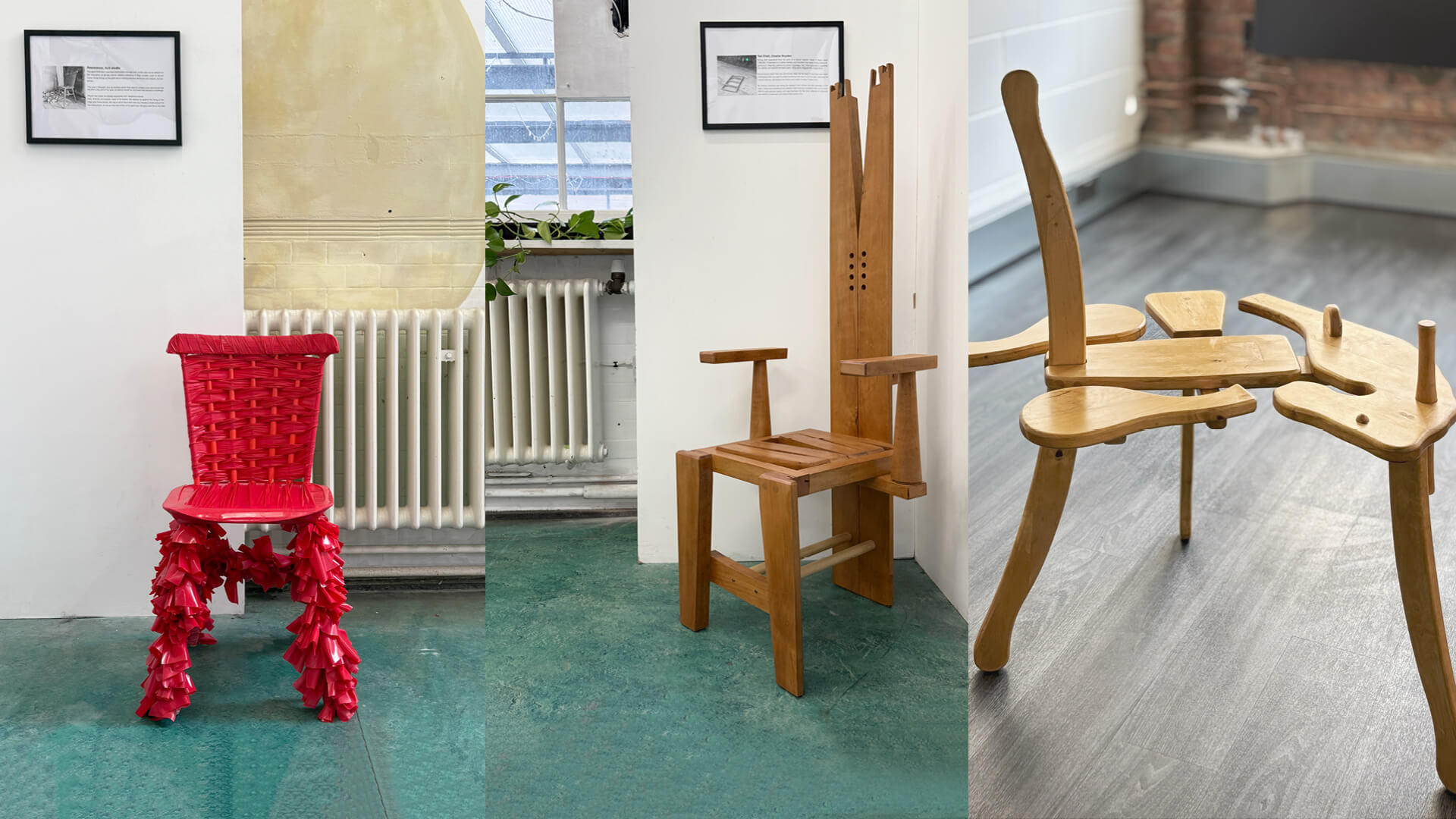
Every day, London’s streets quietly portray stories of abandonment: broken chairs left by skips, cracked tables balanced against bins, objects once central to daily life now stripped of value and destined for landfill. Yet, within these fragments lies potential—a chance to see not waste, but possibility. It was this act of re-seeing that drove UnBroken, a design exhibition curated by Francesco Feliziani for the Camden Inspire 2025 festival. Presented at the Camden Collective co-working hub as part of the London Design Festival this year, the show gathered leading and emerging designers who were tasked with rescuing discarded objects and reimagining them into functional works of art. From September 15 – 20, 2025, UnBroken celebrated material resilience and performed as a call to rethink our culture of consumption, underscoring the necessity of repair and repurposing as both an ecological practice and an imperative creative act.
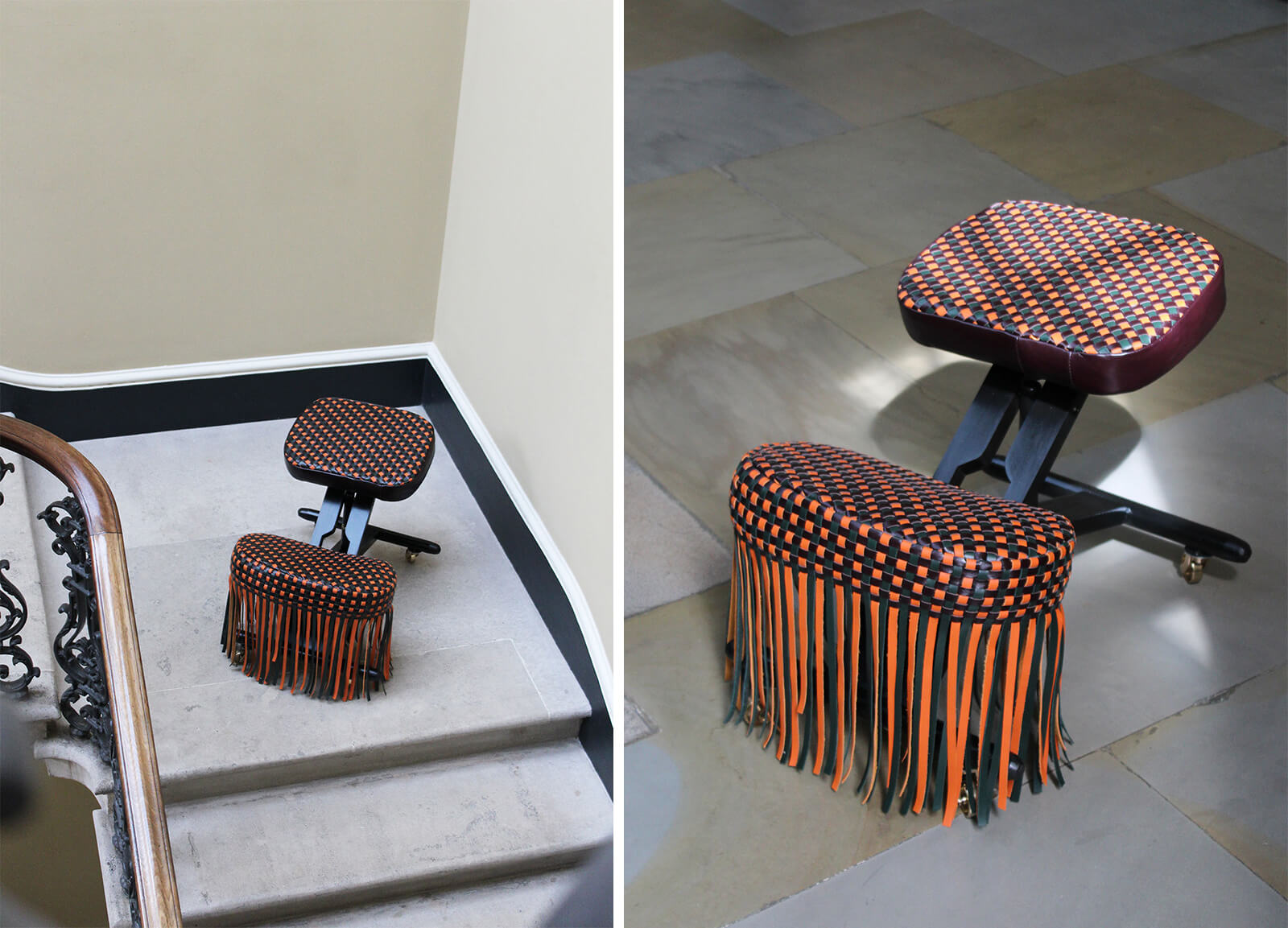
At a time when conversations around waste, overconsumption and repair are more urgent than ever, the exhibition demonstrated design’s ability to offer not only beauty but also a vision of resilience and renewal. Household and commercial waste was reclaimed by each participating creative, reborn as an object of value and vision. The results ranged from poetic material reinterpretations to playful hybrid objects, which were showcased and auctioned during the design festival in London.
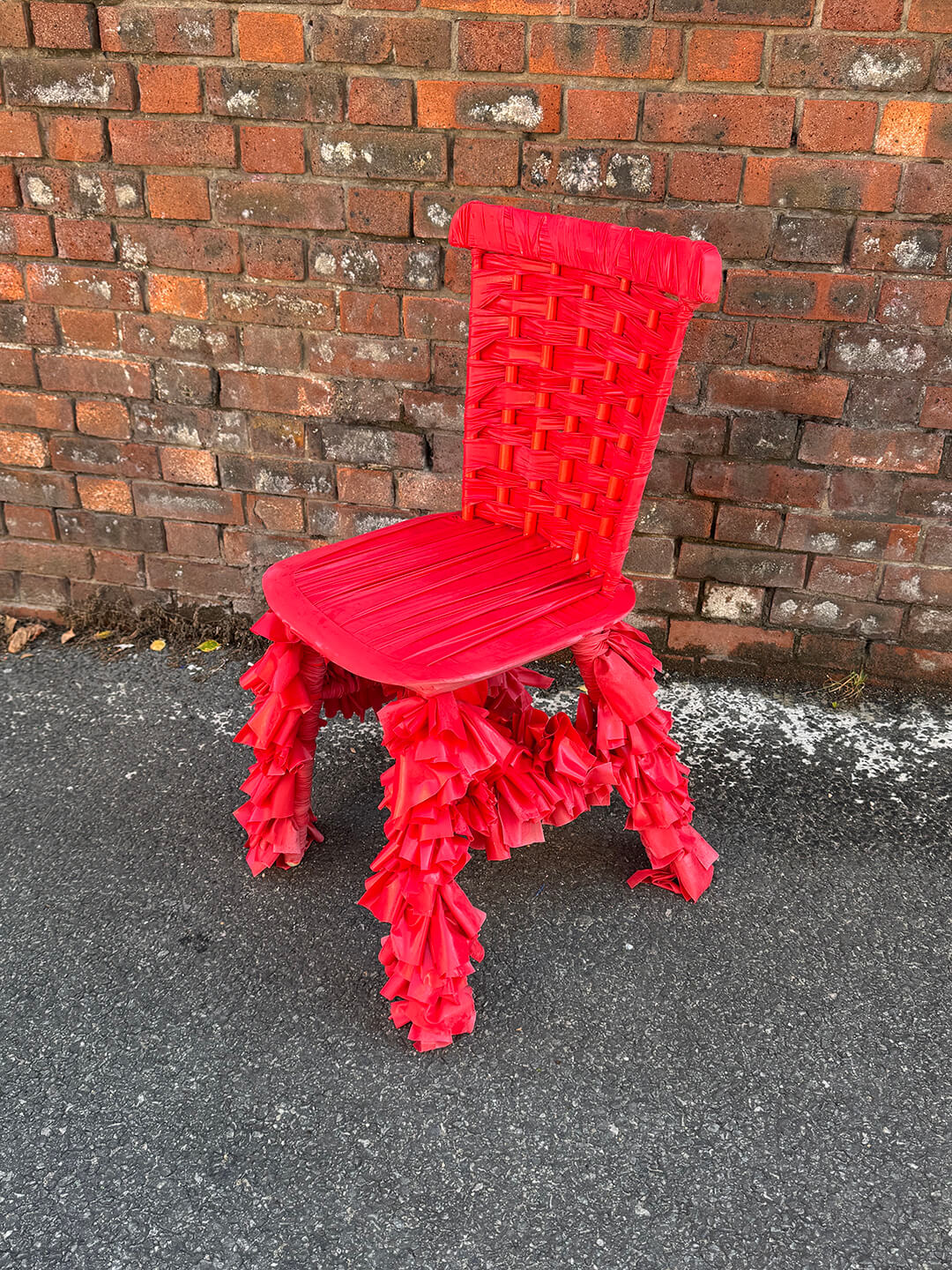
One of the key highlights was Resistance created by 2LG Studio (Jordan Cluroe and Russell Whitehead). Known for their bold use of colour and sensitivity to emotional design, 2LG Studio transformed a discarded chair by weaving it with resistance bands, turning it into an experiment in form and material interaction. The output was a striking, tactile seating object that sought to explore the balance between flexibility and structure, highlighting how design can hold not just physical weight but also symbolic meaning.
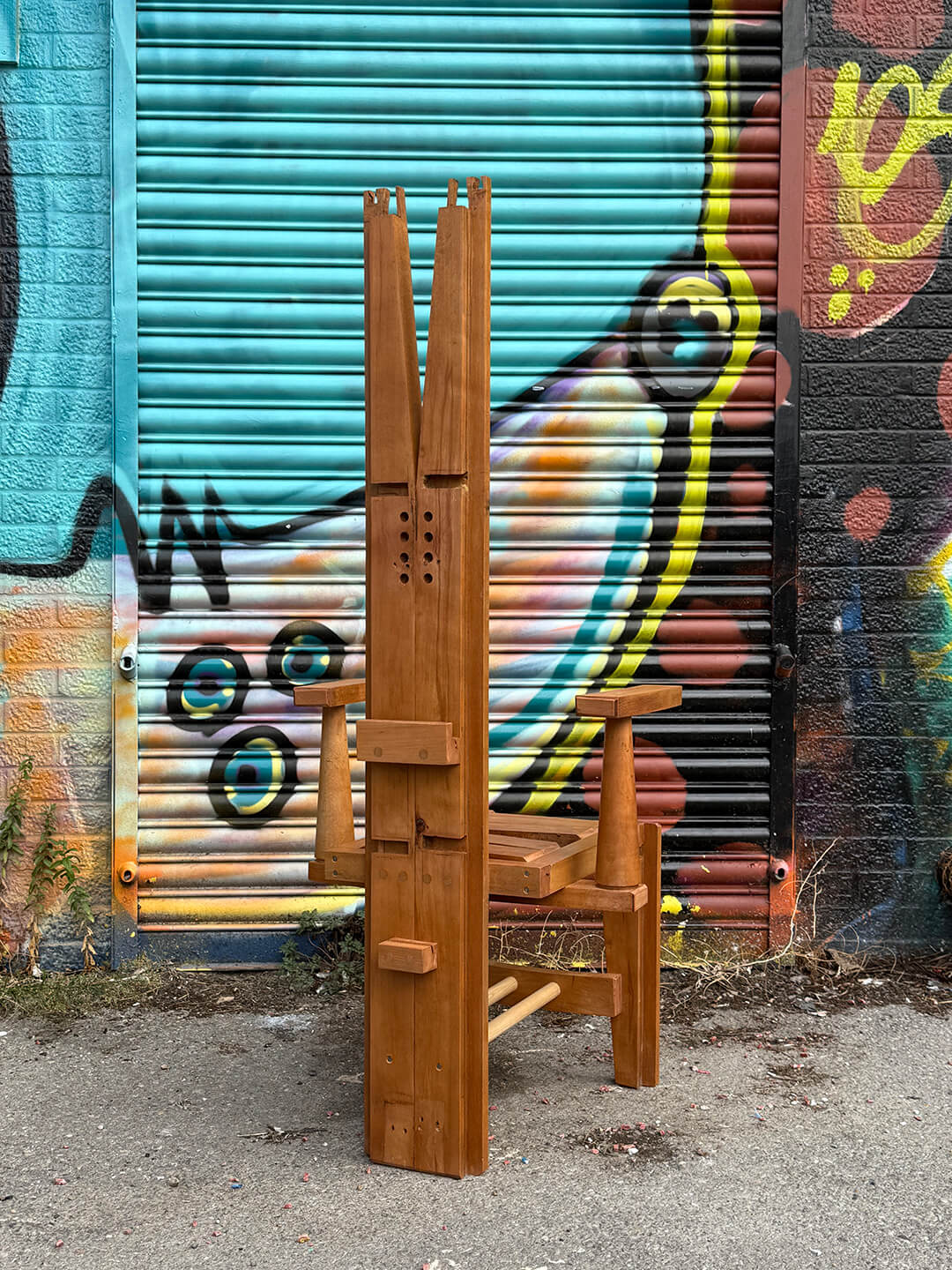
In contrast, Charlie Boyden, a rising figure in contemporary furniture design, engaged with mid-century modern heritage through his Ted Chair. His creative practice often oscillates between reverence for craftsmanship and experimental interventions. By then sculpturally reinventing a 1960s Danish daybed, Boyden preserved the aura of its history while altering its form.
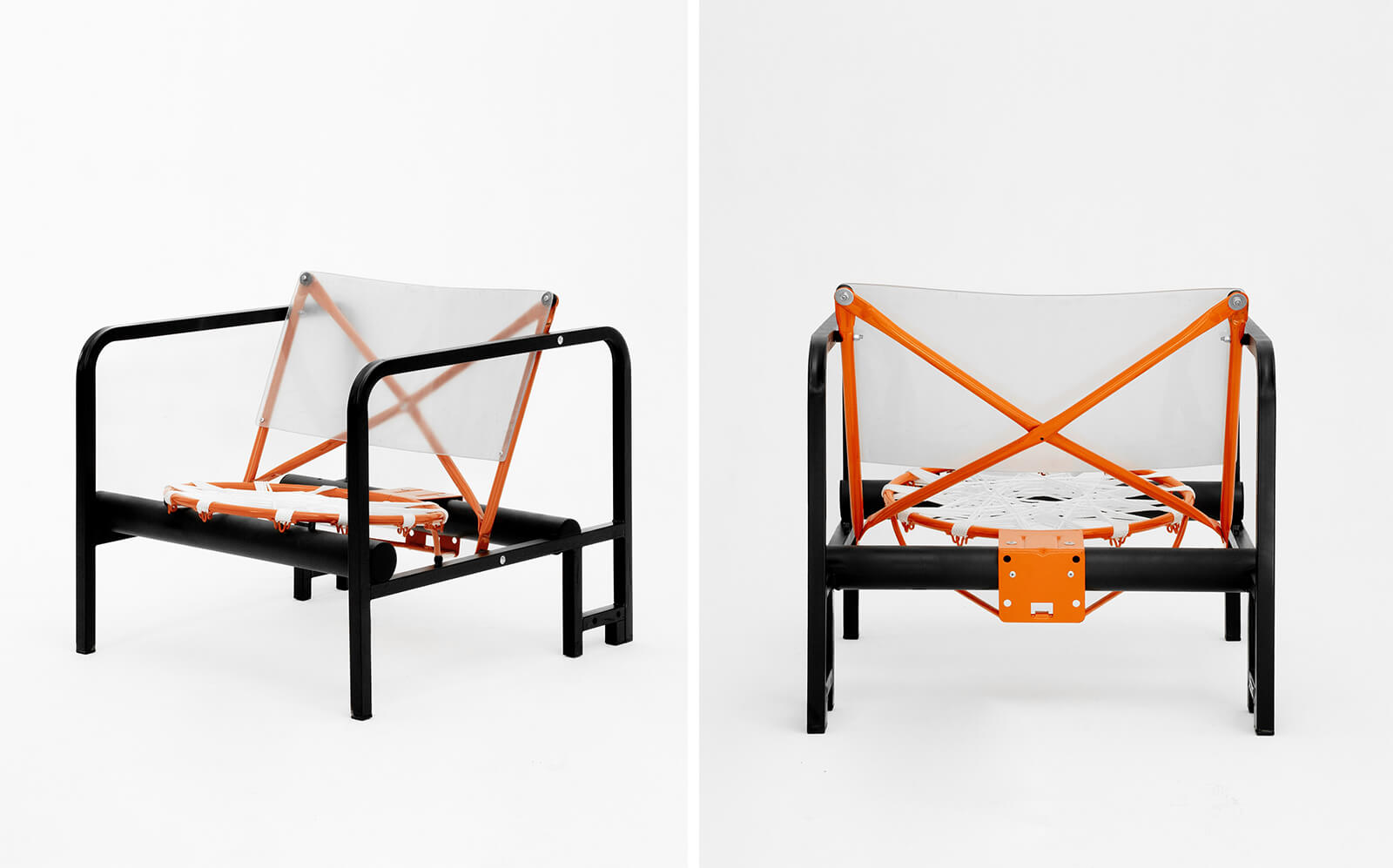
Feliziani, apart from being the show's curator, also presented his AIR chair design, a clever reconstruction of a salvaged basketball hoop. The hoop’s circular frame became the structure for the seating, blurring the line between ready-made and designed object. Feliziani, a Camden Collective member with a background in industrial design, often works at the intersection of playfulness and functionality, demonstrating how a familiar, even nostalgic element can be recontextualised into an object, both witty and useful.
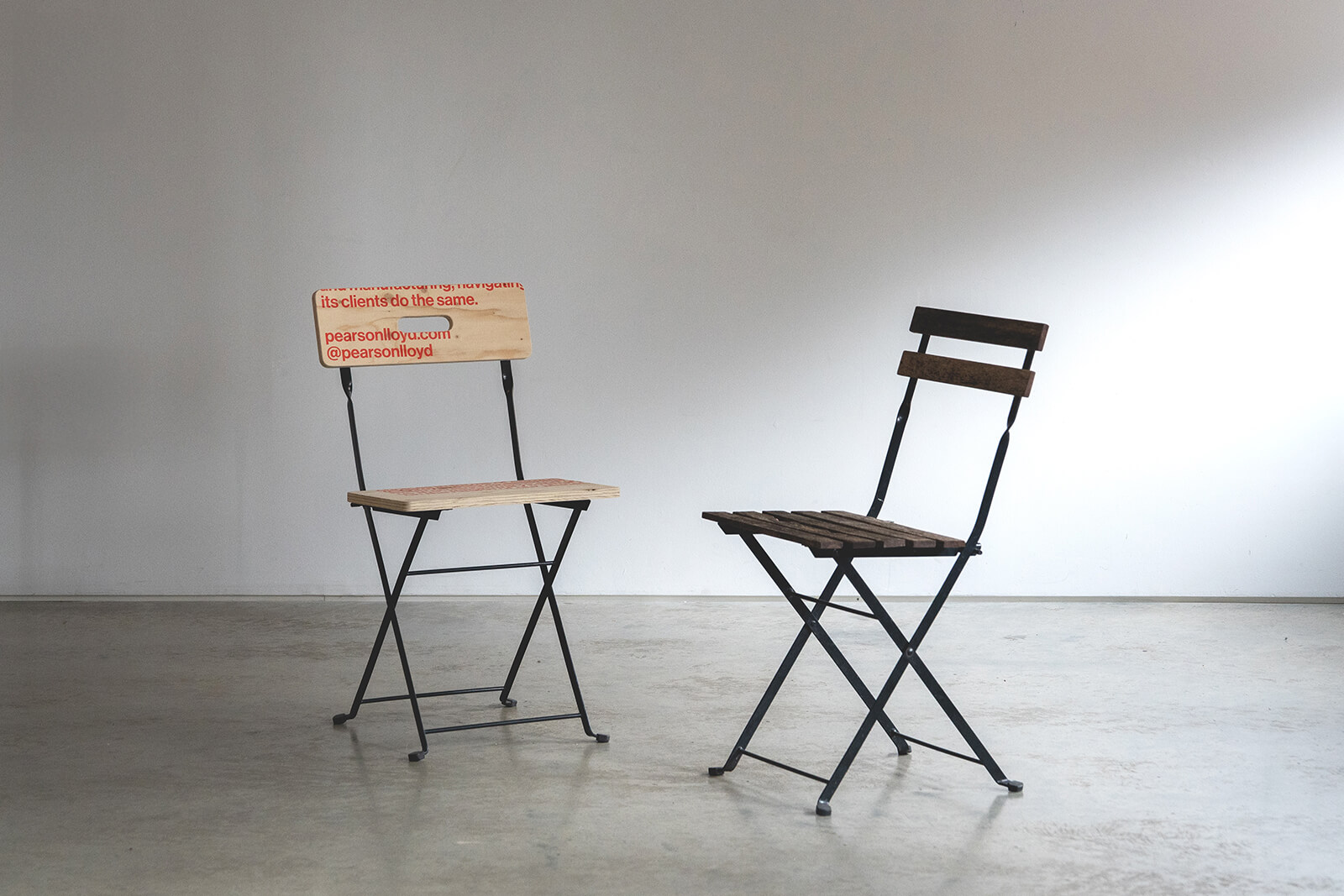
Pearson Lloyd, the London-based design studio founded by Luke Pearson and Tom Lloyd, brought their decades of expertise in industrial and furniture design to the showcase. Their project, Multiply, gave new life to two worn IKEA TÄRNÖ garden chairs using reclaimed plywood. Rather than disguising the chairs’ imperfections, the product designers highlighted repair itself, celebrating the layered textures of reuse. Known for their sustainable, user-focused practice, Pearson Lloyd turned an everyday IKEA item into a playful manifesto, centring repair over short-term replacement.
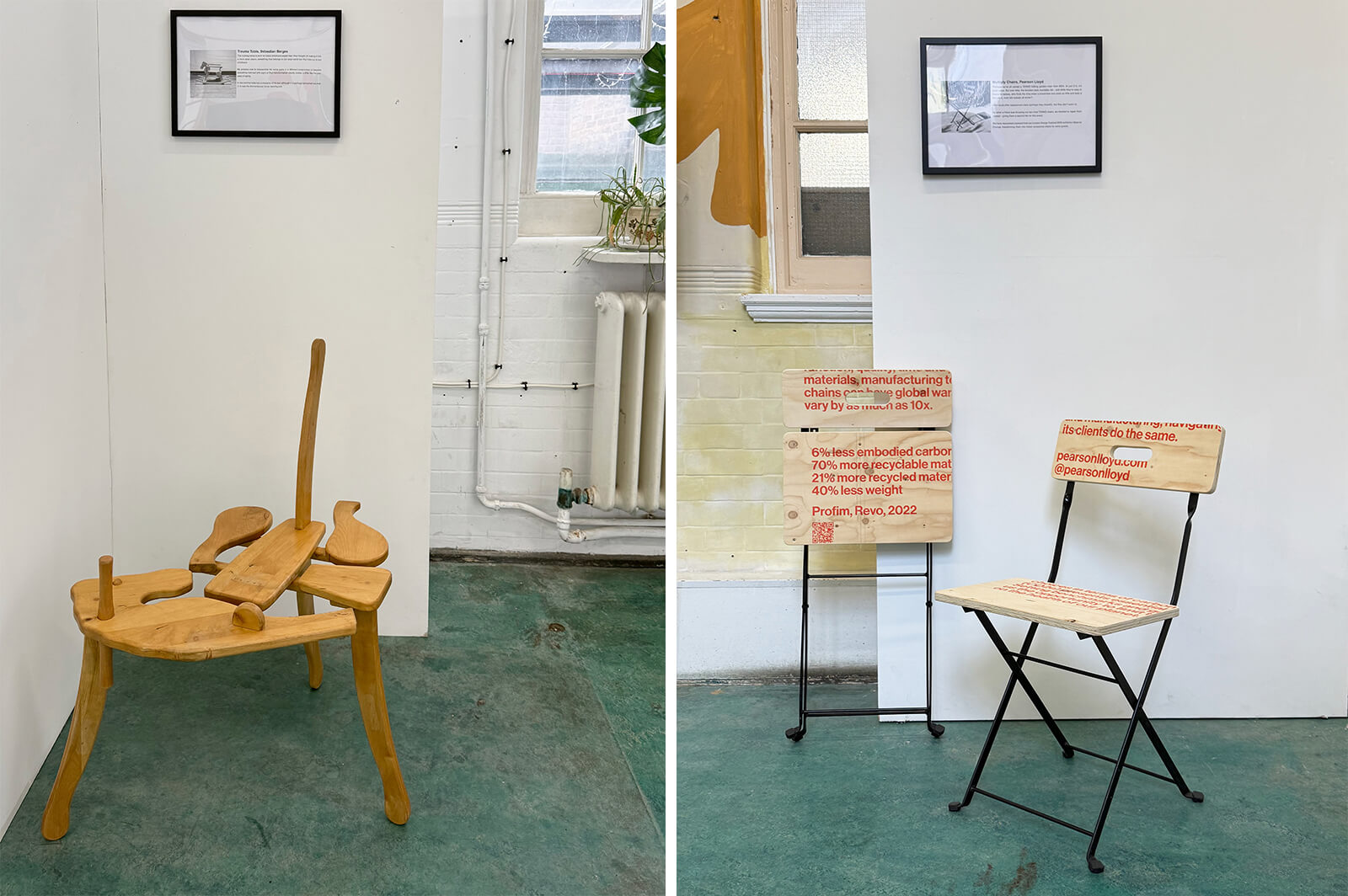
Additionally, long-established British designer Sebastian Bergne, whose practice spans furniture, product design and installations, presented the Trauma Table. Crafted from a childhood rocking horse, the work confronted memory and loss, transforming an intimate artefact of play into an evocative object. Bergne’s work has often been characterised by a minimal yet narrative-driven approach, and for UnBroken, he harnessed design as a lens through which to explore time, trauma and change.
Meanwhile, Studio TIP’s CHAIR 01 offered provocation through hybridity at the 'exhibition of redesigned waste'. Combining unexpected cultural references and materials, the piece questioned assumptions of functionality and taste. Studio TIP, known for its playful experiments at the fringes of design and art, force viewers to reckon with the cultural baggage embedded in objects.
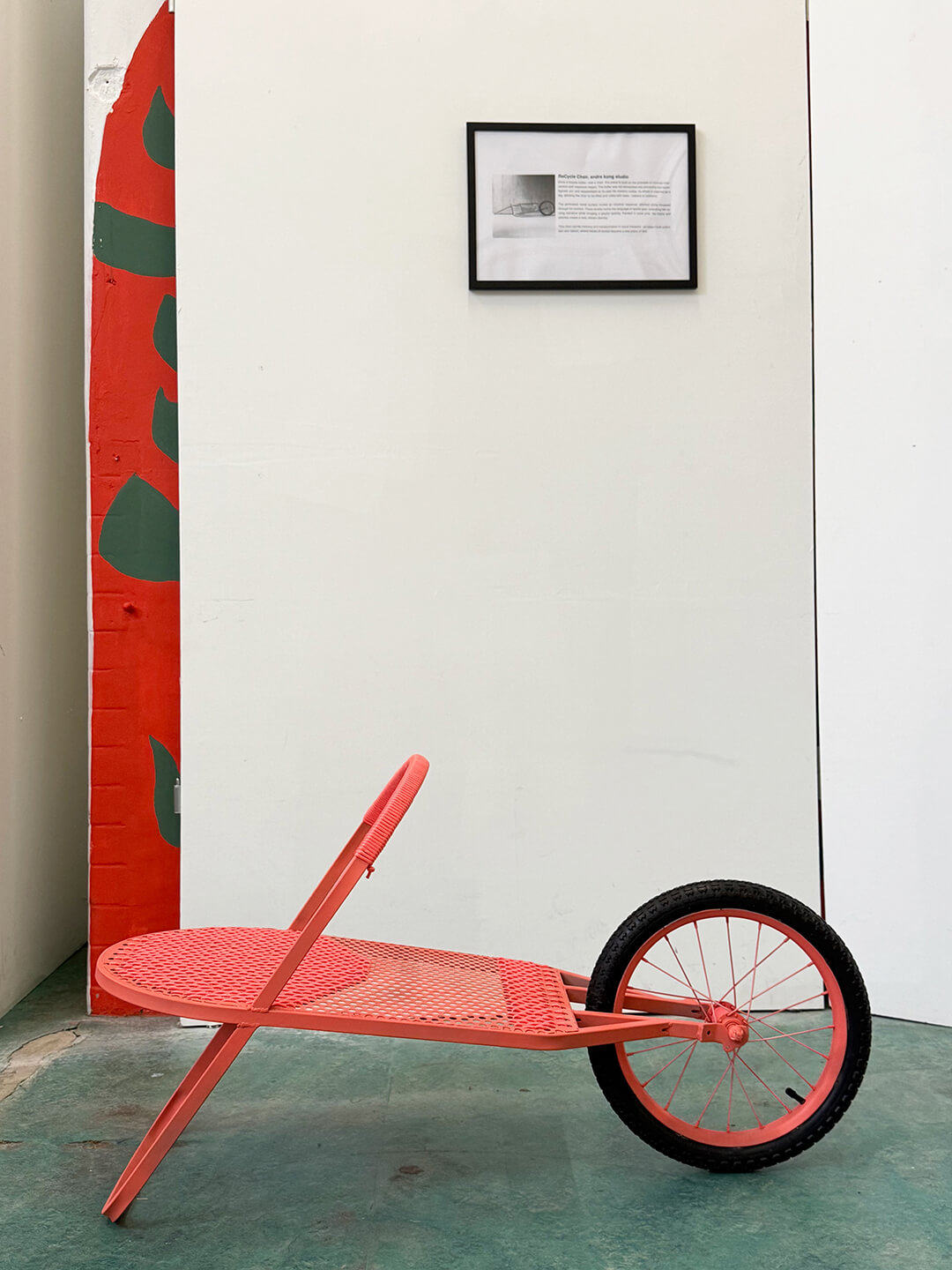
Each exhibited work testified that design’s value lies not just in producing the new, but in giving forgotten materials a renewed life, as also witnessed in architect and designer Andre Kong's ReCycle chair, which pushed the theme of mobility. Built from a discarded bicycle trailer, the chair cleverly retained the trailer’s wheel as one of its legs, allowing it to roll from place to place. Instead of dismantling the trailer entirely, Kong reconfigured its form as a practical seating design that extends his ongoing interest in urban mobility, modularity and adaptable structures.
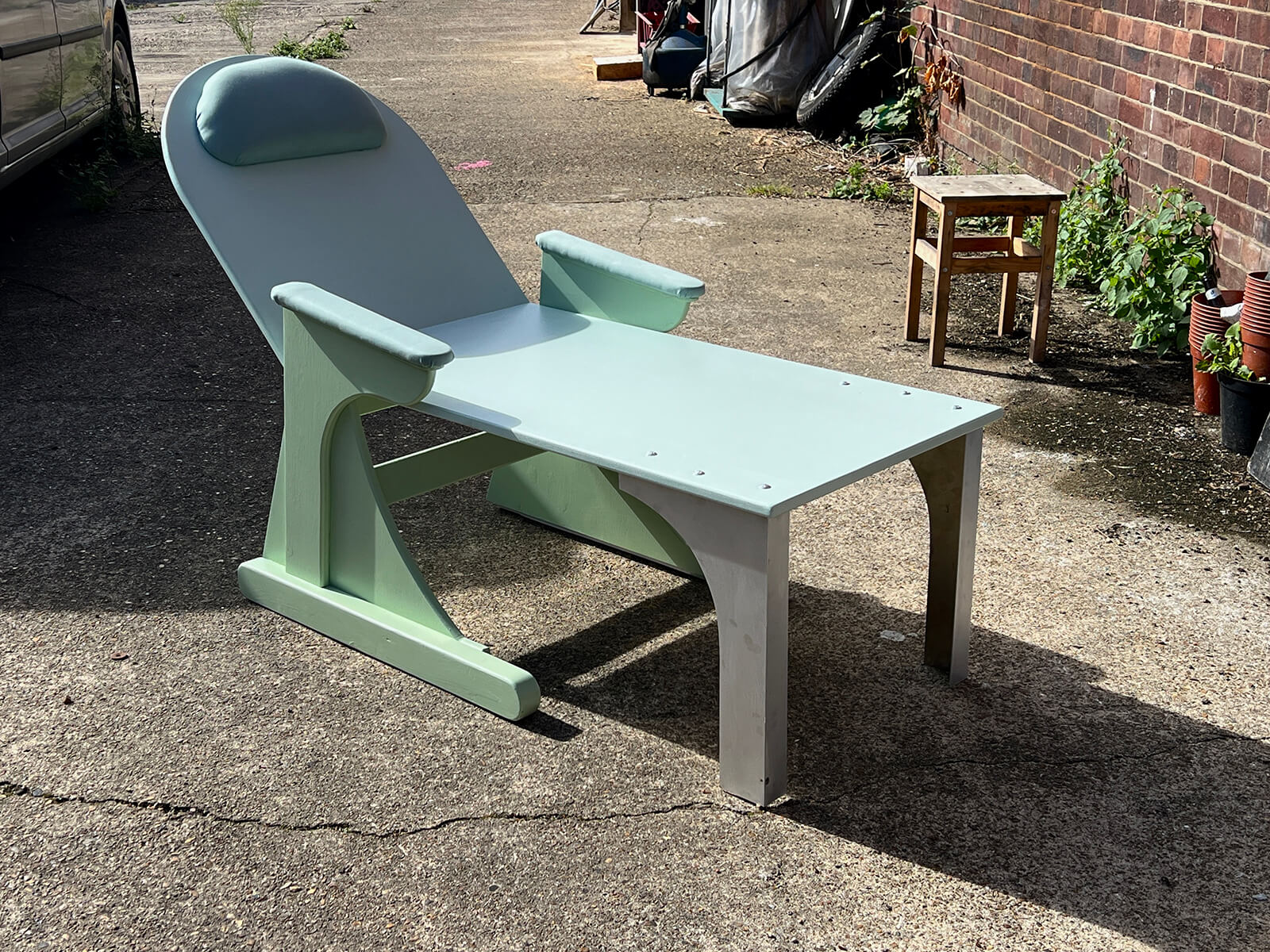
Emerging designer Jaclyn Pappalardo presented Slounge at the design event, a lounger crafted from a repurposed film prop. The furniture designer preserved its original green finish while thoughtfully reassembling its components into an elegant outdoor seating object. The addition of new legs, inspired by ubiquitous Mediterranean Monobloc chairs, lent familiarity while opening up a new dialogue between mass-produced and one-of-a-kind forms. Her work often oscillates between set design and functional furniture, with Slounge exemplifying her capacity to reimagine overlooked materials in welcoming environments.
By transforming salvaged and discarded objects into functional, evocative works, the participating designers underscored the urgency of rethinking how we consume, discard and repair; a reminder that waste is not an endpoint, but the beginning of new stories; that sustainability itself is practise. UnBroken offered a vital contribution in that regard—that design, at its best, is both unflinchingly honest and radically hopeful. Remarking on shifting perspectives of waste, curator Feliziani said, “Inside every discarded object, there are a multitude of possibilities, if we look at things from a different angle. UnBroken is about shifting our perception of waste, with a hope that it will spark a conversation about how creativity can drive real change in the way we live and consume.”

by Pranjal Maheshwari Oct 23, 2026
Co-authored by Jareh Das, Chairman traces the British designer’s fixation on chairs as symbols of power and identity and as mediums of expression and community building.
by Mirra Lynn Oct 22, 2026
The curators behind Palestine Design Week 2026 reflect on its intent, considering how design holds memory, makes space for loss and imagines a future in Palestine.
by Chahna Tank Oct 22, 2026
STIR speaks with the Mumbai-based type designer about her practice, type walks and why she wants more people to have stronger opinions about Indian-script fonts.
by Jincy Iype Oct 15, 2026
STIR explores craft, material intelligence and people shaping Indian design through dialogues with Design Democracy’s co-founders and the curators of its special exhibitions.

make your fridays matter with a well-read weekend
Enter your details to sign in
Don’t have an account?
Sign upOr you can sign in with
a single account for all
STIR platforms
All your bookmarks will be available across all your devices.
Stay STIRred
Already have an account?
Sign inOr you can sign up with
Verification link sent to check your inbox or spam folder to complete sign up process
Tap on things that interests you.
Select the Conversation Category you would like to watch
Please enter your details and click submit.
Enter the 6-digit code sent at


UnBroken at Camden Inspire 2025 proffered salvaged stories and second lives in design
by Asmita Singh | Published on : Oct 04, 2025


 Sign in with Google
 Sign in with email
What do you think?