Dominique Zinkpè
Nigeria
Dominique Zinkpè is a self-taught Beninese artist whose multidisciplinary approach defies conventional creative constraints. Born in 1969 in Cotonou, his work is informed by the rich historical and cultural traditions of his native Benin.
Drawing inspiration from diverse cosmologies and driven by universal themes, Zinkpè's works construct a new iconographic imaginary. Rooted in his culture and proximity to Voodoo, his creations embody a magical realm, straddling the delicate balance between human and animal, the tangible and the ethereal.
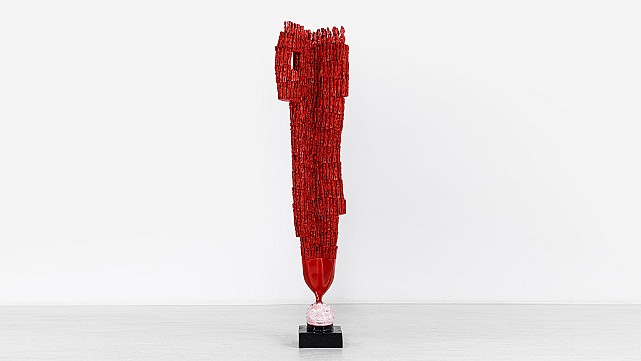
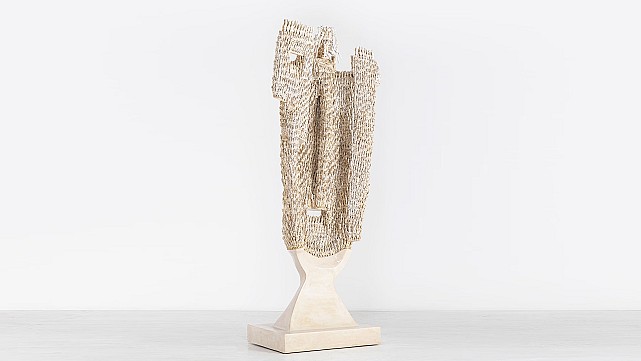
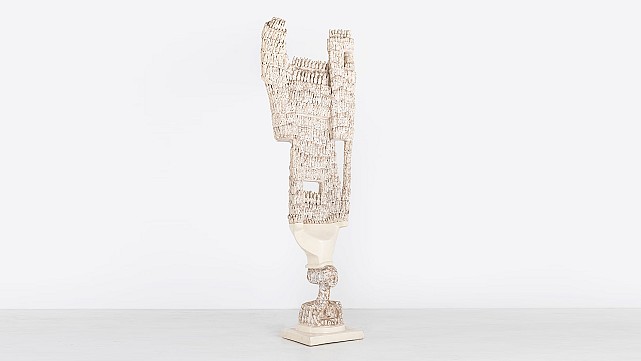
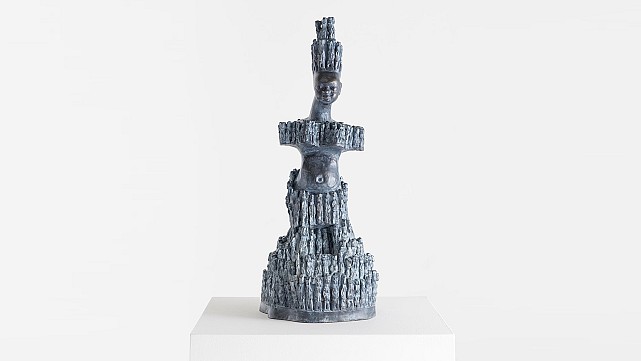
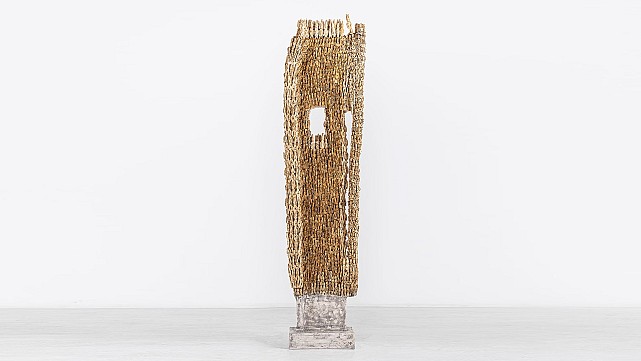
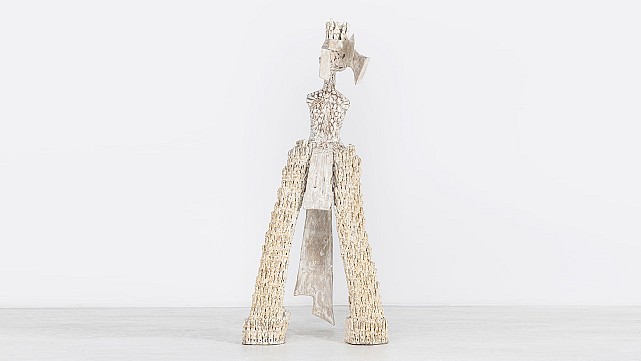
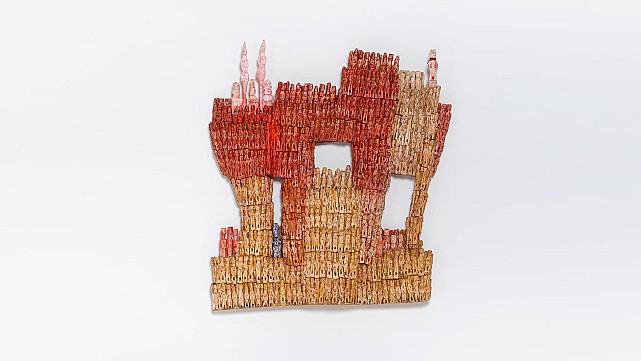
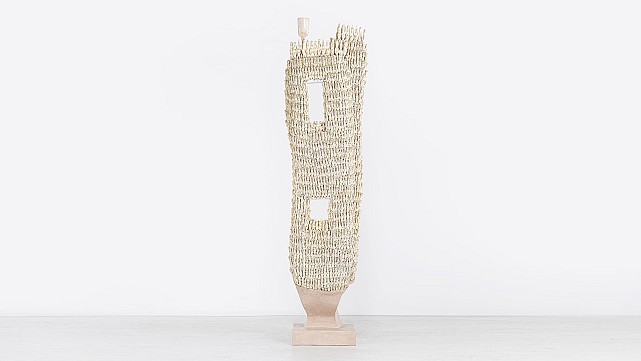
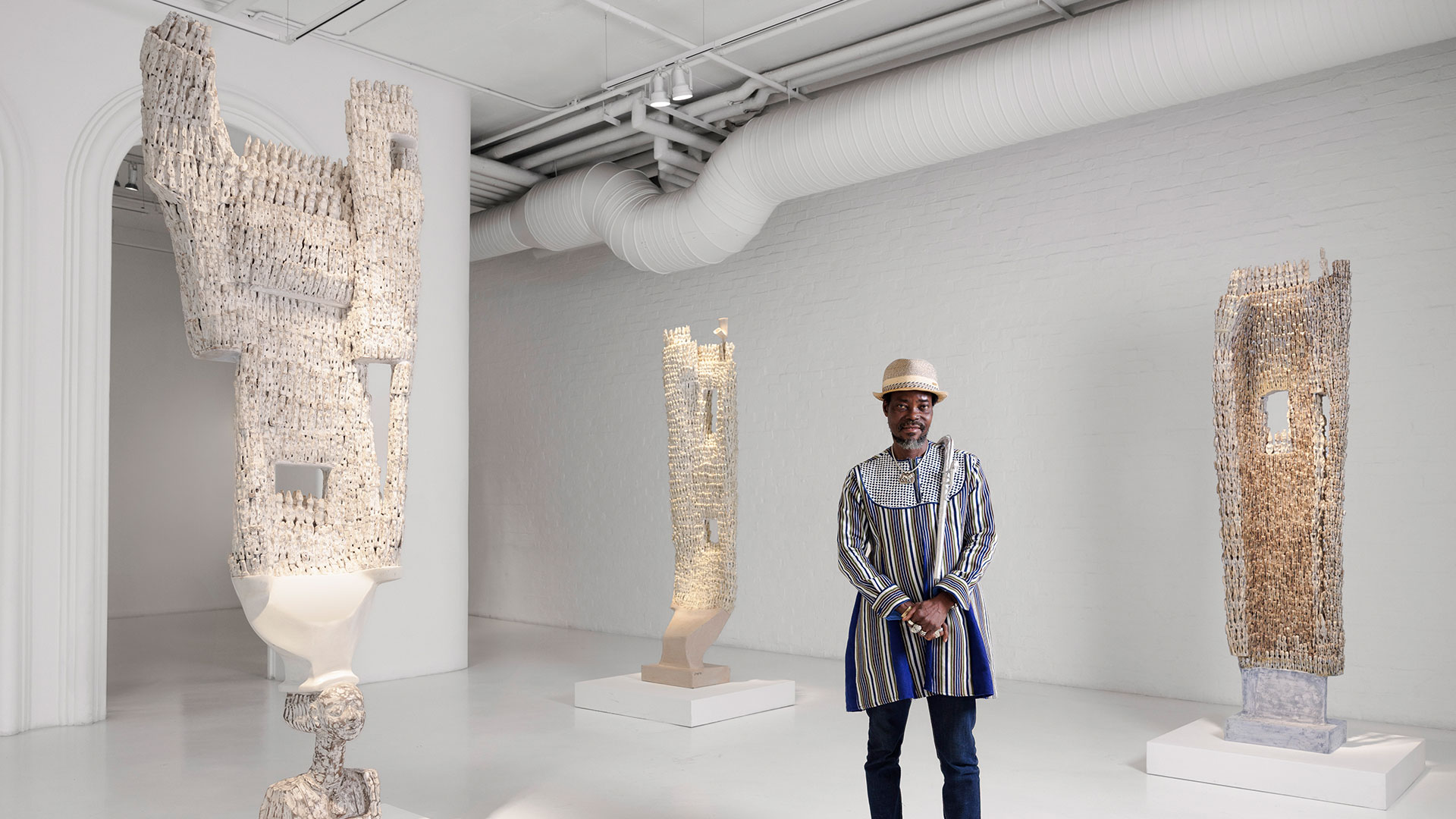
His large-scale sculptural assemblages comprise hundreds of individually carved wooden statuettes recalling the Yoruba tradition of Ibéji dolls. When a twin dies in infancy, these figurines are believed by family members to embody the deceased’s spiritual energy.
Zinkpè studied at the Centre Culturel Français in Cotonou and won the Young African Talent Prize at the 1993 Grapholies Art Festival in Abidjan, Ivory Coast. The turning point came during a fortuitous meeting with pioneering Ivorian sculptor Christian Lattier, which awakened in him a desire to develop his own personal language.
Using his particular worldview to comment on larger socio-economic ills, Zinkpè’s installations serve as potent social satire on global injustices. His works confront the harsh realities of the African continent, denouncing poverty and social injustices, and emphasising the need for flux, exchange, and migration in the face of economic stagnation.
Beyond his own practice, Zinkpè has spearheaded educational initiatives to share knowledge and promote the work of contemporary artists in Benin. He organised the first Benin Biennial in 2010, founded the Boulev’art street art event and opened an experimental art space, Unik, in the city of Abomey.
His workshop in Cotonou is a hub of collaboration and skills exchange where up to 20 other artisans and artists gather to work. Furthermore, he has been a strong advocate for the restitution of African material culture, focusing on the repatriation of the renowned Benin Bronzes looted by the British Military from Benin City.
Dominique Zinkpè is a self-taught Beninese artist whose multidisciplinary approach defies conventional creative constraints. Born in 1969 in Cotonou, his work is informed by the rich historical and cultural traditions of his native Benin.
Drawing inspiration from diverse cosmologies and driven by universal themes, Zinkpè's works construct a new iconographic imaginary. Rooted in his culture and proximity to Voodoo, his creations embody a magical realm, straddling the delicate balance between human and animal, the tangible and the ethereal.
His large-scale sculptural assemblages comprise hundreds of individually carved wooden statuettes recalling the Yoruba tradition of Ibéji dolls. When a twin dies in infancy, these figurines are believed by family members to embody the deceased’s spiritual energy.
Zinkpè studied at the Centre Culturel Français in Cotonou and won the Young African Talent Prize at the 1993 Grapholies Art Festival in Abidjan, Ivory Coast. The turning point came during a fortuitous meeting with pioneering Ivorian sculptor Christian Lattier, which awakened in him a desire to develop his own personal language.
Using his particular worldview to comment on larger socio-economic ills, Zinkpè’s installations serve as potent social satire on global injustices. His works confront the harsh realities of the African continent, denouncing poverty and social injustices, and emphasising the need for flux, exchange, and migration in the face of economic stagnation.
Beyond his own practice, Zinkpè has spearheaded educational initiatives to share knowledge and promote the work of contemporary artists in Benin. He organised the first Benin Biennial in 2010, founded the Boulev’art street art event and opened an experimental art space, Unik, in the city of Abomey.
His workshop in Cotonou is a hub of collaboration and skills exchange where up to 20 other artisans and artists gather to work. Furthermore, he has been a strong advocate for the restitution of African material culture, focusing on the repatriation of the renowned Benin Bronzes looted by the British Military from Benin City.











 Sign in with Google
 Sign in with email