


 Sign in with Google
 Sign in with email



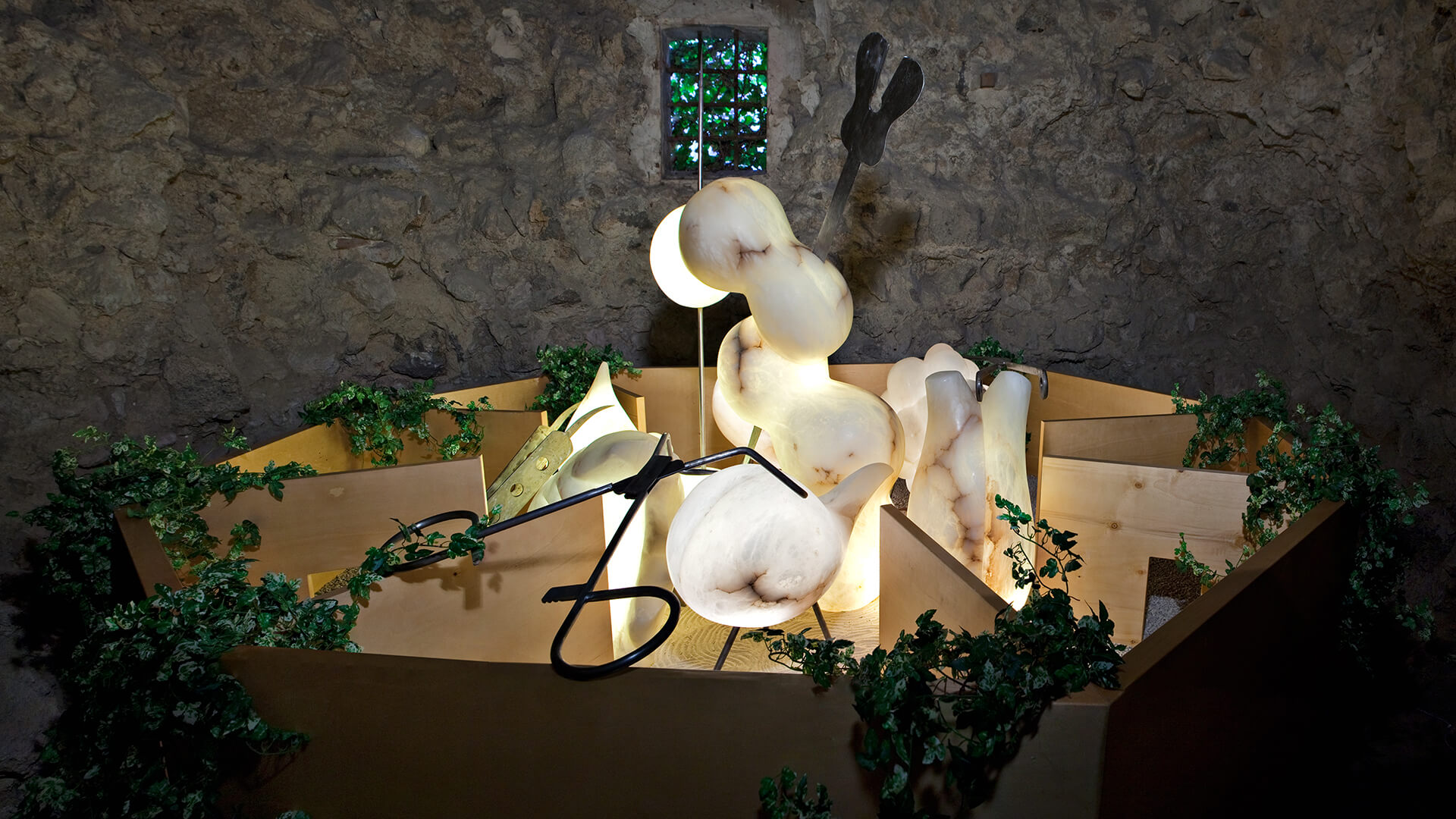





Galleria Continua presents Un Village sans frontières, an exhibition paying tribute to Chen Zhen as part of the celebrations for the 35th anniversary of its San Gimignano location in Italy. The art exhibition, on view from September 20, 2025 – January 7, 2026, pays homage to the Chinese artist whose work and vision profoundly shaped the identity and international trajectory of Galleria Continua.
The three founders of the art gallery first met Zhen in 1999, during his participation in the Venice Biennale that year. That encounter marked the beginning of a relationship that left a lasting imprint on Continua’s history. “It was thanks to him [Zhen] that the founding partners, in 2005, decided to open the first branch abroad (in Beijing), thus beginning a journey aimed at embracing the world, which continues to this day,” the gallery notes in an official release.
25 years after his premature death, Zhen remains a central figure in contemporary art, recognised for pluralism and his ability to bridge cultures, philosophies and lived experiences. “This exhibition aims to be a homage to his work, which, since the end of the 1980s, has substantially contributed to the overcoming of the boundaries between Eastern and Western thought, influencing an entire generation of artists,” notes Continua.
After initially working in painting, Zhen turned to large-scale installations in 1989, reassembling everyday objects to create poetic yet critical works in which Chinese tradition intersects with global consumer culture. At the core of his practice is the concept of ‘trans-experience’, which he described as an experiential method rather than a fixed theory. It brings together ‘residence’ (adapting to places), ‘resonance’ (dialogue with others) and ‘resistance’ (to new cultural influences). “This concept is linked to central themes: immersion of the self in life, identification with others, exchanges and conflicts between people, society, nature, science and technology. What interests him most are these ‘networks of relationships’,” explains Continua.
His personal history deeply shaped Zhen’s artistic vision. Diagnosed with an autoimmune disease at the age of 25, he spent three months in Tibet living alongside monks, adopting a simple, non-material lifestyle. This experience profoundly influenced his perception of time and led him to explore the relationship between Eastern and Western medicine. The contemporary artist’s work increasingly took on a therapeutic and purifying dimension, focusing on the human body as a site of transformation.
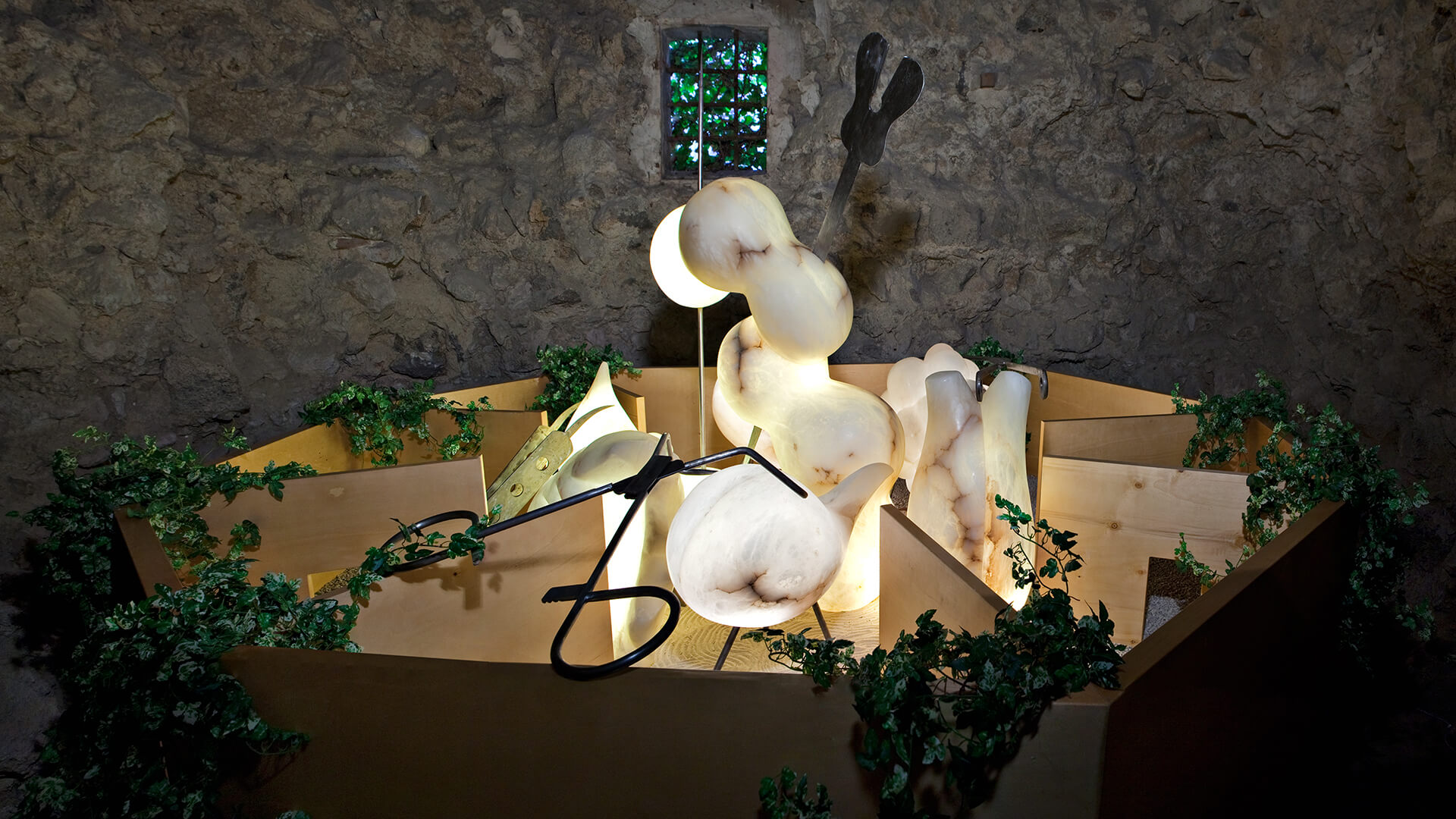
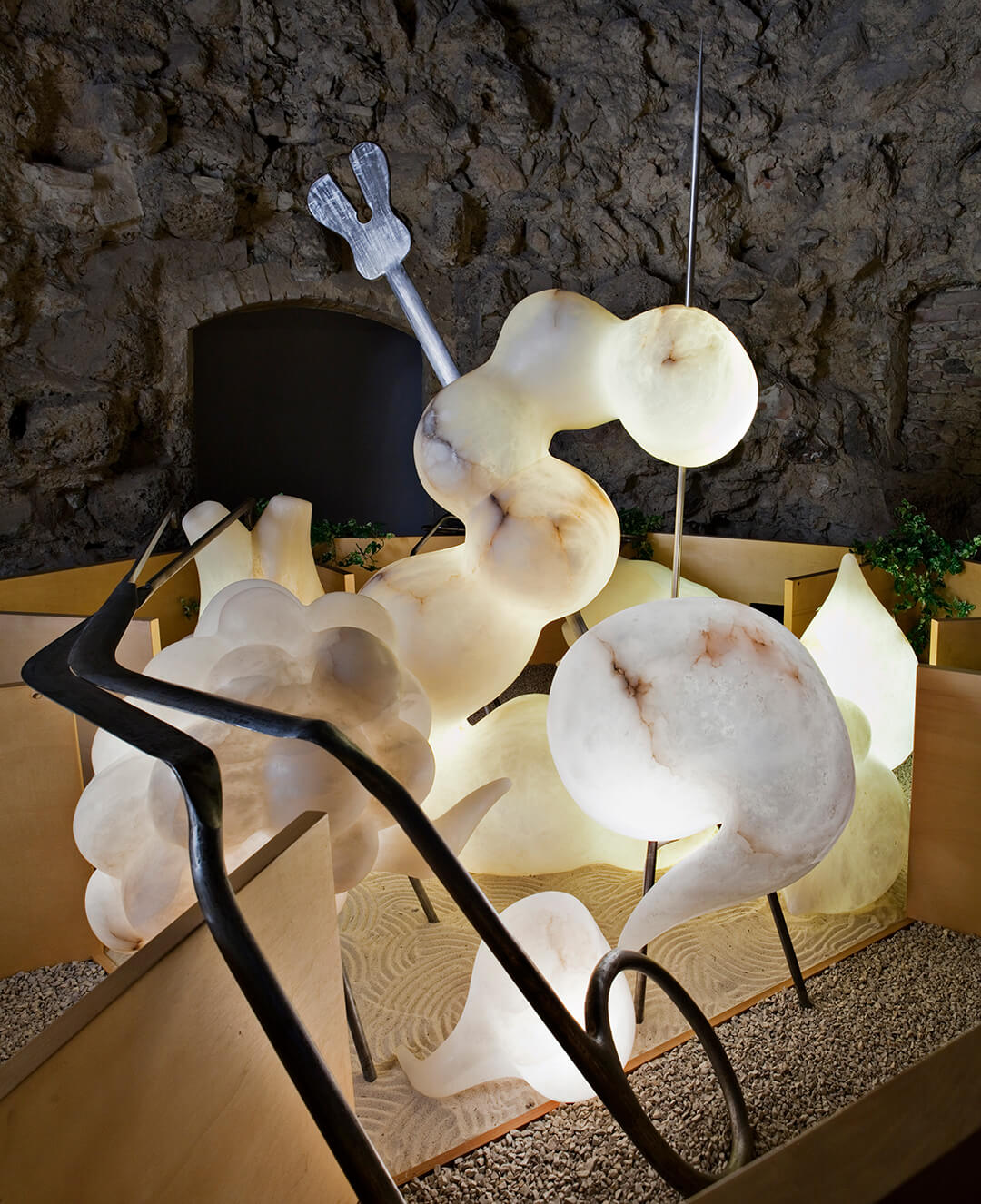
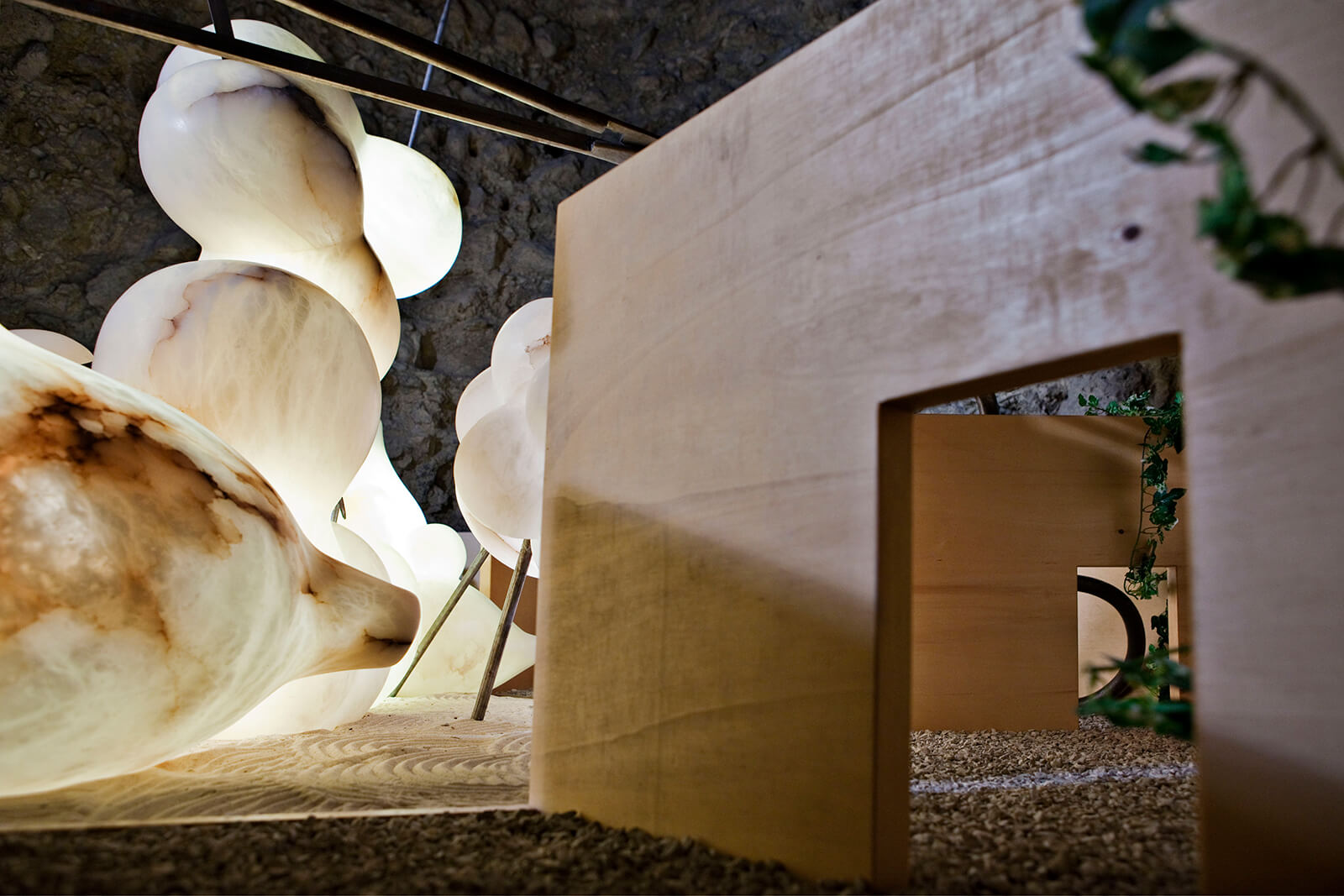
A key work in the exhibition is Zen Garden (2000), created for Zhen’s first solo exhibition at Galleria Continua in San Gimignano. Part of a ‘cycle of works centred on the representation of the human body and its internal organs as a space of transformation’, the installation juxtaposes the connective force of Qi with the perceived incompleteness of Western medicine. Within a polygonal wooden fence, plants, sand, gravel and luminous white cocoons are pierced by surgical instruments, creating a powerful meditation on fragility, healing and balance. A small wooden door hints at the vision of a micro–macro Zen temple—one Zhen had dreamed of building in the Tuscan hills. “Zen Garden is a complex work that invites reflection on the body, on transformation, on the relationship between individual and environment and on the search for inner balance through the fusion of different elements,” the gallery notes.
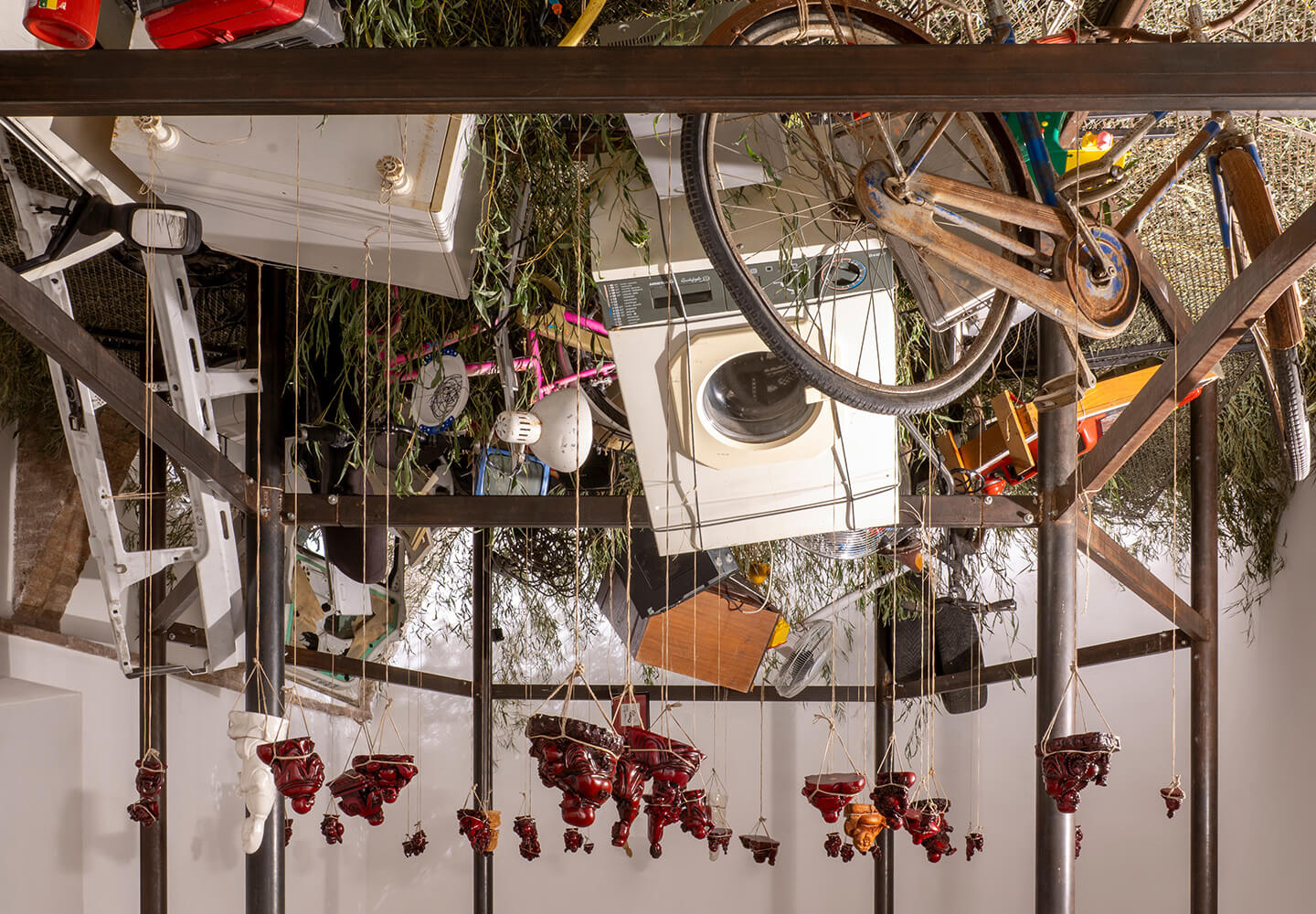
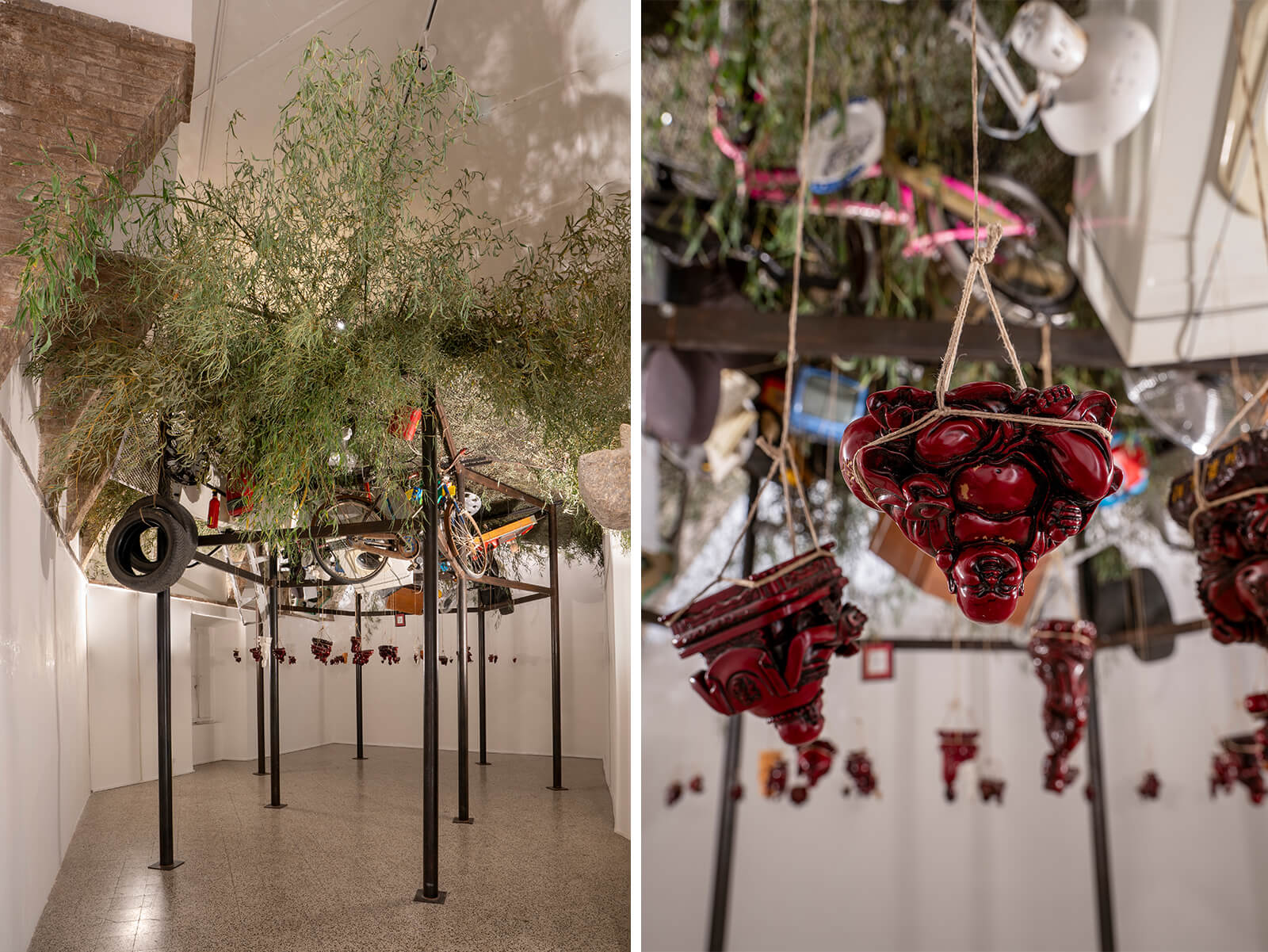
Also featured is the installation Fu Dao / Fu Dao (1995). “In Chinese, the pronunciation Fu can mean both ‘happiness’ and ‘Buddha’, while Dao means both ‘upside down’ and ‘arrival’. The expression Fu Dao / Fu Dao can therefore be interpreted simultaneously as ‘Buddha upside down’ and ‘arrival of happiness’,” Continua explains. Playing on linguistic ambiguity, the work reflects on fortune, spirituality and cultural identity, embodying the tension between tradition and modernity, East and West.
The exhibition takes its title from Un Village sans frontières (2000), an installation composed of 99 children’s chairs collected from around the world and transformed into candles. “The fact of using candles (in China, the candle is a symbol of a man’s life) has a special meaning: to build a village without borders, that it is up to us to begin—declared Zhen—but our hope is always directed to future generations,” concludes Continua.


What do you think?