|
Ideas move like spores—released, dispersed, carried by unseen currents. They travel across sundry geographies and disciplines, settling into cracks, resting in latency, waiting for the right (often resistive) ecological, political and spatial conditions to activate them. Yet spores require pores, like in fungi, to regulate exchange as apertures through which life circulates. Within art and design, porosity performs a similar function. It determines what enters, what lingers, what transforms.

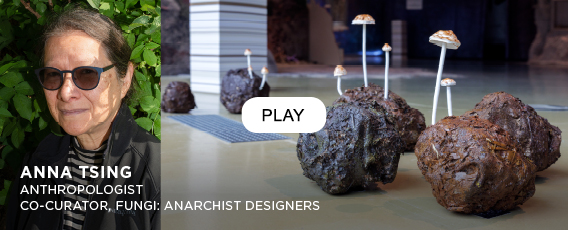
To think creatively, then, is to think about permeability as thresholds, gaps and the in-betweens. With porosity being not merely an aesthetic strategy but a political and ecological position, this dispatch maps such projects: we speak with anthropologist Anna Tsing to unpack the ecological thinking in the show 'FUNGI: Anarchist Designers', which proposes
|
|
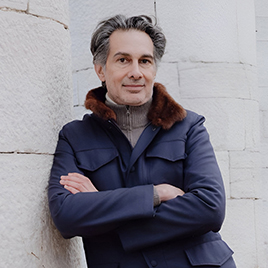
fungal networks as counter-models to authorship and hierarchy that are adaptive, decentralised and thriving in precarity. In Artizon Museum's 'Jam Session', a fluid understanding of place and past extends the condition of thresholds where identity is neither fixed nor singular; it is in-between, shaped in the act of becoming. And an exclusive conversation with Amin Jaffer, appointed curator for India's official outing to Venice Biennale 2026, asks how a national pavilion might act less as a container and more as a membrane allowing histories and futures to cross-pollinate.
This week, we consider bold ideas and questions as spores that persist, should our institutions, disciplines as well as imaginaries lose porosity.

|