Design12 mins. read
Weaving myths of our more-than-human futures through The Craftocene
by Mrinmayee BhootMar 06, 2026



by Mrinmayee BhootPublished on : Feb 13, 2026
[In] times like these
to have you listen at all, it's necessary
to talk about trees.
- What Kind of Times are These, Adrienne Rich (quoted at the end of FUNGI: Anarchist Designers)
Who could look at a tree, its hefty trunk anchored into the soft earth, its branches stretching to reach the sky and think for a second that humans alone were sovereigns of the Earth? Man and Nature—those perpetually opposed civilisational first principles—were constructed to serve the enterprise of modernity, as Bruno Latour reminds us. Their schism continues to grant Man the authority to plunder ecosystems, to relegate the natural to the realm of the mute and inanimate, no more than a resource. In the wake of Earth’s sixth great extinction, through devastating war and calamitous natural disasters, when twisted notions of progress have failed us, we need new definitions to trouble the existing.
“To be an animal is to be an individual, and also a part of life across the world.” To live in this world is to occupy two bodies, Daisy Hildyard postulates in her book, The Second Body (2017). As much as our actions are implicated in the worldly, our task, as Donna Haraway shows us, is to “become capable, with each other in all of our bumptious kinds, of response”. Heroism is botulism, after all, Ursula K. Le Guin notes in her Carrier Bag Theory. It is then perhaps time that we do away with the heroic posturing of the ‘capital m’ Man, find new matters to think with, not for or of; for it matters what stories tell stories. The mention of all these thinkers—like mushrooms—is deliberate. The only way to introduce Anna Tsing, and by extension her capacious research work, is by situating it in dialogue with the many scholars who have influenced her, been influenced by her and in strange knotty tangles influence fields of study with her. To think with Tsing is to agree to situate yourself in the world, to let it wash over you, to ensnare you in its worldly networks, to dirty any assumptions you hold and to go on to create new entanglements. It is to think ‘mycelially’.
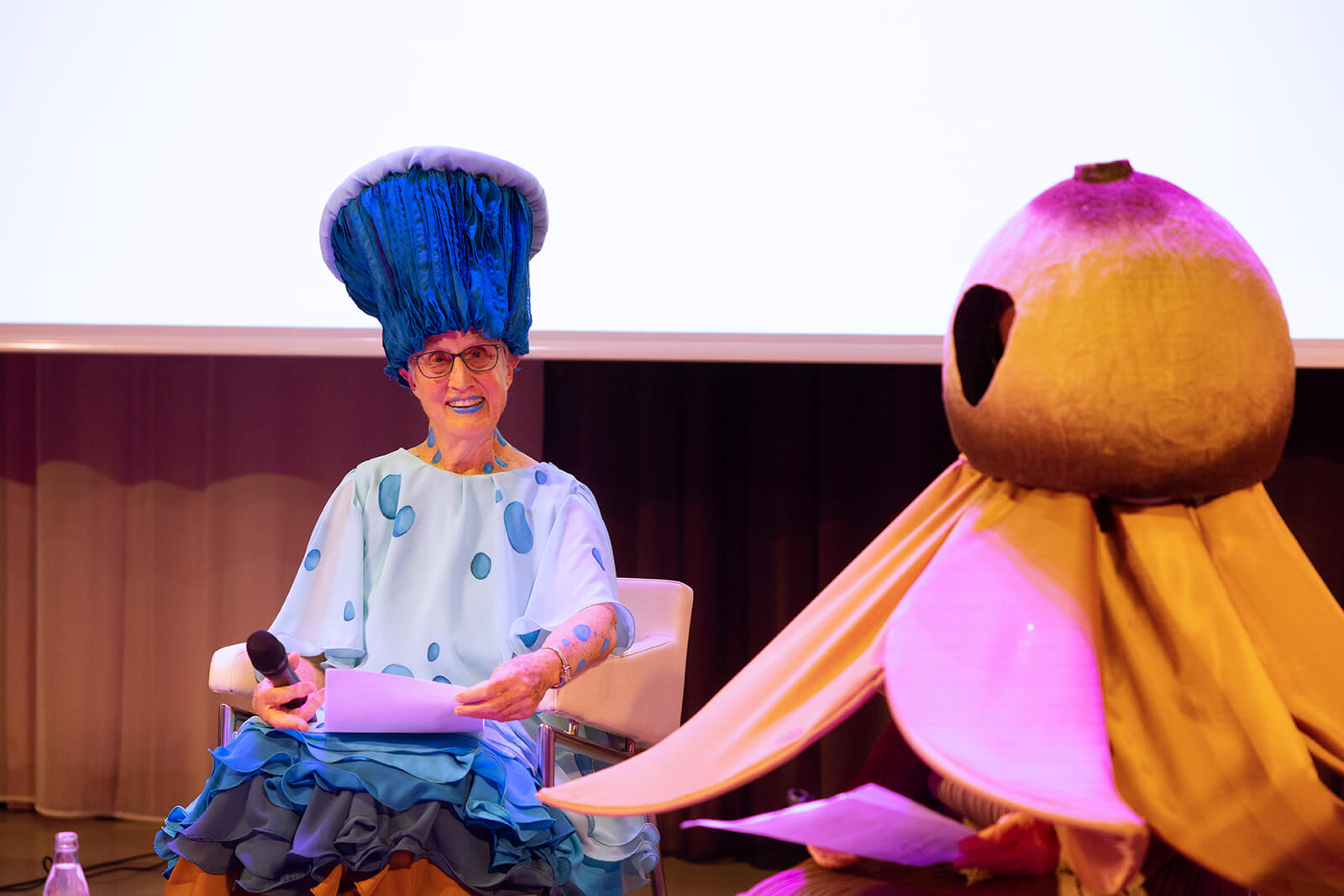
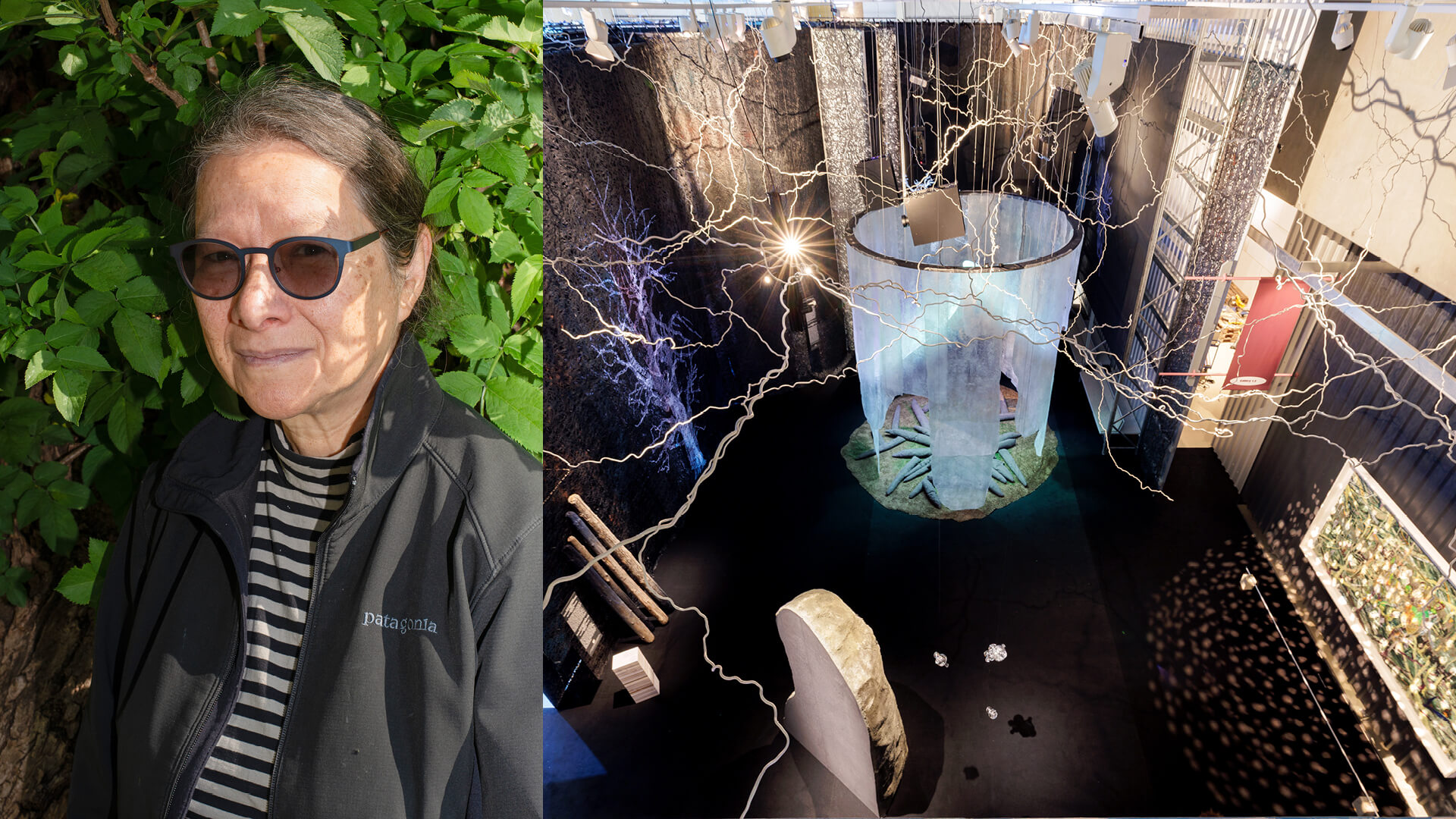
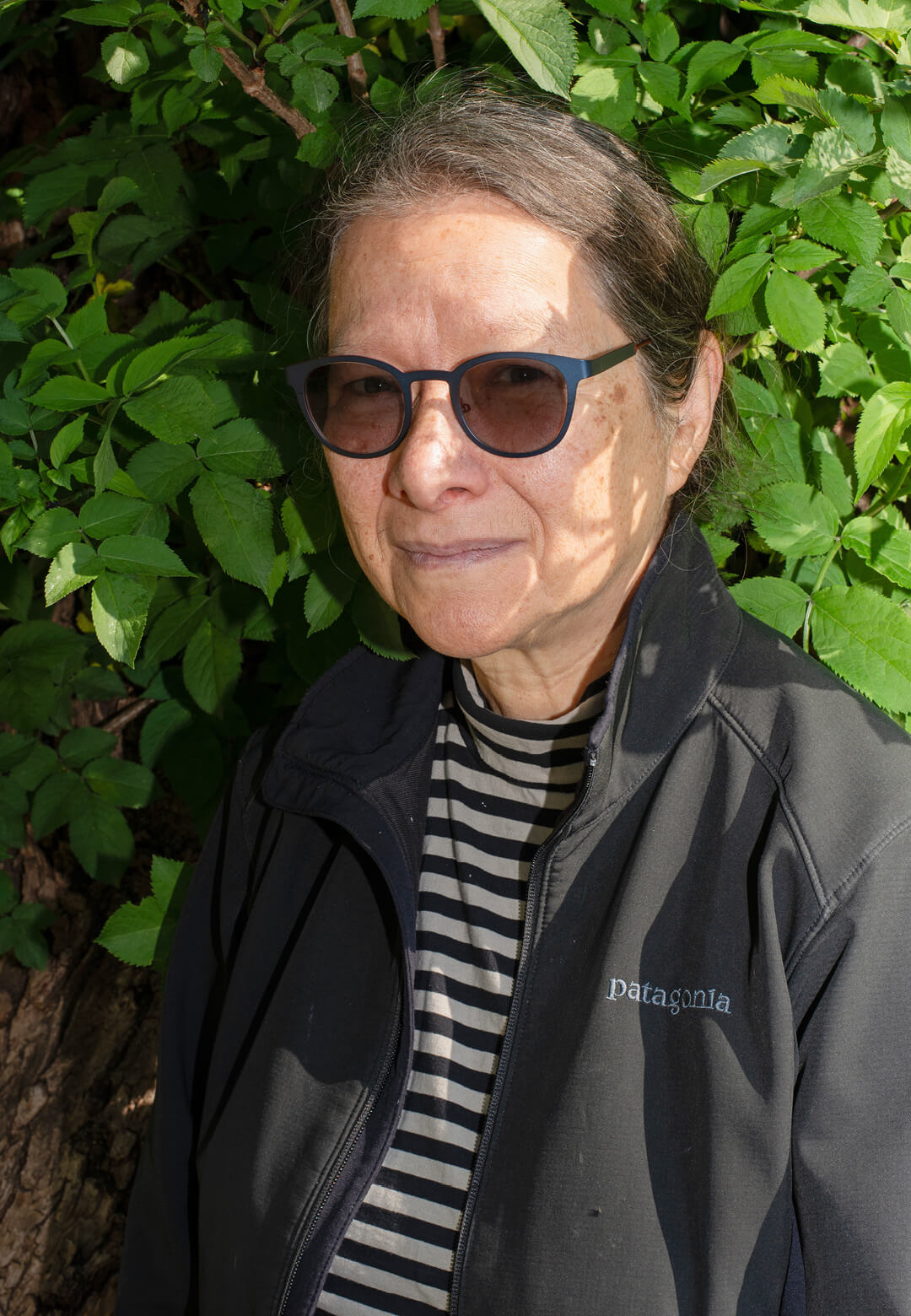
Tsing’s most recognised work has centred on the matsutake mushroom and its incomprehensible capacity of thriving in precarity, of cropping up in landscapes least expected. Through the book The Mushroom at the End of the World (2015), Tsing calls for a means of engaging with planetary breakdown by looking at particular conditions and those inexplicable stories that upend order. As she notes, “The uncontrolled lives of mushrooms are a gift—and a guide—when the controlled world we thought we had fails.” Design, in pursuit of this notion of control, of ascertaining that human activity can be delineated through neat systems, must then find new methodologies. It’s with this charge that Tsing, professor of anthropology at the University of California, Santa Cruz, and her collaborator Feifei Zhou, designer and founder of the agency terriStories, have conceived the ongoing design exhibition at Nieuwe Institute, FUNGI: Anarchist Designers.
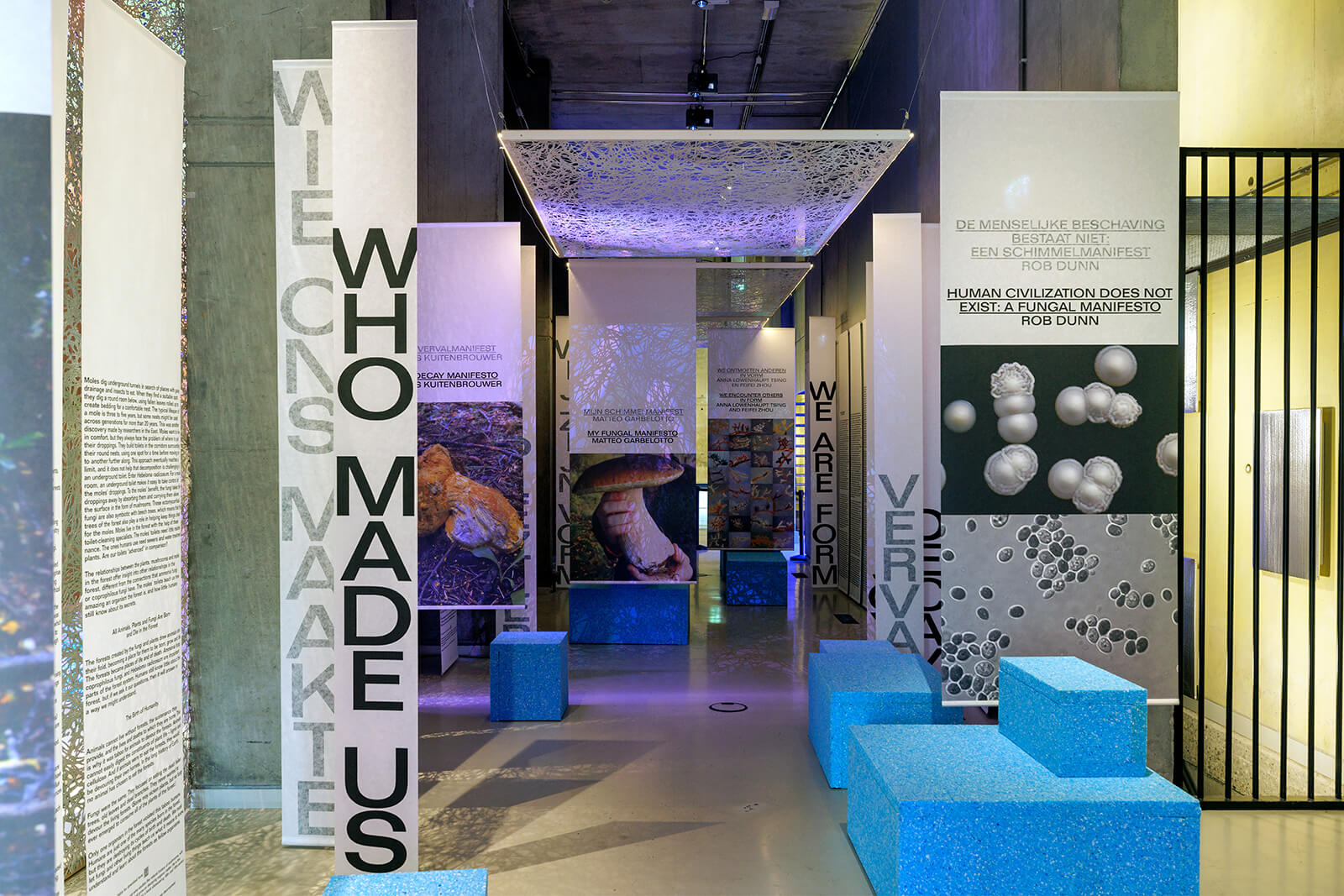
The curators build on the notion that these enigmatic beings challenge our base desire to catalogue, curate and clarify the world, moving away from the championing of fungi in contemporary architecture and design as a trendy, inert material—one that is biodegradable, all-natural; one that is meant to unsettle ‘convention’—but only on the surface. Instead, the very uncontrollable nature of mycelial networks calls for messier associations with a global order that is already inexorably complex. By presenting fungi as self-sustaining organisms that thrive in unique, multi-species environments, and especially in the detritus of capitalism, the exhibition opens up new possibilities for design to engage with. In conversation with STIR, Tsing notes, “We need [new] kinds of language to move away from the kind of exceptionalism that makes us believe that humans can live by themselves, that humans can jump into a spaceship and go to another planet and be perfectly fine and leave the Earth a mess.” It’s this idea of exceptionalism, after all, that has deluded humanity into setting faith in the idea of unfettered, machinic progress and the surety of scalable processes to ensure man’s forward march.
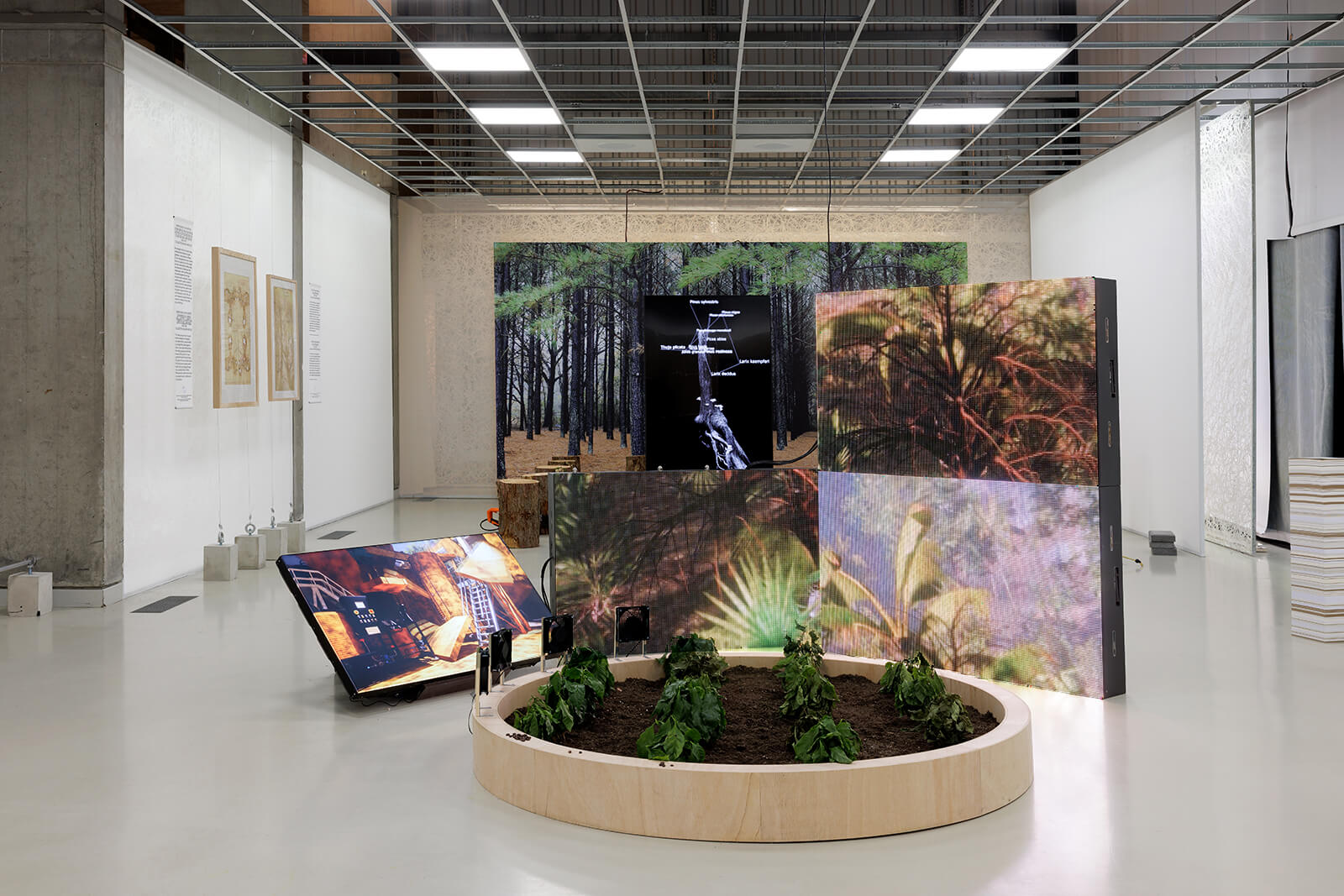
For the showcase, most artworks and installations on display were specifically created. Artists and designers collaborated with anthropologists, infectious disease specialists, ecologists and even amphibian experts to make obtuse scientific data and research intelligible to broader audiences. The exhibition is divided into separate sections, each one portraying the unruly protagonists of the show in different lights. In the first gallery, Break, it actually becomes an antagonist, attacking kitchens and hospitals, erupting in places it is not welcome, disrupting our best efforts towards ‘purity’. For instance, an installation by ecologists Ivette Perfecto and Zachary Hajian-Forooshani and the artist Filipp Groubnov maps the spread of coffee rust, prevalent in industrial, monocultural coffee plantations throughout Latin America.
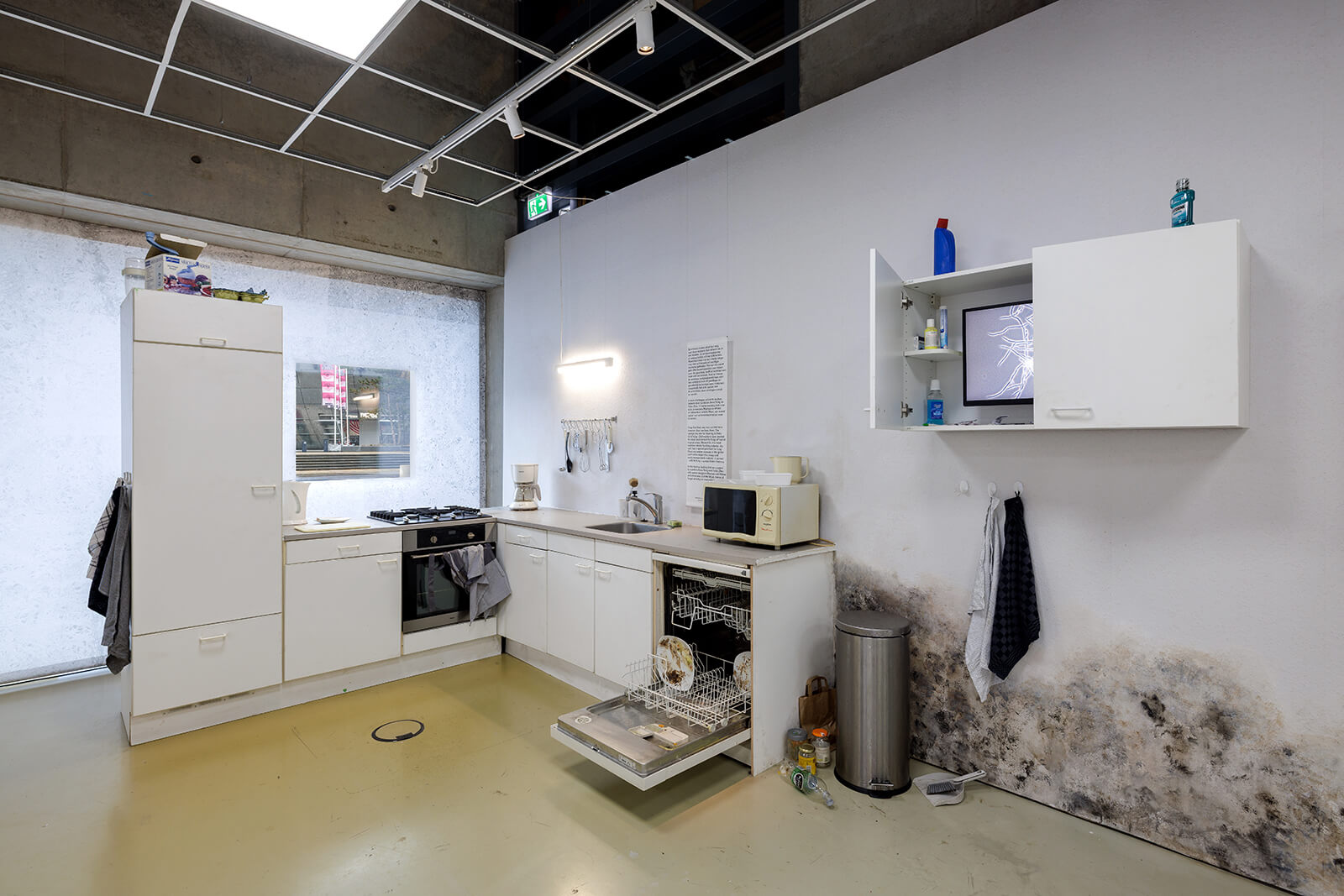
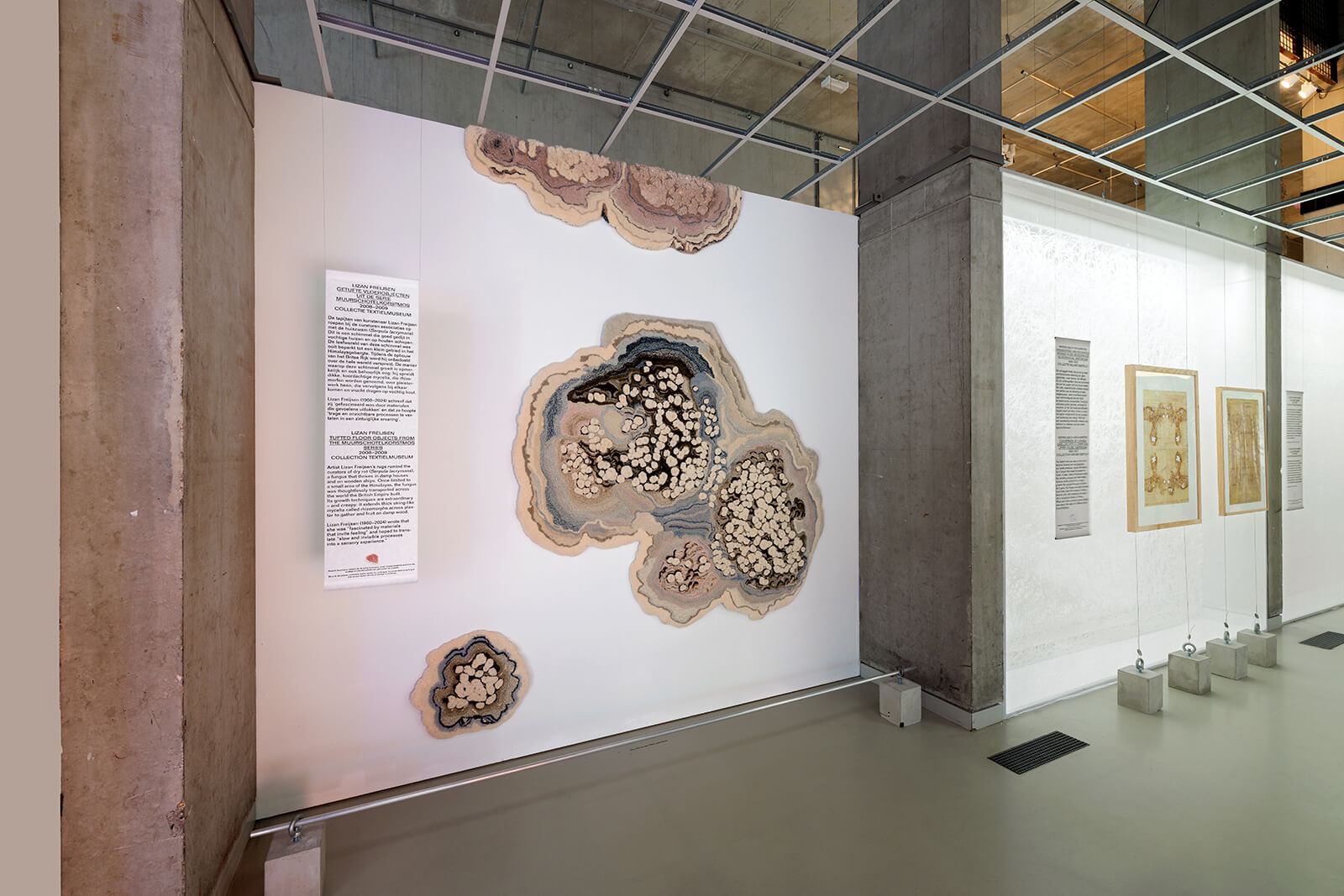
The subversive nomenclature that the show employs brings to mind mushrooms in popular culture and their portrayal as lethal entities (for the most part). Whether you’ve encountered them in the popular video game/television series The Last of Us or as medusoid mycelium in the show A Series of Unfortunate Events or the deadly Amanita phalloides in the book We Have Always Lived in the Castle (1962), mushrooms can be fatal. Left unbidden in a damp, almost vegetal space, a mushroom sprouted under the sink of a flat I rented. Horrified, I stamped it out. It was out of place; it felt dirty for it to grow there. It grew back twice before it never did again. In the meantime, I grew very sick. Mould in my lungs, I never returned. The exhibition, appreciably so, doesn't shy away from this association, welcoming mushrooms and fungi in all their life-giving (and taking) forms.
Similarly, the second gallery, Assassinate, tells the story of the deadly mycelium in the air, expounding that the will to purify, to sanitise and to simplify only leads to devastation, as witnessed in single crop plantations. For instance, in Of Boar and Fungi: A Nuclear Love Affair (2025), Bettina Stoetzer, Asa Sonjasdotter and Rotterdam-based art collective Berkveldt present a video installation depicting how radioactive matter from the 1986 Chernobyl disaster remained in circulation far longer than calculated, all because of boars hunting for truffles.
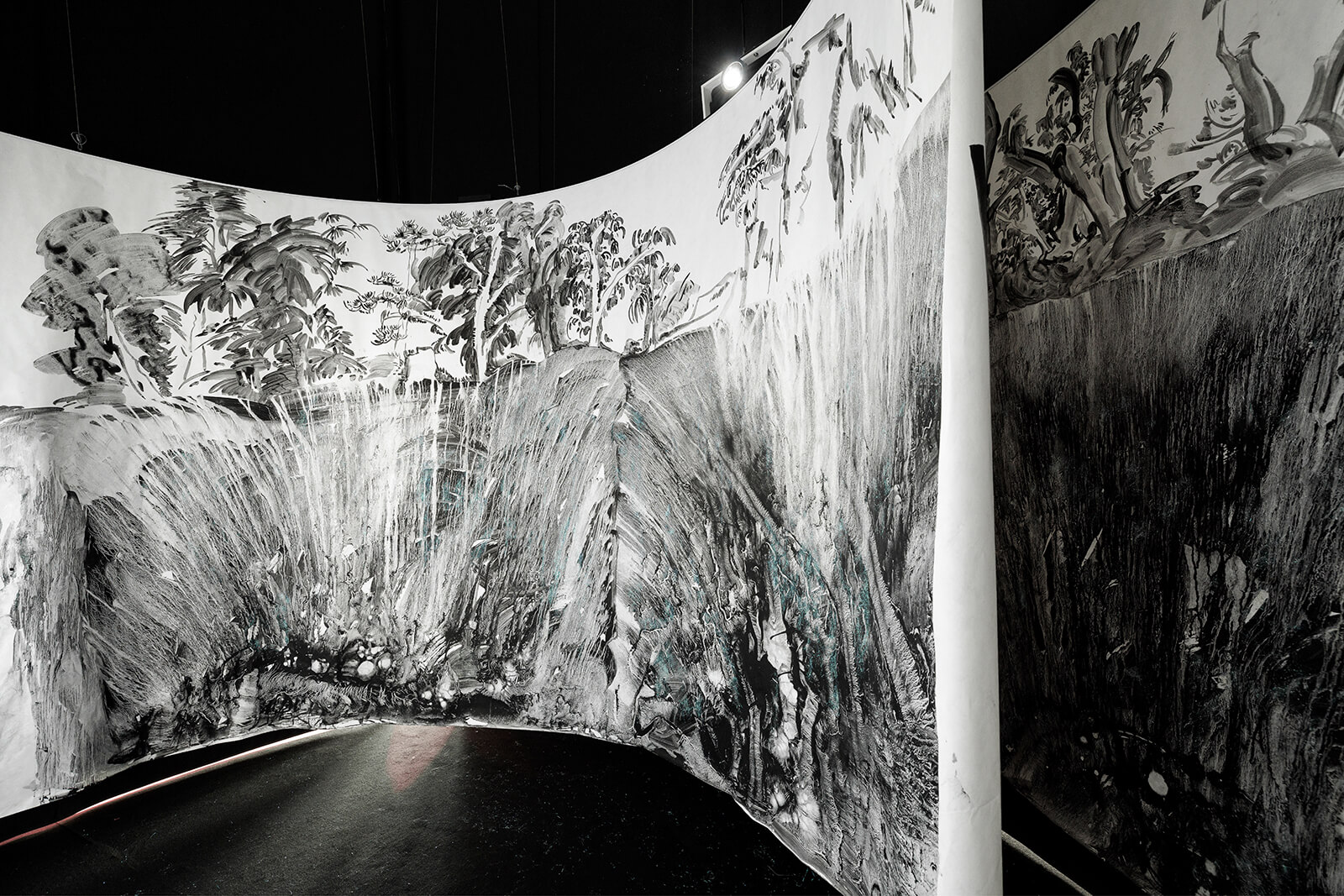
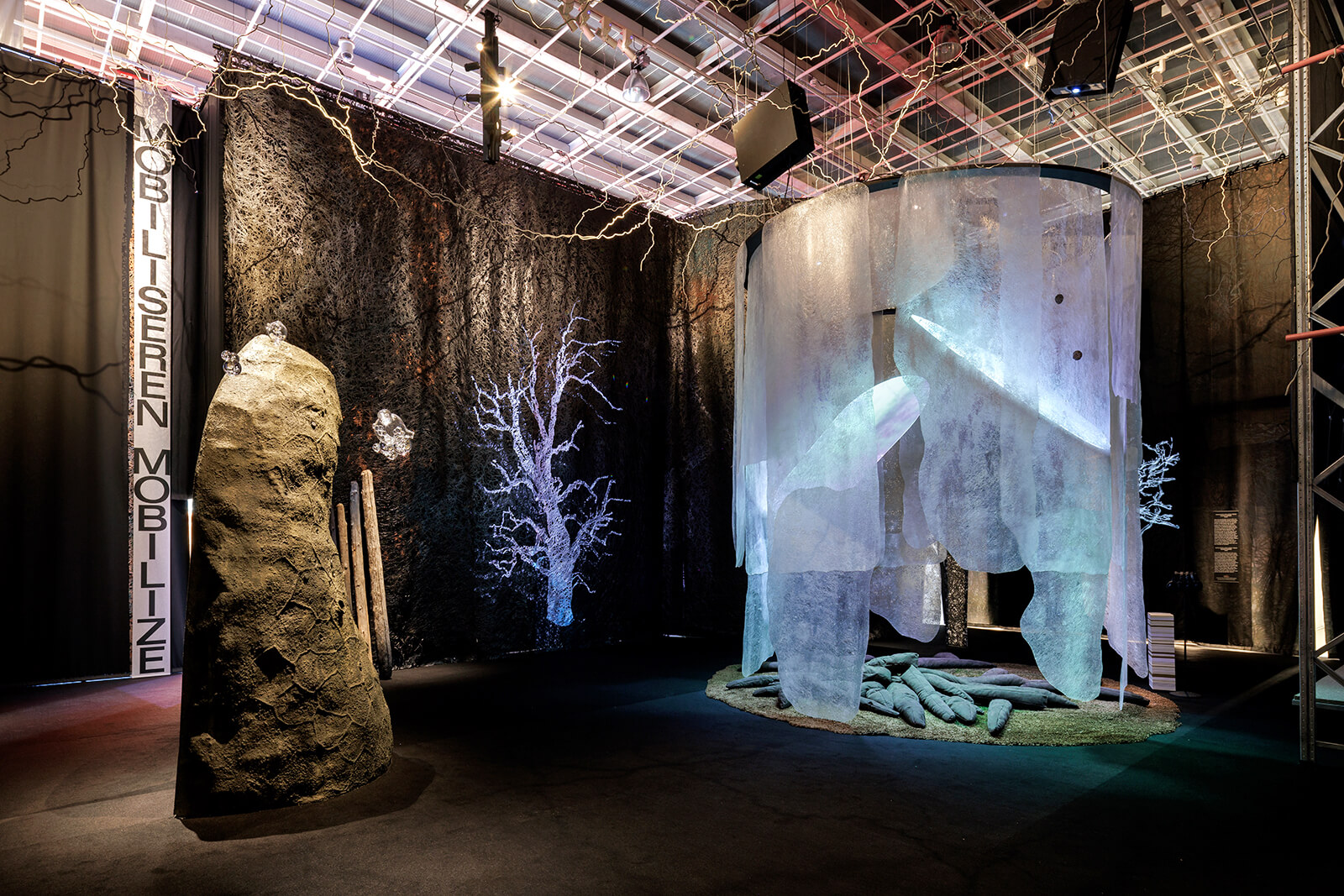
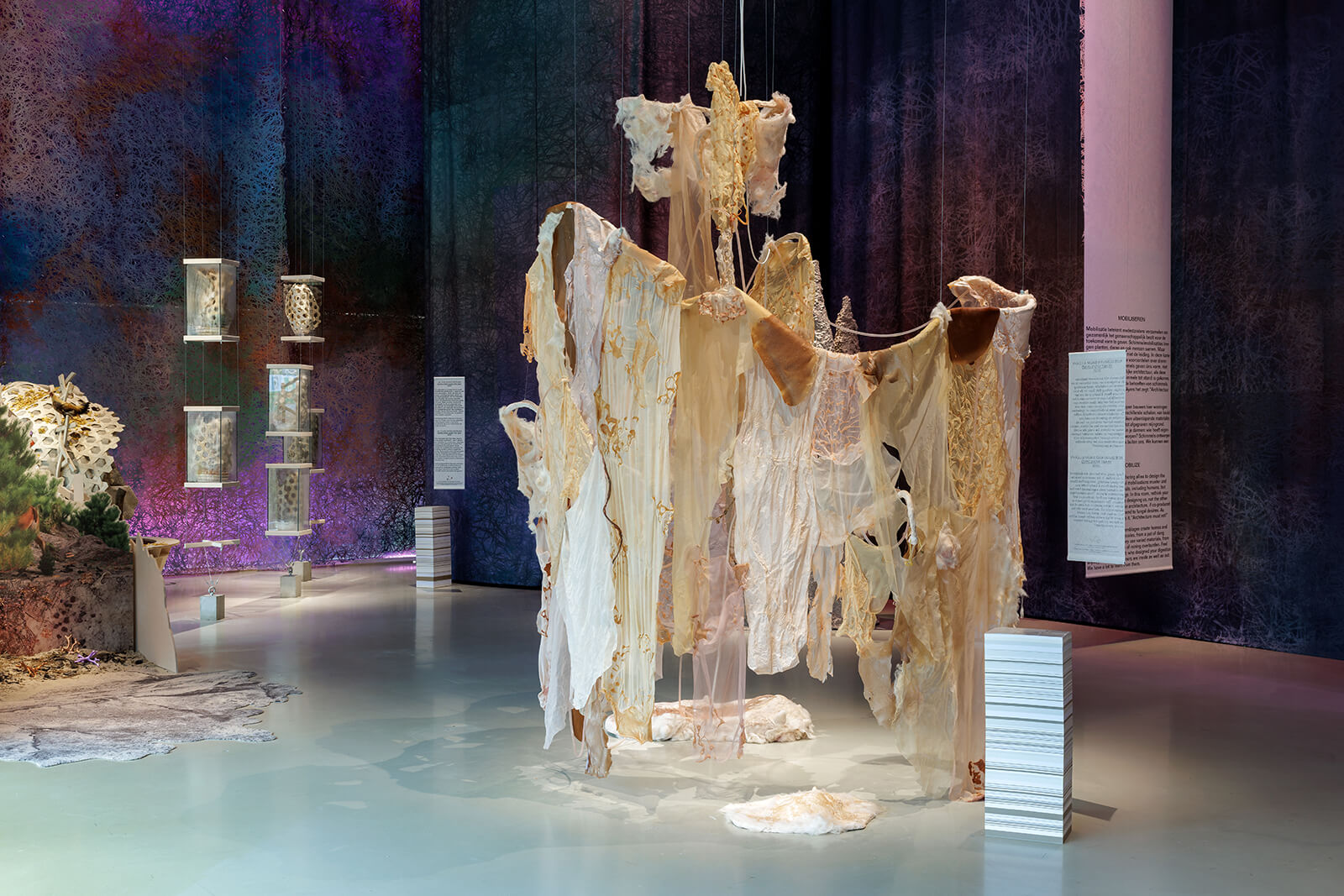
On the contrary, the next gallery, Mobilize, takes on a more optimistic note, showing how fungi and humans can co-exist. For instance, ecologist Rob Dunn and artist duo Baum and Leahy’s yeast worlding (2025) spotlights the productive, symbiotic yeast present in the human body. Taking on a more active role, in Danish architect Phil Ayres’ installation, Architecture must rot (Chair for Biohybrid Architecture, 2025), fungi become the primary participants in ecological design. Other artworks and projects on loan use the visual language of mycelium to turn Nieuwe Instituut’s staid, precise galleries into a teeming landscape. Live tree stumps taken over by fungi that will then nourish the forest floor remind us of the fragility of life, but also the vitality of co-existence; ‘redesigned’ archival documents demand that institutions such as the Rotterdam-based museum rethink what decay means for archival material. Rather than calling the work that fungi do in order to produce worlds an act of design, the curators term this performance anti-design. The results are open-ended, focusing on process rather than outcome, already a more forbearing lens with which to view installations/projects in a design museum.
The show then hopes to emphasise that fungi and the worlds they create are not lethal alone. In recent years, for instance, mushroom foraging has gained popularity, a consequence no doubt of the desire to return to nature prompted by the pandemic. While their presence in design indicates a somewhat misguided concern for sustainability, contemporary culture has referenced them as metaphors for our fragile but intrinsic relationship with natural landscapes. Apart from their abundant outbreak in contemporary art, surprisingly, they most recently came to my attention in indie artist dodie’s album cover for Not For Lack of Trying (2025), mirroring the struggle with uncertainty she writes about in the lyrics. In Polish author Olga Tokarczuk’s latest novel, The Empusium, the natural world (mushrooms included) is a vital force, bringing forth a sense of the mysterious and sinister, emphasising her fascination with the tussle between life and death, the natural and the manmade. In an earlier novel, House of Day, House of Night (1988), Tokarczuk writes, “If I weren't a person, I'd be a mushroom.”
Through the exhibition and her research, Tsing has always emphasised the necessity of wonder towards what is not human. It’s her research on matsutake that guides the principles and hopefully, the lessons one will take away after witnessing the show. “Our first step is to bring back curiosity. Unencumbered by the simplifications of progress narratives, the knots and pulses of patchiness are there to explore. Matsutake are a place to begin: however much I learn, they take me by surprise,” she asserts in The Mushroom at the End of the World. Exploring the particular, unlikely case of the mushroom prized in Japanese culture, Tsing argued that to live in the aftermath of a capitalist society, having plundered that which was available to us, we must make do with precarity.
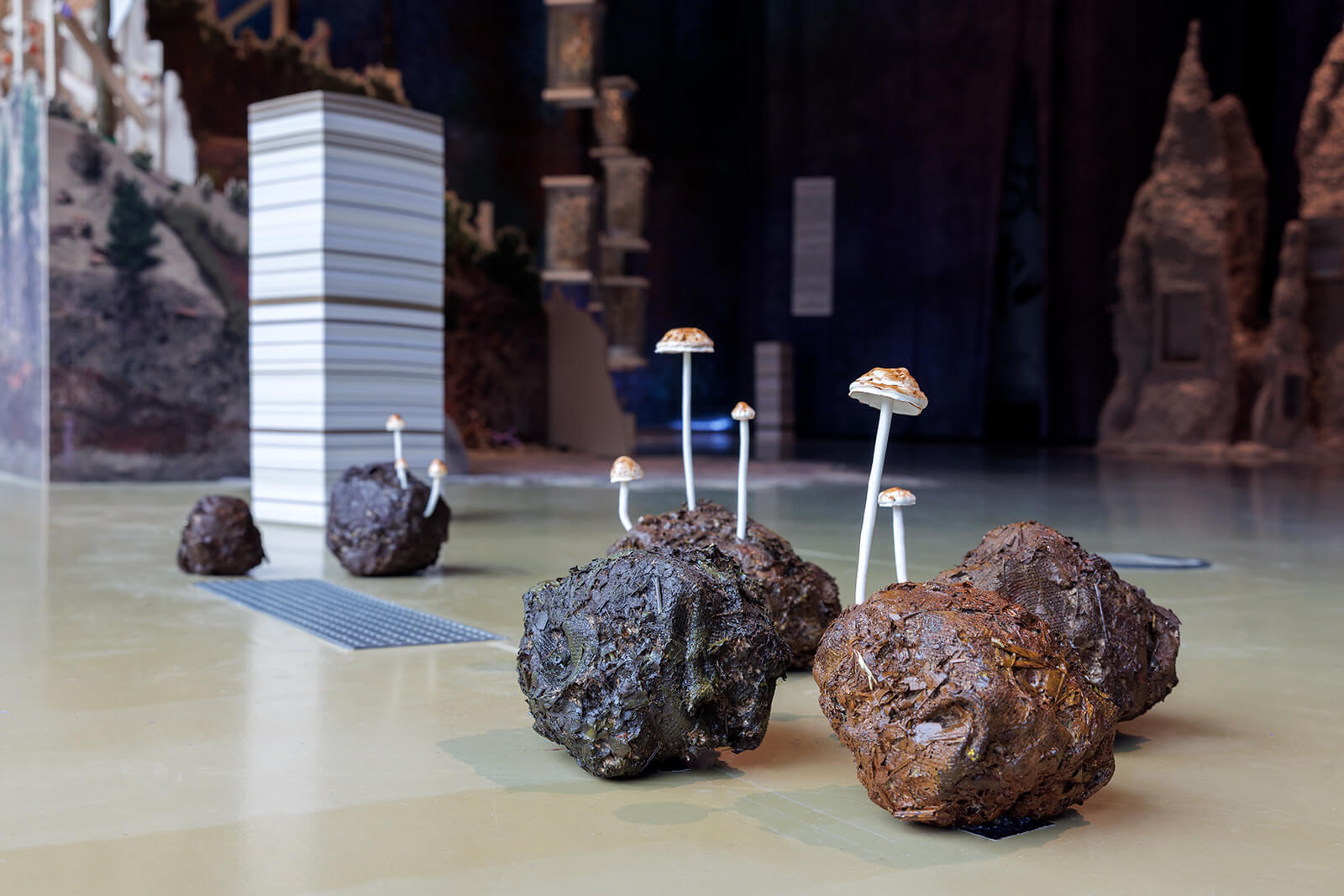
The matsutake exists only because of human intervention, thriving in industrially devastated landscapes, and therein lies the hope. They are not cultivated, but are harvested by informal, almost spontaneously appearing communities. The book reminds the keen reader that livability is only experienced in places—in the ways in which we (human and non-human alike) encounter each other, the ways in which we change each other. Tsing expands on this notion—that of patchiness or the specific responses of various species to their contexts—with Zhou in a project they named Feral Atlas.
Started as an open-access website and condensed into the volume The Field Guide to the Patchy Anthropocene (2024), the project brought together seventy-nine field reports from scientists, humanists and artists telling stories of ‘feral’ ecologies; that is, ecologies that have been encouraged by human-built infrastructures but have now developed and spread beyond human control. In it, the authors (and curators of the show) dialogue with each other, enriching each other's expertise, thus calling for unexpected collaborations in the age of the Anthropocene calling on us to not only look at, but listen to, taste and smell the world around us.
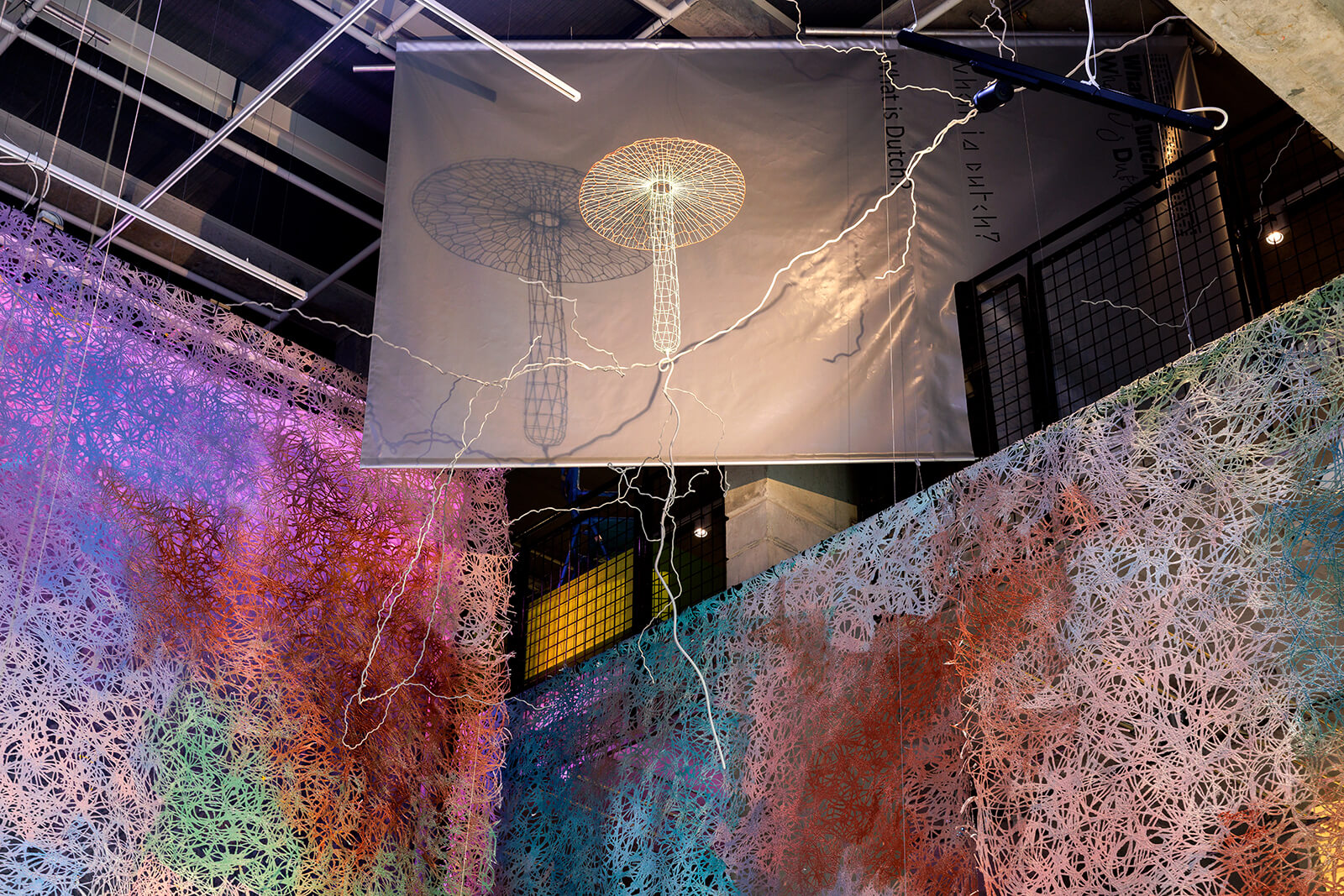
In thinking through precarity, in advocating for the presence of unlikely protagonists and highlighting the virtues of global circulation and migration, Tsing’s research practice reaches far beyond her chosen field of anthropology. It is vital, Tsing reminds me in conversation, that we learn to sit with the contradictions and the mess we have made. That we make kin despite economic and ecological ruination. It might be exactly what we need to live today. Life is made in relationships after all. And it is the work itself, the noticing of bugs, paying attention to birdsong, smelling the matsutake and the presence everlasting of the stories we tell about these that will be needed. Like spores, let them lodge in your lungs.
Our kind multiplies:
We shall by morning
Inherit the earth.
Our foot's in the door.
- Mushrooms, Sylvia Plath (quoted at the beginning of FUNGI: Anarchist Designers)

by Jincy Iype Oct 15, 2026
STIR explores craft, material intelligence and people shaping Indian design through dialogues with Design Democracy’s co-founders and the curators of its special exhibitions.
by Pranjal Maheshwari Oct 13, 2026
Through furniture, art and films, the showcase at the Ian Potter Centre in Melbourne advocates for biophilic material cultures as an antidote to planetary degradation.
by Pranjal Maheshwari Oct 12, 2026
The exhibition reimagines the 20th-century Scottsville residence of the American sculptor and his partner, ceramicist Nancy Jurs, curated by their daughter Alison Castle.
by Chahna Tank Oct 08, 2026
Javier Guzman Cervantes and Ulises Morin Arzola tell STIR about their ‘open code’ approach to design, working through a process of stockpiling and the idea of ‘queering’ materials.

make your fridays matter with a well-read weekend
Enter your details to sign in
Don’t have an account?
Sign upOr you can sign in with
a single account for all
STIR platforms
All your bookmarks will be available across all your devices.
Stay STIRred
Already have an account?
Sign inOr you can sign up with
Verification link sent to check your inbox or spam folder to complete sign up process
Tap on things that interests you.
Select the Conversation Category you would like to watch
Please enter your details and click submit.
Enter the 6-digit code sent at


Anna Tsing on the mutinies and aberrant nobilities of FUNGI: Anarchist Designers
by Mrinmayee Bhoot | Published on : Feb 13, 2026


 Sign in with Google
 Sign in with email
What do you think?