Art08 mins. read
India Art Fair 2026 and more in Delhi: The STIR list of must-see exhibitions
by Srishti OjhaFeb 04, 2026



by Srishti OjhaPublished on : Feb 11, 2026
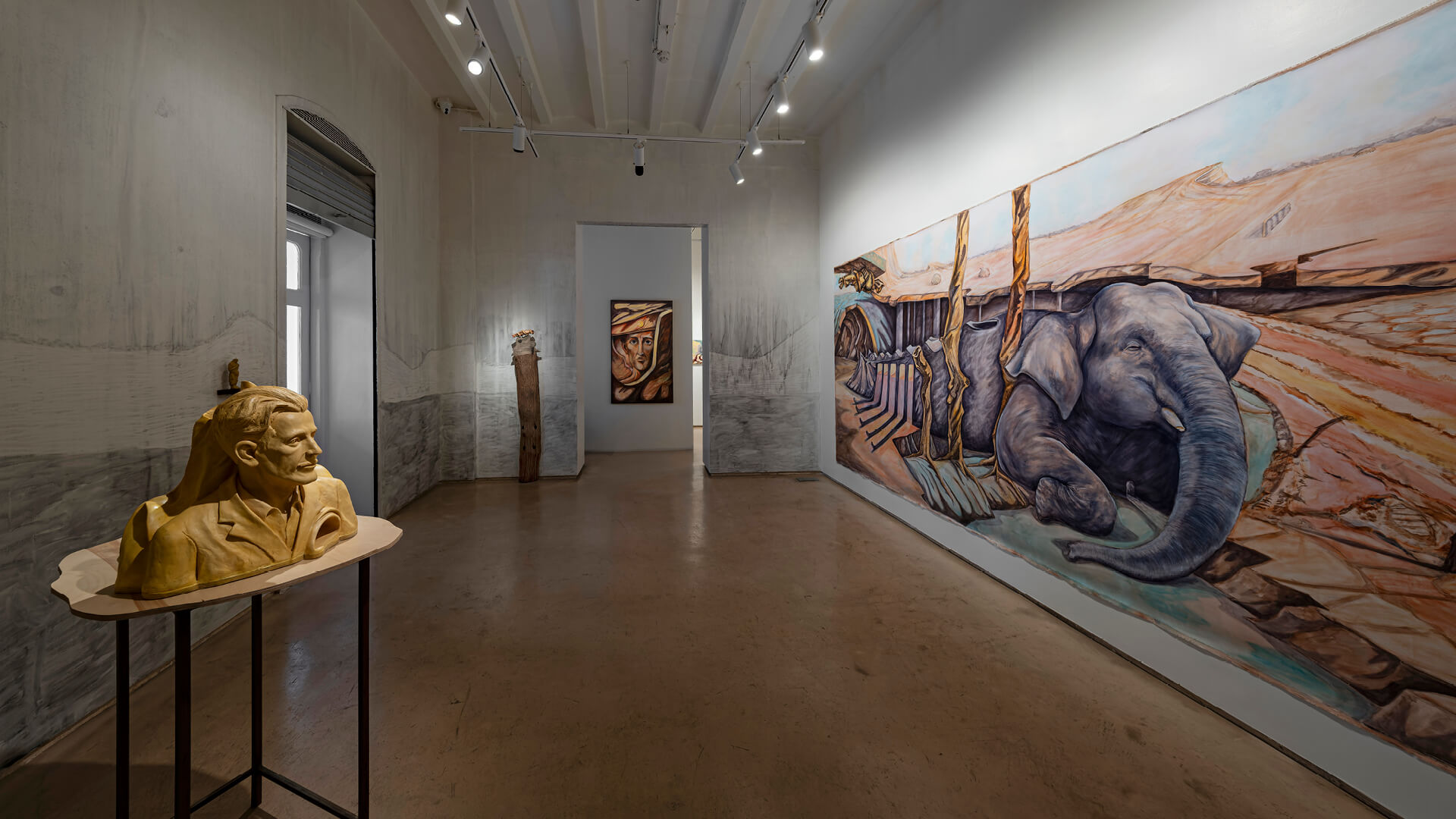
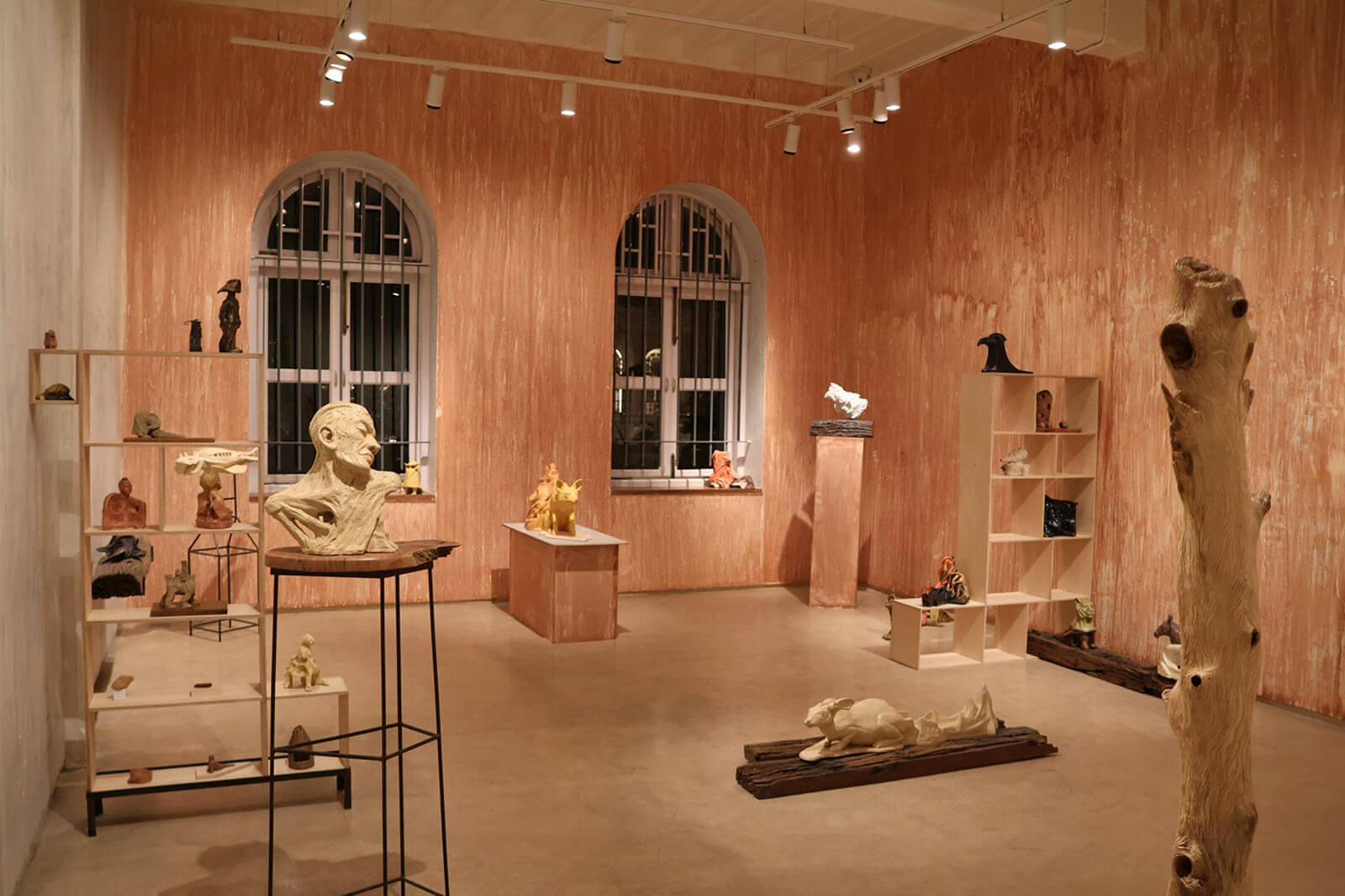
Small figures cut with columns and walls curl in on themselves, disembodied hands and animal paws emerge from the wall, human busts reveal the gnarled, hollowed out interior under their façade. Everywhere, animals, humans, buildings and machines merge like troubling, painful mutations. These hybrid creatures are torn apart, inflicted with hollowness and growths made by a violent, uncaring hand. This is Lone Runner’s Laboratory, Indian multimedia artist Prabhakar Pachpute’s first solo exhibition at Experimenter gallery’s Mumbai branch in Colaba. Pachpute is known for his immersive paintings that reflect the impact of extractive mining on the environment and human psyches, works that are inspired by his hometown in Chandrapur, dubbed the ‘Black Gold City’ for its abundant coal seams and mining industry. This latest exhibition comes after a period of pause and reflection for the artist and seems to mark the beginning of a new chapter. It is a dizzying, disconcerting, half-awake blend of familiar motifs and characters, contemporary literary references, nightmarish, amorphous figures and an unflinching look into interiorities characterised by fear, guilt, isolation and the death of one’s own subjecthood. While Lone Runner’s Laboratory includes the landscapes Pachpute is known for, this time the focus is more psychological than physical.
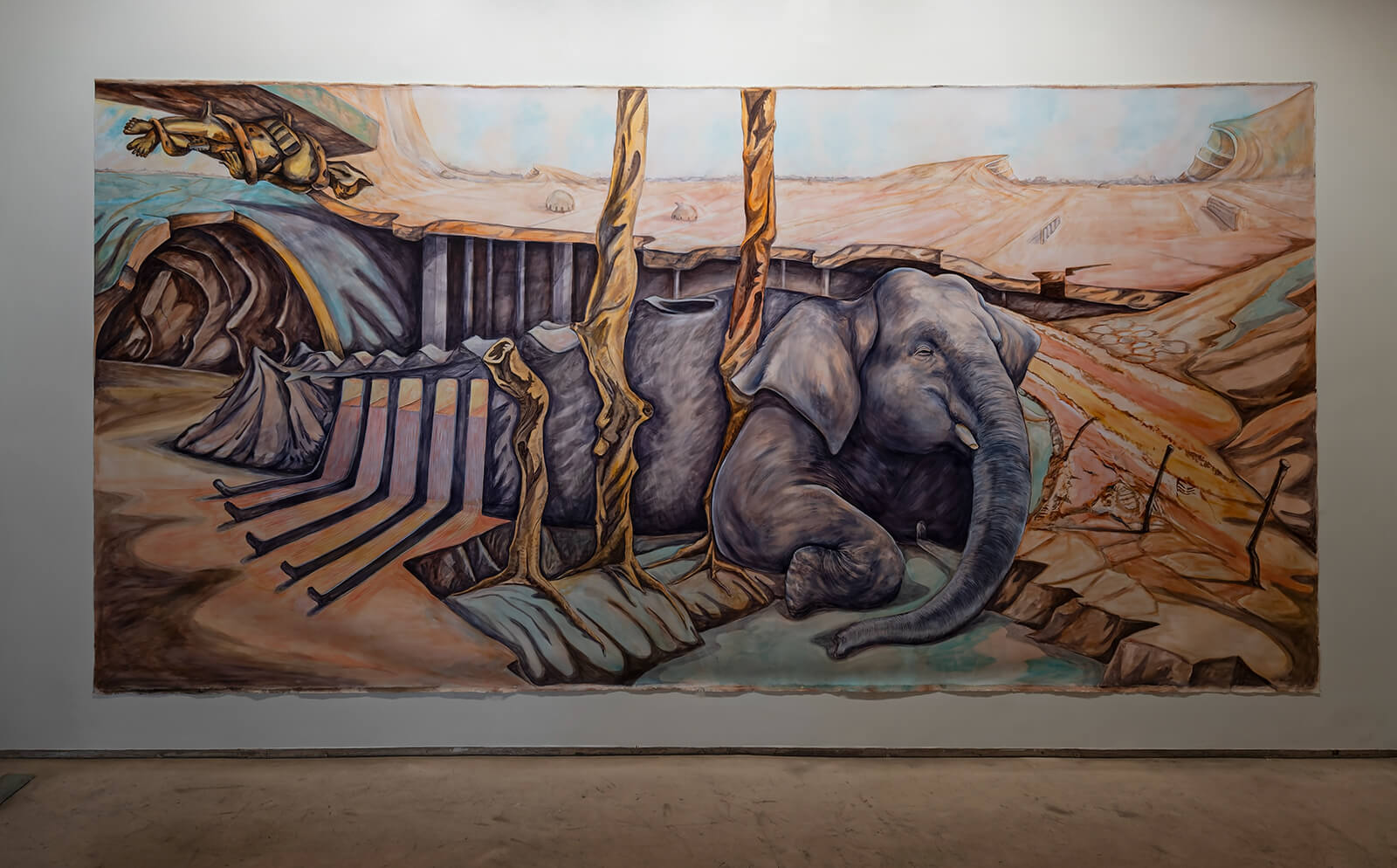
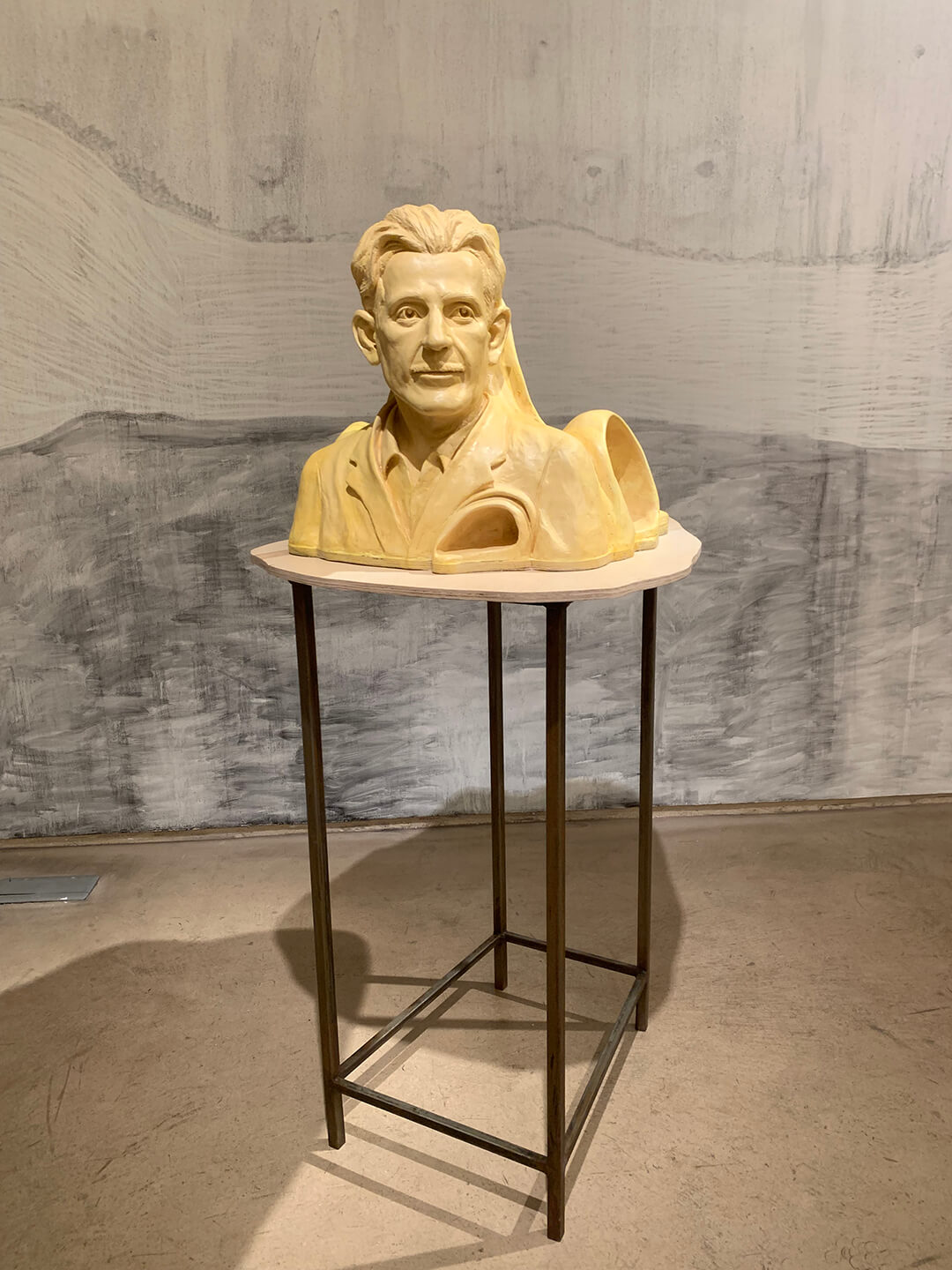
The largest piece in the exhibition is a painting that covers an entire wall of the gallery, Looking at shooting an elephant after Orwell (2025), is inspired by George Orwell’s essay Shooting an elephant (1936), in which he describes his experience dealing with an aggressive elephant during his time as a police officer in colonised Burma. The elephant is calm by the time Orwell reaches the scene, and when he shoots and kills the animal, it is not out of self-defence or cruelty, but the pressure of duty and the performance of power. These motives and the psychological imprint of the incident are what Pachpute captures in this multi-layered landscape. The elephant’s body is the focus of the painting, beginning with its half-lidded but open eyes and moving along its grey body that shifts from flesh and blood to the shape of a concrete dam, then to peaks of dark-grey mountains leading into a cave. The humanoid figure suspended and tied up in the top-left corner is immobilised, rendered completely passive, echoing the pose of the smaller sculpture Devouring Mind (2023) in the same room. Pachpute’s motif of hollowed-out, cavernous spaces is still front and centre—the red-brown background of the painting is revealed to be completely tunnelled out, held up by steel beams. A small tunnel in the elephant’s chest is easy to miss but creates a light-filled space where hope, or at least escape, may wait on the other side. A companion piece, a bust of Orwell titled, After shooting an elephant (close observer) (2024 – 25), is placed facing the painting, complete with the same hollows and growths that eat at every sculpture in the gallery.
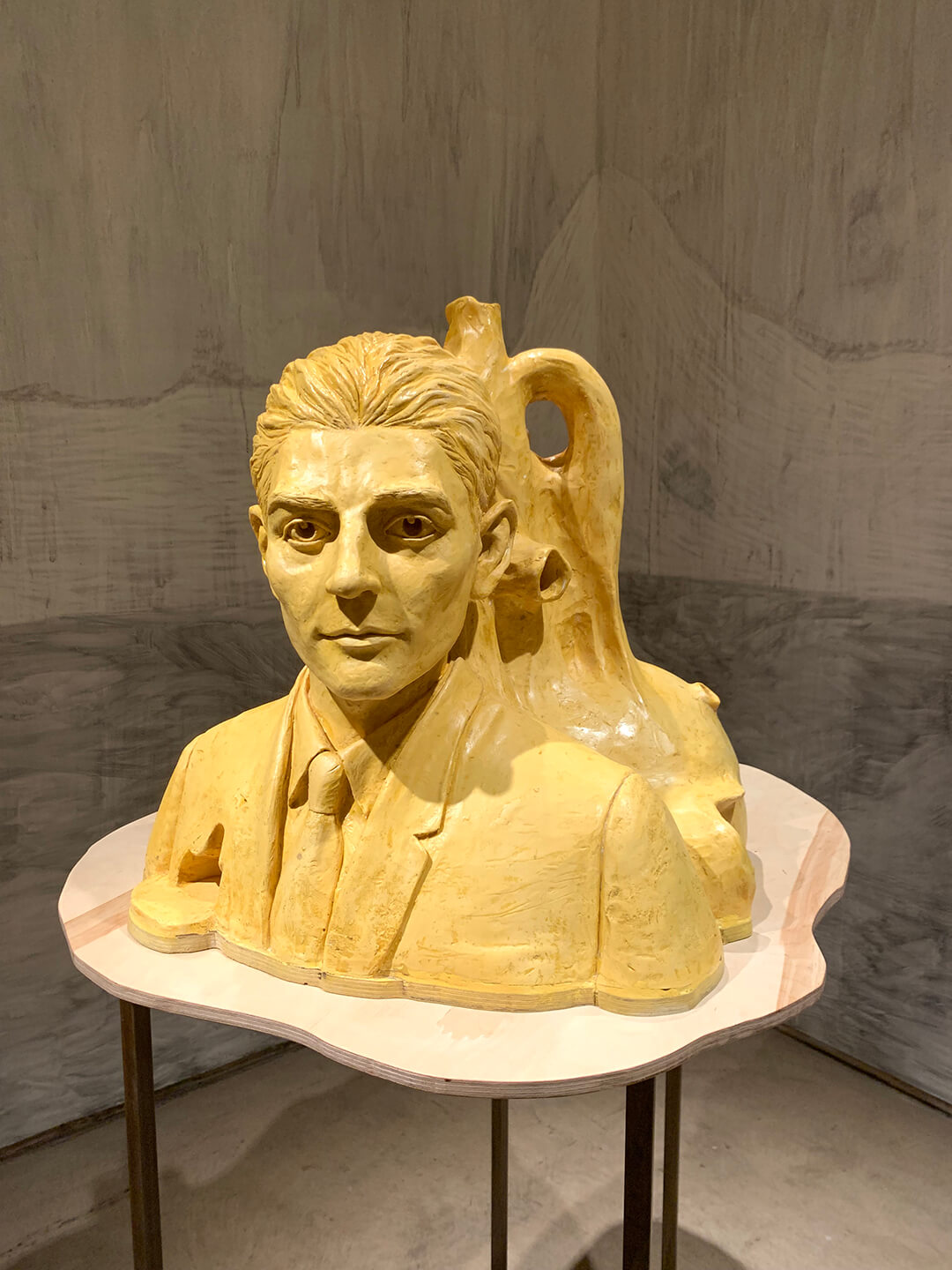
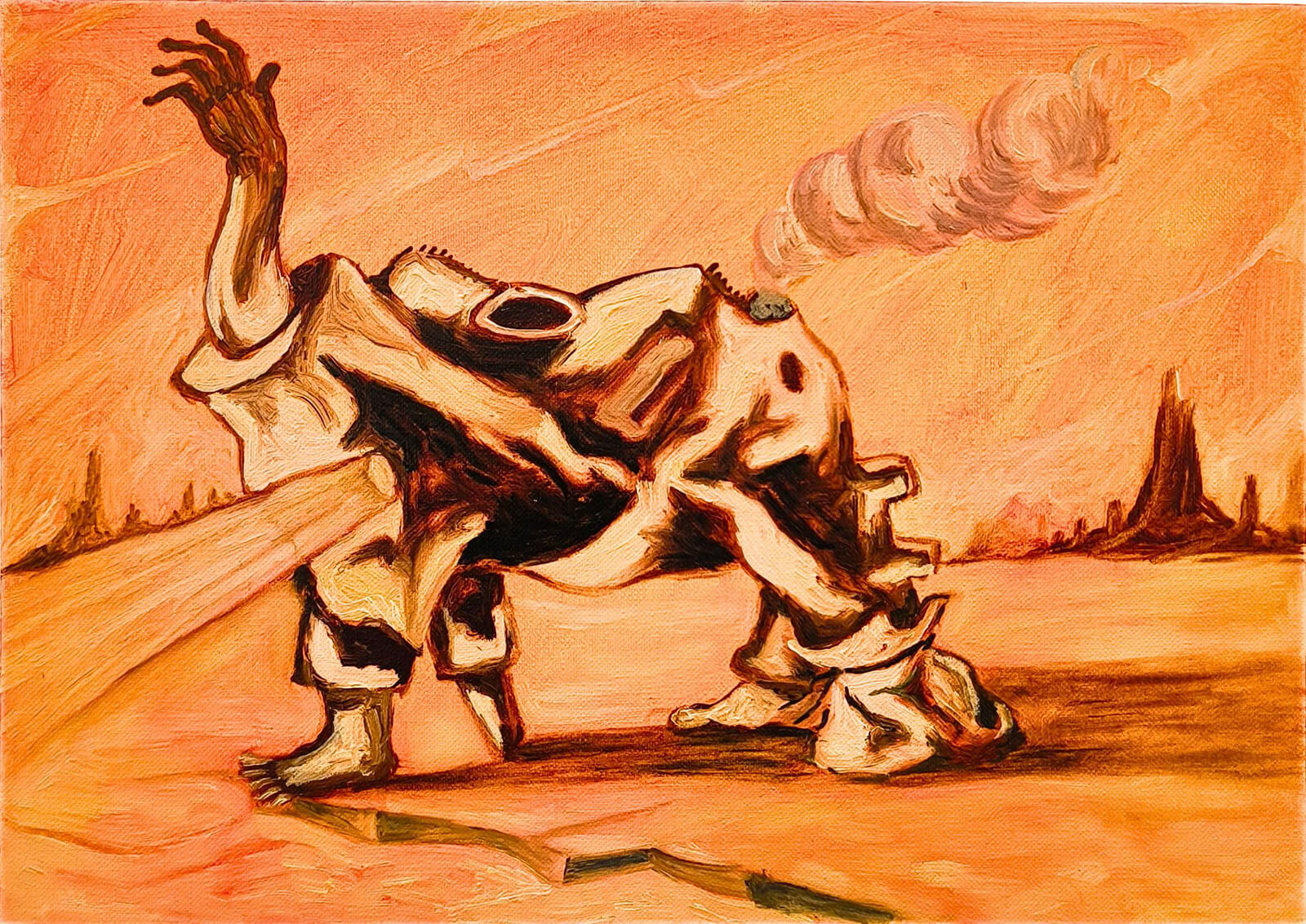
In the previous room is another bust, this time of the Austrian author Franz Kafka, whose novella, The Metamorphosis (1915), is a point of inspiration and reference for Pachpute. This literary lean continues from Pachpute’s earlier work in the medium, most notably his illustrations for the 2019 book Political Animal. The fragmented, mismatched animals in this book, also featured in this exhibition in the Museum Menageries series, instantly recall Kafka’s protagonist Gregor Samsa and his humiliating and traumatic transformation into an insect in a society where worth depends on utility. Museum Menageries 43 (Fractured body) (2025), for example, depicts a four-legged figure with feet, peg legs and stumps shambling around an apocalypse-red landscape. A headlamp shines out of the figure’s chest, a smokestack rises from its back and a hand stretches out where its head might have been, seemingly a plea for rescue. Others show drone-like flying eyes, a siren car with millipede legs and a human eye, a disembodied hand clutching a rock, a headless figure who is morphed with a flowing basin and an insect with a green growth emerging from its head.
Pachpute’s choice of the two authors frames the exhibition—the exploration of politics and groupthink through anthropomorphised animals in Orwell’s satirical postwar novel, Animal Farm (1945), and the alienation and pressure depicted in The Metamorphosis. This is the turn Lone Runner’s Laboratory takes, looking at not just the material conditions of the world, the extractive economy and mining industry, but employing the absurdity and satire to expose the resounding effects of these conditions in the relationships between the human and animal, other, environment and the self.
The process of transformation Pachpute depicts is unfinished, resembling abandoned experiments or the shape of a dream remembered once awake. Dreaming and waking are repeating themes in the show, lending themselves easily to the artist’s surrealist visual language. However, unlike the use of dreams and subconscious imagery in surrealist art, Pachpute’s work is strongly grounded, no matter how nightmarish or unreal it may appear. This is achieved not only through his career-long focus on specific mining communities but also through his selection of materials for his sculptures. He uses jesmonite in many pieces—a mouldable liquid/powder blend which incorporates stone dust—adding to the roughly rendered surfaces that give pieces like Dissolving Caves (2025) their dreamlike appearance. In other pieces, he uses stone powder, red clay, rice husks, cow dung and fenugreek powder, grounding the sculptures in their material conditions and cultural context firmly. Pachpute also paints the walls of the gallery, mixing charcoal (a material central to his practice given its derivation from coal) with water to achieve a dripping, layered effect with spontaneous peaks, valleys and waves that continue the abstract landscapes of his works onto the walls.
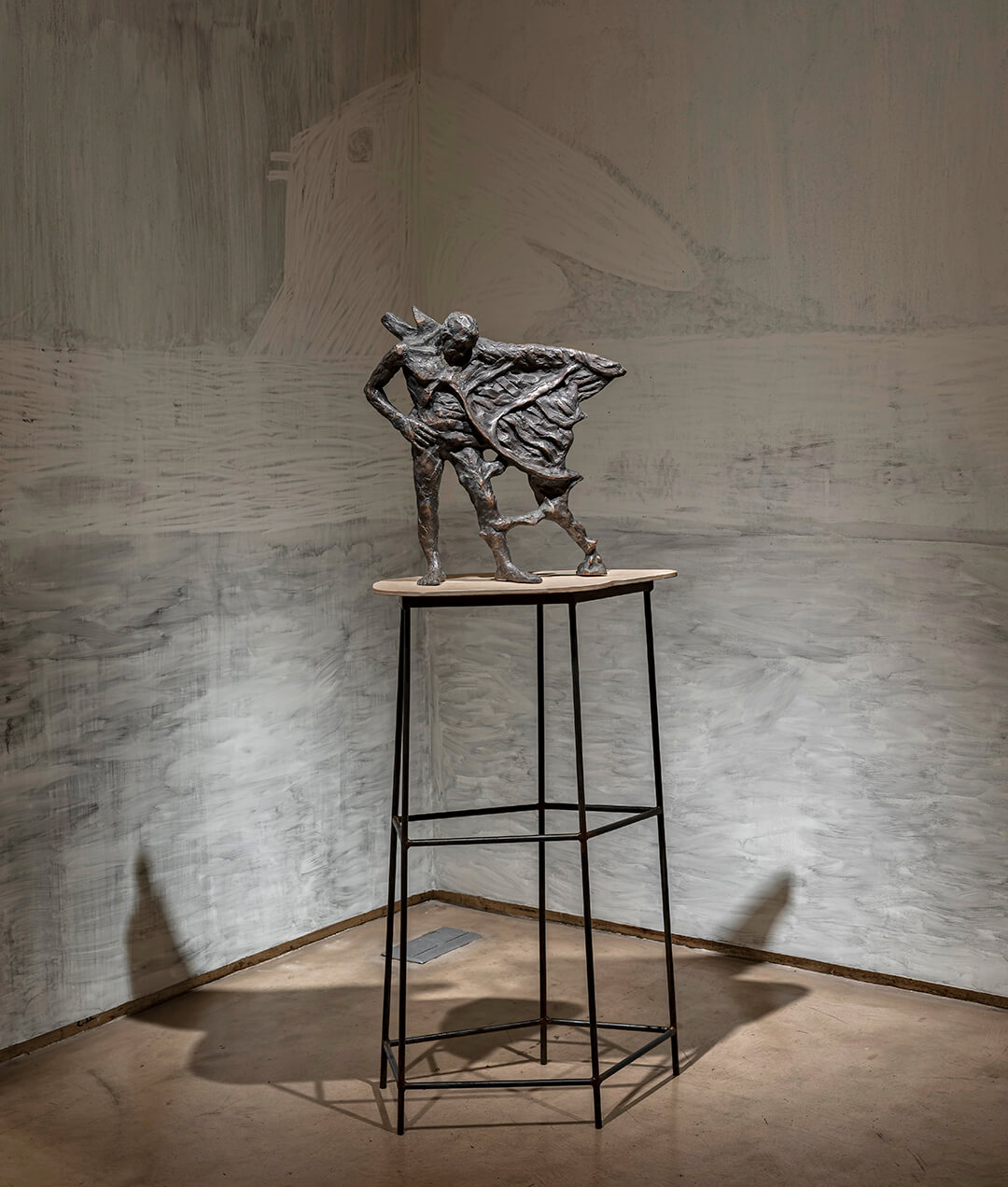
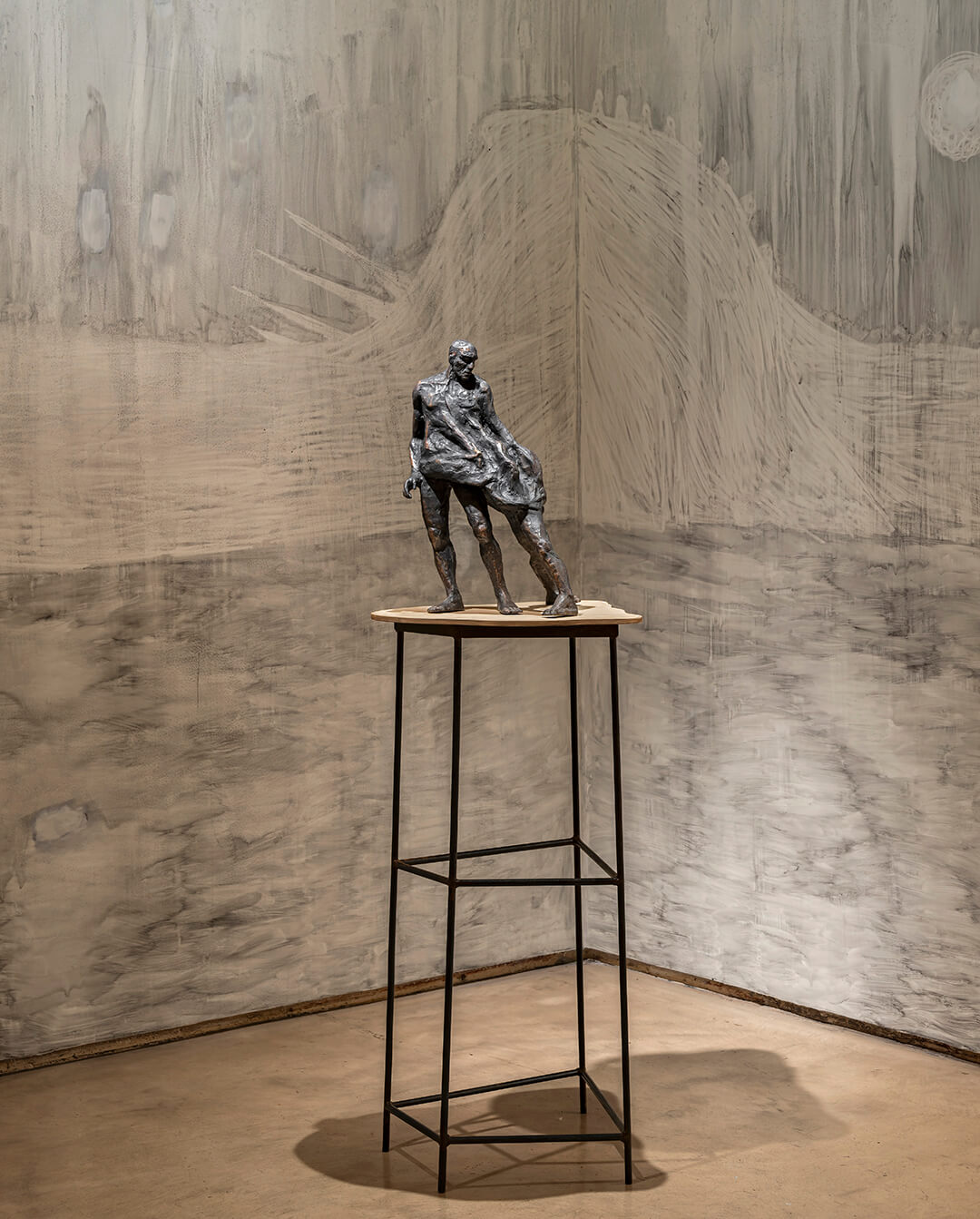
A bronze sculpture titled, The length of a dream (2024 – 25) depicts a man wrapped and tangled in what look like interwoven tree branches. His silhouette is clear and separate, other than his left arm, which has been absorbed into the network, passing through his head and appearing on the other side in the sharp point of a blade—he is half-formed, half-awake and half-other. The length of a dream-II (2025) is created in the same style, this time with the ‘other’ manifesting as the lower half of another human’s body, the top shrouded and grafted to the standing man’s chest. Pachpute explores the darker side of hybridity and fusion, where enmeshment is the result of parasitic rather than symbiotic relationships.
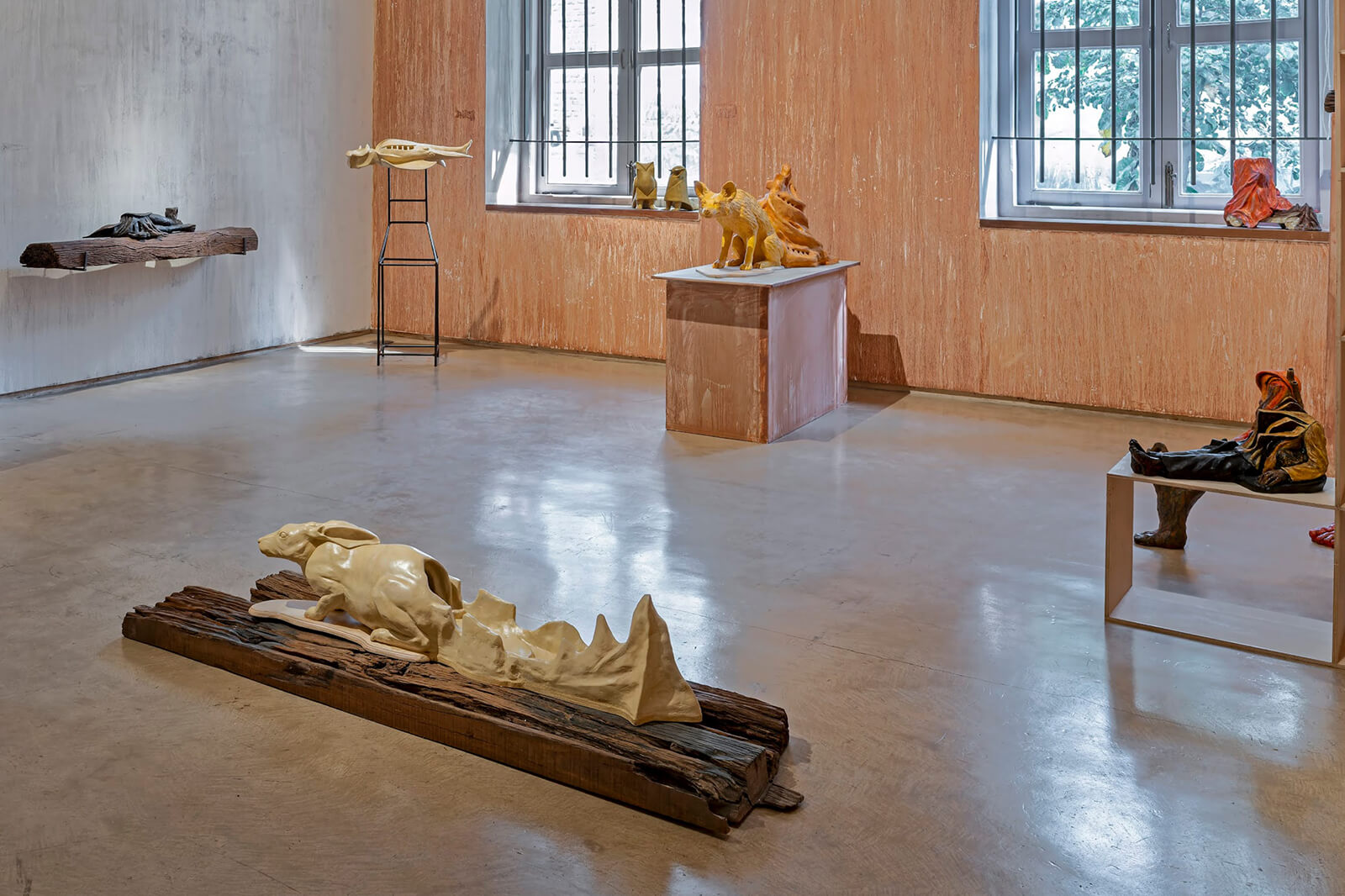
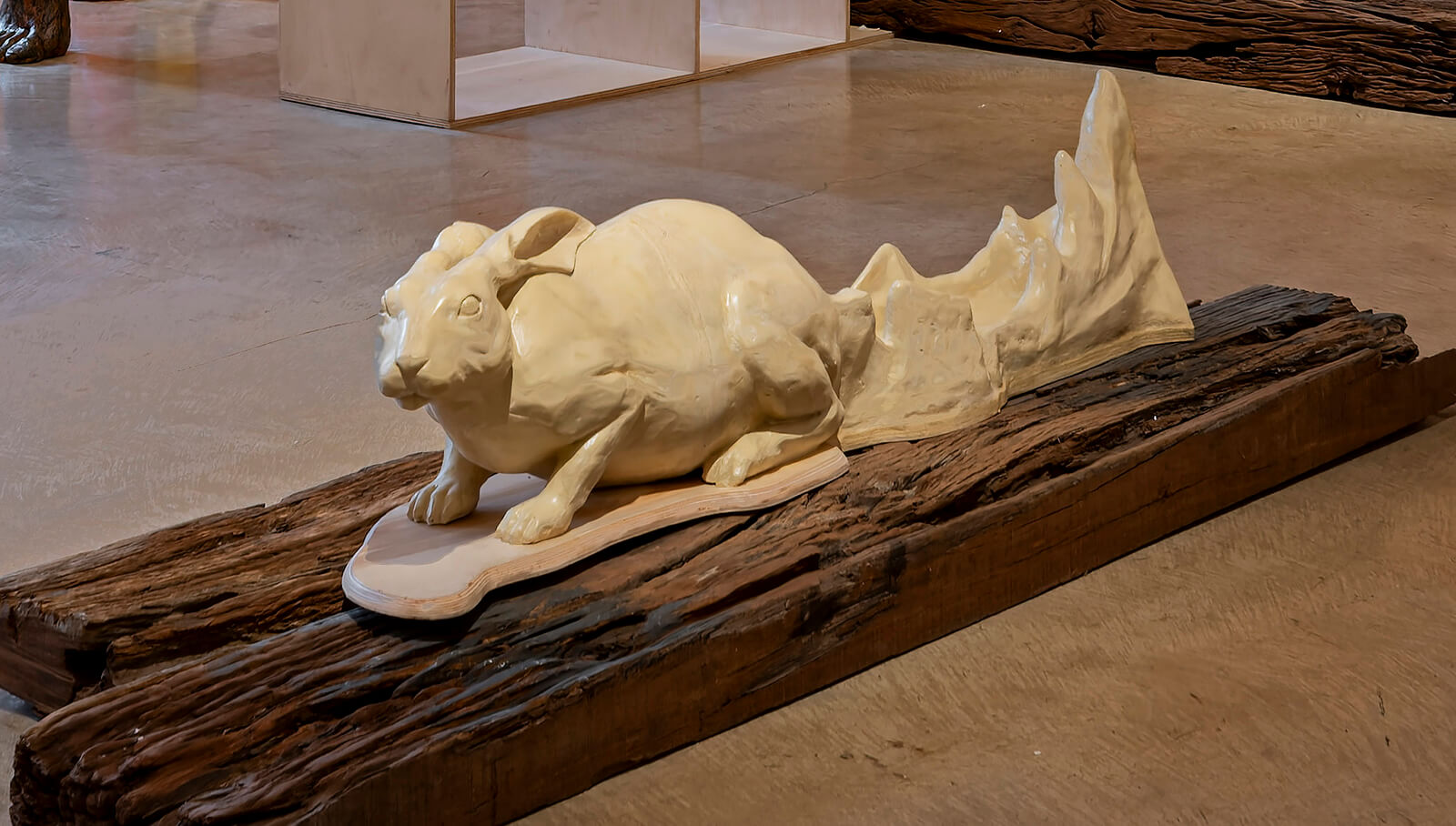
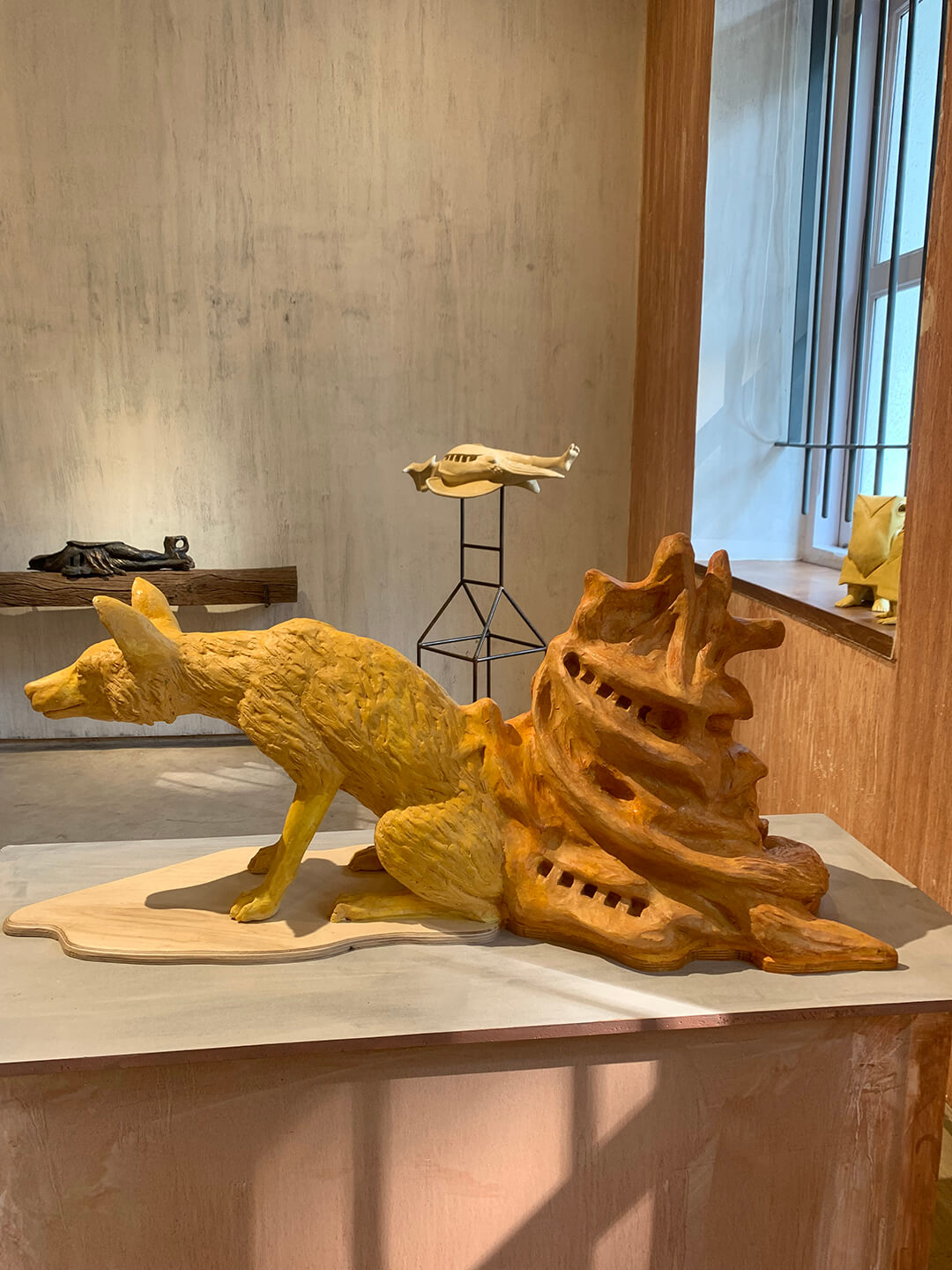
Time, too, becomes stretched and surreal in this ‘laboratory’, such as in his juxtaposed fox and rabbit sculptures —Crawling through the Jungle II and III (2023 – 24). Pachpute freezes predator and prey in the last moment of stillness before the chase and the mutual fight for survival, amplified through his careful shaping of the animals’ expressions, making them characters in a way that animals usually aren’t.
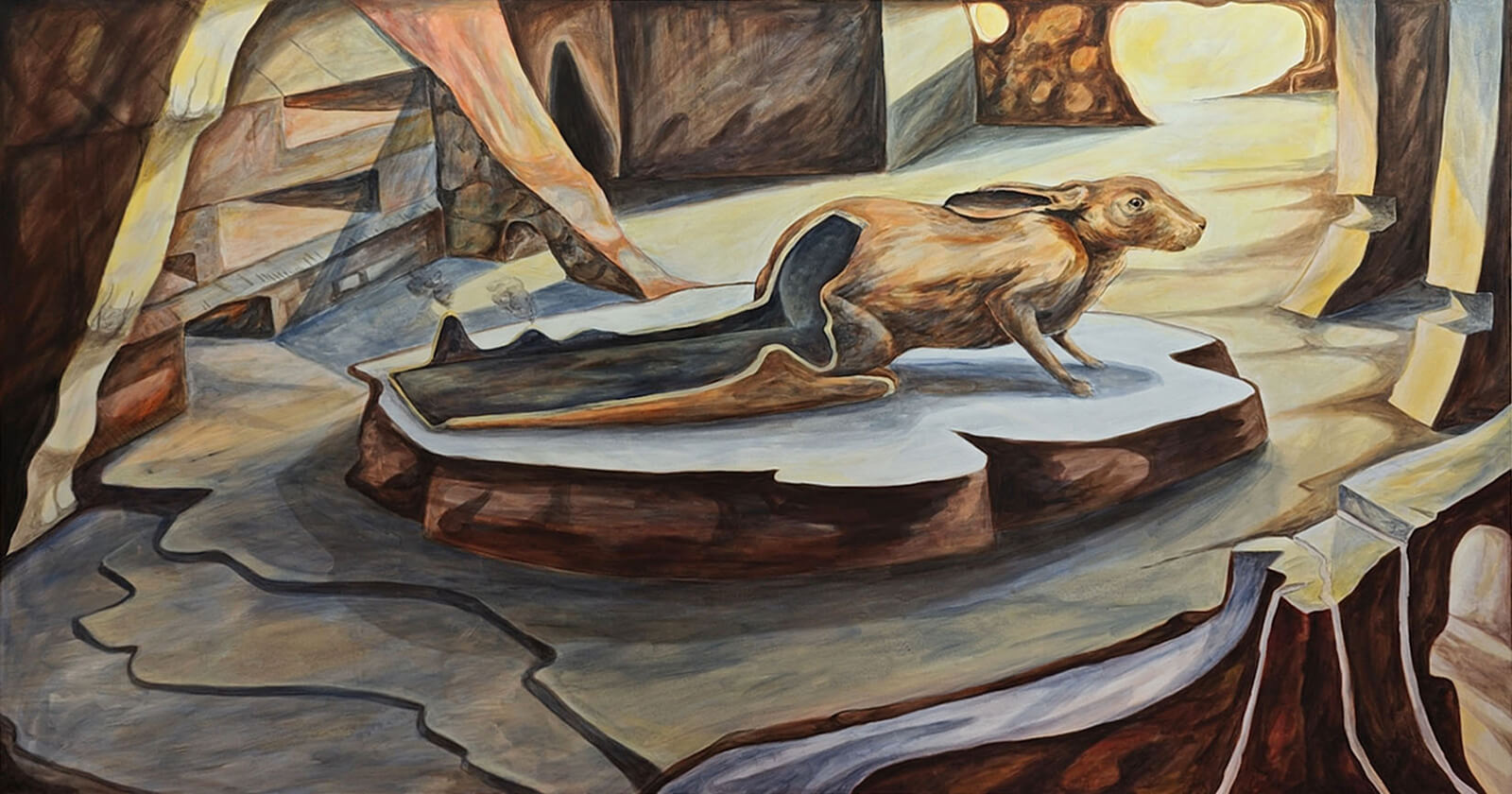
Lone Runner’s Laboratory forces one to face the deformed terrains hidden behind every façade, to question the direction in which extraction economies, which rely on mining natural resources and exploiting human labour at an unsustainable rate, push evolution and fusion. It becomes easy to take off from Pachpute’s half-object, half-human labourers and imagine any person, animal or landscape in their place, pushed by indiscriminate pollution and uncaring consumption into passivity and hollowness. Subjecthood is vacated to create space for utility, leaving trauma tunnelling through landscapes and psyches as they are mined like ores, in the dystopian worlds Pachpute creates.
‘Lone Runner’s Laboratory’ will be on view from January 8 – February 21, 2026, at Experimenter, Colaba, Mumbai.
The views and opinions expressed here are those of the author(s) and do not necessarily reflect the official position of STIR or its editors.

by Srishti Ojha Oct 09, 2026
In his ongoing exhibition, the South African artist creates two post-apocalyptic futures to explore society’s relationship with textiles, patterns and technology.
by Srishti Ojha Oct 07, 2026
The Kolkata-based film festival shone a spotlight on local and international filmmakers and artists who are pushing the boundaries of what a film can encapsulate.
by Samar Jodha Oct 05, 2026
Looking at Ahmed Ali’s photographs of workers and industry within the wider history of industrial photography, from Soviet state imagery and Sunil Janah to Lewis Hine.
by Srishti Ojha Oct 02, 2026
The Indian artist’s exhibition at the Bruce Museum in the US thinks through fundamental questions of humanity by focusing on the Sun and the cosmological timescale.

make your fridays matter with a well-read weekend
Enter your details to sign in
Don’t have an account?
Sign upOr you can sign in with
a single account for all
STIR platforms
All your bookmarks will be available across all your devices.
Stay STIRred
Already have an account?
Sign inOr you can sign up with
Verification link sent to check your inbox or spam folder to complete sign up process
Tap on things that interests you.
Select the Conversation Category you would like to watch
Please enter your details and click submit.
Enter the 6-digit code sent at


Hollow, bound, transformed: Prabhakar Pachpute’s view of a ravaged world
by Srishti Ojha | Published on : Feb 11, 2026


 Sign in with Google
 Sign in with email
What do you think?