Architecture14 mins. read
Edgar Demello’s ‘Five Architecture Fables’ as a manifesto for oneness
by Bansari PaghdarMay 30, 2025



by Bansari PaghdarPublished on : Feb 10, 2026
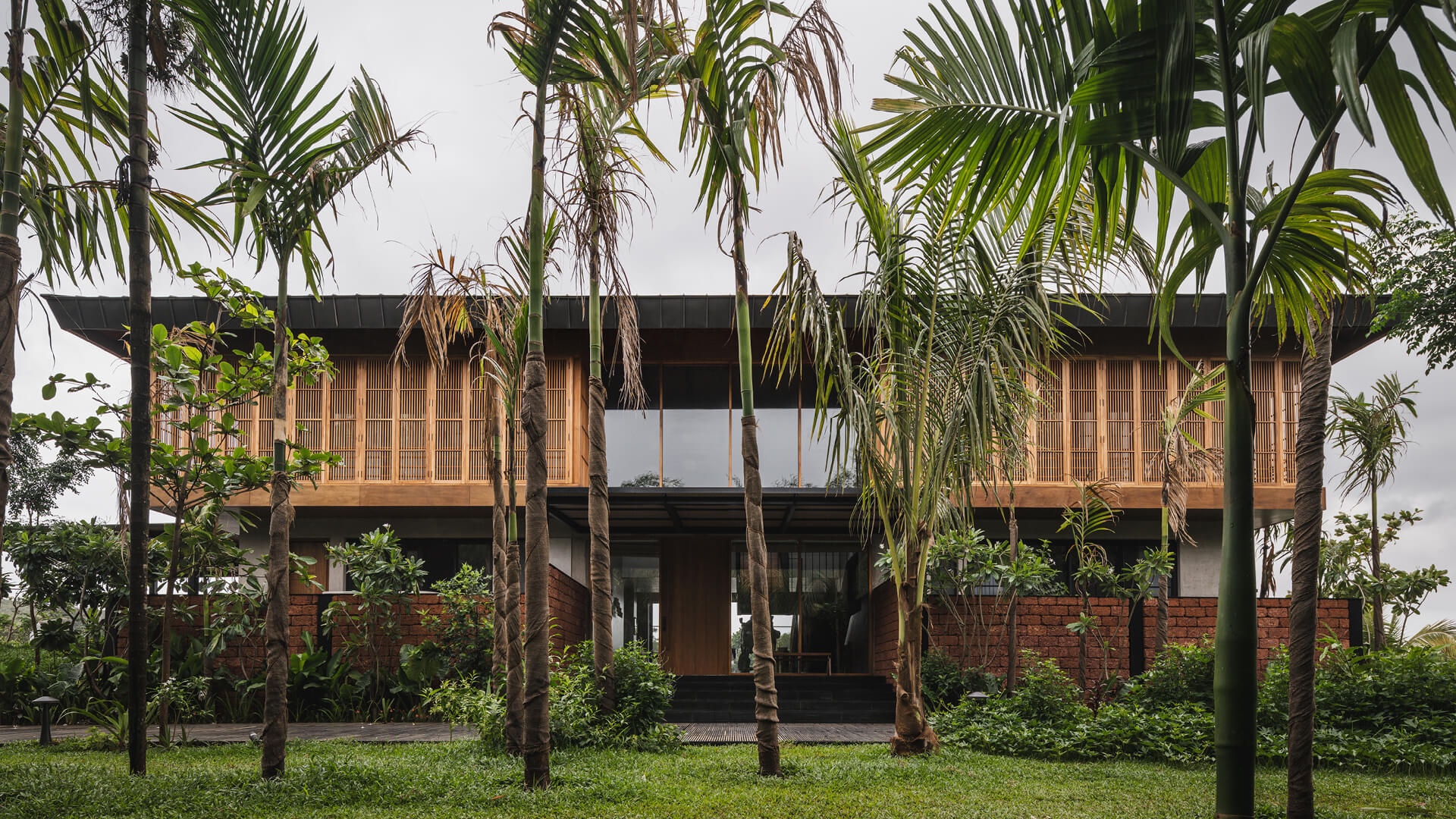
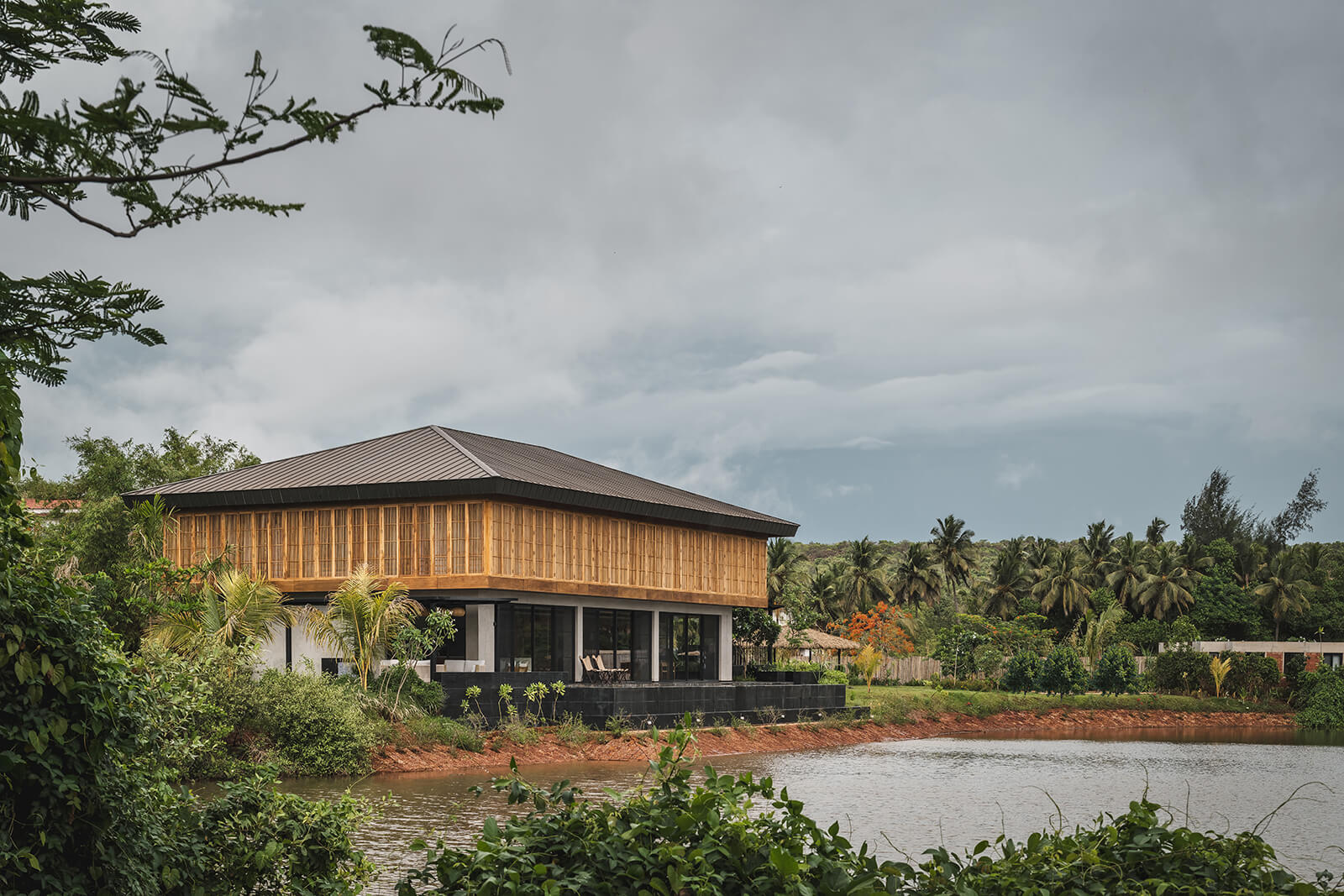
The Salt Pan House, as the name suggests, is located at the edge of a salt pan in the tropical suburbs of Goa, India. Designed by We Design Studio, a Mumbai-based architecture practice, the residential architecture is nestled between the Chapora River and a mangrove belt. Instead of asserting itself over the fragile landscape, the residence is conceived as a quiet observer— adjusted to climate, rooted in material honesty and attuned to the rhythms of its surrounding. Channelling the spirit of the three salt pans it overlooks, which constitute eight out of ten acres of the site, the architecture unfolds in three layers of materiality within a controlled footprint of 6,000 sq ft. “From the outset, the vision shared by the architect and the client was one of restraint and reverence: a spatial response guided not by ornament, but by climate, context and material truth,” the studio tells STIR.
Founded by Indian architects Nupur Shah and Saahil Parikh in 2011, We Design Studio specialises in bespoke residential and commercial design projects through an approach that prioritises austerity, order and restraint. Grounded in an ethos of sustainability, the studio upholds the tactile qualities of materials to craft contemporary architecture rooted in meticulous planning and detail. “This is our first 100 per cent indigenous home, where every single material, fixture and fitting, down to the area rugs, are sourced from Indian manufacturers,” the practice adds.
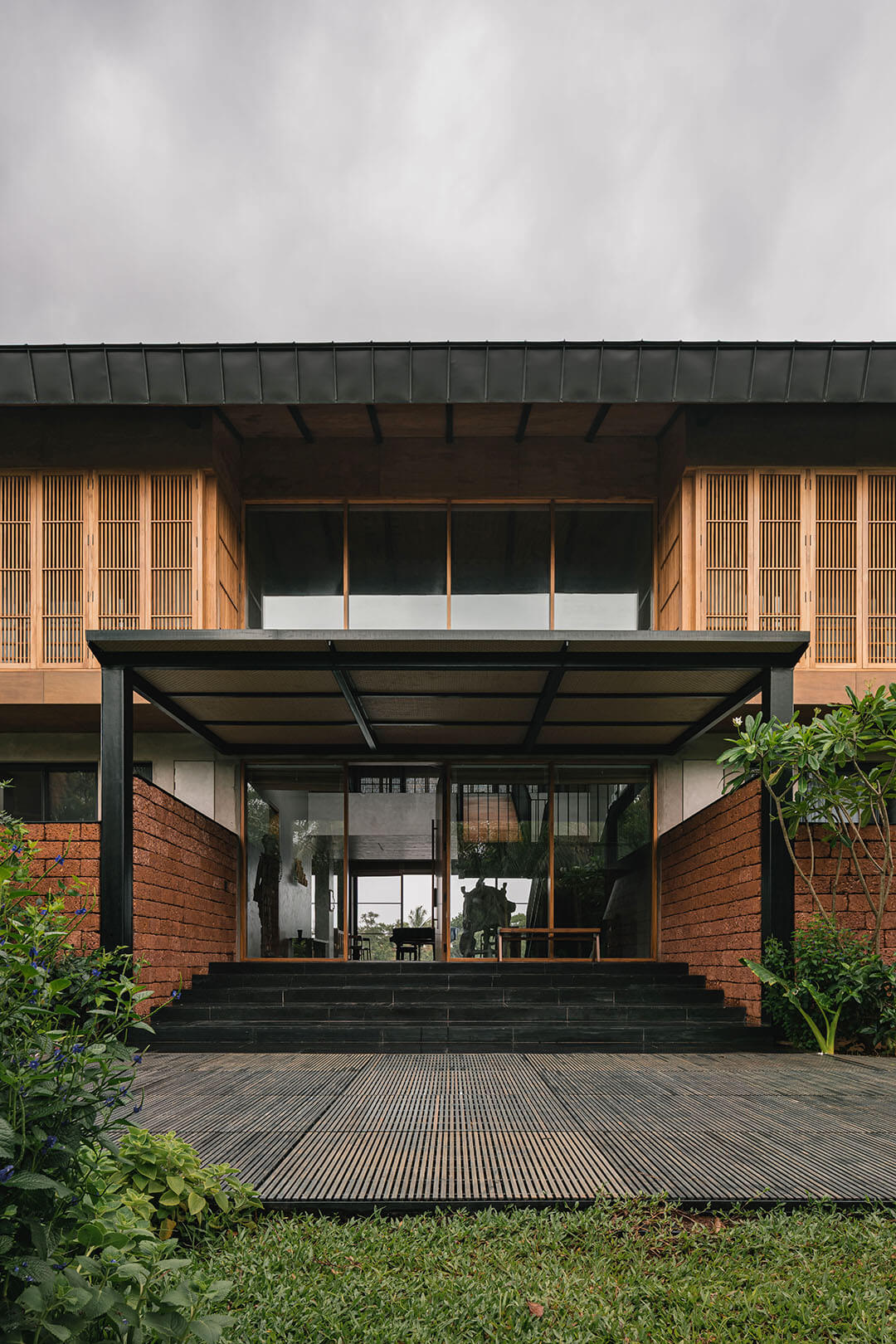
The private residence is a three-storey assemblage of concrete and timber, crowned by a titanium-zinc alloy roof. Placed at the southern edge of the largest salt pan among the three, it appears to be in a quiet dialogue with the natural landscape through a minimal architectural language that recedes in favour of the surrounding views. The seemingly simple house and its storeys unravel in layered material expressions. Floor-to-ceiling timber louvres and expansive glass openings identify the upper level, while the lower level—concealed by a brick wall and landscaping—reads as a porous concrete mass that balances privacy with openness to nature.
Besides the main building, the site features several amenities that cater to the lifestyle of the residents, including a private pickleball court, an all-weather gym with recycled timber equipment, a yoga pavilion, a private jetty and a greenhouse.
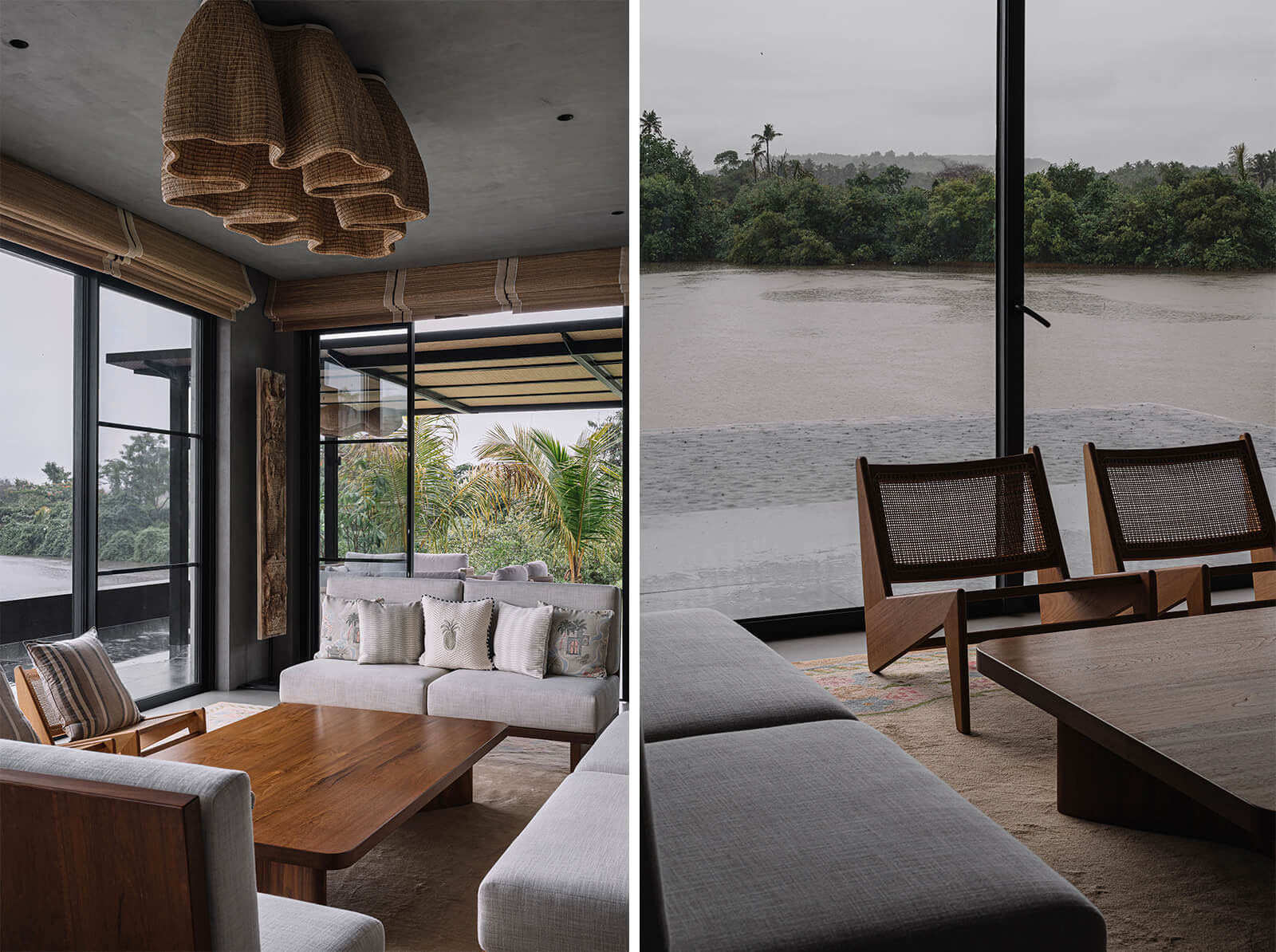
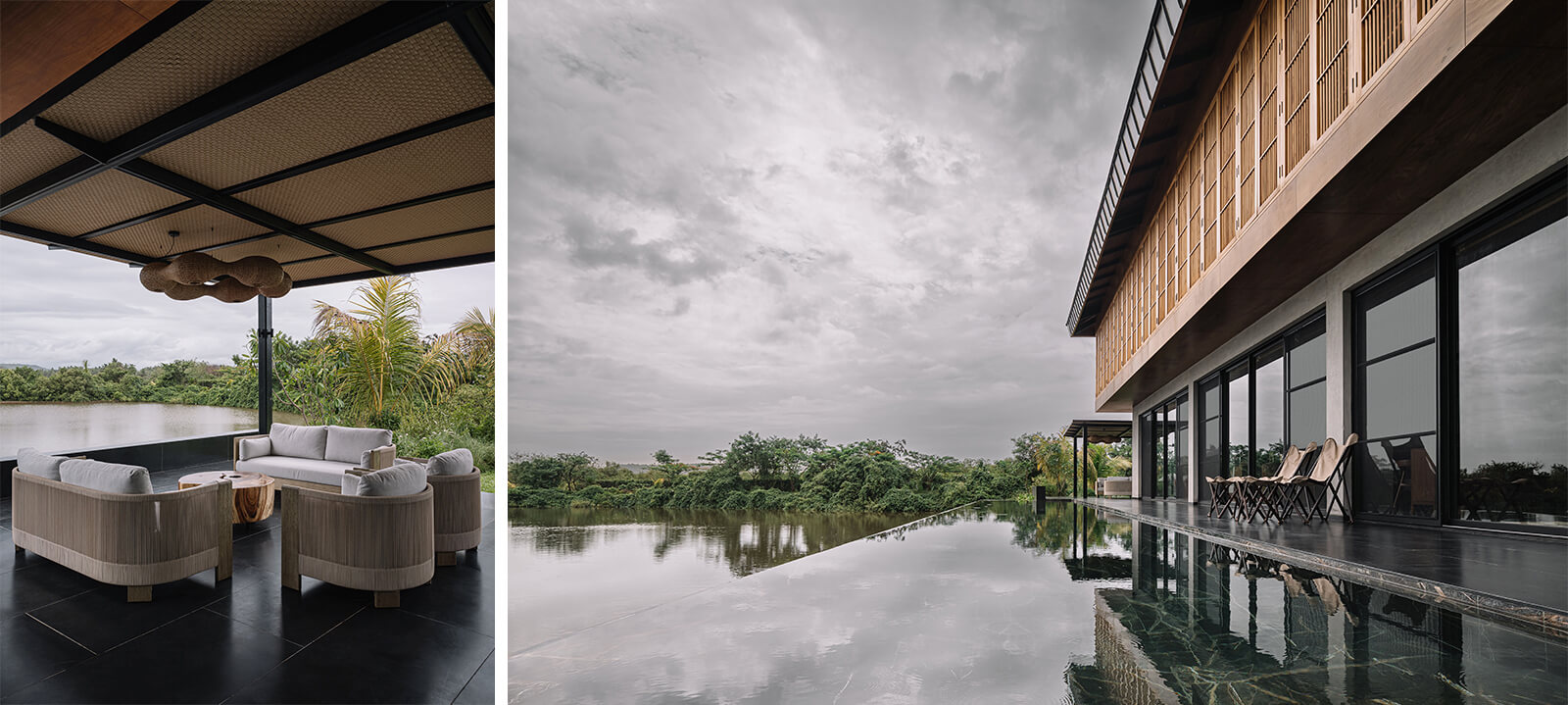
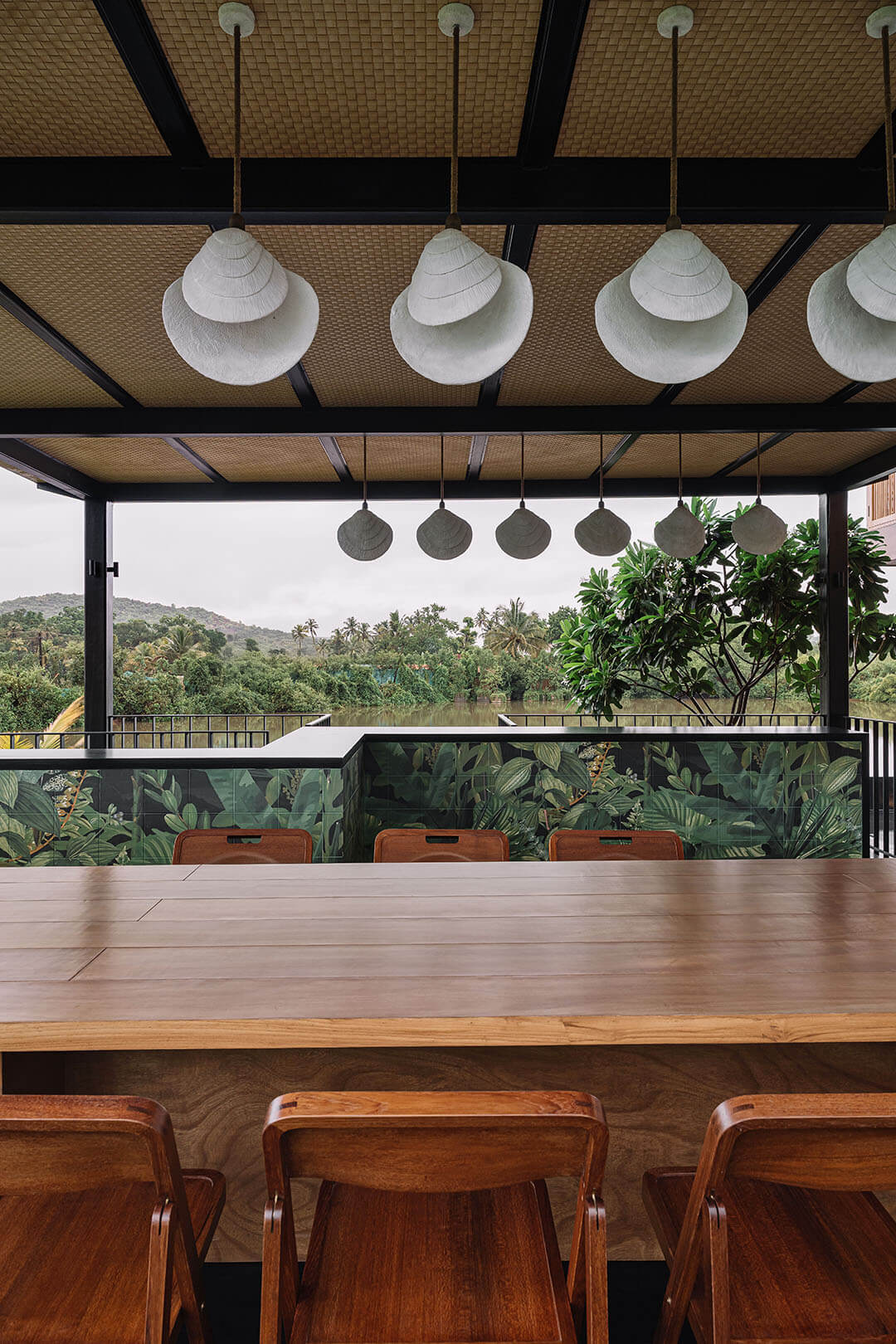
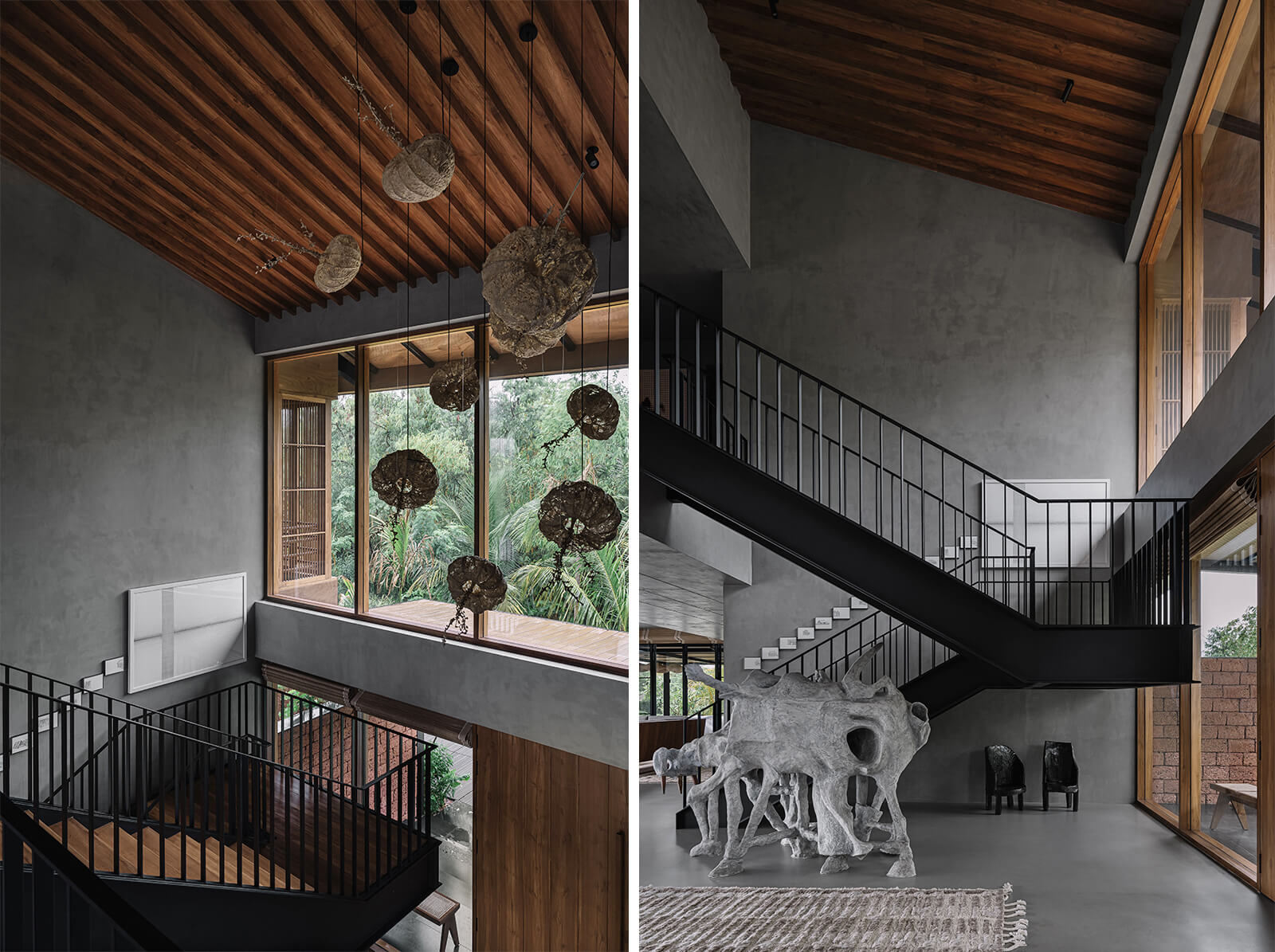
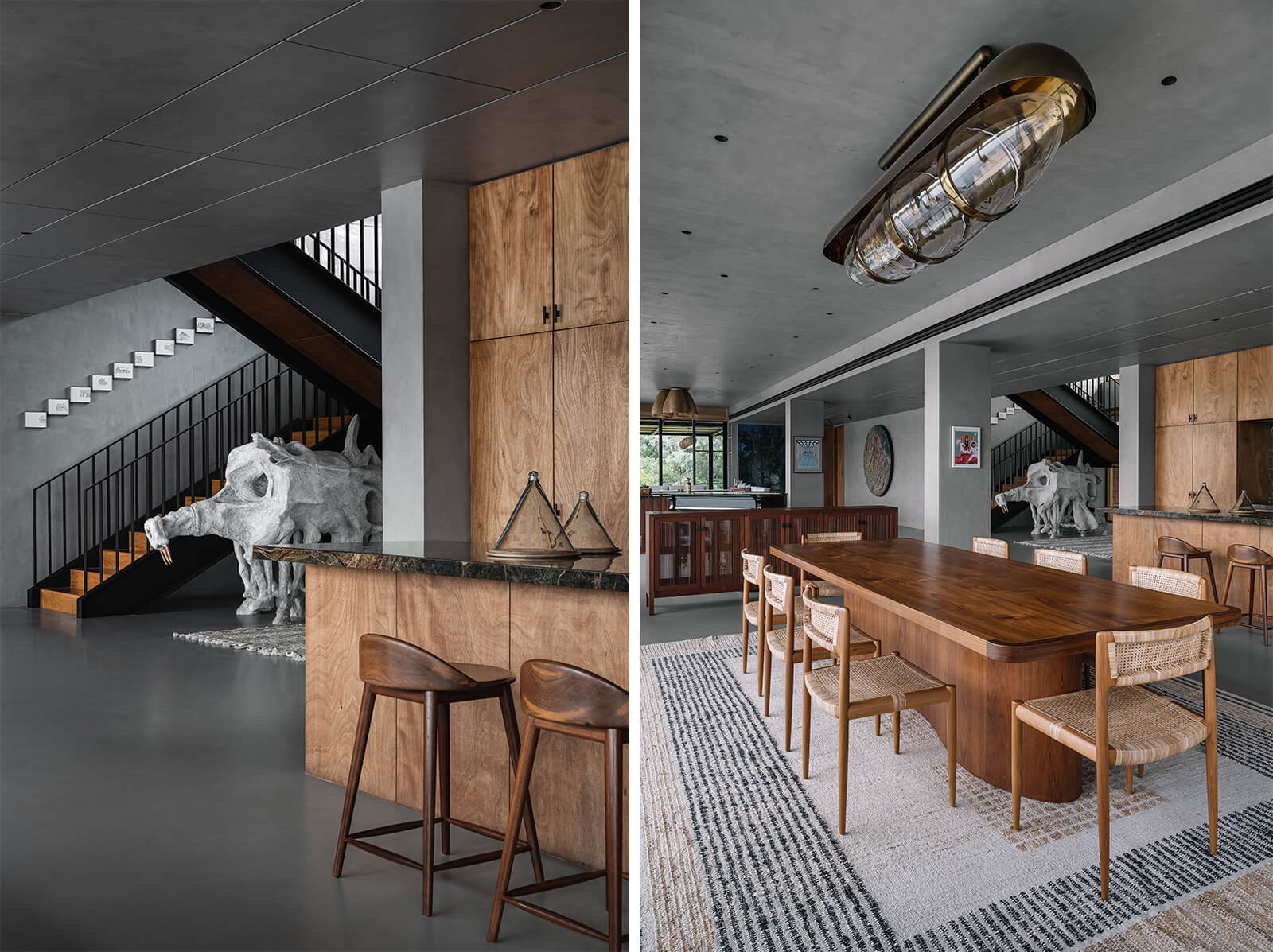
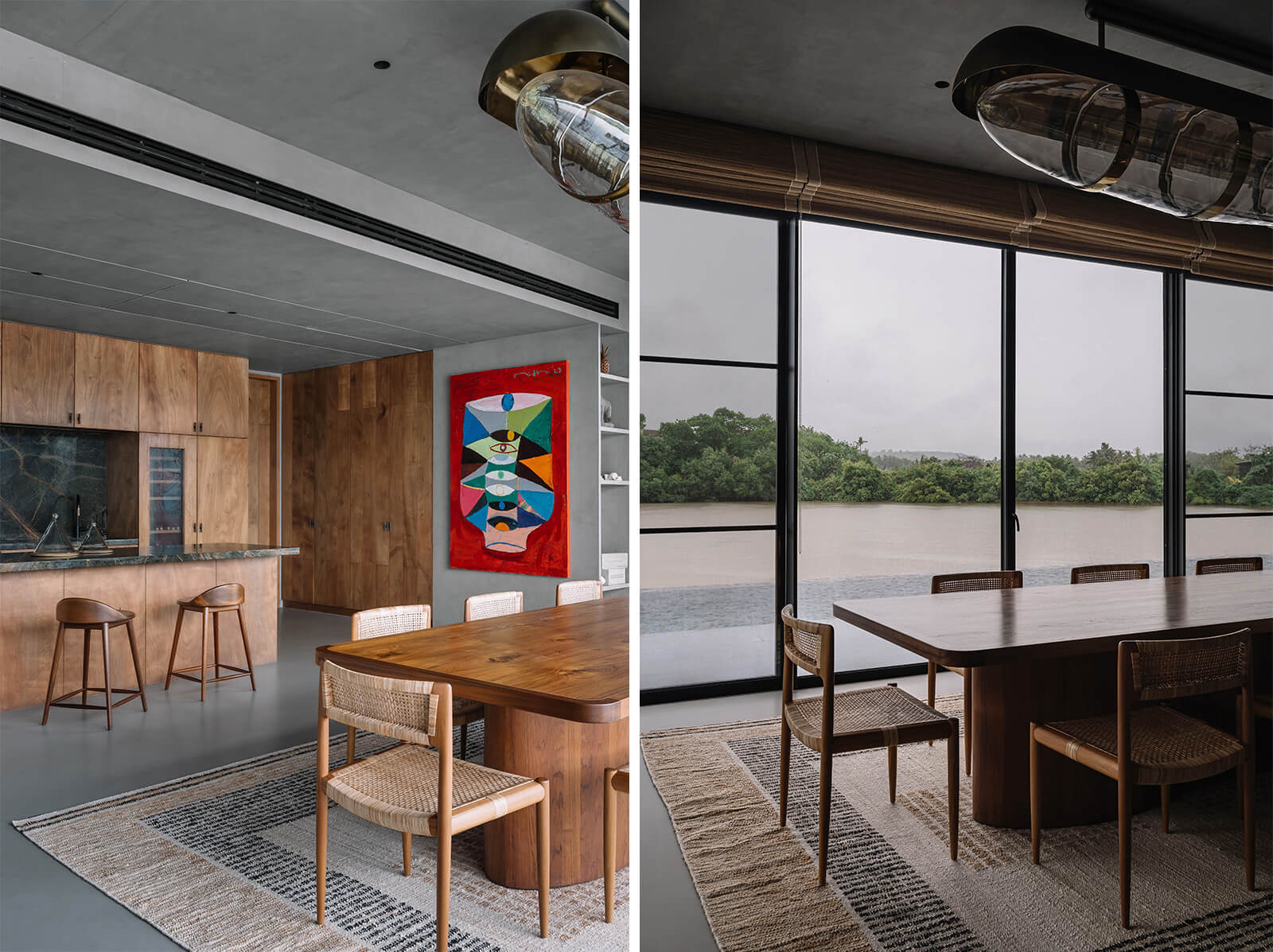
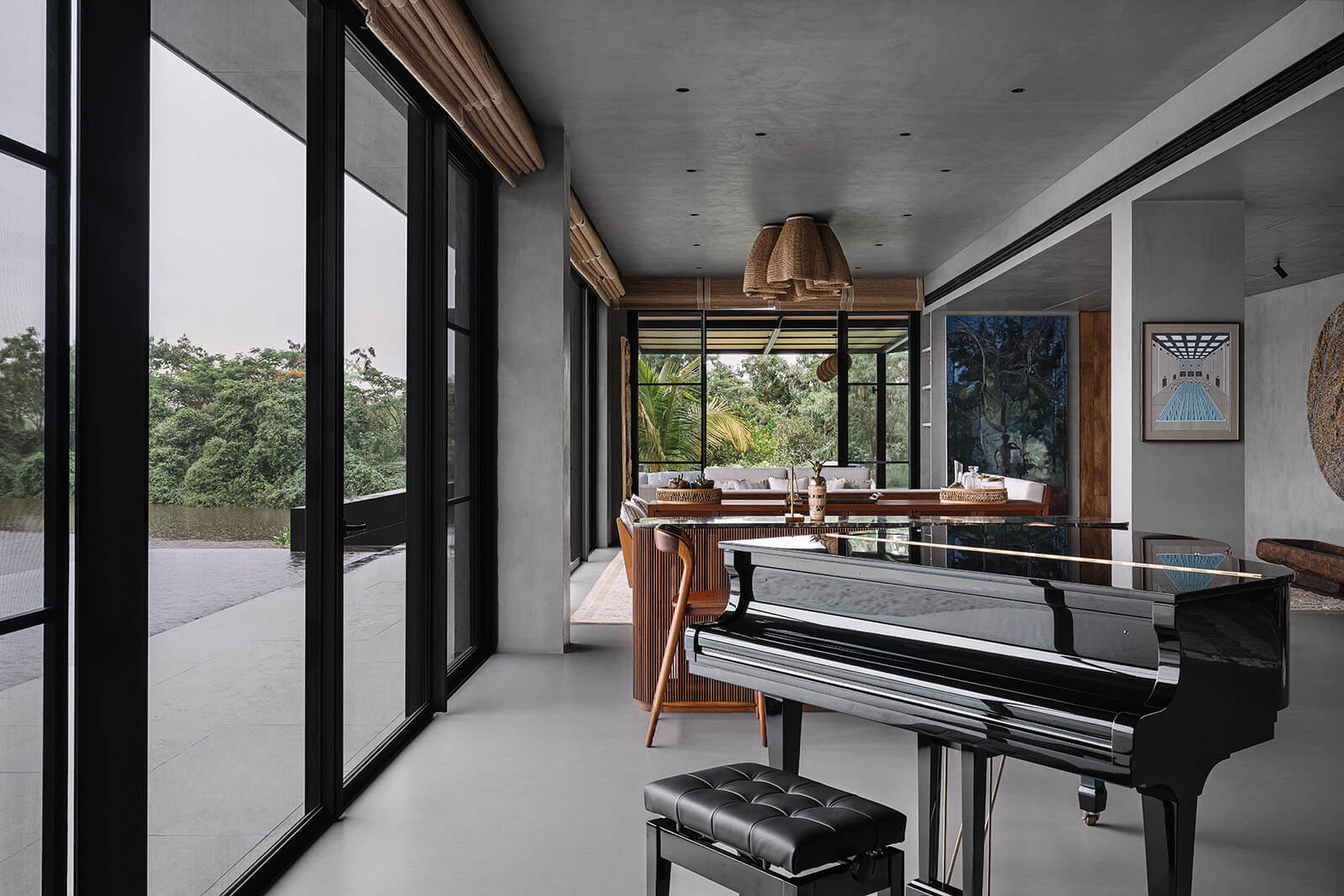
Upon entering the home, a free-standing metal staircase appears anchored within a double-height space, with natural light streaming in through expansive windows. An open plan layout articulates the common area comprising kitchen, dining and living areas that further provides access to the deck and pool overlooking the salt pans. Additionally, the deck, which doubles as a transitional space between the salt pans and the house, features a staircase that descends towards a spa, sauna, steam and changing rooms.
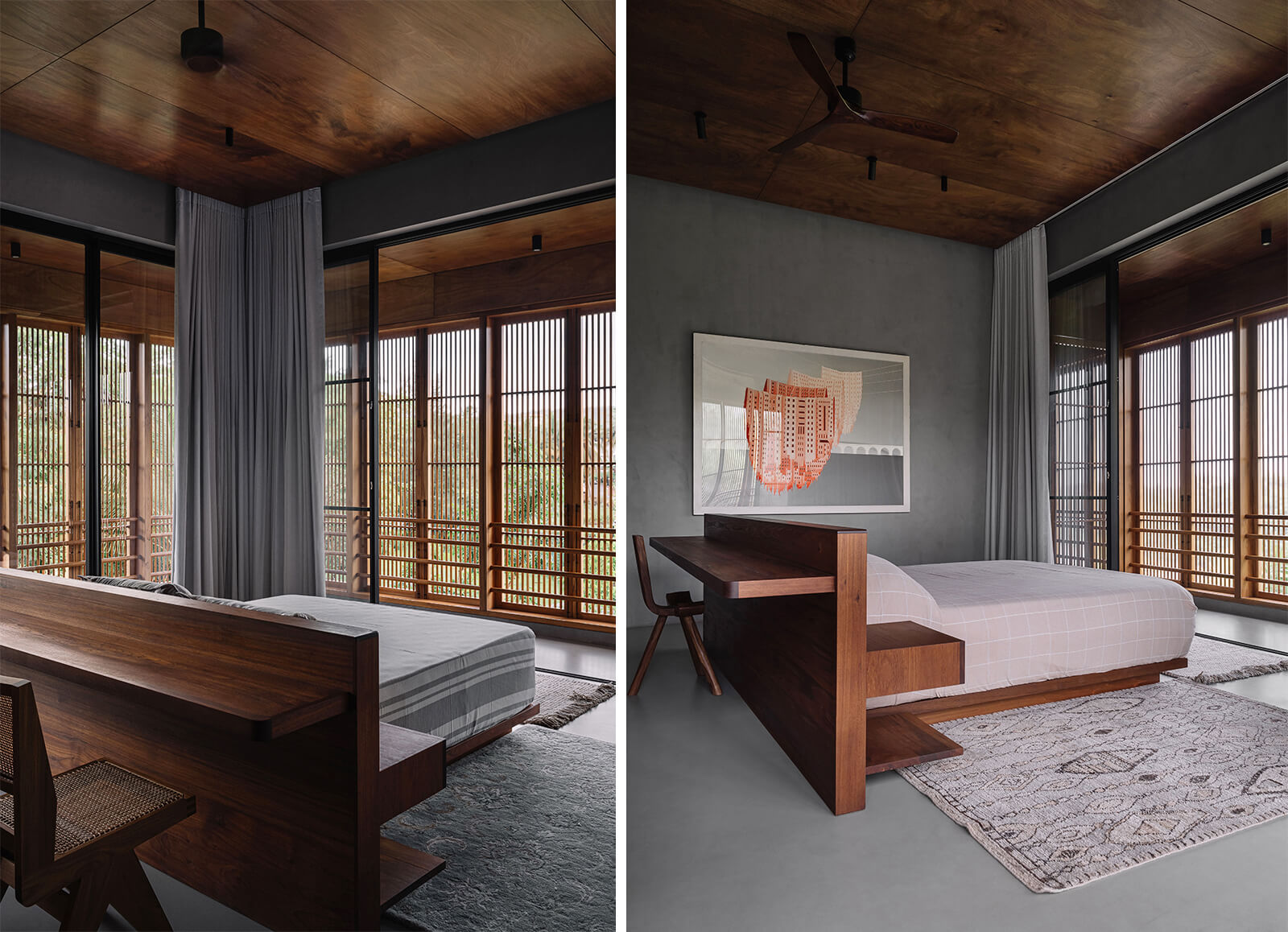
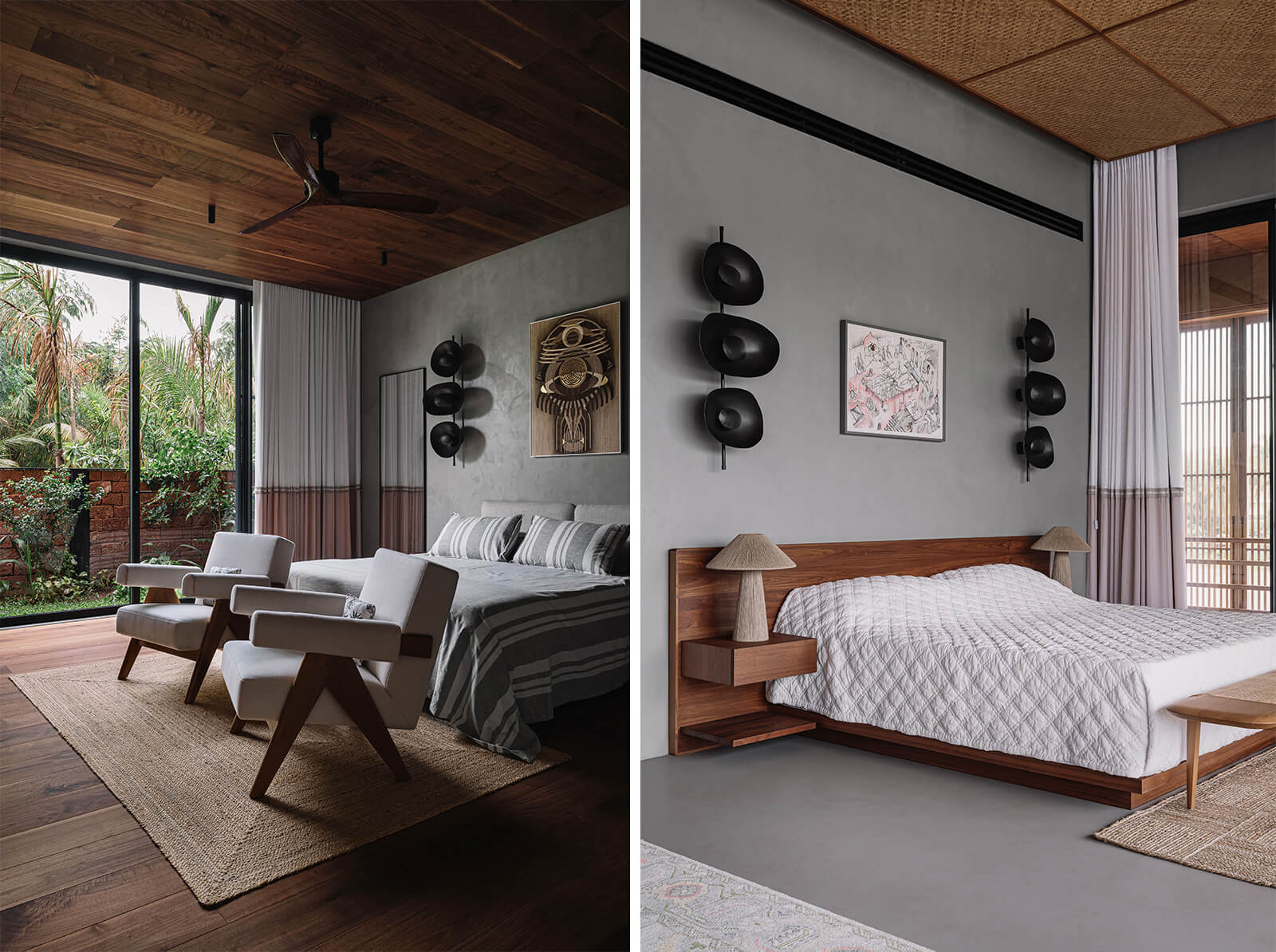
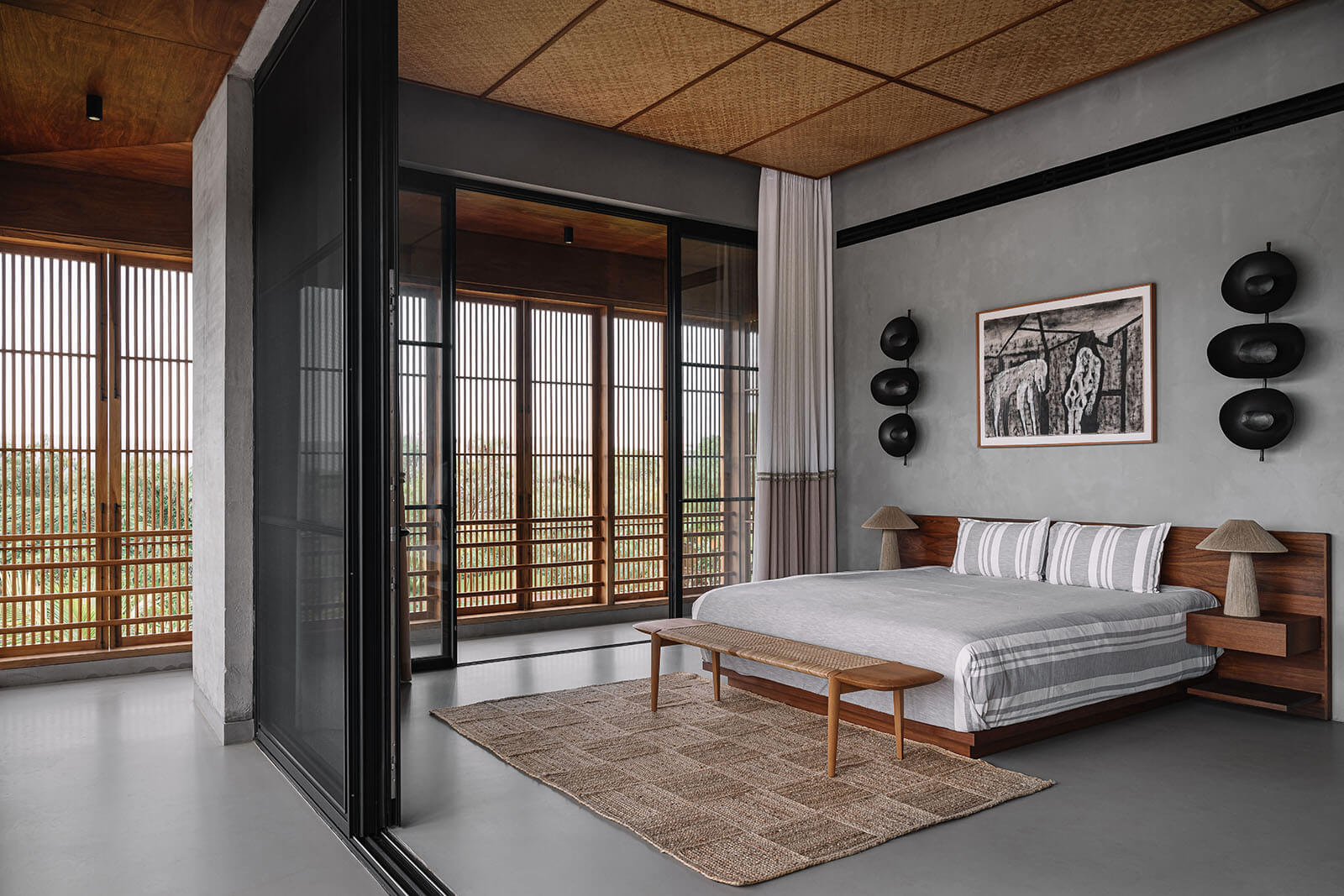
The concrete and timber architecture features a tactile and indigenous material palette for the interior design. The staff quarters are constructed in exposed concrete and locally sourced laterite stone, while the walls on the entire lower level of the house are rendered in polished cement plaster. Displaying a light-and-shadow play through its louvres, the upper level features cement walls and floors dressed in shifting tones of grey, black, green, mustard and terracotta. Moreover, the richly veined Indian granite stone complements the softened accents of cane and exposed plywood residential interiors. The residence is also laden with many contemporary art pieces from the client’s private collection, procured over a period of ten years.
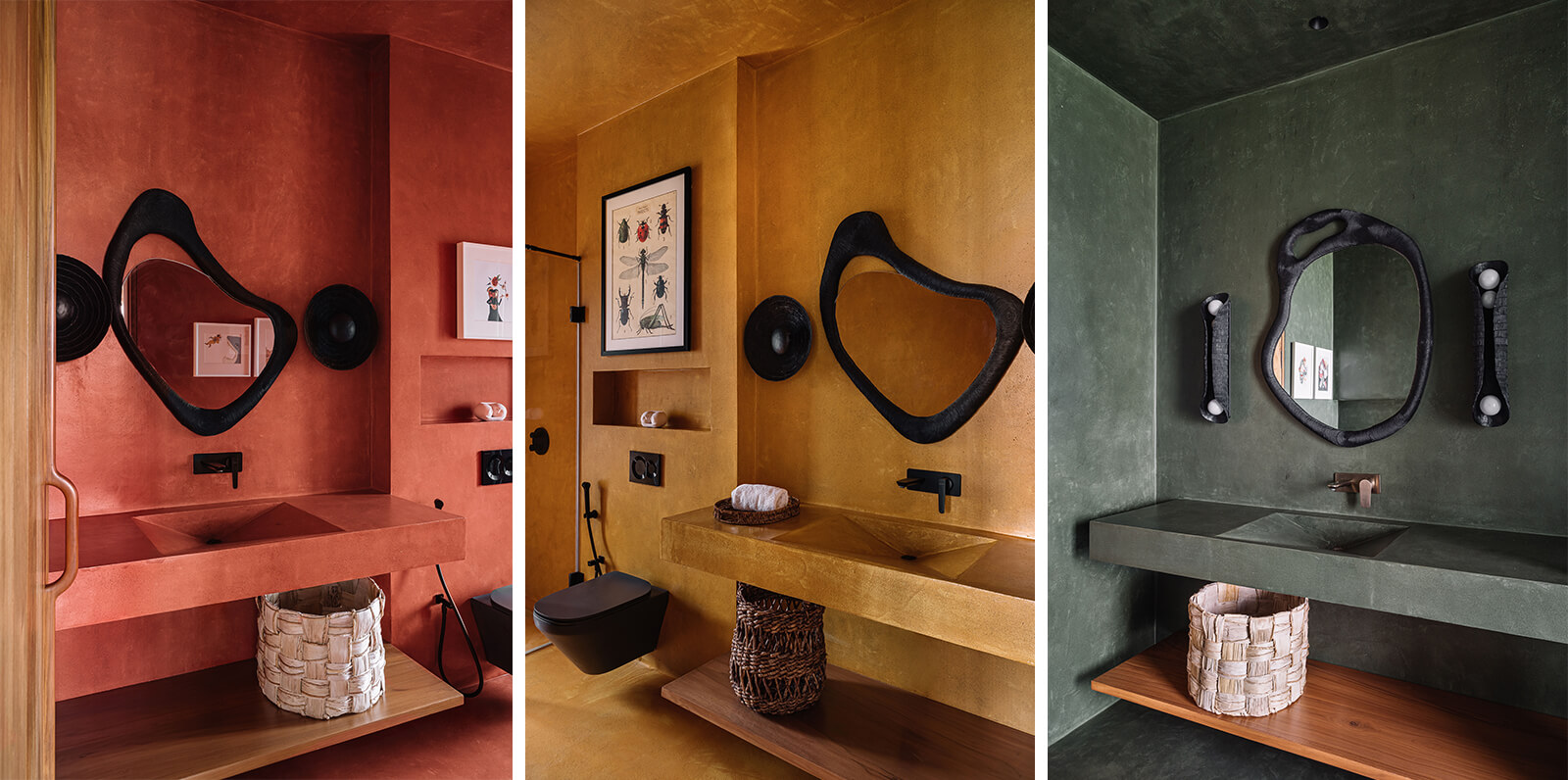
The contemporary architecture articulates a deeply contextual narrative, negotiating ecological sensitivity with a familiar Indian domestic palette. Within a tightly controlled footprint, the house interprets the vastness of its context through texture, colour and indigenous materiality, ensuring that the salt pans remain the primary element of beauty. The house does not seek to frame nature but coexist with it, encouraging inhabitance that is less about ownership and more about stewardship.
Name: Salt Pan House
Location: Agarvado, Goa, India
Architects: We Design Studio
Built-up area: 6,000 sq ft
Year of Completion: 2025

by Pranjal Maheshwari Oct 16, 2026
At the 2026 Stirling Prize ceremony, Mary Duggan with RUFF Architects, MAKER Architecten and Nakshabid Architects were felicitated for proffering quality housing and social equity.
by Mrinmayee Bhoot Oct 12, 2026
The new Centre for Contemporary Arts, fostering public engagement with art in Uzbekistan, is housed in a tram depot refurbished by the French studio, emulating local craftsmanship.
by Mirra Lynn Oct 10, 2026
The Shanghai-based architecture practice’s intervention in Suzhou transforms three abandoned houses into a bookstore, café, library and homestay.
by Pranjal Maheshwari Oct 09, 2026
The eighth edition of the international architecture and urban design showcase, themed How Much?, explores diverse implications of social, ecological and economic ‘cheapness’.

make your fridays matter with a well-read weekend
Enter your details to sign in
Don’t have an account?
Sign upOr you can sign in with
a single account for all
STIR platforms
All your bookmarks will be available across all your devices.
Stay STIRred
Already have an account?
Sign inOr you can sign up with
Verification link sent to check your inbox or spam folder to complete sign up process
Tap on things that interests you.
Select the Conversation Category you would like to watch
Please enter your details and click submit.
Enter the 6-digit code sent at


We Design Studio’s Goa home is a materially layered retreat among salt pans
by Bansari Paghdar | Published on : Feb 10, 2026


 Sign in with Google
 Sign in with email
What do you think?