Design06 mins. read
Explore the world of ASMR with ‘Weird Sensation Feels Good’ at the Design Museum
by Samta Nadeem, Devanshi ShahJul 27, 2022



by Lisa Marie Sneijder, Kate DooleyPublished on : Jul 22, 2026
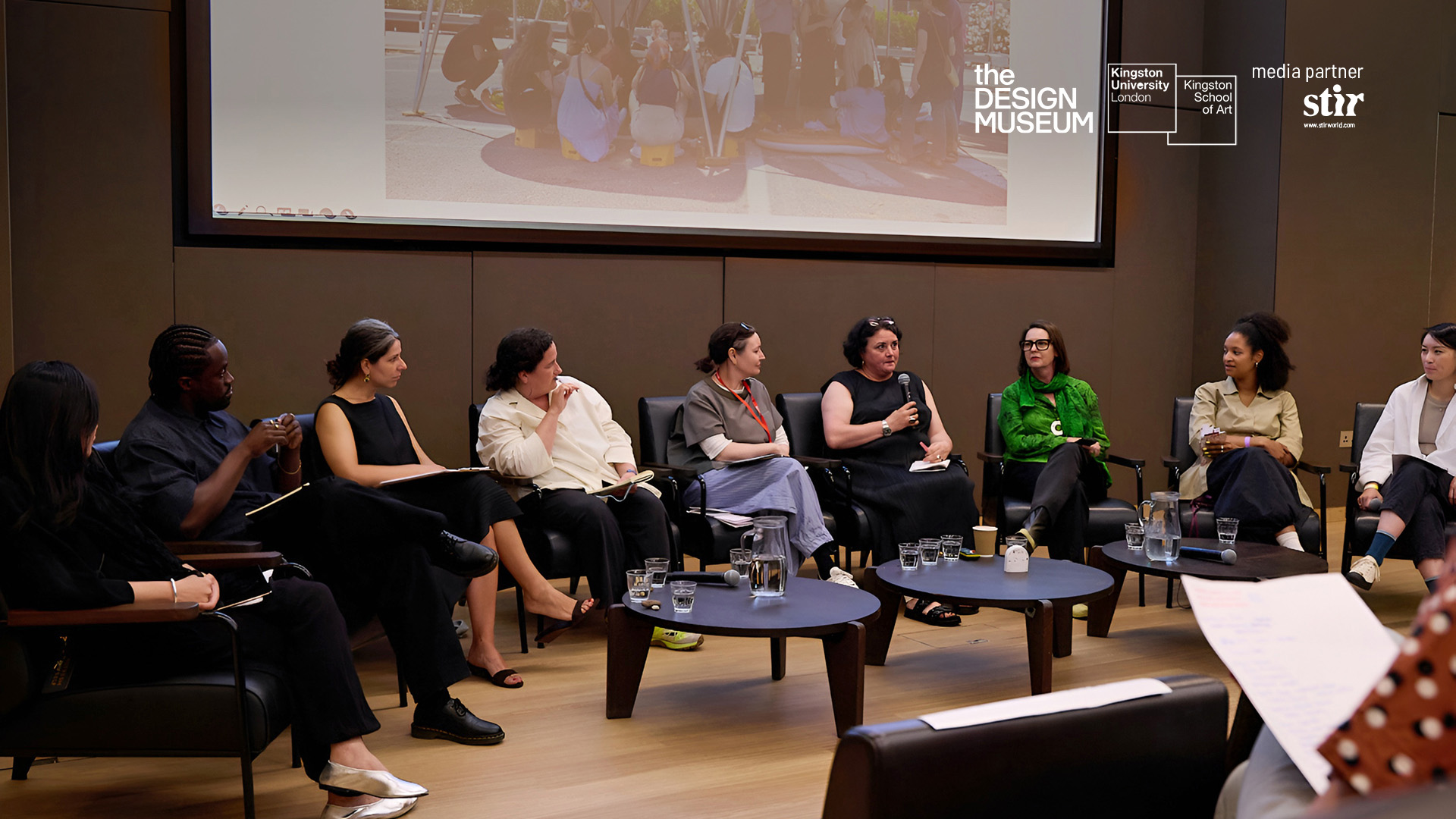
While caring for and preserving artefacts has historically been entrusted to curators, contemporary curatorial practice engages with the world in both material and immaterial ways. Likewise, design has expanded beyond form-giving towards a relationally entangled ecology shaping everyday life. As the merger of both fields is still rapidly developing, it has been eager to carve out its own unique practice and set of ambitions. To evoke a dialogue between the two, the question: How can language change the way we think about design curation, sat at the heart of the Curating Design: Between Word and World symposium at the Design Museum in London.
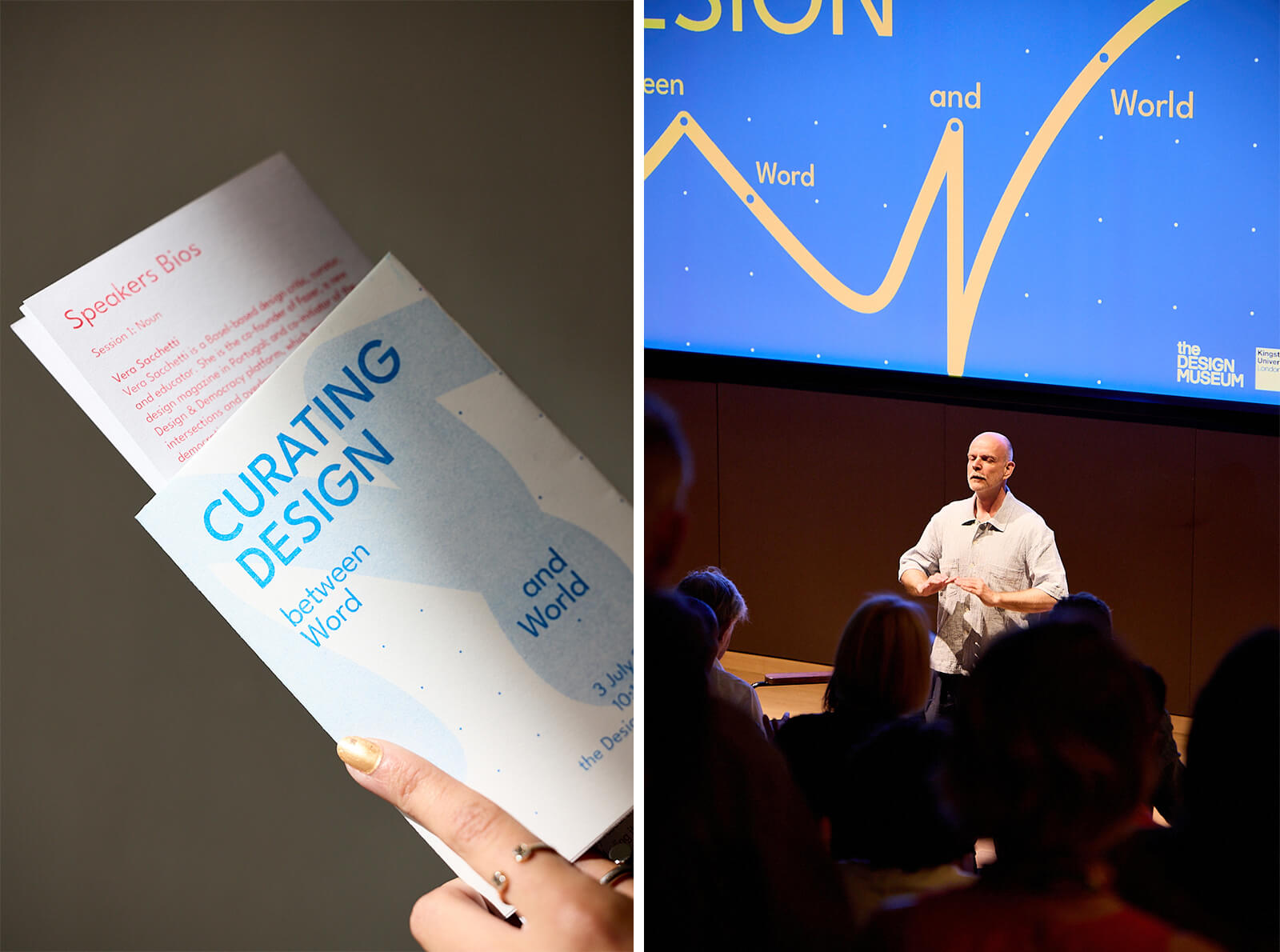
Organised by programme leaders Jana Scholze, Donna Loveday and Alison Moloney, alongside an alum research group, the symposium marked 25 years of the MA Curating Contemporary Design, the pioneering collaboration between Kingston University and the Design Museum, London. Structured around a linguistic framework, moving from noun to adjective to verb, the day brought together an international network of curators, designers and researchers to explore design curating as an open-ended and evolving discipline.
Following a breathing exercise led by artist, designer and teacher Joseph Kohlmaier, the Noun (What?) session opened with the fundamental question: What is design curation? Not to resolve it, but to invite its examination through four provocations.
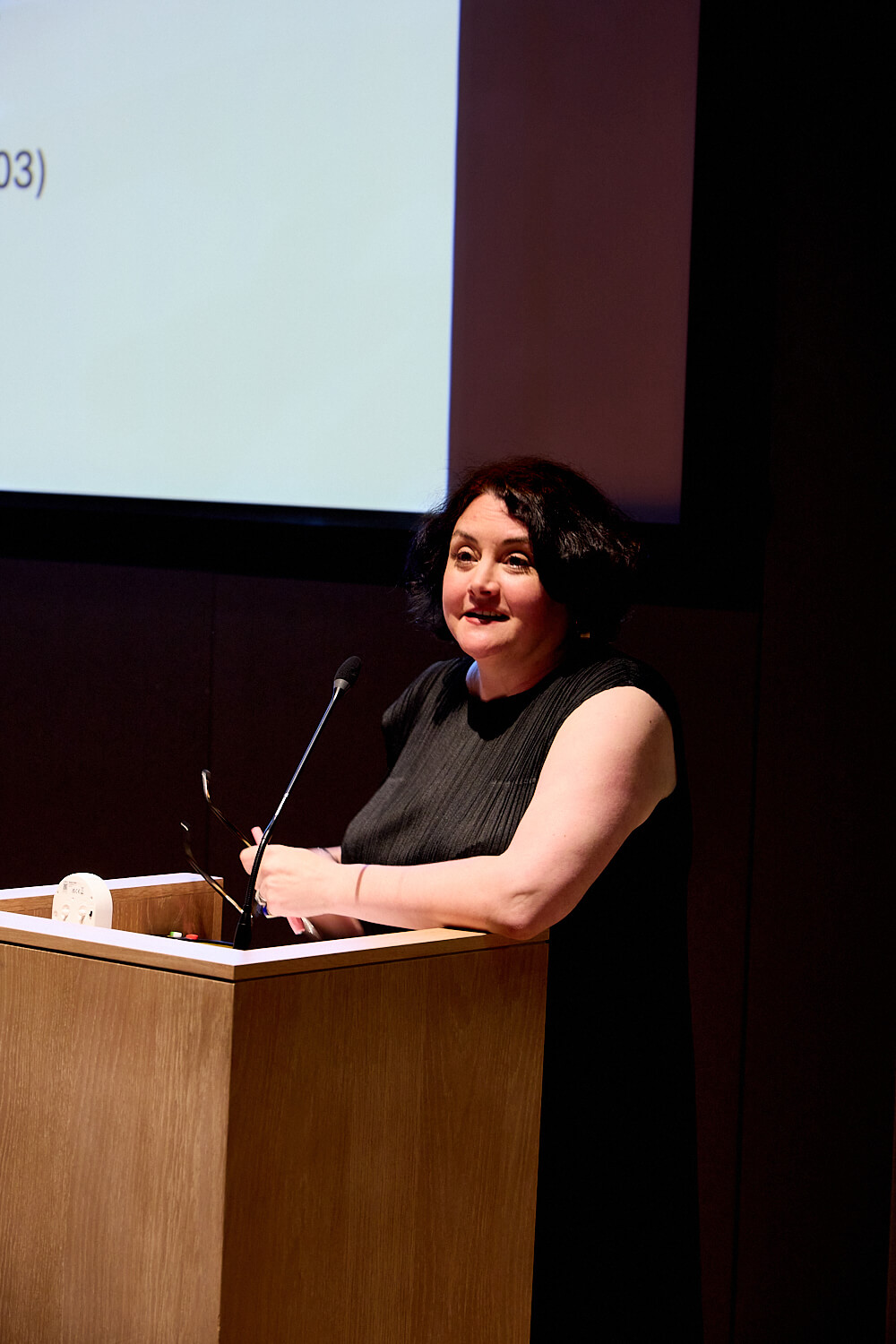
Independent curator, Catherine Ince, proposed exhibitions as spaces of encounter and productive friction, where multiplicity is an act of generosity, as she argued for radical transformation of the infrastructures that determine whose stories can and should be told.
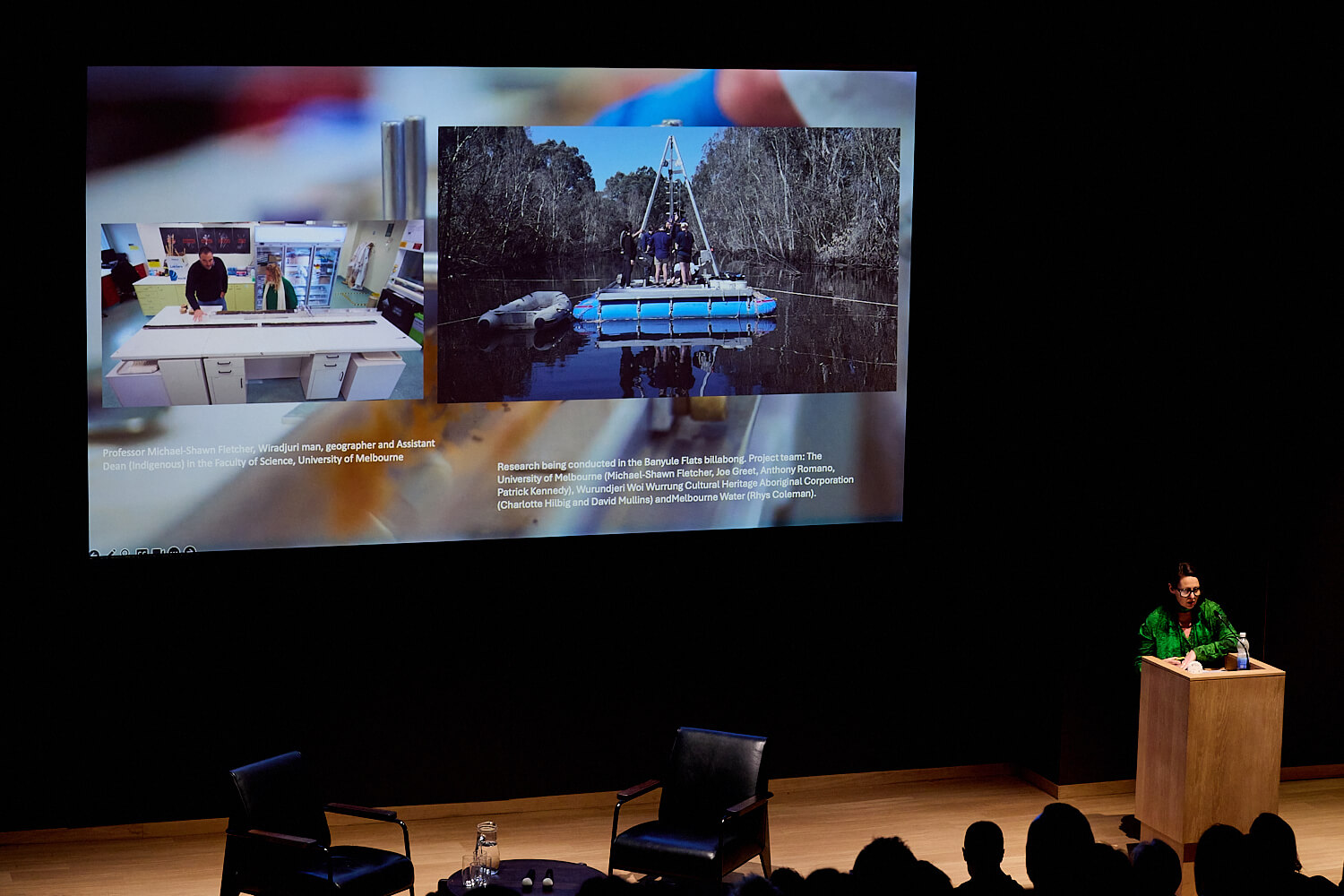
Curator and design researcher, Fleur Watson, turned towards time literacy as a curatorial tool, using geological timescales to reframe our relationship with planetary ecologies through experimentation and collective learning.
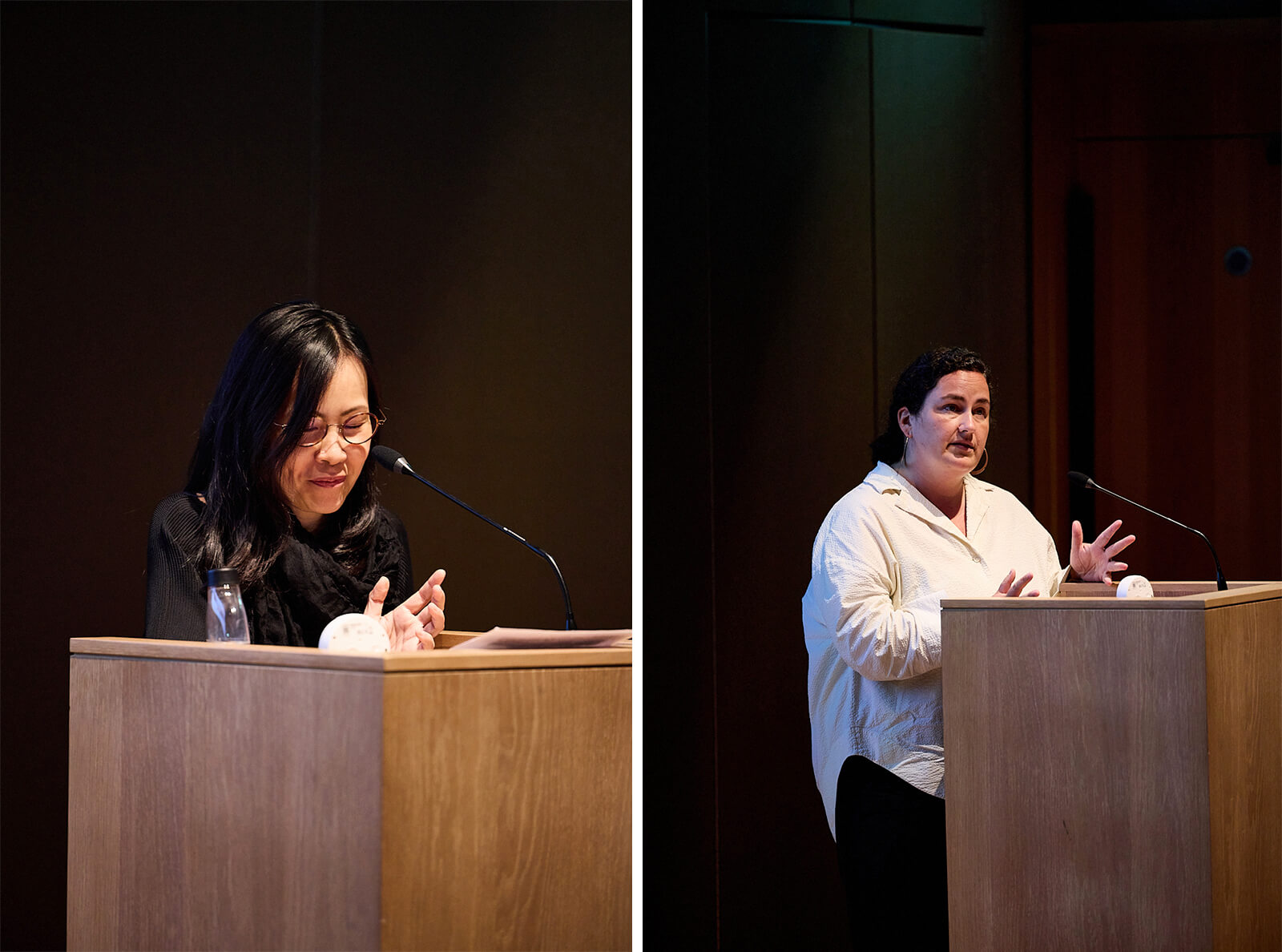
Stella Fong, head of learning at the Design Museum, highlighted the shift in the curator's role: from author and expert to steward and participant, arguing that museums must listen as much as they speak, embracing friction as a condition for dialogue, growth and transformation.
Design critic, curator and educator Vera Sacchetti opened with a clear instruction: Design museums need to change. She exemplified this through ‘Design and Democracy’, a research platform developed in collaboration with design curator Amelie Klein, in which citizens’ assemblies tackle the question of how design museums can become more inclusive and democratic. Sacchetti advocated for a shift in focus, from objects to processes, embracing institutions as a space of continual change.
Together, the provocations called for a radical transformation of curatorial practice; one rooted in collective listening, open to new interpretations and a reimagining of our relations to the planetary ecosystems, breaking down hierarchical infrastructures and embracing multiplicity.
Why as a society do we keep on digging and digging and always wanting more? It is not only extractivism as something abstract, but it is also something about ourselves, about our compulsion for wanting more. – Marina Otero Verzier
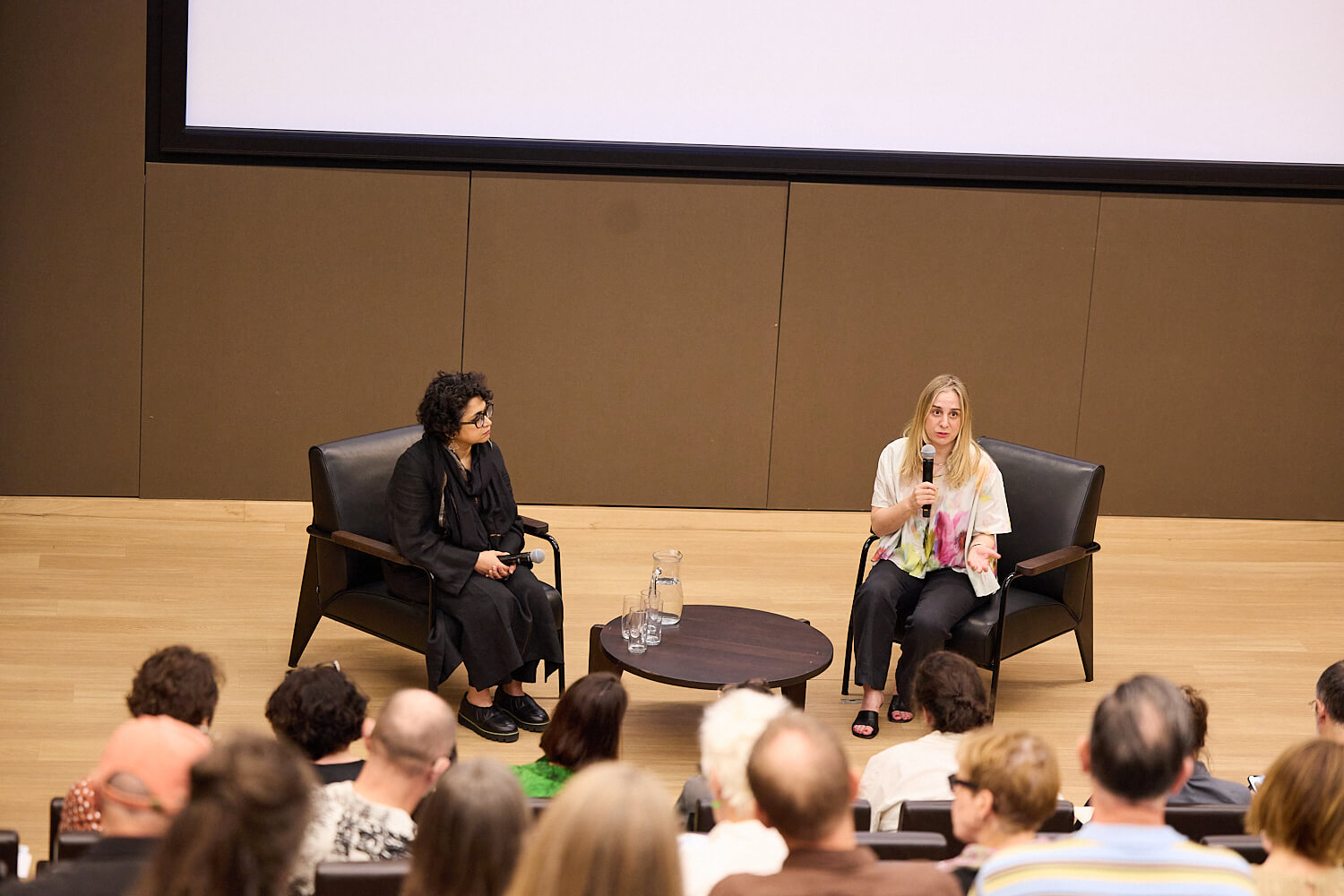
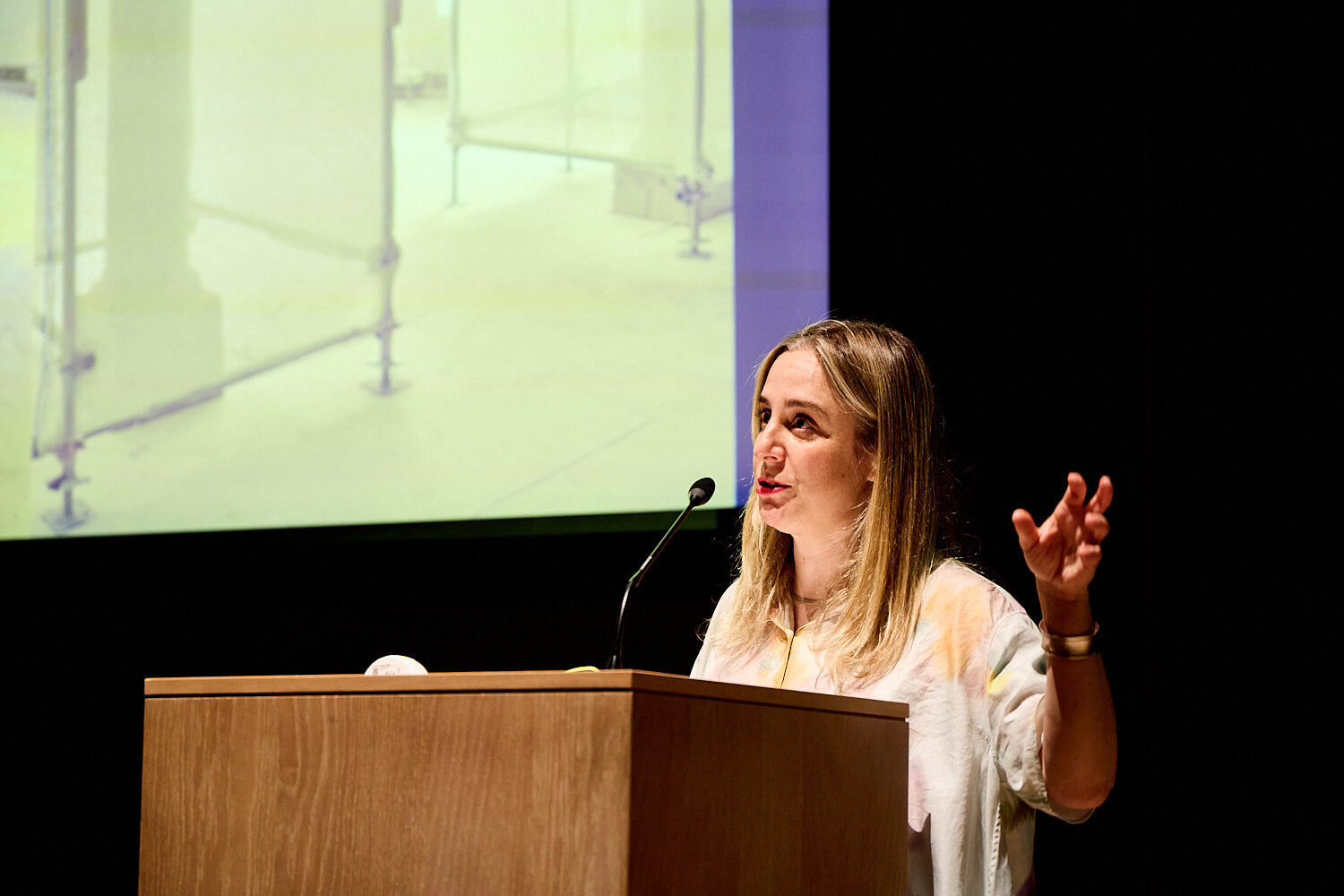
A keynote by Marina Otero Verzier challenged conventional understandings of design by examining subjects such as lithium mines, seemingly distant from daily life but deeply entangled in our modern society. Through her chosen nouns, ‘ruin’, ‘desire’ and ‘celebration’, Verzier elaborated on her activist approach where the exhibition becomes a political space working closely with local communities. “It is not possible to do activism without forms of desire. We have to find places of desire for life, living and celebrating with others.” While the Spanish architect and academic emphasised desire as a driver for change, she argued that bringing different activist and artistic practices together in the exhibition space requires commitment from all involved. As she concluded, “Exhibitions are never an endpoint, rather the starting point for something else.”
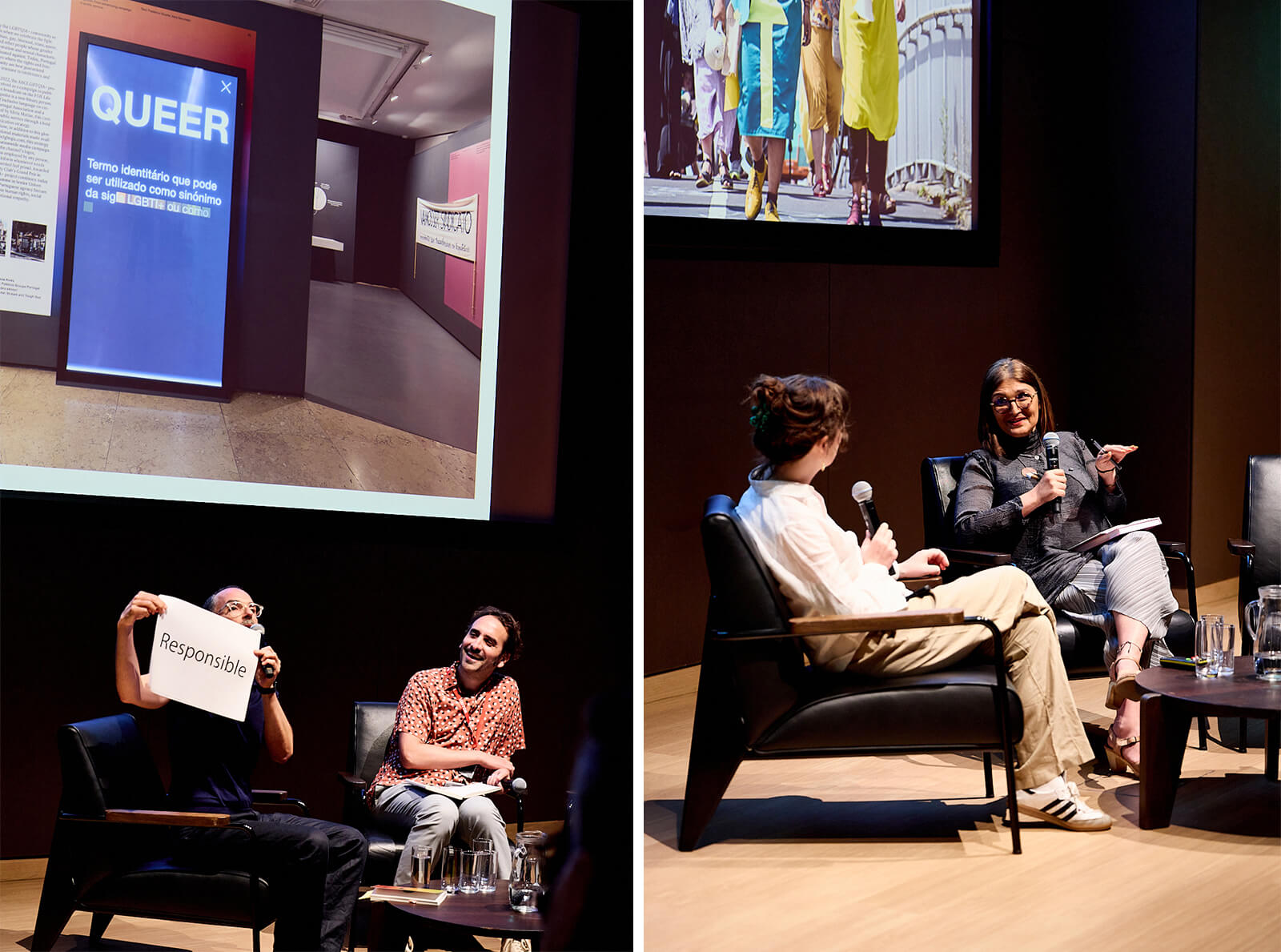
The afternoon Adjective (Why?) session turned to the ethics of curating and its relevance today. Curators Frederico Duarte and José Délano approached their theme Curating on a broken planet through an ‘adjective boxing match’, staging a series of encounters between seemingly opposing terms: responsible and feral, mongrel and speculative, sophisticated and composting. Beginning many reflections with ‘what if’, they shifted the conversation away from crisis towards possibility, positioning curating as a practice of transformation, dialogue, agency and mobilisation through which new alternative futures might be imagined.
In Curating with commons, curator Natalie Kane and educator and designer Torange Khonsari took a conversational approach, exploring the role of cultural projects within communities. Khonsari emphasised “a key moment of transformation is when the guest becomes the host”—one that requires time, resources, governance, trust building and relationship building to provide the necessary depth. Kane built on this thinking, highlighting the importance of understanding existing care networks, and approaching communities as a ‘generous collaborator’. Together, they shared how successful cultural projects must contribute beyond the timeframe of production, nurturing relationships that can continue to grow.
Design doesn’t exist without social context. – Catherine Ince
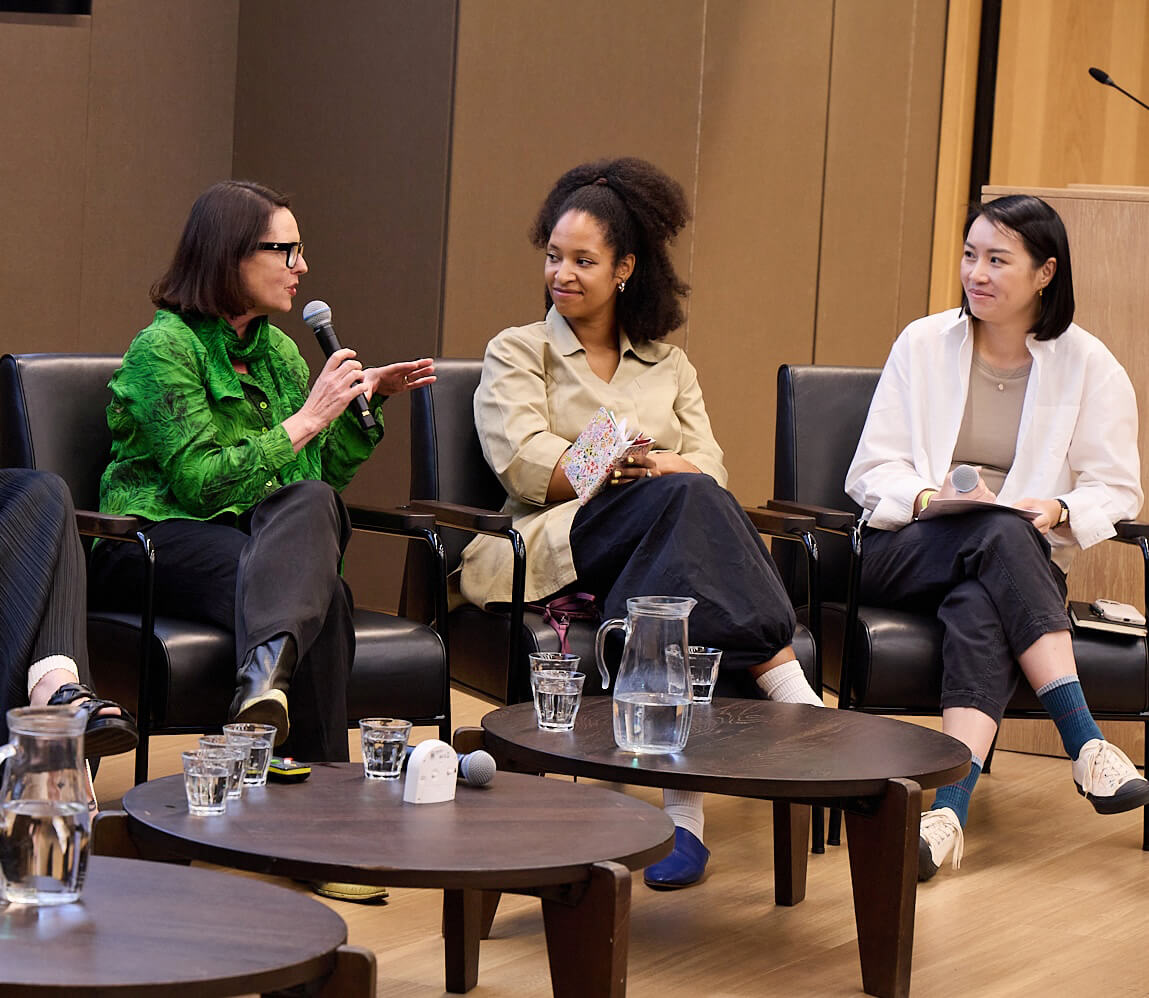
The final session of the day, Verb (How?), was a long conversation between four design practitioners, the provocateurs and the audience, where the designers responded to the provocations through the lens of their practice. Responding to Fong, Larry Botchway questioned who has authorship. When he works on co-design projects, the synergies of knowledge need to be recognised as they are in constant development. Assumptions must be challenged while learning from lived experiences. Sabrina Morreale from Lemonot further unpacked Watson’s provocation through the ideas of convivialism and thinking through making by allowing the freedom for questioning and reflecting. Judith Clark resonated with Ince’s statement through the lens of pleasure activism in fashion curation. How can pleasure be reflected outside the capitalist system of fashion? As a final response to Sacchetti, Neba Sere encouraged an openness to the unexpected, describing curation as a constant negotiation in which “frustrations are good starting points”. She highlighted the need to embrace oral histories and lived experiences, acknowledging their role in expanding whose voices and perspectives are represented.
The day closed as it had begun, with Joseph Kohlmaier guiding the room into an embodied moment of reflection. Using pebbles to create collective rhythms and silences, he returned participants to the act of listening, reminding us all that understanding is shaped not only through discussion but also through attention and shared experiences.
Throughout the symposium, possibilities over certainties emerged repeatedly, not only through the ideas discussed, but through the structure and language of the programme itself. The movement from noun to adjective to verb transformed language from a means of definition into a method of inquiry—a way of questioning what curating is, how it operates and what it might become. Provocations raised questions rather than conclusions; the keynote reflected on expanded perspectives; dialogues created space for tensions and contradictions; while collective meditation introduced different rhythms of engagement, reminding participants that learning and understanding are rarely immediate or linear, but require time, patience and attentiveness. Across these varied modes of exchange, the symposium advocated that the future of curating may lie less in producing definitive narratives and more in cultivating conditions for encounter—embracing productive tensions, welcoming multiplicity and creating spaces for new relationships, ideas and transformation to emerge. In this sense, the conference became not only a conversation about curating, but an embodiment of the values it explored: design curation as a living, evolving practice, constantly moving between word and world.
by Chahna Tank Oct 08, 2026
Javier Guzman Cervantes and Ulises Morin Arzola tell STIR about their ‘open code’ approach to design, working through a process of stockpiling and the idea of ‘queering’ materials.
by Mrinmayee Bhoot Oct 08, 2026
The game designer discusses their work and its manipulation of scale, scientific data and non-human perspectives to create speculative futures in conversation with STIR.
by Pranjal Maheshwari Oct 07, 2026
Under the theme R.A.W. (Rebel Authentic Worth), one of Europe’s most awaited design festivals returns for its 26th edition to investigate solutions for a world in crisis.
by Chahna Tank Oct 03, 2026
Wooden chairs by the Chilean designer reveals handmade forms and painted details that weave memories, literary references and personal stories.

make your fridays matter with a well-read weekend
Enter your details to sign in
Don’t have an account?
Sign upOr you can sign in with
a single account for all
STIR platforms
All your bookmarks will be available across all your devices.
Stay STIRred
Already have an account?
Sign inOr you can sign up with
Verification link sent to check your inbox or spam folder to complete sign up process
Tap on things that interests you.
Select the Conversation Category you would like to watch
Please enter your details and click submit.
Enter the 6-digit code sent at


Between Word and World: Creating new languages for curating design
by Lisa Marie Sneijder, Kate Dooley | Published on : Jul 22, 2026


 Sign in with Google
 Sign in with email
What do you think?