Design08 mins. read
Between Tides becomes a playground fostering community through public art
by Chahna TankAug 08, 2026



by Mirra LynnPublished on : Nov 09, 2026
In the 1970s, the position of a DJ booth could say quite a bit about a nightclub. In an account comparing the disco scenes of Montreal and Toronto in 1977, cultural theorist Will Straw recalls a distinction drawn by Billboard magazine between the two cities. In Montreal, DJ booths tended to sit low, close to the dance floor, allowing club-goers to approach the DJ, exchange a few words and inspect the records being played. In Toronto, by contrast, DJs were more often sequestered in elevated booths, their selections and techniques distanced from the crowd. The difference was not merely a matter of nightclub architecture; it shaped how people encountered music and the relationship between those who played it and those who gathered to listen. Recalling this curious spatial hierarchy, Straw, a scholar of popular music and urban culture, quips: “The bad article on dance clubs yet to be written is the one which will discuss the DJ booth as a Foucauldian panopticon.”
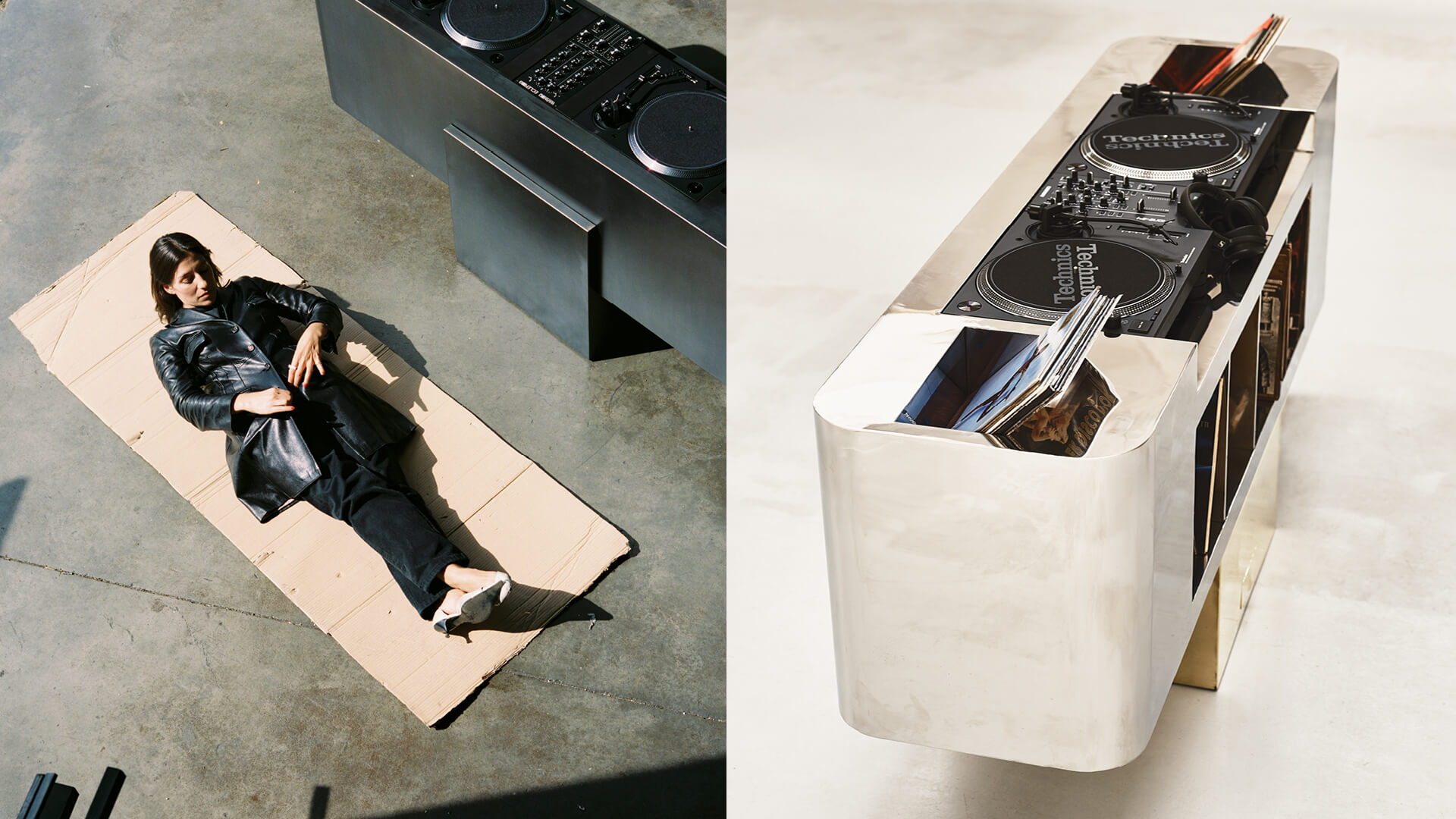
Straw's joke points to an enduring peculiarity of the DJ console. The DJ booth, it seemed, was never quite just a place to put the turntables; it was an object organised around performance, but also one that established a particular relationship between the performer and their audience—its placement can invite proximity or enforce a boundary. With the X Deck, New York- and Paris-based design studio Slash Objects approaches this established piece of nightlife infrastructure through the language of contemporary furniture design. Designed by studio founder Arielle Assouline-Lichten, the console brings the functional apparatus of DJing into the vocabulary of collectible design, considering how an object built around music might also shape the space and culture in which it is heard.
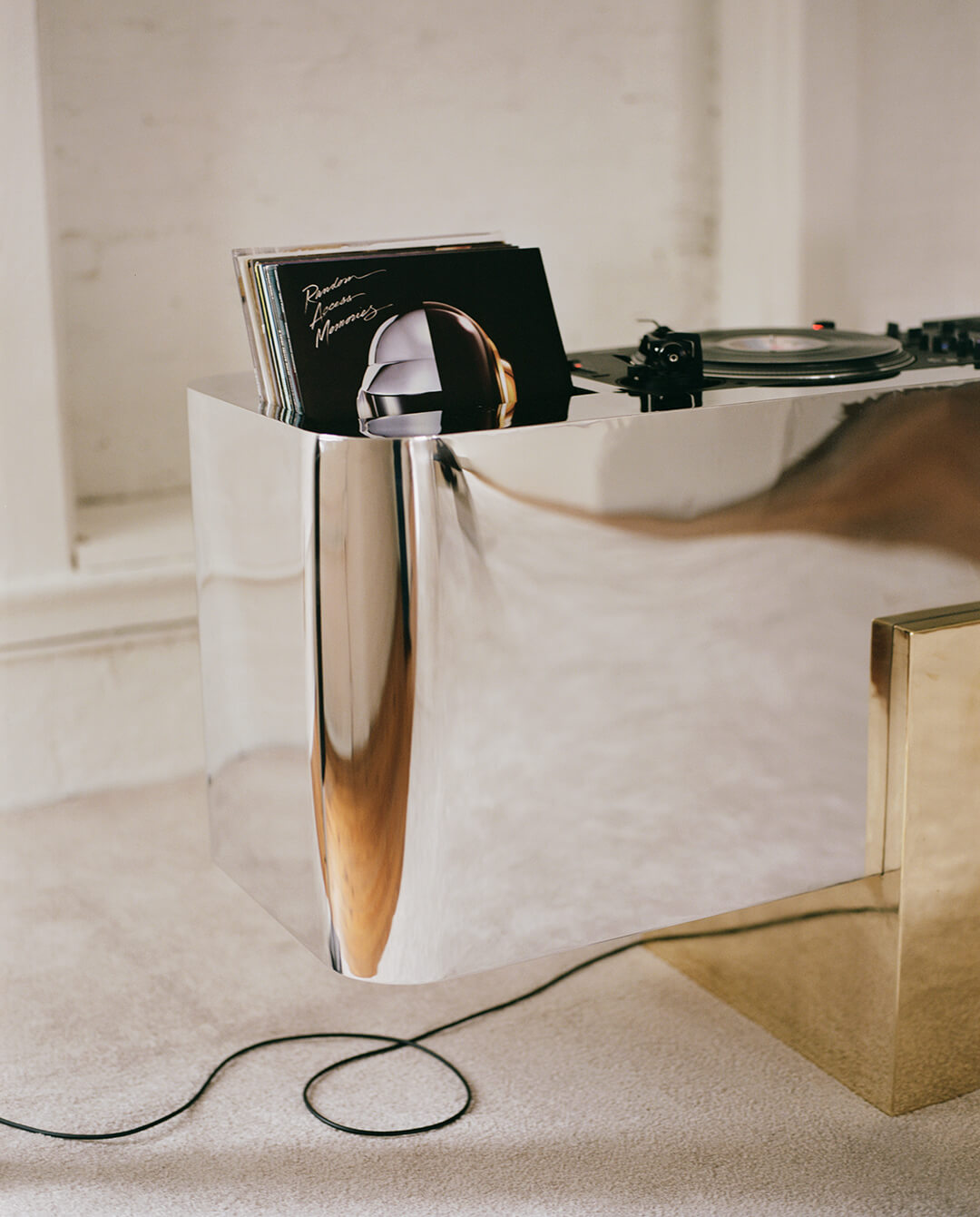
Made of stainless steel and brass, the X Deck brings together turntables, a mixer and dedicated vinyl storage within a unified furniture form. Its geometry is restrained, but its material presence is anything but recessive. Reflective surfaces catch the light and fragments of the surrounding interior, while the contrast between the cool sheen of stainless steel and the warmth of brass lends the composition a measured opulence. The console occupies an intriguing position between industrial precision and decorative expression: its construction speaks to the technical demands of its use, while its finish gives it the presence of an object intended to be encountered and savoured beyond its functionality.
The choice of materials also places the design in conversation with the mixed-metal furniture of Gabriella Crespi, whose work from the 1970s Assouline-Lichten cites as an influence. Crespi's objects often negotiated the boundary between furniture and sculpture, bringing together polished metals, geometric volumes and an almost jewellery-like attention to finish. Her work demonstrated how industrial materials could acquire a sense of intimacy and ornament without surrendering their structural clarity. The X Deck draws on a related sensibility, but it translates this material vocabulary into a piece shaped by the particular demands of its time, of contemporary music-making. Its glamour is not an applied flourish but a consequence of the relationship between its components and its context.
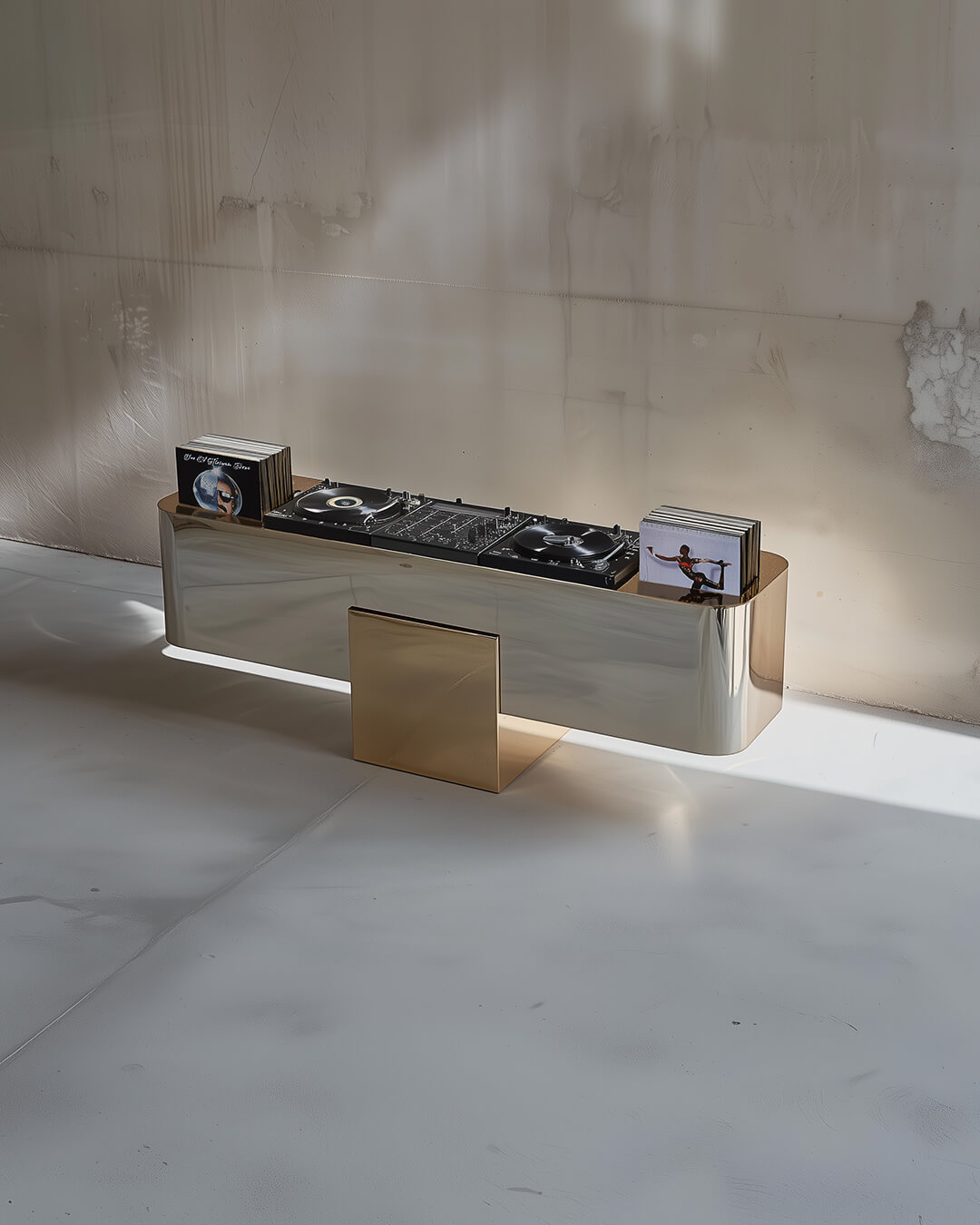
That relationship becomes especially apparent in the treatment of the records themselves. Integrated storage keeps vinyl within reach, while the sleeves introduce an additional visual register to the console's metallic composition. Assouline-Lichten has noted that the artwork on the records is reflected in the table, allowing the collection to become part of the object's changing appearance. Album covers, with their typography, imagery and colour, are thus folded into the furniture's visual language.
There is also a particular significance to making the records visible. Vinyl listening is an activity structured by gestures that digital interfaces have largely rendered invisible: browsing, selecting, handling, placing and turning over a record. Each involves a negotiation between the listener and the music, a sequence of tactile decisions that precedes and accompanies the sound itself; the hand decides before the ear.
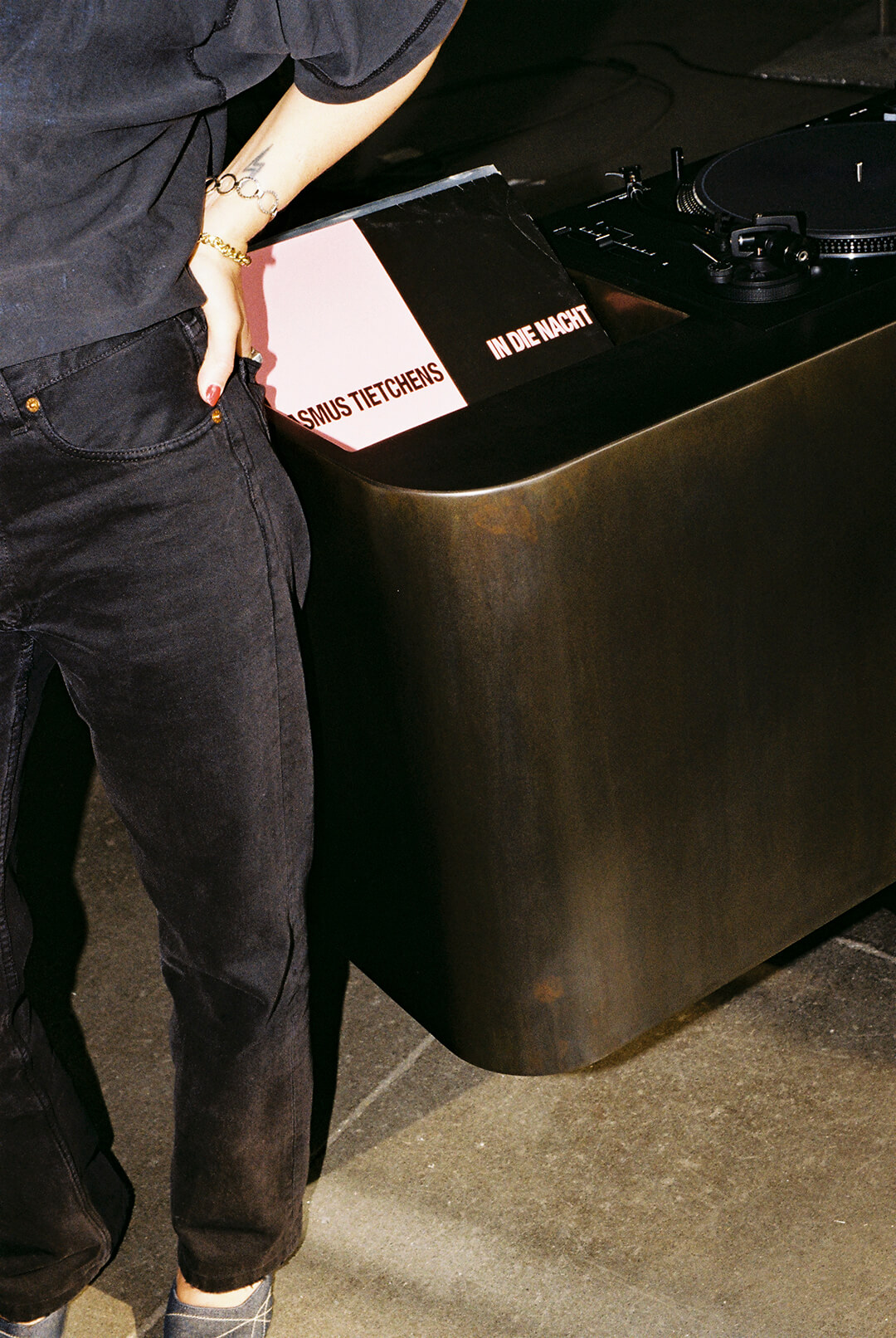
This is where the console's functional considerations become inseparable from its formal ones. Turntables, mixing equipment and amplification require particular clearances, accessibility and cable management. The design brings these demands into a single arrangement, allowing the technical apparatus to retain its clarity while maintaining the identity of the overall form. The X Deck is therefore not an exercise in disguising technology as furniture, but an attempt to make the requirements of present-day music-making integral to the design, rather than treating them as obstacles to its appearance.
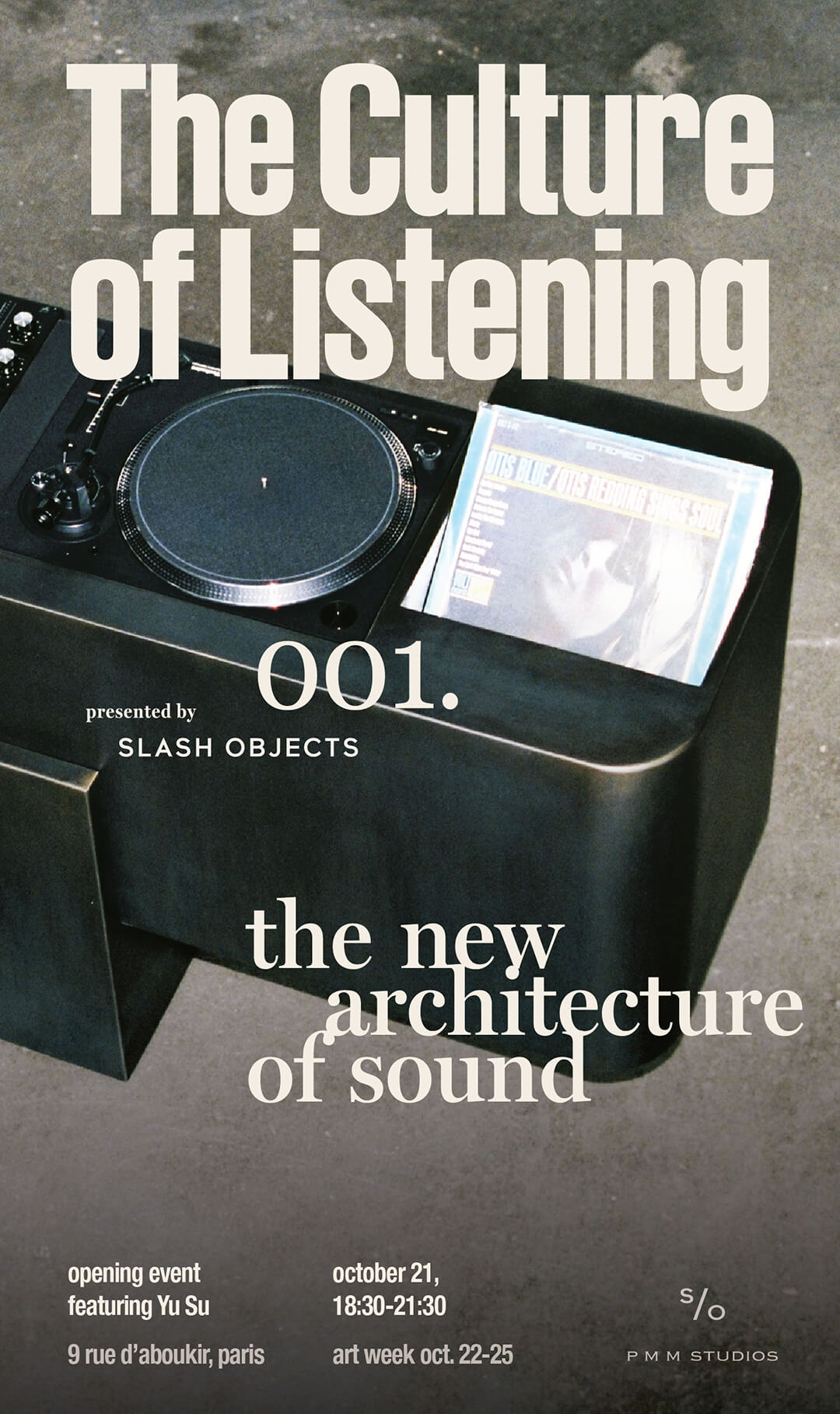
The object also anchors The Culture of Listening, an ongoing research project developed by Slash Objects in collaboration with PMM Studios. Conceived as an inquiry into the relationship between sound, design and social space, the project considers how contemporary environments might accommodate more attentive and collective forms of listening. Its first chapter, The New Architecture of Sound, was presented at Espace Victoire during Art Basel Paris 2026, with the X Deck: Anthracite at the centre of a listening environment. The presentation extended the console's concerns beyond its immediate function, bringing the object into a wider discussion about the spatial and cultural conditions through which music is experienced.
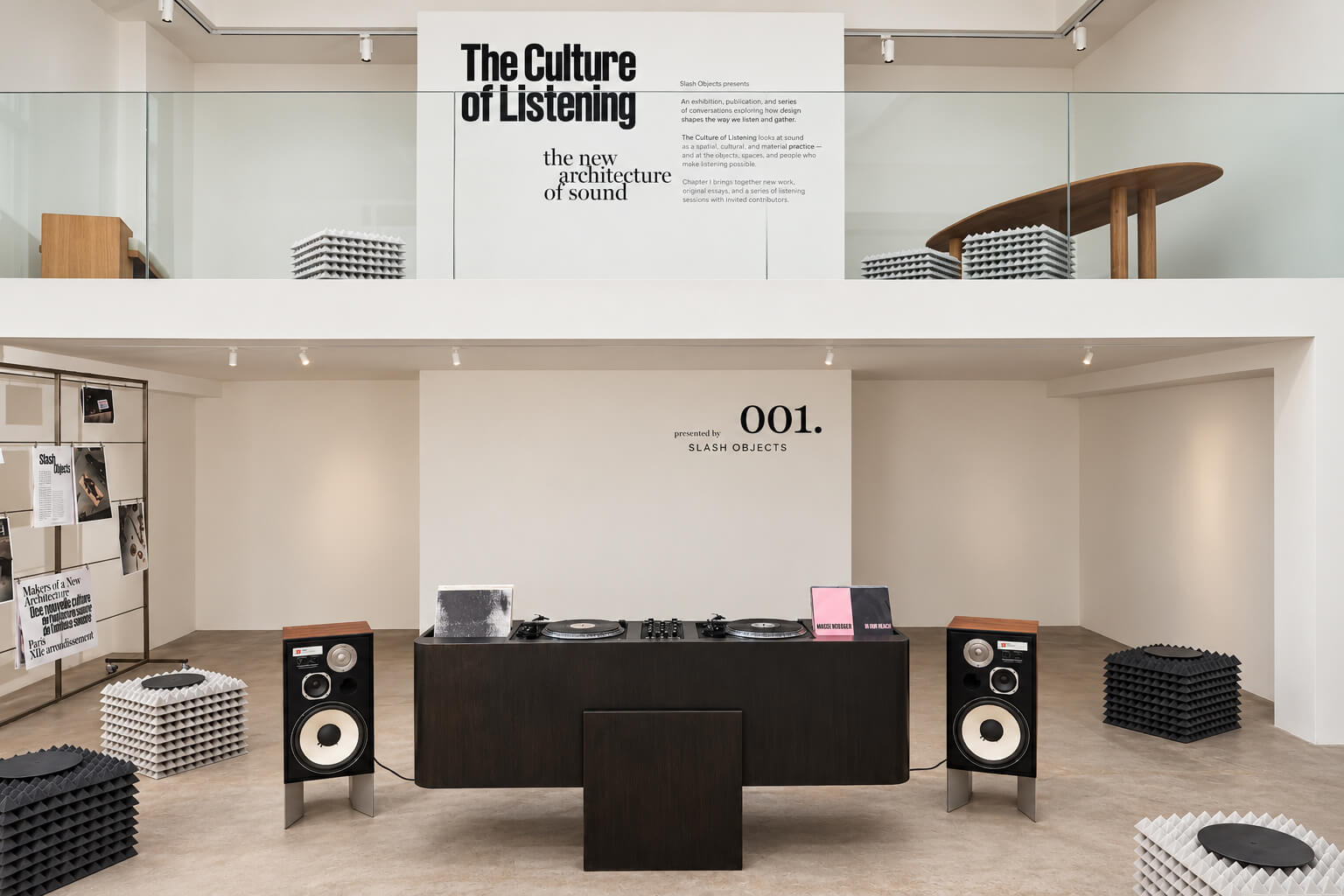
The proposition has precedents in the history of listening spaces. Japan's jazz kissa, for instance, cultivated an attentive relationship between recorded music and the interiors in which it was played. These cafés were often organised around substantial speaker systems and carefully constructed seating arrangements. The sound system was not incidental equipment but the defining presence within the room and the act of listening. Though the X Deck belongs to a different design and cultural context, the comparison draws attention to a shared concern: the apparatus through which music is heard can shape the nature of listening itself.
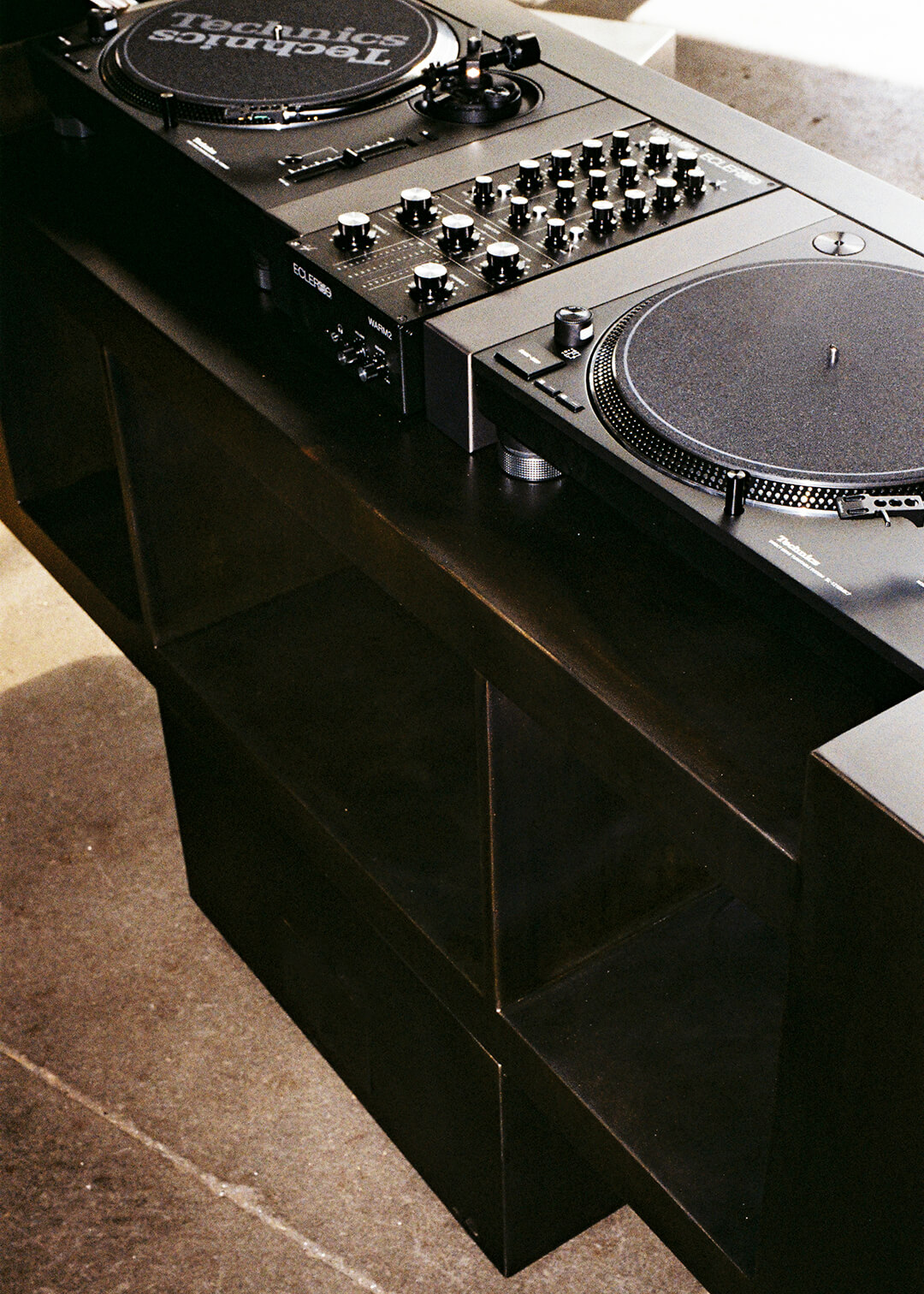
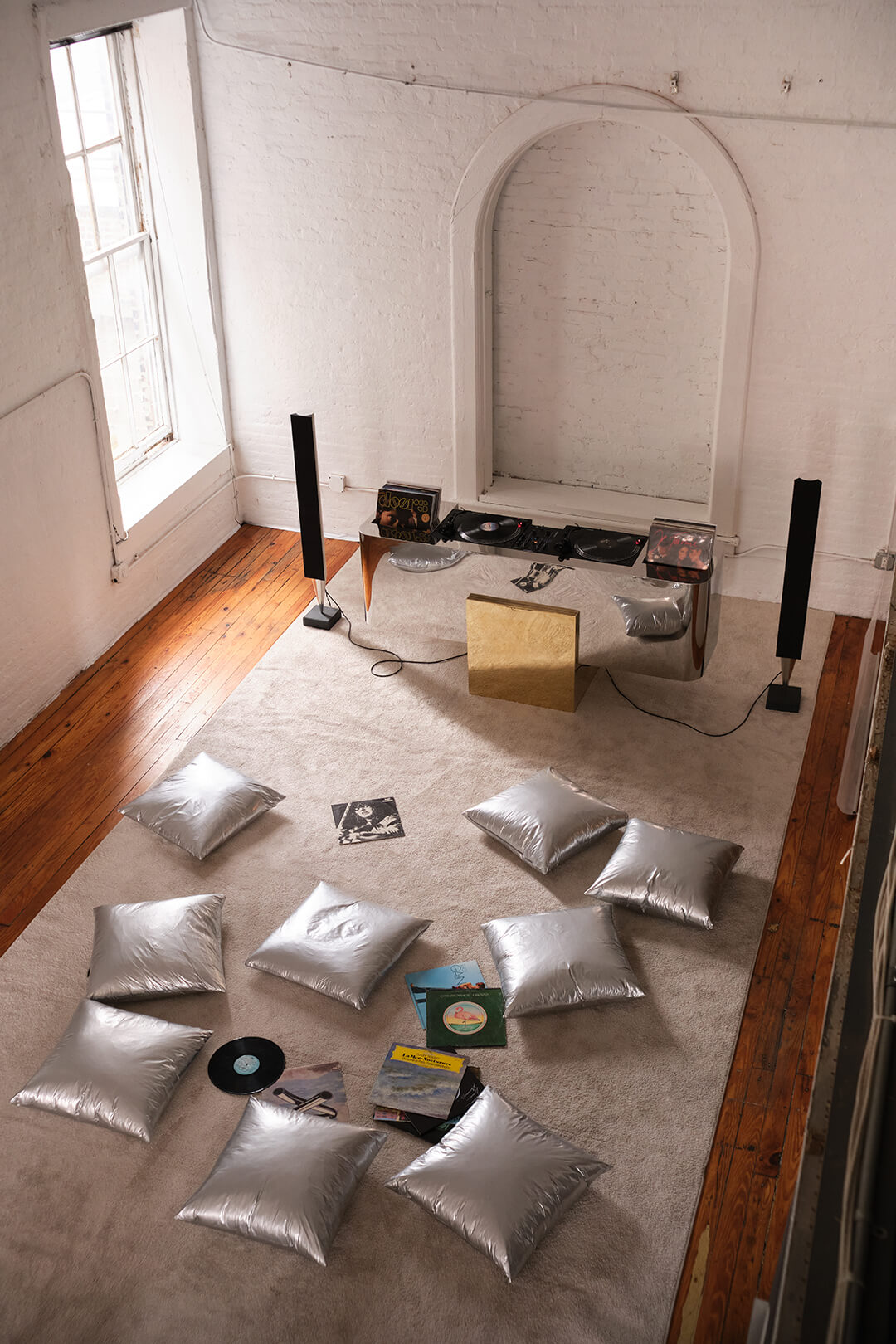
The DJ console occupies a particularly important position within this environment—it is where music is selected, mixed and performed, but also where the attention of a room converges, like moths to a flame. The DJ is both immersed in the technical decisions of a set and visible to those gathered around it. In this sense, the console mediates fluidly between individual expression and collective experience. The X Deck's presence as a considered piece of furniture brings this relationship into focus, inviting us to understand the console not simply as a workstation, but as an opulent organising element within an interior.
Music, meanwhile, is increasingly finding a place in galleries, museums and other cultural spaces through DJ programmes, performances and sound-based installations. These encounters complicate environments traditionally organised around looking, introducing experiences that unfold through listening, duration and shared attention. This also makes the design of the spaces where music is encountered a significant area of pondering. The quality of a listening experience depends not only on the sound being produced, but on the objects, arrangements and social conditions that allow it to take place.
With the X Deck, Slash Objects approaches this question at the scale of a single object. Its mixed-metal construction, integrated equipment and visible vinyl storage bring the technical apparatus of DJing into the language of collectible furniture. If the elevated DJ booth once dramatised the distance between the person playing music and the crowd, the X Deck proposes a more dynamic relationship between the console and the space it inhabits, contributing to the visual character of interiors through its form, materiality and craftsmanship.

by Pranjal Maheshwari Nov 05, 2026
A conversation with the founder of Estudio Material explores his pursuit of merging the natural and the manufactured, a defining thread that runs through his collectible designs.
by Jincy Iype Nov 03, 2026
Two realised visions from the 11-piece Flight of Nostalgia collection brought vintage forms, natural imagery and craftsmanship to the LIVinSET at ADFF:STIR Mumbai 2026.
by Zohra Khan Oct 29, 2026
Speaking with STIR, the Dutch industrial designer talks about the intelligence of hands, expanding the language of colour and opening whispering dialogues with objects.
by Pranjal Maheshwari Oct 28, 2026
Lidewij Edelkoort and Philip Fimmano invite over 100 global designers for a multidisciplinary showcase that channels their inherent curiosity and whimsy as hope in desolate times.

make your fridays matter with a well-read weekend
Enter your details to sign in
Don’t have an account?
Sign upOr you can sign in with
a single account for all
STIR platforms
All your bookmarks will be available across all your devices.
Stay STIRred
Already have an account?
Sign inOr you can sign up with
Verification link sent to check your inbox or spam folder to complete sign up process
Tap on things that interests you.
Select the Conversation Category you would like to watch
Please enter your details and click submit.
Enter the 6-digit code sent at


Slash Objects reimagines the DJ console as an object of contemporary design
by Mirra Lynn | Published on : Nov 09, 2026


 Sign in with Google
 Sign in with email
What do you think?