Architecture05 mins. read
Emerging Objects studio creates 3D printed mud objects at the scale of architecture
by Zohra KhanOct 31, 2019



by Pranjal MaheshwariPublished on : Nov 17, 2026
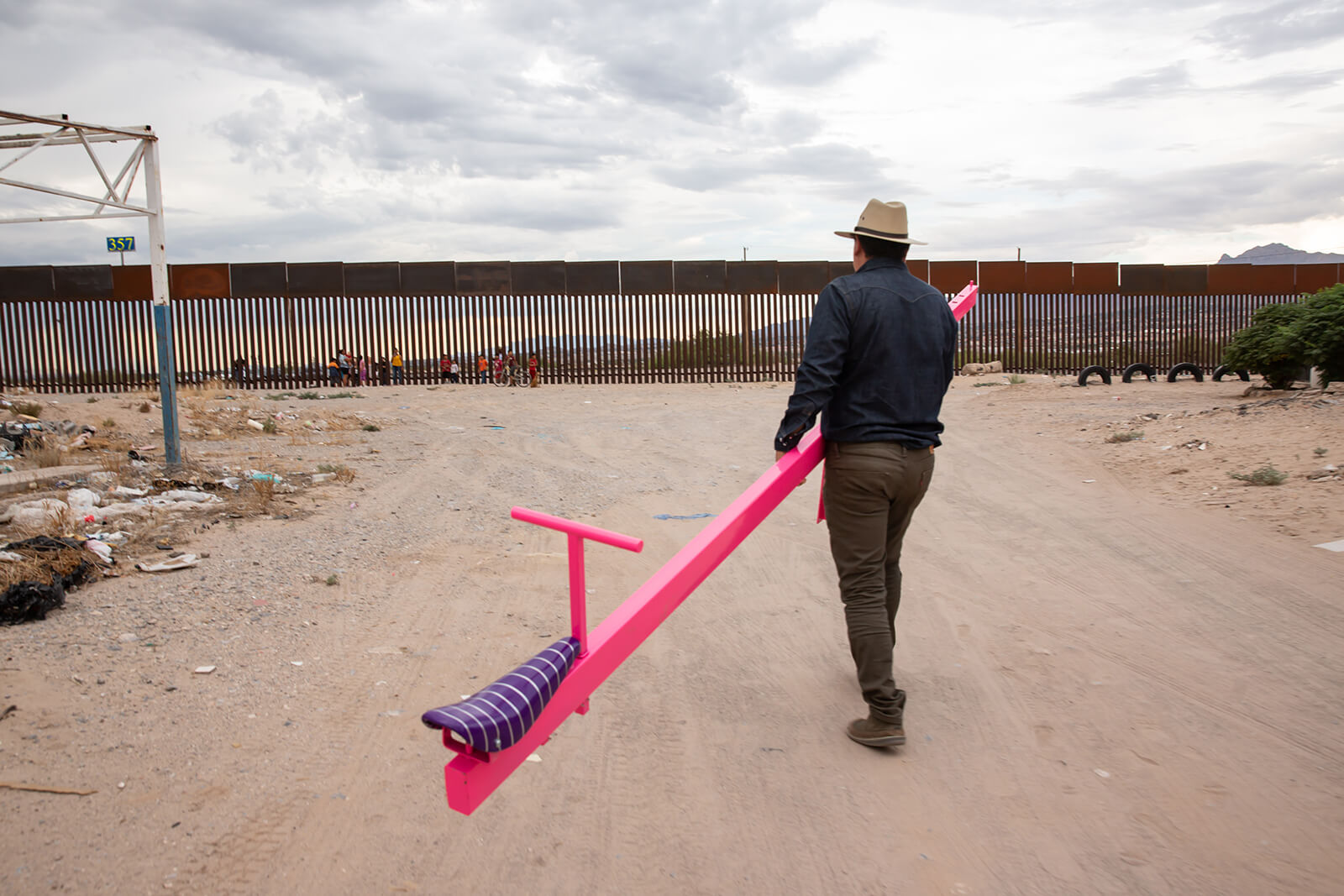
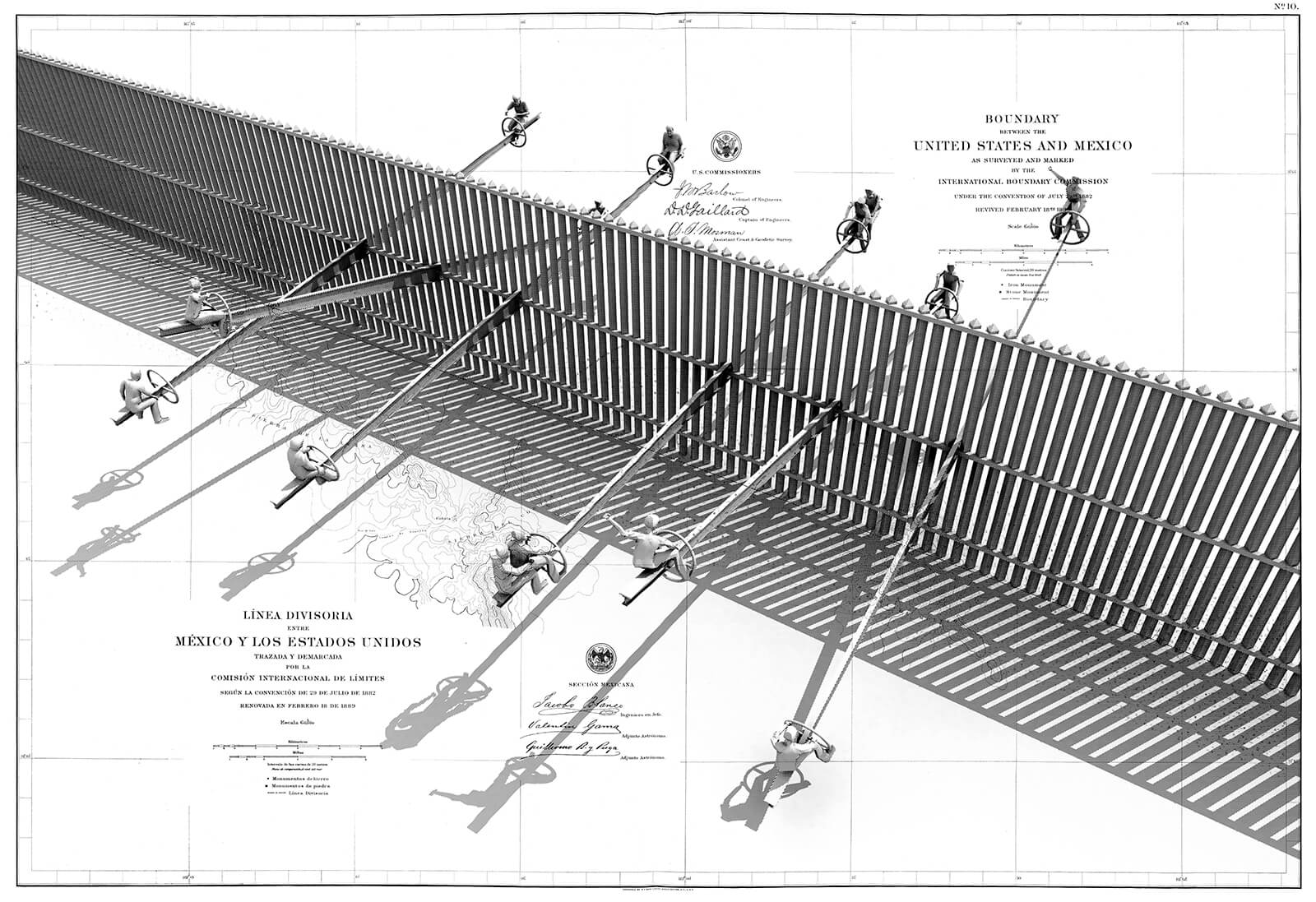
It is the morning of July 28, 2019, in Ciudad Juárez, Mexico. Three men run towards the recently strengthened US-Mexico border wall, each carrying a bright pink metal beam. As they reach the wall, they thrust the beams through the gaps between the wall’s metal bollards, only to be met by waiting hands on the other side, at Sunland Park in New Mexico, US. In the blink of an eye, this US-Mexico border region has become a spectacle, a joyful one: three teeter-totters are now installed across it, with kids and adults alike taking turns playing on them. The borderland echoes with innocent laughter and pure delight. Even the patrol officers are simply watching; after all, it is people playing on harmless seesaws. Soon enough, the event made headlines as the Teeter-Totter Wall, all across the world.
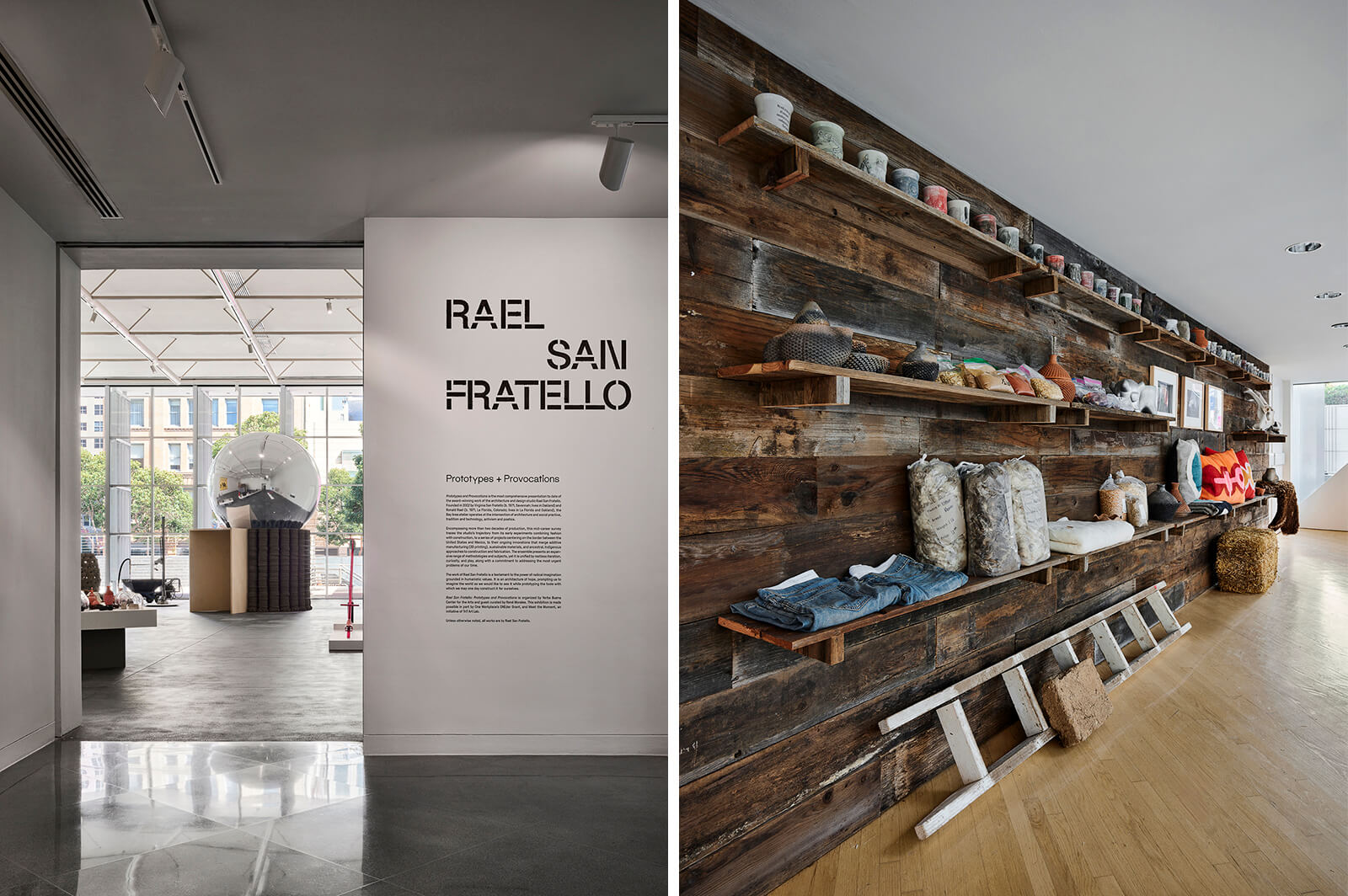
The event that lasted for barely 40 minutes was a design intervention conceptualised a decade earlier by Oakland-based architect Ronald Rael and artist Virginia San Fratello. Since 2002, the duo has led Rael San Fratello (RSF), a multidisciplinary design studio operating at the intersection of architecture, art, social practice, tradition, activism and technology. Nearly 25 years later, the collaborative practice is displaying a mid-career retrospective at the California-based contemporary arts centre, Yerba Buena Center for the Arts (YBCA), through January 31, 2027. Guest-curated by Chicago-based independent curator René Morales, the showcase, titled Rael San Fratello: Prototypes and Provocations, traces the studio’s experiments exploring the role and influence of architecture in shaping the world: from the early fashion-construction hybrid concepts and projects across the border, to the recent material investigations in construction and fabrication that blend non-conventional alternatives with Indigenous systems by leveraging 3D printing technology.
Born in the San Luis Valley of Colorado in the 1970s, Rael was raised in a society carrying the remnants of the Indigenous slavery system and a landscape with a fading borderland history. Many themes across the studio’s work can be understood as direct responses to the nearly forgotten traditional knowledge and rampant social and political injustices he witnessed growing up. San Fratello’s work spans design education, entrepreneurship, architecture and advanced manufacturing technologies. Together, the duo has set out to imagine a sustainable and equitable world by utilising architecture as a medium of both articulation and contention of power. As an official release of the exhibition states, “The work of Rael San Fratello is a testament to the power of radical imagination grounded in humanistic values. It is an architecture of hope, prompting us to imagine the world as we would like to see it while prototyping the tools with which we may one day construct it for ourselves.”
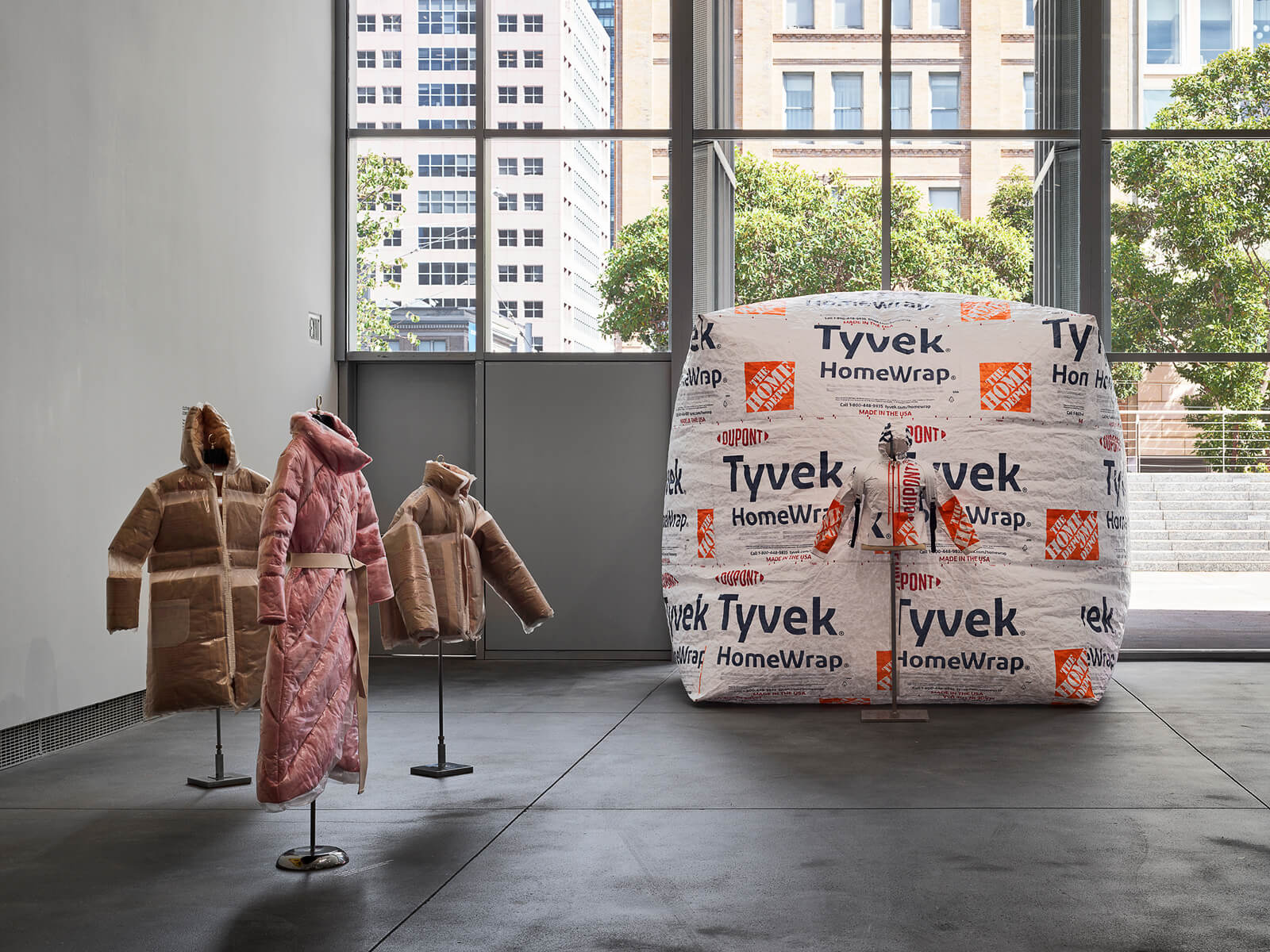
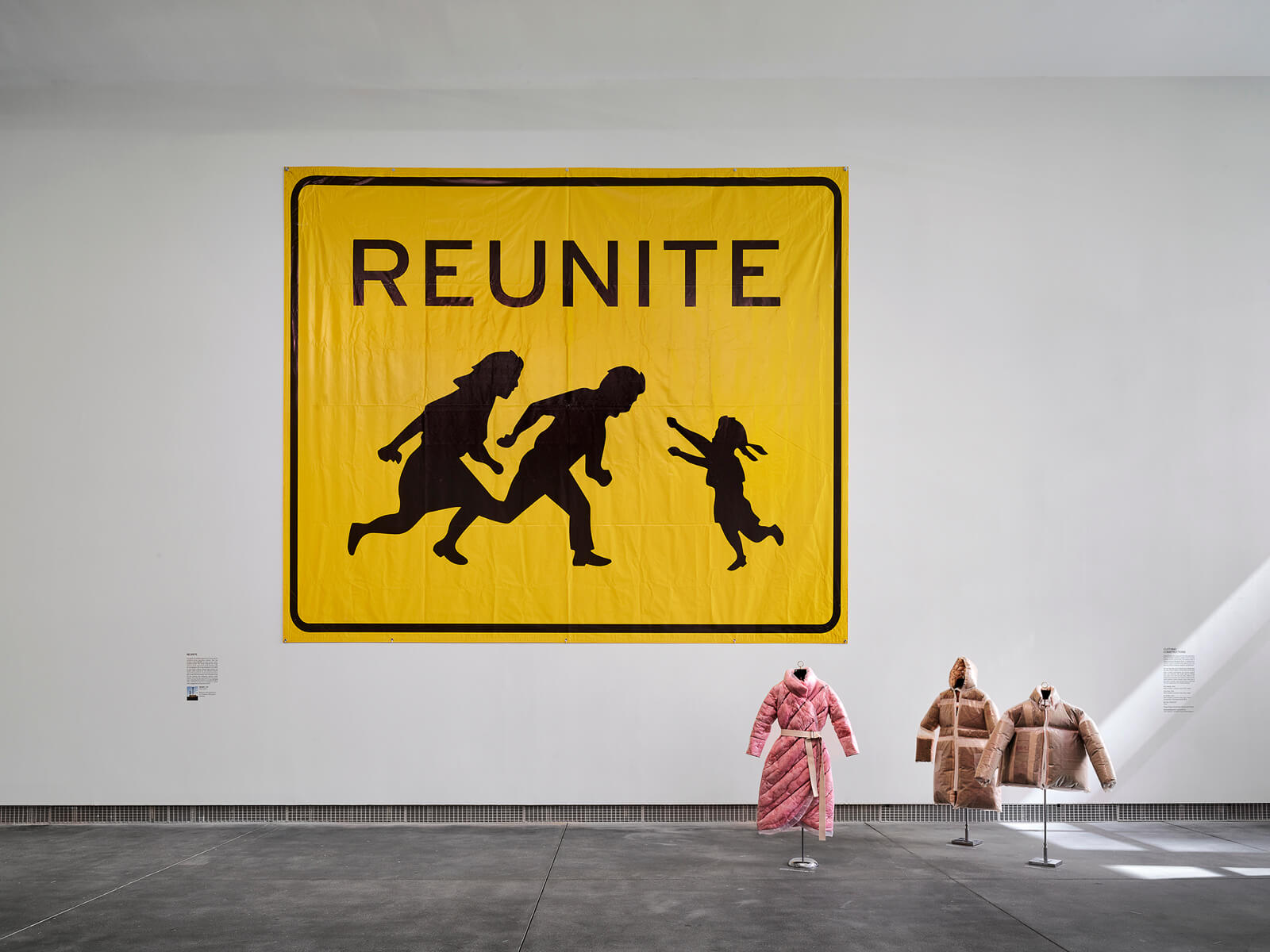
The design and architecture exhibition comprises artworks, architectural prototypes and even film screenings. The Jacket, Coat and Vac Pac designs from 2004 reinterpret clothing as a kind of mobile home, an architecture at an intimate, closely humanised scale. The Jacket and Coat, now accompanied by their recently commissioned Puffer counterpart, are made of Owens Corning Fibreglass batts, a popular insulation material, while the Vac Pac jacket is manufactured from Tyvek, a moisture-resistant material used in residential construction, that can be inflated to form a makeshift tent. The attire is envisioned as utility tools in case of emergency shelter and for the unhoused.
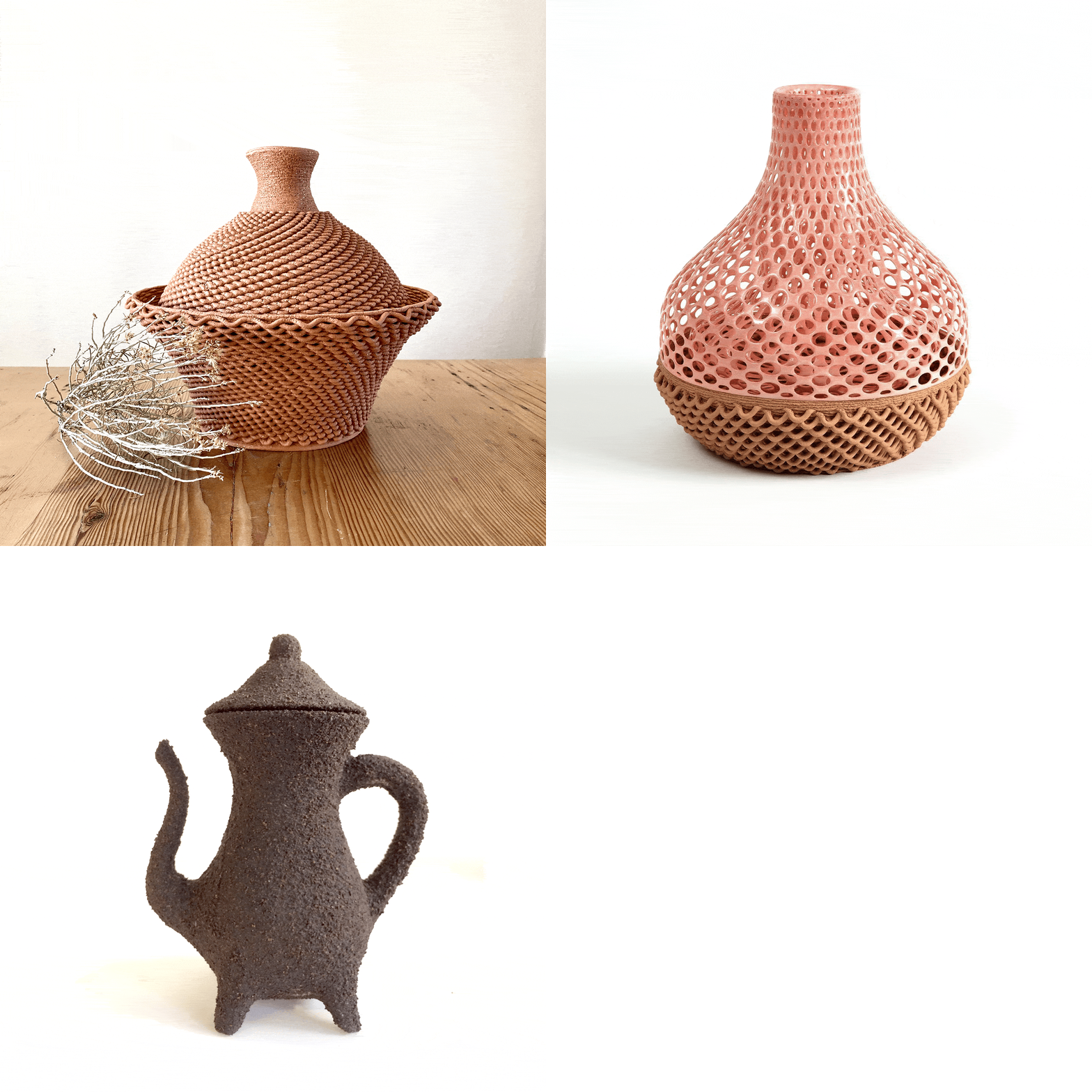
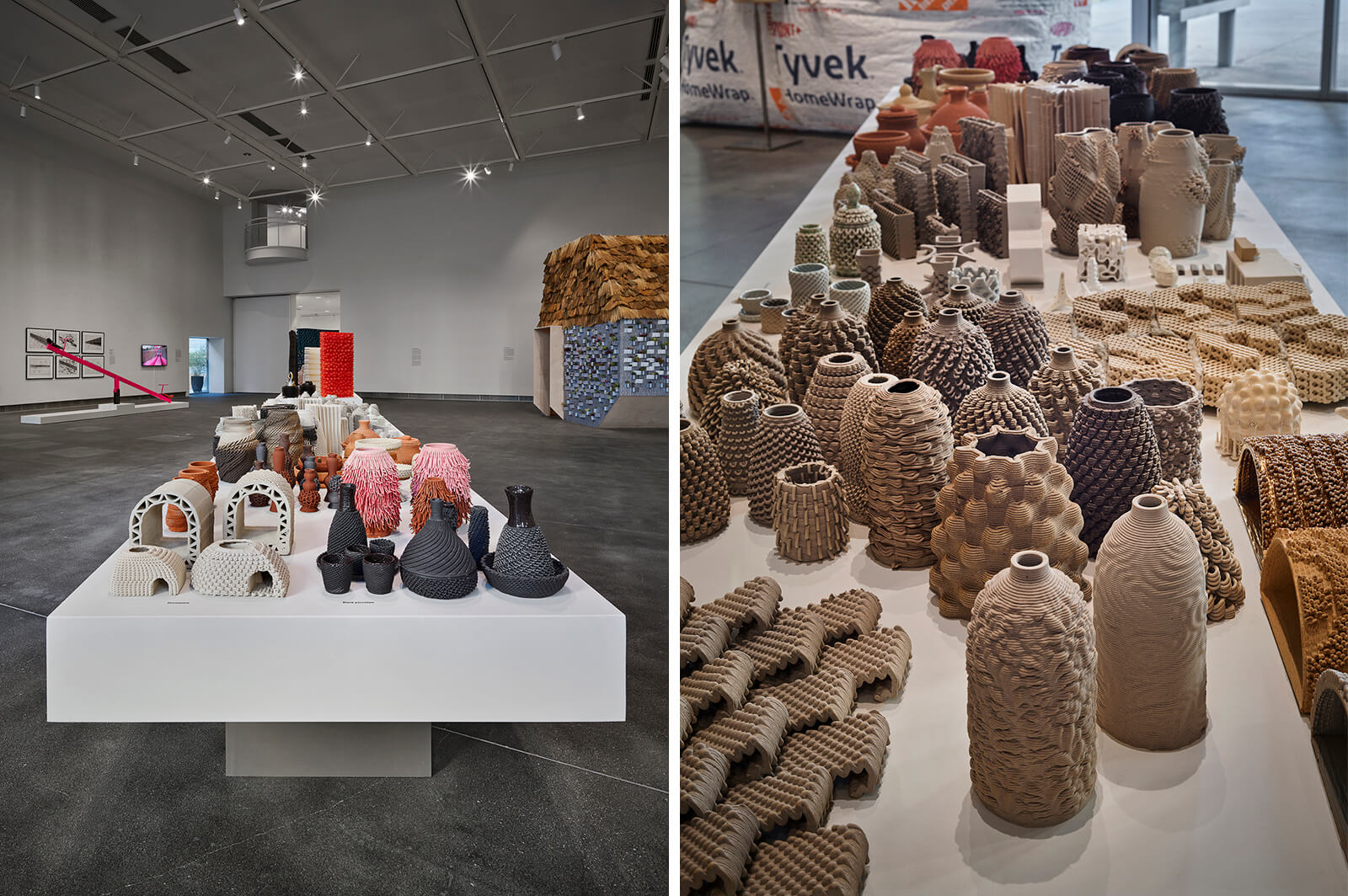
The Taxonomy Table adorns multiple design ideas fabricated as objects and utensils by Emerging Objects, the designer duo’s ‘make tank’ established in 2010. The studio carries out scientific studies on various materials, from artificial waste streams and ecological systems, such as wildfire ash from California, sawdust, coffee grounds, Chardonnay grape skins and even chocolate, for their potential in building construction. It then proceeds to develop structural and 3D printing techniques for these materials, forming a comprehensive ecosystem with their Potterware software for digital design and their inexpensive robotic arm, 3D Potter. The resultant construction system strives to create low-cost housing and fabrication that might even turn into a DIY initiative for its dwellers.
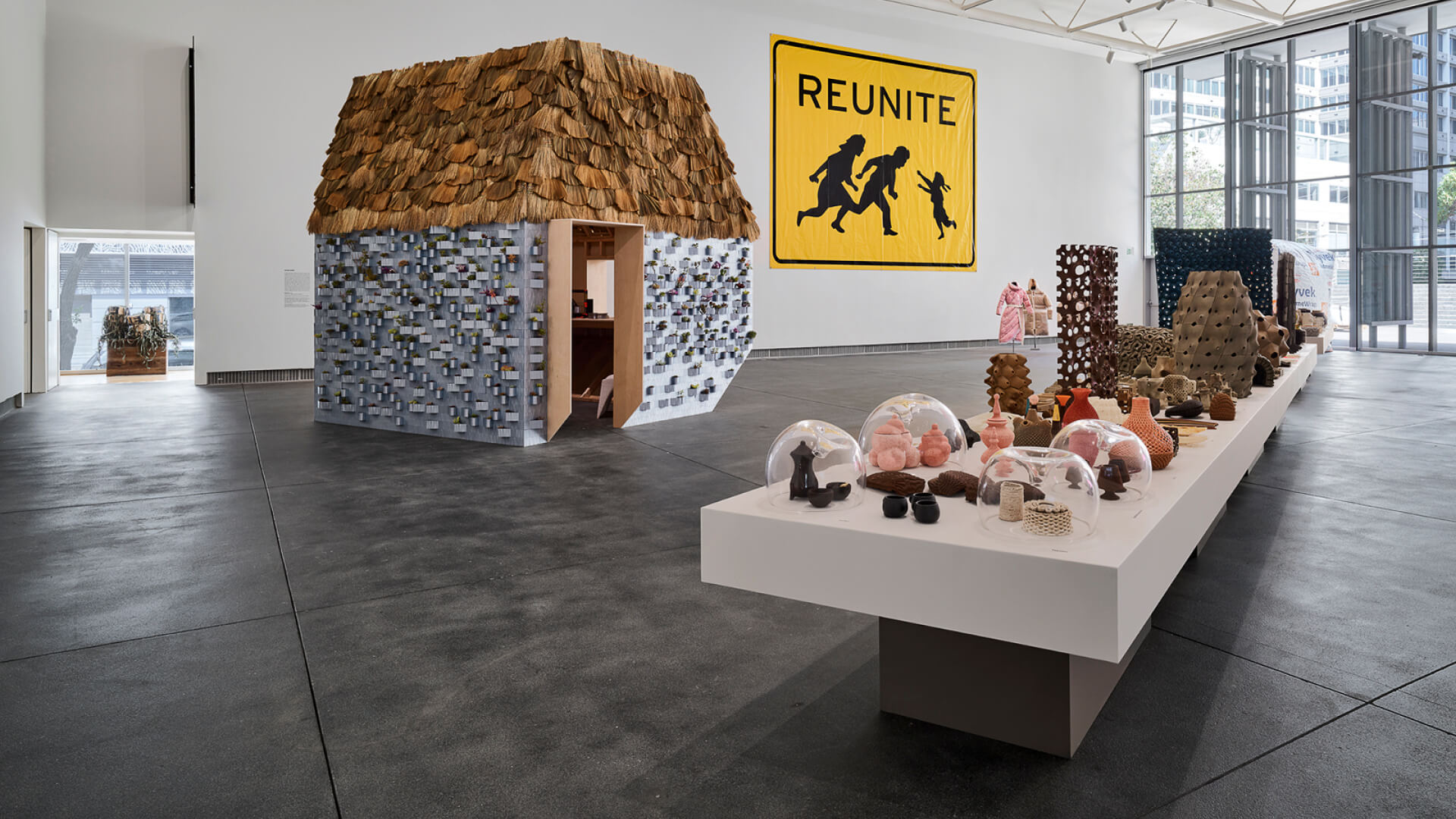
The displays also present the architecture and research studio’s 2013 intervention, NOWHERE, a former storefront in Colorado that now serves as a multifunctional community centre hosting art and design exhibitions, after-school programmes and a pharmacy as a critical infrastructural feature for the local community. A scaled, aluminium and bioplastic model of the House United/Casa Unida pavilion—designed by RSF from the 172 steel beams originally intended for the US-Mexico border wall extension project—also forms part of the showcase. Conceived in 2022 as an addition to Casa de la Misericordia migrant shelter in Nogales, Mexico, the refuge references the sweeping form of a bird’s wing, translating the notes of oppression and violence into a sense of liberation.
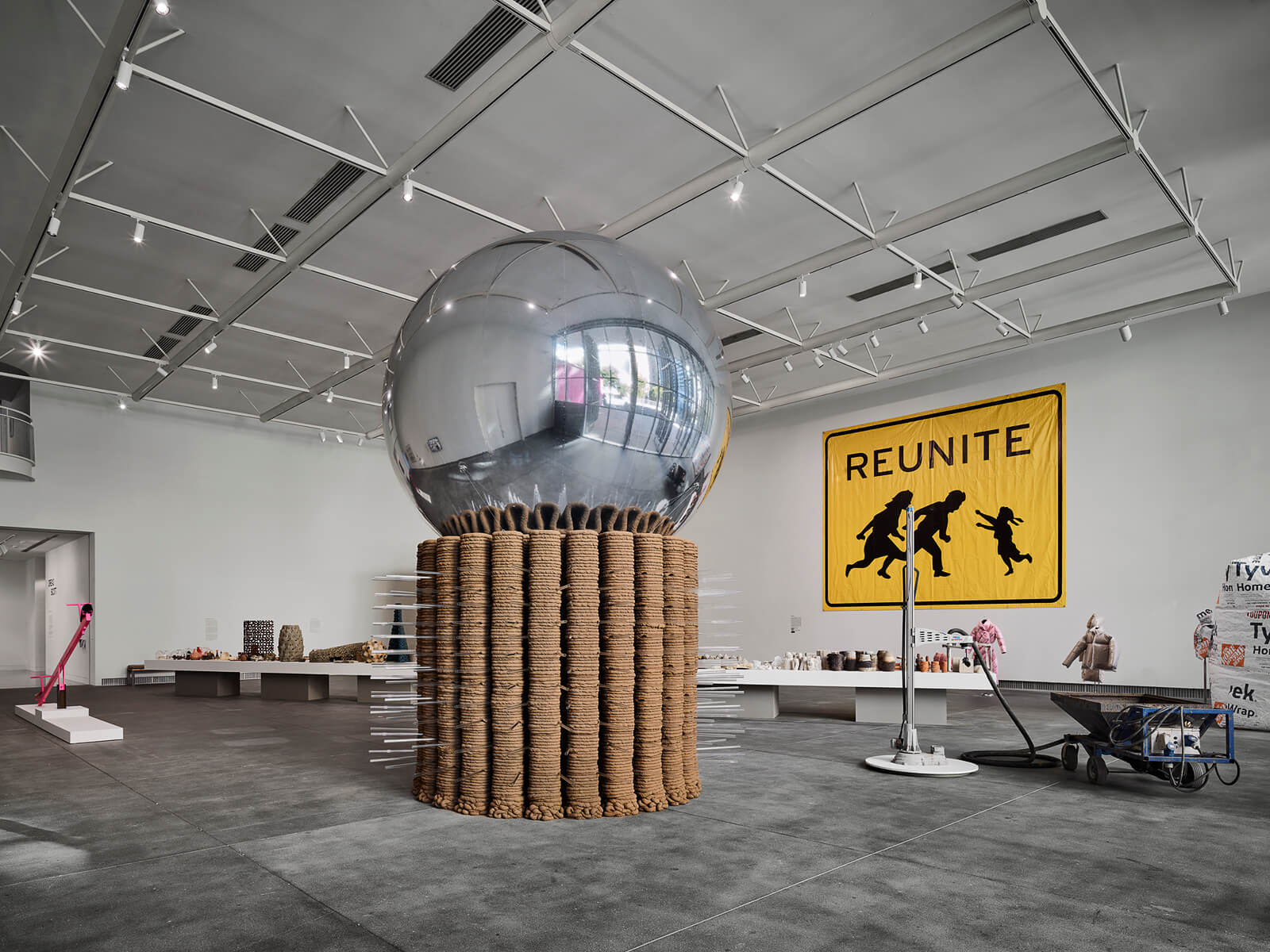
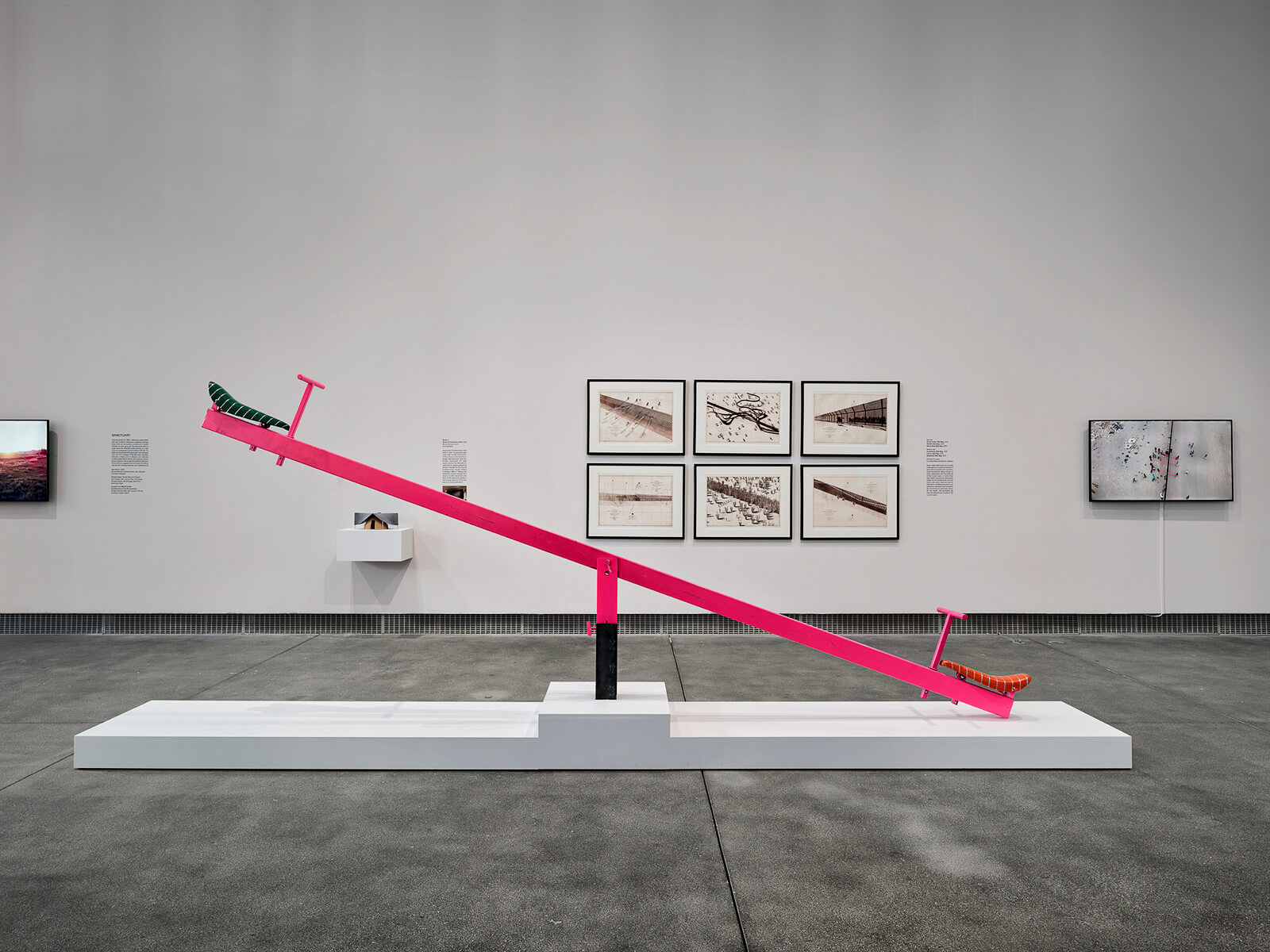
The seesaws from the Teeter-Totter Wall installation are also part of the display. The bright pink shade is borrowed from the design language of public memorials in Juárez that honour women who faced violence and feminicides since the early 1990s. While executed in response to the Trump administration’s US immigration policies, the drawings for this playful installation were created in 2009, in response to the US government’s 2006 Secure Fence Act. The idea forms part of a broader investigation that includes multiple such speculative proposals for the border region. The sharp contrast between the ‘ideal’ future imagined through the series and the comparatively cruel reality is intended as a provocation at the unfair disparity of the existing social and political situation. A large vinyl banner titled REUNITE hangs in the backdrop. It is based on American artist and war veteran John Hood’s 1990s iconic road sign that was designed to implore drivers along the freeways to be cautious of people (read: illegal immigrants) racing across them. In 2019, RSF adapted the sign as a civic movement in response to the then-government’s family separation policies related to immigrants.
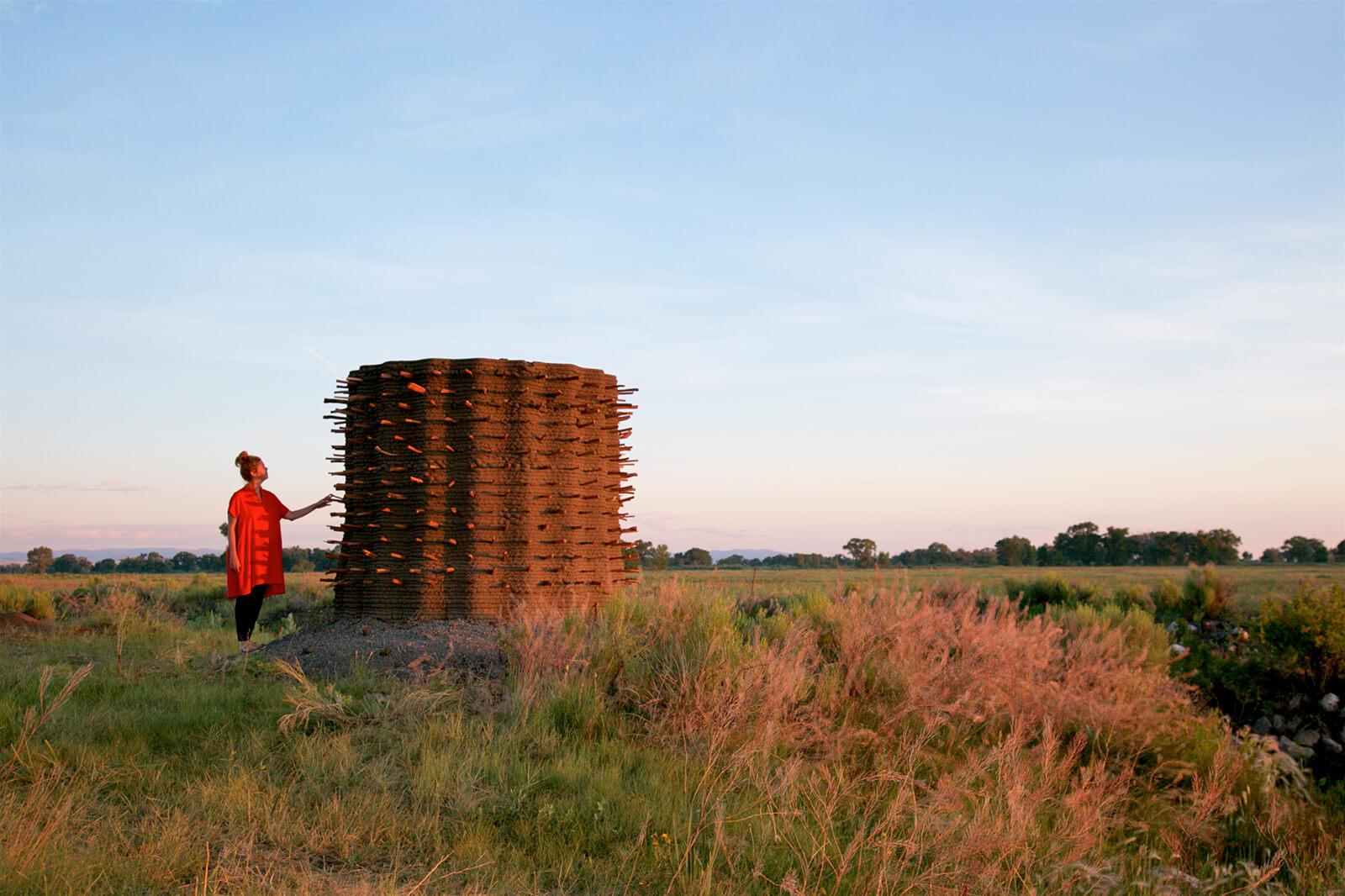
The anteroom features two videos. The first, Mud Frontiers: Architecture at the Borderlands (2021), was shot over the two years of RSF’s development of 3D-printed mud structures in La Florida. The film discusses the various historical, social, political and material conditions that gave rise to the structures, while highlighting their potential as new and sustainable approaches for the contemporary world. The other, Silos del cielo, is a 2022 documentary about SKYLOS, a land art installation that forms the largest 3D-printed earthen structure in the world, and the first one to be permitted for construction. “We are actively engaged in full-scale deployment of earth as a building material for low-cost housing, as well as wide applications in residential and commercial use using robotics,” the multidisciplinary designers tell STIR. “We see this as an activist endeavour, removing microplastics from the environment, making non-flammable, non-toxic, recyclable architecture that can last hundreds, if not thousands, of years.”
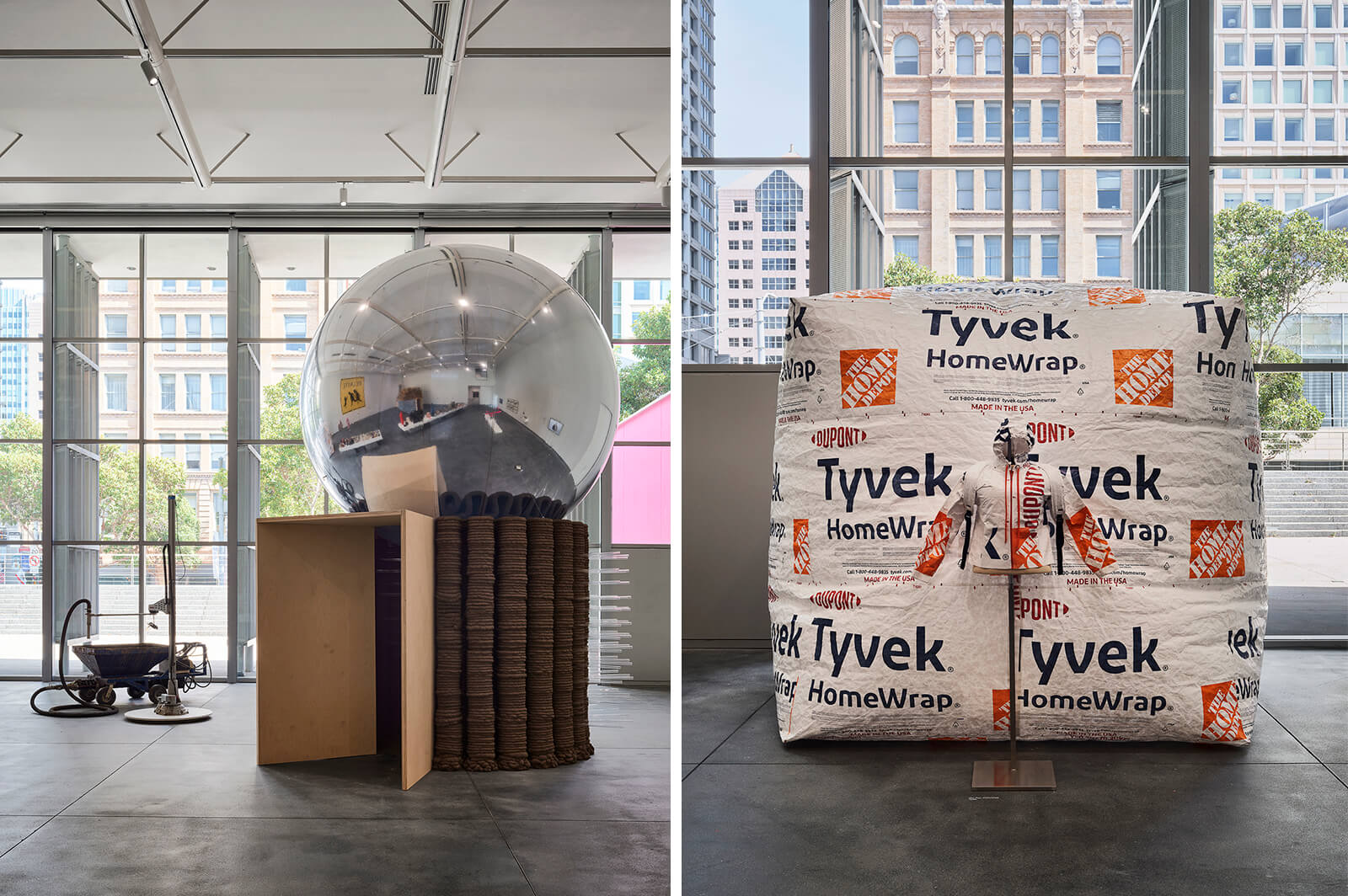
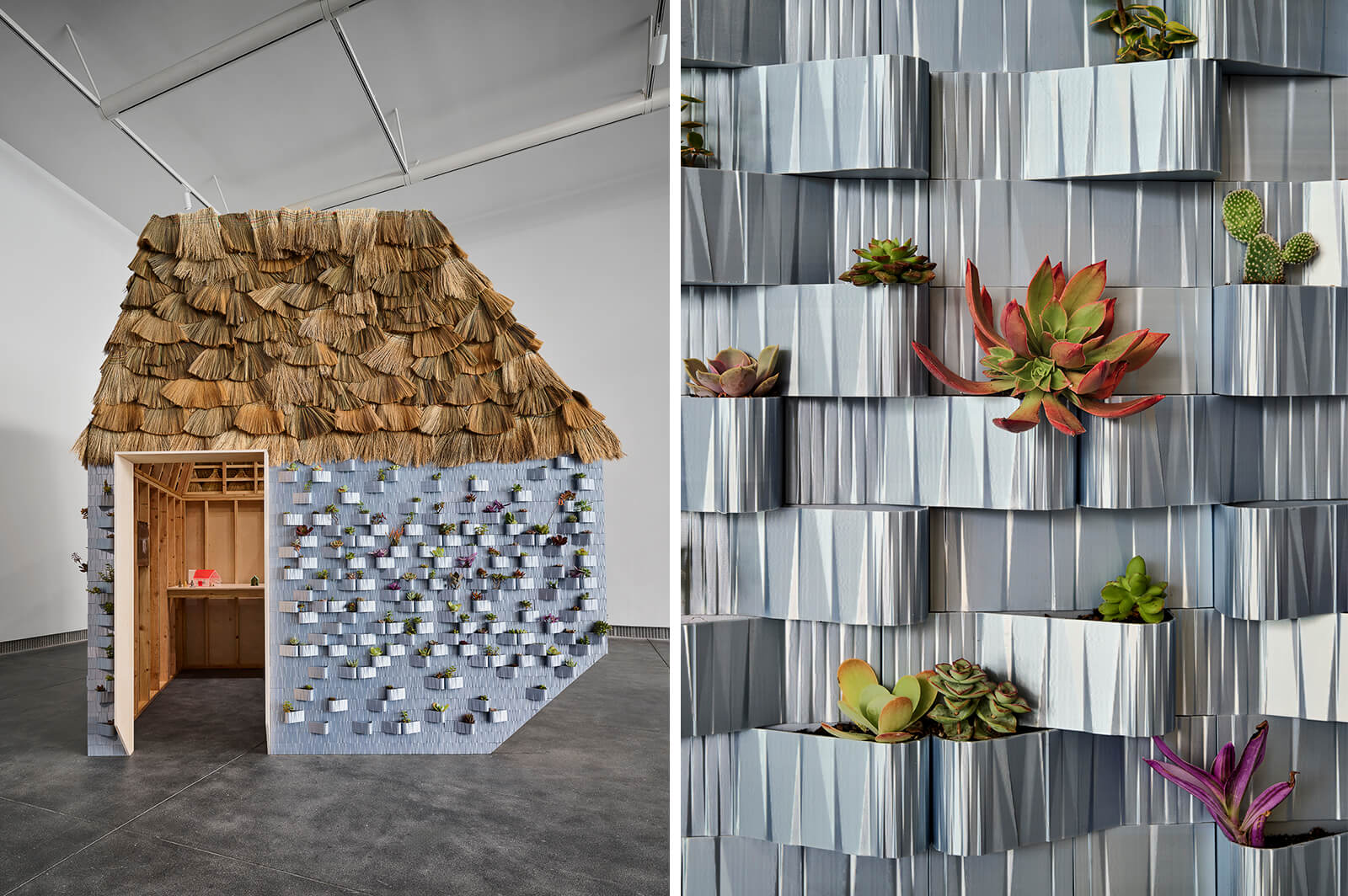
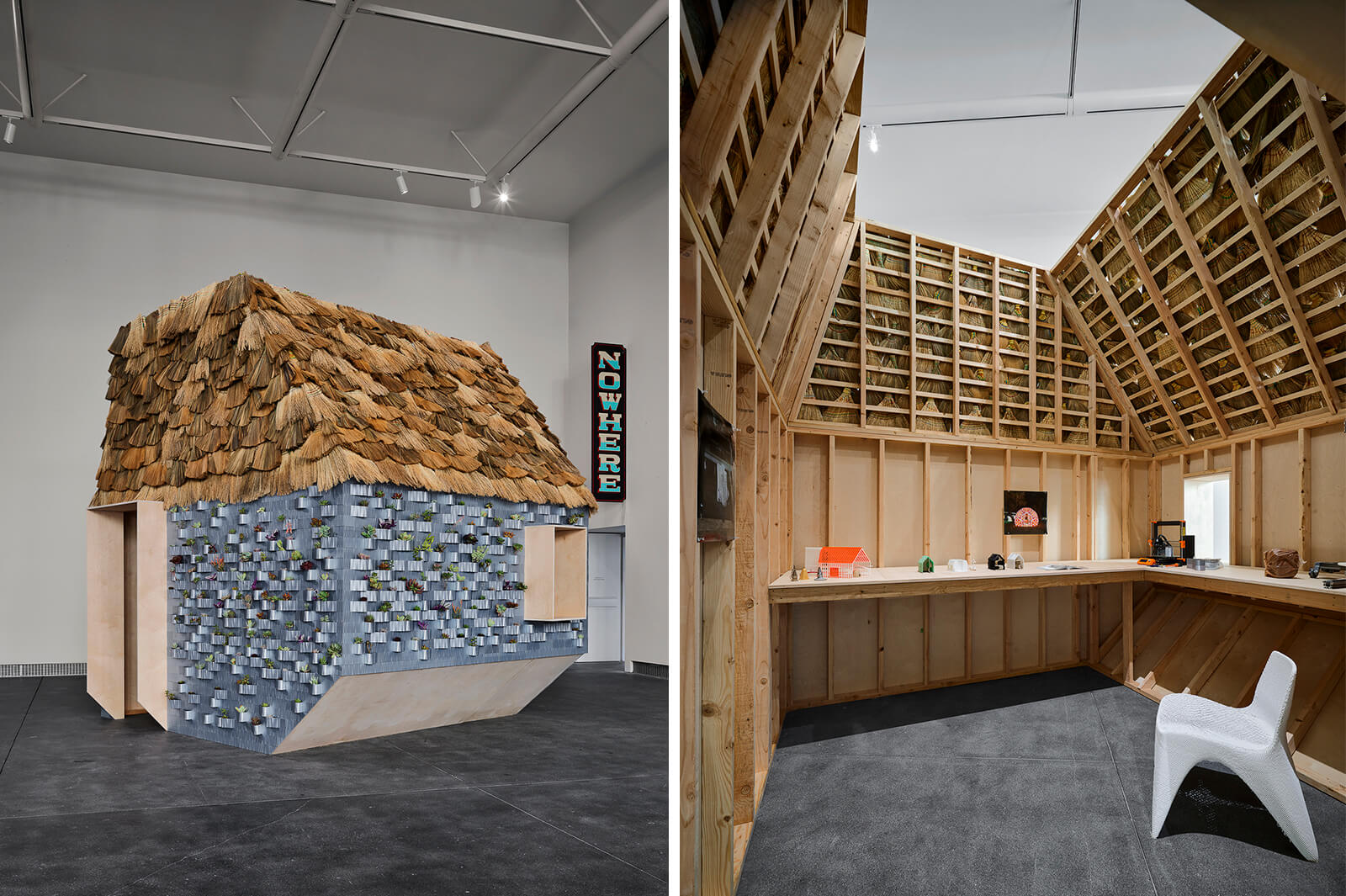
The exhibition's central features are, however, the latest ones—both commissioned by the YBCA—largely because they embody a culmination of the studio’s two-decade-long journey. The Workshop stands as a utilitarian site of production in the form of a hutment clad in 3D-printed bioplastic material made from cornstarch, sugarcane and tapioca roots. The fluid surface of the tile design allows it to double up as small planters, transforming the walls into a vertical garden. On top, the roof is clad with discarded brush heads from brooms. Inside, the structure houses desktop 3D printers that continue to produce the innovative tile cladding.
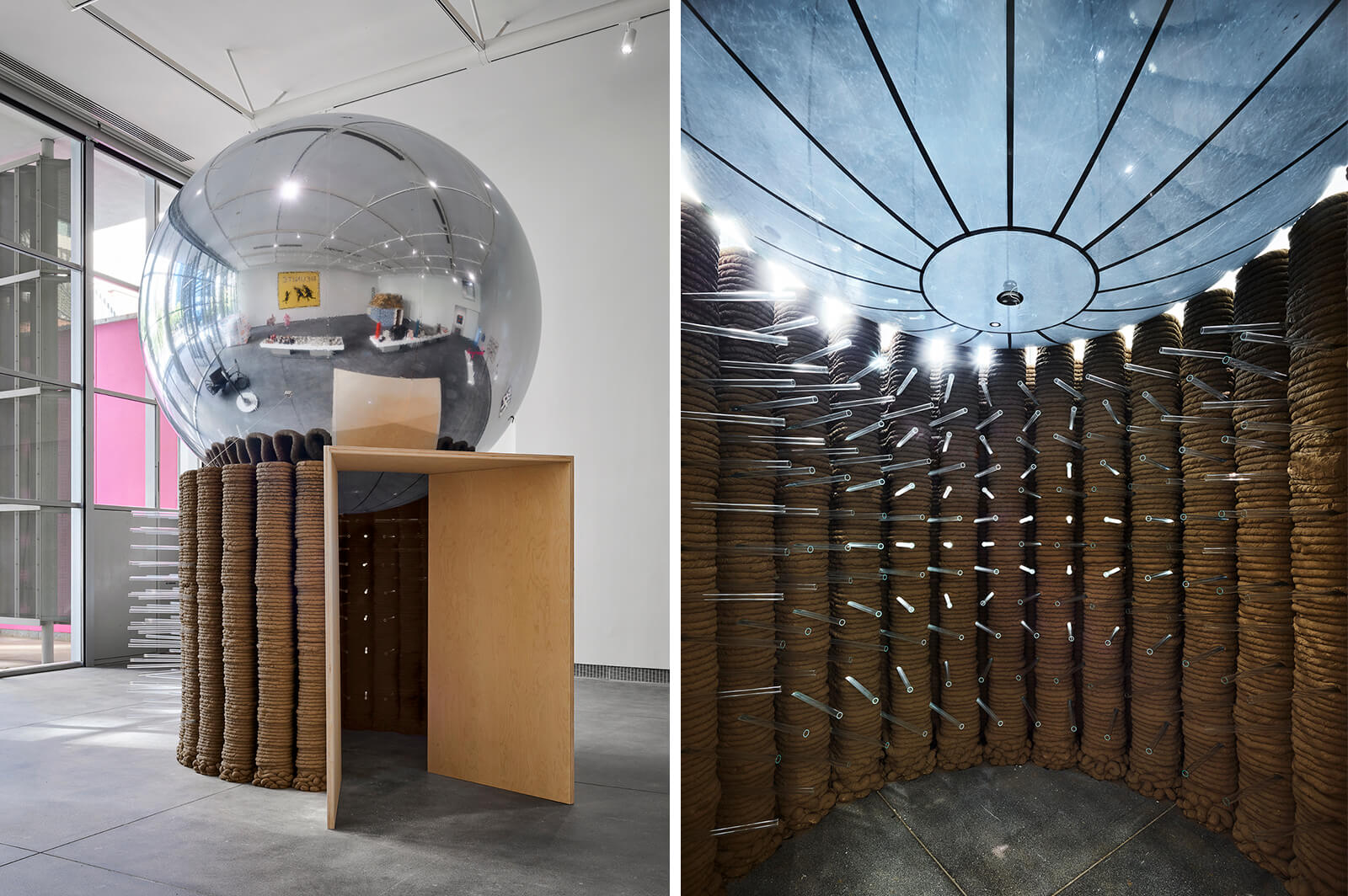
Sanctuary, a cylindrical 3D-printed structure, builds upon the structural design of Mud Frontiers. The double-layer walls—made from soil, straw and water—were originally tied using pieces of timber running through them. Sanctuary replaces the wood with glass-solar roads salvaged from Bay Area manufacturer Solyndra, whose financial collapse in 2011 raised pertinent questions over federally funded sustainability initiatives. The case continues to serve as a cautionary tale even today. Rael and San Fratello transformed the cylindrical enclosure into a space of contemplation topped by an inflated mirror ball.
When asked what brought about this mid-career retrospective, the designers relayed, “It was an important reflection to look back at several decades of work, and to assess what was successful, what was learned, where missteps and innovations were, and to hear reflections from visitors.” Prototypes and Provocations highlights the designers’ drive to blend new technologies and materials with traditional and Indigenous systems, and to harness that combination for architectural practice and construction. While the nature of the output keeps shifting, the thematic underpinnings are what bind the oeuvre. “Play, innovation, craft and activism will continue to be a major part of our evolving practice,” the designers tell STIR.
‘Rael San Fratello: Prototypes and Provocations’ is on view from September 25, 2026 – January 31, 2027, at the Yerba Buena Center for the Arts in San Francisco.

by Pranjal Maheshwari Nov 14, 2026
Isola Design Group returned to Dubai Design Week with its biggest edition yet, reflecting on its past decade and revisiting the role of craft, tradition and nature in design.
by Saloni Shukla Nov 13, 2026
As sensing is increasingly mistaken for understanding in the built environment, the more urgent design question is who gets to decide what happens next.
by Mirra Lynn Nov 09, 2026
With the X Deck, designer Arielle Assouline-Lichten brings together the material vocabulary of collectible furniture, the tactile rituals of vinyl and the evolving culture of listening.
by Pranjal Maheshwari Nov 05, 2026
A conversation with the founder of Estudio Material explores his pursuit of merging the natural and the manufactured, a defining thread that runs through his collectible designs.

make your fridays matter with a well-read weekend
Enter your details to sign in
Don’t have an account?
Sign upOr you can sign in with
a single account for all
STIR platforms
All your bookmarks will be available across all your devices.
Stay STIRred
Already have an account?
Sign inOr you can sign up with
Verification link sent to check your inbox or spam folder to complete sign up process
Tap on things that interests you.
Select the Conversation Category you would like to watch
Please enter your details and click submit.
Enter the 6-digit code sent at


Play, craft and activism echo Rael San Fratello’s mid-career retrospective
by Pranjal Maheshwari | Published on : Nov 17, 2026


 Sign in with Google
 Sign in with email
What do you think?