Design09 mins. read
Isamu Noguchi was never a designer, affirms High Museum of Art, Atlanta
by Sunena V MajuMay 21, 2026



by Pranjal MaheshwariPublished on : Nov 05, 2026
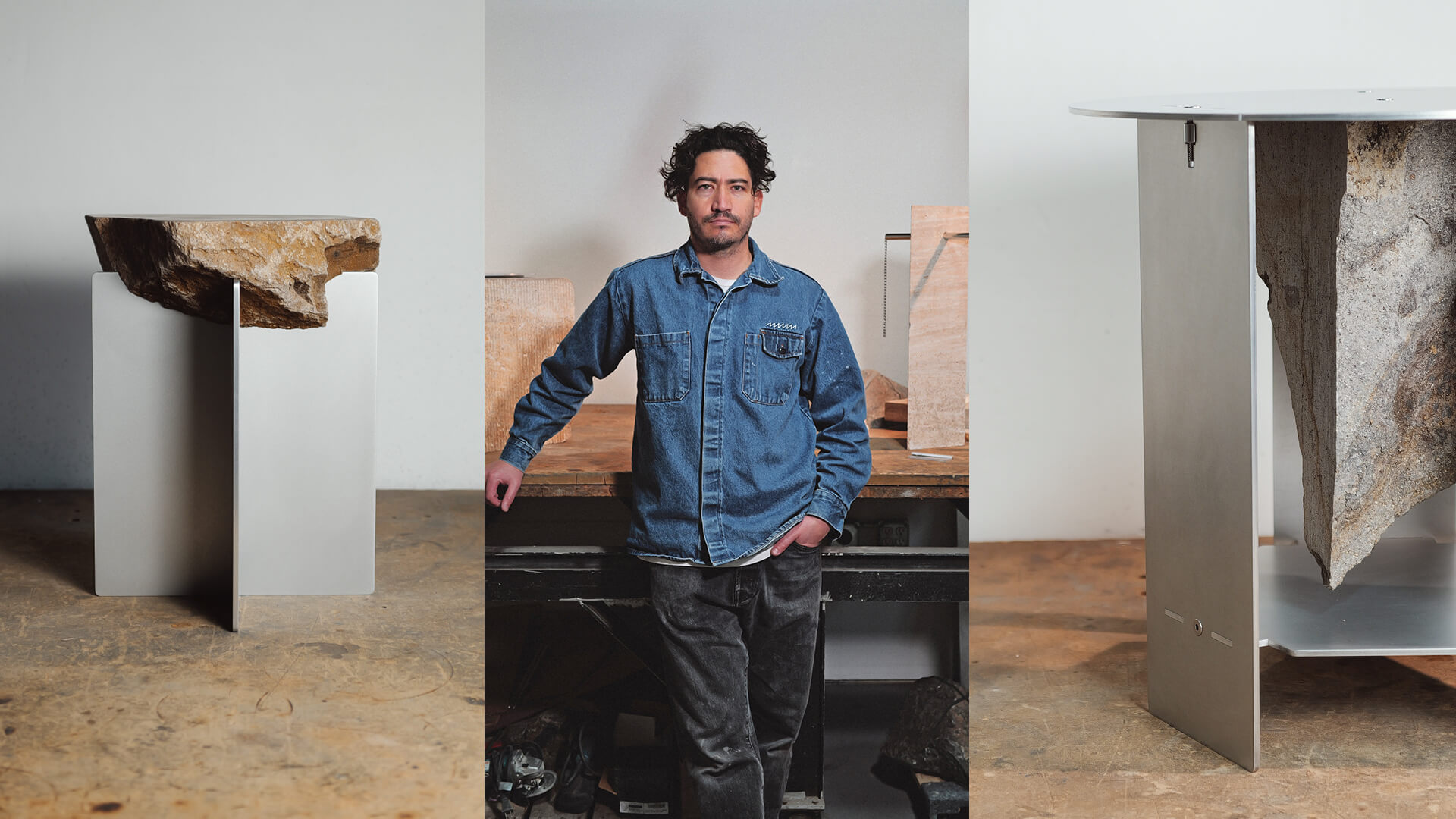
Fate had it for Damaso Mayer to do what he does. Born in Mexico City, the artist and designer grew up between two distinct worlds: an organic farm run by his mother and his father’s manufacturing facility for metal gaskets, which he visited frequently. Farm life opened up a world of organic imperfections and the cyclicity of natural processes, while the metal factory exposed young Mayer to the precision and ingenuity of industrial production; the two conditions became pivotal in shaping his creative ethos in the years to come. He graduated with a BFA in industrial design and product development from CEDIM in Monterrey, Mexico, and went on to receive a master's in architecture from California College of Arts in 2016. He further worked as a landscape architect in San Francisco before establishing his independent design practice, Estudio Material, in 2021.
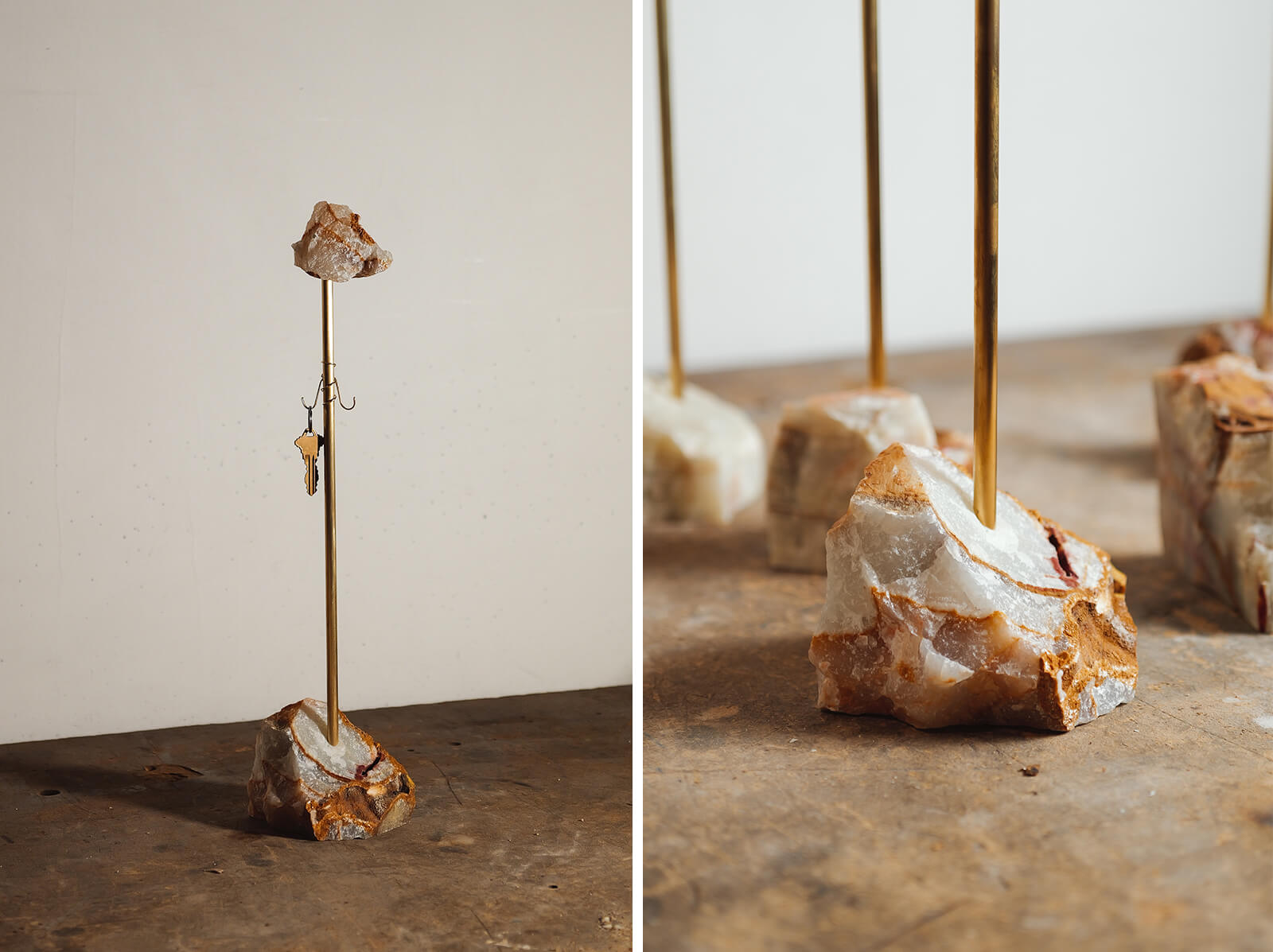
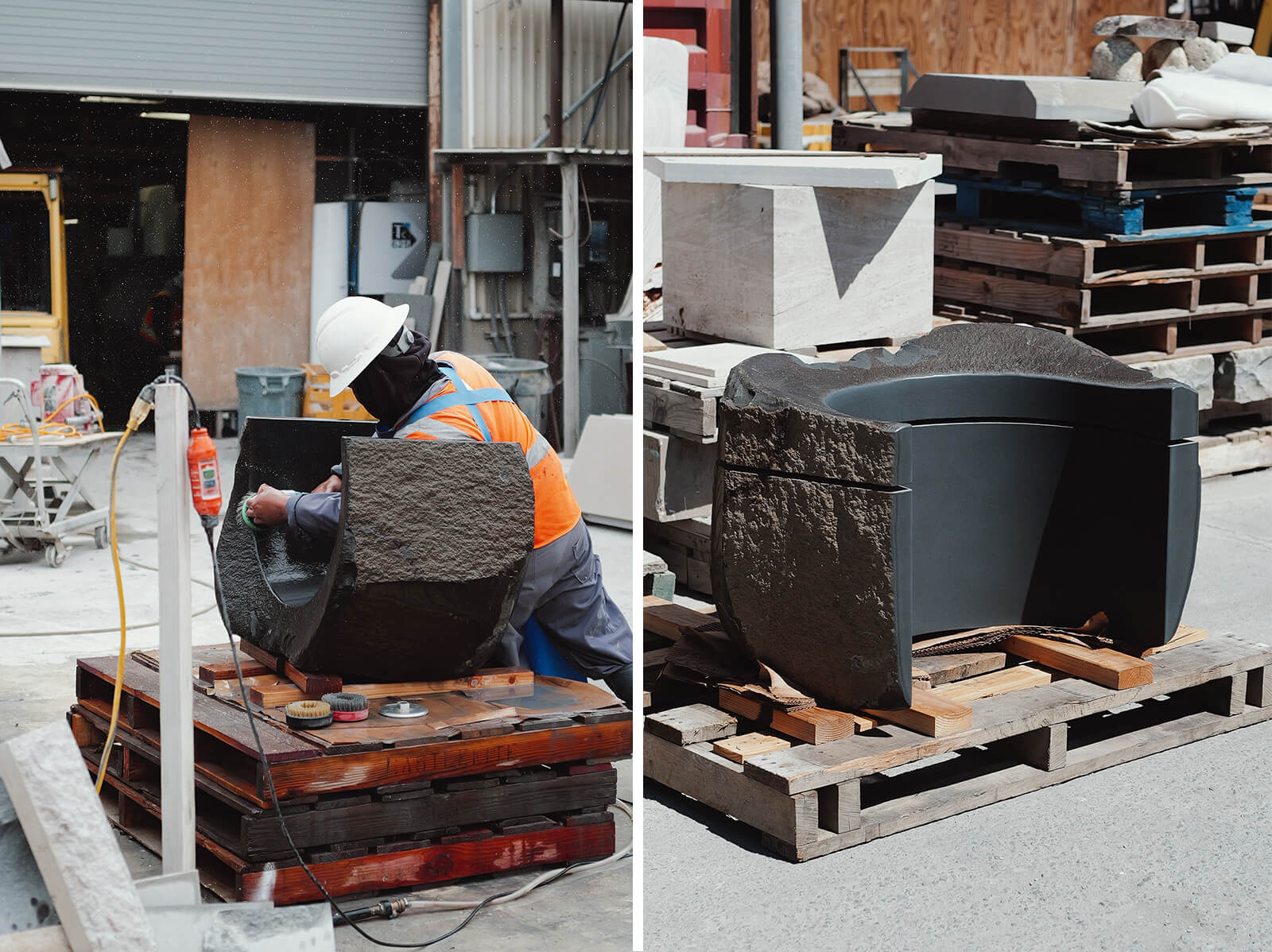
Understandably, the work produced by the studio embodies a distinct blend of geological and manufactured. The jagged edges of raw stone are contested—structurally, aesthetically and thematically—by the smooth, precision-finished metal elements. Within contemporary design discourse, Estudio Materials’ designs seek to inspire by drawing on the lessons from the landscape from which its materials emerge. Industrial processes lend each piece its functional integrity, while the natural elements retain a conscious awareness of their origins—both conserving and proclaiming their journeys, from millions of years of their geological formation to their recent domestication. Over the last two years alone, the studio’s diverse body of work—spanning table and lighting design, consoles, seating and more—has travelled across the United States and Europe, featuring in global design showcases, such as Forma Madrid 2026, SF Art Fair 2026, Design Week Mexico City 2025, COLLECTIBLE NYC 2025 and Milan Design Week 2025.
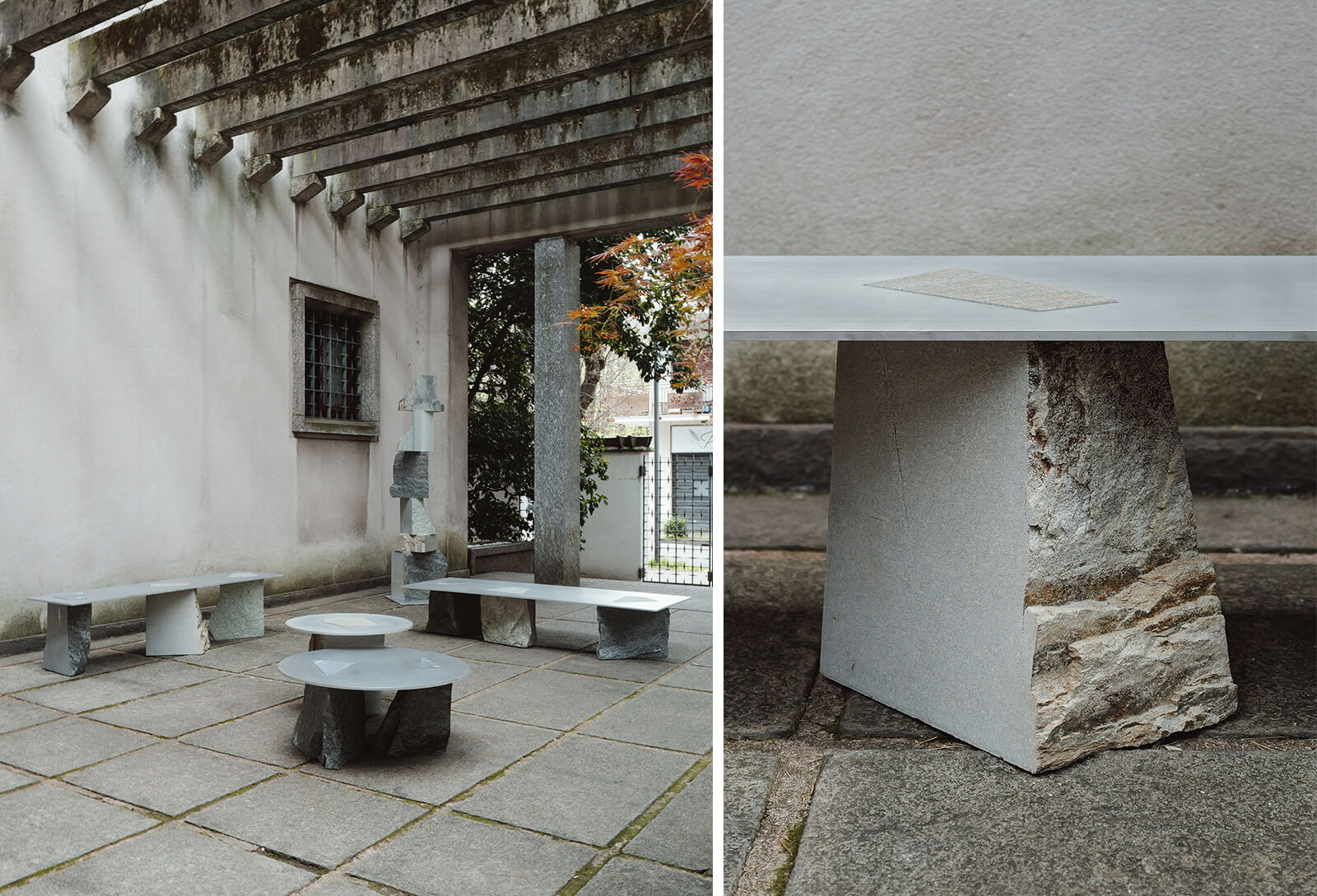
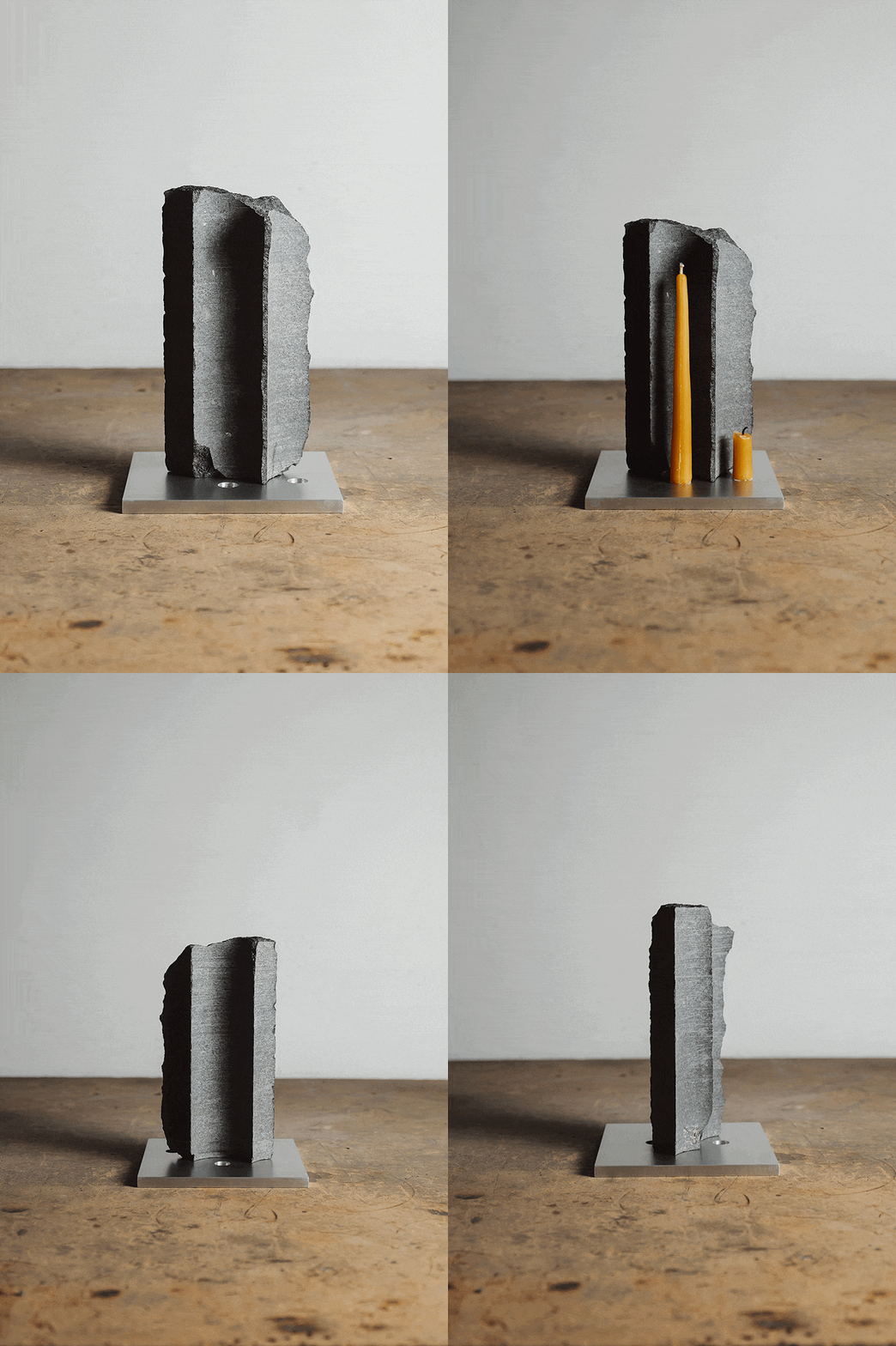
Mayer’s work speaks of peace and stillness; a subtle revelation that is revealed only through attention. The understanding of structural design through an architectural lens is perceivable through how the materials and forces balance each other; the apparent tension between various components that forms the object’s structural integrity, further accentuated by their inherently conflicting natures of being.
In a conversation with STIR, the Mexican designer talks about the value of observation as a creative, his attempts at shifting the contemporary design discourse from viewing the natural and the industrial as opposites, what comprises the ‘emotional resonance’ in his pieces and why he thinks the material is the aesthetic in itself. Excerpts from the interview follow.
Pranjal Maheshwari: What were your curiosities as a child, and how do you think those early revelations have shaped your practice to what it is today?
Damaso Mayer: I'd like to think I grew up with a lot of freedom. I was raised on a ranch in Mexico, and nothing at home was off limits. There was a lot of outdoor space and a lot to do in it: playing in the cornfields, exploring the barn, going to the nearby creek. I'm the youngest of three, and my sisters are nine and 10 years older than me, so I spent much of that time exploring on my own. I became very good at finding ways to entertain myself.
Later I started skateboarding, which gave me a different perspective on the city. The same sense of freedom was there. Skateboarding is about creativity, about looking at something slightly differently and seeing what you can do next. A six-inch curb, a two-foot drop, a rail: these are very basic conditions, and it's up to you how to approach them.
That habit of sitting with one condition for a long time is still how I work. The longer you look at something, the more it starts to take you in slightly different directions, and that's how I approach many of my pieces. Observation is the one thing that has stayed with me, from childhood through my teenage years, and later through design school, architecture and landscape.
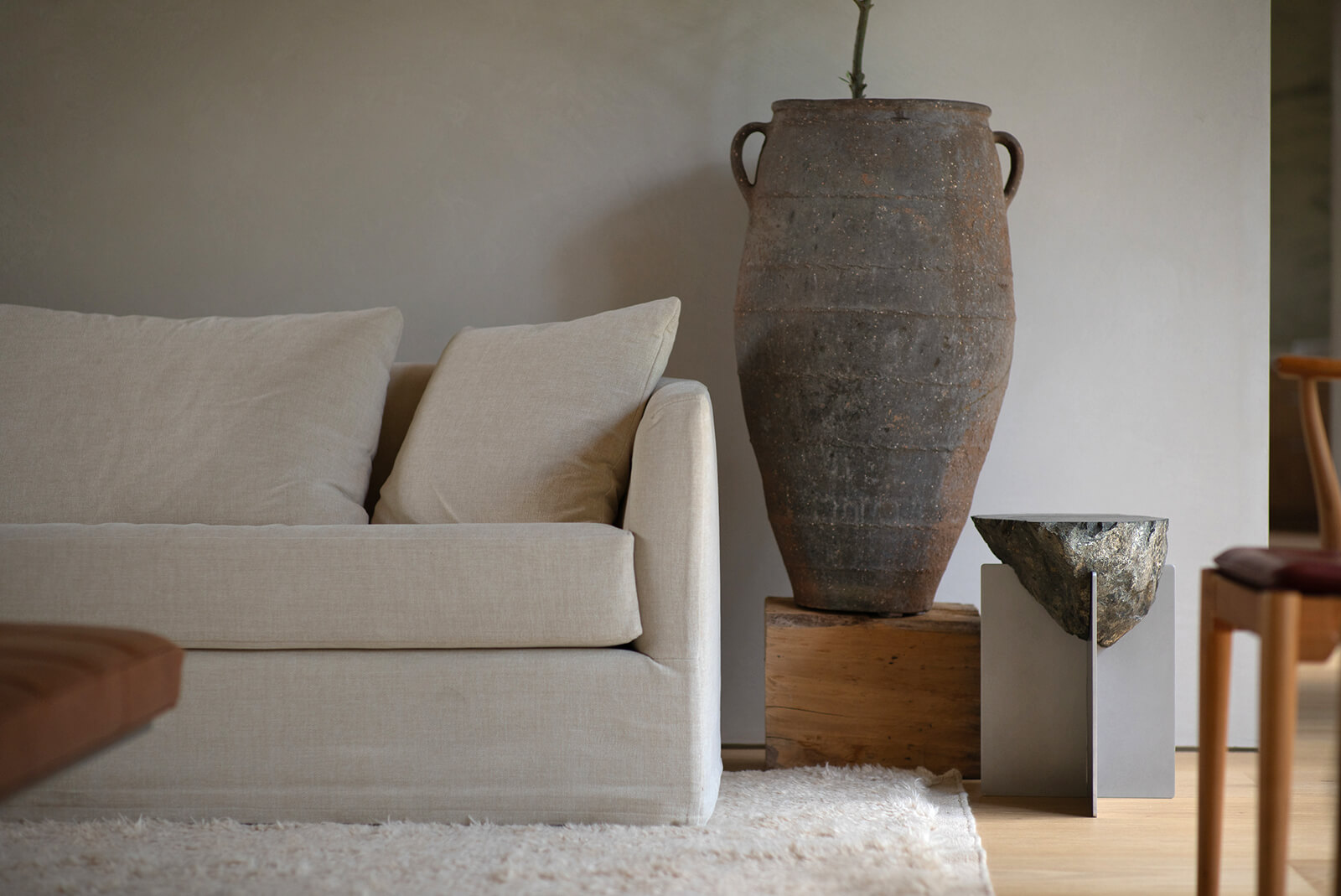
The longer you look at something, the more it starts to take you in slightly different directions, and that's how I approach many of my pieces. – Damaso Mayer
Pranjal: You have grown through a multidisciplinary exposure in fields such as farming, industrial design, architecture and landscape. Where do you find your centre?
Damaso: I don't think I have a single centre, and I've come to see that as part of the practice. The work comes from the combination of all those experiences, but the project can use them in its own way.
Some pieces begin with an industrial material, and the challenge is bringing a natural element into it. Others begin with a natural material, and the architectural, engineered side comes later. It isn't one direction or the other. Every project is rooted in something specific: its location, its material, its conditions. So each one ends up with its own centre and its own combination of influences. If there is a constant, it's that I let the situation set the centre, rather than bringing a fixed one to it.
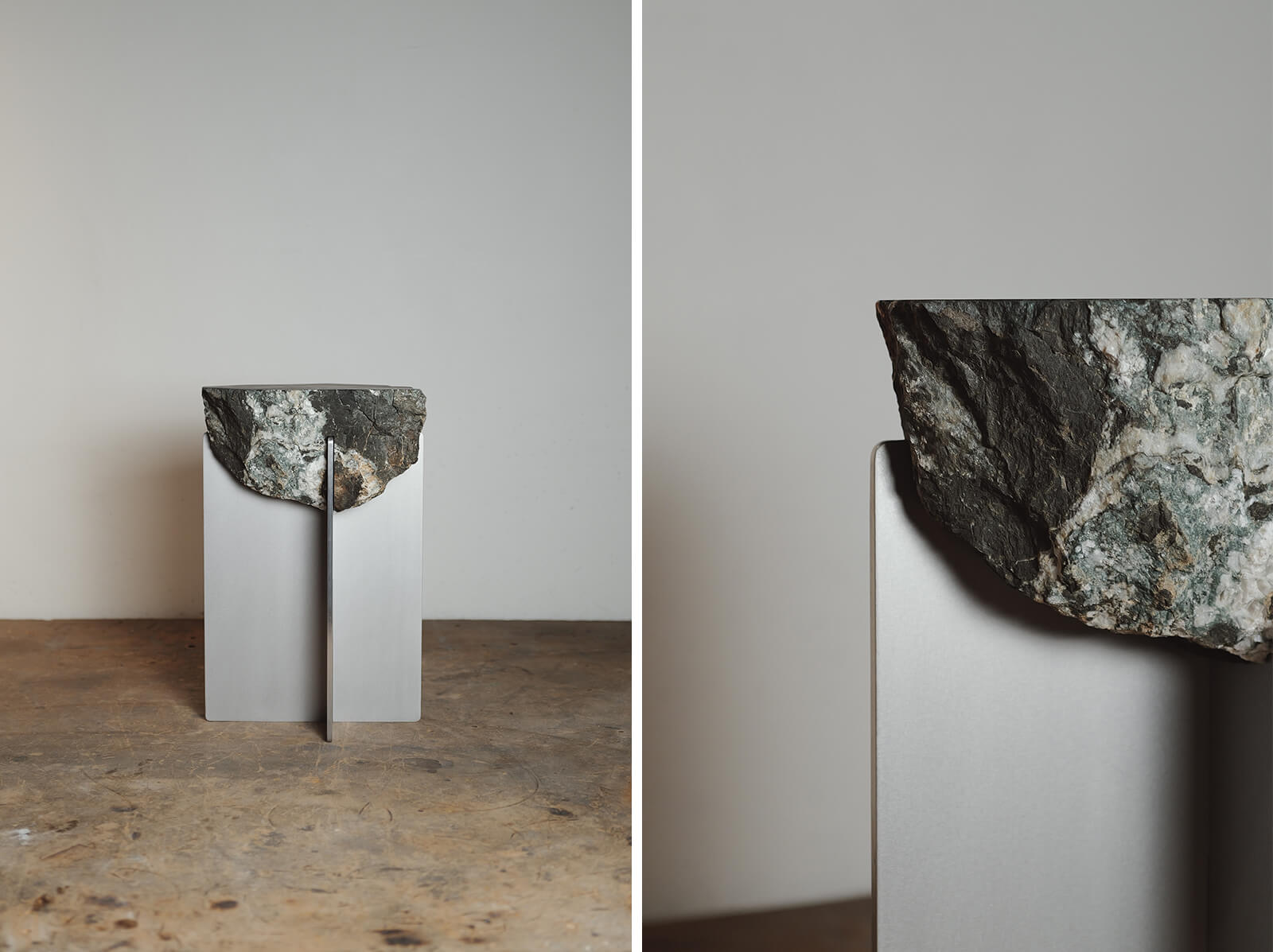
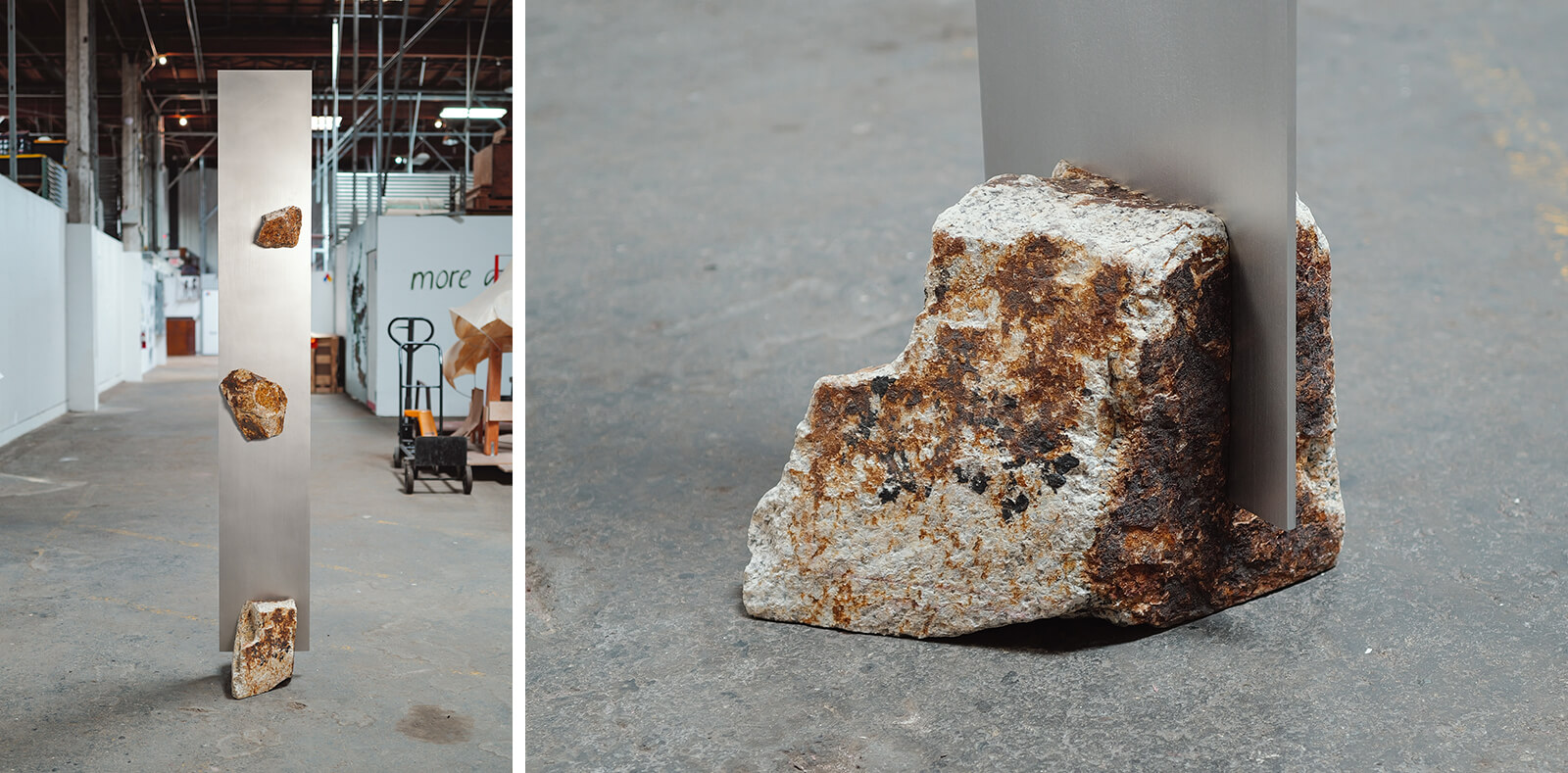
Pranjal: How do you interpret the independent roles of industrial precision and raw materials in the design industry today? Do you think your work, which combines the two, provides a new understanding of these roles?
Damaso: This is only one perspective, but I see a certain polarisation in design. Industrial work often goes all the way: minimalist, geometric, pure. Natural work tends to be a single-material exploration. When the two are combined, one usually dominates, and the other is added on. A metal element gives a wooden piece structure and stability, or a natural material becomes decoration on something industrial. There is a primary language and a secondary one, brought in to introduce a function or an ornamentation.
What I try to do is give every element the same conceptual weight. I avoid adding anything that doesn't contribute to the idea. When hardware appears, as in the Flat Metals collection, it is deliberate and visible, almost a highlight of the piece rather than something hidden. The result is simple to read. There is no added complexity, just material.
I don't want to say less is more, because it doesn't have to be. But I try to stay close to a certain purity, because the materials should drive the design. The aesthetic is the material itself. The intention is for stone and metal to coexist in harmony, each appreciated for what it is.
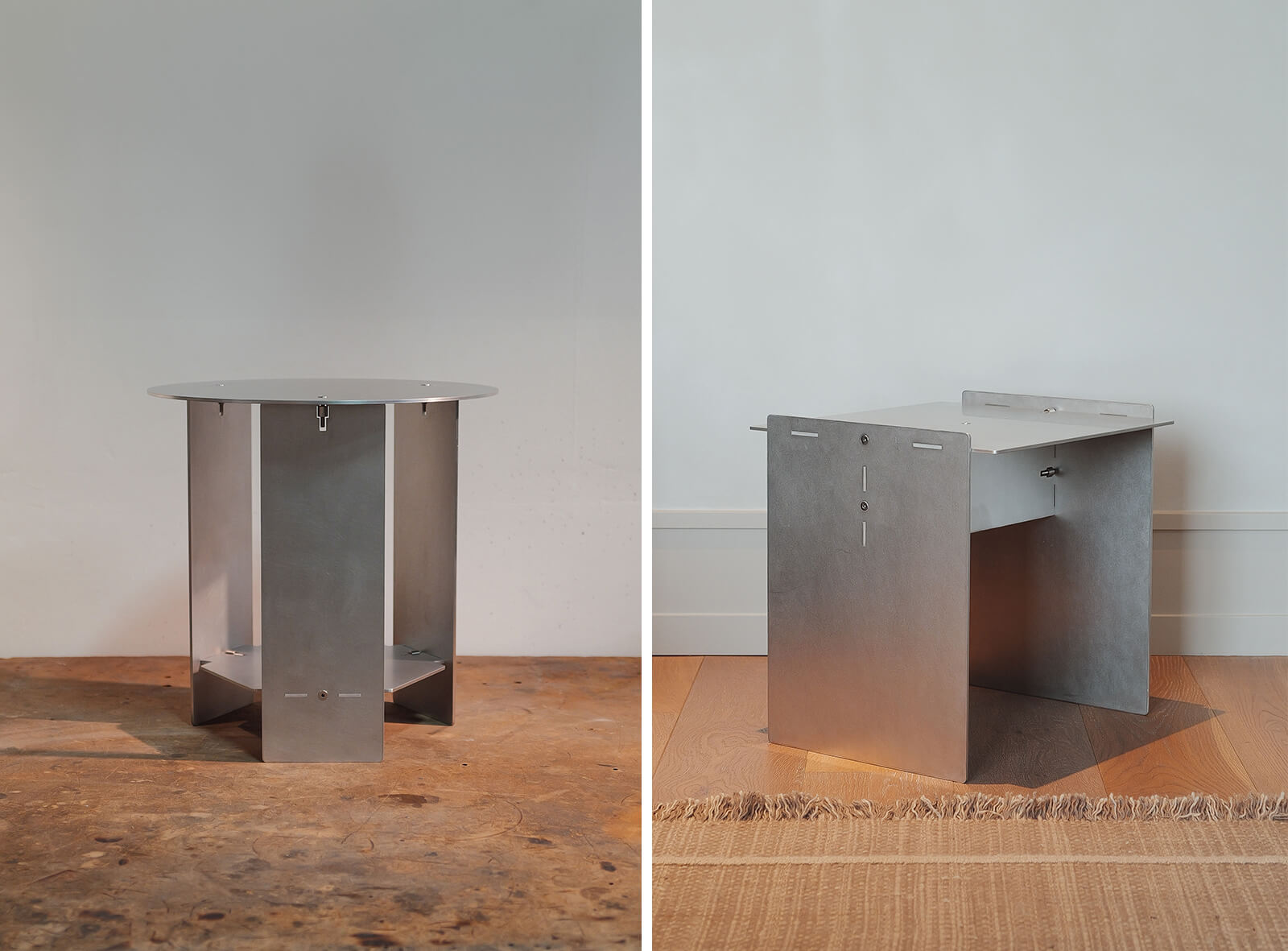
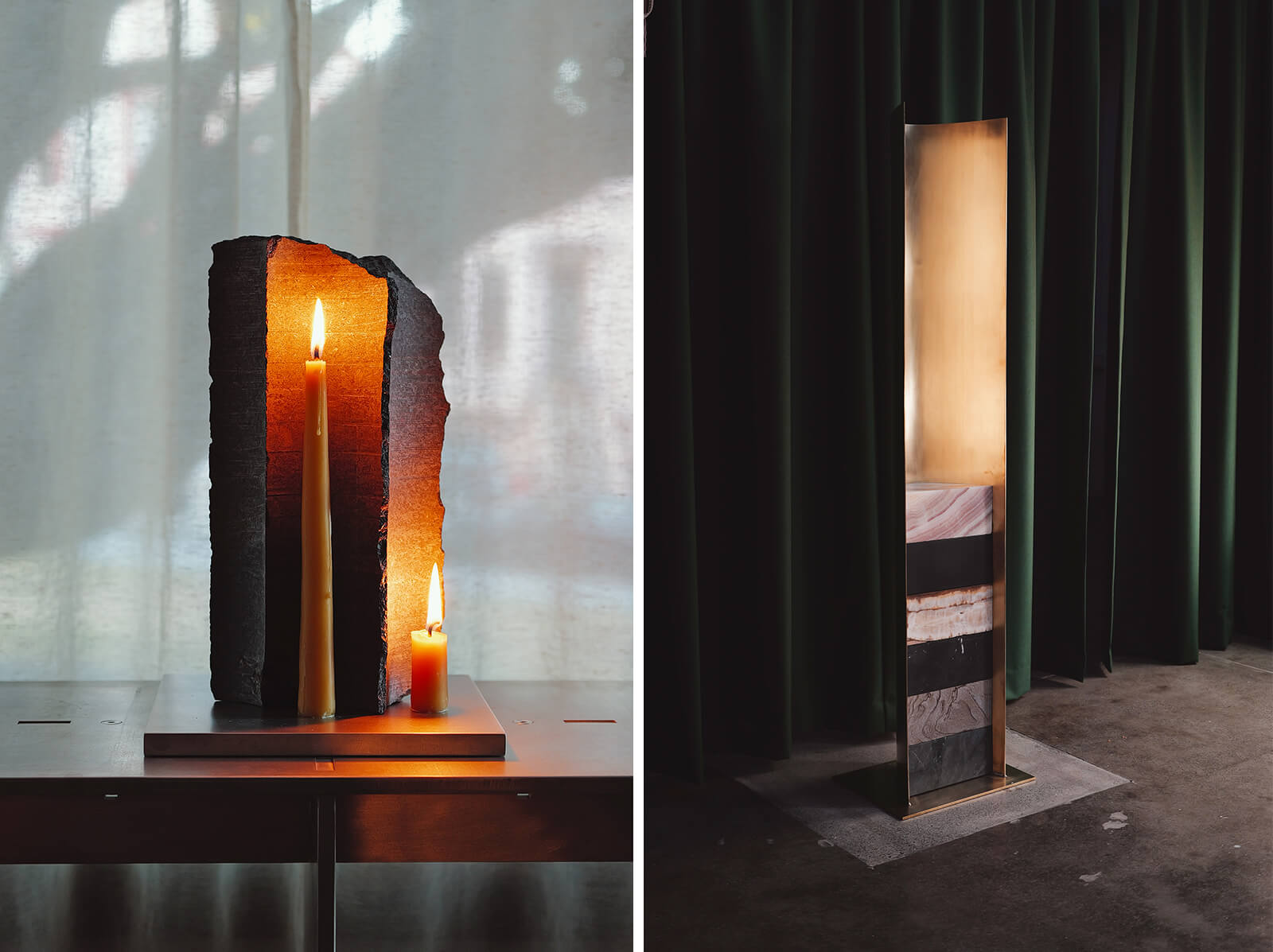
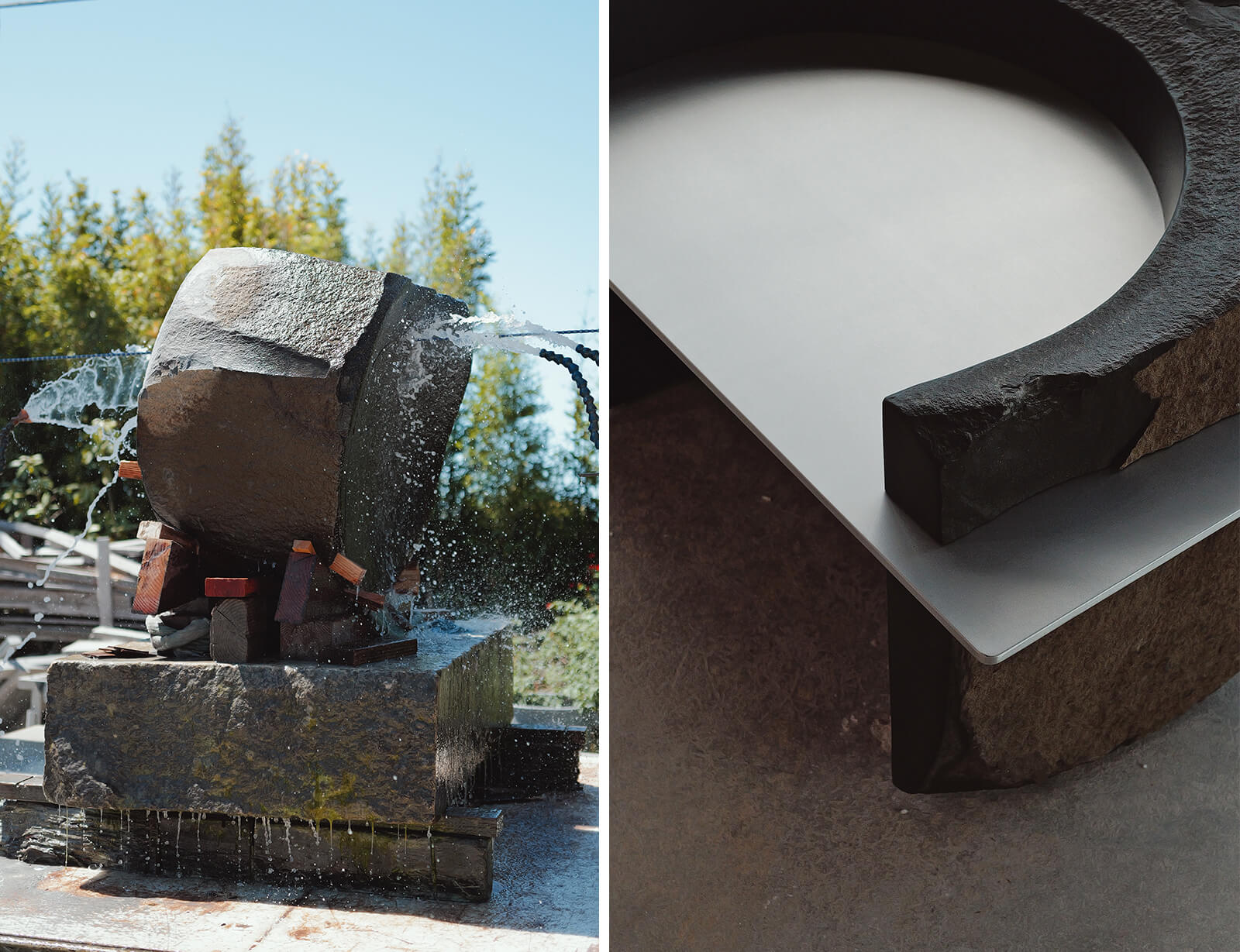
I don't want to say less is more, because it doesn't have to be. The aesthetic is the material itself. The intention is for stone and metal to coexist in harmony, each appreciated for what it is. – Damaso Mayer
Pranjal: What inspires the genesis of a piece of work for you?
Damaso: My design process begins with observation, looking at what is around me and what I can find. With the stone pieces, the material always comes first. Often I’ll see a stone and will immediately know I want to work with it before I know what exactly it will become. From there I think through possibilities and arrive at a rough idea. Then I return to the stone and adjust the idea to work with the material, never the other way round.
The design takes shape around that specific piece. Dimensions, function and other practical parameters still apply. But in my mind they are secondary. What matters most is keeping as much of the stone's character, history and visual presence as I can, so the finished piece holds on to what I saw in it the first time I looked at it.
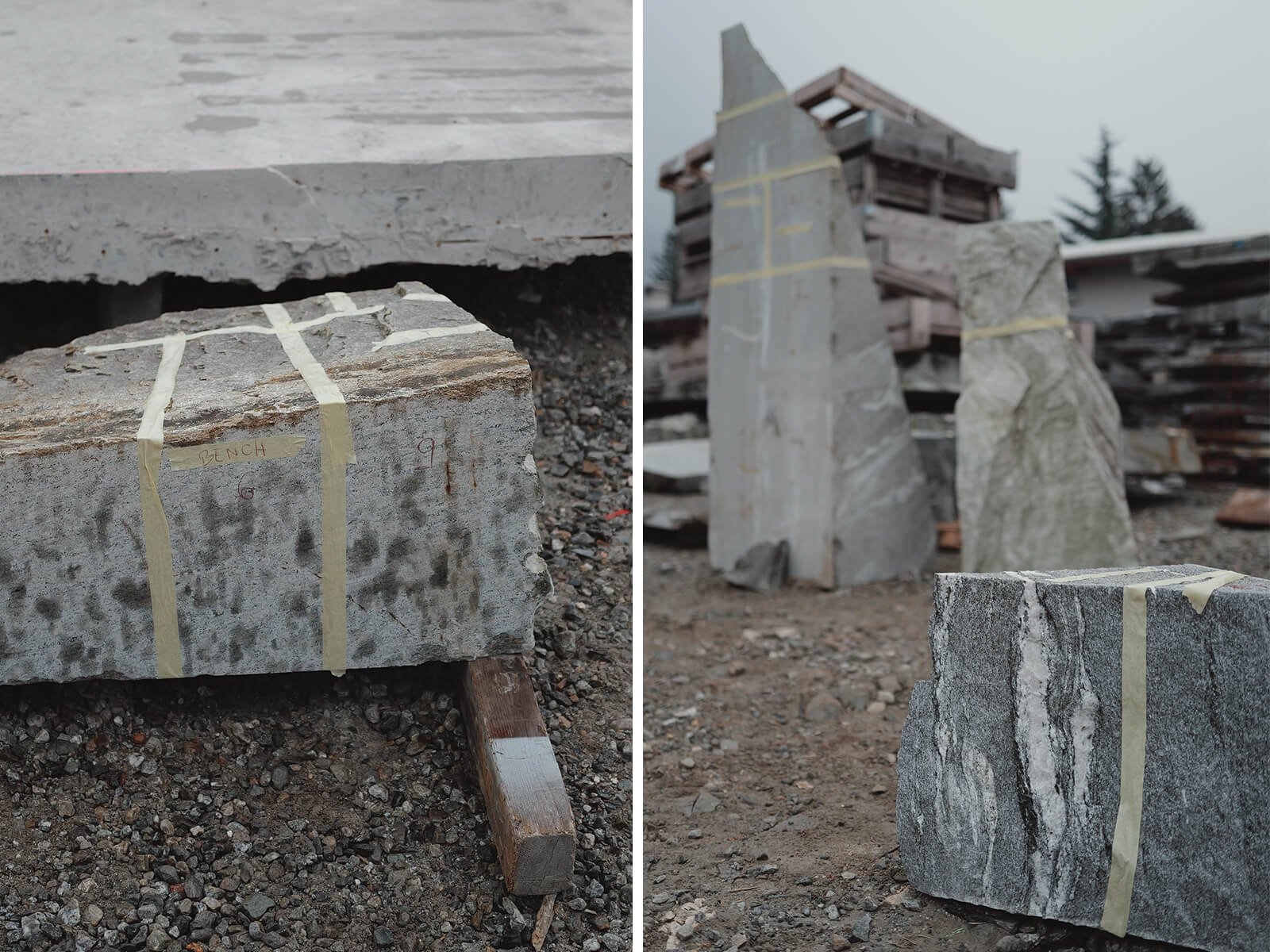
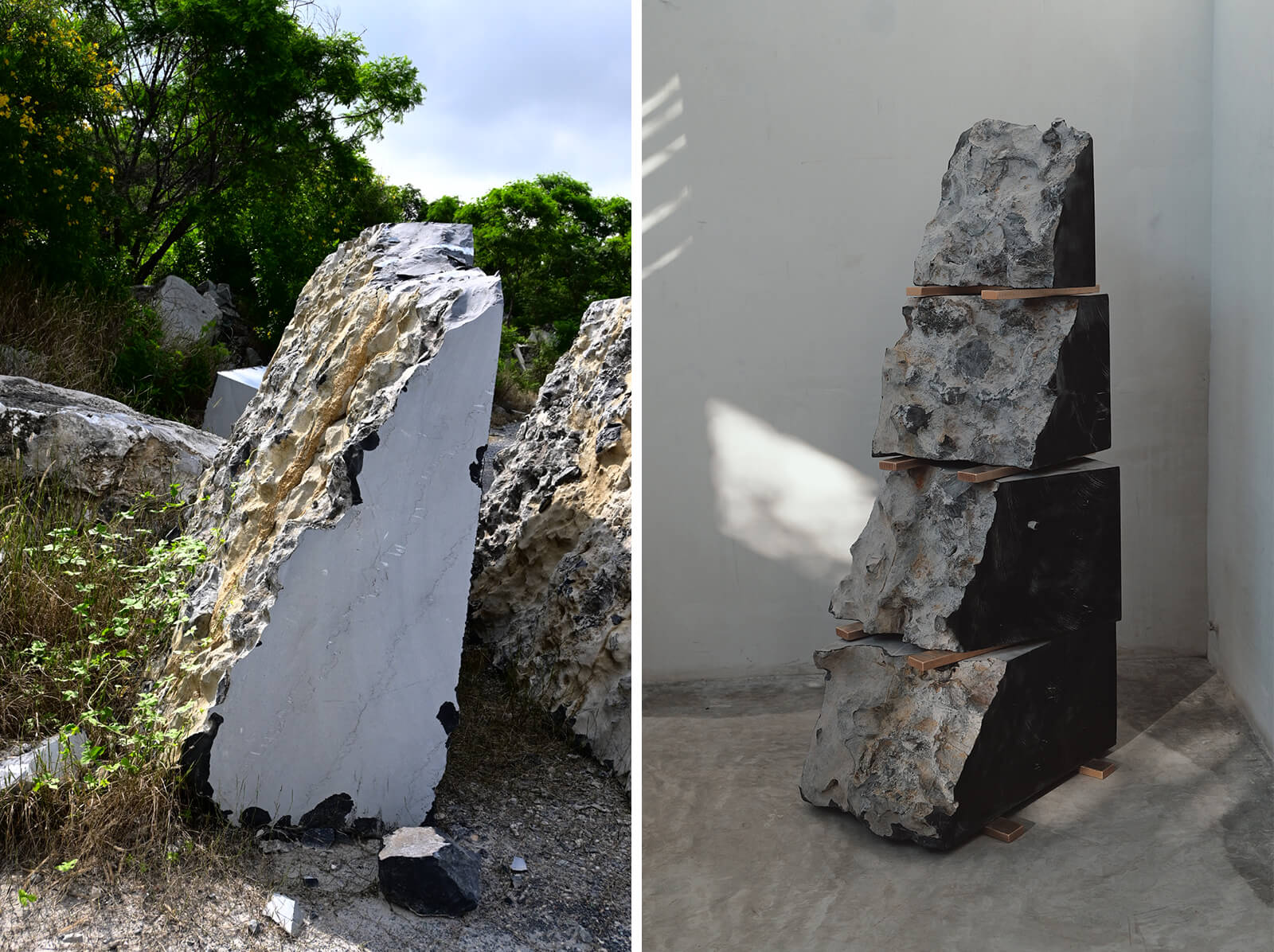
Pranjal: While the Fragments series strives to preserve the found conditions of stone 'waste', it also employs a process of deliberate selection of the pieces. Why do you think this screening is important, as opposed to adapting what is available to suit the design brief, especially in view of the amount of waste this 'selectiveness' often ends up producing?
Damaso: Fragments work with residue: offcuts and leftovers from other fabrication processes and larger projects. There are definitely certain textures and qualities that interest me more than others, but much of the screening is functional. Many offcuts don't have the size, the structural integrity or the capacity in their current state to become a piece of furniture. That rules out a share of the material before aesthetics come in.
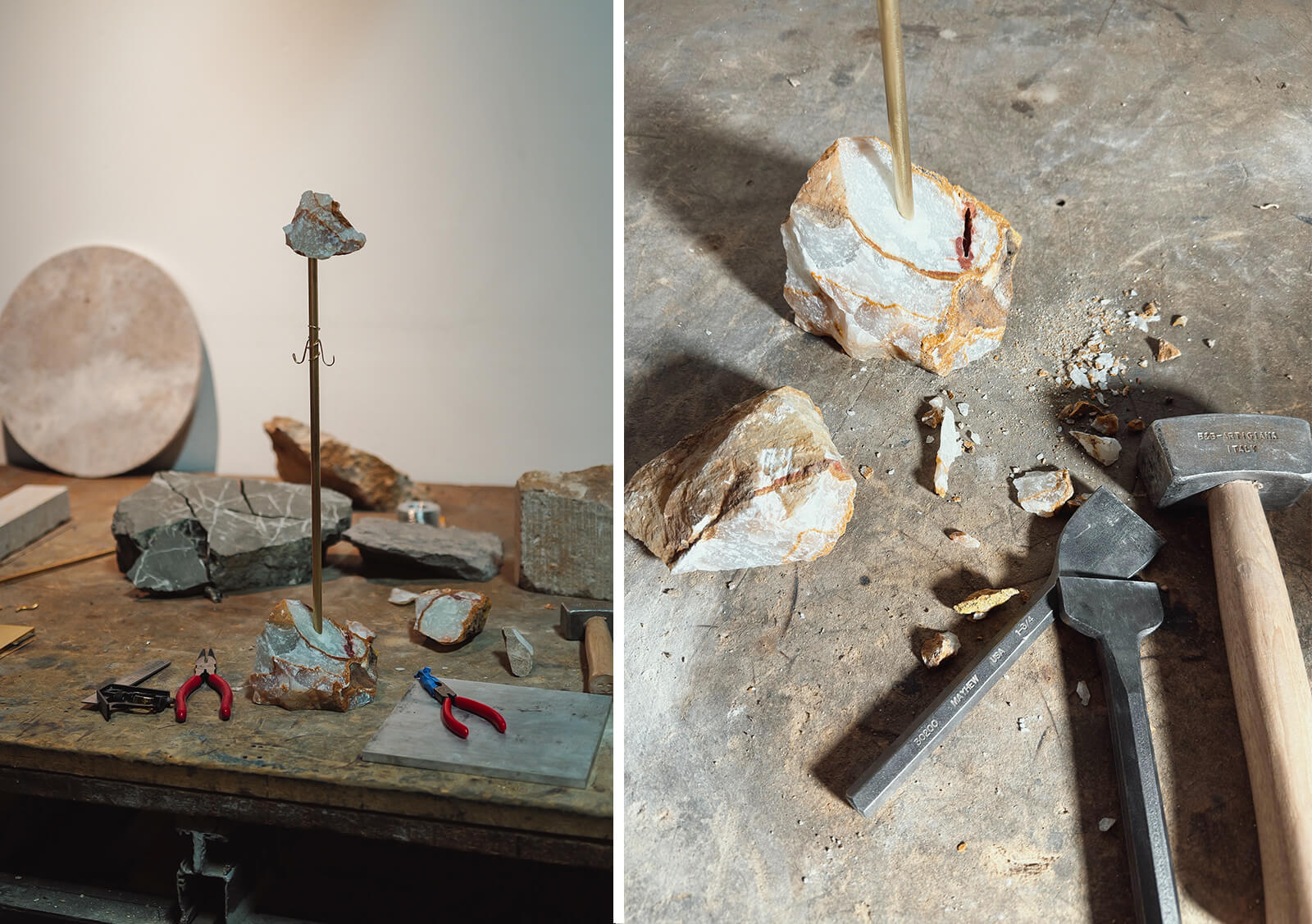
Selection also doesn't stop at the first cut. I might choose two or three remarkable pieces for a Fragments work, but I try to use everything that comes into the studio. The slivers, skins and smaller pieces become smaller objects. The Luz series, for example, is made from what remains of the Fragments pieces. The scale shifts down, but the material keeps its life.
Even the leftovers from Luz stay in the studio. I keep boxes of very small pieces of limestone, onyx and black basalt for possible future projects. They haven't become anything yet, but they will. If I bring a material into the studio, it's because I see potential in it, and I don't believe it needs to go to waste.
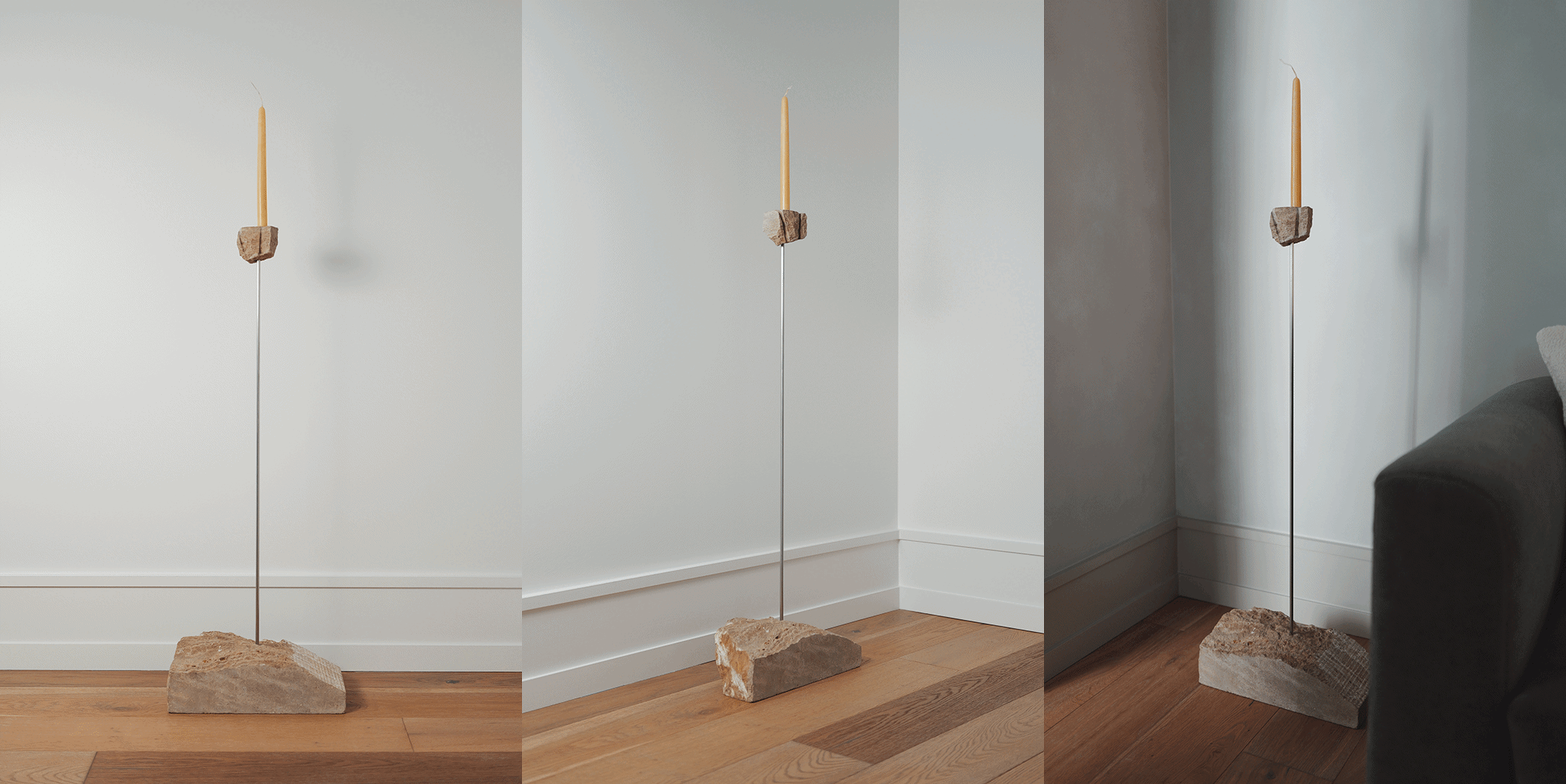
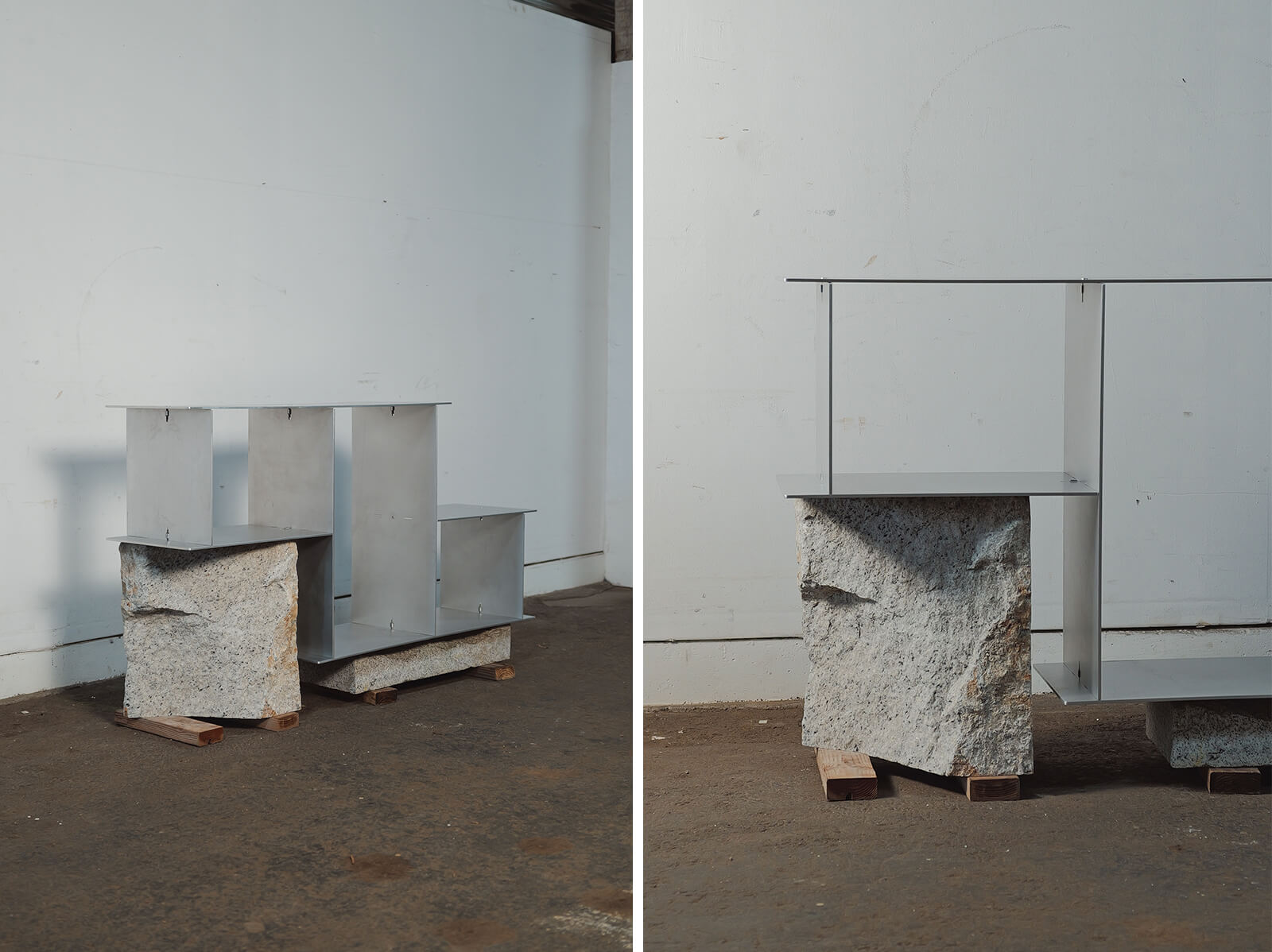
Pranjal: The emotional resonance of your work tends to lend it an artistic appeal, perhaps even more than its regard for functionality. Do you perceive it to be so?
Damaso: I think that's accurate, and I like the phrase ‘emotional resonance,’ because these are emotional pieces for me. I make them in a certain state of mind, and I receive emotion back from the materials, the shadows, the textures, the colours, the smoothness or reflections. It's hard to put these feelings into words. Something in the stone pulls me in, and the pieces carry that weight. It's always hard to let them go. Sometimes I only spend enough time with a piece to photograph it before it leaves the studio.
Function matters to me, but it has to be basic. In industrial design, we were often asked to reduce an object to its minimal function. What is a table in its purest state? A flat surface raised to a usable height. It shouldn't be bumpy or slanted. That's it. Thinking this way gives me freedom. If a table only needs to be a surface, why imprint so much design onto it? Why over-decorate?
Maybe that's where my passion for stone comes from: it's already decorated. It already has the character we look for when we furnish our spaces. I respect ergonomics deeply, but in my pieces I keep function to a minimum so the design doesn't override the stone's presence. I didn't choose it in its ultra-polished form. I chose it rough, tumbled, sometimes broken, as it was when I found it. Keeping that is probably what gives the work its resonance.
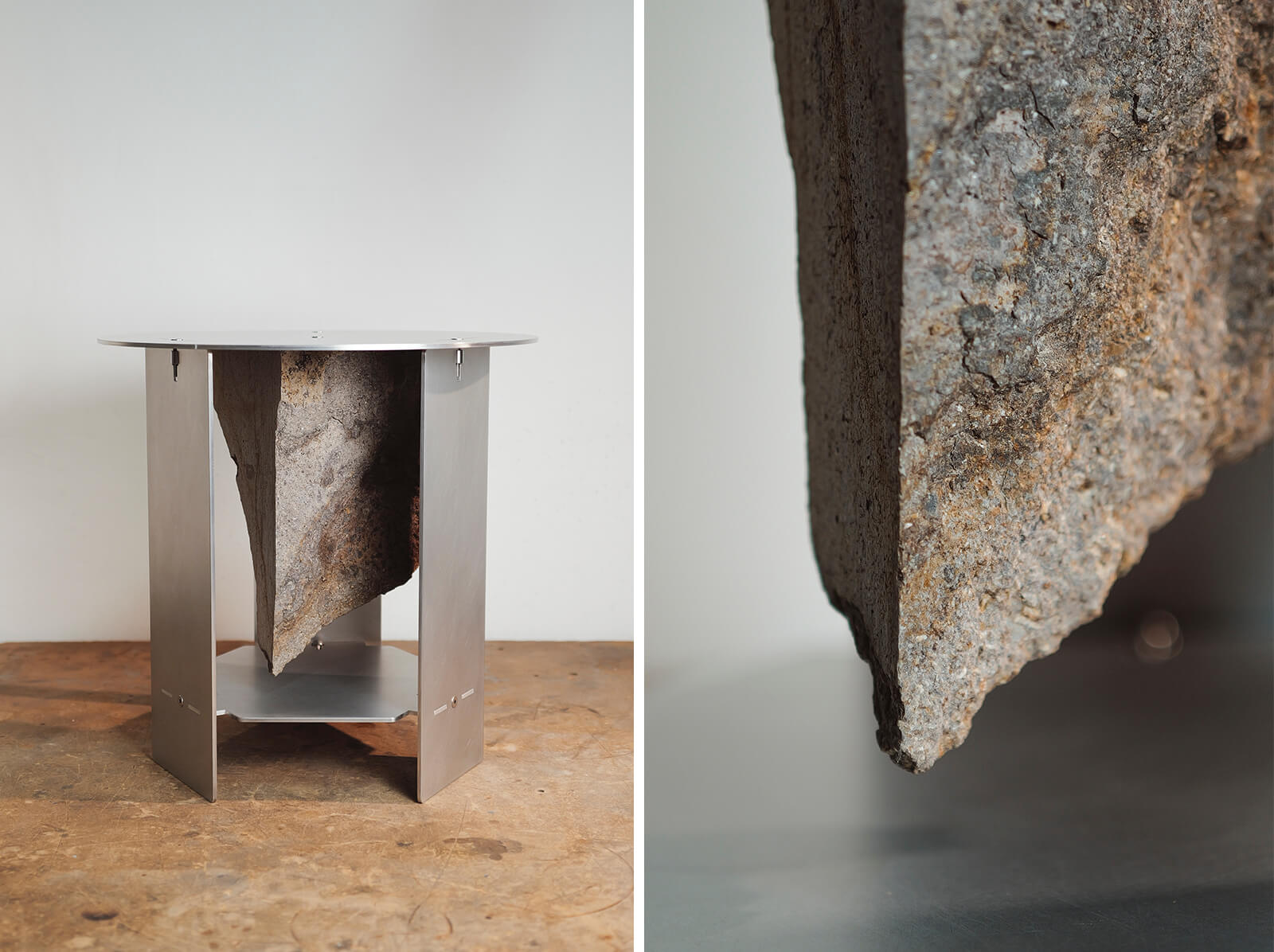
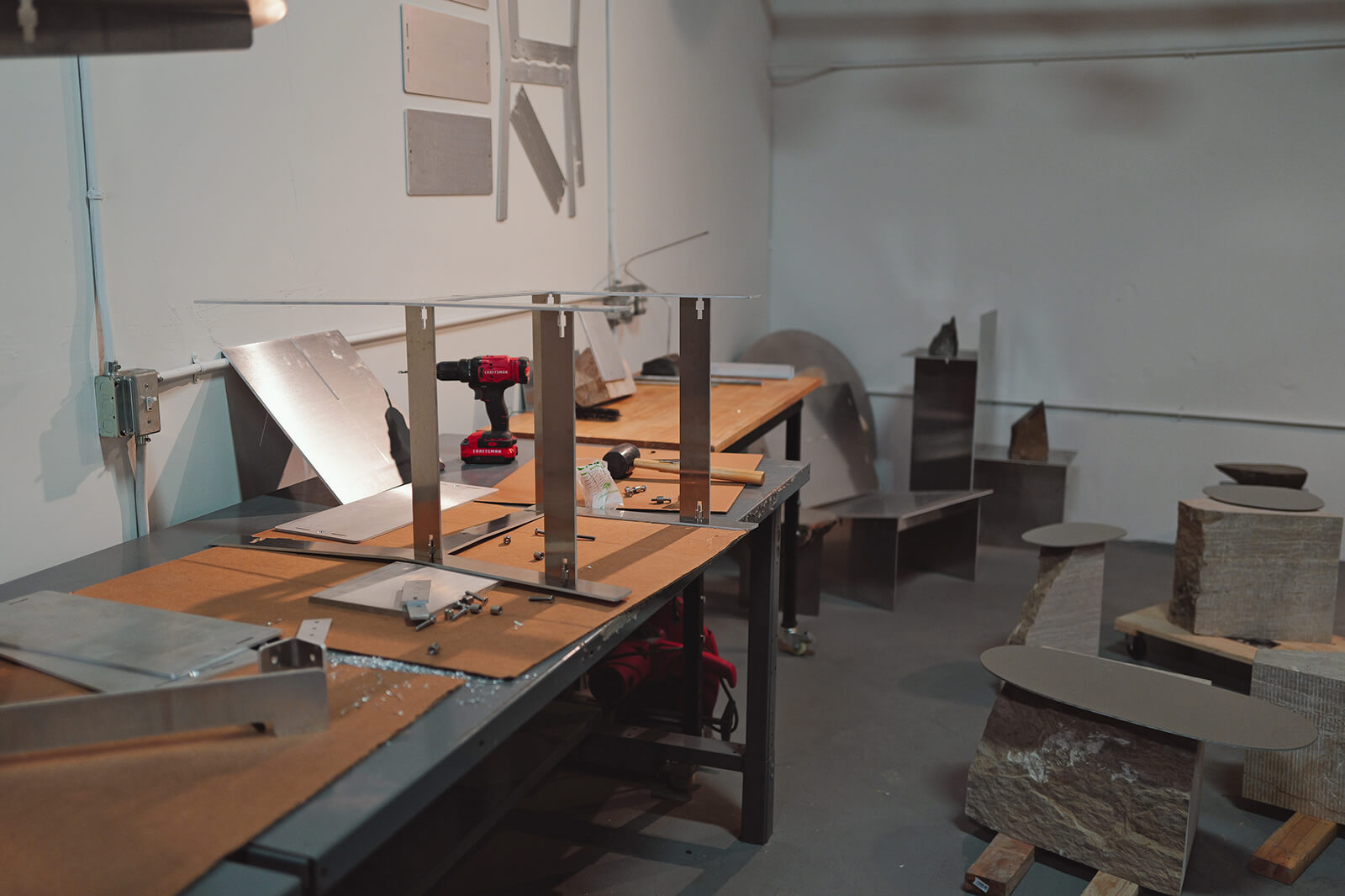
In industrial design, we were often asked to reduce an object to its minimal function. If a table only needs to be a surface, why imprint so much design onto it? Why over-decorate? – Damaso Mayer
Pranjal: What would you say the design industry today is facing a dearth of, that you strive to address through your work?
Damaso: I don't think the industry is lacking much. There's a wider range of work than ever, and it's more accessible. Large platforms, galleries and stores make it easy to find a piece, order it and have it delivered, which is good for clients and independent designers.
Where my work differs is the level at which it happens. Many of my larger pieces are custom-made, which means getting to know the client, understanding what they're after and developing a proposal specific to their space. It's a relationship rather than a transaction, and it's the part of the work I love most.
If something has been lost, it may be that kind of customisation. We can now order exactly what we already want, but there is less space for making something that only exists for one person or one place. That takes time and willingness on both sides, and I think it's worth bringing back.
Pranjal: What are some ideas that you are planning to explore NEXT?
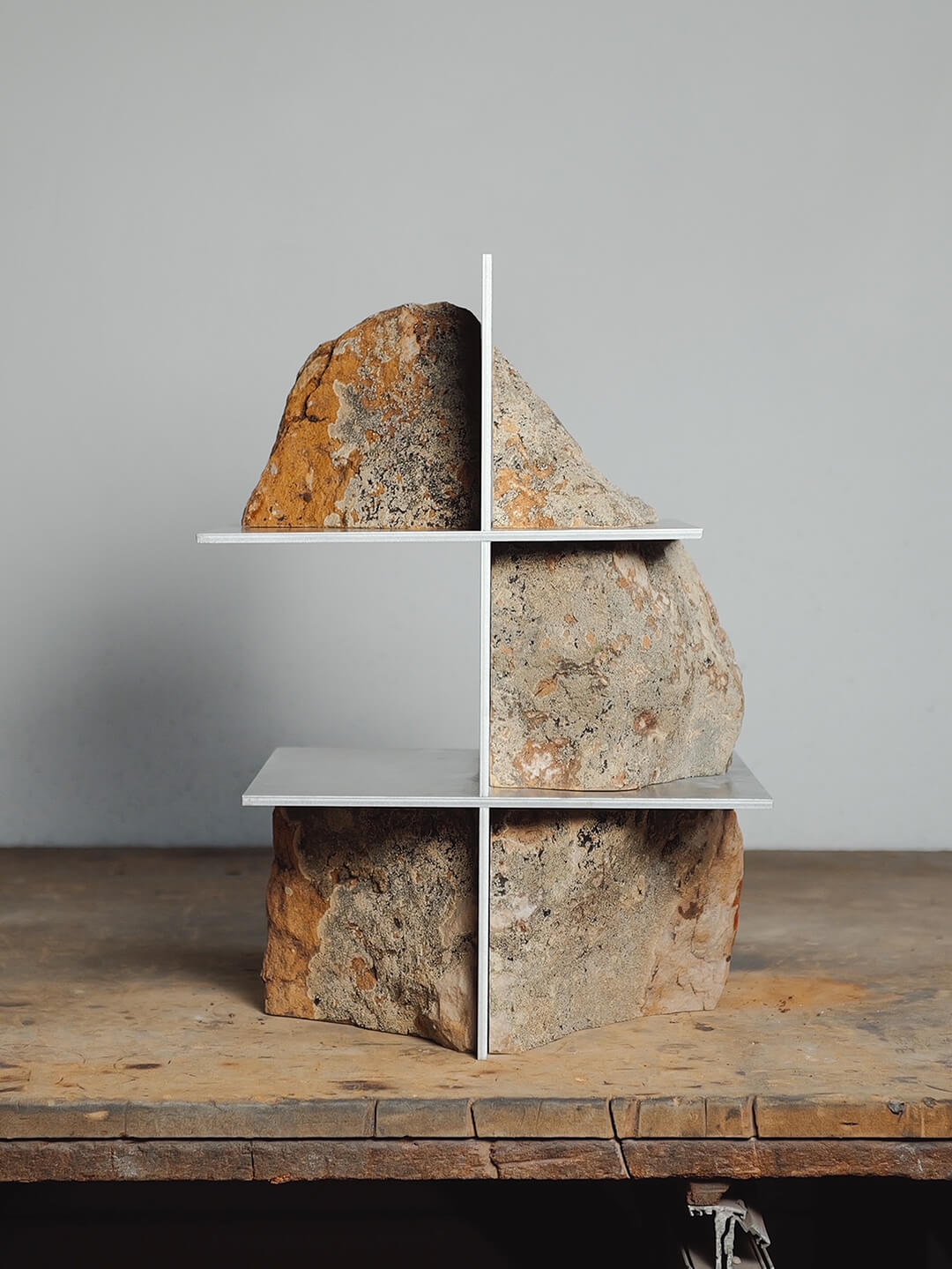
Damaso: There are two directions I'm excited about. The first is thinking about human artefacts applied or forced onto nature. By artefacts I mean systems and gestures we use in our day-to-day lives. The one I keep returning to is the Jefferson grid, the land subdivision system laid across the United States. I first learned about it in architecture school, and it carries real conceptual weight. The Absence piece began with that idea: how a gridded assembly could alter an organic form like a boulder, and what happens where the two intersect. I don't mean it as a critique of human reason imposed on nature. What interests me is how bringing the two together helps us understand each more deeply. It also produces something unexpected, because when you start subdividing a stone, you don't know exactly what you'll end up with. I see this growing into a larger collection, and it's a good example of architecture, landscape and industrial design all acting on a single piece.
The second is thinking holistically about place, landscape, furnishings and sculpture within a single project. Instead of designing an object on its own, I have the opportunity to think about the environment it lives in. It's less about the product than what’s around it and the atmosphere we want to create.

by Jincy Iype Nov 03, 2026
Two realised visions from the 11-piece Flight of Nostalgia collection brought vintage forms, natural imagery and craftsmanship to the LIVinSET at ADFF:STIR Mumbai 2026.
by Zohra Khan Oct 29, 2026
Speaking with STIR, the Dutch industrial designer talks about the intelligence of hands, expanding the language of colour and opening whispering dialogues with objects.
by Pranjal Maheshwari Oct 28, 2026
Lidewij Edelkoort and Philip Fimmano invite over 100 global designers for a multidisciplinary showcase that channels their inherent curiosity and whimsy as hope in desolate times.
by Pranjal Maheshwari Oct 23, 2026
Co-authored by Jareh Das, Chairman traces the British designer’s fixation on chairs as symbols of power and identity and as mediums of expression and community building.

make your fridays matter with a well-read weekend
Enter your details to sign in
Don’t have an account?
Sign upOr you can sign in with
a single account for all
STIR platforms
All your bookmarks will be available across all your devices.
Stay STIRred
Already have an account?
Sign inOr you can sign up with
Verification link sent to check your inbox or spam folder to complete sign up process
Tap on things that interests you.
Select the Conversation Category you would like to watch
Please enter your details and click submit.
Enter the 6-digit code sent at


Damaso Mayer on offsetting geological histories with industrial finesse in design
by Pranjal Maheshwari | Published on : Nov 05, 2026


 Sign in with Google
 Sign in with email
What do you think?