Architecture07 mins. read
The 25th International Garden Festival delves into 'The Ecology of Possibility'
by Anushka SharmaJul 31, 2024



by Pia BhatiaPublished on : Sep 16, 2026
“As the plants grow, materials evolve and the light changes, the gardens reveal themselves differently with each visit”, explains Alexander Reford, co-founder and director of the International Garden Festival, held annually in Grand-Métis, Québec, Canada, highlighting the gradual unfolding of projects and visitor interactions as a true testament to the Festival’s enduring success. The festival’s 27th edition is open to the public from June 20 – October 4, 2026, having received 204 submissions from 29 countries, marking its largest edition yet. This year’s edition features 30 contemporary gardens, including six newly commissioned projects. Each installation, whether new or returning, explores a different approach to this ecological-spatial experience. “It is truly a joy to see visitors of all ages be surprised, play, contemplate, touch and inhabit these creations. It is this meeting of artistic excellence, experimentation and the pleasure of discovery that has defined the Festival’s remarkable character for the past 27 years,” states Reford.
This year’s theme is Mapping Sensitivity, marking a deliberate shift in scale from last year’s theme, Borders. While the commissioned projects for Borders emphasised the geopolitical implications of organising space, this year’s theme shifts its focus inward, exploring the felt experience of inhabiting and engaging with a garden.
This re-orientation denotes a distinct turn to the living inhabitants of the gardens. It draws from sensitive mapping, a process of mapmaking where the cartographer consciously integrates personal subjectivity into a space. Though sensitive mapping is an emerging academic framework, elements of this cartographic methodology have historically been used in contexts ranging from environmental crises in Mexico to censorship in the British military. The official release elaborates, “Sensitive mapping traces the shared representations of a space that is described, lived and felt. It takes into account users’ real experience of a given space and the emotional relationship that they develop with it, considering cultural, phenomenological, experiential, cognitive and contextual factors.”
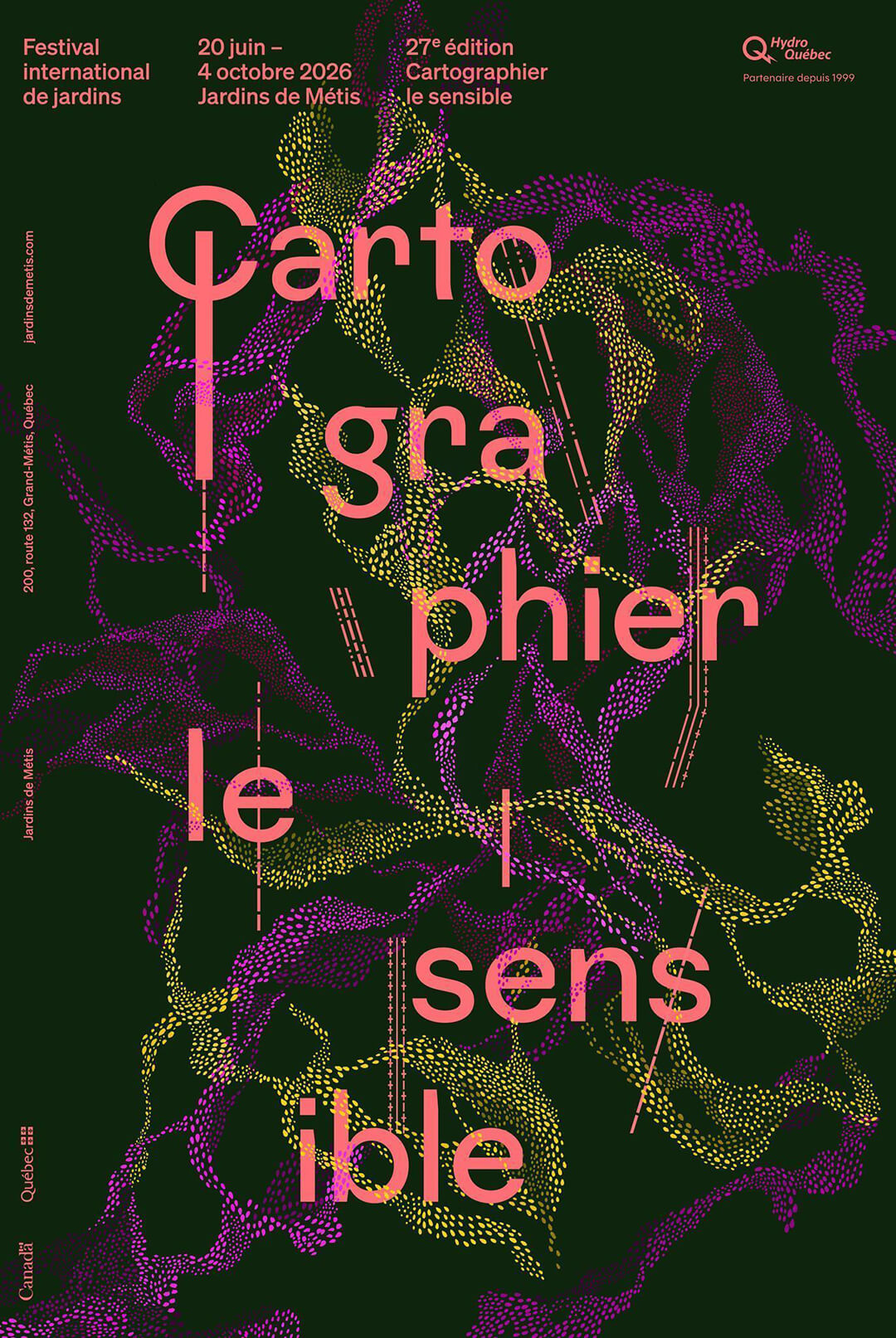
Canadian graphic design studio bureau60a has curated the visual identity of the Festival. With influences spanning biocentrism and cartography, designers Simon Guibord and Rachel Monnier have created an identity that “transcends territorial and temporal barriers”.
The six newly commissioned projects are Again, a Garden, Frame, Mentho-artemision, Tainai Meguri, Worm’s Eye and a special project titled Pousses de son, which will be exhibited alongside returning installations including Blue Stick Garden from the inaugural festival and BACK / GROUND from last year’s theme of Borders. STIR takes a closer look at these offerings.
Hugh Taylor | Manitoba, Canada + United States
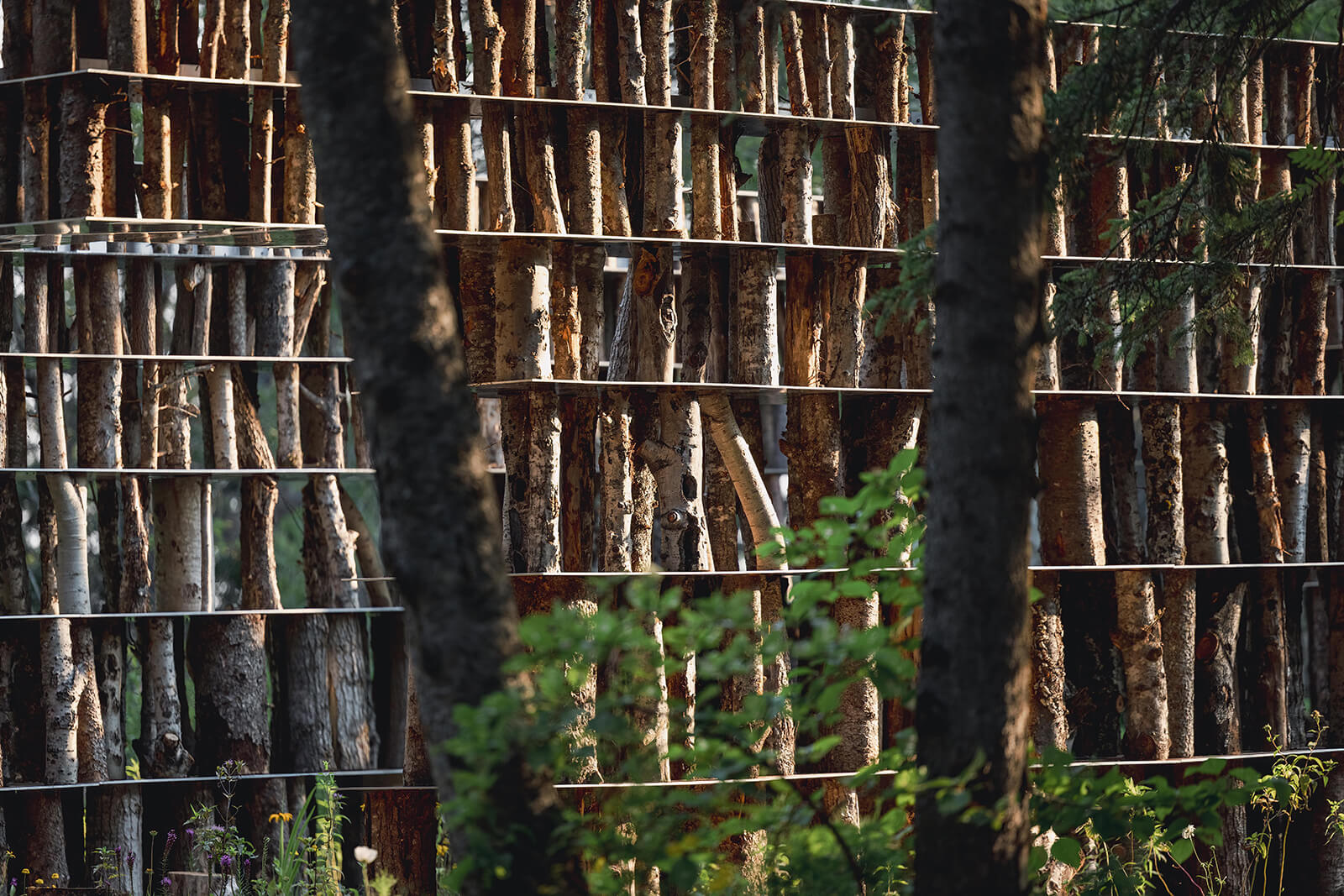
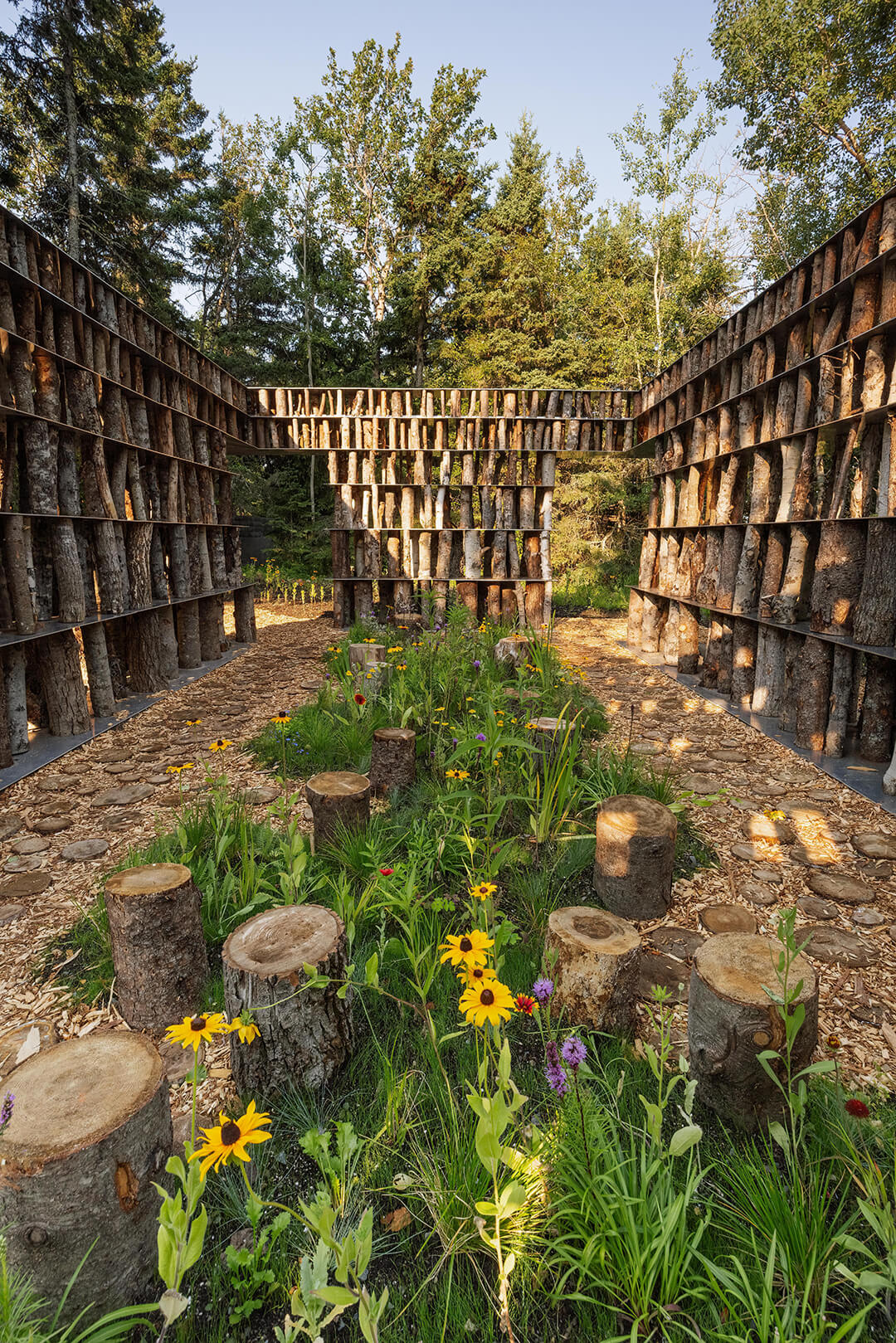
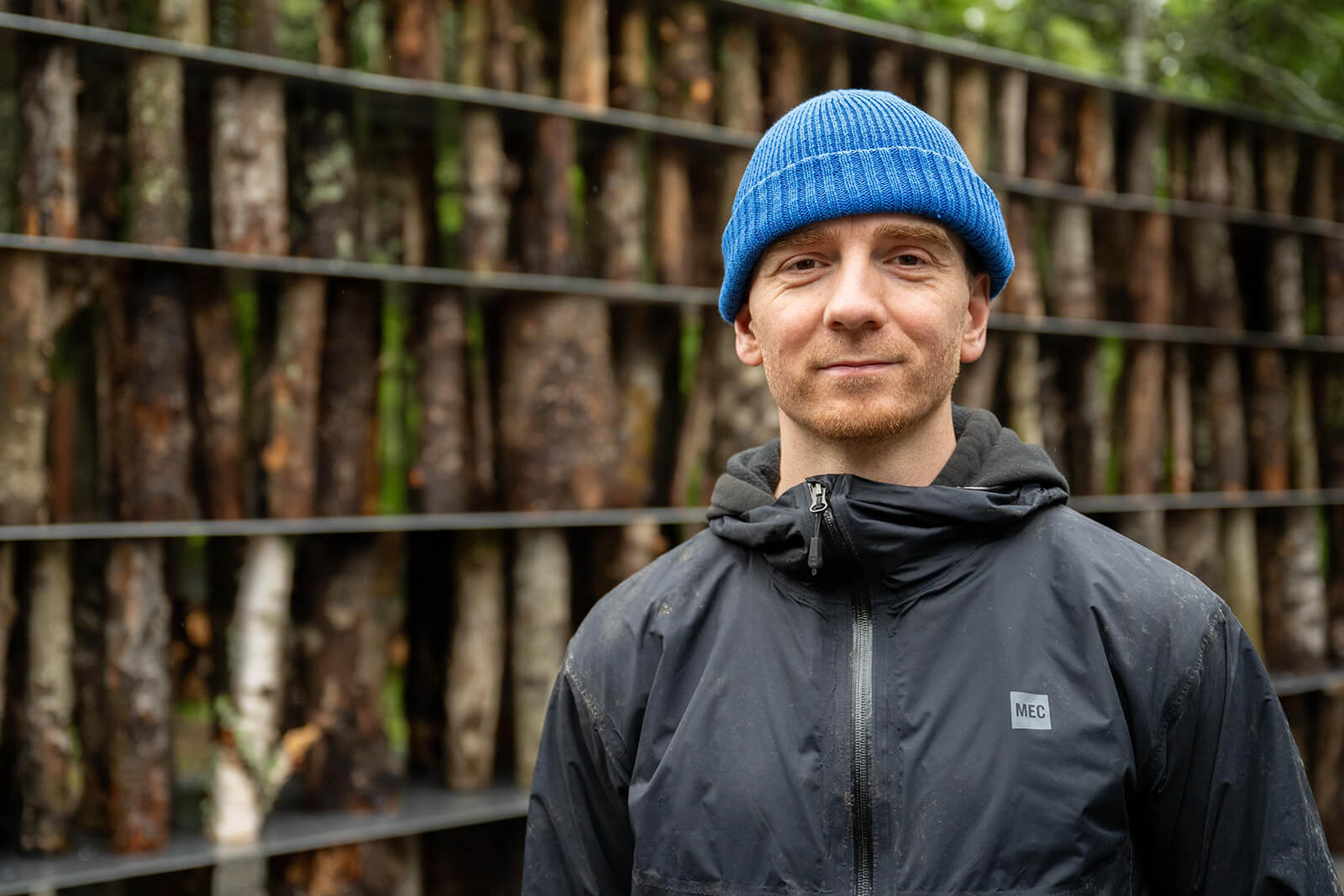
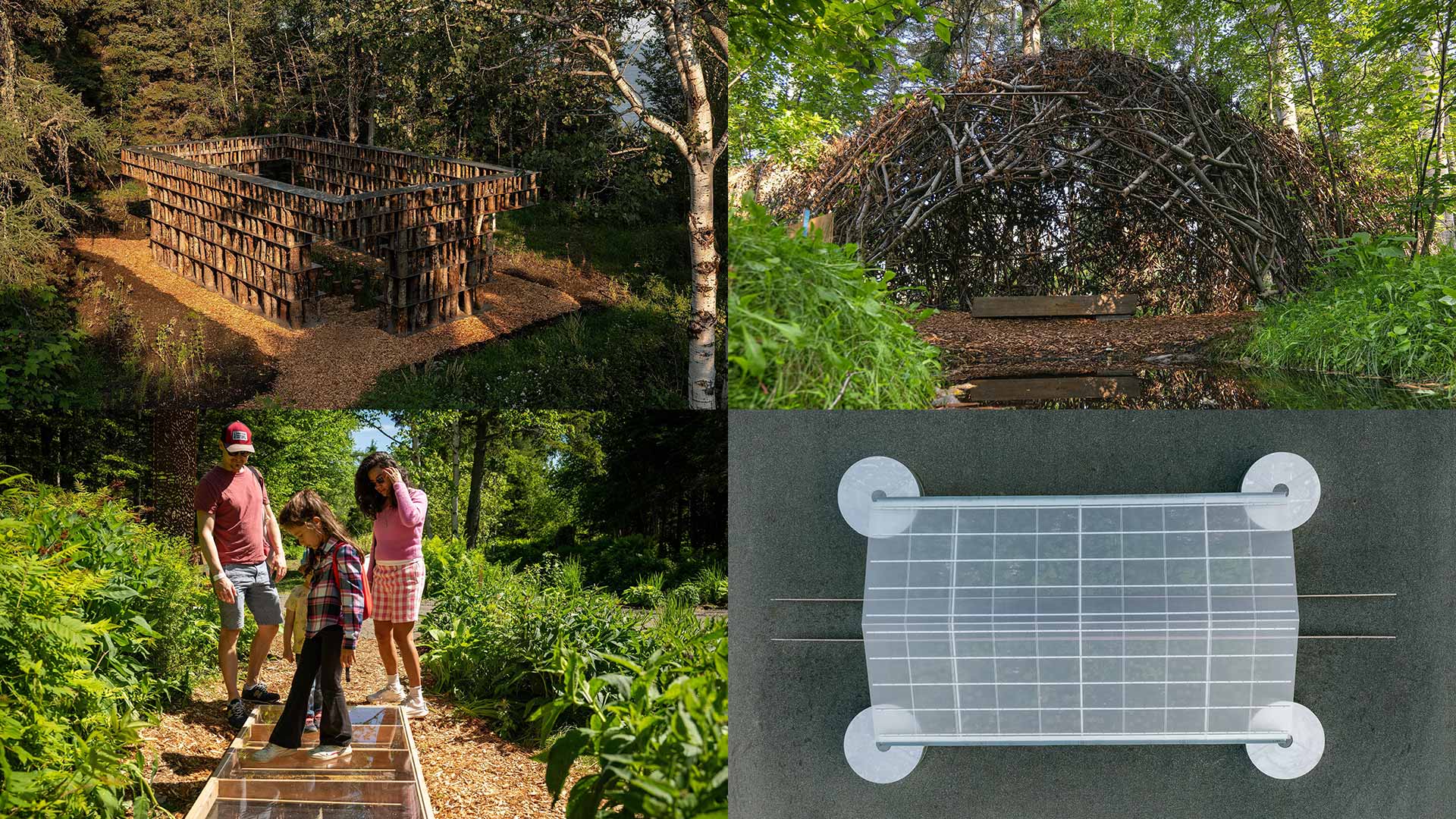
From a distance, Again, a Garden resembles a library—precise lengths of logs collected from the garden’s surrounding forest floors are stacked between aluminium plates, creating the appearance of shelved books. Upon closer inspection, the walled garden emerges, at the centre of which are flowerbeds and seats made from hollowed-out logs. Canadian designer Hugh Taylor has created a pavilion that straddles the past and future: the once-unused, dormant logs create a structure for visitors to both explore and rest in and a plot for native pollinator species to grow. Taylor envisioned this as a sustainable pavilion that will outlast its dismantling, with aluminium sheets being recycled for future products and the wood being reused as firewood, mulch or allowed to naturally decompose in the forest. The end of Again, a Garden serves as a transition into other ecological and material cycles, manifesting natural continuity.
Ulli Heckmann | Germany + The Netherlands
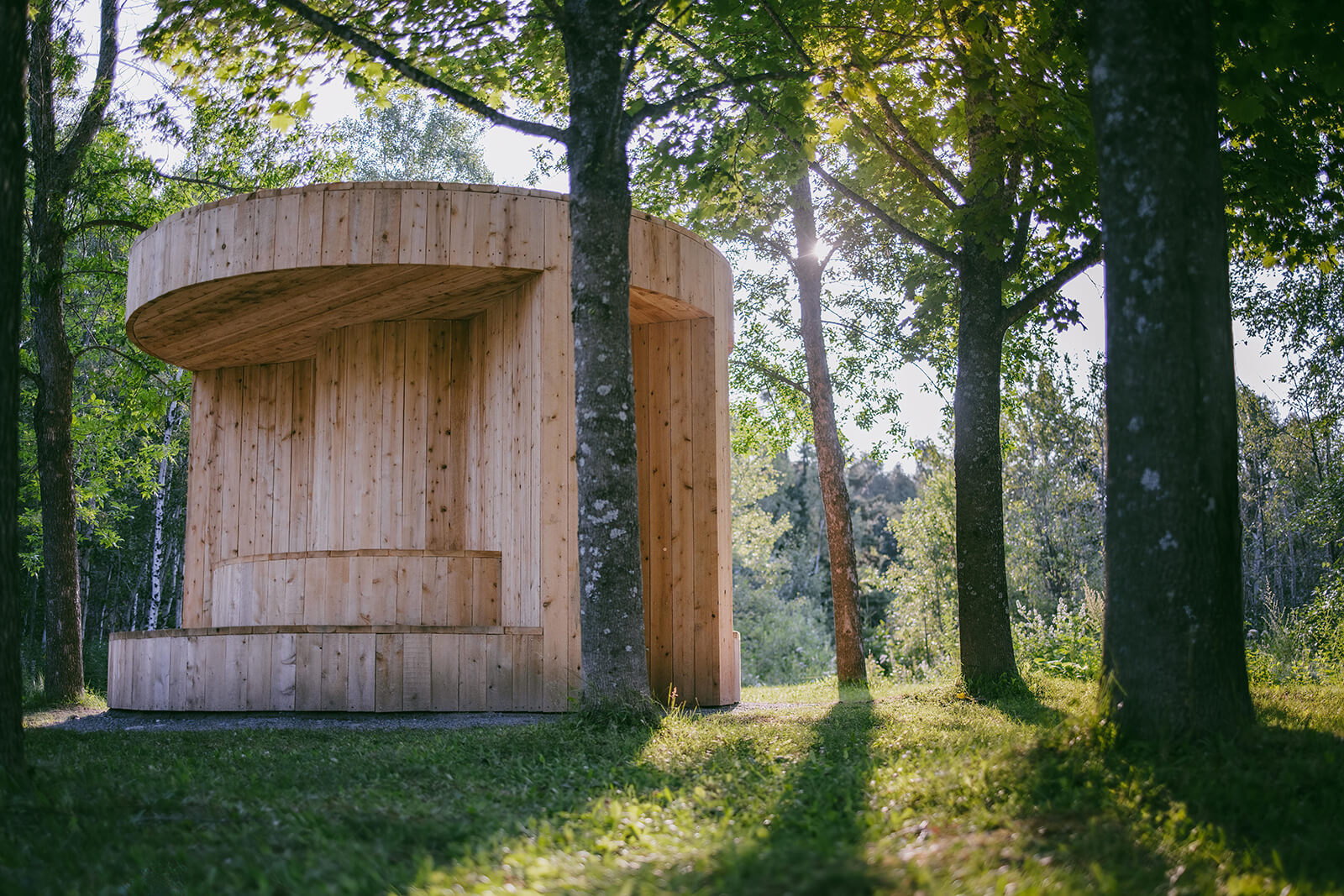
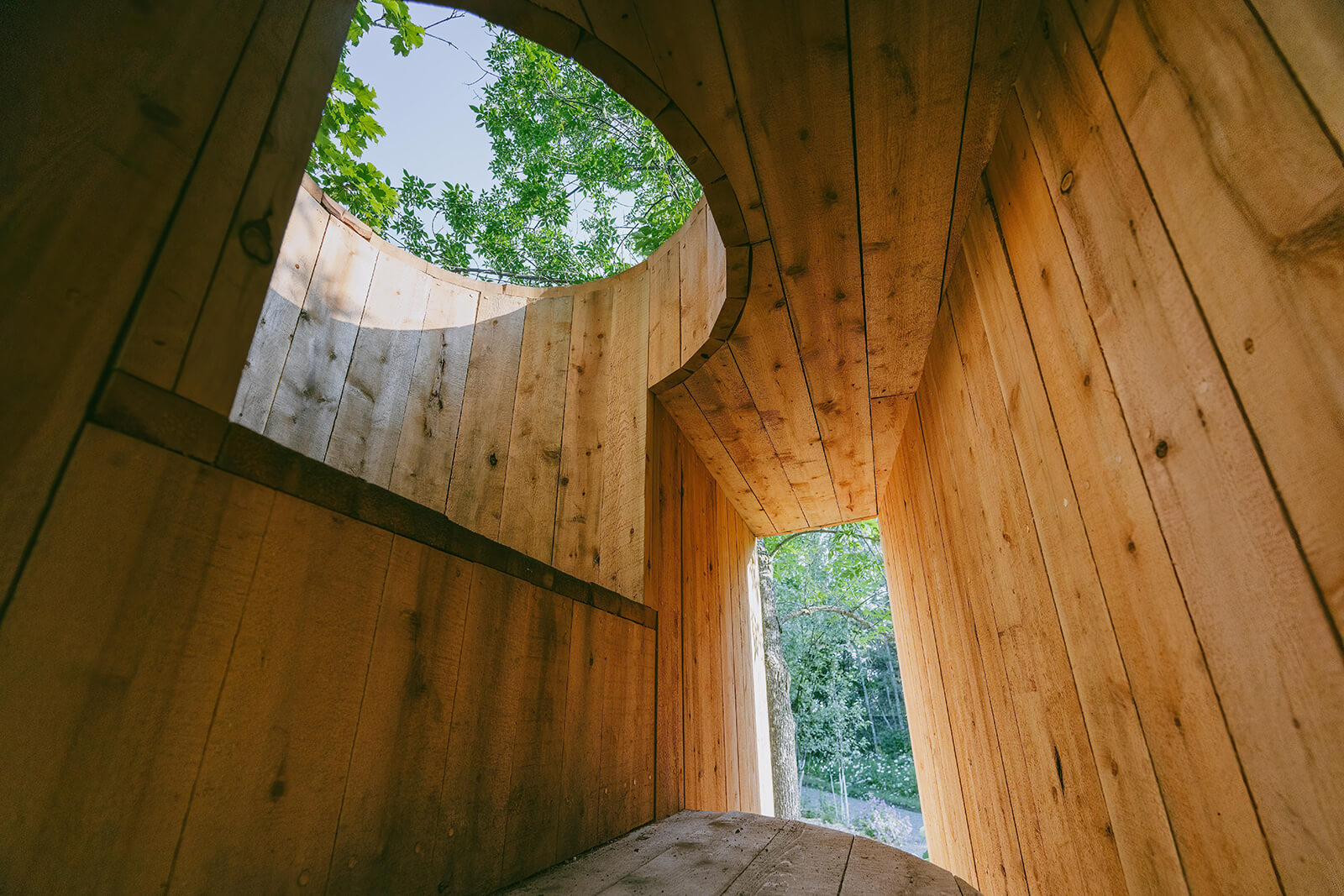
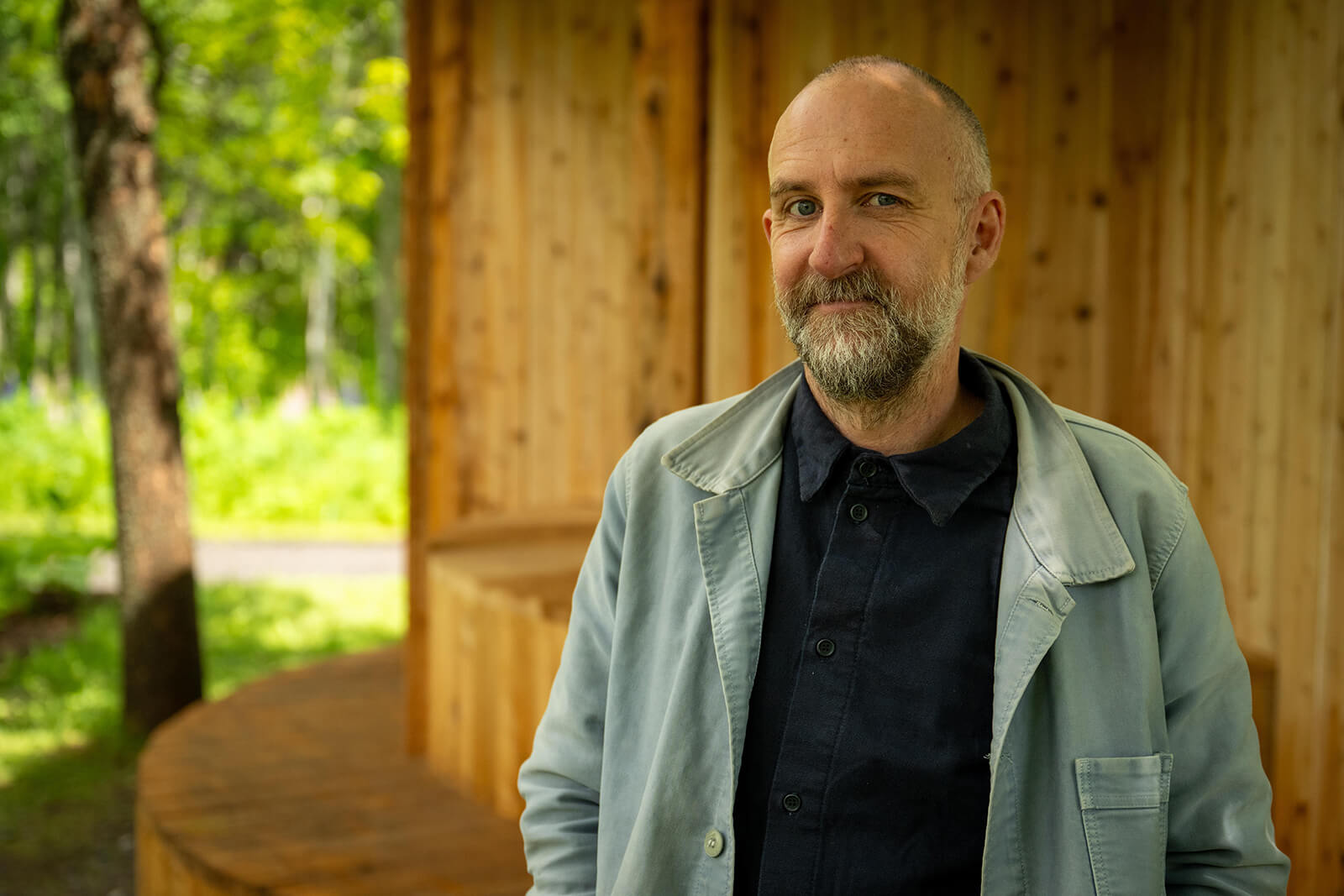
Netherlands-based German architect Ulli Heckmann offers an architectural mediation on perspective with Frame, a sculptural installation whose form changes dramatically based on the visitor’s point of entry. Subjectivity is at the core of this project—the visitor’s perspective determines not only their view of the sculptural object’s shape but also its function. Frame provides places to rest that are both hidden and outward-facing, and its elements facilitate both communal engagement and solitude. Its startling variety invites contemplation into the role of perception and awareness, both of the individual body and of the environment it inhabits.
Etienne Lapleau | France
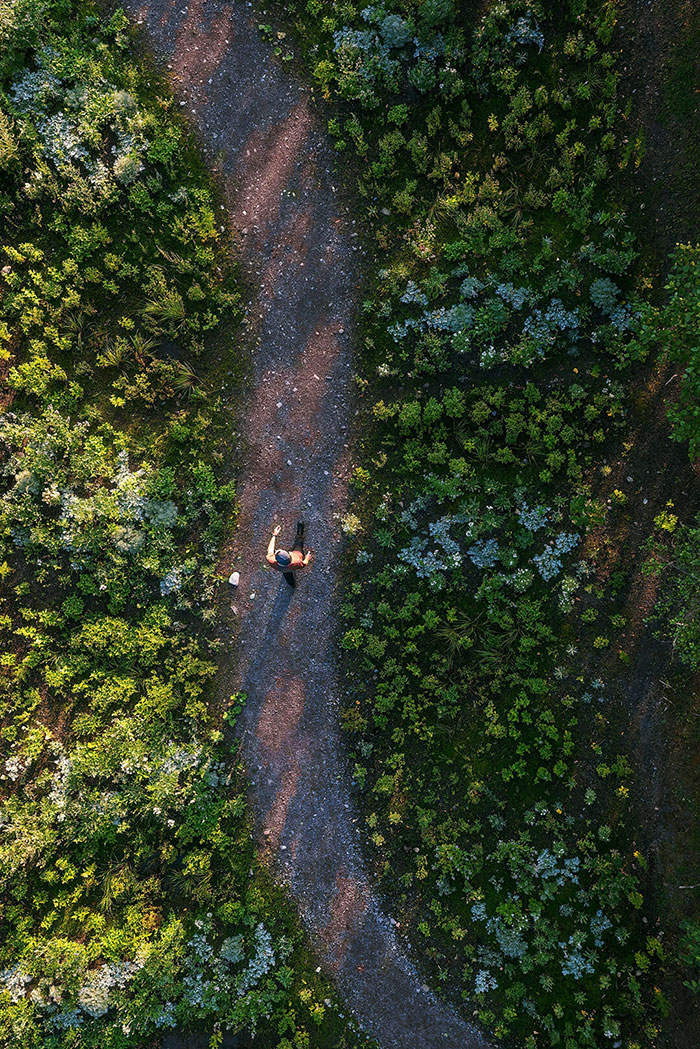
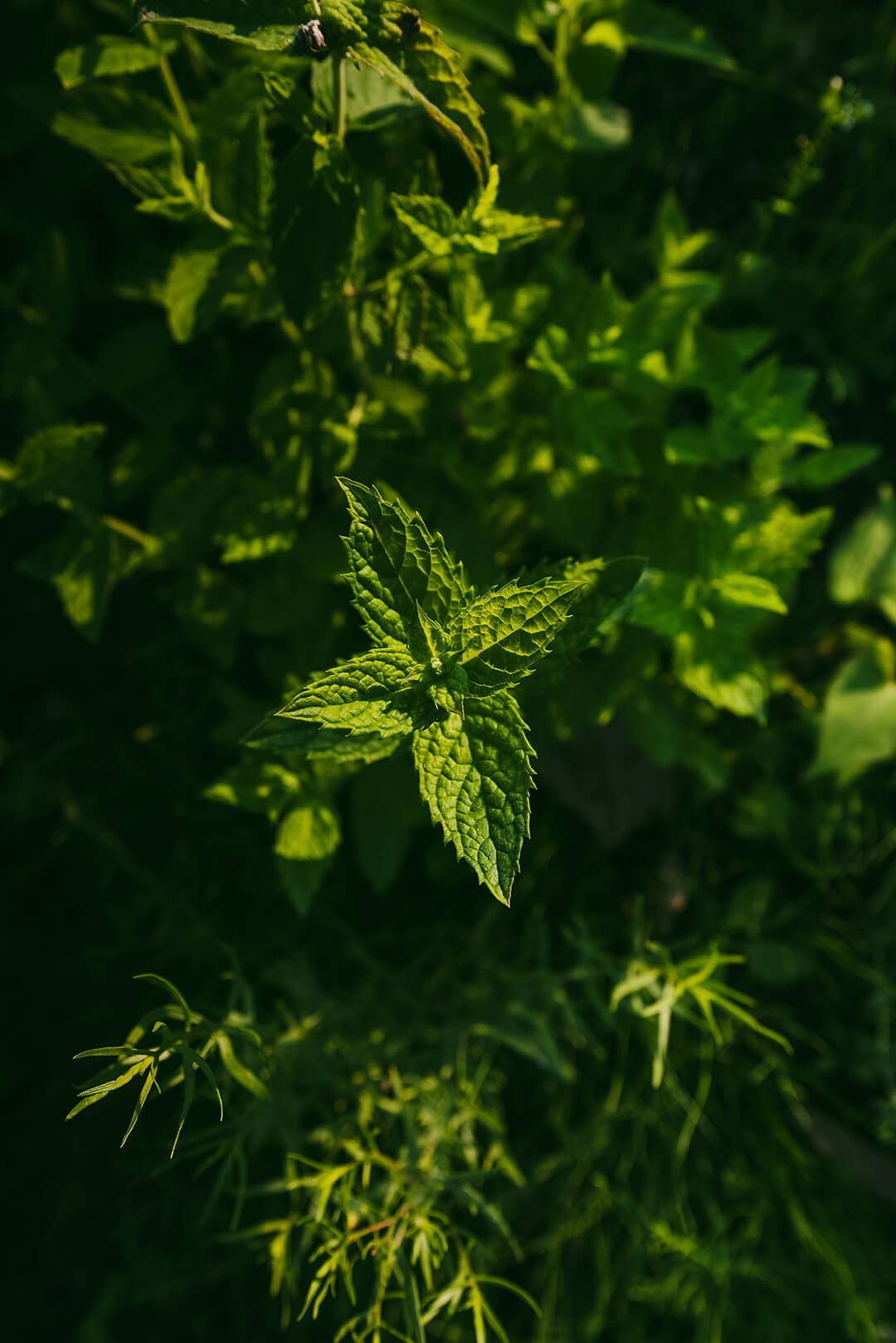
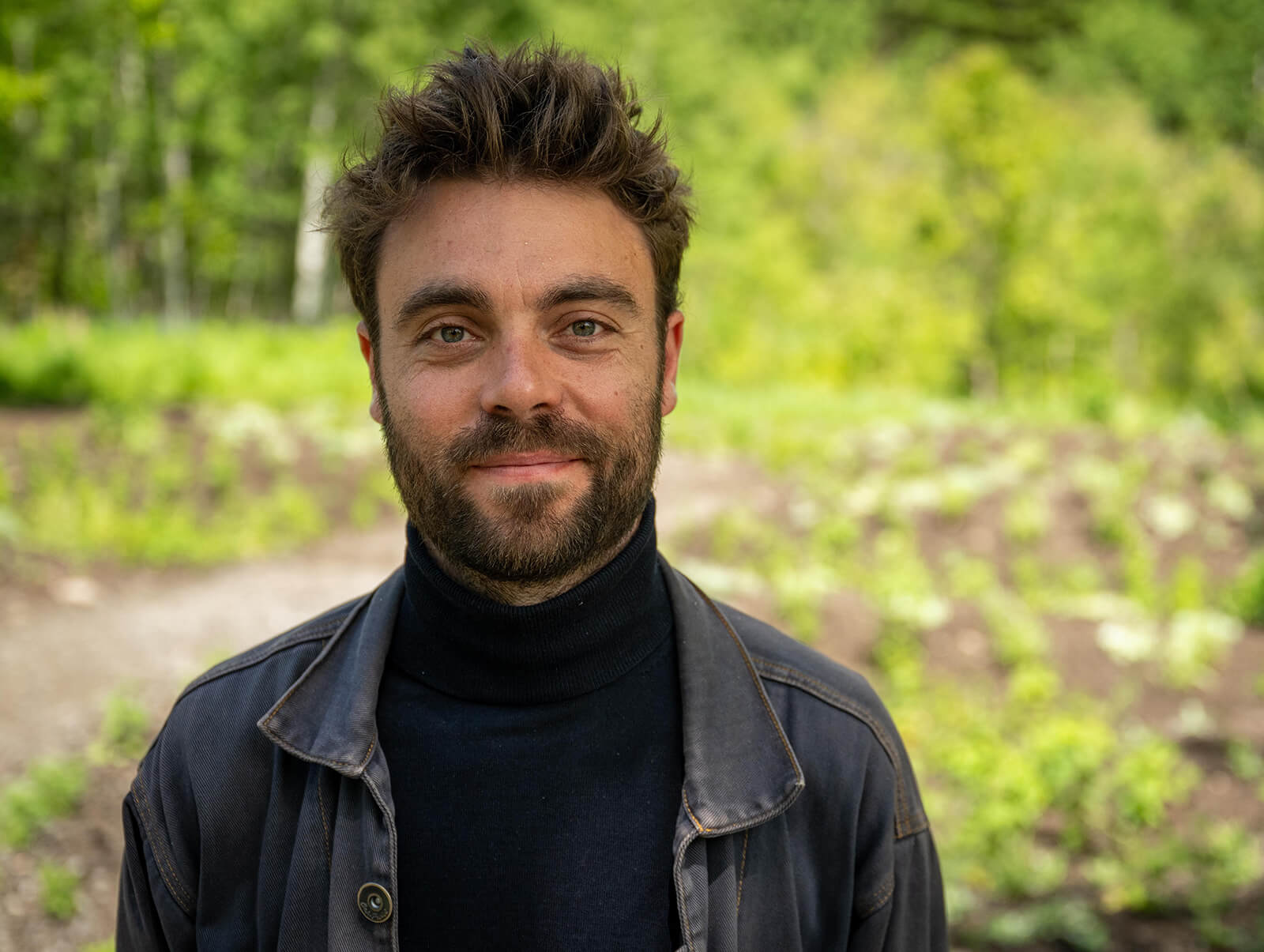
French landscape designer and gardener Etienne Lapleau contemplates the minute with Mentho-artemision, a garden that incorporates two distinct plant species—mugwort (whose genus is Artemisia, hence the name of the project) and mint, both of which thrive in dry and humid conditions, respectively. Brought together in a microtopography designed by Lapleau, the garden becomes concentrated with variety that would normally only exist at the scale of a landscape. Both plants gradually spread across the area per their preferred conditions. The result is a textured, multisensorial landscape whose palette ranges from silvery grey to green while also introducing aromas that are convergently earthy, bitter and refreshing. In constructing this perceptible confluence and playing with scale, Lapleau explores how ecological processes can be mapped onto sensory experiences.
Measured Architecture + Tamotsu Tongu, Kumpei Wakino | British Columbia, Canada
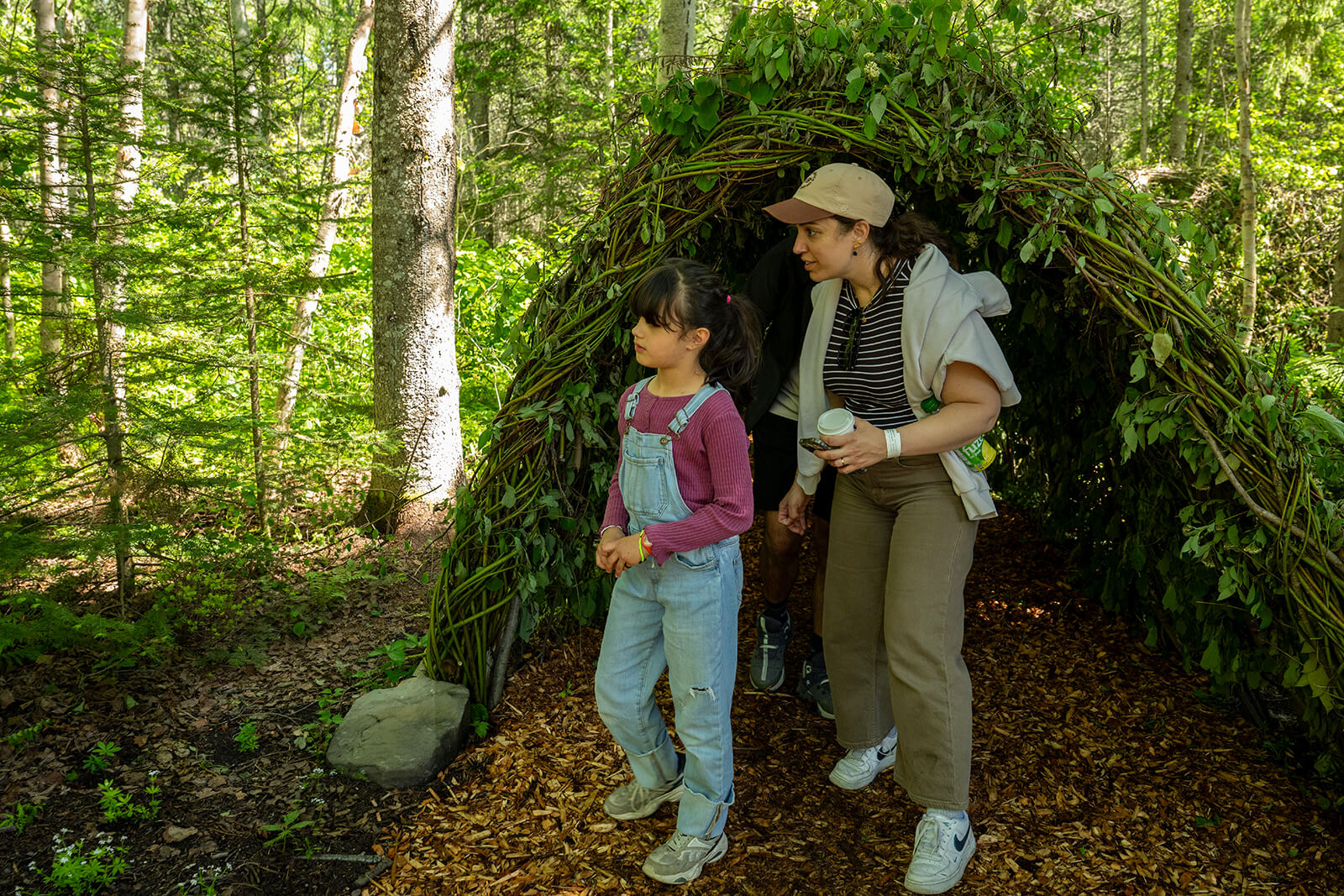
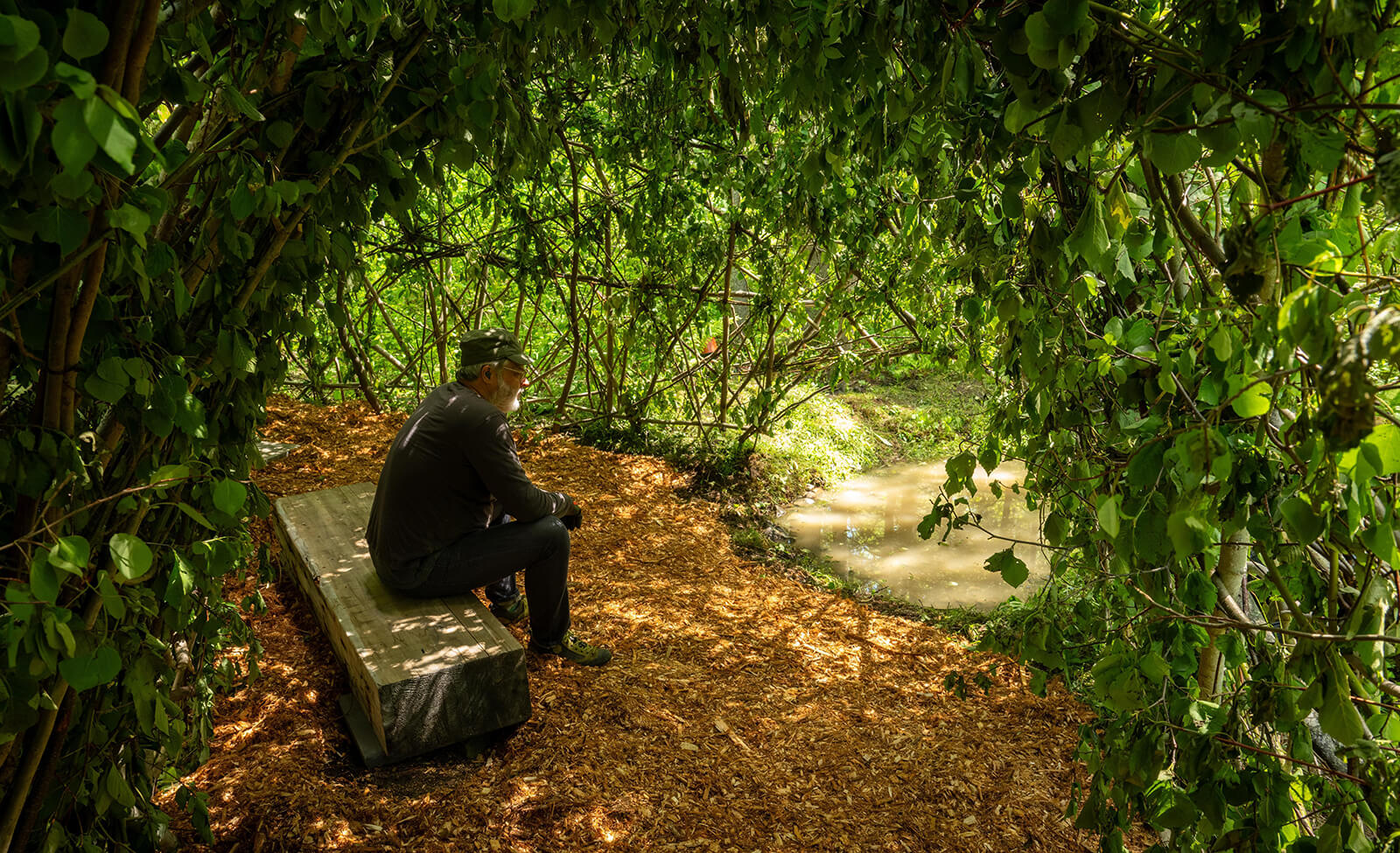
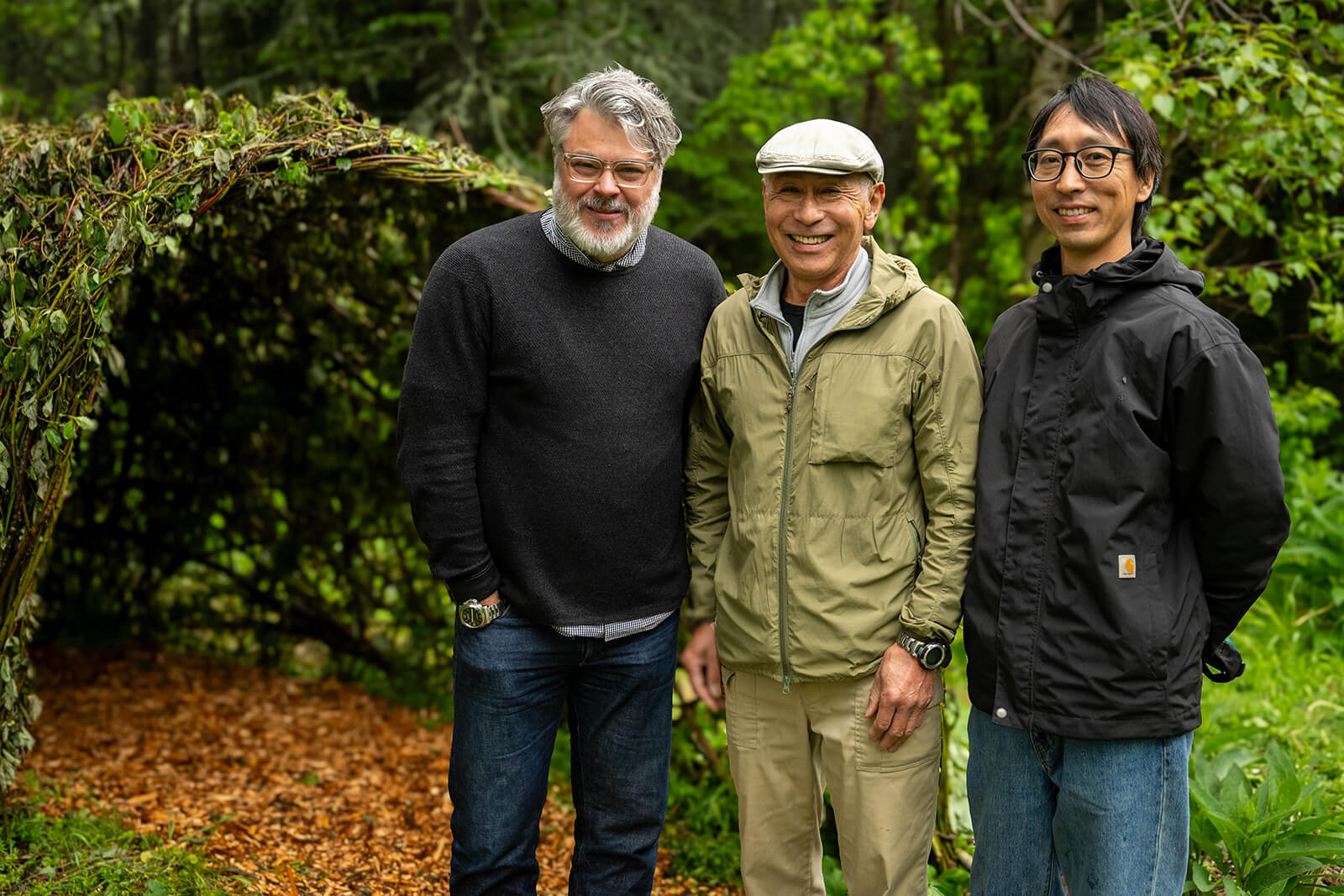
Our conception of the ‘real’ has been significantly altered by the digital terrain we traverse daily. As the representation of life online becomes increasingly muddled with the experience of living itself, our conception of selfhood changes, a concept that the designers of Tainai-Meguri explored through their collaborative installation for the Festival. The project interprets the idea of a ‘hidden digital space’ in the form of a small cave with a willow arbour made by planting and weaving willow rods into a shaded, arched seating shelter. A small entrance is hidden within the dense planting, leading visitors along a winding path to a pond that is shaped like a magatama (a curved C shape from prehistoric Japan with many symbolic attributes including the moon, protection and the soul). The design creates a transition between the outside world and a calm, enclosed pool of water. A grid acts like a boundary, while water drops from the dome into the pond, forming gentle ripples. Together, these elements create the sensation of moving through an ever-changing, ‘undulating passage’, one that the designers hope visitors emerge from feeling restored.
Tainai-Meguri is also a celebration of collaborative expression, bringing together three major designers: Canadian architect Clinton Cuddington (Measured Architecture); Japan-born and Canada-based landscape designer Tamotsu Tongu (Toko Garden Design); and Japanese landscape designer Kumpei Wakino (Kunon Landscape & Design). The project incorporates traditional Japanese craftsmanship into the specific climatic conditions of Grand-Métis, a reference to last year's theme of Borders with a fresh view towards internal landscapes, creating “a meditative journey in which inner and outer worlds dissolve”.
Ellen Harris | United States
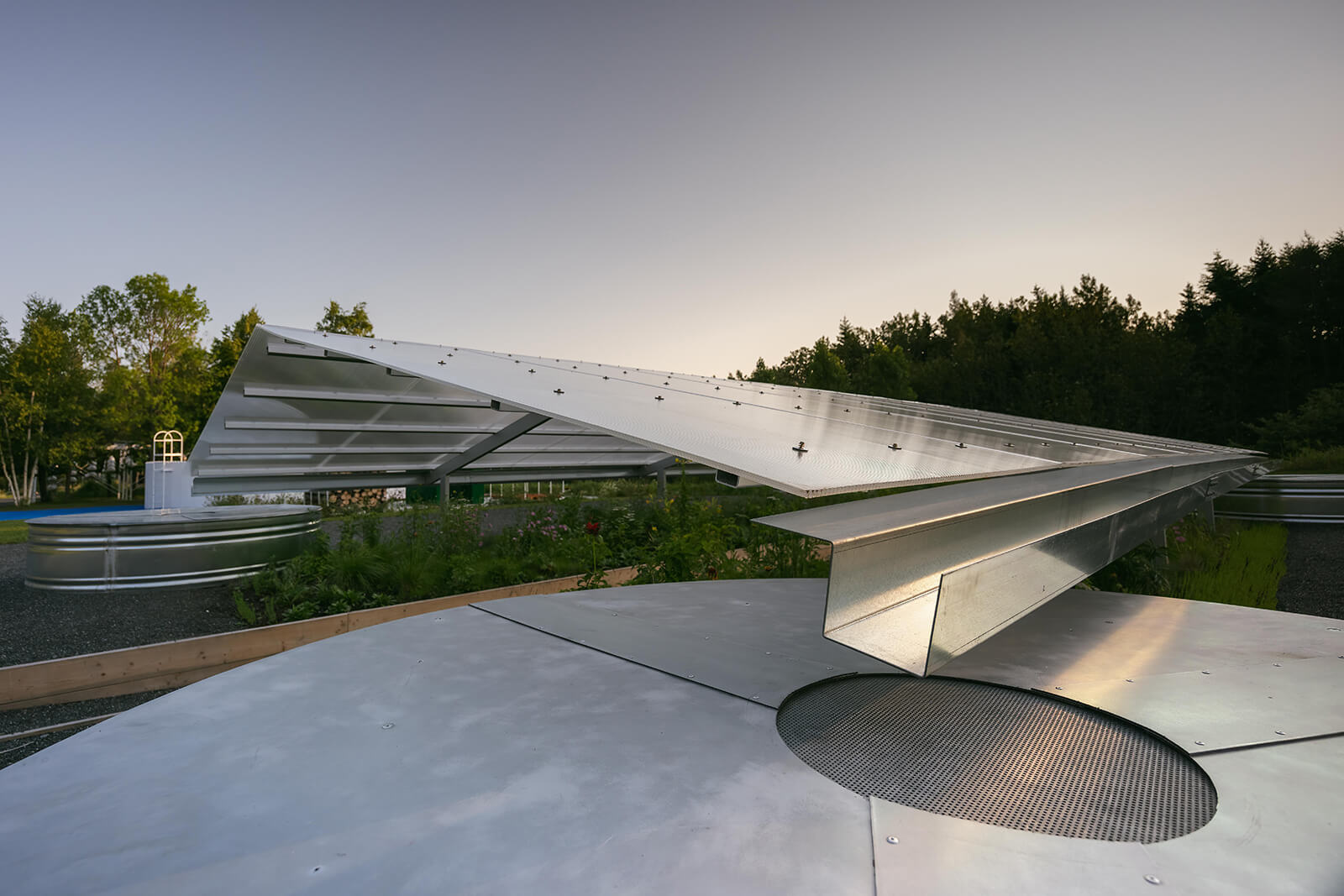
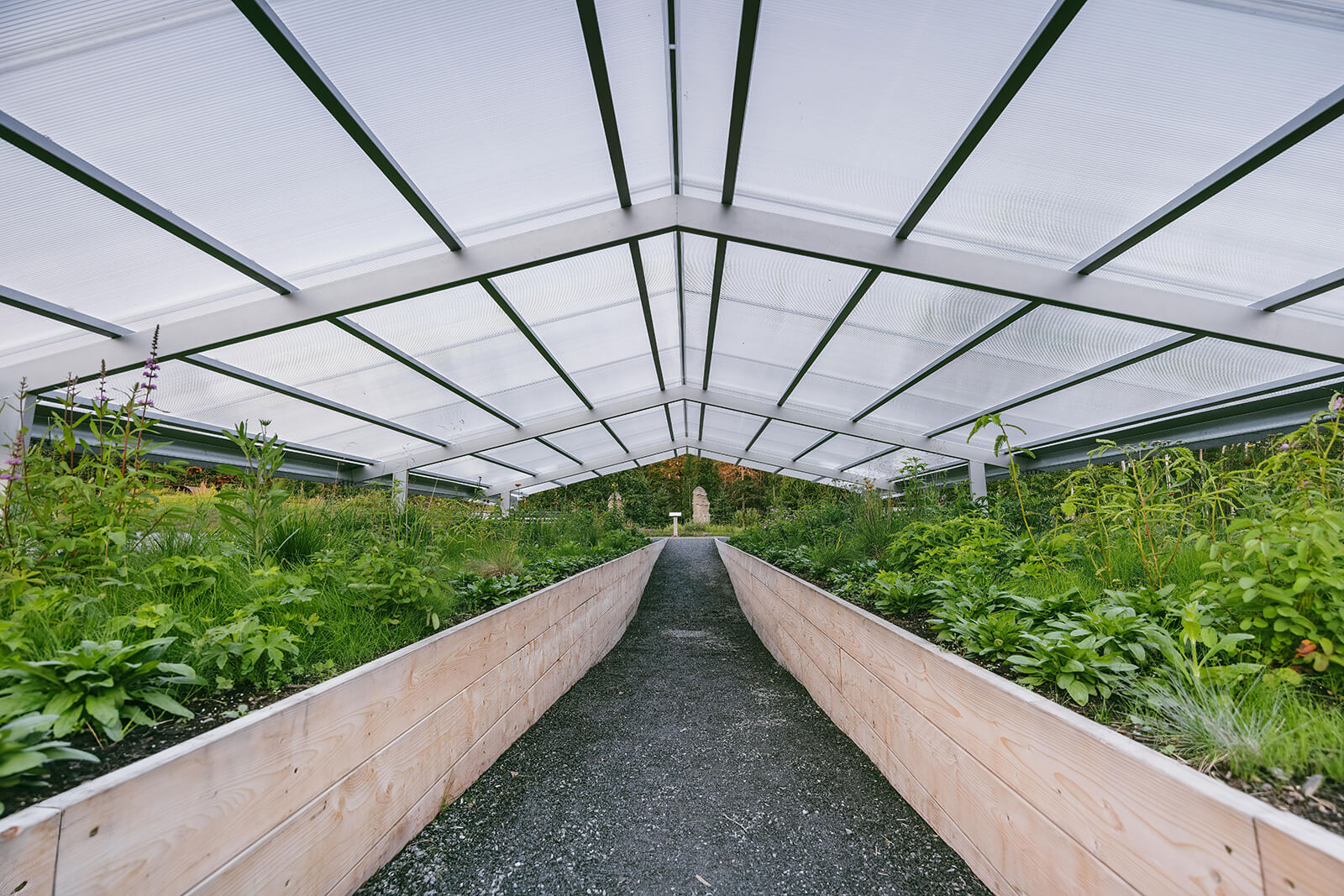
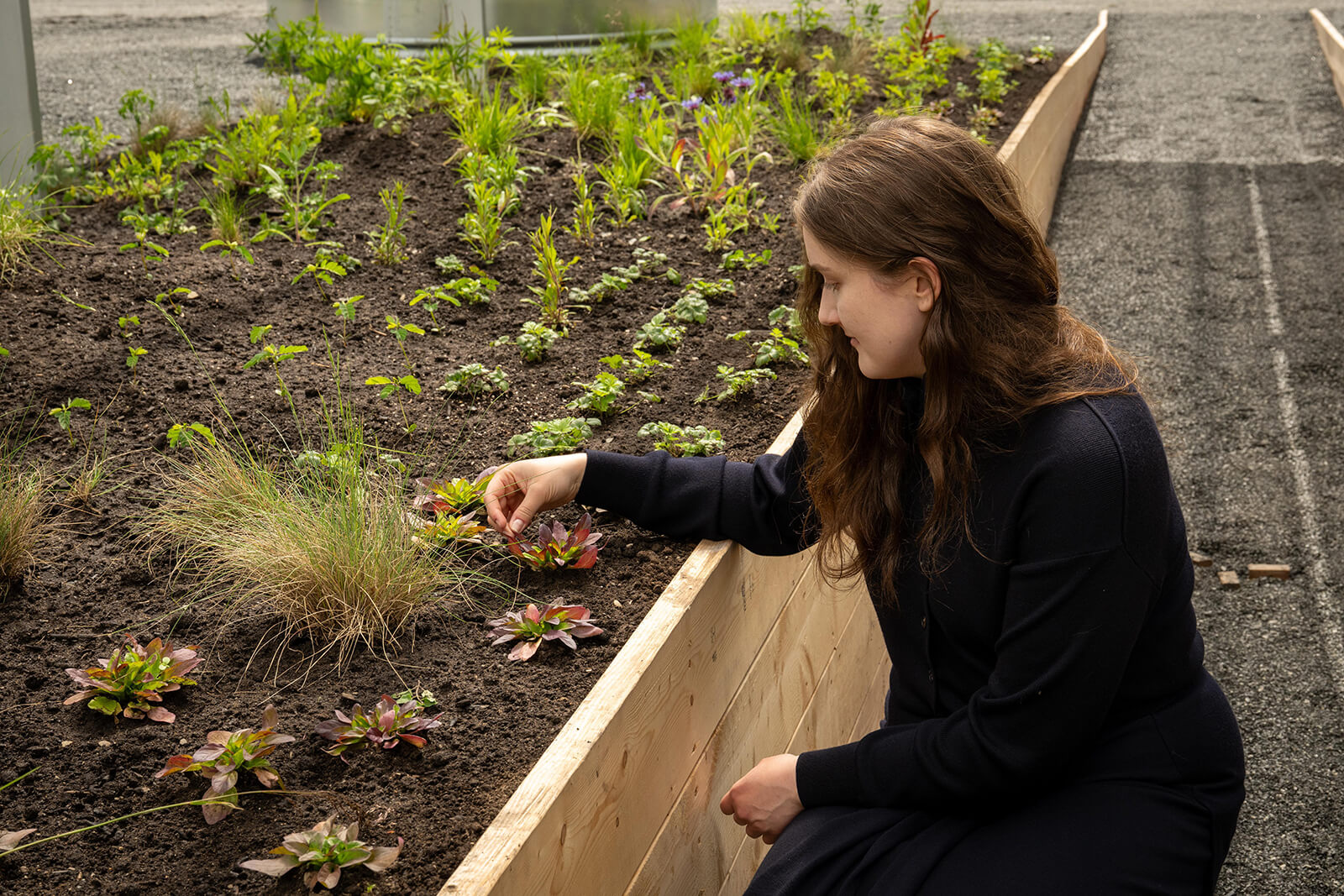
Luxembourg-born American architectural designer Ellen Harris’s Worm’s Eye is an urgent response to the looming environmental crises posed by the AI construction boom. Harris was inspired by the anthropologist and political scientist James C. Scott’s characterisation of the cartographic ‘view from above’, which he used to describe how governments and large-scale corporations look at places from a distance—a position that contrasts directly with the intimate, ground-level experience of a landscape’s inhabitants. In Worm’s Eye, visitors are given the opportunity to experience both of these perspectives.
Drawing from the use of a ‘false roof’ in a Lockheed Martin factory during the Second World War, the form of Worm’s Eye resembles a data centre to both hide and protect a piece of land from aerial observation. The opaque, industrial structure from above is all that is visible before visitors descend into the garden, where they encounter native plants up close. They are given the opportunity to experience the land as both controlled and wild, inviting contemplation about the limited understanding of water and energy demands of AI infrastructure.
Tom Jacques | Québec, Canada
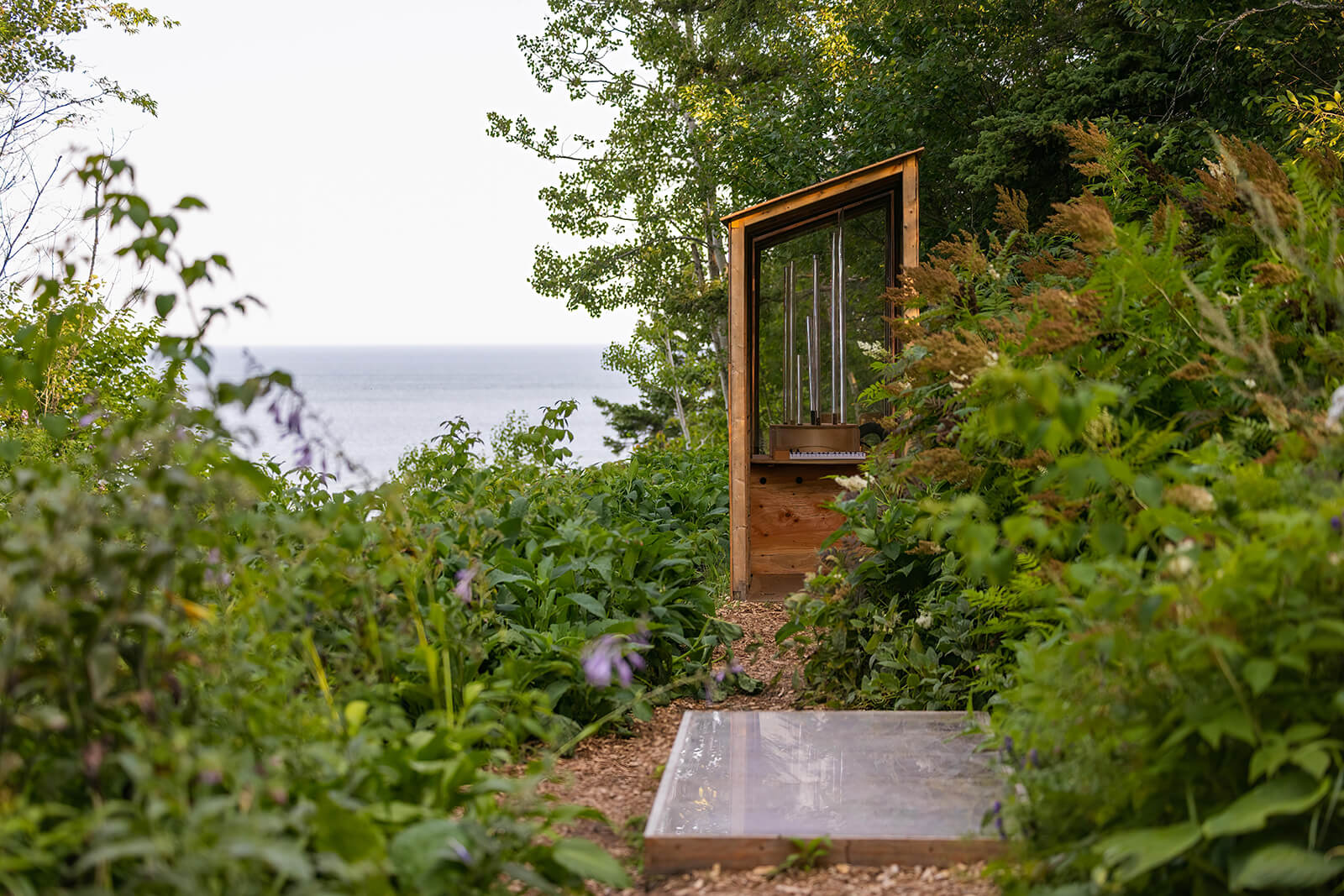
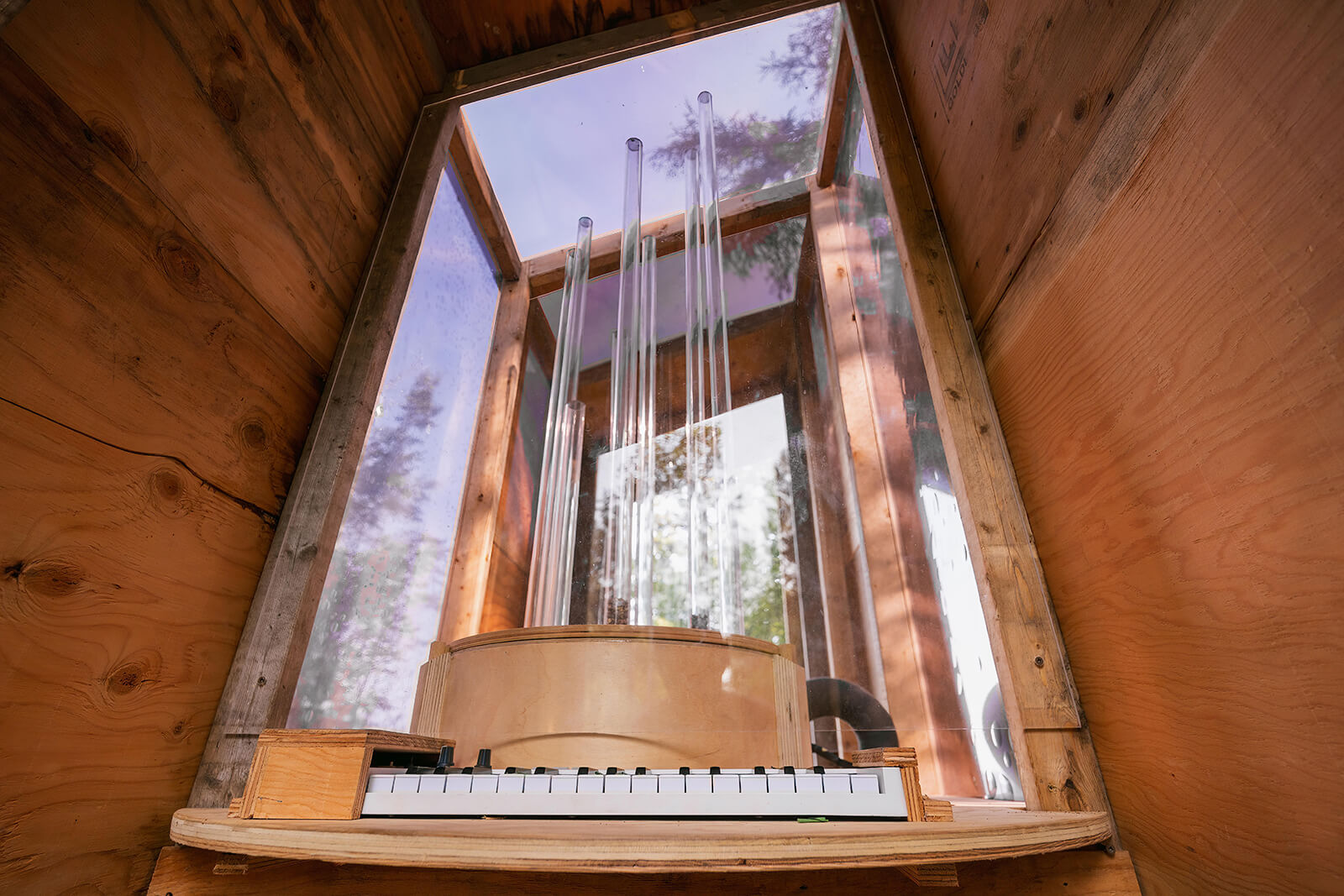
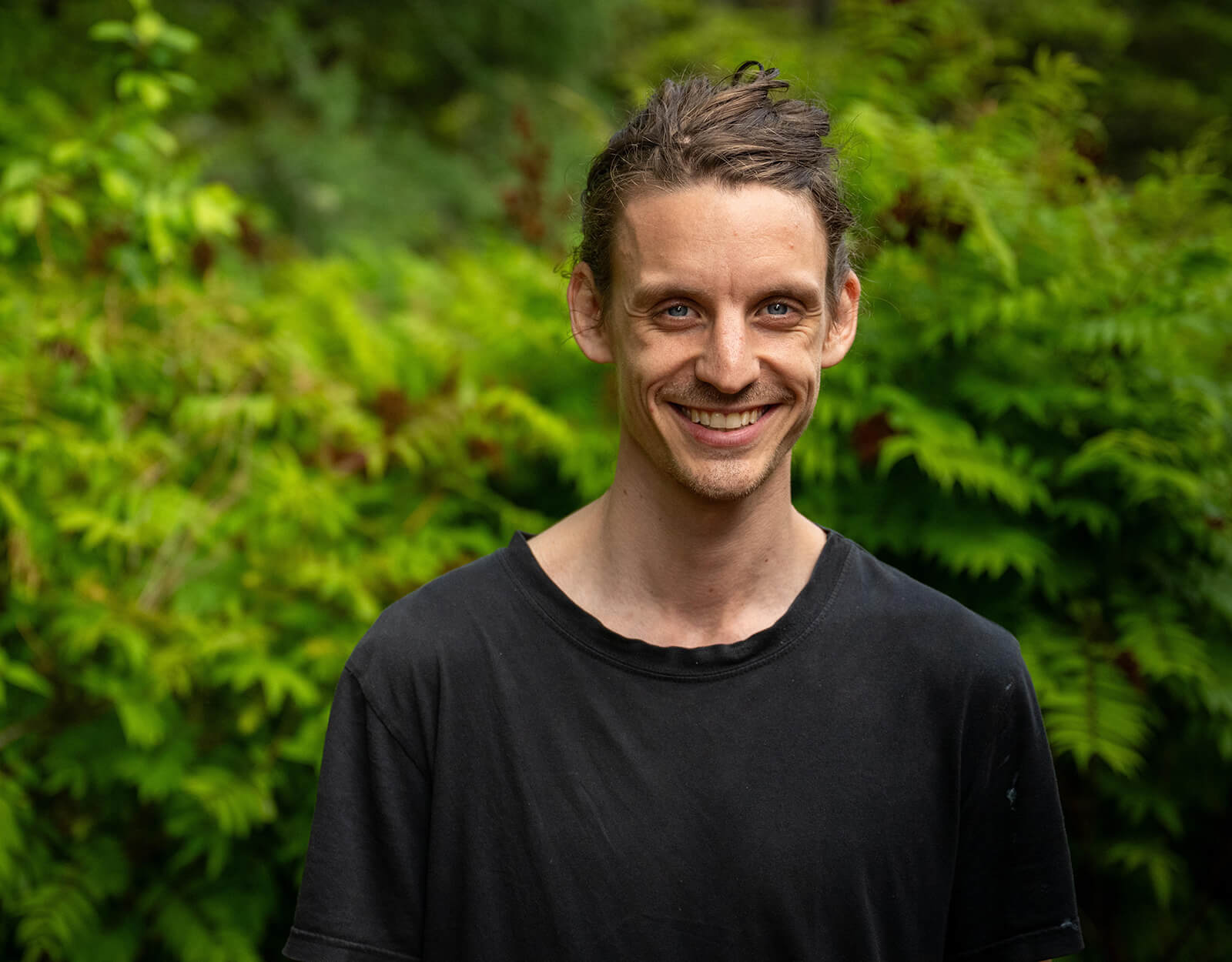
This year’s edition of the Festival includes a special project: an experimental sound garden that encourages visitors to pay closer attention to the acoustic qualities of their surroundings. Pousses de sons by Canadian composer, performer and sound artist Tom Jacques is an installation whose components allow visitors to tune into the sounds of the natural world they inhabit. Through a series of interactive instruments, the project extends engagement beyond the visual, gently drawing visitors into “the world of the attentive walker” and broadening their perception of the surrounding landscape.
Across its 30 gardens, the 27th edition of the International Garden Festival embraces sensitivities across a wide spectrum. From plants that register subtle variations in moisture and climate, to installations that heighten awareness of sound, scale and movement, the selected projects translate otherwise imperceptible conditions into tangible experiences. In keeping with the theme, the gardens of Mapping Sensitivity also consistently foreground the sensory and emotional responses of those who visit them, revealing that a place is never entirely fixed, but continually reshaped by the living world and by those who move through it.

by Pranjal Maheshwari Oct 23, 2026
Co-authored by Jareh Das, Chairman traces the British designer’s fixation on chairs as symbols of power and identity and as mediums of expression and community building.
by Mirra Lynn Oct 22, 2026
The curators behind Palestine Design Week 2026 reflect on its intent, considering how design holds memory, makes space for loss and imagines a future in Palestine.
by Chahna Tank Oct 22, 2026
STIR speaks with the Mumbai-based type designer about her practice, type walks and why she wants more people to have stronger opinions about Indian-script fonts.
by Jincy Iype Oct 15, 2026
STIR explores craft, material intelligence and people shaping Indian design through dialogues with Design Democracy’s co-founders and the curators of its special exhibitions.

make your fridays matter with a well-read weekend
Enter your details to sign in
Don’t have an account?
Sign upOr you can sign in with
a single account for all
STIR platforms
All your bookmarks will be available across all your devices.
Stay STIRred
Already have an account?
Sign inOr you can sign up with
Verification link sent to check your inbox or spam folder to complete sign up process
Tap on things that interests you.
Select the Conversation Category you would like to watch
Please enter your details and click submit.
Enter the 6-digit code sent at


Tending and living-with sensitive landscapes at the International Garden Festival 2026
by Pia Bhatia | Published on : Sep 16, 2026


 Sign in with Google
 Sign in with email
What do you think?