Design12 mins. read
Apple introduces Apple Vision Pro, its first ‘spatial computer,’ at WWDC 2023
by STIRworldJun 06, 2023



by Pranjal MaheshwariPublished on : Sep 14, 2026
Before Apple’s recently appointed CEO, John Ternus, announced its latest breakthrough product during its annual special event on September 9, 2026, at Apple Park in California, he floated the idea of an ‘Intelligent personal hub’. According to Ternus, a tech-driven lifestyle management system requires the following: a power processor, pervasive networking, a large display, high-quality cameras and mics, a good battery life, an intuitive UI and seamless integration with other devices in the network. Barring the allusion to the supposedly immense potential of AI-driven technologies to fundamentally shift the role of technology in our daily lives, the systemic simplification of the hub seemed to take cues from how the company’s founding CEO, Steve Jobs, introduced the very first iPhone almost two decades ago. Soon enough, Greg Joswiak, aka Joz, Apple’s senior vice president of worldwide marketing, described the iPhone Duo, the brand’s first foldable smartphone, as ‘the most transformational iPhone experience since the original.’
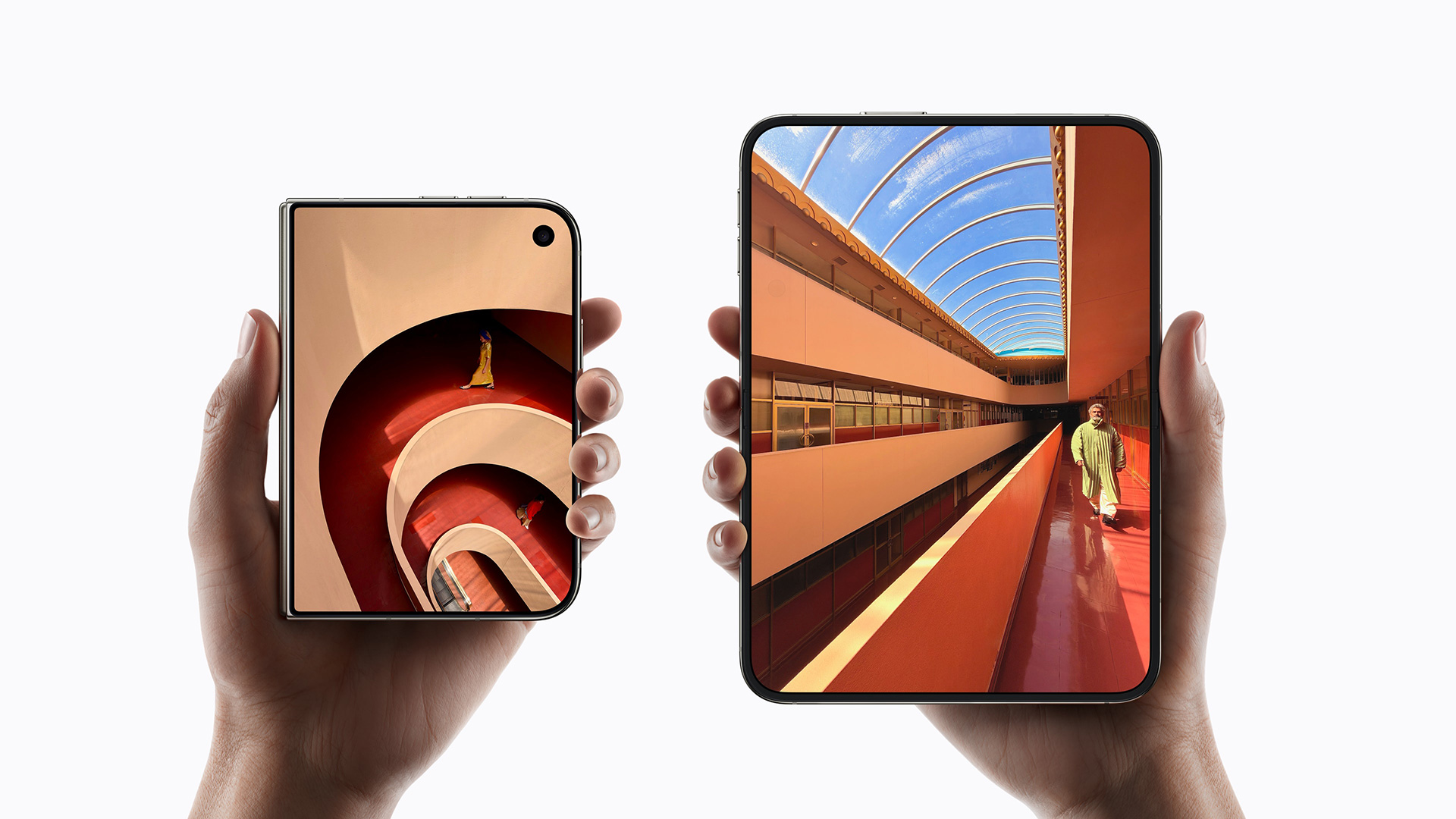
As the first foldable iPhone, Duo is simply a new contender in a market nurtured by its competitor tech-design brands like Samsung and Motorola since 2019. But following the much-hyped and talked-about release of the first iPhone that all but eradicated physical keyboards on phones, Apple has rarely been the brand to release a ‘first-of-its-kind’. It has rather always aspired—and much more intensely so—to be the best of its kind—in quality, convenience and accessibility. iPhone Duo continues that aspiration and outlook, refining the key issues reported in the existing foldable smartphones by leveraging an extensive knowledge base formed over the years developing the iPhone and the iPad, among other innovations.
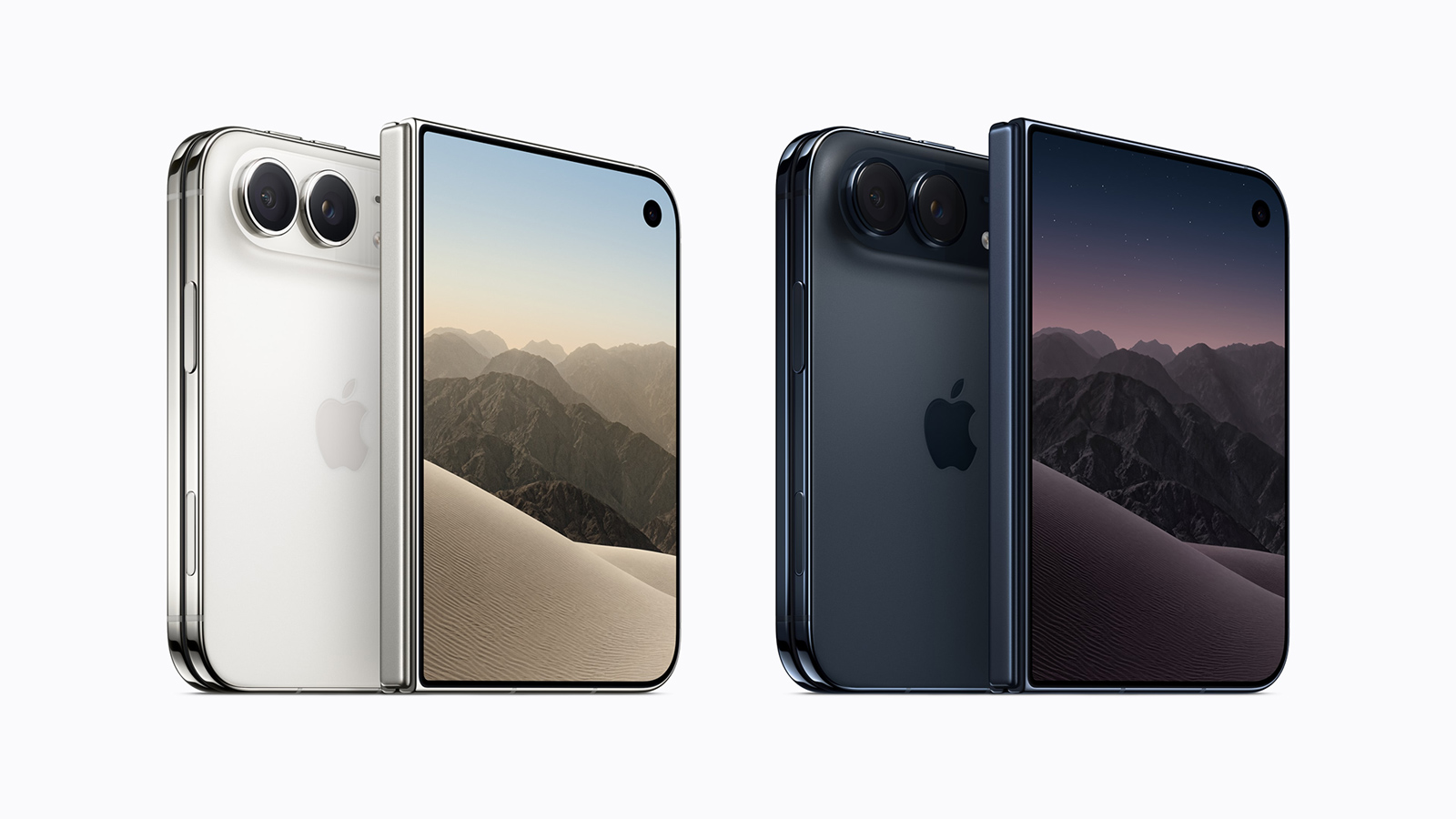
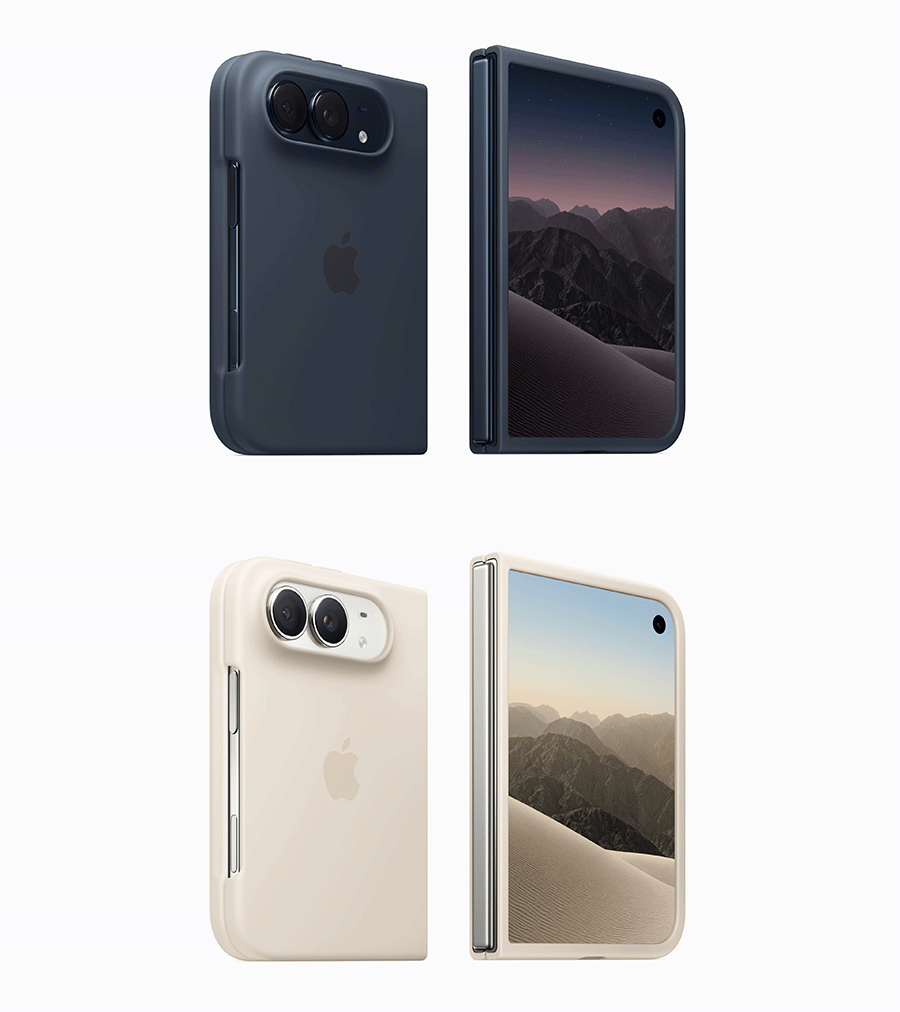
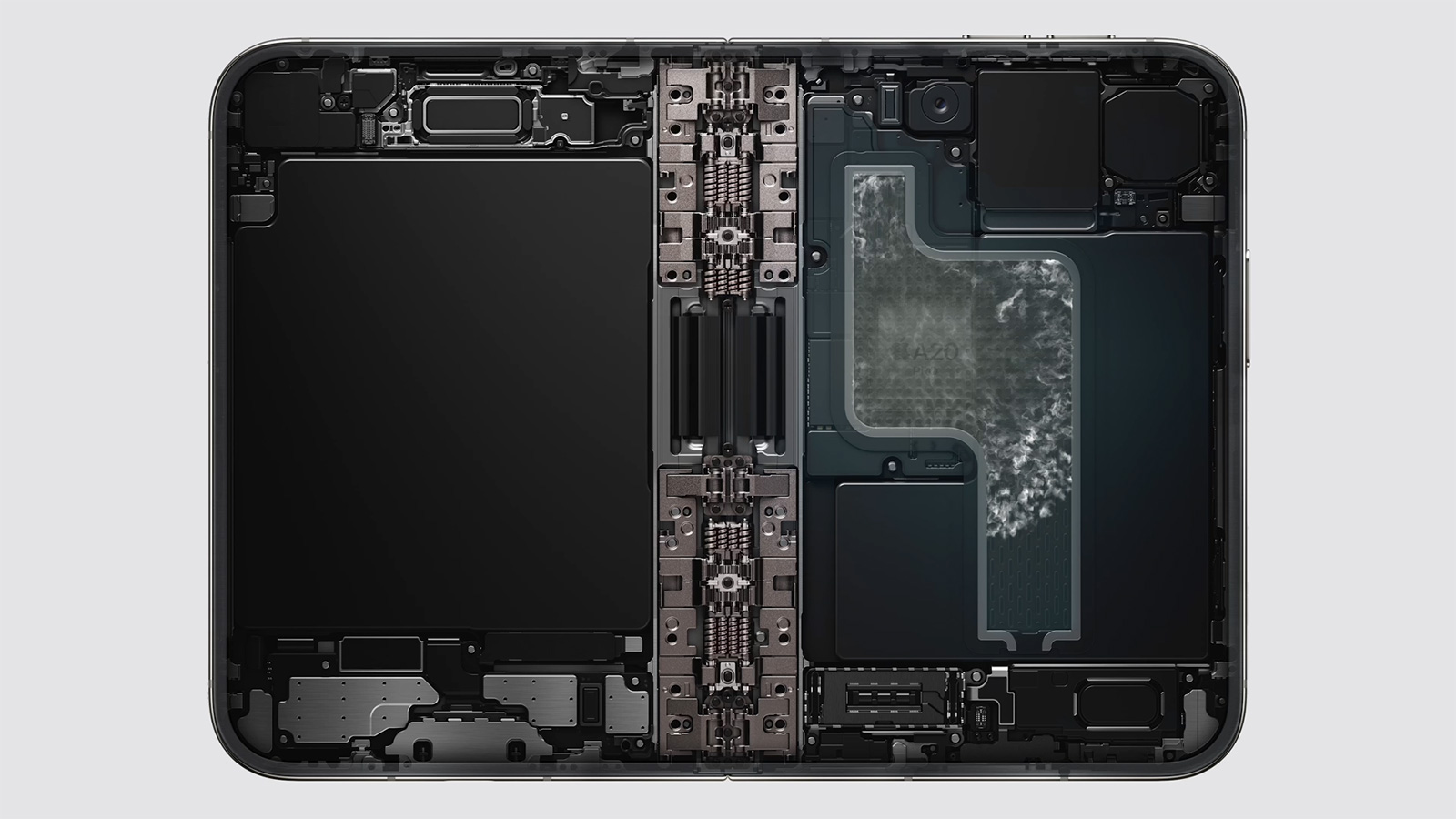
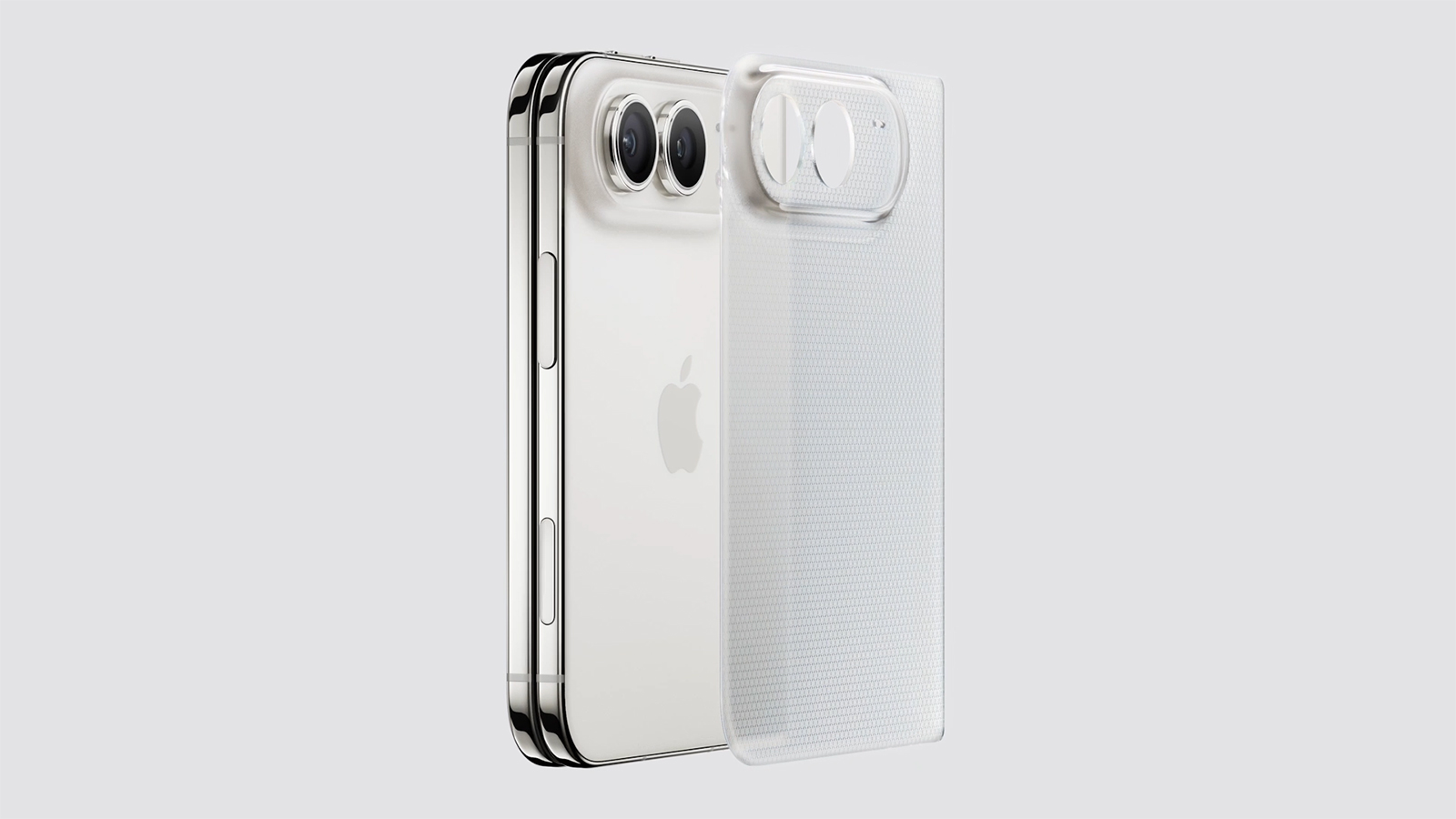
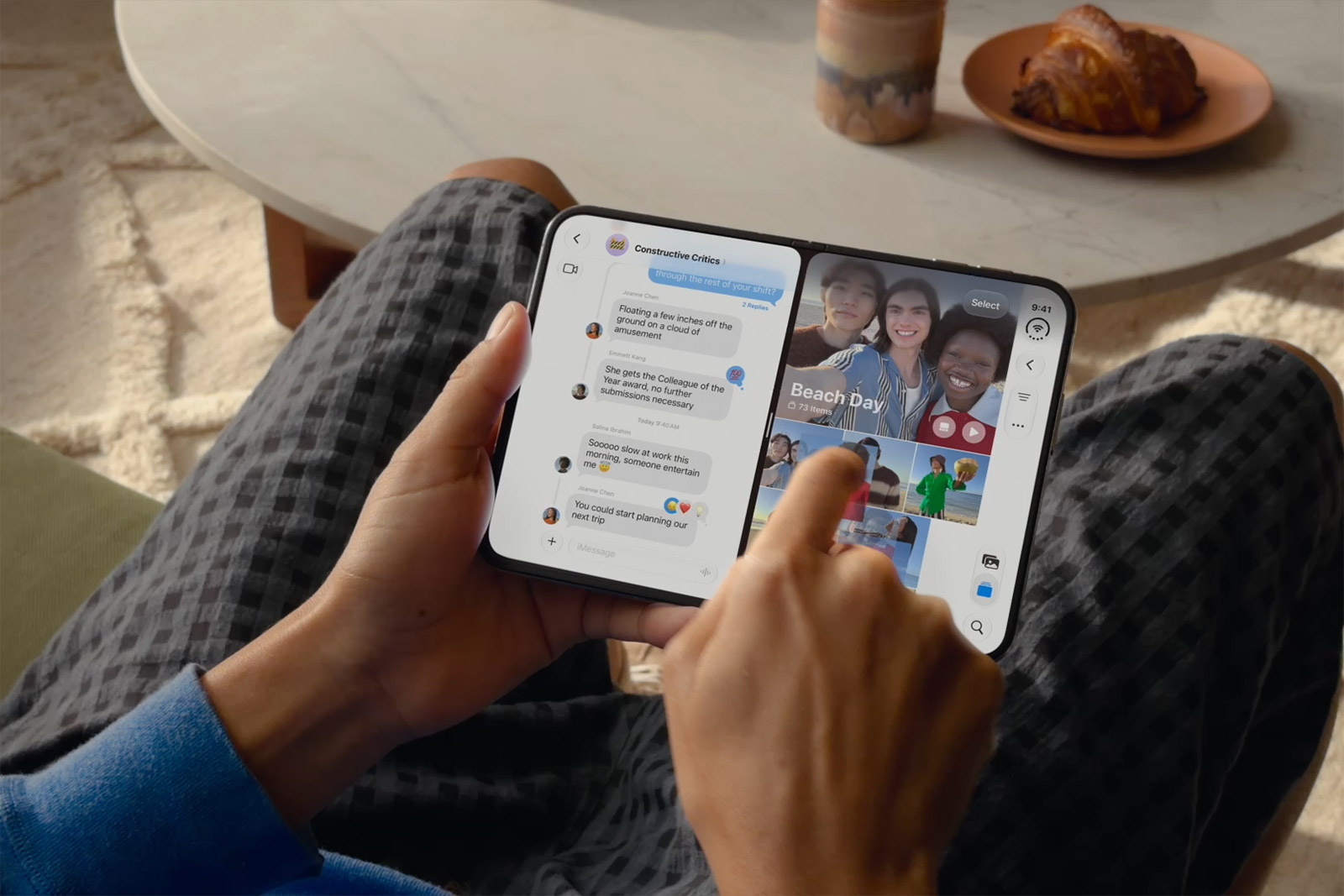
When flipped open, the iPhone Duo is the thinnest Apple smartphone yet. It offers a 7.6-inch Super Retina XDR display, which is approximately 80 per cent larger than the iPhone 18 Pro and iPhone 17 Pro, while being around 90 per cent the size of the iPad mini 7 (8.3-inch), launched as recently as 2024. When closed, the phone is roughly the size of a standard passport, with a 5.4-inch outer display aimed at rendering the device as pocket-friendly and comfortable for one-handed usage. Both displays feature 3000 nits of peak outdoor brightness, while boasting a refined nano-texture finish for reduced glare. The keystone to the success of a foldable phone design, however, has been its central hinge. For the iPhone Duo, the hinge is designed as an assembly of more than 100 components that precisely control the opening, closing and support of the centre of the display. The hinge cover is 3D printed with 100 per cent recycled aluminium in a micro-blasted finish. The rest of the phone body extends these high-durability standards with an IP68-rated design made in a grade 5 titanium body—available in Star White and Night Sky variants—with Apple’s proprietary Ceramic Shield protection for the front and back.
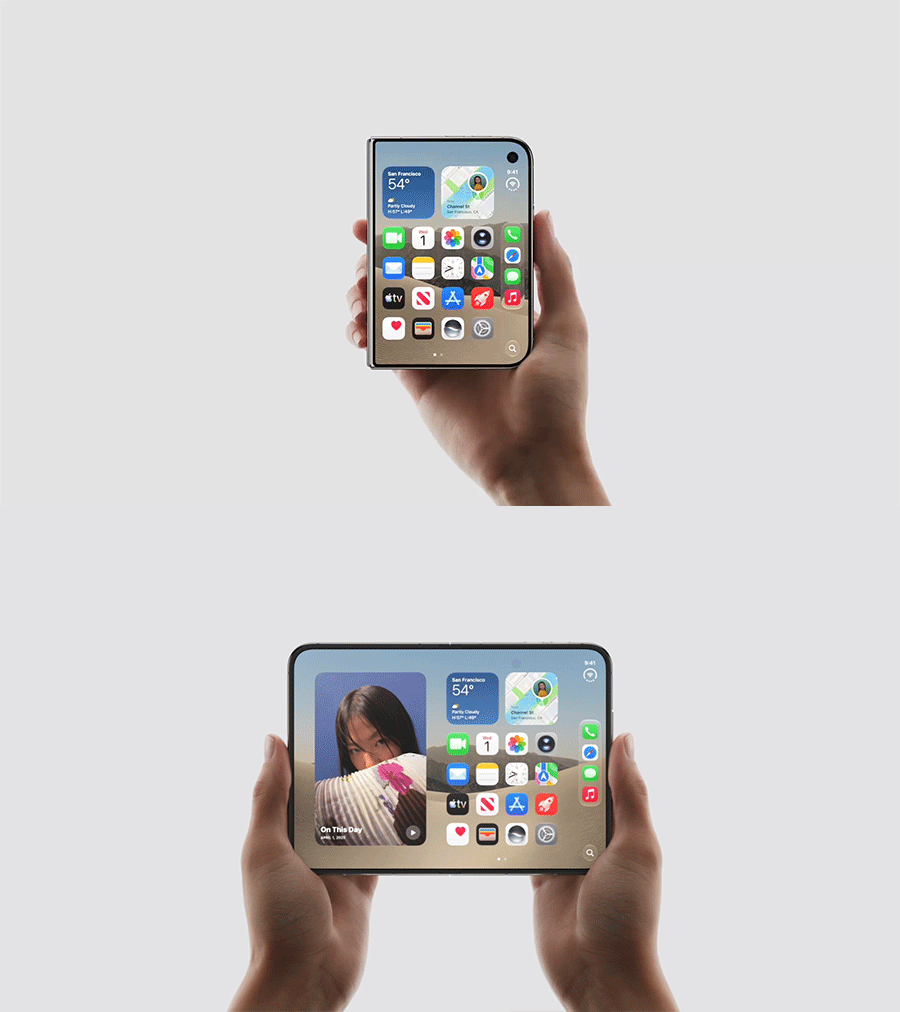
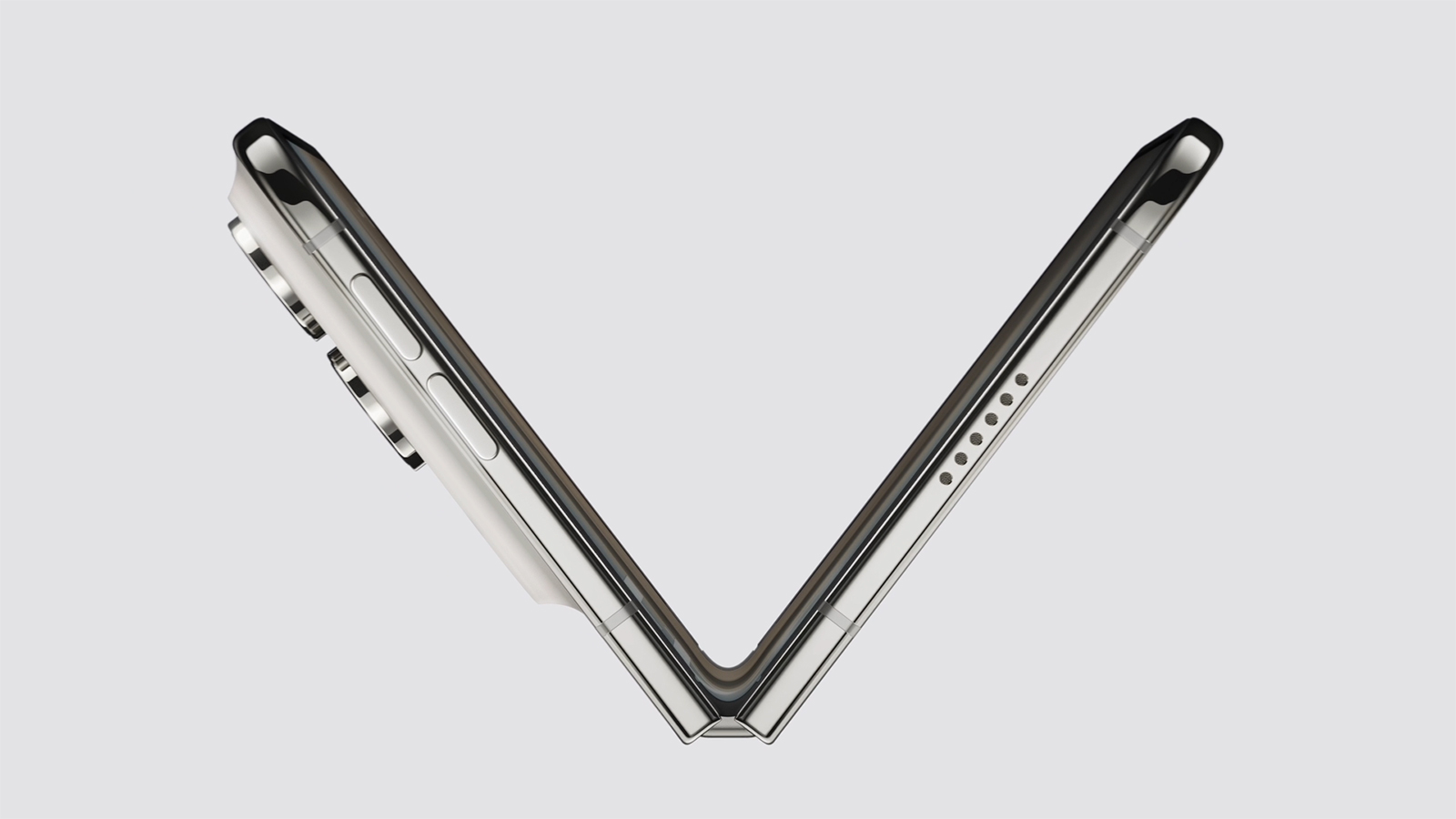
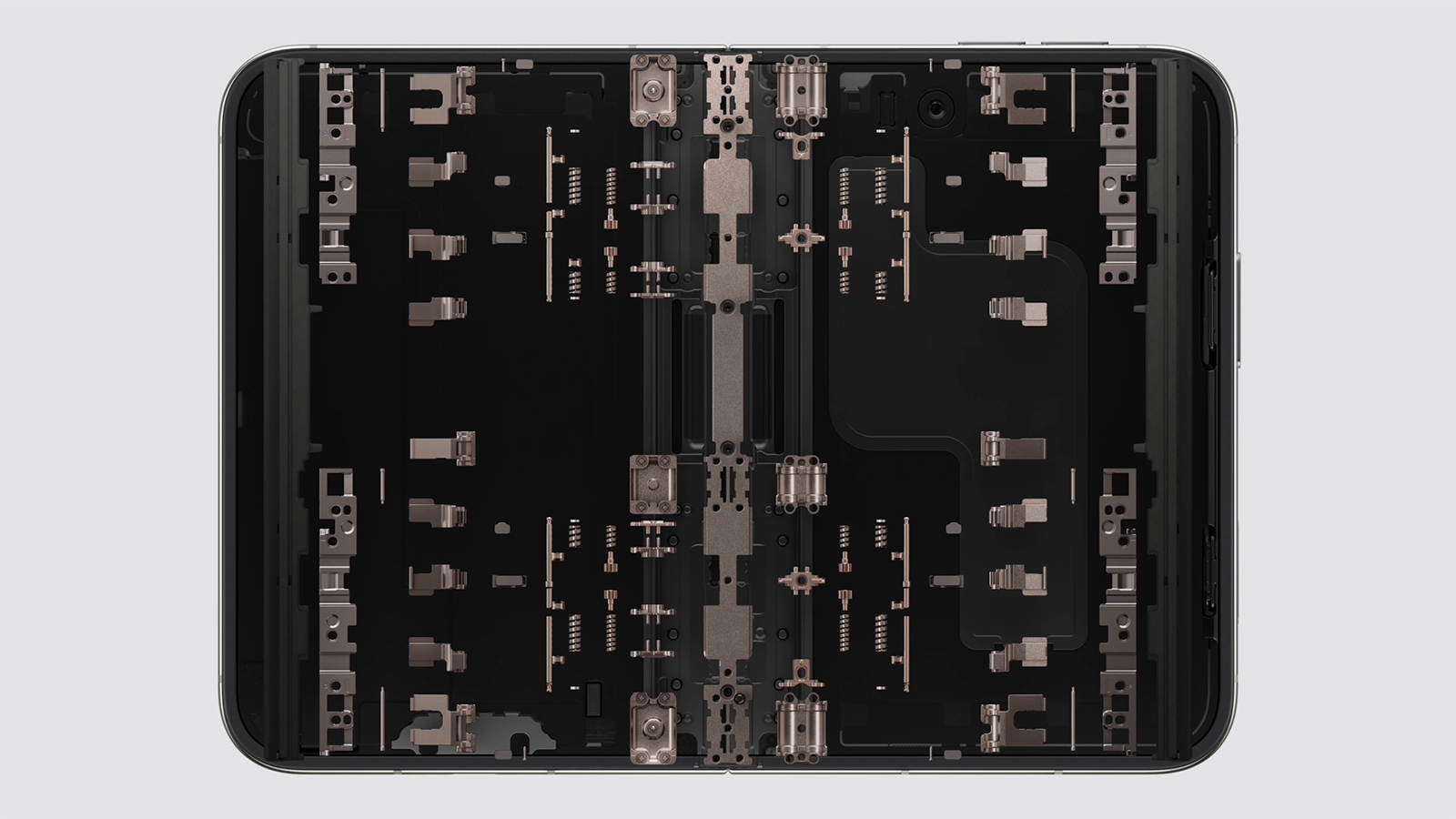
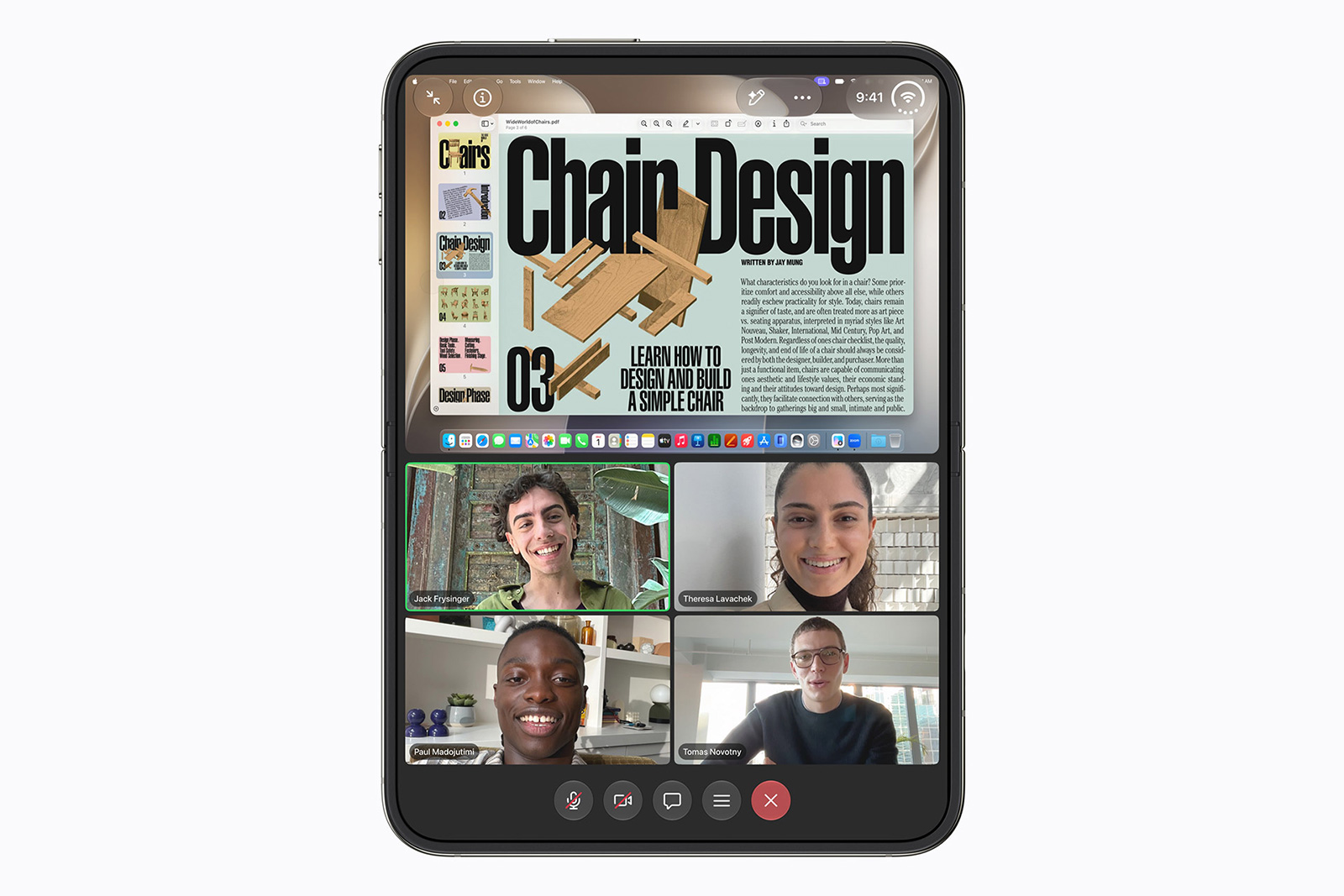
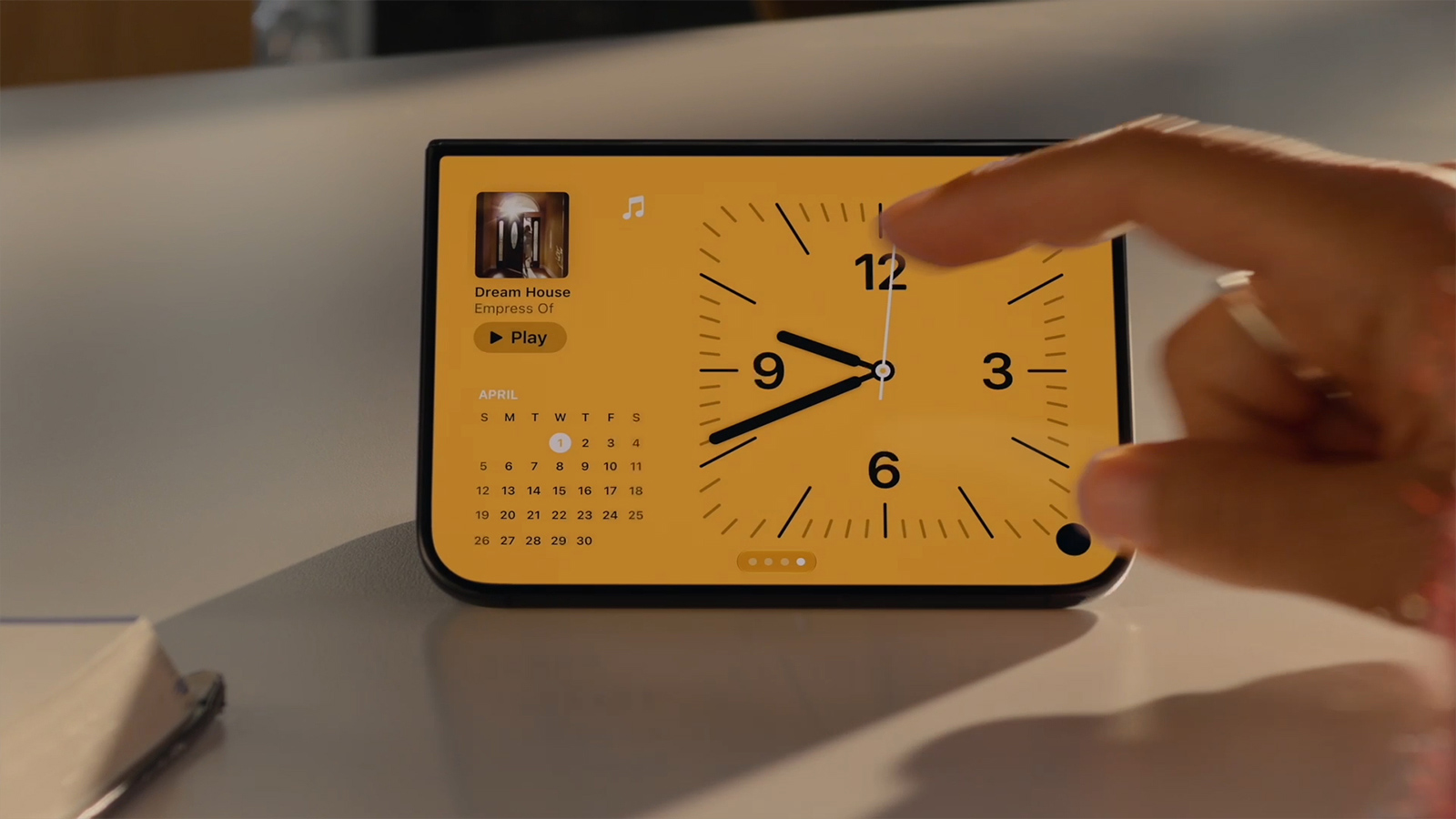
The user interface of the new iPhone has been adapted to leverage the expanded canvas afforded by its foldable design. Beyond somewhat obvious ones such as an adaptive self-orientation—including an upgraded StandBy mode that can be personalised for each display—the specialised iOS 27 sweeps the navigation bar, Dynamic Island and the Dock to the side in a vertical format to maximise the usable vertical space on the screen. Split View, which was earlier only a function of iPadOS, is now introduced to iPhones with Duo. While Apple’s own apps have already been optimised for the new experience, third-party apps such as Netflix, Zoom and Slack have also been reconfigured for the new interface.
Among other body features, the phone’s back features 48 MP Fusion Main and Ultra Wide cameras, while its front FaceTime camera is hidden behind the inner display, visible only when in use. Features like Smart Take will allow selfie preview on the Duo’s outer display, while Duo FaceTime lets a call run through both camera sides along the device’s two screens.

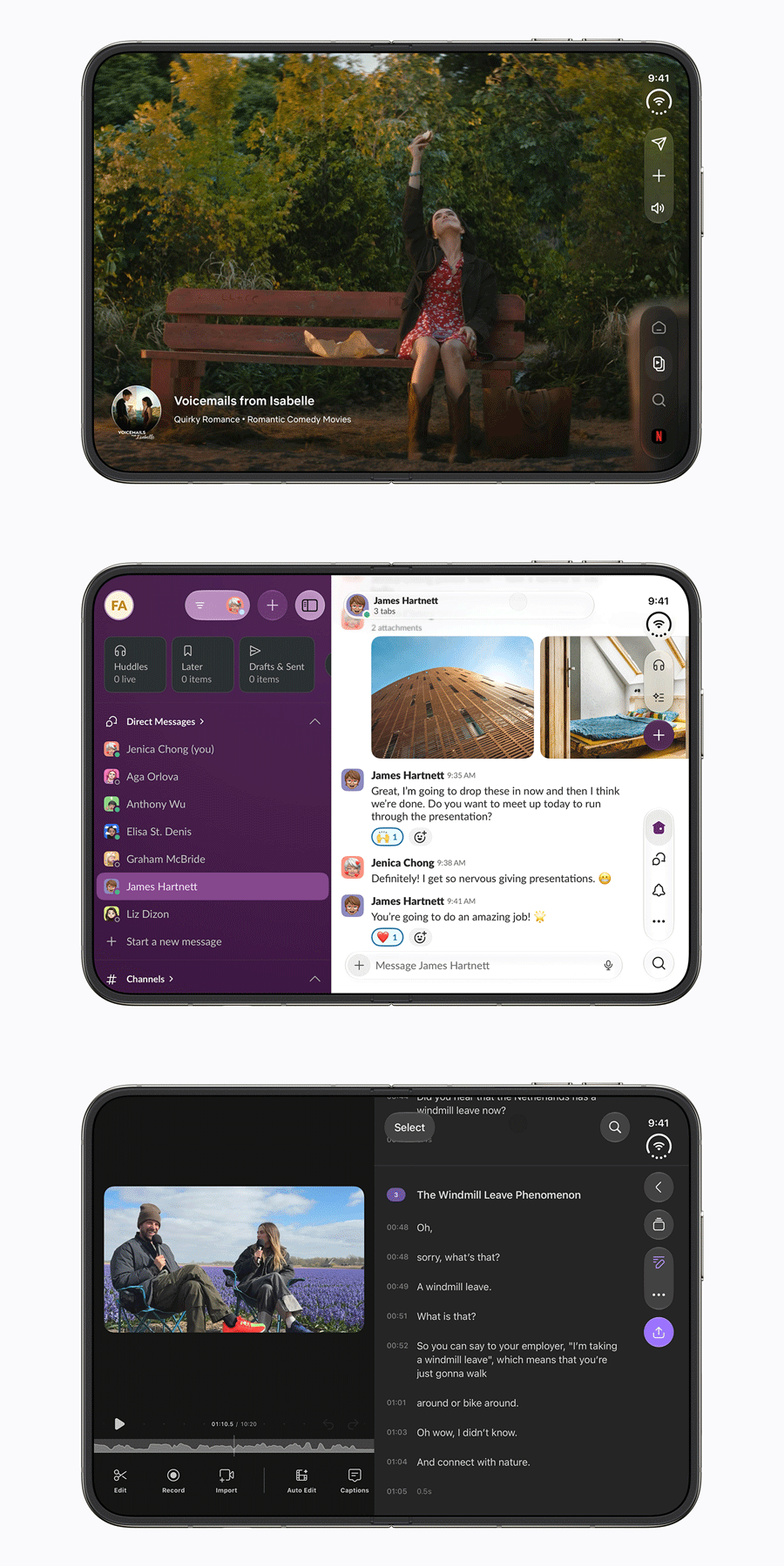
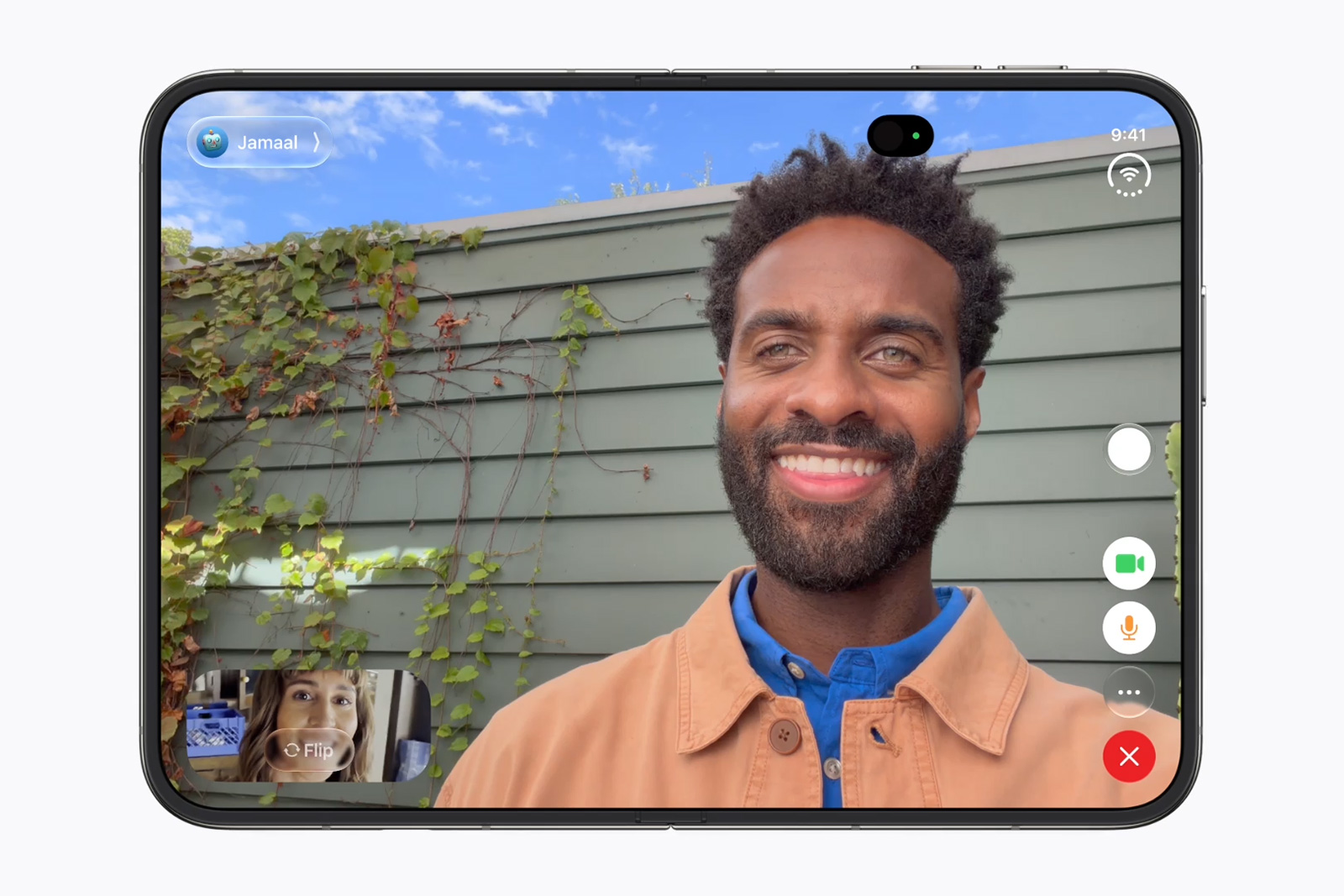
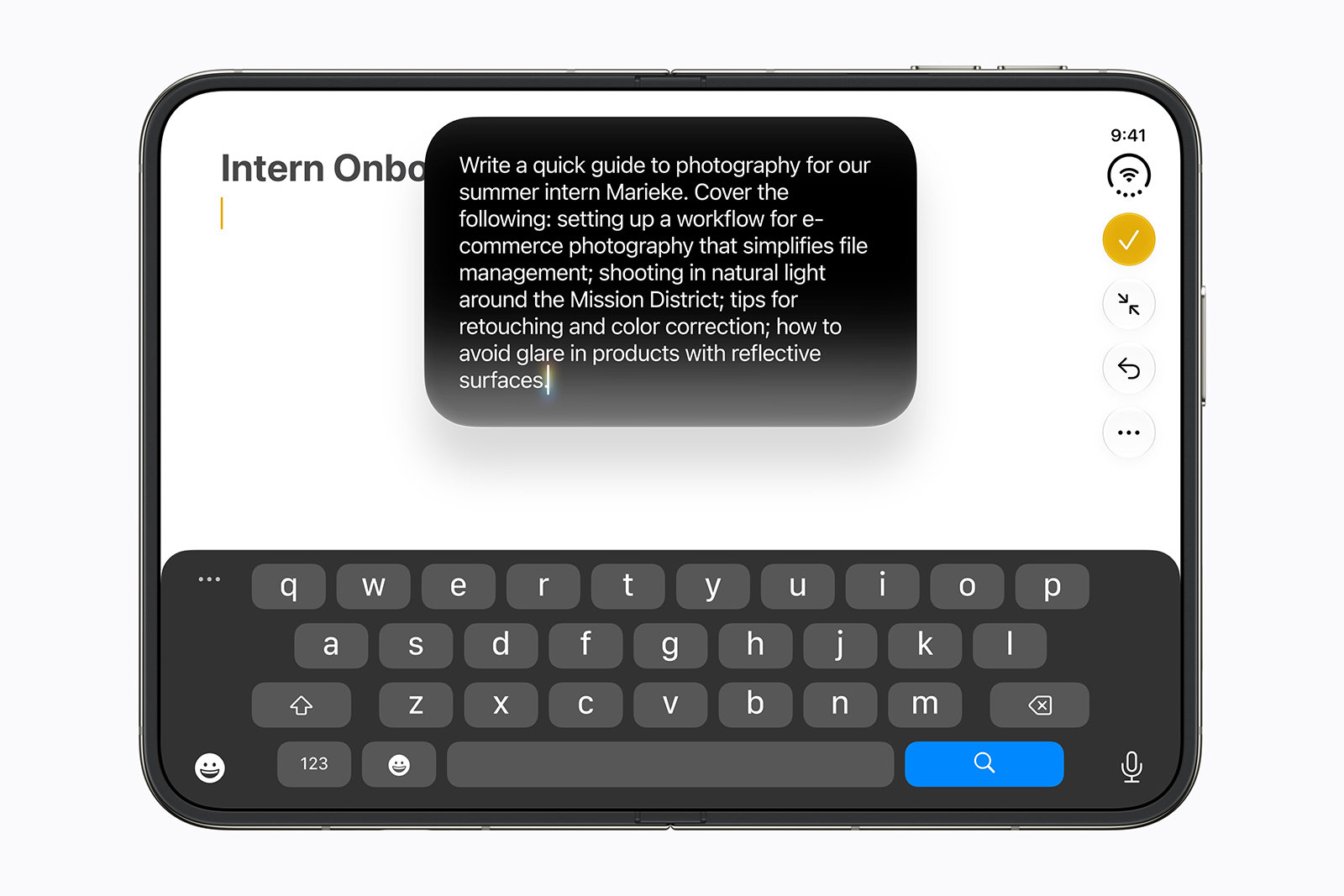
Along with a distinct UI, the new iOS27 also marks the launch of Siri AI, the latest evolution of Apple’s ubiquitous personal assistant that draws on both the user’s personal context informed by Apple Intelligence and momentary on-screen awareness, reaching for an integrated and comprehensive experience. The computing power required to manage such complex AI workloads is provided by the new A20 Pro chip, also used in iPhone 18 Pro and Pro Max, supported by a custom-designed vapour chamber for thermal management and a dual-architecture battery boasting an all-day capacity and fast charging.
The globally renowned tech giant appears to be acutely aware of its scope and presence in the existing market landscape, as evidenced by the product’s drive to redefine, and not introduce, the experience of a foldable phone. While the iPhone Duo’s proposed price point—starting at 1999 USD for the 256 GB variant—sets it along the upper end of the smartphone affordability spectrum, even veering towards luxury, the speculation around the new device can seemingly be at odds with Apple’s own legacy. Based on the appeal of its strikingly similar size, accentuated by its pocket-friendly portability, the Duo is also likely to contend with the iPad mini and forthcoming models in the series, especially once it is paired with Apple Pencil later this year.
When Jobs unveiled the very first iPhone to the world back in 2007, it was the first time a global audience purportedly witnessed simple but breakthrough interaction concepts in everyday products, like the pinch gesture that is now instinctive even for children using touch-screen devices. The entire venture proved to be so transformative that it prompted the then-30-year-old computer manufacturer to omit the term ‘computer’ from their name, signalling a departure into other market segments. If Joz’s words are to echo true, and the new iPhone Duo—alongside the yearly progression in 18 and 18 Pro—are to truly be a watershed moment in the image of the foundational iPhone, the designs will have to do more than ‘redefine’ the segment. They must prove to be the bedrock for innovation across products and brands.

by Pranjal Maheshwari Oct 23, 2026
Co-authored by Jareh Das, Chairman traces the British designer’s fixation on chairs as symbols of power and identity and as mediums of expression and community building.
by Mirra Lynn Oct 22, 2026
The curators behind Palestine Design Week 2026 reflect on its intent, considering how design holds memory, makes space for loss and imagines a future in Palestine.
by Chahna Tank Oct 22, 2026
STIR speaks with the Mumbai-based type designer about her practice, type walks and why she wants more people to have stronger opinions about Indian-script fonts.
by Jincy Iype Oct 15, 2026
STIR explores craft, material intelligence and people shaping Indian design through dialogues with Design Democracy’s co-founders and the curators of its special exhibitions.

make your fridays matter with a well-read weekend
Enter your details to sign in
Don’t have an account?
Sign upOr you can sign in with
a single account for all
STIR platforms
All your bookmarks will be available across all your devices.
Stay STIRred
Already have an account?
Sign inOr you can sign up with
Verification link sent to check your inbox or spam folder to complete sign up process
Tap on things that interests you.
Select the Conversation Category you would like to watch
Please enter your details and click submit.
Enter the 6-digit code sent at


iPhone Duo: precision engineering and a fluid canvas flip Apple's iconic smartphone
by Pranjal Maheshwari | Published on : Sep 14, 2026


 Sign in with Google
 Sign in with email
What do you think?