|
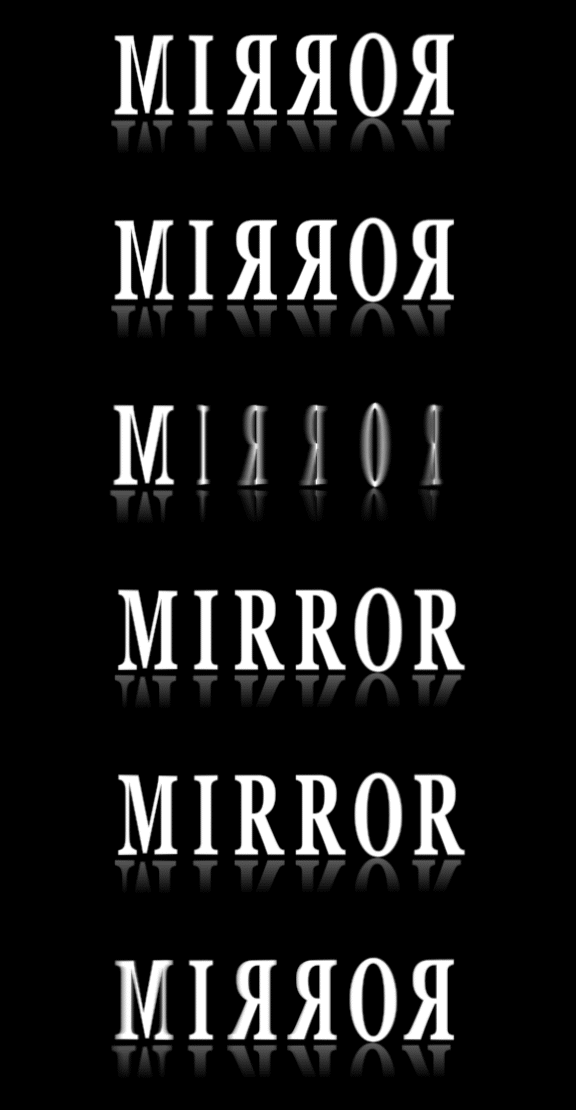
A mirror seduces as much as it reveals. A trap for the gaze. It flatters, distorts and reflects back what often is and what we wish to see. Narcissus leaned too close and saw the shimmer of perfection, the edge of his undoing. Were we ever meant to see ourselves in such righteous fullness? In the age of black mirrors and pixelated vanities, seduction is incessant. We all live inside the mirror now—endlessly watched, endlessly watching. Somewhere between self-surveillance and spectacle, we have become Winston under the telescreen—subjects of our own gaze.

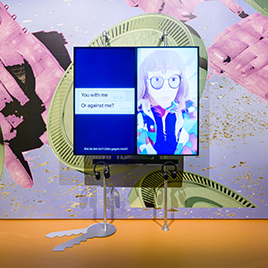
This week's dispatch reflects a certain caution, a reading of the world as it appears: at HKW's 'Global Fascisms', the mirror turns toward power itself, exposing how ideology regularly replicates its own likeness until the grotesque appears familiar. The group show in Berlin asks what happens when systems gaze too long at themselves and forget the world outside the frame. In the photobook 'Echoing Above', the mirror becomes sonic: voices and memories ricocheting through Hong Kong's dense urbanity, as seen through the lens of Romain Jacquet-Lagrèze.
|
|
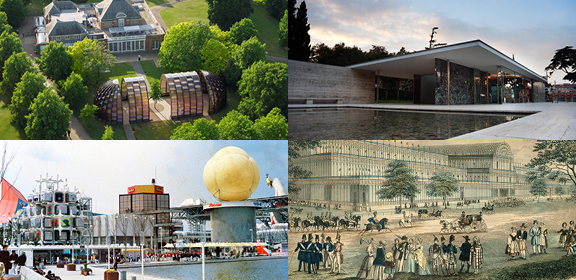
The interview with the executive director and chief curator of the Storefront for Art and Architecture holds a more civic mirror, where the building's shifting geometry mimics the institution it houses: porous, experimental and in dialogue with its surroundings. And in our opinion on the pavilion as a form of architectural production, we look at how erstwhile world expos and other spectacular pavilion architectures—from Safdie's Habitat 67 to the annual Serpentine commissions—perform the oldest mirroring act of all: forms polished to perfection, admired and studied for their image as spectacles of rest, engagement and critique.
But mirrors, left unchecked, may blind. Reflection can turn to obsession; visibility can become vanity. In the glare of glass and screen, how do we tell perception from projection? As Narcissus would warn, the danger has never been in seeing too little, but in mistaking the surface for the depth beneath. For mirrors flatter power; every image conceals the hand that framed it.

|