Architecture10 mins. read
Michael Sorkin’s manifestos for radicality for People Who Cross Against the Light
by Mrinmayee BhootJun 19, 2026




by Sunena V MajuPublished on : Nov 13, 2025
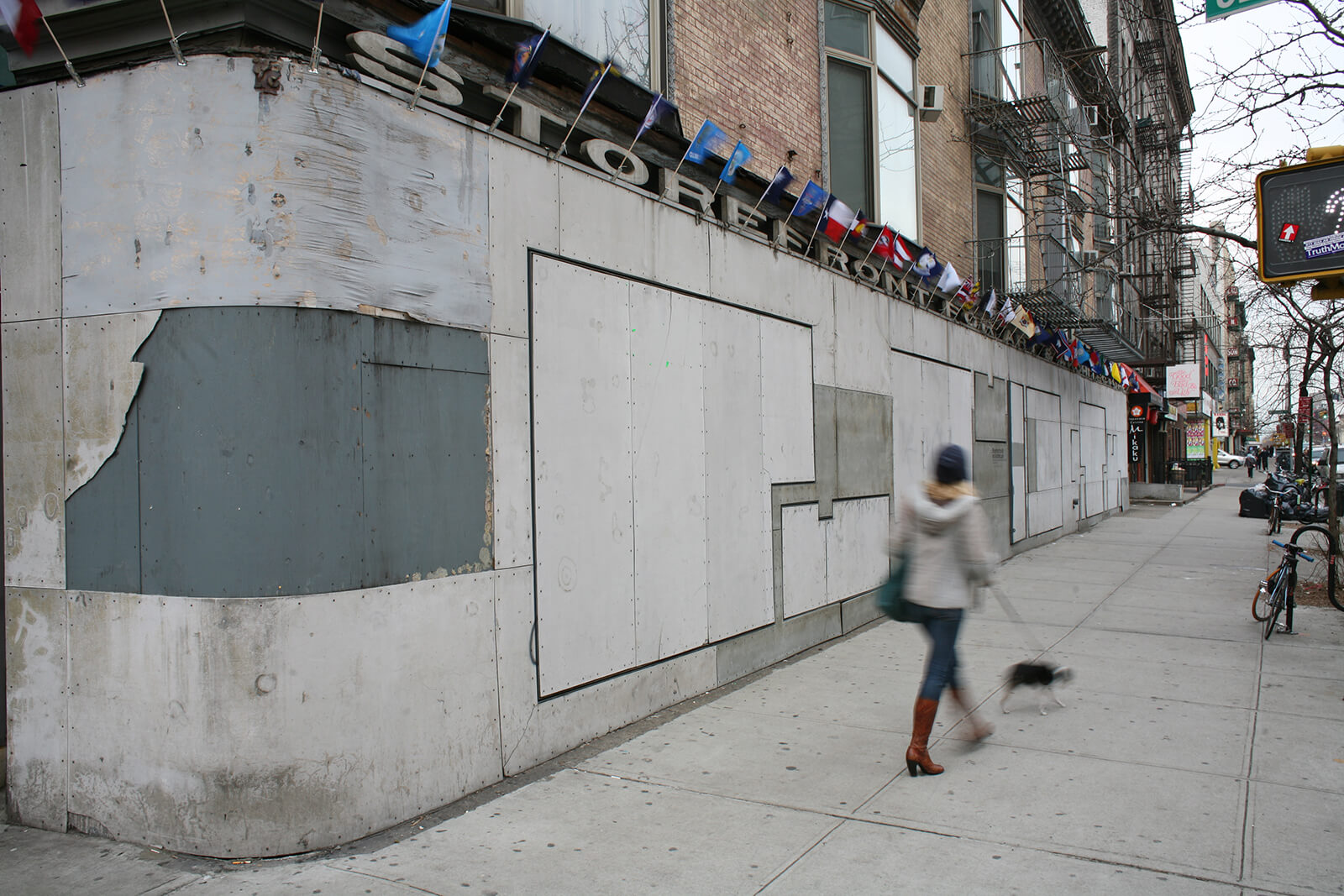
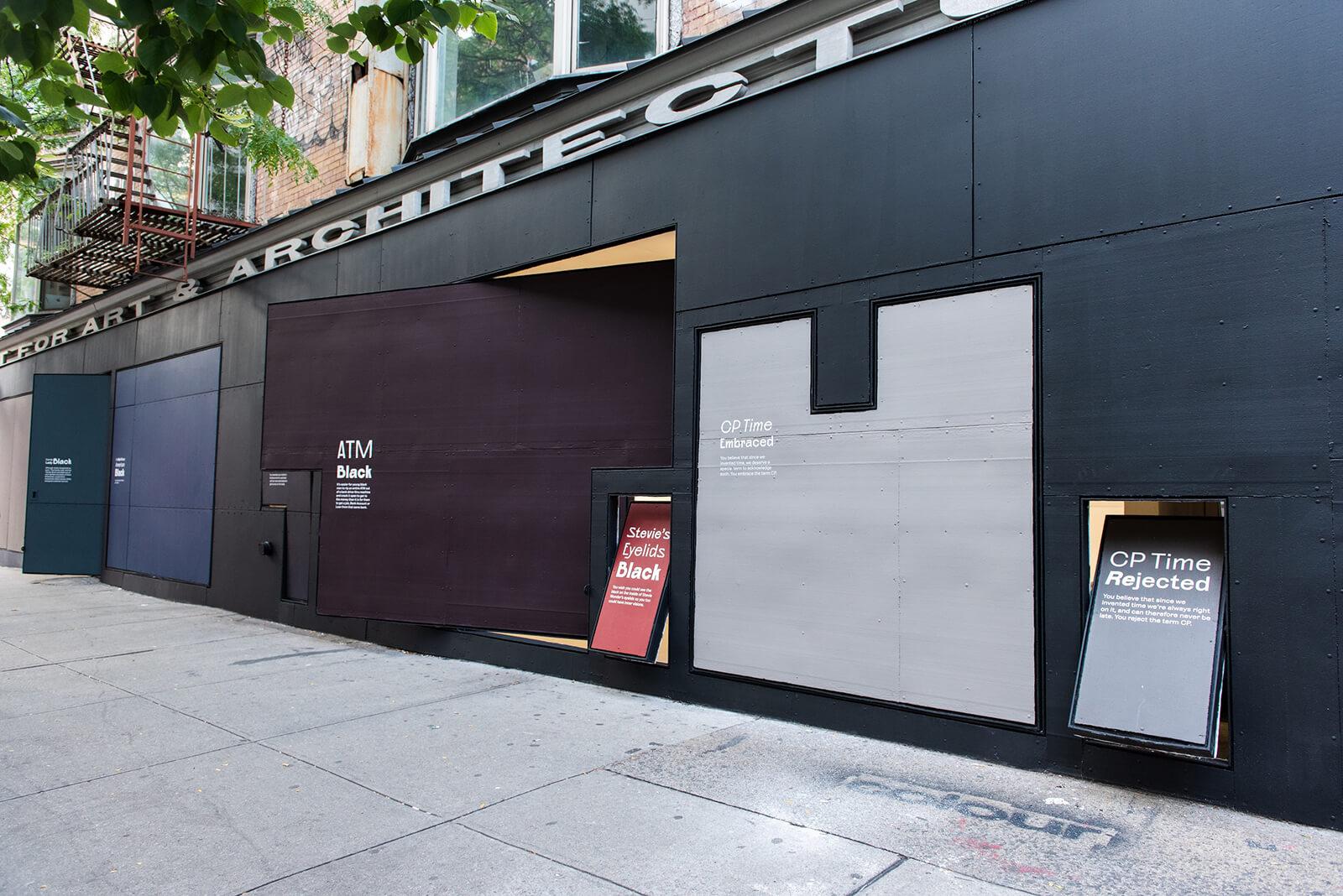
In Lower Manhattan, at the intersection of Kenmare Street and Cleveland Place, one building quietly defies expectations. Depending on when you visit, it might appear as a sealed, monolithic block—or as a structure that spills into the street—revealing its interior to passersby. Its kinetic façade—renovated by Steven Holl and artist Vito Acconci, with rotating panels that are half wall, half door—blurs the line between public and private. The building’s shifting geometry feels alive, mirroring the institution it houses: experimental, porous and always in dialogue with its surroundings.
Storefront for Art and Architecture was founded by Kyong Park in 1982 in a 10 x 21 ft space on Prince Street. It opened that fall with Performance A–Z, a series that turned a storefront window into a stage for public performance. Four years later, the gallery relocated to its now-iconic triangular home at 97 Kenmare Street, on the edge of SoHo and Little Italy. In its first decade, Storefront became a gathering place for artists, architects and urban thinkers confronting questions of displacement, privatisation and the politics of public space. Its exhibitions and open calls made one thing clear: art and architecture are not passive observers of urban change—they are active participants in shaping it.
Some visitors follow an entire research arc, while others might only encounter one exhibition. We want both experiences to feel meaningful—whether someone walks in from Kenmare Street or has followed us for decades. – José Esparza Chong Cuy
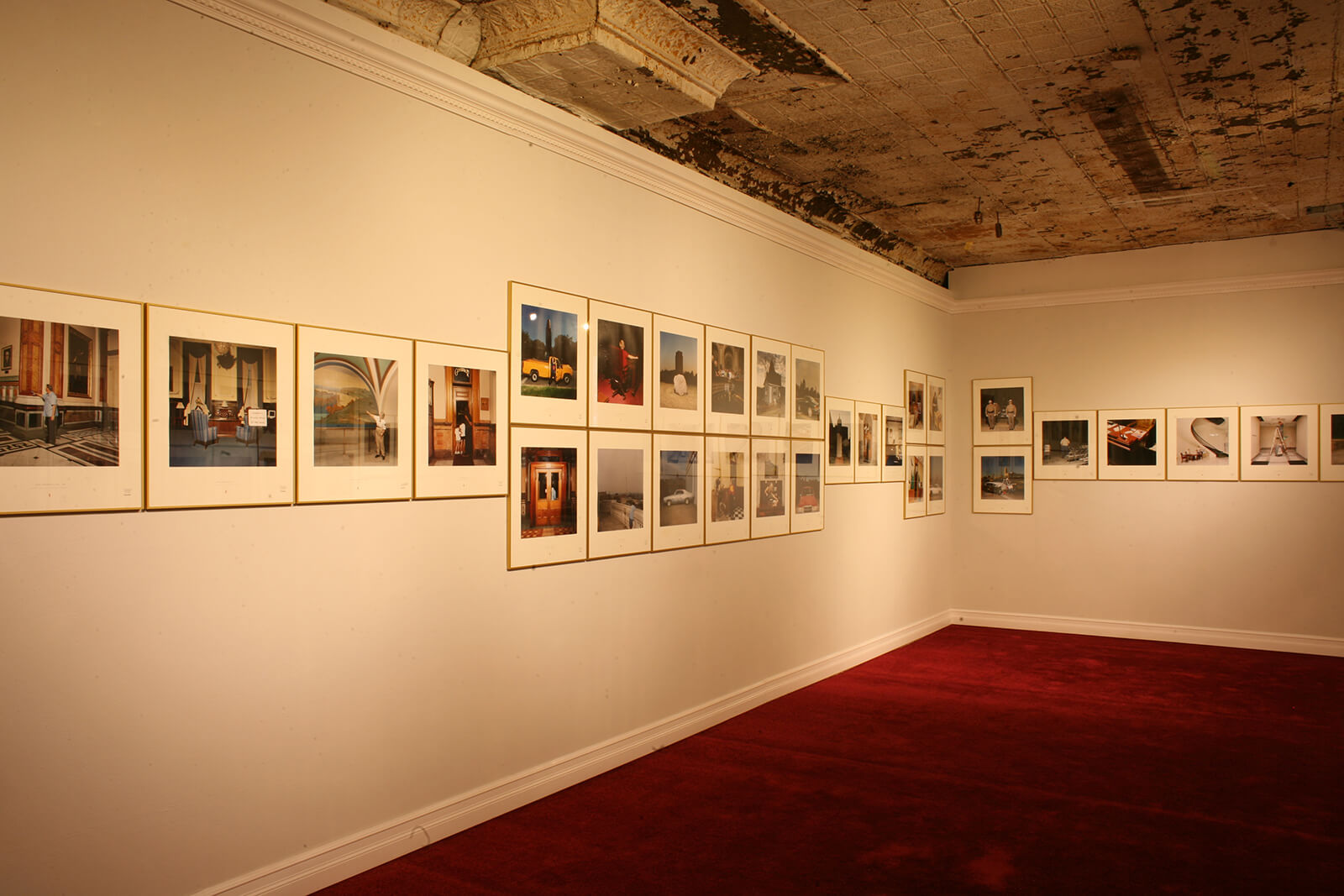
For José Esparza Chong Cuy, the executive director and chief curator of Storefront, this corner of SoHo has been both a point of departure and a site of return. I met with Esparza Chong Cuy on a very windy October day in New York at the renovated Storefront building. We initially picked the triangular corner of the building, grabbed two stools, opened the façade panels slightly and started talking. Nearly two decades ago, he first walked into Storefront as an intern. “There was an exhibition by photographer Ramak Fazel, who had photographed all the state capitol buildings in the U.S. The installation looked like a bureaucratic office, with red carpets, flags and photographs,” he recalls. “I sat at the front desk and welcomed visitors.” That early encounter—between the institutional and the unexpected—quietly shaped his curatorial sensibility in the years that follow.
Esparza Chong Cuy returned to Storefront in 2018, after years of curatorial work in Mexico City and Chicago, as its director. The circle felt complete. Under his leadership, the gallery’s programming remains rooted in risk and experimentation but now extends into broader dialogues around ecology, identity and global urbanism. “Storefront’s mission—merging ideas of art and architecture with social and public spaces—is unique,” he says. “That’s why people return: artists, architects, even former staff. There’s a rare sense of belonging here.”
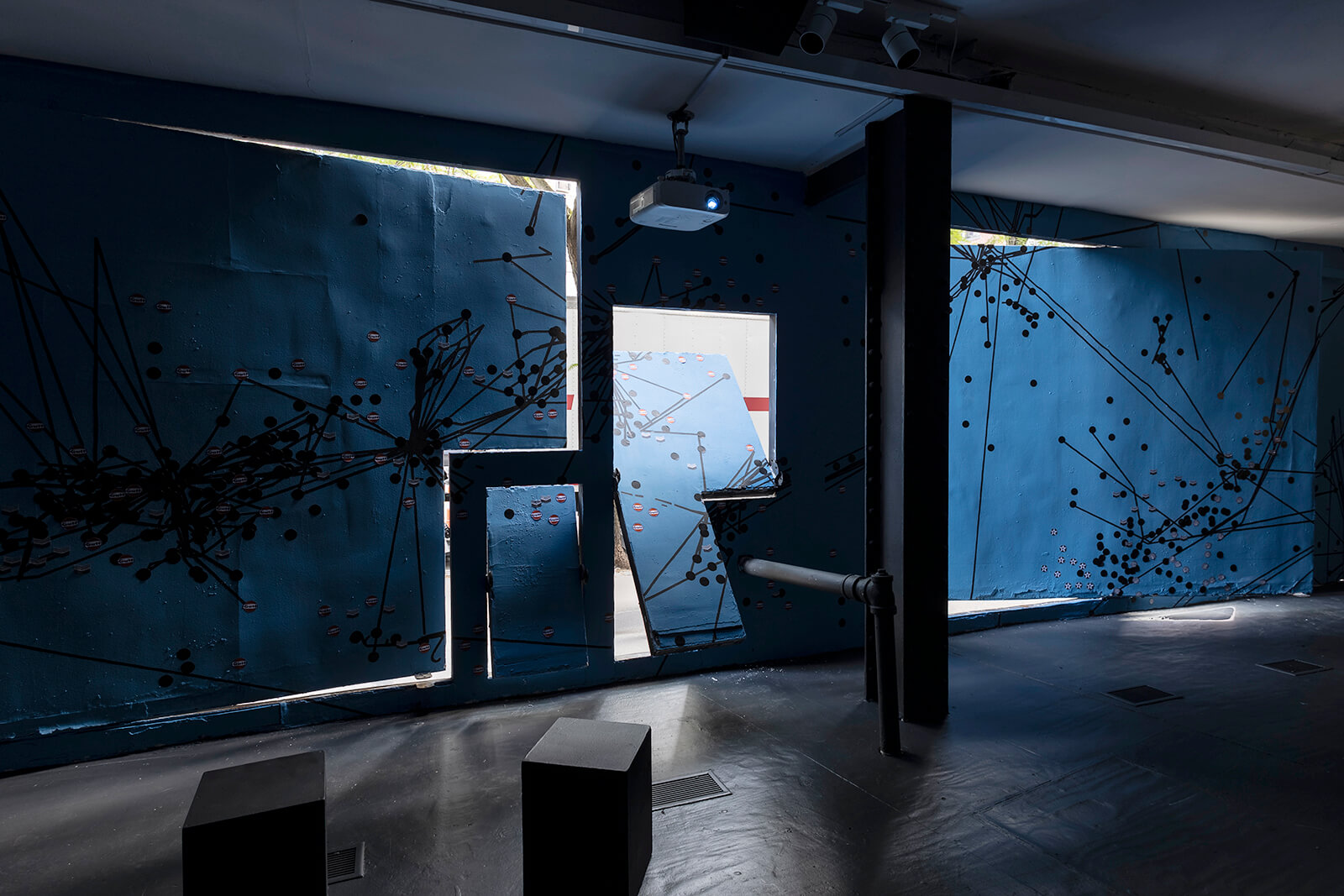
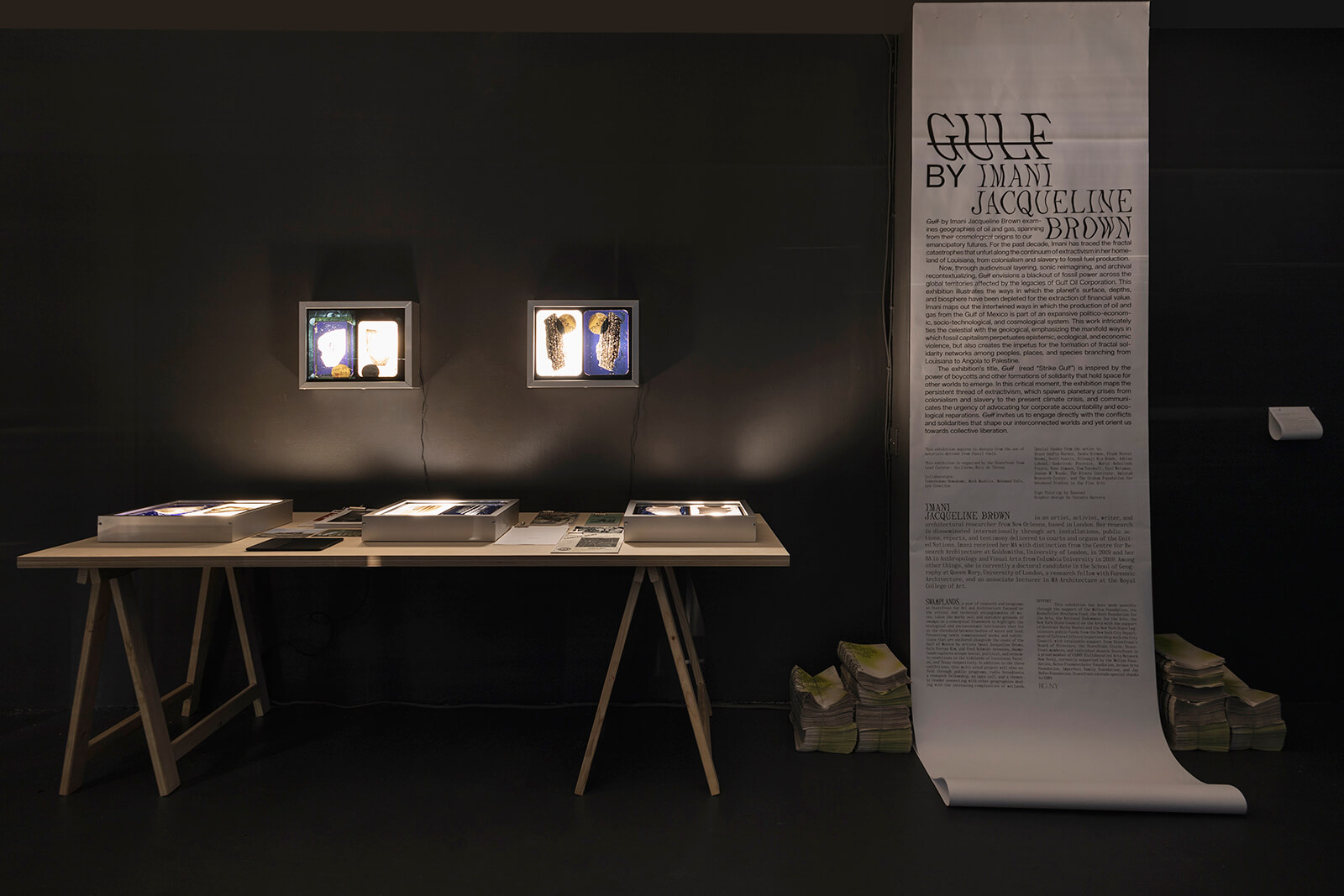
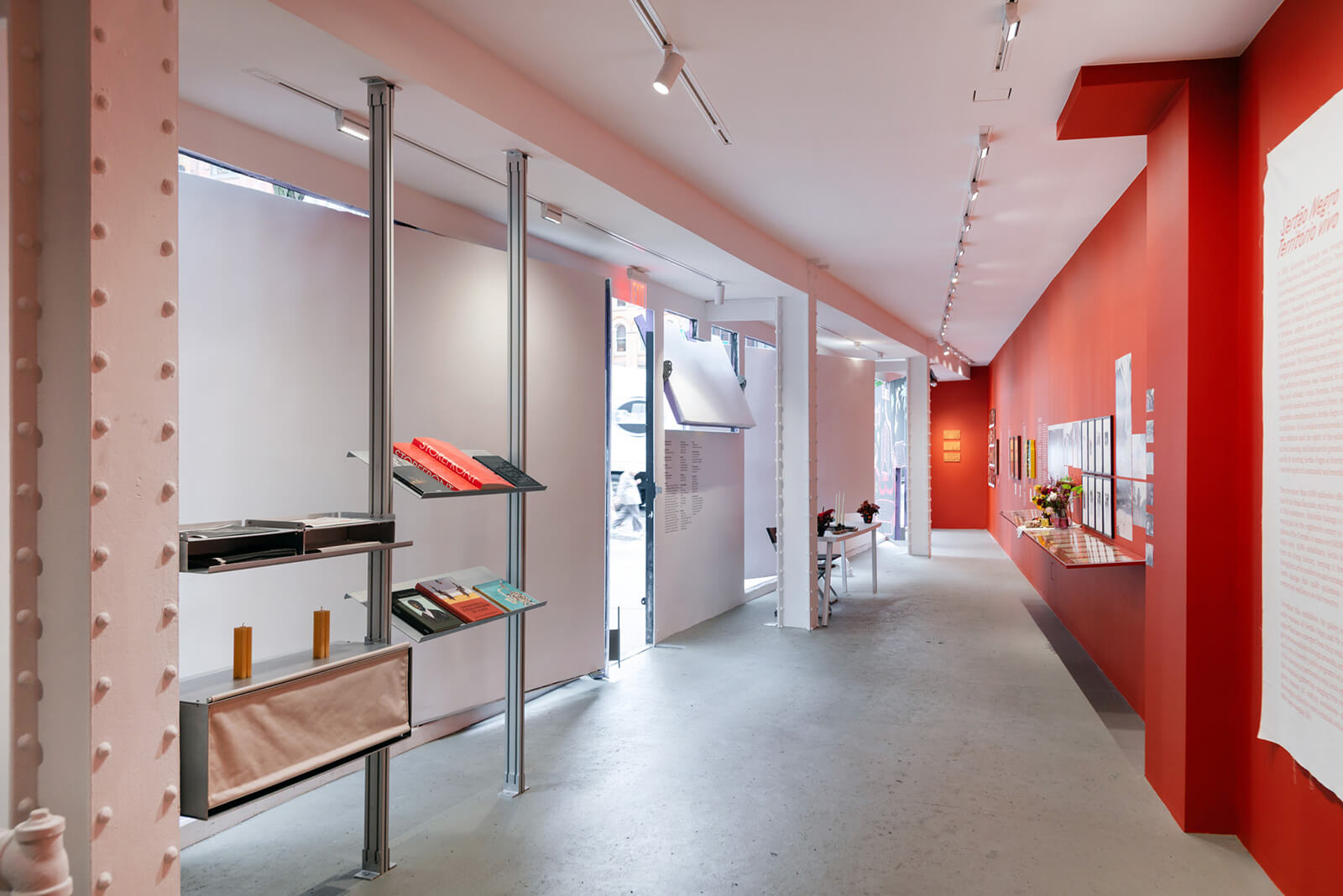
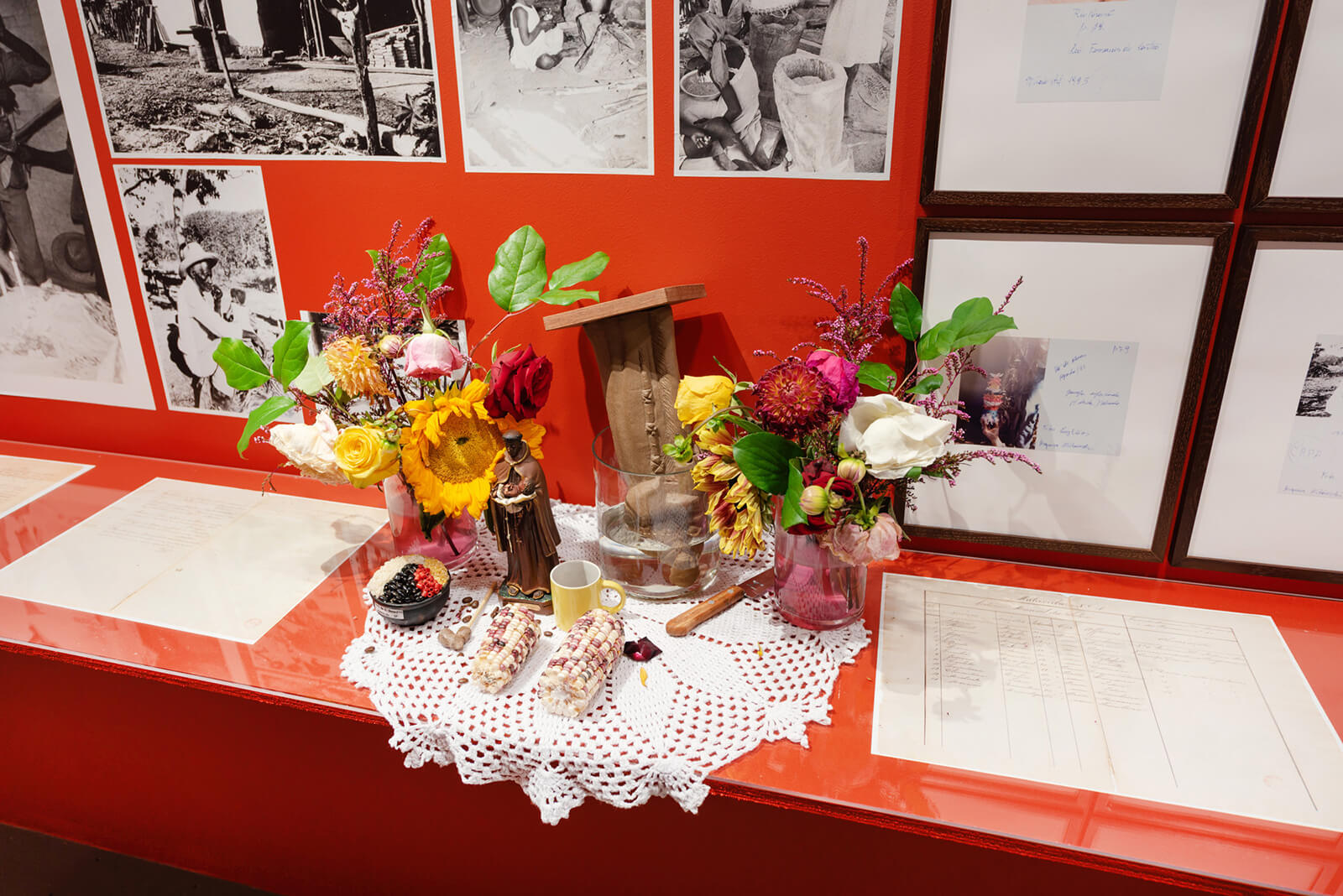
That commitment to openness runs through Storefront’s programming today. Long-term research cycles allow the institution to commission works that build upon one another, forming a layered conversation over months or even years. “Some visitors follow an entire research arc, while others might only encounter one exhibition,” Esparza Chong Cuy explains. “We want both experiences to feel meaningful—whether someone walks in from Kenmare Street or has followed us for decades.” We moved to the exhibition space, where Território vivo by Sertão Negro is on view. This must be one of the most intimate gallery spaces I have ever been in. It’s small, yet it’s where I have heard some of the most compelling stories and seen some of the most intriguing works. And somehow, the exterior seems to hold just as many stories. The irony of Storefront’s space is that the interior and exterior share an equal weight of narratives, a balance that feels both divided and inseparable.
Esparza Chong Cuy’s first exhibition as director, Aquí vive gente (People Live Here), set the tone for his ambitions for the organisation. The show featured RA, a Puerto Rican collective from the San Juan neighbourhood of Puerta de Tierra, where gentrification was reshaping everyday life. Through oral histories, objects and community-led projects, the collective transformed an abandoned building into a site museum, resisting erasure through collective memory. “It was about the politics of space—but also about love for a place,” says Esparza Chong Cuy. “That combination felt very Storefront.”
Since then, the institution’s research programs have expanded into multiple strands. The Land series, including Swamplands and Homelands, investigates the material politics of the environment—water, territory and belonging—through collective research and exhibitions. “We just wrapped up Swamplands, a fourteen-month program that studied the Gulf Coast and the environmental infrastructures around it. Now we’ve moved on to Homelands, which focuses on territory and memory-making practices and their relationship to the concept of home,” he shares.
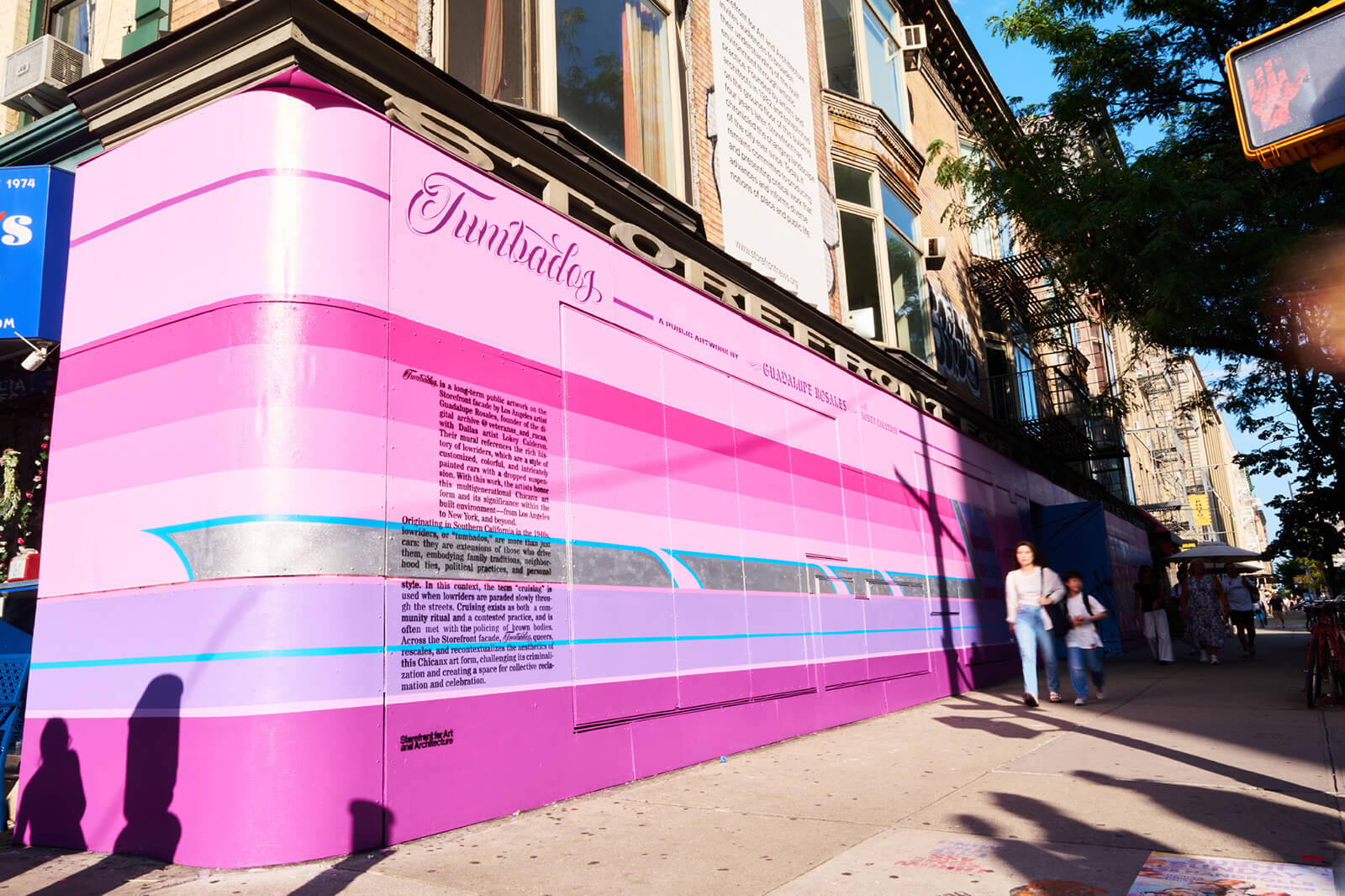
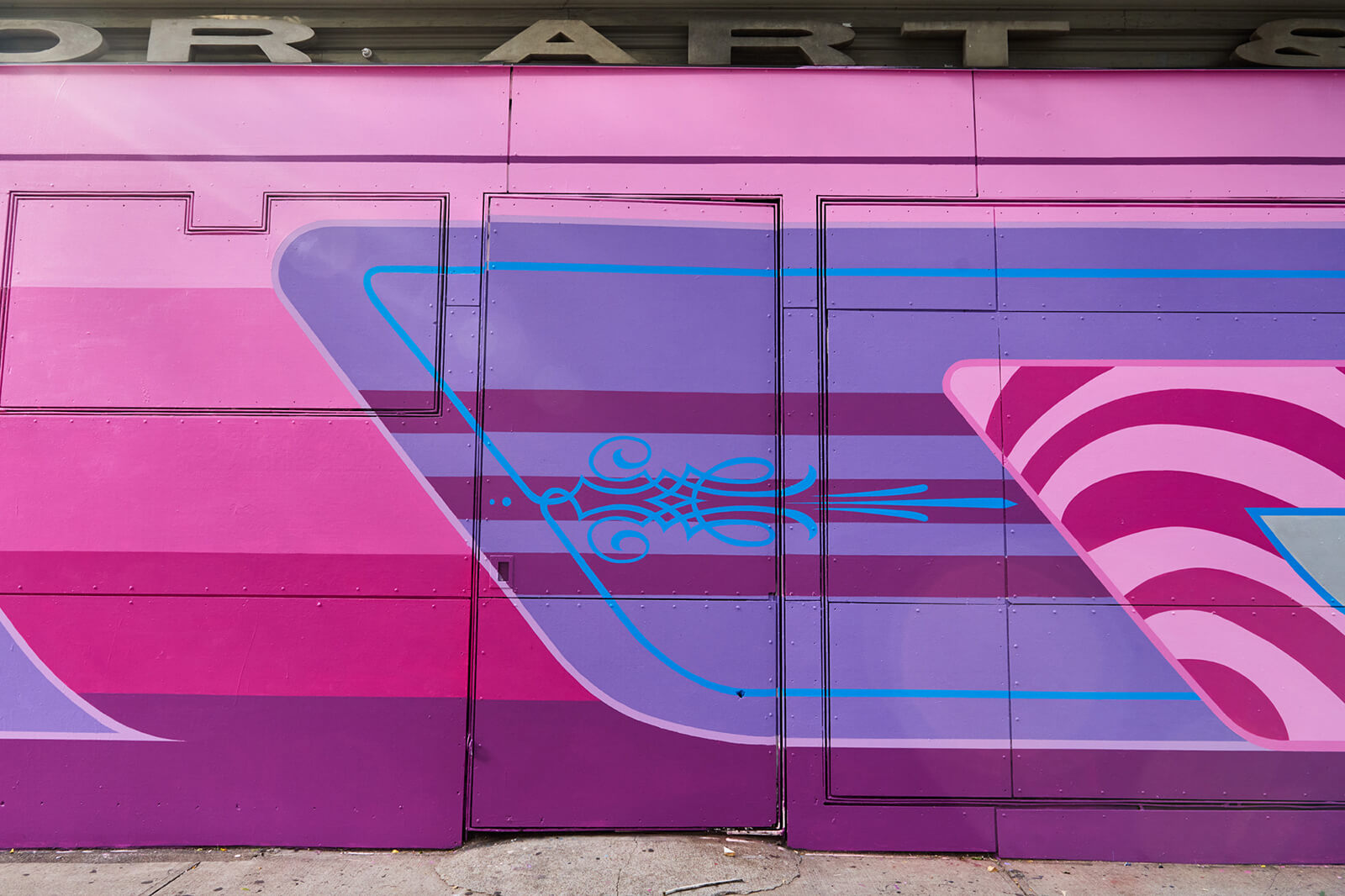
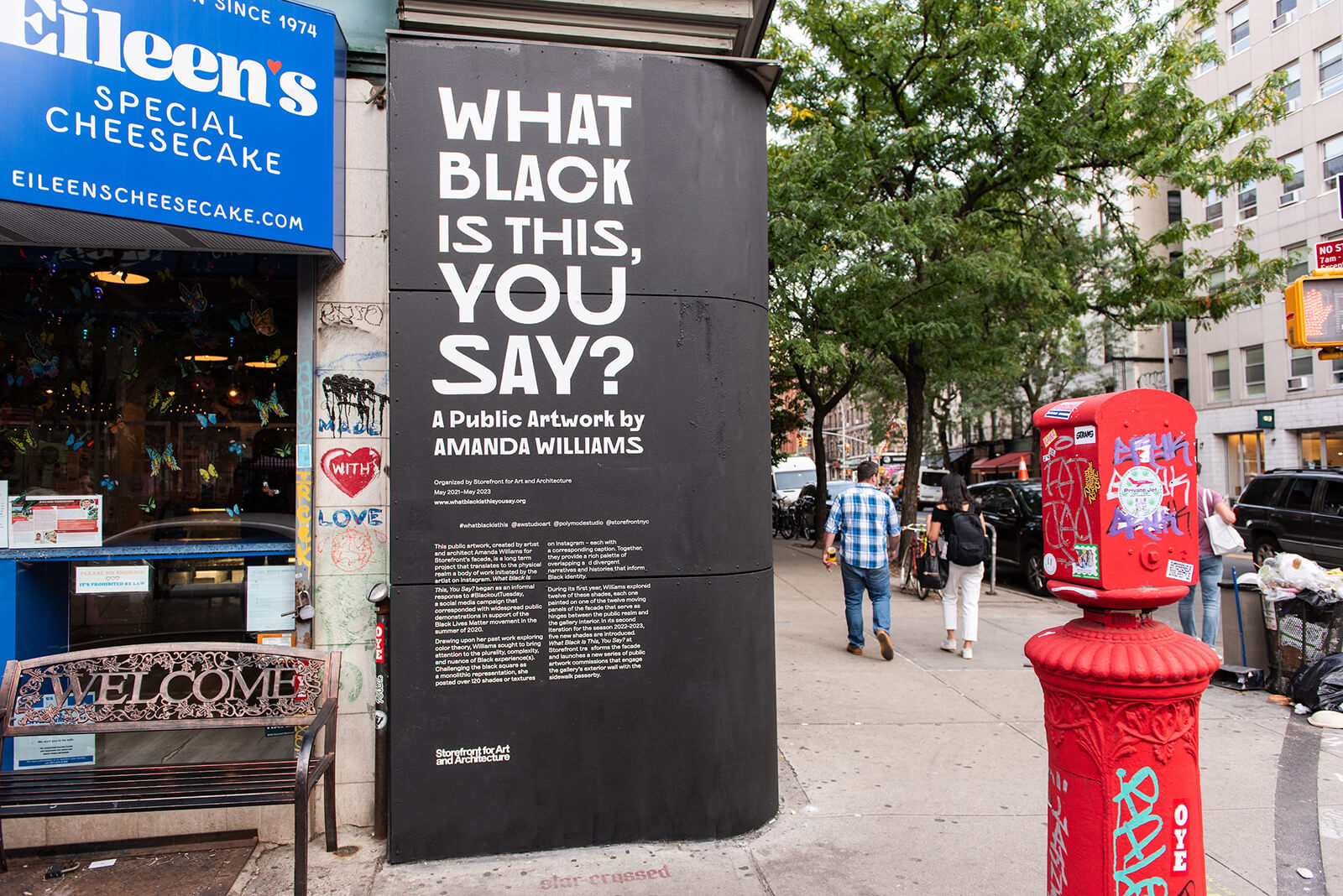
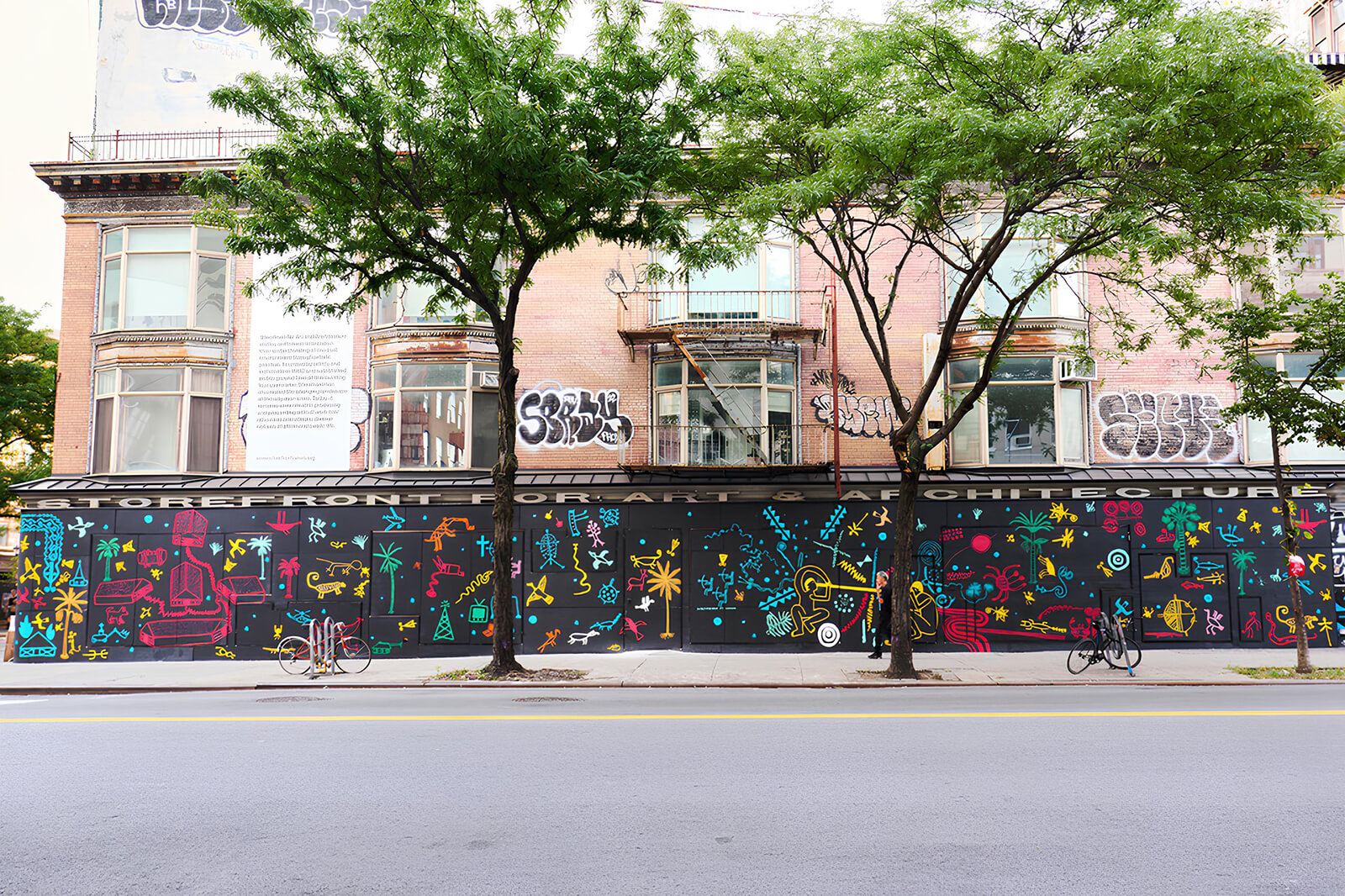
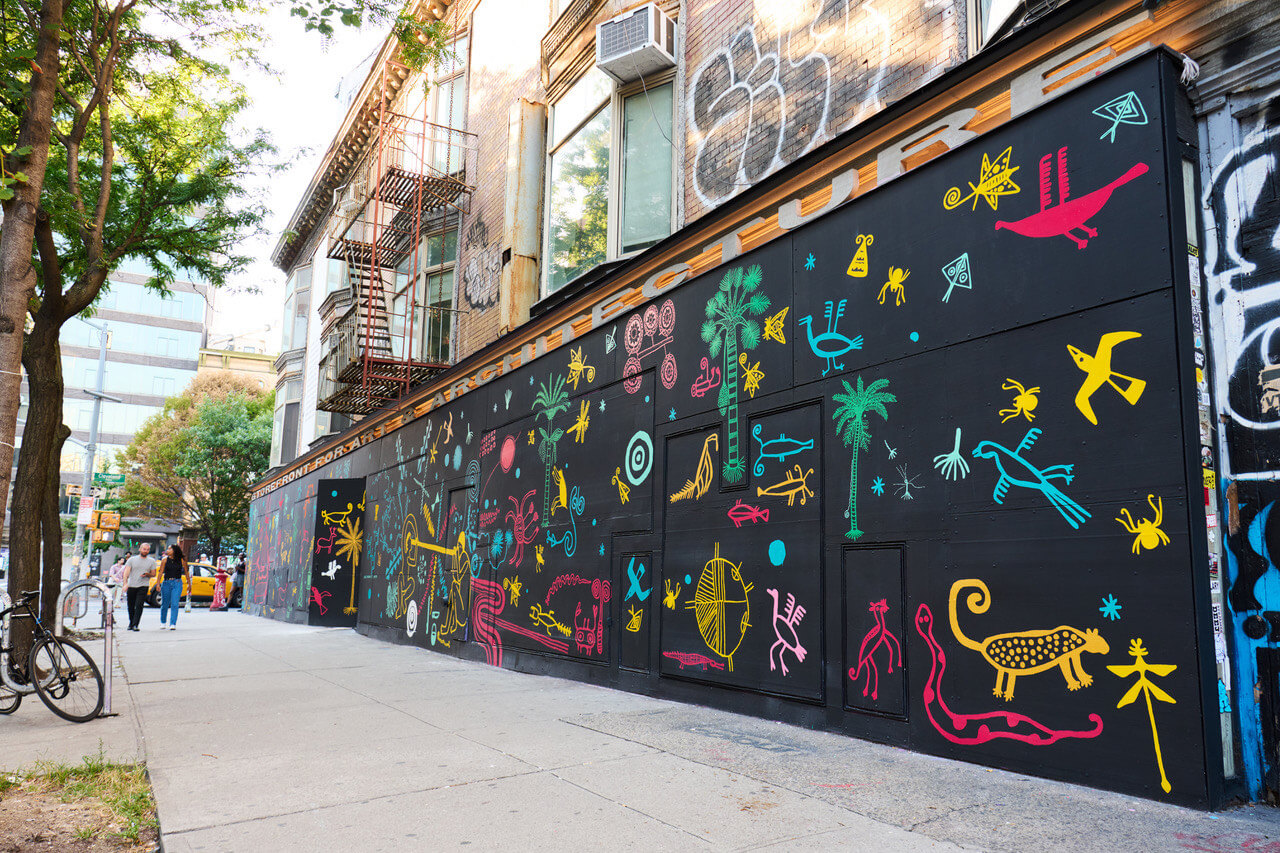
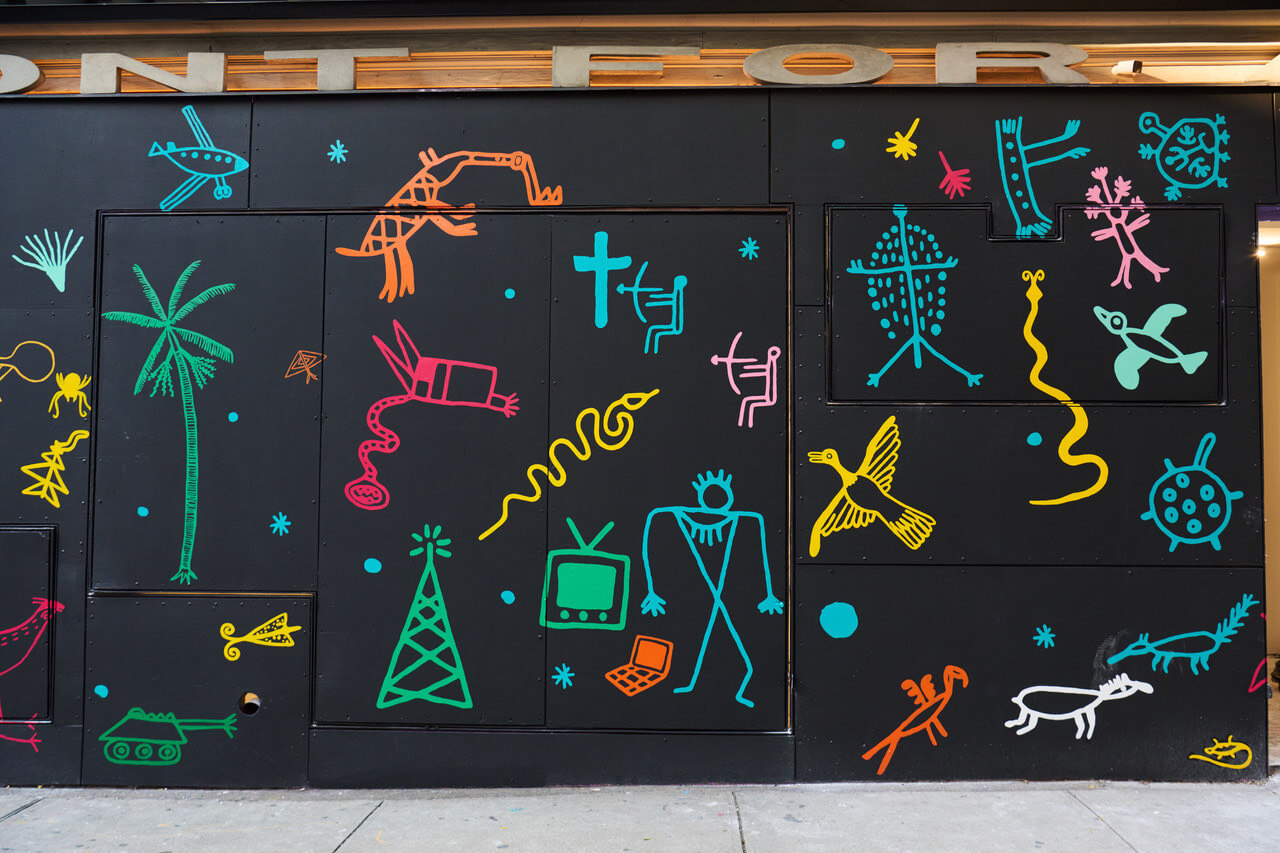
Another key strand, Groundworks, explores identity and place through mural commissions, symposia, and publications with MIT Press. Esparza Chong Cuy led the way to the Kenmare street side and told me about Groundworks, as we looked at the current façade. The first commission was Amanda Williams’ What Black Is This You Say (2021 – 24), a chromatic exploration of Black identity that began on Instagram and evolved onto Storefront’s façade; second, Tumbados by Guadalupe Rosales and Lokey Calderon, a vivid homage to lowrider culture; and, most recently, Na Floresta à noite (In the Forest of the Night) by Denilson Baniwa, which interlaces Amazonian mythologies with contemporary urban life. Each artwork turns the façade into an open gallery, one that unfolds directly onto the street. Observed from the sidewalk, it reads not merely as a surface but as a backdrop to the city’s constant motion. The pedestrians moving across it complete the image, each body a fleeting foreground to the layers of history beneath.
The subjects we explore, generously shared by our artists, are highly relevant for architects. My hope is that, over time, this body of work resonates with those shaping the environments we inhabit. – José Esparza Chong Cuy
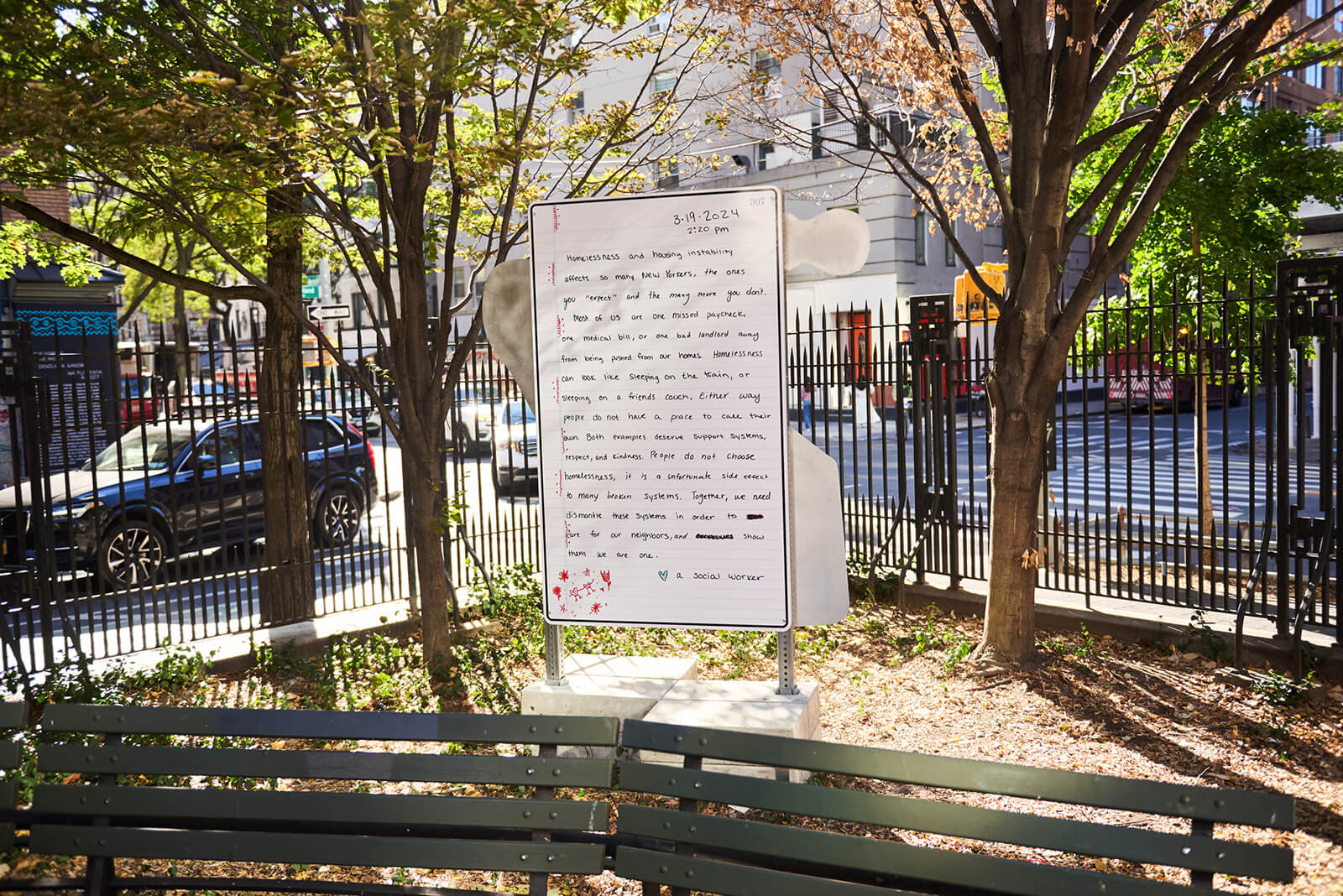
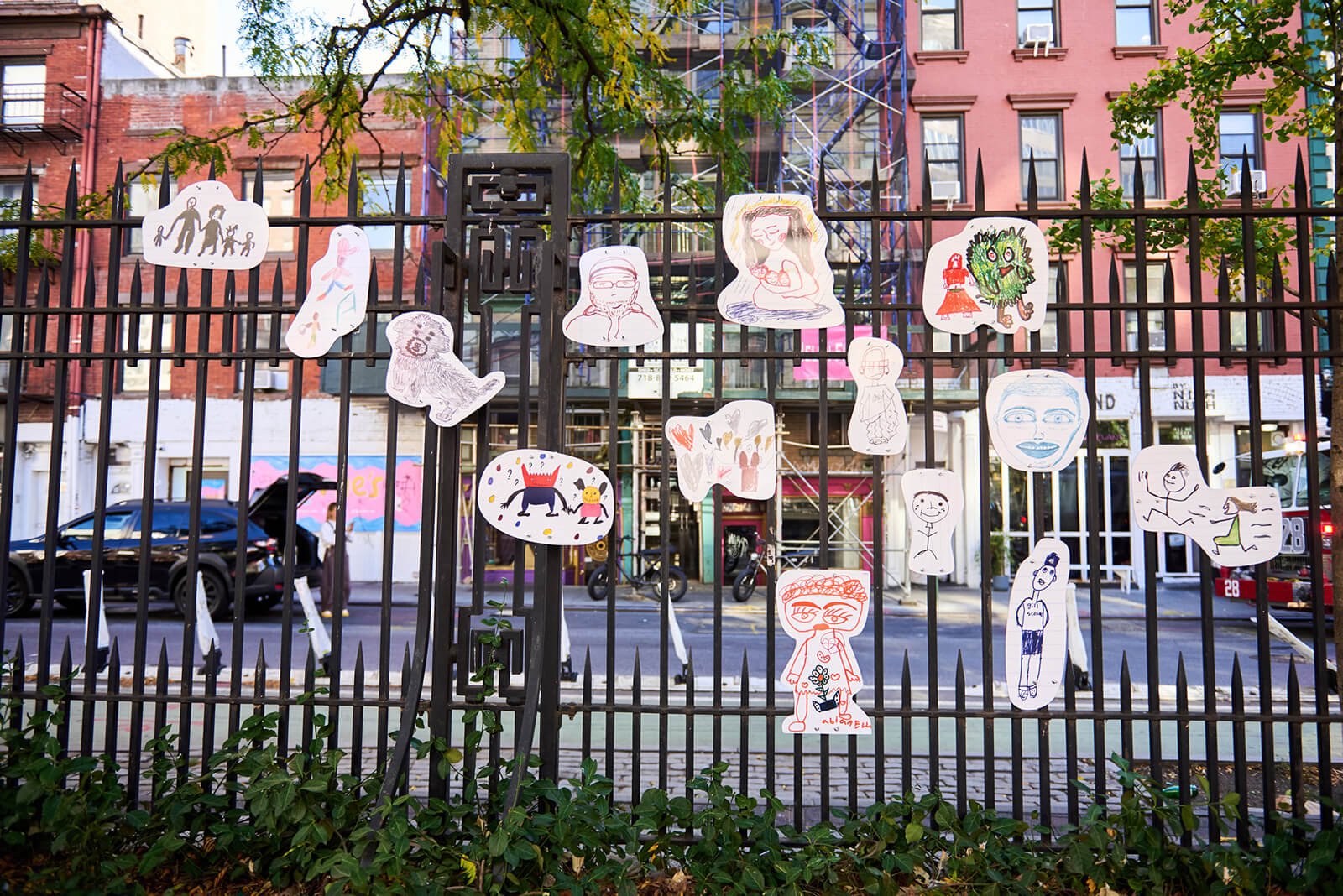
Storefront’s reach has also extended into the city itself. The Public Work series, curated by Guillermo Ruiz de Teresa, commissions interventions across New York. Its inaugural project, Public Address by artist Alex Strada, developed in collaboration with the Department of Homeless Services, confronts housing insecurity through sculptural and performative gestures in Petrosino Park—just steps from Storefront’s door.
Even as programs evolve, the institution continues to tend to its physical home. A recent renovation by GRT Architects—led by Tal Schori, a former Storefront gallery manager and current board member—quietly upgraded the space’s infrastructure while preserving its spirit of flexibility. “Visitors might not notice the changes”, Esparza Chong Cuy says with a laugh, “but we definitely do. It’s the kind of care that keeps the building’s experimental nature alive.” He notes, with particular pride, how many collaborators return to the institution—designers, curators, artists, architects—drawn back not just by nostalgia but by the sense that Storefront remains a testing ground for new ideas.
Looking forward, Esparza Chong Cuy hopes that the institution’s research cycles will shape architectural practice as much as they expand public understanding of the built environment. “The subjects we explore, generously shared by our artists, are highly relevant for architects,” he says. “My hope is that, over time, this body of work resonates with those shaping the environments we inhabit.”
For more than forty years, Storefront has embraced risk, hosting exhibitions and conversations that sit at the intersection of art, architecture and activism. From urban displacement to environmental justice, its projects function as laboratories for ideas, where walls, both literal and conceptual, are meant to move. “Here in Lower Manhattan”, Esparza Chong Cuy reflects, “we have witnessed radical change: in the neighbourhood, the culture, the very texture of the street. Storefront has always been a way to document those transformations, and to imagine what might come next.”
As dusk falls on Kenmare Street, the building’s panels slowly swing shut, folding into a quiet facade once again. Tomorrow, they will again open back out to the city marking an ongoing conversation between inside and out, between art, architecture and the public realm.

by Pranjal Maheshwari Oct 19, 2026
The Mumbai-based architects integrate courtyards, mesh screens and north light trusses to create a dining space that doubles up as a community hub at SR University, Warangal.
by Mrinmayee Bhoot Oct 17, 2026
The Rotterdam-based institute centres the Indian Ocean as a network for exploring material histories and transnational links shaping coastal cultures, positing them as future models.
by Pranjal Maheshwari Oct 16, 2026
At the 2026 Stirling Prize ceremony, Mary Duggan with RUFF Architects, MAKER Architecten and Nakshabid Architects were felicitated for proffering quality housing and social equity.
by Mrinmayee Bhoot Oct 12, 2026
The new Centre for Contemporary Arts, fostering public engagement with art in Uzbekistan, is housed in a tram depot refurbished by the French studio, emulating local craftsmanship.

make your fridays matter with a well-read weekend
Enter your details to sign in
Don’t have an account?
Sign upOr you can sign in with
a single account for all
STIR platforms
All your bookmarks will be available across all your devices.
Stay STIRred
Already have an account?
Sign inOr you can sign up with
Verification link sent to check your inbox or spam folder to complete sign up process
Tap on things that interests you.
Select the Conversation Category you would like to watch
Please enter your details and click submit.
Enter the 6-digit code sent at


Storefront for Art and Architecture through the eyes of José Esparza Chong Cuy
by Sunena V Maju | Published on : Nov 13, 2025


 Sign in with Google
 Sign in with email
What do you think?