Architecture10 mins. read
ADFF:STIR Mumbai 2026 promises a radical vision connecting cinema, space and city
by Jincy IypeDec 15, 2025




by Mrinmayee BhootPublished on : Nov 13, 2025
Pavilions, by their very nature, present exciting new ground for architects and designers. They hold a peculiar place in the architectural imagination, being both amorphous and inclusive, sculptural and practical—essentially rare chimaeras in a discipline that cannot yet dissolve the futile debate of function and form. While unclassifiable, their distinction as secondary structures, ephemeral in quality, is what primes them as experimental or speculative expressions that operate outside the self-appointed role of architecture as a ‘problem-solving design activity’. That their temporality dismantles architecture’s arrogant, yet misplaced claim of its own permanence, perhaps cements their central role as material critique. As spatial forms of rethinking conventional norms in design, it is the experience of pavilion architecture that gives weight to its evaluation and effect, as well as its meanings; hence activating the crucial notion that architecture is as much dialogue as it is spectacle. This sense of the ‘new’, of the possibility of exchange, of architecture for pleasure, as display, as exhibition itself—as the wilful function of the structures—becomes their most distinguishing factor.

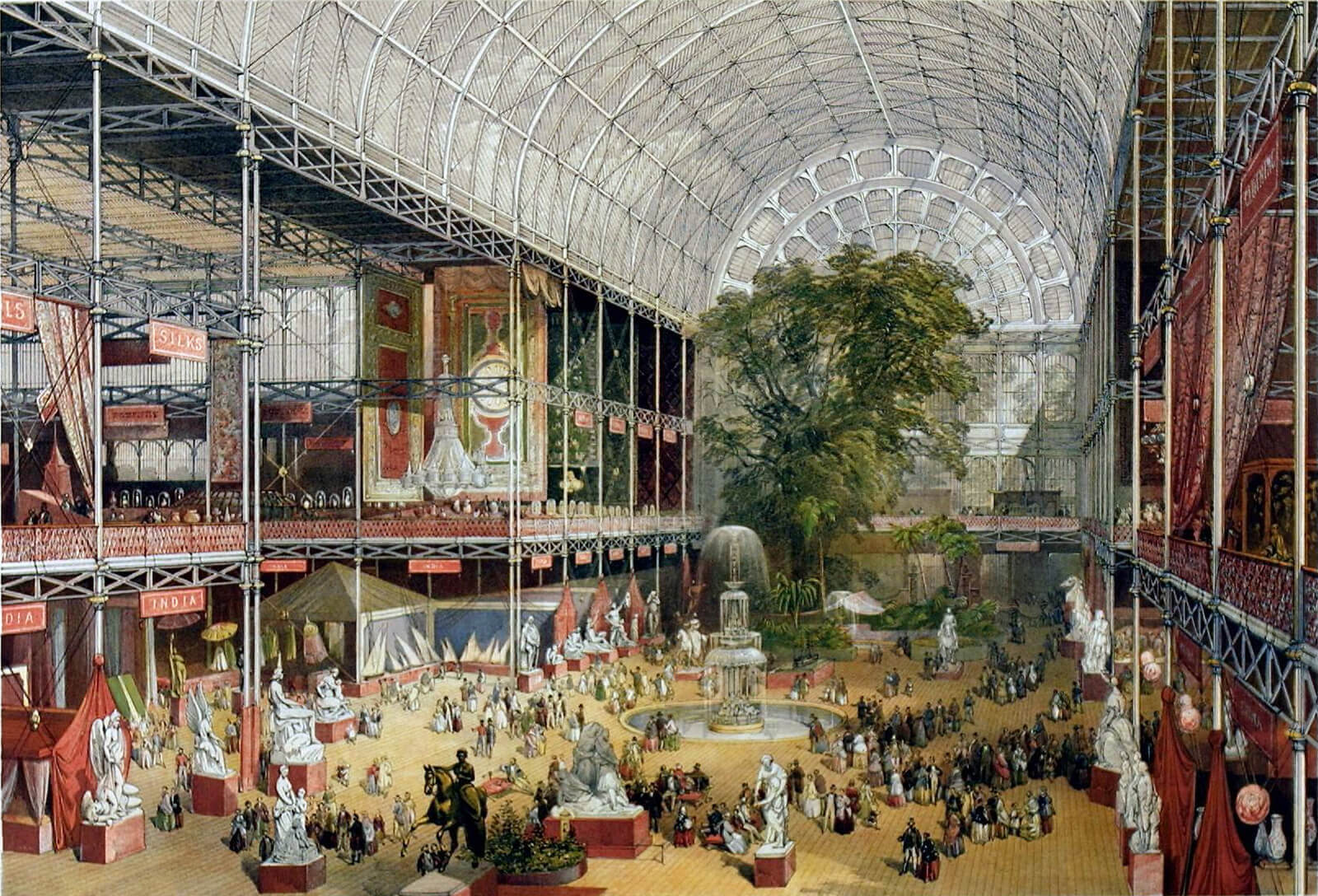
One could trace this genealogy of an architecture of/as exhibition to the construction of the Crystal Palace in London—the structure built to house the Great Exhibition of 1851. The project embodied a display of all the goods and artefacts plundered from erstwhile colonies as a demonstration of the colonisers’ industrial and cultural progress. If anything, the Crystal Palace underscored the rhetoric of industrial advancement. Built from glass and iron—the innovative materials of the age—it was a marvel to behold, and peripatetic at that. World expos and trade fairs have since evolved to become showcases of nationalistic fervour, often sidestepping the noble intentions of providing a platform for shared dialogue—a not-so-inconspicuous demonstration of soft power. The framework of these temporary expositions was later adapted by the ‘permanent’ pavilions of the Venice Biennale. While these structures primarily function as spaces of display, their architecture chronicles an evolution in architectural thinking—consider, for instance, the contrast between the oldest pavilions, such as the British pavilion built in the Neoclassical style, and more recent examples like Lebanese architect Lina Ghotmeh’s Oman pavilion that indicates an increasing interest in the vernacular architecture of the Global South. At the same time, these pavilions have also been treated as displays by participants over the years, where, increasingly, the engagement with the permanent structures involves questioning their contentious ideologies. For instance, this year the British pavilion through GBR critically redressed histories of colonialism whereas the Nordic Countries challenged the hegemonic ideals of modernism through Industry Muscle. The use of pavilions as/for display and representing the particular criticisms of architectural production is of note here.
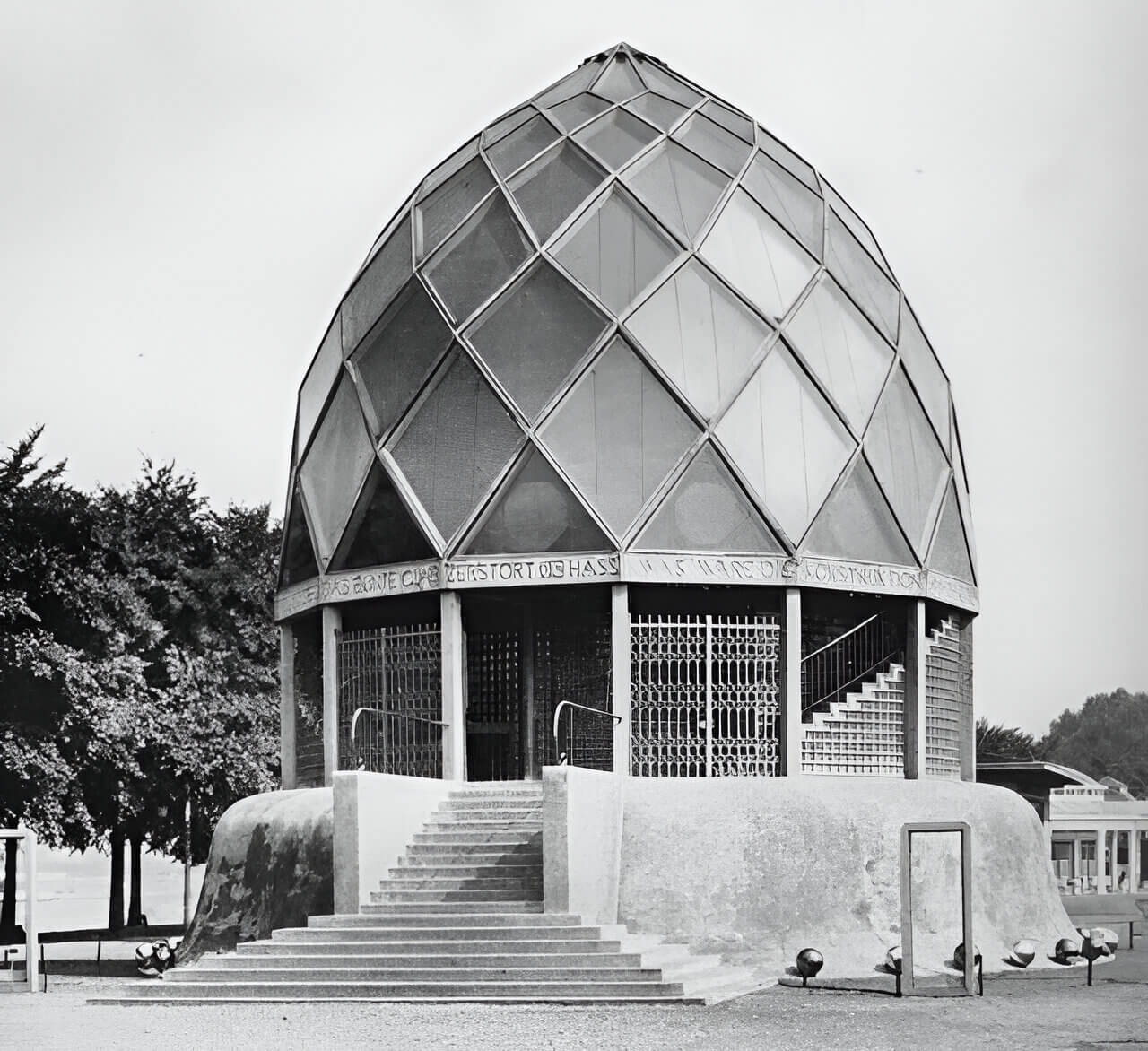


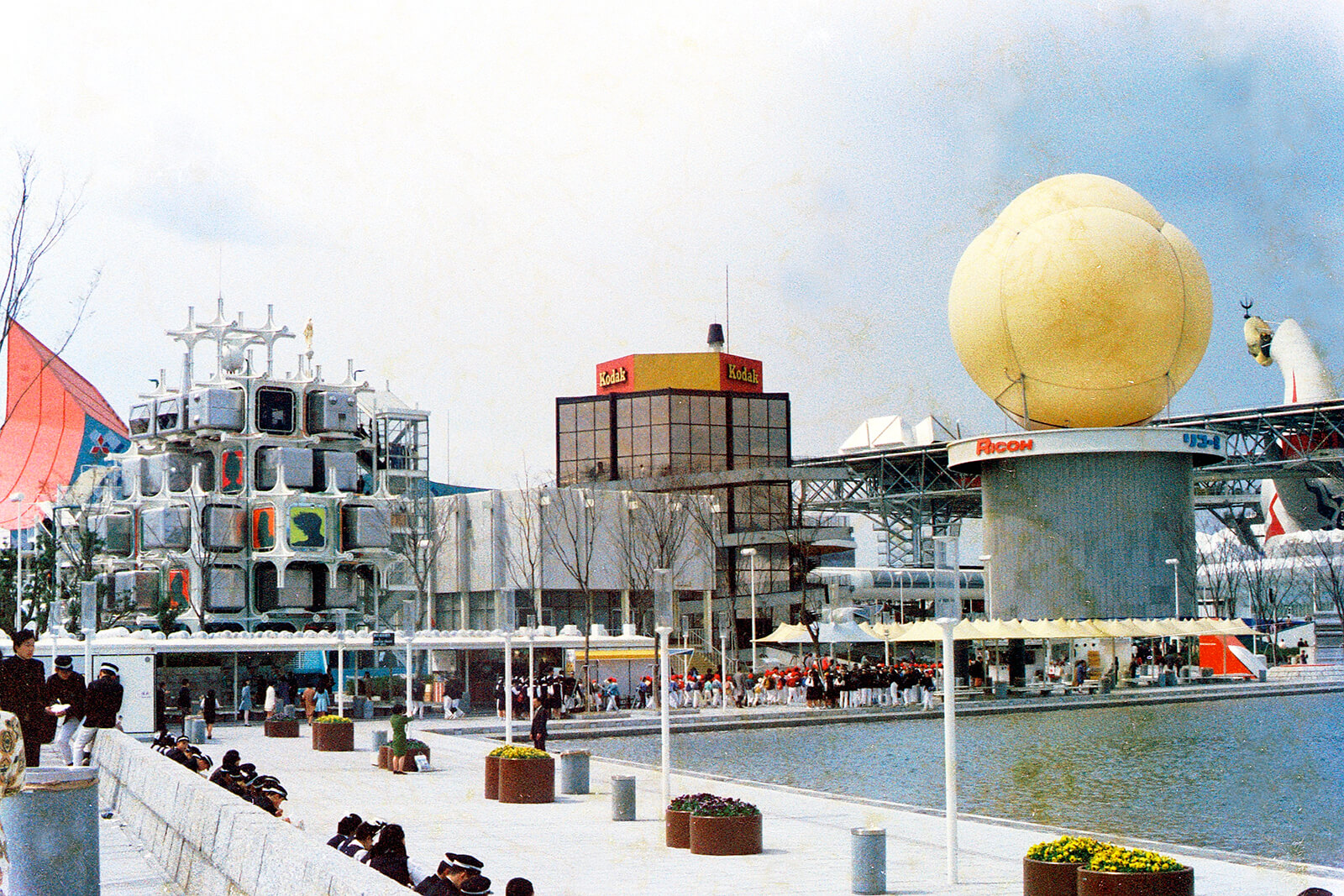
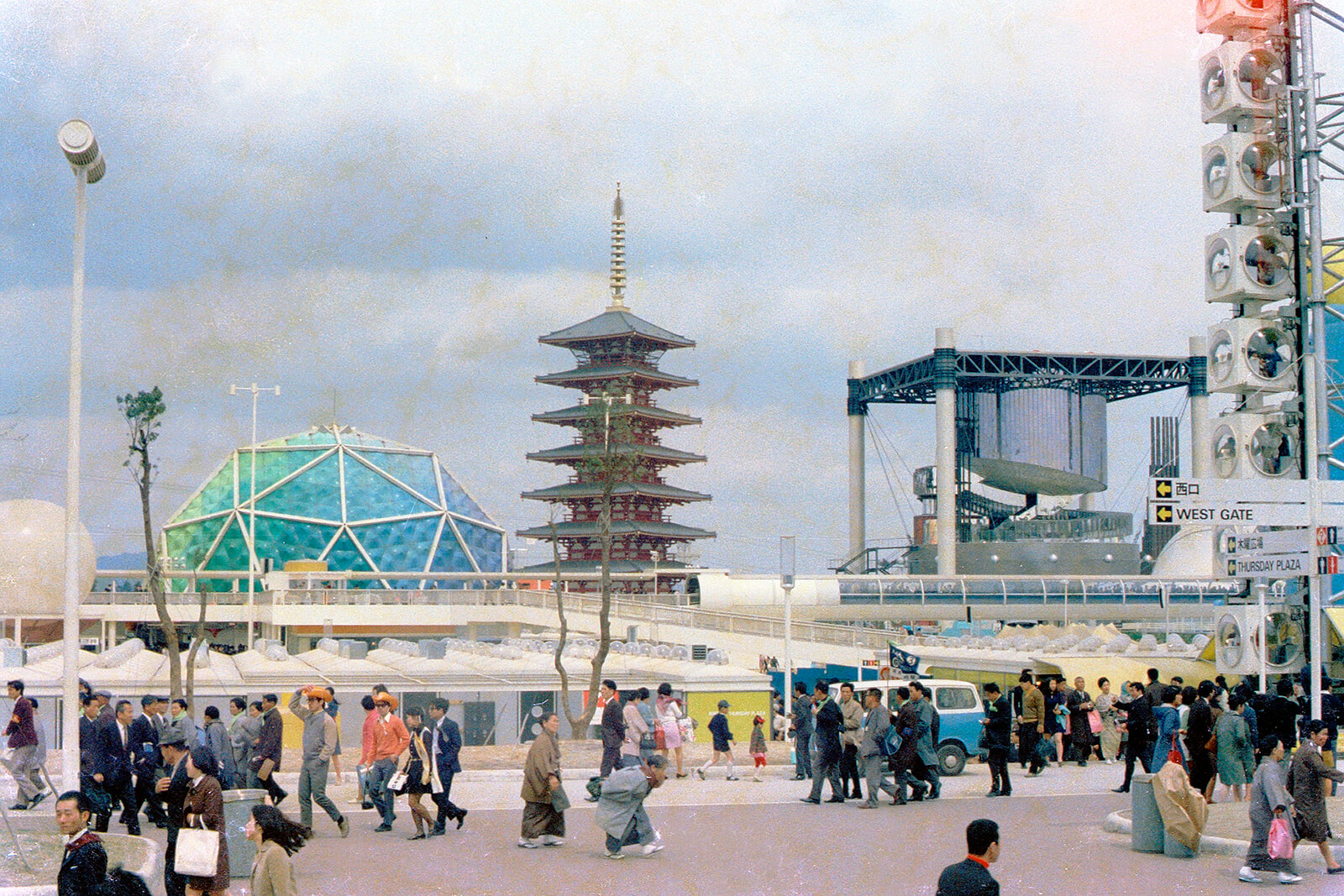
Returning to the history of World expos and temporary pavilion designs as sites of experimentation, by tracing the evolution of architecture for expositions and world fairs, one gets a fairly detailed outline of cultural progress as/through design. Mies van der Rohe’s fantasies of a ‘pure’ architecture were realised in the Barcelona Pavilion, which he—along with German architect Lily Reich—designed for the 1929 International Exposition. Continuing this trajectory, Buckminster Fuller’s geodesic dome heralded a ‘new’ kind of architecture at the 1967 Expo in Montreal—one that was materially efficient, modular and took advantage of the technology of its time. It was in many ways more memorable than even Frei Otto’s steel-cabled German Pavilion and Moshe Safdie’s iconic Habitat 67, both of which were similarly radical for their time. While the former stressed on mutability as a lens through which to reconsider architecture, the latter explored the possibilities of prefabricated modular units for affordable housing. The Metabolist dream—of architecture as a living system—was first realised at human scale for Expo ‘70 in Osaka, and one could argue that the 2025 iteration of the world fair in the Japanese city similarly probes the relevance of local materials in construing a future for sustainable architecture. More than mere function, these pavilions have served to canonise a ‘radical’ way of building, conceiving of an architecture for architecture’s sake (whatever way you choose to define its slippery terrains), of demanding once and for all, architecture’s autonomy within a tabula rasa.
If pavilions have been instrumental in heralding ‘new’ forms of architecture, they have also probed its elusive boundaries; by contending that perhaps true merit in architecture is to open dialogue between contexts and people, in experimentation in various possibilities in architectural design, and questioning what such design ought to incorporate for both designer and observer. Recently, the Copenhagen Architecture Biennial explored questions of a material rehaul for the discipline and the construction industry by underscoring the idea of slowness through its pavilions, as a way to nurture an attitude of care. Such inclusive efforts to broaden the scope of design—and the communities it addresses—as well as to consider how the temporary presence of a pavilion might invite people to gather and what dialogues it might engender, are also vital. Such a conception of architecture as event, a space for dialogue, is perhaps exemplified most explicitly in the Serpentine Galleries' annual commission of a summer pavilion.

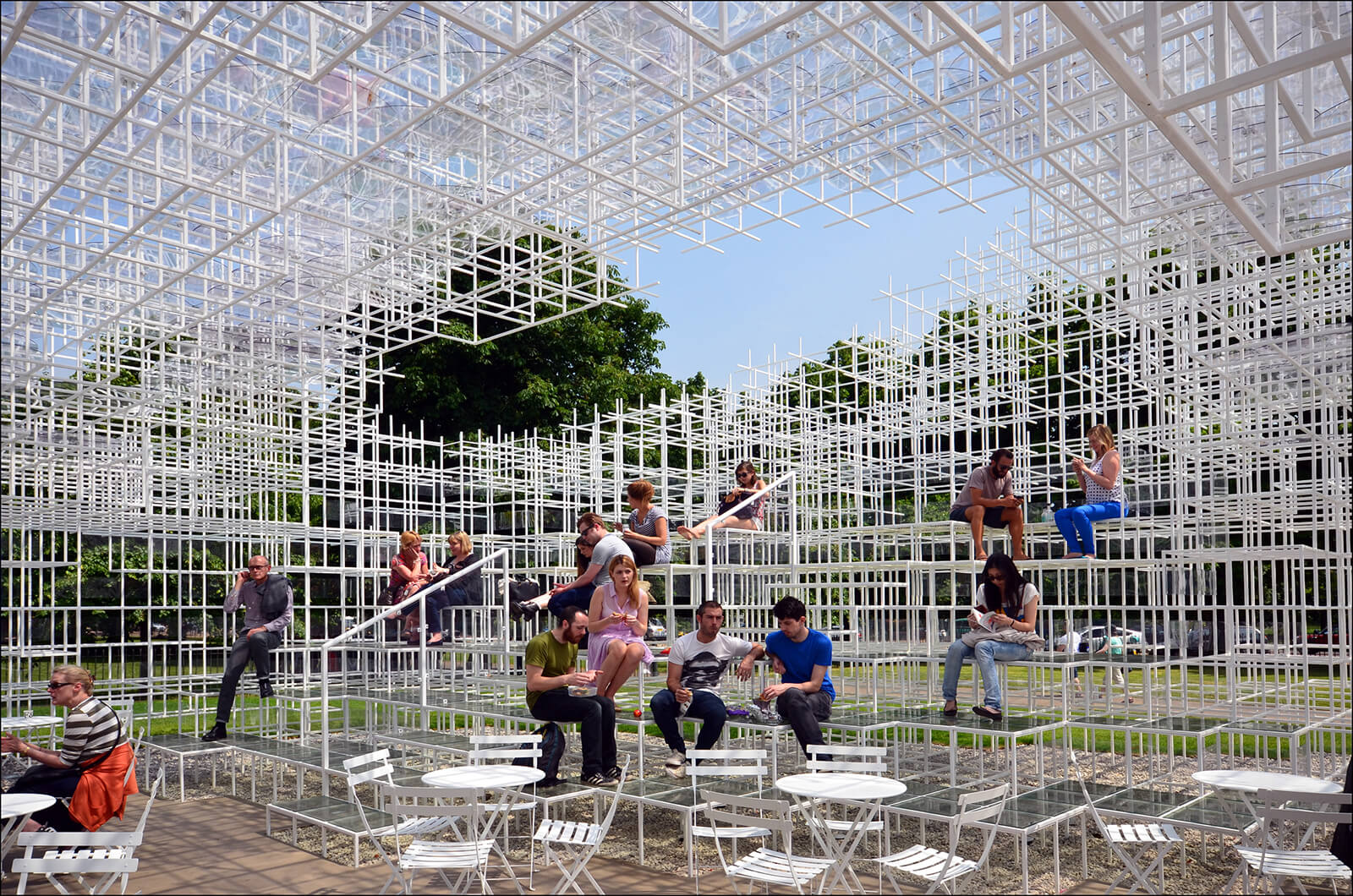

Initially awarded to Zaha Hadid for the gallery’s 30th anniversary (who at the time was still very much considered a ‘paper architect’), the Serpentine Pavilion is an exemplar of the indistinct role of architecture and its spirit of experimentation. While crucially, the pavilion design probes relationships between the park and the city, the essential role of building (one might argue); it is also “an ongoing negotiation of what constitutes reality. This determines the degree to which we allow people to understand the potential of this construction as a means to reevaluate themselves in relation to the surroundings”, to defer to Olafur Eliasson’s statement about his 2007 commission. Hadid, who was interested in the temporality of semi-closed space, designed a public space that could not be separated from the park, that had no boundaries per se; a stipulation that architects have since followed. If we trace the commissions by the Serpentine over its storied 25-year run, we could trace in some way the issue de jour that designers have concerned themselves with. From a curiosity in spatial configuration and material exploration, discourse has shifted to questioning the mark we leave on the earth, to thinking more fervently about sustainability and in what forms it manifests. In this endeavour, the Serpentine only invites architects who have previously never built in the UK, with its 25th anniversary commission awarded to Marina Tabassum, whose A Capsule in Time provided an extension of her belief in the inherent mutability of architecture. While temporary, these commissions (and the many, many pavilions mentioned above, save to say the ones omitted), linger in the memory. They steer discourse.
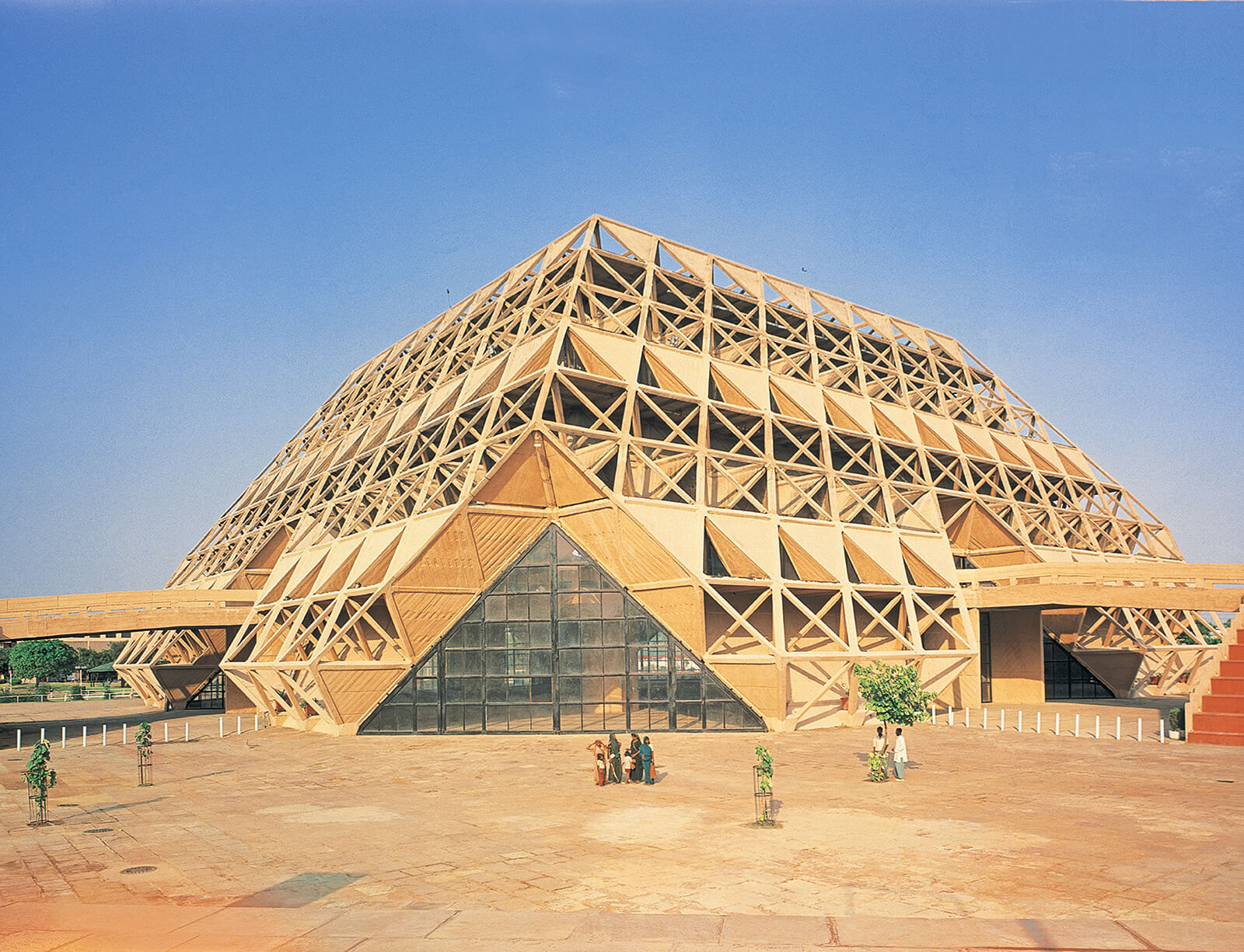
While such a thriving culture of architectural experimentation exists, primarily because of the genealogical evolution from the World Exposition to the use of architectural form as its own kind of exhibit (as with the Serpentine), it has not been attempted on a large scale in the Global South. The attempt here is not to trace the history of the pavilion as a form of built architecture, but to examine how architects and designers have used the amorphous nature of the pavilion as manifestos. If we were to consider it in that light, buildings like the Hall of Nations come to mind. Built yet again as a space for exhibition, its design was a spectacle in and of itself. Meant to highlight the possibilities of modern architecture given the kind of resources India had to hand (quite literally manual labour), it was designed as one of the world’s largest cast-in-situ concrete space frames, a remarkable feat to this day. While built to be permanent, it no longer stands.
And while the construction of pavilions might still be seen as a nascent practice for studios that want to critique and reimagine architectural production in the subcontinent, many of these structures, often more installation than free-standing space, have typically been built for specific purposes. In that stead, as a means not only to further a growing interest in more experimental forms of design, while reiterating the notion of pavilions as spaces of gathering, this year, STIR will present the Jaquar Pavilion Park at the sophomore edition of ADFF:STIR Mumbai.
Curated by Aric Chen, director of the Zaha Hadid Foundation, the curatorial brief considers architecture itself as event, in line with Bernard Tschumi’s thesis The Manhattan Transcripts (1981). By using design as a lens through which to explore relationships between space, movement and event, particularly through Mumbai, this year’s proposals by invited designers reimagined forms of social relations, and how these are encouraged, discouraged, created, proliferated or barred by design. Envisioning these interventions as ‘spatial provocations’—as much a space for dialogue as fostering novel conversations amongst visitors—the final participants have been selected by a jury including Hans Ulrich Obrist, artistic director, Serpentine Galleries, London; Lesley Lokko OBE, founder, African Futures Institute; Raj Rewal, founder, Raj Rewal Associates; Ma Yansong, founder, MAD Architects; and Martha Thorne, former executive director, Pritzker Architecture Prize. Each selected proposal, which includes a list of distinguished studios as well as emerging designers from India, will invite audiences to engage physically and emotionally with and through spatial design, allowing visitors to walk, rest, engage or just be. The venue for the sophomore film festival ADFF:STIR will thus transform into the performance of everyday life, emphasising the fervent belief that architecture is not a static object but a medium for enabling encounters. At the upcoming design festival that centres on the intersections of the creative fields such as visual and performing arts and design with film, to be with architecture is all we ask.

by Pranjal Maheshwari Oct 19, 2026
The Mumbai-based architects integrate courtyards, mesh screens and north light trusses to create a dining space that doubles up as a community hub at SR University, Warangal.
by Mrinmayee Bhoot Oct 17, 2026
The Rotterdam-based institute centres the Indian Ocean as a network for exploring material histories and transnational links shaping coastal cultures, positing them as future models.
by Pranjal Maheshwari Oct 16, 2026
At the 2026 Stirling Prize ceremony, Mary Duggan with RUFF Architects, MAKER Architecten and Nakshabid Architects were felicitated for proffering quality housing and social equity.
by Mrinmayee Bhoot Oct 12, 2026
The new Centre for Contemporary Arts, fostering public engagement with art in Uzbekistan, is housed in a tram depot refurbished by the French studio, emulating local craftsmanship.

make your fridays matter with a well-read weekend
Enter your details to sign in
Don’t have an account?
Sign upOr you can sign in with
a single account for all
STIR platforms
All your bookmarks will be available across all your devices.
Stay STIRred
Already have an account?
Sign inOr you can sign up with
Verification link sent to check your inbox or spam folder to complete sign up process
Tap on things that interests you.
Select the Conversation Category you would like to watch
Please enter your details and click submit.
Enter the 6-digit code sent at


Architecture as rhetoric, spectacle and event: The radical nature of pavilion design
by Mrinmayee Bhoot | Published on : Nov 13, 2025


 Sign in with Google
 Sign in with email
What do you think?