Architecture09 mins. read
Reading the in-between: STIRxRoca London Gallery probes an architecture of belonging
by Jincy IypeJul 08, 2026




by Bansari PaghdarPublished on : Nov 14, 2025
One spring morning, I noticed a tulsi (holy basil) plant sprouting through a crack where the brick wall met the pavement by my front gate. The sight filled me with pure joy, a moment perhaps that pulled me to look at the skies above, as I often do when I am happy. Just as the haphazard mix of small houses and towering buildings soared through the skies, I too desired to rise above the noise of the ground to feel more ‘alive’. Right then, a flock of birds flew over an apartment building, the sound of their flapping wings echoing louder than the blaring horns on the street. While birds are often associated with freedom, I could not help but view them as carriers, bound to the responsibility of carrying messages and seeds, catering to both human and natural ecosystems.


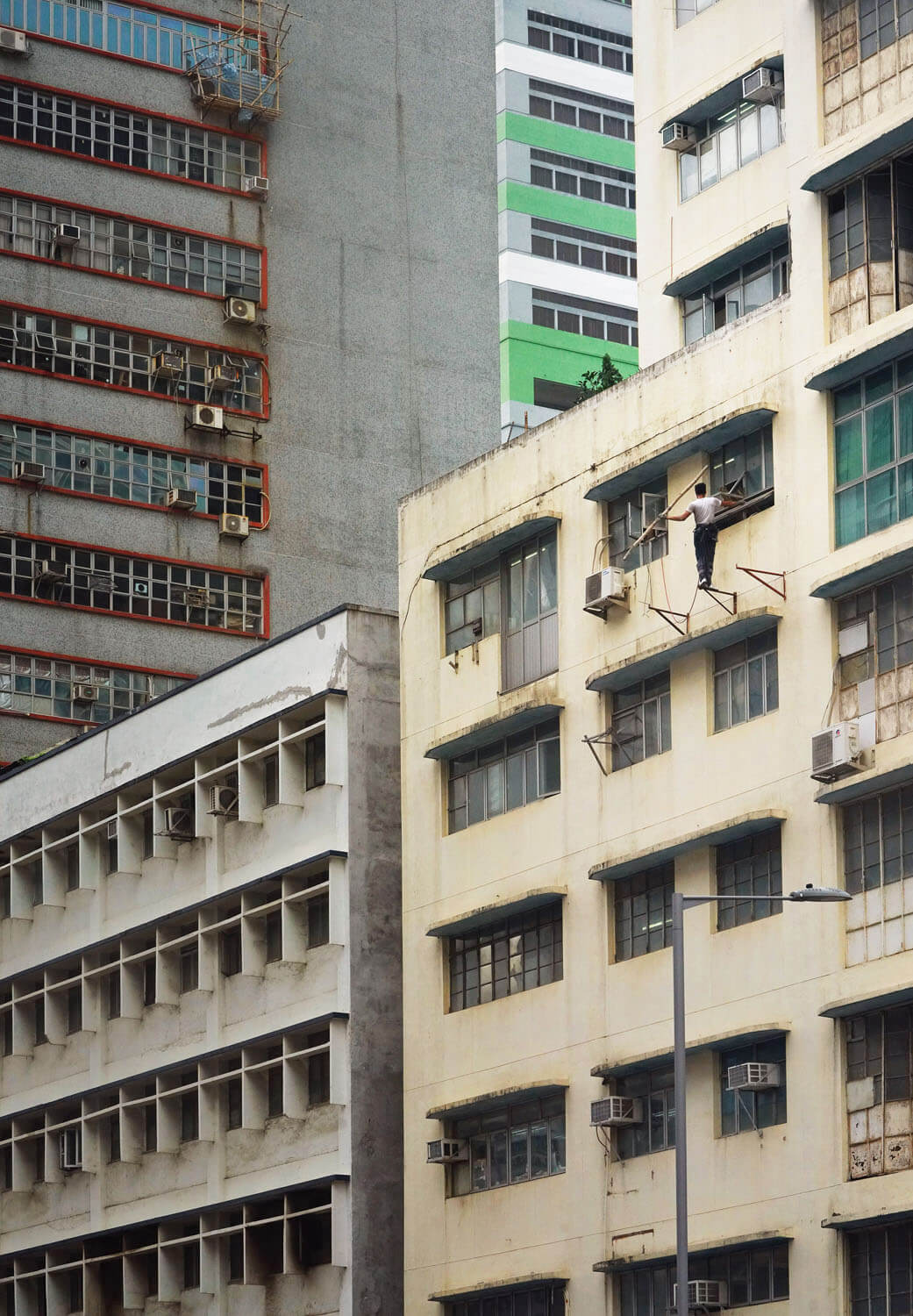
I am taken back to this memory every time I see the photographs from Echoing Above, where photographer Romain Jacquet-Lagrèze has captured Hong Kong in a new light— one that rises above the streets and captures life atop fantastically towering buildings that define the dense cityscape. The photobook features birds flying across the concrete-conquering trees, while building maintenance workers defy gravity as they navigate large scaffolding networks. As life climbs through the concrete jungle, with birds, trees and men all attempting to reach the sky, a disorienting vertical ecosystem is captured in flux, forming a cycle of urban renewal unique to the city.
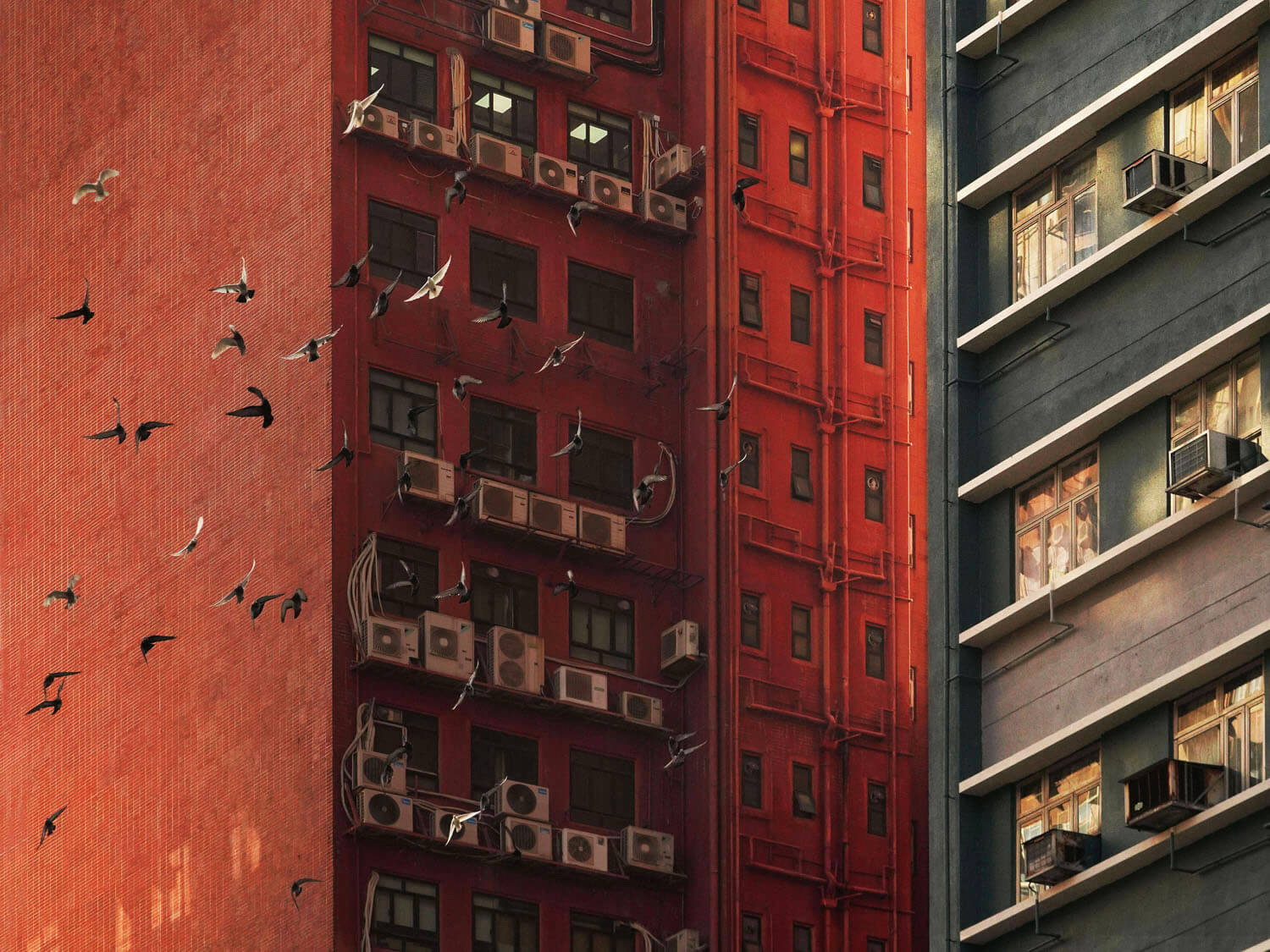


The three sections of the book—trees, men and birds—peek into the inseparable, collective nature of the inter-dependent entities of an ecosystem, evoking an “echo of life” above the streets of the city. “In Hong Kong, the trees, men and birds are somehow making a ballet of life above the streets and many people don't take notice of them. First comes the seed of the tree carried by a bird on the height of a building facade. With the humidity, the sunlight and the carbon in the air, they can grow extremely rapidly up there and soon spread their roots to the bottom of the building and provide a huge amount of figs. As they become too large, the owners of the building are hiring bamboo workers in order to build a small scaffolding that will enable contractors to remove the tree and renovate the facade. In the meantime, birds ate plenty of figs before disseminating plenty of seeds that would sprout in other buildings. And the cycle continues on and on,” Jacquet-Lagrèze tells STIR. For me, his words invited a new sense of viewing birds beyond the lens of creatures that are ‘bound’ to ‘carry’ out a function. They are, instead, an indispensable part of this vertical ecosystem, which grows and adapts with the way we design, govern and constantly change our cityscapes.
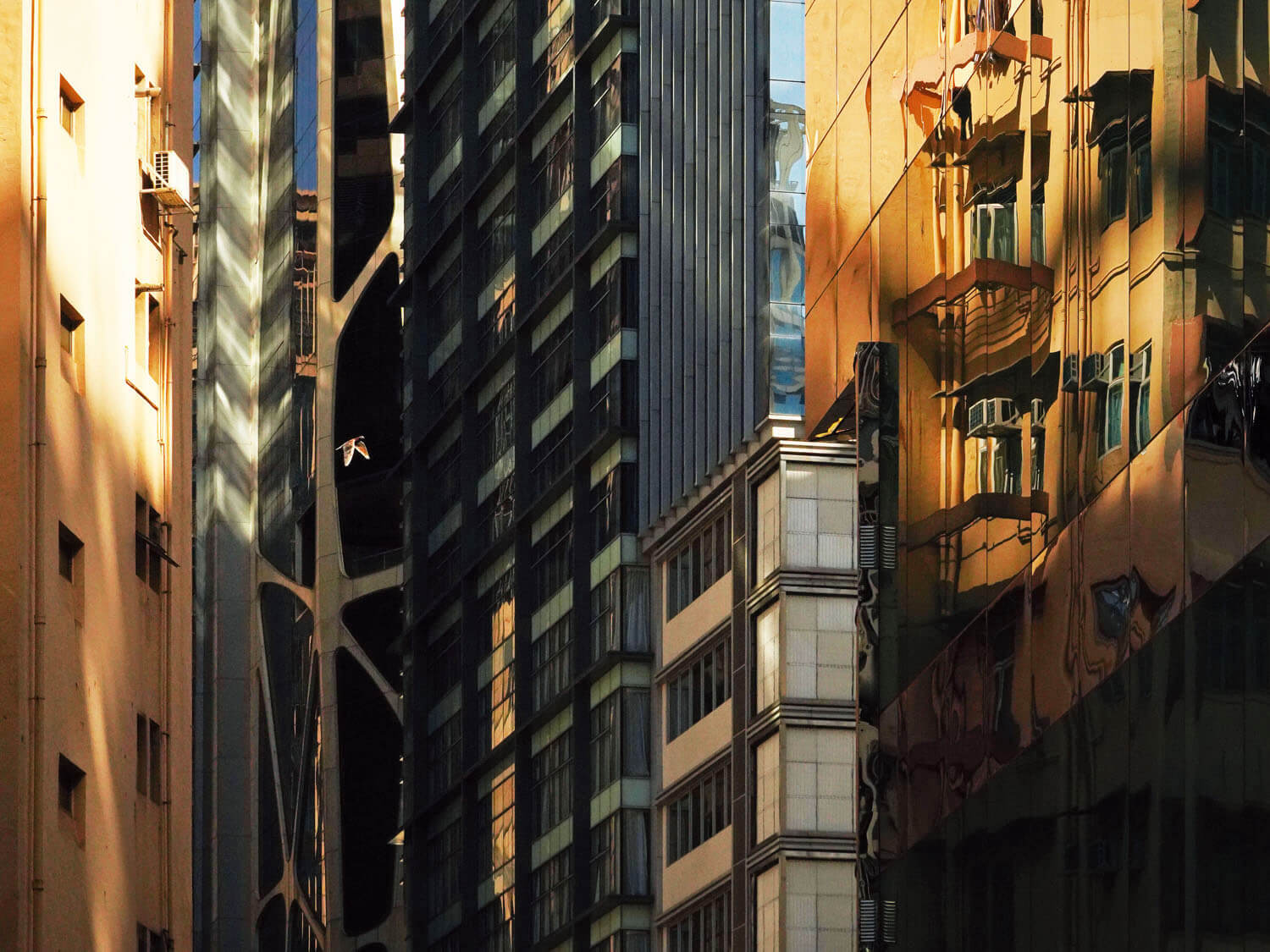

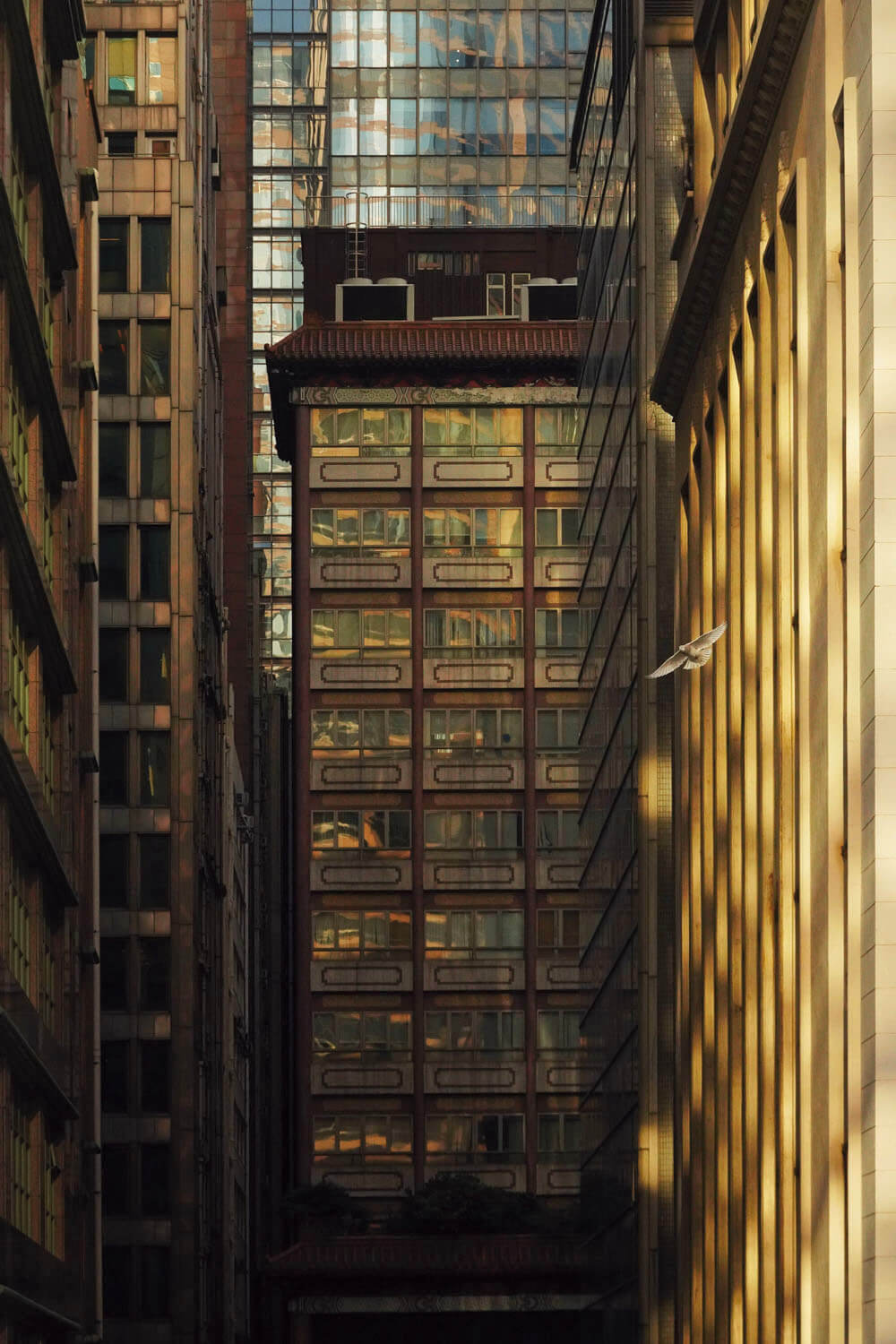
For the photographer, it was difficult to locate and capture these moments while solely relying on sight. His compass were the sounds of bamboo knocking above the streets and the sharp and loud noise of drills, reverberating through the facades of the buildings. Birds like cockatoos were easy to spot, as their cries are loud, but photographing them was another story, as their flight is extremely fast and unpredictable. The distinct soundscapes and sights captured in the photobook represent the ‘spirit’ and, by extension, the identity of Hong Kong through a multi-sensorial understanding of its urban landscape.
The introduction of the book by Man Yee Li, who has lived in the city for six decades, talks about the 'Banyan Tree Spirit' of Hong Kong residents. Elaborating on this, Jacquet-Lagrèze continues, “An important aspect of Hong Kong is the ’can-do’ attitude of the people here. People adapt to all circumstances they are facing and do their best with what they have. It is sometimes referred to as the Lion Rock Spirit as it represents the grassroots inhabitants of Hong Kong living below the Lion Rock in Kowloon.” In the context of the city's shared history and collective cultural memory, Jacquet-Lagrèze strongly believes that the city instead has an indomitable Banyan Tree Spirit. There are several instances in the book where one finds banyan trees hanging from the buildings, symbolising the persistence and perseverance of the people of Hong Kong amidst the history of frequent socio-political and often environmental unrest.

Underlining the ability of an image to evoke strong emotions and memories, the architectural photographer, through the medium of the book, also delves into the housing struggles of the city. “Typically in the past, due to the limited amount of available constructible land, there has been a huge shortage of housing and, 20 years ago, it was very common to find entire villages of rooftop houses built on top of existing old buildings as people were trying to get a home wherever they could. Now it has become much less common with the government building more and more public housing, but you can still find a few in the centre of the oldest districts. And it is fascinating to see how such DIY homes can withstand the very powerful typhoons that pass through Hong Kong every year.” Somehow, the image of a Banyan tree reminded him of these rooftop houses that shouldn’t exist, yet do—growing and sprawling until they threaten the very buildings that support them.

While some people see the beauty of these unwanted elements as ‘anomalies’, others view it as a kind of noise—both auditory and visual—and disregard it. I once had a neighbour complain about how a tree in my yard sheds its leaves in their yard and makes it ‘dirty’—a perception, perhaps, fueled by a sense of control over what is supposed to be ‘rightfully’ theirs. It is about how these spontaneous signs of life—the falling leaves, the tree-hopping monkeys, and yes, even the pooping birds—impede upon their structured, predictable urban settlements, with little to no space for nature. Maybe people like my neighbour are unknown to these echoes of life, drowned under the noise of horns, sirens and bellows, where unnoticed elements of a hybrid ecosystem dwell; in this case, above, the everyday noise soaking our streets.
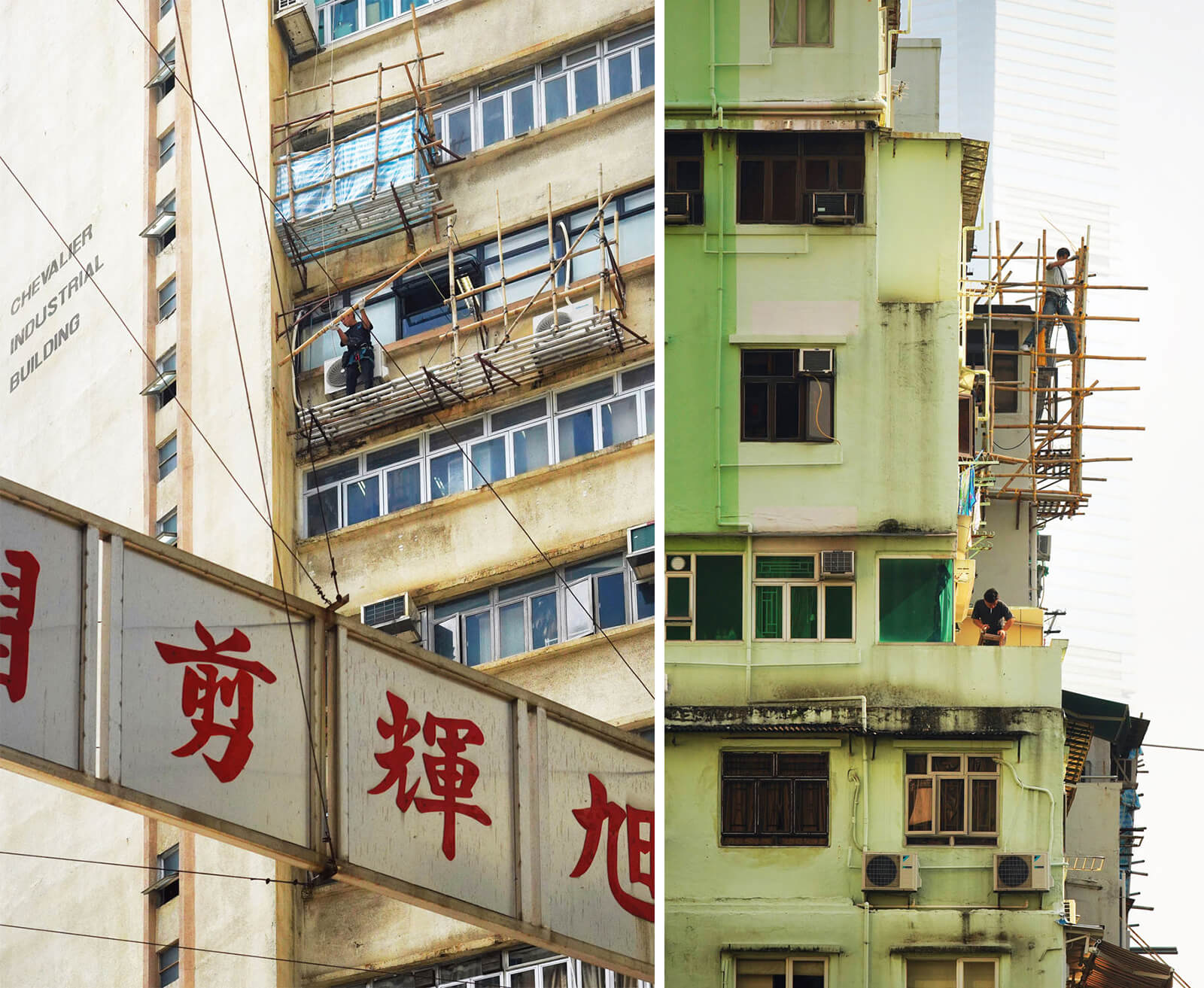
In Echoing Above, we see Hong Kong through refreshing urban compositions and reflections as well as through Jacquet-Lagrèze’s visualisation of his own experiences of living in the city. The book unravels a new dimension of Hong Kong's urban character—one that establishes it as an ever-changing terrain of everything man-made yet reclaimed by nature with the smallest, quietest gestures, such as a plant sprouting from a crack.

by Pranjal Maheshwari Oct 19, 2026
The Mumbai-based architects integrate courtyards, mesh screens and north light trusses to create a dining space that doubles up as a community hub at SR University, Warangal.
by Mrinmayee Bhoot Oct 17, 2026
The Rotterdam-based institute centres the Indian Ocean as a network for exploring material histories and transnational links shaping coastal cultures, positing them as future models.
by Pranjal Maheshwari Oct 16, 2026
At the 2026 Stirling Prize ceremony, Mary Duggan with RUFF Architects, MAKER Architecten and Nakshabid Architects were felicitated for proffering quality housing and social equity.
by Mrinmayee Bhoot Oct 12, 2026
The new Centre for Contemporary Arts, fostering public engagement with art in Uzbekistan, is housed in a tram depot refurbished by the French studio, emulating local craftsmanship.

make your fridays matter with a well-read weekend
Enter your details to sign in
Don’t have an account?
Sign upOr you can sign in with
a single account for all
STIR platforms
All your bookmarks will be available across all your devices.
Stay STIRred
Already have an account?
Sign inOr you can sign up with
Verification link sent to check your inbox or spam folder to complete sign up process
Tap on things that interests you.
Select the Conversation Category you would like to watch
Please enter your details and click submit.
Enter the 6-digit code sent at


Echoing Above captures Hong Kong’s vertical ecosystem in flux
by Bansari Paghdar | Published on : Nov 14, 2025


 Sign in with Google
 Sign in with email
What do you think?