|
We tend to view the world through what appears finished: the completed building, the polished narrative, the identity we present with care. But so much of life unfolds in what lingers after the main story has passed. Leftovers carry the traces that resist closure. They reveal the materials we couldn't erase, the histories we didn't fully understand, the gestures we didn't intent to preserve. They show that nothing truly ends; it simply leaves evidence.

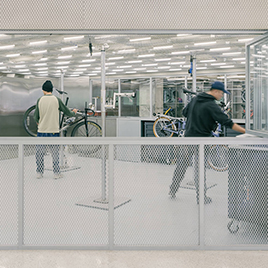
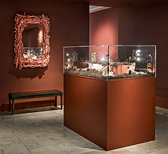
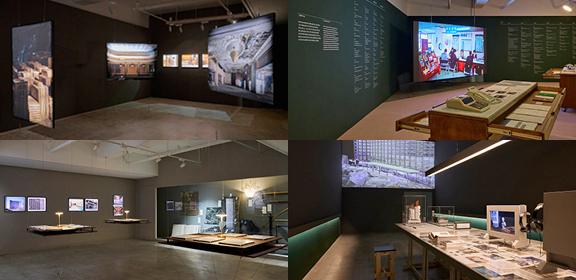
In Beijing, AITASHOP reveals how Yatofu Creatives allow the remnants of a chemical plant to define the space. The towering tanks and weathered concrete are not relics to tidy away; they stand as reminders of the site's former life and become the structure through which a new communal identity can form. In Seoul, we opine on the show 'The Autobiography of Hilton Seoul' which approaches a building in its final moments as a living archive. What is left of the hotel forms a portrait of a modernist landmark facing disappearance. Here, leftovers become the only way to understand the hotel's role in the city's shifting political and emotional landscape. We also turn to the digital world, where
|
|
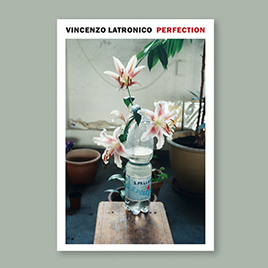
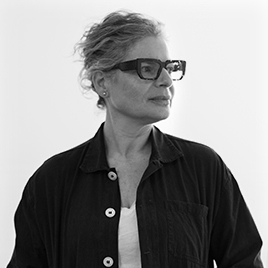
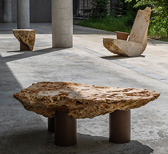
residues of another kind accumulate. Every aesthetic preference, scroll and micro-performance becomes data that outlives intention, to form the many algorithmic versions of ourselves that keep moving long after we do. At the centre of this is Vincenzo Latronico's novel 'Perfection', which captures a life shaped by curated images and aesthetic signalling; an online culture where fragments are endlessly circulated until they begin to feel like the whole story. And in our interview with Dana Harel of studio White Dirt, fragments take on intimacy and gravity. Her sculptural forms feel like parts of something once whole, like bodies, structures or memories softened by time, reminding us that meaning often emerges from what is allowed to remain incomplete.
Across these, leftovers become an unexpected source of insight. They are not the waste of a process, but the material that reveals what endures. Perhaps the real question is not what we leave behind, but what our leftovers say about who we are becoming.

|