Architecture11 mins. read
Architectural Fantasies: An alt-stream of idiosyncratic American architecture
by Jincy IypeAug 27, 2026


by Mrinmayee BhootPublished on : Nov 28, 2025
Today everything exists to end in a photograph.
- On Photography (1977), Susan Sontag
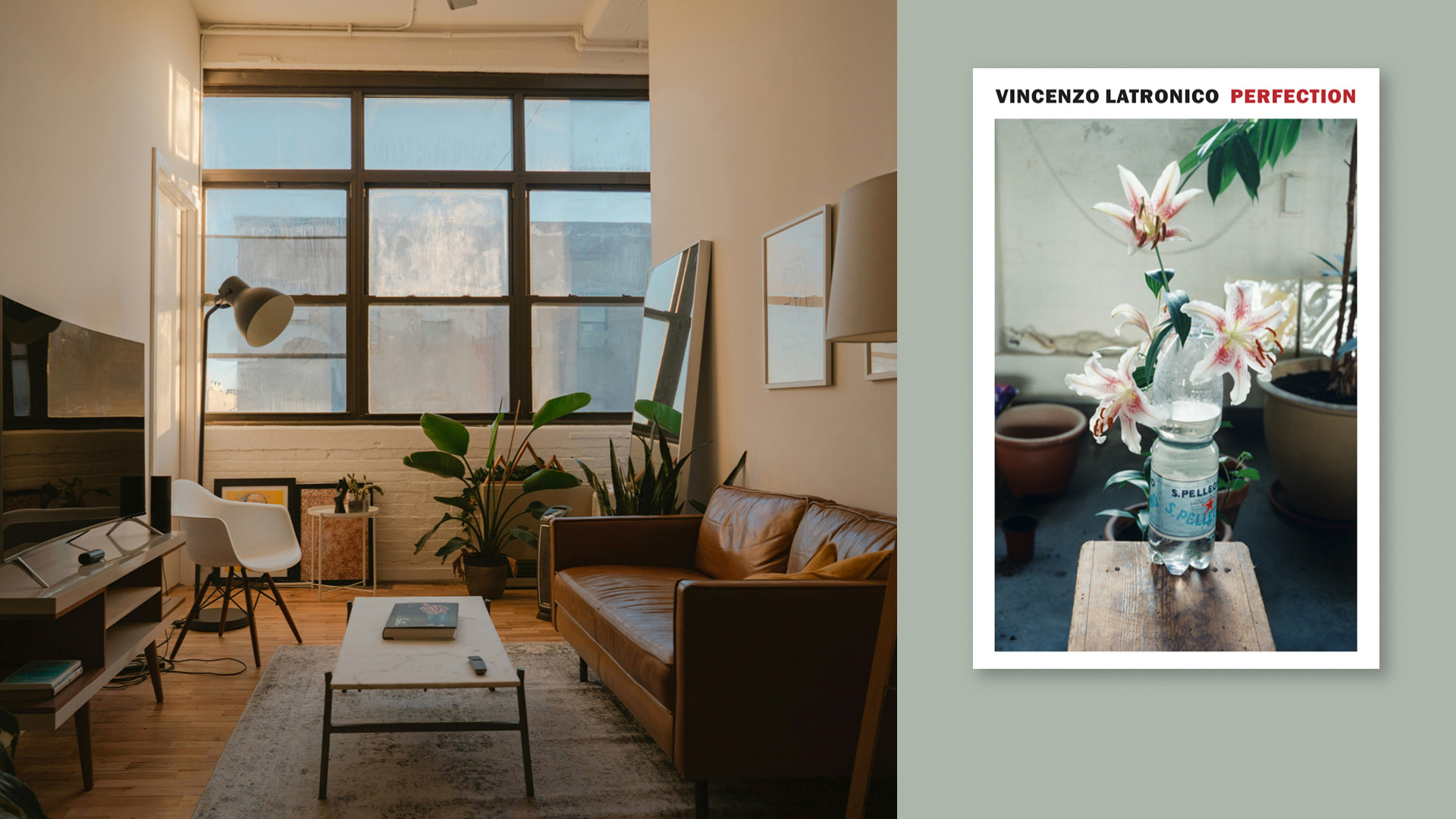
A mint green typewriter is the first thing that catches the eye in the slight frame, bought invariably to cater to a writerly image, encouraged by innumerable interior design Pinterest boards. It sits on a window ledge next to a vase of freshly cut flowers and a stack of perfectly arranged books, currently gathering dust. At the edges, one can spot another haphazard stack of books, a certain air of nonchalance that still is meant to appeal. On the floor, another vase stands with more flowers, and a ukulele poised against it. Thumb on screen, you notice every detail; even that silk scarf tastefully draped off one end on a clothes rack (also borrowed from Pinterest), and then it’s gone. Replaced by a dimly lit room (a bar?), a single candle and wine glasses. Perfectly aged china, like you’ve always wanted. A performance to be drawn into, a sense of self constructed through the eyes of another.
The internet encourages, or to be more precise, enforces this performance. It's so intrinsic that this common language has adopted the parlance of playacting (the internet, quite literally, a platform)—the symptom of a society that worships at the altar of spectacle. In this ‘feverish, electric, unlivable hell’, the polished, evidently cultured and certainly cosmopolitan personality conforms to certain mannerisms to keep the illusion of ‘reality’ alive. If you've seen such a creature in the wild recently, you might have seen the book of the summer in their hands, a title unequivocally (or as unequivocal as is possible in our shared digital existence) conferred on Perfection (2022) by Italian writer Vincenzo Latronico. The premise of Latronico's novel is simple, and has hence engendered an almost cult-like affinity with those who identify themselves as ‘creatives’. The settings (art galleries, chic restaurants, a tiny natural light-filled apartment), the characters, the things feel overtly familiar. If not as parallels to your own life (living in another country, or city, working a creative vocation, like a writer or designer or artist or curator), then as someone you know and/or stalk on Instagram. Within this life "tantalisingly lived out on social media", are the objects and embellishments that serve as a projection of accomplishment and the immaculate taste that may or may not be a direct result of that.

What first drew my attention to the novel (after being coerced into reading it by my editor) was Latronico's use of the digital photograph as a narrative object. In the first few pages, he lures readers in with the promise of a Bohemian existence, the impression of a Pinterest-y artsiness we all envy, by describing the rented apartment of the main characters, Anna and Tom, through photographs posted on Airbnb. It's a scenography that is meticulously crafted for his readers. What Latronico describes exudes an almost palpable sense of deliberate abundance, epitomised by the potted plants that seem to be everywhere, the vinyl records tastefully arranged on a sleek, low coffee table, the vintage graphic posters that allude to the couple's niche interests, robust furniture either picked out from the vintage market or minimalist add-ons from IKEA. To complete the lived-in feel of it all, we might throw in back issues of the New Yorker, yellowing paperbacks, artisanal pottery and maybe even a moka pot on the stove. The life Anna and Tom supposedly lead in Berlin is perfect. At least when we ‘look’ at it. And it's precisely because Latronico’s exhaustive report of Anna and Tom’s residence reads almost like a feature in a lifestyle, design or architecture magazine (this one too is culpable). The elements that make up this story are all the same. You see the same cultivated nostalgia, the same manufactured desire adhering to the same taste for the Italian brands of furniture and handcrafted Japanese earthenware, and hence the same ‘aesthetic’.

In Ways of Seeing (1972), John Berger's examination of the modern form of photography, he details the tradition of depicting wealth through objects and, hence, depicting class through oil painting. He traces the evolution of this tradition to the present, and its mirroring in the proliferation of the publicity image, one produced specifically to elicit the desire for a new life. The inescapability of the trick mirror that is the internet works in much the same way. Image after image, carousel after carousel, all specifically curated to entice you: the unwittingly willing viewer. American writer Susan Sontag, in her critique of a society increasingly and excessively reliant on mere representation, notes that beauty becomes abstracted to “another way of seeing”. She writes, “Reality as such is redefined—as an item for exhibition, as a record for scrutiny, as a target for surveillance. The photographic exploration and duplication of the world fragments continuities and feeds the pieces into an interminable dossier.”

The fact that the digital age we find ourselves mired in is a tool for surveillance (by the state but more so ourselves) is widely discussed, and most succinctly elucidated in The Age of Surveillance Capitalism (2019) by Shoshana Zuboff. As she notes, the more time we spend in the digital world, the more we scroll, click, like, share (and subscribe), the more data tech companies can garner about our behaviour patterns. This data is directly translatable into controlling what we buy, what we read, where we go, who we are. Building on this premise, Kyle Chayka’s Filterworld (2024) dwells in detail on how closely our choices are determined by nebulous data—the books we read picked by BookTok, the movies by what would be deemed acceptable on Letterboxd, the shows by Netflix and even the places we eat, shop, vacation and live by the violence of ‘Instagramability’. We’re all victims of the lowest common denominator. However, as Chayka counters, “In order to have taste, it is not enough to see and to know what is beautiful in a given work…Taste requires experiencing the creation in its entirety and evaluating one’s own authentic emotional response to it, parsing its effect.” What, then, determines taste?

Building on French theorist Pierre Bourdieu’s treatise on distinction, Nathalie Olah, in her book Bad Taste (2023), examines how taste (the good is implied) determines class, underscoring social inequalities. “To have taste was to have class was to have understood the social codes enforced by the protectors of money and opportunity,” she notes. Class becomes something that can be bought and performed with the right embellishments. Why else would three out of five men like the photo of the stack of books on my profile on a dating app? Why else would I put it there? Culture, or the simulation of it (through objects like books), is aspirational. Minimalist design, midcentury furniture, handcrafted ceramics are all signifiers of a different kind of luxury—one that differs from overt material opulence. In the chapter on Homes, Olah traces the situation of ‘good taste’ in discourse on minimalism, craftsmanship or sparse, mid-century design through the popularity of magazines such as Kinfolk. To have taste is to possess that very crucial asset, cultural capital. It’s all we have in a world where upward mobility by economic means is akin to the myth of Tantalus. And in a world where image is both object and currency, appearance holds weight above all. Discourse on sustainability, for instance, is determined by aesthetic codes that have almost no bearing on reality; something that looks earthy or has a green roof is labelled sustainable. A similar phenomenon is visible in the emulation of vernacular culture, through traditional motifs and the approximation of vernacular forms, particularly in urban development projects in ‘developing’ countries.

The move away from a society of material markers to one that is made sensible by data or appearances could also be attributed to the rise of the knowledge economy. The limited resources of the world and the crises we face push us increasingly to seek spaces where belonging, self-actualisation and quality are the goal. Creative labour and ideation determine the economy. It is, of course, in this world that Anna and Tom chose their careers, turning their passions into jobs, so they would not work a day in their lives (right?). The privilege of being able to do what you love means that you are not bound or bothered by schedules or deadlines. Increasingly, work-from-home culture unmoors you from the stagnation of the workplace. The personal becomes the professional, or as Latronico depicts, describing with eerie clarity the hours we all spend endlessly scrolling on Instagram: “Between news stories and banter, project pitches and catchy pop hooks…They would drift from one thing to the other, because one thing was the other.”

The world determined by ‘authentic’ experience, by our ability to exercise our seeming individual freedoms, is also the one most marked by burnout, by a general ennui about political activism, a sense of community or even true fulfilment. This is by design, as Byung-Chul Han shows in his acute critique, The Burnout Society (2010). Han argues that our misattributed free choice to ‘be the best we can be’, to ‘optimise’ ourselves and achieve as much as possible, is actually constraining us to the logic of capitalistic production. The transition to a technological achievement-society, where there is an ever greater influx of stimuli and information, is “bringing human society deeper and deeper into the wilderness”, Han writes. “Concern for the good life… is yielding more and more to the simple concern for survival.” Such an attitude, where failure does not and cannot exist, leads ultimately to burnout.
Han also points out that this hyperpositivity society does not only operate because we willed it so, but by the slow erosion of ritual and, by extension, meaning in our neoliberal hellscape. As he writes in The Disappearance of Rituals (2019), contemporary injunctions to 'be authentic' and 'true to oneself' represent not liberation but a form of captivity. This performative individualism, far from fostering genuine self-expression, incorporates “the whole person into the production process”, a world transformed into a market where individuals endlessly and narcissistically exhibit themselves. To Han, rituals are essential markers of transitions in human experiences, without which we risk remaining in a state of perpetual infantilisation. The internet negates time, in a timeline that endlessly refreshes, perception becomes 'fragmented and scattered'. From a 'community without communication' (enabled by ritual), we devolve into 'communication without community'.

Latronico's keen magnification of the lives of those who grew up with the internet, for whom it was a place, first and foremost, to express themselves and bond with like communities, to become a you, then begins to sound like an unlikely tale of horror. Because the so-called perfect life can only exist as part of an image world, an unchanging slice in time. No matter how I imagine my perfect life (or my unreal estate to borrow Deborah Levy’s term), the 'having it' is not the point. “It was not [the idea of] the house but desire itself that makes me feel more alive.” And, admit it or not, there is something satisfying in posting the image of that iconic Klein blue cover, set so picturesquely against the deep mahogany of the table at your local, artisanal coffee shop. Once you’re done with your coffee, the image(s) too will languish on your phone.

by Pranjal Maheshwari Oct 12, 2026
The exhibition reimagines the 20th-century Scottsville residence of the American sculptor and his partner, ceramicist Nancy Jurs, curated by their daughter Alison Castle.
by Mrinmayee Bhoot Oct 08, 2026
The game designer discusses their work and its manipulation of scale, scientific data and non-human perspectives to create speculative futures in conversation with STIR.
by Chahna Tank Oct 08, 2026
Javier Guzman Cervantes and Ulises Morin Arzola tell STIR about their ‘open code’ approach to design, working through a process of stockpiling and the idea of ‘queering’ materials.
by Pranjal Maheshwari Oct 07, 2026
Under the theme R.A.W. (Rebel Authentic Worth), one of Europe’s most awaited design festivals returns for its 26th edition to investigate solutions for a world in crisis.

make your fridays matter with a well-read weekend
Enter your details to sign in
Don’t have an account?
Sign upOr you can sign in with
a single account for all
STIR platforms
All your bookmarks will be available across all your devices.
Stay STIRred
Already have an account?
Sign inOr you can sign up with
Verification link sent to check your inbox or spam folder to complete sign up process
Tap on things that interests you.
Select the Conversation Category you would like to watch
Please enter your details and click submit.
Enter the 6-digit code sent at


Perfection resides in the curated lifestyle picked especially for you by the algorithm
by Mrinmayee Bhoot | Published on : Nov 28, 2025


 Sign in with Google
 Sign in with email
What do you think?