Art10 mins. read
Seasons symbolise more than weather in Sohrab Hura’s A Winter Summer
by Srishti OjhaJun 09, 2026




by Avani Tandon VieiraPublished on : Nov 12, 2025
In April 2022, the demolition of Kisho Kurokawa’s Nakagin Capsule Tower began in Tokyo. Located in the upscale district of Ginza, the tower was widely acknowledged as one of the finest examples of metabolism, an architectural movement that viewed buildings as dynamic, living structures. Despite Kurokawa’s vision for the modular tower’s future and the efforts of its many advocates, it fell into disrepair and, eventually, to demolition. As the units of the iconic structure were detached one by one, it became, in the words of the Society of Architectural Historians, yet another example of “the fragility of the architecture of the recent past”.
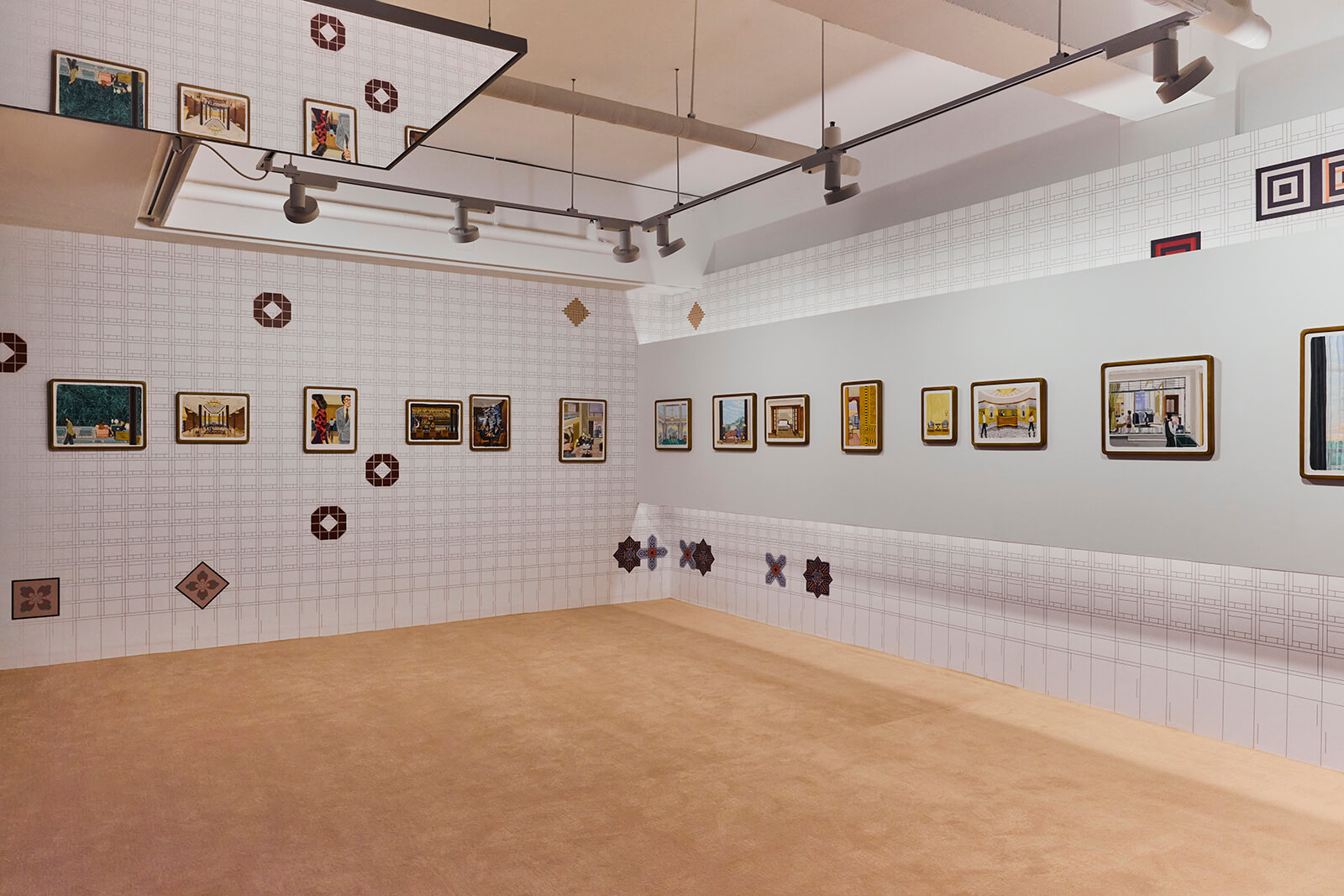
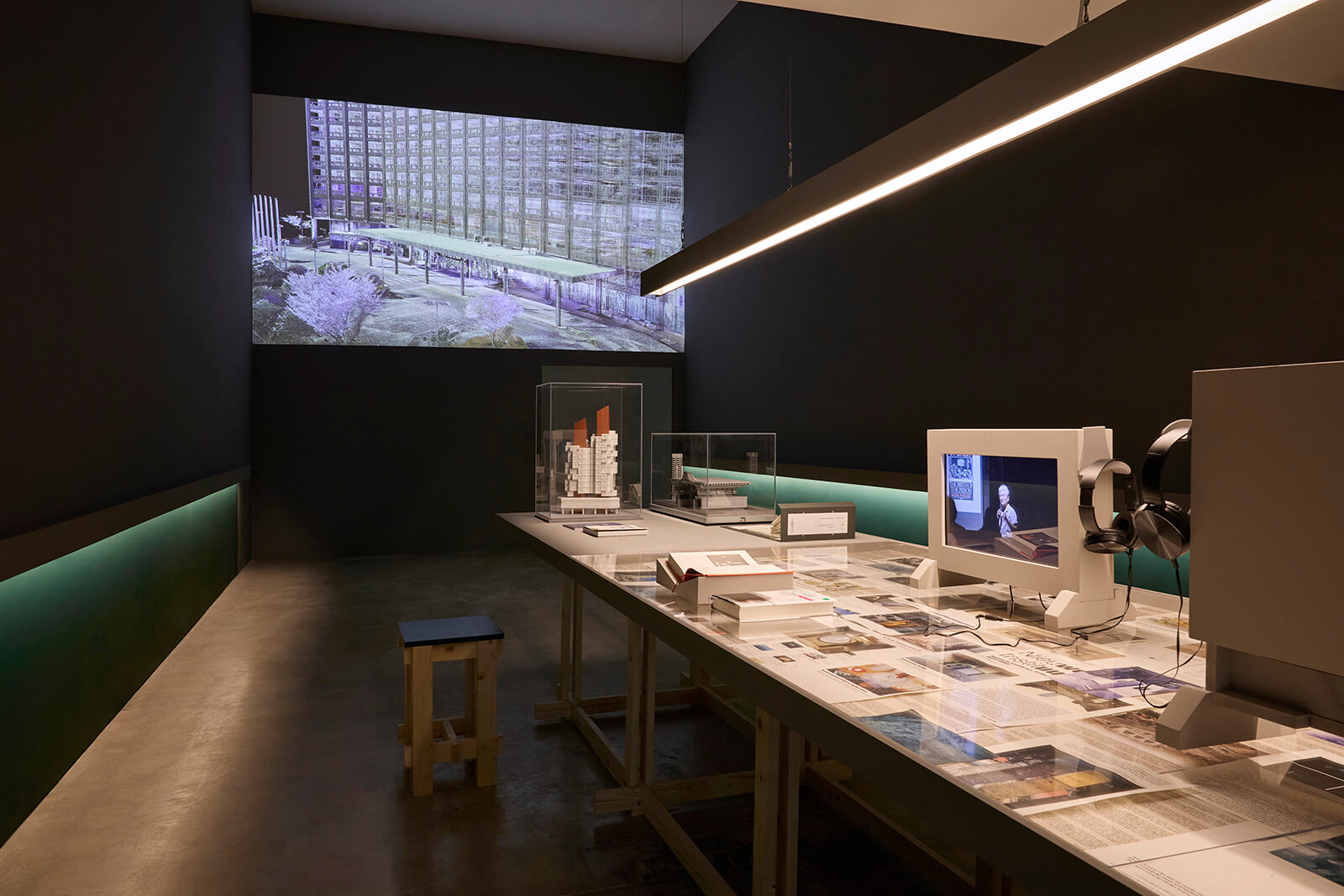
A model of Nakagin tower stands on a low table on the third and penultimate level of The Autobiography of Hilton Seoul, tying the two buildings together within a shared lineage of lost modern architecture. Currently on view at piknic in central Seoul, the exhibition coincides with the final stages of the Hilton Seoul’s demolition, serving, per its press release, as a “layered record of the building’s birth, decline and afterlife”. This record is presented in three ‘chapters’, organised across distinct levels of the piknic building: ‘Disappearing’, where the visitor is introduced to the Hilton in its final days, ‘Memories and Records’, where the focus is on archival materials from the hotel’s life, and ‘2025 and After’, which presents a research-based engagement with its potential future.
The Hilton was inaugurated in 1983, during a transitional decade in South Korean history – a time of vertical expansion, fervent internationalisation and an embrace of private capital. Both witness and embodiment of this moment, the hotel’s construction was part of a national strategy to promote tourism: it would go on to play host to large-scale events including the IMF-World Bank Annual Meetings, the ‘86 Asian Games and the ‘88 Seoul Olympics. Fittingly, the project was helmed by Kimm Jong Soung, a pioneering architect trained under Ludwig Mies van der Rohe and realised collaboratively by the Daewoo group and Hilton International, making it international in both intent and execution.
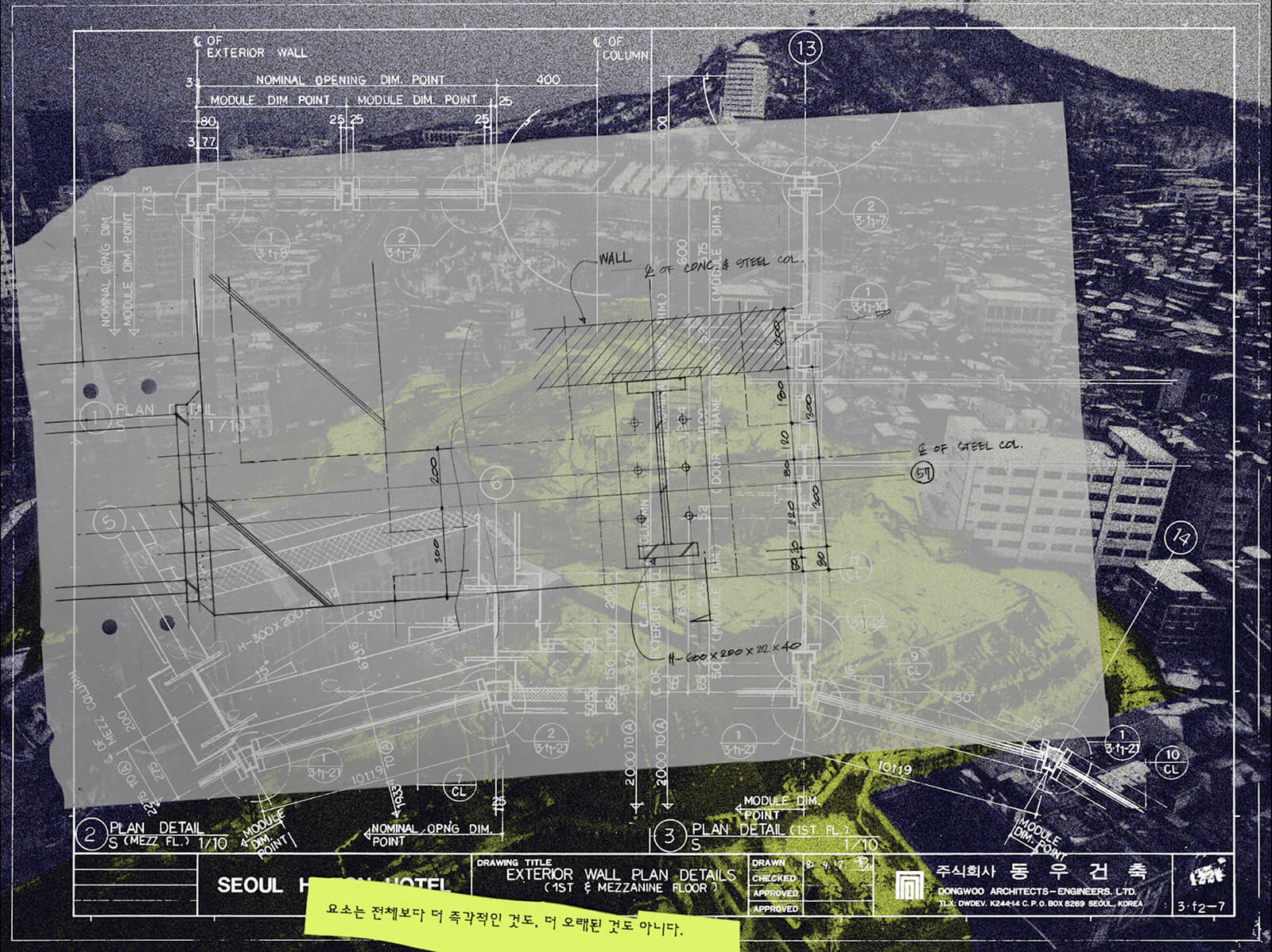
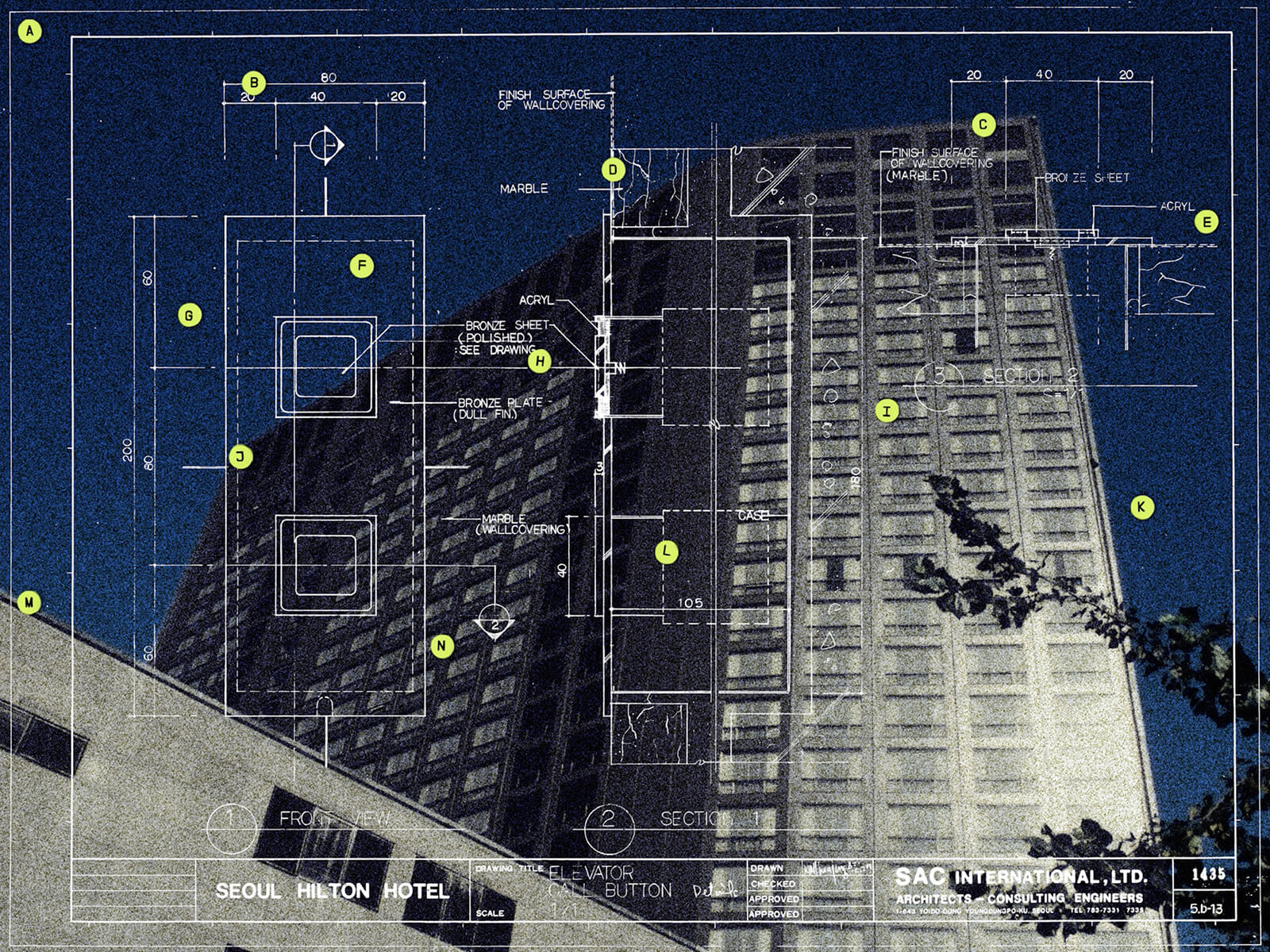
Speaking of the politics of national architecture, historian Sunil Khilnani describes mega-structures as objects of faith: “spectacular facades [...] upon which the nation watche[s] expectantly as the image of its future [is] projected”. The Autobiography of Hilton Seoul attends closely to the imbrication of the national project and the built environment, treating the hotel not as a purely architectural undertaking, but as an affectively and politically shaped enterprise. Like many large-scale developments of its time, the Hilton was built on the site of a shantytown, an area rezoned for upscale development in a globalising Seoul. In an essay in the exhibition catalogue, artist Suh Ziu acknowledges the contradictions of a public farewell for an inherently exclusive space, arguing that the Hilton’s “banquet halls, drawing rooms and other settings illustrate the hierarchical spatial arrangements of a militarist era”. Why, in other words, should the fate of a luxury hotel matter? In responding to this question, The Autobiography of Hilton Seoul is a gesture of measured remembrance. The Hilton matters, it argues, as a symbol of architectural ingenuity, as an icon of a national dream and as the site of decades of human encounters. Treating the hotel as an inflection point for Seoul’s built environment, the exhibition turns to broader ideas of architectural legacy and national identity, suggesting that iconic structures have as much to say about the fate of the contemporary city as they do about their own.
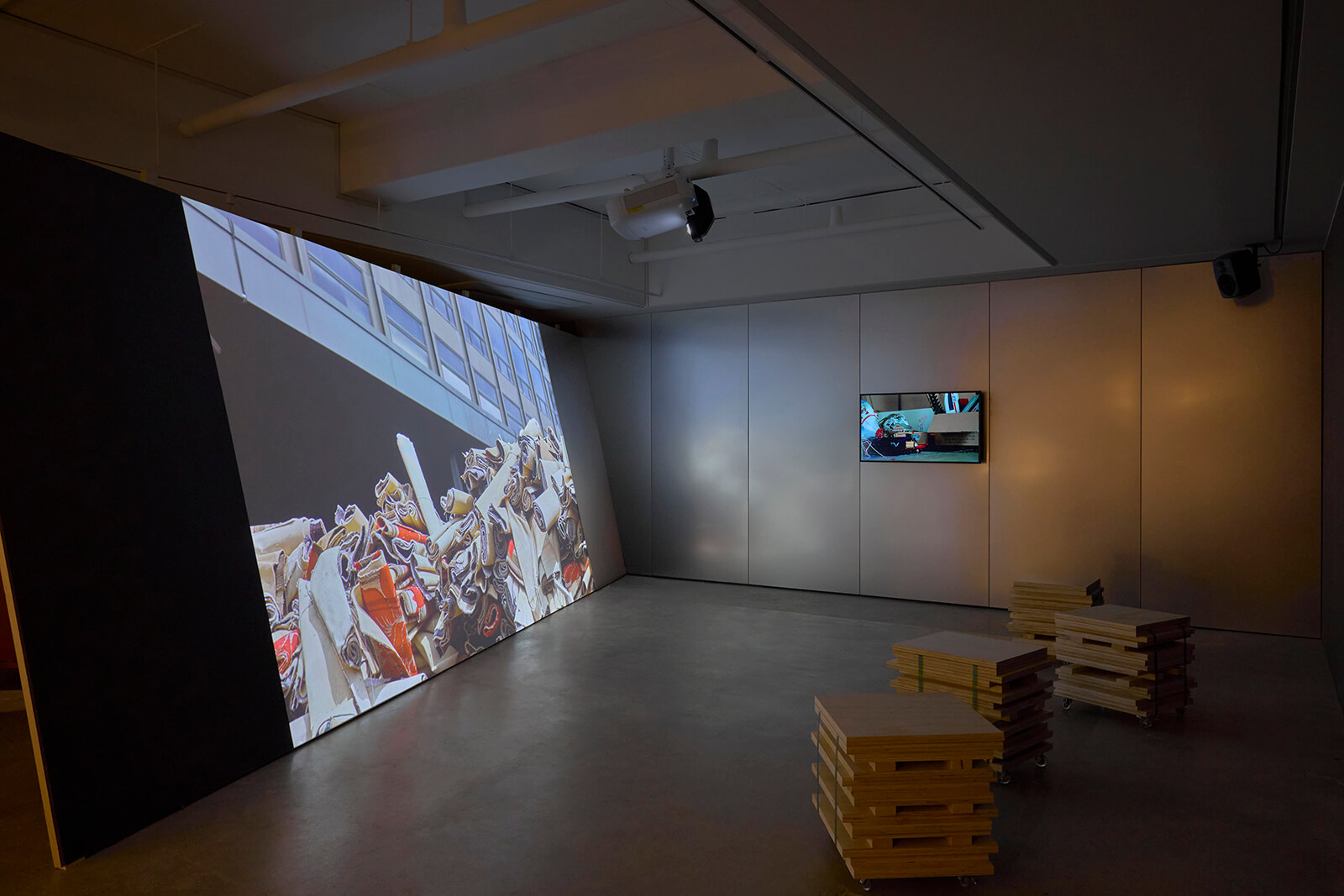
In this effort, The Autobiography of Hilton Seoul’s approach is both documentary and creative. The first section of the exhibition leads with the visual, the dark opening chamber lit by artist Jung Jihyun’s luminous, large-format photographs of the half-destroyed Hilton, the opulence of its proportions at odds with the piles of debris that fill it. In the far corner, a screen brings the viewer into the moment behind Jung’s images, displaying scenes from the Hilton’s demolition recorded by the artist group TechCapsule. Dotted throughout the exhibition space, Suh Ziu's mixed media sculptures transform reclaimed materials into experimental forms.
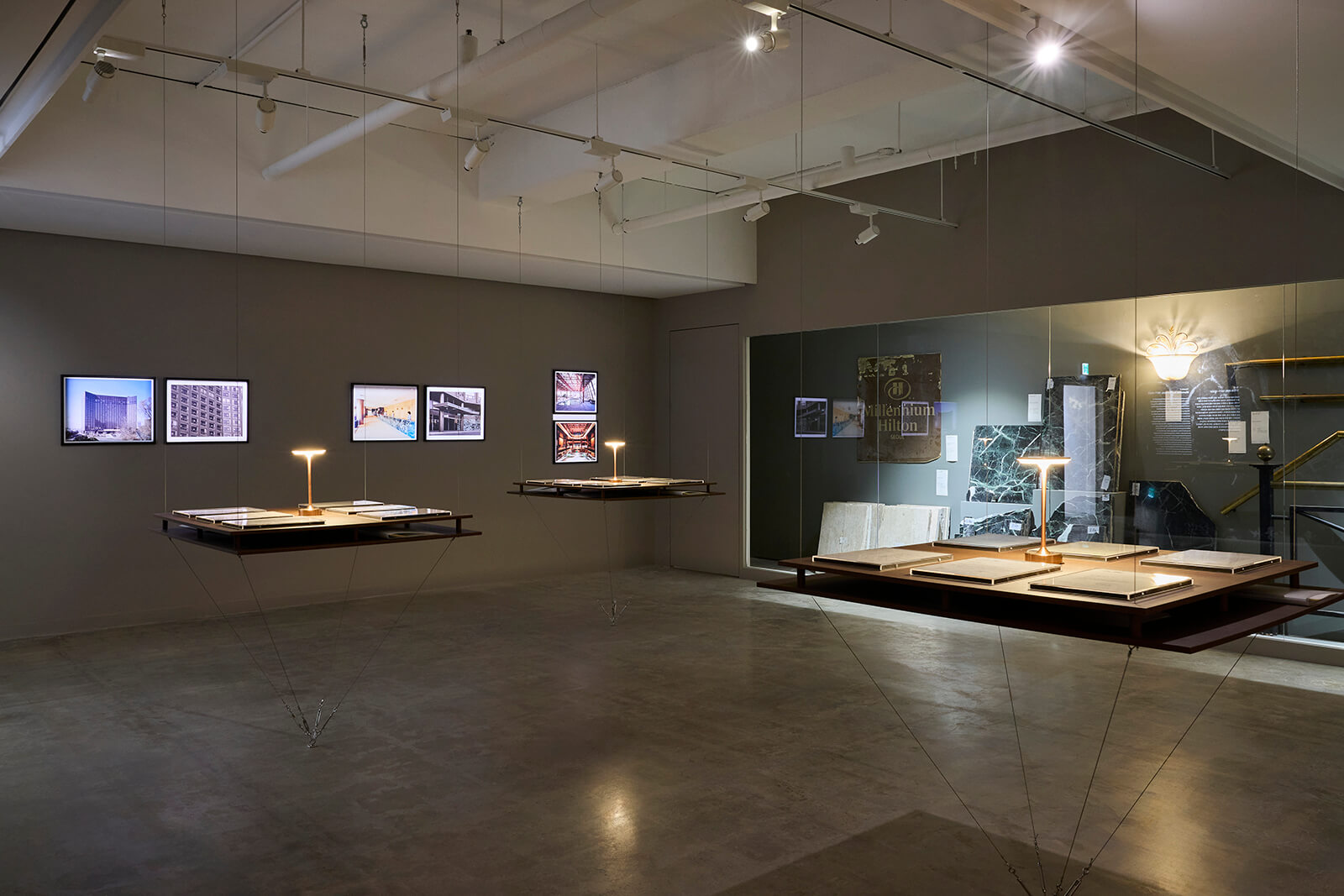
Across these creative interpretations, the material fact of the Hilton’s existence remains paramount. In a quartet of photographs by Choi Yongjoon under the shared title ‘The Elements’, the four materials that formed the foundation of Kimm’s vision are introduced: green marble, travertine, bronze and oak. A glass case that runs along the breadth of the exhibition’s second floor allows the visitor to encounter these materials directly, large slabs of stone, carefully labelled, at one end, bronze handrails mounted at the other. To see these elements of the hotel’s distinctive visual grammar is to know, instinctively, that they are out of place, removed from their function and home.
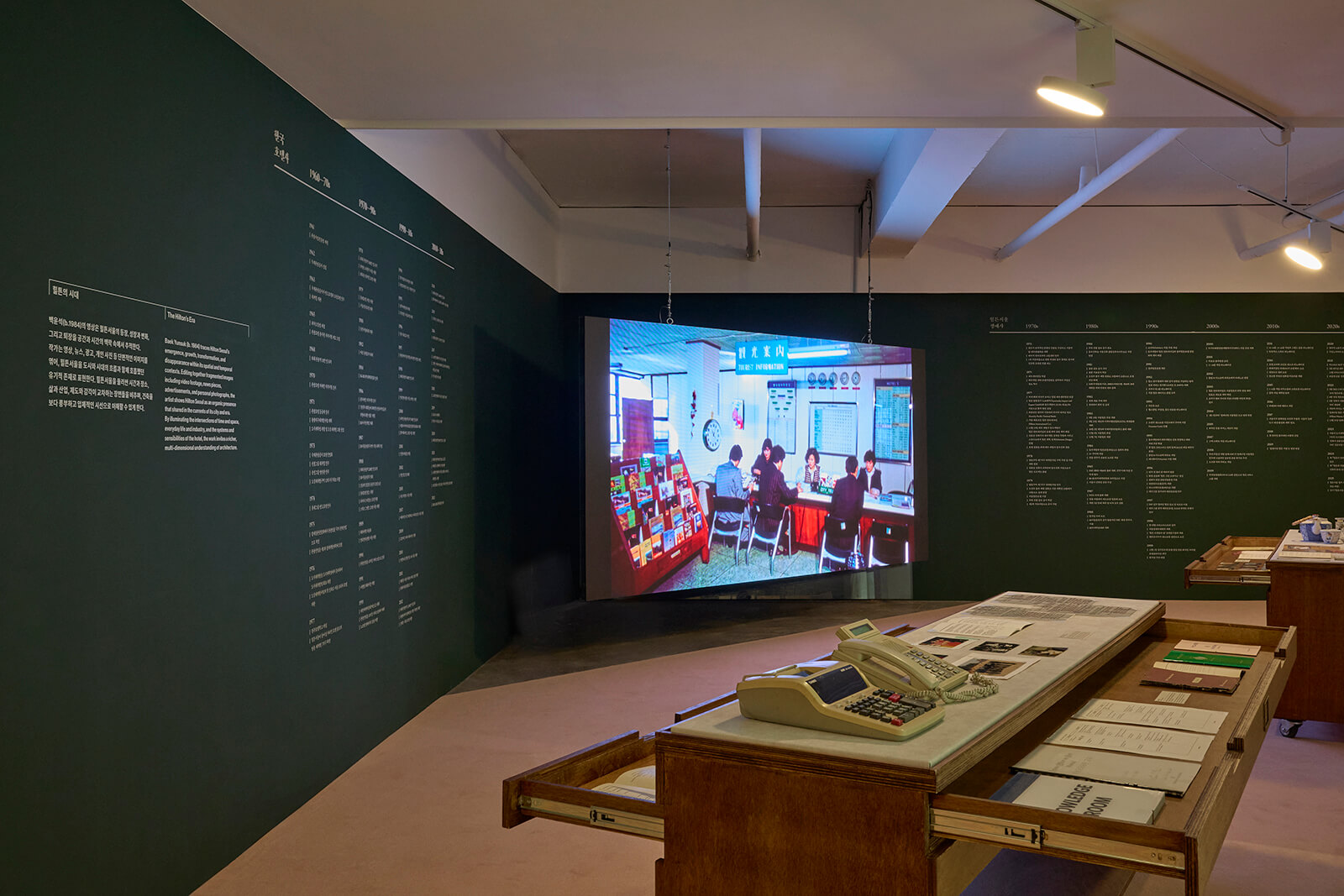
Alongside the material foundations of the hotel are the more humble, yet deeply resonant, materials of its everyday functioning: correspondence, blueprints, photographs. Platforms suspended throughout the space present typed letters between Kimm and his American counterparts. Renderings for visitors to pore over are laid out on a set of long tables. Repurposed hotel furniture presents materials from the back of the house: uniform manuals, menu cards and room keys, interspersed with photographs of employees at sports days and training programmes. Staged alongside and in conversation with these materials are further artistic commissions: Noh Songhee’s Noitilomed, a video work that layers dozens of letters, architectural drawings and photographs to create a rhythmic record of the Hilton’s construction; Baek Yunsuk’s City Portrait, an archival montage of ribbon cuttings and diplomatic missions that captures an optimistic era of internationalism.
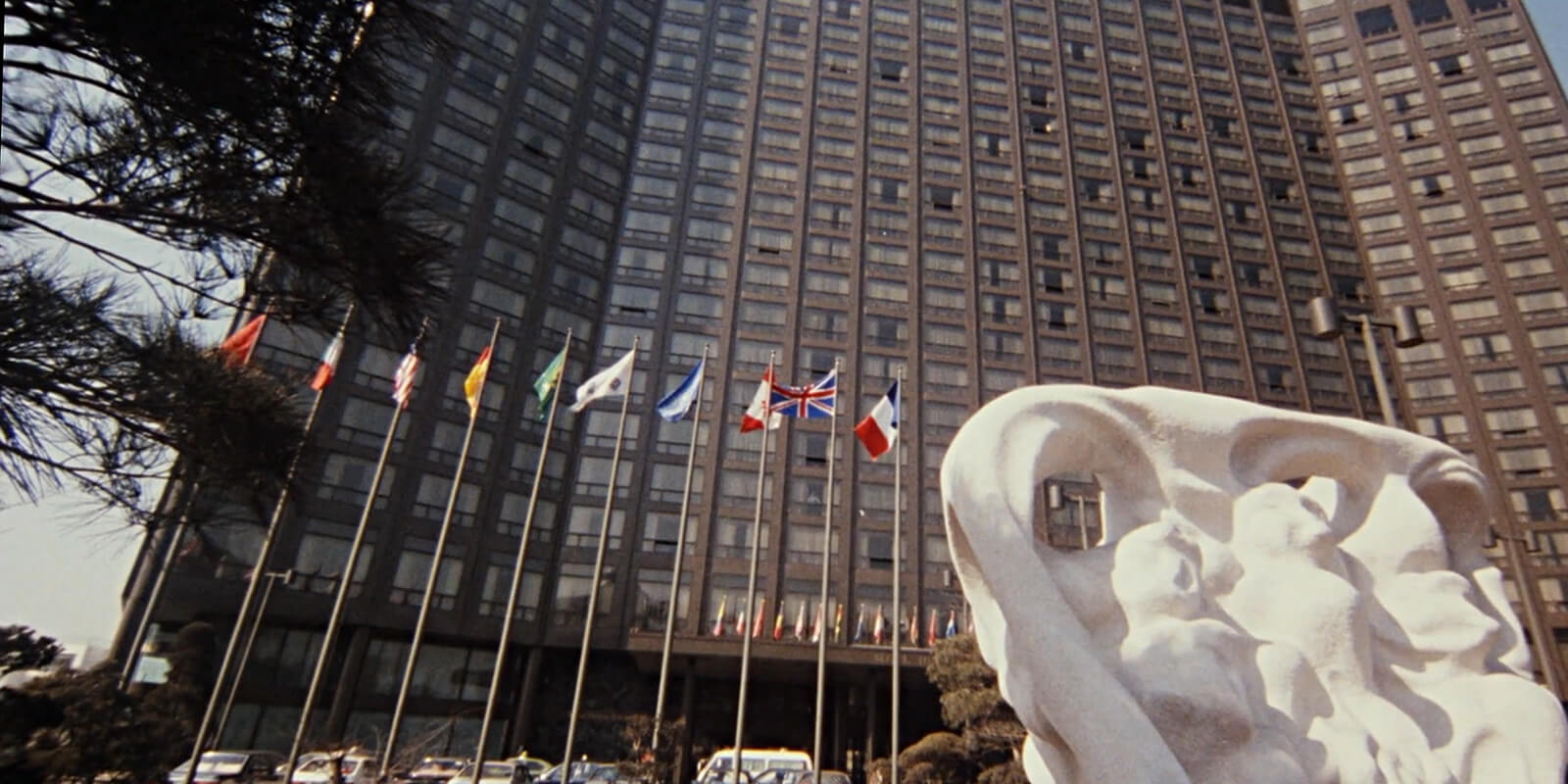
Across these material engagements, The Autobiography of Hilton Seoul enacts a dizzying journey through time. We are returned to a Seoul before the Hilton, introduced to the hotel under construction and in its prime, confronted with its demolition and asked to consider its uncertain future. Significantly, this movement is not linear, the trajectory of the structure often looping back on itself. Preceding Choi Yongjoon’s photographs, which were taken in the two months prior to and following the Hilton’s closure, is a series by Lim Chung-Eui, an architectural photographer commissioned to document the hotel’s construction. Both sets of images are presented under corresponding titles: Hilton Seoul Project 2023 and Hilton Seoul Project 1983. In one striking pairing, Lim’s photograph captures the building at a distance, its many-windowed facade catching the sunlight. Choi’s corresponding image, Archive of Closure
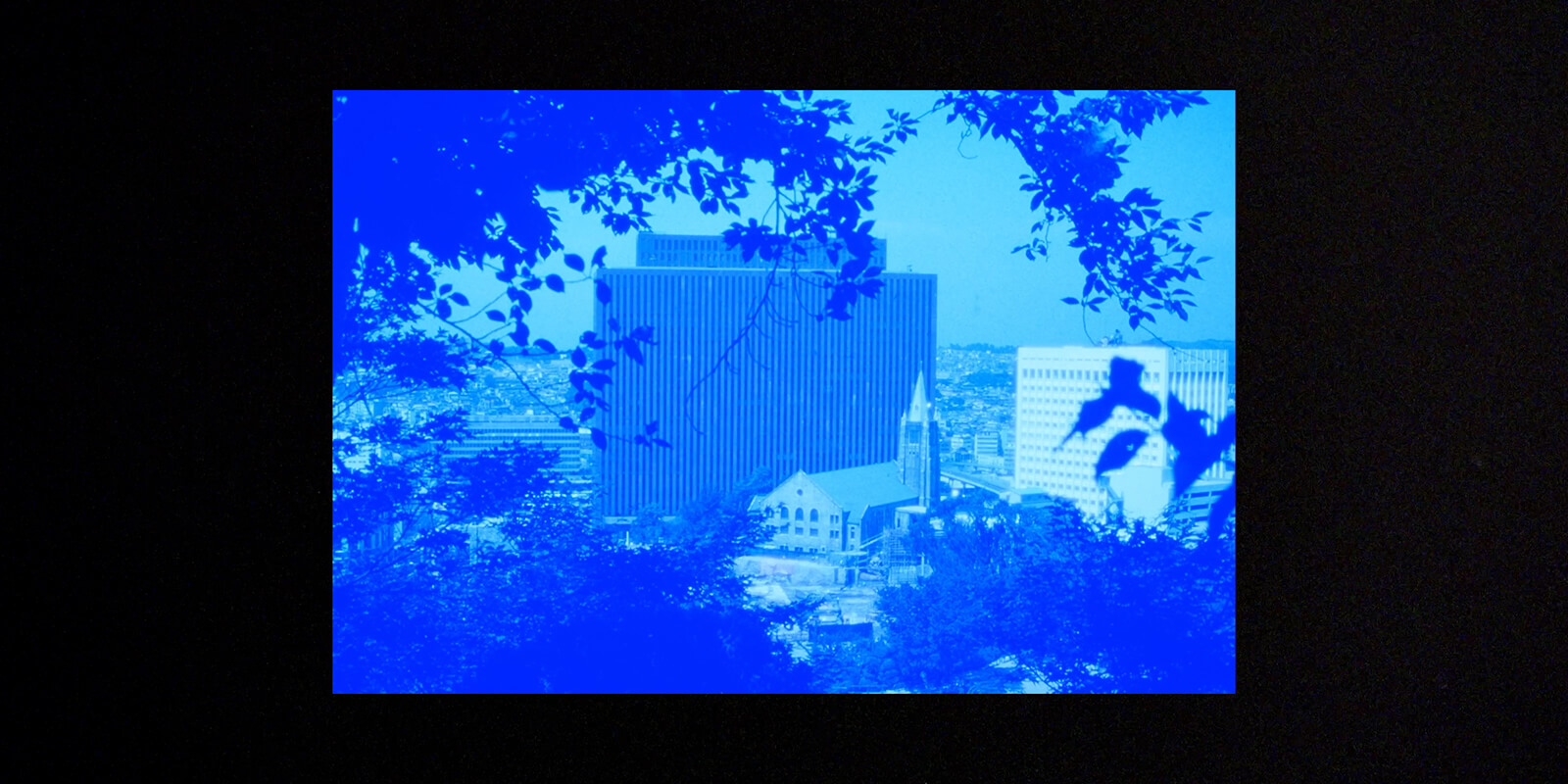
In the months leading up to the opening of The Autobiography of Hilton Seoul, a series of forums were held in collaboration with the Korean Architecture Archive. In a quote from the final pre-exhibition forum, architect Choi Yunhee argues for a broader vision of persistence, suggesting that “architecture’s life cycle is continuously reconstructed through memory, discourse and documentation rather than material permanence”. At base, this is what The Autobiography of Hilton Seoul reaches for: both an acknowledgement of physical loss and a means to look past it. As a result of the efforts of pro-preservation activists, the Hilton persists in many ways. After a 2023 decision by the Seoul Urban Planning Commission, the hotel’s grand atrium is to be preserved and incorporated into the structure that will replace it. Within documentary spaces, Kimm Jong Soung’s materials have found a home at the MMCA, facade fragments of the Hilton in the Korean Museum of Architecture and Urbanism. In the halls of the exhibition itself, TechCapsule’s 3D scans of the building preserve it in exacting digital detail. It is impossible to argue that the Hilton has not been destroyed. It is difficult to argue that it has quite disappeared.
‘The Autobiography of Hilton Seoul’ is on view at piknic, Seoul from 25 September, 2025 - 4 January, 2026.
The views and opinions expressed here are those of the author(s) and do not necessarily reflect the official position of STIR or its editors.
by Srishti Ojha Oct 21, 2026
Increasingly, artists, filmmakers and activists are turning to VR to create more personal, tangible accounts of the climate emergency and its impact on vulnerable communities.
by Mirra Lynn Oct 20, 2026
The Indian artist paints the old wadas of central Pune, capturing the traces of everyday life that cling to these structures, battered by time but unbowed.
by Anmol Ahuja Oct 15, 2026
How do heaps of souvenirs and relics with racist Aboriginal motifs and features become art? MCA Sydney’s winter showcase—the artist’s largest to date—beckons a possibility.
by Vandana Kalra Oct 14, 2026
With his latest exhibition as a point of departure, the modernist discusses his decades-long practice, the spontaneity of drawing and the social responsibility of artists.

make your fridays matter with a well-read weekend
Enter your details to sign in
Don’t have an account?
Sign upOr you can sign in with
a single account for all
STIR platforms
All your bookmarks will be available across all your devices.
Stay STIRred
Already have an account?
Sign inOr you can sign up with
Verification link sent to check your inbox or spam folder to complete sign up process
Tap on things that interests you.
Select the Conversation Category you would like to watch
Please enter your details and click submit.
Enter the 6-digit code sent at


Making and unmaking: The Autobiography of Hilton Seoul
by Avani Tandon Vieira | Published on : Nov 12, 2025


 Sign in with Google
 Sign in with email
What do you think?