|
A chimera performs its wholeness convincingly. Familiar components fused in an unfamiliar body seek not acknowledgement, for they continue to exist despite the contradictions. What appears as a whole from a distance, reveals disturbing, almost grotesque signs of its fusion up close. To see it as whole is to register that discomfort and to accept that, despite its socio-cultural and ethical implications, it remains legible as a whole as if everyone agreed to not question it.

Born out of contradictions, this week's dispatch turns to 'bodies' that are hybrids across several dimensions, holding within them uncomfortable histories, systems of knowledge and innovation. At the ArtScience Museum, 'Flesh and Bones: The Art of Anatomy' locates the human body at an uneasy intersection of art and science, where centuries of inquiry have required corpses to be pulled apart, examined and sutured, only to prevent ending up with more. Parallely, putting forth a layered anatomy of a country is the book 'Modernist Scotland', where modernist architecture inserts itself
|
|
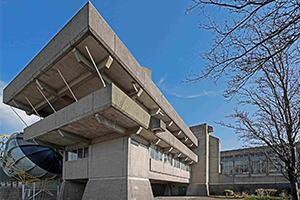
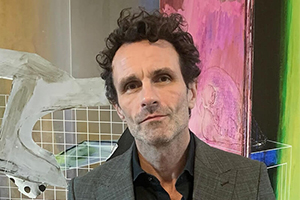
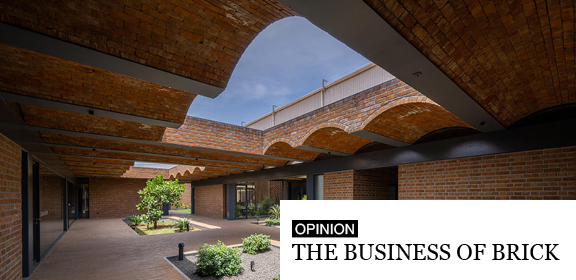
into the urban fabric to merge with the historical remnants in an attempt to draw a veil over the inflictions of war, emerging as a 'mutation,' in Jonathan Meadas's words. Brick, too, operates within this register, its identity shaped as much by ancient craft as by evolving compositional as well as construction logic. The 'Brick Award 2026' shortlist reveals brick's continued relevance in an industrial context; an intrinsic contradiction. Within the practices of artists such as UK-based Paul Hodgson that work 'in medias res,' there is no resolution, only the deconstructed accretion of errors, potentialities and temporal overlaps. These inconsistencies together form a whole body of work that questions existing logics unapologetically.
What happens when we examine the contradictions of our world? Distance falters, seams rip. What, then, is the anomaly? The chimera, or our insistence on coherence?

|