Art06 mins. read
Compelling shows and practices from Asia that captured our imagination in 2024
by Manu SharmaDec 20, 2024



by Srishti OjhaPublished on : Apr 06, 2026
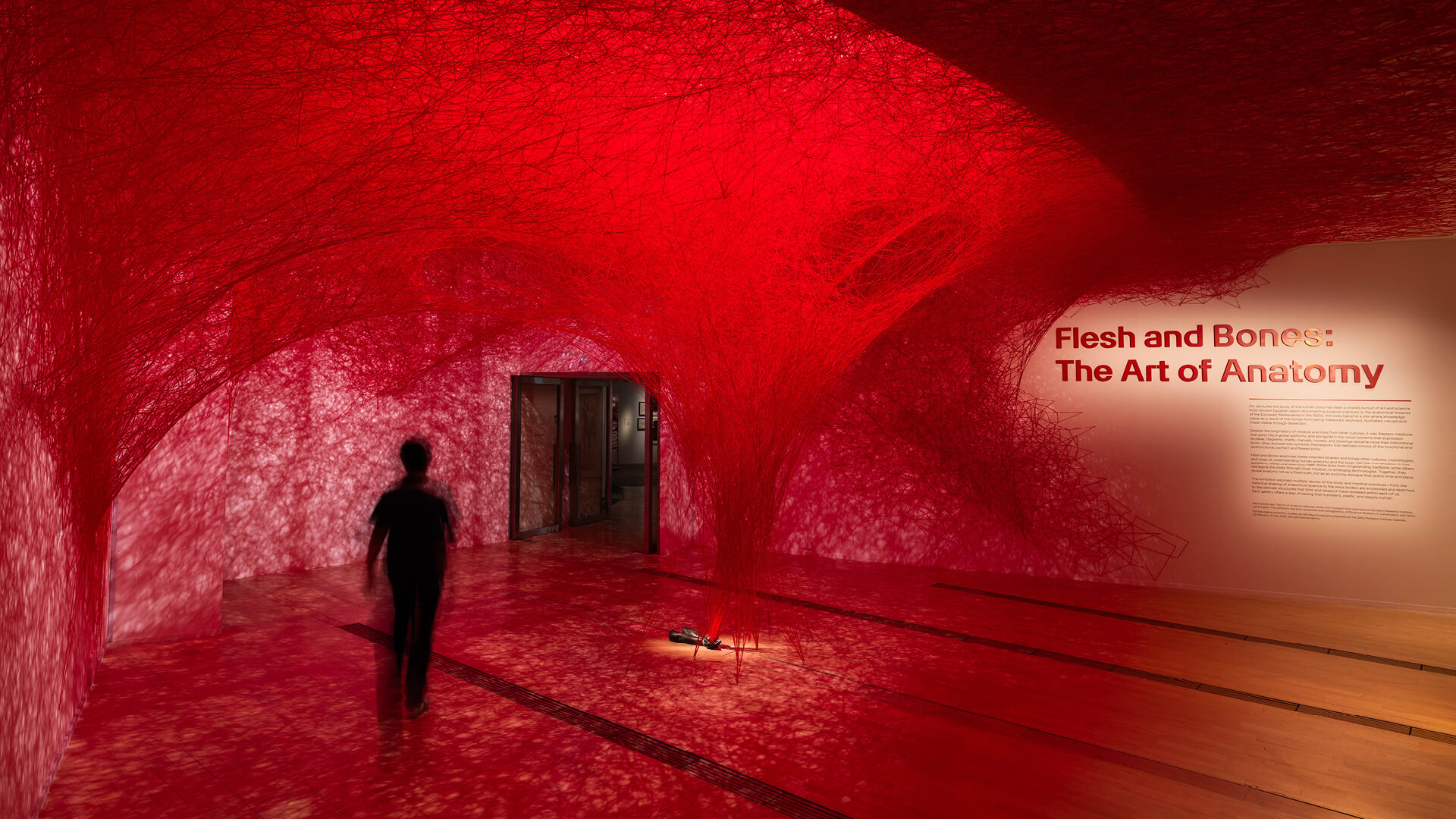
From Renaissance sculptors dissecting corpses to taxonomic scientists drawing organisms from life, anatomy has been the domain of both art and science for centuries. The ArtScience Museum in Singapore is celebrating its 15th anniversary by bringing the vast discipline and its works together in the landmark exhibition, Flesh and Bones: The Art of Anatomy. The exhibition is created in collaboration with the Getty Research Institute in Los Angeles, where its first edition was curated and hosted in 2022. This adaptation expands Flesh and Bones to include traditional medicinal and artistic practices from all across Asia, including traditional Chinese medicine, Ayurveda and Buddhist philosophy. Anatomy becomes not only a way to understand the human body but also a jumping-off point for considering questions about identity, personhood, ethics and morality. The museum displays over 160 artefacts and artworks that draw from East Asian institutions such as the Singapore College of Traditional Chinese Medicine and the collections of the Getty. Featuring 33 contemporary artists, the exhibition places immersive installations and new media art alongside traditional illustrations, woodcut prints, rare books, etc., revealing how we came to our current understanding of the human body and how it continues to evolve.
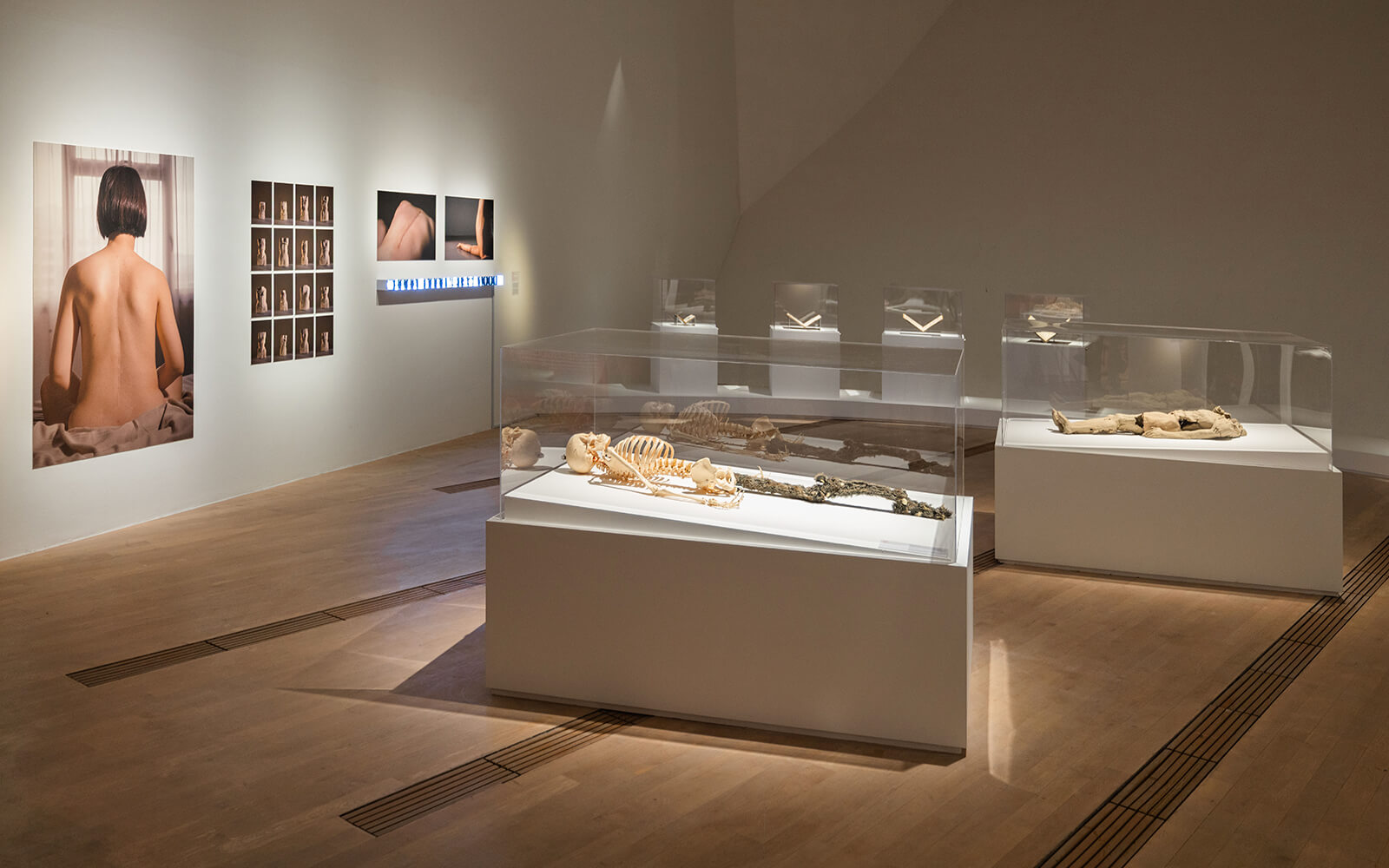
Honor Harger, the Vice President of the ArtScience Museum, said, “The artworks and manuscripts from Getty recall an era when artists and anatomists once revealed the body’s hidden systems through woodcuts, prints and early models that map layered dissections, peer into organs and chart the body’s vascular network. In contrast, many of the contemporary artists in the show explore the body through sensory, emotional and subjective dimensions. Together, these perspectives form a rich continuum of seeing, sensing and imagining the body from its physical form to its hidden inner landscapes.”
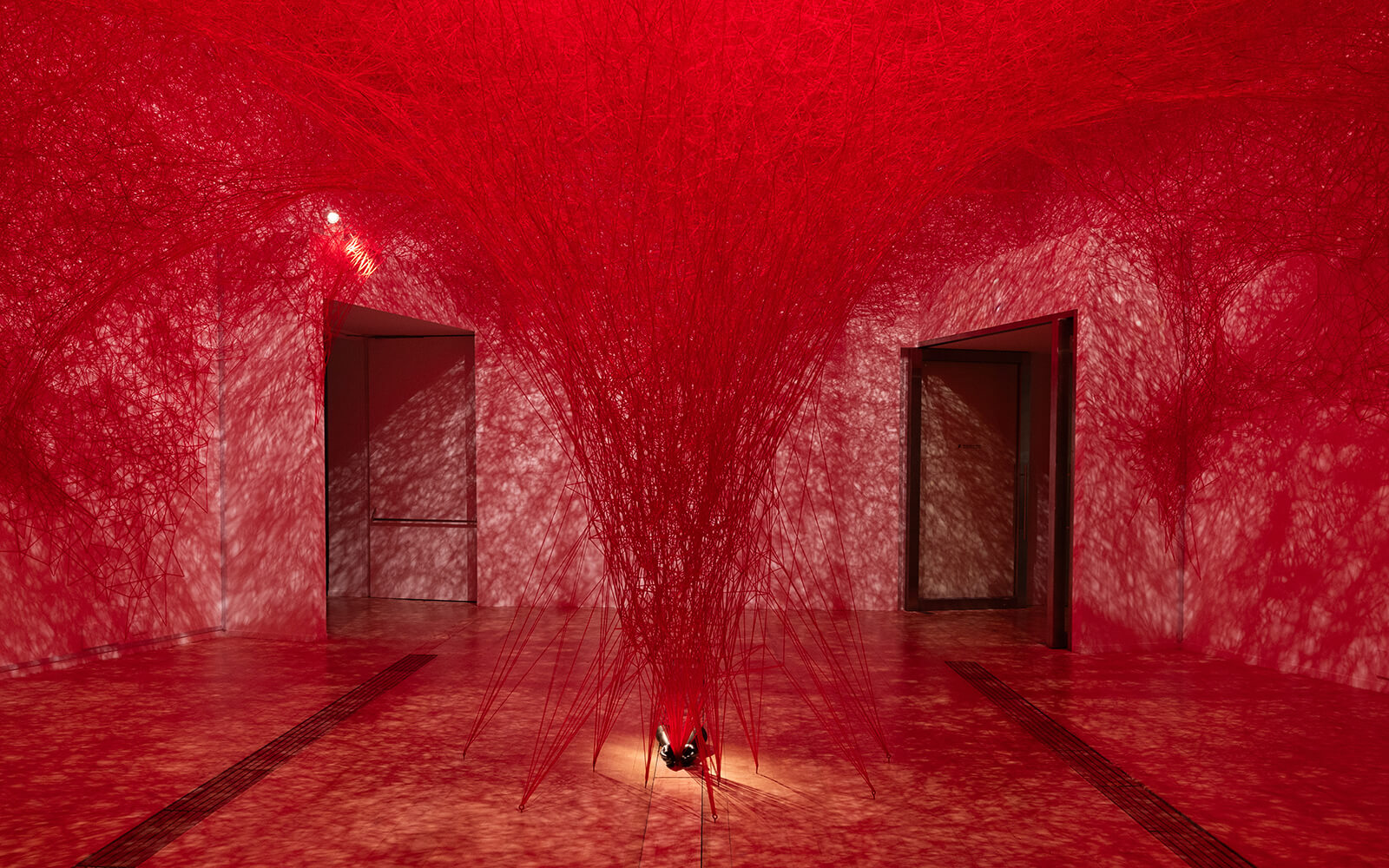
When speaking about these continuities, Harger mentions the ‘red thread’—a motif in Japanese culture wherein an unseen red thread of fate connects lives across space and time. This informs the exhibition’s design, consolidating works and objects from across cultures, disciplines and centuries. The first artwork viewers see when walking in is the vast, cocooning site-specific installation by Japanese artist Chiharu Shiota—The Network Within (2026). Red threads envelop the room, creating a woven environment that highlights the delicate complexity of the internal networks of the human body that enable life, while playing on the thread’s folkloric meaning to represent connections on a civilisational scale.
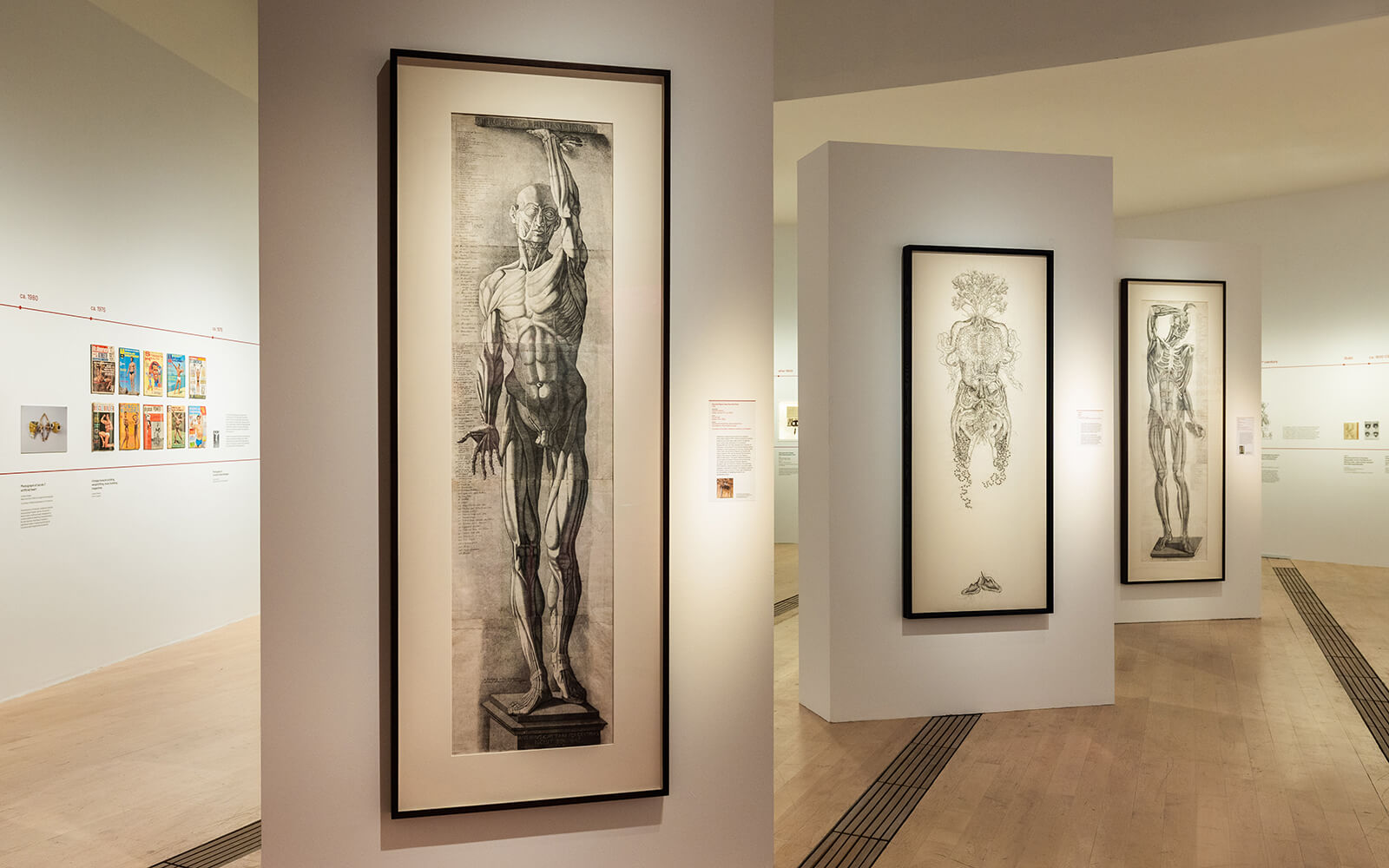
Renaissance prints and etchings are shown alongside contemporary artworks that draw inspiration from anatomical drawings to study the psychological, emotional and social dimensions of the body—the evolving, mediated experience of living in bodies defined not just by medicine, but by gender, ability and culture. Amidst rare anatomical engravings by the 18th-century Italian printmaker Antonio Cattani are Angela Su’s works, which adopt the form and style of traditional prints but push them in a speculative, futuristic direction by taking female cyborgs as their subject. Thai artist Pinaree Sanpitak’s works, meanwhile, use the techniques of etching and relief printing to create spare, intimate illustrations of the human breast, framing it as a synecdoche of a lived experience rather than a site of desire.
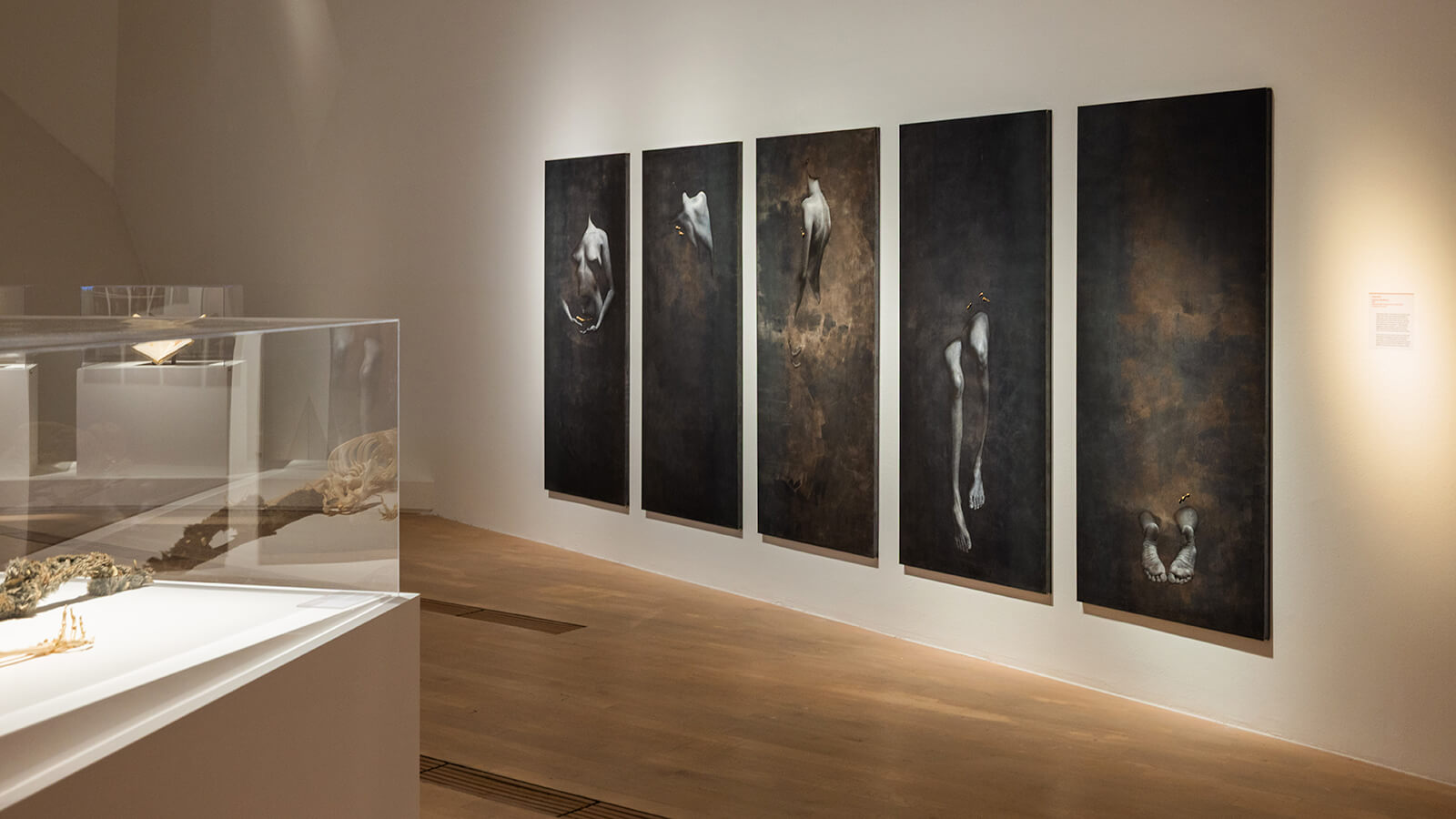
The exhibition problematises the separation between the surface and structures of the body, showing the scars and stitches that make the internal, external. Singaporean artist Yanyun Chen’s series of charcoal drawings, The Scars That Write Us (2018), depicts keloid scars—raised scars that grow beyond the wound that caused them—locating them as sites of somatic memory and as physical representations of the many changes a body undergoes over a lifetime. This anatomical approach to personal storytelling is echoed in Minjeong An’s 2007 work, Self Portrait, which uses the visual language of anatomical diagrams and mechanical blueprints to create the record of her life through vaccination marks, accidental burns and meticulously measured and catalogued body parts. A glowing aura frames the work, creating a portrait of both the visceral and invisible, overlapping Western and Eastern imaginings of the body and self.
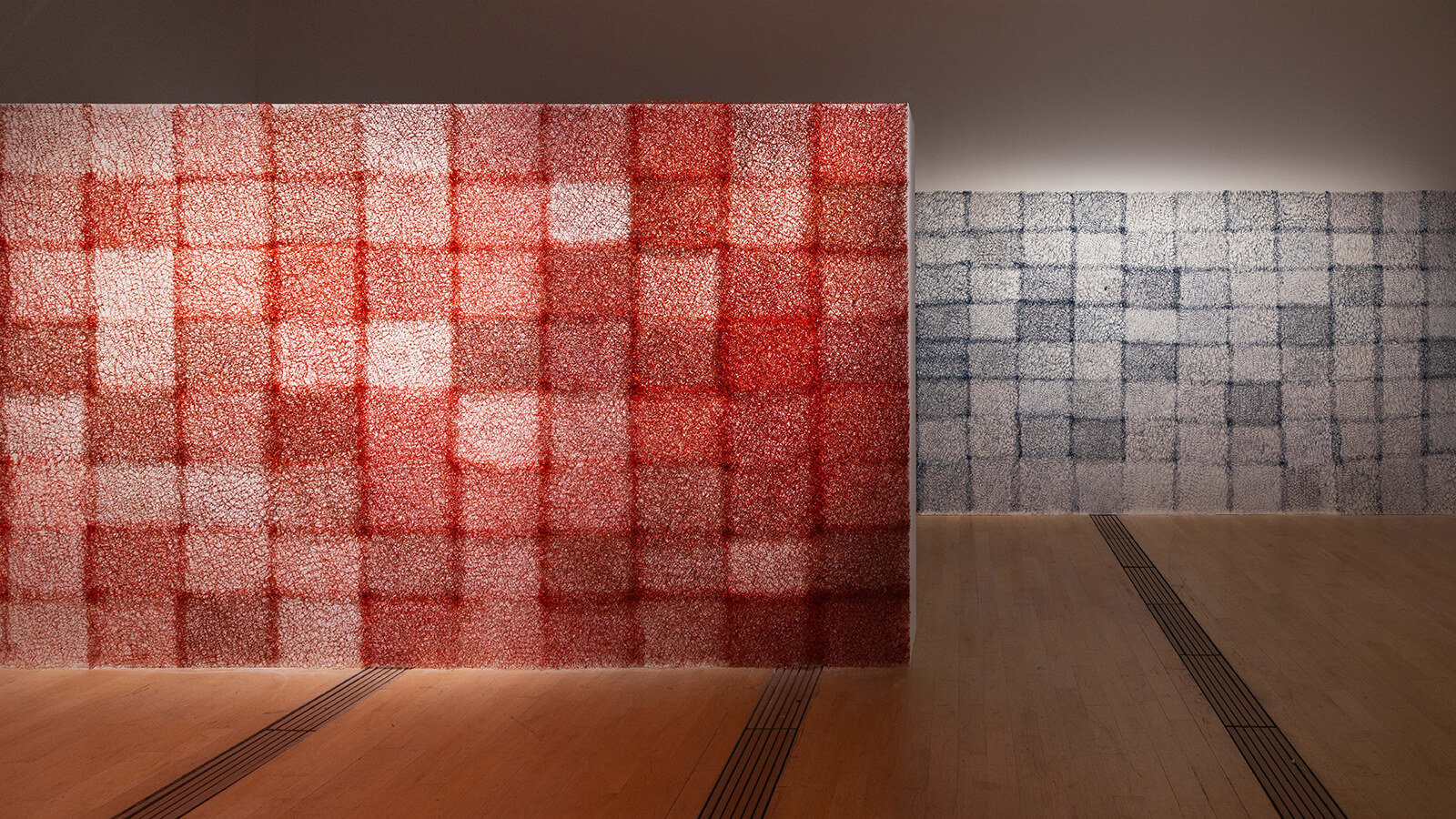
The next gallery, which is focused on circulation and flow, features large, wall-like artworks by renowned Thai artist Takerng Pattanopas Curtin. TransPollock #3 (red shift, blue shift) (2018) draws inspiration from philosophy and cosmic infinity to represent the microscopic pulmonary structures of the body. In invoking air in this densely threaded installation, Curtin highlights the role of the pulmonary system as a mediator between the body and the world, a work made more poignant following the artist's recent death from lung cancer.
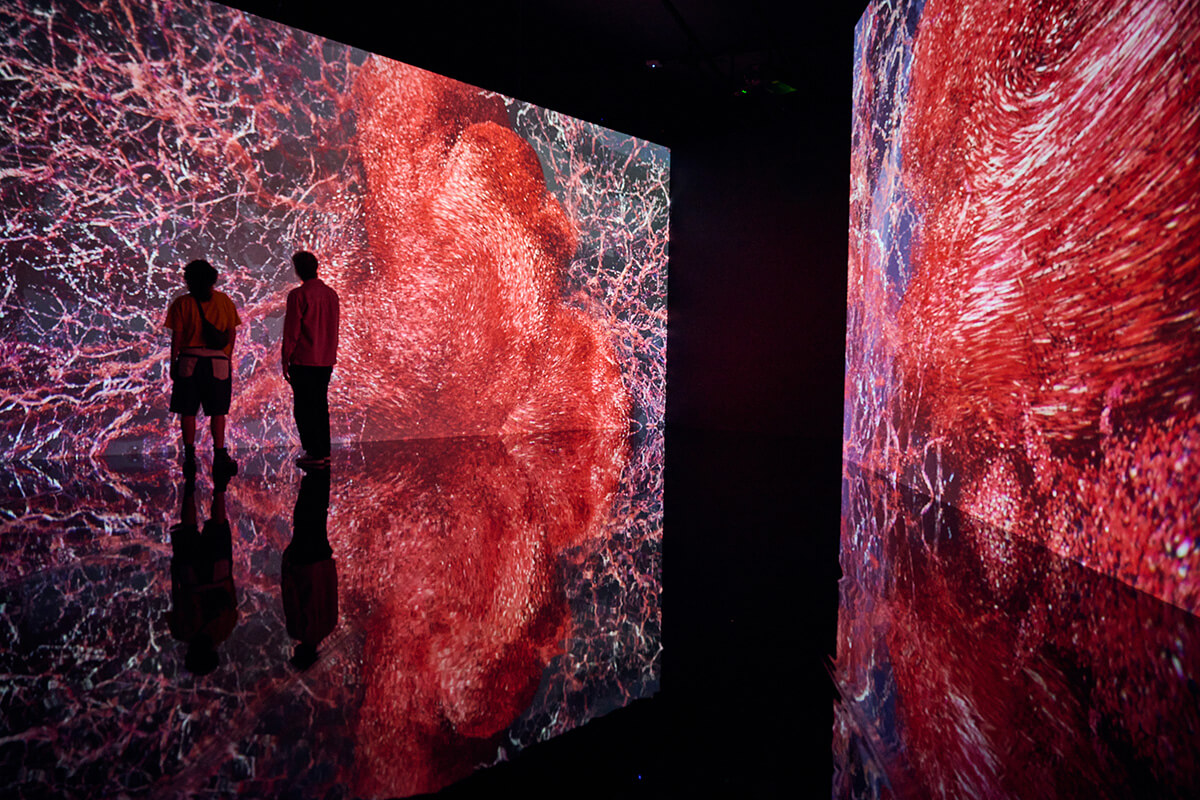
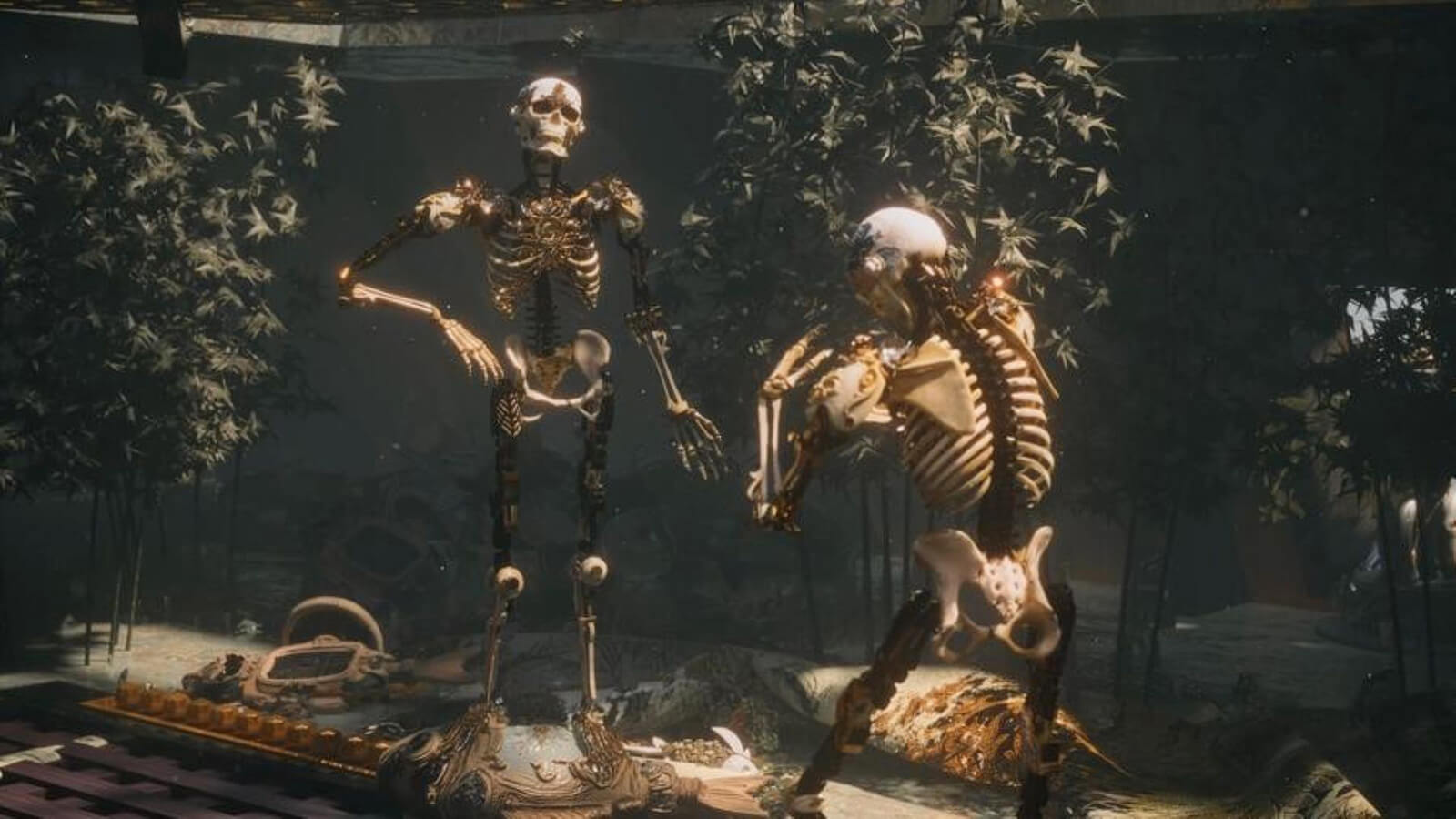
This work is juxtaposed with Evolver (2022)—an immersive, collective virtual reality experience created by the artist collective, Marshmallow Laser Feast. The audiovisual environment transports viewers inside the body, allowing them to travel through its systems and visualise its internal activity, from organs all the way to singular cells. The project represents a new frontier of anatomical artwork, transforming imaging and scientific data into experiential environments that make the specialised field approachable by appealing to curiosity, observation, and sensation. Dream of Walnut Palaces (2025) builds on this, using the form of digital animation and video games to explore and examine ideas of the self and body cross-culturally. Created by Chinese artist, writer and technologist Wendi Yan, the game reconstructs the encounter between European and Chinese medicine in dreamlike, imaginary scenes.
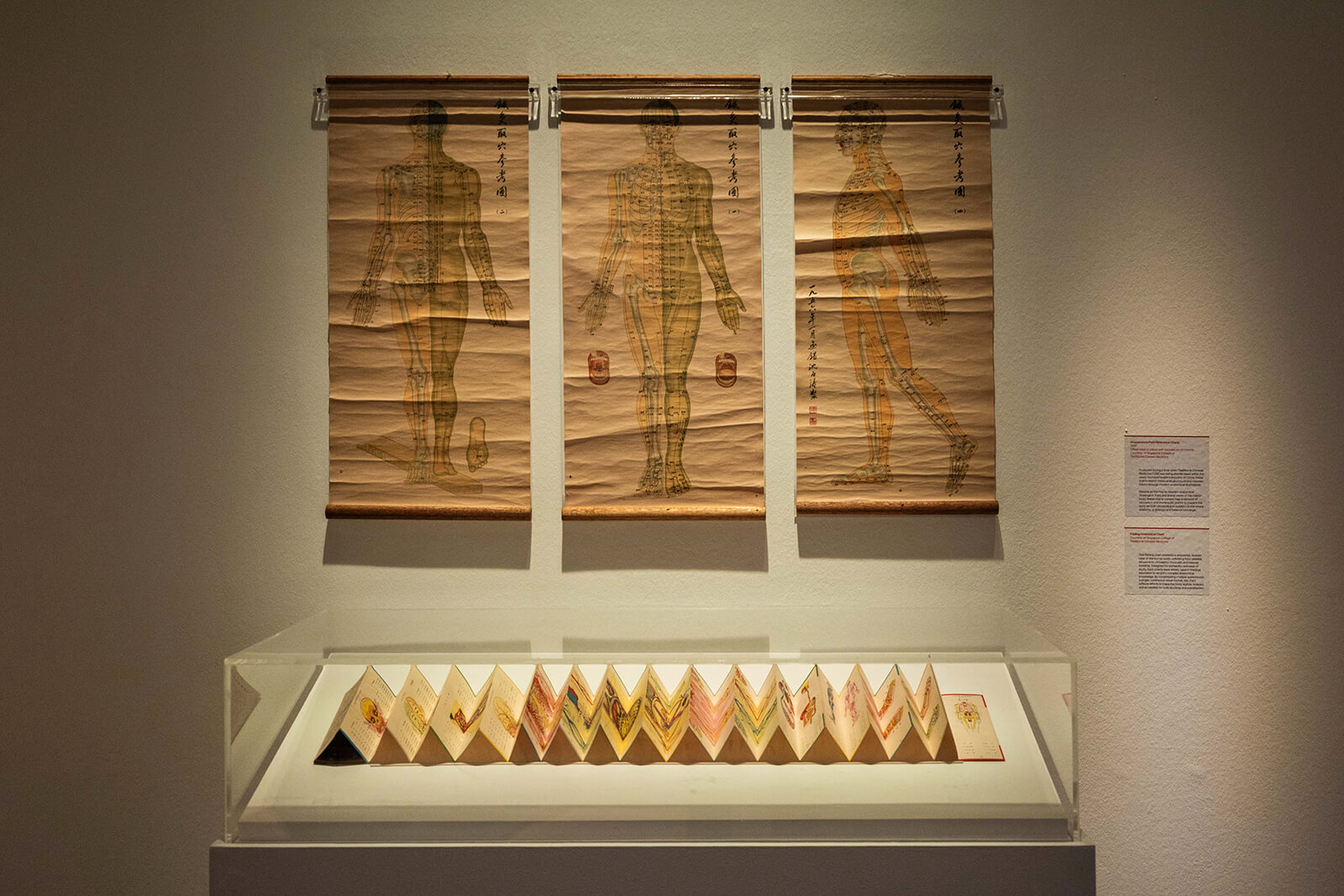
The medical counterparts to these works explain the basic concepts of traditional Chinese medicine, visualising concepts like qi, yin and yang. Originals and replicas of foundational and traditional documents are presented, such as the two-millennia-old Huangdi Neijing—the primary text of traditional Chinese medicine—and medical thangkas—traditional Tibetan Buddhist illustrations. By presenting Eastern and Western medicine on an equal plane, the exhibition design highlights the differences in their focus—the former’s approach based on flow and relationality and the latter’s with structure and forms.
Towards the exhibition’s close, its focus turns to its ethical core, inspired by the Taiwanese Silent Mentors programme, which uses a humanistic methodology to engender respect, empathy and ethical consideration when training medical students with the bodies of those who have donated themselves to science. This gallery includes plastinated scientific specimens on loan from the Lee Kong Chian School of Medicine Anatomy Department at Nanyang Technological University (NTU) and the von Hagens Institute for Plastination, allowing visitors a rare look at the body from the perspective of medical and surgical specialists and trainees.
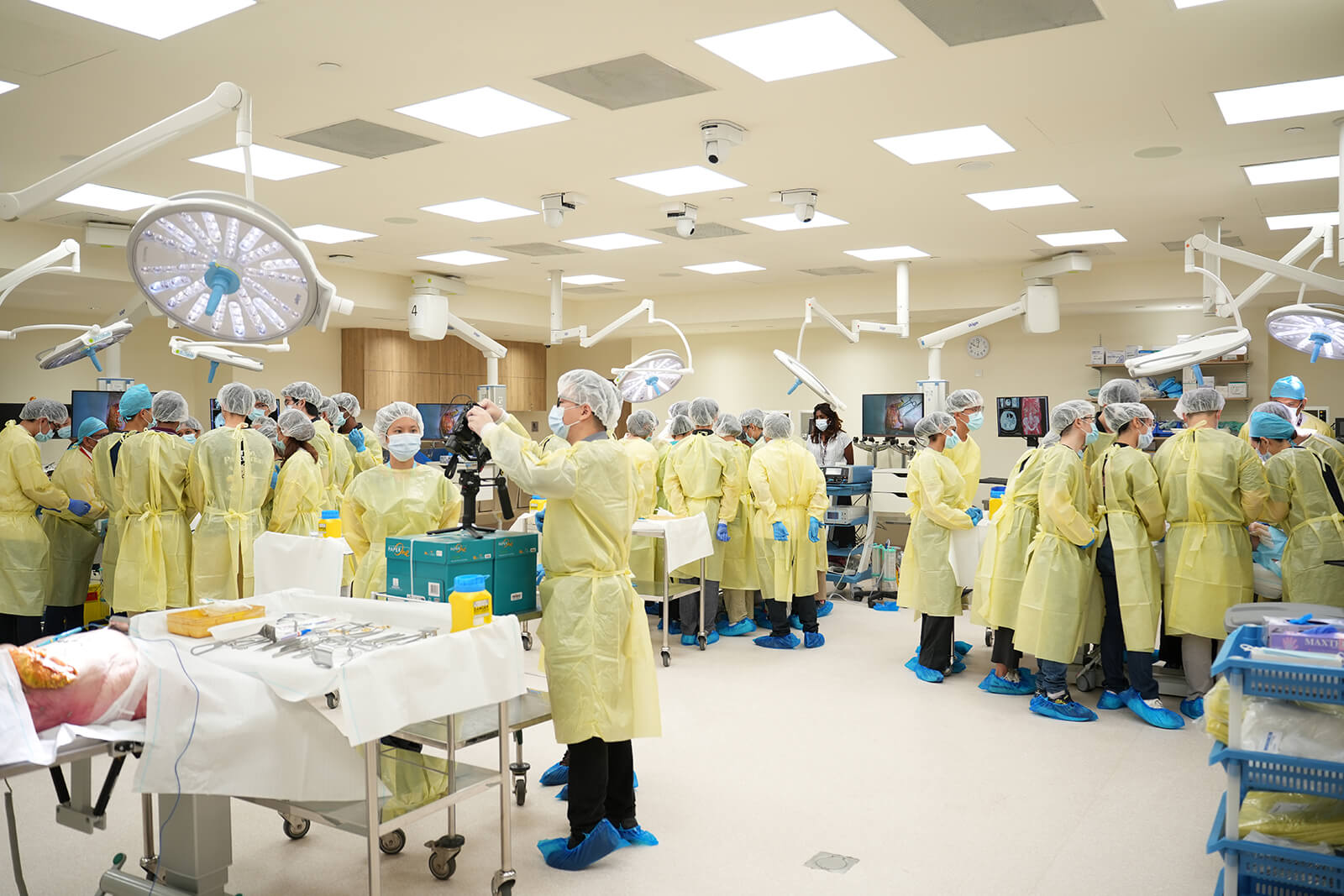
“[The Silent Mentors] philosophy has been deeply influential for us. We took our ethical cues directly from the Silent Mentor approach, and it shaped how we chose to contextualise and present the specimens on loan from the Anatomy Department. The display has been developed with care and sensitivity, with staff present to support a respectful and considered viewing experience. We invite visitors to approach this space with the solemnity and respect it deserves, and photography is not allowed within the gallery. For those who do not feel comfortable spending time with the specimens, the gallery can be bypassed entirely,” said Harger.
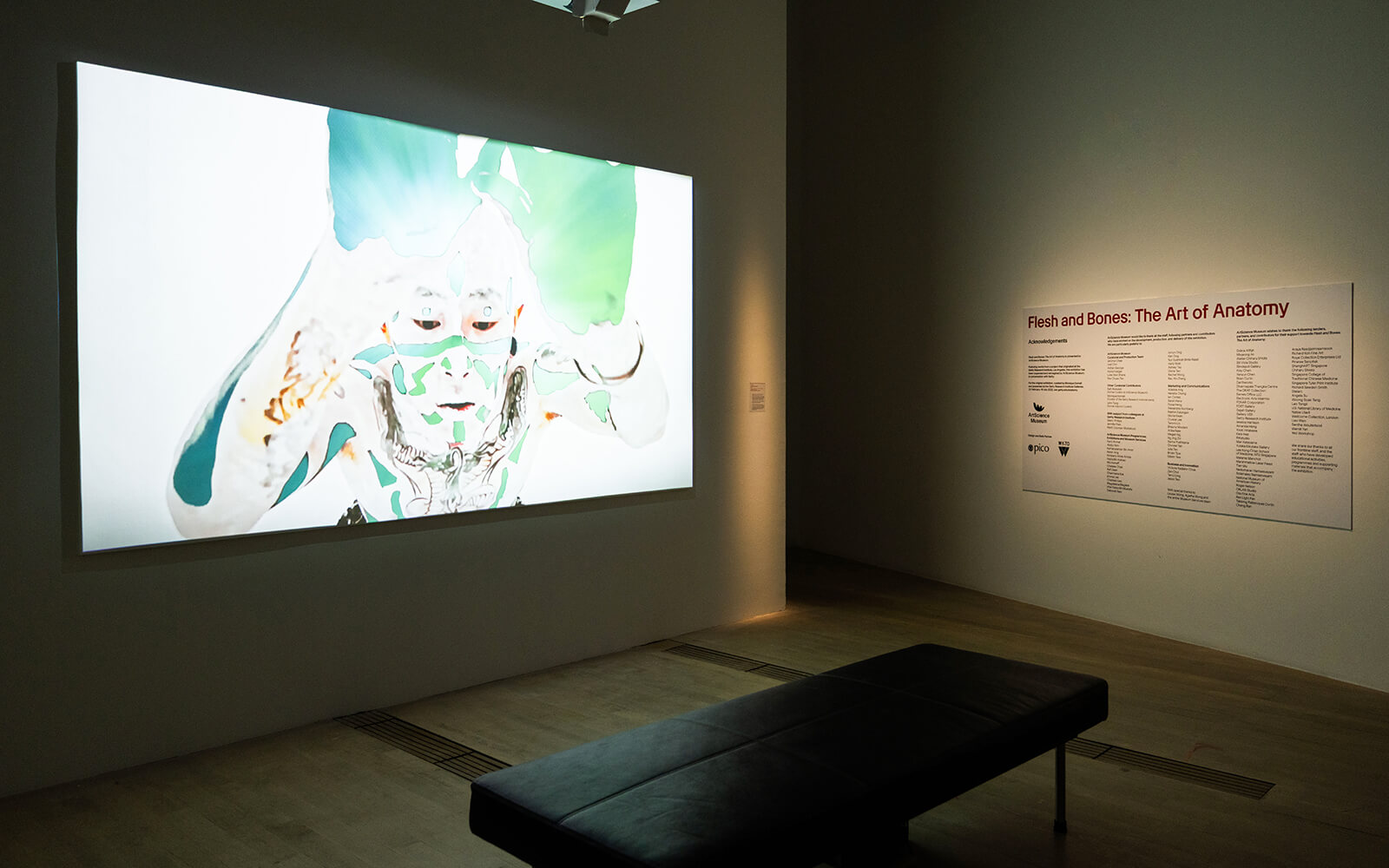
The exhibition rounds out with a video installation by Chinese artist Cheng Ran, The Lament: Mountain Ghost (2018). A figure is seen performing a ritual dance while his form begins to deconstruct and disintegrate, forming hollows through which the world emerges—cities, sky, sounds and movements stir within, emanating out from the body. Ran’s work underscores the idea that the body is not merely a stable, solid form but a collage of cultural practices, experiences, histories and intimacies, carried within visible forms, but not contained by them.
Flesh and Blood: The Art of Anatomy retains the fascinating historical character and artefacts of the Getty’s take on the subject and suffuses it with centuries of knowledge and cultural experience from Asia. Leading with sensitivity, curiosity and humanity, the exhibition design invites viewers to think deeply about their relationship with their bodies and how it is informed by culture and history and how it can be reinterpreted with creativity. The ArtScience Museum creates an experience that is uniquely visceral and embodied, echoing and amplifying a universal humanity.
‘Flesh and Bones: The Art of Anatomy’ will be on view at the ArtScience Museum, Singapore from 21 March to 16 August, 2026.

by Srishti Ojha Oct 09, 2026
In his ongoing exhibition, the South African artist creates two post-apocalyptic futures to explore society’s relationship with textiles, patterns and technology.
by Srishti Ojha Oct 07, 2026
The Kolkata-based film festival shone a spotlight on local and international filmmakers and artists who are pushing the boundaries of what a film can encapsulate.
by Samar Jodha Oct 05, 2026
Looking at Ahmed Ali’s photographs of workers and industry within the wider history of industrial photography, from Soviet state imagery and Sunil Janah to Lewis Hine.
by Srishti Ojha Oct 02, 2026
The Indian artist’s exhibition at the Bruce Museum in the US thinks through fundamental questions of humanity by focusing on the Sun and the cosmological timescale.

make your fridays matter with a well-read weekend
Enter your details to sign in
Don’t have an account?
Sign upOr you can sign in with
a single account for all
STIR platforms
All your bookmarks will be available across all your devices.
Stay STIRred
Already have an account?
Sign inOr you can sign up with
Verification link sent to check your inbox or spam folder to complete sign up process
Tap on things that interests you.
Select the Conversation Category you would like to watch
Please enter your details and click submit.
Enter the 6-digit code sent at


Flesh and Bones: The Art of Anatomy is a cross-cultural view of centuries of medicine
by Srishti Ojha | Published on : Apr 06, 2026


 Sign in with Google
 Sign in with email
What do you think?