


 Sign in with Google
 Sign in with email



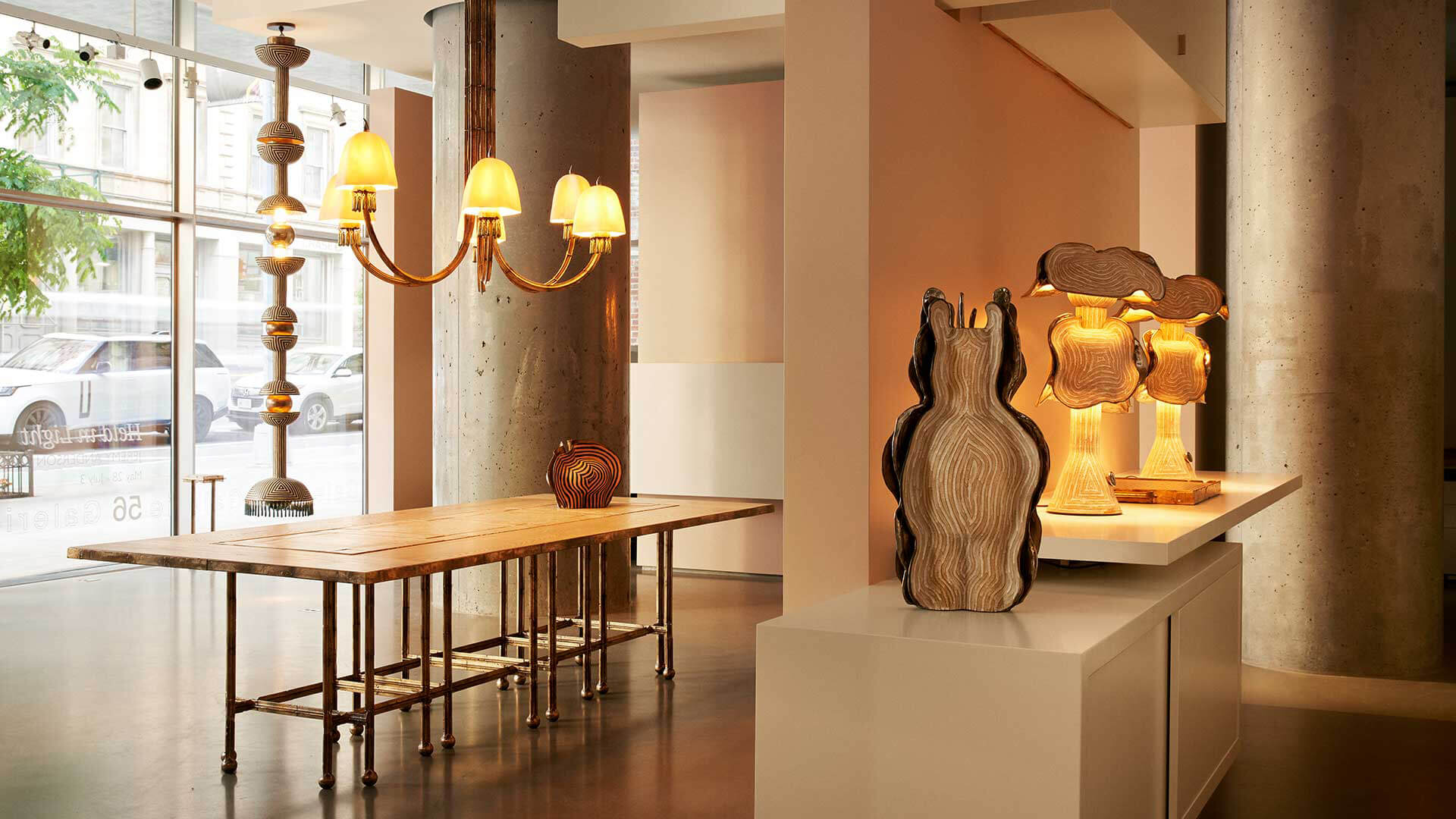





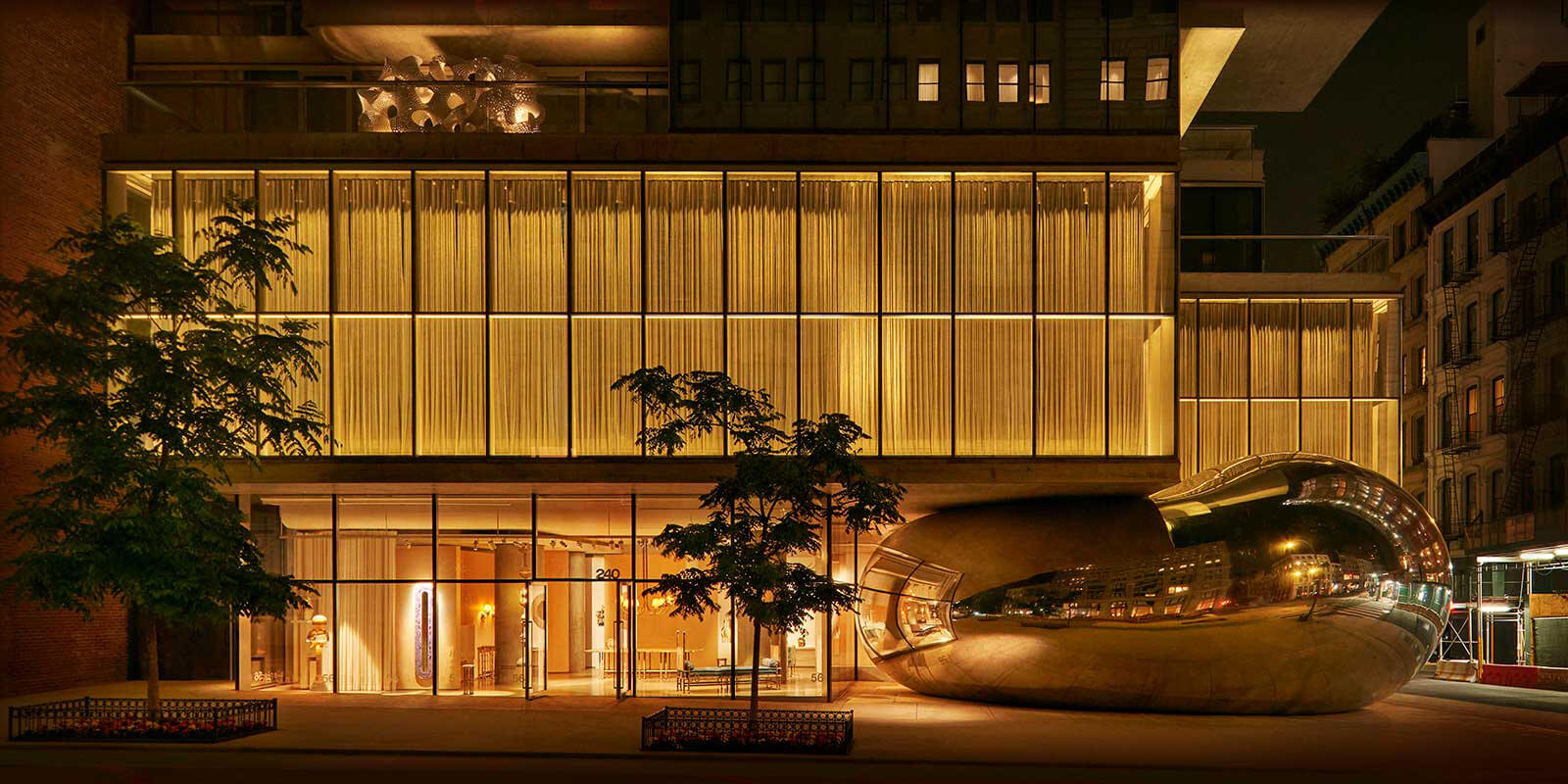
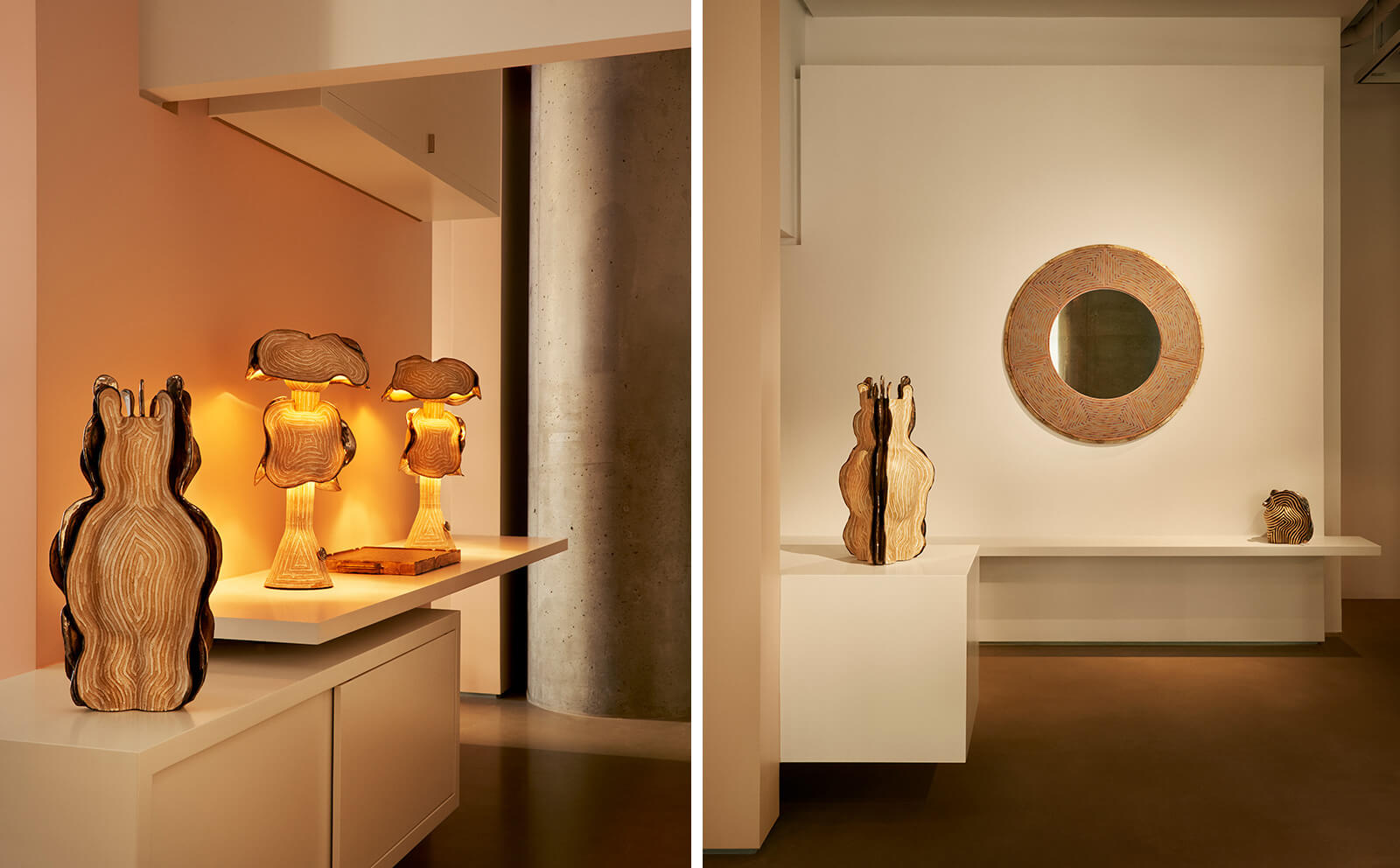
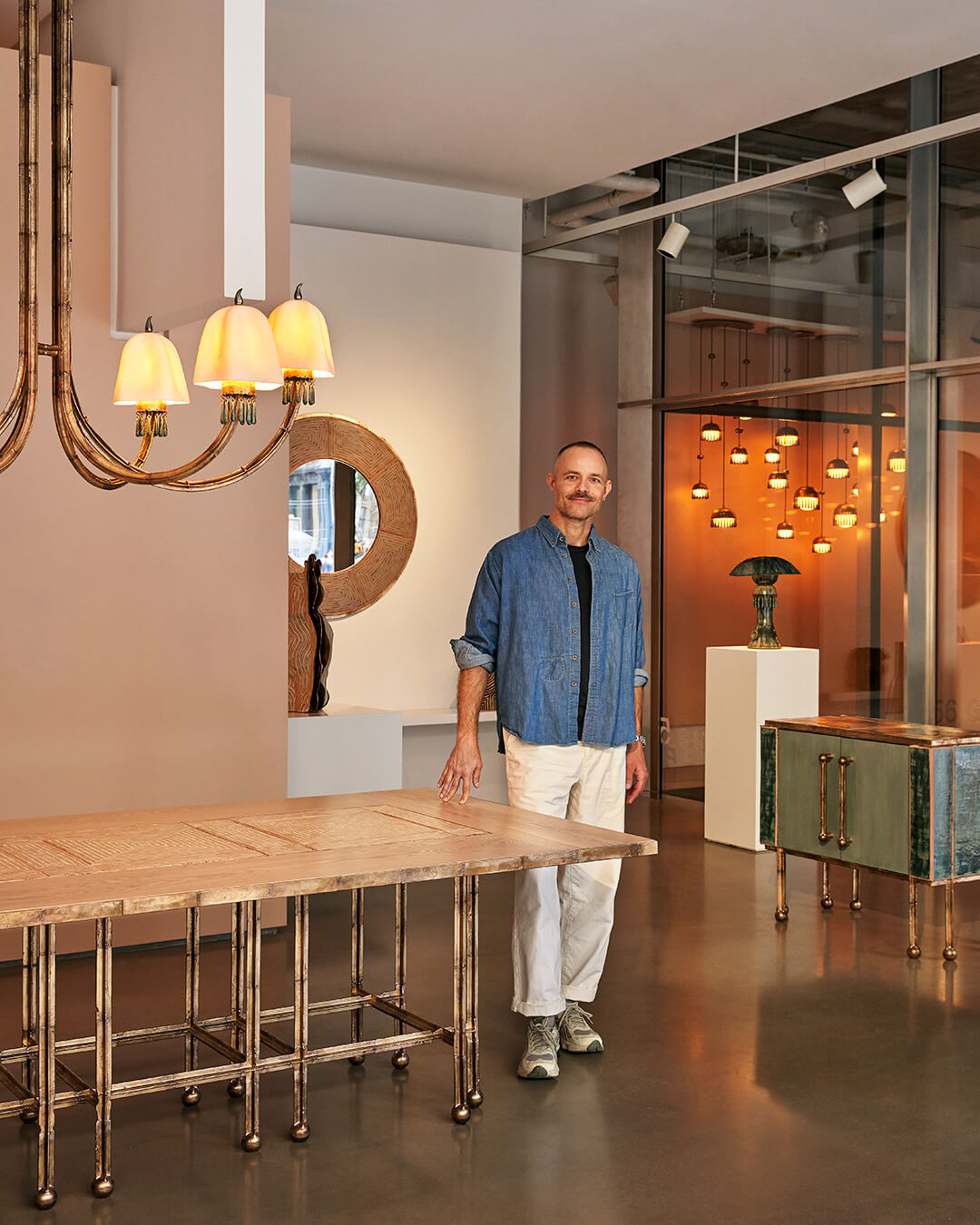
With Held In Light, artist-designer Jeremy Anderson presents his largest solo exhibition to date, on view from May 28 – July 3, 2026, at Galerie56 in Tribeca as part of Gallery FUMI’s New York residency. Bringing together a new body of furniture, lighting, mirrors and vessels, the show considers how objects can shape atmosphere through material, restraint and quiet spatial gestures.
Continuing the direction established in the residency’s opening chapter, Held in Light reflects Gallery FUMI’s ongoing interest in practices that move between traditional craft and contemporary design. Here, Anderson transforms the gallery into an environment that privileges stillness over spectacle, encouraging a slower and more contemplative encounter with objects.
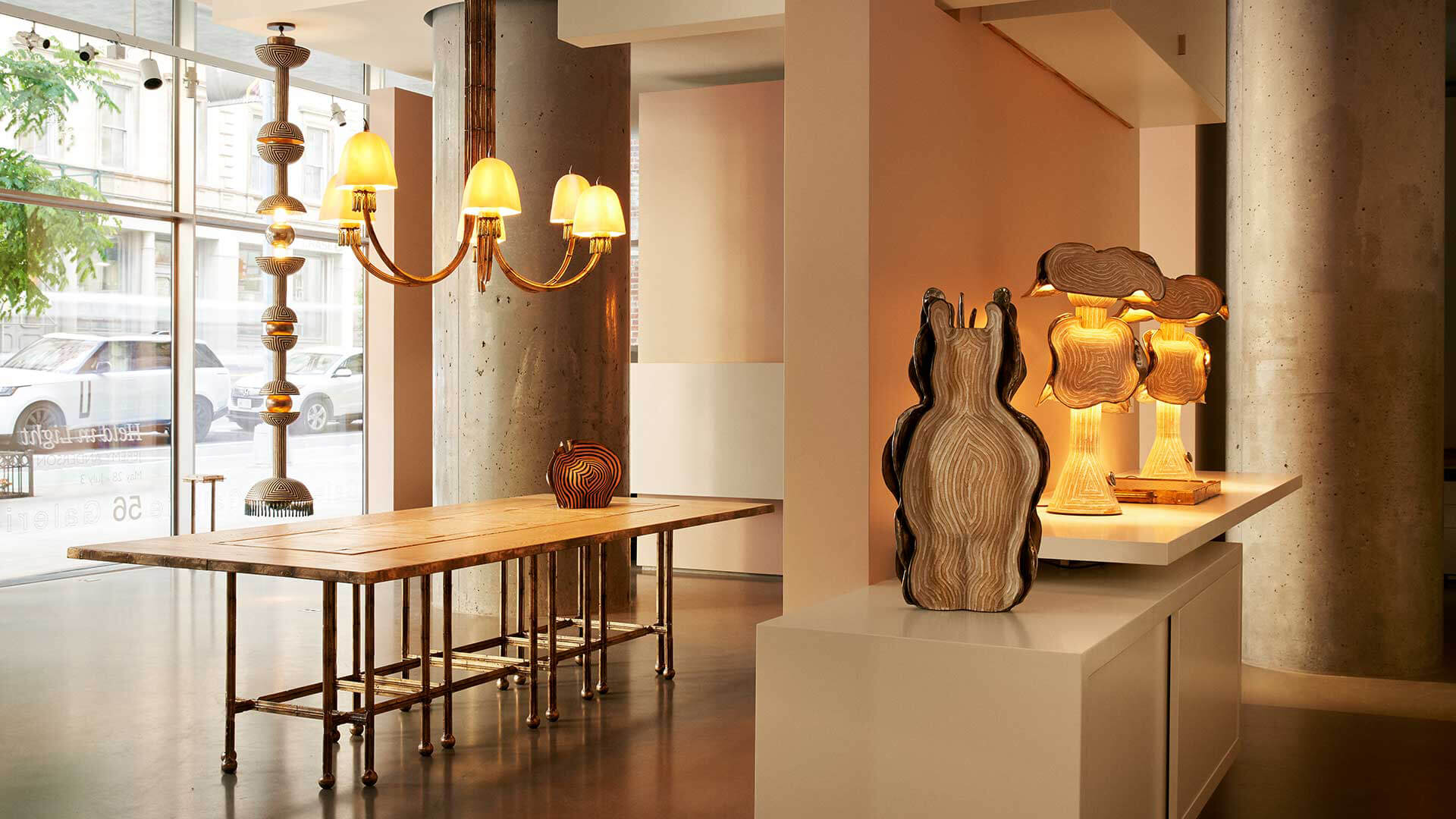
A new series of lighting works forms the exhibition’s conceptual centre and lends the show its title. “There’s a longing for stillness,” Anderson reflects. “For a place that feels safe, not overwhelming. These works are about creating that atmosphere—something gentle, something held.” Soft illumination, layered construction and a muted palette of blues, purples, pale pinks and silver produce shifting moments of light across surfaces and forms, creating an atmosphere that feels both intimate and dreamlike.
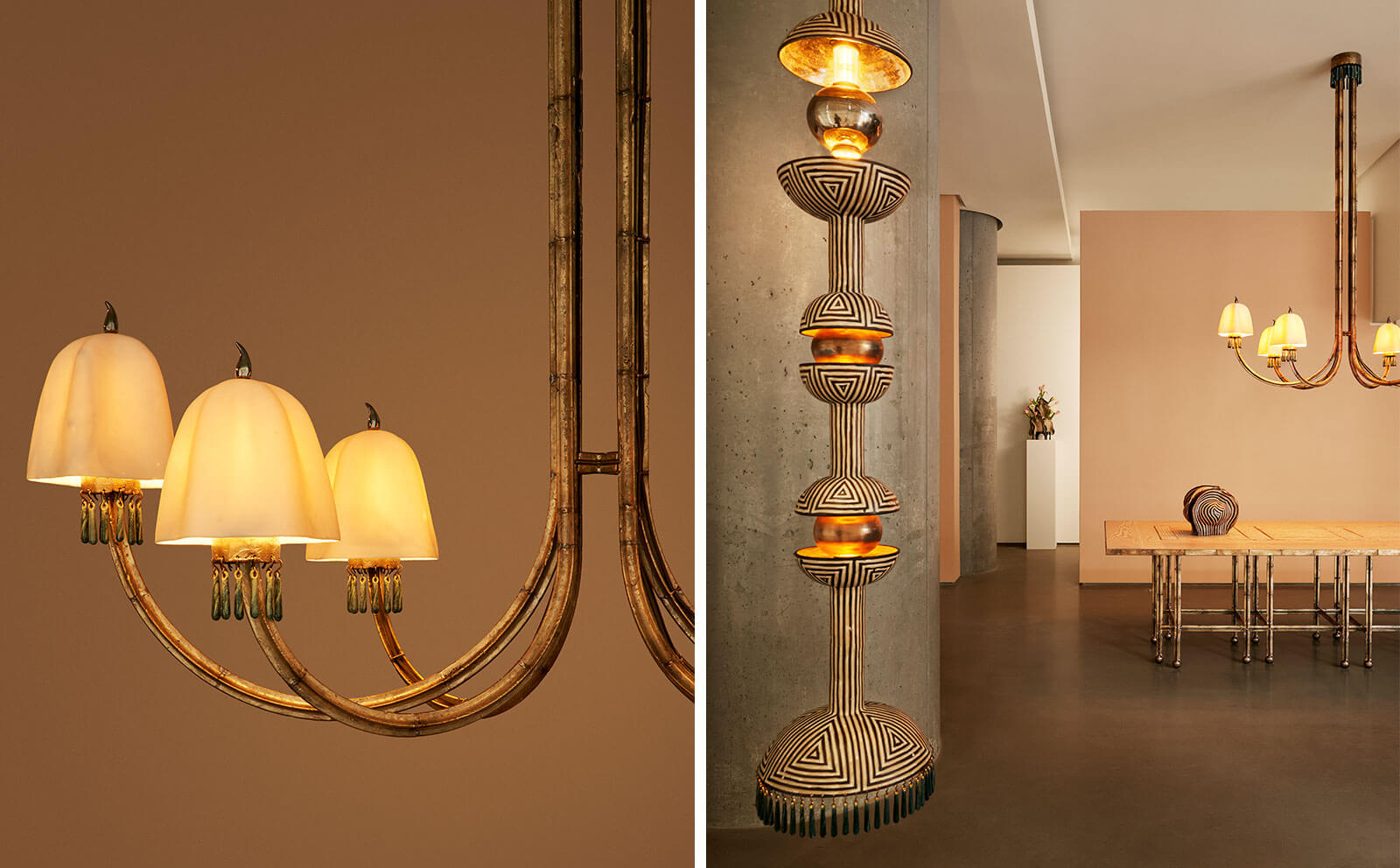
Across the works, Anderson extends his long-standing interest in material relationships, working primarily with bronze and clay produced entirely within his studio. New porcelain pieces appear alongside his stoneware practice, introducing greater translucency—particularly in the lighting works, where pendants and vessels allow light to pass through their surfaces and expand the functional possibilities of ceramic.
According to the London-based gallery, “central to Anderson’s philosophy is restraint. Surfaces are not overworked; instead, they retain the subtle irregularities, tonal variations, and traces of process that reveal the hand of the maker. Glazes are layered intuitively, embracing the unpredictability of the kiln, while bronze elements are cast in-house at an intimate scale, preserving a direct relationship between material and maker.”
“I want the material to speak,” Anderson explains. “There’s beauty in allowing it to behave as it will.”
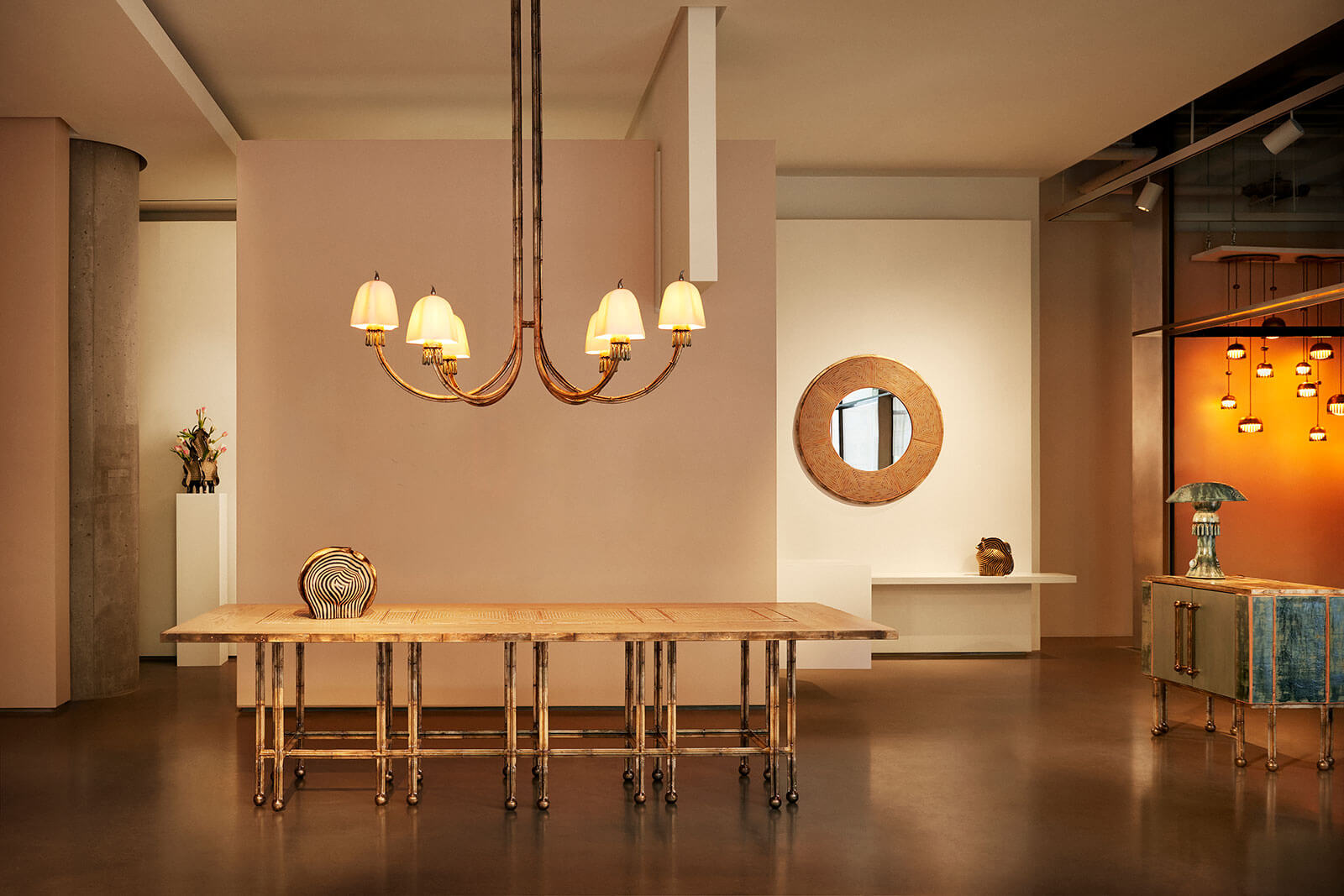
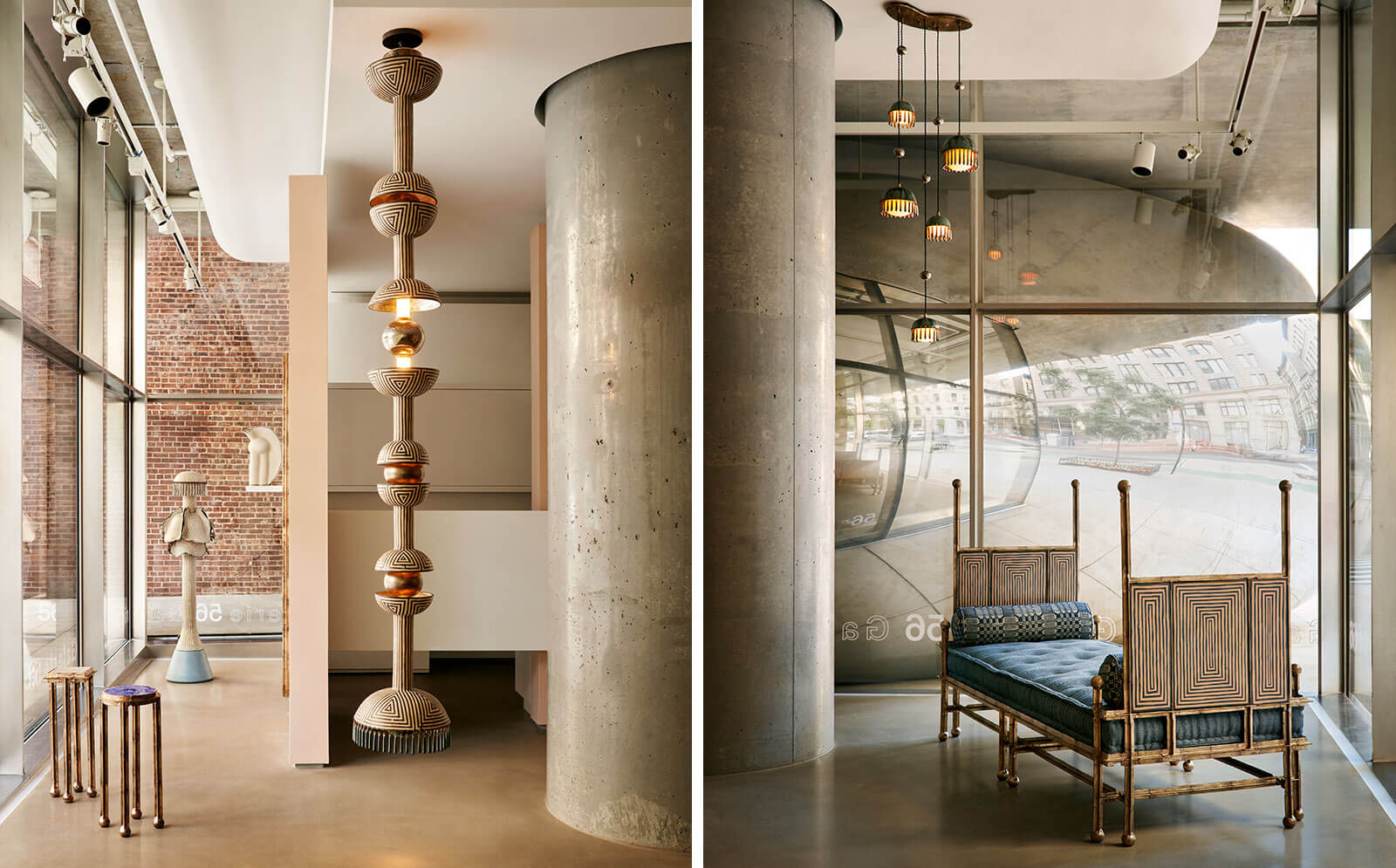
The design exhibition also marks an expansion in scale. A daybed, conceived as a central work and Anderson’s first upholstered piece, incorporates a 19th-century American homespun coverlet sourced in New England. Alongside a dining table, console, credenza and mirrors, the presentation turns toward the domestic landscape and examines how objects contribute not only to utility but also to emotional and atmospheric experience.
Lighting remains a recurring focus, with works including the Libra Chandelier and large-scale porcelain pendants demonstrating Anderson’s sculptural approach to illumination. Lamp designs composed of stacked ceramic forms move between object and presence, occupying the space with a quiet anthropomorphic quality.
Across vessels, mirrors and furniture, visible joinery, tonal shifts and asymmetries become part of the exhibition’s visual language. “Rather than demanding interpretation, Anderson’s works invite presence. “I want people to feel transported,” Anderson says. “To experience something softer, more serene. Something that simply exists to be enjoyed”,” FUMI mentions in the show’s description.


What do you think?