|
Stripped to its basics, a board game begins with a grid: a map, a diagram of possibilities. Pieces attain meaning when they move—taking position, advancing, retreating, forming alliances or dissolving them. Rules determine who advances and who must wait, and who exits the board altogether. Power, after all, resides in these rules and the systems that enable them: strategising and enforcing long before the first move is even made.

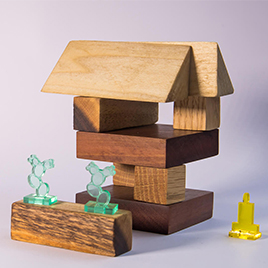
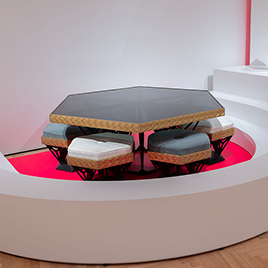
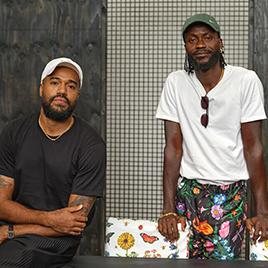
This week's stories orbit such shifting boards. The show 'Bruce Goff: Material Worlds' revisits an architect who treated architecture as an open board, a mutable terrain, rearranging materials and references to challenge the conventions that stabilise form and meaning. In an interview, Amoako Boafo and Glenn DeRoche elucidate on building spaces that allow artistic practices to take position and gather voice: environments being shaped by collaboration, memory and movement.
|
|
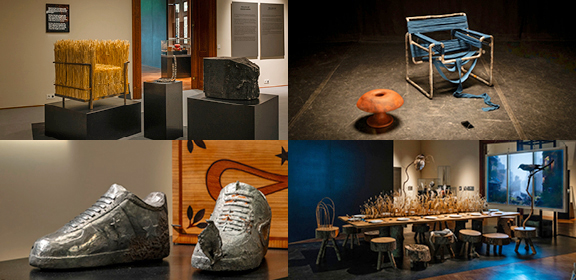
'The Craftocene' by Superflux imagines futures where the coordinates of ecology, politics and technology are renegotiated through speculative design. And a research-driven board game, Habitario, interrogates domestic spatial biases by means of speculative homemaking.
Beyond exhibition walls, this sharpens. Modern geopolitics unfolds through its own calculated manoeuvres: rivalries staged, alliances brokered, resources & territories weighed as pieces on a chessboard. The creative practices reconsider how the board itself might be drawn: how spaces and voices are structured and positioned, and how futures might be imagined collectively. The question remains whether the game continues unchanged or whether the board itself might be redrawn. Because power always plays to win. And what do the pawns gain?

|