Design12 mins. read
Anna Tsing on the mutinies and aberrant nobilities of FUNGI: Anarchist Designers
by Mrinmayee BhootFeb 13, 2026



by Mrinmayee BhootPublished on : Mar 06, 2026
To weave anything, you must begin with a line. You take thread, you interlace vertical strands. Line by line, warp and weft—it forms a textile. Even in the age of mechanisation, the principal technique for this craft has remained unchanged. Even today, in many indigenous cultures, you gather around the hearth, you tell stories, you weave, you knot. It’s no wonder that storytelling borrows so much of its language from weaving. Both gather, both hold. A line, a thread, a trace; the act of making is the trace of the hand, or to put it simply, craft.
Craft, as Glenn Adamson argues, is an invented category, one that exists in false opposition to modernity’s championing of industry. What is lost in considering the notion of craft through such dichotomies is that craft has always persisted in work done by the hand. It is—foregoing delineations of traditional/modern, public/private, sacred/secular—our interconnection to the material world; to our very existence as a continual process of entwinement with materiality. Refusing the misguided anthropocentrism of our extractivist culture, craft revels in the messiness of our planetary life as made up of the more-than-human; for there is no life that is lived without every living thing.
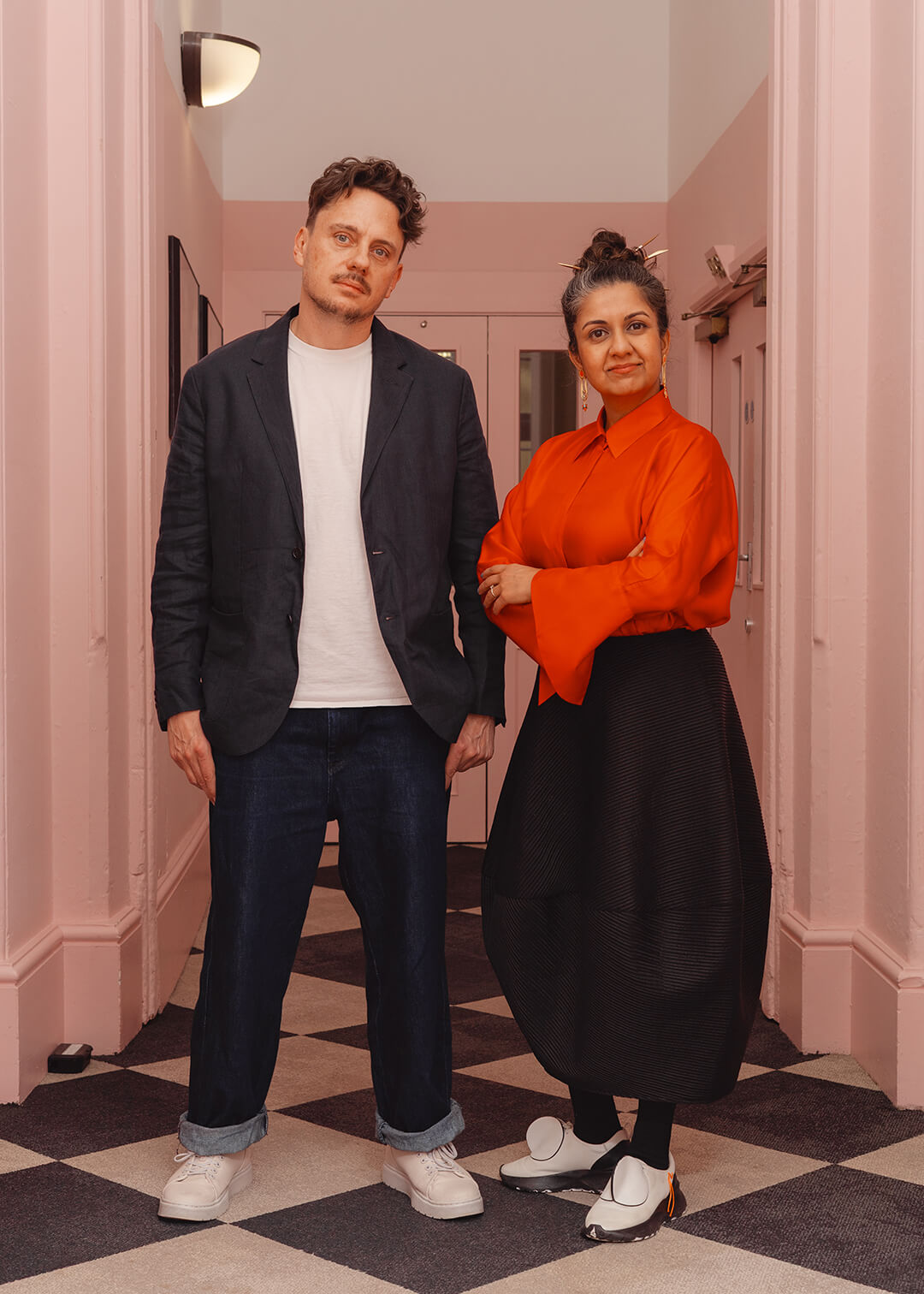
Maxims such as the Capitalocene or Plantationocene, proposed as critical stances against blind progress, extractivism and the human ego of the Anthropocene have offered guidelines to thinking more pluralistically—a counter to the alienating tendencies of capitalism. In much the same vein, the Craftocene, as London-based design studio Superflux sees it, is an intentional method. Through speculative design, critical foresight and immersive experiences, the studio’s founders, Anab Jain and Jon Ardern, have sustained a practice that advocates for futures that are built in solidarity; or in other words, that ‘stay with the trouble’. It’s these ethics that foreground their first solo exhibition at Weltmuseum Vienna, suggestively titled The Craftocene.
Speaking about the potent etymology they conjure, Jain and Ardern share in conversation, “We coined the term ‘Craftocene’ during the pandemic…It is a proposal that intentionality, care and material dialogue are the foundation of whatever comes next. Our present is defined by frictionless speed. Craft reintroduces friction and with it, meaning.” As they emphasise, in their view, craft is not nostalgic, nor is it their way of romanticising a pre-industrial, idyllic past. Craft, in fact, has always been implicated in the deluge of industrialisation. It does not really disappear (though certain crafts have become endangered). It is remembered in patchworks.
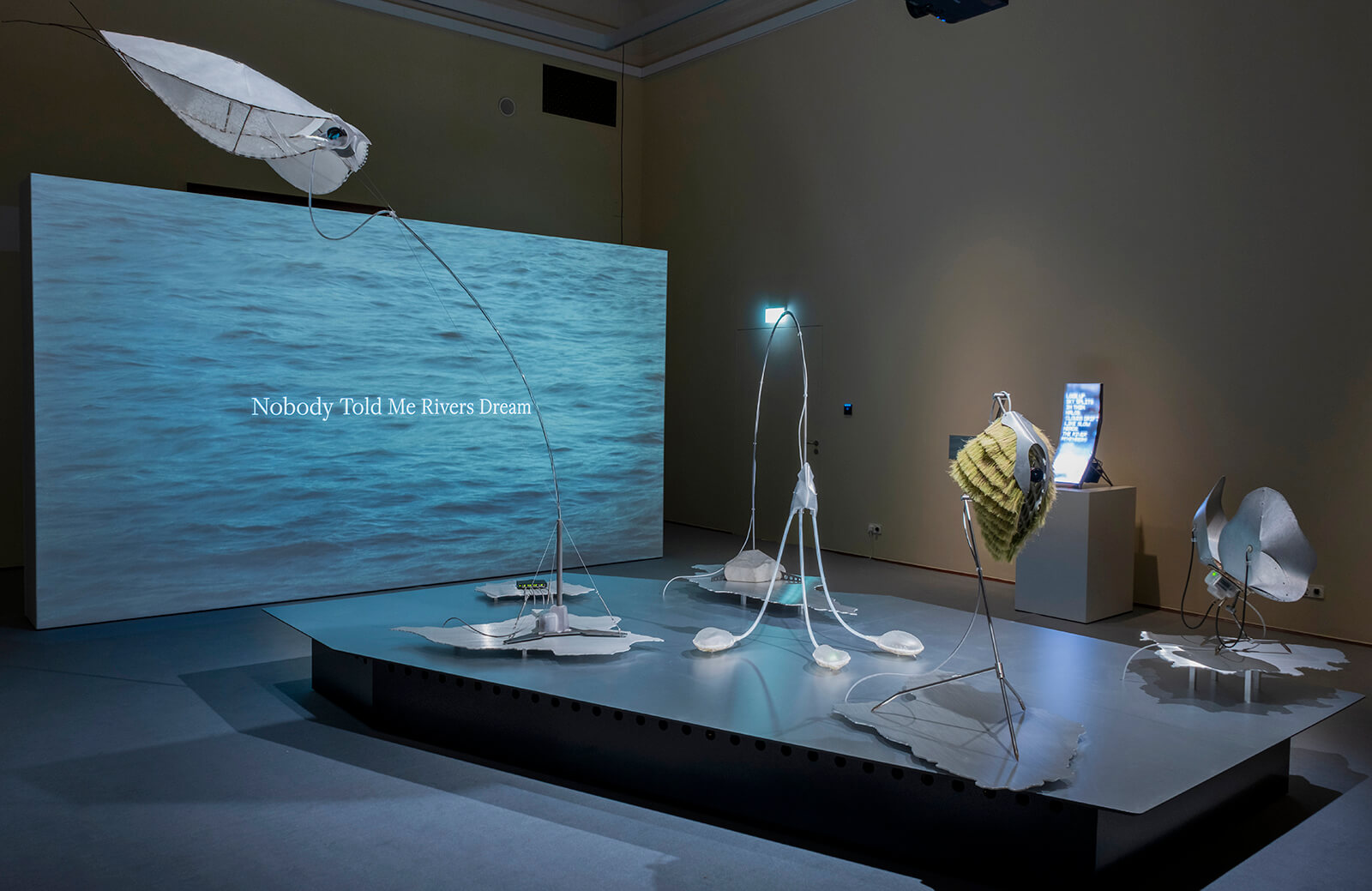
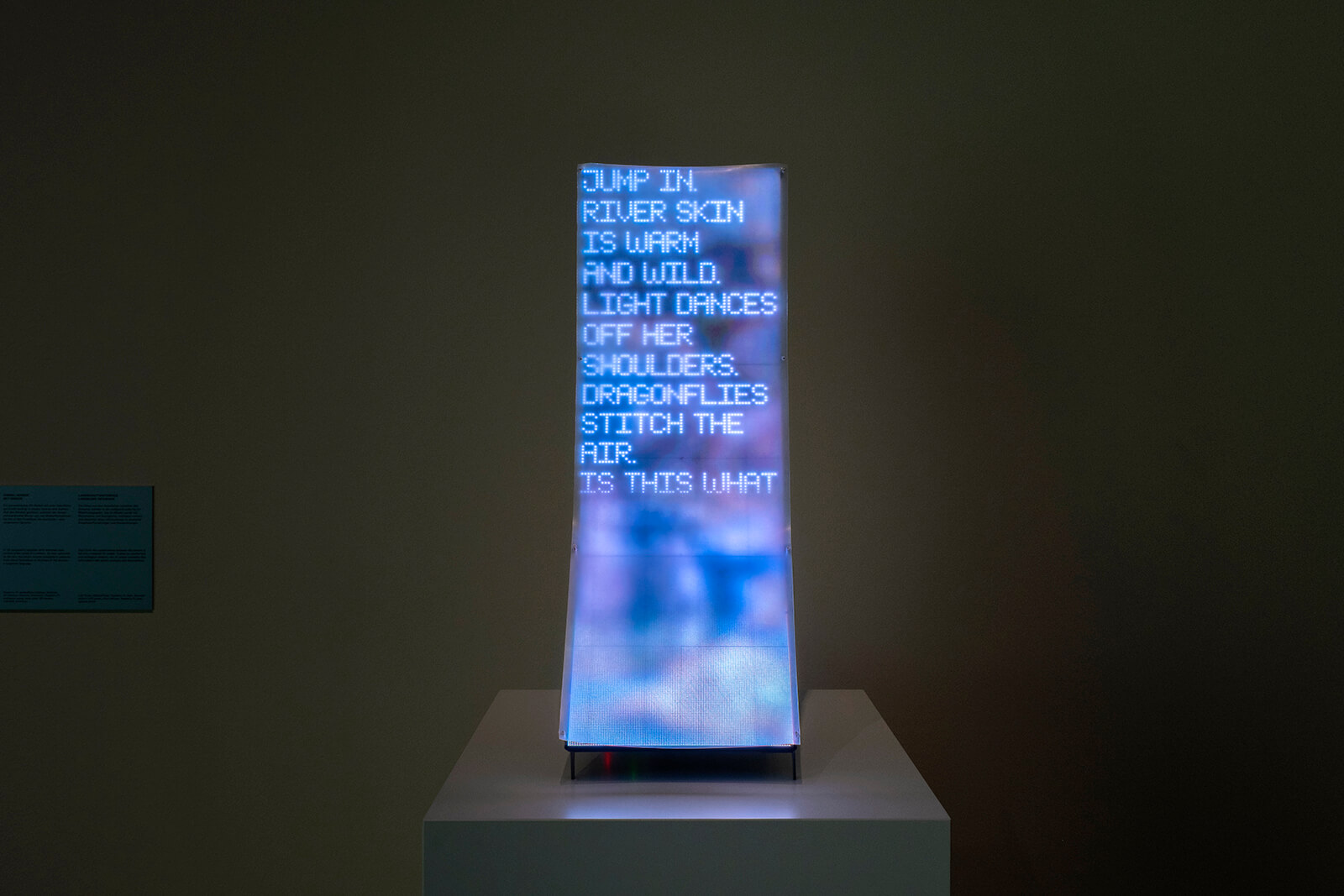
It’s vital to note here that any use of the term craft in this article is meant simply to imply skilled work done by the hand, while keeping in mind its sociopolitical associations—tradition, slowness, imperfection. For the design exhibition, Superflux occupies three rooms at the museum, bringing together three major works from the duo: the multispecies banquet Refuge for Resurgence (2021); ongoing explorations into river intelligence in Nobody Told Me Rivers Dream (2025) first showcased for the Design Museum’s exhibition More Than Human; and a new commission for the museum in Austria, Relics of Abundance (2026).
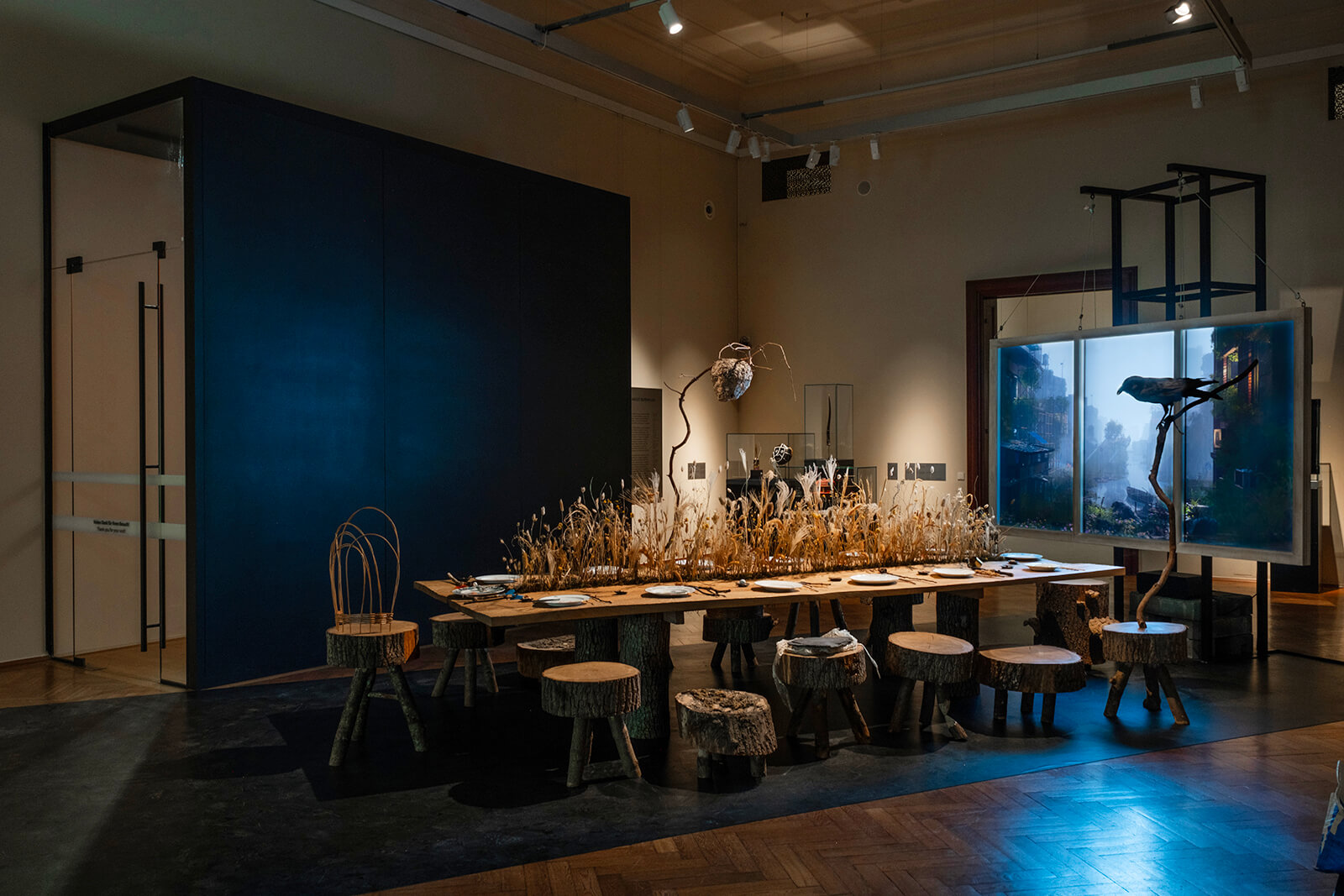
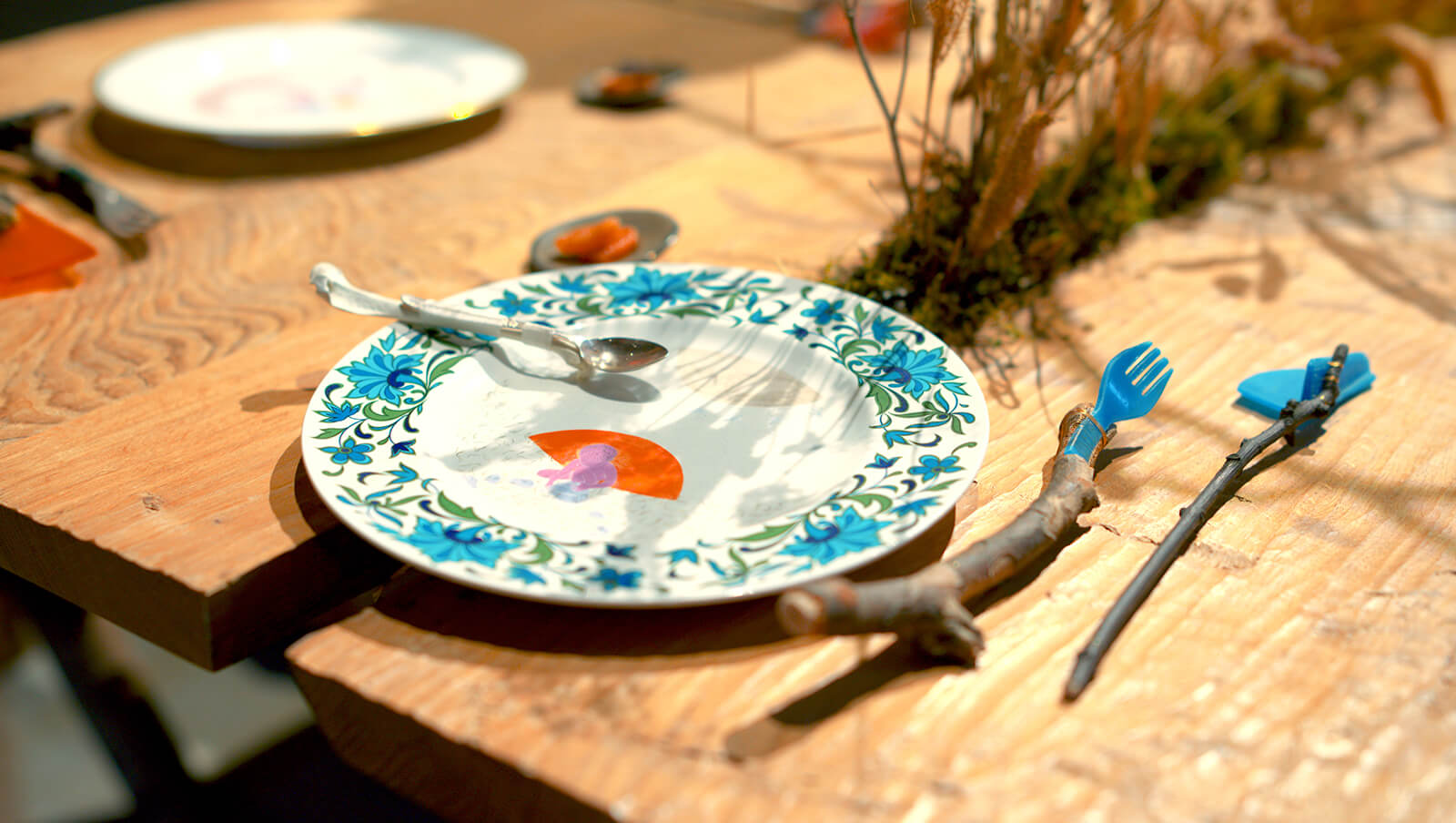
“Looking back, the three works trace a clear arc, though we could not have planned it at the outset,” Jain and Ardern note, describing Refuge for Resurgence as an act of ecological imagination which asked its viewers, “Can we sit together as equals? Can we imagine a social contract that is not just between people?” In a sweeping, unmarred open field, with not much else around, one sees a dining table laid out. The scenography is all makeshift, found objects scavenged from the detritus of the Anthropocene. It offers a view of the future that is at once disconcerting, confronting us with the consequences of our hubris, but hopeful. Life of some sort will go on, with the natural world. Even at the end of the world, we will gather, we will tell stories and break bread together; the installation insists. Isn’t that ultimately the most human thing to do? Survival is insufficient. So where do we go from here?
The where of that question—forming a very tangible inquiry—is to Superflux an invitation to listen to the situated knowledges of natural landscapes, of rivers meandering through ancient terrains with Nobody Told Me Rivers Dream. Foregoing the dialectic opposition of the ecological and technological, it proposes a system of handmade sensor-objects that observe birdsong, tides and skies, combining these observations with an AI trained on weather lore, folklore and Indigenous wisdom. If craft is understood as skilled handiwork, it is also a call to decenter human needs, listening instead to the rustle of leaves, to bird calls and the babble of rivers; to assume a reciprocal role with nature, with craft as the bridge. As the duo elucidates, “The Craftocene does not abandon the question of what humans should do. It insists that what we do must be shaped by the materials, ecologies and other beings we are entangled with.”
“When you pick up a discarded vape battery and rework it into a power source, you are not just making something useful. You are reversing the logic of an entire system: the supply chain, the planned obsolescence, the assumption that your role as a person is to consume and discard. You are paying attention to a material that was designed to be invisible after use. That attention is the beginning of a different relationship with the world,” Jain and Ardern continue. To pay attention to the world, to draw a line in the sand, is to already enter into a relationship with the material.
When the human enterprise has failed, when grass grows through the cracks in concrete, when all that remains is the mushroom, it is this decentring that will matter. What will become of the objects of our desires? What will those in a future where there are no markets, or supply chains, or the internet or even electricity, make of iPhones, or designer clothes or rusting cars—populating landfills, the unnaturally natural landscape of the future? In the aftermath of world-ending events, what will survive? Love? Or the stories we tell? If something does survive, what value are we to ascribe to it? Not monetary certainly, but perhaps metaphorical. As Superflux speculates, power of some sort will remain, and maybe these objects will become totemic relics to a world that is understood as little then as it is now.
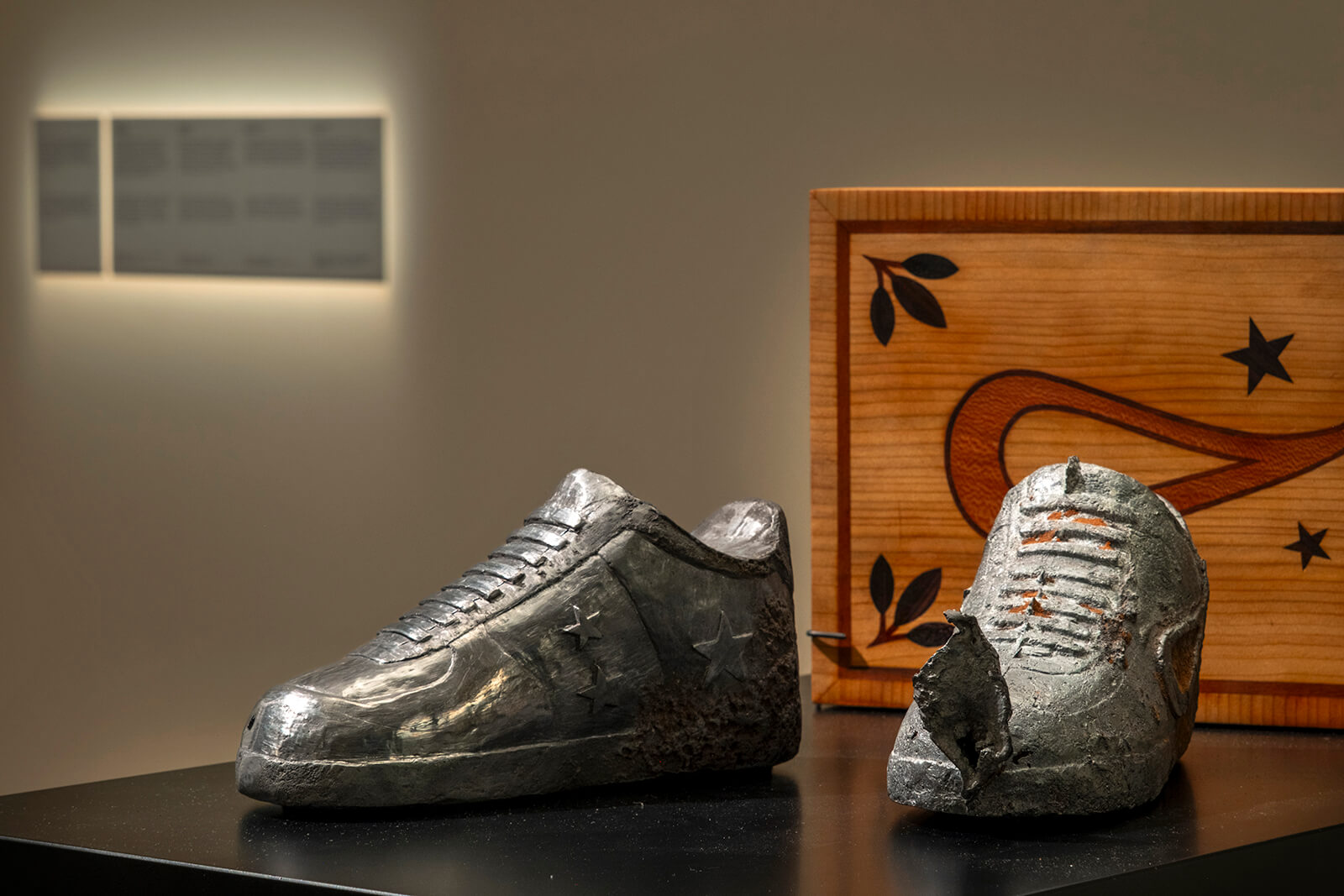
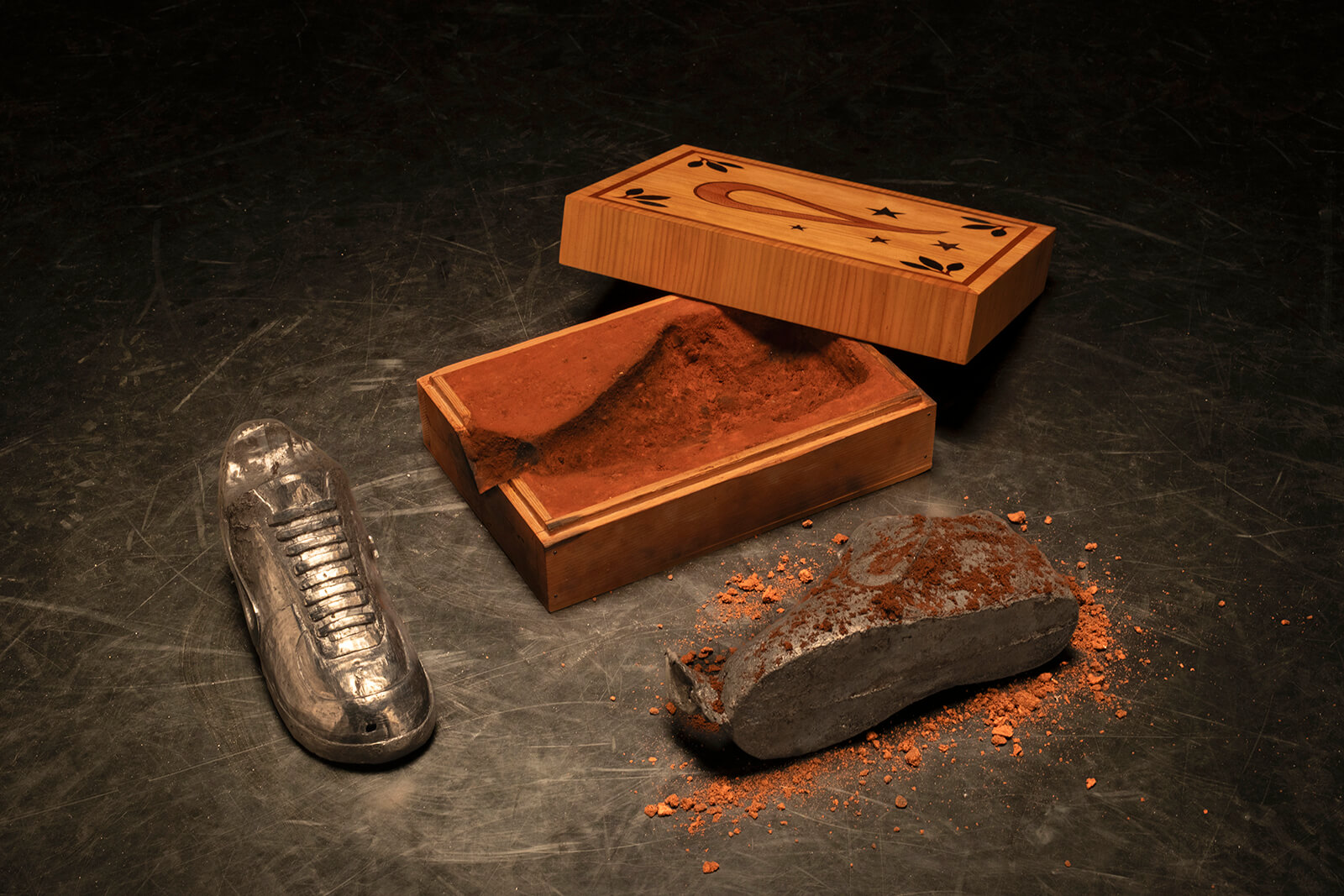
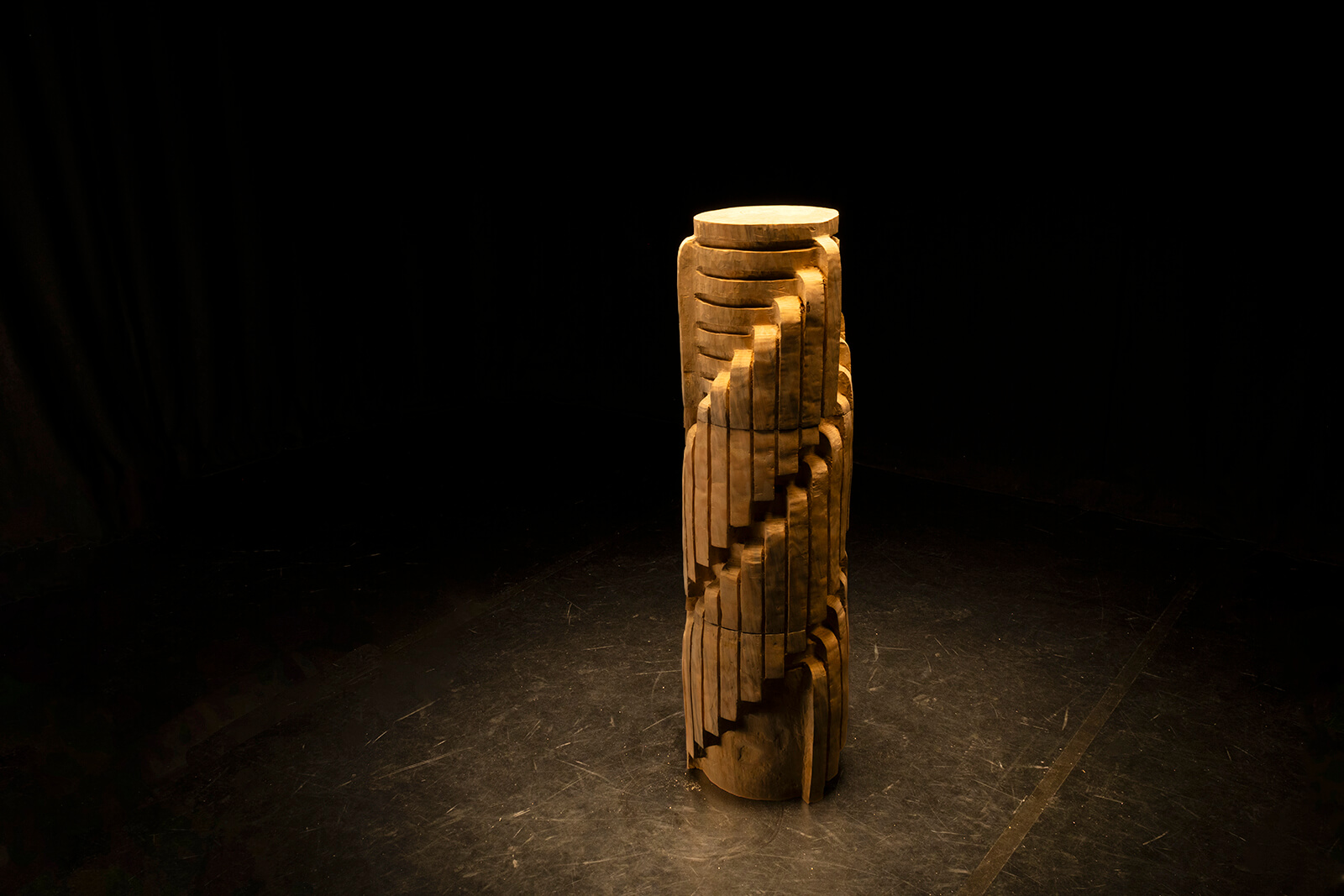
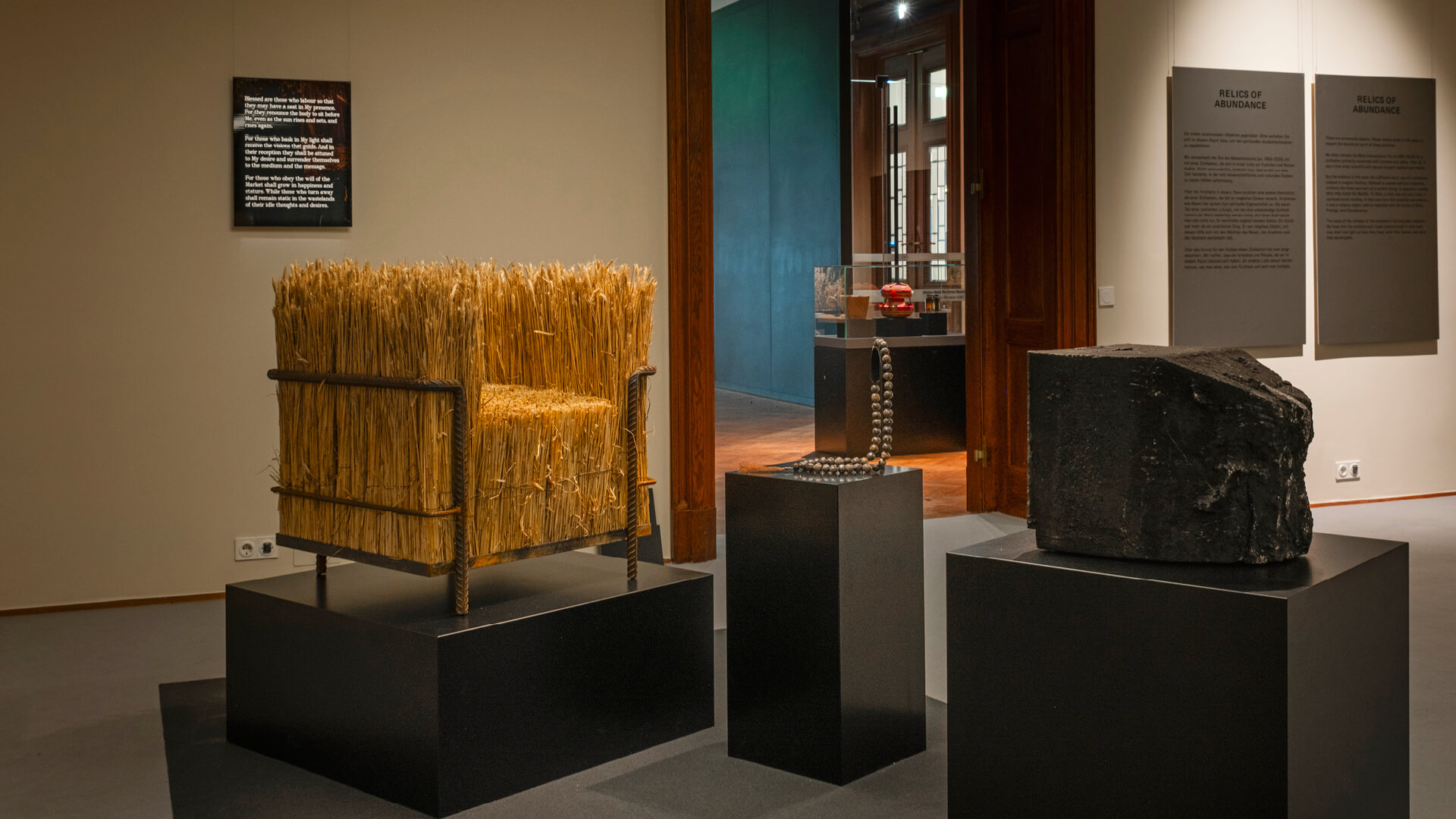
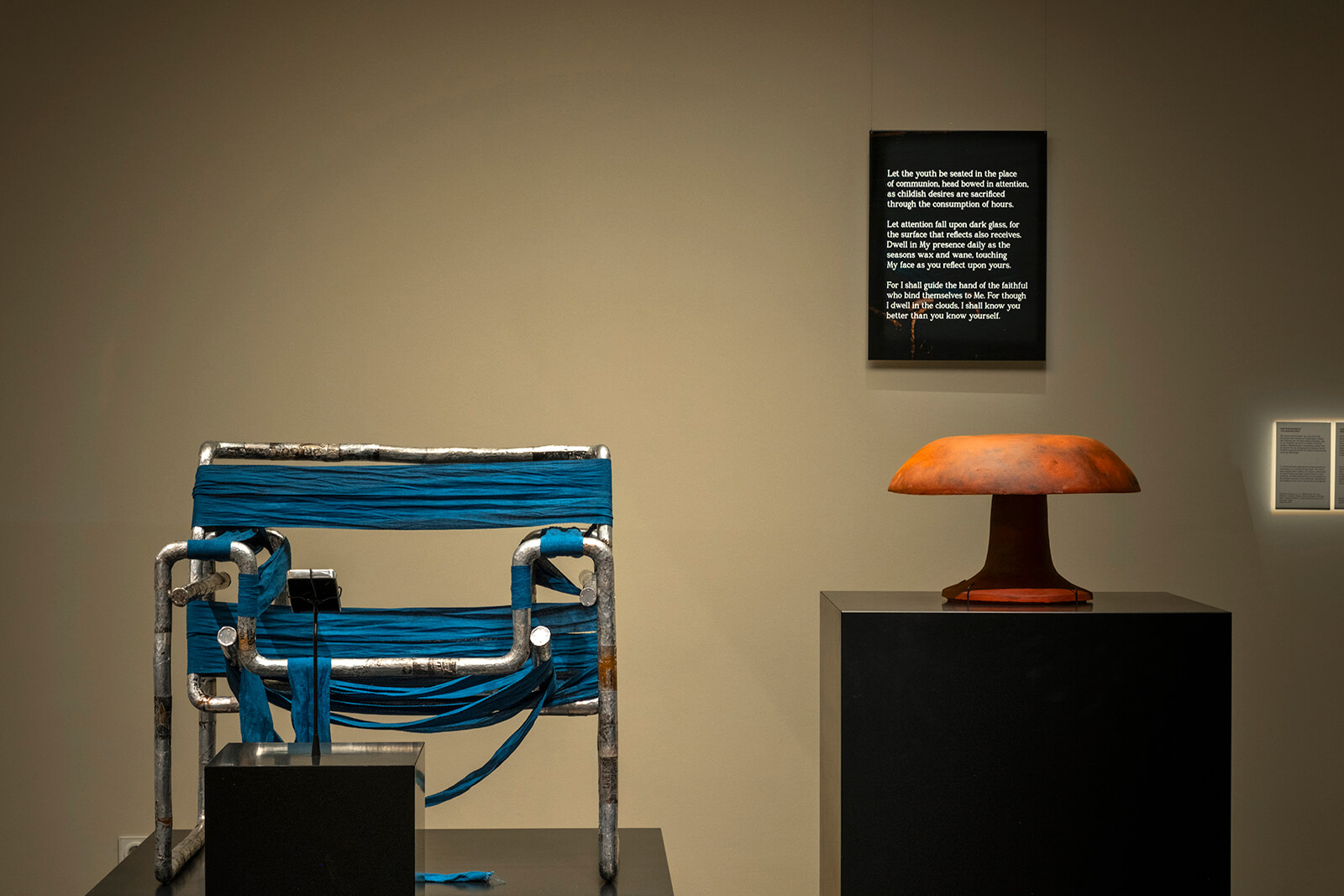
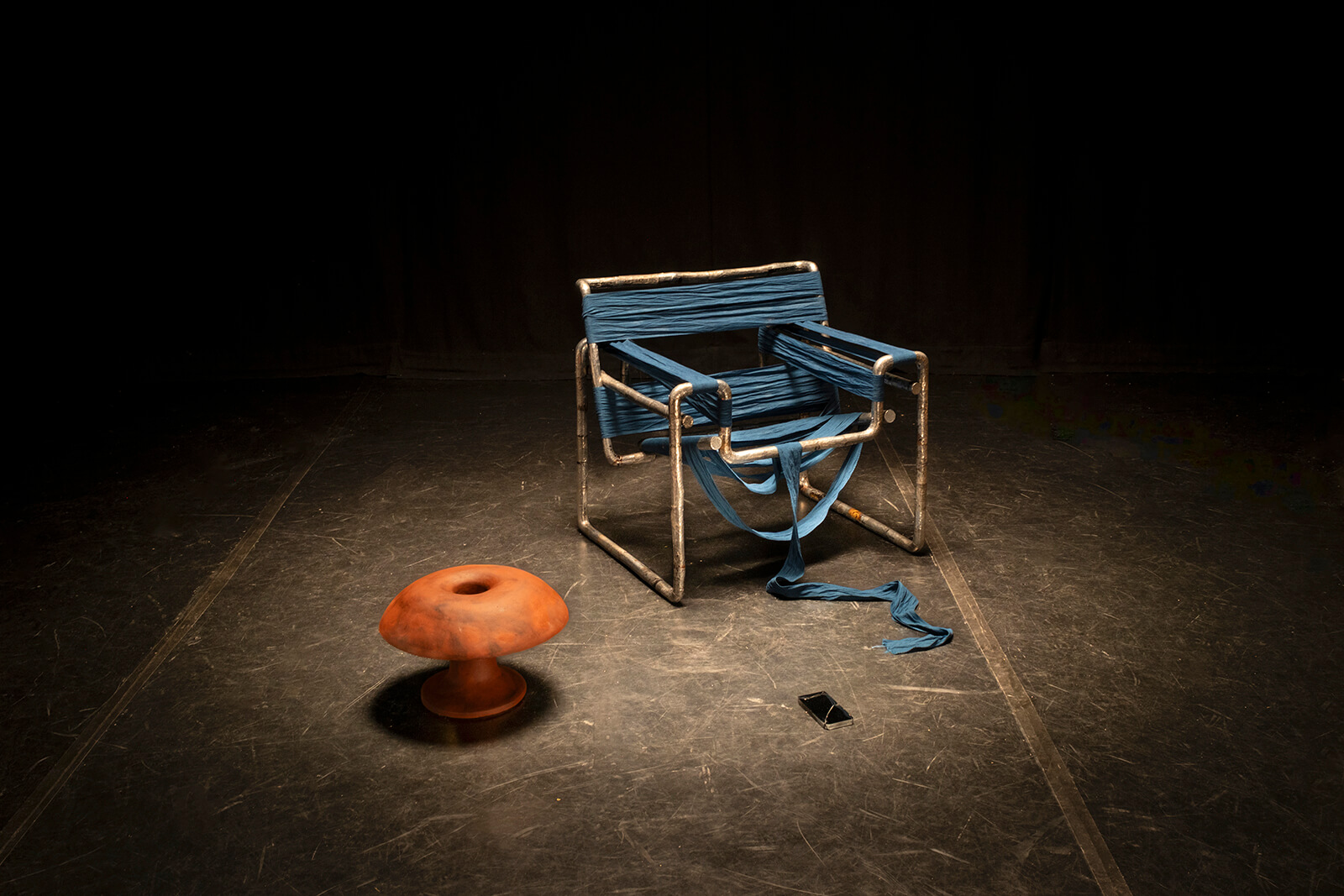
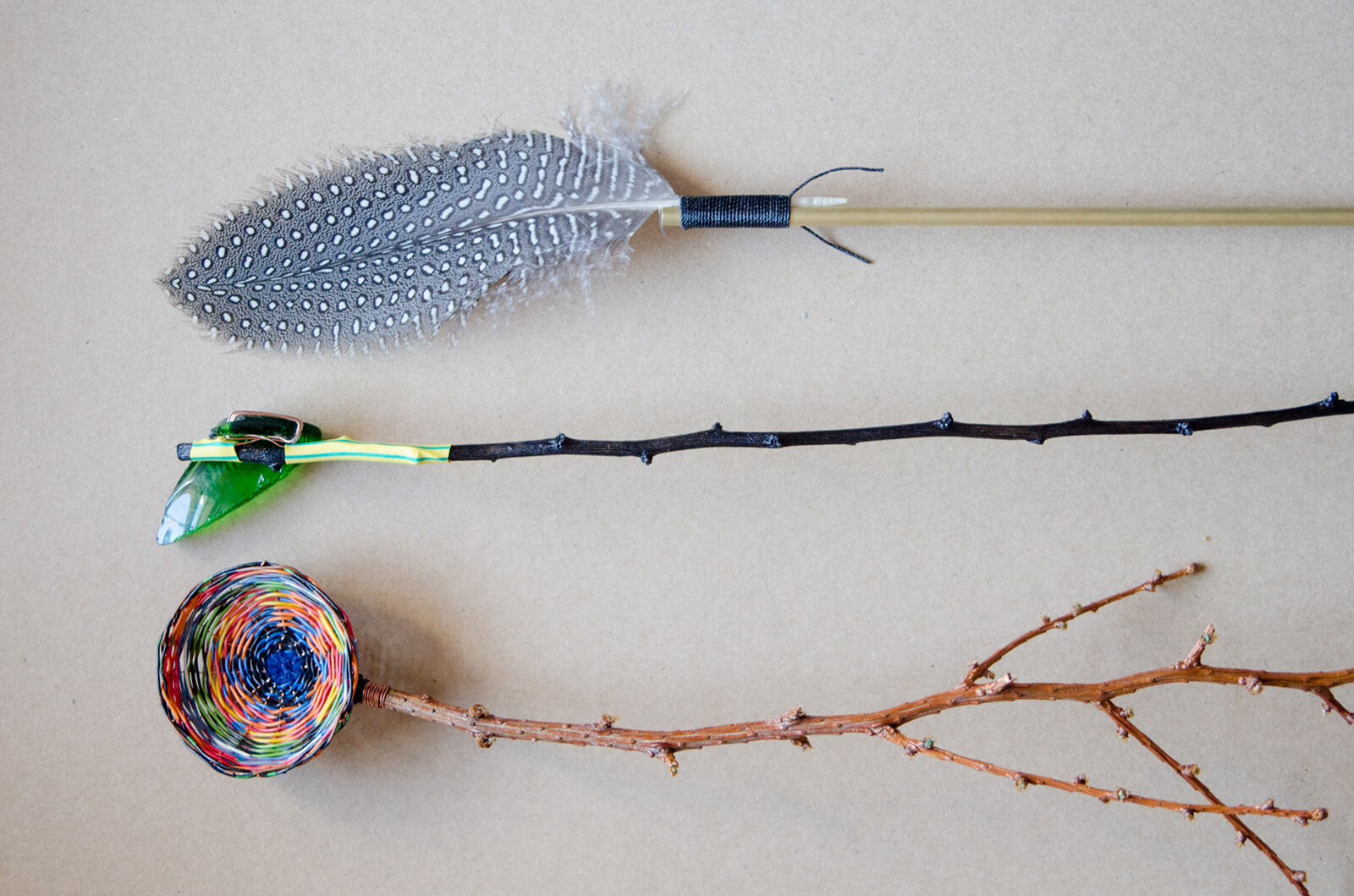
Recontextualising objects of consumer culture, from the omnipresent sneaker and smartphone to the aspirational Corbusier chair, as devotional objects for Relics of Abundance, the pair suggest what might shape our future myths. “This work is about humility. About seeing ourselves clearly by stepping outside ourselves,” they note. So, the Corbusier chair, once a signifier of taste and a certain class, the sneaker, a banner to a certain cultural cache, become mythologies, covertly signalling what has become of our market culture: the global supply chains, mechanical reproduction, the dizzying choices we are presented with, all in service of the new that never arrives.
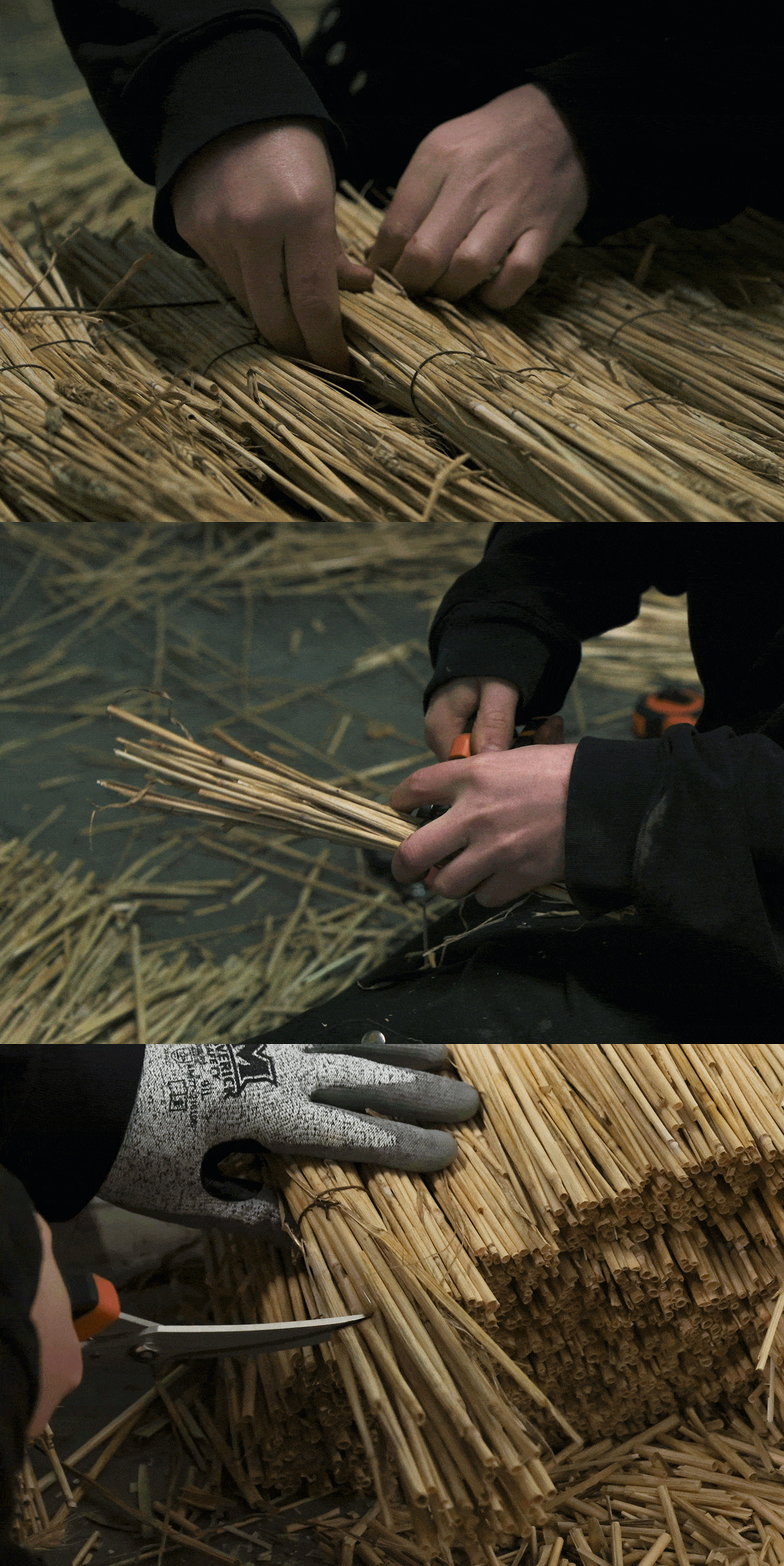
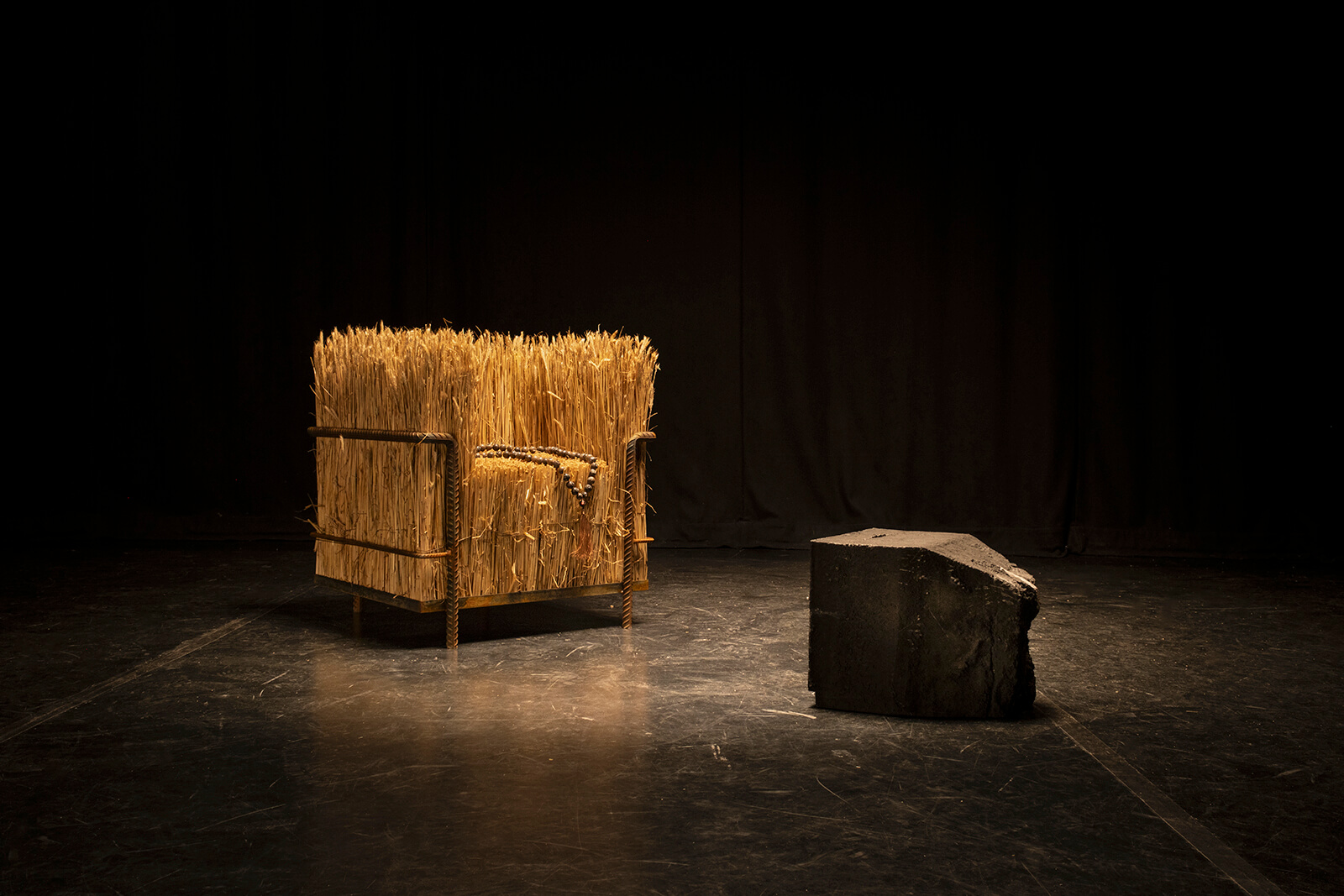
Removed from this eddy of globalising phenomena exacerbated by modernism’s obsession with mediatic representation, the objects are vested with an unexplainable but still lively gravity. The Corbusier chair, that paean to the modern Man, is reinterpreted by the studio with bales of hay and rusting rebar. It is no longer the Chair that everyone desires, instead becoming an image of that coveted chair design. It is, as the pair note in conversation, part of “ritual scenes, each one imagining a different ceremony performed by a future civilisation in devotion to the Market.” The Breuer chair becomes abstracted as pipes and strips of discarded textile. A simile of the sneaker is cast each year in this imagined future, as a ritual that the people understand only symbolically. So is the TV. These objects, placed on pedestals in a stringent museum display, become Superflux’s proposition for a new knowledge system that relies on values of material dialogue, craftsmanship, care and repair, even if the image, the likeness, is familiar. The objects, made from the scraps of what we left behind, what we discarded, what was once deemed unfit to be reused only because it had served its initial purpose, are not only redolent with mythic purpose, but that we have made them with our own hands gives them special status in this speculative archaeology.
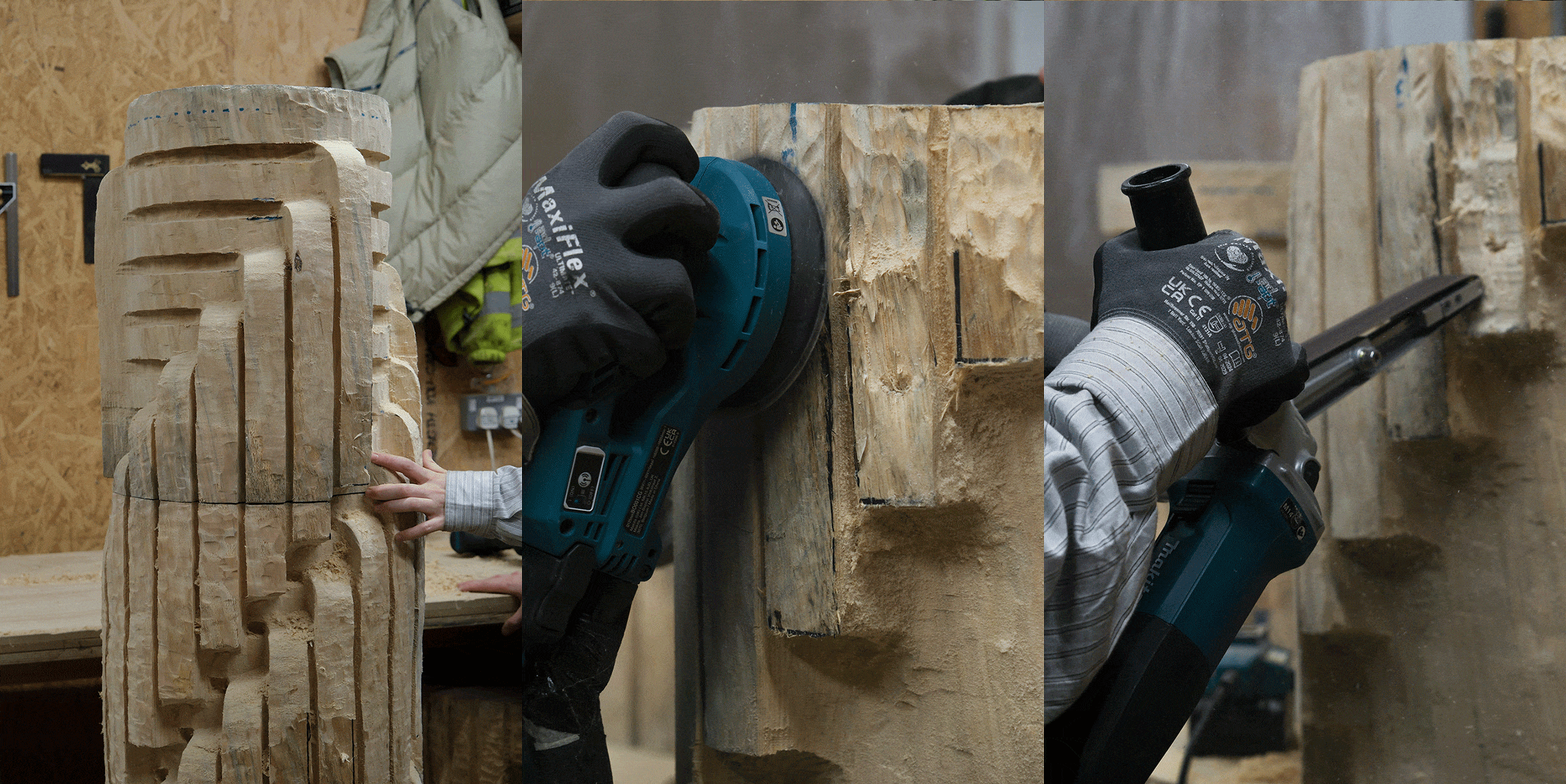
In doing so, Superflux also asks, once fallen, should humanity rebuild what was before? Is there a before to return to? In Station Eleven, Emily St John Mandel’s 2014 novel following a pandemic eerily similar to COVID-19, the handful of humans that remain are caught between two seemingly polarised moral outcomes; to return humanity to the world we lived in before, or to carry on as it were, with the devastation we have been endowed with. The objects in Relics of Abundance are reminiscent of the production design for the show based on the book; piecemeal, foraged objects put to new purpose. The main characters in the book and show process their grief by turning to stories, with a travelling symphony performing Shakespeare in open fields. All living things must die, passing through nature to eternity. We are always bound by our earthliness, our chthonic nature, and stories, myths, and songs remind us of this corporeality.
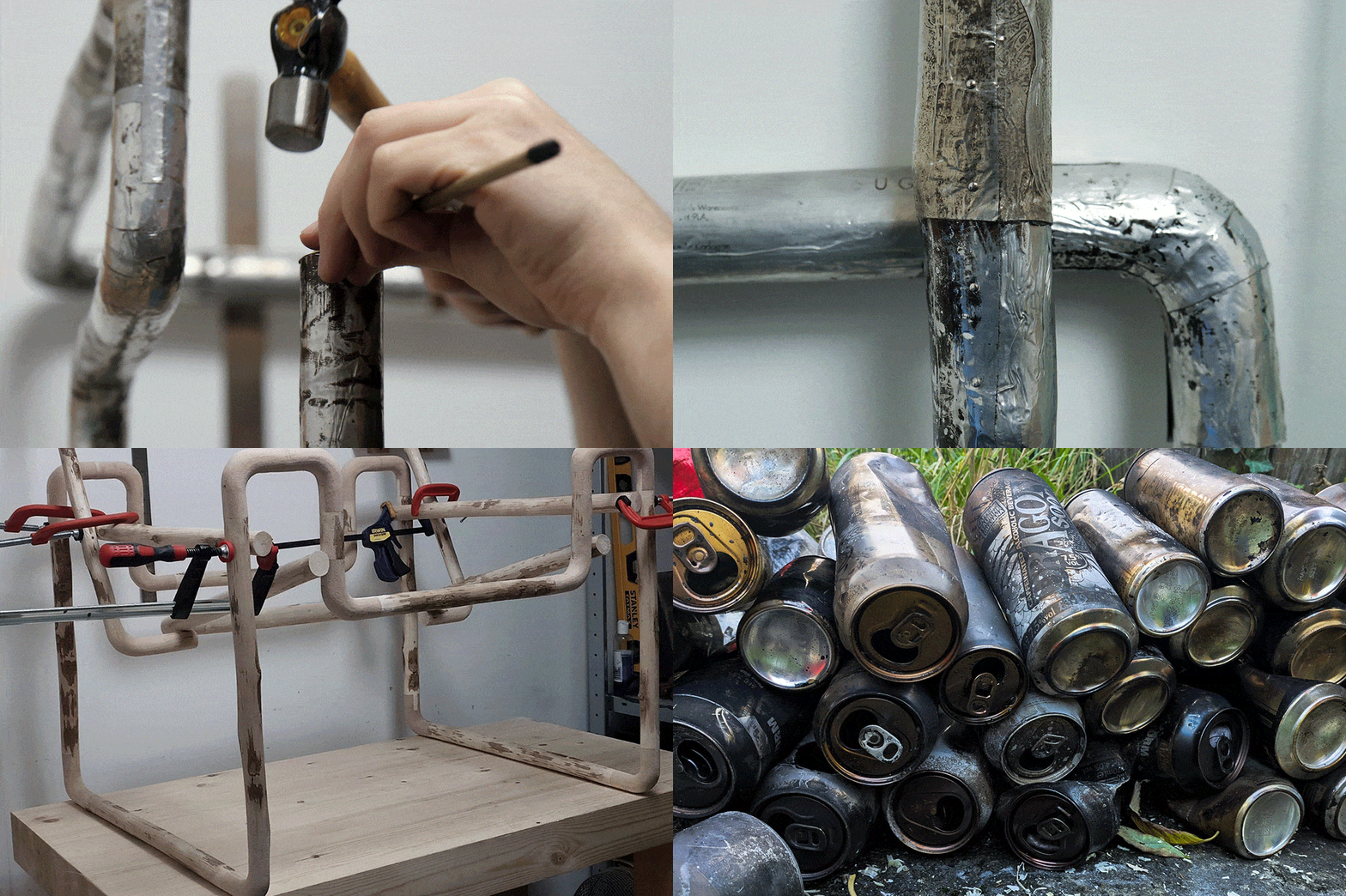
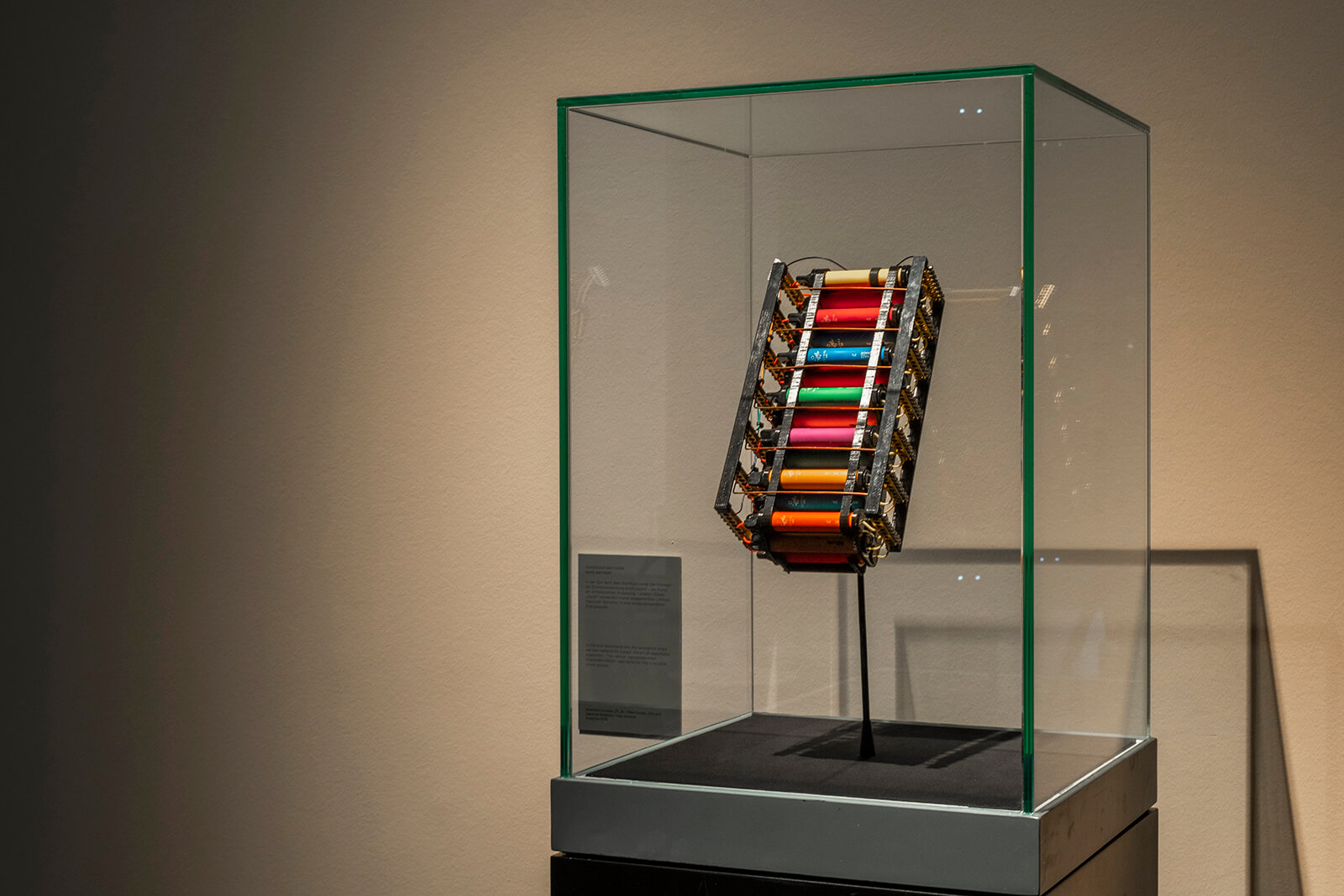
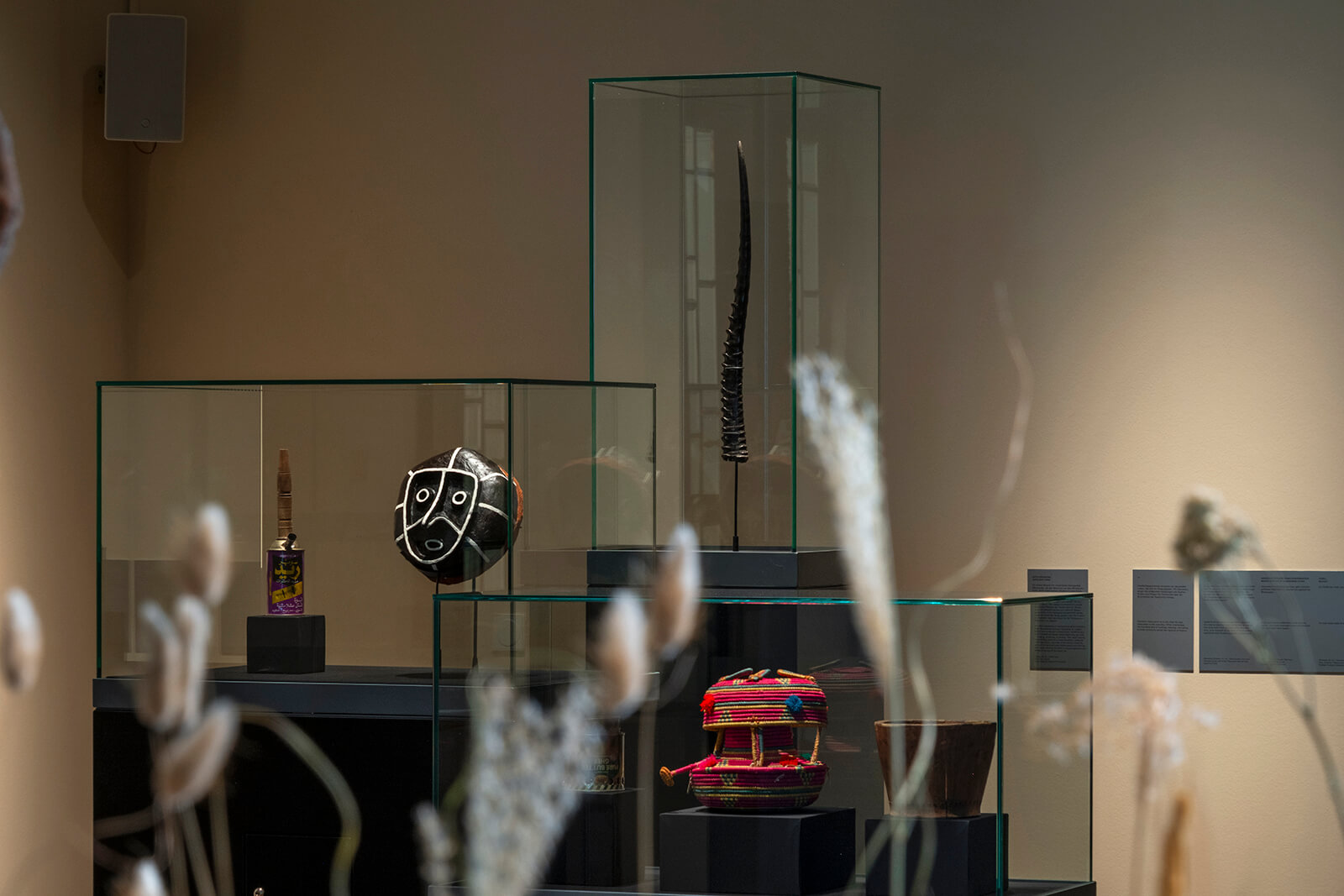
This is why the insistence on ritual, on spirituality and on the mythologies we invest in becomes so crucial in Superflux’s latest work. In conjunction with the repurposed talismanic objects that form Relics of Abundance, the duo also curated a selection of objects from the museum’s collection to form part of this future knowledge system, which honours the value of storytelling. “Bringing our speculative archaeologies in direct conversation with objects from the museum’s permanent collection is particularly exciting for us…A Piaroa mask sits alongside our speculative prayer bead made from a TV remote. They hold equal weight because they are both doing the same thing: encoding a relationship between people and forces larger than themselves.”
By positioning their speculative designs as part of a fictional ethnographic history, one that in some way explains the project that is humanity, Superflux puts forth a provocation: that while the Anthropocene has so far defined our relationship to the world, perhaps in the future, the outcomes of our culture will be understood through the lens of reciprocity and resourcefulness. “Reciprocity, because every object in this exhibition points to a relationship. And resourcefulness, because the ability to pick something up, understand its properties and find a new purpose for it is not a quaint survival skill. It is the most relevant form of intelligence we have,” they note.
Which is why, to return to the nomenclature itself, the Craftocene, matters. The showcase insists that craft not be understood in opposition to progress, but as a radical alternative; not as a conservative preserve, but as future-oriented thinking. There can really be no fixed or singular definition to ‘craft thinking’ as Katie Treggiden emphasises in Can Craft Save the World?, but as a methodology that prioritises repair, resourcefulness, care and a concern with the material itself. It will be our resistance to the nostalgia of repetition and mass reproduction, to the veneration of perfection. As anyone who weaves, knits, crochets, who draws or sings, or even writes knows and will tell you: A thread, a line, a trace; it contains every bit of humanness.
The views and opinions expressed here are those of the author(s) and do not necessarily reflect the official position of STIR or its editors.

by Pranjal Maheshwari Oct 23, 2026
Co-authored by Jareh Das, Chairman traces the British designer’s fixation on chairs as symbols of power and identity and as mediums of expression and community building.
by Mirra Lynn Oct 22, 2026
The curators behind Palestine Design Week 2026 reflect on its intent, considering how design holds memory, makes space for loss and imagines a future in Palestine.
by Chahna Tank Oct 22, 2026
STIR speaks with the Mumbai-based type designer about her practice, type walks and why she wants more people to have stronger opinions about Indian-script fonts.
by Jincy Iype Oct 15, 2026
STIR explores craft, material intelligence and people shaping Indian design through dialogues with Design Democracy’s co-founders and the curators of its special exhibitions.

make your fridays matter with a well-read weekend
Enter your details to sign in
Don’t have an account?
Sign upOr you can sign in with
a single account for all
STIR platforms
All your bookmarks will be available across all your devices.
Stay STIRred
Already have an account?
Sign inOr you can sign up with
Verification link sent to check your inbox or spam folder to complete sign up process
Tap on things that interests you.
Select the Conversation Category you would like to watch
Please enter your details and click submit.
Enter the 6-digit code sent at


Weaving myths of our more-than-human futures through The Craftocene
by Mrinmayee Bhoot | Published on : Mar 06, 2026


 Sign in with Google
 Sign in with email
What do you think?