Architecture10 mins. read
The icon of modern architecture, Ludwig Mies van der Rohe, and America
by John JervisMar 27, 2020



by Sunena V MajuPublished on : Mar 05, 2026
When we talk about retrospective exhibitions on architects, the narrative often follows a familiar pattern. They become stories of buildings and drawings, of architectural schools and apprenticeships, of projects and influences. Rarely do such exhibitions reintroduce the architect not just through their work, but as a person. In recent years, I have found myself increasingly interested in architects beyond the roles they occupy within the discipline. This is not a new line of inquiry, but it has often slipped through the gaps of architectural storytelling. We celebrate master architects and starchitects through their work, yet when it comes to their lives, we leave large areas unspoken, often intentionally. To acknowledge those stories would mean acknowledging the controversies, politics or identities that institutions historically preferred to overlook. When those stories are not controversial, they often become flattened into predictable biographies.
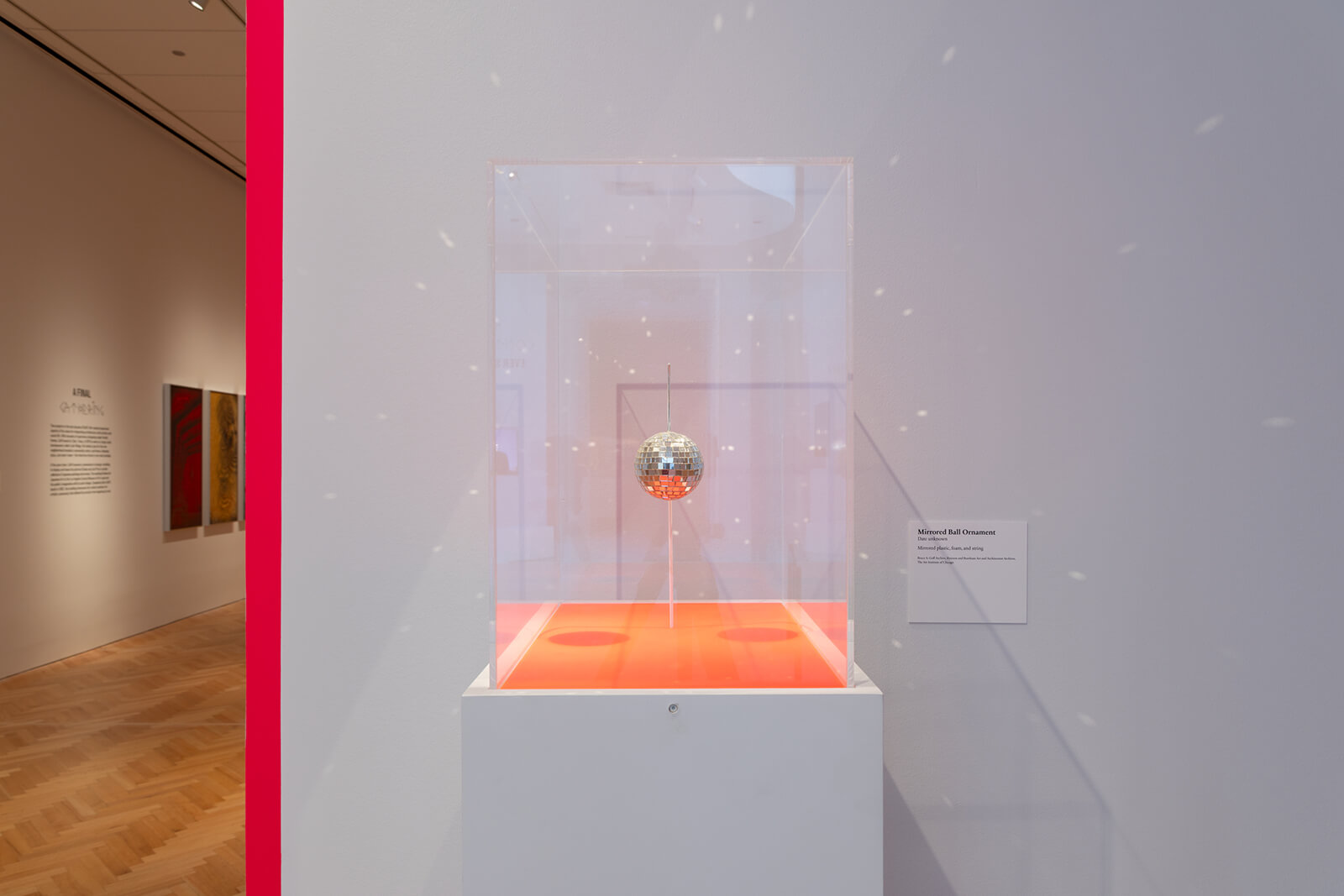
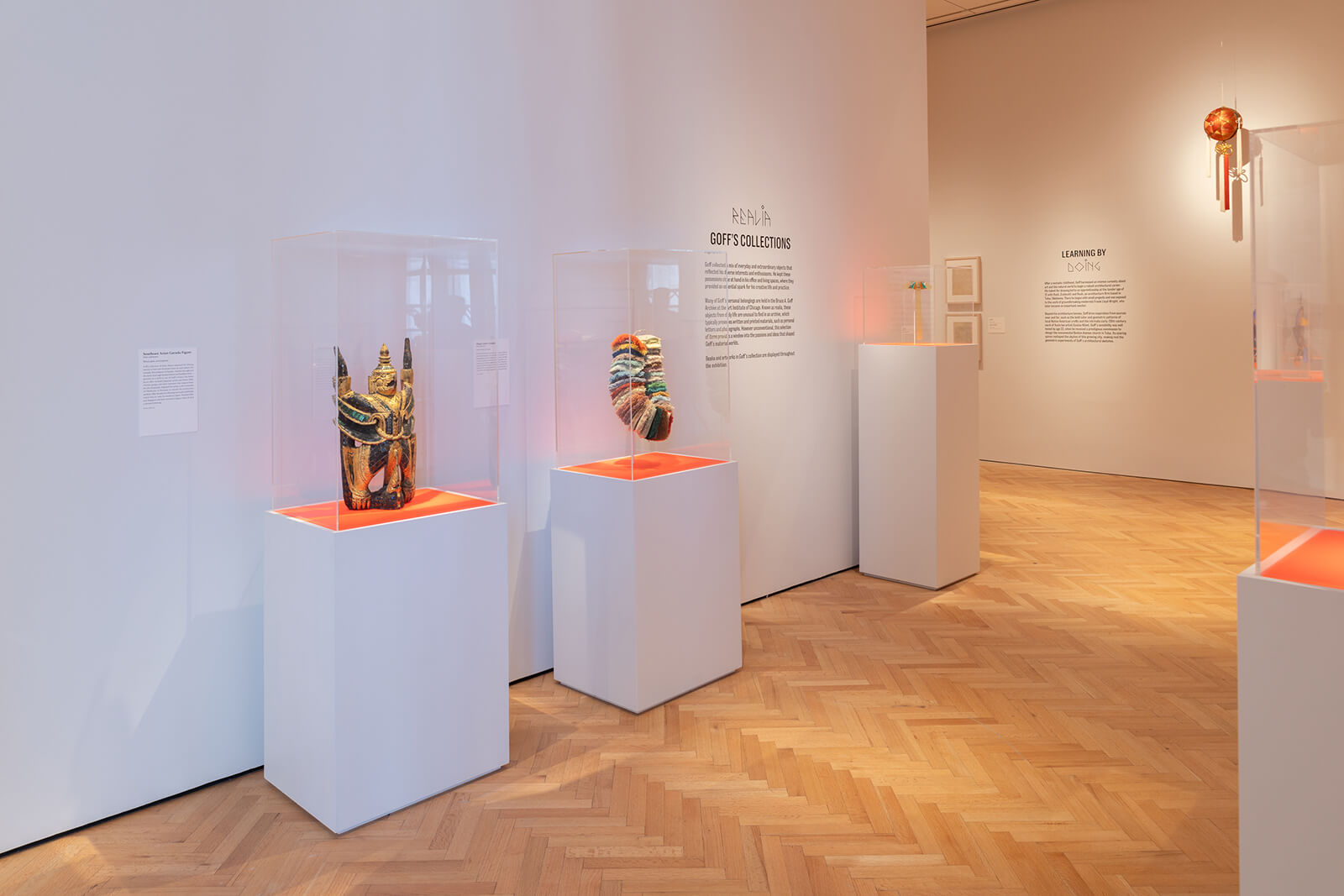
This became the reason why stepping into the exhibition Bruce Goff: Material Worlds at the Art Institute of Chicago produced an immediate sense of delight. This is an architecture exhibition where the first object in sight is not a drawing, a model or a photograph. Instead, it is a small disco ball, or as the label describes it, a ‘Mirrored Ball Ornament’. Nearby sits a Southeast Asian Garuda figure, a shag carpet sample and a bolo tie. For a brief moment, I wondered whether I had entered the right gallery. And then, before the question could settle, a T-square appears—sparkly, embellished, colourful. Just like Bruce Goff.
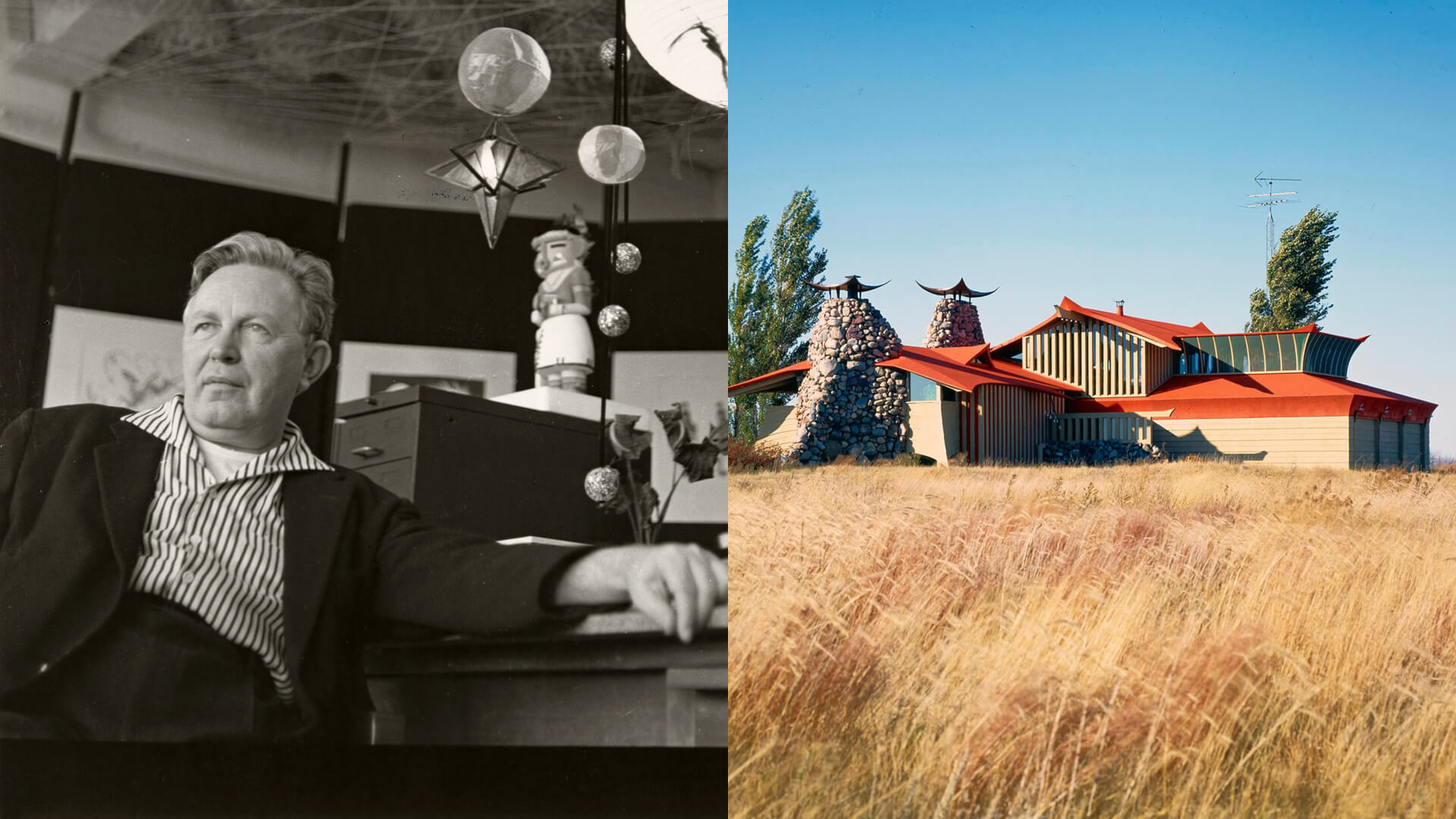
My first encounter with Goff did not come through a classroom or an architectural history survey. I discovered him in a digitised 1951 issue of Life magazine while researching postwar advertisements. Following an advertisement for ‘The First Six-Tube Hearing Aid’ was an article titled, The Round House. Its opening line read: “Architect [Bruce] Goff, one of the few U.S. architects whom Frank Lloyd Wright considers creative, scorns houses that are ‘boxes with little holes.’”
As an architecture student in India, Goff was not a name that surfaced often. The house featured in the article—circular, unconventional, almost playful—felt completely out of step with what I expected to see in an American magazine at the height of modernism. I spent hours studying that house and then moving through others: the Ford House, the Bavinger House and many more. What fascinated me was the discovery of an American architect who seemed uninterested in the rigid lines and grids that defined much of the architectural imagination of the period.
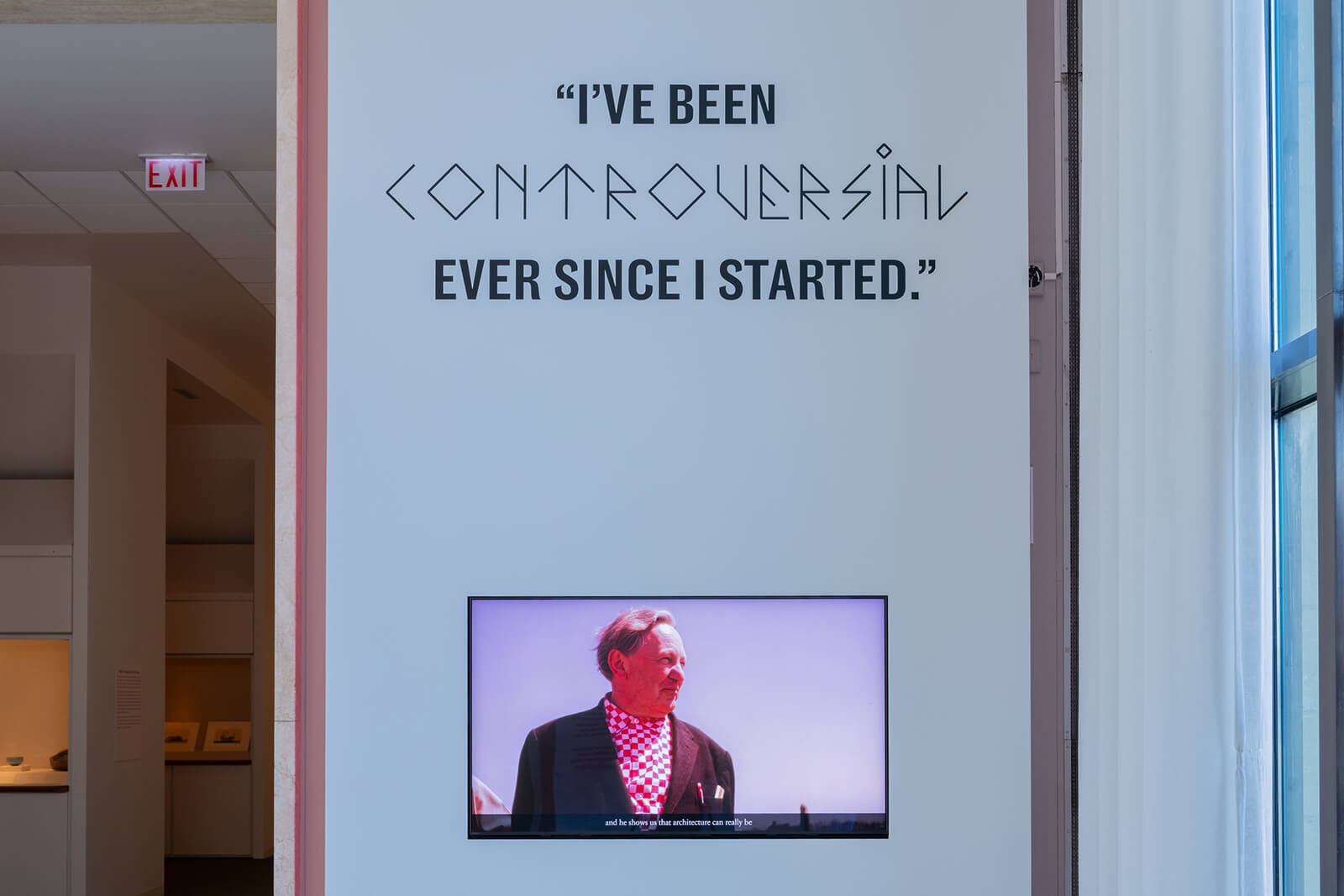
It was only later that I began to understand the fuller shape of his life: the prodigious talent that emerged without formal training in architecture, the years as a working jazz musician alongside his architectural practice, a celebrated tenure at the University of Oklahoma, his controversial and sudden departure from the university during the McCarthy Era and a prolific body of work he produced until the end of his life. The curiosity for that research was sparked by accounts of the circumstances that led to his resignation from the institution during the conservative political climate of the 1950s. By the time I arrived at the exhibition in Chicago, I expected to encounter a story marked by tension and confrontation. Instead, Bruce Goff: Material Worlds unfolded as something far more joyful.
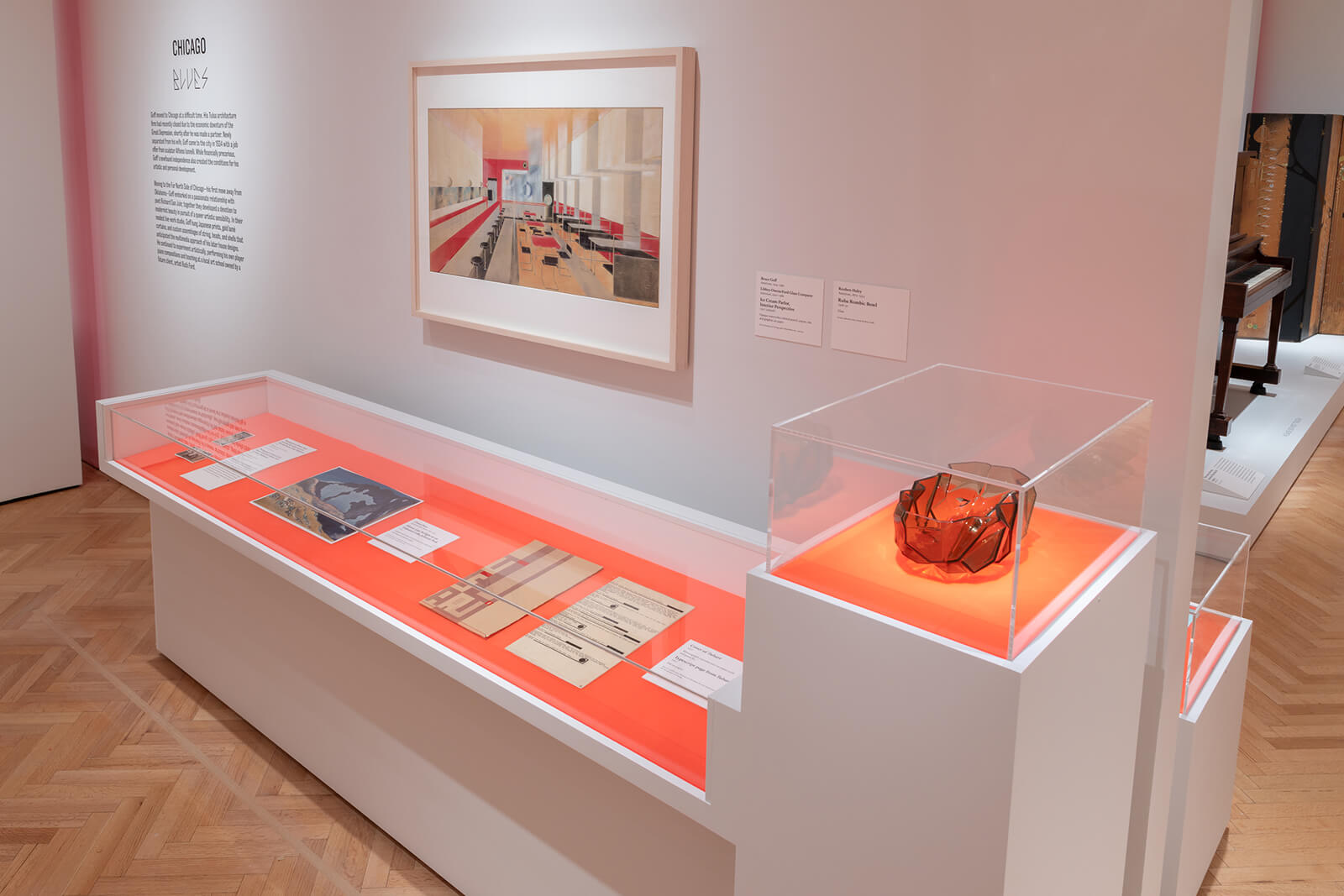
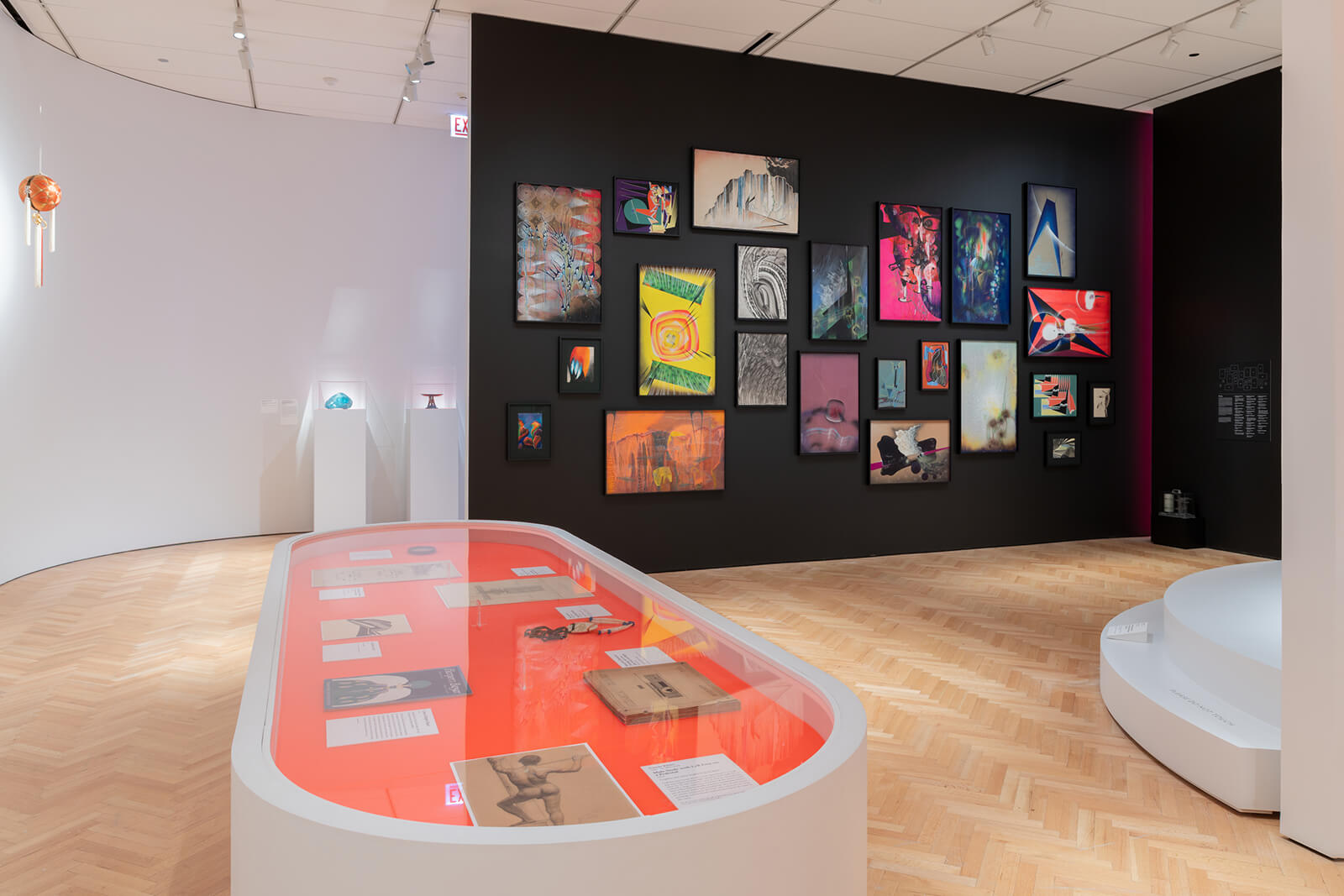
Curated by Alison Fisher, Harold and Margot Schiff Curator of Architecture and Design, and Craig Lee, assistant curator of Architecture and Design at the Art Institute of Chicago, with exhibition design by New York–based New Affiliates, the show presents a life through objects, atmospheres and associations rather than through a strictly chronological architectural narrative. The exhibition is organised into eleven sections, including Realia: Goff’s Collections, Learning by Doing, Avant Garde on the Plains, Chicago Blues, The American School, Pride of the Prairie, Roadside Spectacle, Artificial Nature, Plastic Futures and A Final Gathering. Yet the spatial experience of the exhibition does not follow these sections in a rigid sequence. Movement through the gallery is fluid, with openings that allow glimpses across different periods and themes. Visitors drift between moments in Goff’s life rather than marching through them.
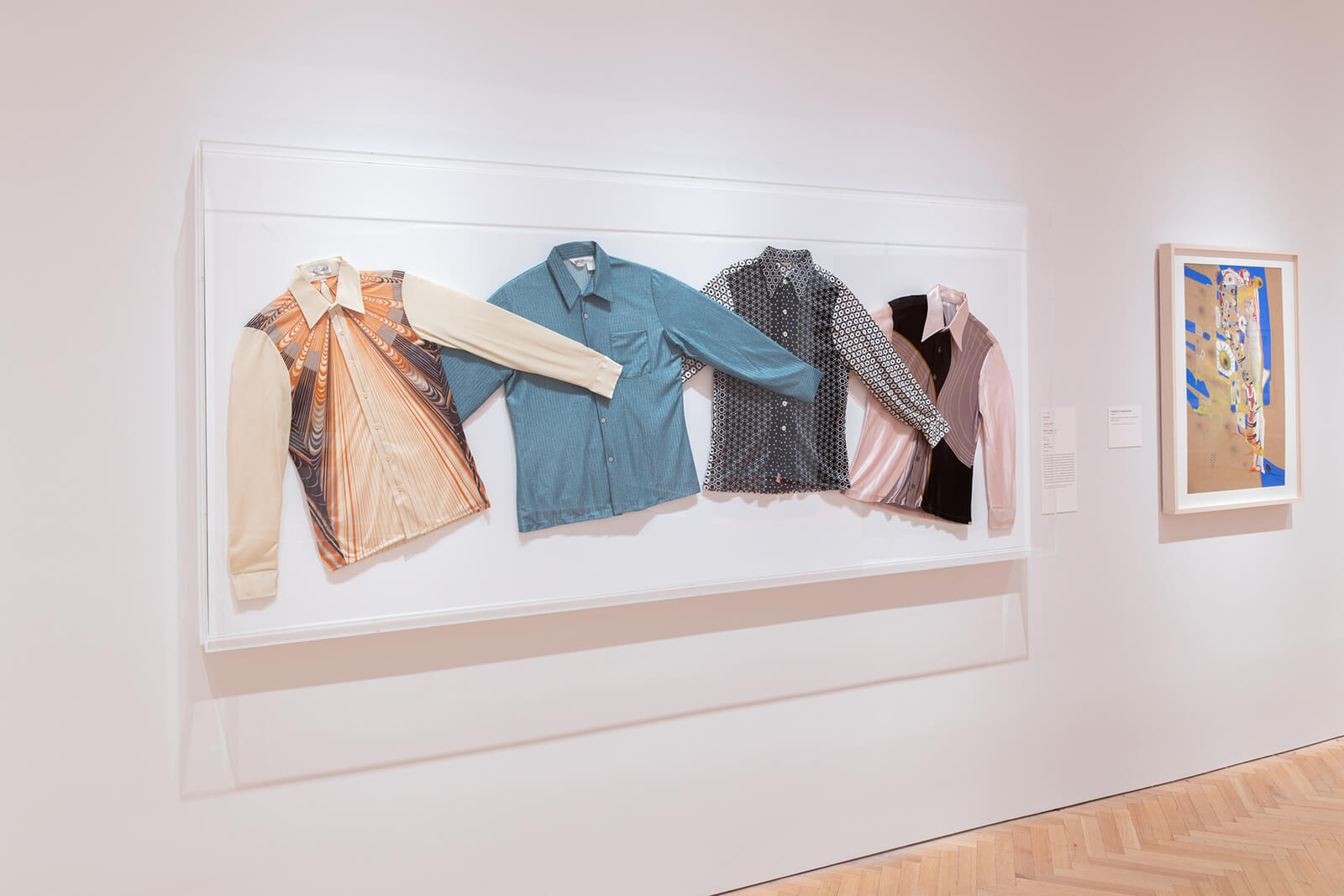
The exhibition design reinforces this sense of movement and discovery. Bright pink backdrops frame the displays. Objects appear at varying heights and scales. Some are placed intimately close, while others are held at a distance. The effect is carefully calibrated but never didactic. Nowhere is this more affecting than in the section displaying Goff’s shirts. Hung vertically at a height calibrated for intimacy, surrounded by narrowed circulation space, these garments—vivid, patterned, unmistakably his—do something that drawings and models cannot. They conjure a body. Looking at them alongside the photographs of Goff scattered throughout the exhibition, it becomes impossible to think of him as an abstraction. The person who wore these shirts and the person who designed those buildings were one and the same: someone who dressed the way he built, who refused the convention of plainness in every domain of his life.
Then, at the passage, you notice the music that has been lingering in the background grows louder, and you approach a self-playing piano. That single piece of music, one among many that Goff loved and played, begins to shape the atmosphere of the exhibition. It is a curatorial choice of quiet brilliance. Music was not incidental to Goff’s life; it was inseparable from it. He played and composed throughout his career, and the presence of sound in the exhibition—not as ambient atmosphere but as a specific, chosen piece—transforms how you read everything around it. The drawings become more legible. The objects take on warmth. Perhaps, for the first time in a retrospective, all of this, the 500 designs, the unconventional materials, the feathers and sequins and AstroTurf and glass cullet, came from someone who simply loved beauty in all its forms and saw no reason to apologise for that.
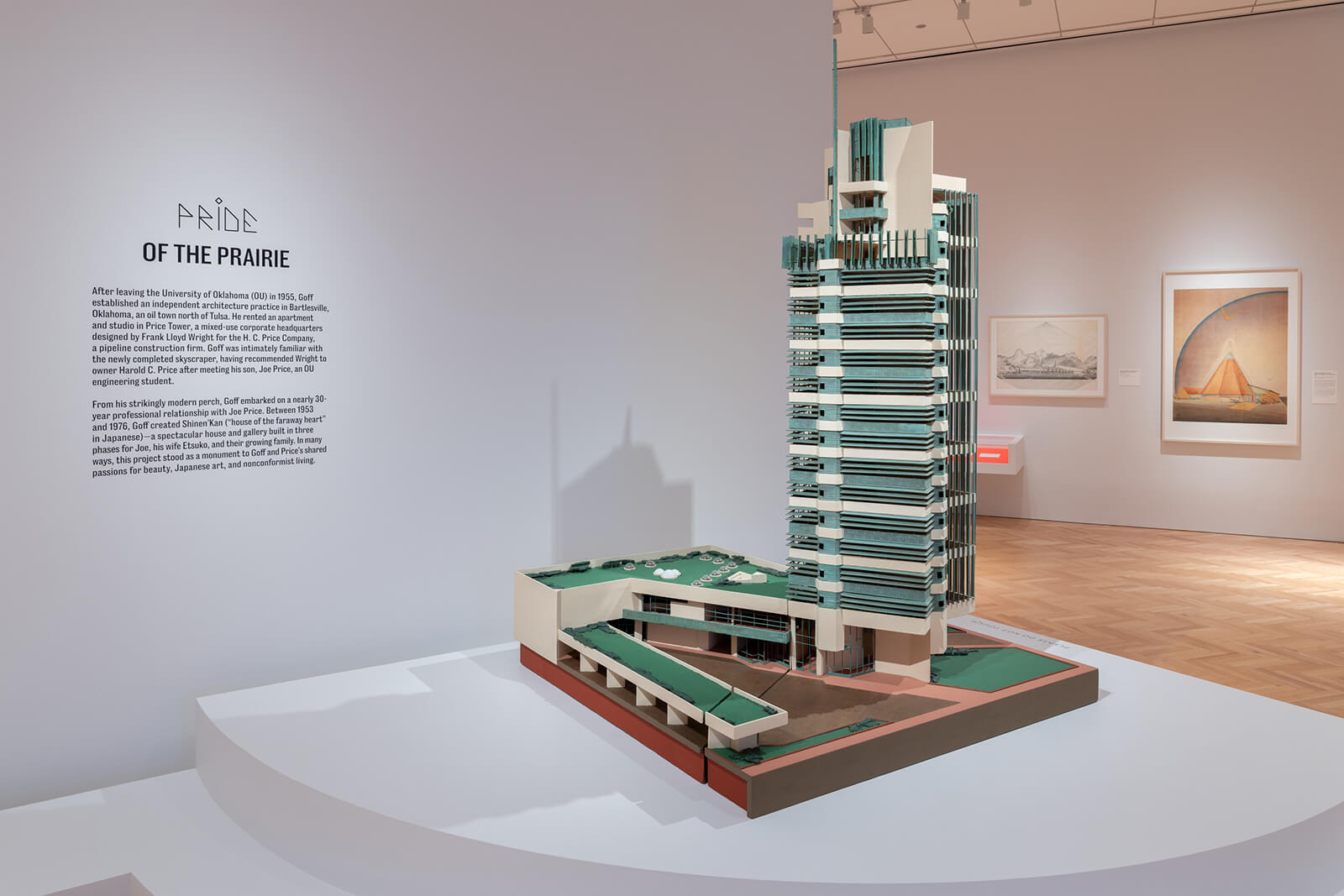
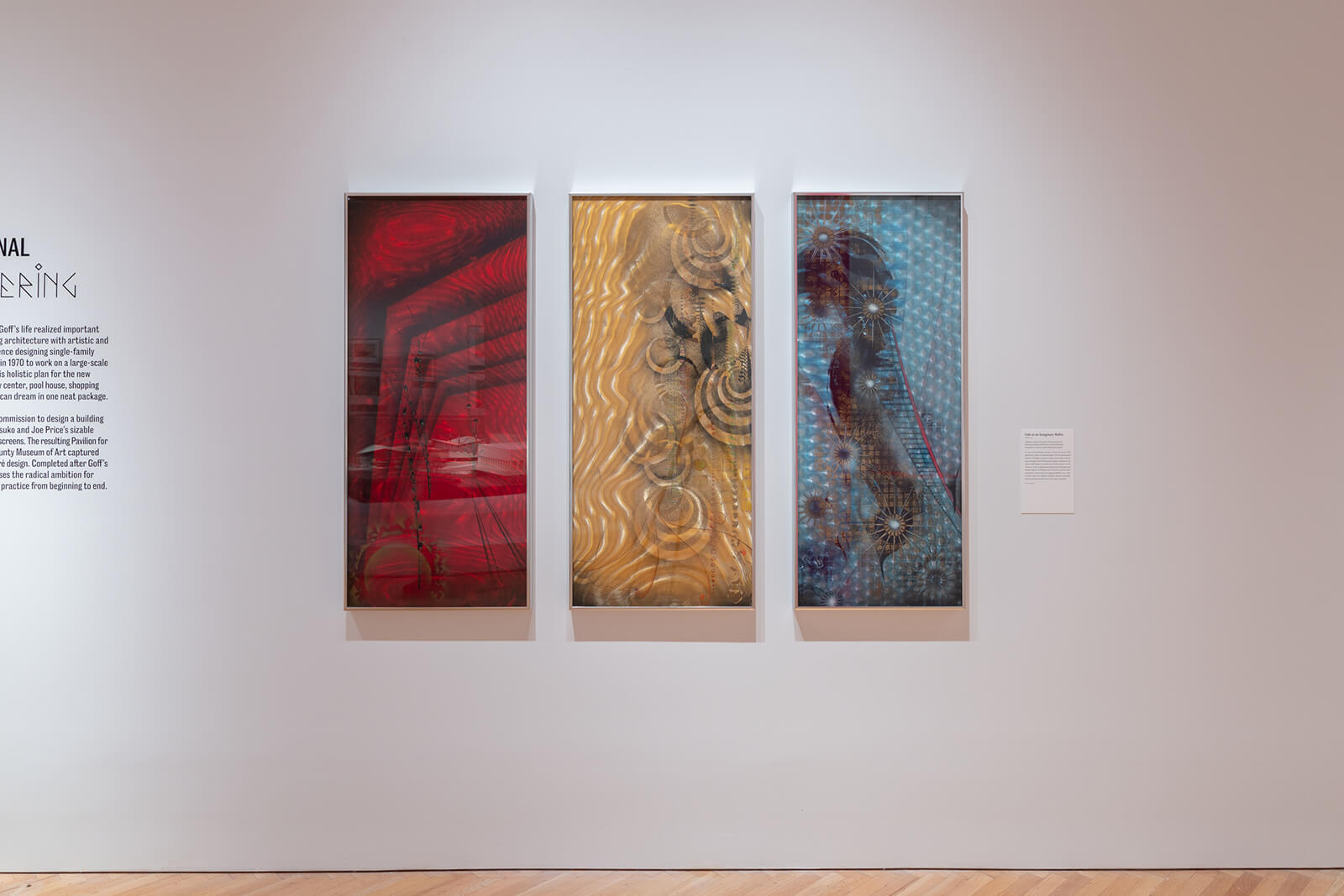
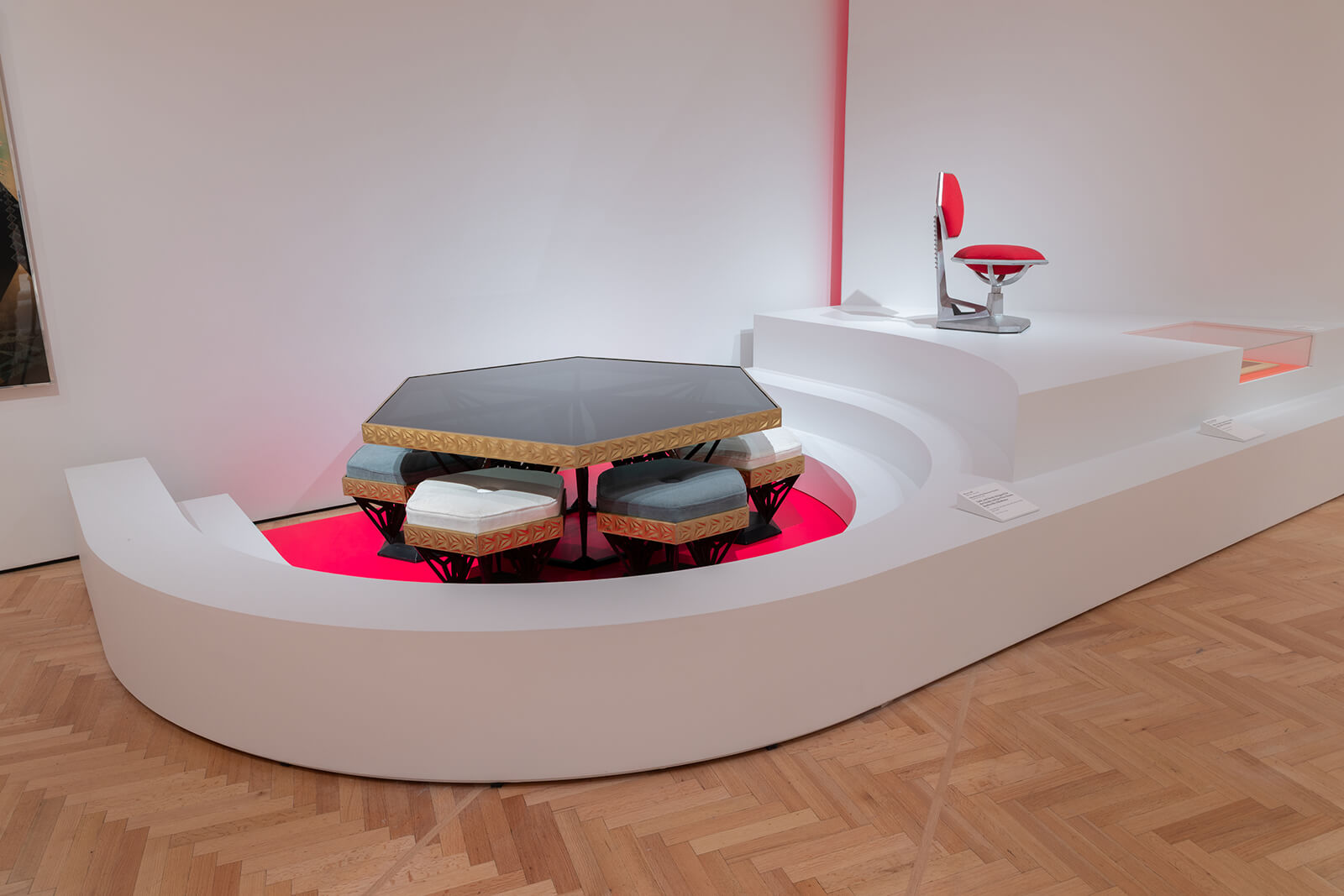
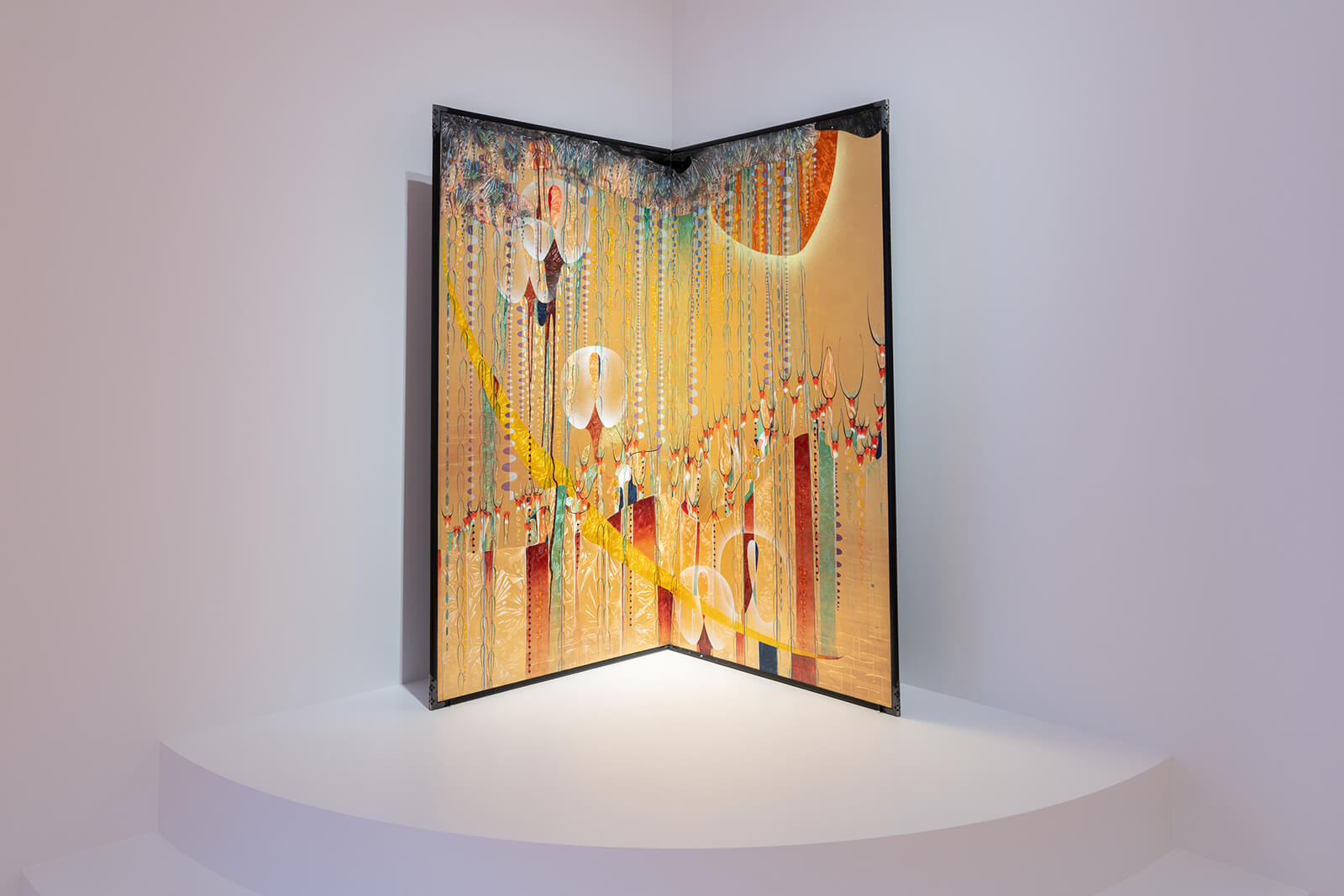
The drawings, models and publications appear alongside magazines, paintings and personal artefacts. Furniture sits on elevated platforms, while large architectural models rest low to the ground, inviting visitors to kneel, squat or lean forward to see them closely. The traditional posture of viewing architecture exhibitions, standing upright and looking forward, is subtly disrupted. By the time one reaches the final turn of the exhibition, where a two-panel Japanese screen glows in gold and colour, the impression that remains is not simply of an architect’s body of work but a life lived.
Leaving the gallery, a description written in 1970 by Ada Louise Huxtable for The New York Times came to my memory. In that article, she described Goff as “a phenomenon, part of an indigenous American tradition of the unspoiled, romantic, land-loving loner that the Review has labelled the American grass roots mythology. This fascinates Europeans and embarrasses Americans.” I returned to the exhibition one more time, this time watching the faces of visitors as they moved through the galleries, wondering whether I could detect that same mixture of fascination and embarrassment. But decades later, the embarrassment seems less about Goff’s eccentricity and more about the realisation that an extraordinary career became entangled with the profession’s discomfort with his unconventional approach to modernism and his sexuality. While the exhibition stops short of directly addressing the circumstances surrounding his sexuality, it leaves subtle cues, alongside an extensive catalogue of essays, that allow visitors to reflect on the tensions that shaped his career, particularly an essay by Scott Herring on the relationship between Goff and his collaborator and American architect San Jule.
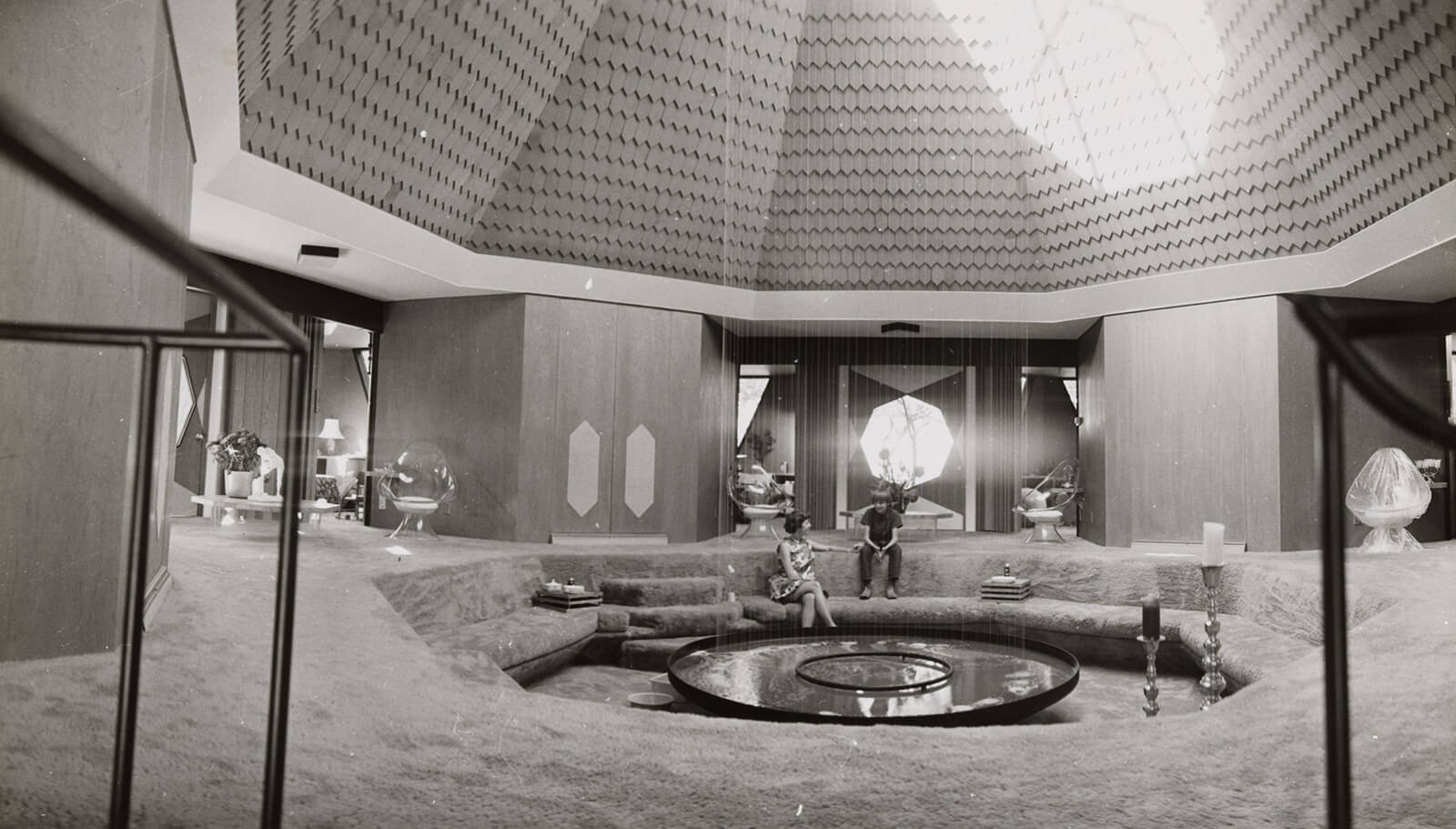
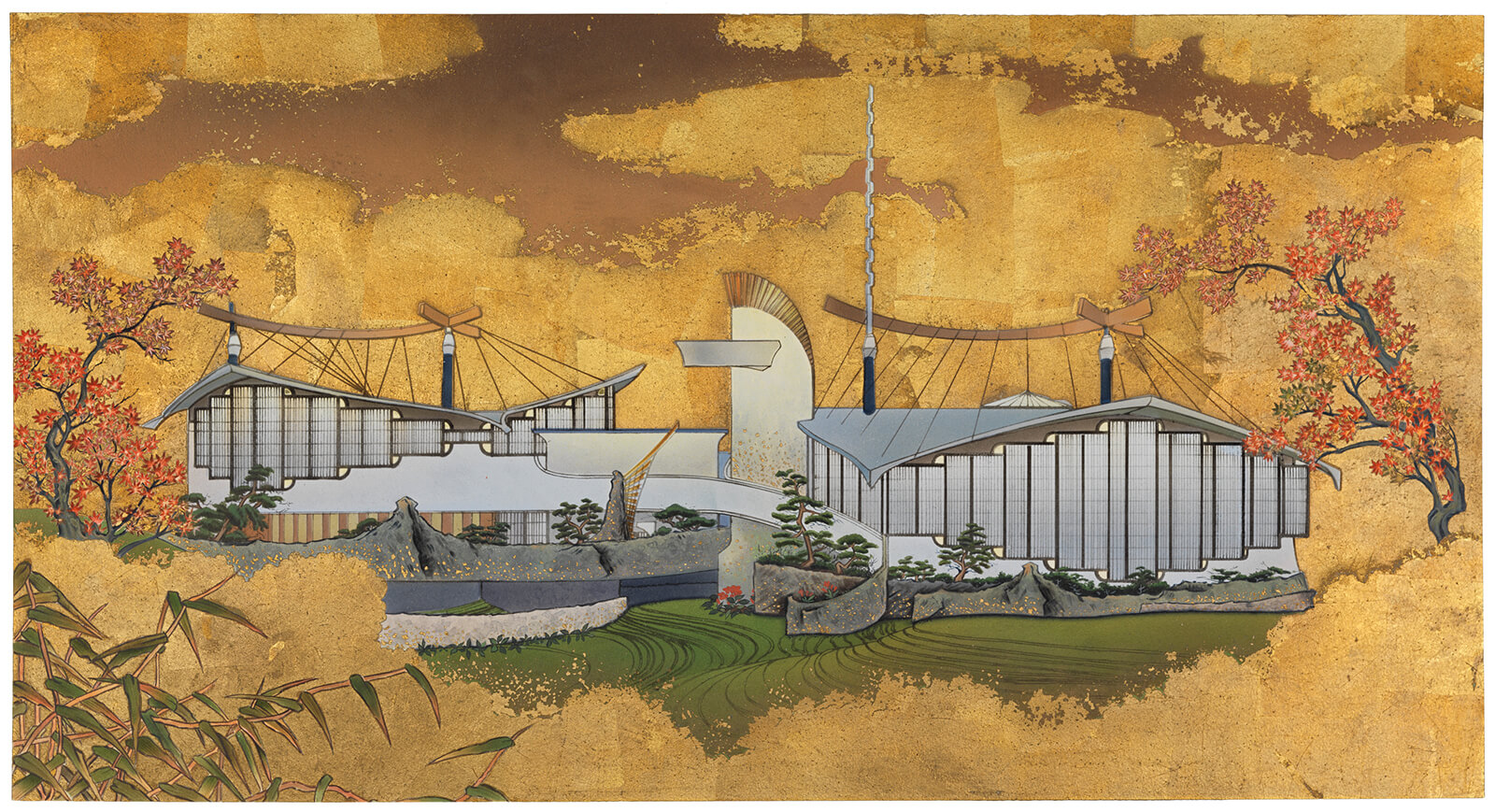
For me, Goff resists easy categorisation within any national mythology. What stands out instead is his independence. At a time when the architectural profession in the United States was gravitating toward the likes of Wright and unfolding the formal language of modernism, Goff followed his own path. His buildings drew directly from the environments in which they stood: the prairies, woodlands, farms and small towns of the American Midwest. Materials appeared in unexpected combinations of coal, goose feathers, cellophane, glass cullet, sequins and even AstroTurf. Domes, spirals and tetrahedral structures replaced the rectilinear discipline that dominated much of mid-century architecture. To the spokespeople of American modernism, such change may have seemed eccentric or even unserious alongside their steel frames, curtain walls and carefully ordered floor plans. But today, Goff’s work feels less like an outlier and more like a reminder that modernism was never a single path. It also raises another possibility that the anxieties surrounding Goff’s difference were not purely architectural. In the climate of the McCarthy era and the Lavender Scare, the presence of an architect whose sensibility appeared flamboyant, joyful and unconcerned with disciplinary orthodoxy may have been unsettling in ways that extended beyond design.
What Bruce Goff: Material Worlds ultimately shows is not a revision of architectural history, but something quieter, yet powerful. It allows visitors to encounter Goff not as a footnote to modernism, nor simply as a designer of unusual houses, but as a person whose imagination moved freely across materials, cultures and forms. While doing that, the exhibition also restores something that architectural retrospectives rarely evoke: the feeling of meeting the architect behind the architecture.
‘Bruce Goff: Material Worlds’ runs from December 20, 2025 – March 29, 2026, at the Art Institute of Chicago, Chicago, Illinois.
The views and opinions expressed here are those of the author(s) and do not necessarily reflect the official position of STIR or its editors.

by Pranjal Maheshwari Oct 19, 2026
The Mumbai-based architects integrate courtyards, mesh screens and north light trusses to create a dining space that doubles up as a community hub at SR University, Warangal.
by Mrinmayee Bhoot Oct 17, 2026
The Rotterdam-based institute centres the Indian Ocean as a network for exploring material histories and transnational links shaping coastal cultures, positing them as future models.
by Pranjal Maheshwari Oct 16, 2026
At the 2026 Stirling Prize ceremony, Mary Duggan with RUFF Architects, MAKER Architecten and Nakshabid Architects were felicitated for proffering quality housing and social equity.
by Mrinmayee Bhoot Oct 12, 2026
The new Centre for Contemporary Arts, fostering public engagement with art in Uzbekistan, is housed in a tram depot refurbished by the French studio, emulating local craftsmanship.

make your fridays matter with a well-read weekend
Enter your details to sign in
Don’t have an account?
Sign upOr you can sign in with
a single account for all
STIR platforms
All your bookmarks will be available across all your devices.
Stay STIRred
Already have an account?
Sign inOr you can sign up with
Verification link sent to check your inbox or spam folder to complete sign up process
Tap on things that interests you.
Select the Conversation Category you would like to watch
Please enter your details and click submit.
Enter the 6-digit code sent at


Meeting Bruce Goff: Objects, imagination and an unconventional practice
by Sunena V Maju | Published on : Mar 05, 2026


 Sign in with Google
 Sign in with email
What do you think?