Art06 mins. read
From the psychiatric hospital to the museum: ‘PSY-TECH’ with Jojo Abdallah
by Kwame AidooAug 03, 2024



by Chahna TankPublished on : Feb 24, 2026
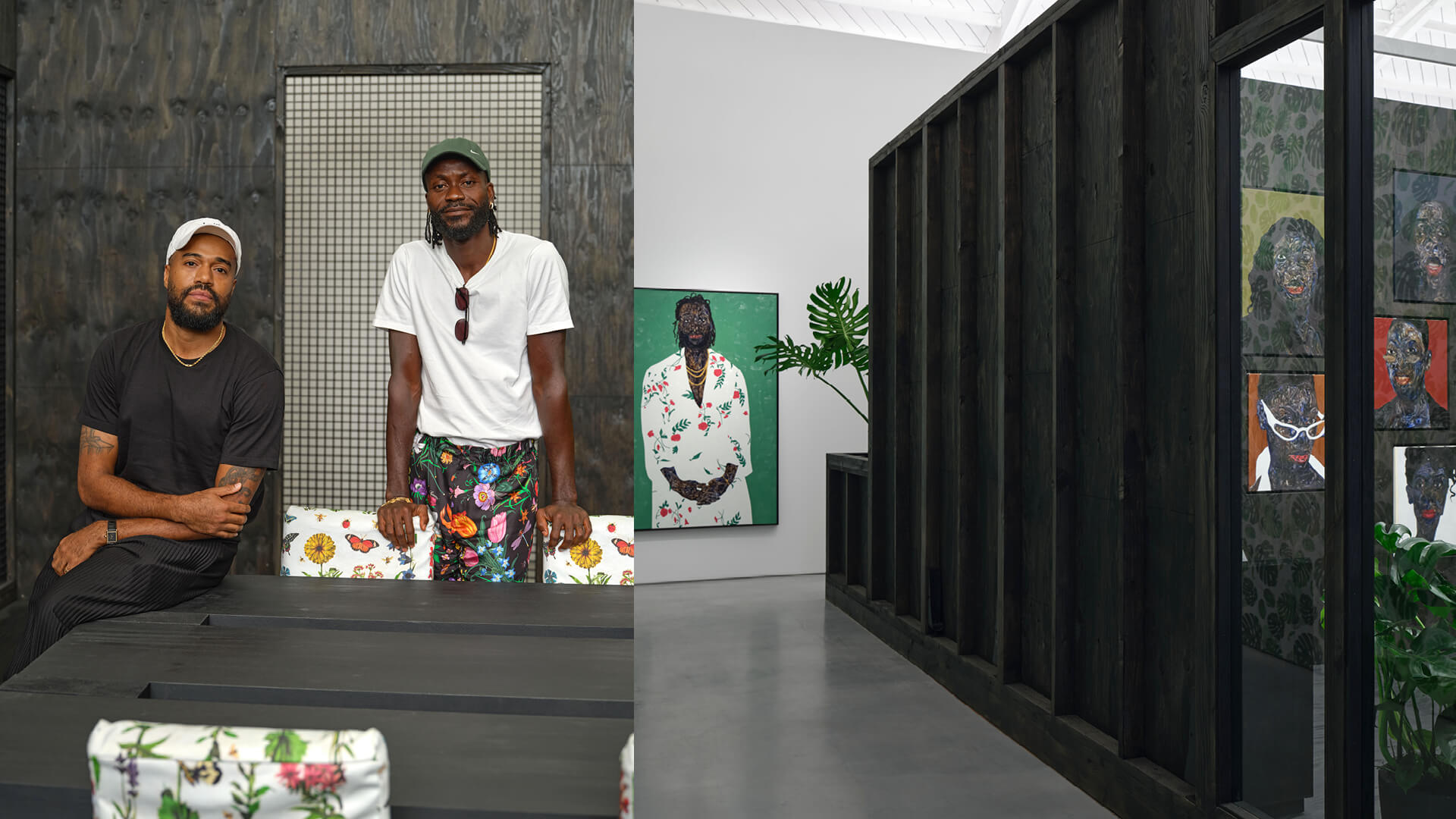
When an artist and an architect collaborate across multiple projects, the relationship begins to resemble an ongoing conversation rather than a series of individual commissions—one in which ideas are carried forward through spaces as much as through the surface of the canvas. For several years now, Ghana-based artist Amoako Boafo and architect and designer Glenn DeRoche, have been engaged in such a dialogue.
Boafo’s work is rooted in intimate portraits that celebrate the multiplicity of Black identity across Africa and its diaspora. Often depicting friends, family and members of his community, he renders his subjects against patterned or saturated grounds, employing his distinctive finger-painting technique, resulting in luminous compositions. At the core of his work is a commitment to representation: not only of depicting Black life, but expanding the contexts in which it is seen and affirmed. That commitment has increasingly unfolded spatially through his collaboration with DeRoche.
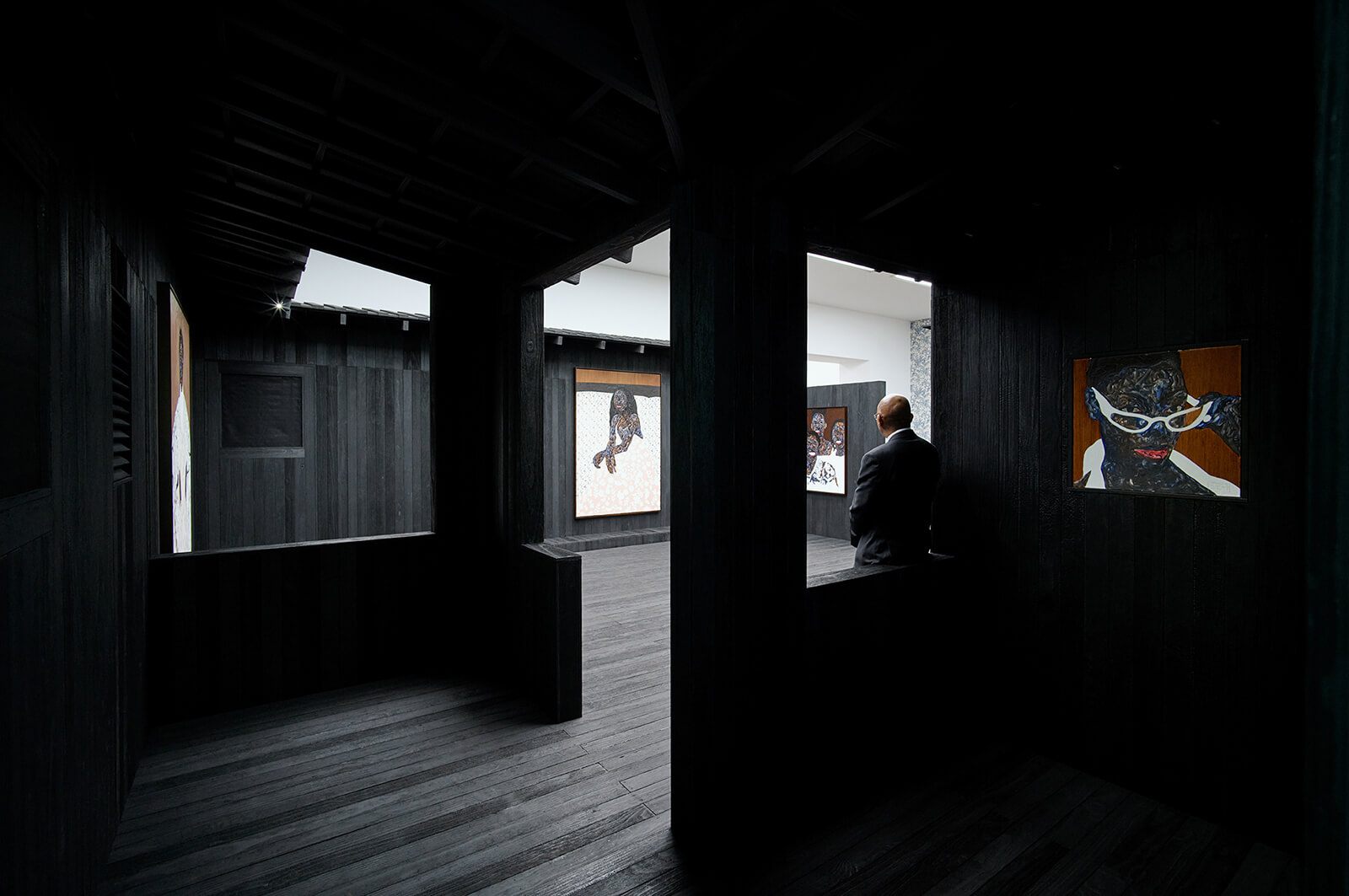
The first chapter of their four-part exhibition cycle titled I Do Not Come to You by Chance at Gagosian in London in 2025, introduced architecture as a central narrative device, granting spatial intervention an important role in the artistic presentation. Most recently, I Bring Home with Me at the LA-based contemporary art gallery Roberts Projects, on view from January 17– March 21, 2026, marks the second chapter of the series, which will continue in Paris and Accra. For the exhibition, the pair reconstructed Boafo’s studio in Accra within the gallery, collapsing the distance between the site of production and the site of display and transforming the exhibition into an inhabitable portrait of a community.
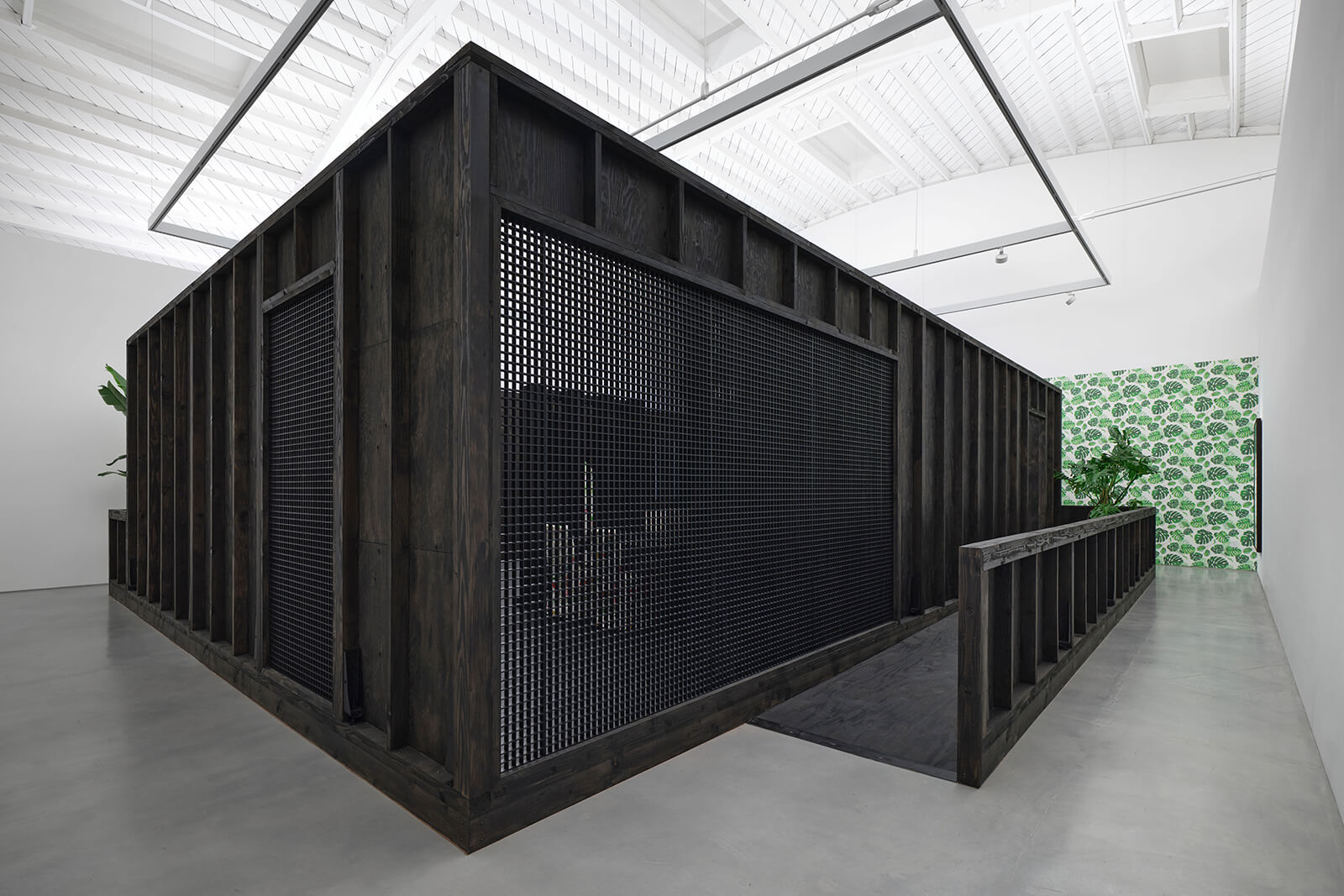
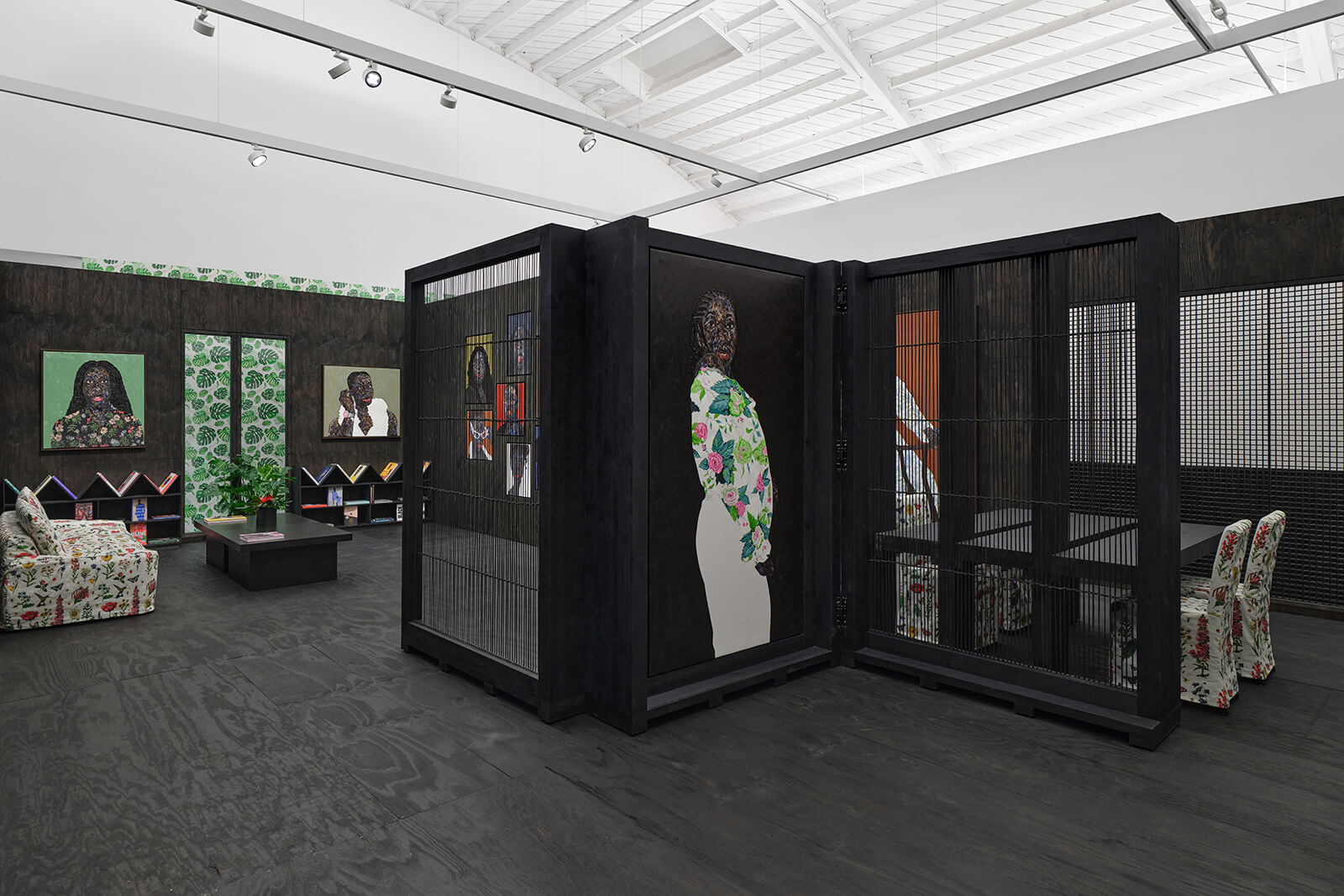
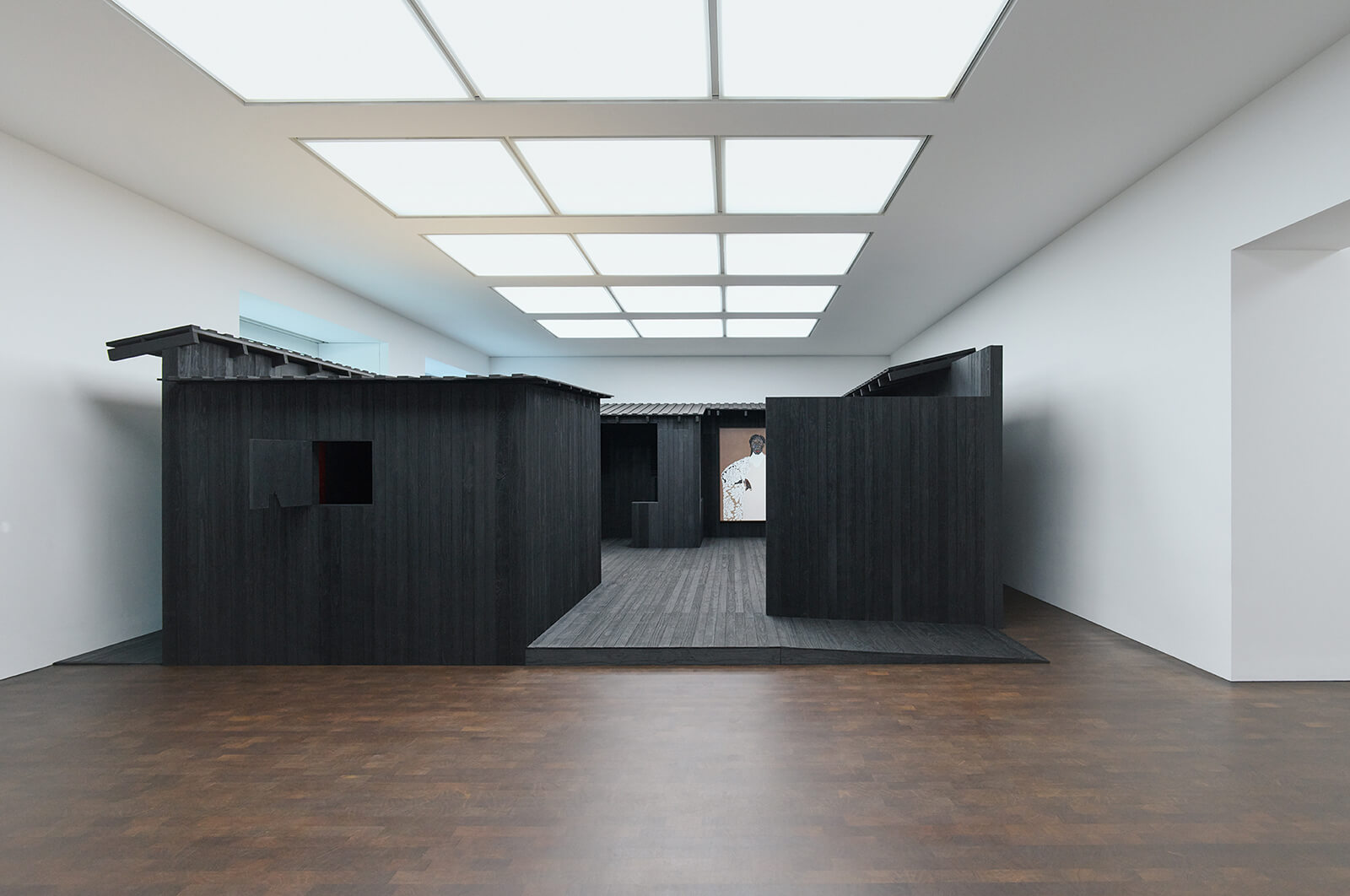
Beyond this unfolding sequence, their collaboration has extended across institutional and independent contexts. At Wooyang Art Museum in South Korea, for Boafo’s first institutional solo exhibition in Asia, DeRoche designed a site-specific installation that framed the paintings architecturally. For Papillon Hug at the Belvedere Museum in Vienna, he co-designed the Volta Pavilion as a timber structure built from reclaimed wood sourced from Ghana’s Volta Region. And in 2024, their work intersected with dot.ateliers | Ogbojo, the residency program Boafo founded in Ghana to support writers and curators. This collaboration expanded their shared exploration of space—not only as a vessel for cultural exchange, but as a form of cultural infrastructure in its own right.
Across these contexts, DeRoche’s architectural responses have shaped how Boafo’s paintings are encountered. STIR speaks with the two about the ongoing exhibition, their evolving collaboration, the role of space in shaping art consumption and how exhibition-making has become a shared artistic act for them. Edited excerpts from the conversation follow.
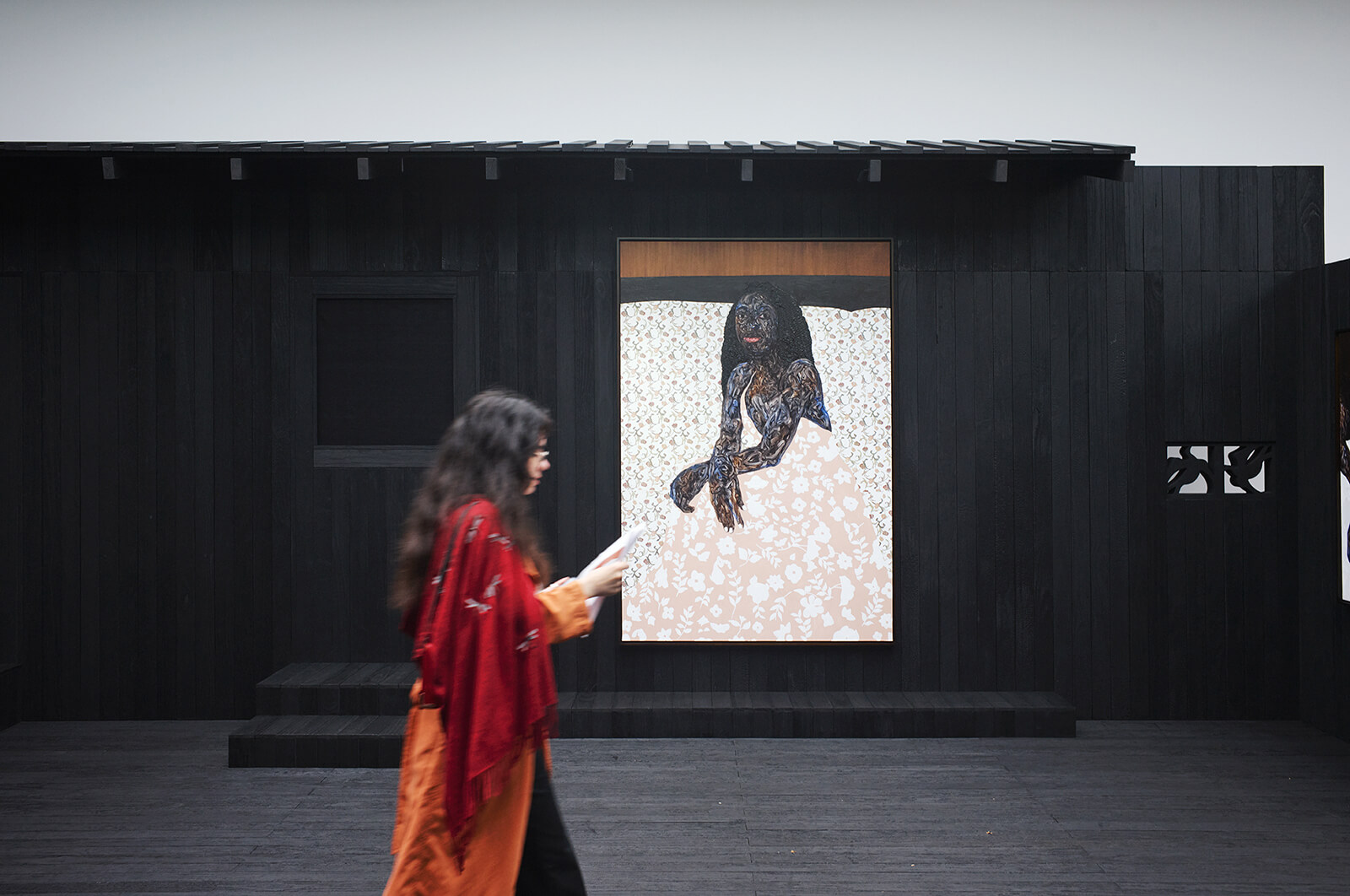
Chahna Tank: I Bring Home with Me is a deeply evocative title, and the exhibition gives physical form to the idea of ‘elsewhere within here’. Why did it feel important to make the space of making—your studio—the core of the show?
Amoako Boafo: Why should the space of making not be the core of the exhibition? There’s always a separation of where the paintings were made and the spaces in which they get to be enjoyed and criticised. I wanted to make sure that where they were made, which is also my home, was part of that conversation.
Chahna: How did you translate an artist’s personal and cultural environment in I Bring Home with Me into a space that resonates with visitors who have no direct connection to that context?
Glenn DeRoche: Rather than reconstructing a specific place or moment, the architecture operates as a framework that translates personal and cultural references into shared spatial experiences. Elements drawn from Boafo’s formative environments, including his studio, materials and daily rituals, are abstracted so they are felt through rhythm, scale and atmosphere rather than explained through narrative. By moving away from literal representation, the space becomes immersive without being prescriptive, allowing visitors to engage physically and emotionally with the conditions that shape the work, even without a direct connection to its original context.
Collaborating with an architect on this show helped me create an environment that engages my audience, allowing them to interact deeply with my work and also showcase how I enjoy both the process of making and sharing my art. – Amoako Boafo
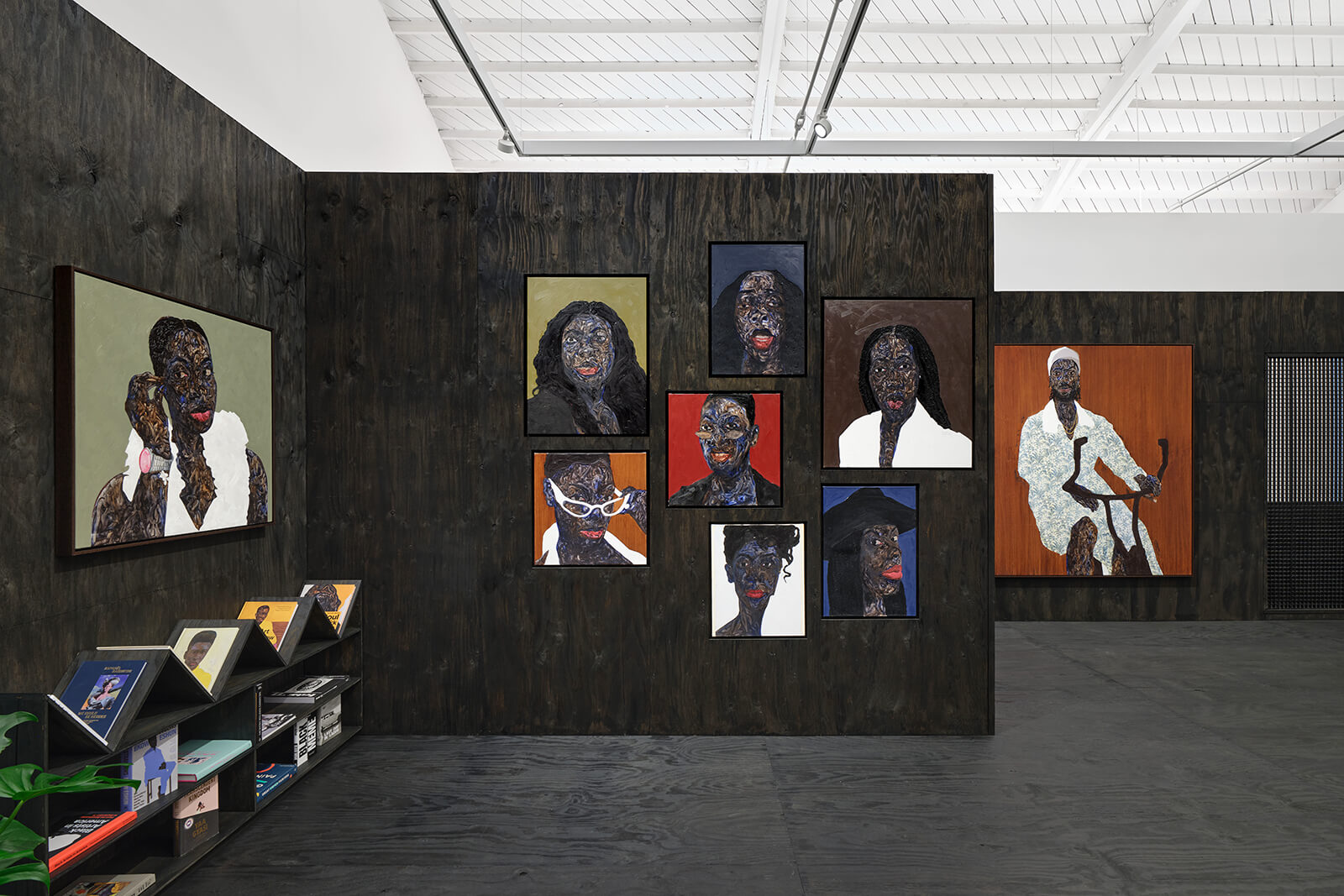
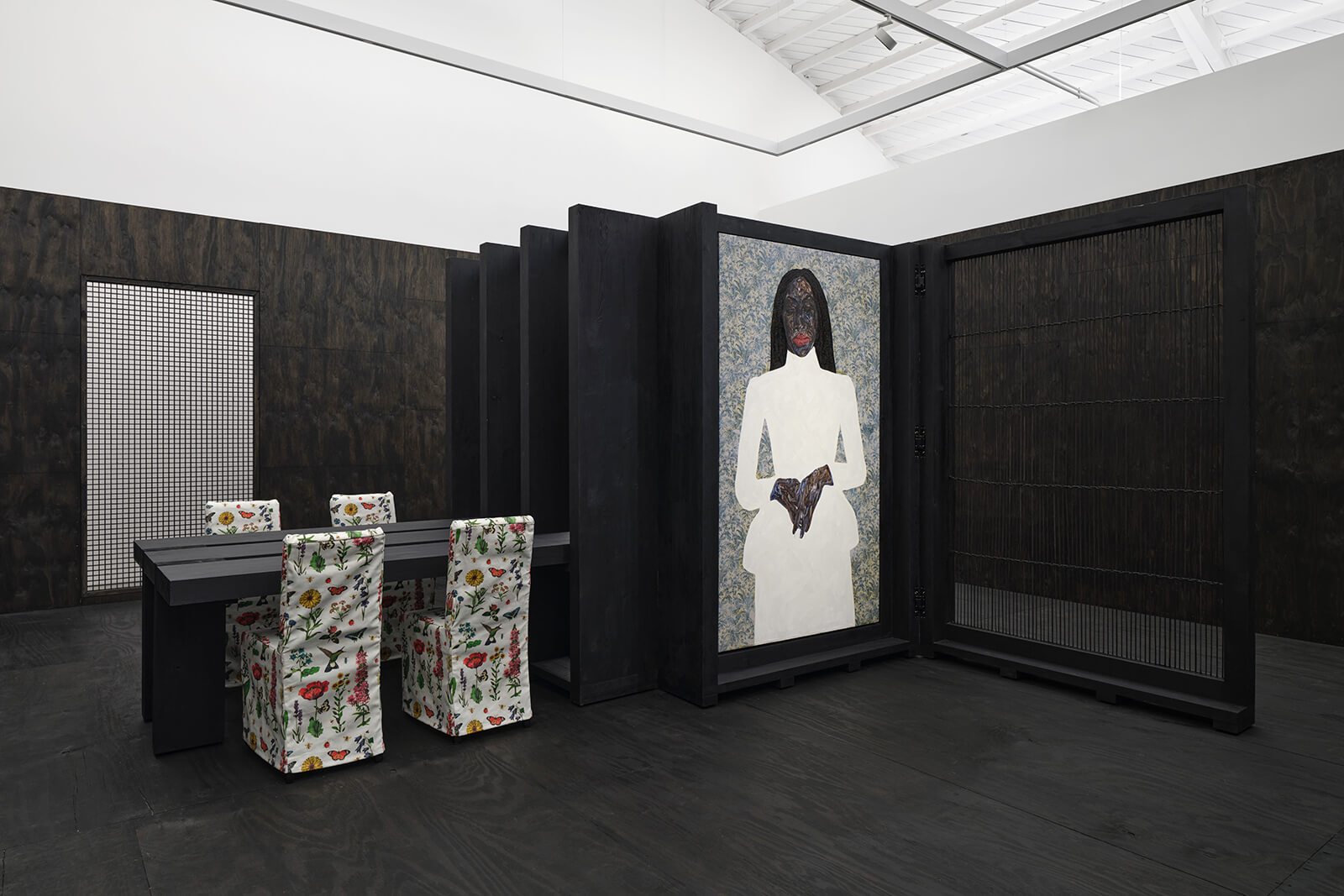
Chahna Tank: Why does Amoako Boafo’s practice call for a spatial and architectural response?
Glenn: In this four-part series of exhibitions, Amoako’s practice has inspired a spatial and architectural response not out of necessity. His paintings can fully stand on their own within a traditional gallery, but the collaboration comes from a shared desire to enhance and deepen the experience of encountering his work. His practice is deeply shaped by community, cultural context and formative spaces, which allows us to move beyond the neutral white cube toward environments that reveal both the literal and symbolic fabric of his life and practice. Architecture serves as an active framework for cultivating interaction and engagement, helping the exhibition space resonate more fully with the narratives and conditions that shape his work.
We treat each exhibition as a shared process where spatial decisions respond to the work and, at times, influence new artistic developments. – Glenn DeRoche
Chahna: Your work is rarely shown in a conventional white cube, in that the space is almost always a part of the story. How do the architectural qualities of the exhibition shape the way audiences experience your work?
Amoako: I have had the opportunity to exhibit my work in both conventional white cube galleries and museum spaces, and I can confidently say I prefer the energy and experience that comes with creating museum shows. This has led me to the decision of not waiting for museum exhibitions to craft those impactful experiences. For example, collaborating with an architect on this show helped me create an environment that engages my audience, allowing them to interact deeply with my work and also showcase how I enjoy both the process of making and sharing my art.
Chahna: How do you balance the specificity of Amoako’s personal memories with an openness for audience interpretation?
Glenn: The balance comes from being precise about what is held onto and intentional about what is left unresolved. The architecture is grounded in Boafo’s lived experience and personal memory, but it avoids illustrative or explanatory gestures. By resisting literal representation, the space preserves the specificity of its origins while remaining open enough for audiences to project their own associations and interpretations.
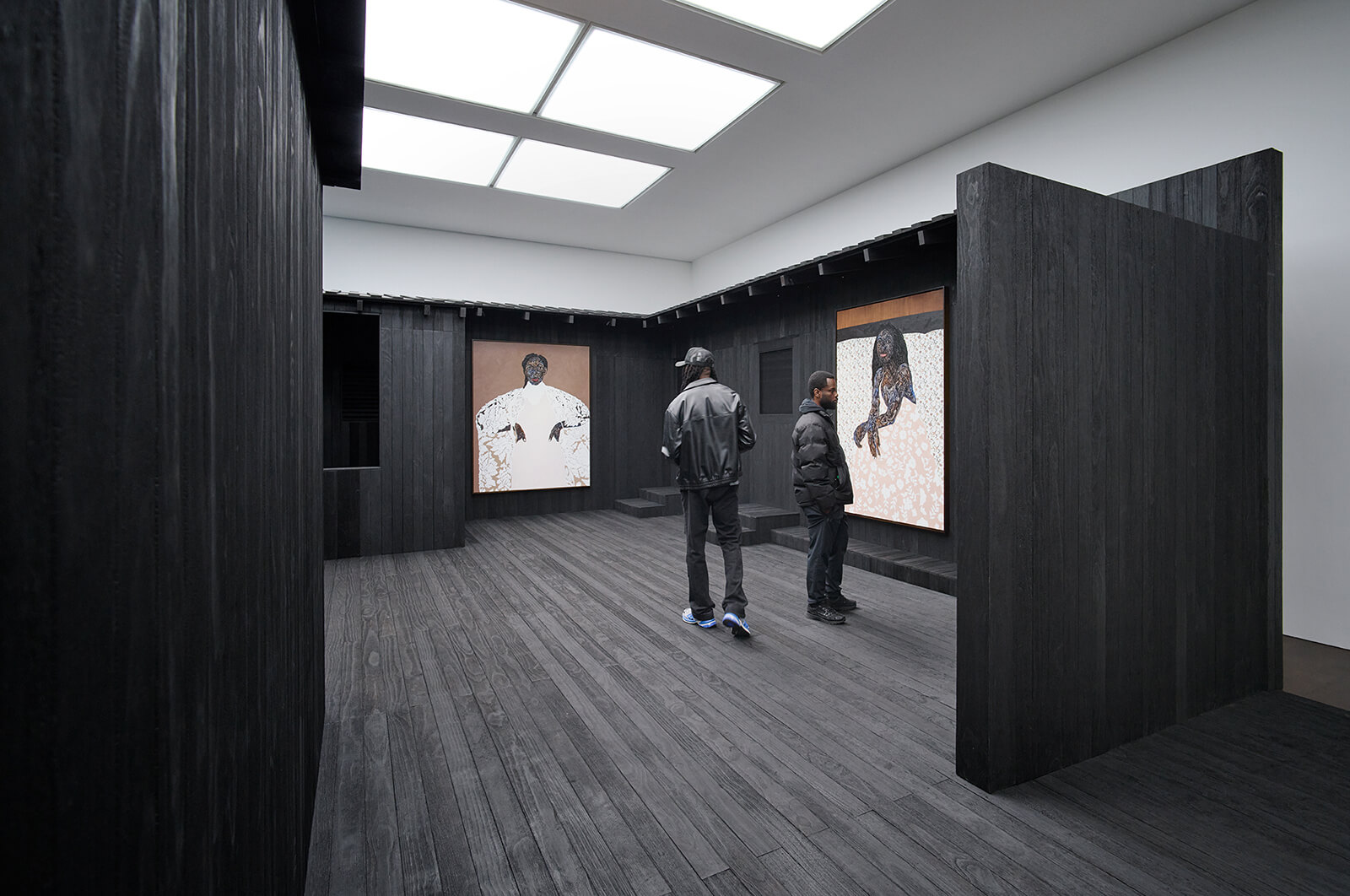
Chahna: You’ve worked together for many years across multiple exhibitions and architectural contexts. How would you define your collaboration and the way it shapes how you conceive exhibition spaces together?
Glenn: Our collaboration is a continuous experiment in connecting the narrative of the work with architectural interventions, allowing ideas to move in both directions. We treat each exhibition as a shared process where spatial decisions respond to the work and, at times, influence new artistic developments. Over time, this exchange has become more fluid and intuitive, enabling us to explore, take risks and adapt each project to its context. That reciprocity shapes how we conceive spaces and gives each exhibition a distinct character. This process continues to evolve, and I am optimistic about the outcome of future collaborations we have planned within the exhibition space.
Amoako: I want to explore collaborations, but in the way musicians do, bringing talented individuals to help improve and elevate the experience. I see no reason why it can’t be the same for visual artists. There should be ways we can help improve each other’s work, and I am able to do that with Glenn. Where he designs to enhance the experience of the works, but also the works are made to elevate the space.

by Mirra Lynn Oct 10, 2026
The Shanghai-based architecture practice’s intervention in Suzhou transforms three abandoned houses into a bookstore, café, library and homestay.
by Pranjal Maheshwari Oct 09, 2026
The eighth edition of the international architecture and urban design showcase, themed How Much?, explores diverse implications of social, ecological and economic ‘cheapness’.
by Pranjal Maheshwari Oct 06, 2026
With a programme focused on biodiversity, accessibility and safety, the Rotterdam-based architects help the neighbourhood reclaim a barren landscape as an integral social node.
by Pia Bhatia Oct 02, 2026
Located in the Al Bridi Reserve in Sharjah, the project didactically projects its purpose of studying African ecosystems through local structures marked as ‘sculptural presences’.

make your fridays matter with a well-read weekend
Enter your details to sign in
Don’t have an account?
Sign upOr you can sign in with
a single account for all
STIR platforms
All your bookmarks will be available across all your devices.
Stay STIRred
Already have an account?
Sign inOr you can sign up with
Verification link sent to check your inbox or spam folder to complete sign up process
Tap on things that interests you.
Select the Conversation Category you would like to watch
Please enter your details and click submit.
Enter the 6-digit code sent at


Amoako Boafo and Glenn DeRoche on collaboration and building spaces for art
by Chahna Tank | Published on : Feb 24, 2026


 Sign in with Google
 Sign in with email
What do you think?