Architecture04 mins. read
Takeru Shoji Architects ties community and early learning with Yamaikarashi Nursery
by STIRworldJul 11, 2023



by Pranjal MaheshwariPublished on : Mar 17, 2026
School is perhaps the single most transformative space in a child’s life. It is where knowledge is acquired, friends are made and essential life skills are learnt. While the pedagogical framework of the institution plays an integral role in the growth and development of individuals in later years, pre-schoolers and kindergarteners assimilate information more passively, constantly picking up subtle cues from their surroundings and incorporating them into their understanding of the world. These learning spaces, then, become responsible for nurturing the young minds by creating a multi-sensory, immersive experience. Kinder Rain, a kindergarten in Piove di Sacco, a modest town in the Veneto region of Italy, volunteers for this responsibility by weaving collective memory with personal imagination and using the school architecture and landscape as propagators of learning.
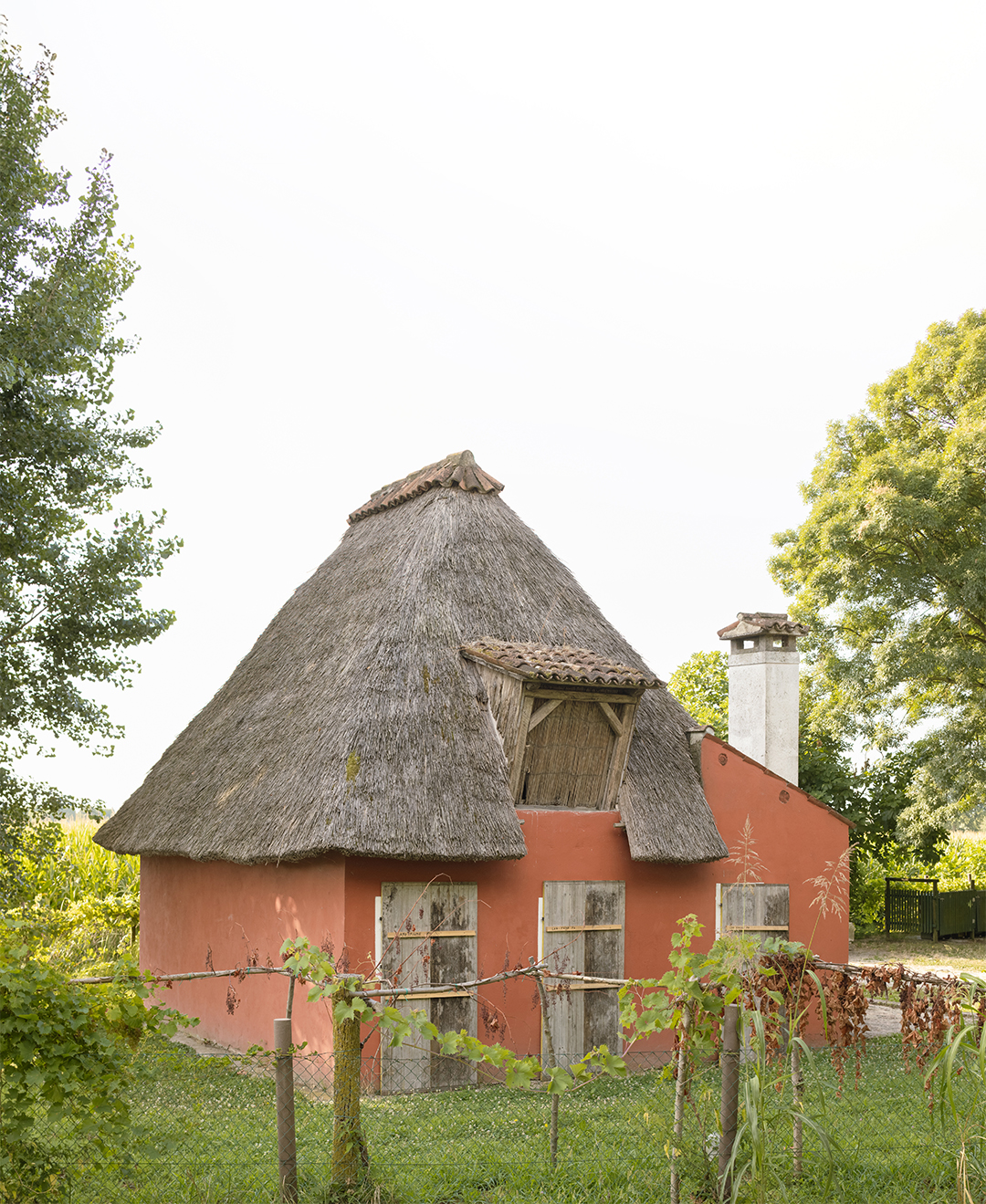
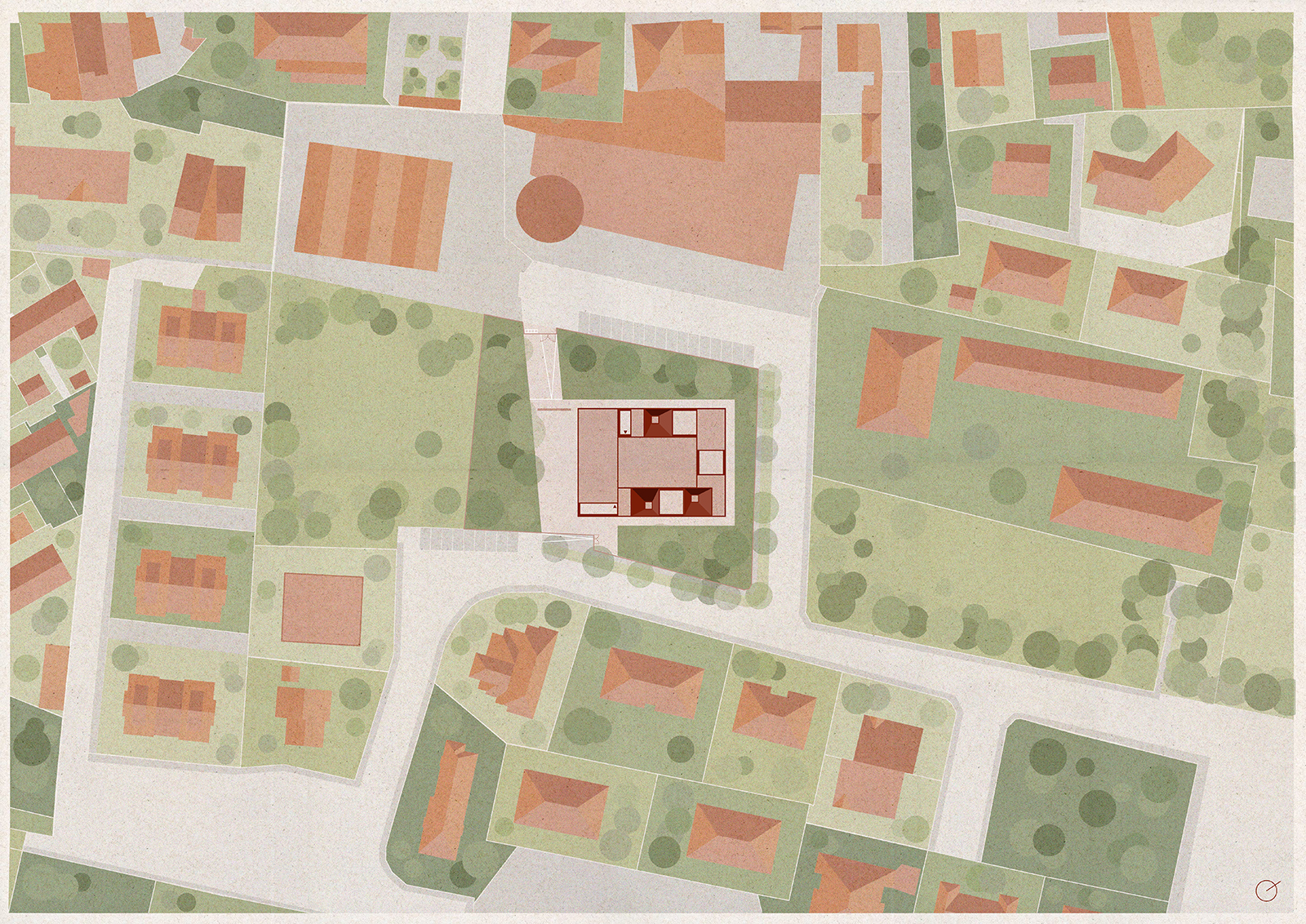
“When a project is anchored in the cultural fabric, history and landscape of a place, it connects to a larger shared consciousness,” observes Rodolfo Morandi, co-founder of the Atelier Architettura Chinello Morandi (AACM) and the lead designer for Kinder Rain. The Milan-based architecture studio focuses on creating atmospheric and context-driven designs by balancing form, light, material and passive strategies. The Italian architecture practice, while reviewing the site’s communal history, drew inspiration from ‘Casone Veneto’—vernacular homes for farmers and fishermen in Padua province in Veneto—rethinking the archetype through a kindergarten design for children.
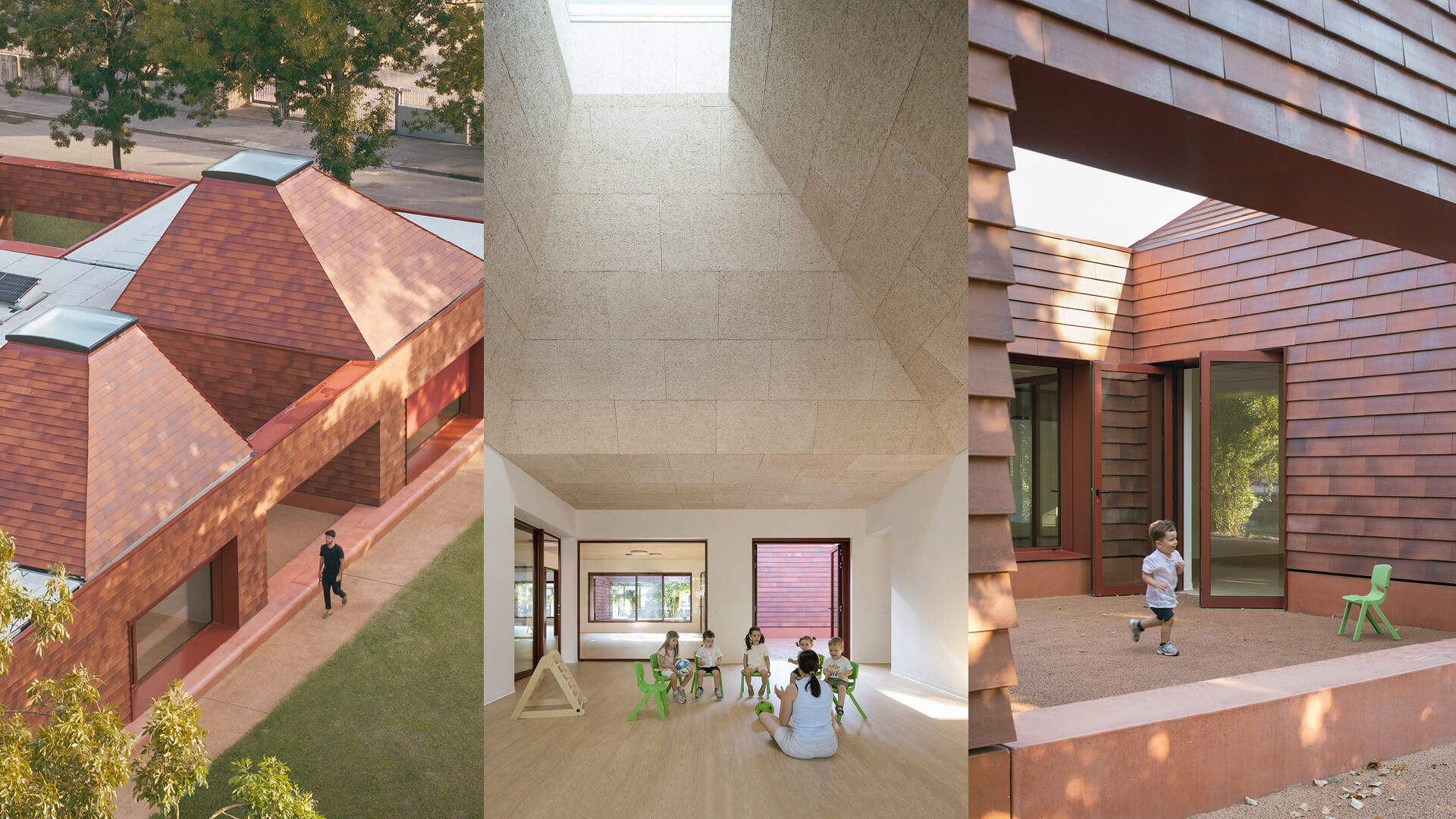
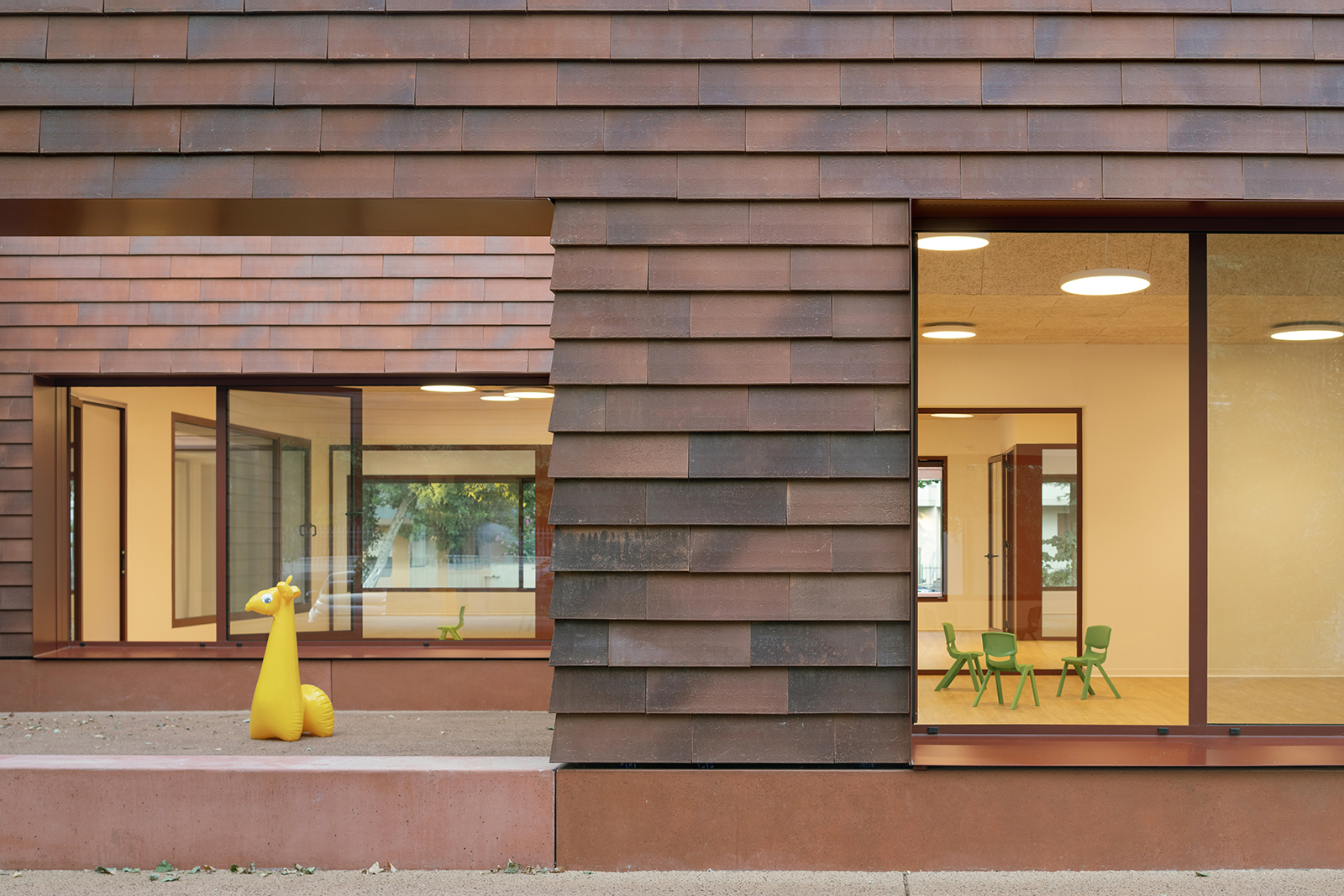
The kindergarten is designed as a small village with three ‘huts’—classrooms—connected by a central, shared space, the agorà, for interaction, frolic and informal learning. “This shared core allows children to experience education as a collective adventure while maintaining continuous visual connections with one another,” Morandi tells STIR. The ‘classroom’ layout comprises a spatial duality, featuring an enclosed, protective space paired with an open, outdoor ‘learning patio’. Each room faces inward, overlooking the courtyard and the surrounding landscape through glazed doors and windows—the sills of which have been thoughtfully kept at only 40 cm above the floor level—allowing a visual continuum through the programme.
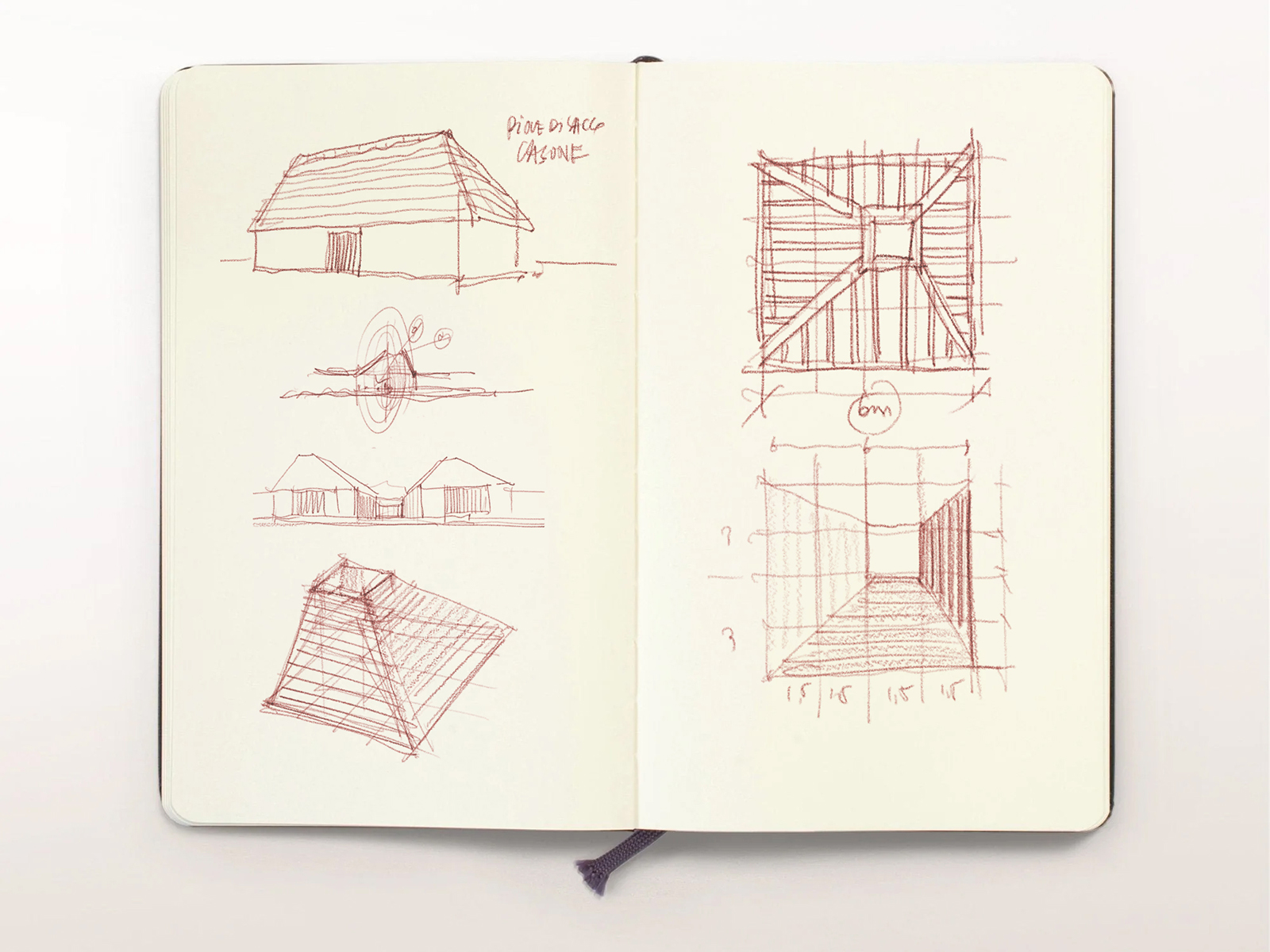
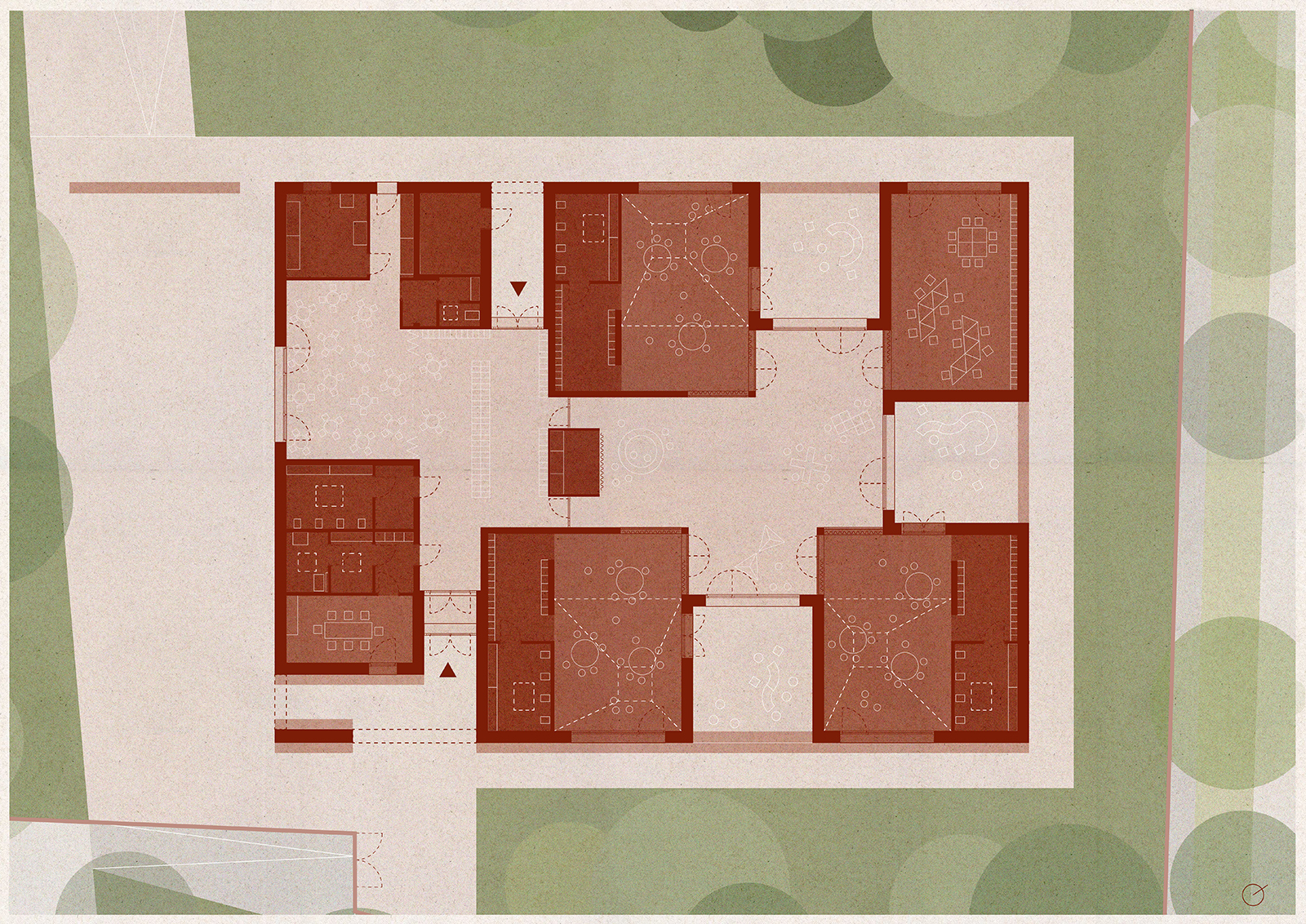
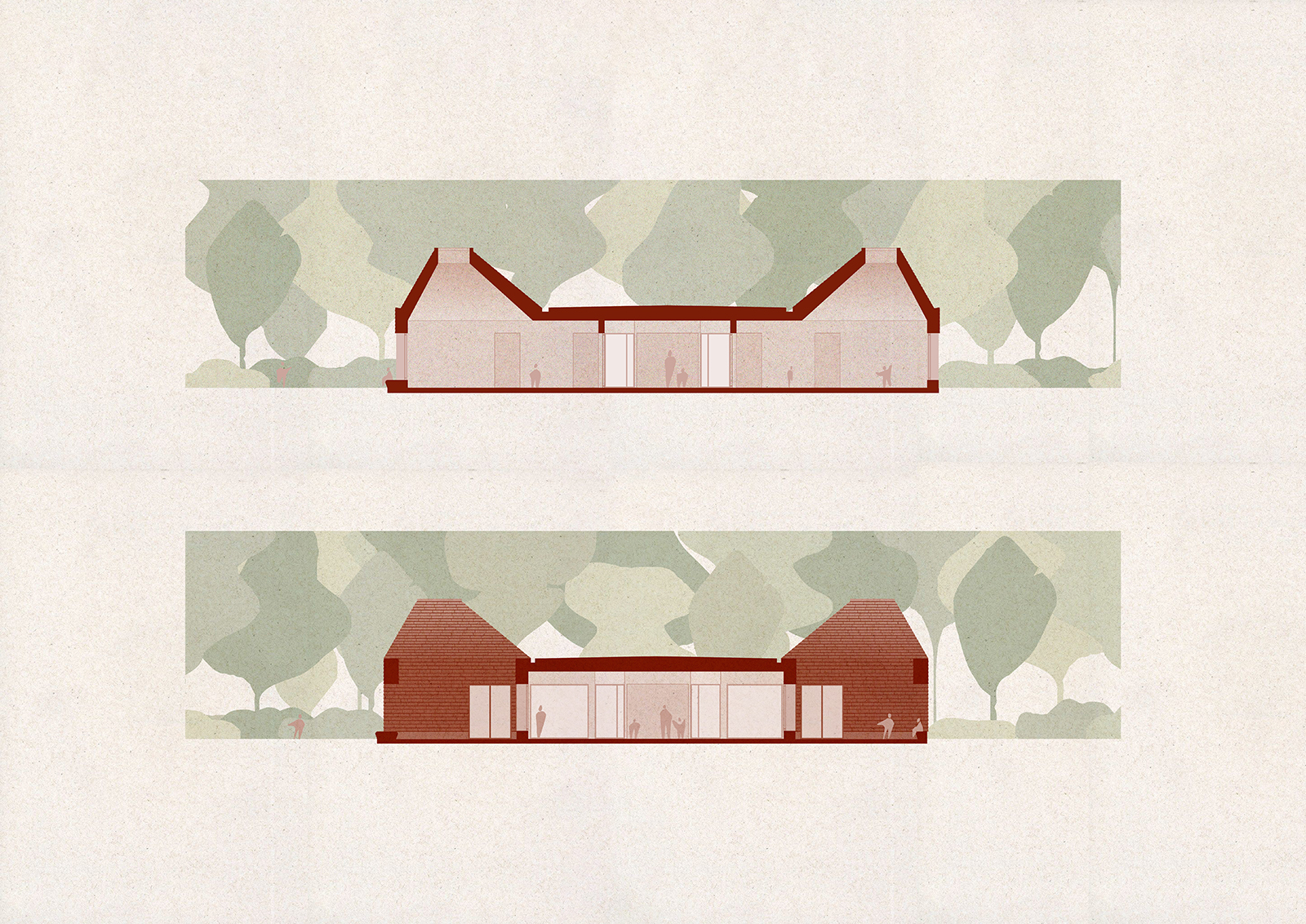
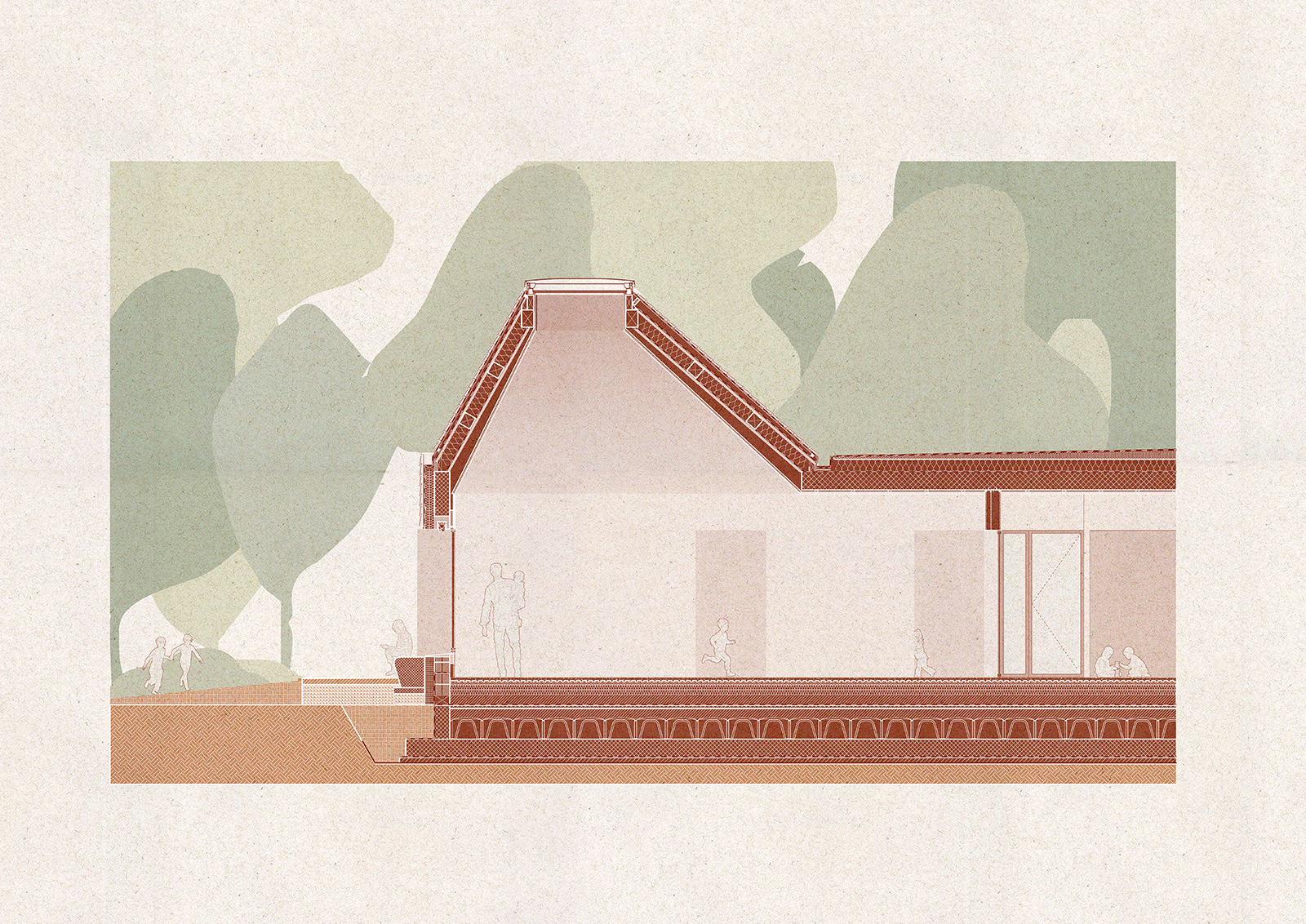
While the walls of the classrooms rise straight up, the ceiling converges until it reaches the skylight, increasing the perceived volume of the room interiors. “The soaring pitched roofs reach up to six metres, which pedagogically diminishes the perceived distance between adults and children, fostering a more balanced and comfortable relationship in a generous vertical space,” states Morandi.
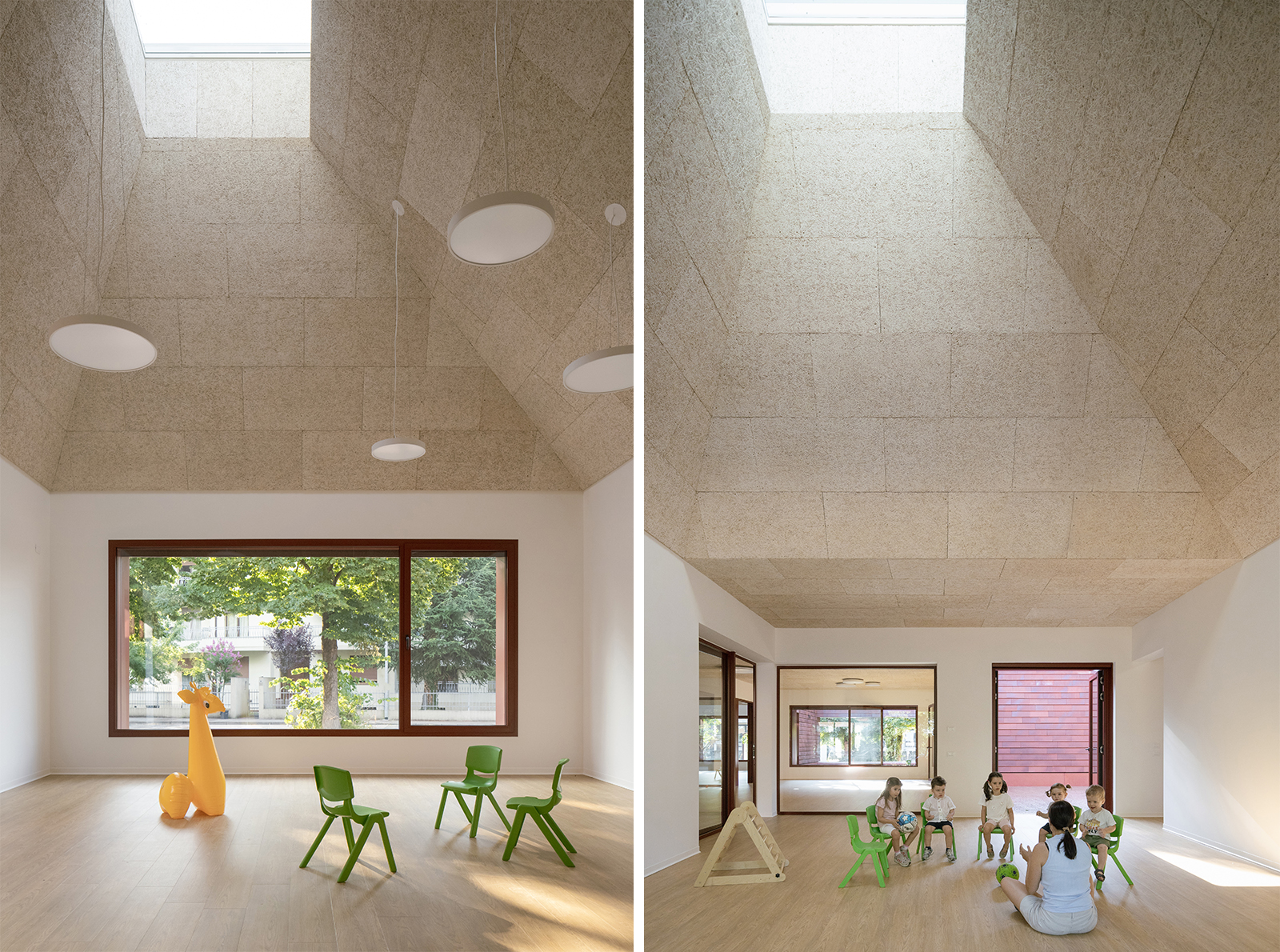
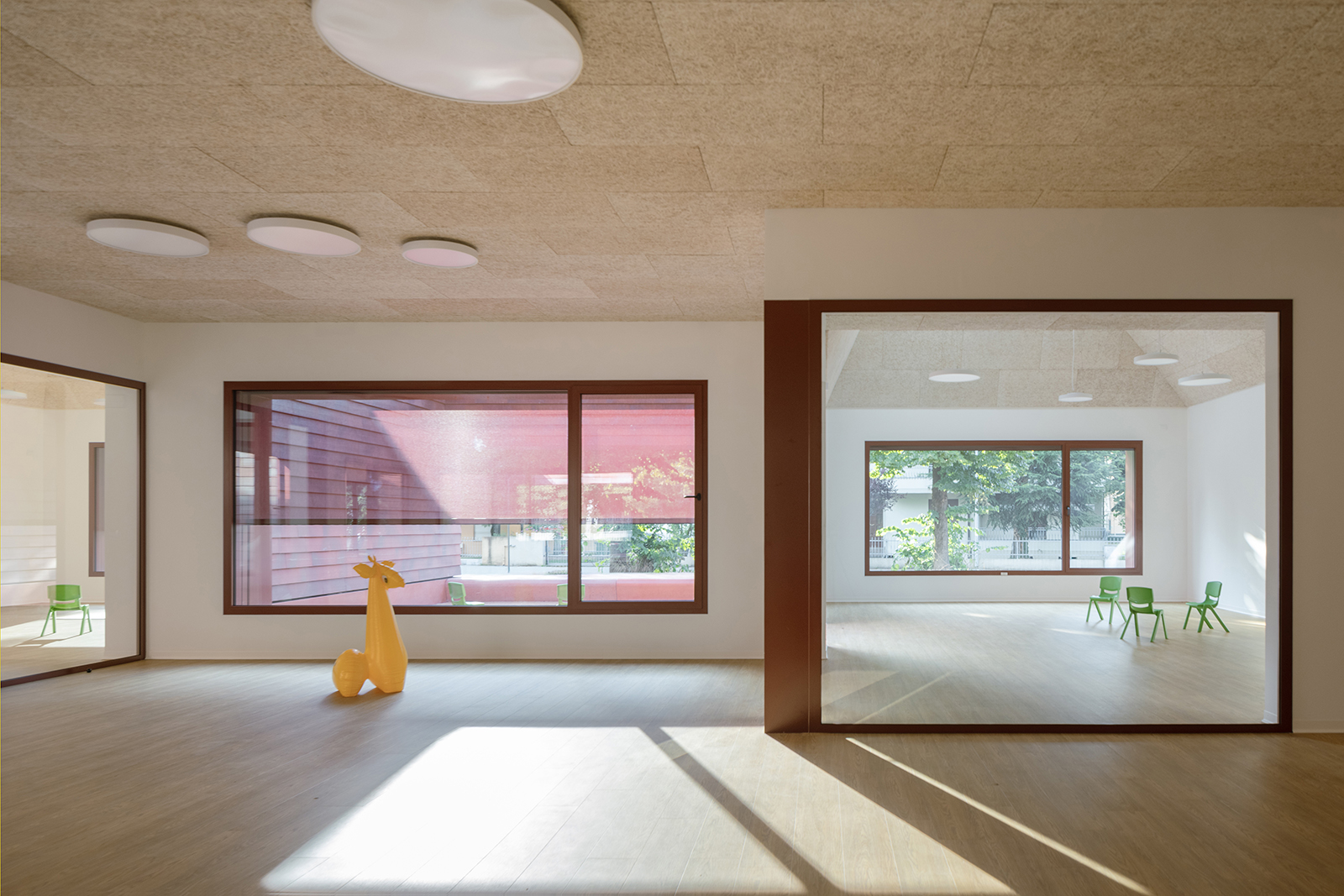
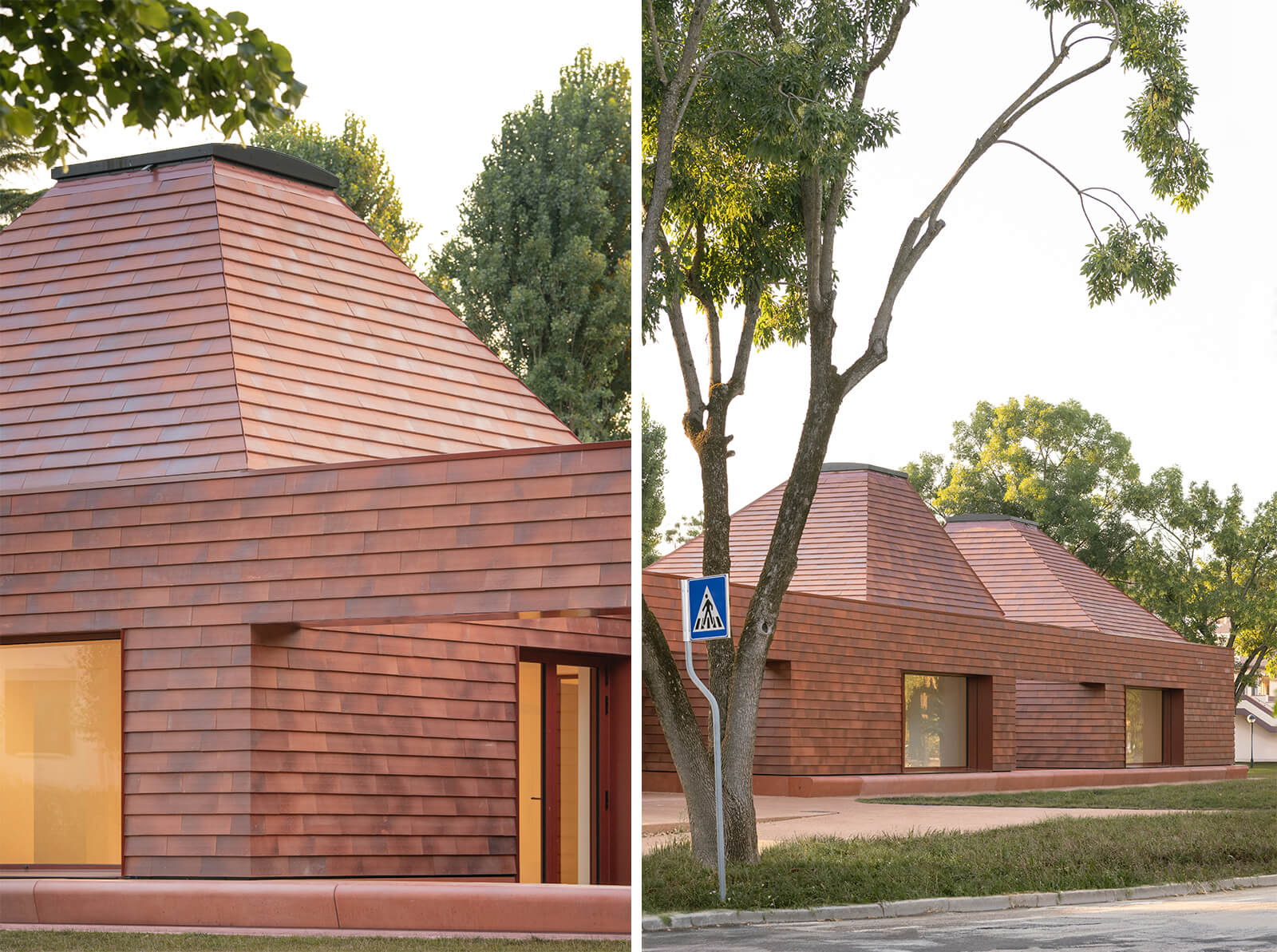
Functionally, the skylight allows the room to be naturally illuminated, with sunlight penetrating and reflecting off the textured wooden ceiling. “The zenithal skylights let sunlight subtly mark the passage of time”, Morandi remarks, “while ceilings made of simple wood fibres offer acoustic comfort and evoke the warmth of traditional thatched hay roofs, creating an enveloping and protective spatial experience.” From outside, the resultant form of the roof manifests as a steep, sloping roof, reminiscent of Casone Veneto’s distinct thatched tops. The reference transcends mere function or form to appeal to individual imagination through the architecture of the kindergarten, as Morandi explains, “To this collective history, there is a universal added layer: the primal image of a child drawing a house, which almost invariably features an elemental pitched roof.”
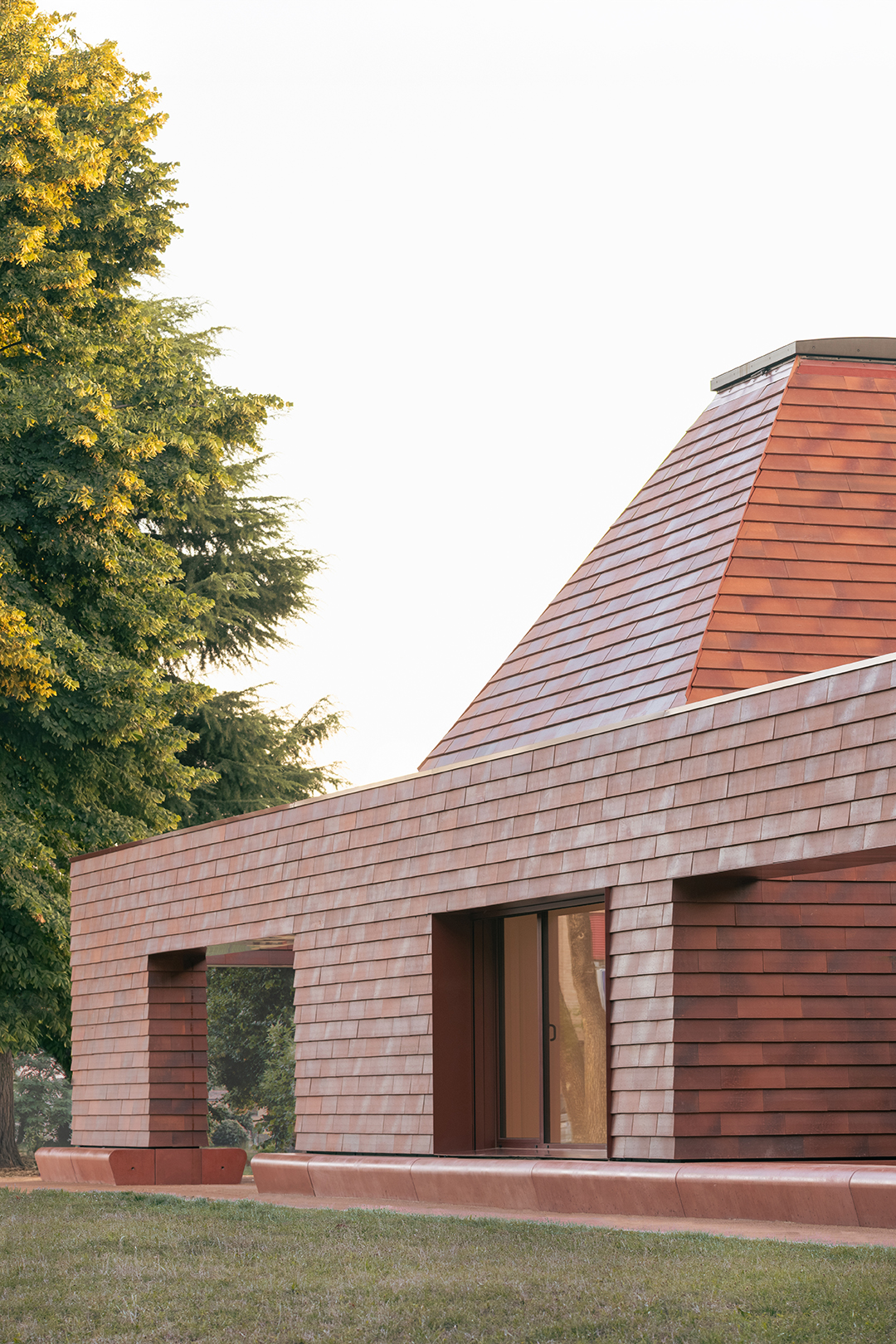
In addition to the learning spaces, the kindergarten architecture also features a children’s playground, a canteen, a laboratory and service areas. When viewed in unison, the building appears as a compact, cohfesive block occasionally punctuated by sloping roofs and enveloped homogeneously in the natural, tactile warmth of terracotta. The resultant mass rests on soft, vermilion concrete benches as a structural buffer at the threshold between the superstructure and terrain. Doubling as urban furniture, the intervention offers a shared space for communal activity and interaction. “The benches allow children to intuitively understand spatial differences without rigid separations.”
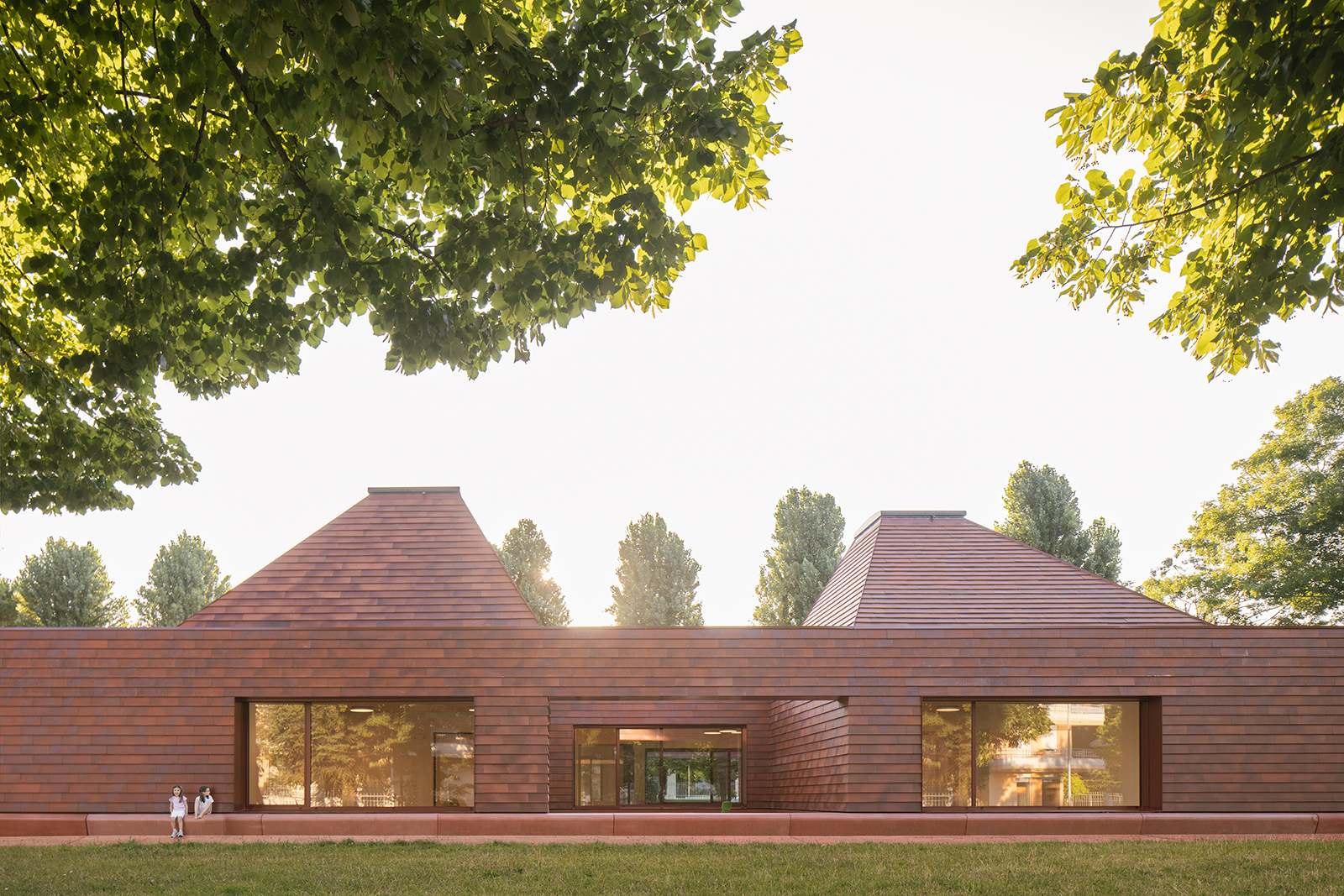
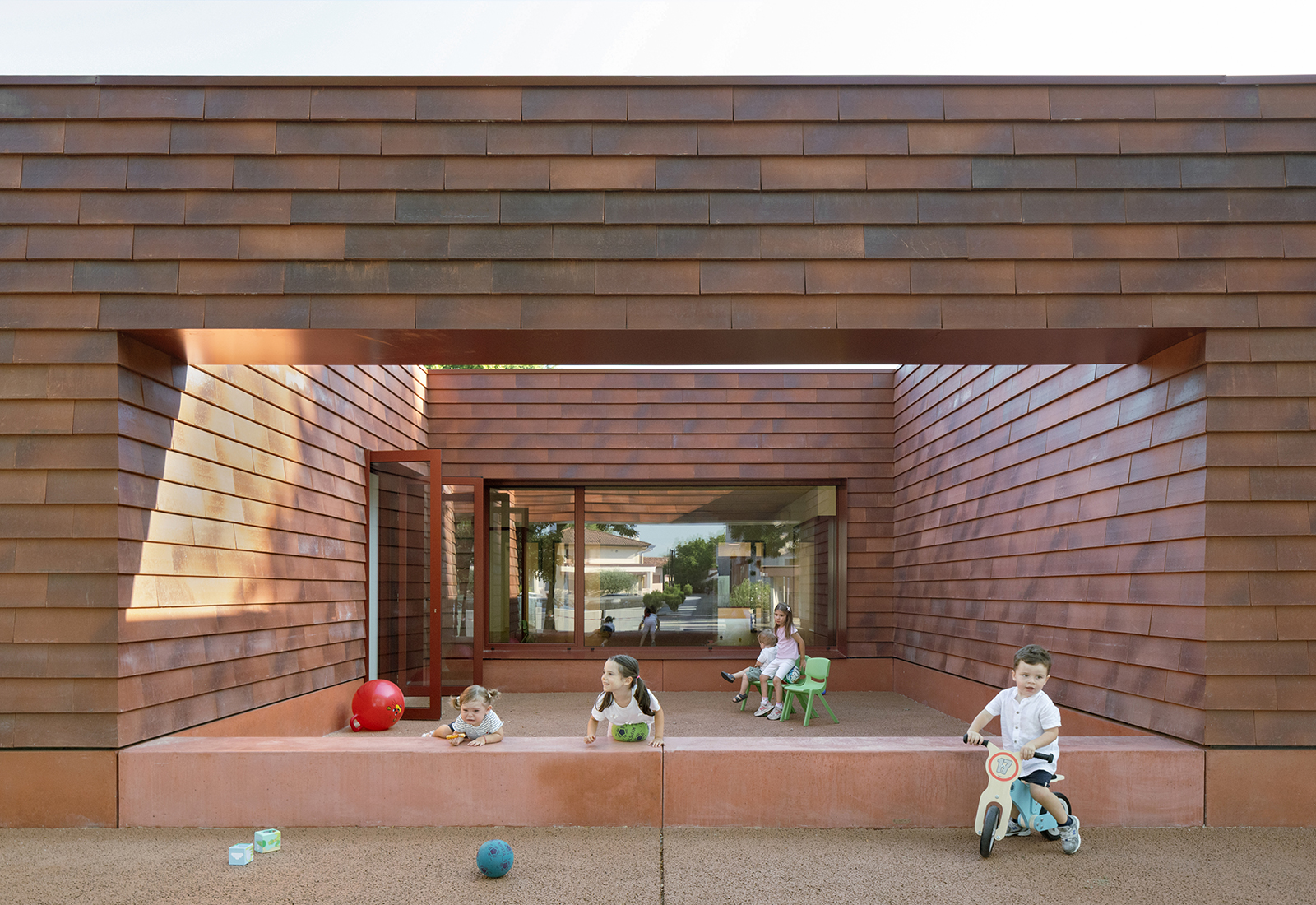
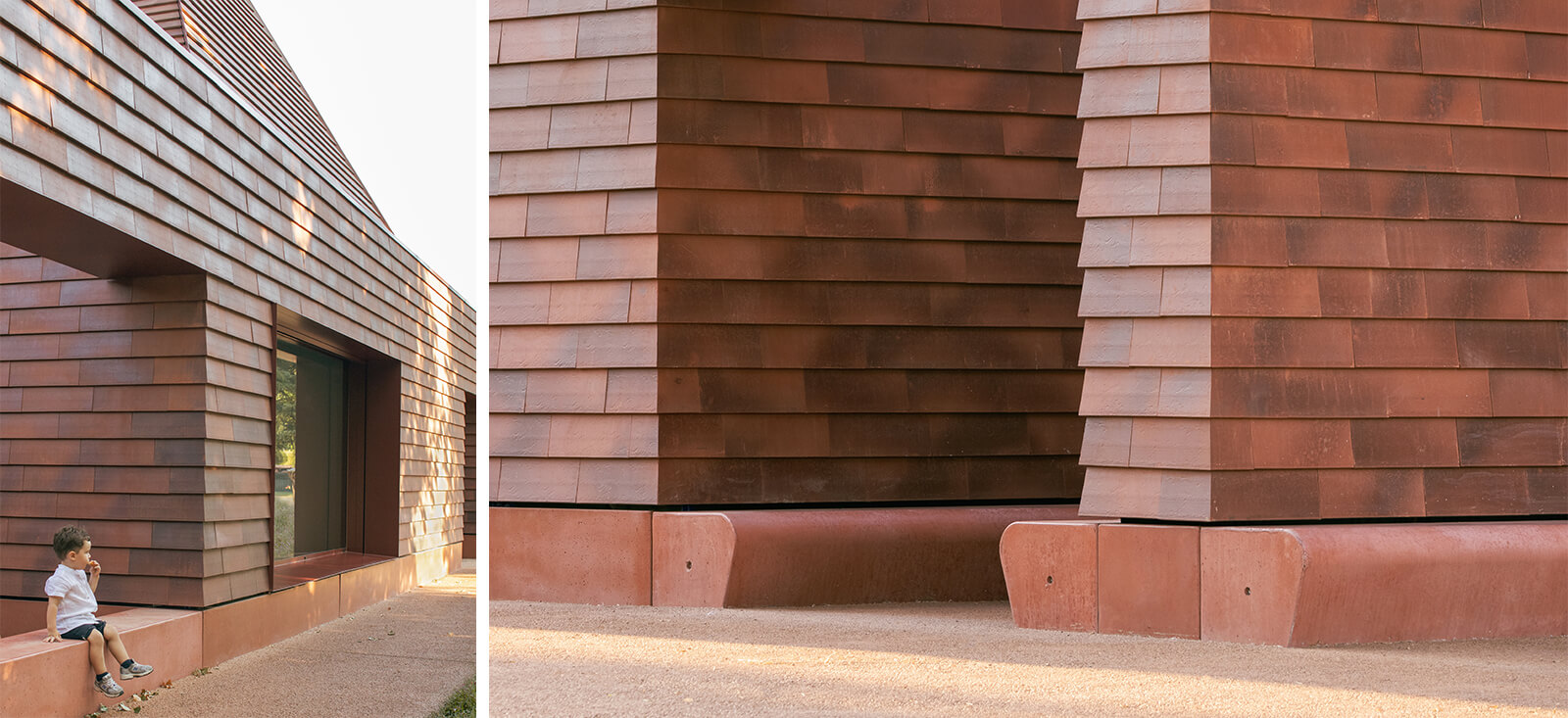
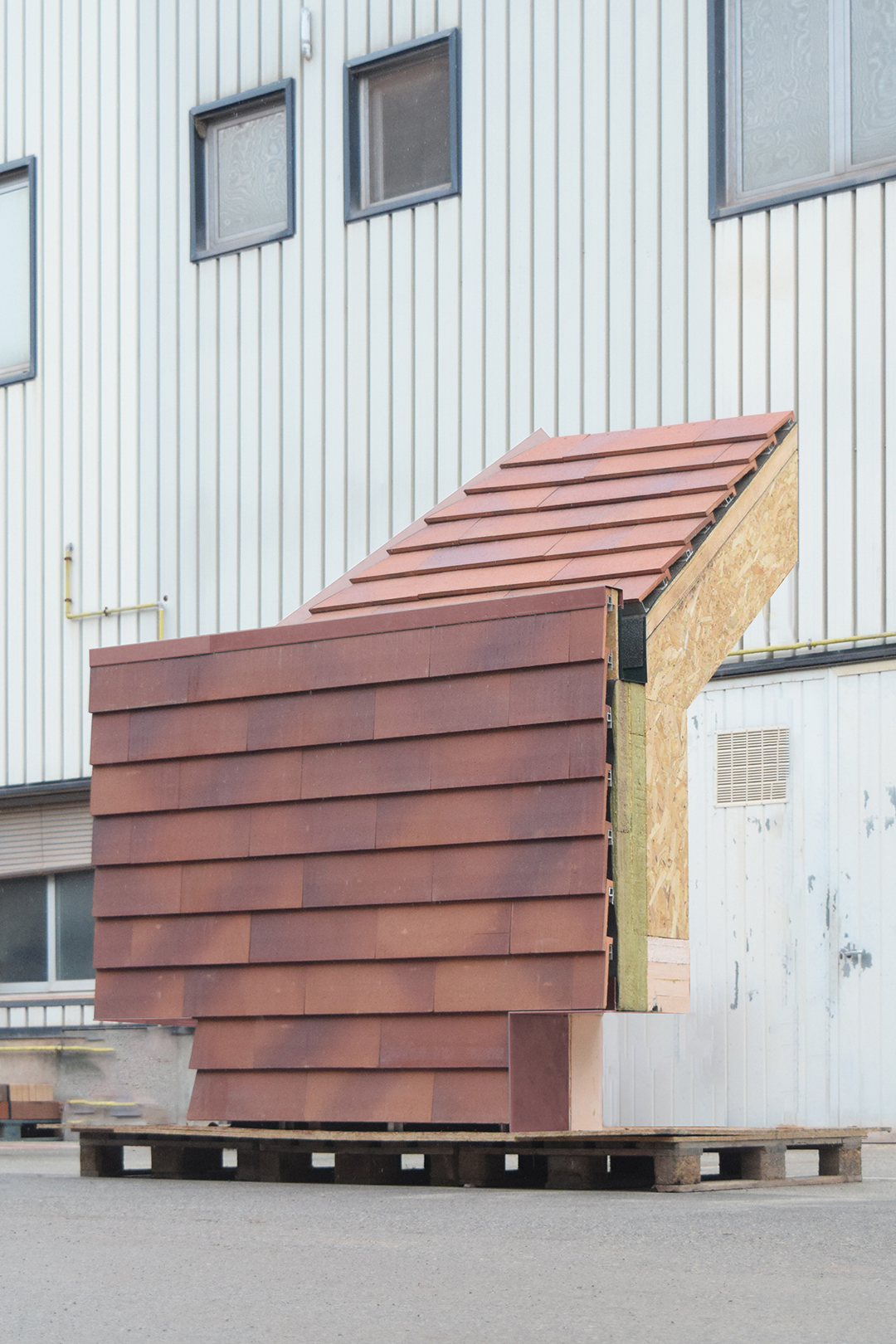
The traditional typology isn’t merely replicated in form, but rather adapted to optimise building operations by integrating passive design principles. The pitched roof form induces a natural stack-ventilation effect during summer; the homogeneous facade design, clad in terracotta shingles, facilitates airflow throughout the building envelope, while the rock-wool insulation and radiant floor heating system regulate the incident heat gain inside the building. For active energy generation, an array of solar panels has been integrated on the flat sections of the roof.
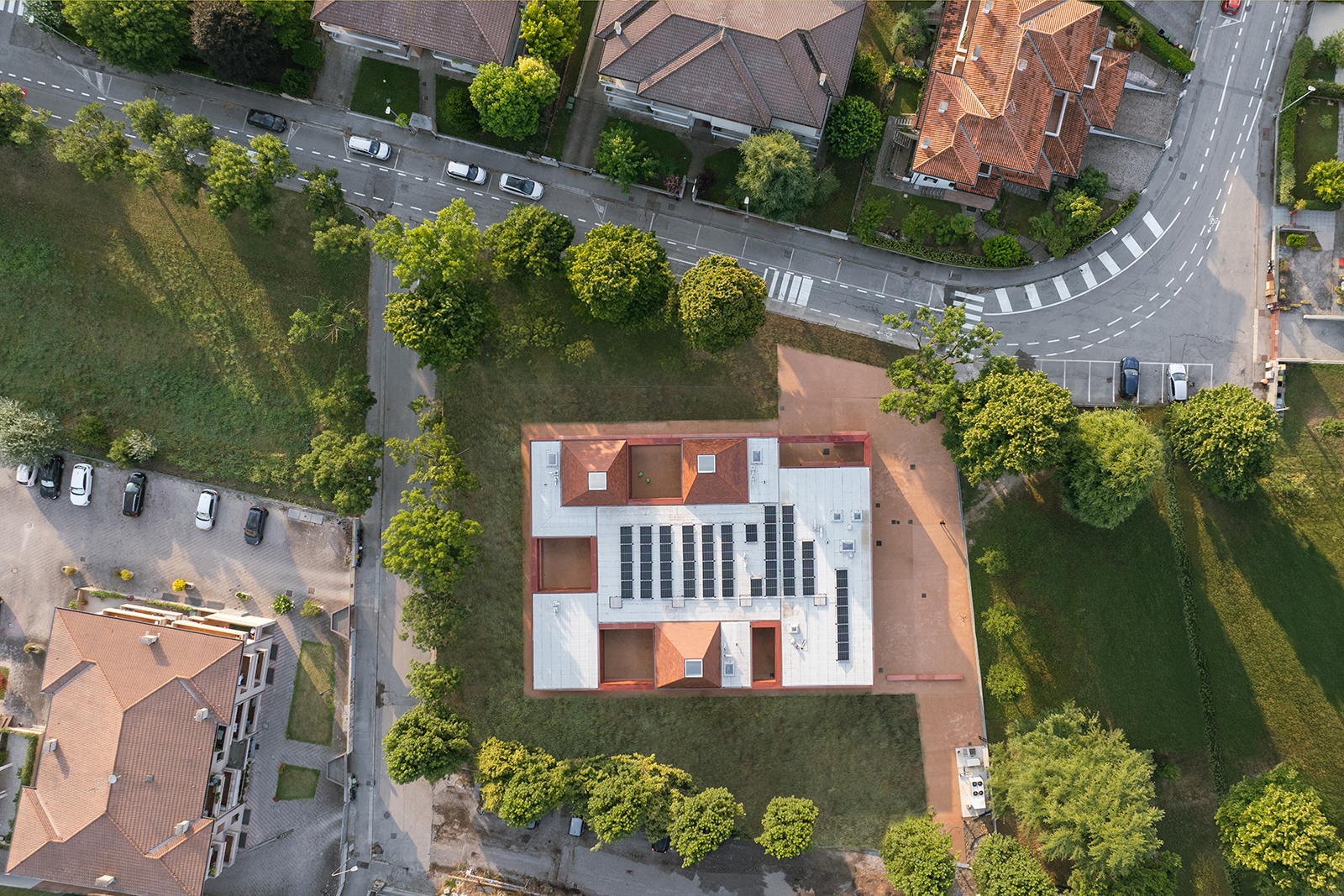
Simultaneously evoking collective memory and children’s imagination through its warm enclosure and surreal form, Kinder Rain fosters comprehensive learning by blending a rural residential archetype and contemporary pedagogy to create a collaborative and comprehensive learning experience. Morandi notes, “By weaving these layers of memory together, Kinder Rain generates a familiar form that provides an immediate sense of shelter and belonging for the children.” Perhaps, in their time here, the little minds would pick on these subtle cues—the way air flows through the space, the inherent warmth and tactility of terracotta, the difference of presence between outdoors and indoors and the feeling of belongingness and community—and interpret them as fundamentals of living, as they foray into the real world.
Name: Kinder Rain
Location: Piove di Sacco, Italy
Typology: Kindergarten
Architect: AACM – Atelier Architettura Chinello Morandi
Collaborators: Buromilan (Structural Engineering), Studio Associato Periti Industriali Albiero & Luise (MEP), Cooperativa Meolese Soc. Coop. (General Contractor)
Area: 672 sq m
Year of Completion: 2025

by Pranjal Maheshwari Oct 24, 2026
A consortium of Copenhagen’s 3XN, Toronto’s B+H Architects and Shenzhen’s Zhubo Design has designed the museum to mimic the surrounding riverscape, topped with a public park.
by Pranjal Maheshwari Oct 19, 2026
The Mumbai-based architects integrate courtyards, mesh screens and north light trusses to create a dining space that doubles up as a community hub at SR University, Warangal.
by Mrinmayee Bhoot Oct 17, 2026
The Rotterdam-based institute centres the Indian Ocean as a network for exploring material histories and transnational links shaping coastal cultures, positing them as future models.
by Pranjal Maheshwari Oct 16, 2026
At the 2026 Stirling Prize ceremony, Mary Duggan with RUFF Architects, MAKER Architecten and Nakshabid Architects were felicitated for proffering quality housing and social equity.

make your fridays matter with a well-read weekend
Enter your details to sign in
Don’t have an account?
Sign upOr you can sign in with
a single account for all
STIR platforms
All your bookmarks will be available across all your devices.
Stay STIRred
Already have an account?
Sign inOr you can sign up with
Verification link sent to check your inbox or spam folder to complete sign up process
Tap on things that interests you.
Select the Conversation Category you would like to watch
Please enter your details and click submit.
Enter the 6-digit code sent at


AACM’s Kinder Rain draws on collective memory to create a village-like school
by Pranjal Maheshwari | Published on : Mar 17, 2026


 Sign in with Google
 Sign in with email
What do you think?