Design12 mins. read
Brera Design District activates Milan with eclectic stories and spaces at Fuorisalone
by Almas SadiqueApr 03, 2026



by Sunena V MajuPublished on : Apr 16, 2026
Every April, Milan absorbs a week's worth of the design world and somehow holds it together. The city fills with presentations, parties, product launches and enough concept statements to last a year. By day three, even the most committed design enthusiast is running on espresso and overstimulation, scrolling past things they would have probably paused for in any other context. The volume is both the point and the hurdle.
Amid it all, the installations emerge as a public favourite—not least because they ask something different of the visitor. In a week largely driven by products and furniture, these claim space and shift the scale entirely—away from objects on display and toward environments you step into and experience.
Though the buzz of Milan Design Week began with Salone del Mobile, the annual design fair soon spilt beyond its walls and into the city itself. In 1981, Italian brand Alchymia staged activations at Politecnico di Milano, fusing the design language of Alessandro Mendini’s Mobile Infinito (Infinite Furniture) with the performances by the Italian theatre company Magazzini Criminali. That same year, Memphis put up its first exhibition at the Arc 74 gallery, marking an early shift beyond the fairgrounds.
By the 1980s, Fuorisalone materialised as a decentralised series of design events running parallel to Salone. It has only grown since then to encompass store activations, cultural institutions, design districts, design exhibitions, alongside its enduring public favourite: the installations. Over the years, historic venues across the city have been claimed by artists, architects and designers to proffer works on a scale, often site-specific, that demand more than observation. These design installations become part of the city—as arenas to walk into, touch, play with, sit within and feel included in.
As design enthusiasts (and the friends they bring along) move through packed presentations across Milan’s myriad offerings from April 20 – 26, 2026, STIR brings you a list of the must-see installations at Milan Design Week 2026—large-scale, architectural, immersive and multi-sensorial.
by Lina Ghotmeh
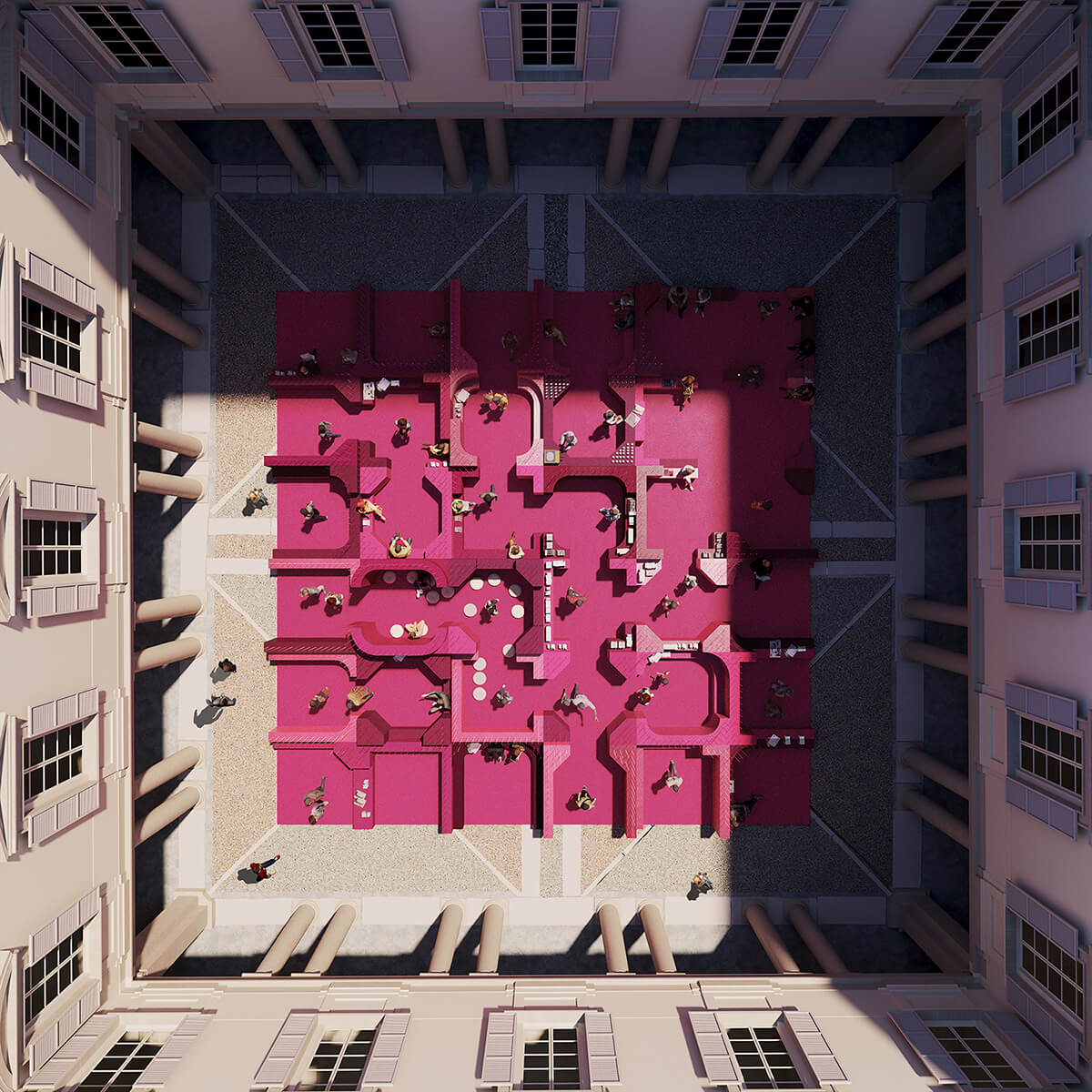
Lebanese-born, Paris-based architect Lina Ghotmeh brings her first site-specific solo outdoor work to Italy with Metamorphosis in Motion, the centrepiece installation of MoscaPartners Variations 2026 at Palazzo Litta. Ghotmeh works through what she calls an ‘Archaeology of the Future’, a design philosophy that draws on history, memory and landscape to shape space.
For the magenta labyrinth, she turns her attention to Palazzo Litta's courtyard—a historic threshold between city and palace, where ceremonies and public life once unfolded. The installation uses this layered history as its raw material, choreographing movement and framing perception so visitors become active participants rather than passive observers. The design is treated as a spatial and sensory process, one that gradually shifts how people experience architecture around them. At Milan Design Week 2026, it stands as a reminder that the most compelling design doesn't decorate a space but changes how you feel moving through it.
by Marcel Wanders
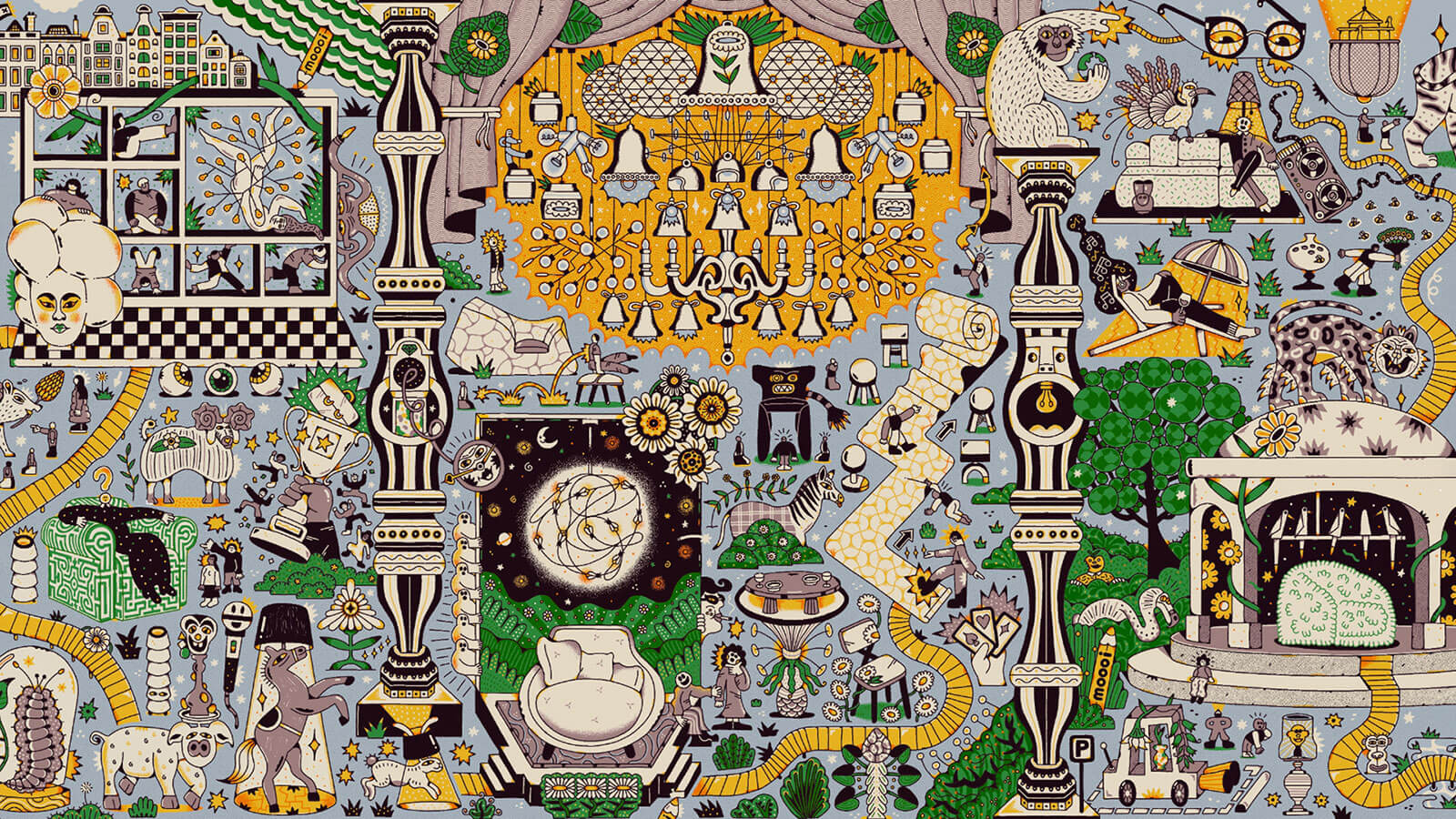
Marking 25 years since its founding, Moooi returns to Superstudio Più—where much of the brand’s early story unfolded—with this large-scale immersive installation. Long shaped by the vision of Dutch industrial designer Marcel Wanders, the brand has built its reputation on design that refuses to take itself too seriously while demanding to be taken seriously. This anniversary show leans into that contradiction.
Wrapped entirely in raw, reflective and deliberately rough silver, Moooi 25 Years reframes the brand’s most iconic product designs alongside new work. Here, Wanders and Moooi use light and material to construct environments that feel less like a showroom and more like a world in itself.
by Annabelle Schneider with USM x Snøhetta
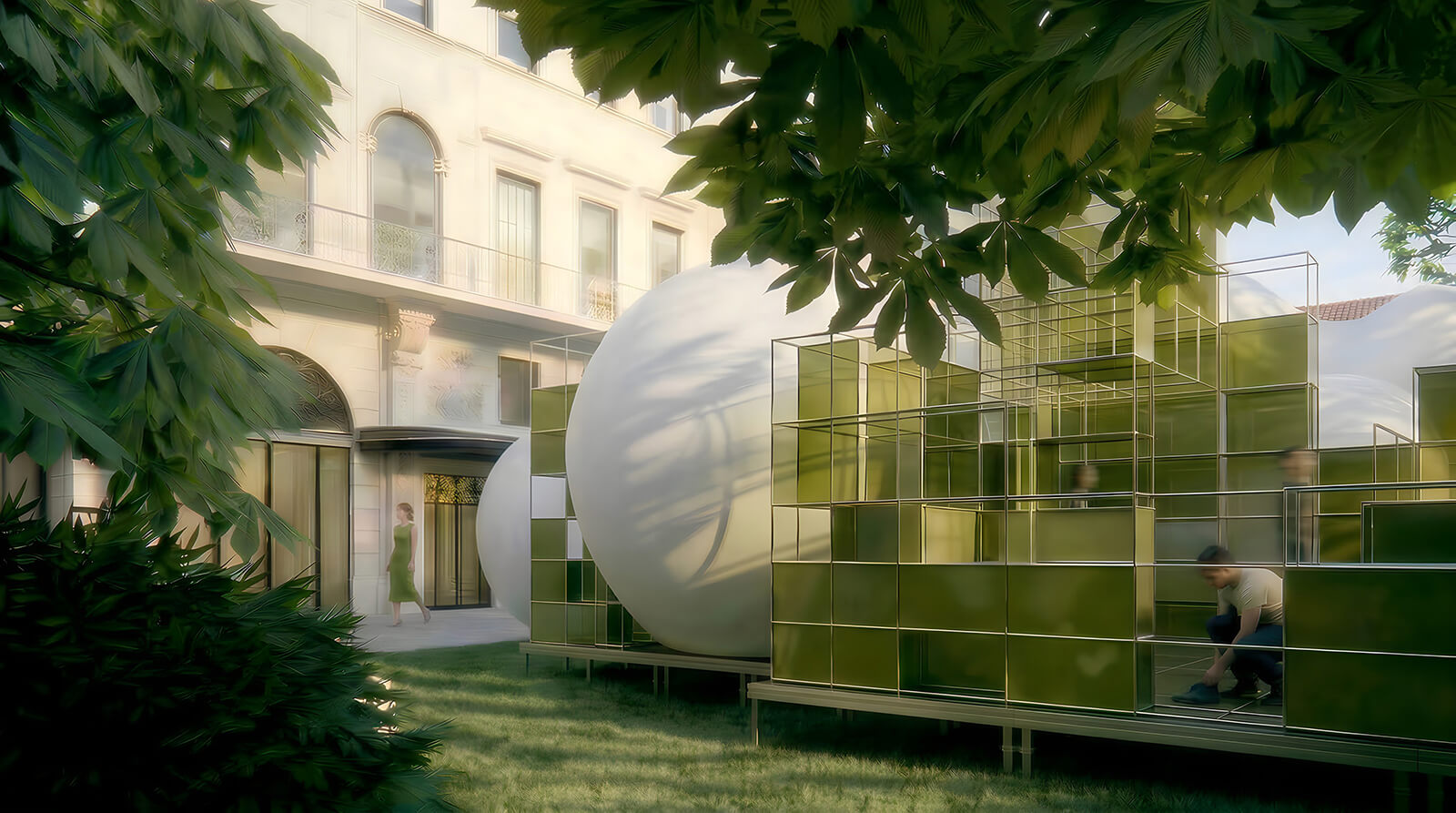
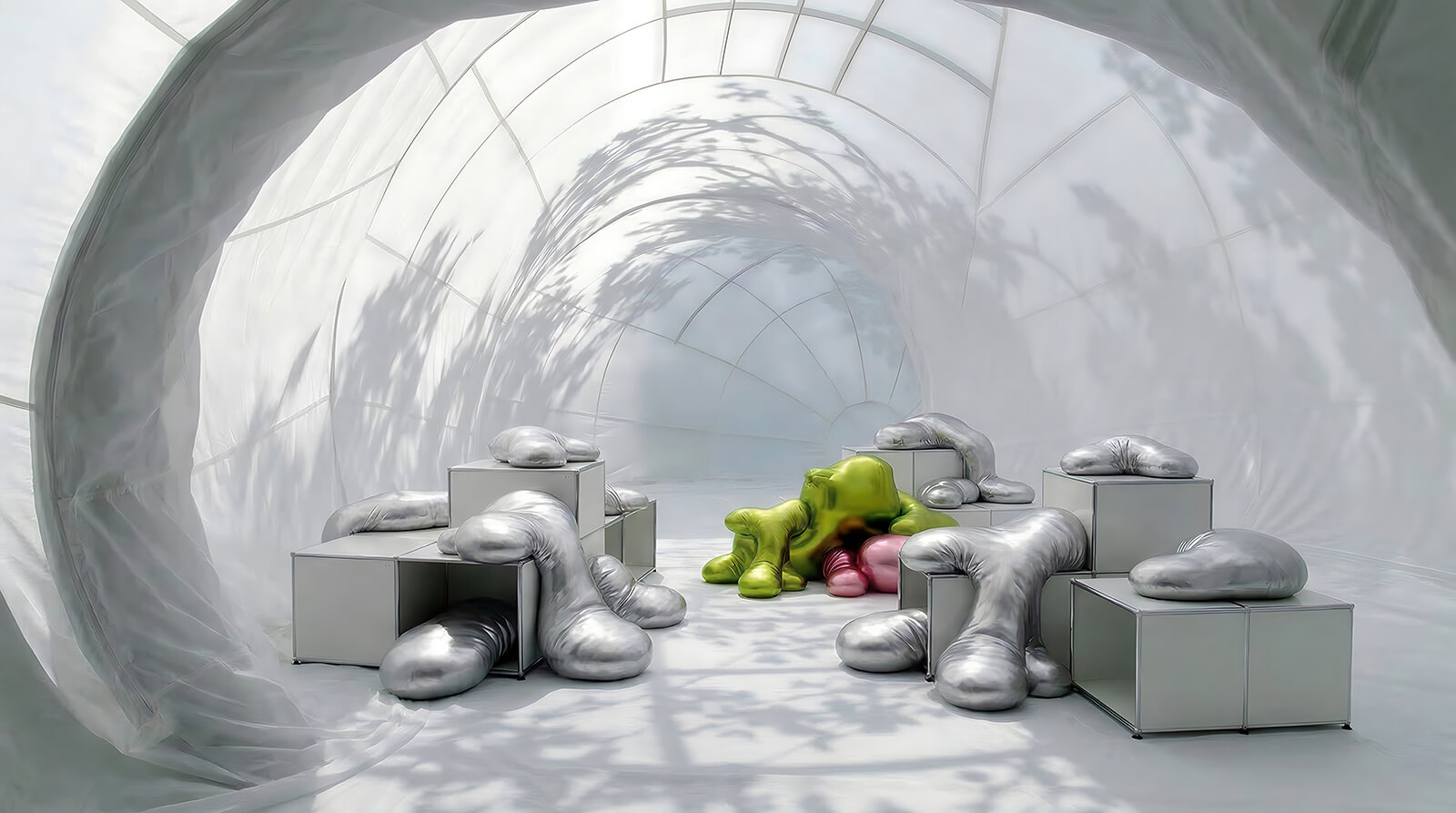
Swiss artist and experience designer Annabelle Schneider, working in partnership with architecture studio Snøhetta and furniture brand USM, debuts RENAISSANCE OF THE REAL at Fondazione Luigi Rovati during the design week. The theme draws from the concept that, in an era shaped by algorithmic distraction and digital overload, carefully designed physical spaces can restore something that screens cannot replicate: presence.
Schneider develops the work from her ongoing exploration of sensory awareness, expanding it here into a more architectural and site-responsive form than her earlier, bubble-like immersive experiences. The result is a multisensory environment that asks visitors to slow down, pay attention and reconnect with the intelligence of their own bodies. USM's modular system underpins the spatial structure, grounding the experience in the physical and the tangible. At a moment when the virtual feels increasingly dominant, the installation makes a quiet but pointed argument for the irreplaceable value of being somewhere—in person, in a room.
by Studio Marco Piva
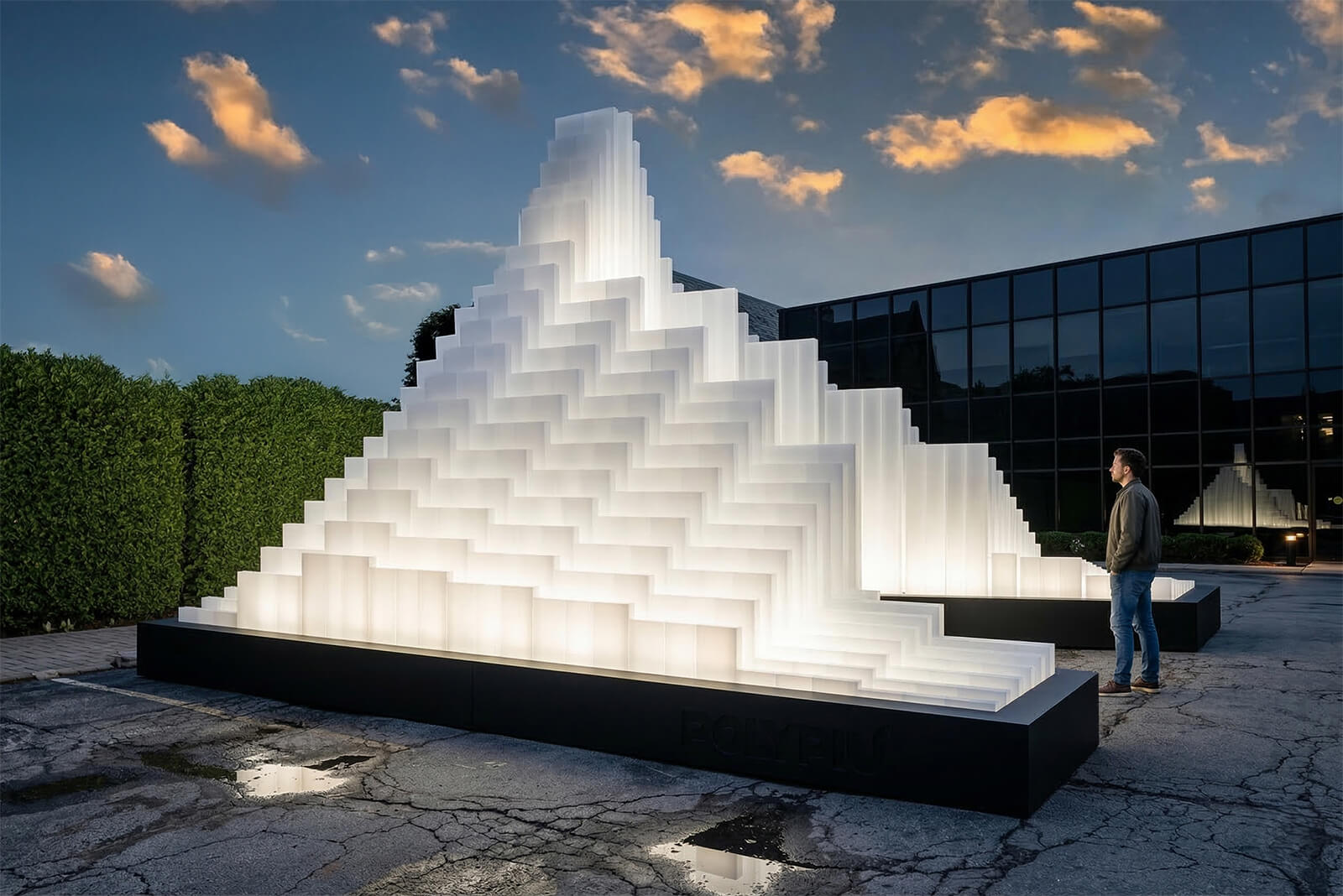
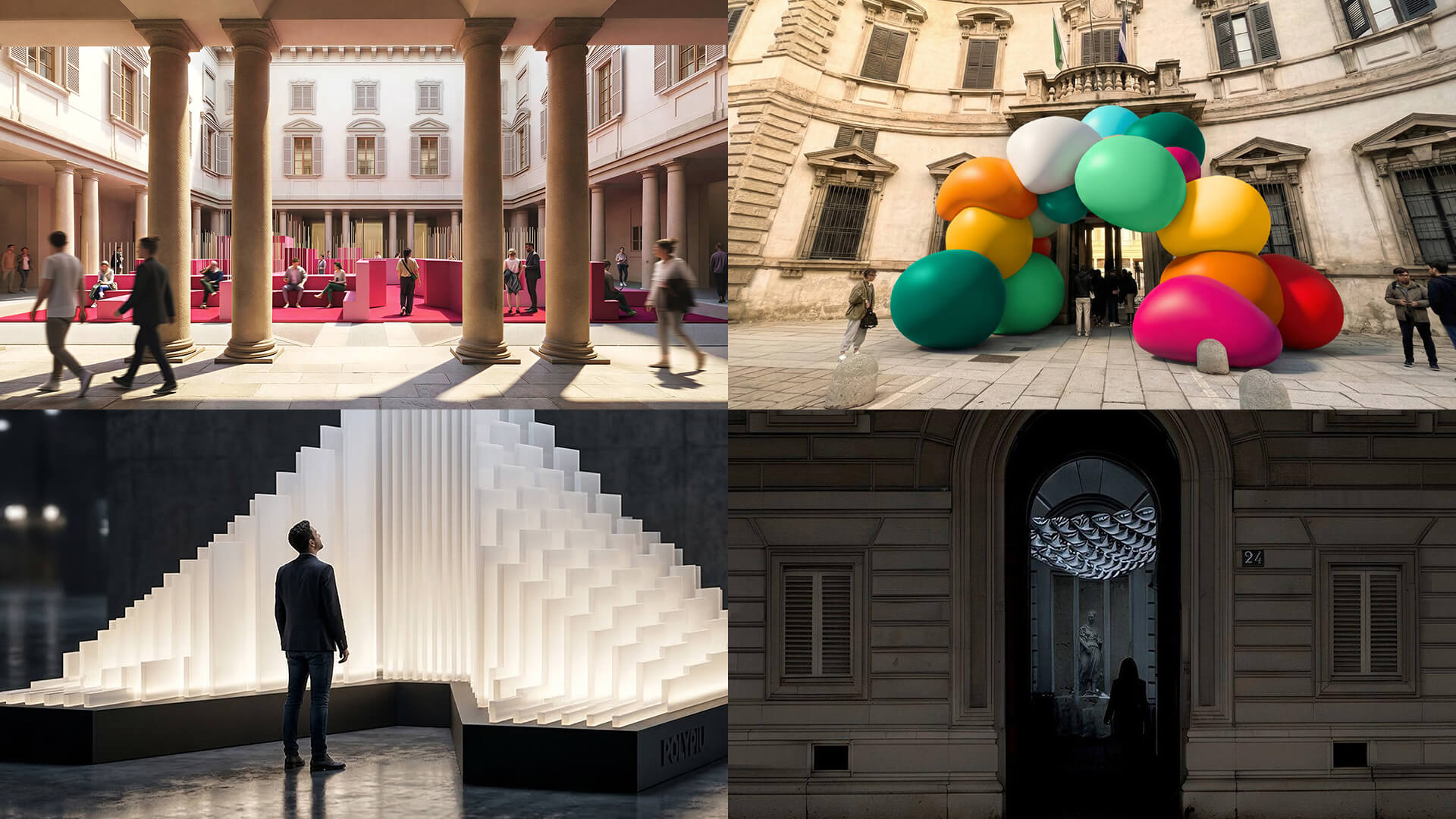
Designed by Studio Marco Piva and presented at SuperStudio Più as part of the SuperNova programme, Polypiù Cathedral takes a single industrial material and asks what else it might be capable of. The installation is built entirely from PolyPiù's PanelPiù 500/40 five-wall opal modular system (a product designed for roofing) and reconfigures it into an open, glowing pyramid that draws strongly on the visual language of sacred architecture.
Vertically arranged panels establish an ascending rhythm, pulling the eye upward and evoking height and stillness in equal measure. The material itself does much of the work. Visitors enter through a central opening, placing themselves within the pixelated geometry and experiencing its scale directly.
by HABITS Design
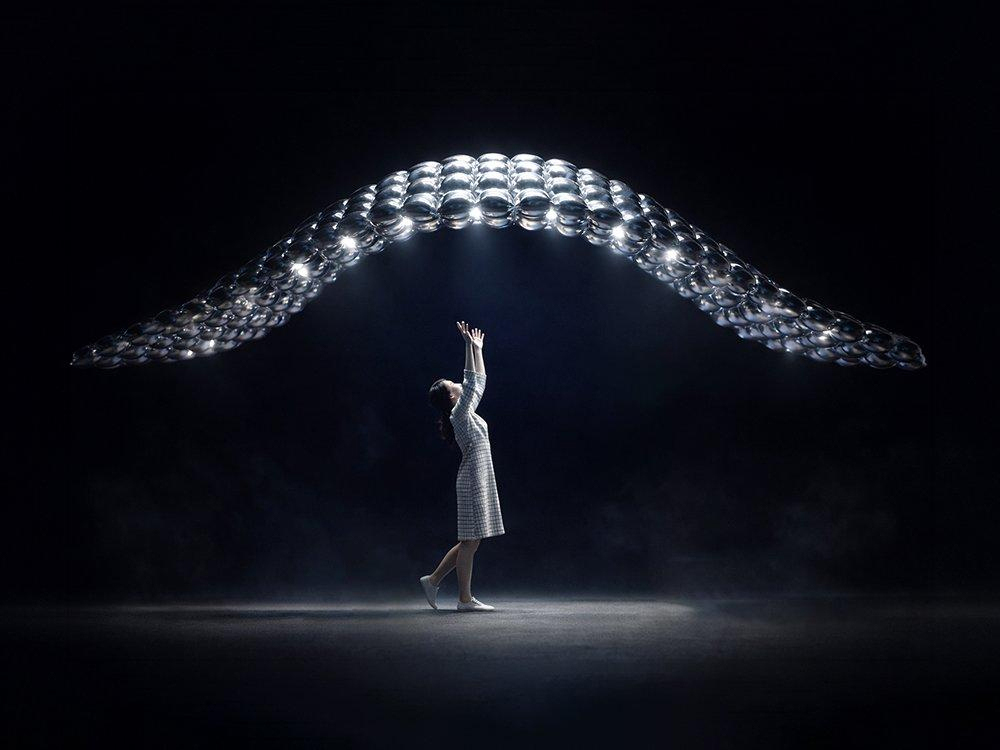
MAREA / TIDE by HABITS Design is one of the more technically ambitious installations at Milan Design Week this year. Suspended overhead, the work is an aerial structure composed of helium-inflated modules connected by motorised nodes. It acts as a responsive, shifting canopy reacting in real time to the movement and density of people below. It advances and recedes, drawing close around a single visitor or opening outward around a crowd, behaving more like a weather system than an object.
The project treats lightness as both a structural fact and a conceptual condition, an unstable equilibrium between buoyancy and control. Nested within the installation is Light Bites, a tableware set designed for immersive dining that responds to touch and movement, turning a meal into something closer to a performance.
by Mario Cucinella Architects
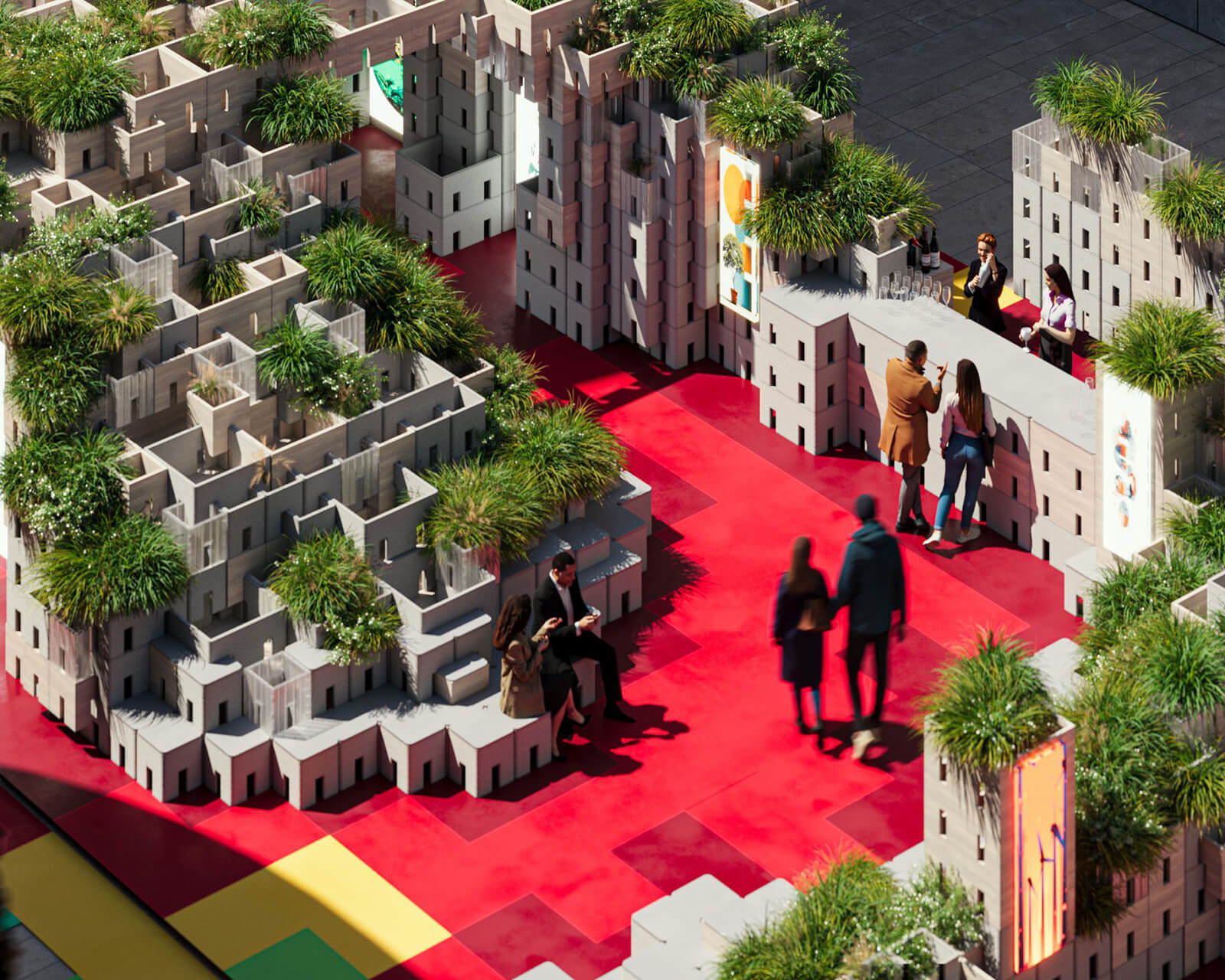
Presented at Solferino 28 for Corriere della Sera, Living and Abitare, Città delle Idee (City of Ideas) is an installation by Mario Cucinella Architects (MCA) that uses 3D-printed modules to imagine a city in the process of dissolving. Each module is produced by subtracting material instead of adding it, generating minimal waste and opening the door to new printing materials. The result is a structure that appears to dematerialise as it rises—a metaphor for releasing fixed assumptions and making space for new thinking.
Mario Cucinella, one of Italy's most prominent voices on sustainable urban design, frames the project as “a working proposition: a laboratory where visitors are invited to think of themselves as active participants in shaping how cities might be lived in”, according to the project’s press release.
by glo™ and Numero Cromatico
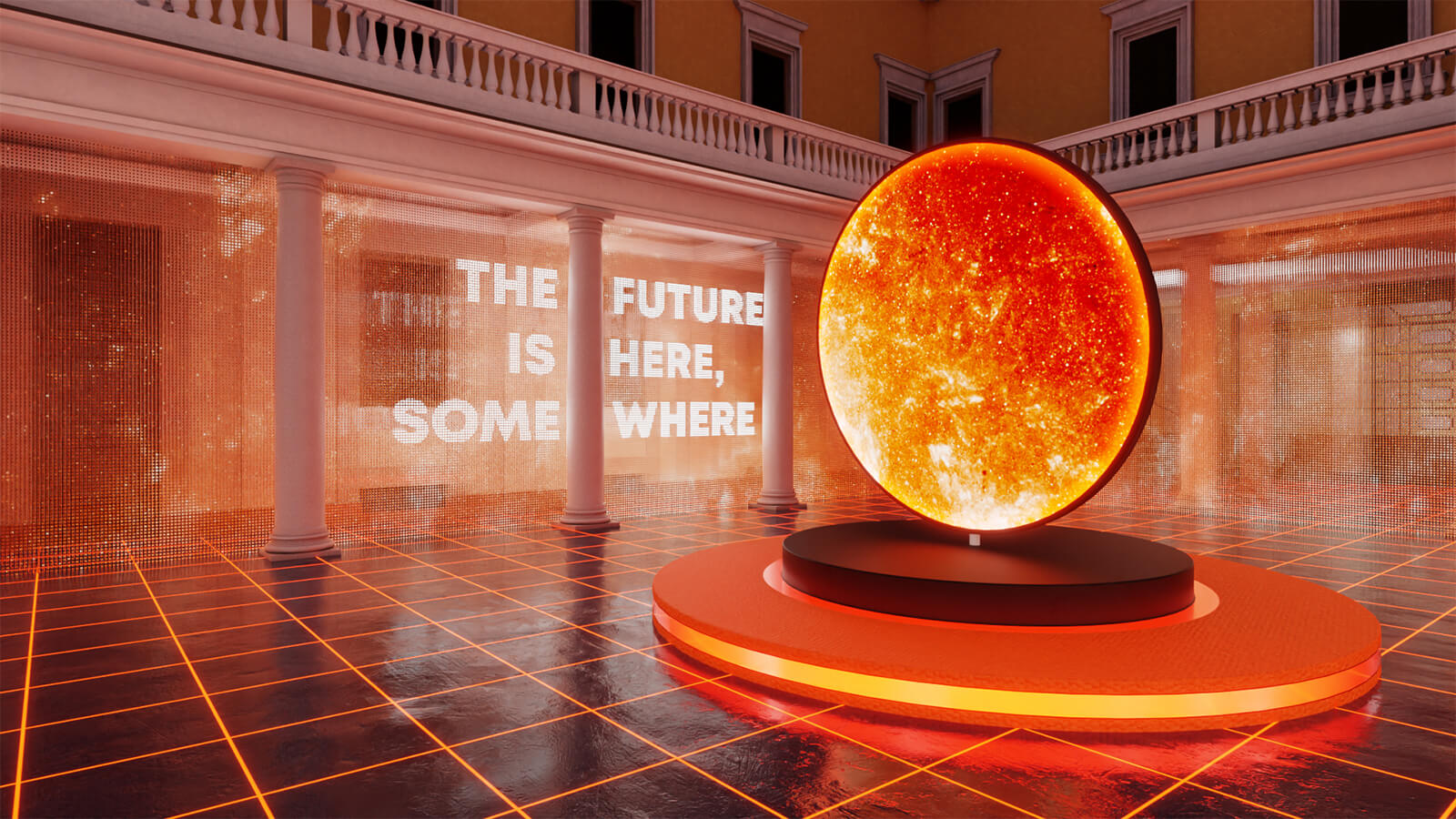
At Brera Design Week 2026, glo™ commissioned Milan-based research centre Numero Cromatico to create this immersive installation at Palazzo Moscova, built around the idea of participation as the work itself. At its centre sits a large, fiery orange circle, framed as a portal, drawing visitors into a space where light, architecture and live interaction are in constant dialogue.
The audience doesn't so much observe the installation as activate it, contributing to its evolution simply by being present. The work connects directly to glo™'s Hilo and Hilo Plus devices, which share the installation's design logic: modular, adaptable and responsive to the individual.
by Sara Ricciardi for American Express
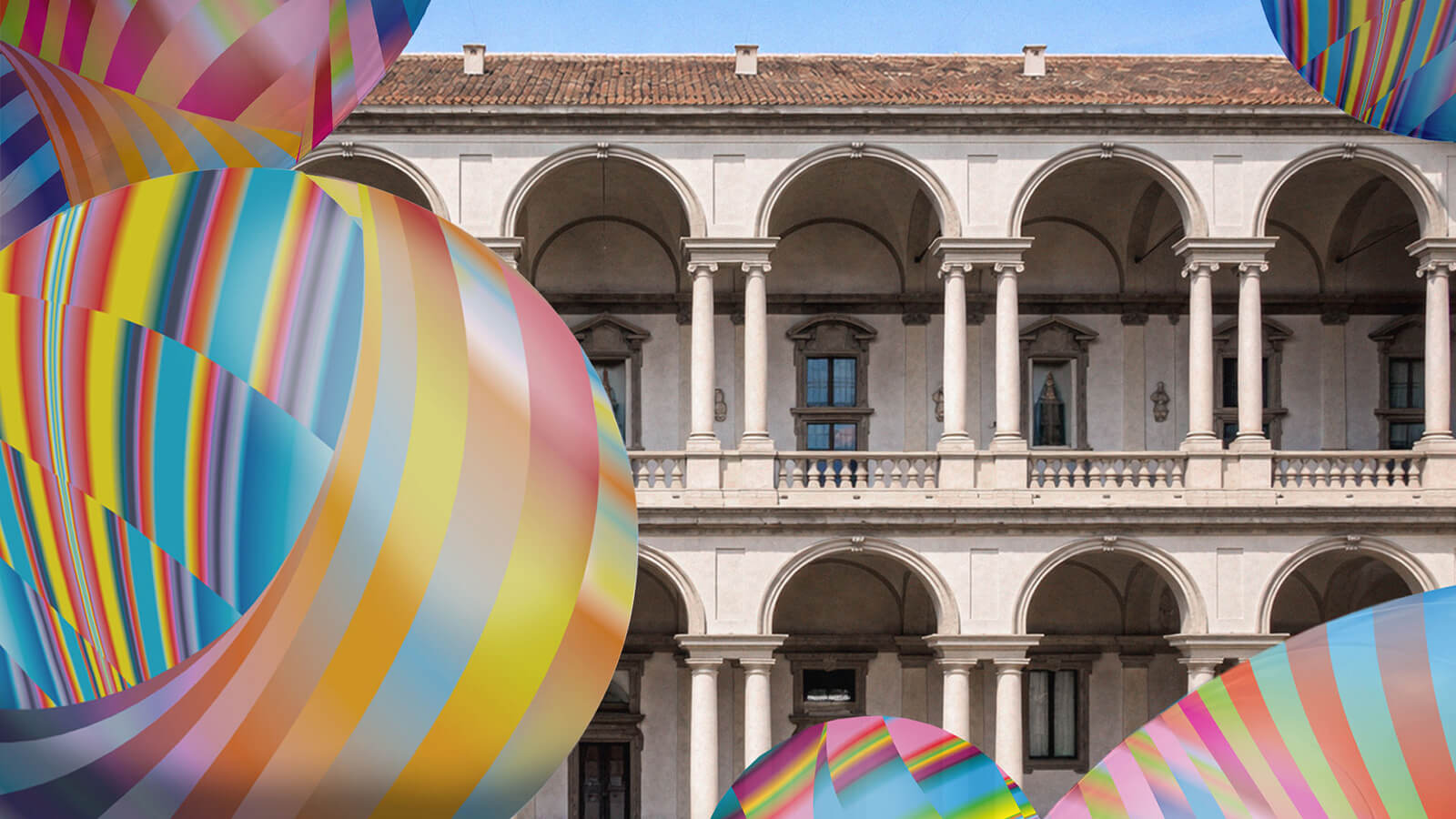
Designer and artist Sara Ricciardi takes on an unlikely brief—‘the neuroscience of happiness’—and turns it into something involuntary and emotional. Serotonin: The Chemistry of Happiness, commissioned by American Express and installed in the Loggia of the Pinacoteca di Brera, fills the space with large, cartoonish inflatable forms that slowly expand and contract, breathing and pulsing as though alive. The atmospheric work translates a biochemical concept into a bodily experience in a way that the rhythm of the installation mirrors the rhythms of the body.
by Kohler
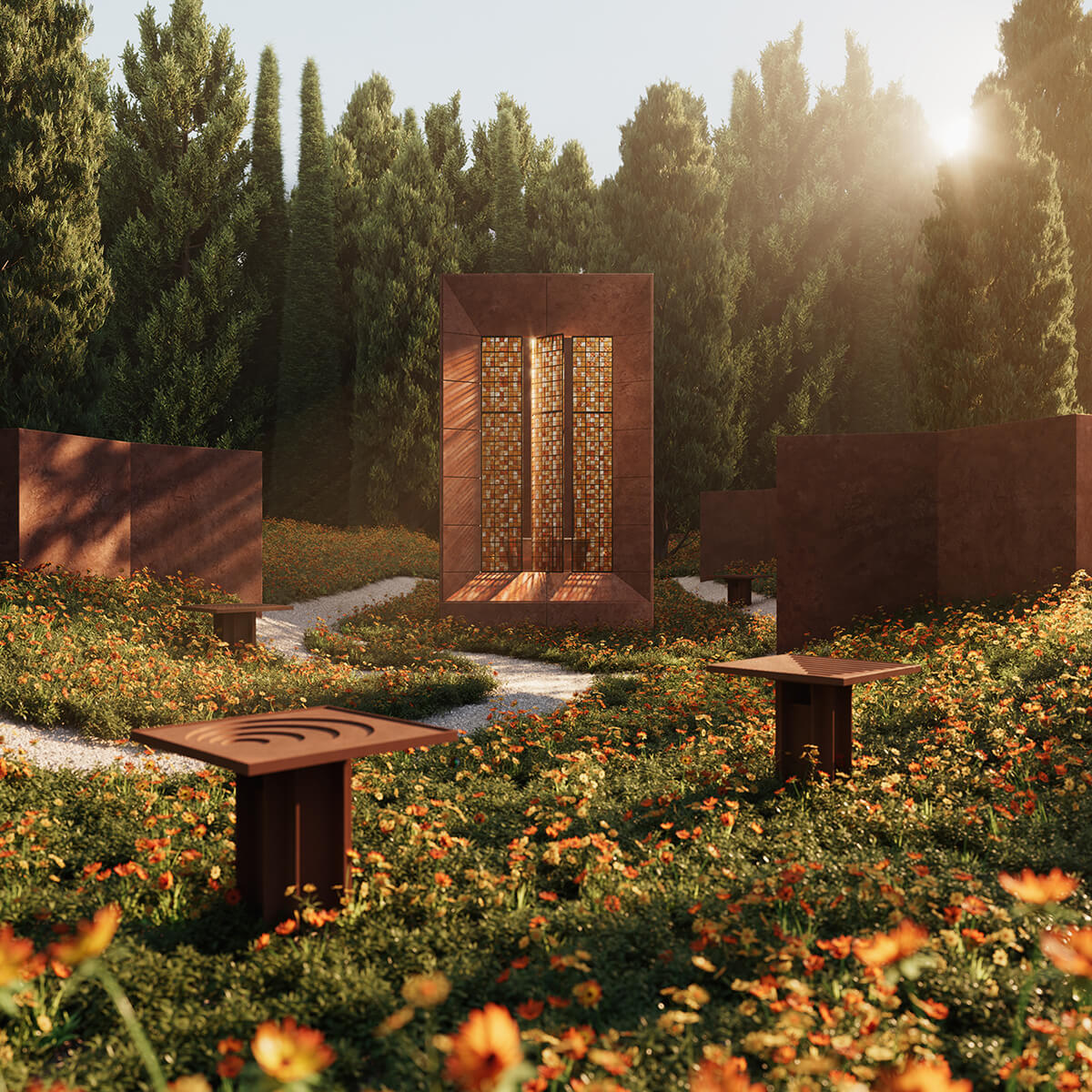
Kohler and Richard Christiansen, founder of the California lifestyle brand Flamingo Estate, take over the courtyard of the Padiglione d'Arte Contemporanea for Fuorisalone 2026 with an installation that makes bathing feel like an architectural proposition. The centrepiece is a brutalist bathhouse referencing the original structure on the Flamingo Estate property in the California hills, but built around Kohler's new Reverie enamelled cast-iron bath fitted with a copper metal shroud.
The palette is weathered and elemental—copper, aged metal, natural surfaces—and the structure rises from a meadow of wildflowers, designed to feel found instead of installed. Oversized stained-glass windows will filter light across the bath's warm surfaces as 200 Flamingo Estate candles line the walls. The overall effect is of a space designed to slow things down—less a product launch, more an argument for bathing as ritual.
by Ricardo Orts for Škoda Auto
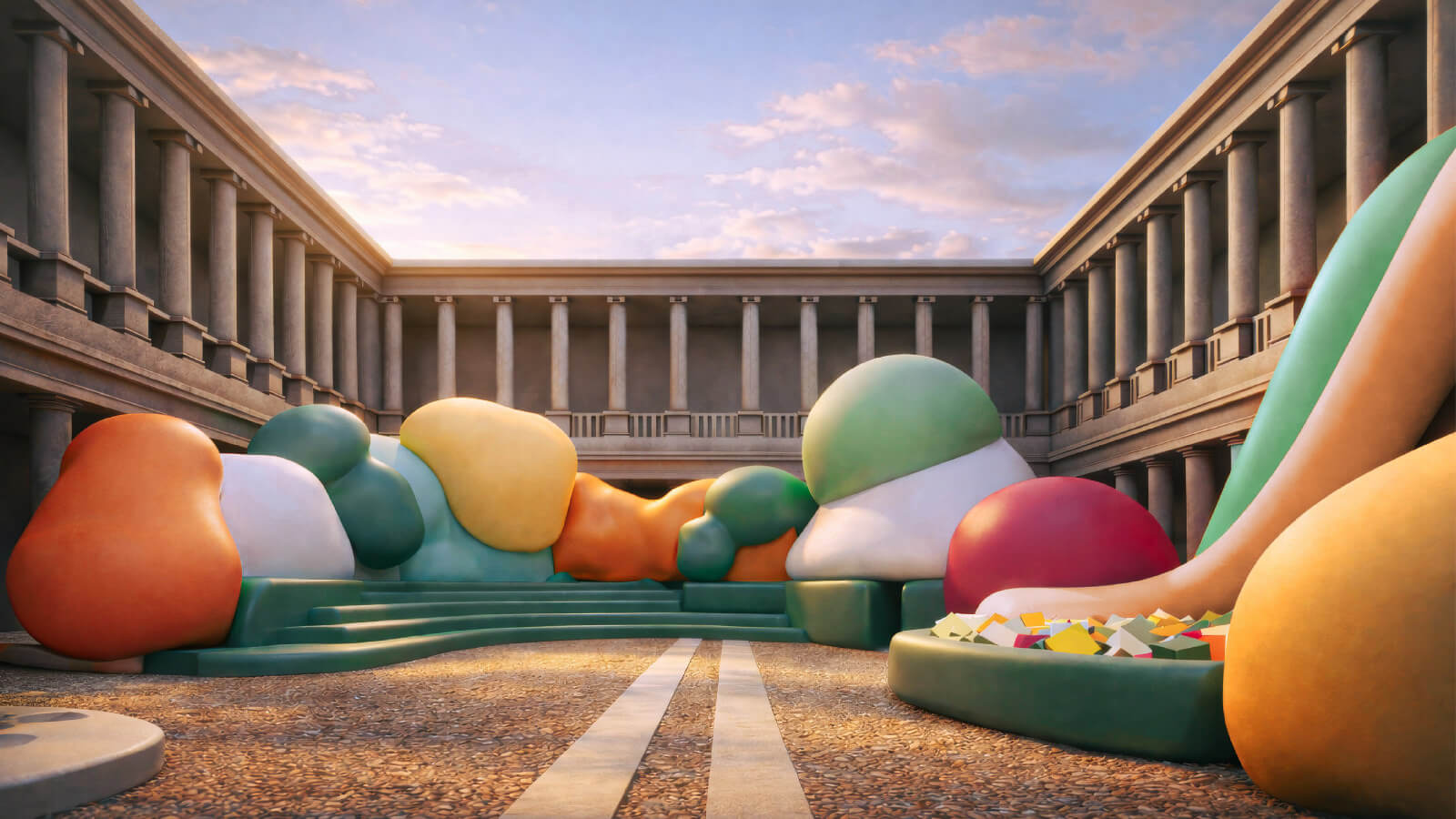
Škoda Auto’s installation takes over the historic courtyard of Palazzo del Senato, handing it to Spanish digital artist Ricardo Orts, and the founder of Ulises Studio. The brief is the launch of the Epiq electric vehicle, but the execution extends well beyond a standard product reveal.
Orts translates the campaign's modelling-dough visual language into soft sculptural volumes and moldable surfaces, reshaping the courtyard into something playful and tactile. At the centre, an interactive digital dome expands the campaign's imagery into an immersive experience where physical and digital elements operate together. Relax zones and a programme of daily creative activations aim to ensure the space continues to shift and evolve across the week.
by Dotdotdot for Geely
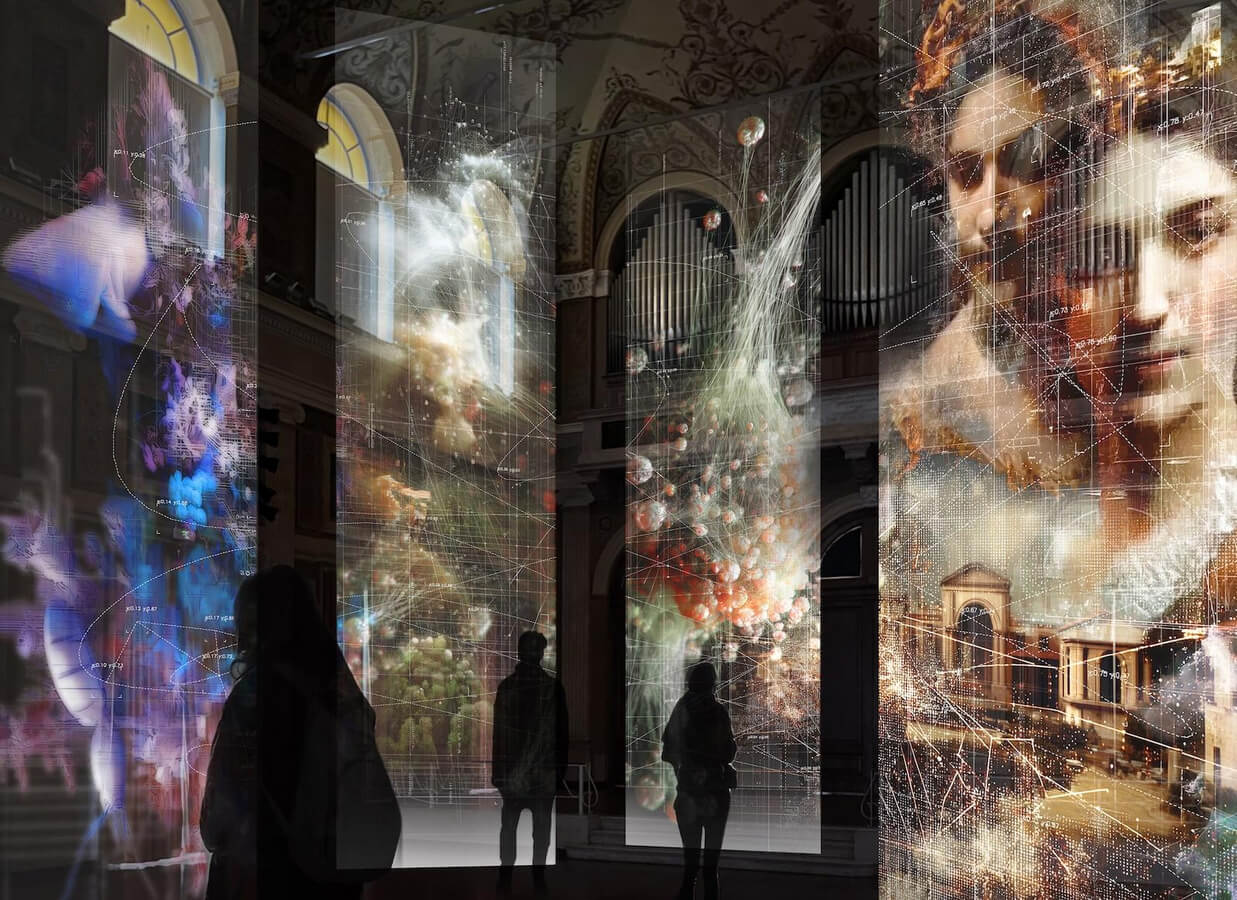
Interactive studio Dotdotdot brings Anima Mundi: A Visionary Impulse to the neoclassical Istituto dei Ciechi for Geely, filling the hall and its pipe organ with an installation that treats the natural world as a living system. Five monumental veils respond continuously to the physical presence of visitors, generating and modulating images and soundscapes in real time. As more people enter the space, the sonic ecosystem intensifies; as they move, the visuals shift.
Therein, an environment is created that evolves differently with every group, every hour. The project makes an explicit argument: humans are not dominant over nature but embedded within it—one presence among many in an interdependent network. Visitors are positioned not as observers of that network but as contributors to it, their bodies generating the very conditions that bring the work to life.
Stay tuned for exclusive coverage and highlights of Milan Design Week 2026 and Salone del Mobile.Milano 2026 on STIR. Tap here for regular updates on all design districts, including Fuorisalone, Brera, 5vie, Isola and beyond.

by Jincy Iype Oct 15, 2026
STIR explores craft, material intelligence and people shaping Indian design through dialogues with Design Democracy’s co-founders and the curators of its special exhibitions.
by Pranjal Maheshwari Oct 13, 2026
Through furniture, art and films, the showcase at the Ian Potter Centre in Melbourne advocates for biophilic material cultures as an antidote to planetary degradation.
by Pranjal Maheshwari Oct 12, 2026
The exhibition reimagines the 20th-century Scottsville residence of the American sculptor and his partner, ceramicist Nancy Jurs, curated by their daughter Alison Castle.
by Chahna Tank Oct 08, 2026
Javier Guzman Cervantes and Ulises Morin Arzola tell STIR about their ‘open code’ approach to design, working through a process of stockpiling and the idea of ‘queering’ materials.

make your fridays matter with a well-read weekend
Enter your details to sign in
Don’t have an account?
Sign upOr you can sign in with
a single account for all
STIR platforms
All your bookmarks will be available across all your devices.
Stay STIRred
Already have an account?
Sign inOr you can sign up with
Verification link sent to check your inbox or spam folder to complete sign up process
Tap on things that interests you.
Select the Conversation Category you would like to watch
Please enter your details and click submit.
Enter the 6-digit code sent at


The must-see immersive installations activating Milan Design Week 2026
by Sunena V Maju | Published on : Apr 16, 2026


 Sign in with Google
 Sign in with email
What do you think?