Design05 mins. read
Space Popular's immersive setup explores the future of portals at Soane’s, London
by Zohra KhanAug 05, 2022




by Zohra KhanPublished on : Nov 13, 2020
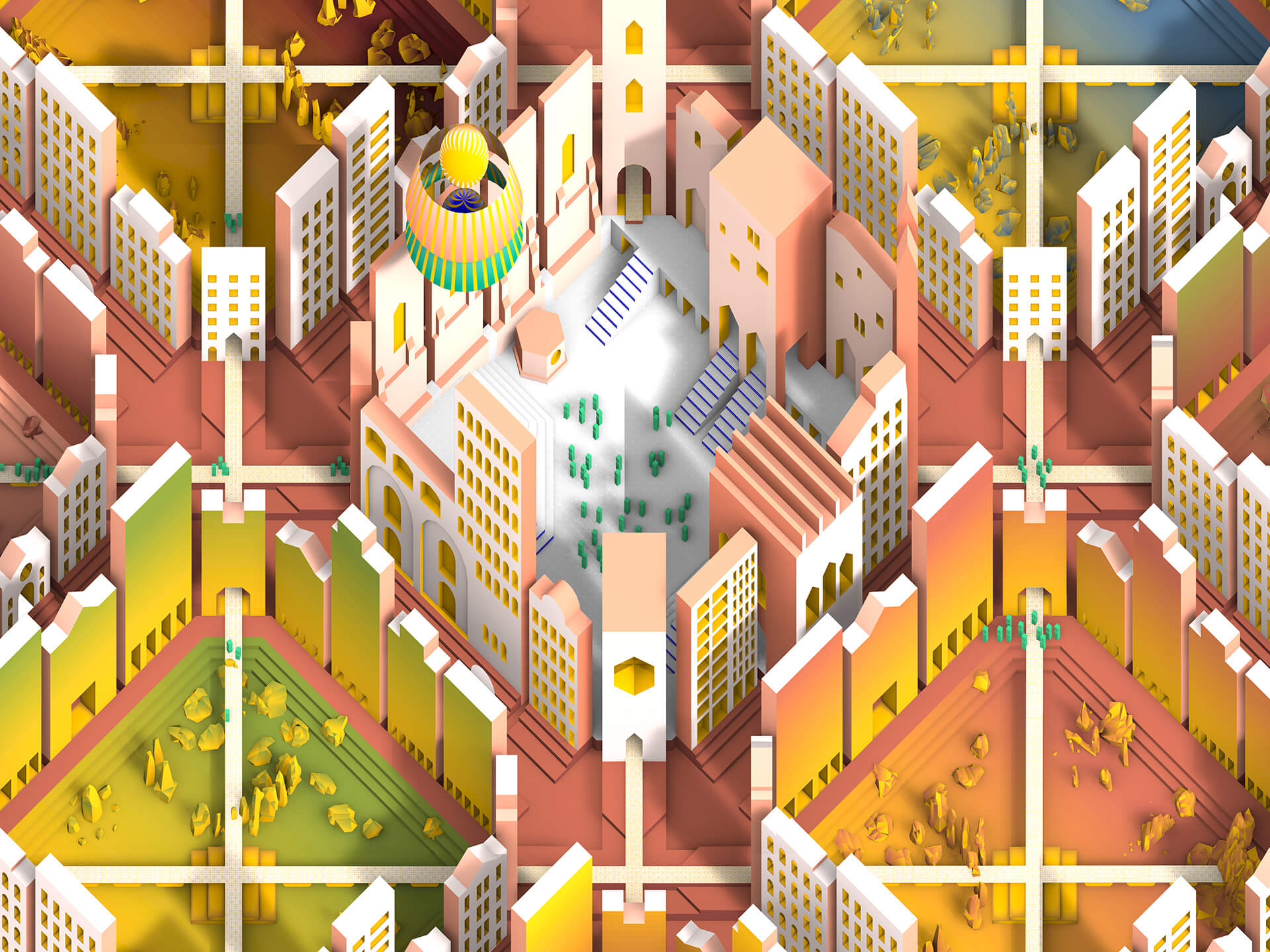
Multidisciplinary design studio Space Popular visualised a virtual city to host exhibitions, conferences, and talks for the 2020 edition of the Spanish architectural festival, Arquia Proxima.
In wake of the COVID-19 pandemic, architects Lara Lesmes and Fredrik Hellberg of the London-based studio were commissioned to create an inclusive virtual venue for the festival, which is hosted every year to organise discussions and to celebrate important works by emergent Portuguese and Spanish practices.
The idea was to develop a platform beyond the typical format of zoom conversations in which people can interact with one another and feel a sense of virtual togetherness.
Curated by Gonzalo Herrero Delicado, a London-based architect, curator and writer, the event was held on October 21-22 under the theme Punto de inflexion, which means 'Turning Point' in Spanish. These virtual spaces can still be experienced here.
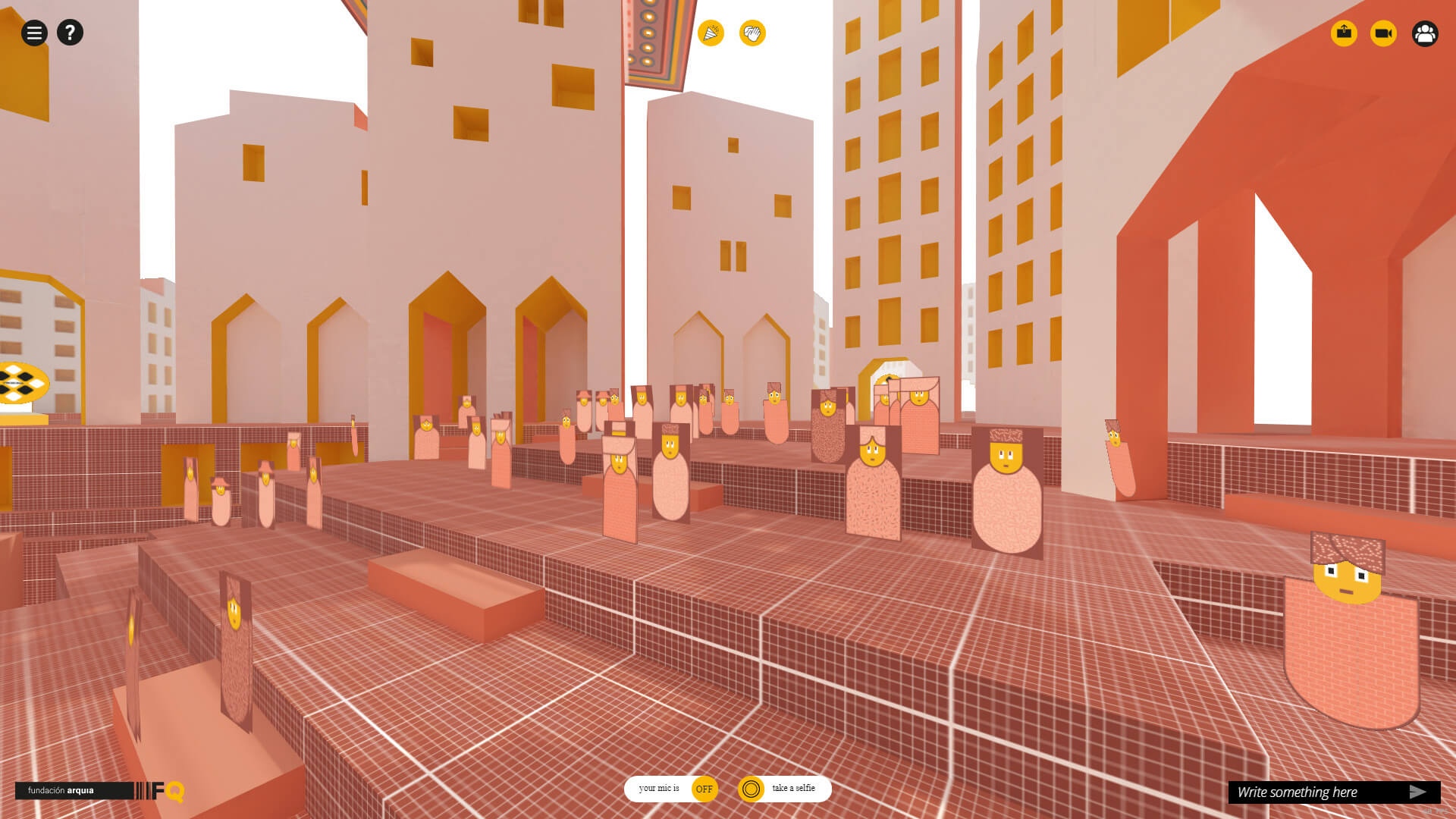
Space Popular conceptualised nine virtual rooms around a grid format, the architecture of which was inspired from the urbanscape of Ensanche, a district in Barcelona where the event was originally planned.
“Each room takes the shape of an urban block of the Ensanche at half of its original size, with the outside forming a street featuring abstracted versions of building typologies common in the area,” mentions Space Popular.
Upon arrival, visitors can choose from a series of avatars at the lobby area, which upon selection reveals a single plane emulating an abstract human form.
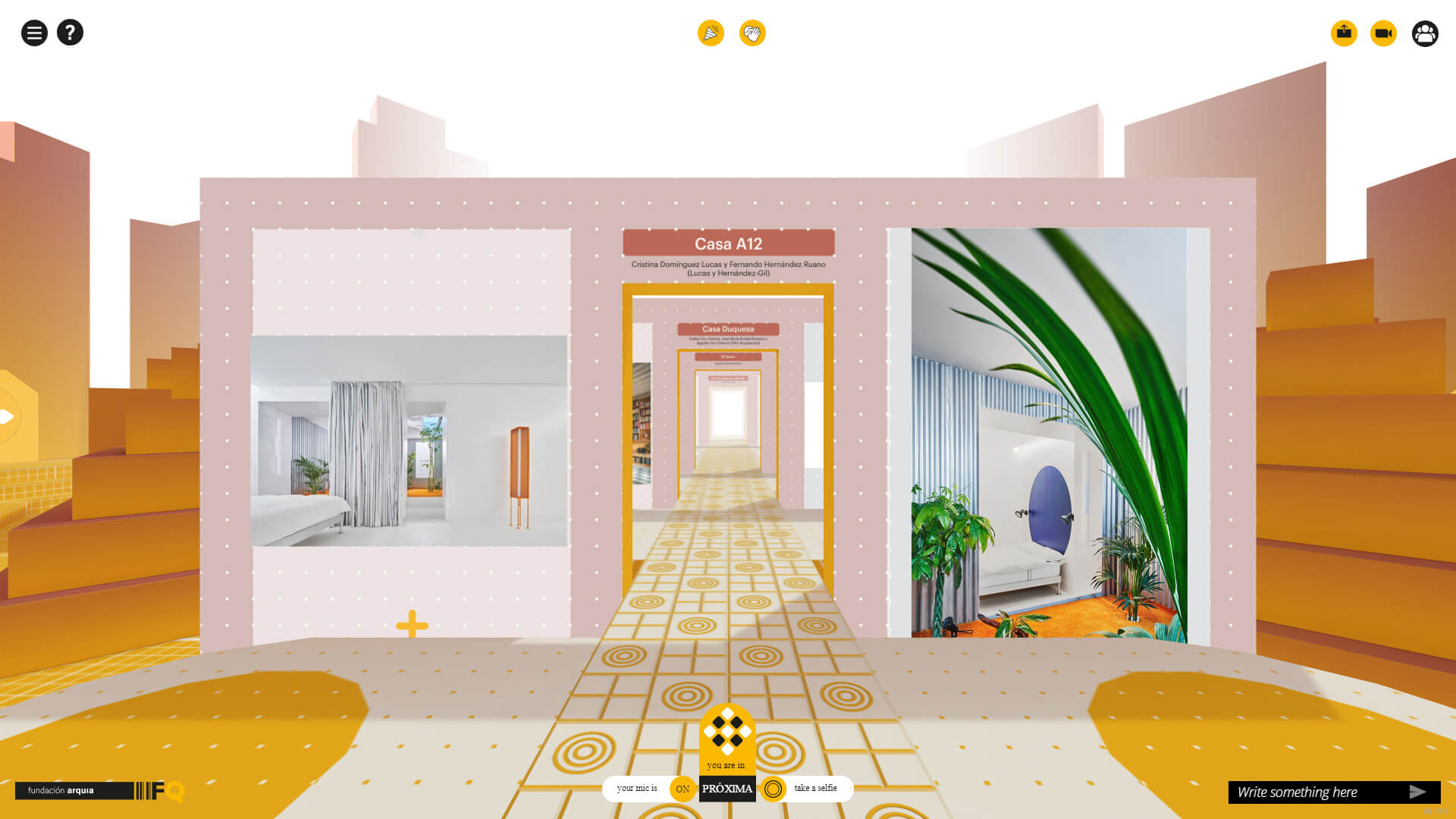
Further, they can navigate paths that lead to the various galleries in which architectural documentaries, large public conferences, and project exhibitions are hosted.
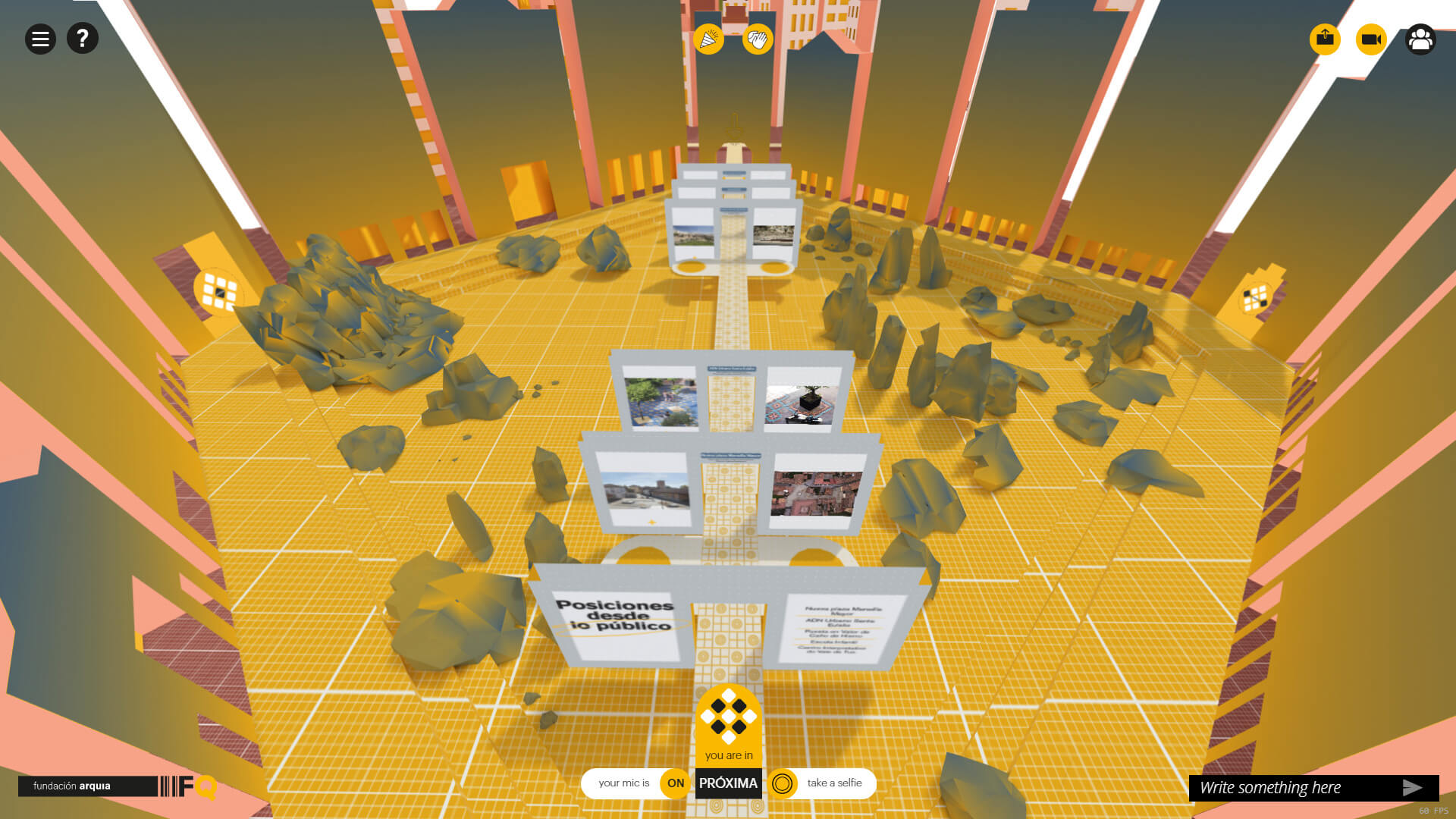
Four rooms in the venue are dedicated to Galería Próxima, which displays two dimensional representations of nominated architectural projects. As per Space Popular, interaction in this room is like walking through the pages of a conventional two-dimensional website. “Between pages you may bump into a friend who is also visiting and take a few steps down to the side gardens for a chat," says the studio.
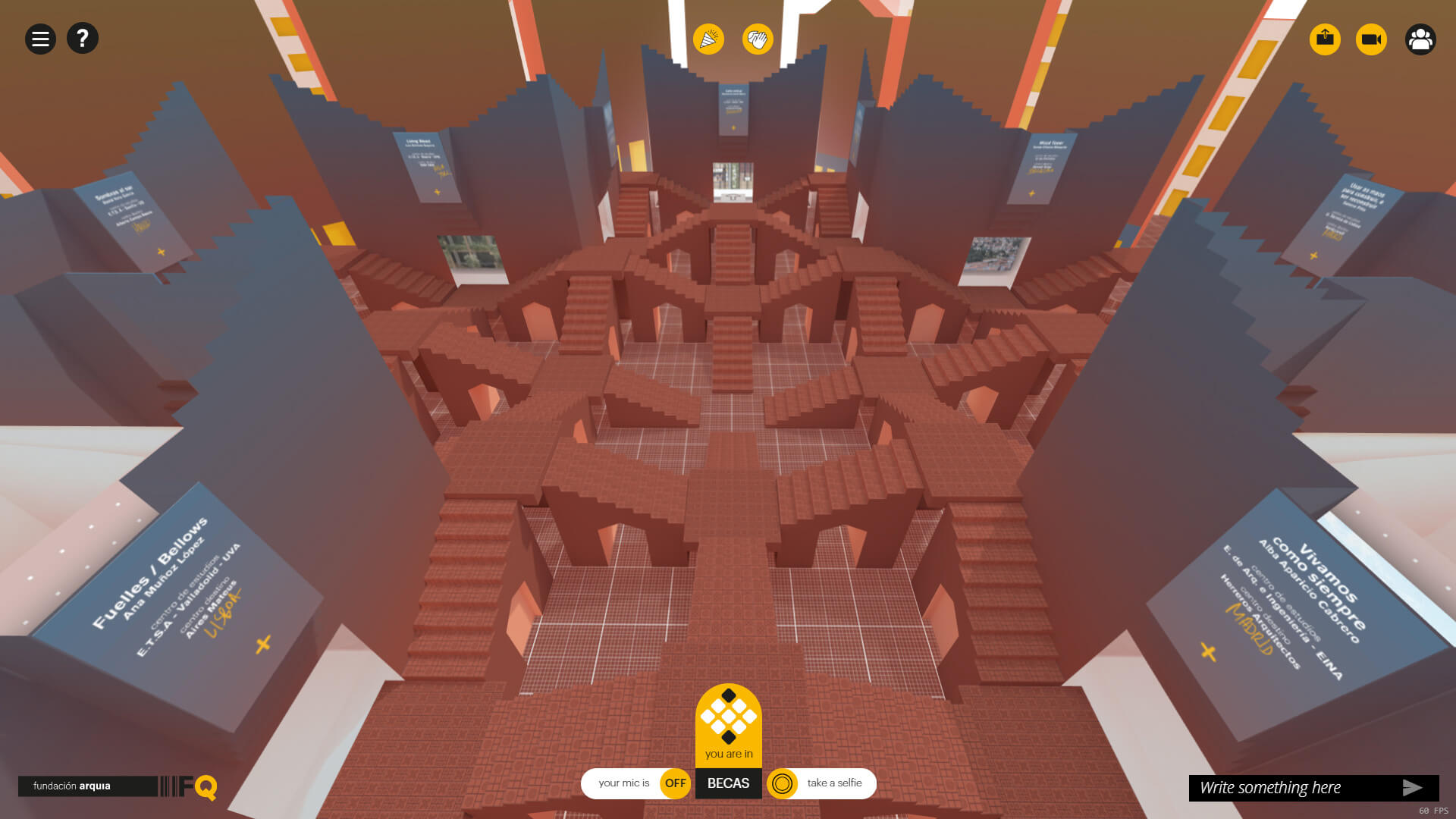
Galería Becas features a web of crisscrossing stairs that guide visitors to view competition projects that are granted scholarships.
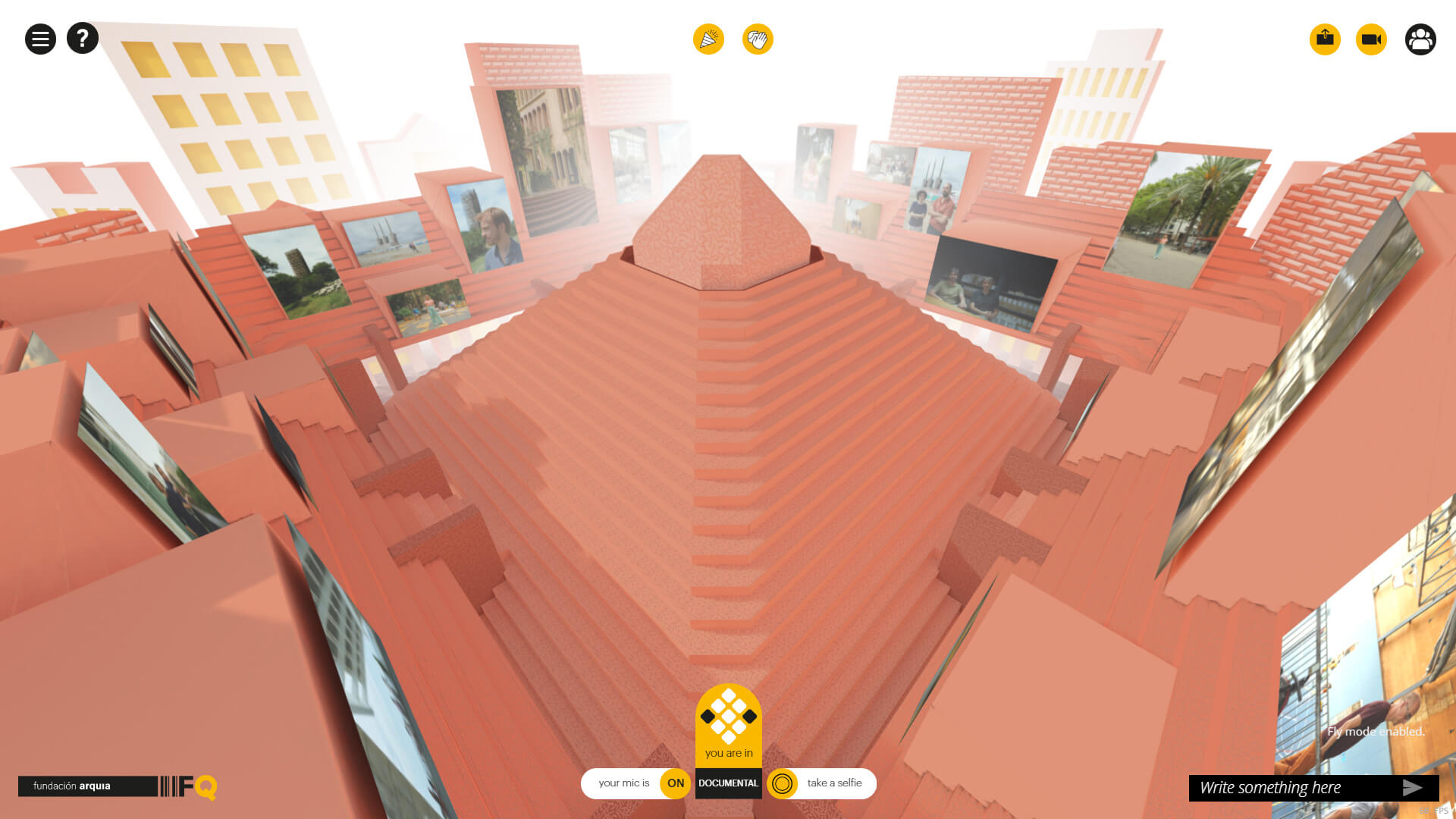
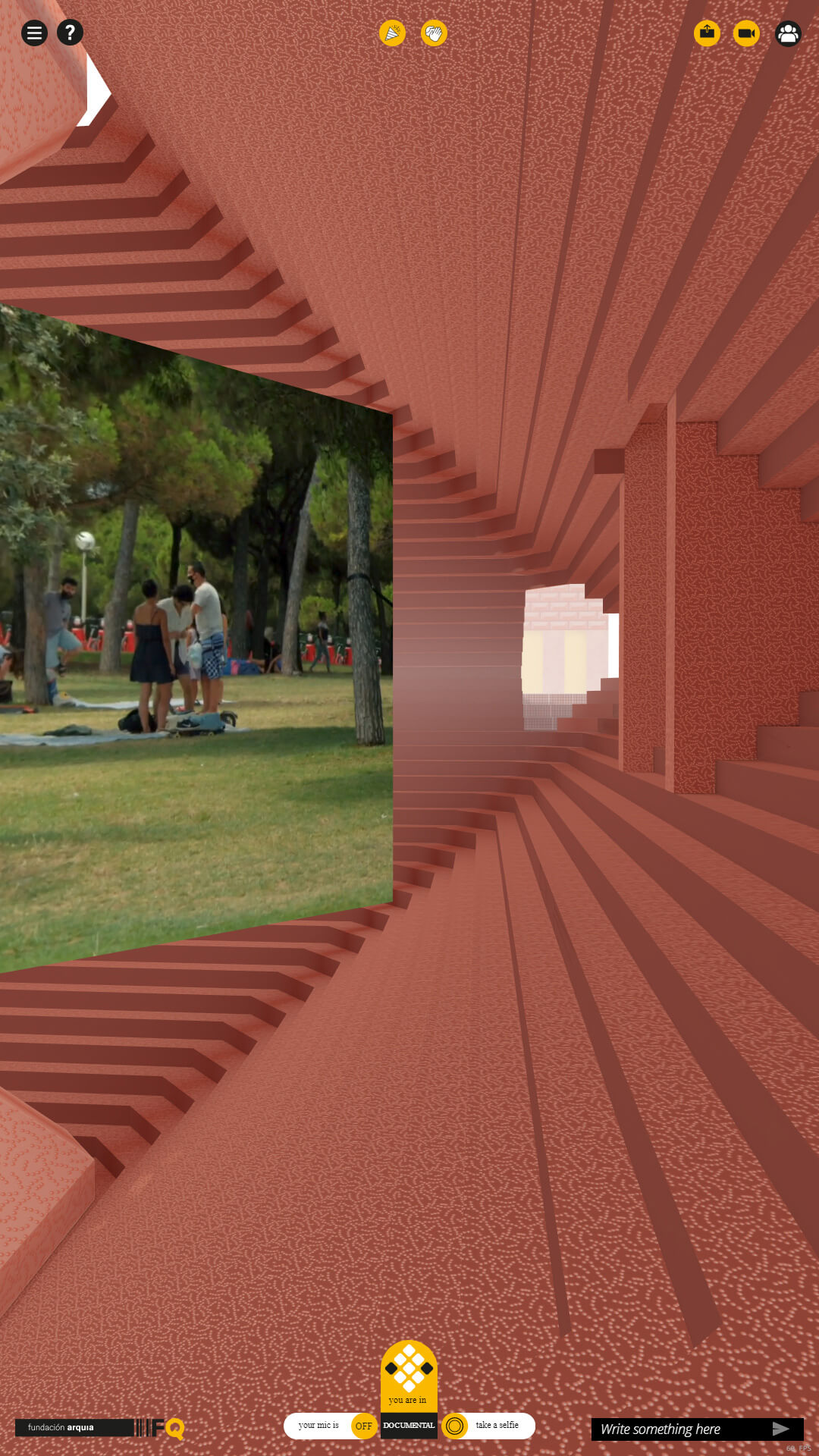
A steep theatre space is part of Galería Documental where a documentary by Javier Peña, commissioned by Fundacion Arquia, is shown. “From here one can take the side exits to the portrait gallery at the top of the octahedron,” adds the studio.
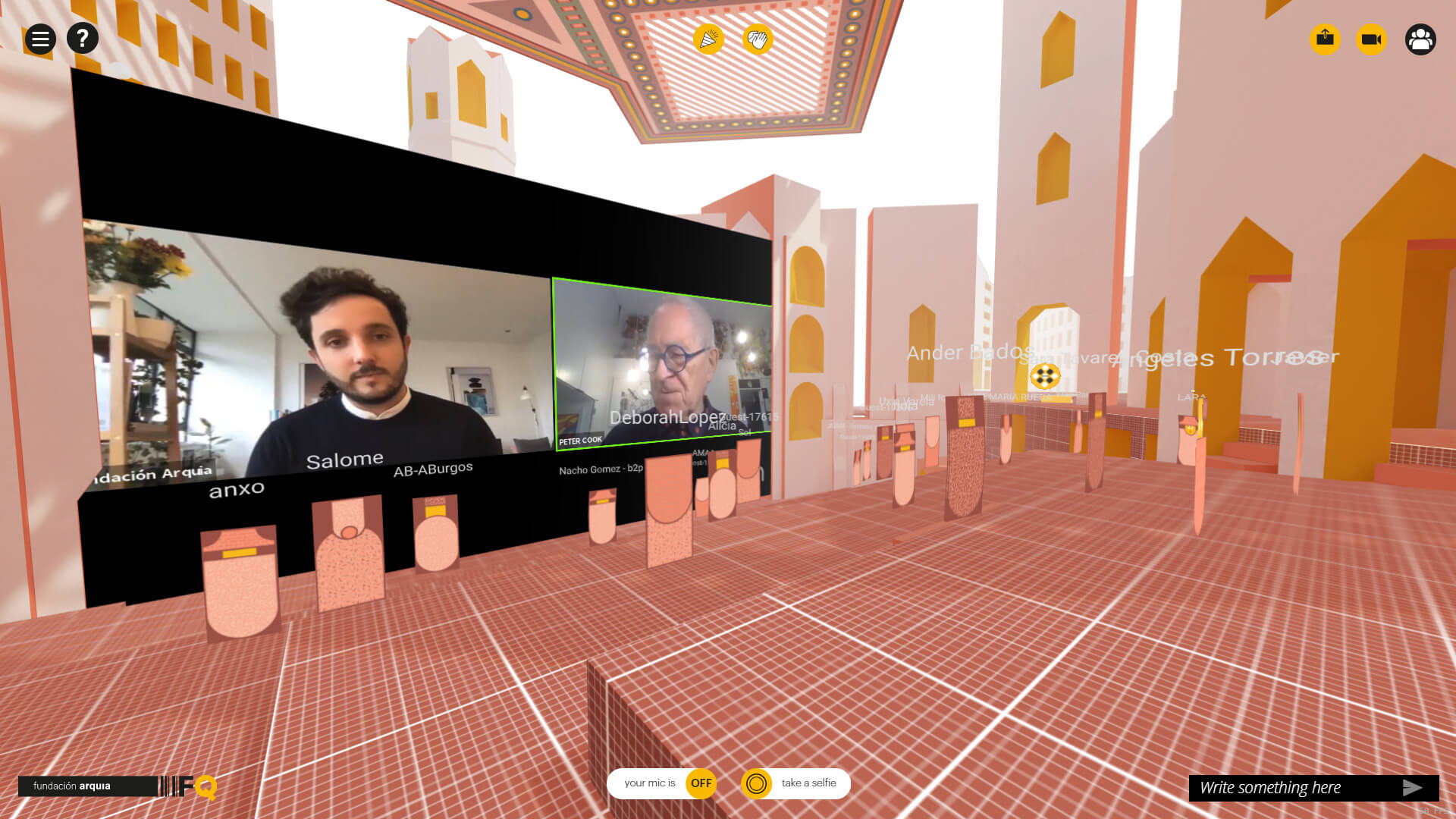
Elsewhere, for live events and large gatherings, the central Arena comes into function. Organised along a diagonal axis with a stepped stage fanning out from one of its corners, talks with Peter Cook, Carme Pinós, and Anupama Kundoo have been hosted here.
Space popular created the virtual environment on Mozilla HUBS, an open source platform that allows anyone to create social virtual spaces, accessible via any device connected to the internet, be it smartphones or VR headsets.
The design of the venue is optimised as much possible. “In the virtual realm bytes are the currency, and in that sense, all rooms designed for the festival are very cheap so that every device and connection can afford them. This applies also to the avatars that visitors can select from,” explains Space Popular.
"Our VR Coder, Roman Miletitch was absolutely instrumental in making the project possible. He coded the interface and made it possible for the space to be modified specifically to our design."
Previous projects by Space Popular that experimented with virtual reality include an exhibition that explored the evolution of architectural styles at London’s RIBA gallery, and a virtual gateway at the historic Deoksugung Palace in Seoul.
In a previous STIR-exclusive conversation with Takashi Kudo of Tokyo-based art collective teamLab, Lara Lesmes and Fredrik Hellberg have shared that an immersive spatial experience generated through constructed physical elements is no different from the one that is provided using digital tools such as screens and projections. And these blurred boundaries pave the path to explore new possibilities.

by Pranjal Maheshwari Oct 09, 2026
The eighth edition of the international architecture and urban design showcase, themed How Much?, explores diverse implications of social, ecological and economic ‘cheapness’.
by Pranjal Maheshwari Oct 06, 2026
With a programme focused on biodiversity, accessibility and safety, the Rotterdam-based architects help the neighbourhood reclaim a barren landscape as an integral social node.
by Pia Bhatia Oct 02, 2026
Located in the Al Bridi Reserve in Sharjah, the project didactically projects its purpose of studying African ecosystems through local structures marked as ‘sculptural presences’.
by Pranjal Maheshwari Sep 30, 2026
The new cultural centre by Blight Rayner Architecture and Snøhetta envelopes world-class facilities in a sinuous glass facade, alluding to the theatrical rhythms of the performing arts.

make your fridays matter with a well-read weekend
Enter your details to sign in
Don’t have an account?
Sign upOr you can sign in with
a single account for all
STIR platforms
All your bookmarks will be available across all your devices.
Stay STIRred
Already have an account?
Sign inOr you can sign up with
Verification link sent to check your inbox or spam folder to complete sign up process
Tap on things that interests you.
Select the Conversation Category you would like to watch
Please enter your details and click submit.
Enter the 6-digit code sent at


An architectural conference in VR by Space Popular reflects virtual togetherness
by Zohra Khan | Published on : Nov 13, 2020


 Sign in with Google
 Sign in with email
What do you think?