Architecture05 mins. read
RA!’s Laiva Plaza Hotel interweaves its pursuit of iconicity with echoes of history
by Pranjal MaheshwariSep 08, 2026




by Jincy IypePublished on : Mar 04, 2026
Contemporary hospitality enclaves often begin with promise and end in repetition. Especially in tourism-led hot spots such as Tulum or Bali, the first wave of developments tended to draw from climate, craft and topography. What then followed—and continues—is a slow flattening, a certain diluting: boutique hotels multiplied into typologies, jungles cleared for identical villas, architecture aestheticised into a consumable backdrop and design consuming the conventional. The language of the vernacular response becomes curiously uniform. In this pursuit, landscape is occupied rather than understood and lived with.
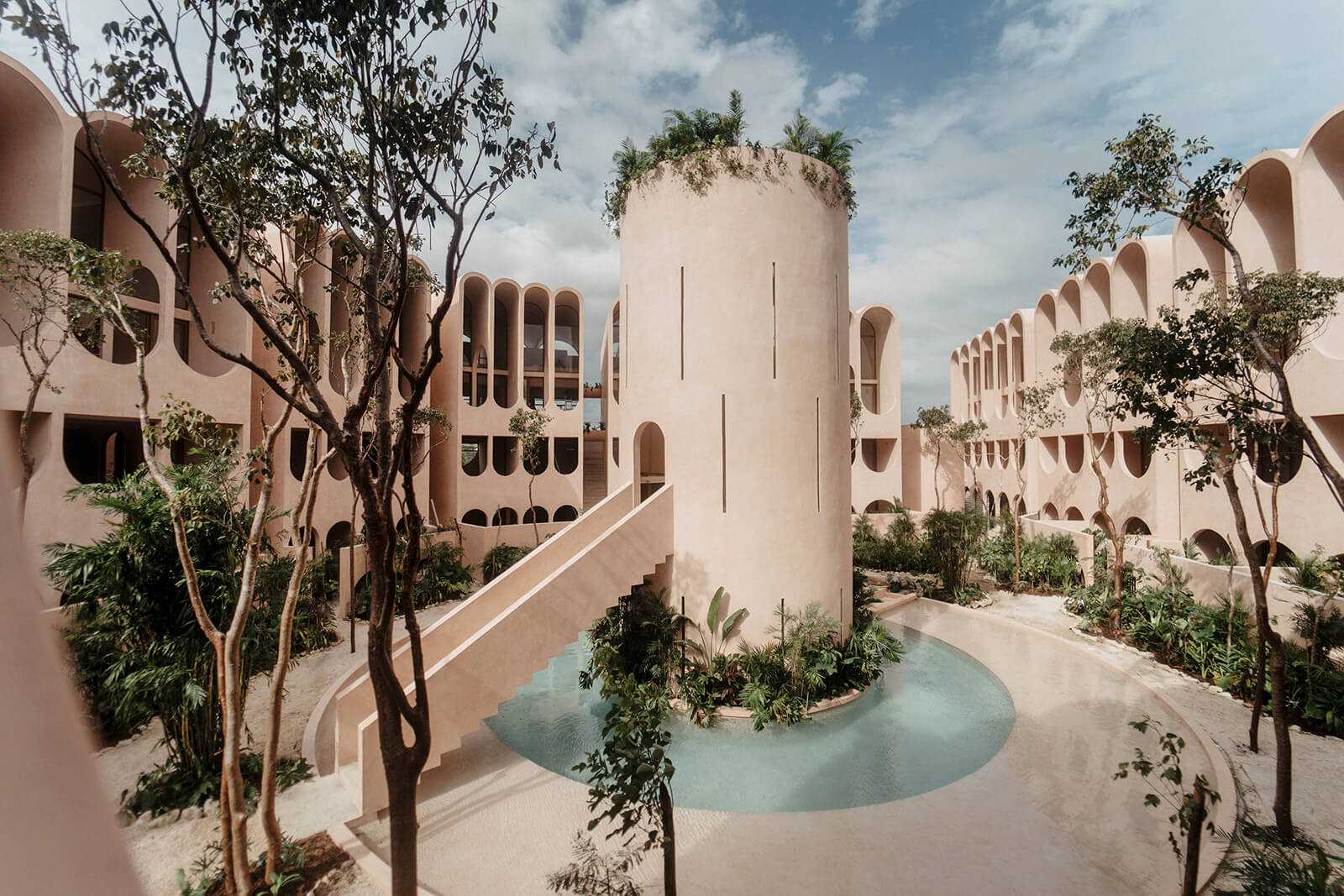
It is against this built and environmental fatigue that Babel by V Taller positions itself, spiritually, while physically being situated at the urban edge of Tulum, Mexico. The architects describe it as “a radical alternative to the conventional tourism models that dominate the region.” Conceived as a regenerative residential and hotel complex, the project begins with a client’s symbolic brief—a tower articulated through arches—and evolves into what the studio calls “an ethical statement: to build with climate, with time and with vegetation as matter.”
The site, marked by signs of tourist pressure (deforestation and infrastructural strain), is surrounded by jungles and only by a prior trace of intervention, which prompted a recalibration. “The project ceased to be merely the materialisation of a volumetric idea and became a deep reflection: how to build without cancelling ecological logic? How to add environmental value without sacrificing spatial clarity? How to anchor a touristic and residential program to a territory that demands prudence, repair and continuity?” the Mexican architects probe.
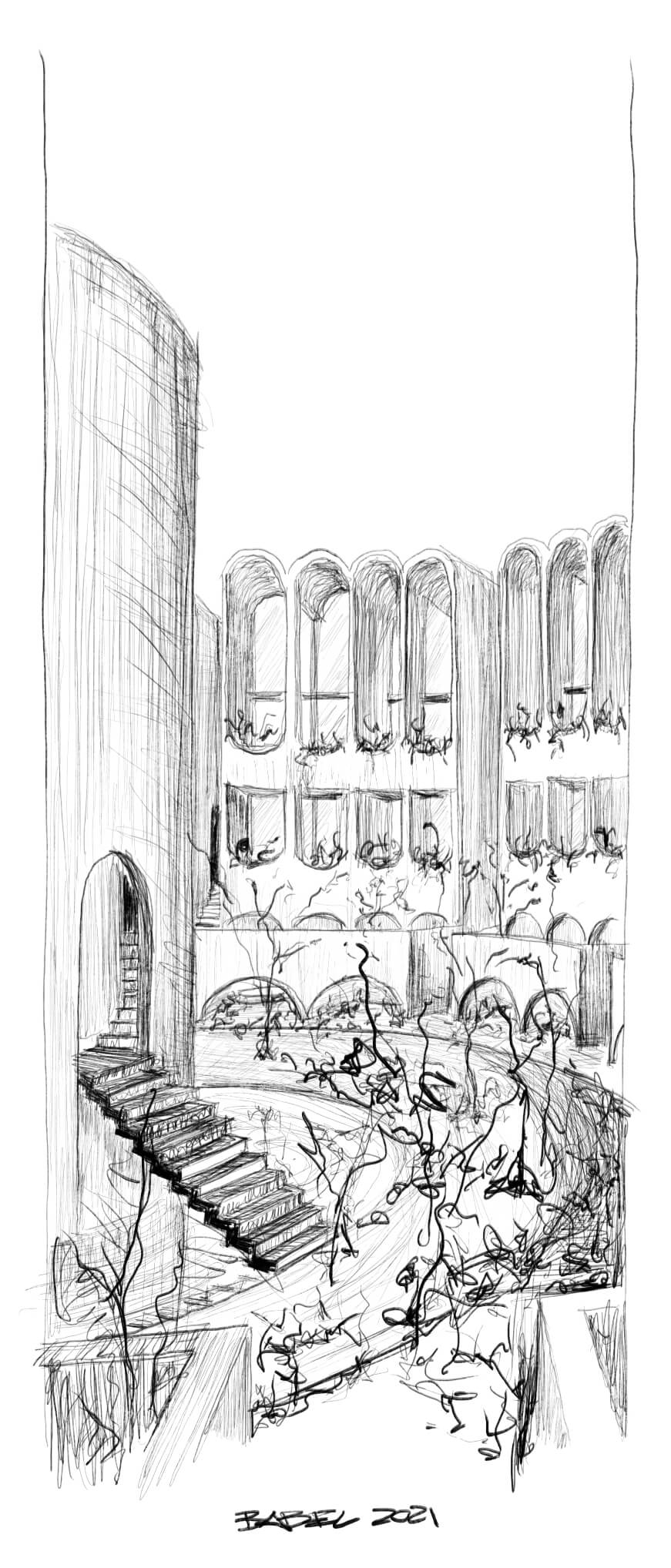
The project then evolved into a spatial intervention before a formal one, where density is drawn upward and the footprint retracts subsequently. Led by architects Miguel Valverde and Daniel Villanueva, V Taller were inspired to create an adaptable and sustainable framework of cohabitation that "anticipates climatic, social and economic transformations without becoming an isolated enclave… a long-term canvas where human life and the ecosystem find balance and a shared rhythm,” they share.
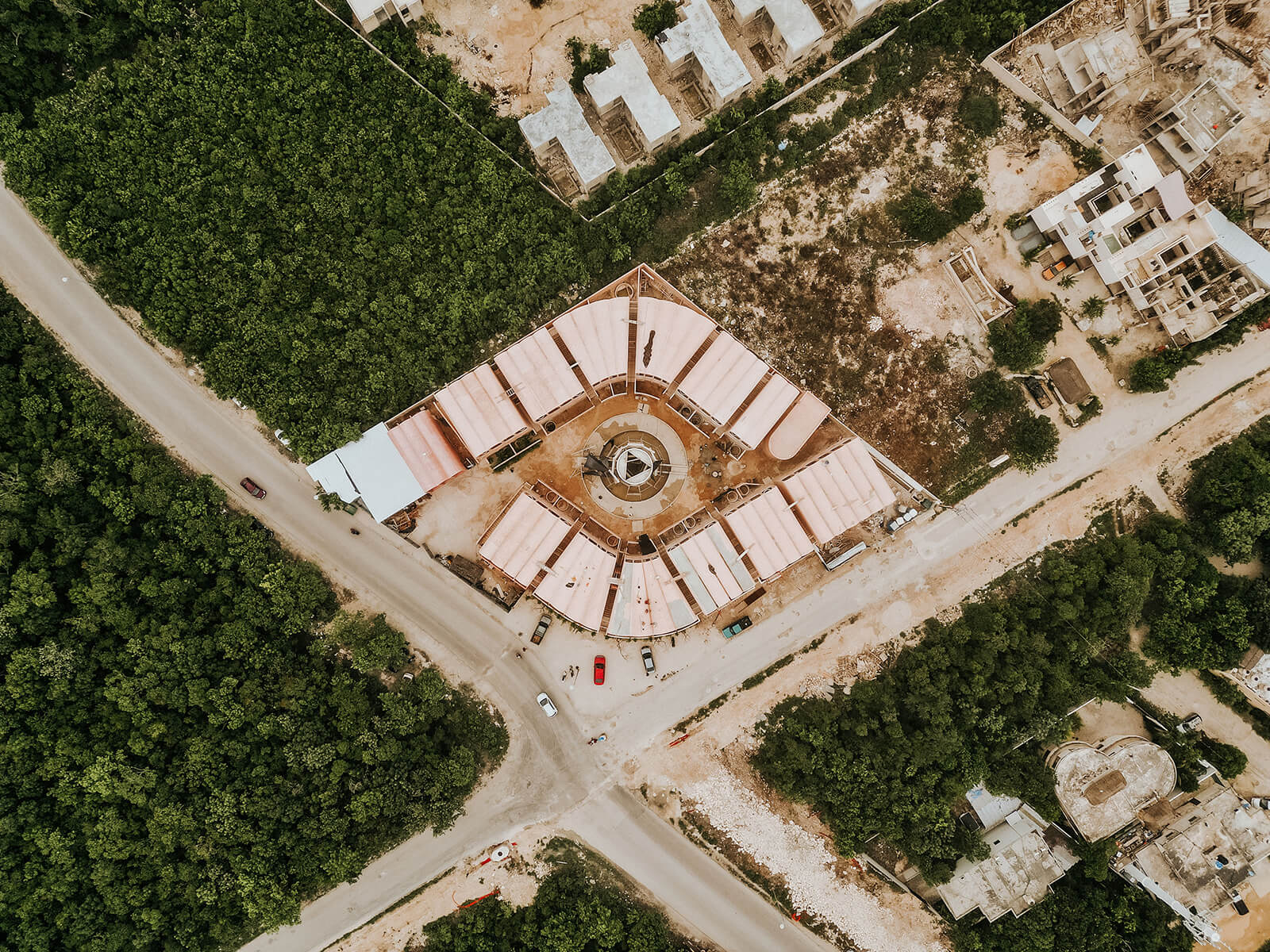
Instead of dispersing the programme across the site, Babel concentrates 6,176 sq m of built area on a 3,510 sq m plot, limiting its effective footprint to 2,155 sq m. Nearly 40 per cent of the land is thus returned to ‘the site’ for permeability, aquifer recharge and reforestation, something V Taller refers to as a ‘land economy’. Vertical compactness essays a land ethic, turning ‘emptiness into an environmental regulator’. Circulation is grouped into efficient cores, reducing horizontal sprawl, shortening routes and preserving continuous ground for vegetation, apart from preserving views from optimised vantage points.
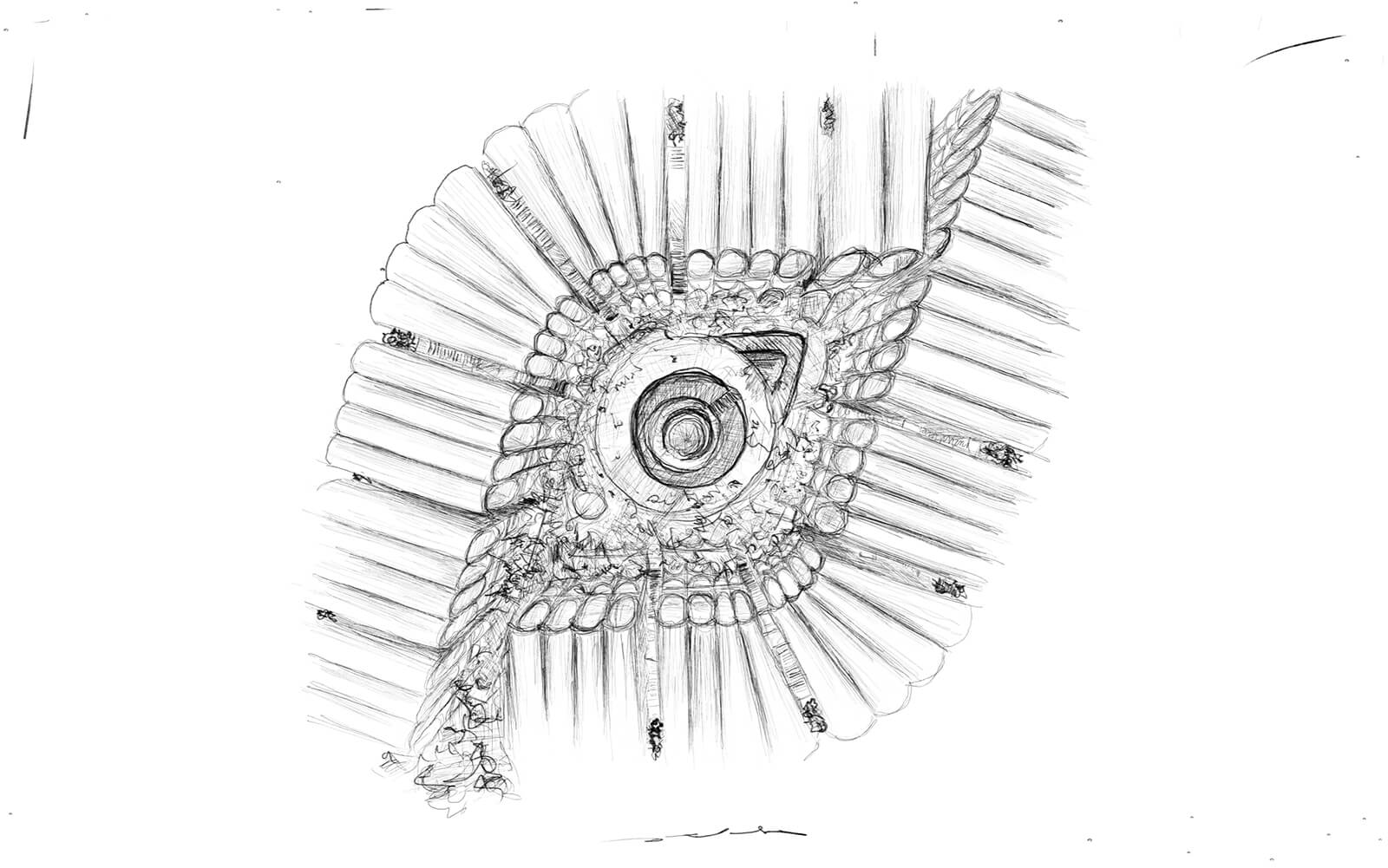
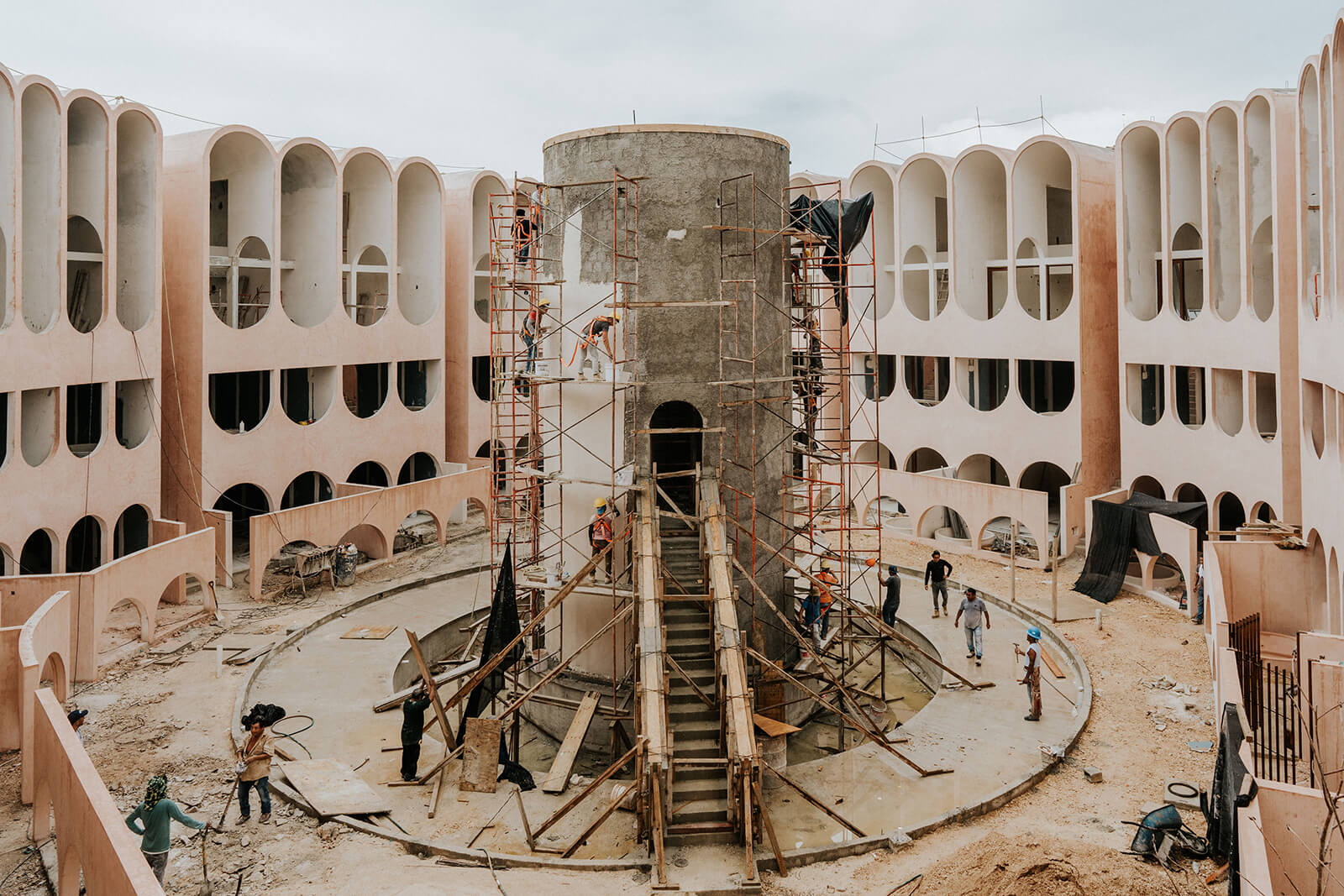
The plan was thus generated by two complementary curves forming an eye-shaped structure around a central void. This courtyard design performs as a microclimatic device, a social condenser and an orienting fulcrum for the Mexican architecture. Around it, 59 units are unpacked across three levels, modulated along the curve to fine-tune shade, openness and cross-ventilation. In line with a 'grammar of habitability’, kitchens, living areas and bedrooms adjust incrementally to their solar exposure while gardens with jacuzzis extend interior life outward. The mix of residential and hospitality functions resists seasonal vacancy, sustaining occupation year-round.
“When the programme expands into common areas—co-working immersed in vegetation; a spa with herbal steam baths, massage and meditation rooms; a restaurant and bar offering vegetarian cuisine and local-ingredient mocktails; a zen garden; a yoga studio; and even an ASMR room with a ‘sleep concierge’—Babel sustains an everyday ecosystem that rejects the objectified resort model in favour of low-intensity wellness routines integrated into the courtyard’s atmosphere and the cadence of light,” the architects elaborate in the press release.
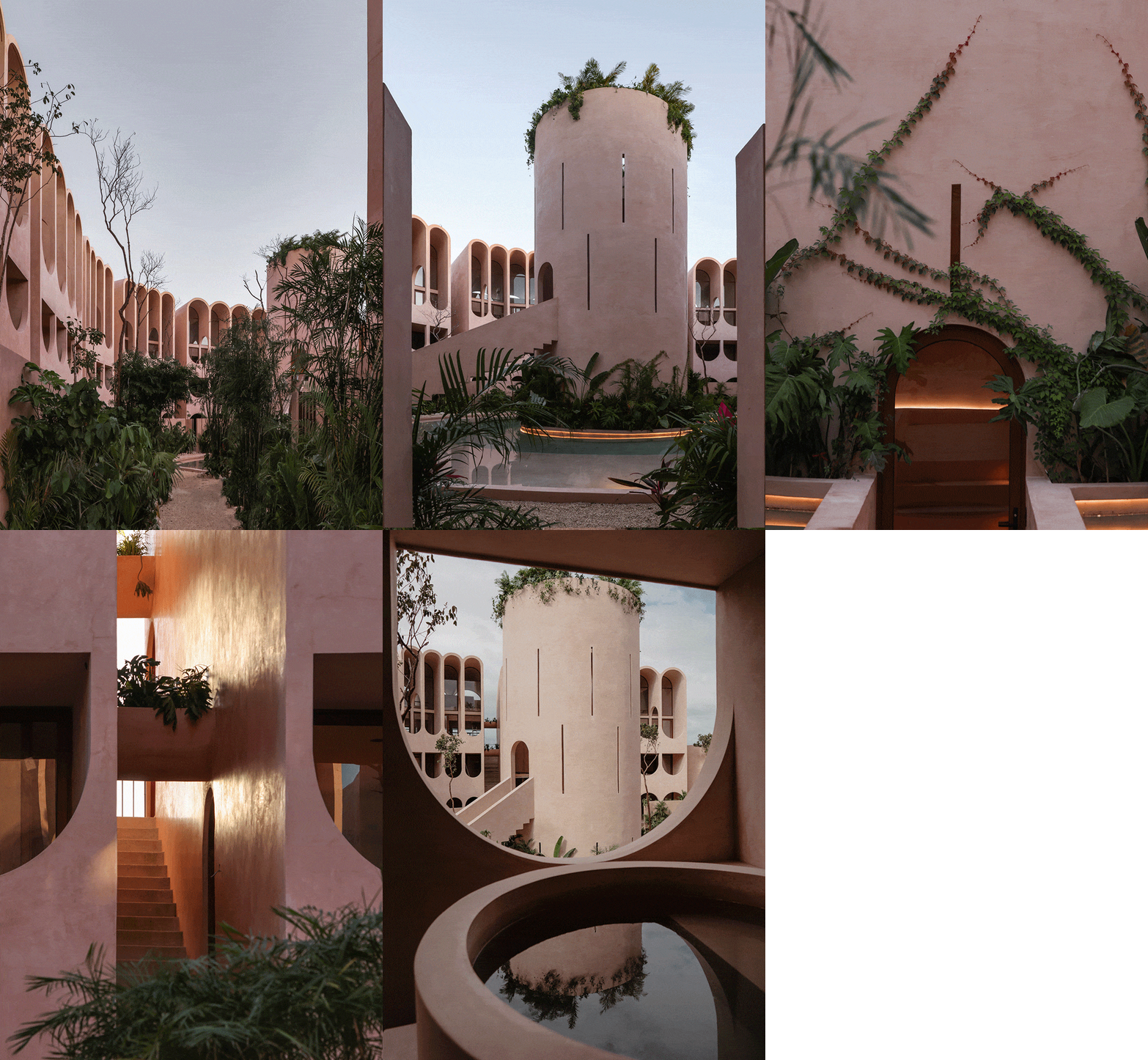
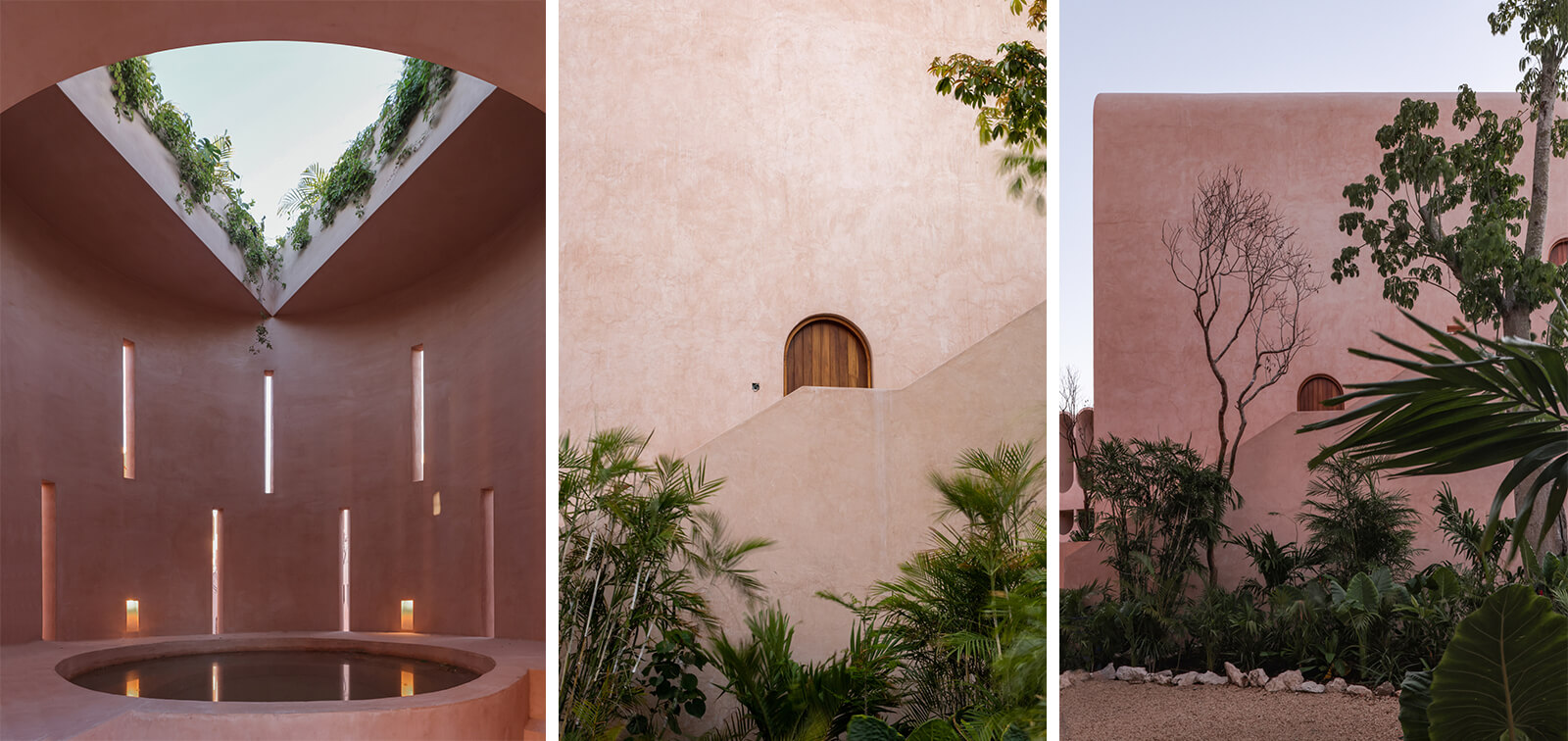
At the geometric centre stands the tower, which refrains from performing as a spectacle. According to V Taller, “Its presence is neuralgic: it structures movement, provides an axis of reference and at the same time respects the courtyard’s fluidity.” Within, the architects reinterpreted the hammam as a sequence of introspective chambers: controlled apertures, sober materiality, overhead natural light wells and thick walls that temper heat. A triangular opening crowns this cylinder, framing the sky as aperture and panorama. At its base, a circular pool mirrors the courtyard’s geometry, softening the architecture further and acting as thermal mass and reflective threshold.
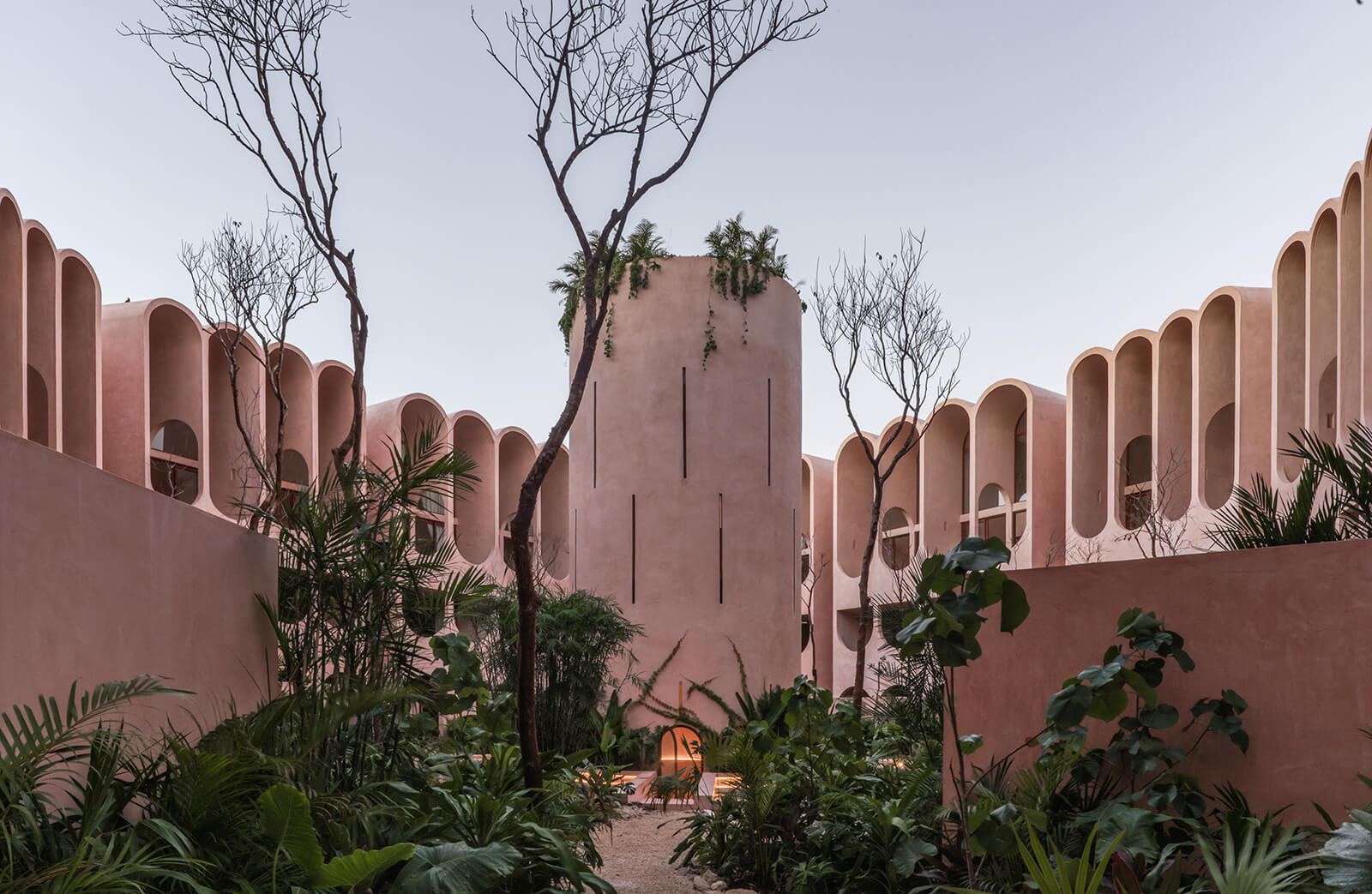
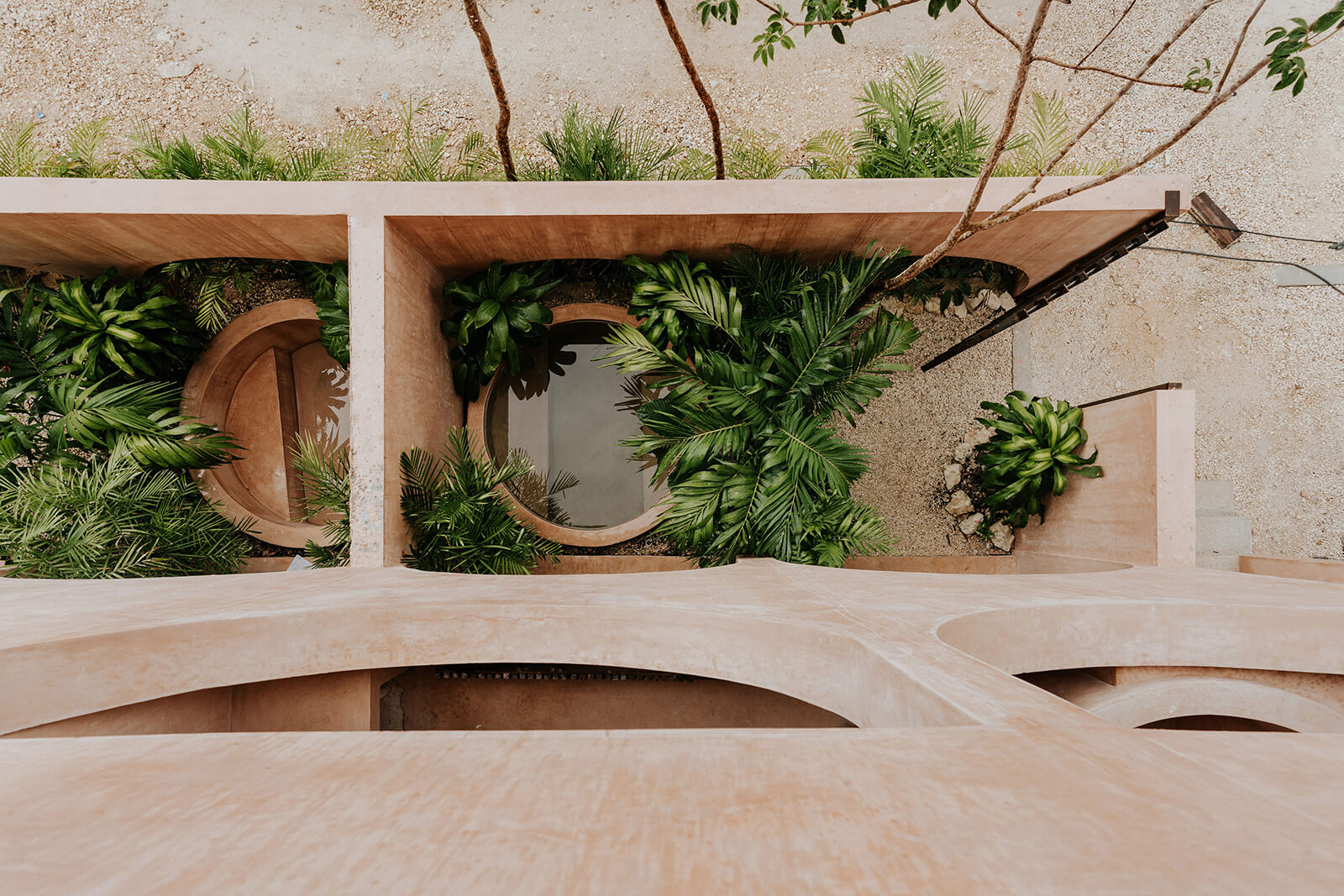
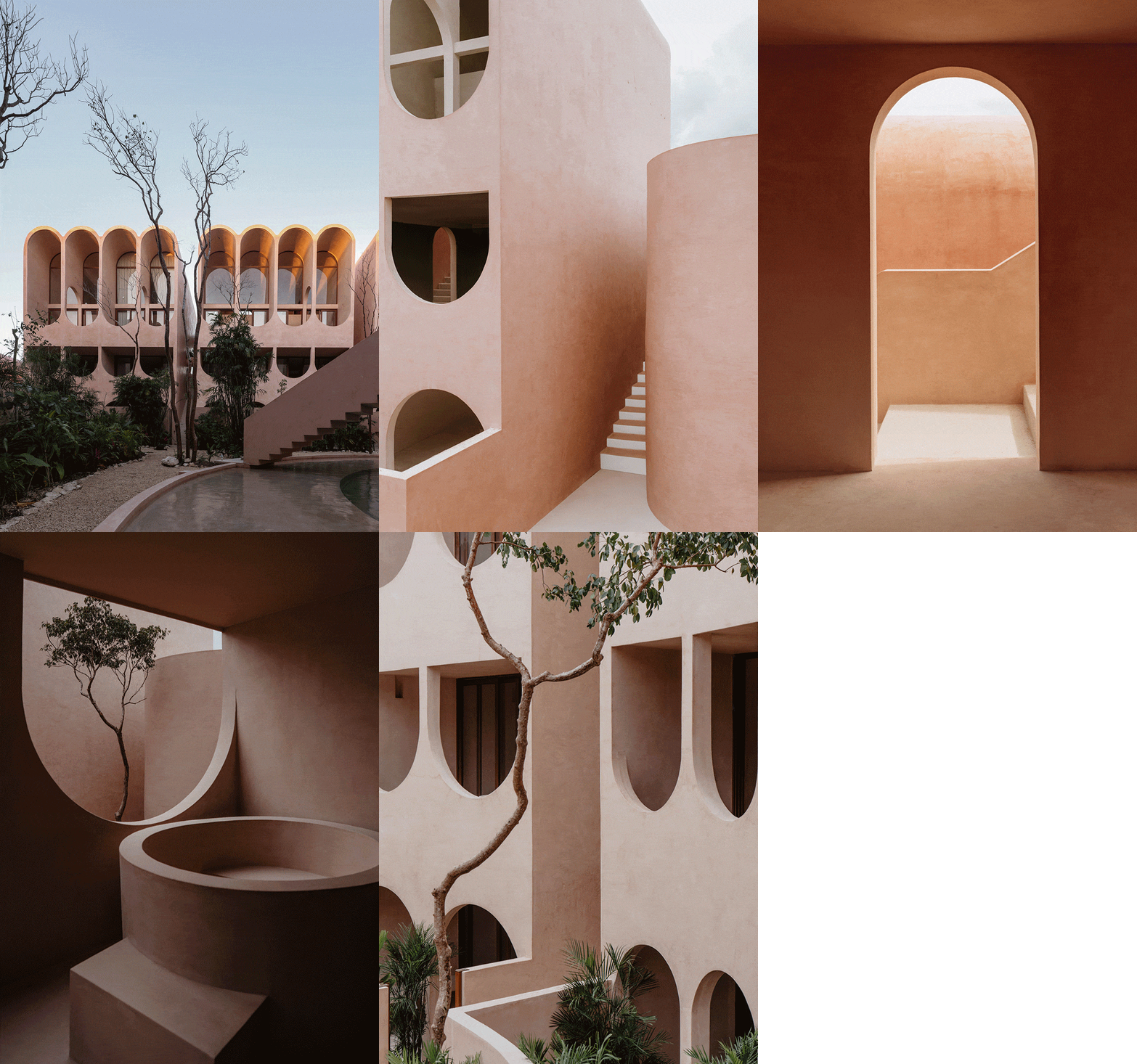
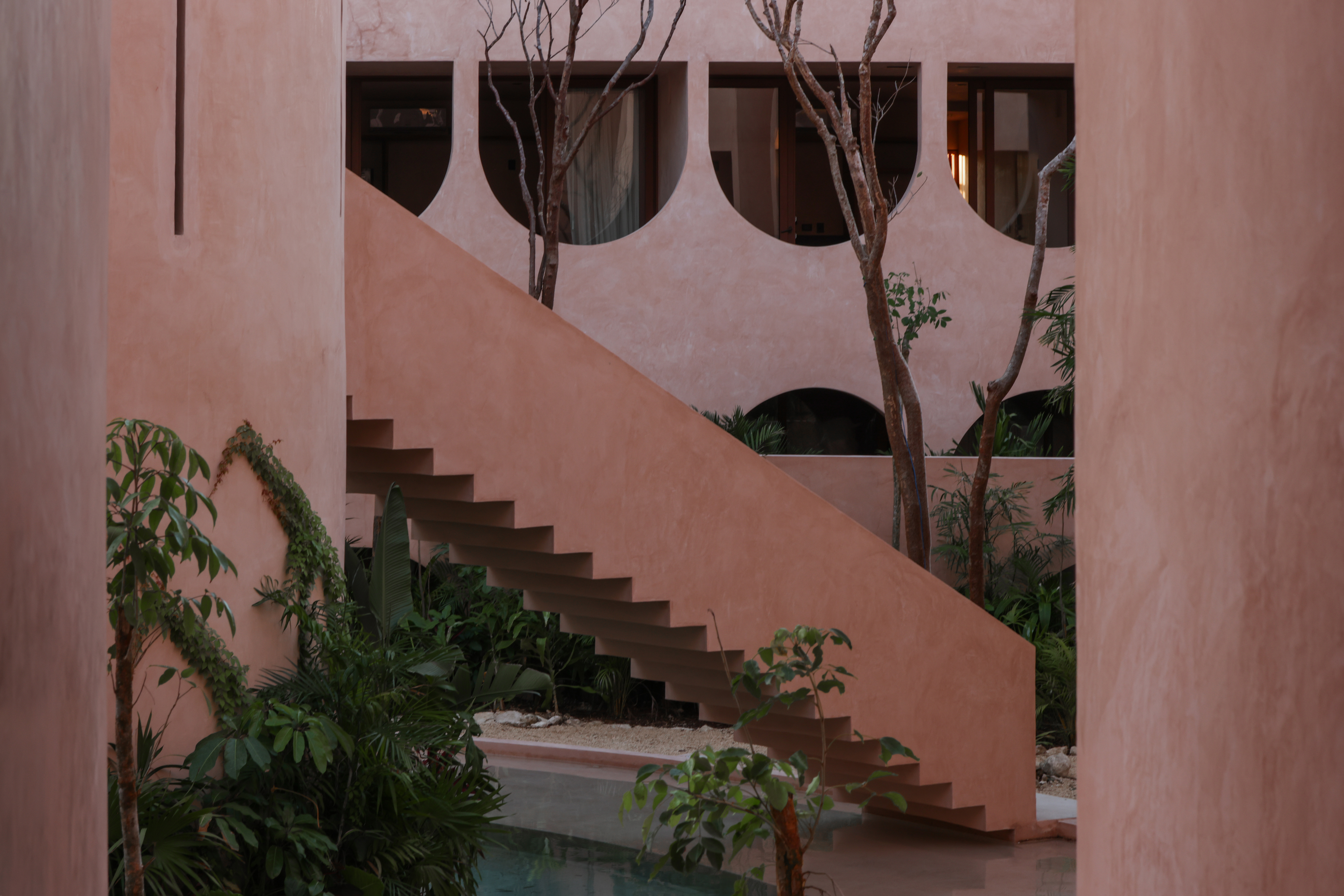
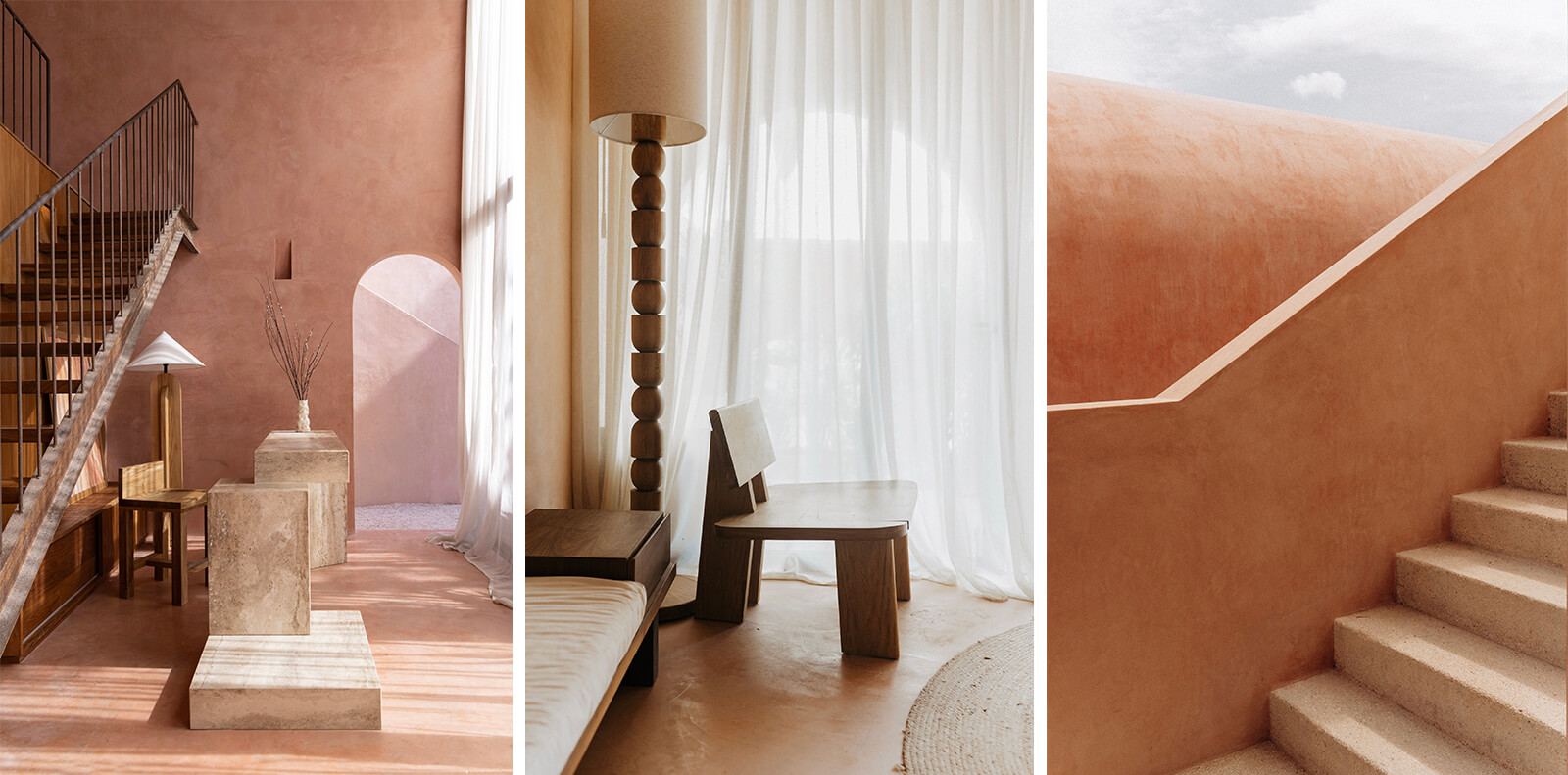
Most viscerally, arches structure more than image. They span, shade and thicken the envelope, generating deep penumbras that stabilise interiors, along with offering the project its distinct demeanour. Staircases are conceived as tunnels of light, compressing and releasing volume in calibrated sequences. Architecture becomes a pedagogy of climate here; one reads the building through its strategic play of light and shadow.
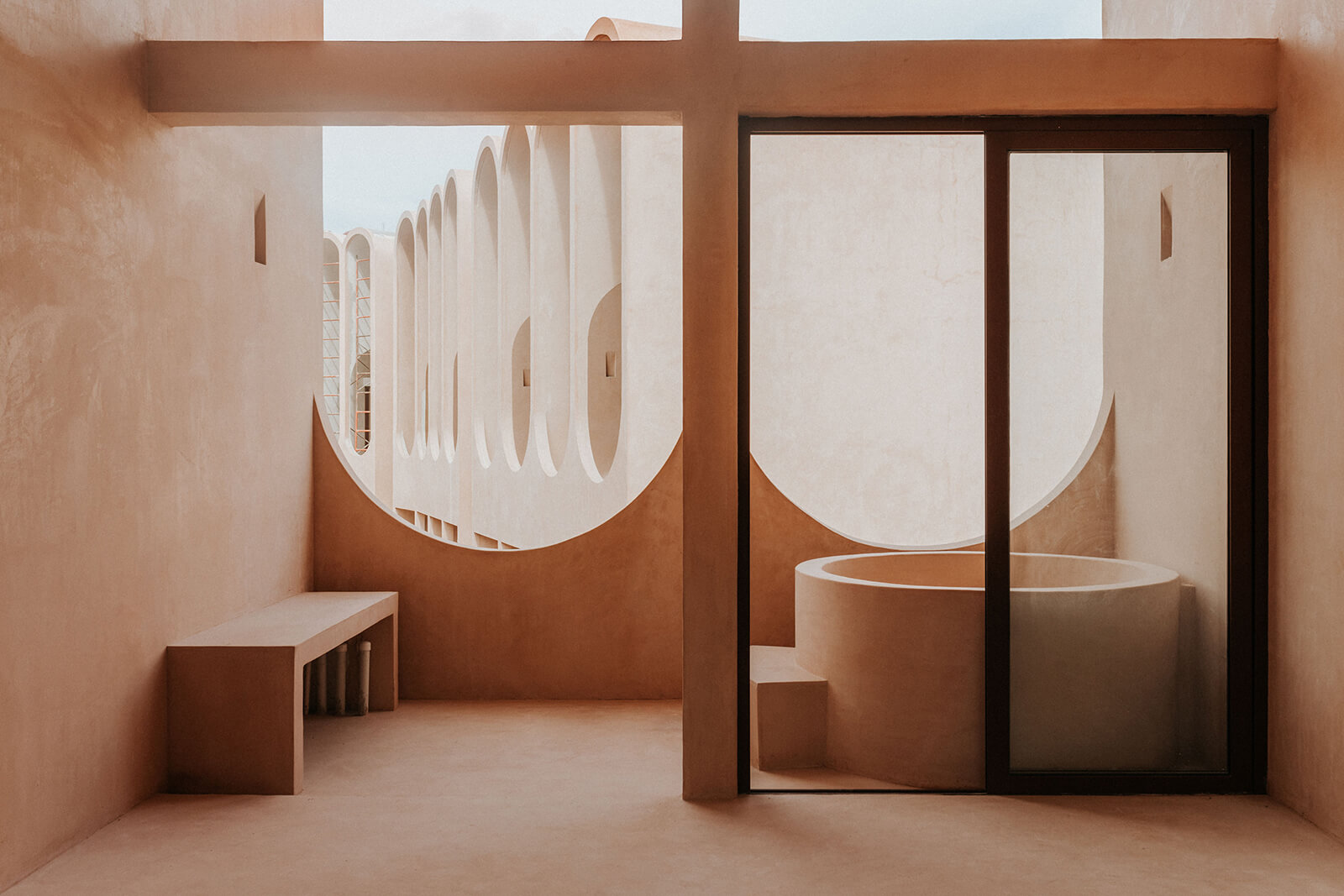
Materiality anchors the hospitality design in regional knowledge. The principal finish is chukum, a lime-based stucco endemic to the Yucatán Peninsula, valued for its hygroscopic performance and mineral patina. Its muted pink tonality resonates with a broader Mexican architectural lineage, from the saturated planes of Luis Barragán to the tactile surfaces of Ricardo Legorreta, where colour is atmosphere and mass. Here, pink stucco is neither cosmetic nor nostalgic; it mediates heat, absorbs humidity and situates the hospitality architecture within a continuum of craft and context. “Accessibility follows the same logic of clarity: legible signage, unobstructed routes, resting points and grip surfaces are integrated without breaking the project’s formal continuity,” the description mentions.
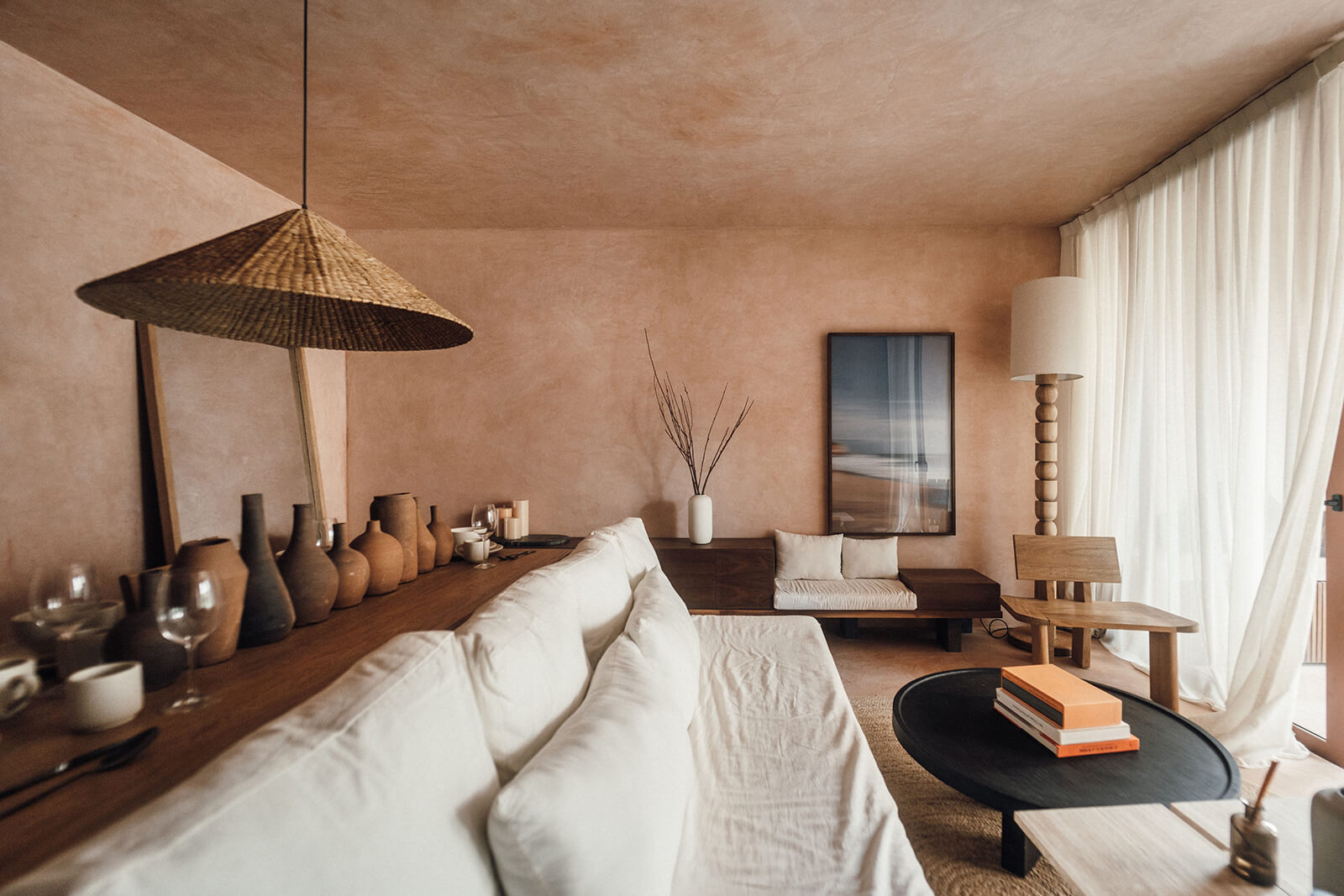
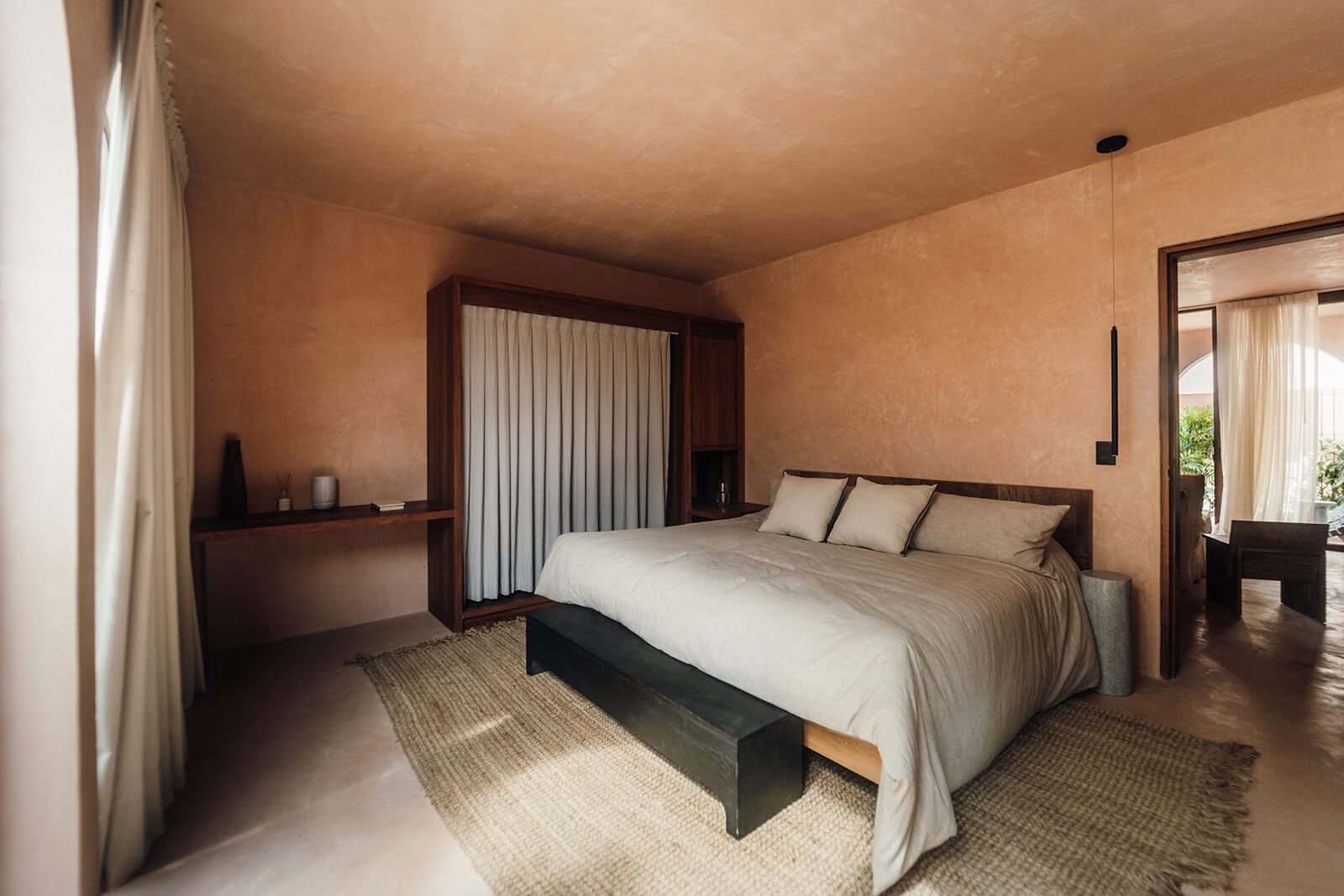
The interior design extends this restraint and ethos. Linen textiles diffuse light. Tropical hardwoods such as Tzalam and Parota ground carpentry in local forestry traditions. Clay elements punctuate spaces as ‘artisanal accents that anchor the experience in local knowledge’. Systems are embedded within vertical cores, freeing roofs from mechanical clutter and reducing visual noise. Passive strategies such as cross-ventilation, thermal inertia, shaded arcades and water mass lessen dependence on active cooling techniques.
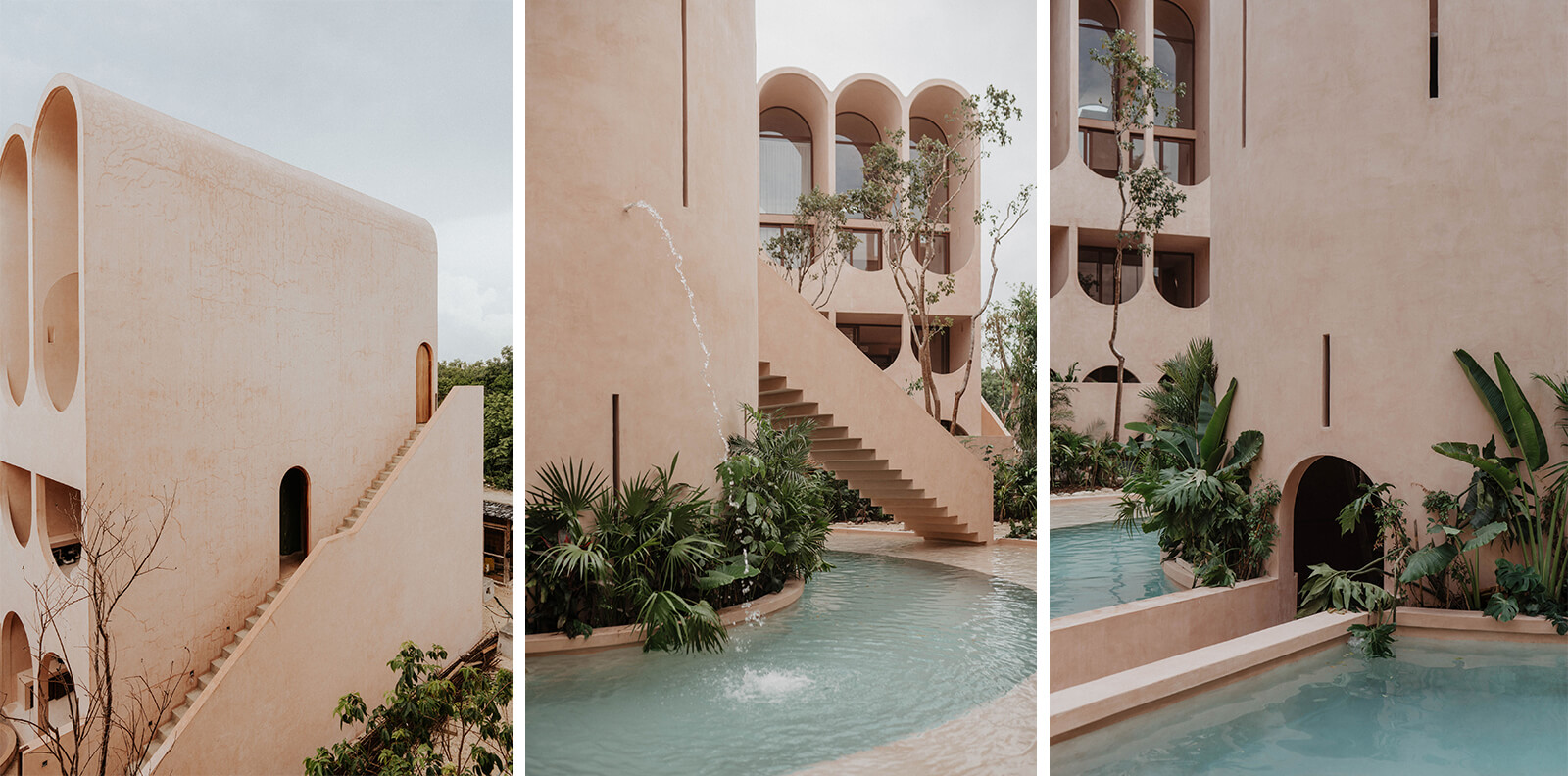
Without losing cultural grounding, landscape here is deployed as a gradient and gesture. Planting thickens toward private thresholds, filters wind and frames views, weaving ecological continuity between the courtyard and the forest. Babel aspires, in the architects’ words, “to be both refuge and ethical declaration… not an isolated enclave but a long-term canvas where human life and the ecosystem find balance and a shared rhythm... Babel is thus understood as an ensemble that learns from its environment and, in doing so, amplifies it.”
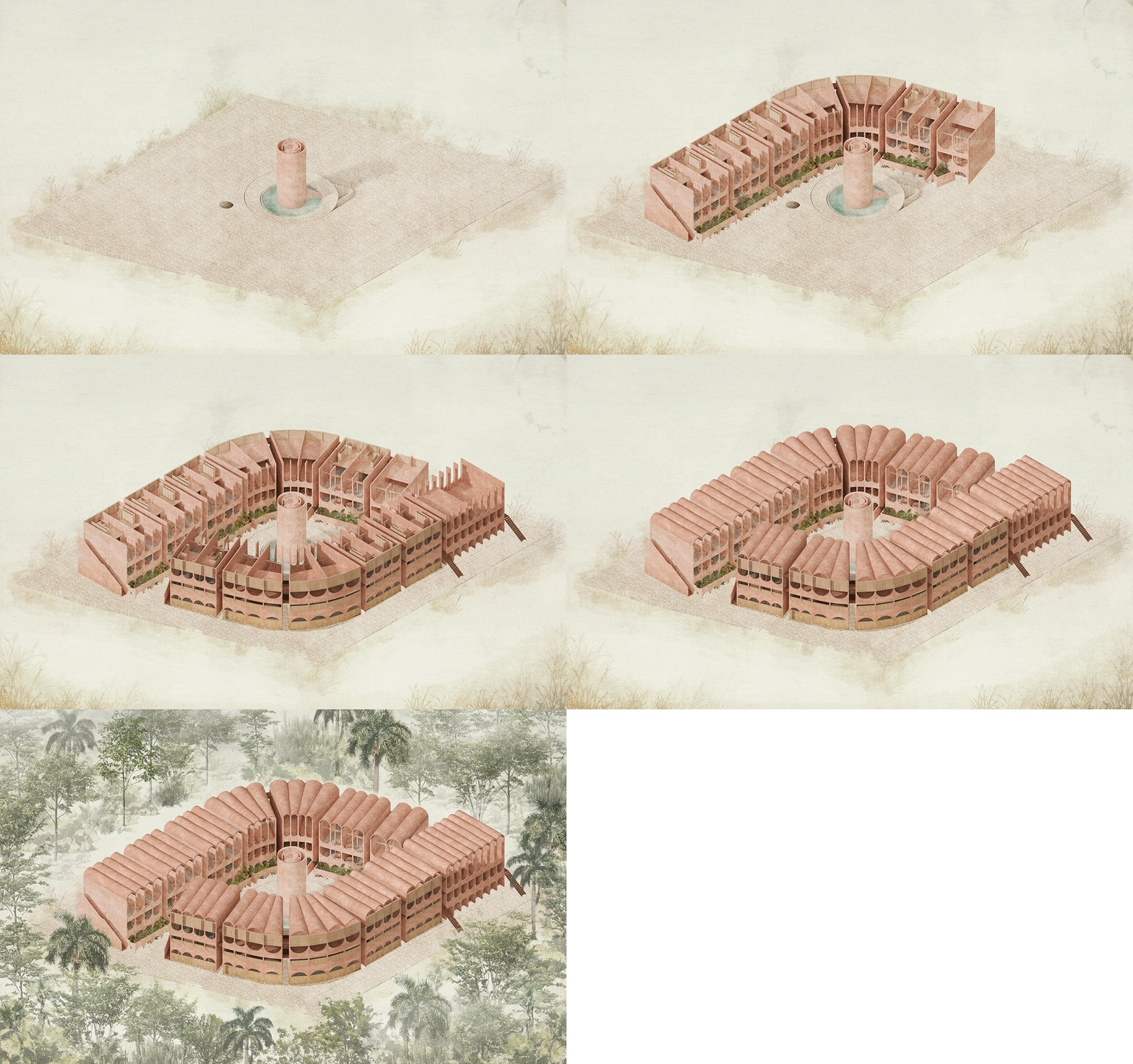
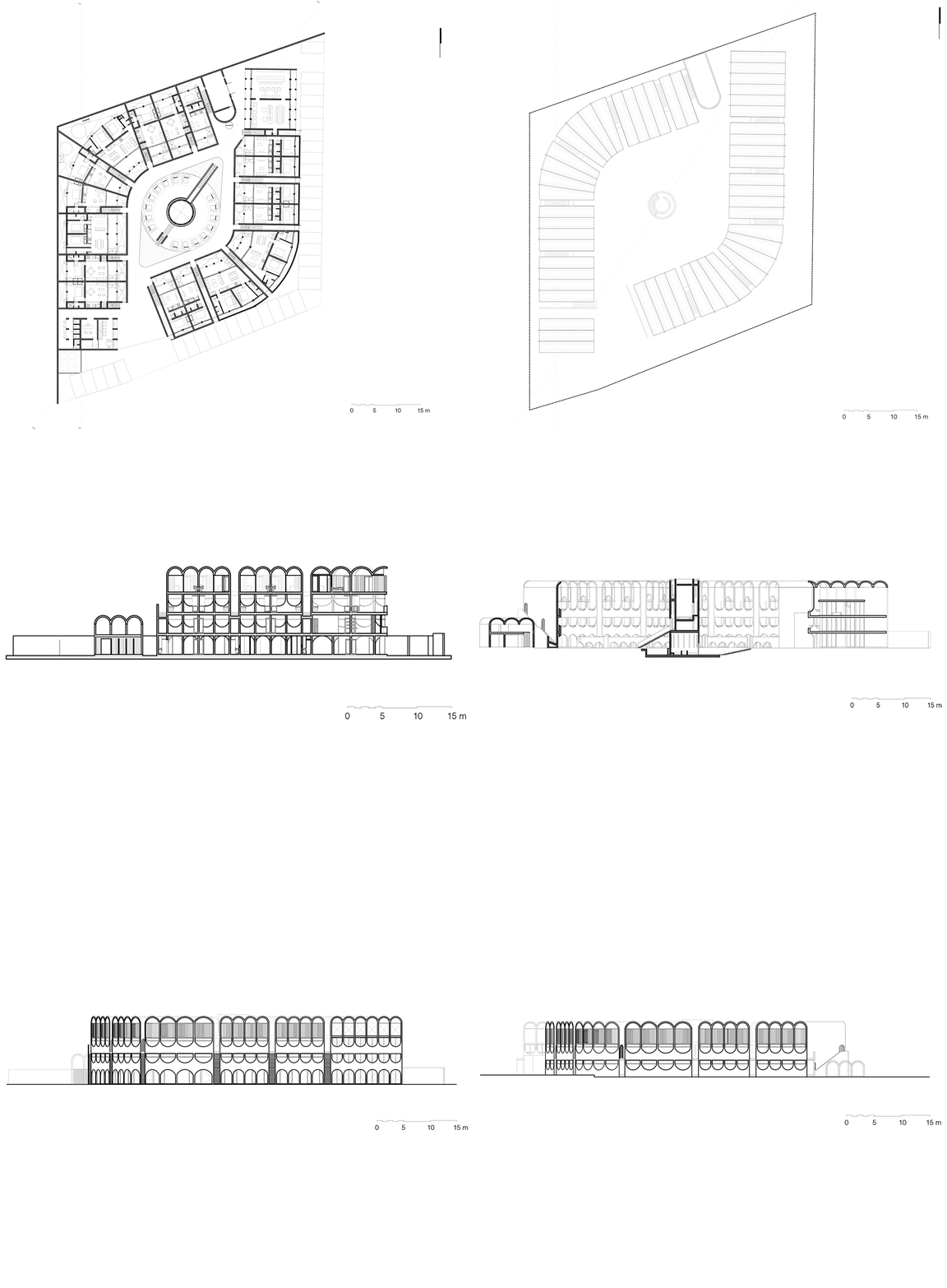
The project’s title inevitably recalls the biblical tower—ambition reaching the heavens. Yet, here, the vertical gesture does not fracture language or landscape. It concentrates occupation so that the ground may breathe, reinserting itself respectfully into the ‘ecological matrix’, bookending it. In doing so, Babel aligns with the idea of a contemporary architecture that does not “sacrifice the intelligence of the place”. It proposes stewardship over mass tourism, repair over density and orientation and materiality as monumental. The local is as much stylised as it is structural and inherent. In regions saturated with image-driven hospitality, Babel argues for another cadence, one measured by light, humidity, vegetation and time.
Name: Babel
Location: Tulum, Quintana Roo, Mexico
Architect: V Taller
Design Team: Miguel Valverde and Daniel Villanueva (architects); Andrea Castro and Karina Ortega
Collaborators: Empresa MAQTE and Bramah Desarrollos (Ricardo Ávila) (construction); Carlos y Pablo (interior design); Carlos y Pablo and V Taller (lighting design)
Area: 3,510 sq m (plot); 6,178 sq m (built)
Year of Completion: 2024

by Pranjal Maheshwari Oct 19, 2026
The Mumbai-based architects integrate courtyards, mesh screens and north light trusses to create a dining space that doubles up as a community hub at SR University, Warangal.
by Mrinmayee Bhoot Oct 17, 2026
The Rotterdam-based institute centres the Indian Ocean as a network for exploring material histories and transnational links shaping coastal cultures, positing them as future models.
by Pranjal Maheshwari Oct 16, 2026
At the 2026 Stirling Prize ceremony, Mary Duggan with RUFF Architects, MAKER Architecten and Nakshabid Architects were felicitated for proffering quality housing and social equity.
by Mrinmayee Bhoot Oct 12, 2026
The new Centre for Contemporary Arts, fostering public engagement with art in Uzbekistan, is housed in a tram depot refurbished by the French studio, emulating local craftsmanship.

make your fridays matter with a well-read weekend
Enter your details to sign in
Don’t have an account?
Sign upOr you can sign in with
a single account for all
STIR platforms
All your bookmarks will be available across all your devices.
Stay STIRred
Already have an account?
Sign inOr you can sign up with
Verification link sent to check your inbox or spam folder to complete sign up process
Tap on things that interests you.
Select the Conversation Category you would like to watch
Please enter your details and click submit.
Enter the 6-digit code sent at


Babel by V Taller proffers a radial, arched response to its sensitive forested context
by Jincy Iype | Published on : Mar 04, 2026


 Sign in with Google
 Sign in with email
What do you think?