Architecture04 mins. read
House of Memories’ porous brick interstices envelope nostalgia and stillness
by Bansari PaghdarJul 21, 2026



by Mrinmayee BhootPublished on : Apr 28, 2026
There always exists another India, an India that is the mirror image of the urban—one that is primitive, frozen in time, where the dust roads are wiped away with the wind, but no gale force of modernisation has yet taken root. It is a convenient symbol for political campaigns (politicians proclaiming ‘acche din’ with the promise of infrastructure on par with city centres) and an even more egregious symbol of the continuing traditional values of the country for its urbane population, in itself a misplaced reading of Gandhi's insistence that “India does not live in its towns but in its villages.” The task cultural practitioners are burdened with is not only dispelling this distorted dichotomy but situating the work one does within the particular contexts of the rural, wherein the idea of a solution is not as all-pervasive as the urban with its utopian aspirations, and is generally arrived at rather than imposed on people and landscapes. In this mode of enquiry, where the rural is not seen as needing to be uplifted out of misery, but as a site where design can bolster community, Ahmedabad-based architecture studio SEALAB’s recent project, Gram-Setu, is an interesting case study.
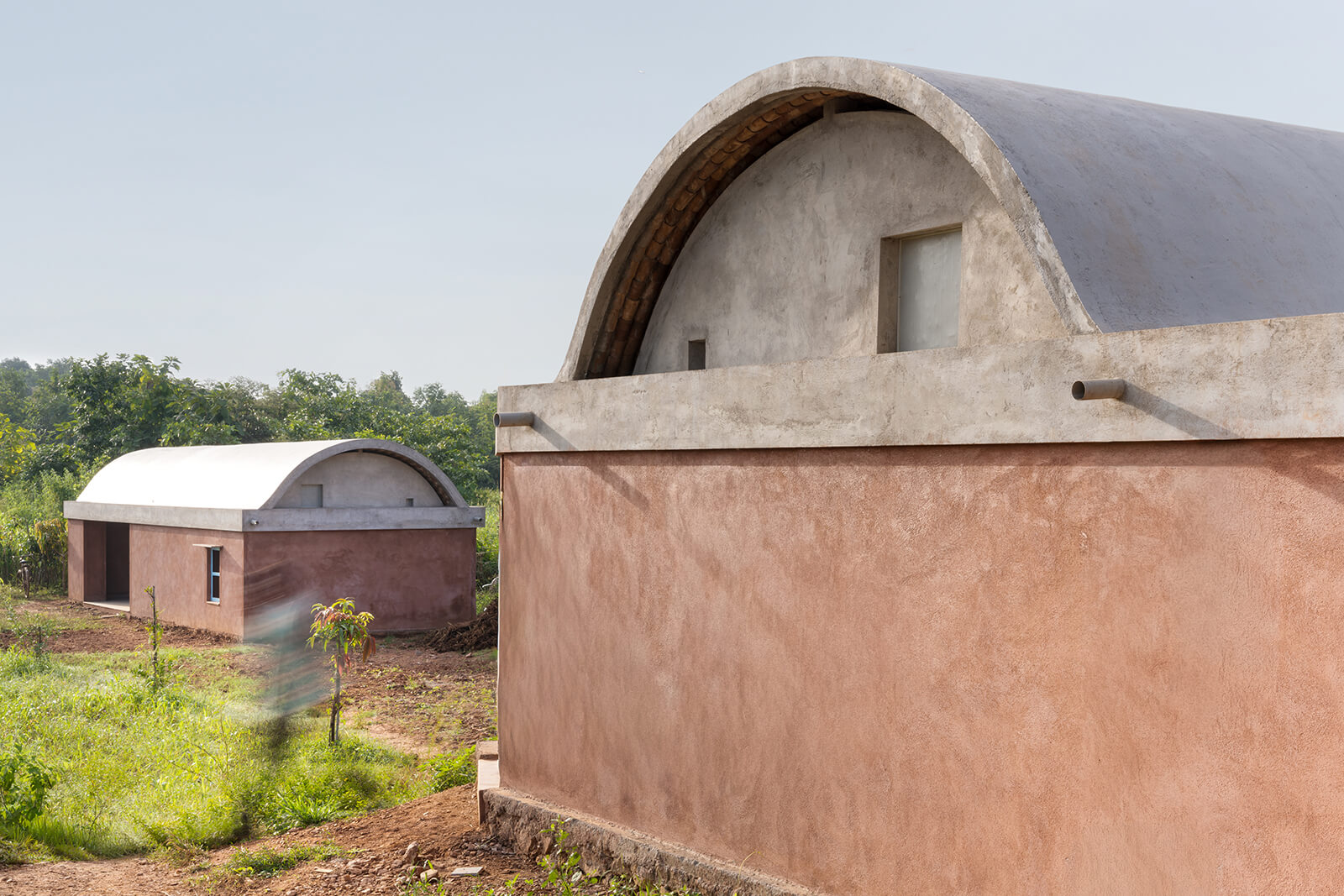
Described by the studio as a community centre, the public building in Valuna (a village in Gujarat) is designed as a space where farmers from surrounding villages can gather, share their expertise and discuss challenges. Building on a Gandhian worldview—of the village as republic—the community-centric design is meant to allow the citizens in the region to become “self-reliant…and to become rooted in the land”, as principal architect Anand Sonecha shares. The intention for the community architecture is manifold, as the Indian architects note in the project literature. Apart from being a gathering space, the delineation of a building for knowledge-sharing is aimed at it serving as a place where natural farming methods, rainwater harvesting, biogas systems and working with organic fertilisers can be demonstrated live, thus offering hands-on training to farmers, students and visitors. In this vein, its very construction is, vitally, also an act of participatory learning and skill building. As Sonecha notes, “Sureshbhai Pundya, one of [Gram Setu’s] future users, led the process from the ground—remaining at its heart and instrumental in bringing the vision to life.”

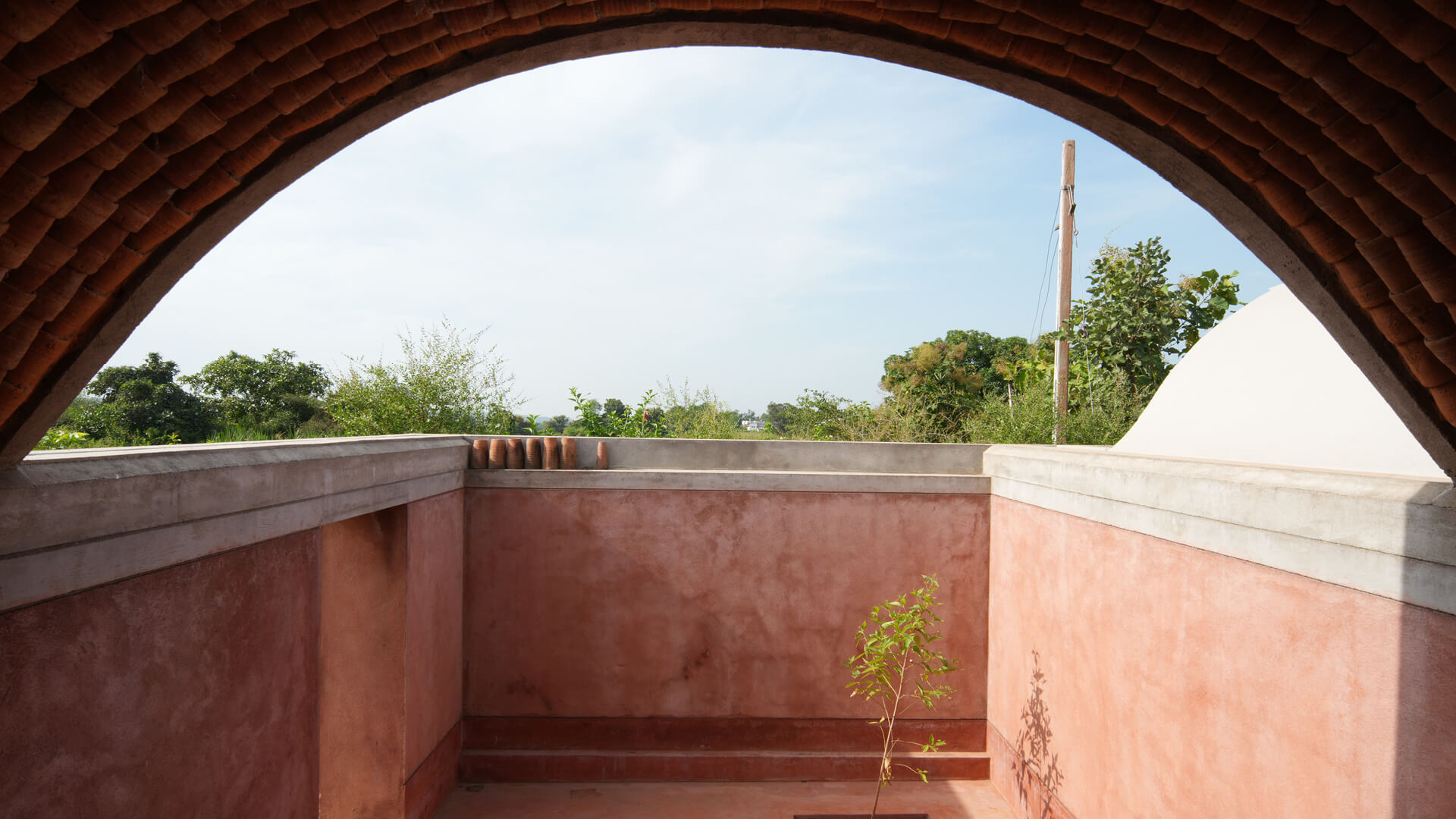
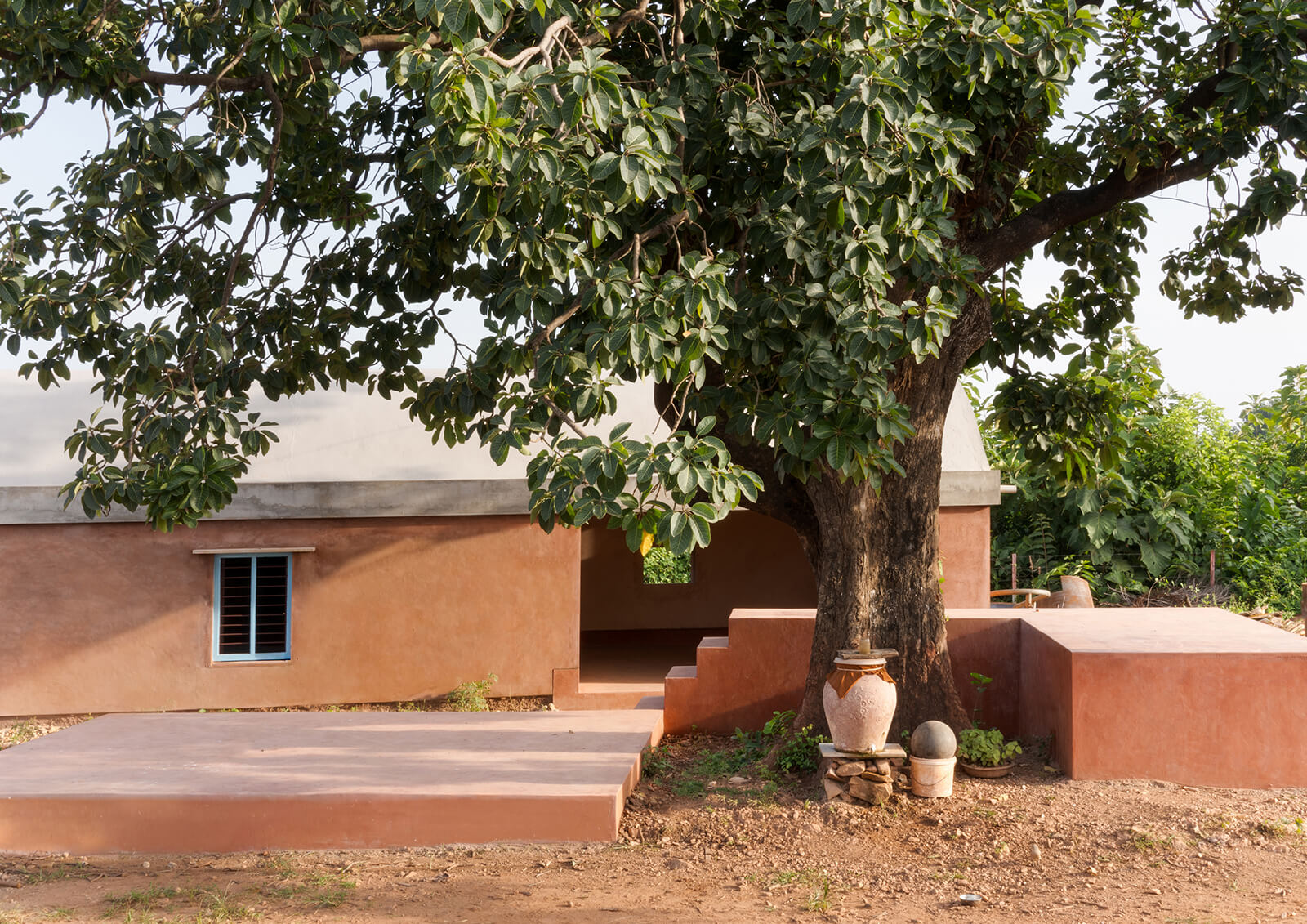
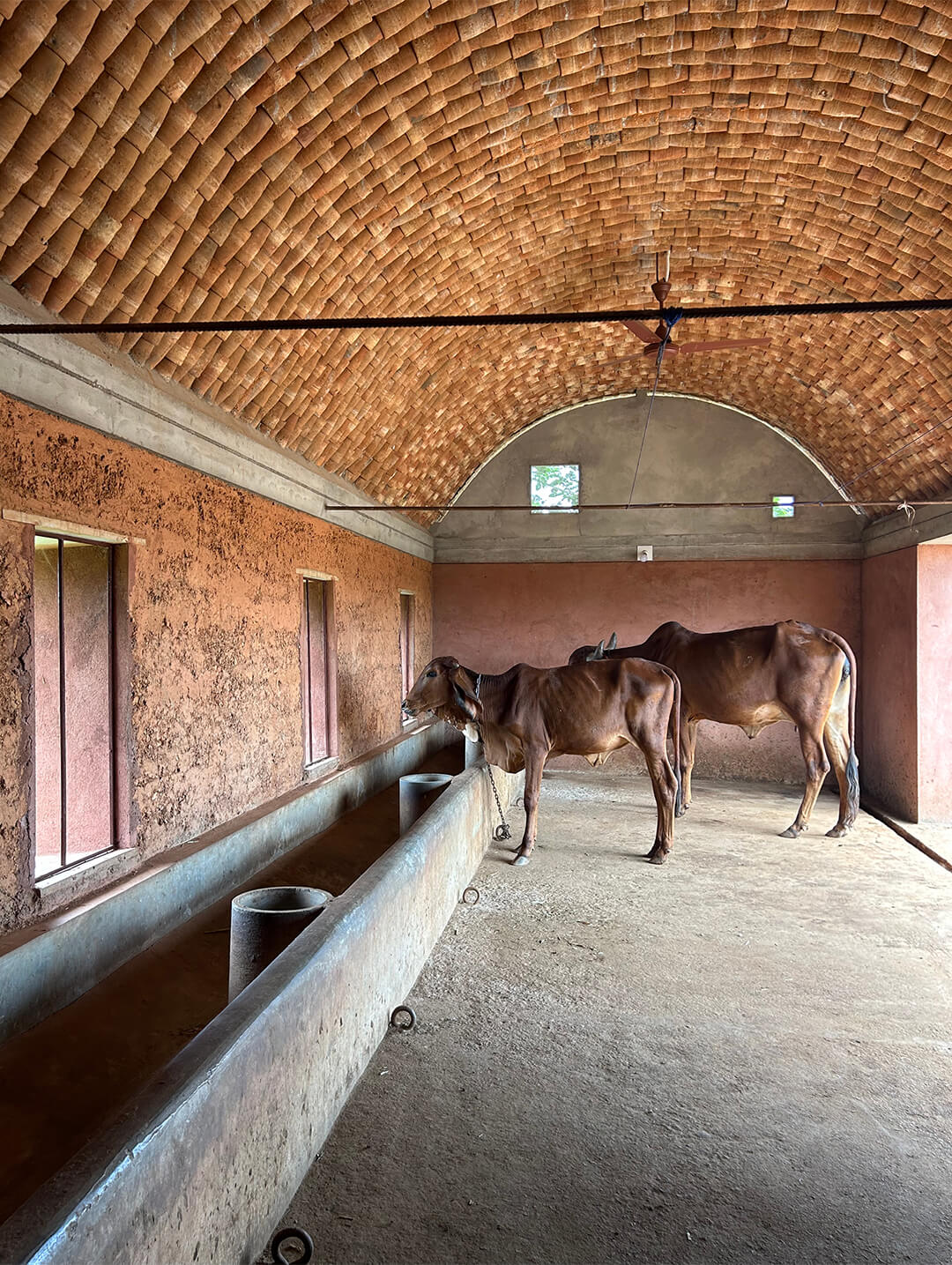
Comprising four structures—Sevak Niwas (a community centre), Gram Udhyog (a small cottage industry), Gaushala (cow shelter) and Mehman Gruh (volunteer stay)—the planning is arranged around an ancient mahua tree. With this open space serving as a gathering point, each building also opens out into a verandah, allowing activities to spill outdoors and ensuring a lively atmosphere. Vitally, each building is designed with traditional construction techniques and local materials, not solely as a means to ensure climate effectiveness. “One of Sureshbhai's briefs for Gram-Setu was clear: build with natural materials available in and around the village, and use concrete or steel only where absolutely necessary,” Sonecha continues. Foregrounding the situated knowledges of the region, the buildings for the public infrastructure have been built using stabilised rammed earth with a vaulted roof design made with hollow clay tubes, Kavelu (the Wardha roof).
As Sonecha observes, Valuna, like many villages in the subcontinent, has in recent years favoured constructing with concrete and brick. This is not only an aspirational shift (the materials seen as markers of modernity and permanence) but also economic: the government offers subsidies for pukka houses—'permanent' settlements in brick and concrete. The decision to champion vernacular architecture for Gram Setu is meant to reflect this tension. “One of its aims was to demonstrate that mud and locally available natural materials are capable of producing a building that is modern, dignified and well-crafted—one that is cost-effective, durable and simple enough in its construction that people might adapt its techniques for their own homes,” he shares.
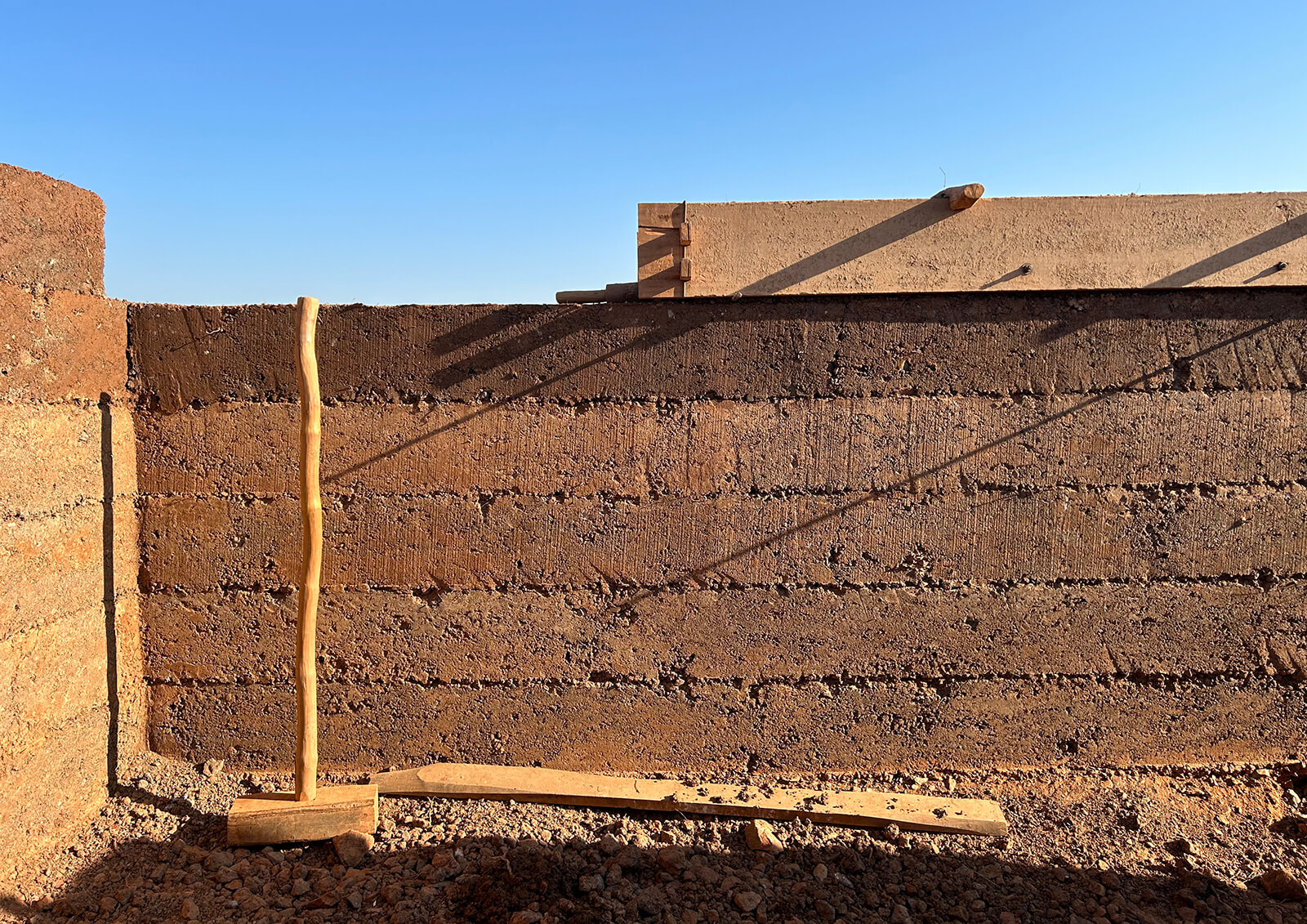
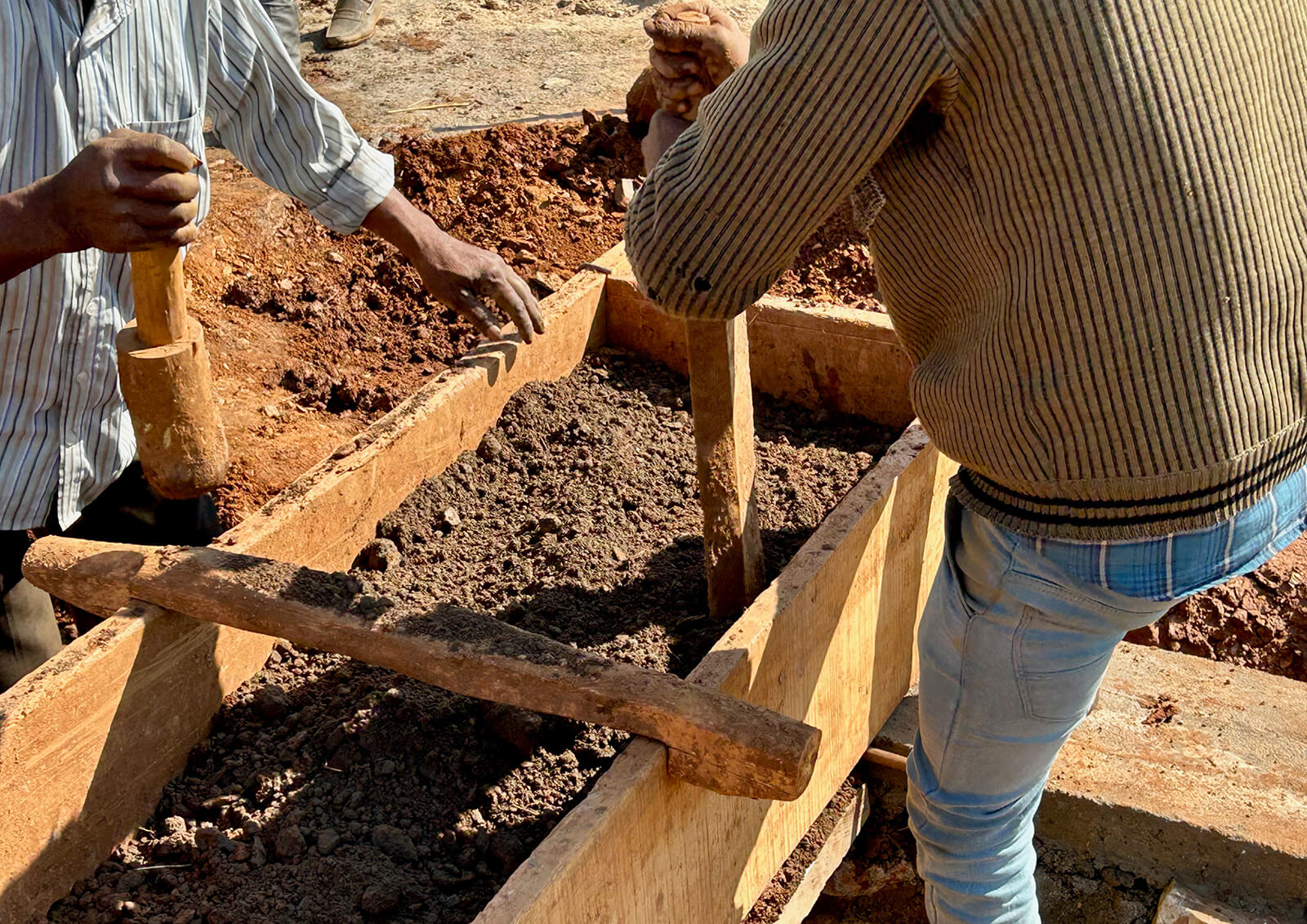
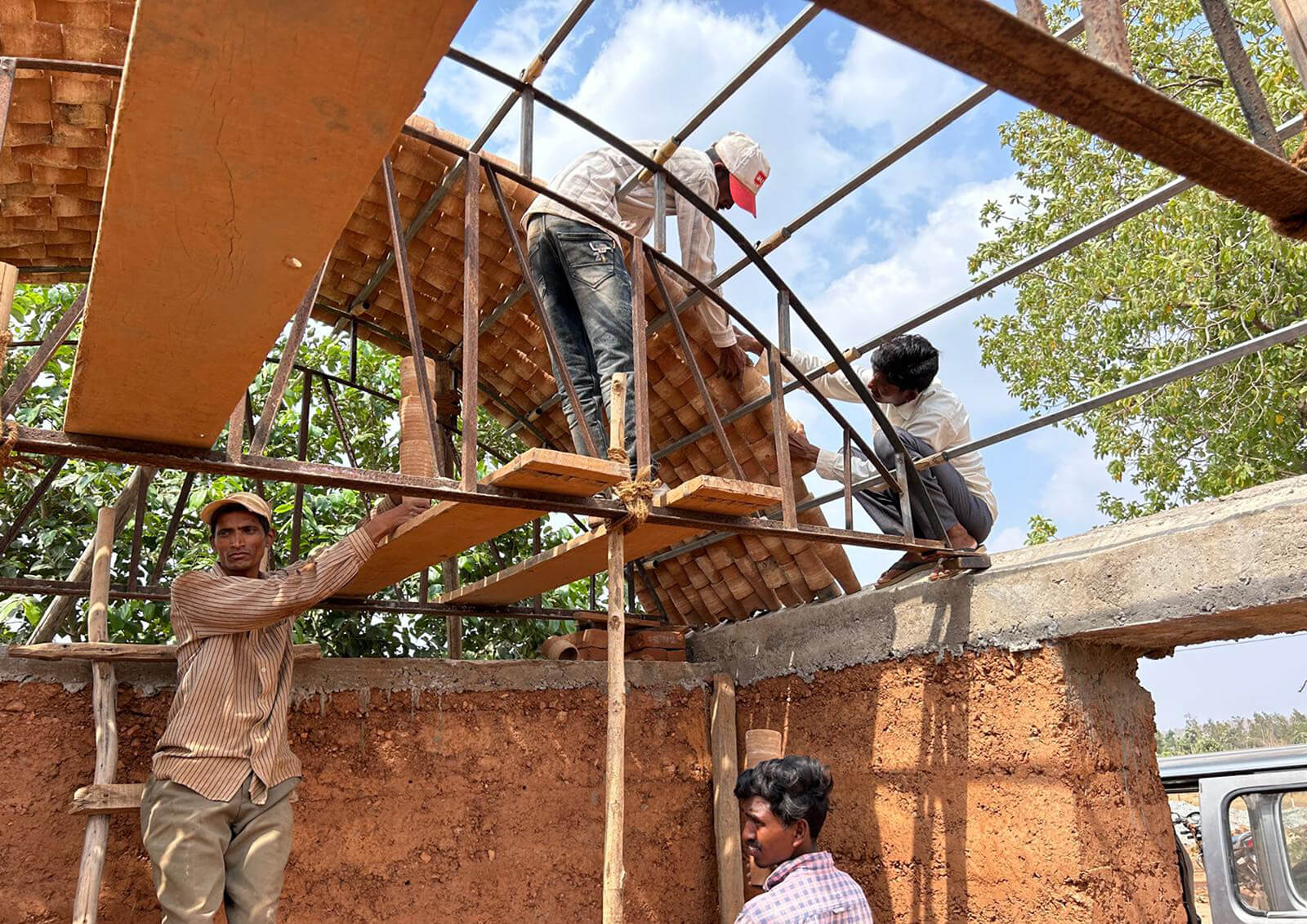
To ensure that the rammed earth architecture is durable and less susceptible to water penetration over time, the design team tested various methods for enhancing durability, using an optimum proportion of cement, lime and fly ash for strength and babool wood for moisture resistance. The team even left the walls of the first building to be exposed to weather conditions for two monsoon seasons as an empirical test of their effectiveness. Similarly, the vaulted roof system used for the buildings, was a technique that the team learnt from the Centre of Sciences for Villages in Wardha and is built with clay tubes without any wood or bamboo for support. Sonecha mentions Bharat Bhai, who was responsible for the roof’s construction, contributing not only his skills but his knowledge, inventiveness and understanding of local materials.
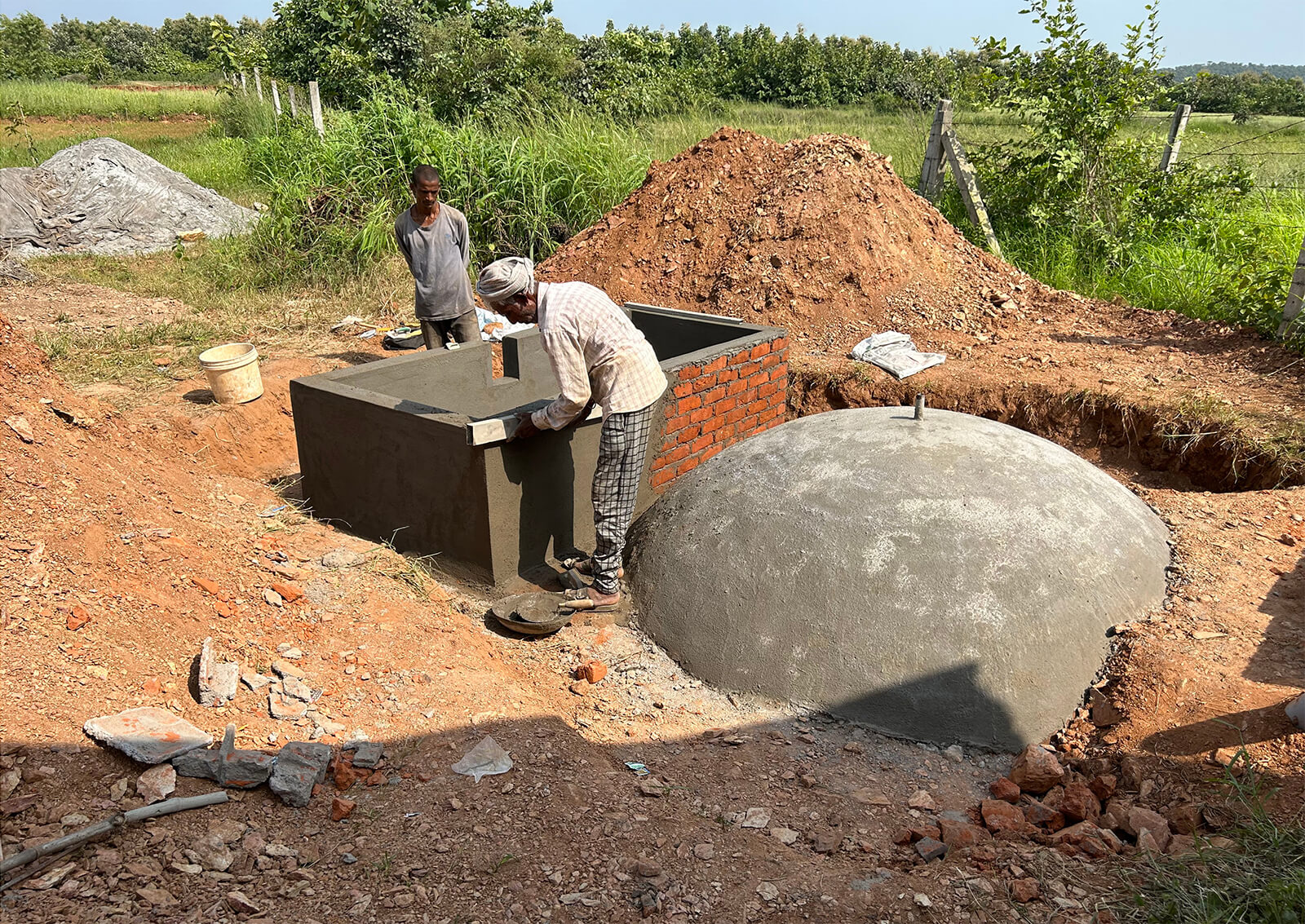
With his expertise, the team improvised the design of the roof, using larger kavelu made by local potters, effectively lowering the cost of the project. Even the openings, originally designed in metal, were reconsidered when the team discovered a workshop displaying salvaged wooden doors and windows collected from demolished homes across the region. Apart from vernacular techniques, other sustainable design initiatives for the community centre include a 30,000-litre rainwater-harvesting tank, a four cubic metre biogas plant and planting strategies adopted by the designers to ensure something in the garden is always flowering, as the land remains productive. These include fruits, vegetables, grains, medicinal plants, herbs, nuts and flowering species, a total of 177 planted trees.
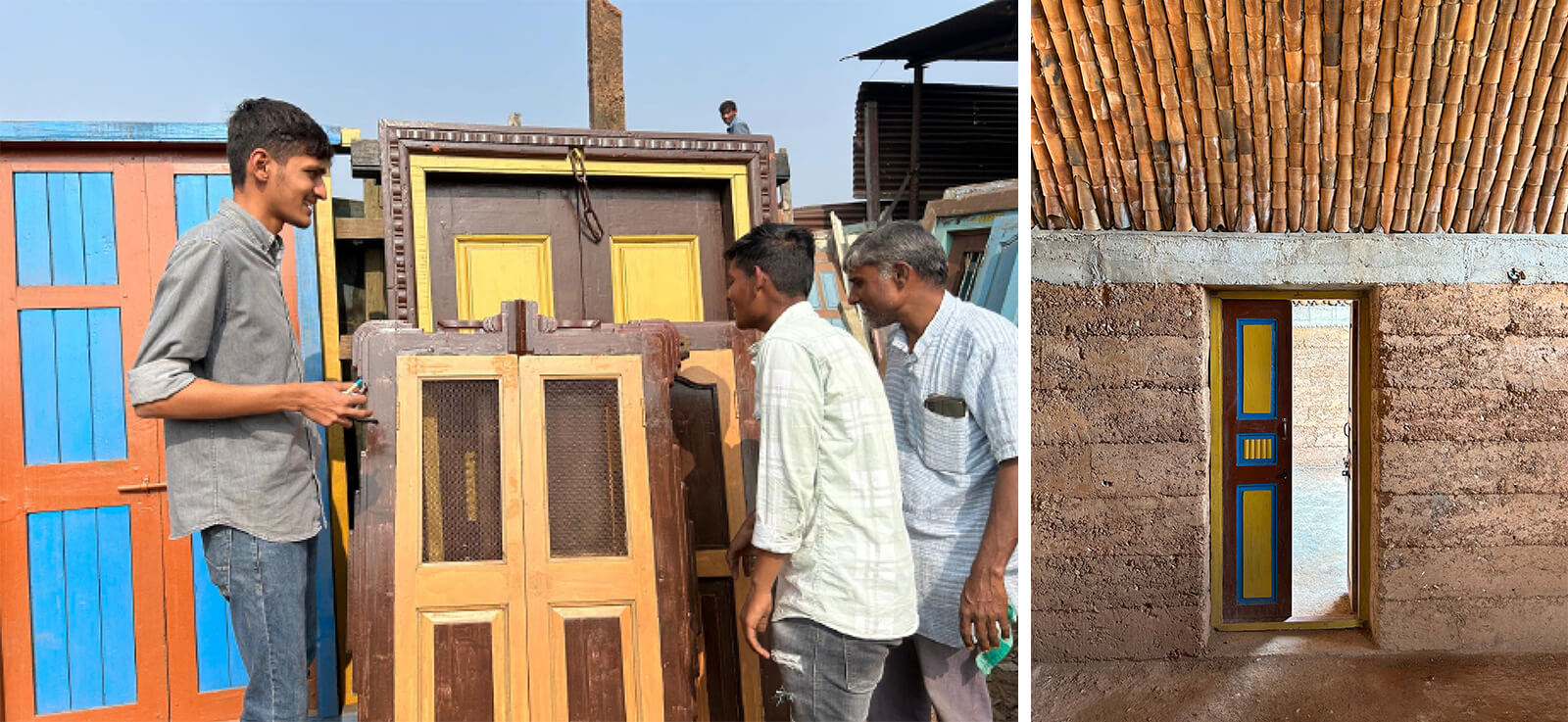
Most crucially, for a project of this nature, and in line with SEALAB’s design tenets, each stage of the planning and design process was conducted in close collaboration with the local community. Kamalaben, a farmer from Valuna, helped the designers identify which earths to use for different purposes in construction. She was also instrumental in ensuring the cost-effectiveness of the project, suggesting an alternative for sand and kapchi (basalt aggregate) that were raising the project’s costs. A local carpenter, Bhanuprasad Asari, was the one who suggested using Babool wood for the shuttering for the rammed earth walls. And the construction of the buildings was carried out by people from the community as well. Sonecha names them in his note for STIR, “Babubhai and Ganeshbhai produced kavelu. Bharatbhai, Pravinbhai, Sanjaybhai, Bhayabhai, Ramesh, Mahesh, Kamlesh and Hita completed the lime plaster. Sunilbhai handled the fabrication and Laljibhai the painting.”
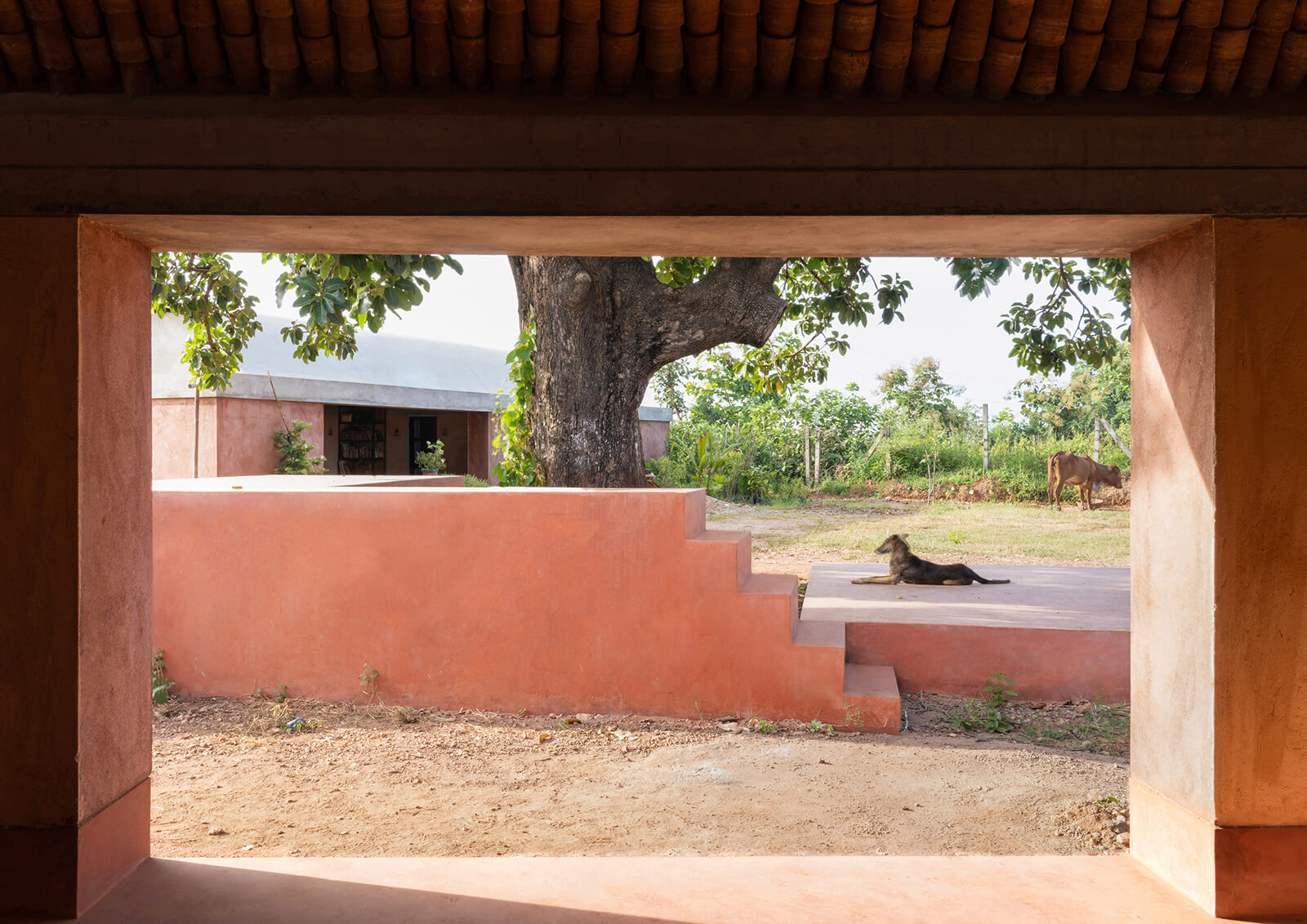
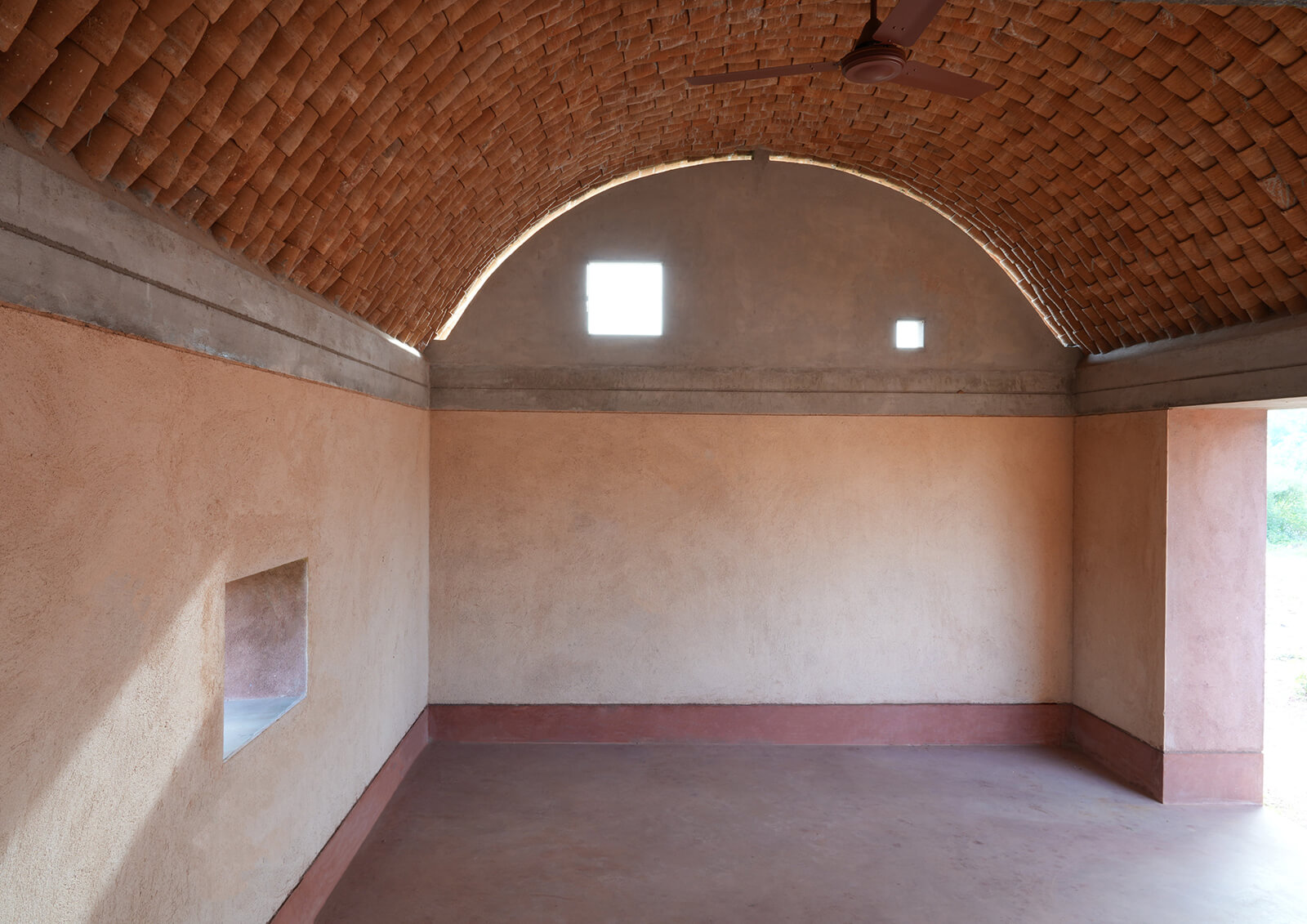
It’s a worthy acknowledgement for what seems like a truly collaborative effort, and in this admission, it also implicitly questions what the role of an architect ought to be: Whether it is for architects, especially in a context like India, to give dictums or to work with and adapt to the local customs of a region, in this way uplifting and making space for capacity-building. It feels easy to dismiss even this as an urban population speaking for and acting on behalf of the rural. But it is, as Gram Setu’s design insists, a reciprocal relationship. The project is, after all, a setu (bridge).

by Pranjal Maheshwari Oct 19, 2026
The Mumbai-based architects integrate courtyards, mesh screens and north light trusses to create a dining space that doubles up as a community hub at SR University, Warangal.
by Mrinmayee Bhoot Oct 17, 2026
The Rotterdam-based institute centres the Indian Ocean as a network for exploring material histories and transnational links shaping coastal cultures, positing them as future models.
by Pranjal Maheshwari Oct 16, 2026
At the 2026 Stirling Prize ceremony, Mary Duggan with RUFF Architects, MAKER Architecten and Nakshabid Architects were felicitated for proffering quality housing and social equity.
by Mrinmayee Bhoot Oct 12, 2026
The new Centre for Contemporary Arts, fostering public engagement with art in Uzbekistan, is housed in a tram depot refurbished by the French studio, emulating local craftsmanship.

make your fridays matter with a well-read weekend
Enter your details to sign in
Don’t have an account?
Sign upOr you can sign in with
a single account for all
STIR platforms
All your bookmarks will be available across all your devices.
Stay STIRred
Already have an account?
Sign inOr you can sign up with
Verification link sent to check your inbox or spam folder to complete sign up process
Tap on things that interests you.
Select the Conversation Category you would like to watch
Please enter your details and click submit.
Enter the 6-digit code sent at


SEALAB explores a bridge between tacit skill & practical execution with Gram Setu
by Mrinmayee Bhoot | Published on : Apr 28, 2026


 Sign in with Google
 Sign in with email
What do you think?