Architecture04 mins. read
Hata Dome by Anastasiya Dudik evokes ‘a structure unearthed rather than built’
by Bansari PaghdarJul 05, 2025



by Bansari PaghdarPublished on : May 18, 2026
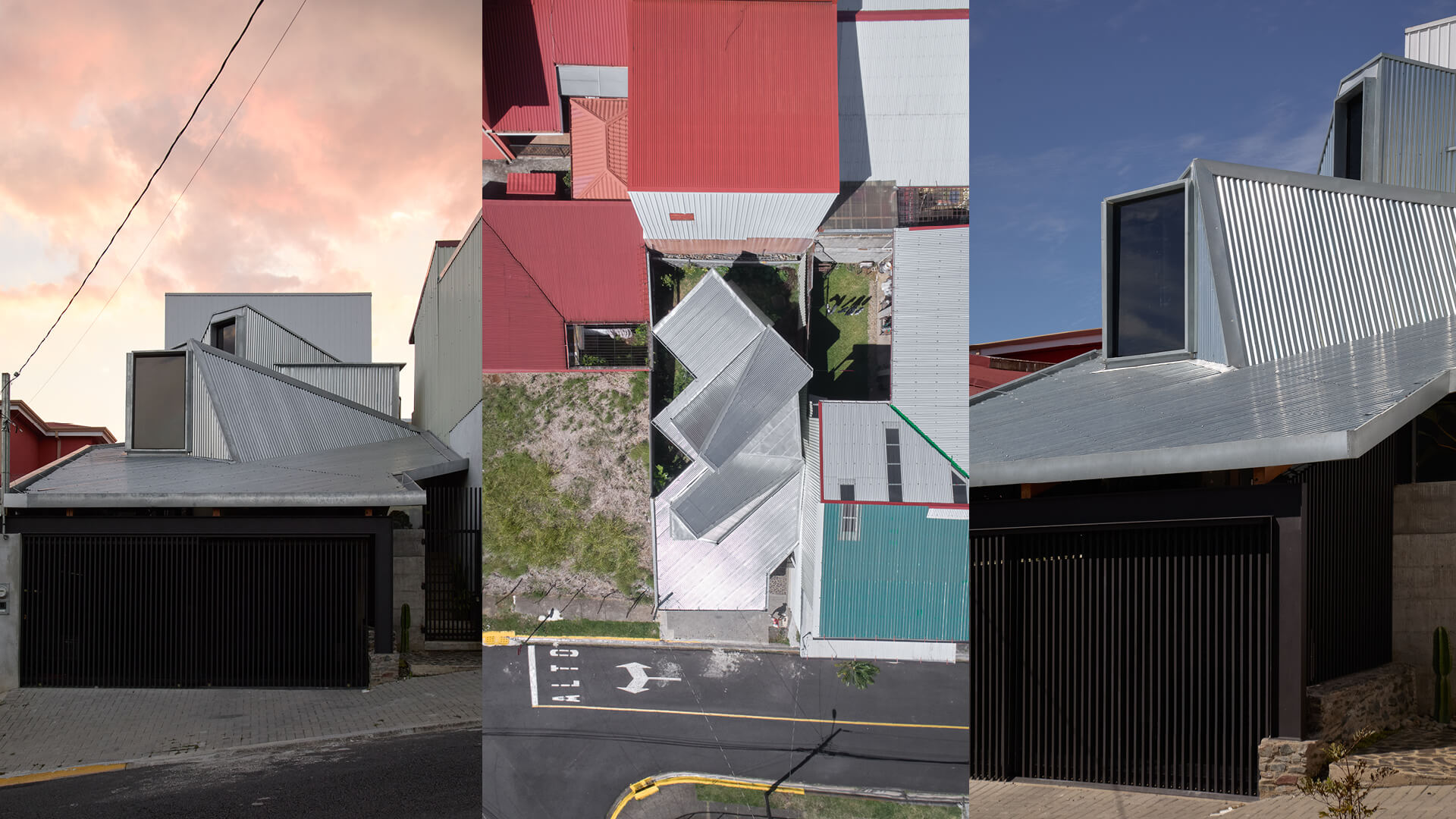
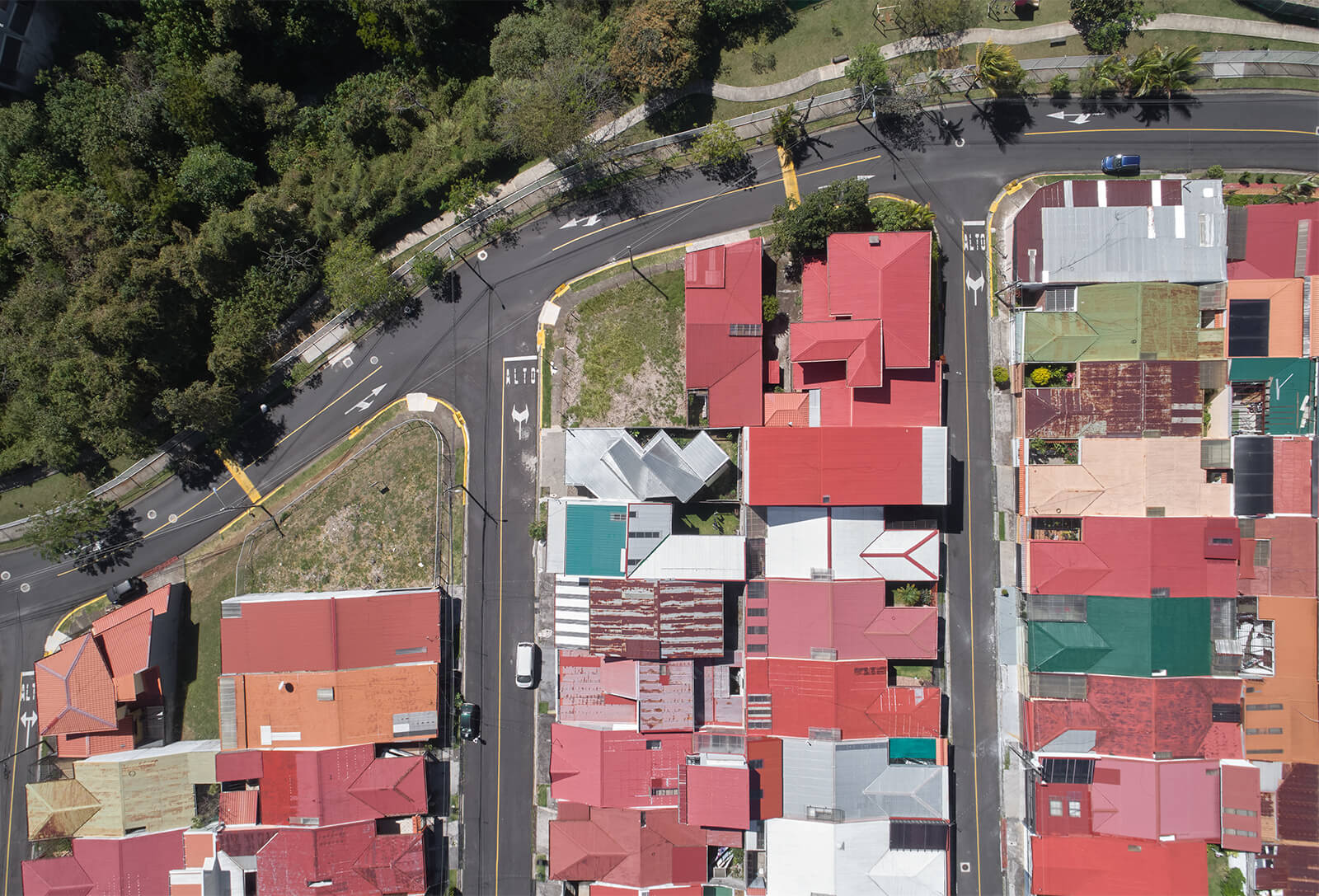
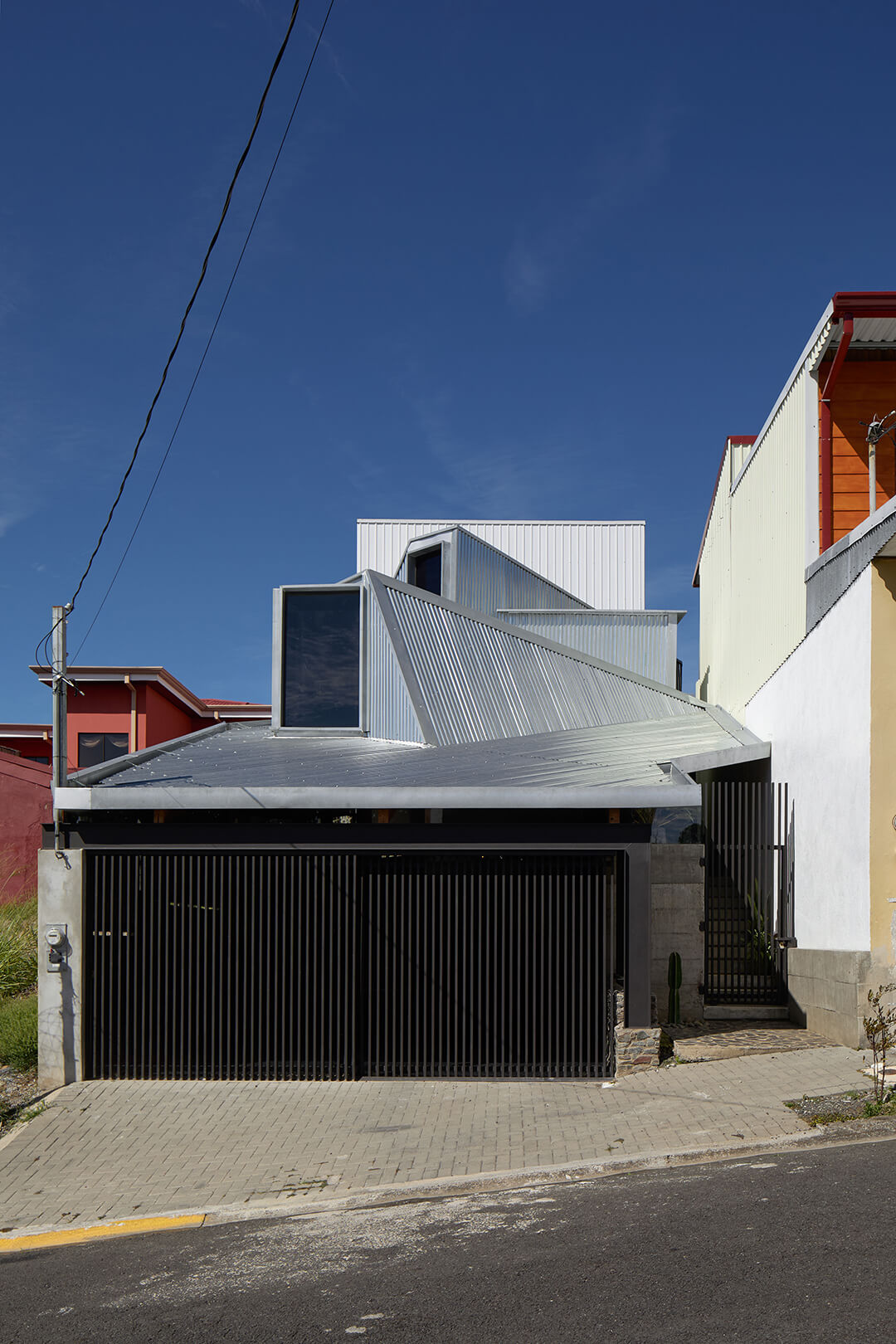
Casa en Mercedes, a residence in Costa Rica designed by local practice id | arkosis, features the same material composition and profile as many homes in the neighbourhood—a morphology fairly discernible in top-down views—but stands out by virtue of its unique form. Seeking to preserve this material identity before it became ‘heavily urbanised,’ the building relies on repetition and reorientation of volumes, exhibiting an almost industrial character. While the facade design often becomes the defining feature in conventional residential architecture following the provision of form, this private residence undoubtedly positions the corrugated metal roof as its crowning jewel.
Established in 2009 by Ivan Delgado, the studio focuses on multi-scale collaborative architectures and interior designs that are material and detail-oriented. Their portfolio primarily comprises residential and commercial projects that respond to contextual challenges with contemporary design and material sensibilities. The practice describes their approach as honest and straightforward, informed by creative processes, challenges and the act of building itself. Their approach towards Casa en Mercedes, too, reveals their deep appreciation for the neighbourhood, or at least for what it once was. Consequently, the project embodies a certain sensitivity to its surroundings—less in a visual way and more in a spatial, conceptual and material way.
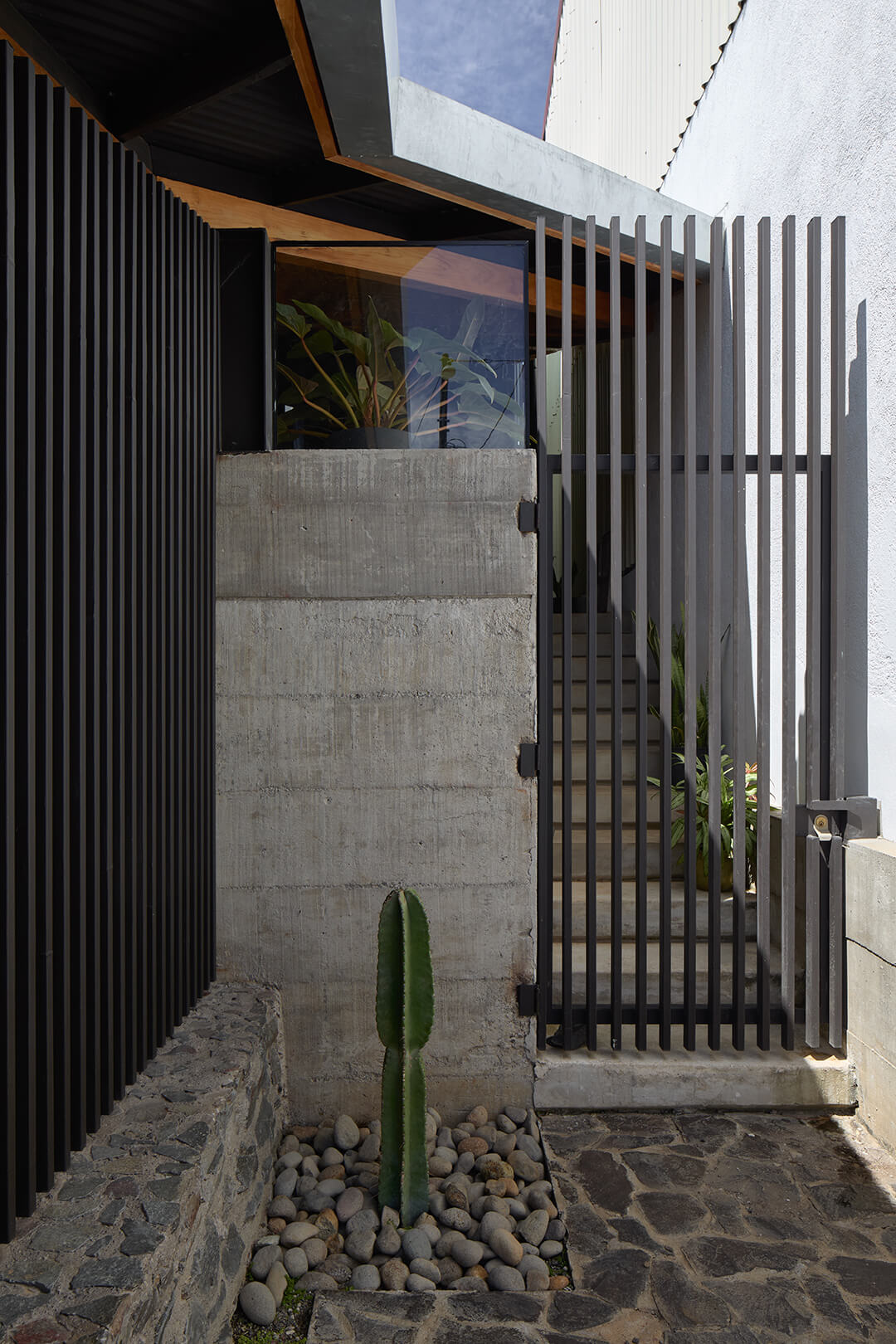
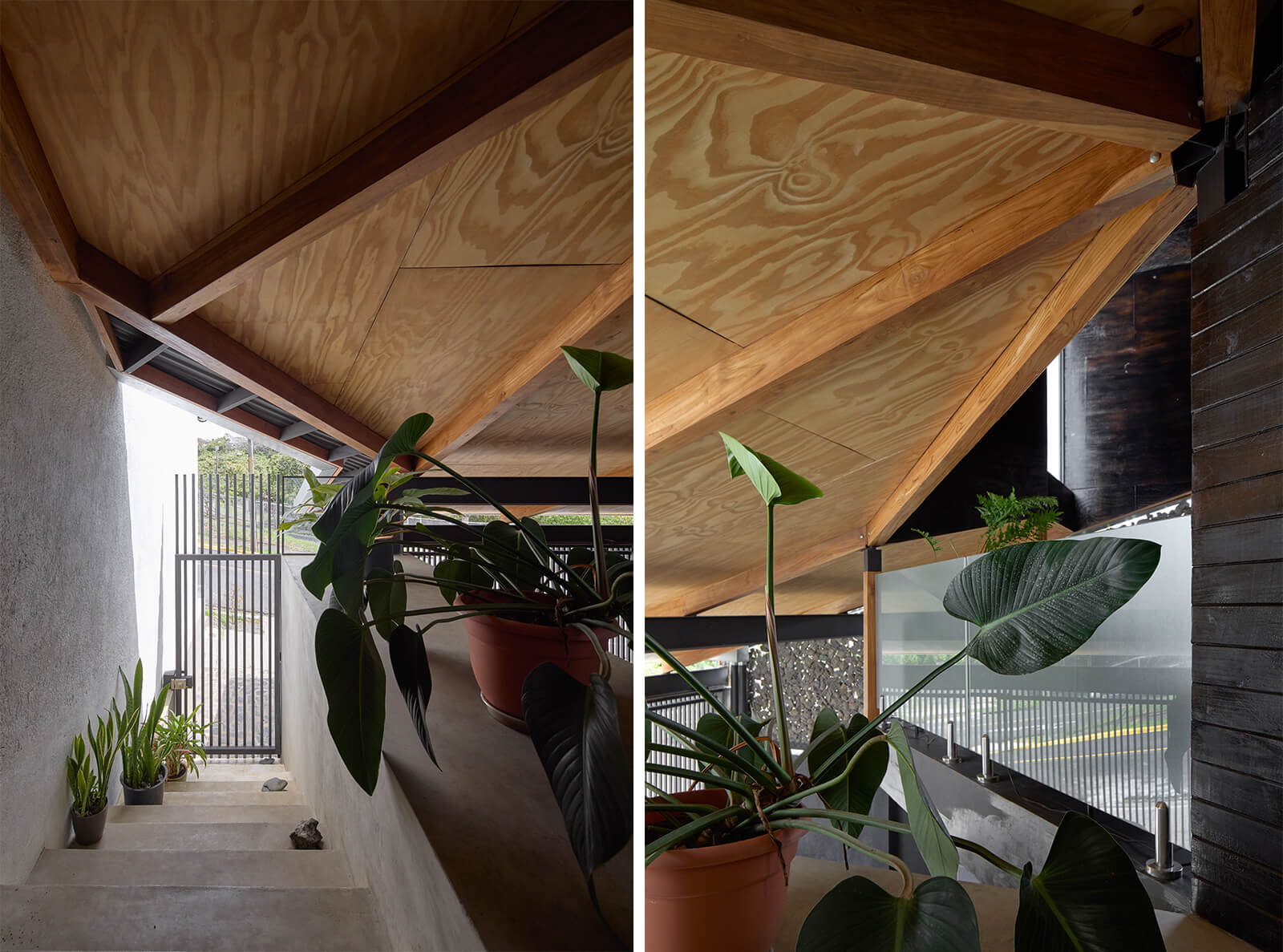
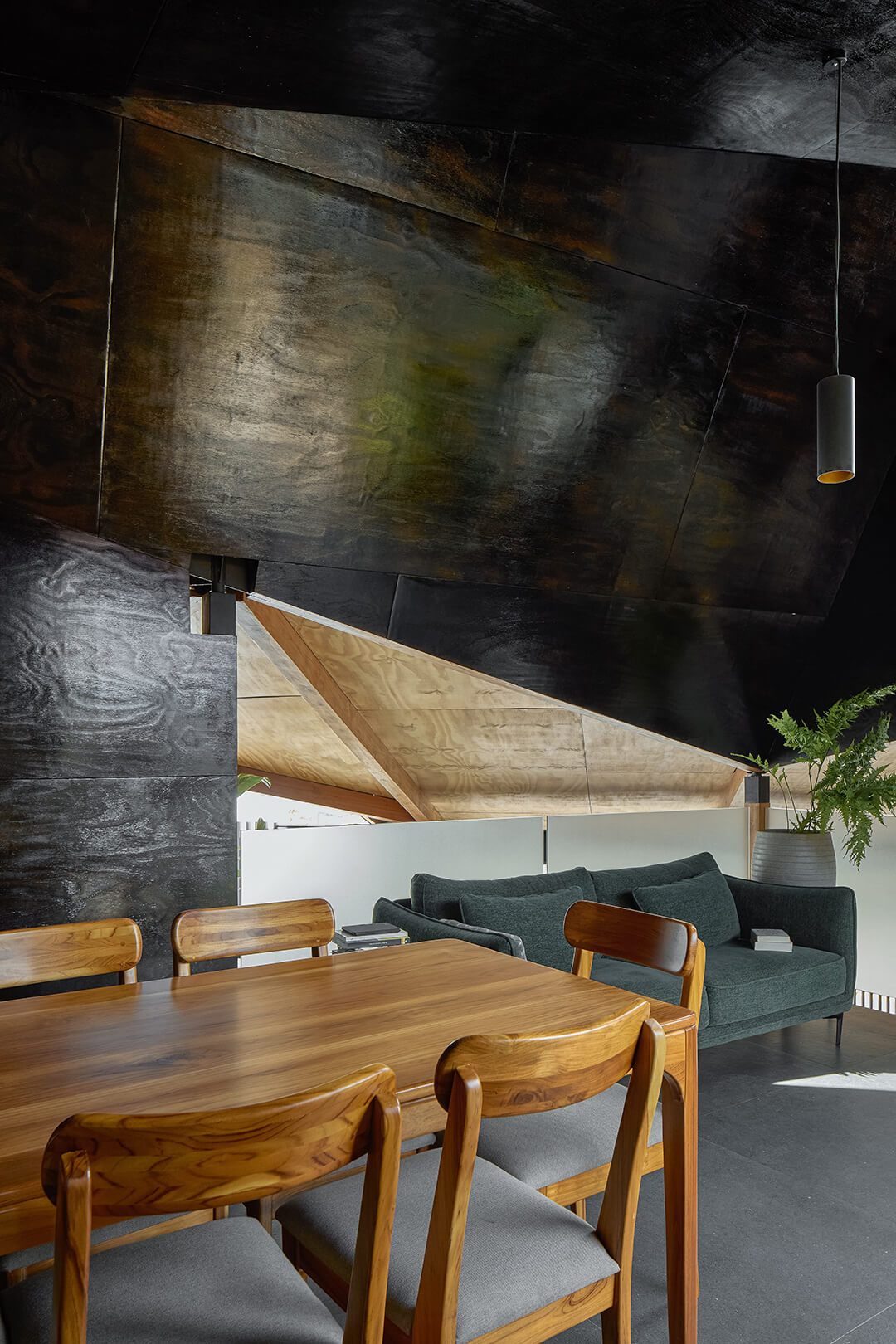
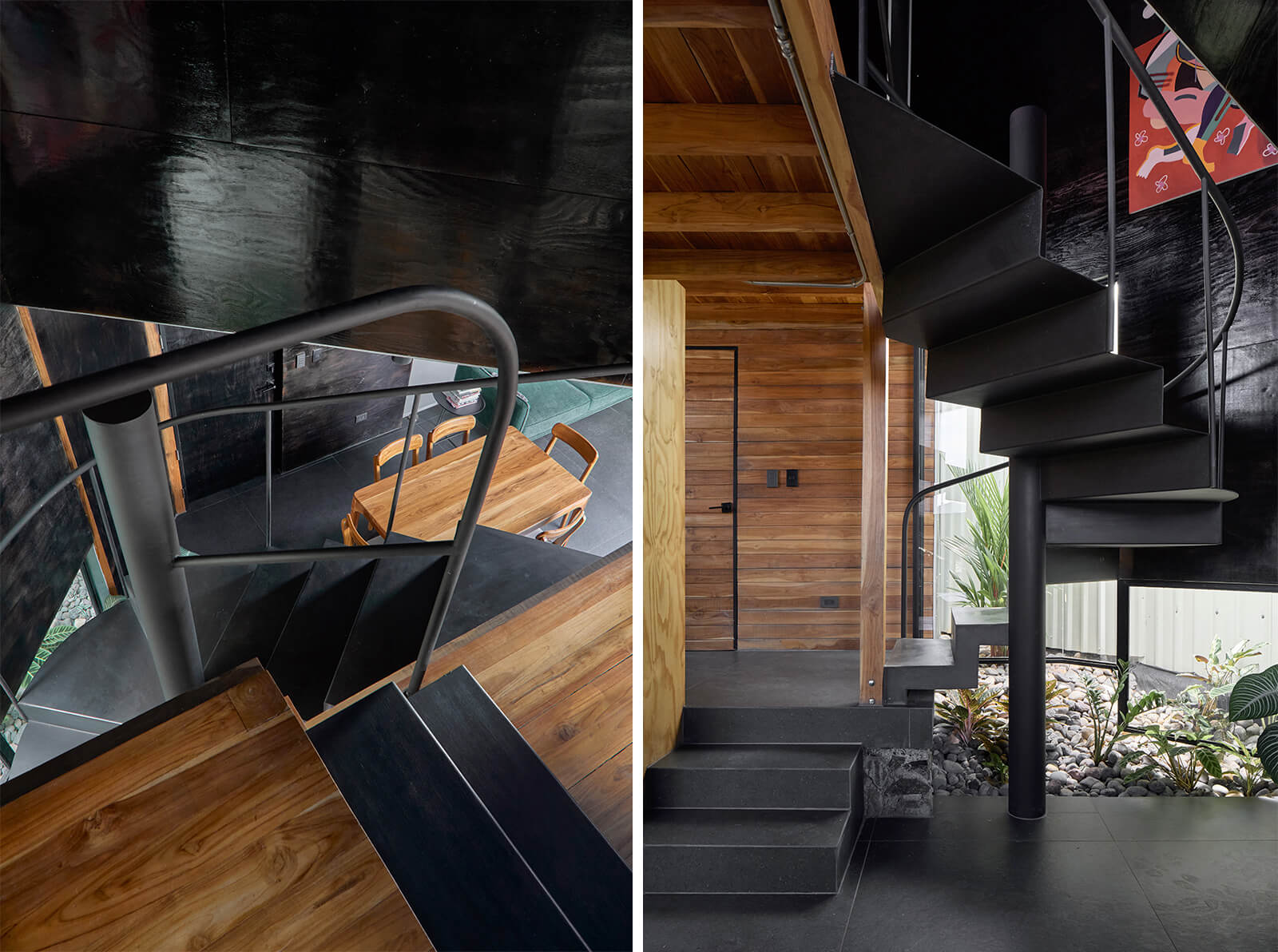
The project literature defines the residence as one of those ‘utopian places where normative ideas about the use of private property are brought into question,’ quoting artist Lara Almarcegui, whose work on the dereliction of material is particularly evocative. “The project seeks to maintain that latent discrepant condition, by making both the lot and the building legible in autonomy and correspondence at the same time,” states an official release.
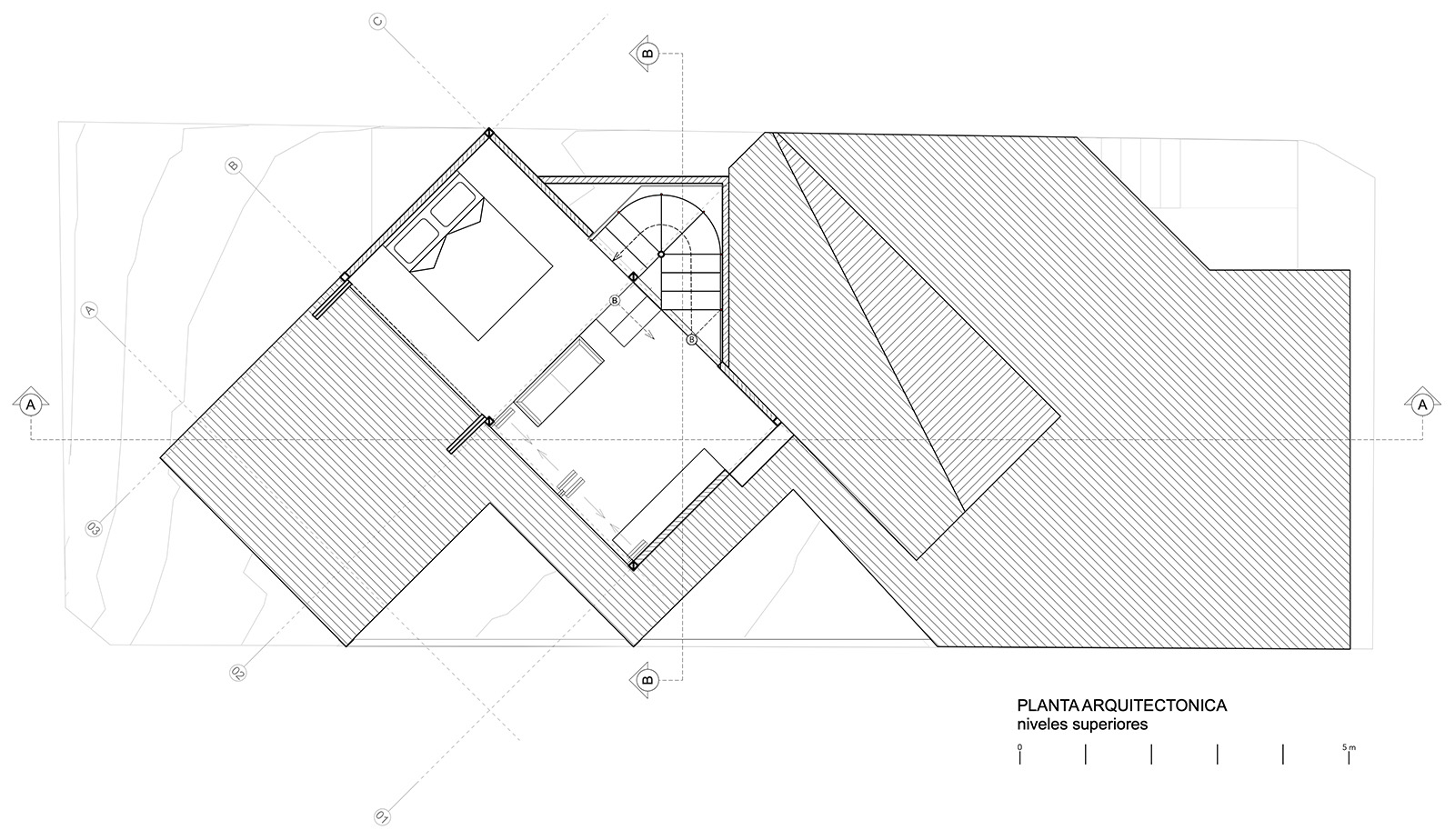
The contemporary architecture attempts to achieve this ‘condition’ through its strong geometry: sharp metal edges protrude from the sloping roof, adding complexity and depth to the form, while the simple facade design tucked within this assembly ensures privacy. Additionally, the site’s original topography is reflected and reinterpreted as geometric planes to form the structure’s roof. Beyond the formal language, the project also pays attention to circulation, attempting to preserve the original entry and movement patterns within the site. A series of ascending floor levels caters to adding physical activity to the routine of the client—an IT professional, training and working from home. Through this spatial progression and layering, the volumes at the rear end of the site have a fairly pronounced presence, catching the attention of any passersby.
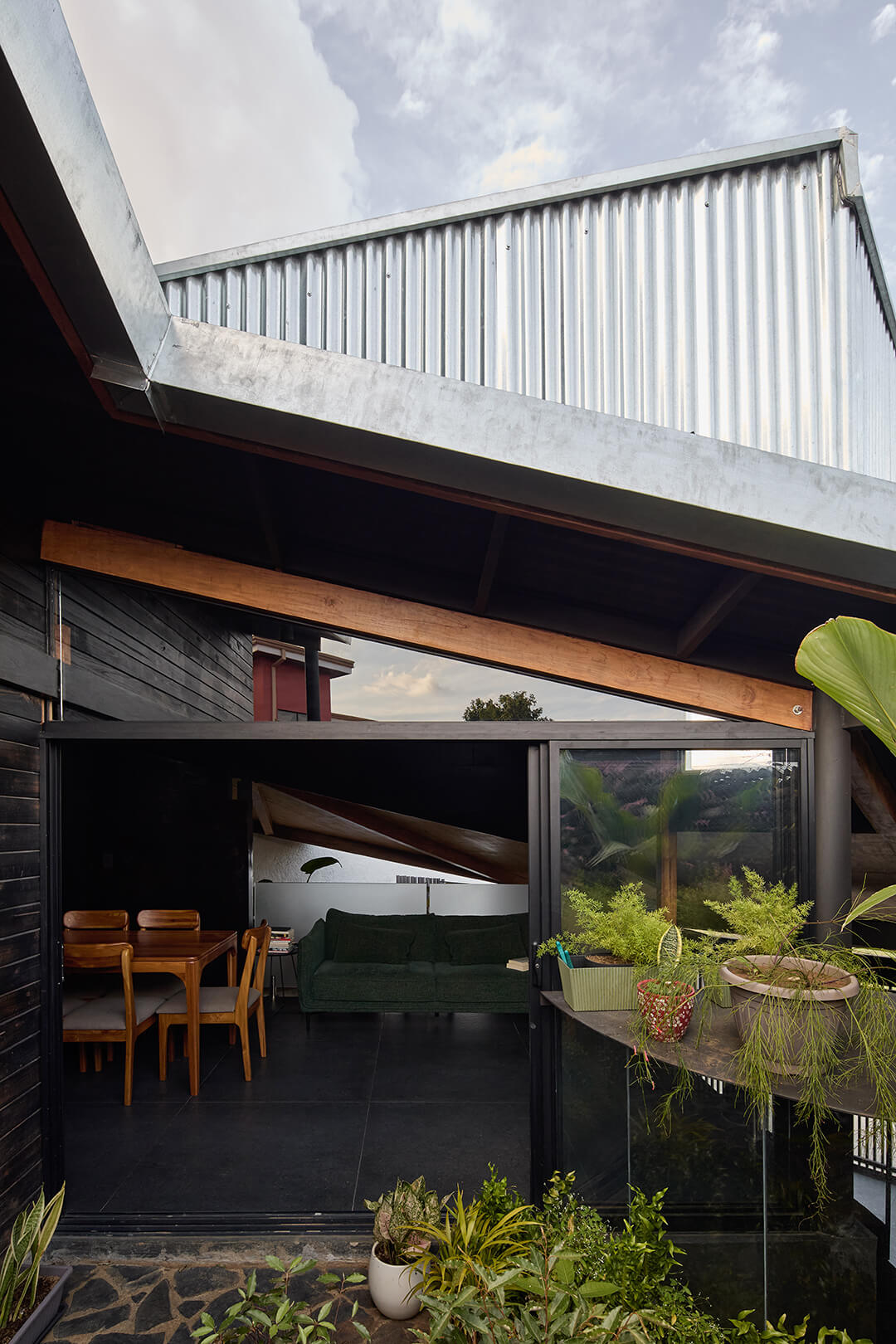
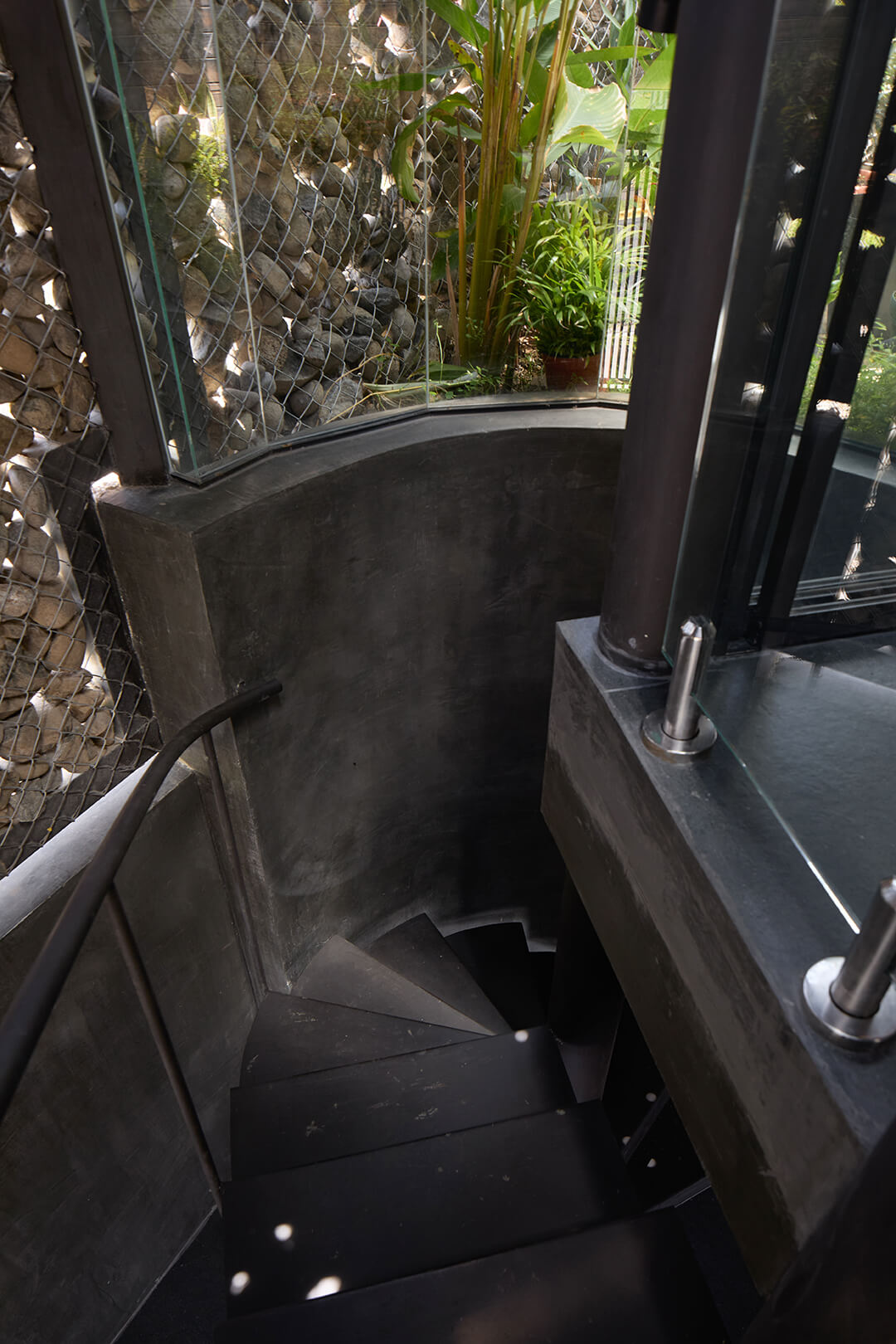
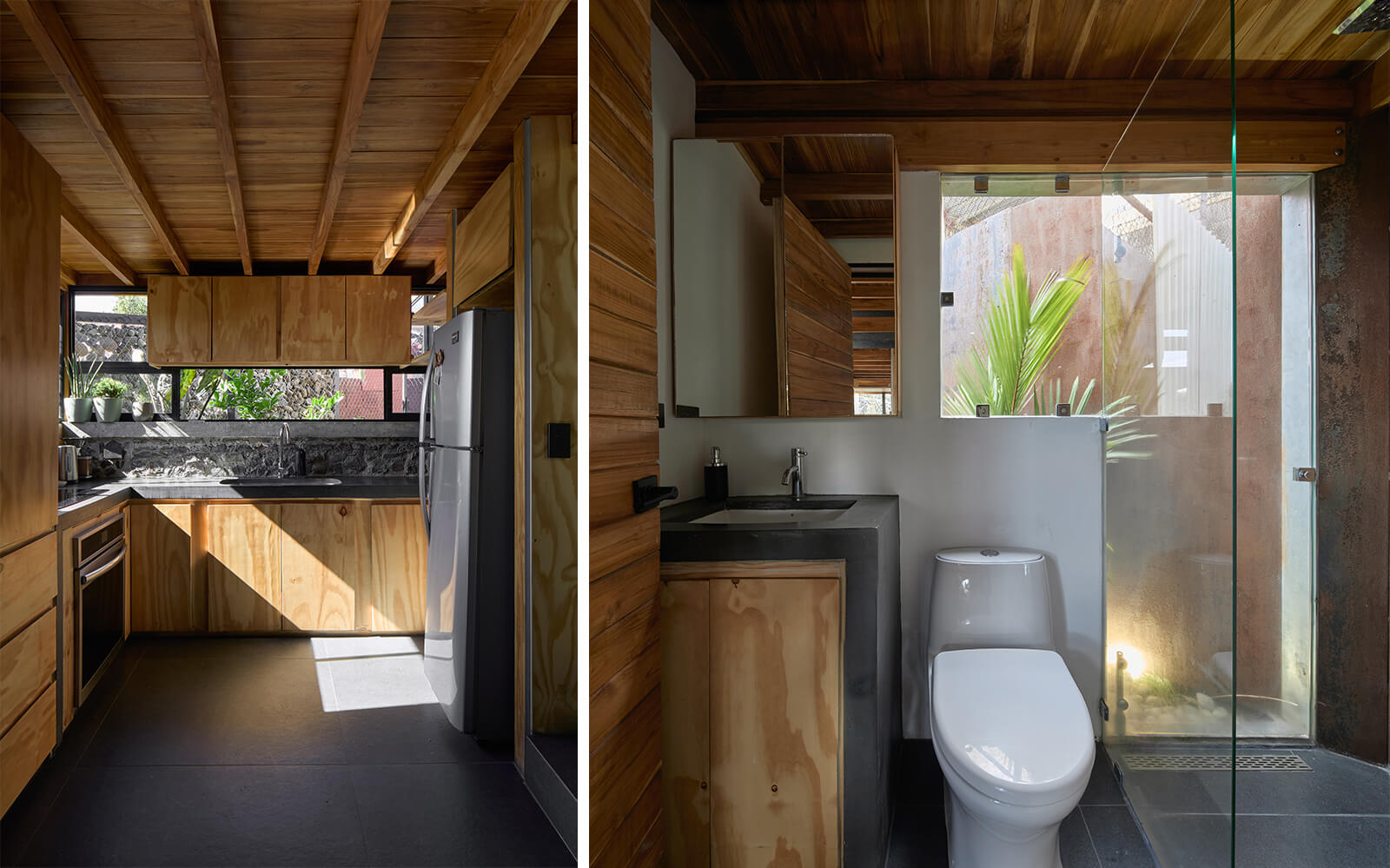
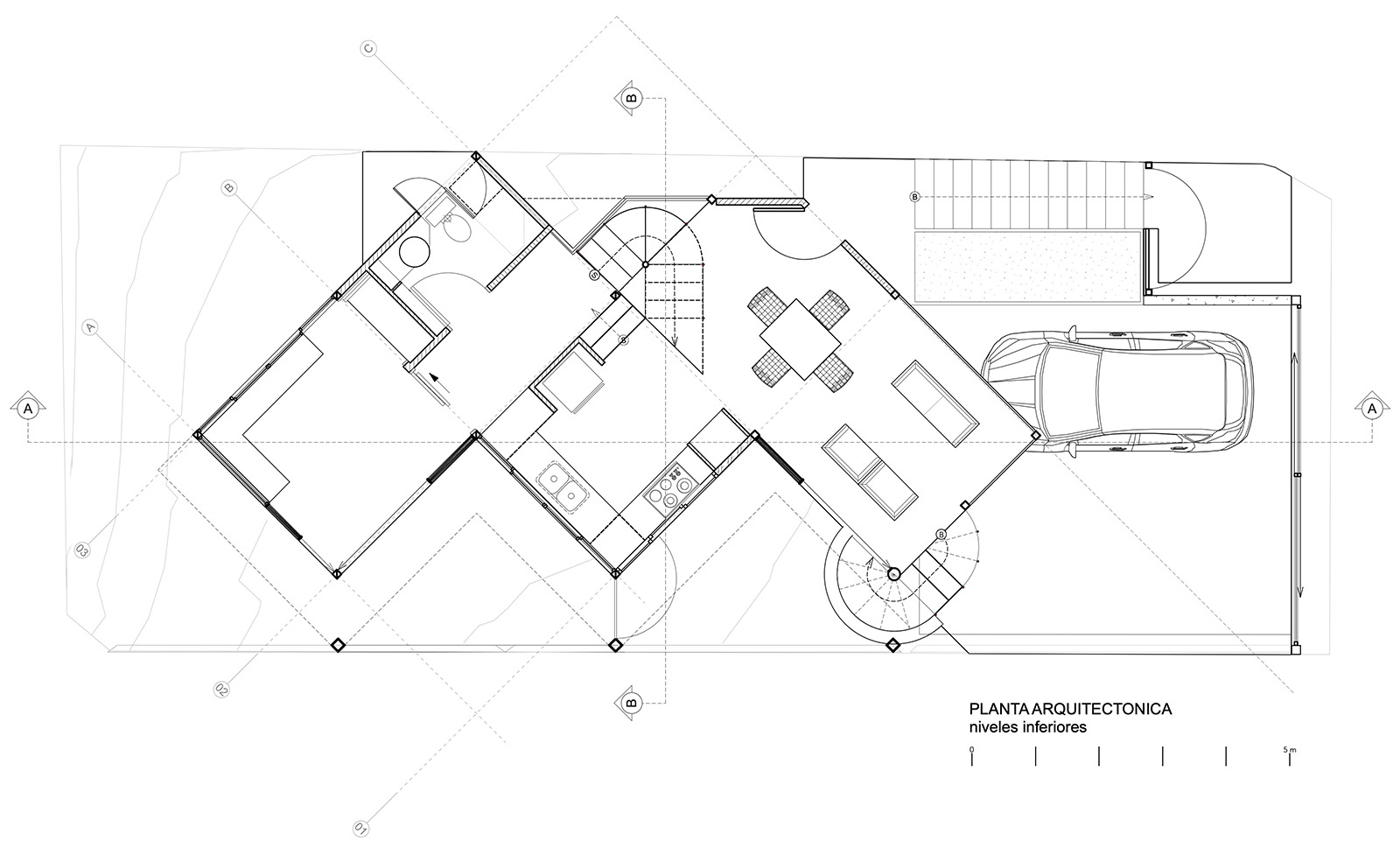
The layout of the house is as simple as the section is complex. The plan, based on a grid of over three metres, is composed to facilitate a sense of fluidity as one traverses the spaces. Despite using only one door in the interiors, the assemblage of spaces ensures privacy across all the activity zones. The stacked volumes of the roof form lofts within the home, their strategic orientation staging the windows to face each other. According to the architects, this helps visitors form deep relationships with the surroundings and spaces, compelling them to perceive the house in relation to its context and almost in its entirety rather than as a collection of rooms. Moreover, the resulting window placements and the sloping roof together guide the breeze from the nearby Parque Lineal Río Pacacua into the spaces.
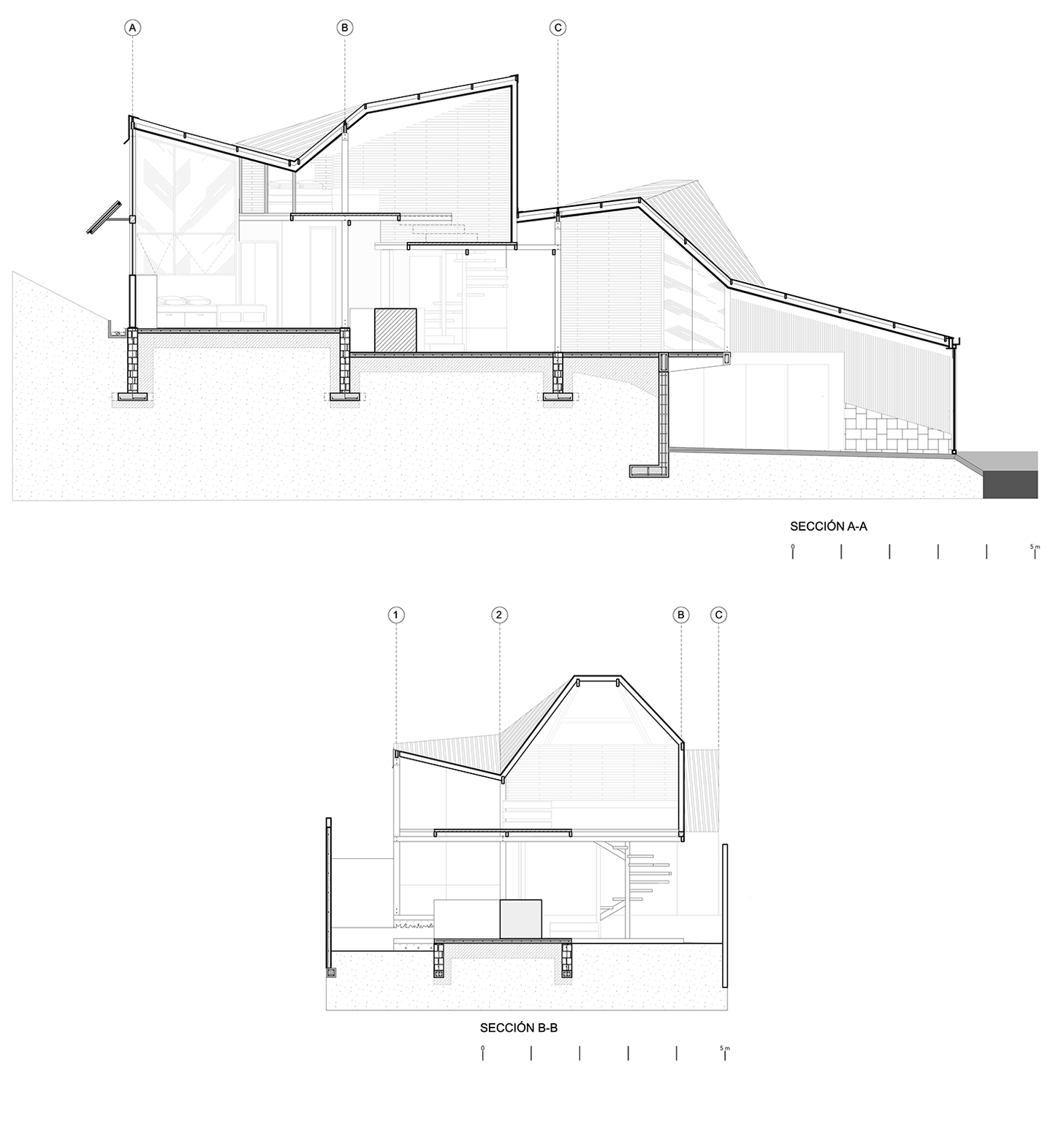
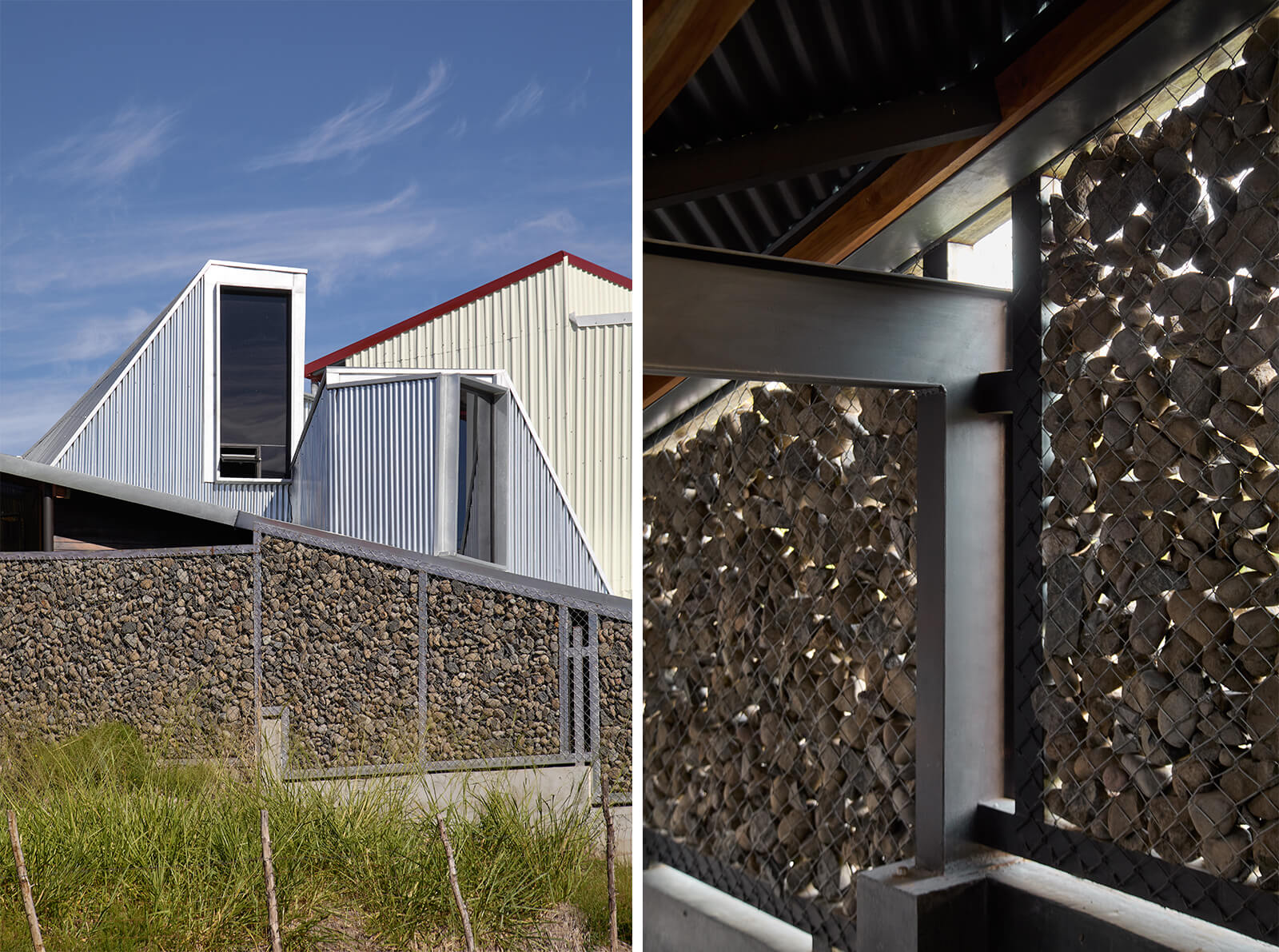
In contrast to the prominent metal sheets, the home also uses some natural materials to evoke or strive for a certain sense of balance. Stone is employed in the masonry walls that define the site’s perimeter, providing a porous enclosure for thermal insulation. Teak wood frames and pine boards are essential to the house’s overall composition as is the omnipresent metal roof, prepared by charring wood and finished with natural oils. The choice of materials within the house—though diverse with a visual champion—ultimately favours the local, affordable and reusable. It employs these constituents sensitively to compose a structure using simple assembly techniques and effective structural and volumetric stacking, achieving a layered, complex residential design.

by Pranjal Maheshwari Oct 19, 2026
The Mumbai-based architects integrate courtyards, mesh screens and north light trusses to create a dining space that doubles up as a community hub at SR University, Warangal.
by Mrinmayee Bhoot Oct 17, 2026
The Rotterdam-based institute centres the Indian Ocean as a network for exploring material histories and transnational links shaping coastal cultures, positing them as future models.
by Pranjal Maheshwari Oct 16, 2026
At the 2026 Stirling Prize ceremony, Mary Duggan with RUFF Architects, MAKER Architecten and Nakshabid Architects were felicitated for proffering quality housing and social equity.
by Mrinmayee Bhoot Oct 12, 2026
The new Centre for Contemporary Arts, fostering public engagement with art in Uzbekistan, is housed in a tram depot refurbished by the French studio, emulating local craftsmanship.

make your fridays matter with a well-read weekend
Enter your details to sign in
Don’t have an account?
Sign upOr you can sign in with
a single account for all
STIR platforms
All your bookmarks will be available across all your devices.
Stay STIRred
Already have an account?
Sign inOr you can sign up with
Verification link sent to check your inbox or spam folder to complete sign up process
Tap on things that interests you.
Select the Conversation Category you would like to watch
Please enter your details and click submit.
Enter the 6-digit code sent at


Casa en Mercedes’ corrugated metal roof and stacked profile render its context anew
by Bansari Paghdar | Published on : May 18, 2026


 Sign in with Google
 Sign in with email
What do you think?