Design08 mins. read
Taamr by Ashiesh Shah weaves copper through collectible design and cosmology
by Jincy IypeAug 07, 2026



by Bansari PaghdarPublished on : May 02, 2026
Pottery is among the most ancient crafts known to humanity. It has not simply survived, but transformed and thrived across entire civilisations. Though the world has changed drastically in the last century, it isn't entirely absurd to assume that the craft endures and will continue to—perhaps not in the forms and aesthetics that we usually associate with ceramics today. In recent decades, ceramics have extended well beyond utilitarian function, becoming a means of expression for artists and designers worldwide.
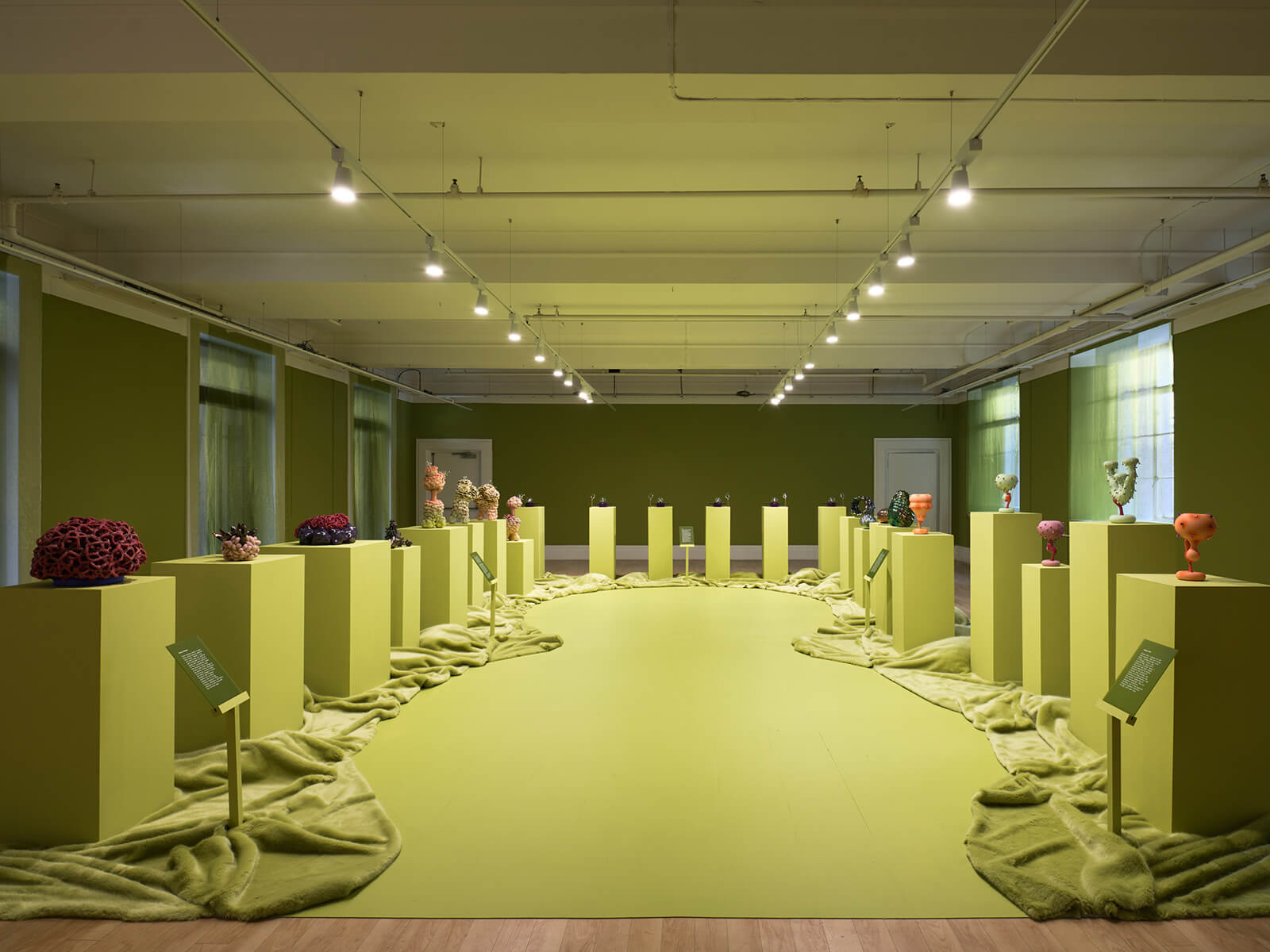
While some practices remain rooted in cultural traditions and local craftsmanship, others have looked to a broader spectrum of man-made and natural elements. To inquire what ceramics might look like 100 years from now, one turns to Ceramic Odyssey 2126, a speculative group exhibition by UK-based artist-led space County Hall Pottery—dedicated to creating and exploring contemporary ceramics—on London’s Southbank.
On view from March 17 – May 3, 2026, the showcase features works by five contemporary artists and designers experimenting with materials to explore how ceramics might evolve within shifting ecological, technological and biological systems.
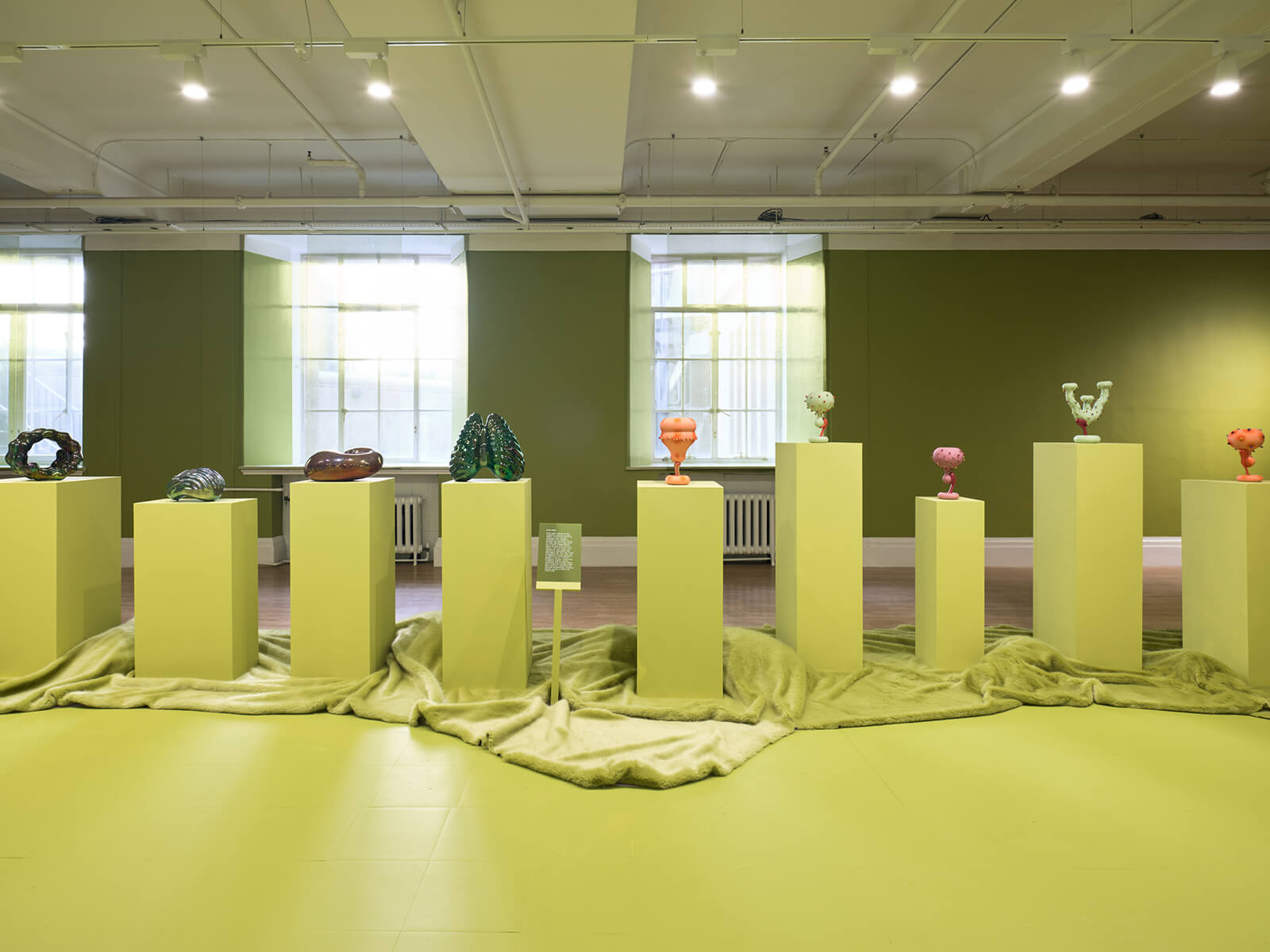
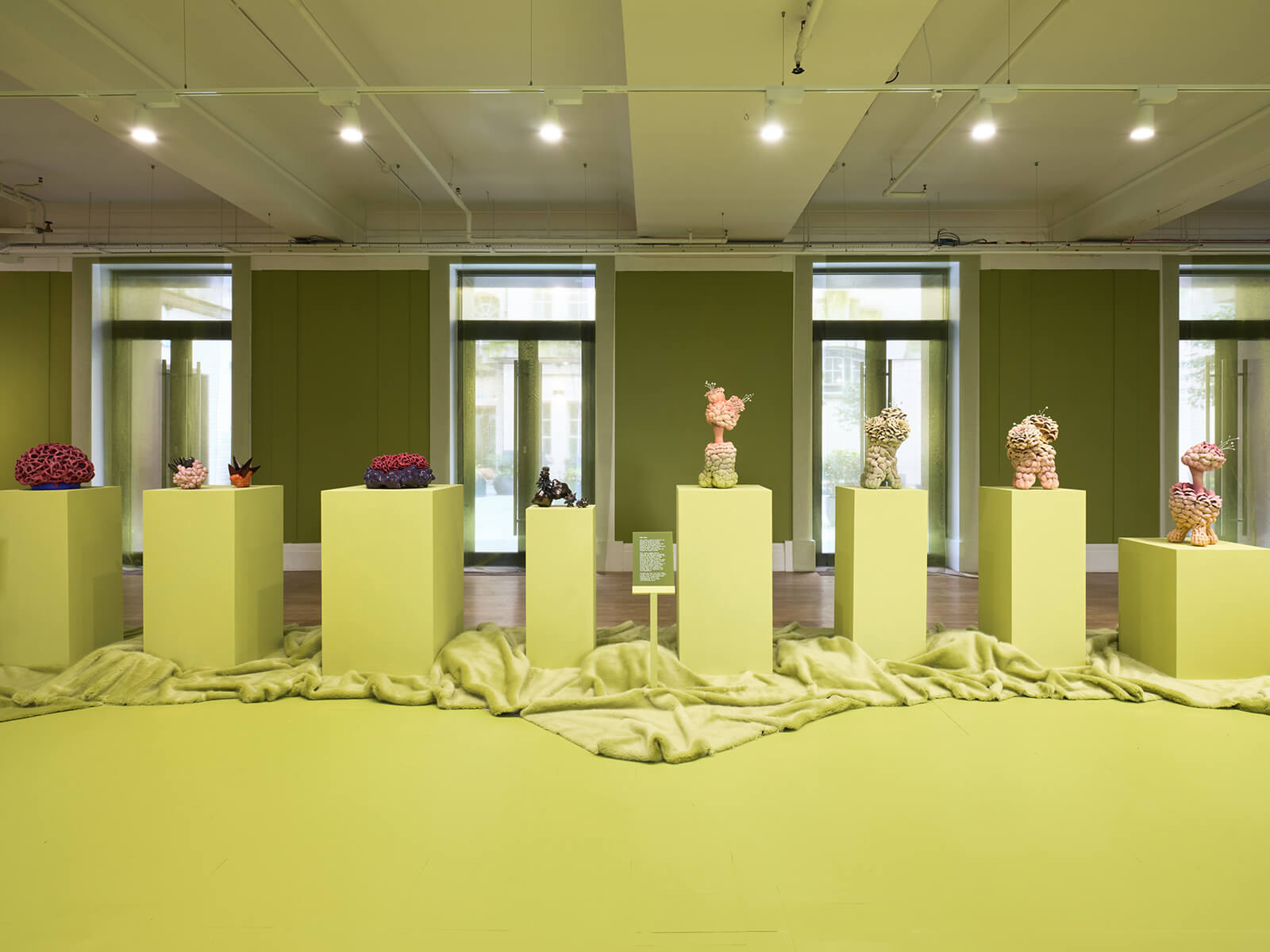
The line-up comprises London-based Korean designer Jihyun Kim, who is also the exhibition's co-curator; Canada-based ceramic artist Toni Losey; Israel-born and Netherlands-based Uriel Caspi; London-based Tessa Eastman; and Bangkok-based Eiair (Hassakorn Hirunsirichoke). Together, their works attempt to probe a set of interrelated questions: How might ceramics be made, understood or even behave under radically configured materials and environmental conditions? What happens to craft in a post-digital or post-human future? Across the show, these clay vessels emote: they dissolve into bodies, their surfaces behave like skins and materials mutate or resist permanence—perhaps pointing to a speculative future where ceramic is a quasi-living system being continuously shaped by transformed conditions.
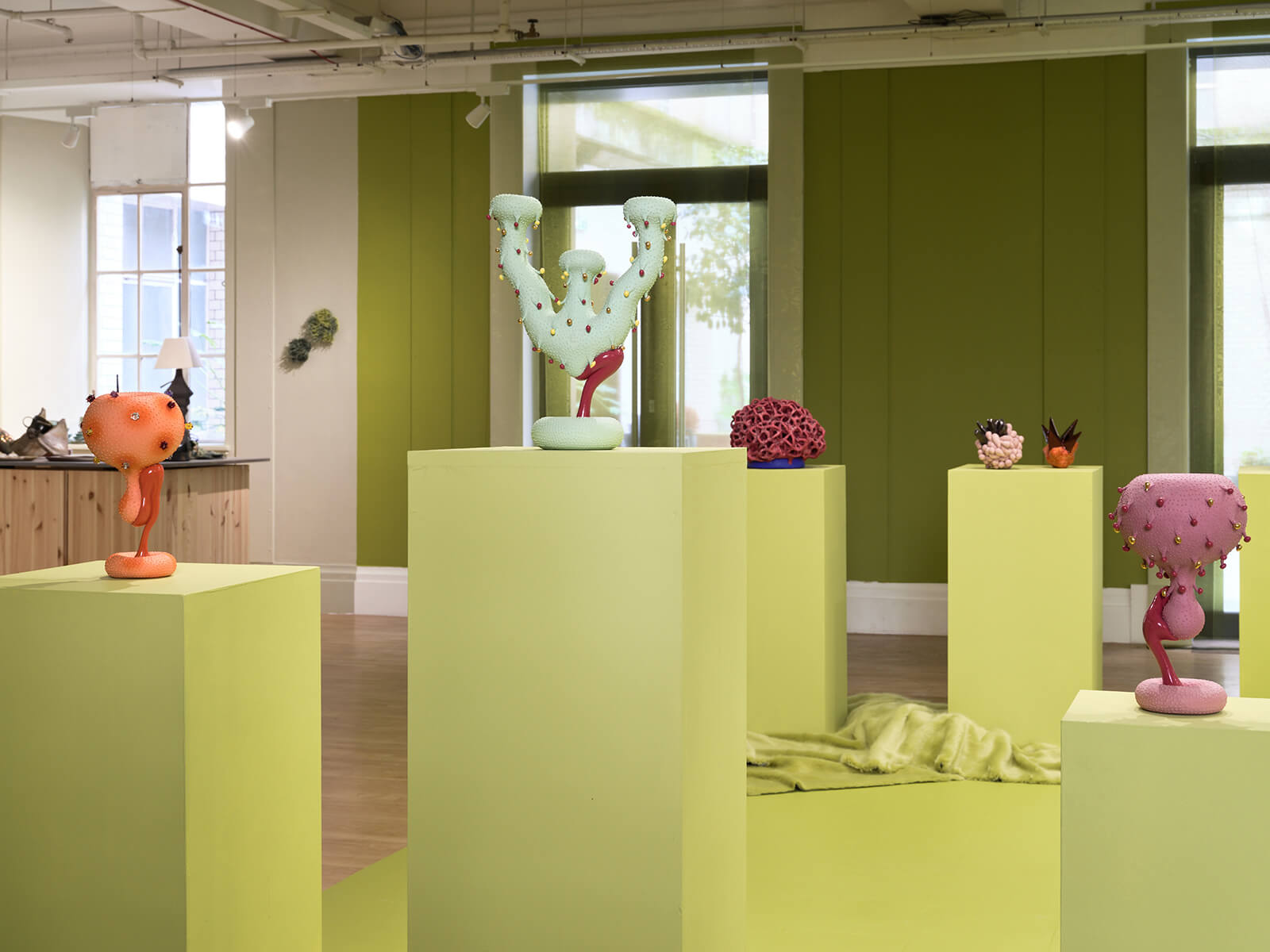
The presented ceramic designs are at once amusing and weirdly familiar, resembling organisms, materials and natural formations while either abandoning or building upon the traditions that have long informed the medium. These sculptural pieces act as active participants within imagined realities, inviting viewers to consider new methodologies and alternate readings of ceramics’ future.
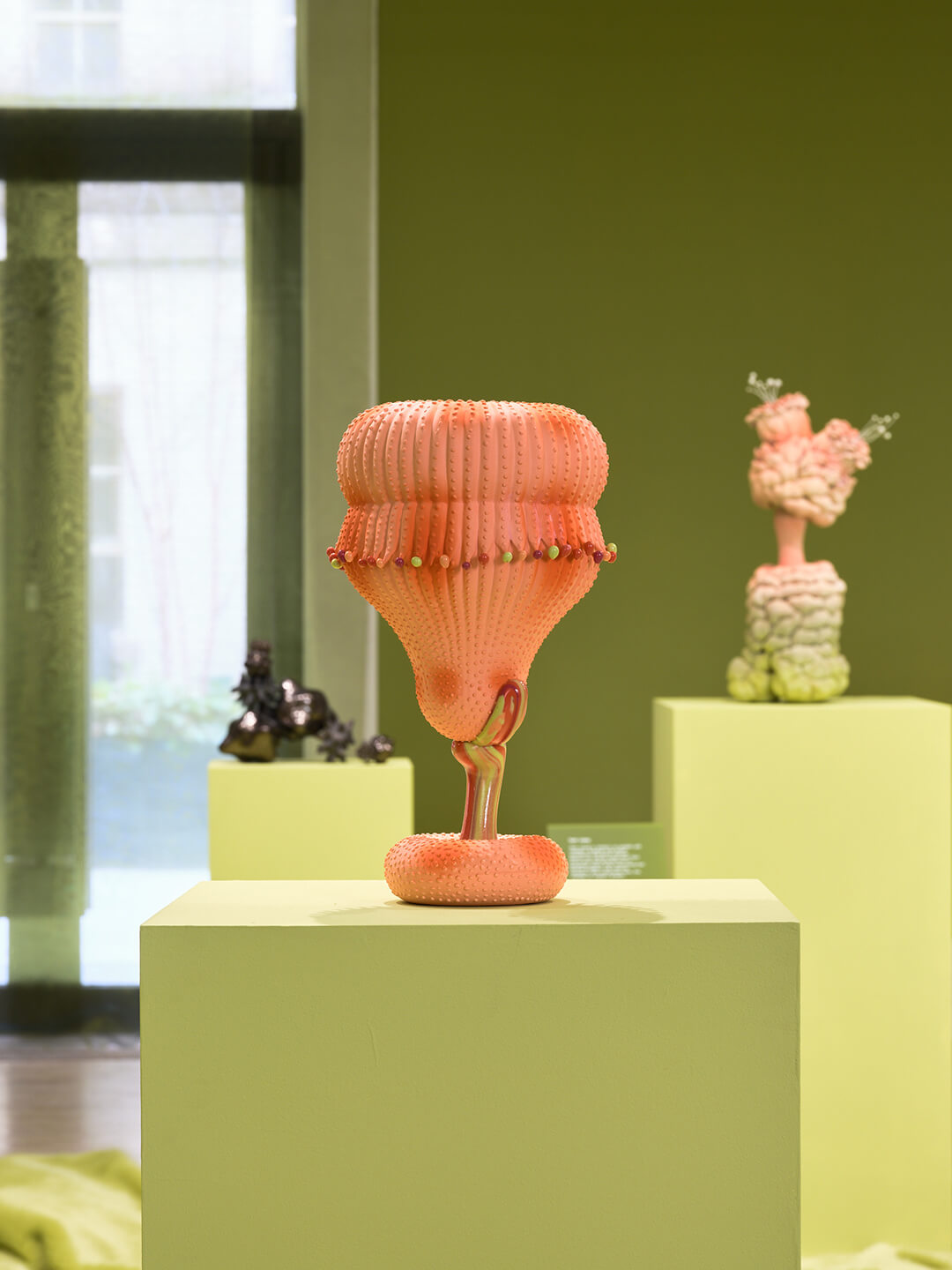
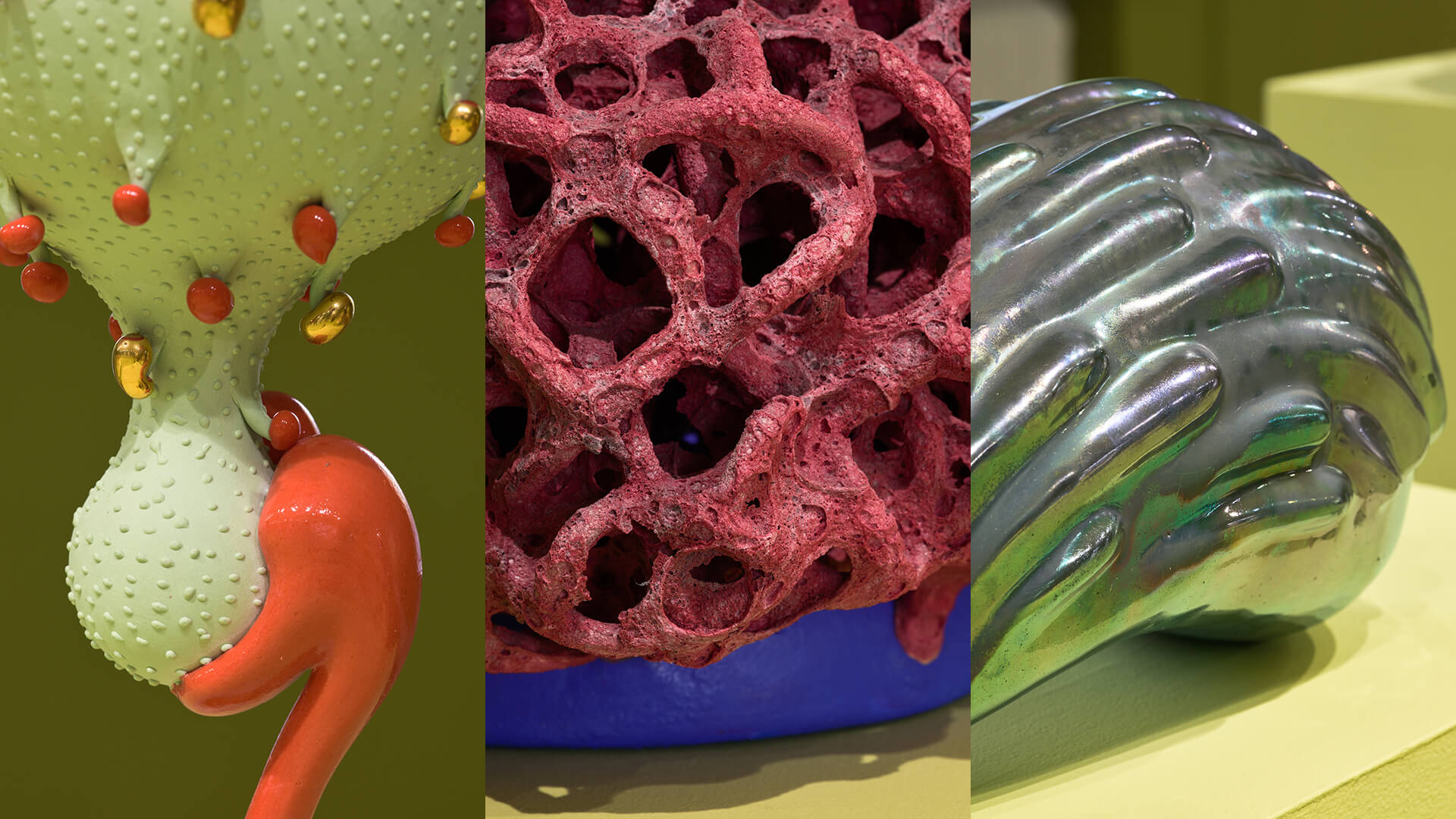
For instance, Kim’s work takes on organic, fungi-like forms, fusing her cultural heritage with nature’s mystical elements, encouraging viewers to ‘discover magic in the mundane.’ For Ceramic Odyssey 2126, she presents porcelain pieces from the Salty Fairy series, rendered in striking colours that heighten the absurdity of the forms and details. Central to her practise is the unpredictability of gloop glaze, wherein she uses it as a material, a co-author, rather than just a surface coating to evoke a unique, otherworldly visual identity.
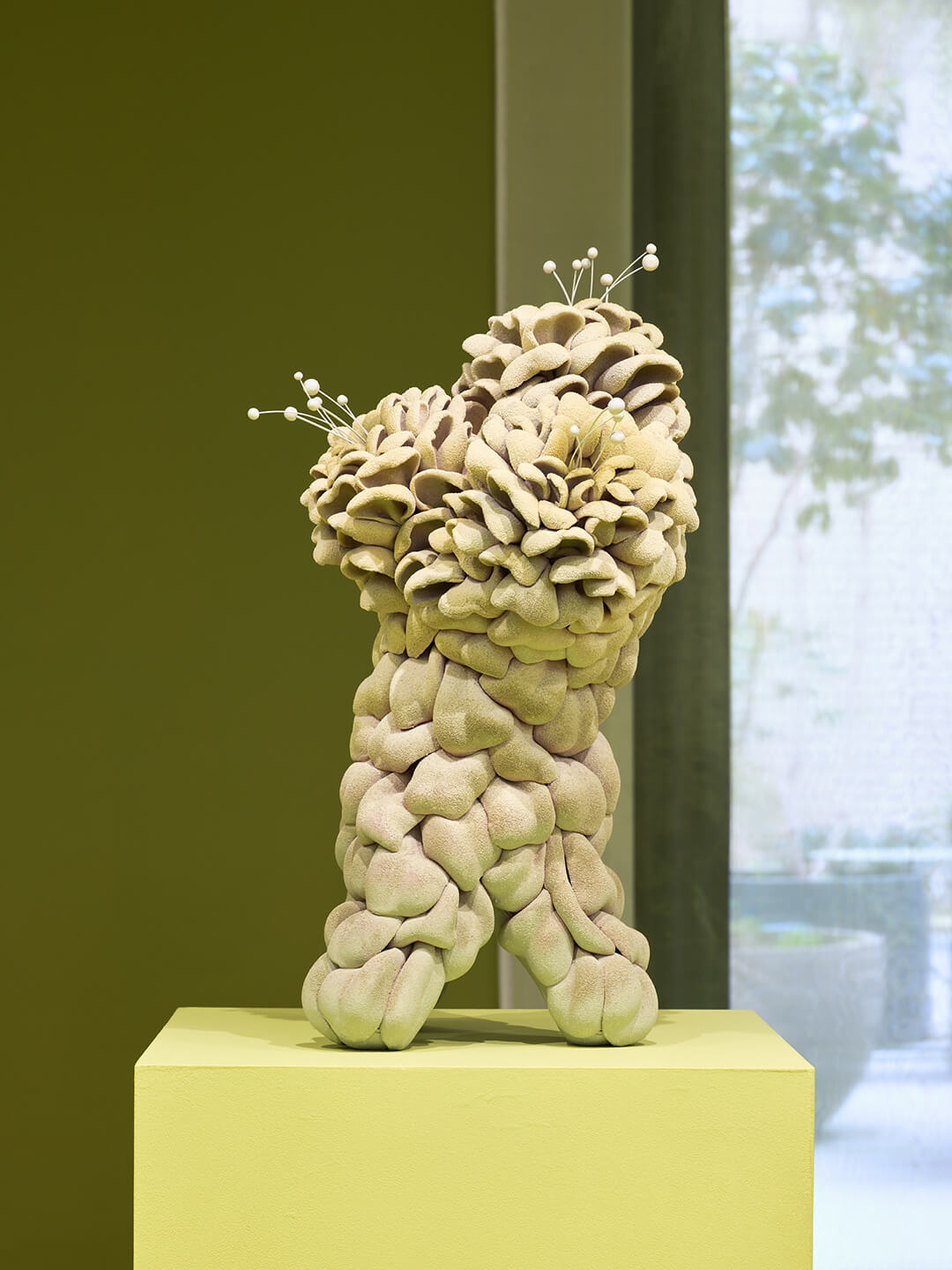
Canadian artist Losey interprets natural cycles of growth, decay and renewal, channelling life and loss in forms. For the exhibition, she presents Sunspore, Astrobloom, Lumenleaf and Floranova (all made in 2026), inspired by plants and other natural structures. Highly textured and saturated finishes offer visual depth to the assemblages, where a sense of material harmony is achieved through conceptual instability, hinting at a new kind of permanence for a medium seen as ‘fixed’. Her sculptures are assemblages of wheel-thrown and handmade components that represent ‘complex and interdependent natural systems.’
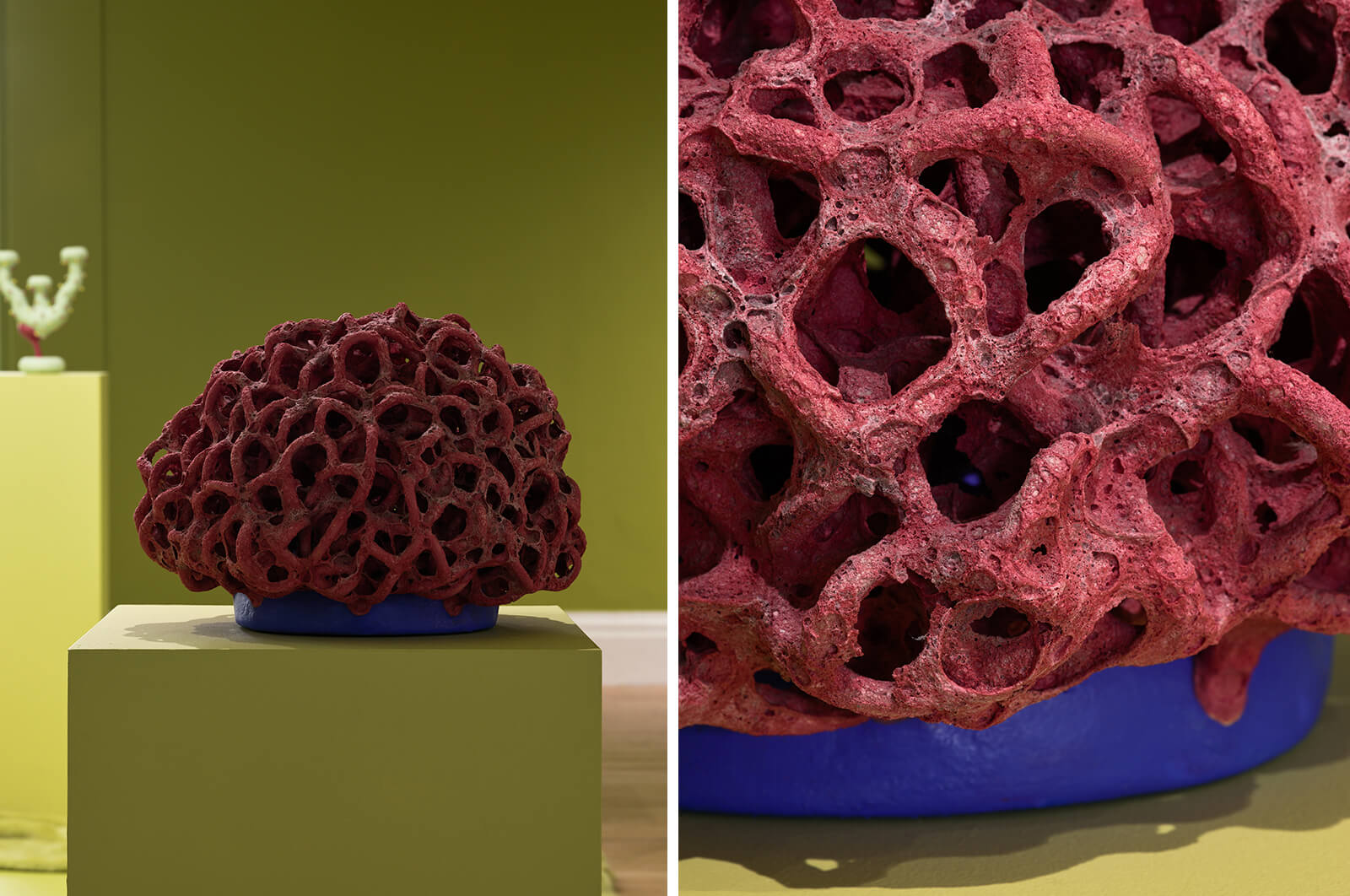
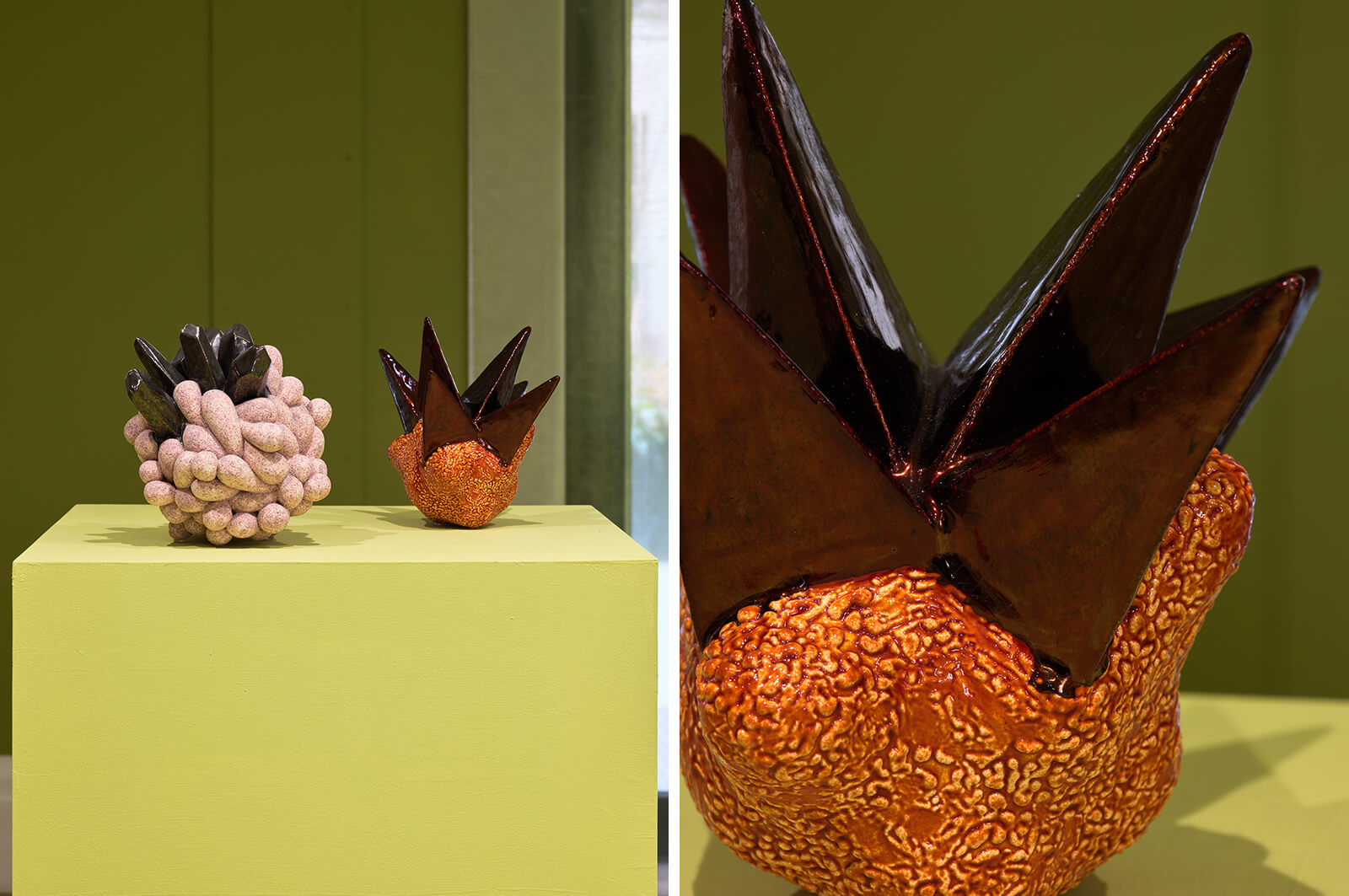
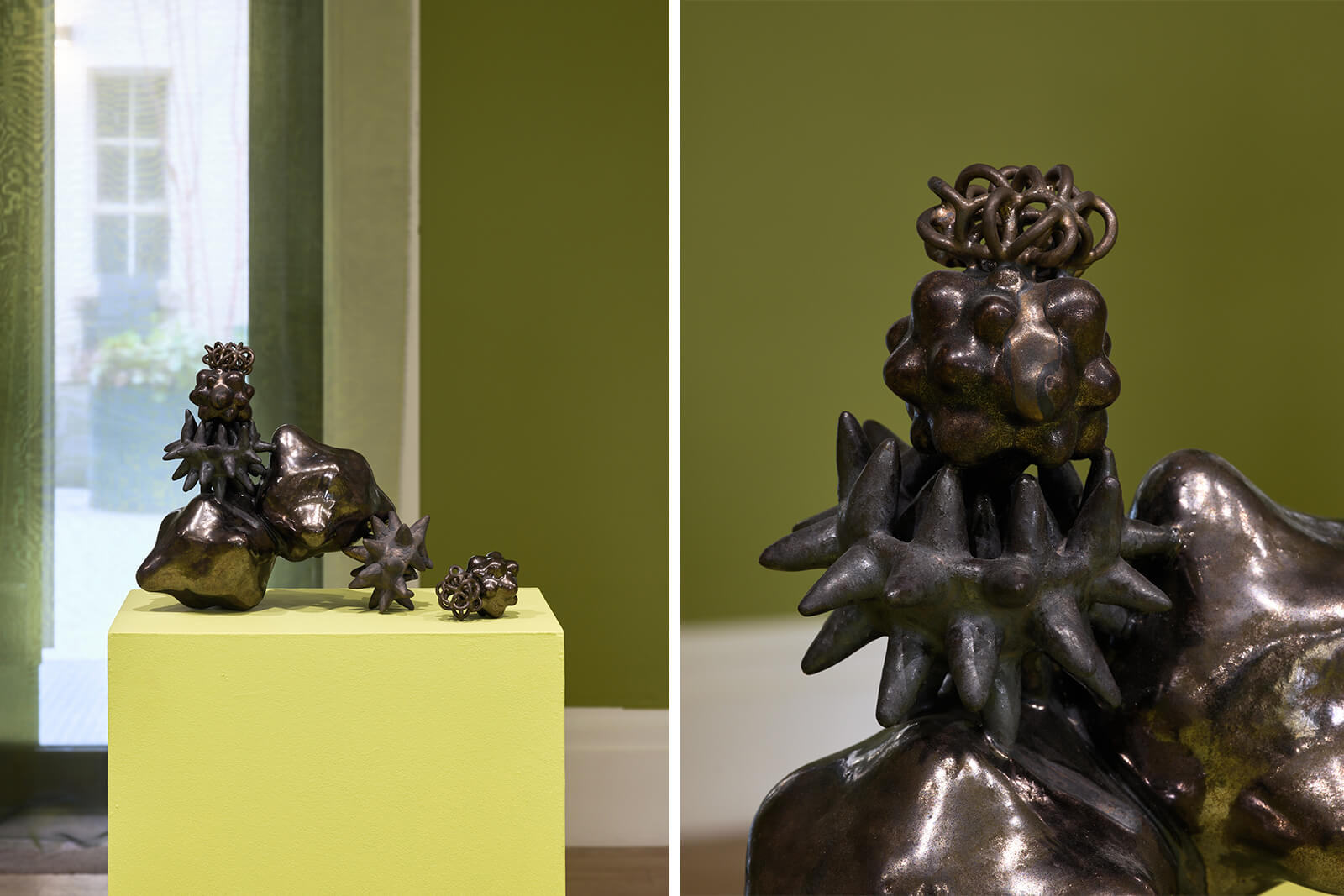
For Eastman, sculpture is a means of forming dialogues, creating a contrasting atmosphere of congruence and conflict. Order and irregularity often coexist in her pieces, evoking contradictions and a sense of emotional impermanence. What does this tension mean in the context of speculative ceramics? “I juxtapose voluminous cloud-shapes that explore the theme of space as they push out with harsh mesh structures, revealing the internal. This tension between internal and external relates to receptacles, with the positive and the negative space equally valued, and also to the body, where the void permits life,” states Eastman in the show’s official release. These sensibilities translate into forms that are evocative of bones, clouds, crystals and microscopic structures in the works on display.
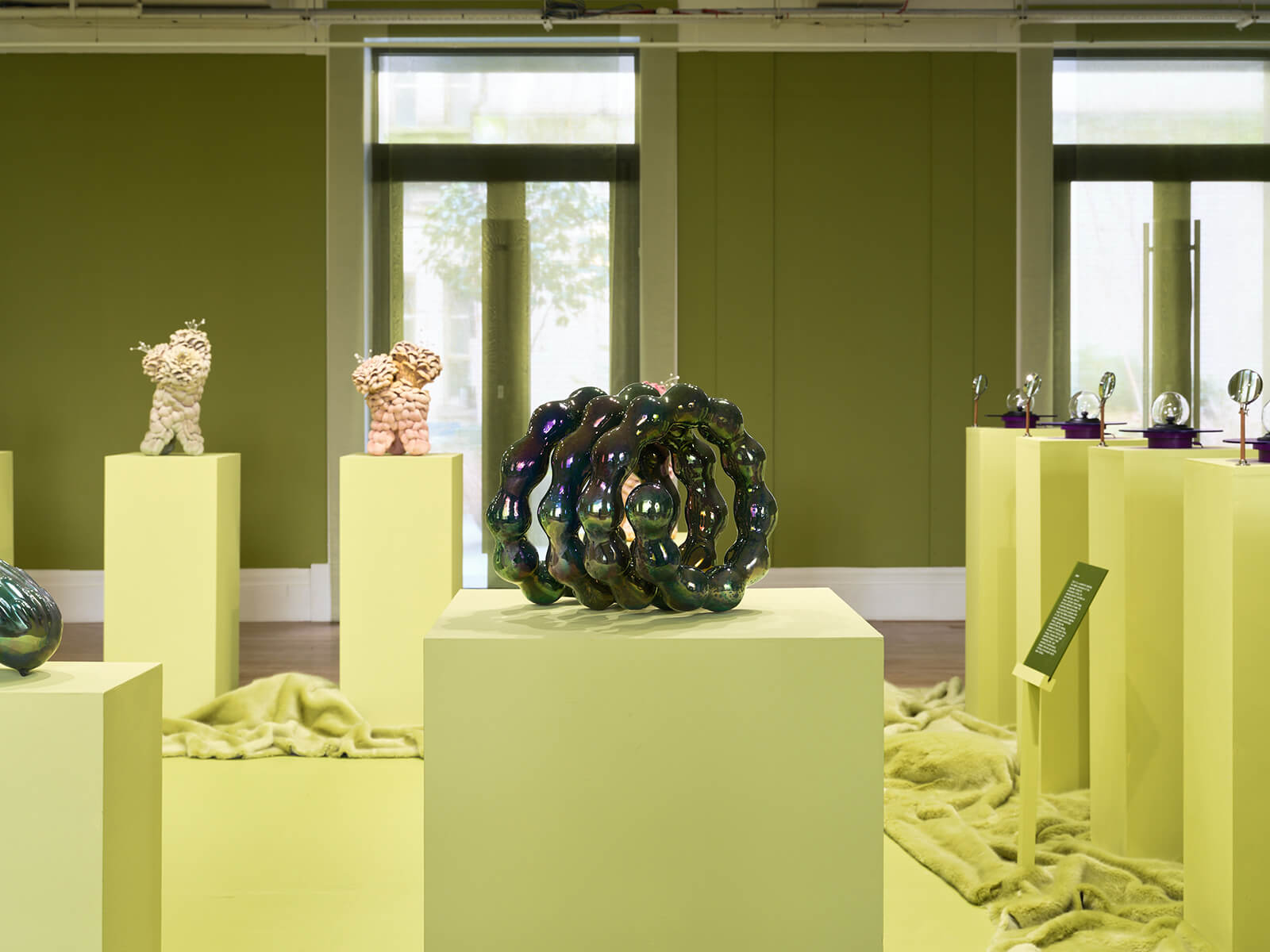
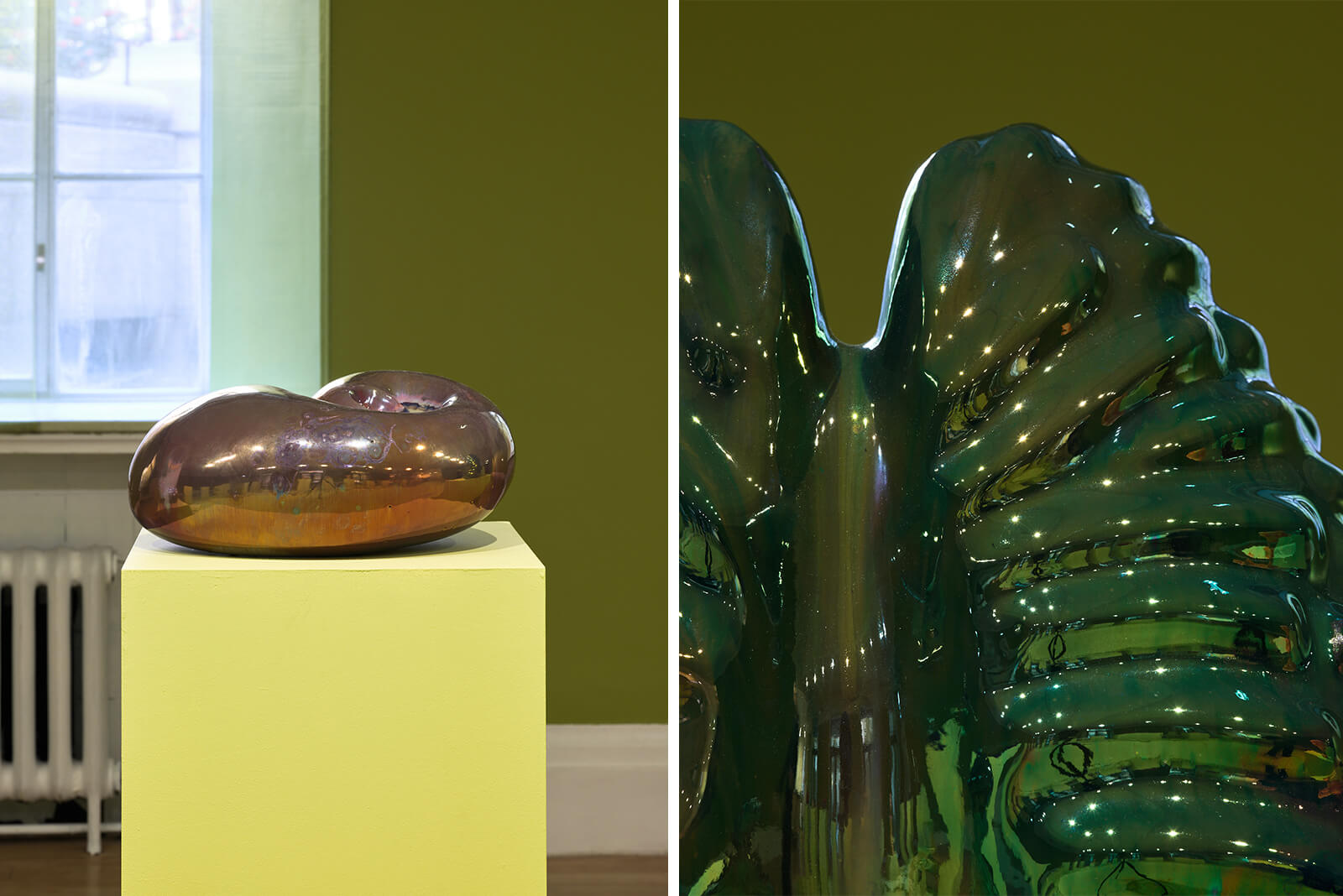
On the other hand, Caspi reinterprets antique relics, artefacts and speculative species to create contemporary art pieces with multicultural references. “My investigations in clay allow me to manipulate traditional forms into ‘embodied objects’ and to extrapolate the genetics of the human corpus into abstract forms, where nature and technology become indistinguishable,” states Caspi in an official release.
In his practise, he also preserves rarely seen skills and techniques—such as alternative clay modelling and glazing —by combining them with digital fabrication. Some of his presented works belong to the Corpus Archetypus (2025 – 26) series, rethinking anatomical organs of the ‘posthuman’ to explore morphological relationships between the human body and ceramic vessel. Here, nature and technology are almost indistinguishable from one another in their final, abstract forms. Interestingly, Caspi employs Arabian lustre glaze formulated with precious metals for his sculptural designs, resulting in an iridescent, reflective surface after firing.
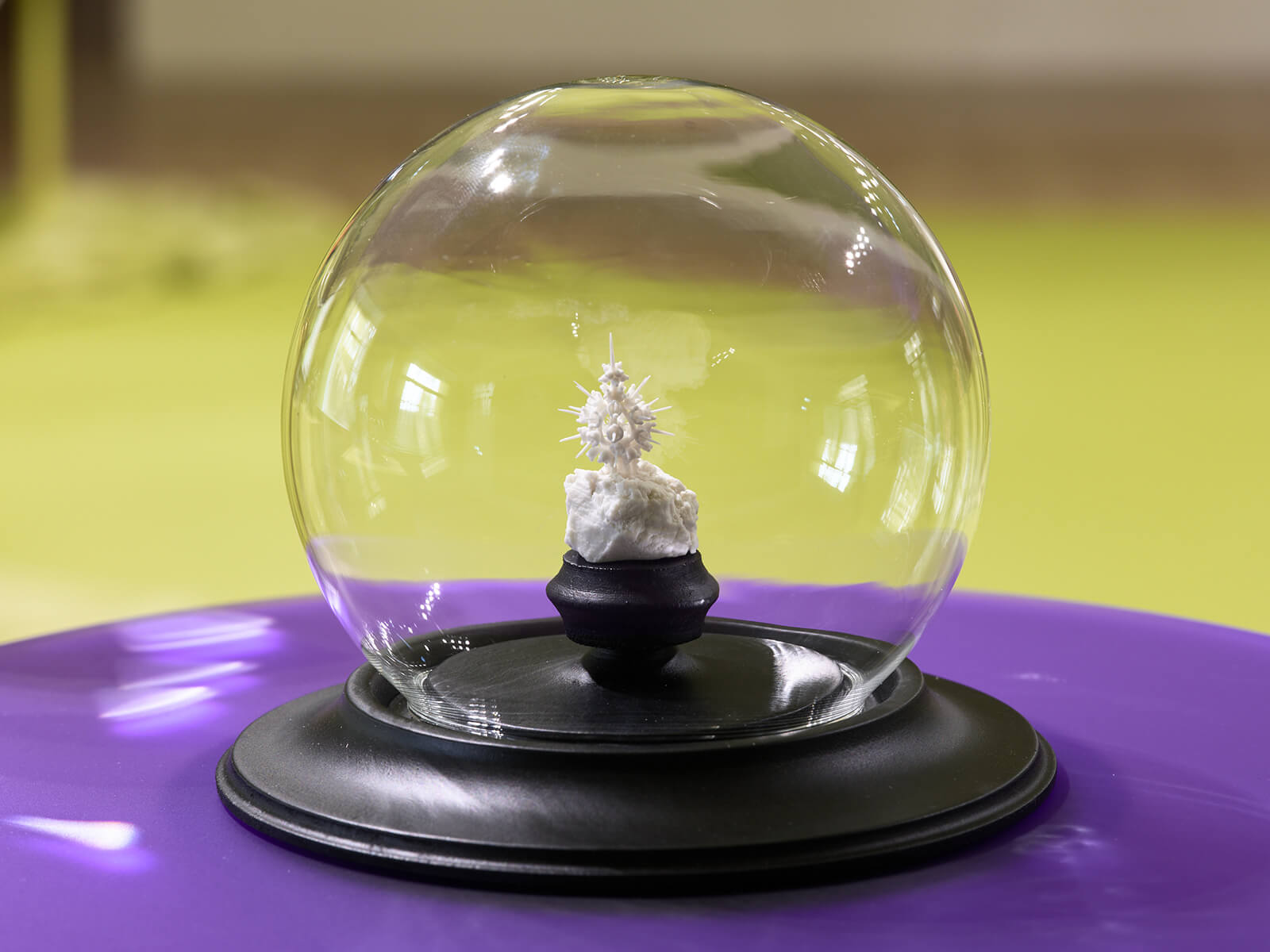
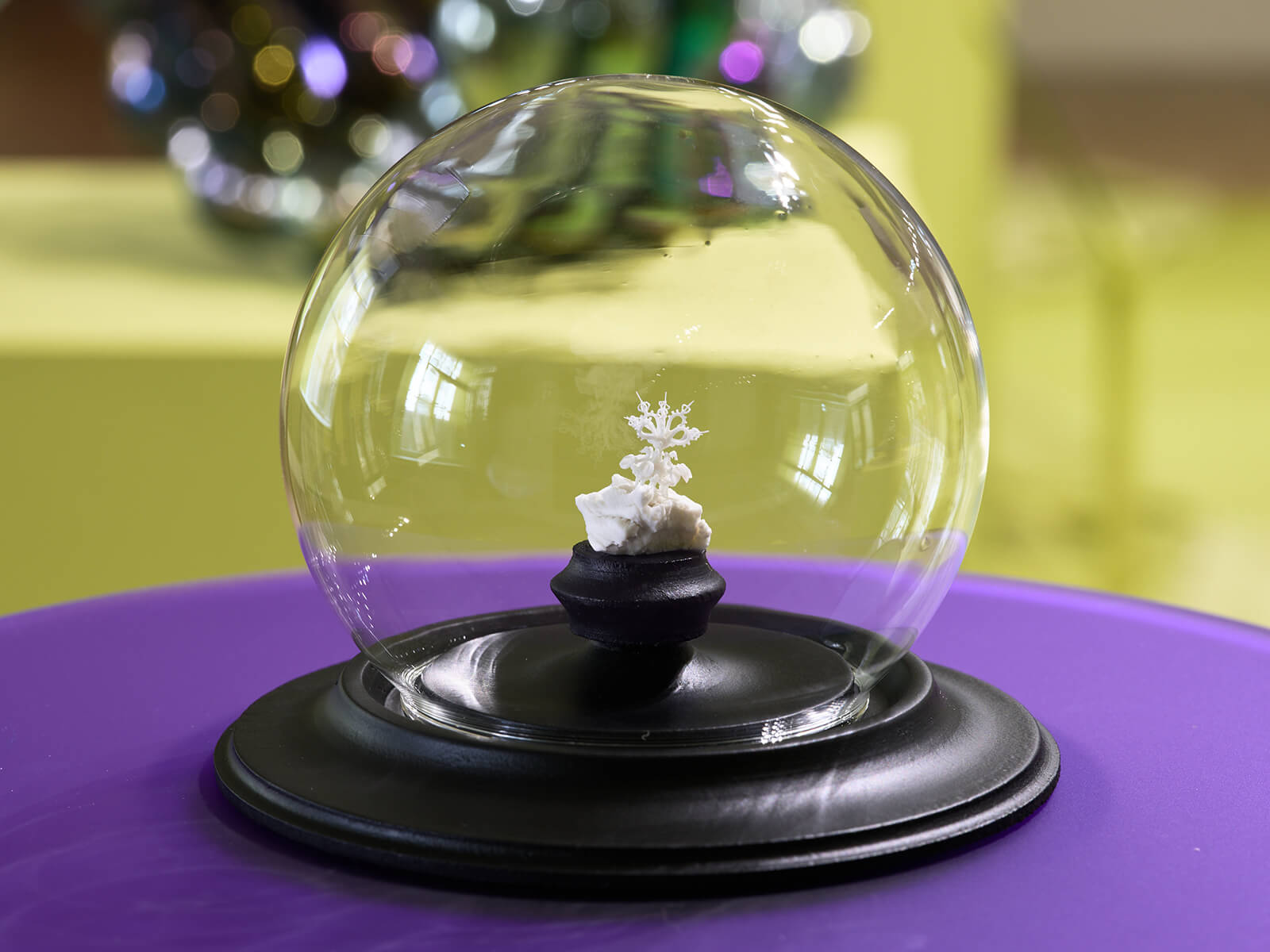
Eiair presents intricate, creature-like forms assembled carefully from numerous tiny elements, expressing the ecological precarity found in nature. “When the nature beings find it hard to live among us, I speak out for them through their aesthetic that inspires me. Hopefully, they are then valued,” the artist conveys in an official release. On view is the miniature Little Rascals series, which visitors can examine through mounted magnifying glasses.
Across the show, almost all these ceramic artists perceive and approach natural phenomena with a certain otherworldliness, locating a disruptive potential in repetitive growth patterns, microscopic details and unstable material formations. Via porous surfaces, organism-like silhouettes, as well as synthetic colour palettes, these ceramic works appear to almost mutate beyond their familiar forms, or even how they are conventionally approached. Just as found fragments of ancient pottery allow us to reconstruct stories of lost civilisations, the works articulating Ceramic Odyssey 2126 might one day be read as artefacts of a future yet to unfold. Are these objects evidence? Warnings? Or prototypes?
‘Ceramic Odyssey 2126’ is on view from March 17 – May 3, 2026, at County Hall Pottery, Belvedere Road, London SE1 7GP.

by Pranjal Maheshwari Oct 23, 2026
Co-authored by Jareh Das, Chairman traces the British designer’s fixation on chairs as symbols of power and identity and as mediums of expression and community building.
by Mirra Lynn Oct 22, 2026
The curators behind Palestine Design Week 2026 reflect on its intent, considering how design holds memory, makes space for loss and imagines a future in Palestine.
by Chahna Tank Oct 22, 2026
STIR speaks with the Mumbai-based type designer about her practice, type walks and why she wants more people to have stronger opinions about Indian-script fonts.
by Jincy Iype Oct 15, 2026
STIR explores craft, material intelligence and people shaping Indian design through dialogues with Design Democracy’s co-founders and the curators of its special exhibitions.

make your fridays matter with a well-read weekend
Enter your details to sign in
Don’t have an account?
Sign upOr you can sign in with
a single account for all
STIR platforms
All your bookmarks will be available across all your devices.
Stay STIRred
Already have an account?
Sign inOr you can sign up with
Verification link sent to check your inbox or spam folder to complete sign up process
Tap on things that interests you.
Select the Conversation Category you would like to watch
Please enter your details and click submit.
Enter the 6-digit code sent at


Ceramic Odyssey 2126 at County Hall Pottery in London considers speculative ceramics
by Bansari Paghdar | Published on : May 02, 2026


 Sign in with Google
 Sign in with email
What do you think?