Design09 mins. read
London Design Festival 2026 rethinks tradition as an enduring design resource
by Pranjal MaheshwariSep 07, 2026



by Bansari PaghdarPublished on : May 19, 2026
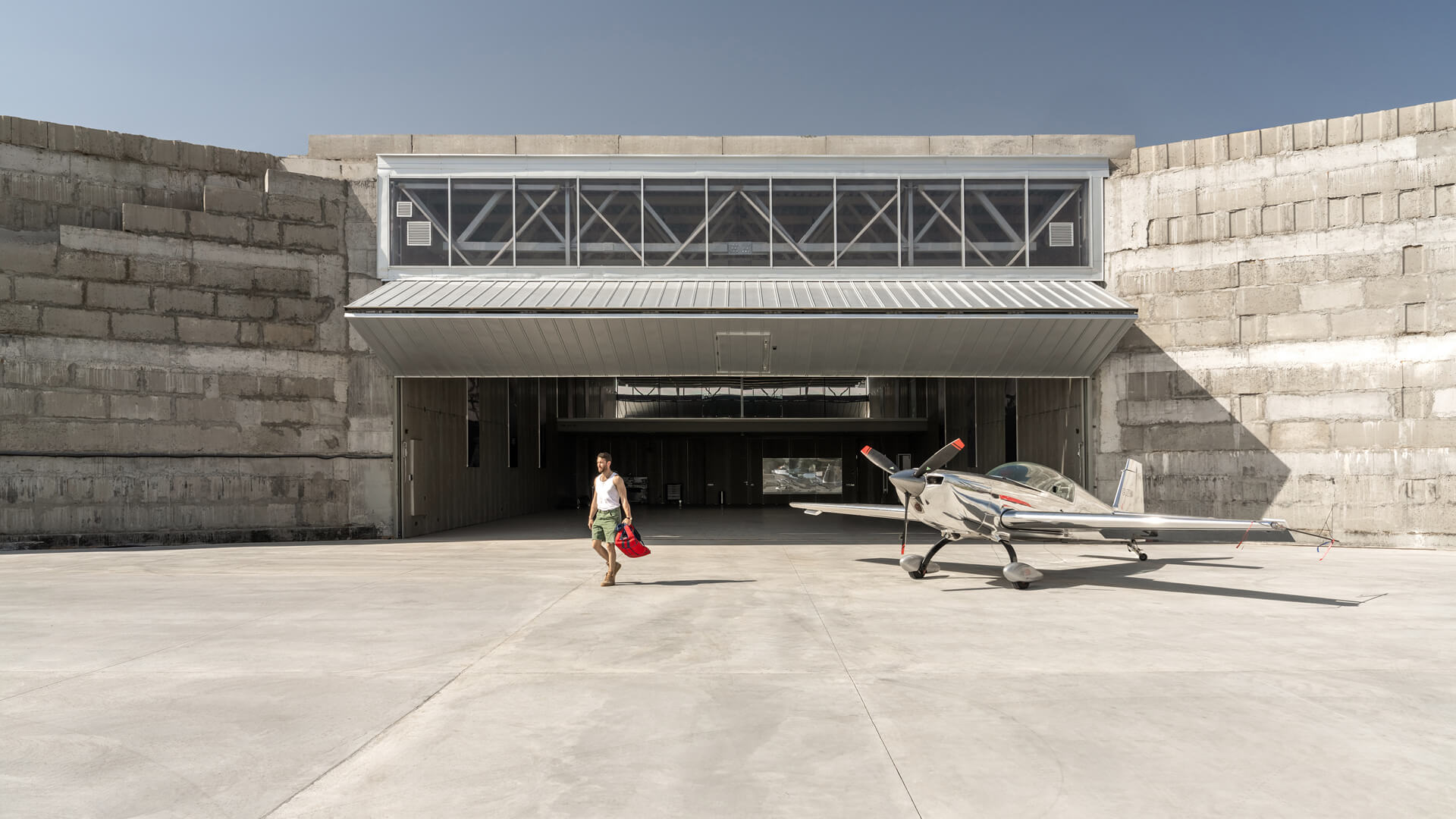
AEROTIM, a unique, aviation-centric Ukrainian collective led by pilot Timur Fatkullin, comprises professionals specialised in aerobatics, freestyle motocross and skydiving. Aiming to advance aviation and cinematography through flight, the crew often participates in air shows, international competitions and performs and films aerial stunts. With the brief for a space for the maintenance of their aircraft and a meeting point, the crew approached Dan Vakhrameyev, co-founder and creative director of +kouple. The design practice, largely known for its product designs, was established in 2014 in Kyiv, Ukraine, by Dan and his wife, Kateryna Vakhrameyeva.
AEROTIM Hangar is a project that is unique and almost singular in typology. Despite centring on operability, the project appears materially, visually and functionally balanced. Featuring a 400 sq m footprint, the hangar reserves 94 sq m mezzanine for the crew station, while the rest is used for maintenance and storage. “The overall design language remains deliberately restrained, relying on exposed surfaces, honest materials and precise detailing to create a mature, disciplined environment suited to pre- and post-flight routines,” Vakhrameyev states in the release.
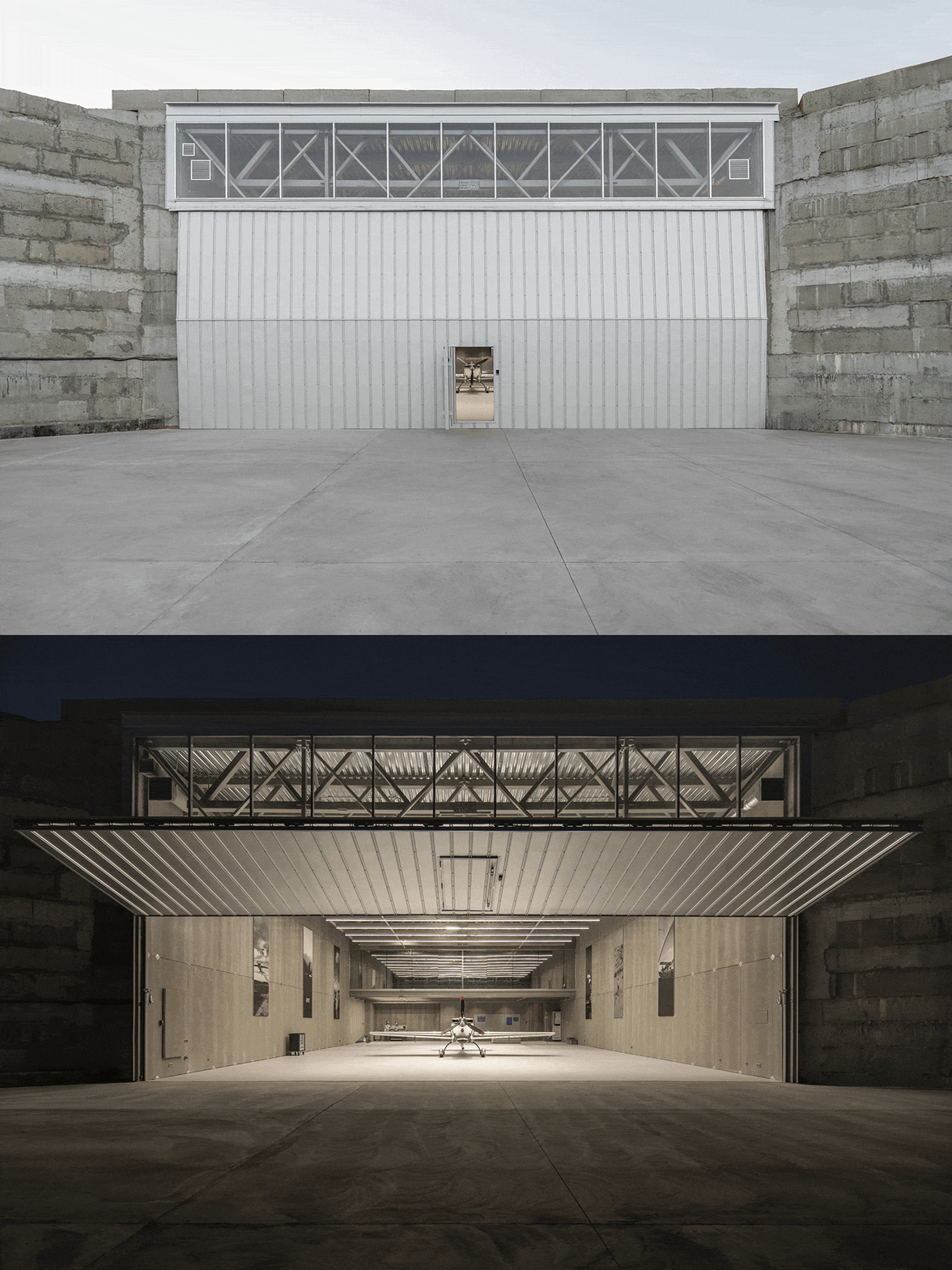
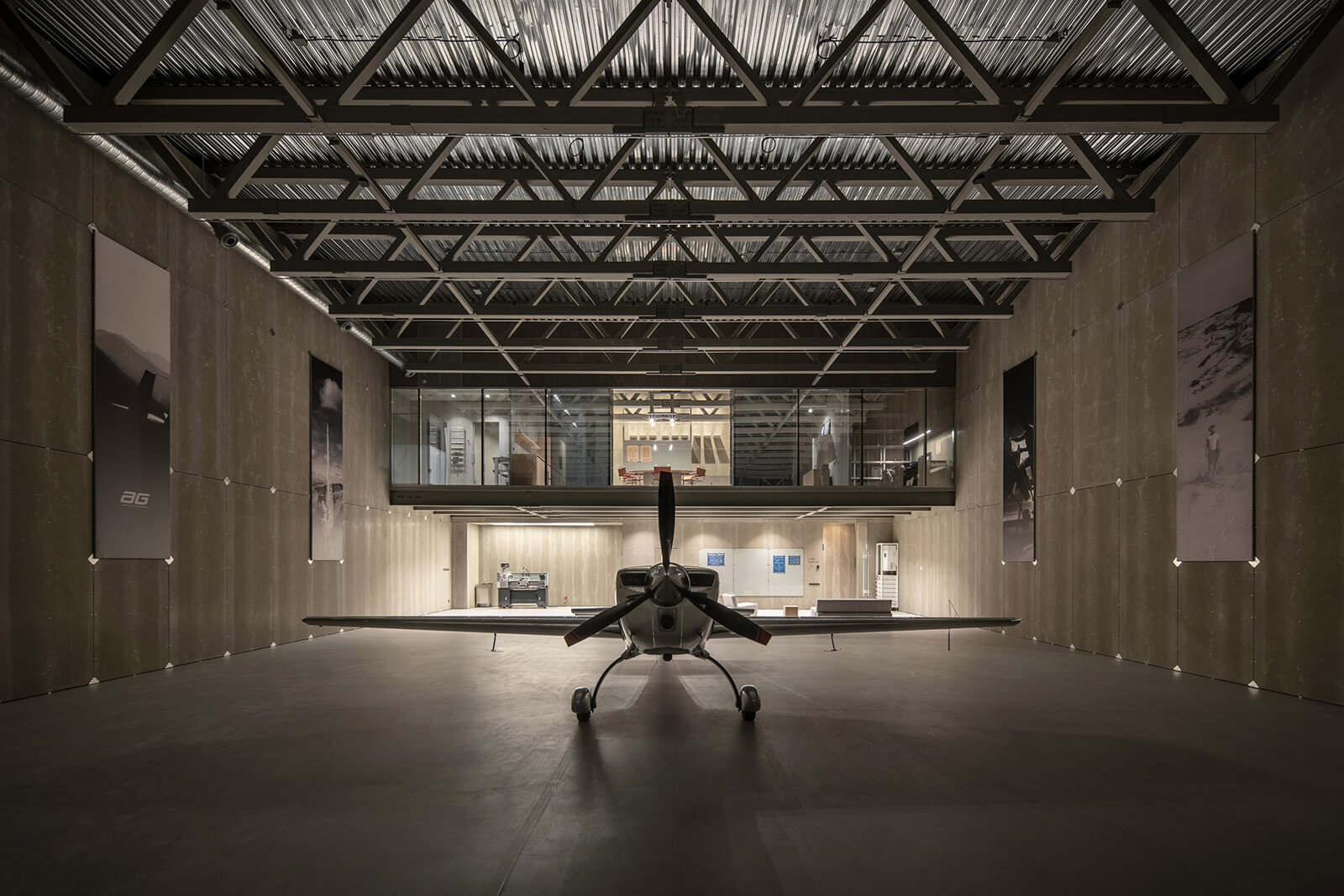
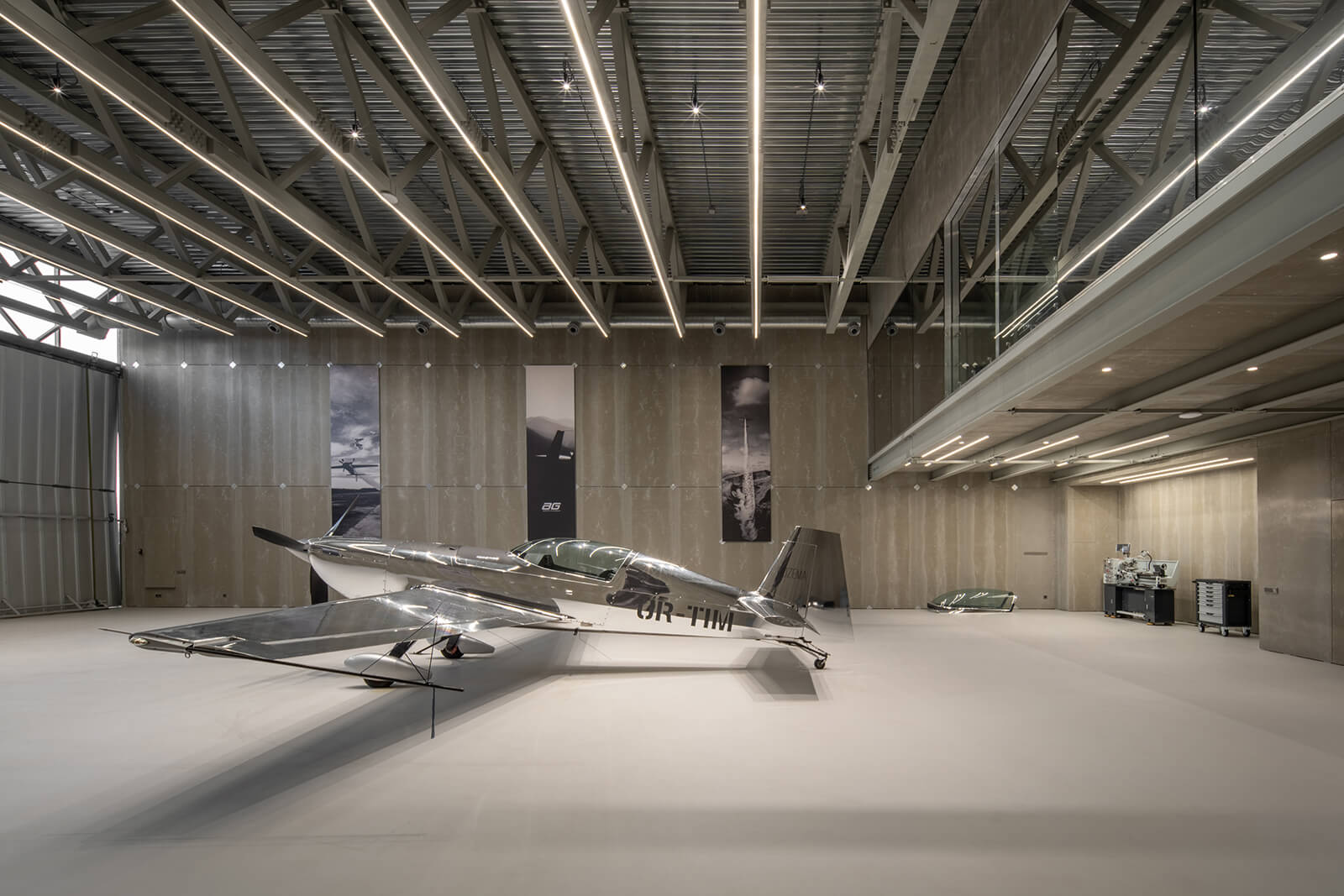
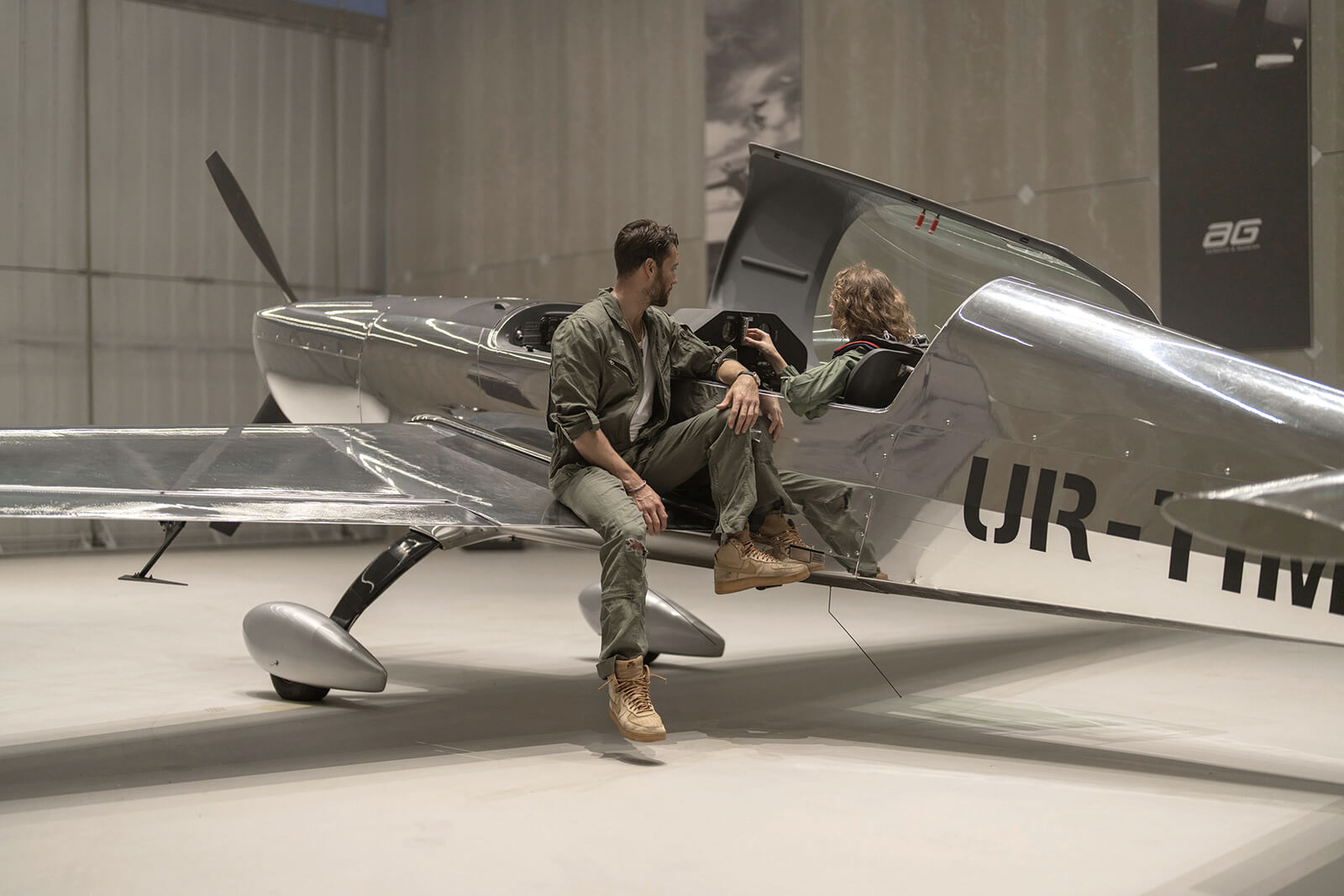
The frontal facade of the hangar is defined by an expansive gate clad in raw zinc sheets leading to the contiguous, multi-level primary space which houses the aircraft. The gate opens vertically instead of sideways, revealing the hall as a semi-covered space while allowing ease of access and movement. When closed, the polycarbonate installed atop the gate allows natural light to illuminate the spaces inside. The primary space itself features a fully exposed structure with steel trusses, corrugated metal roofing and technical air-duct and engineering systems. According to the designer, the project’s material sensibilities, beyond exhibiting an industrial character, translate the spirit and culture of aviation. “It corresponds to the foundation of team spirit and aviation culture in general—concentration, emotional balance before operations and discipline. This is a space for relaxation before and after flights, task briefings and collective discussions; therefore, the design language was intentionally kept calm and non-intrusive,” Vakhrameyev tells STIR.
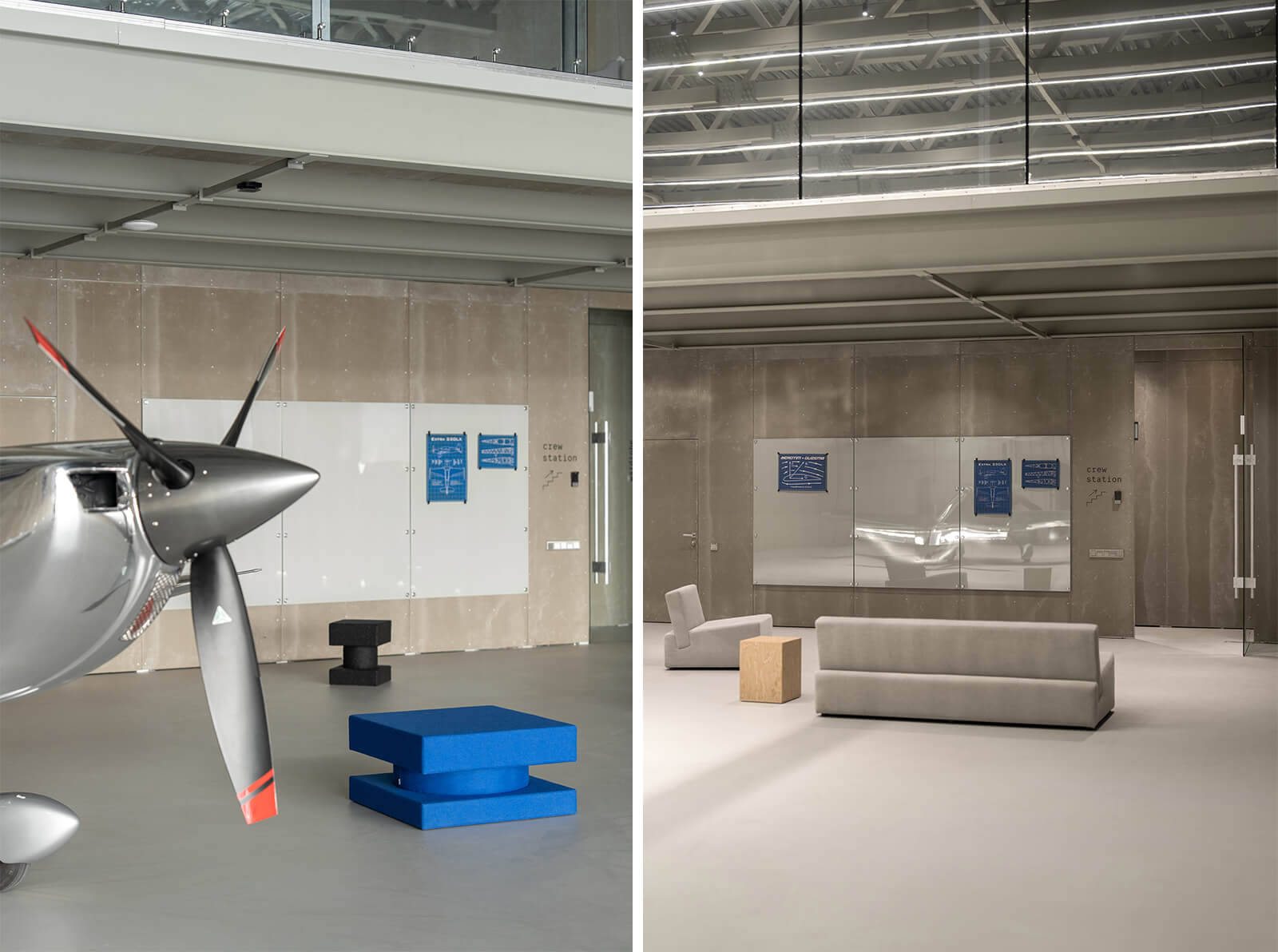
Large-format Cement Bonded Particle Boards (CBPBs) are used for walls, providing a highly durable surface and allowing ease of repairs and replacements. The panels are mounted with visible joints, reflecting the aircraft fuselage's rivet-fastening technique, reinforcing the industrial and aviation-inspired design language. Doors, worktables and shelves within the spaces are also crafted from the same panels to allow a cohesive, materially responsive design. The walls additionally feature banners installed through cut-in recesses with concealed backlighting to achieve a soft, visually pleasing illumination. These banners are adorned with images celebrating the crew’s achievements and aspirations, serving as a visible reminder of their teamwork and respective individualities.
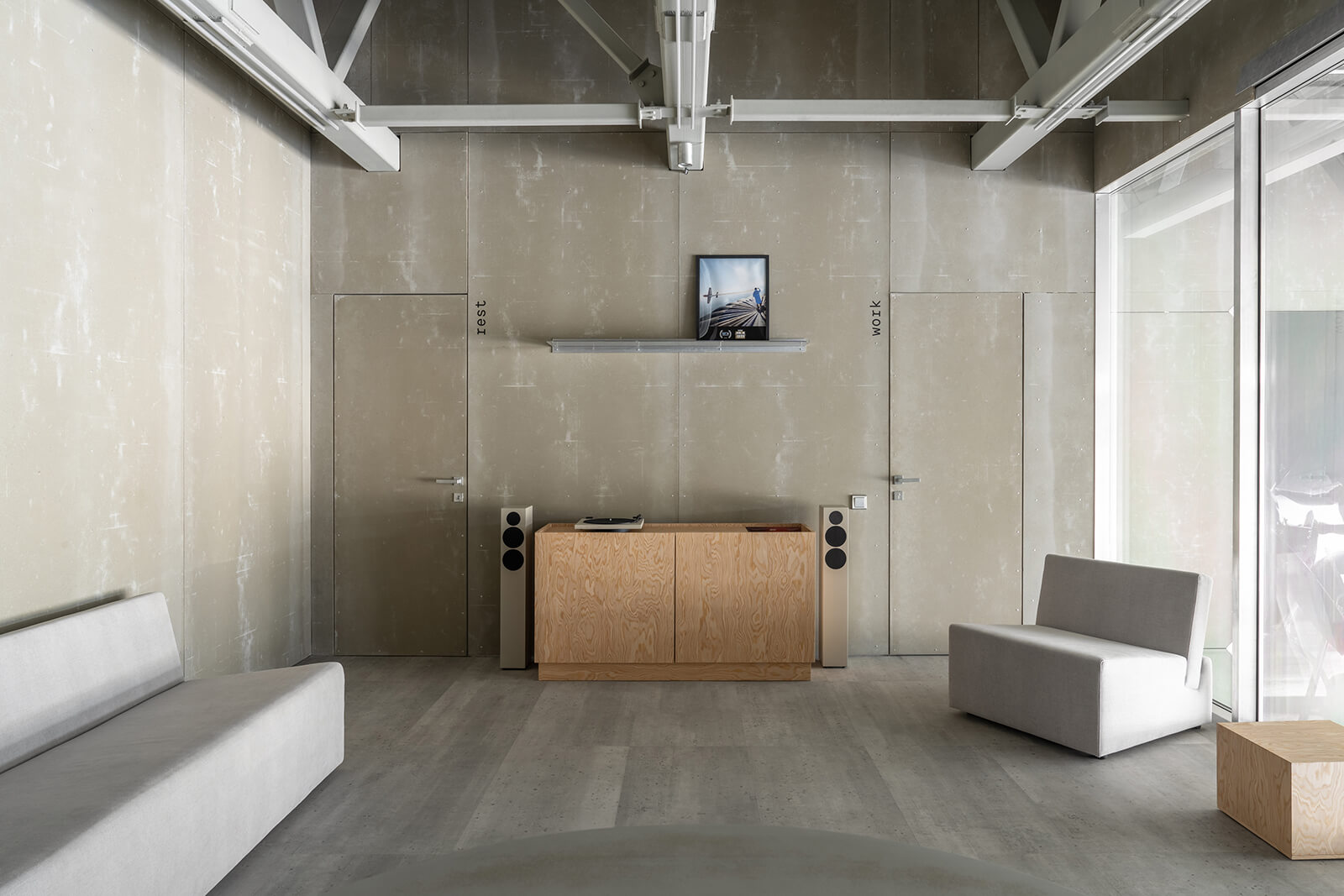
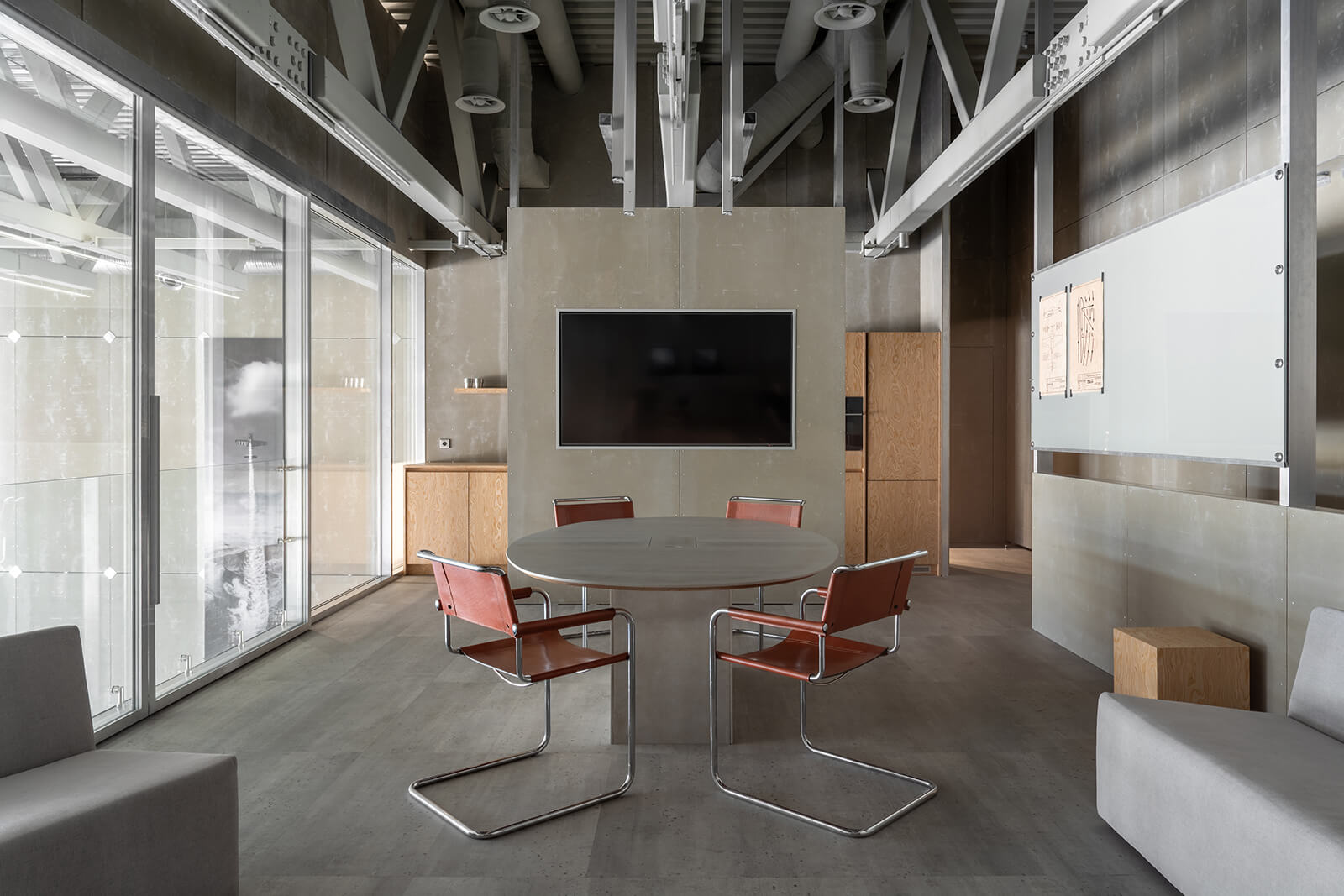
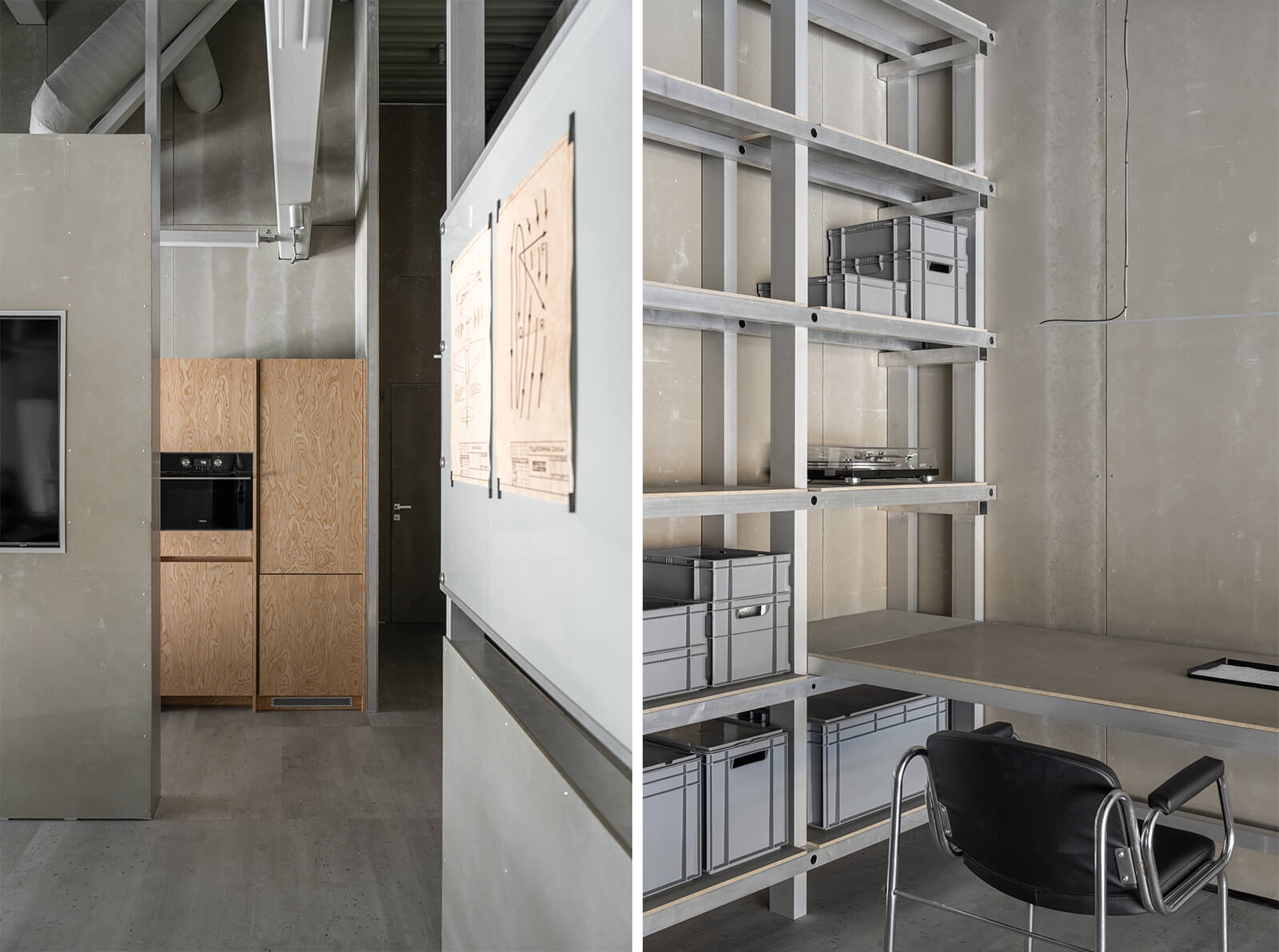
The crew station on the upper floor is a personal space for the crew, featuring a frameless glass wall for uninterrupted views of the hall and the landscape beyond. An observation point is further suspended above this operational core for spatial clarity and situational awareness, which the practice describes as core values of the aviation culture. While the hall features seamless polymer flooring, a durable vinyl surface is used for the crew station for ease of maintenance.
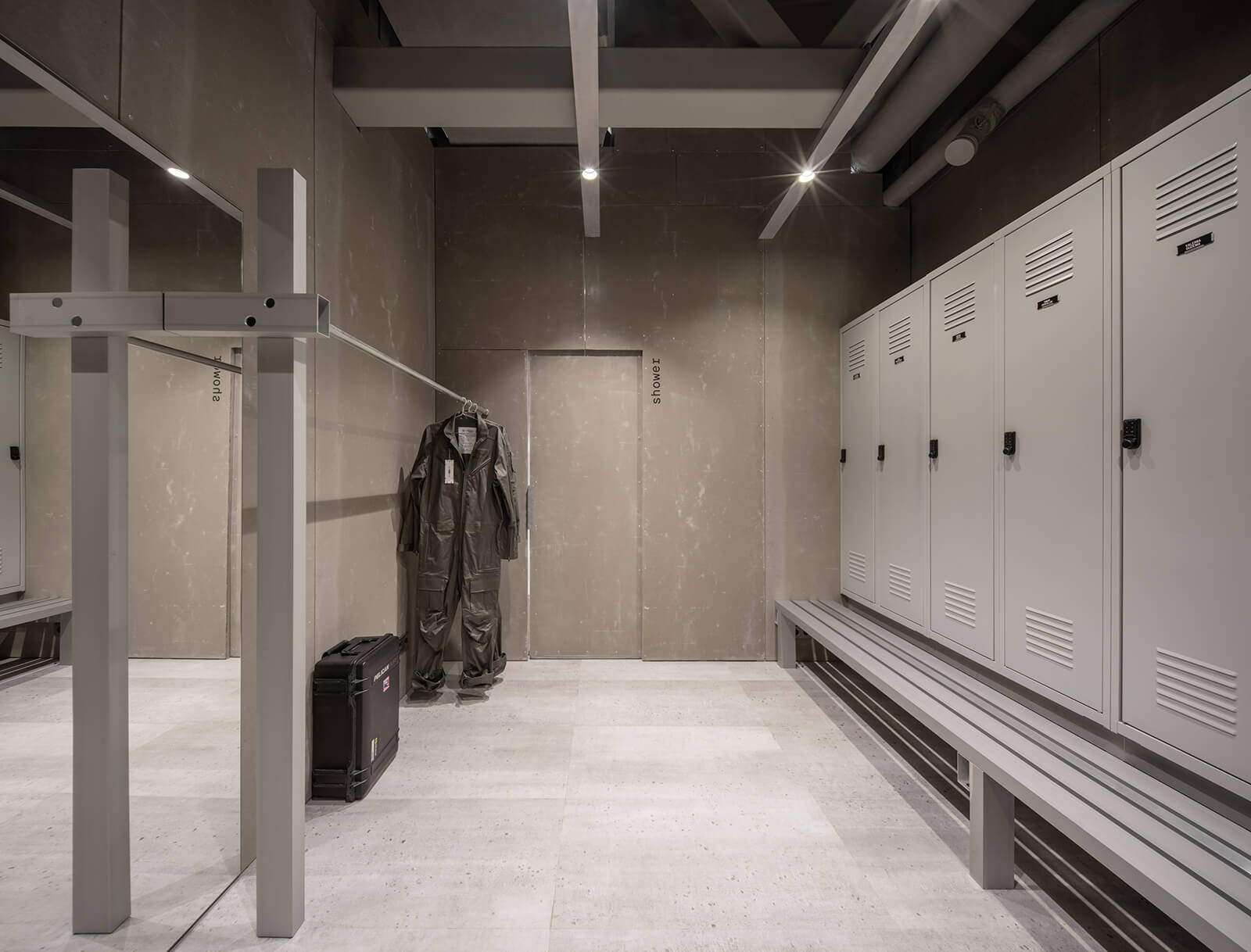
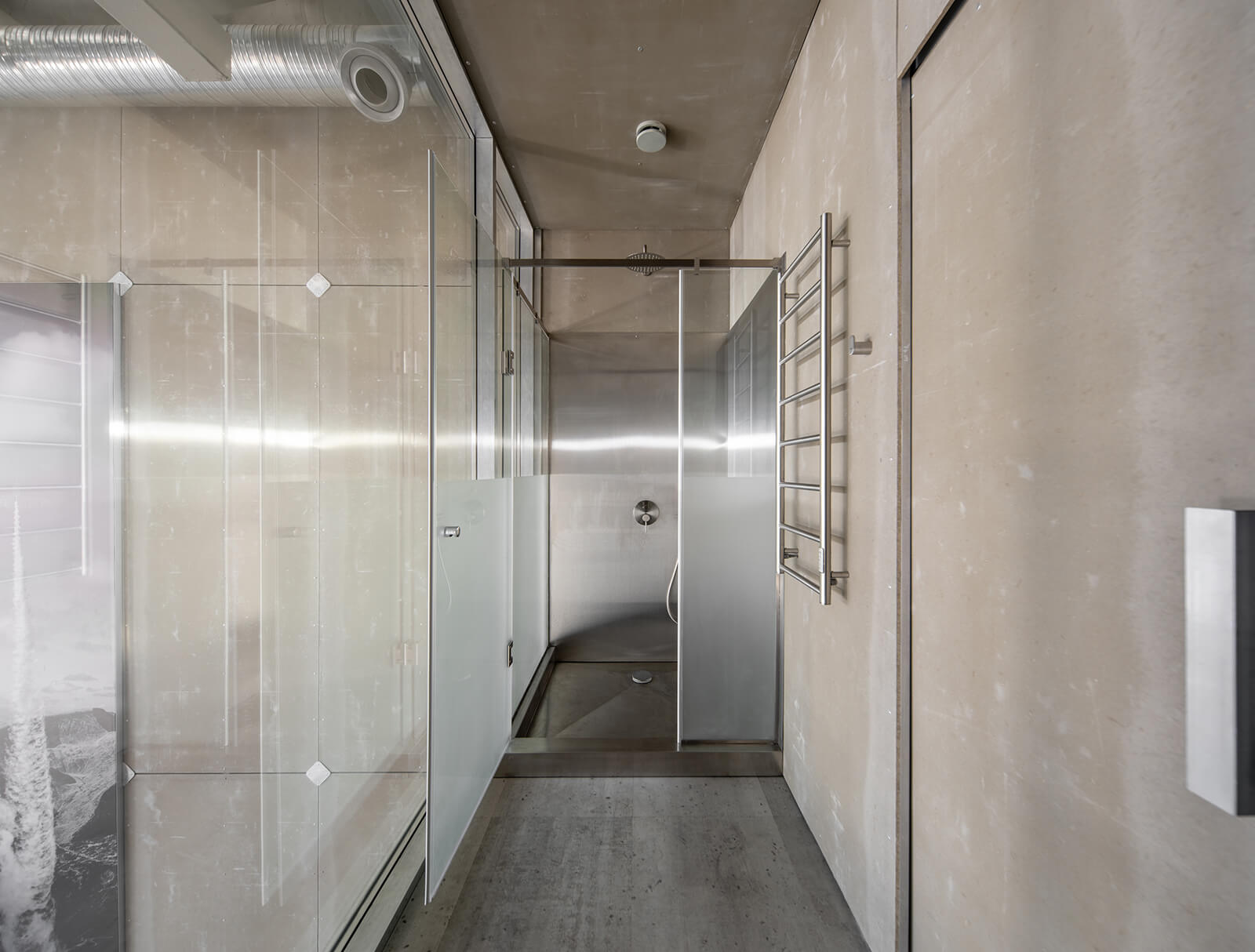
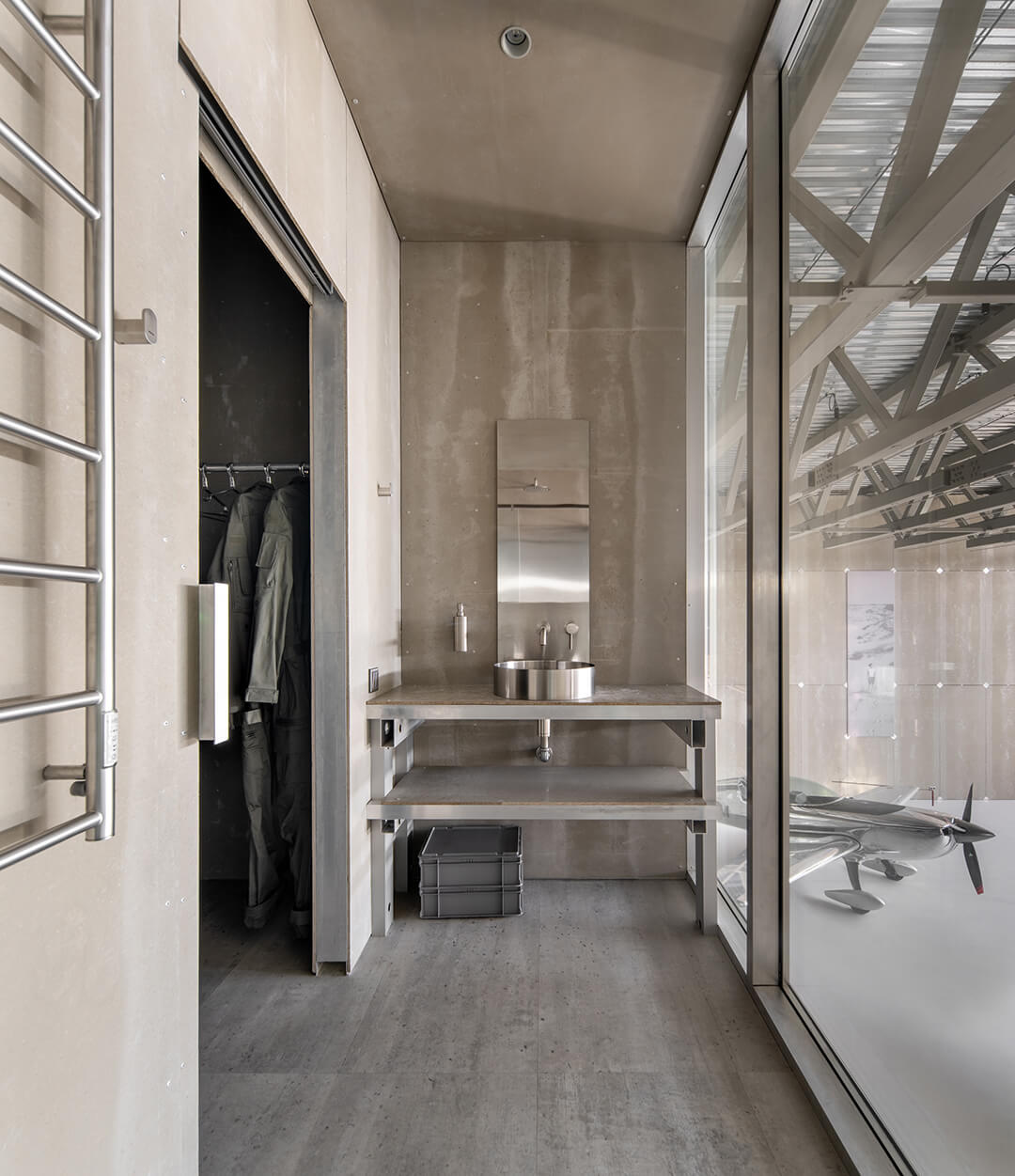
The crew space itself centres on a table for flight task briefings and team discussions, while the areas surrounding it feature leisure, office and sleeping spaces along with a kitchen and bathrooms. A combination of modern sofas and vintage chairs defines the lounging spaces—through contrast more than cohesion—while the kitchen features wooden furniture to balance the otherwise industrial design language and stark materiality of the project. To further ensure an optimised workflow, wall-mounted glass boards are installed for task planning, maintenance scheduling, note-taking, sketching and general team coordination. Additionally, a dedicated sound system chosen by Fatkullin, who is also a music enthusiast, sits within the space, aligning with the cohesive material library.
The sleeping area features comfortable bunk beds and upholstered fabric panels for acoustic insulation, minimising disturbance and facilitating rest when required. Benches and rails in the bathrooms and changing rooms are made from aluminium, while the fittings are in stainless steel. Additionally, a warm, subdued atmosphere is staged by a soft, integrated lighting design scheme throughout these spaces, featuring linear LED lights mounted on steel frames that follow the building’s structural grid. Spotlights are used selectively to emphasise certain spaces, ultimately controlling the consistency of light and shadow on the structure's surfaces to complement respective functions.
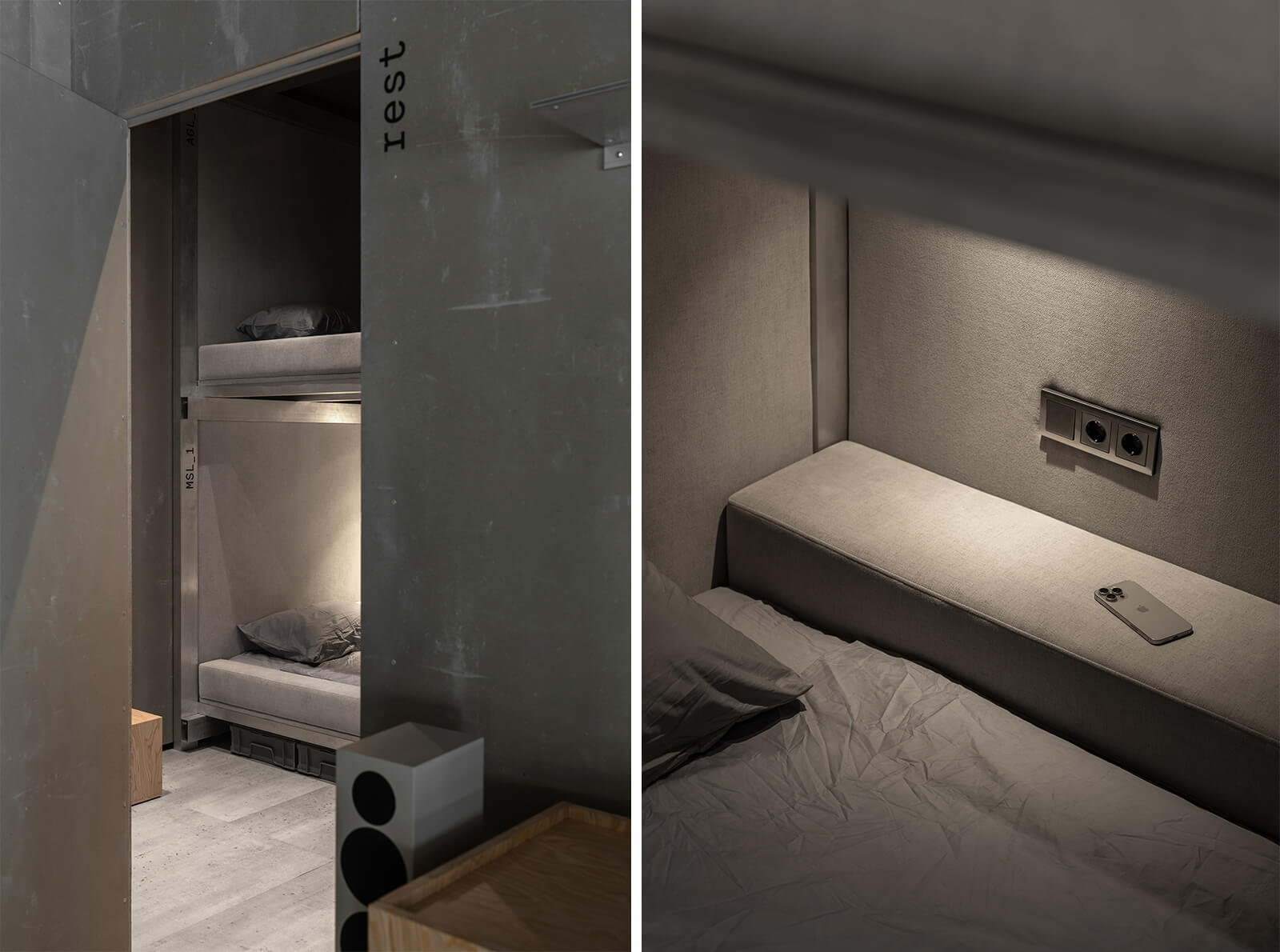
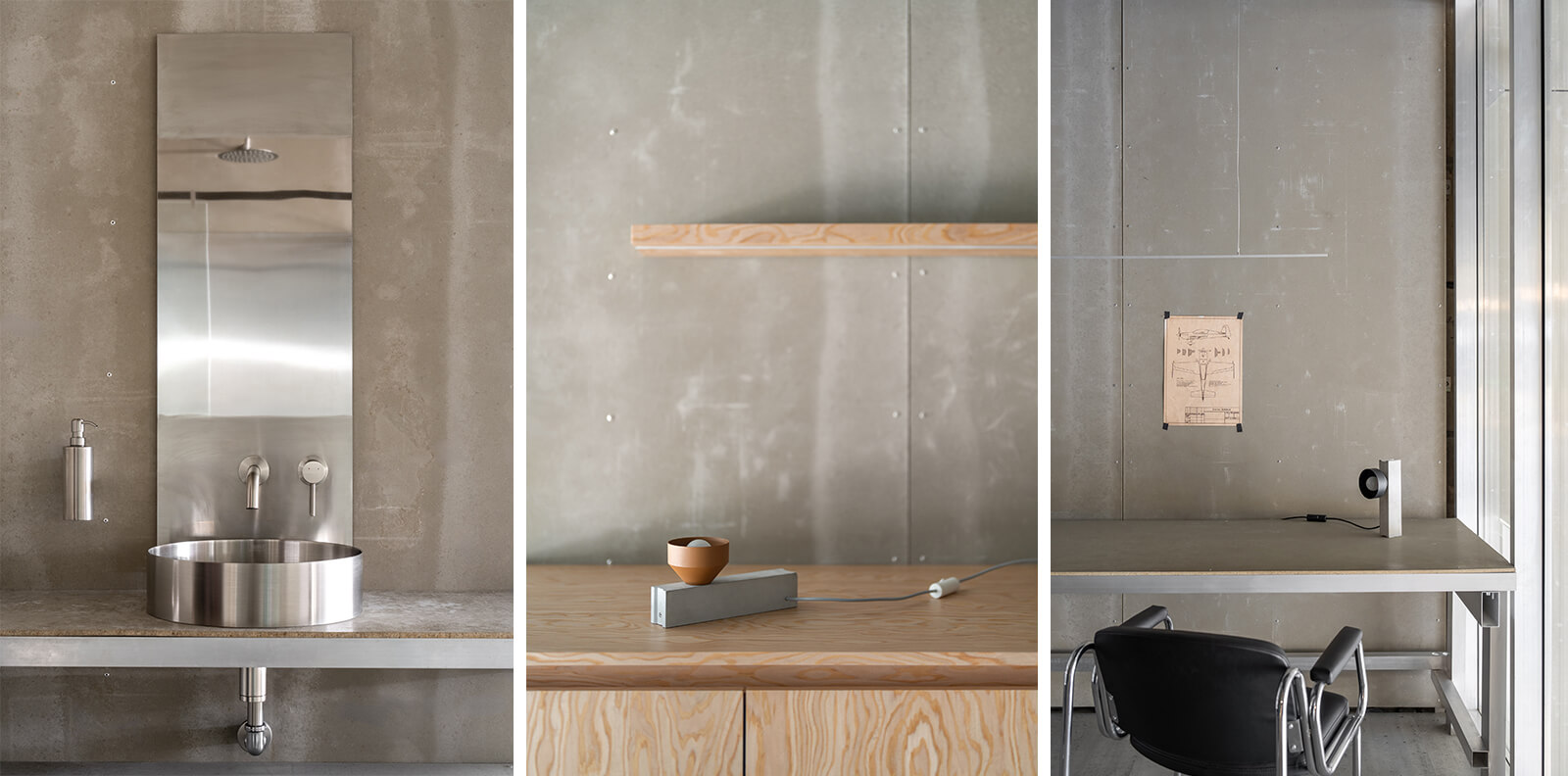
While AEROTIM Hangar might simply appear to be an industrial shell housing a maintenance facility, it is indeed a thoughtfully designed intervention that aligns with the psychological and physical rhythms of its occupants—the crew. Its spaces harmonise both the anxiety and excitement in the moments of preparation before an assignment, along with the joyous and exhausted states after a flight. The industrial architecture sensitively accommodates these emotional states and routines along with the necessary functions using an architectural language that is defined and in command, existing as an extension of the AEROTIM crew’s collective spirit.

by Pranjal Maheshwari Oct 06, 2026
With a programme focused on biodiversity, accessibility and safety, the Rotterdam-based architects help the neighbourhood reclaim a barren landscape as an integral social node.
by Pia Bhatia Oct 02, 2026
Located in the Al Bridi Reserve in Sharjah, the project didactically projects its purpose of studying African ecosystems through local structures marked as ‘sculptural presences’.
by Pranjal Maheshwari Sep 30, 2026
The new cultural centre by Blight Rayner Architecture and Snøhetta envelopes world-class facilities in a sinuous glass facade, alluding to the theatrical rhythms of the performing arts.
by Pranjal Maheshwari Sep 29, 2026
The one-of-its-kind music centre in Apple’s six-storey Battersea Station space in London houses world-class facilities for live performance and worldwide broadcast.

make your fridays matter with a well-read weekend
Enter your details to sign in
Don’t have an account?
Sign upOr you can sign in with
a single account for all
STIR platforms
All your bookmarks will be available across all your devices.
Stay STIRred
Already have an account?
Sign inOr you can sign up with
Verification link sent to check your inbox or spam folder to complete sign up process
Tap on things that interests you.
Select the Conversation Category you would like to watch
Please enter your details and click submit.
Enter the 6-digit code sent at


AEROTIM Hangar channels aviation and its spirit through material restraint and clarity
by Bansari Paghdar | Published on : May 19, 2026


 Sign in with Google
 Sign in with email
What do you think?