Design13 mins. read
Of moments and making: Projects at 3daysofdesign 2026 centring the present
by Jincy IypeJun 08, 2026



by Pranjal MaheshwariPublished on : Apr 06, 2026
In line with the modernisation of the world, with formerly colonised nations following suit, Denmark too seemed to move away from its rich history of crafts and artisanship owing to the ‘manufacturing efficiency’ delivered by the Industrial Revolution. Despite a centuries-deep knowledge of ceramics, furniture, glass and jewellery, among others, both the demand for crafts and the livelihood of skilled craftspeople declined in the late19th Century. The turn of the millennium, however, sought the crafts once again, even if sporadically and almost always in competition with industry, recognising the practices to be more sustainable in the longer term and economically viable for several global markets. Also recognised was the acute dearth of a skilled workforce to participate in the development of infrastructure and cultural wealth of the nation, beyond the somewhat nostalgic craving for authenticity and a ‘personal touch’ imbued in objects of design. The following decades witnessed the rise of multiple institutions, such as Fonden for Håndværkskollegier (Foundation for Crafts Colleges), to bridge the cultural chasm created by a systemic neglect of the vocation, and hence the community, for more than a century.
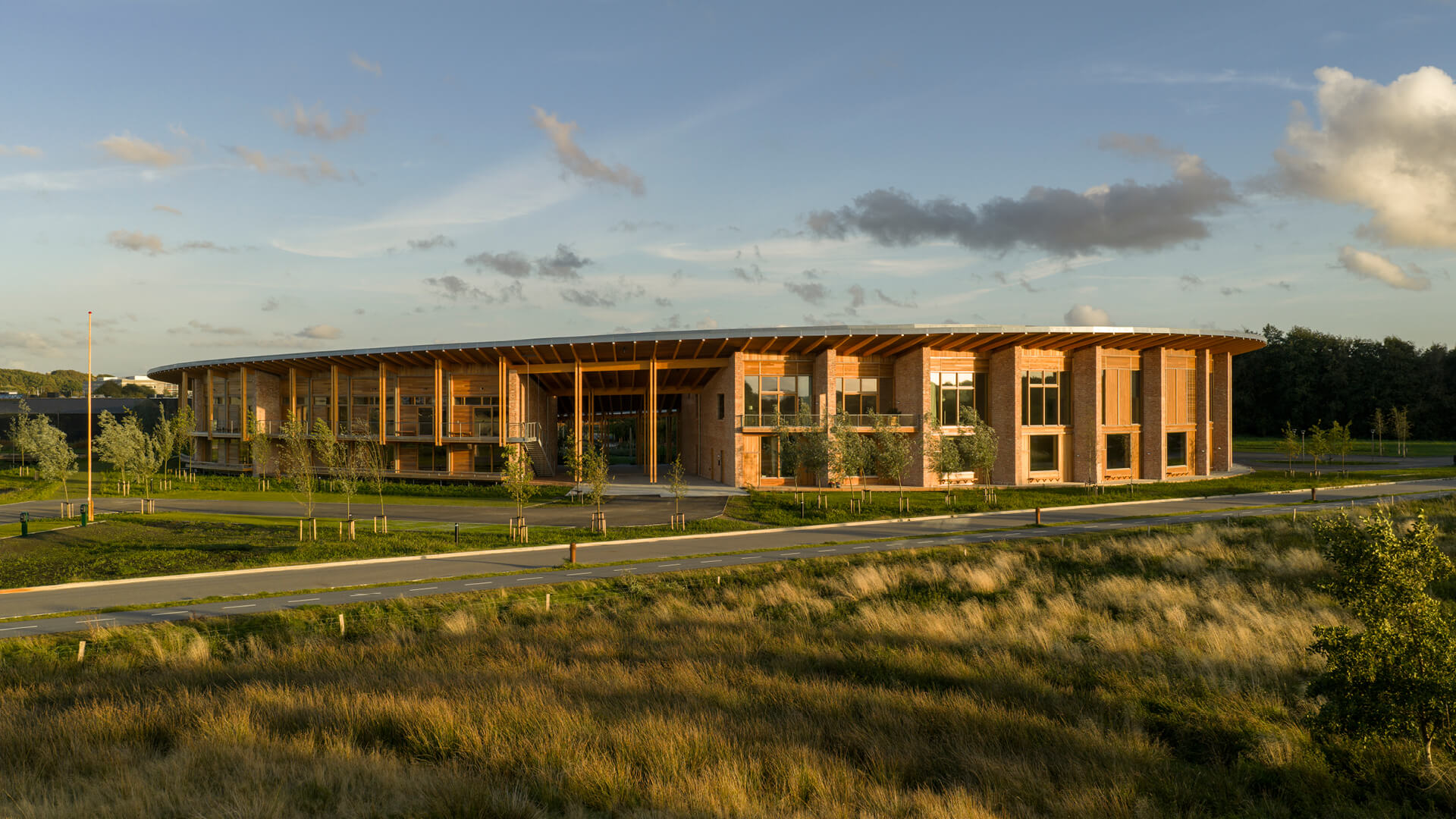
Driven by a vision to improve the collective identity for craft vocations and the living standards for those practising them, Denmark’s Foundation for Crafts Colleges was established in 2020, with one of its focuses being on developing residential architecture, such as halls and dormitories, for vocational apprentices to foster a stronger sense of community and professional pride along with refined skills in the crafts. The institute, hence, developed programmes for training by combining housing, educational architecture and community building that manifested as a series of Craft Colleges across the country. The second among these was commissioned in Herning, designed by the Danish architecture studio Dorte Mandrup Arkitekter.
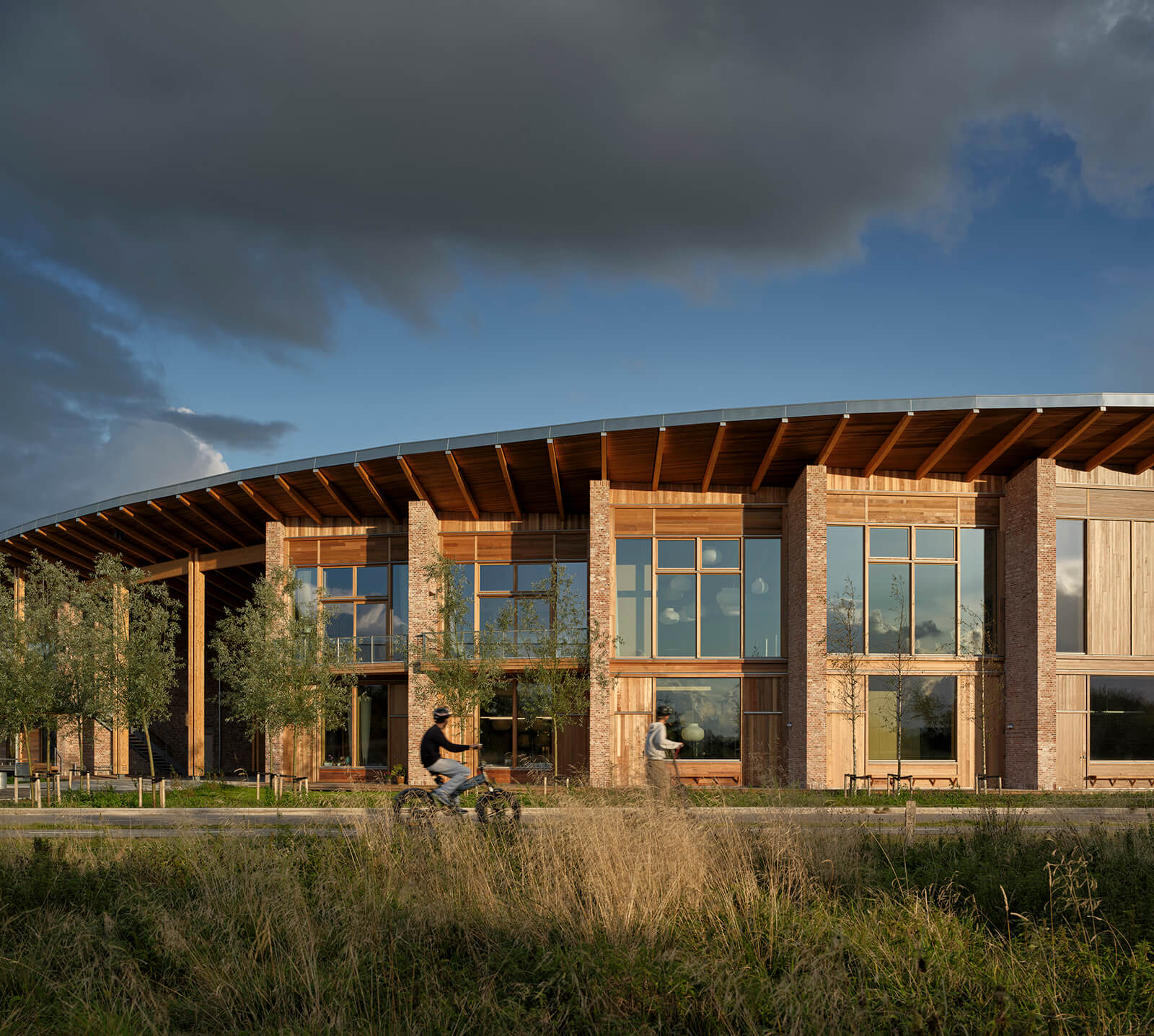
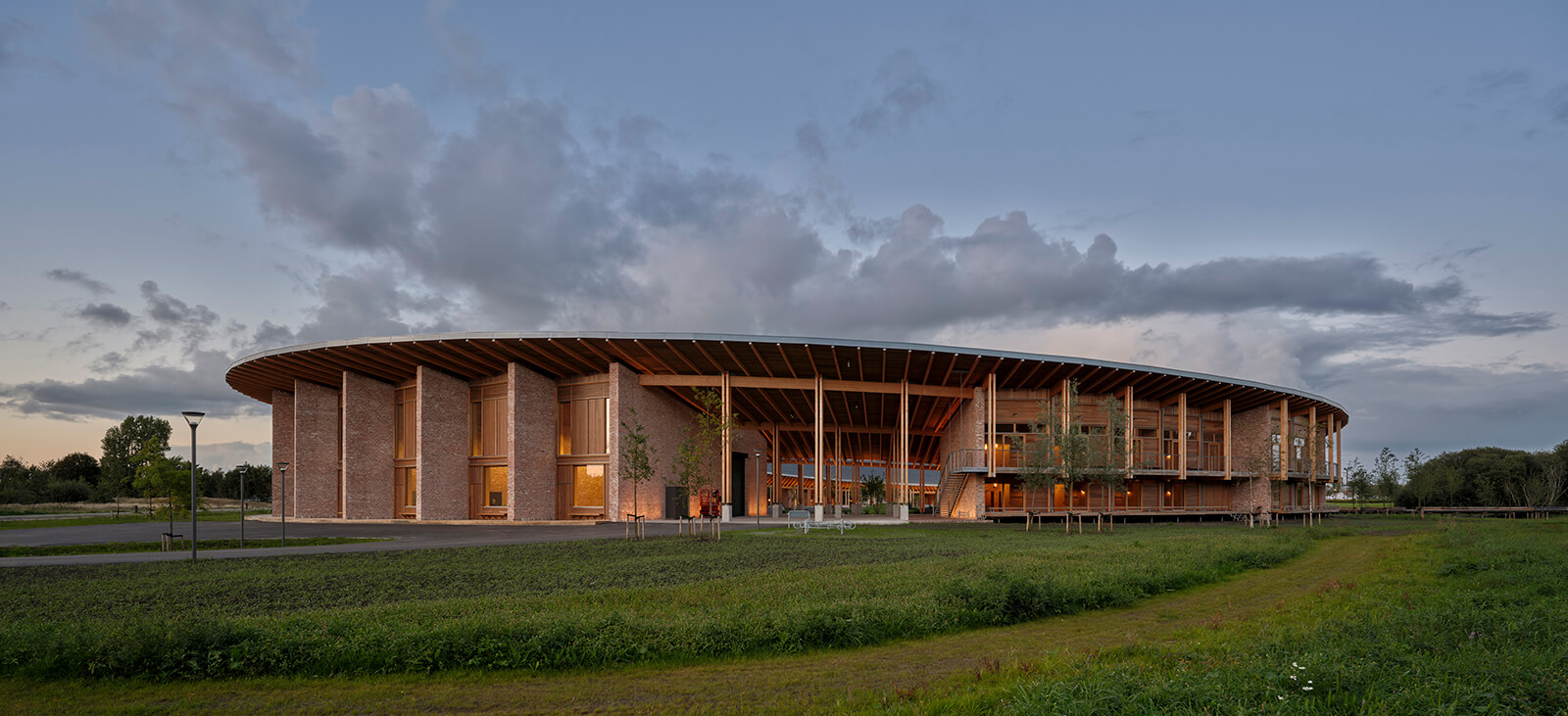
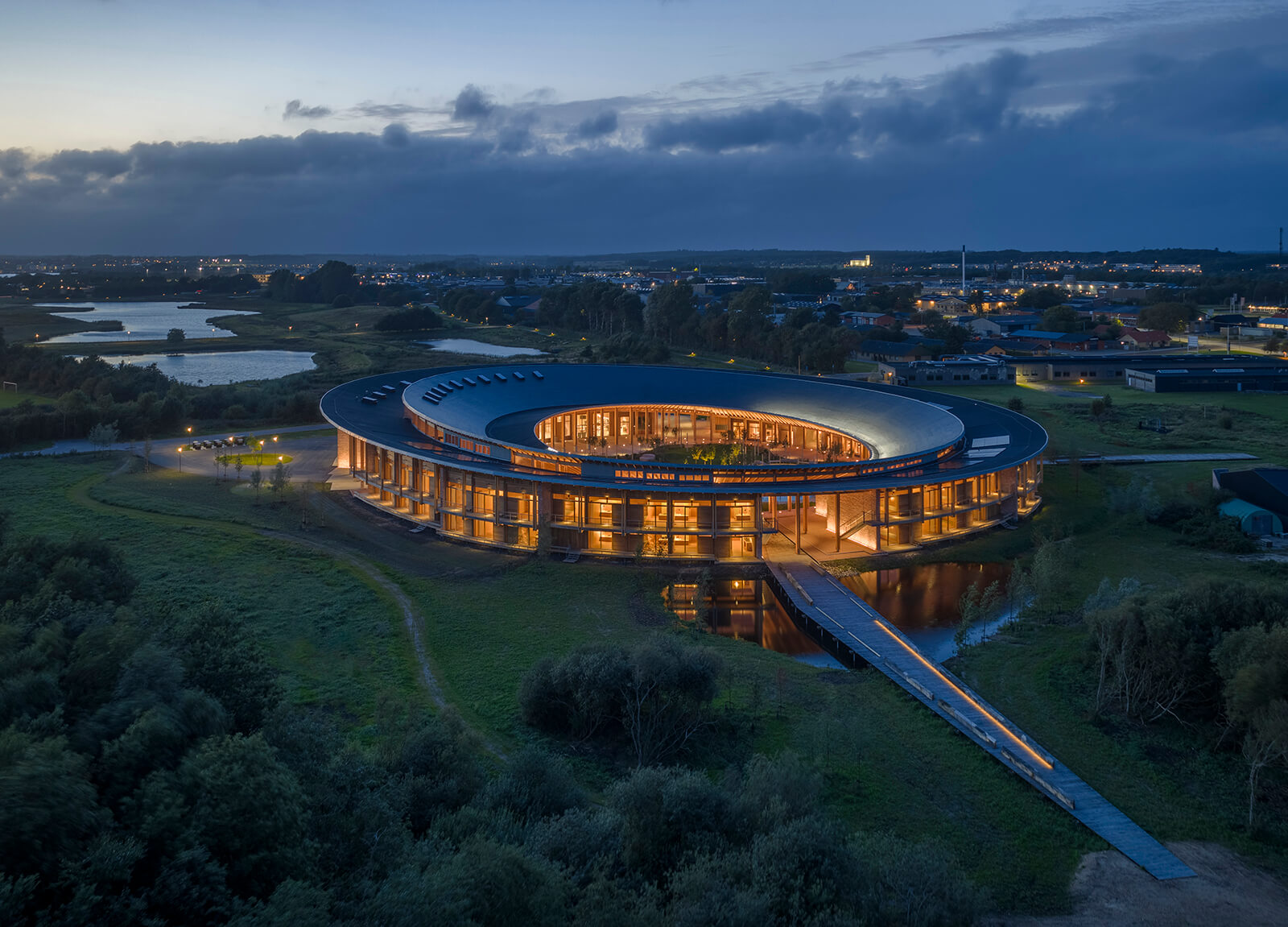
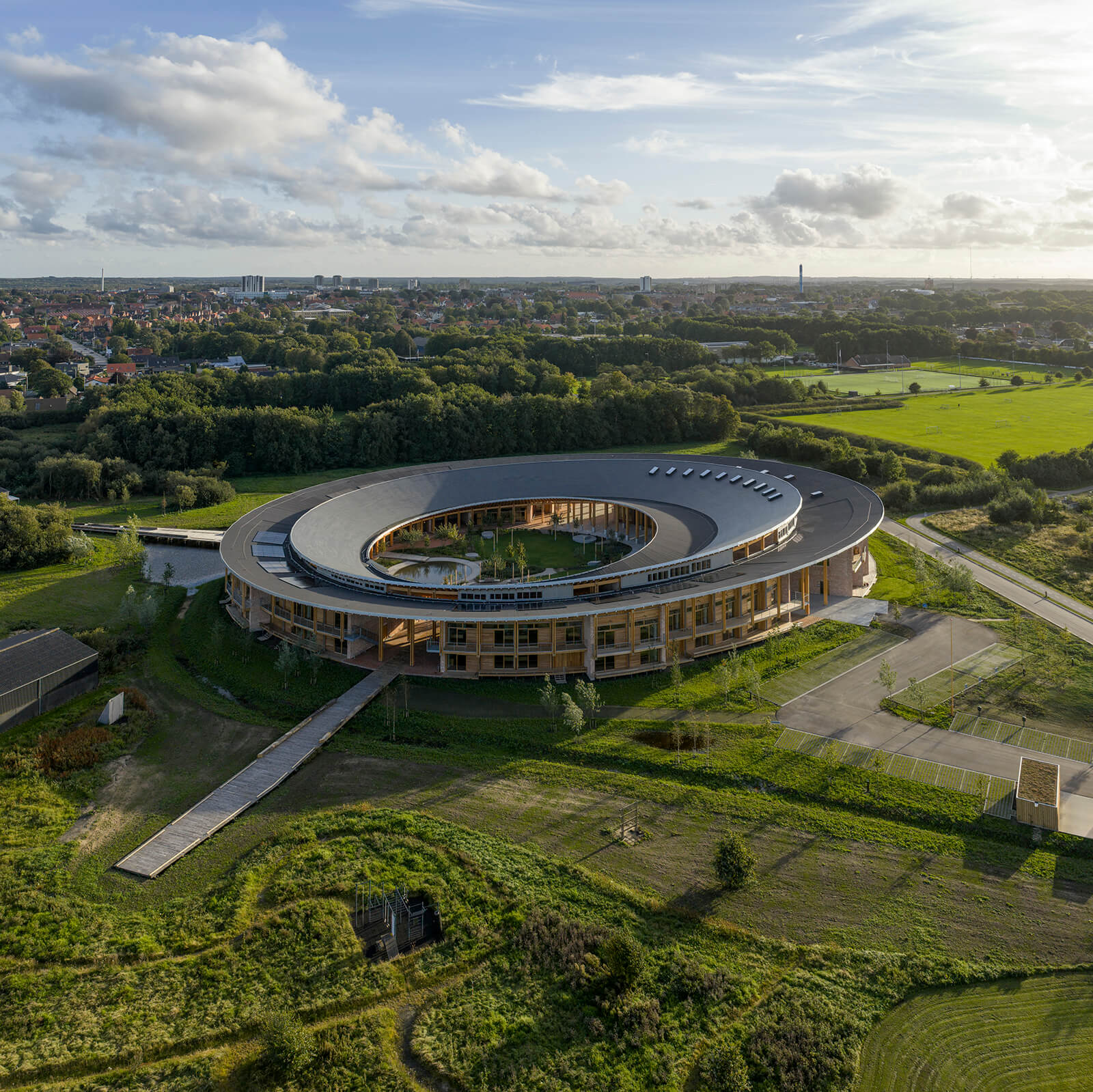
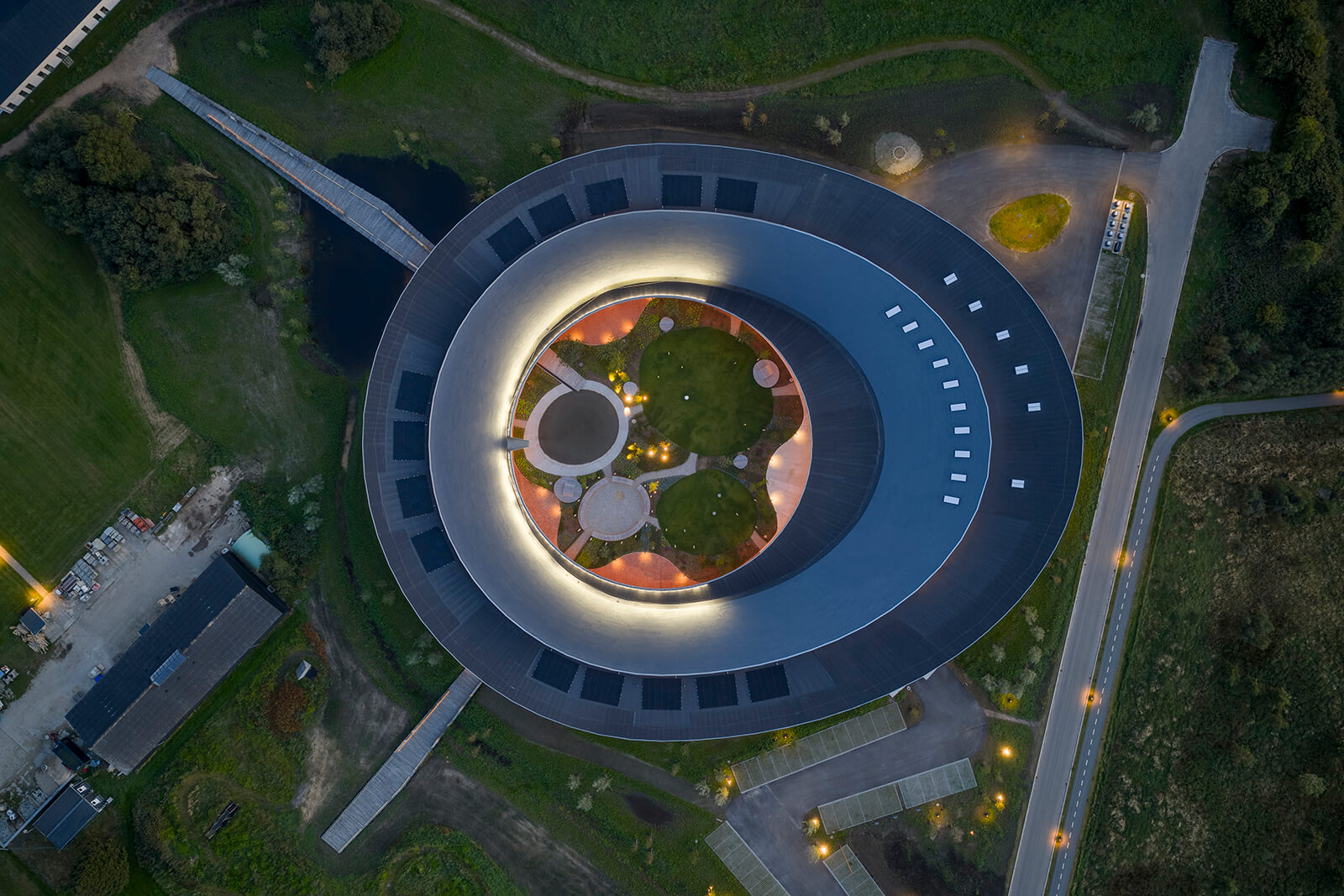
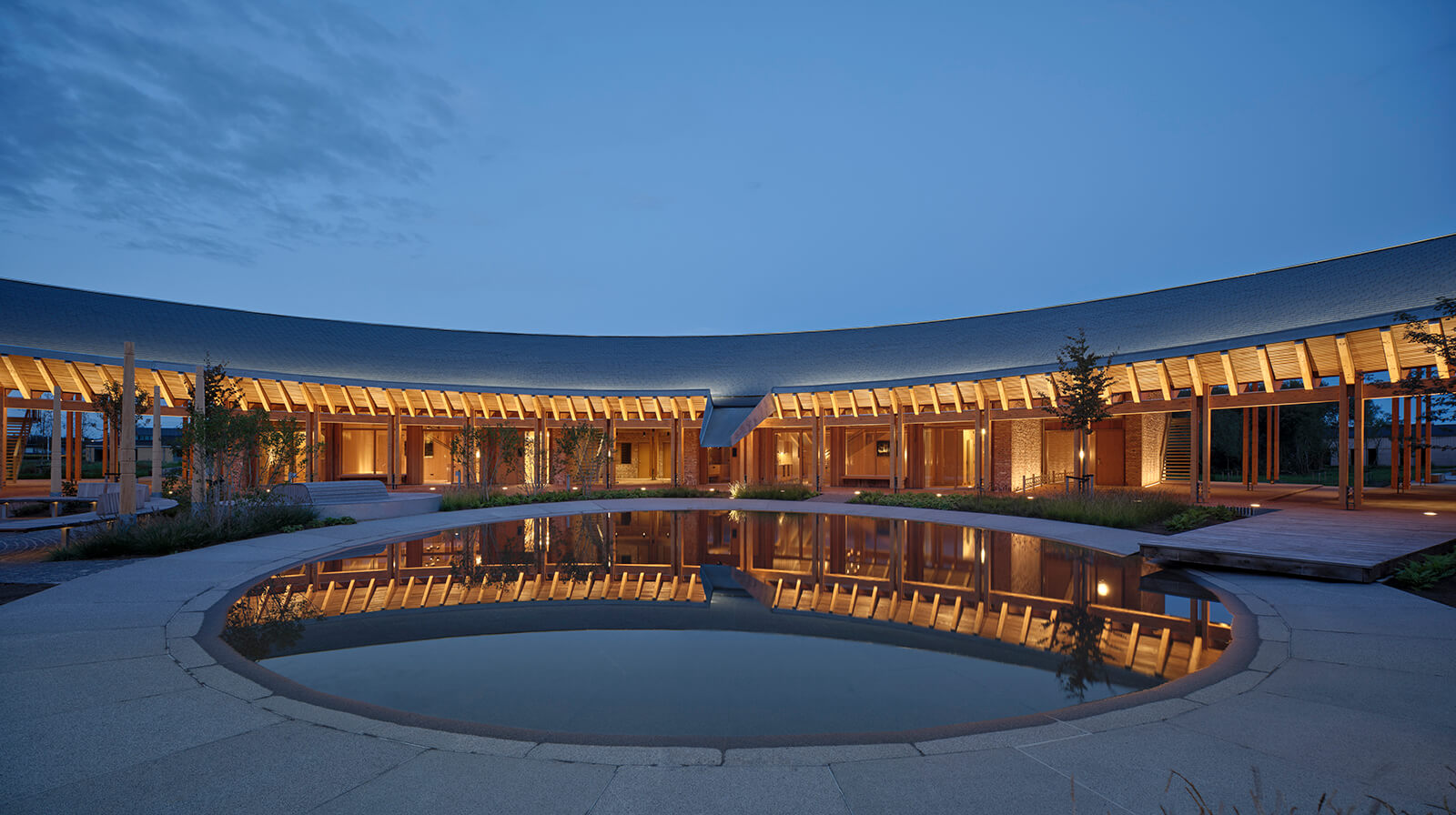
The Crafts College is set on fallow land on the urban fringe of Herning, with avenues for connection between the apprentices and the urban residents through the nearby Lillelund Engpark, providing both with a common, shared space to express, interact and exchange ideas. The building’s layout emanates from a central, focal core, with a twin-layered elliptical composition emerging around it. The first, inner layer houses the courtyard comprising the workshops, learning and collective facilities, while the second, outer layer fosters studio flats for 70 aspiring craftspeople, each with its own terrace adjoining the surrounding landscape.
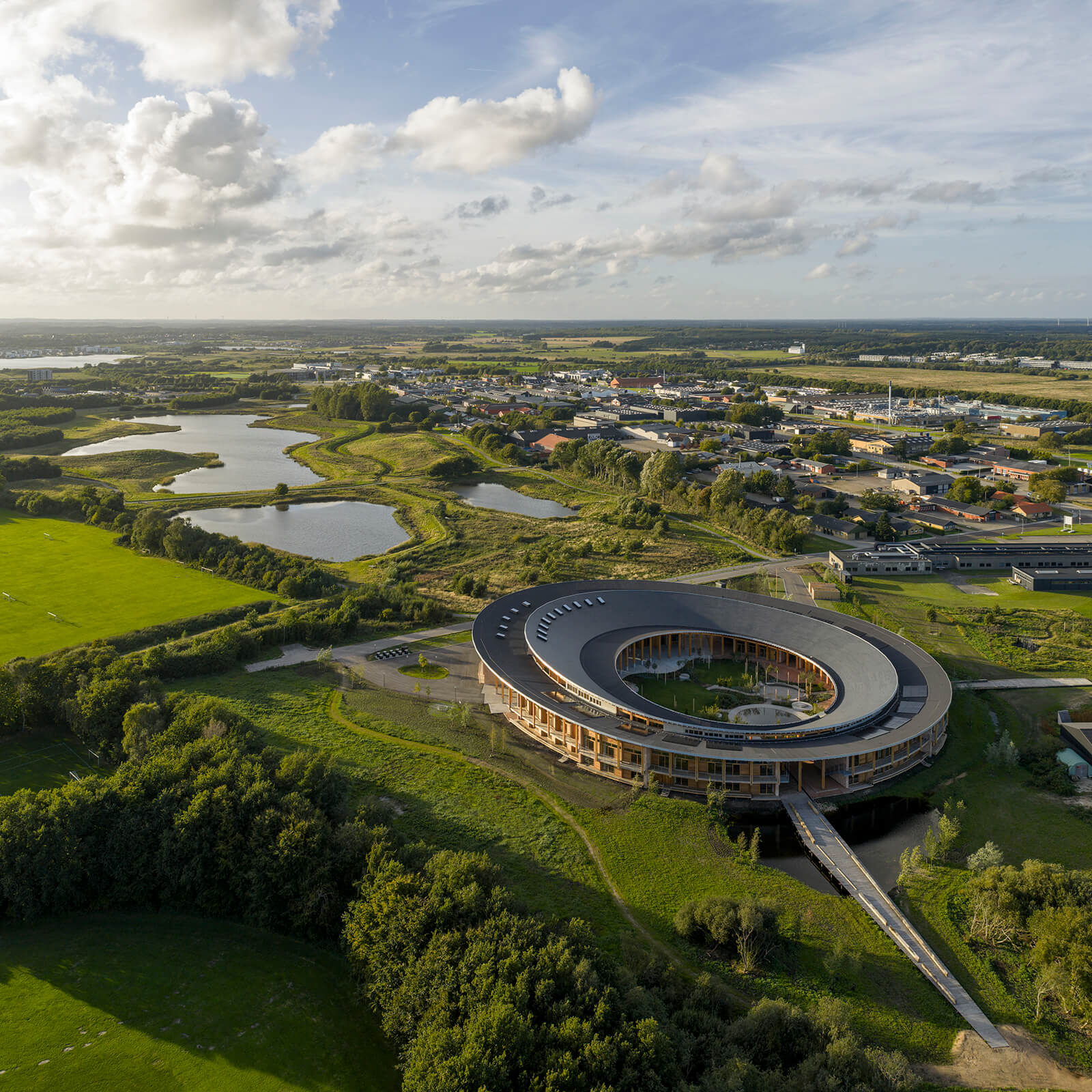
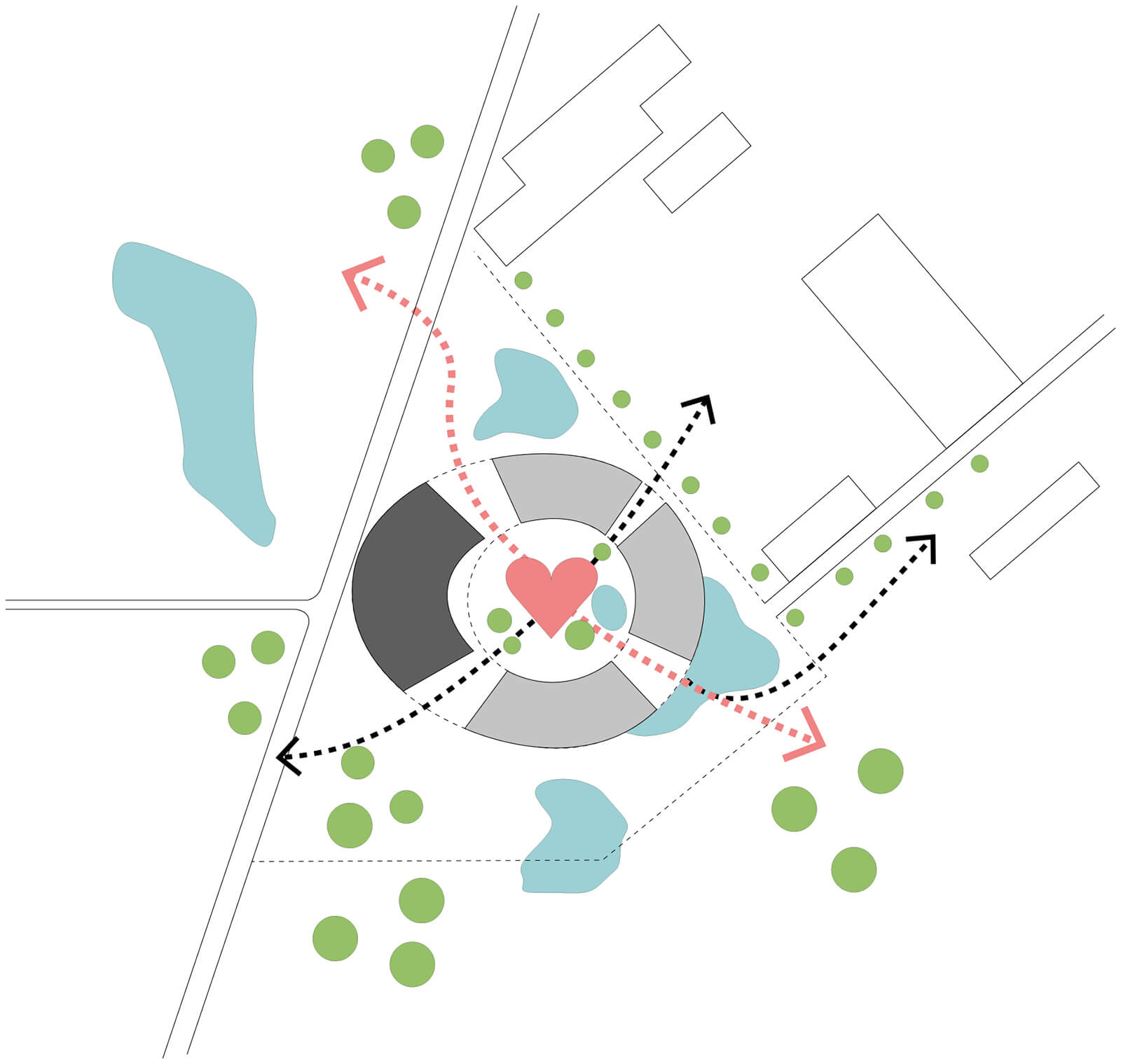
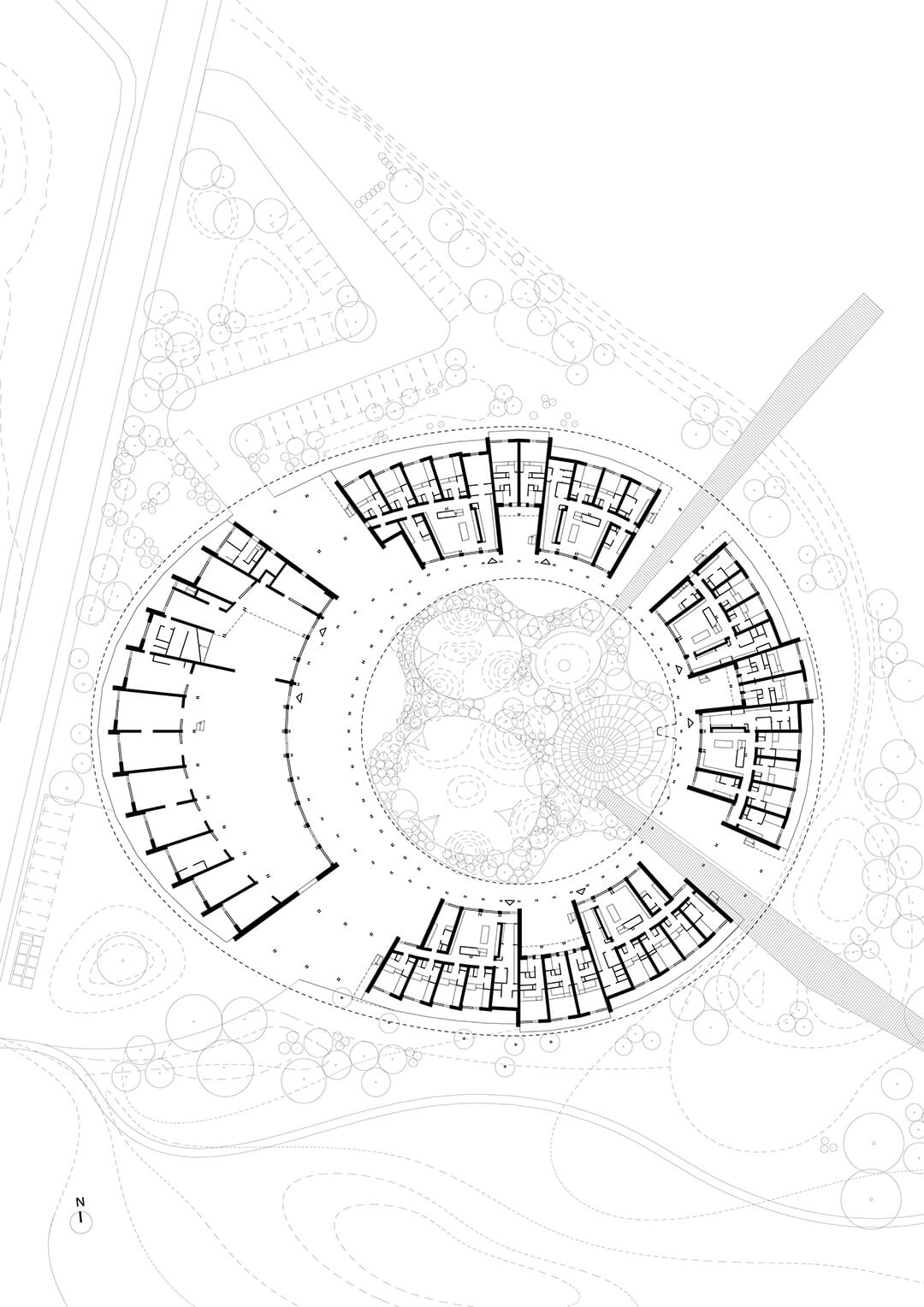
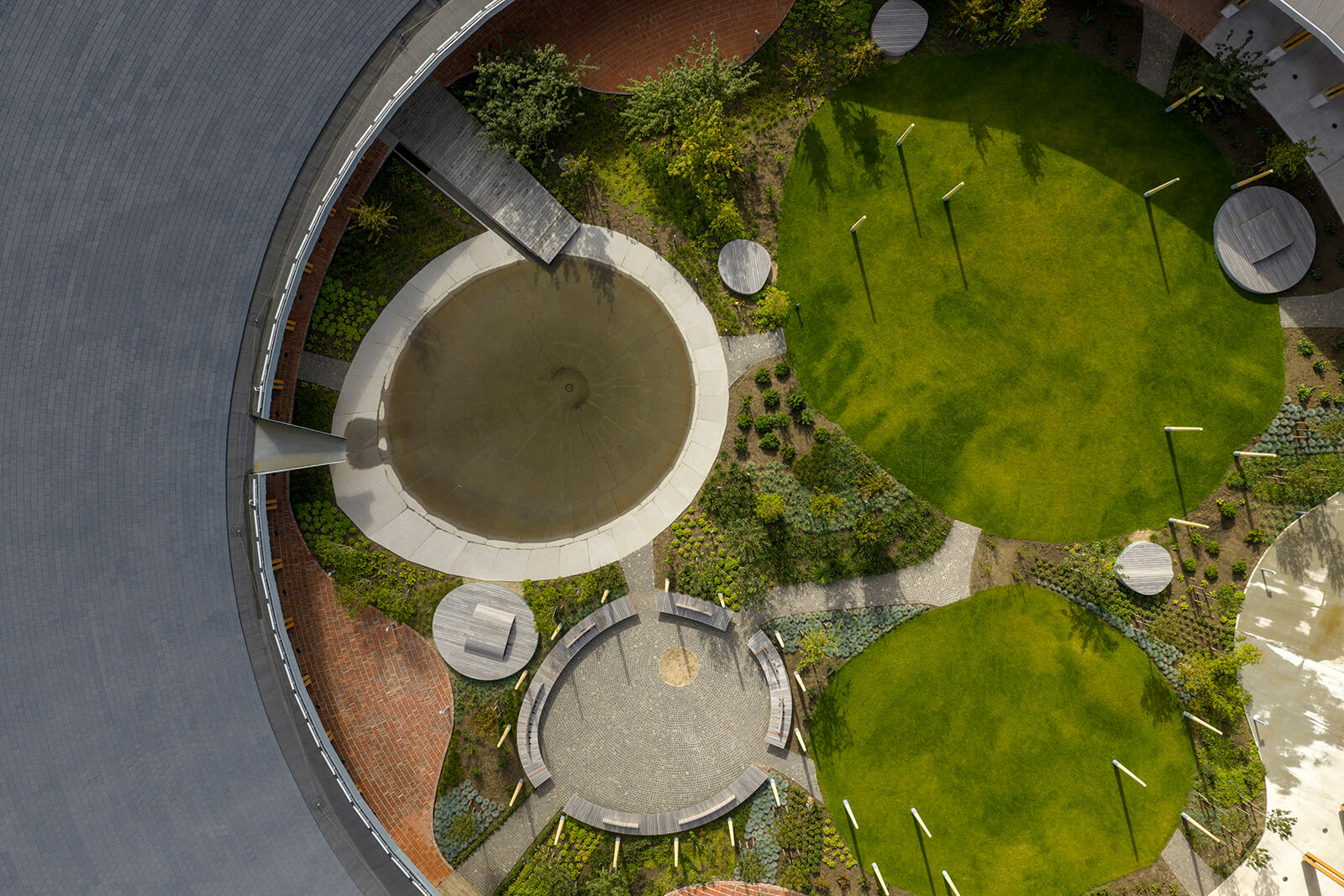
The central courtyard is designed as a green communal space to host public events and workshops for local residents, schools and policy makers to strengthen dialogue around crafts and education through intended interdisciplinary exchanges facilitated by the architecture. A large wooden bench at the centre with a similar elliptical footprint forms a natural intersection that adds to the layer of interactions, the entire volume enclosed to shelter inhabitants from the harsh heathland winds.
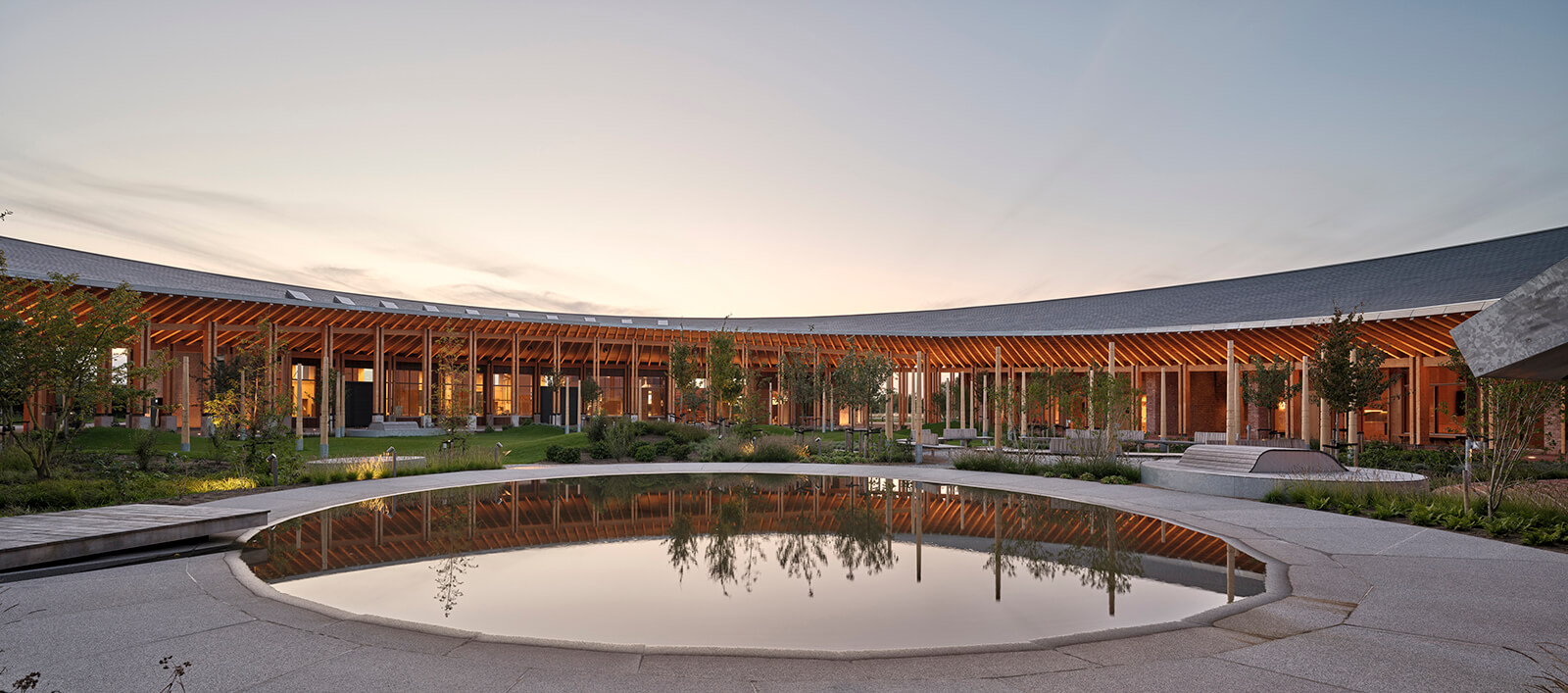
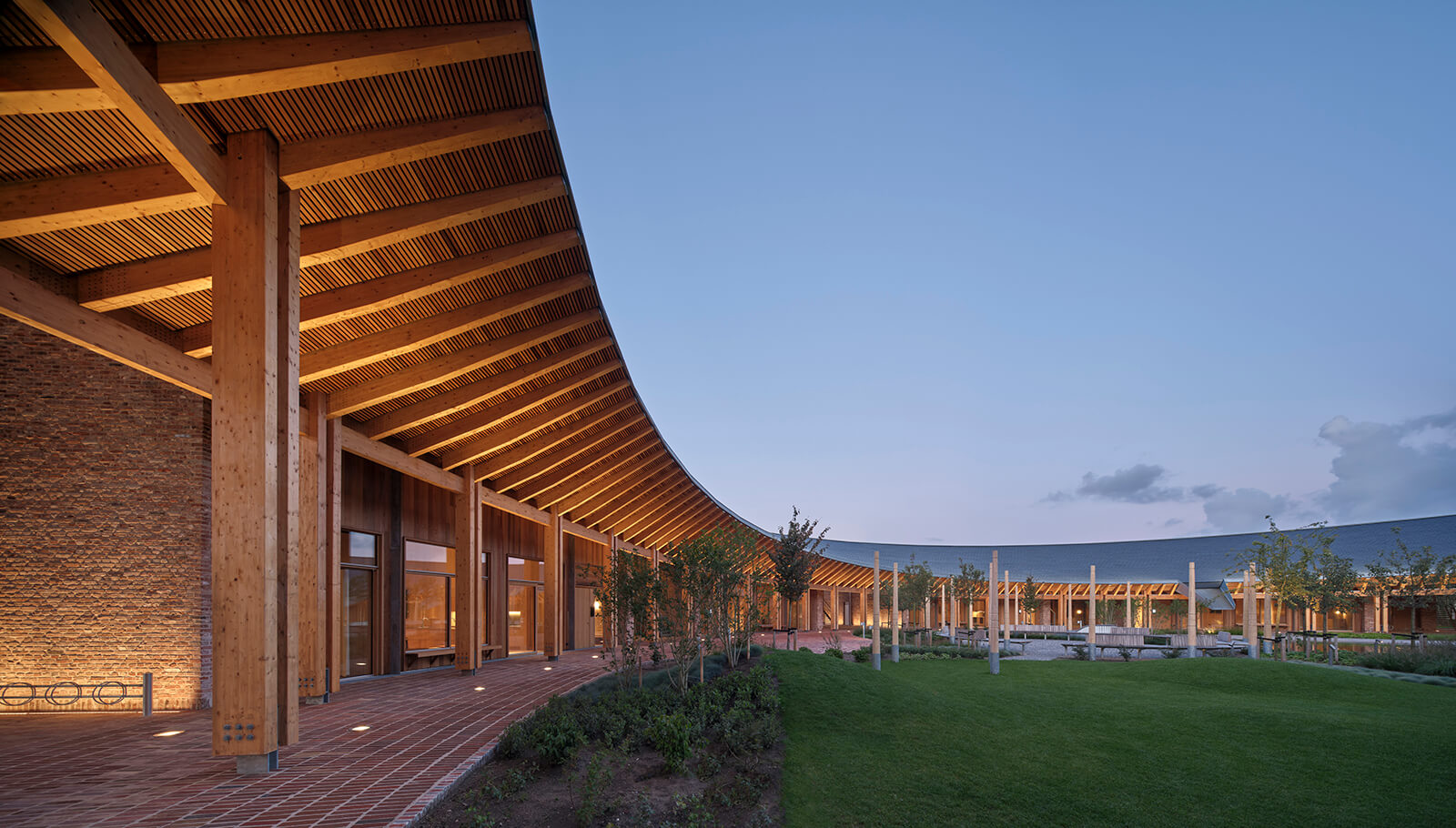
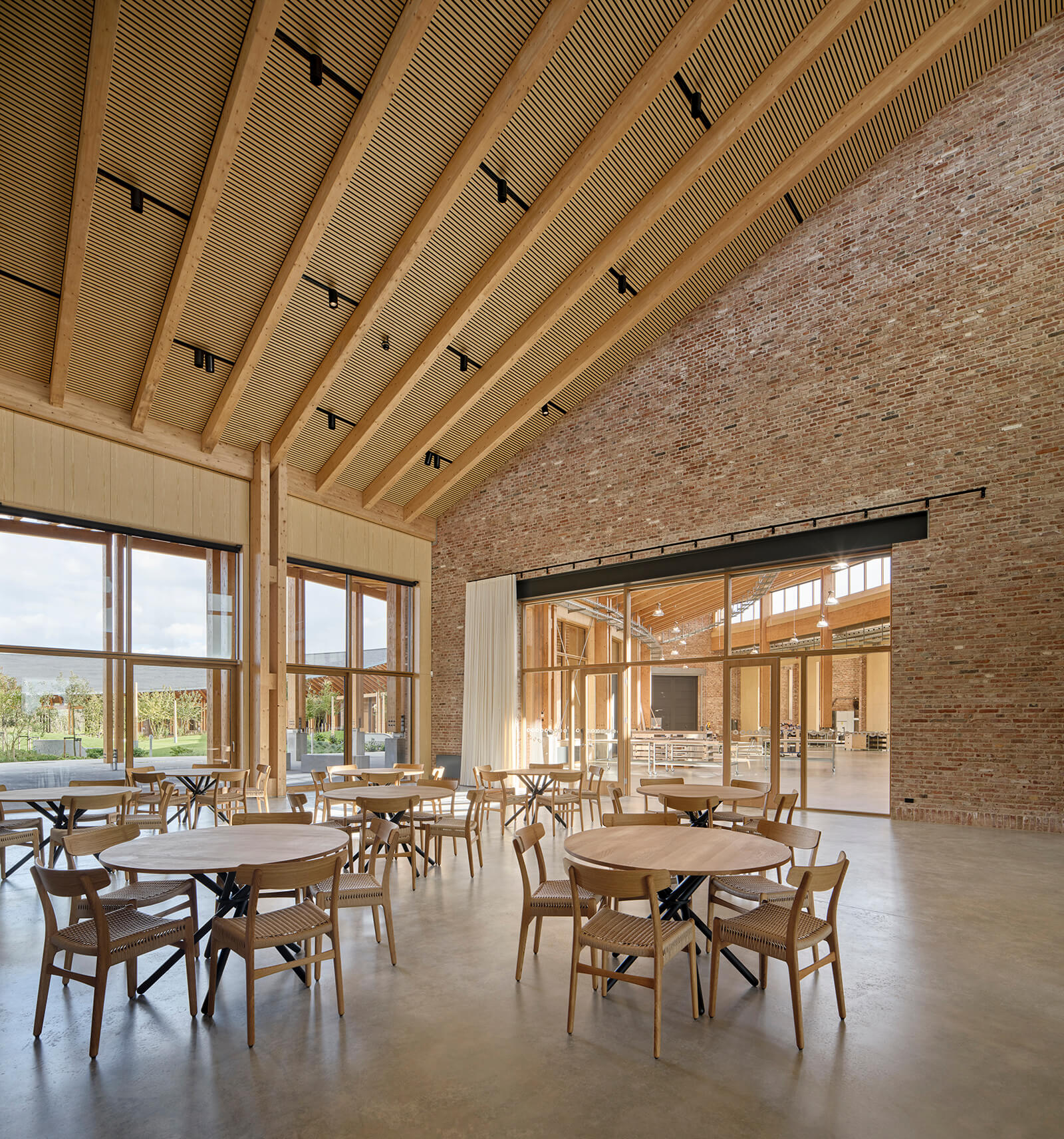
The architecture of the institute is envisioned as a ‘living teaching tool’ that not only fosters a sense of belonging among aspiring artisans, but also showcases the cultural and social importance of crafts through its form, materiality and construction. The built mass is therefore understood as a live workshop, with the interplay of light, volume and proportion highlighting the importance of high-quality craftsmanship in creating functional spaces that focus on human wellbeing and quality of life. Natural, regional materials—such as certified timber, slate, granite and recycled bricks—are meticulously crafted and assembled, laying bare the construction logic, processing and joinery as lessons in tectonics and ornamentation, accessed by simply dwelling in the space.
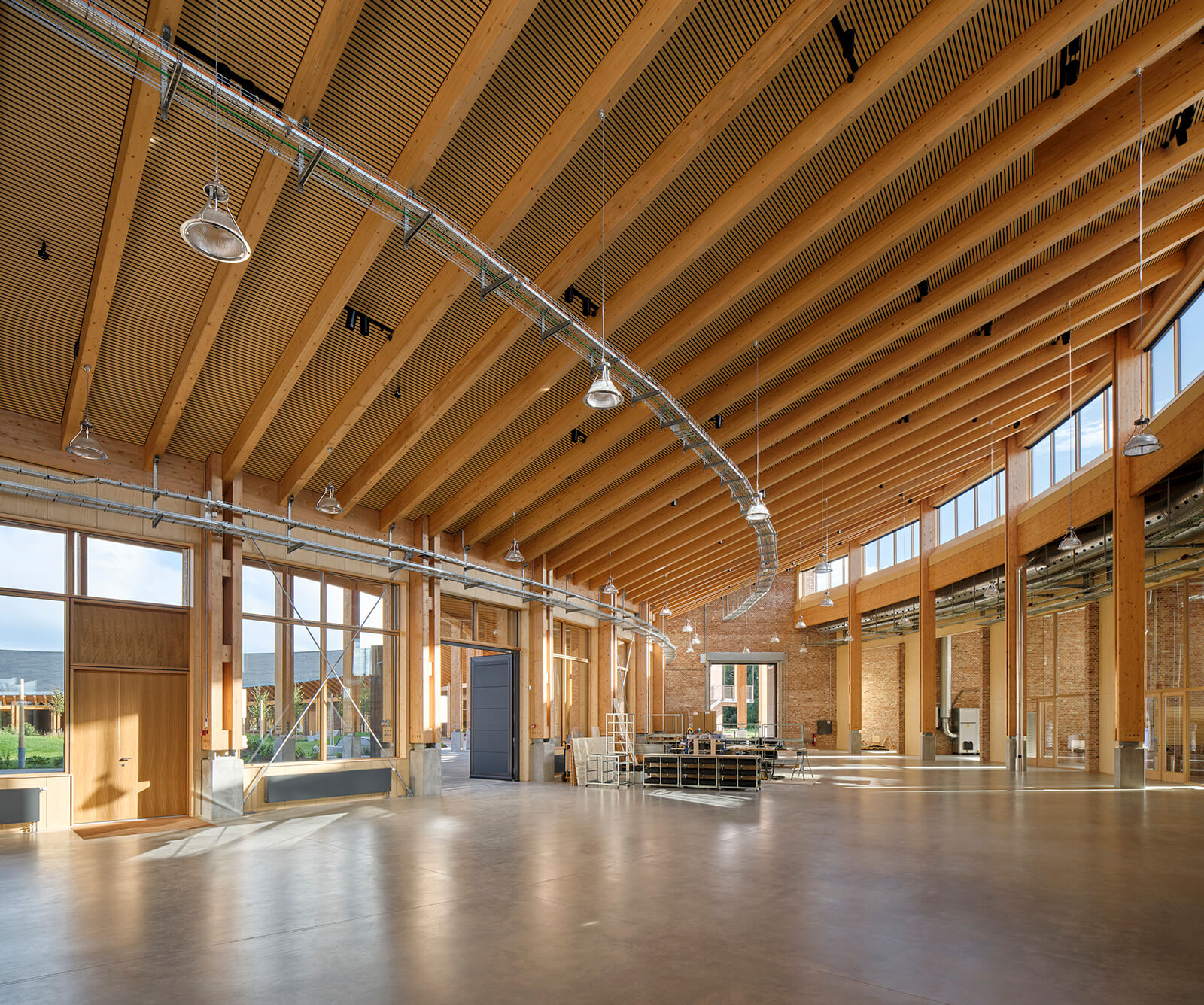
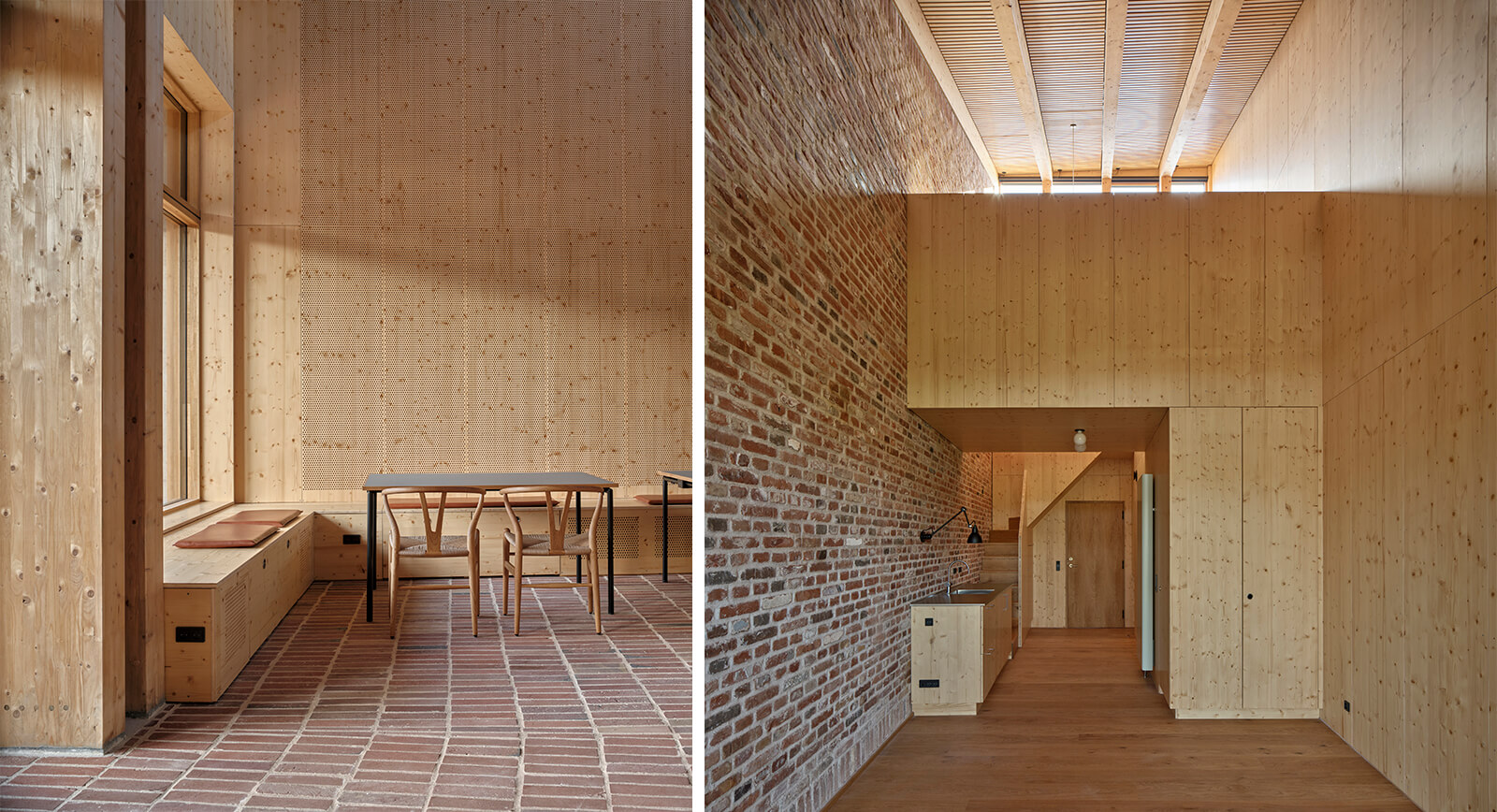
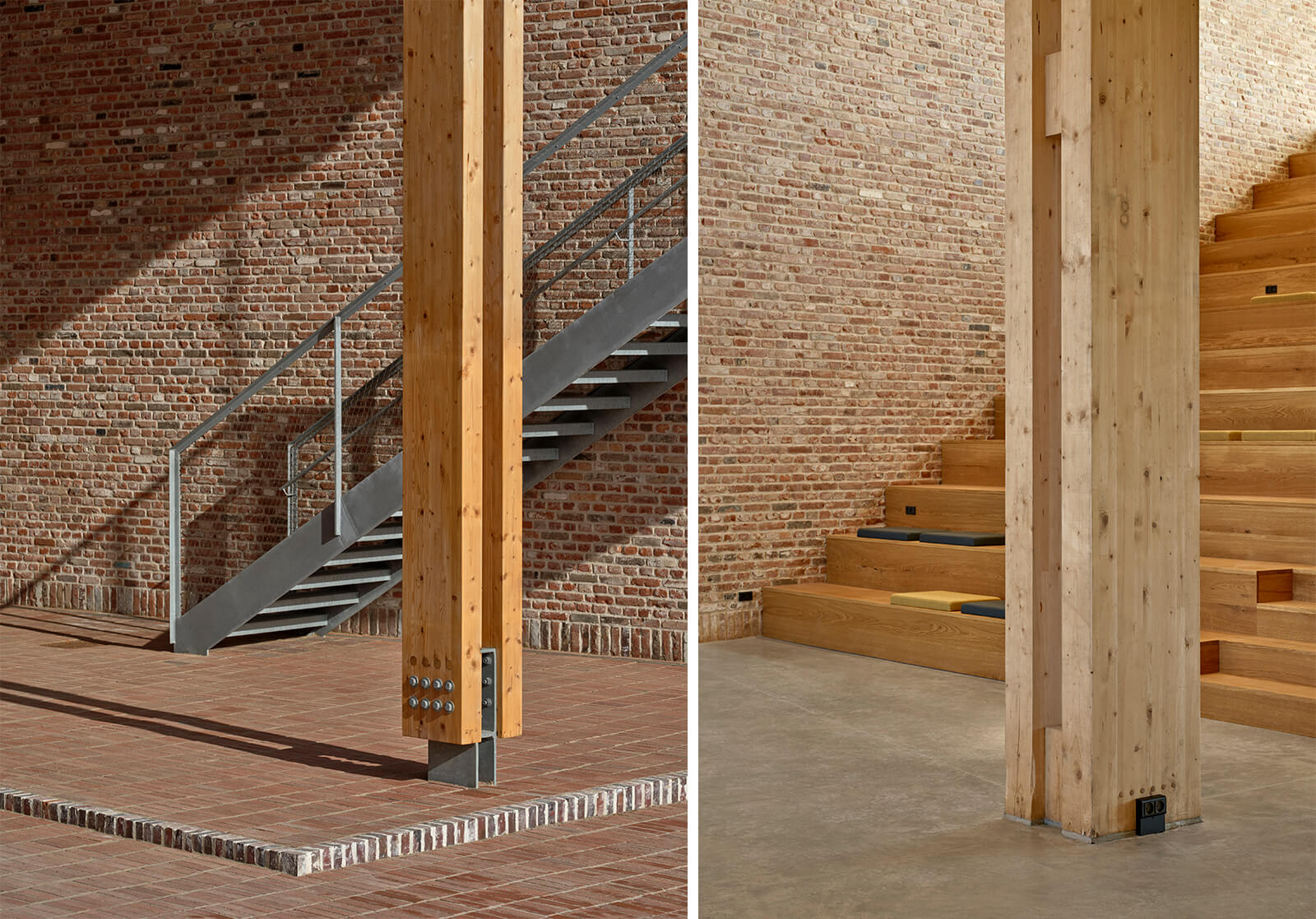
Craft and material harbour an intimate relationship, with the role of craft extending beyond the product’s immediate use, often evolving across the lifecycle of the component material. The design of the Crafts College seems to employ a similar logic in its material composition, integrating more than a million reclaimed bricks in its walls and flooring, each bearing its own narrative in the wear, mortar residue and paint. The other components in the material palette—timber, stone, slate—were chosen for their inherently graceful ageing, with their patina too serving as a pedagogical tool for young craftspeople, exposing them to material change through climate, usage and the passage of time.
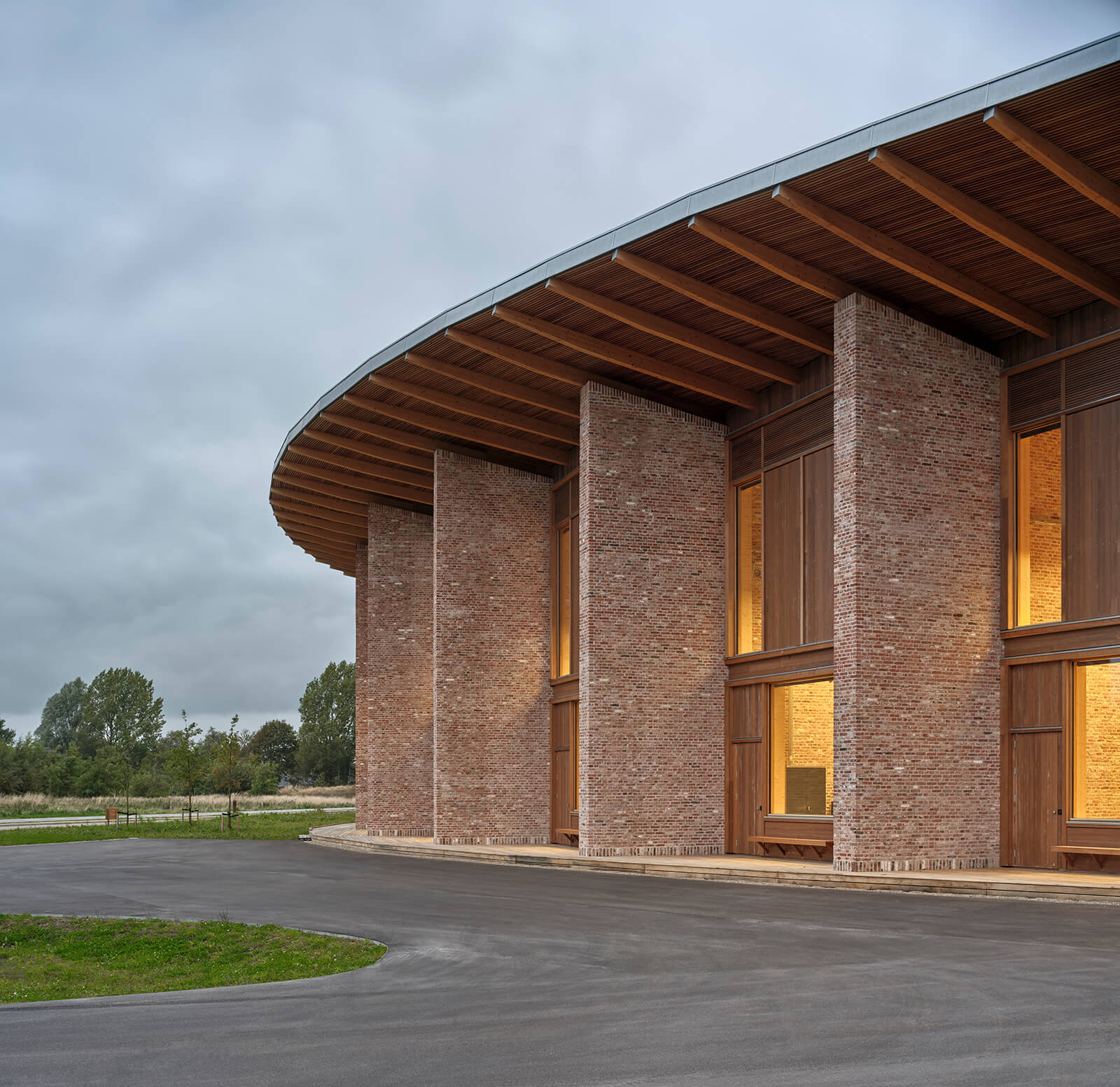
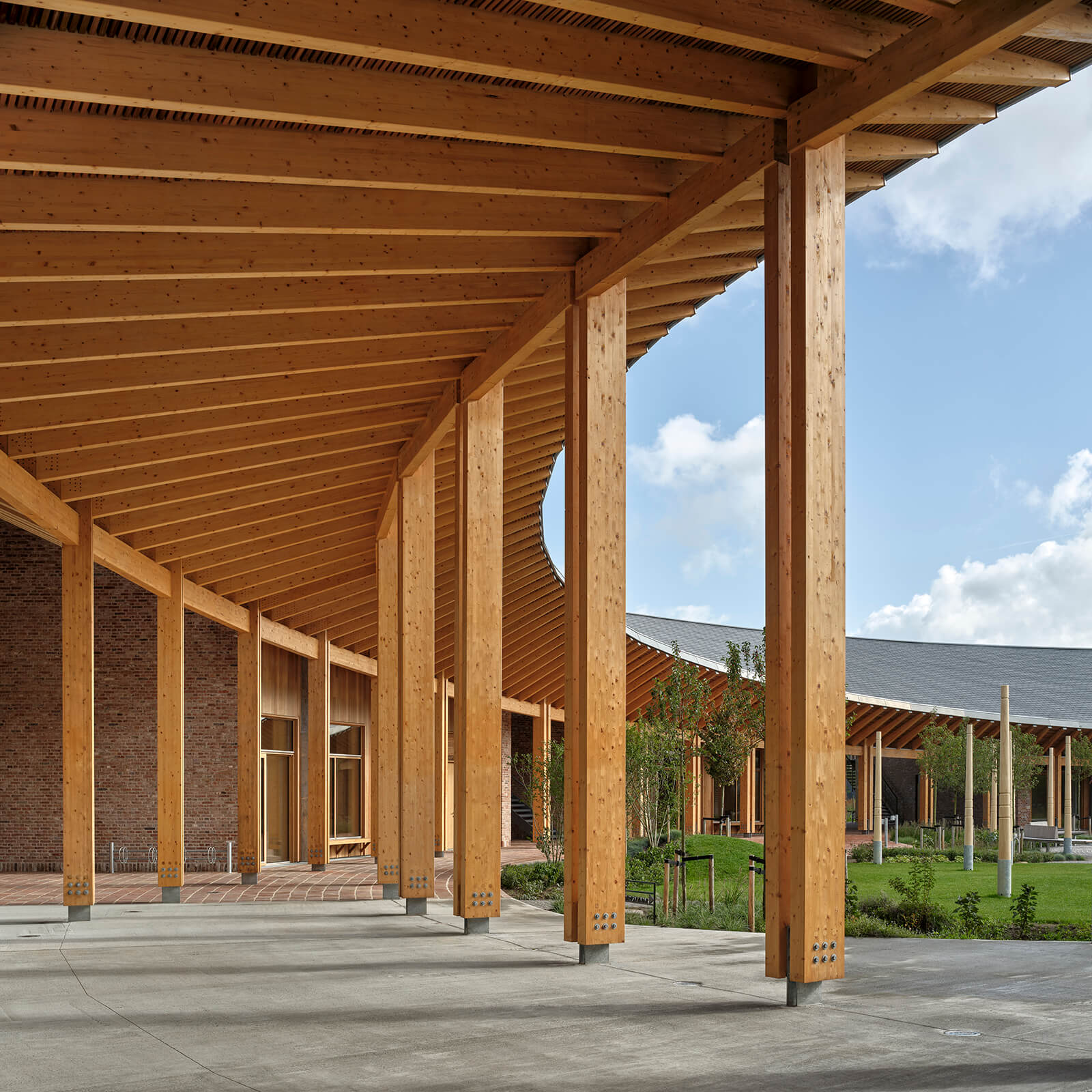
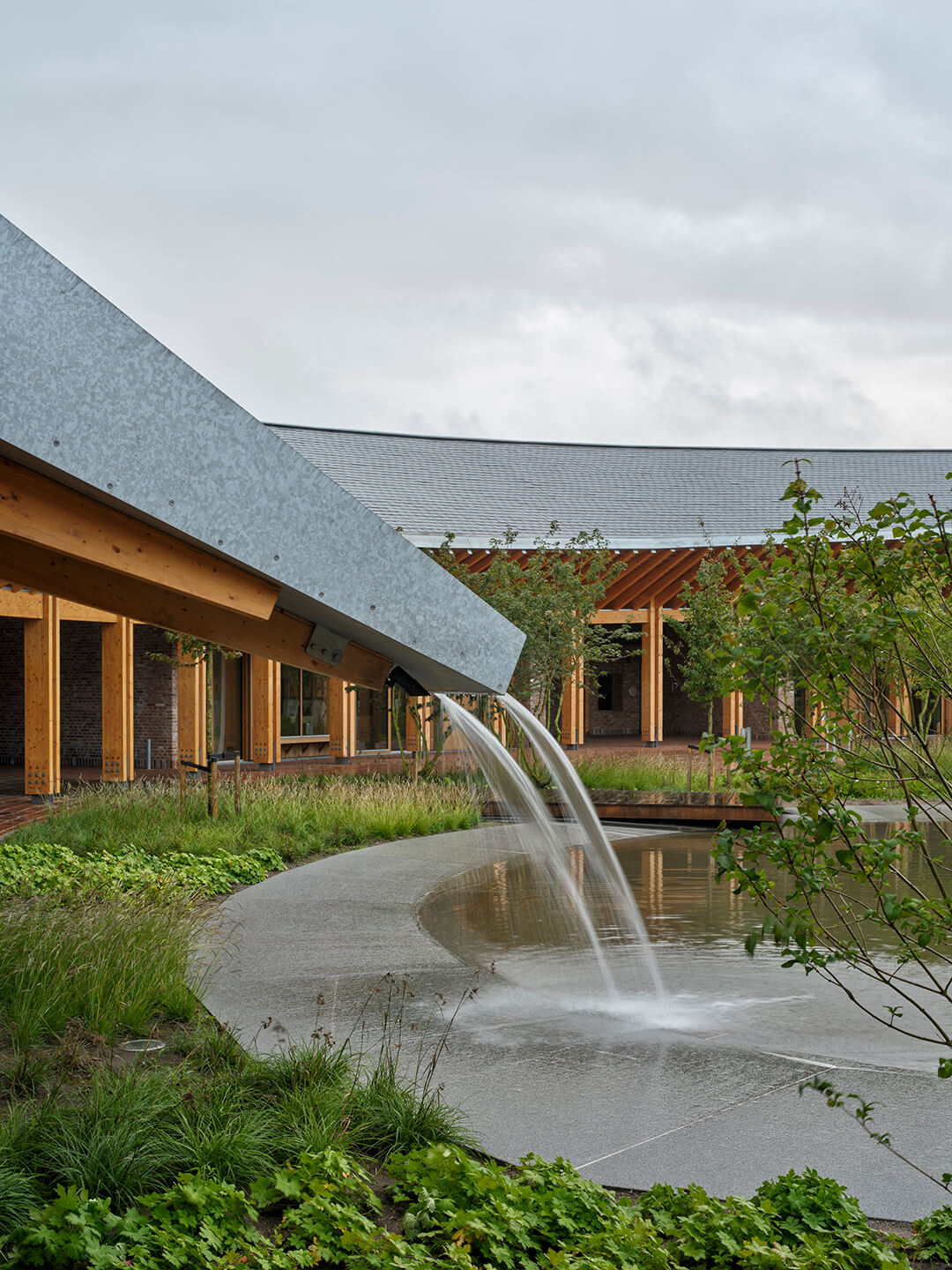
Thoughtful use of resources is also an ingrained skill in traditional crafts, naturally manifesting in part of the institutional architecture. The landscape design is populated with local biodiversity, employing native species resilient to high precipitation to transform the fallow meadow into a vibrant green space that supports local wildlife. The elliptical roof extends over the glazed openings on the facade to form self-shading overhangs, while its inward trough collects rainwater and channels it into an open water basin located in the courtyard, doubling up as a functional element and an experiential one, mimicking a natural waterfall.
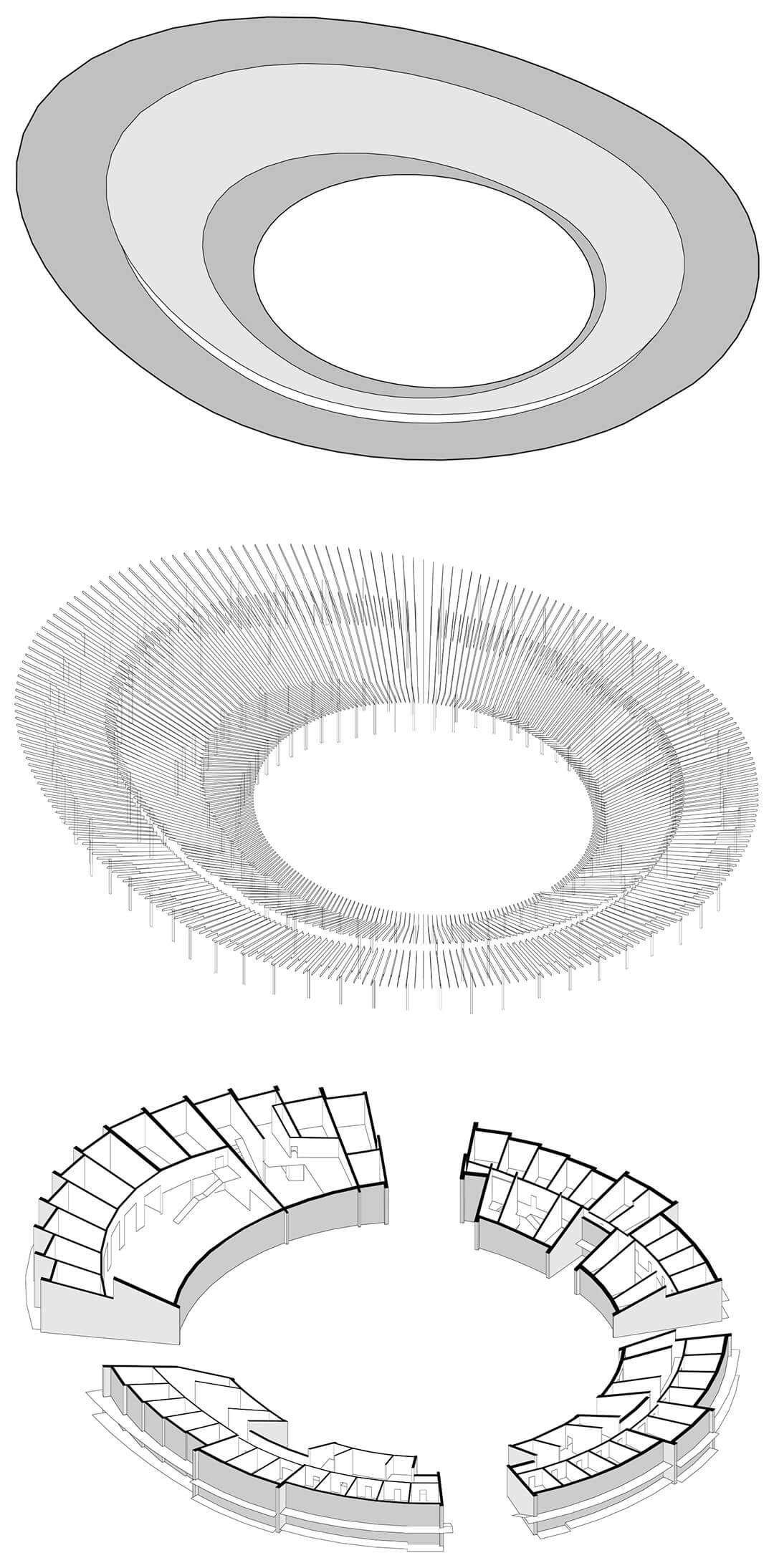
The Crafts College acknowledges the critical influence of craft and craft thinking in creating deeply human-centric spaces, pushing the utility of architecture beyond shelter or infrastructural asset to a living archive that records and disseminates knowledge. “With the Crafts College, we wanted to cultivate our common profession and create a space where young craftspeople can discover the impact and possibilities of their work,” shares Dorte Mandrup, founder and creative director of her eponymous architectural practice, in an official release. “In this way, form and materiality act both as didactic tools and a frame for community building and mutual support among the different crafts.”
Name: Crafts College
Location: Herning, Denmark
Typology: Institutional
Client: Fonden for Håndværkskollegier (FFHK)
Architect: Dorte Mandrup
Collaborators: Kristine Jensen Landscape & Henning Larsen (Landscape); fortheloveoflight (Lighting Design); Artelia (Engineer); CC Contractor (Contractor)
Year of Completion: 2025

by Pranjal Maheshwari Oct 19, 2026
The Mumbai-based architects integrate courtyards, mesh screens and north light trusses to create a dining space that doubles up as a community hub at SR University, Warangal.
by Mrinmayee Bhoot Oct 17, 2026
The Rotterdam-based institute centres the Indian Ocean as a network for exploring material histories and transnational links shaping coastal cultures, positing them as future models.
by Pranjal Maheshwari Oct 16, 2026
At the 2026 Stirling Prize ceremony, Mary Duggan with RUFF Architects, MAKER Architecten and Nakshabid Architects were felicitated for proffering quality housing and social equity.
by Mrinmayee Bhoot Oct 12, 2026
The new Centre for Contemporary Arts, fostering public engagement with art in Uzbekistan, is housed in a tram depot refurbished by the French studio, emulating local craftsmanship.

make your fridays matter with a well-read weekend
Enter your details to sign in
Don’t have an account?
Sign upOr you can sign in with
a single account for all
STIR platforms
All your bookmarks will be available across all your devices.
Stay STIRred
Already have an account?
Sign inOr you can sign up with
Verification link sent to check your inbox or spam folder to complete sign up process
Tap on things that interests you.
Select the Conversation Category you would like to watch
Please enter your details and click submit.
Enter the 6-digit code sent at


Dorte Mandrup’s sweeping Crafts College is a living archive of material and making
by Pranjal Maheshwari | Published on : Apr 06, 2026


 Sign in with Google
 Sign in with email
What do you think?